

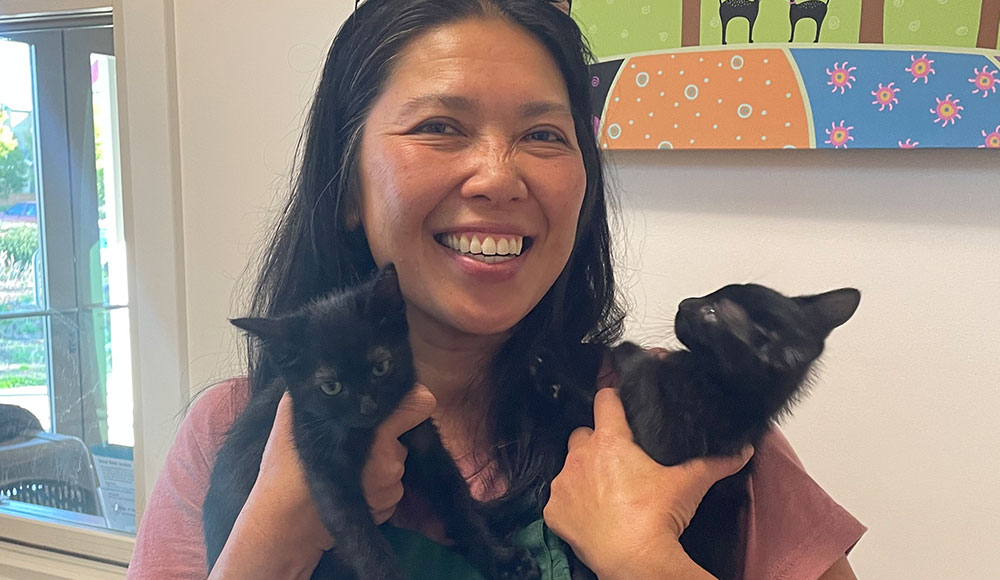
Two weeks still remain to participate in the annual Santa Cruz Gives fundraising event, which runs until Dec. 31. Below, Good Times writer Kristen McLaughlin talks to some of the people behind Planned Pethood, one of the 72 nonprofit initiatives seeking support from Good Times readers. Also below, other nonprofits share their “elevator pitch,” explaining what they plan to do with the money they raise. To donate to any of these groups, visit santacruzgives.org.
Puppies and kittens are cute and cuddly, but unplanned litters can result in animals living in miserable conditions, as either strays or denizens of municipal shelters, straining resources and increasing euthanasia rates.
But there is hope here in Santa Cruz, where Planned Pethood works to proactively prevent the suffering of hundreds of thousands of stray and unhoused animals with spay and neuter clinics through the Santa Cruz County Animal Shelter.
As the county’s sole open-admissions animal facility, SCCAS provides services vital to the community, including assessments, vaccinations, and outreach to pet owners whose incomes are below economic thresholds. With locations in Santa Cruz and Watsonville, SCCAS takes in about 7,000 pets per year, including cats, dogs, barn animals, snakes, pigs, reptiles, birds and small mammals.
Although SCCAS receives municipal funding for core services such as animal control and licensing, surgeries for spay and neuter are largely dependent on private donations.
In addition to its core medical services, SCCAS also helps to cover costs associated with herd health, such as rabies vaccination, safe housing for strays and surrenders, and intervention in animal abuse cases in both Santa Cruz County and unincorporated county. “We get municipal funding from all of the jurisdictions,” said Amber Rowland, SCCAS general manager. “That covers about 71 percent of our operating budget.”
Governed by the SCCAS Foundation, Planned Pethood is a 501(c)(3) public charity that supports the county animal shelter through fundraising, education and advocacy, along with providing the community with a no-cost and low-cost spay/neuter service. (By county law, dogs and cats over the age of 6 months must be spayed or neutered.)
Planned Pethood plays a crucial role in reducing the pipeline of puppies and kittens coming into the shelter in the first place, proactively helping to end the animal overpopulation tragedy.
When it comes to animal proliferation, the statistics are staggering. Cats can start reproducing at four months of age, and they can have three litters a year. Additionally, intact male dogs are also part of creating multi-generational litters that start to reproduce at five months old. “People don’t realize how quickly they become active teenagers,” Rowland says.
On average, one female cat and her offspring can lead up to 420,000 kittens in just seven years, and one female dog can lead up to 67,000 puppies in just six years. “For the last two years, we have been bringing in a national organization, Animal Balance, for free spay and neuter clinics,” Rowland says.
Animal Balance works with shelters to operate MASH clinics (Mobile Animal Service Hospitals) to spay or neuter hundreds of pets. The clinics are known as HVHQ (High Volume High Quality) and travel to recreation centers, tents and even mobile campers.
On a recent visit, Animal Balance was on-site at the shelter on 7th Avenue. Having established a MASH clinic at the shelter’s annex, registered veterinary techs from Animal Balance conducted a three-day clinic to spay and neuter 207 local pets—about 67 pets per day. As an animal is coming out of anesthesia, they contact the owners to come and pick up the pet.
“The Santa Cruz Gives campaign will flow into 2026 for the services we have to offer,” said Ng Trinh-Halperin, executive director of the Santa Cruz Animal Shelter Foundation. She began volunteering for the foundation in 2011, and has engaged with nonprofits and public agencies over 30 years in various roles throughout the Central Coast, Bay Area and beyond.
To illustrate the commitment of the SCCAS Foundation, they also operate the Bogey Club to find homes for black cats, who are sadly less likely to be adopted, and the No One Left Behind Club “for animals who are here the longest … they can sponsor their fees,” Trinh-Halperin says.
Planned Pethood offers clinics three times a year with reduced pricing for people on public benefits or a mid-point price range for anyone. “People lean in to offer affordable spay clinics,” Rowland says. The next clinic will be in February. For those in need of services before that, Friends of Watsonville Animal Shelter provides a year-round spay/neuter service at reasonable rates.
For more information call SCCAS at 831-454-7200 or Friends of Watsonville at 831-724-4988.
Nonprofit Groups Providing Food and Other Assistance
Community Action Board’s Santa Cruz County Immigration Project—“Our immigrant neighbors are under attack. The CAB Immigration Project has responded—advocating for political change, educating immigrant families about their rights, and mobilizing robust defense if the worst happens and local people are detained.” —Kate Hinnenkamp
Damian’s Ladder—“The group provides small home repairs at low or no cost, depending on the client’s needs. Its mission is to enable seniors and people with disabilities in Santa Cruz County to stay in their homes and enjoy a good quality of life.”
Friends of the Santa Cruz Public Libraries—“Your support of the new Downtown Library is a once-in-a-generation investment that gives everyone access to a community center in a vibrant civic space. As the hub of the 10-branch library system, the new library is designed to grow with the needs of our community—providing equitable gathering spaces and uncensored public access to information. This is democracy in action.” —Sarah Beck, executive director
Grey Bears—“In Santa Cruz County, one in four seniors struggle to afford basic needs like healthy food; with cuts to programs like SNAP, more are slipping through the cracks. At the same time, nearly 40% of food in the U.S. goes to waste. Grey Bears bridges that gap by rescuing and redistributing local food: last year alone, 800 volunteers diverted nearly 2 million pounds of food from landfills to the plates and pantries of older adults in our community.” —Kayla Traber
Santa Cruz SPCA—“Shelters are in crisis, but at the Santa Cruz SPCA, we refuse to give up. We transform scared, sick and overlooked pets into beloved companions, giving them the second chance they deserve. We say yes to animals other shelters can’t take, and your support directly fuels their journey home, turning fear into hope and ensuring their stories end in love, not loss.” —Jamie Lyons, development and communications director










how do we contribute
Elene, go online to: Santacruzgives.org and select the non-profits of your choice.