
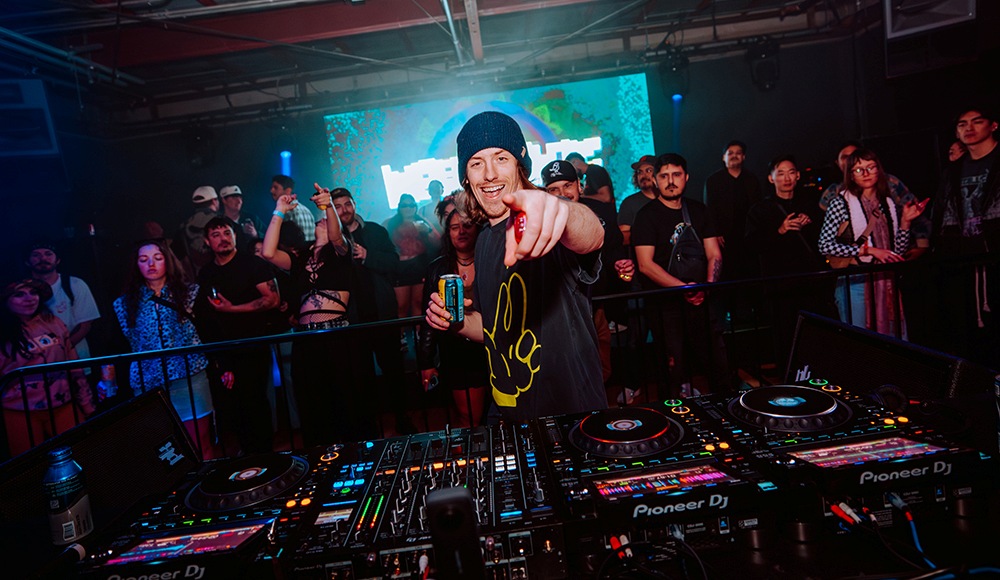
About 40 minutes into a Neumonic set, something predictable happens: people stop trying to name what they’re hearing. The bass is thick but not crushing. The hi-hats skip sideways. The floor starts moving before anyone agrees on what to call it.
We watched it last year in San Francisco at Monarch. My wife and I were in the crowd when someone leaned over, grinning and clearly having the time of his life, and asked, “What kind of music is this?” It felt like that moment in Back to the Future—Marty McFly playing something the room had no frame for, watching them dance anyway.
One person guessed, “Sounds like techno/trap music.”
Another shot back immediately: “No—it’s not techno. It’s Garage House.”
Closer—but still missing the point. The guy who asked didn’t care. He was already back to dancing.
What Neumonic was playing was UK garage: a dance-music style born in the UK in the 1990s, shaped by pirate radio, London clubs, and soundsystem culture. Its defining trait is a swung, shuffling rhythm—music that pulls dancers sideways instead of pounding straight down. Hi-hats skip instead of march. Basslines duck and reappear. The groove always feels half a step ahead of you. Fast without being aggressive, physical without being rigid.
Nick Neumann—better known as DJ Neumonic—isn’t from the UK. He was raised in San Diego, came north in 2015 to attend UC Santa Cruz, and never really left. His touring calendar stretches across cities, clubs, and festivals. But Santa Cruz—the redwoods, the coast, the quiet between runs—is where his project took shape and where he keeps returning to reset.
And now, people everywhere are starting to recognize it.
And for a town that has always let sounds grow quietly before the rest of the country catches up, that recognition feels different.
When the room locks in
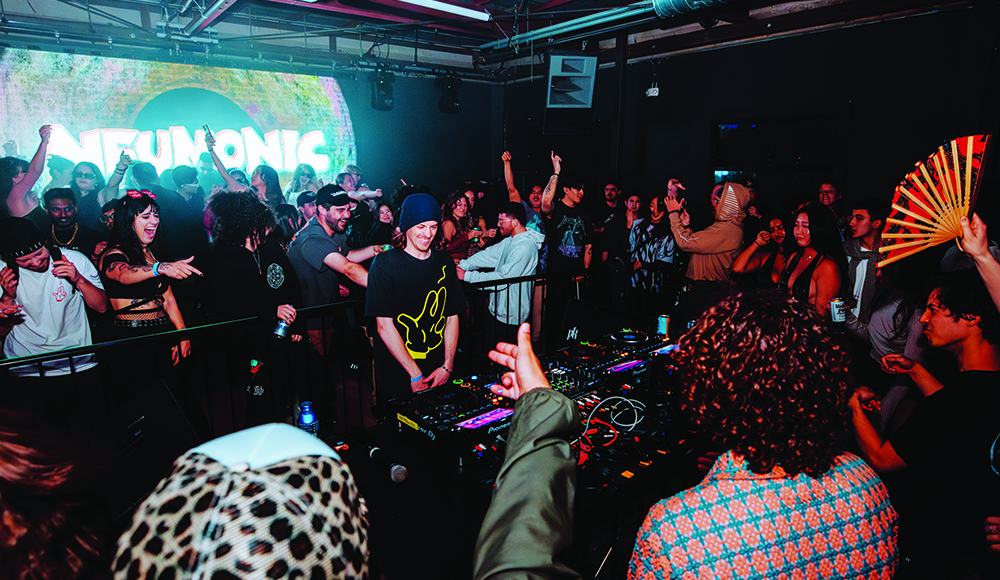
Neumonic’s Monarch headline sold out before doors opened—no small thing in San Francisco. Monarch is a room that trusts DJs who pace a floor instead of spiking it; it’s where adventurous sets either rise or politely disappear.
“I’m known for garage—UK garage is my bread and butter,” Neumonic told me later. “But when I DJ, I DJ everything.”
You could hear that philosophy unfold in real time. The swung, shuffling rhythm of UK garage slid into dubstep pressure, snapped into drum & bass urgency, then eased back into groove. The floor stayed full.
The range isn’t accidental. Neumonic has been a house and techno DJ, a dubstep DJ, a drum and bass DJ. UK garage became “the in-between of all of it”—a style elastic enough to hold everything he’d already absorbed.
His newest release proves the point. The Deadbeats EP—his biggest label placement yet—runs four tracks across four distinct sounds: UKG breaks, straight dubstep, dark demonic UKG, and a drum and bass VIP. It’s not genre tourism. It’s a working philosophy made audible.
“I don’t like to get fully cratered into a genre,” he says. “That’s what has made me stand out.”
Neumonic pulls tens of thousands of monthly listeners, with tracks like “Movin’” quietly crossing the million-stream mark—digital proof of momentum that already feels obvious in the room.
But the numbers are trailing indicators. The real proof is kinetic.
A town that grows sounds sideways
Santa Cruz has always had a peculiar relationship with new music.
In 1956, Santa Cruz banned rock ‘n’ roll at public gatherings, calling it “detrimental to the health and morals of our youth.” It didn’t last. New sounds tend to arrive here before they’re officially welcomed.
Long before playlists and algorithms, music in Santa Cruz surfaced in basements, forests, beach pull-offs, and rooms that felt half-temporary. The late CharlestheFirst, who emerged from the Truckee–Tahoe mountain scene, was deeply loved here and regularly played Santa Cruz. Other bass-forward artists with local ties—G Jones, Minnesota—followed similar paths, developing their sound outside traditional industry lanes before breaking wider.
Neumonic fits that lineage. Not because he sounds like anyone else, but because Santa Cruz remains a place where music can grow sideways before it grows big.
“It’s crazy how strong the scene is for how limited the stuff we have,” he says. “Venues and stuff—there isn’t much. But a lot of really cool bass artists come from Santa Cruz. They all used to just play forest parties. That’s what I do now. Usually when I play in Santa Cruz, it’s a forest party.”
Nick arrived as a student in 2015, starting in computer science before graduating with a degree in business management and economics. Those skills didn’t disappear—they became part of the work. Alongside touring and producing, he’s the marketing coordinator at Gravitas Recordings, freelancing digital strategy for festivals and labels, sometimes taking meetings from his studio tucked into the trees.
“Santa Cruz is my chill downtime,” he said. “Touring is fun, but it’s draining. This is where I bunker down and make music.”
When he’s home, he’s surfing, boogie boarding, walking through the forest, disappearing into long studio sessions. That grounding matters—especially because Neumonic is seven years sober, a shift he describes as the real beginning of the project.
“Getting sober is what started this,” he said. “I was really into the music scene before—but I was not fully present. When I got sober, I was like, okay, I’m gonna switch sides.”
It happened during his senior year at UC Santa Cruz. “I just needed to get my shit together to graduate,” he says. He didn’t plan on staying sober this long. He just ended up liking it.
That clarity became the foundation for everything else. Right out of college, he took a salary job doing marketing in the apparel industry—Facebook ads, digital strategy. But the music kept pulling. The turning point came when he enrolled in Justin Jay’s producer bootcamp, a three-month intensive with Zoom meetings twice a week and a community of thirty producers holding each other accountable.
“His whole thing is just have fun, use stock plugins, don’t overthink it,” Neumonic recalls. “I’d always had the tools but never got into it because I was trying to go too technical. That bootcamp got me back into actually producing and having fun.”
He did the bootcamp right when he left the 9-to-5. It was a bet on himself—and it worked.
From renegades to the Woogie
When the pandemic shut venues down, Neumonic didn’t wait for permission. He hauled a sound system to the Lighthouse on Sundays, DJed for fire spinners, and threw renegade sets at Sharkfin Cove.
“I just missed music,” he said. “Everything shut down, and I guess some people could have stopped partying, but I was like—no. I just got a sound system and kept throwing down.”
I threw renegade beach raves in Santa Cruz 15-plus years ago myself, so I appreciated hearing him talk about this chapter—the resourcefulness, the refusal to let the music stop. That’s a Santa Cruz instinct that runs deep.
That DIY spirit connects directly to the culture that grew out of Do LaB, the experimental arm of Coachella, and into Lightning in a Bottle—a proving ground for genre-fluid, groove-forward electronic music.
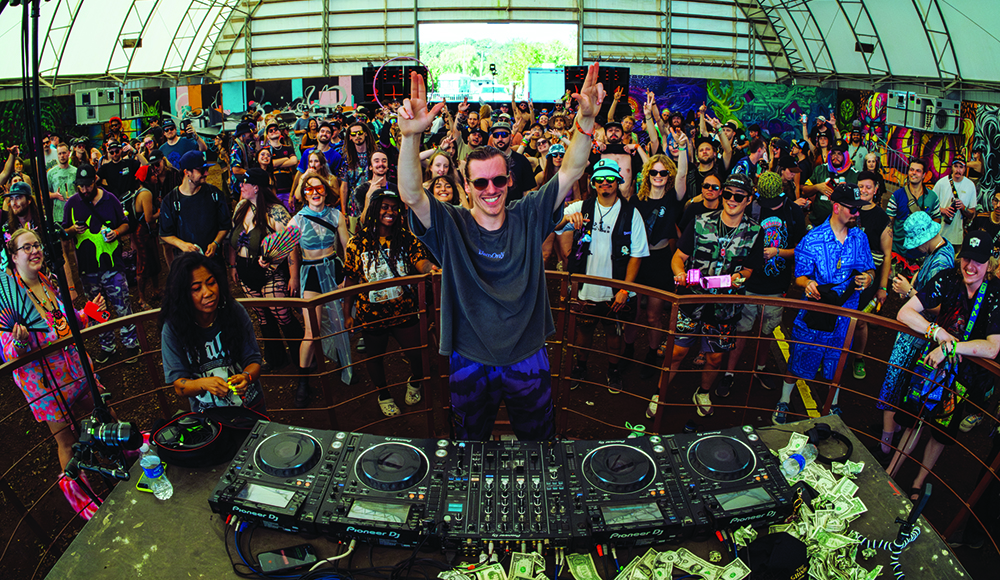
Neumonic doesn’t just play Lightning in a Bottle. He works it. Through Gravitas, he spent years assisting on the Thunder Stage under his boss at the label, who’s been stage managing there for nearly a decade. Together they ran the Moon Stage at Texas Eclipse. Then the festival came calling with a bigger ask.
“The Woogie stage manager left, and they asked me to take over,” he explains. “Now I’ve got my own stage.”
For context: the Woogie is one of Lightning in a Bottle’s anchor stages, the late-night home for deep house, techno, and bass music. Running it means coordinating sound, lighting, and artist relations—30 to 40 people under his oversight.
“It’s a lot of work,” he admits. “But it’s nice that it’s just DJs. Thunder has live bands, which means a lot more moving parts. Although half the time these DJs are just redlining it and making it sound terrible.” He laughs. “I do love this shit.”
The split identity—performer and crew, artist and operations—struck me as unusual. Most DJs at his level are trying to shed the backend work, not embrace it. Neumonic sees it differently. The stage management keeps him connected to the infrastructure that makes the magic possible.
The moment it stopped feeling abstract
The moment it clicked came in 2023, at Lightning in a Bottle.
“I played The Stacks on Thursday afternoon—pre-party,” he said. “I looked up and it was packed. People showed up for me.”
It wasn’t a headliner slot. It wasn’t even technically part of the main festival run. But by the end of the set, Neumonic was looking out at one of the biggest crowds The Stacks had seen all weekend.
Then came Monarch.
“The fact that I sold that out before doors was crazy,” he said. “I’ve thrown so many shows at Monarch. I’ve brought huge artists into there that have not sold it out. And then for me to just sell it out myself—that’s when it really hit.”
What changed wasn’t the size of the checks—he’s honest about the economics of emerging electronic music. What changed was the proof: people actually showed up for this. Coming from someone who started as a fan of the scene himself, that realization hit differently.
Catching up to the rooms
That momentum first crystallized on Foghorn Dance EP, a four-track independent release that became Neumonic’s calling card. The name came from the Santa Cruz coast, the sound that cuts through fog and finds you. Built around UK garage’s elastic swing and bass-forward pressure, the EP earned a UKF premiere and helped bridge underground club credibility with festival-scale attention.
His newest release, What?—a high-energy collaboration with Mary Droppinz—arrives on Deadbeats, his biggest label placement yet. “I am kind of in my own lane, so I self-released the last EP, which was all my UKG stuff,” he explains. “But to get on a big American bass label—I just make a little bit of everything, and that’s what they liked.”
Being recognized and staying human
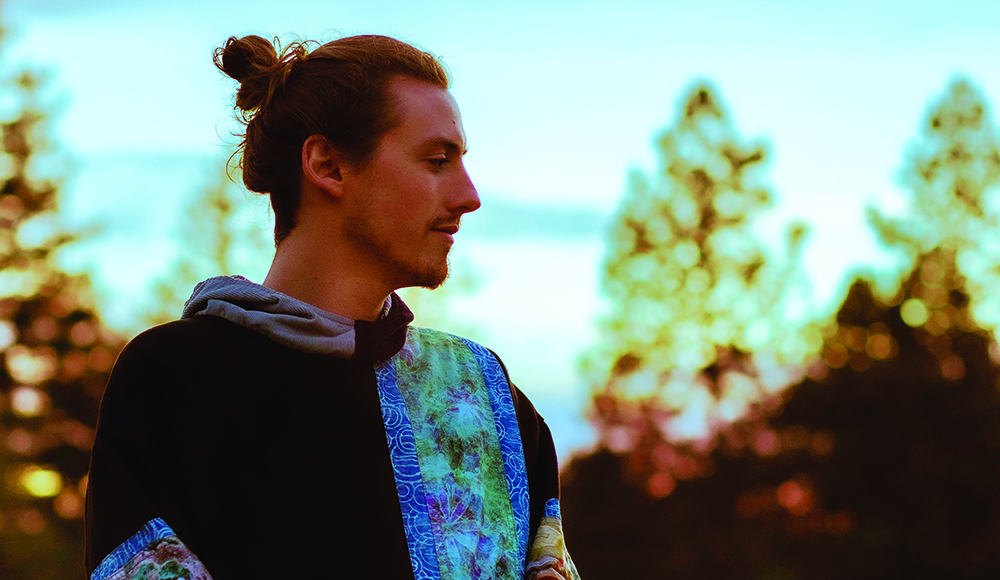
Recognition has arrived in small, human moments.
In Arcata, a stranger recognized him on the sidewalk before he’d even checked into his hotel.
“I literally drove to Arcata, parked in front of the hotel, walked out of my car, and the first person on the sidewalk was like, ‘Oh, are you Neumonic?’” he laughs. “I assumed he was the promoter. He wasn’t. Just a random fan. He wasn’t even going to the show because he wasn’t 21. He was just staying at the same hotel with his mom.”
“At this level,” he adds, “it’s wholesome. I actually love it.”
He knows that calculus changes as the crowds grow. Jamie xx dips out after sets—and Neumonic gets it. At that level, everyone wants something from you.
“But personally, I love it,” he says. “I love after the set hanging out in the crowd. Even before the set—people tell me all the time, ‘Oh, you’re just getting down in the crowd.’ I’m like, yeah, what are you talking about? This is the shit.”
After the Monarch set, he stayed. Talked. Hugged people. Listened. A Santa Cruz instinct that travels well.
2026: the rooms get bigger
This year brings bigger stages. Neumonic returns to the Do LaB at Coachella, continues his role at Lightning in a Bottle, and steps onto one of the most iconic venues in American dance music: Red Rocks Amphitheatre, opening for Zeds Dead on July 2.
What’s different this time is timing. UK garage’s syncopated skip doesn’t fight the body—it works with it. In a moment when people are burned out on maximal drops and algorithm-flattened playlists, Neumonic’s sets feel human again. You don’t just hear them. You inhabit them.
UK garage works right now because it swings. It resists the grid. In an era of perfectly quantized drops and hyper-compressed festival builds, that shuffle feels alive. It leaves room for breath, for imperfection, for bodies to move off-axis instead of straight up and down. It sounds less like a machine and more like a room in motion.
Artists like Fred Again.. and Jamie xx have helped pull the underground overground—mainstream artists who actually DJ, whose curation carries underground taste onto festival main stages.
“I’ve never been drawn to the more mainstream side of EDM,” Neumonic says. “But it’s exciting to see artists at that scale, on main stages, playing genuinely underground music.”
Santa Cruz remains home. He still works stagehand shifts at the Quarry Amphitheatre when he’s not touring because he loves the venue too much to stay away. He hangs out at the Apéro Club with friends—the sober guy at the wine bar, which he finds funny.
When I asked what comes naturally to him, he didn’t hesitate: curating, finding artists before they’re big, and marketing. “That’s one of the reasons I’m so successful,” he said. “It’s not just about making the music anymore.”
His advice for young producers: “Just go for it. Make music. Have fun. Don’t overthink it.” Stock plugins, stock drums, simple stuff. That’s how the tracks actually get made.
Back at Monarch, no one ever finished the argument about genre. The question dissolved somewhere between the kick drum and the second drop.
New sounds have always arrived here before everyone agreed on what to call them. Some people catch it immediately. Others need time.
Right now, the rooms are full. The dancing hasn’t stopped. Labels have stopped mattering.
Neumonic named his breakout EP after the Santa Cruz coastline—the low tones that cut through fog and let you know the shore is close.
Foghorns don’t warn you away. They tell you where you are.
Santa Cruz heard it early.
Now it’s traveling. This time, the rooms are ready.
Catch Nick Neumann / DJ Neumonic on Spotify, Instagram. open.spotify.com/album/3g1mOQ1vSHjudyy9HKmwof; instagram.com/neumonic