

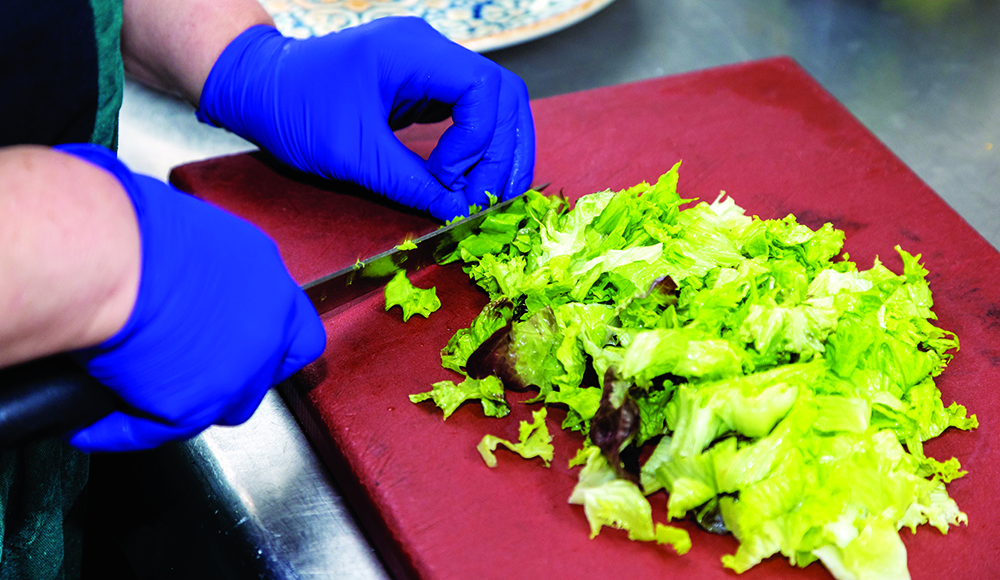
Four in 10 Americans say they’re buying or eating less fresh produce because of the current Cyclospora outbreak, according to a recent CBS News/YouGov survey. More troubling, 55% of respondents said they have little or no confidence in government oversight of the U.S. food supply.
That’s bad news at a time when nutrition experts have spent decades encouraging Americans to eat more whole, minimally processed foods.
Cyclospora is a microscopic parasite that causes cyclosporiasis, an intestinal illness that can result in prolonged diarrhea, stomach cramps, nausea, fatigue and other gastrointestinal symptoms. Unlike many foodborne illnesses that strike quickly, symptoms can take days or even weeks to appear, making it especially difficult for people to remember what they ate and for public health investigators to trace the source.
Federal health officials are currently investigating multiple clusters of illness. The Centers for Disease Control and Prevention has reported thousands of laboratory-confirmed domestic cases across dozens of states, along with hundreds of hospitalizations. State and local health departments have reported thousands of additional cases still requiring investigation.
At least one multistate outbreak has been linked to iceberg lettuce. The sheer scale of the problem has raised questions not only about contaminated produce, but also about the system responsible for keeping it safe.
A Tough Bug to Track
In a recent discussion on KCRW’s Good Food, nutrition and public health expert Marion Nestle and food policy journalist Helena Bottemiller Evich described Cyclospora as particularly challenging because the parasite can adhere tightly to produce and resist ordinary washing practices.
Even more problematic is the lag between eating contaminated food and becoming sick.
By the time someone develops symptoms, seeks medical care and is tested, the lettuce or other fresh produce they consumed may be long gone. Investigators then have to reconstruct meals eaten days or weeks earlier and trace highly perishable products through a complicated supply chain.
The outbreak is also drawing attention to consolidation within the produce industry. According to the discussion, a relatively small number of large companies now supply a significant portion of the lettuce sold through restaurants, grocery stores and food-service operations nationwide. That means contamination at one point in the system has the potential to travel far and fast.
For consumers standing in front of the produce section wondering whether their spinach, lettuce or strawberries are safe, that complexity isn’t particularly reassuring.
And that may be one of the biggest long-term health concerns surrounding the outbreak.
Don’t Give Up on Vegetables
The CBS News survey found that 40% of Americans are already cutting back on produce amid concerns about Cyclospora. Restaurants serving salads and greens are also reportedly seeing changes in customer behavior.
Yet replacing fresh vegetables with highly processed foods creates another set of health problems. The takeaway shouldn’t be to stop eating plants. It may be to pay closer attention to where those plants come from.
Here in Santa Cruz County, where farmers markets, organic farms and independent grocers are woven into the local food culture, consumers may have more opportunities than most to do exactly that.
New Natives co-founder and local organic farmer Sandra Ward says sourcing is one of the most important considerations consumers can make.
“The best way to avoid pesticides is to buy certified organic,” Ward says, emphasizing the importance of knowing how and where food is grown.
Ward argues that consumers should look beyond the name of a particular vegetable when foodborne illness occurs and think more broadly about agricultural practices and the food supply chain. “People just need to eat organic,” she says. “You just need to know your sources.”
Her advice reflects one advantage Santa Cruz County residents have: access to farmers, farm stands, natural-food stores and produce departments where shoppers can ask questions about where their food was grown.
Traceability Matters
At Staff of Life in Santa Cruz, Produce Manager Julian Islas says knowing the source of every product is central to the store’s approach.
Staff of Life buys locally whenever possible, he says, and relies on established, trusted suppliers when local products aren’t available. That relationship becomes especially important when something goes wrong.
According to Islas, suppliers can notify the store quickly if a problem is discovered, allowing affected produce to be removed from shelves. “Everything is directly traceable,” he says.
Traceability may sound like an industry buzzword, but in a food system where lettuce can travel through growers, processors, distributors, restaurants and retailers before reaching your plate, it can mean the difference between quickly identifying a problem and spending weeks trying to determine where contaminated food originated.
That issue has emerged as a major theme in the Cyclospora outbreak.
Nestle and Bottemiller Evich also raised concerns about the nation’s ability to track foodborne illness amid staffing and funding pressures affecting public health agencies. State and federal agencies must work together to identify cases, interview patients and trace potentially contaminated foods, a labor-intensive process during an outbreak involving thousands of people.
Know Your Farmer and Your Food
For Santa Cruz County residents, the current outbreak offers a reminder of something our local food movement has been saying for decades: where our food comes from matters.
Shopping locally doesn’t magically eliminate the possibility of foodborne illness, and “organic” should not be confused with a guarantee that food is pathogen-free. Safe growing, handling, storage and preparation practices remain important regardless of where produce originates.
But shorter, more transparent supply chains can make it easier to know who grew something, where it came from and who to contact when there’s a problem. So rather than responding to the Cyclospora outbreak by abandoning the produce aisle altogether, this may be the moment to become a more curious shopper.
Check public health advisories when outbreaks occur. Pay attention to recalls and identified products. Ask your grocer where produce comes from. Shop at local farmers markets when you can. Get to know the farms behind your food.
And keep eating your vegetables
Because the irony of a foodborne illness outbreak is that fear can have health consequences too. At a time when most of us could stand to eat more fresh, fiber-rich plant foods, not fewer, the goal should be a safer food system, not an empty produce drawer.
In Santa Cruz, at least, we have something valuable working in our favor: the opportunity to know our sources.









hi