

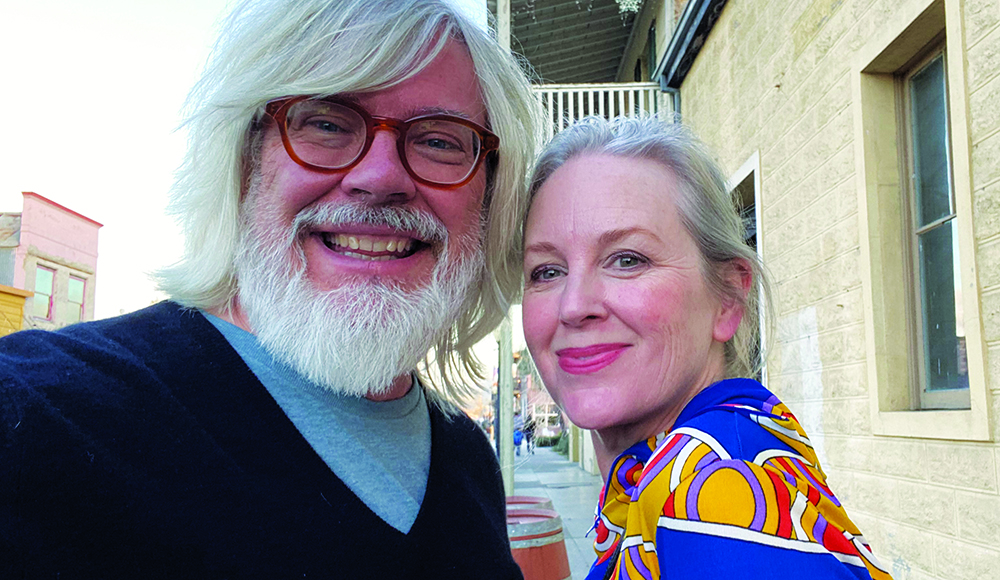
There was a recent regime change within the top-tier leadership at the towering 418 Project on River Street. Through serendipitous good luck (for us), the new Executive Director, Dennis Bartok (whose wife Marja is a local), promises to be a heightened asset, an esteemed influencer, and a potential paradigm shifter in Santa Cruz’s vibrant creator scene.
Known primarily as a dance church, The 418 Project never attracted the crowds that the 10,000 sq. ft., 1980s dual movie theater could encompass. Enter Bartok, whose roots are so thick in progressive (and sometimes transgressive) art, as well as experimental (and traditional) cinema, that they’re practically made of celluloid.
Bartok will argue that his brother, Jayce Bartok, is more famous than he is, and on a certain level, that is undeniably true. “Jayce is a very prolific acclaimed actor for many years. My god, he’s in The Station Agent, he’s in The Fisher King,” Bartok exclaims.
Jayce also appears on the movie poster for the über dark comedy classic, Suburbia — which is a benchmark Generation X achievement.
What’s immediately evident is that the 61-year-old, Dennis Bartok, who looks like Matt Groening with a dash of Trey Anastasio, is a bona fide intergenerational artist nerd who never stopped chasing his own passions. His mind is also constantly simmering on his love for his family and mentally accounting their achievements.
Bartok’s unique superpower is finding artists on the fringe who have been undiscovered or underrepresented and giving them a voice and a platform. In that world, he is well known.
Fame in the Bartok family is ubiquitous and runs deep.
THE VANGUARD
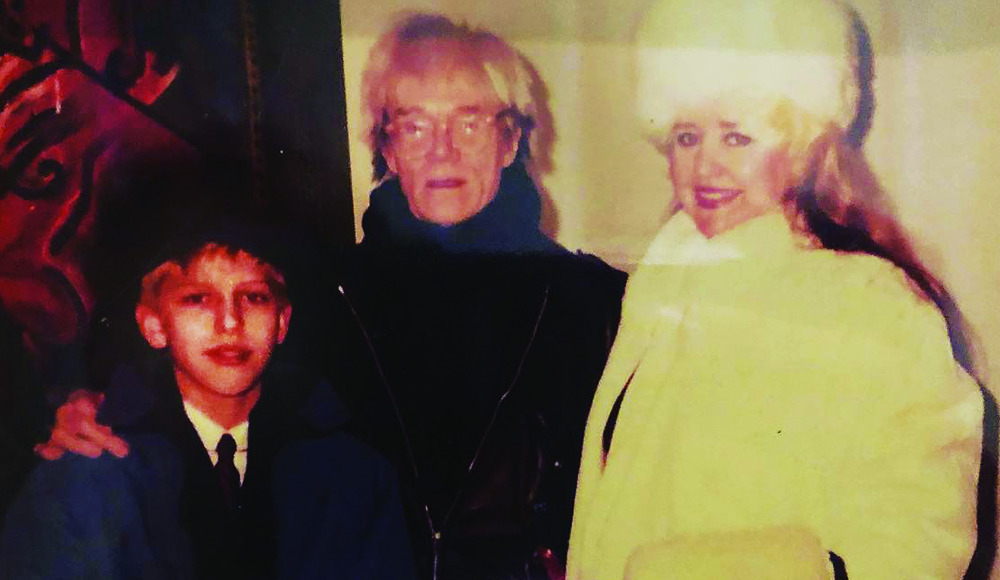
Bartok’s mother, LeAnn Bartok, was a so-called avant-garde experimental filmmaker and interdisciplinary conceptual artist during the 1970s. “Avant-garde” always seemed to be the dustbin term where the gatekeepers of society swept all the artists who didn’t produce commercial, capitalist-loving, output.
In another light, those radically innovative artists, who dared to follow the muse, were leading the charge against humanity’s pitiful need to conform. But, challenging the status quo doesn’t come without its challenges.
“She (LeAnn) got some government grants that became controversial. She received a grant from the National Endowment for the Arts. It was a fairly small grant, like 5 or 6 thousand dollars $6,000 to do one of her ‘Skyworks’ drops and document it on film,” Dennis explains from his tiny office inside 418.
16mm films of LeAnne’s ‘Skyworks’ drops survive. Mile-long reams of colored fabric are thrown out of a plane, unraveling and undulating across the upper landscape, like a slow-motion propeller-driven dream. The sky was LeAnn’s canvas and gravity her paintbrush.
“She was denounced on the floor of Congress by Senator William Proxmire,” Bartok says about his mother.
“He had this infamous Golden Fleece Award, which he used to give out for what he considered to be wasteful government spending. And he denounced my mother on the floor of Congress, saying, ‘Why should the U.S. government be paying for a Pittsburgh housewife to throw toilet paper out of airplanes?’ If you’re interested in conceptual art or environmental art or performance art and pushing boundaries, to then suddenly have your work ridiculed and demeaned by a senator was infuriating and frustrating. She was defended in The Village Voice. A lot of really well-known artists and critics came to her defense. But that was our dinner talk,” Bartok laughs.
Like a non-locational Montmartre of the 1880’s, the world of conceptual artists in the 1970s was exclusive and insulated. Around the same time as LeAnn Bartok’s heavenly works, Christo and Jeanne-Claude were wrapping mountains in Milan with colored polypropylene fabric and rope.
“They corresponded a bit,” Bartok recalls. “There was also a really well-known conceptual artist named Otto Piene who was doing inflatable kind of conceptual sculptures at the time.” These were artists who were pushing away the detritus and debris of a mundane existence with bursts of wonderment and awe.
“I think it was really difficult, especially for my mother, because she was a female artist. There was a lot of prejudice and misogyny, and I think it was very difficult for a lot of critics and people to take her work as seriously as they should have been. One of the great developments in the art world over the past 10 to 20 years has been that people are really shining a light on the work of a lot of visionary female artists, along with other previously underrepresented or marginalized artists.” Bartok laments, but leans toward the positive.
SOUL OF THE ARTIST
The Bartok family patriarch was a doctor, and with much turbulent moving around, the four children weathered a stormy marriage. Yet, LeAnn was such a creative soul that it was never boring.
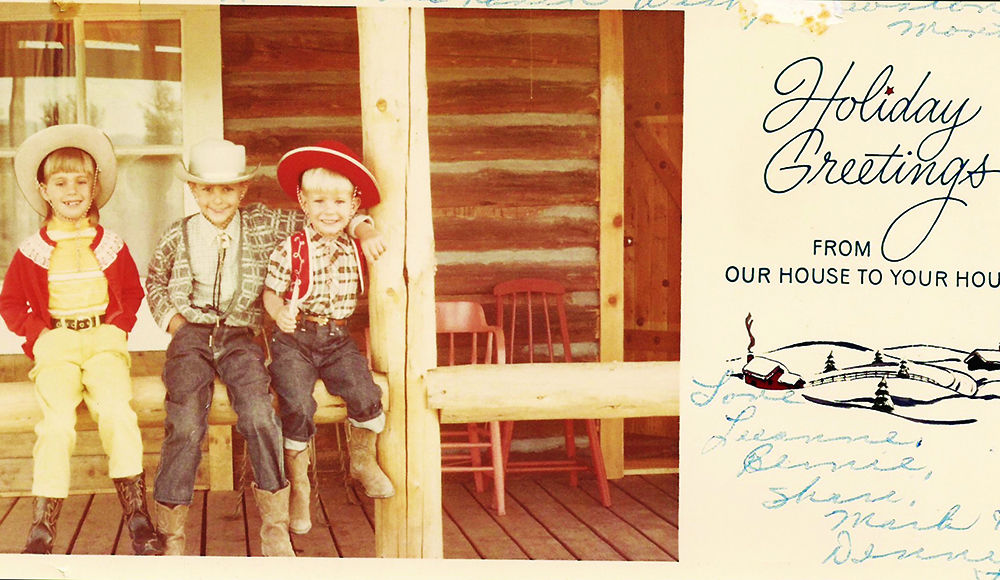
“For a brief period when we lived in Canada, we had a puppet theater, the Blue Rose Puppet Theater with these beautiful handmade marionettes. And we would do puppet shows. I was like five or six years old. I used to do pottery. I was in plays in school. And we would do amateur film projects, all sorts of things. I grew up in that atmosphere where she was constantly editing her 16 millimeter experimental film projects,” Bartok explains.
If one scratches the surface of an artist, underneath the colors, or lack thereof, there is always grief. Mental illness, poverty, and traumatic loss are common thorns that artists often try to transmute into roses. When talking about his family — Bartok circles back to them often — it’s like watching somebody processing trauma in real time.
“Well, there were four of us total, but only two surviving now: me and my younger brother (Jayce). My older sister (Shari) unfortunately passed away at the beginning of last year at the age of 63. She’d been maintaining our mother’s art studio, called Dayspring, in western Pennsylvania. And then my older brother (Mark) passed away at the very beginning of 2021. He was an art historian and a ship’s captain. He was only 59.”
Artists often have to develop rhinoceros skin to protect the sorrow below the surface and keep stinging criticism at bay, while still remaining able to access joy, inspiration and an authentic life. Being an artist is an emotionally fraught, public, high-wire tightrope walk. Luckily, LeAnn had instilled in her children the values of core resilience in the face of mounting odds.
“Absolutely, she (LeAnn) was my strongest influence. I mean, she’d been an actress in Japanese gangster movies when she lived in Tokyo. She made her own films. And there was a fearlessness about her. Throwing mile-long streamers out of airplanes? And then filming it with skydivers plummeting to earth who had 16-millimeter cameras strapped to their helmets? That sort of fearlessness inspired me.”
BEHIND THE CAMERA
NYU Film School in the early 1980s was a heady time. Directors Ang Lee and Spike Lee were unknowns, still on the verge of becoming two of the most influential filmmakers in cinema. Bartok was an aspiring student and found a close classmate and cinephile in Alex Winter (still years away from Bill & Ted fame). The experience was rich with opportunities.
“When I was at NYU Film School, my senior graduate project was a short film for Home Box Office starring Sean Young from Blade Runner and John Heard from Home Alone. It was called Quarter ’Til and ran on HBO for a little while back in ’87.”
Bartok finally had some momentum in his personal life. He got a job working for Robert De Niro’s production company, Tribeca Productions. This was shortly after they opened the Tribeca Film Center. Bartok was the assistant to Jane Rosenthal (co-founder, CEO, and executive chair of Tribeca Enterprises).
That one job immersed Bartok in daily conversations with insider people in Hollywood, the big agencies and studios. Soaking up everyone’s names and gaining a knowledge of who the movers and shakers were, it was inevitable that Bartok would move to Los Angeles.
AMERICAN CINEMATHEQUE
“Through a friend at Martin Scorsese’s office, they connected me with the American Cinematheque. That was actually the first job interview I had. And they wound up hiring me,” Bartok says casually.
Bartok worked on and off at the esteemed Cinematheque for 28 years, first as head of programming for many years, then returning as general manager, and then, executive director.
During that same period, he also started work as a professional screenwriter and was selling scripts to 20th Century Fox and New Line. Then it happened. Bartok wrote and produced an anthology horror film called Trapped Ashes with a group of established directors.
While far from a classic, according to Rotten Tomatoes, this sophomore effort furthered Bartok’s relationship with directors like Joe Dante (Gremlins) and Ken Russell (Altered States).
As Bartok’s vision for the Cinematheque unfolded, it would also become an imprint highlighting his very particular set of skills — a blend of Dadaist kitchen sink programming, while honoring and creating dialogue around the established icons of art and the silver screen.
Soon after his arrival, the Cinematheque purchased the iconic Egyptian Theatre. It was renovated and reopened at the end of 1998 with Cecil B. DeMille’s 1923 silent masterpiece, The Ten Commandments.
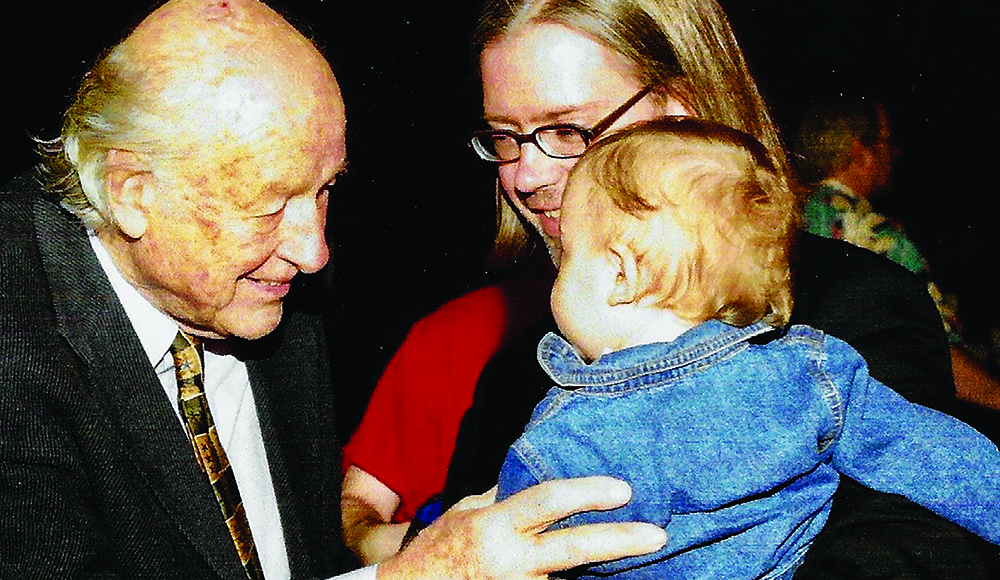
“Charlton Heston, who of course was in the 1956 remake many years later, was there. Heston was a frequent guest at the Cinematheque, and I interviewed him a number of times. He was a wonderful speaker and star, and, politics aside, he got standing ovations every time he appeared,” says Bartok.
One of Heston’s last public Q&As was at a screening at the Cinematheque of The Ten Commandments (1956). It occurred shortly after Heston announced that he had Alzheimer’s.
“I reached out to his office to let them know we were showing the film in case Heston wanted tickets for his son or grandchildren, who often came to see his films at the Cinematheque with him,” Bartok recalls.
“His office called back and said Heston wanted to do a Q&A before the screening, which surprised me, but of course I said I’d do it. It was incredibly brave because, talking with him that night, I could tell he was struggling to keep those memories alive by recounting them in public.”
The first retrospective with a contemporary Hollywood figure that Bartok programmed was a tribute to James Cameron. The screening featured Cameron’s choice: the director’s cut of The Abyss.
“There are often really great filmmakers who have one movie that, for whatever reason, had a troubled production or release, but remains their favorite child. And Cameron wanted to talk about The Abyss, which was not one of his biggest hits (it happened again). When we did a retrospective with William Friedkin, we opened with Sorcerer,” Bartok reveals.
PHILOSOPHICAL RESEARCH SOCIETY
Founded in 1934, The Philosophical Research Society in Los Angeles is, according to its website, “dedicated to the ensoulment of all arts, sciences and crafts.”
Bartok came to the Philosophical Research Society (PRS) in early 2022. They had been shut down during the pandemic and were just starting to reopen. At that time, the PRS was hosting events three or four times a month. By the time Bartok left two and a half years later, they were hosting events five to six nights a week, often with two to three events a night across the sprawling property.
“The PRS is based in a beautiful group of historic landmark Mayan revival buildings that were built between the 1930s and the late 1950s. People would always drive by and say, ‘Oh, that’s an interesting building, but I have no idea what goes on there.’ It looked like an odd, forgotten cult. My background is not in comparative religion or esoteric studies or anything that PRS had been exploring over the years. My background was in doing events and putting bodies in seats. The facility needed a lot of upkeep. I felt it should be useful and used. And so I started programming.”
With live music, film, performance art, live theatre, author talks, illustrated lectures, art exhibits, magic lantern shows, rare films, live magic shows, and the widest exploration of the farthest edges of the art worlds, Bartok now had a solid blueprint of what he could bring to a new location.
418 AND BEYOND
Still fresh on the job, sitting in his 418 Executive Director’s chair, Bartok is reviewing past successful events that he has staged, and seeing if they dovetail with the idiosyncratic culture that we call Santa Cruz.
Coming up in November, at 418, is Rob Zabrecky. Known for being the front man of the band Possum Dixon, as well as, acting alongside Casey Affleck and Will Oldham in the drama, A Ghost Story — he is also a prestidigitator. “Rob is phenomenally popular and acclaimed in magic. He segued from being, as he puts it, a starving musician into being a starving magician,” Bartok laughs.
“Rob does smart, surreal, postmodern magic shows, as well as presentations about the history of magic, magical arts, seances, and Houdini’s attempts to debunk the midnight spook shows.”
“We’re also planning a Krampus festival in mid-December at 418. It’s with Al Ridenour, who’s a wonderful Krampus author (The Krampus and the Old, Dark Christmas — published by Feral House in 2016) and has a great podcast on mysterious and esoteric subjects called The Bone and Sickle Podcast that I highly recommend. He founded Krampus LA years ago and does an incredible presentation about the cultural and anthropological history of Krampus and folklore. It’s super fun because we actually have a singer perform in costume and sing Bavarian folk songs. Attendees dress up in beautiful, elaborate Krampus monster outfits. We sell Glühwein, and it transports you into the Bavarian mountains, for one night,” Bartok claims.
In general, if you were to pin Bartok down – which is incredibly difficult because there is no bottom floor on his knowledge and enthusiasm for what he is doing and the artists he works with — he will admit that he plans to bring “the living library of artists, musicians, filmmakers, poets, and performers here in Santa Cruz, San Jose, the Bay Area, Northern California, to do wonderful, unexpected programs here at the 418.”
And that is good news for anyone who is bored and tired of living in the box.
For up to date events at The 418 Project, 155 River St., Santa Cruz, go to the418project.org. For more information about Bartok’s work restoring and distributing films, go to deafcrocodile.com









Dennis Bartok is one of the most brilliant and creative people I have ever met. Bless you for writing this article so your fellow artists can realize what a treasure they have in Dennis helming the 418 Project! 💖🙏🍺
Im one of Dennis’s oldest friends from Pittsburgh. From early on, one could tell his creativity and mind were unique and brilliant. Jayce and LeAnn also incredibly gifted. Im so proud to see the Bartok boys continue with there success and share their talents with orhers.
“…with others”. Pardon my misspelling.
I met Dennis when I was on the PRS board. He did such a fantastic job, enriching the community with a spectacular and seemingly inexhaustable stream of events. He’s brilliant! Members of the 418 community – buckle up! Dennis is a force.