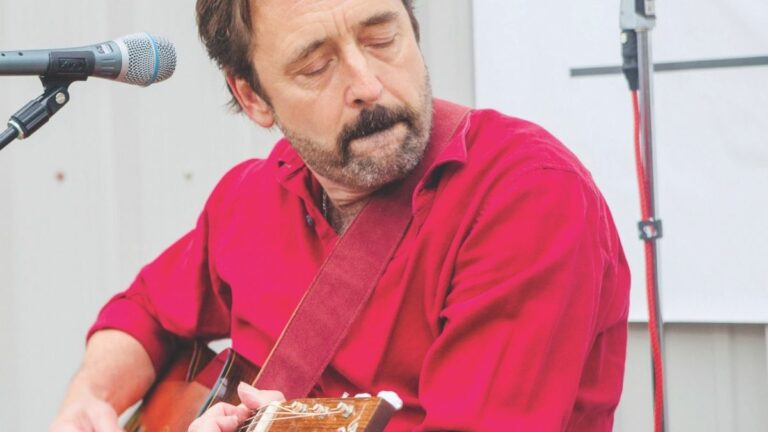

Senior Center Helps Hundreds of Vulnerable Residents get Vaccinated

0

The city of Watsonville hired Katie Nuñez in March 2020 to supervise the Watsonville Senior Center. Her tasks then were to bring the community hub into the 21st century and create a slew of programs for the area’s older adults.

But just two weeks after taking over the program, the novel coronavirus started to spread throughout Santa Cruz County, and everything changed. Nuñez has instead had to fill in the gaps that have arisen in the city’s response to the pandemic—whether that be through grocery distributions or online services.

More recently, and perhaps most importantly, she and Yajaira Rea—the only other city employee at the Senior Center—have served as point guard for the city’s vaccination efforts. They have been the link between Santa Cruz County, the city, various nonprofits, small health care providers and thousands of residents struggling to find a vaccine appointment for various reasons.

In all, Nuñez and city staff since Feb. 6 have helped more than 1,700 residents get their shot at the mass vaccination center in downtown Watsonville—a location operated by OptumServe and funded by the state. They’ve also forwarded hundreds of other residents to separate sites such as the county’s mass vaccination clinics at the Santa Cruz County Fairgrounds.

For her efforts, Nuñez was awarded the Service With Heart Award by Watsonville City Manager Matt Huffaker during the March 9 City Council meeting.

“Your effort has saved lives in our community,” Huffaker said. 

Nuñez said during the meeting that much of her work had been done over the phone through the Senior Center’s vaccine helpline, 831-768-3279, which is still open for older adults searching for an appointment. She, Rea and a cadre of city employees—including staff from the library and fire departments—have personally set up appointments for Watsonville’s older adults that might have struggled or been unable to access an appointment through the online portal.

The Senior Center’s efforts, Huffaker said, have given the city and county a low-tech and bilingual avenue for which to find Watsonville’s hard-to-reach residents and move them to the front of the perpetually crowded vaccine line.

“That seems to be the biggest hurdle in getting seniors signed up, is going through this technology,” Nuñez said while speaking to the Watsonville City Council at its March 9 meeting.

Taking state data into account, which says that more than 120,000 vaccine doses have been administered in the county, those 2,000 or so people seem to be just a drop in the slowly-filling bucket.

But Assistant City Manager Tamara Vides says those doses have been an essential tool in reaching Watsonville’s most vulnerable residents: older adults who struggle with technology, face a language barrier or do not have access to health care.

“Some of those people don’t have a computer or don’t know how to use it, they wouldn’t have been registered,” she said. 

The county health department gives the city a few dozen vaccine appointments at various sites every week. The county also does this with other agencies in the Watsonville area, such as Salud Para La Gente. The aim is to prioritize scarce vaccine allocations from the state to help the hard-hit city.

This month, County Deputy Health Officer Dr. David Ghilarducci said at a press conference Thursday, about 30% of their vaccines have been administered to residents of the 95076 zip code, which encompasses Watsonville. He also said that about 46% of the vaccines administered in the county Wednesday were given to residents of that zip code.

“We’re proud [of those numbers],” Ghilarducci said.

FILLING SPOTS

With more than 76% of county residents 65 and above having already received at least their first dose, the county is now having trouble filling the 70-20-10 split (older adults-essential workers-educators) still mandated by the California Department of Public Health, County Health Services Agency Director Mimi Hall said in a recent press conference.

For the city, that has meant Senior Center staff have slowly started to shift from older adults to essential workers by contacting small local employers directly—especially those in downtown and owned by Spanish speaking residents. Employees at Don Rafa’s Super Mercado, D’La Colmena Market and El Frijolito, among others, have received their vaccine thanks to the city’s efforts.

Vides, however, said the Senior Center’s priority is still older adults who struggle with technology, and encouraged anyone above 65 to call the helpline. All others have been asked to register through the state at myturn.ca.gov.

WHO’S NEXT?

On Monday, the state allowed health care providers to vaccinate people between the ages of 16-64 who are at high medical risk of falling seriously ill because of Covid-19. The state also opened up vaccinations to transit and transportation workers, and residents and staff of homeless shelters, behavioral health facilities, incarceration/detention centers and other at-risk congregate settings.

Vides said Senior Center staff have also started to slowly dip into this pool. Nuñez, for example, signed up several Santa Cruz METRO drivers for Wednesday’s vaccination clinic at the County Fairgrounds. And as vaccine supplies increase, Vides said, they will try to coordinate more inclusive vaccine distribution efforts.

“We’re hoping to facilitate neighborhood clinics to make sure that we continue to increase the access locally,” she said. “All of this makes a big difference.”

Editor’s note: Katie Nuñez is the author’s wife.

Federal Bills Could Help Restore Western Monarch Butterfly Migration

0

U.S. Rep. Jimmy Panetta (D-Carmel Valley) teamed up with Sen. Jeff Merkley (D-Oregon) to reintroduce two pieces of legislation that could help recover the Western monarch butterfly migration.

The western population of the iconic butterfly declined by 99% over the past 30 years. Numbers continue to dive. Official counts recorded less than 2,000 monarchs overwintering in California this year, compared to tens of thousands the past few years and millions in the 1990s.

Experts say climate change, pesticide-use and habitat-loss all contribute to the drop. The public can help by growing native plants, avoiding pesticides and contributing to community science initiatives like the Western Monarch Mystery Challenge. Now, the two newly introduced pieces of legislation could fund larger-scale habitat restoration programs.

Roads to recovery

The Monarch Actions, Recovery, and Conservation of Habitat (MONARCH) Act would allot $125 million to pollinator conservation projects over five years. Some $62.5 million of the funding would go to the Western Monarch Butterfly Conservation Plan, designed by the Western Association of Fish and Wildlife Agencies in 2019.

The second piece of legislation, the Monarch and Pollinator Highway Act, would establish a federal grant program for state transportation departments and Native American tribes. The funding could support roadside vegetation management and the planting of native species. 

Both pieces of bipartisan legislation were introduced in the House and Senate.

Saving the species

If passed, the bills could help restore the number of migrating monarchs. While West Coast communities might still see small numbers of resident monarchs, scientists worry we are losing the migration. Migrating keeps the species healthy. It allows the butterflies to weed-out diseases and find new food sources—both necessary behaviors for large, resilient populations.

“Recovering their populations by conserving habitat before they go extinct is crucial,” said UCSC Professor of Ecology and Evolutionary Biology A. Marm Kilpatrick in a press release on Wednesday. “Conserving habitat through the MONARCH Act of 2021 would bring us one step closer to protecting important ecosystems for western monarchs, and ensuing the valuable ecosystem services the habitat and the species provide.”

Local Artist Seeks New Home for Community Safety Mural

0

In late July 2019, a large, four-panel mural by Peter Bartczak of Clown Bank Studios was hoisted up onto the side of the old Watsonville City Hall.

The mural depicts a family of ducks, carefully crossing a street in a crosswalk in front of two automobiles. It aimed to send the message to passersby of the importance of traffic and pedestrian safety—still a hot topic in South County.

The piece remained installed at that location for a year and a half, as part of Pajaro Valley Arts’ annual Moveable Murals project. But last week, a new set of murals were installed for the exhibit, and now Bartczak is looking for a new home for his piece.

“I think the message of the piece is still important—maybe even more so,” Bartczak said. “The theme is road safety …. This is still a really big problem here. Between so many oblivious pedestrians, and outraged drivers … it’s not a good combo.”

Bartczak hopes to keep the mural downtown or in another high-traffic area of the city with a lot of visibility. Putting it on the side of a business, he says, would be ideal, but he is also approaching the city of Watsonville.

“I have three options: sell it, throw it out or put it in storage,” he said. “But I really want this to be seen. I hope it will be interesting enough to penetrate people’s consciousness … so they’ll think more about what’s beyond their little world.”

Bartczak said it was a long process to create the 20-by-8 foot mural. He could only do a couple panels at a time in his small studio. When it was installed for Moveable Murals it was the first time he saw the entire piece completed.

“It was a nice surprise, like unwrapping a present,” he said.

Bartczak is hoping to sell the piece, with his current price at $2,500, but says he is also willing to offer a trade.

“Or, if none of those work out, I could donate,” he said.

“Public art is meant to inform and entertain both at the same time,” Bartczak added. “Lessons are often pounded into our heads. But it doesn’t have to be unpleasant to learn a lesson, to increase our awareness.”

Anyone interested can contact Bartczak through email: pe***@*******nk.com. He is also available for future commissions. For more information visit clownbankstudio.com/home.

Tight Market, Recent Disasters Strain Santa Cruz County Homebuyers

For the past few years, local real estate agents have seen a drastic dip in the inventory of homes in Santa Cruz County. And with the ongoing pandemic and recent wildfires that destroyed close to 1,000 homes in the Santa Cruz Mountains, the market is tighter than ever before.

By summer 2020, it was clear that real estate was one industry that was busier than ever despite Covid-19. The market boomed, with prices skyrocketing due to increased demand.

According to Santa Cruz County Association of Realtors (SCCAR) data, in February 2021 there were 225 single family residences listed available. Of these, 124 were sold, at an average of 39 days on the market. Comparatively in February 2020, only 87 of 283 single family homes were sold, at an average of 73 days on the market.

For homebuyers, especially those looking for loans and insurance, it’s been a major challenge.

“We are at an all-time low inventory, and recent disasters have exacerbated everything,” said SCCAR President Pete Cullen. “It’s a super competitive market out there. I recently had a client who put in an offer with eight other offers … they couldn’t get it. Sometimes something will go on the market and get bought within a week.”

Cullen described what he’s been seeing with his clients as “buyer fatigue.” Homebuyers are getting frustrated going through the process of putting in offers over and over again and not getting the house, he said.

“I think buyer agents themselves are feeling it too,” Cullen said. “As a listing agent you’re in a good position, but for buyer agents it’s been exhausting.”

Guidelines for showing homes have also changed during the pandemic, leading to more challenges for buyers and agents. There are now constraints on how many people can view a home at once, and in what way. As such, people have been depending on smartphone apps and online resources.

Both Cullen and real estate agent Renee Mello of Keller Williams Realty said they have noticed an increase in cash sales recently. Mello, who focuses a good deal in South County, said the Adult Village area of Watsonville has seen an influx of cash buyers.

Many of these people, she said, were fleeing the Santa Cruz Mountains after the CZU Lighting Complex fire last summer. Many could not rebuild, others just decided against it and looked to safer, less disaster-prone areas.

“People were going and getting cashed out on their homes in the fire area, coming into Watsonville with all-cash offers,” she said. “Between the fires, the possibility of rainstorms, not having power … a lot of them are thinking, ‘I am so done with Boulder Creek living.’’”

Added Cullen: “It was traumatic for them. They don’t want to be there anymore. We’re definitely seeing this movement from mountain communities to urban areas … and that contributes to the competition.” 

It has also been making it difficult for people who want, or need to purchase with a loan, Mello said. In February 2021, the average sale price of a single family residence in Watsonville was about $645,000. For those who want to purchase a home through a loan, they might be out of the question if another bidder is able to offer that amount in cash.

The inaccessibility of insurance, Mello said, is another big issue that is bringing more and more people away from areas with heightened risk. Fire insurance and general homeowners insurance is extremely hard to come by—companies want to collect, taking large monthly premiums, but they don’t want to pay out, she said.

“I’ve heard that of everyone who is insured in California, people who have been affected by fires are a small percentage. And yet, the insurance companies keep raising their rates,” she said. “Something is wrong there.”

But it’s not all bad news, Mello said. Thankfully, unlike nearby Silicon Valley, Santa Cruz County has not removed contingency periods—that is, a time for prospect buyers to do a thorough investigation of a property’s condition.

“Removing that puts the buyer at risk,” she explained. “You have every right to know about the state of a house before you commit to it.”

Cullen said that the most important thing for prospective homebuyers is to get help from professionals they fully trust.

“It’s vital that buyers work with a realtor, with someone who is experienced, who knows the market, who will write a good offer,” he said. “In general, you should have a good relationship with them. That can make a big difference.”


Rising Seas, Worsening Wildfires Endanger California Parks

BY JULIE CART

Of all the existential threats California parks face — dwindling budgets, more visitors and costly, long-deferred maintenance — now comes a climate-driven conundrum: When is a park no longer a park? When its namesake trees disappear in a barrage of lightning strikes? When its very land is washed away by ever-rising seas?

The California Department of Parks and Recreation is coming to terms with this dilemma after a climate-reckoning moment last August, when more than 97% of Big Basin Redwoods, California’s oldest state park, was charred by a lightning-sparked wildfire

The shock of it was almost greater than the devastation: Coastal redwoods, the so-called asbestos forests of iconic, giant trees, hadn’t been hit by such ferocious blaze in living memory. The fire incinerated buildings and roads along with many trees; it was the most unexpected, indiscriminate and comprehensive destruction of a California state park, ever. Established 119 years ago, Big Basin remains closed.

Although all state agencies face the threat of climate change, state parks — with the depth and breadth of their 2,300 square miles of land — are singularly jeopardized. Caretaker of the nation’s largest state park system, the department is responsible for all of its historic structures, roads, bridges, land, beaches, forests, water, plants and animals.

“Every bit of California is going to be impacted by climate change. It’s going to affect every person in the state and every acre of land in the state,” said Jay Chamberlin, chief of the state parks’ natural resources division. “State parks are not only vulnerable, but some are uniquely vulnerable.”

Managing California’s nearly 300 parks will now require a top-to-bottom rethink: How to make public land more resilient to wildfires, rising seas, drought and extreme weather. The price tag for arming state beaches, thinning forests, moving restrooms and visitors’ centers, and other climate-resilience projects has not been calculated. But experts say if the money isn’t spent now to protect parks from rising seas and intensified fires, the damage and costs will multiply. 

“There’s needs to be a climate resilience plan for every park unit,” said Rachel Norton, executive director of the nonprofit California State Parks Foundation. “This is what’s coming: Drought, fire, sea level rise, loss of habitat for species. There’s a lot more work to be done to understand the scope of the potential threat.”

In particular, making California’s state parks resilient to sea level rise and flooding is critical; the agency manages about a quarter of the state’s coastline. Although the state’s climate change response is ongoing and frequently updated, a comprehensive sea-level rise plan for parks is being finalized, officials said.

Chamberlin said the agency is transitioning “to a stance where we consider climate in everything we do.”

“I’m talking about planning our capital investment, the vehicles we purchase or how we plan projects. When it comes to coastal issues, do not build in harm’s way. If a building needs roof repair, harden it if it’s in a wildfire zone. We are believers in building resilience into everything we do.”

The legislature is watching to see what the parks department comes up with.

“I tend to think, is there an engineering solution or a technology solution to this?” said Luz Rivas, a Democrat from Arleta who chairs the Assembly Natural Resources Committee.

Rivas, who has a degree in electrical engineering from the Massachusetts Institute of Technology and an advanced degree from Harvard, wonders if California can apply its ample brainpower to come up with solutions. 

“We are very fortunate to have many research institutions and national labs working on this. California is a leader in climate change policy but also technology. I think we should meld the two.”

Forest fires of the future

Climate change will make forests more susceptible to extreme wildfires. By 2100, if greenhouse gas emissions continue to rise, one study found that the frequency of extreme wildfires burning over approximately 25,000 acres would increase by nearly 50 percent, and that average area burned statewide would increase by 77 percent by the end of the century.

— California’s Fourth Climate Change Assessment (2018) 

Even those deeply familiar with every woody acre of Big Basin Redwoods — home to ancient trees of such stature that many are named and curated — the aftermath was unsettling.

“Going back into the park for the first time, it was very hard to believe what I was seeing,” said Chris Spohrer, state parks superintendent for the Santa Cruz region. “To see what a fire of that intensity could do was disorienting. The landmarks were gone, the colors were monochromatic. It took several visits for it to sink in, to get your bearings. It was shocking.”

Even though the bulk of the contents of Big Basin was damaged or destroyed, the idea of the park, a celebration of the tallest living things on the planet, remains intact, officials say. While redwoods were burned, their bark is thick and fire-resistant, so park managers expect many of the big trees to survive, although other species, such as Douglas Firs, are not as hardy.

But things will be different. Managing a park to be resilient to fire is going to require change in a fundamental way in the decades to come: Visitors will have to alter their definition of a healthy park to include the sight of fewer trees and more prescribed burning. Managers may have to reduce the forest in order to save the park, and consider building future visitor centers and other facilities out of more fire-resistant materials like metal or concrete rather than charming but flammable wood.

Beginning in 1900, the Sempervirens Fund, a nonprofit conservation group, purchased about 17,000 acres of redwood forests and transferred them to the state, essentially creating Big Basin Redwoods. The organization also manages its own adjacent forests for climate resiliency by thinning and conducting controlled burns to reduce abnormal density of old-growth stands.

That work paid dividends during the blaze, resulting in low-intensity fire that cleared out overgrown vegetation but spared the giant trees on the group’s land, providing an object lesson for the adjacent park.

“There’s no one quick fix to any of this,” said Laura McLendon, the Sempervirens Fund’s director of land conservation.

To survive climate change, she said, California’s forested parklands must be aggressively managed for fire using an array of approaches. “There needs to be a suite of activities — fuels reduction, reintroducing fire to the landscape where it has historically occurred, rethinking where we develop and the materials we use.”

The complexities of extreme weather played a role in the Big Basin fire. Coastal redwoods are historically shrouded in cool, moist fog, providing a wet blanket that spared the region the catastrophic fires that plague the rest of the state. That fog has been significantly reduced and the region’s nighttime temperatures have risen.

Twenty-two state parks were hit by fire last year, according to the State Parks Foundation. Climate scientists say California can expect more frequent fires and more damaging megafires. 

In Southern California, fires driven by late-summer winds regularly scorch state parks. More than half of parkland in the Santa Monica Mountains was damaged in the 2018 Woolsey Fire, with the popular beach retreats of Leo Carrillo and Malibu Creek State Parks bearing the brunt of the blaze. Historical sites were lost as well as employee residences and campgrounds. Will Rogers State Historic Park, a popular hiking retreat, has been hit by fire, and up the coast, Point Mugu State Park was nearly destroyed in 2013 by the Spring Fire, which burned more than 80 percent of the park and left it vulnerable to flooding. 

Climate change’s impacts require adapting to a new and sometimes unfriendly climate, and building resilience — the buzzword of the moment — into the state parks’ nearly 1.5 million acres.

Sarah Newkirk, director of disaster resilience for The California Nature Conservancy, said it “used to be about bouncing back.” But now, “instead of bouncing back to the original configuration, we need to learn to bounce back better.”

Rising seas, rising threats

A new model estimates that, under mid to high sea-level rise scenarios, 31 to 67 percent of Southern California beaches may completely erode by 2100 without large-scale human interventions. Statewide damages could reach nearly $17.9 billion from inundation of residential and commercial buildings under (20 inches) of sea-level rise, which is close to the 95th percentile of potential sea-level rise by the middle of this century. A 100-year coastal flood, on top of this level of sea-level rise, would almost double the costs.

— California’s Fourth Climate Change Assessment (2018)

Darren Smith doesn’t need to read a report about climate change  to understand the threats to state parks. He’s living it every day. 

Smith, who is the natural resources manager for the park department’s San Diego Coast District, is fighting water — from all sides.

“We are being squeezed,” he said, gesturing to the ocean on a recent visit to South Carlsbad State Beach. The sea’s powerful wave action throws rocks and boulders up on the beach, cobbling it with smooth stones that crowd out sand. 

Turning, Smith points to the cliffs behind him and the city of Carlsbad on the other side of a highway. El Nino-powered storms create runoff that gushes over bluffs or percolates into porous sandstone, carving fissures that pockmark and destabilize the cliff face. “We don’t have anywhere to go.”

As for a park campsite on a promontory affording a magnificent view of rugged coastline, “it’s a goner,” he said.

The Pacific Ocean is inexorably rising on the beaches he manages, slamming into bluffs and undermining parking lots, campsites and restroom facilities. On the ever-shrinking state beaches, Smith and his crews fight to preserve all-important “towel space” as well as public access. Staircases that lead down to the beach are in rusty decay and battered by waves. 

The parks department is on a penny-pinching budget — $858 million for 2021-22, down 34% from the previous year because of one-time bond appropriations. Coronavirus closures cost the agency lost revenue from entrance fees and concessions.

The state is facing even worse sticker shock when considering the system-wide costs to respond to climate change. Smith said the agency can spend $3 million just replacing one beachfront staircase. 

Experts say the state can no longer throw good money after bad and must plan for managed retreat — a wholesale push away from the sea. In Southern California, state park facilities are moved back from the shore in order to preserve them. Smith said a handful of beach-facing parking lots in his district have already been lost or moved. 

In one case, not only does the public lose convenient access to a beach, but the state lost the parking lot’s annual $400,000 in revenue and spots for more than a million cars.

In some places, where the state beach is a narrow strip of land hemmed in by a road or highway, agency officials have to get creative, buying or swapping property from neighboring cities in order to move out of harm’s way.

Elsewhere, beach parks are being reconfigured by massive sand-moving projects. On a recent day, a parking lot served as a staging area for heavy equipment and excavators preparing to sculpt sand reclaimed from a nearby lagoon.

In Encinitas, an experiment in restoring a “living shoreline” is underway, an example of so-called soft armoring. Rather than piling up massive mountains of rock or pouring concrete to keep the sea at bay, the park built a dunes system anchored by native plants. The undulating sand dunes now provide an invaluable function, absorbing and slowing encroaching waves and providing habitat for an array of animals and plants.

The dunes are not only stabilizing the sand and preserving the beach, but on the landward side they prevent sand drifts from accumulating on the adjacent road. “If it wasn’t for this project, (it’s) guaranteed we would have lost some of the highway,” Smith said. 

Smith said the parks agency is keenly aware of “what climate change is doing and will do in the future.” But he said, “we can’t keep up.”

Parks are threatened by other aspects of climate change, too: Extremes of heat and cold stress facilities and operations. Drought threatens animals’ habitat and makes trees more susceptible to disease and insect infestation.

Chamberlin, the parks’ resources chief, said future investments will be assessing whether a proposed facility is going to eventually be underwater or vulnerable to fire.

Whether its fire or water, climate change will continue to eat away at California’s parks — and the agency’s budget.

“The state parks system represents  the most profound investment on the part of all Californians and reflects our collective passion to protect the natural environment,” said The Nature Conservancy’s Newkirk. “The state parks system has a real role in providing a good example of resiliency.”


CalMatters.org is a nonprofit, nonpartisan media venture explaining California policies and politics.

Potential Porter Building Sale Halted by State Land Use Law

0

The historic Porter Building in downtown Watsonville will not be sold to the Pajaro Valley Arts (PV Arts) Council—it won’t be sold to the owners of this publication, either. 

At least not anytime soon.

Ongoing discussions between the city of Watsonville and PV Arts around the vacant city-owned building have halted because of Assembly Bill 1486, also known as the Surplus Land Act. That bill requires jurisdictions to make all “surplus” properties—defined broadly as land that is not currently in use by cities, counties and districts—to be made available to affordable housing developers before they can be sold.

Watsonville Assistant City Manager Tamara Vides said the city council found out about the requirement from a real estate lawyer while it was trying to arrange a deal to sell the building to PV Arts.

The city council at its March 23 meeting is expected to address the situation publicly and declare the property as a “surplus.” When that happens, the city will then need to notify the state that it intends to sell the property, and its housing department will need to notify affordable housing developers to see if they are interested in the vacant two-story, 15,000-square-foot building, which has stood at the corner of Main Street and Maple Avenue since 1903.

“If someone is interested in the property, then this city is obligated to negotiate for housing first,” Vides said.

The Surplus Land Act was approved by state lawmakers in 2019, just weeks before the city sent out a request for proposals regarding the Porter Building. It went into effect on Jan. 1, 2020.

Under the law, affordable housing developers have 60 days to state their interest after a jurisdiction declares the property a surplus. If a developer does step forward, the jurisdiction must enter into “good-faith” negotiations with them for 90 days.

If no developer shows interest in the property, or if a deal cannot be reached in the subsequent 90 days, then the property can be sold.

Only after that period expires can the city continue negotiations with PV Arts or any other entity interested in the property that is not an affordable housing developer.

“If a feasible housing project were to come up, if that’s the will of council then, that’s the direction the project will be moving,” Vides said. “If that doesn’t happen, I would think the council would be interested in restarting negotiations with PV Arts.”

Those negotiations have been ongoing behind closed doors since WatsNews LLC CEO Dan Pulcrano put a pause on his proposal for the building. Pulcrano in an editorial in the Pajaronian said he made the decision because he did not want to halt PV Arts’ plans of expanding arts in Watsonville and sow “unnecessary division in the community.”

“The city of Watsonville should continue to pursue sensible economic growth strategies so that downtown can return as the heart of the city and maximize revenues to fund services,” he wrote. “It should also embrace the arts as a vital element of community life. Both goals should proceed in tandem, not at the expense of one another.”

Both PV Arts, a nonprofit established in 1984, and WatsNews LLC, a company Pulcrano established in 2019 after he purchased the 153-year-old Pajaronian, showed their plans in a fiery October 2020 city council meeting.

PV Arts had planned to build a haven for artists with gallery exhibits, art retail space and a multipurpose room for performances, meetings, events, workshops and additional special exhibits. Several classrooms for seniors and young people and artists’ studios were also in their plans.

PV Arts Treasurer Judy Stabile said the nonprofit would use the building to expand its longstanding art shows, classes and retail opportunities currently found at its Sudden Street location—a spot it rents from the city at almost no cost. Stabile added that the Porter Building would be a “stepping stone” for a much larger project currently in its infancy: a massive community arts and performing center.

Pulcrano, CEO and owner of the Santa Cruz Good Times and San Jose’s Metro Silicon Valley, planned to create a casual dining Italian restaurant with well-known restaurateur Joe Cirone, emphasizing locally sourced ingredients, and a wine bar and food market highlighting Santa Cruz Mountains vineyards, Pajaro Valley farms and artisanal producers. The project also called for a “boutique” micro-hotel and a “creative space” for community institutions as well as the Pajaronian.

Pulcrano said his plan would have provided anywhere between 50-100 jobs, and he called it a “catalyst” for downtown.

“Watsonville has nowhere to go but up,” Pulcrano said. “If we do the downtown right … it’s going to be a powerhouse.”

But several in attendance at the meeting said his plan “raised some red flags” about it leading to gentrification.

The original request for proposals said the city wanted ideas that would maximize the building’s potential by bringing an entertainment or retail-related business to the first floor.

The building was nearly sold in 2015 after Ceiba College Prep Academy moved out, but a deal with Walnut Creek’s Novin Development fell through.

It has sat empty since. 

The building served as the post office until 1913 and has also served as a dentist office and an army surplus store.

It was one of the few historic buildings in Watsonville’s downtown that survived the 1989 Loma Prieta Earthquake with minimal damage.

How Covid Survivors Are Finding Their Way Into Politics

By Maggie Astor

Pamela Addison is, in her own words, “one of the shyest people in this world.” Certainly not the sort of person who would submit an op-ed to a newspaper, or start a support group for strangers, or ask a U.S. senator to vote for $1.9 trillion legislation.

No one is more surprised than her that, in the past five months, she has done all of those things.

Her husband, Martin Addison, a 44-year-old health care worker in New Jersey, died from the coronavirus April 29 after a month of illness. The last time she saw him was when he was loaded into an ambulance. At 37, Addison was left to care for a 2-year-old daughter and an infant son and to make ends meet on her own.

“Seeing the impact my story has had on people — it has been very therapeutic and healing for me,” she said. “And knowing that I’m doing it to honor my husband gives me the greatest joy, because I’m doing it for him.”

With the U.S.’ staggering coronavirus death toll — more than 535,000 people — come thousands of stories like hers. Many people who have lost loved ones or whose lives have been upended by long-haul symptoms have turned to political action, seeking answers and new policies from a government whose failures under the Trump administration allowed the country to become one of the hardest hit by the pandemic.

There is Marjorie Roberts, who got sick while managing a hospital gift shop in Atlanta and now has lung scarring. Mary Wilson-Snipes, still on oxygen more than two months after coming home from the hospital. John Lancos, who lost his wife of 41 years April 23. Janis Clark, who lost her husband of 38 years the same day.

In January, they and dozens of others participated in an advocacy training session over Zoom, run by a group called COVID Survivors for Change. This month, the group organized virtual meetings with the offices of 16 senators — 10 Democrats and six Republicans — and more than 50 group members lobbied for the coronavirus relief package.

The immediate purpose of the training session was to take people who in many cases had never so much as attended a school board meeting and teach them to do things like lobby a senator. The longer-term purpose was to confront the problem of numbers.

Numbers are dehumanizing, as activists like to say. In sufficient quantities — 536,472 as of Wednesday morning, for instance — they are also numbing. This is why converting numbers into people is so often the job of activists seeking policy change after tragedy.

Mothers Against Drunk Driving, founded by a woman whose daughter was killed by a drunken driver, did that. Groups that promote stricter gun laws, like Moms Demand Action and March for Our Lives, have sought to do it. Now some coronavirus survivors think it is their turn.

“That volume, that collective national trauma, is almost too hard for people to grasp,” said Chris Kocher, who is executive director of COVID Survivors for Change and previously worked with gun violence survivors at Everytown for Gun Safety. “But you can understand one story and one life lived.”

Kocher started organizing CSC last summer — with a “minimal” budget, he said — and the group launched publicly in October with a remembrance event featuring Dionne Warwick.

Shortly before they lobbied their senators March 3, CSC members heard from someone who was once in their position: Rep. Lucy McBath of Georgia, who joined Moms Demand Action after her son, Jordan Davis, was killed in 2012. She discussed her own experience moving from a personal tragedy into political activism and how survivors’ stories could influence elected officials.

One CSC member, Wilson-Snipes, 52, also worked with Moms Demand Action; she started a chapter in Junction City, Kansas, after her son, Felix, was fatally shot in 2018. Then, in November, she got COVID-19 and was hospitalized with pneumonia.

Wilson-Snipes came home Christmas Eve with an oxygen machine, which she still needs. Her lungs are still inflamed, her chest still painful.

While the policies she promoted with Moms Demand Action are different from the ones she and others are advocating with COVID Survivors for Change — like mask-wearing, and financial assistance for people affected by the virus — she said the message was the same: “You could be in my family’s shoes, in my shoes.”

That was also the message Addison conveyed in an op-ed article after former President Donald Trump contracted the coronavirus and told the nation, “Don’t be afraid of COVID.” That was the moment she became angry enough to speak, she said, because Trump’s words “were probably the most painful words I’d ever heard a leader say.”

The Star-Ledger published Addison’s op-ed in October, and the intensity of the response shocked her.

“I’d never really thought about it that way — that I could use my story to make change,” she said.

She decided to create a Facebook group for newly widowed parents and found her first members from comments on her op-ed. In January, she participated in the COVID Survivors for Change training. This month, she and other members in New Jersey spoke with Sen. Cory Booker’s office

Another cohort spoke with the office of Sen. Jon Ossoff of Georgia. One of them was Roberts, 60, the former gift shop manager with lung damage from the virus.

“March 26 I woke up, I was fine,” Roberts said. “And by the time the sun went down that night, my whole life and my whole family’s life had been changed forever.”

After the Ossoff meeting, she called Kocher in tears. In almost a year, she said, it was the first time she had felt heard.

The political mobilization of coronavirus survivors is still in early stages, and it is impossible to know whether it will fade once the pandemic is over or solidify into something lasting. But COVID Survivors for Change is not the only group seeking long-term changes.

Another organization, Marked by COVID — founded by Kristin Urquiza, who lost her father to the virus and spoke at the Democratic National Convention — recently released a sweeping policy platform. Among other things, it calls for a “public health job force” of 1 million people to perform tasks like contact tracing, a restitution program similar to the September 11th Victim Compensation Fund, and a commission to examine the government’s pandemic response.

The platform also includes much more contentious proposals, like a federal jobs guarantee, universal health care and child care, medical and student debt cancellation, and a ban on importation of products linked to deforestation. Urquiza said the idea was to address factors that make pandemics more likely and to make Americans economically secure enough to weather crises.

“It’s really not only about ensuring that we are responding to the most urgent pieces that are in front of our face right now,” she said.

COVID Survivors for Change, by contrast, has no official platform. Although the members who lobbied Congress did so in support of President Joe Biden’s stimulus package, the group is nonpartisan and has focused on training survivors to promote policies they choose.

Several members said the virus had drawn them into the political arena in ways that would have shocked them a year ago.

Janis Clark, 65, said her husband, Ron Clark, had always been the politically active one. “Whenever he’d watch politics, it’d be like, ‘Here comes the half-hour dissertation,’” she said, laughing. “I’d get nervous about PTA functions.”

Ron Clark died April 23, after two weeks at home with a fever as high as 104 and more than three weeks on a ventilator. He never learned that his daughter was pregnant.

Desperate for someone to understand what the virus’s toll really meant, Janis Clark started writing. She wrote to Rep. Paul Tonko, D-N.Y., who represents her district around Albany. She wrote to Sens. Chuck Schumer and Kirsten Gillibrand. She did not know they were unlikely to reply.

“I just wanted somebody to hear my story,” she said. “And it was like, how do you reach these people? I don’t know what the right avenue is. I’d never written my congressman about anything.”

In February, Clark signed an open letter that COVID Survivors for Change organized, urging senators to pass a relief package and calling for a reimbursement program for funeral costs and more medical resources for survivors. Now she thinks she might do more — maybe even attend a demonstration once it is safe.

For some people, this feels like building something out of rubble.

Lancos met his wife, Joni Lancos, when he was a National Park Service interpreter at Federal Hall in Manhattan and she was a clerk working on the third floor. Their first date was Nov. 3, 1977. He took her to a Broadway show featuring Danish pianist Victor Borge.

Last April, 41 years and 15 days after their wedding and less than 18 hours after her first symptoms, she died in a Brooklyn intensive care unit.

There was no memorial service, not when the streets of New York City were screaming day and night with the sirens of ambulances carrying the dying. So Lancos, 70, sifted through the wreckage of grief and his own infection — which left him with brain fog and short-term memory loss — in isolation. The funeral home sent him five photos of a rabbi praying over his wife’s coffin.

“That was it,” Lancos said through tears. “That was my funeral for my wife, seeing those five photos.”

On March 3, he was one of the COVID Survivors for Change members who spoke with the office of Schumer, the Senate majority leader. Afterward, he recorded a short message for a video.

“I think Joni would — ” he said, pausing to taking a steadying breath, “be proud of what I did today.”

Copyright 2021 The New York Times Company

Advanced Cancers Are Emerging, Doctors Warn, Citing Pandemic Drop in Screenings

By Reed Abelson

Yvette Lowery usually gets her annual mammogram around March. But last year, just as the pandemic was gaining a foothold and medical facilities were shutting down, the center where she goes canceled her appointment. No one could tell her when to reschedule.

“They just said keep calling back, keep calling back,” said Lowery, 59, who lives in Rock Hill, South Carolina.

In August, Lowery felt a lump under her arm but still couldn’t get an appointment until October.

Eventually, she received a diagnosis of Stage 2 breast cancer, started chemotherapy in November and had a double mastectomy this month.

“I’ve been seeing a lot of patients at an advanced stage,” said Dr. Kashyap Patel, one of Lowery’s doctors and the chief executive of Carolina Blood and Cancer Care Associates. If her cancer had been detected last May or June, it would have probably been caught before it had spread, Patel said.

Months of lockdowns and waves of surging COVID cases throughout last year shuttered clinics and testing labs, or reduced hours at other places, resulting in steep declines in the number of screenings, including for breast and colorectal cancers, experts have said.

Numerous studies showed that the number of patients screened or given a diagnosis of cancer fell during the early months of the pandemic. By mid-June, the rate of screenings for breast, colon and cervical cancers were still 29% to 36% lower than their pre-pandemic levels, according to an analysis of data by the Epic Health Research Network. Hundreds of thousands fewer screenings were performed last year than in 2019, according to the network data.

“We still haven’t caught up,” said Dr. Chris Mast, vice president of clinical informatics for Epic, which develops electronic health records for hospitals and clinics.

Another analysis of Medicare data suggested that as COVID cases spiked during certain periods in 2020, cancer screenings fell. The analysis — conducted by Avalere Health, a consulting firm, for Community Oncology Alliance, which represents independent cancer specialists — found that testing levels in November were about 25% lower than in 2019. The number of biopsies, used to diagnose cancer, decreased by about one-third.

While it is too early to assess the full impact of the delays in screenings, many cancer specialists say they are concerned that patients are coming in with more severe disease.

“There’s no question in practice that we are seeing patients with more advanced breast cancer and colorectal cancer,” said Dr. Lucio Gordan, the president of the Florida Cancer Specialists & Research Institute, one of the nation’s largest independent oncology groups. He is working on a study to see if, overall, these missed screenings resulted in more patients with later-stage cancers.

And even though the numbers of mammograms and colonoscopies have rebounded in recent months, many people with cancer remain undiagnosed, doctors are reporting.

Some patients, like Lowery, could not easily get an appointment once clinics reopened because of pent-up demand. Others skipped regular testing or ignored worrisome symptoms because they were afraid of getting infected or after losing their jobs, they couldn’t afford the cost of a test.

“The fear of COVID was more tangible than the fear of missing a screen that detected cancer,” said Dr. Patrick Borgen, the chair of surgery at the Maimonides Medical Center in Brooklyn who also leads its breast center. His hospital treated such large numbers of coronavirus patients early on that “we’re now associated as the COVID hospital,” he said, and healthy people stayed away to avoid contagion.

Even patients at high risk because of their genetic makeup or because they previously had cancer have missed critical screenings. Dr. Ritu Salani, the director of gynecologic oncology at the UCLA Health Jonsson Comprehensive Cancer Center said one woman, who was at risk for colon cancer, had a negative test in 2019 but didn’t go for her usual screening last year because of the pandemic.

When she went to see her doctor, she had advanced cancer. “It’s just a devastating story,” Salani said. “Screening tests are really designed when patients aren’t feeling bad.”

Ryan Bellamy felt no hurry last spring to reschedule a canceled colonoscopy, even though the presence of blood in his stool had prompted him to look up symptoms. “I really didn’t want to go to the hospital,” Bellamy said. He decided it was unlikely he had cancer. “They’re not following up with me so I’m OK with Googling,” he told himself.

A resident of Palm Coast, Florida, Bellamy said that after his symptoms worsened, his wife insisted that he go for testing in December, and he had a colonoscopy in late January. With a new diagnosis of Stage 3 rectal cancer, Bellamy, 38, is undergoing radiation treatment and chemotherapy.

Colon screening remained significantly lower in 2020, declining about 15% from 2019 levels, according to the Epic network data, although overall screenings were down 6%. The analysis looked at screenings for more than 600 hospitals in 41 states.

Lung cancer patients have also delayed seeking appropriate care, said Dr. Michael Liptay, chairman of cardiovascular and thoracic surgery at Rush University Medical Center in Chicago. One patient had imaging that showed a spot on his lung, and he was supposed to follow up, just as the pandemic hit. “Additional work-up and care was deferred,” Liptay said. By the time the patient was fully evaluated, the cancer had increased in size. “It wasn’t a good thing to wait 10 months,” Liptay said, although he was uncertain whether earlier treatment would have changed the patient’s prognosis.

Just as previous economic recessions led people to forgo medical care, the downturn in the economy during the pandemic has also discouraged many people from seeking help or treatment.

“We know cancers are out there,” said Dr. Barbara McAneny, the chief executive of New Mexico Oncology Hematology Consultants. Many of her patients are staying away, even if they have insurance, because they cannot afford the deductibles or copayments. “We’re seeing that, particularly with our poorer folks who are living on the edge anyway, living paycheck to paycheck,” she said.

Some patients ignored their symptoms as long as they could. Last March, Sandy Prieto, a school librarian who lived in Fowler, California, had stomach pain. But she refused to go to the doctor because she didn’t want to get COVID. After having a telehealth visit with her primary care doctor, she tried over-the-counter medications, but they didn’t help with the pain and nausea. She continued to decline.

“It got to the point where we didn’t have a choice,” said her husband, Eric, who had repeatedly urged her to go to the doctor. Jaundiced and in severe discomfort, she went to the emergency room at the end of May and was given a diagnosis of Stage 4 pancreatic cancer. She died in September.

“If it wasn’t for COVID and we could have gotten her some place earlier, she would still be with us today,” said her sister, Carolann Meme, who had tried to persuade Prieto to go to an academic medical center where she might have gotten into a clinical trial.

When patients like Prieto are not seen in person but treated virtually, doctors may easily miss important symptoms or recommend medication rather than tell them to come in, said Dr. Ravi D. Rao, the oncologist who treated Prieto. Patients may downplay how sick they feel or neglect to mention the pain in their hip, he said.

“In my mind, telemedicine and cancer don’t travel together,” Rao said. While he also made use of telemedicine during the height of the pandemic, he says he worked to keep his offices open.

Other doctors defended the use of virtual visits as a critical tool when office visits were too hazardous for most patients and staff. “We were grateful to have a robust telemedicine effort when people simply couldn’t come into the center,” said Borgen, the surgeon at Maimonides. But he acknowledged that patients were frequently reluctant to discuss their symptoms during a telehealth session, especially a mother whose young children could be listening to what they were saying. “It’s not private,” he noted.

Some health networks say they took aggressive steps to try to counteract the effects of the pandemic. During the initial stay-at-home order last year, Kaiser Permanente, the large California-based managed care outfit, spotted a declining number of breast cancer screenings and diagnoses in the northern part of the state. “Doctors immediately got together” to begin contacting patients, said Dr. Tatjana Kolevska, medical director for the Kaiser Permanente National Cancer Excellence Program.

Kaiser also relies on its electronic health records to make appointments for women who are overdue for their mammograms when they book an appointment with their primary care doctor or even want to get a prescription for new glasses.

While Kolevska says she is waiting to see data for the system as a whole, she has been encouraged by the number of patients in her practice who are now up to date with their mammograms.

“All of those things put in place have helped tremendously,” she said.

Copyright 2021 The New York Times Company

Can Vaccination and Infection Rates Add Up to Reach Covid Herd Immunity?

By Carmen Heredia Rodriguez

It’s been a long, dark winter of covid concerns, stoked by high post-holiday case counts and the American death tally exceeding 530,000 lives lost. But with three vaccines — Pfizer-BioNTech, Moderna and Johnson & Johnson — now authorized for emergency use in the United States, there seems to be hope that the pandemic’s end may be in sight.

A recent analysis by the Wall Street research firm Fundstrat Global Advisors fueled this idea, suggesting as many as nine states were already reaching the coveted “herd immunity” status as of March 7, signaling that a return to normal was close at hand.

“Presumed ‘herd immunity’ is ‘the combined value of infections + vaccinations as % population > 60%,’” noted a tweet by a CNBC anchor based on a more complete analysis by the firm. That got us thinking: Does this calculation hold up?

First, do public health experts generally consider herd immunity to kick in at 60%? In addition, does current scientific thinking equate protection from the antibodies generated by past covid infections with the same degree of protection as a vaccination?

We decided to find out.

First, a review of herd immunity. Also known as community or population immunity, the term is used to describe the point at which enough people are sufficiently resistant — or have an immune response — to an infectious agent that it has difficulty spreading to others.

In this explainer, we noted that people generally gain immunity either from vaccination or infection. For contagious diseases that have marked modern history — smallpox, polio, diphtheria or rubella — vaccines have been the mechanism through which herd immunity was achieved.

While the United States is getting closer to this point, most health experts caution, it still has ground to cover. Fundstrat’s analysis offered a rosier take. Although the site is located behind a paywall, the chart generated buzz on Twitter and in news outlets like the Daily Caller.

Fundstrat relied on a variety of sources — particularly, a data scientist and pandemic modeler named Youyang Gu — to determine what level of immunity a state needs to stamp out covid, said Ken Xuan, the firm’s head of data science research. From there, analysts created a chart intended to track the level of covid immunity in each state. They calculated the number by adding the percentage of people estimated to have been infected with the virus to the percentage of people who had received the vaccine.

Xuan, who was quick to note that he is not a public health expert, said he and his team followed Gu’s predictions and arrived at 60%, a figure he acknowledges is an assumption.

“The idea would be we don’t know if 60% is true,” he said. However, if states that have reached this threshold see steep declines in covid cases, “then it’s the number to watch.”

What About the 60% Marker?

Throughout the pandemic, health experts have tended to set the magic number for herd immunity between 50% and 70% — with most, including Dr. Anthony Fauci, the head of the National Institute of Allergy and Infectious Diseases, leaning toward the higher end of the spectrum.

“I would say 75 to 85% would have to get vaccinated if you want to have that blanket of herd immunity,” he told NPR in December.

The experts we consulted were skeptical of the 60% figure, saying the mechanics of the Fundstrat analysis were relatively sound but oversimplified.

Ali Mokdad, chief strategy officer for population health at the University of Washington, said the level of immunity needed to reach this goal can vary due to several factors. “Nobody knows what is herd immunity for covid-19 because it’s a new virus,” he said.

That said, Mokdad described using 60% as “totally wrong.” Data from other communities around the world show covid outbreaks happening at or near that level of immunity, he said. Indeed, the city of Manaus in Brazil saw cases drop for several months, then surge despite three-fourths of their residents already having had the virus.

Josh Michaud, associate director for global health policy at KFF, described the 60% assumption as “off-base.”

And some said it wasn’t even the main point.

Dr. Jeff Engel, senior adviser for covid at the Council of State and Territorial Epidemiologists, said the question of herd immunity may not even be relevant because, regarding covid, we may never reach it. The novel virus may become endemic, he said, which means it will continue circulating like influenza or the common cold. For him, lowering deaths and hospitalizations is more important.

“The concept of herd immunity means that once we reach the threshold, it’s going to go away,” Engel said. “That’s not the case. That’s a false notion.”

Natural and Vaccine Immunity — Should They Be Lumped Together?

When asked why the Fundstrat analysis treated the two types of immunity as equivalent, Xuan said it was an assumption.

Here’s what current science supports.

Those who receive any of the three vaccines available in the United States enjoy a high level of protection against getting seriously sick and dying from covid — even after one dose of a two-shot series.

In addition, people who were infected and recovered from the virus appear to retain some protection for at least 90 days after testing positive. Immunity may be lower and decline faster among people who developed few to no symptoms.

Practically speaking, two experts said, natural and vaccine-induced immunity work the same way in the body. This lends credibility to Fundstrat’s approach.

However, some health experts consider vaccine-induced immunity to be better than the protection generated by the infection because it may be more robust, said Michaud. Researchers are still figuring out whether people who were infected with the virus but experienced mild or no symptoms generated an immune response as strong as those who developed more severe disease.

In fact, the Centers for Disease Control and Prevention cites the unknowns surrounding natural immunity and the risk of getting sick again with covid as reasons for those who had the virus to get a vaccine.

“They haven’t been studied well at all yet,” said Engel, in reference to asymptomatic people. “And maybe we’re going to discover that a large group of them didn’t develop really robust immunity.”

Both types of viral protection leave room for potential breakthrough infections, Michaud said. Neither offers “perfect immunity,” he said. And wild cards remain. How long do both types of immunity last? How do different people’s systems respond? How protected will people be from emerging coronavirus variants?

“It’s a witches’ brew of different factors to consider when you’re trying to estimate herd immunity at this point,” said Michaud.

This story was produced by KHN (Kaiser Health News), a national newsroom that produces in-depth journalism about health issues. Together with Policy Analysis and Polling, KHN is one of the three major operating programs at KFF (Kaiser Family Foundation). KFF is an endowed nonprofit organization providing information on health issues to the nation.


Small Landlords Left Struggling When Renters Stop Paying

BY KATE CIMINI

At the start of the pandemic, Brandon McCall’s two tenants ran into financial trouble. One had surgery, and went on disability, which tightened his purse strings. The other, who works in entertainment, was laid off almost immediately, and wasn’t eligible for unemployment as a contract worker. With a limited amount of cash coming in, McCall said the two of them stopped paying rent on his Van Nuys condo in Los Angeles. 

McCall looked into mortgage forbearance, but decided to pass when he learned it would impact his credit. He would also have to pay in full after his deferral period was up. Unsure when the tenants would start paying again, McCall and his wife dipped into savings to cover the mortgage on their condo even as they rent elsewhere for work. 

“Landlords rights and tenants rights are the same thing,” McCall said. “They’re often pitted against each other, but they’re the same thing. … I want to stay housed. I want to keep my tenants housed. We’re all in this together.”

Throughout the past year, small landlords such as the McCalls have struggled to pay their mortgage when tenants became unable to pay. The state plans to provide some relief by using $2.6 billion in federal assistance as rent subsidies to pay landlords 80% of unpaid back rent of low-income tenants between April 2020 and March 2021. In exchange, landlords must agree to forgive the remaining 20% in back rent and agree not to pursue evictions.

The state rent relief program will not help McCall’s tenants, though; they make too much to qualify. Still, he said, he has been trying to help, connecting them to other relief programs and even putting them in touch with a local council person who might be able to offer assistance.

He is not contemplating eviction of his tenants, who have since gotten on a payment plan and are catching up on rent, citing his belief in the importance of affordable housing. But a number of small landlords are in the same boat as McCall: pinched from both ends, and wondering how much longer they are going to be able to float their own lives as well as their investment properties.

Small landlords struggle 

Unlike the 2008 housing crisis when subprime lending triggered a wave of foreclosures, experts say property owners have fared surprisingly well during the pandemic. Homeowners, especially, have been assisted by low-interest rates and federally mandated mortgage forbearance. Edward S. Gordon Professor of Real Estate in the Finance Division at Columbia Business School Tomasz Piskorski estimated that some 60 million borrowers absorbed about $70 billion in debt during the pandemic. 

However, not all small property owners have been able to take advantage of government relief even as they absorb the costs for renters.

“There are some landlords that will struggle to pay their bills because they aren’t receiving rent from tenants, or have units sitting vacant,” said Zillow economist Jeff Tucker. “It’s not like a larger property management company that can manage units and mostly muddle through. For a smaller-scale landlord with only a handful of rental units, they could easily be forced to sell their rental units or be foreclosed on if they have a mortgage on it.”

According to the 2015 American Housing Survey, nationally, about individual investors own 22.7 million units, accounting for a little under half the total number of rentals. Individual investors are more likely to own single-family homes or duplexes. About 70% of the rentals in LA are five units or less.

In large cities like San Francisco, rentals saw declines of 8% or 9% year over year. While low-income workers were more likely to be laid off and moved out to cut costs, wealthier renters, including a record number of millenials, ditched renting to become first-time homebuyers.

Desperate to get people in the door, landlords, many with mortgages on the properties they rent out, began offering months of free rent, free gym memberships and hundreds of dollars in gift cards to new renters.

Diane Robertson, a founding member of Coalition of Small Rental Property Owners, an LA-based grassroots organization that advocates for small landlords, worries about the future of rentals for small landlords. She founded the group after the state passed an eviction moratorium in 2020.

“There is a misconception about property owners in general,” Robertson said. “Small, independent owners, we are more like our tenants than not. If we have a duplex and one of those tenants is not paying rent, well, that’s half of your rental income. If you have more tenants, you can withstand a few of those tenants not paying rent, but that’s not the case for us.”

Protecting landlords

Noni Richen is the board president of the Small Property Owners of San Francisco Institute, a nonprofit that aids small, local landlords. Most members are retired, and many live in a duplex, renting out the other apartment so they can make their mortgage payments or supplement their Social Security.  

In December, a San Francisco landlord wrote to Richen, begging for assistance. She had received certified letters from her lender threatening foreclosure. 

The woman, who had owned and managed two properties for 20 years, skipped three mortgage payments to save up for property taxes when a tenant stopped paying rent and she couldn’t evict them due to the pandemic, Richen said. 

“Do you know if it’s legal for banks to foreclose during this pandemic,” she asked Richen. “Is there any relief that you know of for landlords?”

Other landlords have written to Richen with similar problems. 

The threat of foreclosure isn’t just hurting landlords, it’s also hurting tenants, Richen said. Not only is the landlord facing a financial setback, her tenants may not have a place to live.

When the landlord is a renter

McCall is one of those landlords. 

In December, he got an email from his landlords’ property manager that said their daughter would be taking over the management of their properties. It requested that McCall and his wife move out within 60 days. 

McCall provided a copy of the email to CalMatters and The Salinas Californian. His landlord did not immediately return a request for comment.

With no cause of eviction listed, McCall initially refused to vacate the property, though he and his wife are considering moving out. Still, he said, it was uncomfortable being on both sides of this: potentially facing eviction while using his own savings to cover for tenants who still haven’t caught up on rental payments.

Robertson said problems like the ones McCall is facing are a result of lawmakers discounting the needs of landlords, who may go into foreclosure. Even though the powerful California Apartment Association backed the eviction moratorium deal covering 80% of back rent for low-income renters, Assemblymember Laurie Davies, a Laguna Niguel Republican, said landlords would still be on the hook for insurance, property taxes and maintenance costs. The deal also doesn’t cover many renters who made decent wages before the pandemic.

“I think, at the end of the day, landlords are not anti-renter,” Robertson said. “We want solutions that benefit both sides. I do think, though, that landlords want to be made whole.”

Slipping through the cracks

Under the CARES Act pandemic relief bill passed in April, federal lenders are required to provide 12 months of forbearance to homeowners unable to make their mortgage payments due to COVID-19. Since it would not count as delinquency, it helped keep people housed during the pandemic and kept foreclosures low. 

Still, some property owners slipped through the cracks. Because the federal moratorium only applies to federal lenders, state or local lenders, such as local banks or credit unions, have continued to foreclose on landlords.  

Under the Biden administration, California homeowners might see an extension of the forbearance provision, which could help some landlords who have lost out on rent. Economists say the share of homes in forbearance — about 2.5 million — hasn’t fallen much since October, indicating that those in forbearance have continued to renew out of necessity.

Meanwhile, landlords like the McCalls hope to avoid forbearance by waiting it out. 

“At this point, we’re just a few months away from running out the clock on their 12 months,” Tucker, the Zillow economist, said. “That is going to loom large as a policy challenge this spring. Frankly, there’s a very good chance the simple solution is to kick the can down the road three or six months…but it’s a challenge.”

This article is part of the California Divide, a collaboration among newsrooms examining income inequality and economic survival in California.

CalMatters.org is a nonprofit, nonpartisan media venture explaining California policies and politics.


Senior Center Helps Hundreds of Vulnerable Residents get Vaccinated

Senior Center helps more than 1,700 residents get their shot

Federal Bills Could Help Restore Western Monarch Butterfly Migration

Lawmakers introduce bills to help save monarch habitat

Local Artist Seeks New Home for Community Safety Mural

Artist hopes to put large, four-panel mural in high-traffic area to encourage safety

Tight Market, Recent Disasters Strain Santa Cruz County Homebuyers

Prices skyrocketing due to increased demand

Rising Seas, Worsening Wildfires Endanger California Parks

Managing California’s nearly 300 parks will require a top-to-bottom rethink

Potential Porter Building Sale Halted by State Land Use Law

City will need to notify affordable housing developers about the vacant building

How Covid Survivors Are Finding Their Way Into Politics

Many people with lives upended by Covid-19 have turned to political action

Advanced Cancers Are Emerging, Doctors Warn, Citing Pandemic Drop in Screenings

Hundreds of thousands fewer cancer screenings were performed last year than in 2019

Can Vaccination and Infection Rates Add Up to Reach Covid Herd Immunity?

There seems to be hope that the pandemic’s end may be in sight

Small Landlords Left Struggling When Renters Stop Paying

Some landlords wonder how much longer they can absorb the costs
17,623FansLike
8,845FollowersFollow