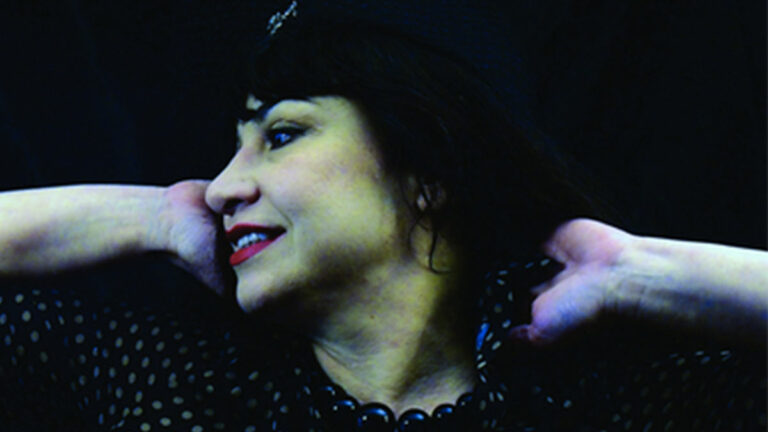
Live & Local brings together some of the area’s great vocal talents for a celebration of the rich history of women in jazz. Featuring Gail Cruse, Vicki Coffis and Ann Whittington from the popular trio Back in Time, as well as the genre-transcending Ruby Rudman; celebrated blues, funk and soul singer Charmaigne Scott; and Stella D’Oro, who fronts Santa Cruz’s own Stella By Barlight, the evening is warming up to be a fantastic musical trip from swing-era classics up through contemporary jazz.
INFO: 7 p.m. Thursday, May 26. Kuumbwa Jazz, 320-2 Cedar St., Santa Cruz. $18/adv, $23/door. 427-2227. WANT TO GO? Go to santacruz.com/giveaways before 11 a.m. on Friday, May 13 to find out how you could win a pair of tickets to the show.
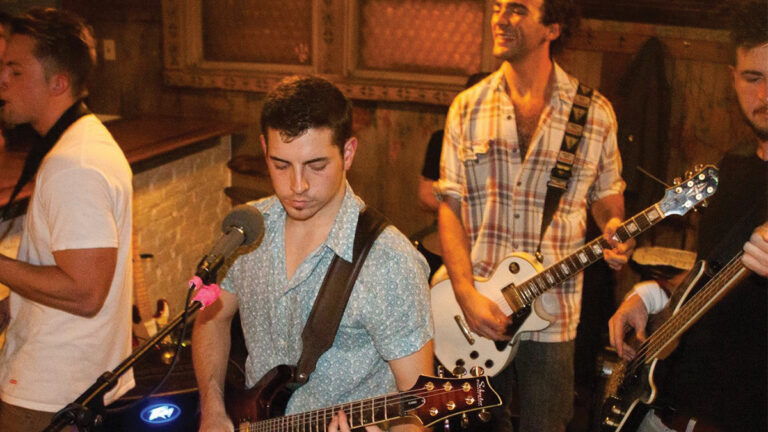
Five years ago, the members of the Black Birds were just starting college in Santa Cruz and looking for a band to rock out in on the weekends. Now, they are mostly all out of college, and still rocking hard. Fortified with an hour of original material, and a couple of hours of covers, they play the Crow’s Nest Saturday. “We were all in the same dorm area together. We started playing music together. It took off from there,” says guitarist/vocalist Nick Crow. “We decided to stick around and play some more music together. We’re having a good time.” The group initially connected over their love of the Beatles (hence the band’s name), but the music is more hard rock, with influences like Foo Fighters, Red Hot Chili Peppers, Queens of the Stone Age, and Pink Floyd. But the element that shines through the most are those ’70s powerhouse blues-rock power chords. “We draw a majority of our influence from a Led Zeppelin place. It starts with a riff, and it goes from there. We see what the feel of the song needs to be, what the rhythm is. It starts small and grows outward. It’s pretty collaborative,” Crow says. Early in their career, they released a self-titled EP. (They had a sax back then.) Last year they recorded a new one, which is now being mixed and mastered. There’s still an emphasis on hard rock and funky punk, but they are also weaving in straight-up blues elements—they even have a song called “Muddy Waters.” “We didn’t expect it to go this long, but we’re glad it did,” Crow says. “We wanted to get rich and famous and travel the world by now, but we’re having a good time doing it and we got to play some cool places and we got some good feedback.”
INFO: 9:30 p.m. Saturday, May 14. Crow’s Nest, 2218 E Cliff Drive, Santa Cruz. $7. 476-4560.
Kissed By An Angel Wines is a relatively new operation. I first tasted their wines just a short time ago when they were pouring at an event. Winery owners Larry and Lisa Olivo don’t have their own tasting room, but have set up shop in the Heavenly Roadside Café in Scotts Valley—where they pour their wines every weekend. Larry is a third-generation winemaker, but the first in his family to market commercially. His “Charismatic” Cabernet Franc 2011 ($32), made from a bountiful harvest in Amador County, is a seraphic mouthful of distinctive taste with sweet aromas of plum and violets. Low-tannin and food-friendly, this well-made Cab Franc also reveals exotic flavors of blackcurrant, cassis, cedar, and cocoa. KBAA is open from 1:30-5:30 p.m. most Fridays, Saturdays and Sundays at Heavenly Roadside Cafe, but it’s best to check in advance, as a couple of private events are in the works. Tragically, the Olivos’ daughter Amanda passed away in 2007 at the age of 22, and Kissed By An Angel is so named to honor her memory. Visit kissedbyanangelwines.com or call 234-6253 for more info. Wine Events The inaugural Aptos Wine Wander takes place from 1-4 p.m. Saturday, May 14 with around a dozen wineries participating. Visit scmwa.com for info and tickets. Downtown Santa Cruz Wine Walk takes place 3-6 p.m., Sunday, May 15. Local wineries are hosted in downtown locations. Passes and glasses at Soif Wine Bar & Merchants, and advance tickets online at downtownsantacruz.com Jazz with a Twist Jazz with a Twist will be playing at Aptos’ cozy Cantine Winepub from 7-9 p.m. Friday, May 13. Head to Aptos Village to taste some good wine and soak up the dulcet sounds of Joan Lowden on bass and vocals—singing as a duo with guitarist Carl Atilano—and percussion by Michael Strunk. Jazz with a Twist plays regularly at local venues such as It’s Wine Tyme in Capitola, Crow’s Nest, Bocci’s Cellar, and the Jack O’Neill Lounge in the Dream Inn— all in Santa Cruz, as well as Ella’s at the Airport in Watsonville. What could be nicer than listening to some cool jazz, glass of wine in hand? Visit basslady.com or email in**@******dy.com for more information.
“This is exactly what we needed,” says Deke Ramirez, owner of Deke’s Market and InMah’ Belly Deli, holding a giant, novelty-sized check for $59,000, as his wife, Kimberly, tears up across the room. “We were at a point where we were going to consider selling the market, because we were at a loss of resources and experience. And this is gonna put us in a whole new direction.” Ramirez, who struggles to find the time and money to grow his 7th Avenue grocery business, was the winner of the second annual Small Business Makeover Challenge at NextSpace in downtown Santa Cruz on Wednesday, May 4. The award comes in the form of donated services from other local business people, including consultants, a certified public accountant and a social media coach. A panel of local entrepreneurs grilled the three finalists, including Drew Goling of the Santa Cruz County Veterans Memorial Building, which is looking to bolster its reputation and increase facility rentals. The other runner-up was Santa Cruz Skin Solutions and Integrated Wellness, which is preparing for big-time transitions, including a move to Scotts Valley. Noga Vilozny, a color coordinator and executive coach who donated a six-month $13,000 package, praises the panelists’ pick and thinks Ramirez will be very “coachable.” “It was really a very unusual thing in Santa Cruz,” Vilozny says of the event. “I almost felt like I was watching a TV show, like Shark Tank. It was very suspenseful.”
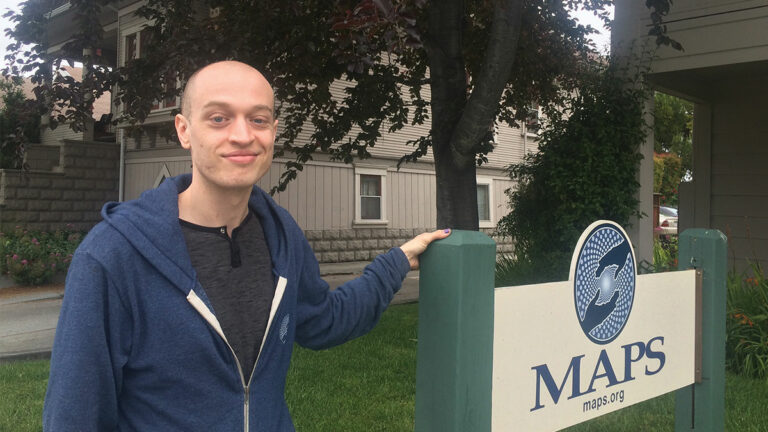
A dinner of dolmas, tofu pot pie and Chicago-style deep-dish pizza has drawn an eclectic turnout of academics, ravers, techies, and artists. Even a toddler and a white blazer-and-aviators-clad financial adviser are in attendance at the bonfire hosted by husband-and-wife Nadia and Dmitry V.—both of them therapists and Russian émigrés. It’s now the witching hour on a late-April Sunday in San Jose, and we’re about four-and-a-half hours into a potluck raising money for a kilo of pure MDMA. Or, as it’s colloquially known, molly or ecstasy. “It’s great to have a whole night just devoted to psychedelics,” Dmitry says. “There needs to be a coming out in this community.” Despite the talk of “coming out” for the cause, few people wanted their full name associated with the gathering. One attendee remarked on the dilemma of wanting to do her part to legitimize the psychedelic scene with her open support, but being afraid of the stigma associated with drugs that are as criminalized as cocaine. Indeed, the federal powers that be regulate acid and psilocybin mushrooms as closely as they do crack and heroin. The fundraiser marks one of hundreds around the globe to benefit the Santa Cruz-based Multidisciplinary Association for Psychedelic Studies (MAPS), an organization devoted to researching the therapeutic value of psychedelic drugs and cannabis. Their primary goal of these psychedelic dinners is to collect $400,000 to buy 2.2 pounds of pharmaceutical-grade MDMA as a potential legal treatment for post-traumatic stress disorder. MAPS spokesman Brad Burge says that’s how much it costs for an entirely new supply approved by the U.S. Food and Drug Administration (FDA). MAPS has been using a batch of MDMA made in the 1980s by Purdue University chemist David Nichols. But regulators want to keep their eyes on the entire manufacturing process before it signs off on third-phase clinical trials for up to 400 patients. As part of the research, patients take a carefully measured dose of MDMA and spend the day talking about their trauma with therapists. Psychotherapy in general and PTSD therapy in particular focus on exposing a patient to distressing thoughts to eventually desensitize them. MDMA’s capacity to suspend a person’s fight-or-flight instinct, which shifts into overdrive in people suffering from PTSD, allows them to face their traumatic memories until those thoughts lose the brunt of their power. “The immediate effects of MDMA make people feel intimate, so there’s that bonding, that connection,” Burge says. “People tend to become more present, which lends itself well to therapy, of course.” In his Pulitzer Prize-winning causa sui The Denial of Death, Ernest Becker points out that humanity goes to just about any length to avoid contemplating one’s own mortality—even if that means feeling less alive in the process. People wounded by trauma, to a great degree, develop a heightened death-awareness. Becker derided psychedelic drugs as a Dionysian excess. “Modern man is drinking and drugging himself out of awareness,” he wrote. Ironically, though, MAPS seems certain that a particular strain of chemical fix can help confront rather than escape one of the greatest agonies of the human condition: consciousness of our inevitable demise and the fatality of life, a sense heightened to a debilitating degree by trauma. “On some level, psychedelics push you to the brink of understanding that you’re mortal,” one of the dinner guests explained at the San Jose event, after a colorful telling of her most memorable, most jarring psilocybin trips. “You know? You’re forced to confront those fears. A lot of people are wound really tight, or stuck to this world. Sometimes you have to force your way outside of yourself to realize that to be unafraid of death means accepting that they’re part of nature and that there’s a lot more possibility than you imagined.” Some may find it odd to hear MDMA classified as “psychedelic,” although Burge explains that while all hallucinogens are psychedelic, not all psychedelics have hallucinogenic effects. The drug may not be a hallucinogen, he says, “but definitely has psychedelic, mind-manifesting, or mind-expanding impact.” The first two rounds of clinical trials have gone exceptionally well, with success rates up to 83 percent, according to psychiatrists involved in the research. After a few rounds of MDMA-assisted psychotherapy, several patients who took part say their symptoms of trauma have all but vanished. Doctors hesitate to use the word “cure,” but four years past the first double-blind trials, the results look promising. Think, on the other hand, of the status quo in which doctors prescribe daily medication to dull symptoms indefinitely without getting to the root of the problem. “It took a lot of work on the part of MAPS to get to this point, to be on the brink of FDA approval,” Burge says. “MDMA had been legal until 1985 and had been used in therapy. When it was criminalized, that put all the legal, above-ground therapeutic use to a stop. It also stopped major funding overnight. That probably set us back 30 years. There’s a lot of catching up to do.” Psychopharmacological scholar Rick Doblin founded MAPS a year after the ban, in 1986, to research the clinical benefits of psychedelics and cannabis. While trippers generally remain discreet about their activities, especially of recreational use, MAPS has made a point of operating scrupulously above board. Under Doblin’s purview and guided by his Harvard University-honed expertise in public policy, the nonprofit has published journals, statistics, action studies and methodical protocols that slowly chipped away at some of the counterculture stigma attached to psychedelics. The method took a few decades but seems to be paying off. To date, MAPS has raised more than $26 million, largely from individual donors and small foundations, to study psychedelics and educate the people about their risks and benefits, while it continues blazing trails throughout the drug research industry. Last month, MAPS announced the first-ever study into medical cannabis with the full approval of U.S. regulatory groups. The nonprofit received a $2.2 million grant from the state of Colorado to fund research on veterans suffering from PTSD in a groundbreaking study that has the support of both the FDA and the Drug Enforcement Agency. “We’ve had to combat years of negative propaganda, negative science to prove that there are legitimate contexts for these type of substances,” Burge says. “We’re always trying to bring more people into the fold by informing not just people who are already involved in psychedelic circles, but also the ones who may be on the fence or don’t know enough about it yet.”
Growing up, 23-year-old UCSC senior Emmanuel Garcia remembers days when he ate only one square meal.
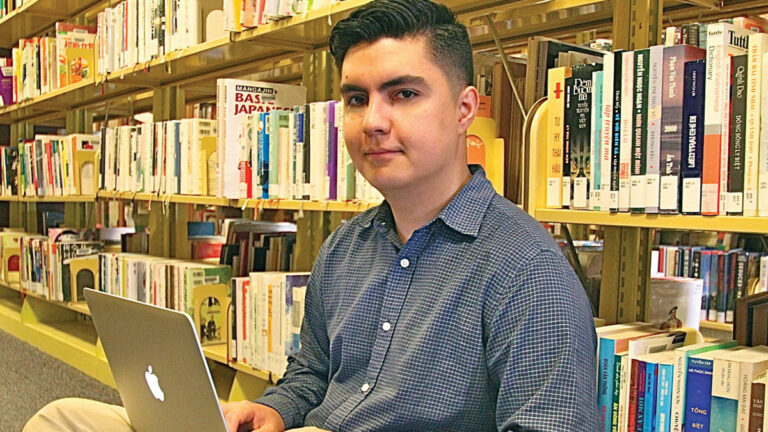
The son of two Mexican immigrants who came to the United States to provide their children more opportunity, Garcia attended a resource-strapped elementary school in a poor area of San Diego. The school rented space from a Baptist church and hosted science class in a decrepit house built at the turn of the century. His parents, he says, did not emphasize the importance of education. And although Garcia took academics seriously, his school didn’t have a cutting-edge computer lab, and his parents, he says, were too poor to afford computers or a personal collection of books. The local public library became his refuge and a tool of his educational advancement. “Growing up, I used the library for most of my school work,” Garcia says. “Even up to high school, I printed out my essays there, I would research my papers there and check out my books there.” In February, Mayor Cynthia Mathews, an avid library supporter, approached the UCSC College Democrats about the need for the community to fund a major facilities overhaul for the library system, and Garcia, a member of the club, asked Mathews if he could join the campaign for Measure S, which heads to the ballots on June 7. “Libraries have had a positive impact in my life in helping my education greatly,” says Garcia, who has been working on the campaign and wants to go to law school. “I found that I had almost a responsibility and a duty to make sure that other people have the same resources that I had.” The measure, which has no formal opposition, asks Santa Cruz County property owners to approve a flat tax of nearly $49.50 per year to provide approximately $67 million to the library system for critical repairs and upgrades to the system. “We have 10 branches and each of the branches need repairs to a greater or lesser extent,” says Interim Library Director Janis O’Driscoll. System leaders performed their most recent renovation beginning in 2010, when it transformed a former Scotts Valley roller rink into a library, but the leaking roof endangered both the branch’s book collection and the library’s computer equipment, O’Driscoll says. The Capitola branch has three temporary classrooms that were installed 17 years ago. The Felton branch is located in a ramshackle former church built in the 19th century, and the walls don’t meet flush anymore. The bond measure, which needs two-thirds voter approval to pass, would fund new facilities for both Capitola and Felton. The downtown Santa Cruz branch, the flagship of the system, requires a comprehensive renovation, O’Driscoll says, as the plumbing is substandard and the building is heated by an ancient boiler that is the only one of its kind remaining in California, meaning parts have to be specially manufactured when things break down, which is often. But it’s not simply maintenance, says Mathews, who wants the system to upgrade its broadband and wiring to keep up with the demands of the modern-day library user. “Libraries are just used differently than they used to be,” says Mathews, who is working on the Say Yes to Measure S campaign. Libraries in general have moved beyond the 19th-century model of the Dewey decimal system, stern librarians insisting on quiet and the smell of deteriorating glue lingering among the catacombs of encyclopedias. In the Internet-dominated 21st century, one of the library’s important roles, Mathews says, is providing universal access to the World Wide Web—particularly for those who cannot afford computers or monthly payments for broadband access, just as Garcia couldn’t as a child. “We need to be able to rewire the branches to take advantage of the new technology,” Mathews says. “We want to be able to provide the people who use the Internet with faster speeds and greater capacity.” O’Driscoll says the library continues to keep pace with the times in terms of its offerings, providing access to e-books, audio books, music, DVDs, and podcasts. There is even a database of local musicians that library members can audio-stream on the library’s website. Santa Cruz Public Libraries, which announced new executive director Susan Nemitz this month, is busier than ever. Circulation increased 4.5 percent from fiscal year 2013-14 to 2014-15, O’Driscoll says. Additionally, about 113,000 people checked something out at one of the branches during March 2016—more than half of the 219,000 people that comprise the library service area. Fifty-five percent of the people who live in the service area own library cards, O’Driscoll says, which shows that the library has adapted and kept pace with demand. That doesn’t include Watsonville, which has its own branch, run separately from the 10-branch system in the rest of the county. The residents of Watsonville would not be voting on the bond or paying for it should the measure pass. Measure S will not only fix roofs and finance new construction, it will also pay for upgrades to make branches more compatible with a changing mission that focuses on making new media more readily available to all segments of the population. The measure stipulates that bond money cannot be spent on computers or other related equipment, but must be restricted to capital improvements that address supportive infrastructure, such as better wiring and more open and inviting building formats. The campaign has racked up a litany of endorsements from elected officials, educators, organizations, and prominent community members. Supporters are taking nothing for granted, particularly as the ballot is crowded with other public entities looking for tax approvals to secure funding boosts. “Anytime you do a measure, at least 20 percent of the voters will vote against it just because it’s a tax,” Mathews says. “So we have a really narrow margin. But the tax is a modest amount and it’s a flat amount.” Unlike some bond measures, Measure S would keep the amount at $49.50 per year and will end after a 30-year period. “This bond measure was put together after a careful study of the actual needs of the library system,” Mathews says. Those needs, Garcia says, include providing 21st century services to those who can’t afford them. “Access to computer resources is something needed in the 21st century,” he explains. “It’s not so much a luxury, it’s a necessity. And libraries are democratic institutions. Anyone can go in there, anyone can access the materials.” Garcia credits libraries with helping him make it this far—to the precipice of graduating from a major public university with a degree in political science and legal studies. He wants to ensure that others will not be denied similar opportunities. “I feel indebted to future generations because I was given a wonderful opportunity to use the resources at the library,” he says. “I’m grateful for what I have, but I want future generations not to have just what I have, but for their chances to grow.”
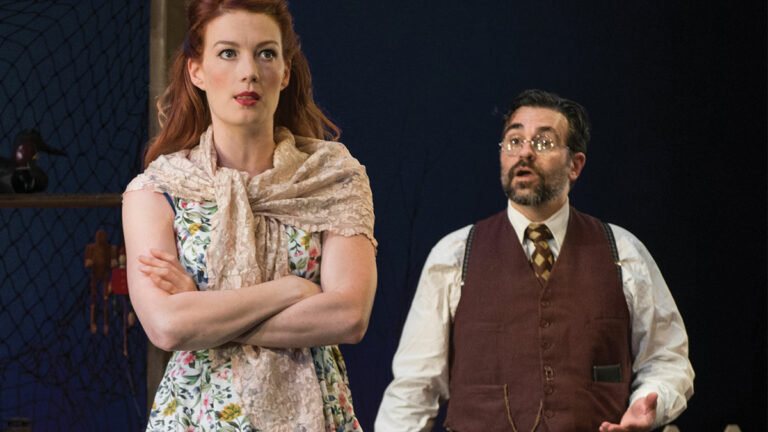
Jewel Theatre Company concludes its 2015-16 season on a wistful note with Lanford Wilson’s Talley’s Folly. Although not so razzle-dazzle a property as some of JTC’s previous season-enders, Wilson’s play is a fitting closer for this most transitional of seasons, in which the company moved from its previous incarnation at the tiny Center Stage downtown to a revitalized new one at the Colligan Theater at the Tannery. Wilson’s gently humorous two-character drama also deals with transition from one stage of life to the next. A co-production between JTC and Santa Cruz Shakespeare, directed with sensitivity by Mike Ryan, the play is an offbeat—and at times, oddly charming—courtship between a man and a woman beyond the first blush of youth belatedly coming to terms, against all odds, with the possibility of love. Winner of the Pulitzer Prize when it was first produced in 1980, the play is set at the end of World War II. Yet its view of “otherness” in a homogenous society, and the immigrant experience—particularly the persecuted desperately seeking a better life—remain timely. The play can be a bit problematic in other ways, however, especially for those unfamiliar with Wilson’s other two plays about the Talley family. References to offstage characters and family dynamics make us feel at times that we’re not getting the whole story. Talley’s Folly takes place in 1944, in a dilapidated old boathouse (the “folly” of the title) on a lake in Missouri. (Nicely evoked in Rick Ortenblad’s busy, atmospheric set, complete with boats, a pier, a gingerbread roofline, and curtains of hanging green water plants.) Looking somewhat out-of-place is Matt Friedman (Christopher Reber), fastidiously dressed in his three-piece brown suit, fedora, and spectacles. A Jewish accountant from St. Louis, Matt has come to this moonlit, rural Midwestern outpost with one purpose: to visit Sally, daughter of the well-to-do Talley family that lives on the hill overlooking the lake. “This is a waltz,” he tells the audience of his plan to reconnect with Sally. Chased off by Sally’s brother and his friends, Matt awaits her return from work in the boathouse, where the two of them apparently spent a week together the previous summer. But when she comes home from her job as a nurse’s aide in a hospital, tending the war-wounded, Sally (Monica West) is more angry than eager to see him. She can’t believe he presented himself to her conservative, xenophobic family, and tries to give him the brush-off, but he won’t take “no” for an answer. Or rather, as he tells her, if she did tell him “no,” he would take it. But for all her hand-wringing and high dudgeon, she never quite tells him outright there is no hope for them. And through this loophole, Matt slips in to reasonably and respectfully plead his case. If you’re going to spend 97 minutes (no intermission) with only two characters, the audience had better feel invested in them. JTC stalwart Reber delivers wry, witty charm as Matt; his centerpiece story of his refugee family’s escape from Eastern Europe for the (false) promise of safety in the West is an expertly timed comic riff that’s also heartbreaking. It takes a bit longer to warm up to Sally, simply because, like Matt, we don’t understand why she’s so angsty, but West plays her with affecting poise. The 42-year-old, never-married Matt, and 31-year-old borderline spinster Sally have much to reveal and accept in themselves and each other as the story plays out. Still, some plot points are a bit sketchy, like what exactly happened in the boathouse last summer, and how, and who the various Talleys are up on the hill who are so often talked about, but never seen onstage. Also, that Matt addresses the audience at the beginning—especially when he repeats the entire first page or two of his opening remarks, in double time—doesn’t serve any useful purpose. Still, this is a strong production of a play whose virtues are more thoughtful than dynamic.
The Jewel Theatre Company’s production of ‘Talley’s Folly’ plays through May 29 at the Colligan Theater at the Tannery. For ticket information call 425-7506, or visit jeweltheatre.net.
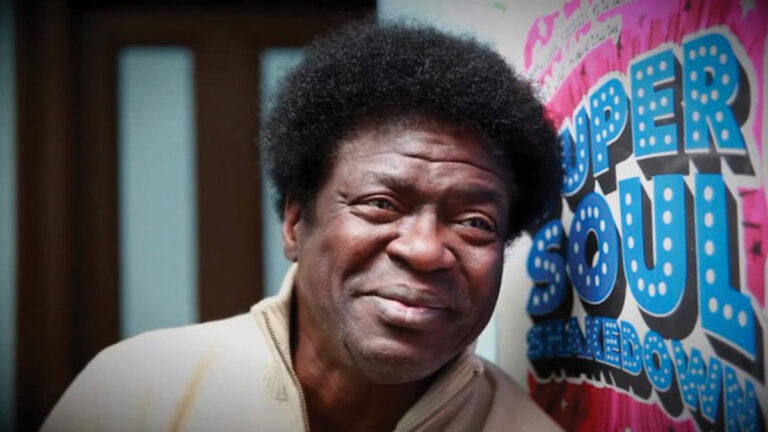
A former James Brown impersonator may seem like an unlikely champion of authentic soul, let alone someone to breathe new life into the genre.
But if you have to suffer to be a soul singer—Brown himself once said it’s the word “can’t” that makes you one—Charles Bradley has paid his dues. At age 67, Bradley has overcome homelessness, illness, illiteracy, and broken relationships. Following the murder of his brother, he was nearly driven to suicide after repeated encounters with racism and police brutality.
The documentary Soul of America recounts Bradley’s difficult life. After spending decades impersonating Brown under the stage name Black Velvet, Bradley was discovered by Brooklyn’s indie-soul powerhouse label Daptone Records, home-base for fellow late bloomers Lee Fields and Sharon Jones. These days the dynamic performer is doing Bradley, not Brown, his style more reminiscent of Otis Redding than the Godfather of Soul. In his five years with Daptone, Bradley has released three studio albums and toured extensively over Europe and the U.S., quickly gaining a multi-generational fan base. He credits his current success to his difficult past, which he draws on to fuel his lyrics and performances: “I really feel that if you wanna be good at singing, you have to go through some heartaches and pains and the stresses of this world,” says Bradley in a phone interview. “Some people can sing and it sounds great, but they got no feelings behind it. I wanna hear something that makes me say, ‘Wow, that person really feels what they singing, they been through some hardships in life.’” Bradley’s dramatic performances have earned him the nickname “The Screaming Eagle of Soul.” His deeply wrinkled face is expressive in the extreme, stretching into raw kabuki-like contortions. He puts his all into it: “All of my songs got a moment of truth. I’m tryin’ to show all my brothers and sisters that I’m just gonna do what I like to do, and I like to do it with honesty, and I’ll give you the best of me,” says Bradley. “This is what I’m doin’ right now, and back when I was in the kitchen cookin’, and when I was shinin’ shoes—no matter what I was doin’, I put my feeling into it.” For Bradley, every performance is an opportunity to connect with his audience. “At my shows I’m lookin’ at so many personalities,” he says, “and I’m lookin’ at all these people, and all of them are very different from me, but I respect all of ’em!” The singer recounts an incident at a recent show on his U.S. tour where he locked eyes with an audience member: “I was onstage, and I was lookin’ at the person lookin’ at me, and this person is just cryin’ like a baby! I said ‘Oh my god, what is wrong with this guy?’ So I get out, I walked off stage, I went into the audience, but when I try to get to him, everybody got at me and cornered me and I couldn’t get out!” he says. “But I kept movin’, kept movin’ till I got to this guy. And he came up to me and he grabbed me and he still cryin’ like a baby, and I say, ‘My God, what’s wrong there?’ And he said, ‘Man, my brother just got shot last night, and I know what you mean now.’ And boy, we both broke down cryin’.” A friend had given the man a ticket to see Bradley, whose ballad “Heartaches and Pain” vividly describes the night Bradley’s own brother was shot. “When he told me what happened, I brokedown, he broke down … I can’t just walk away from him like that. I sat there in the audience, and wait till he finished [crying]. And it was so emotional. It wasn’t about no show. It was about a human being so hurt,” says Bradley. There’s no doubt Bradley’s suffering has made him a soul singer, but there is purpose to his pain. “What joy do I get outta hurt? Nothin’. But what joy I get is when people have a hurt moment inside them, I’d like to share it and talk to them, and maybe my own deepness and my hurt inside me, maybe it can help,” he says. “Maybe you can look inside you and find things in you that you never seen. And maybe I help you to open up to it.”
Charles Bradley performs at 8 p.m. Monday, May 16. Catalyst Club, 1011 Pacific Ave., Santa Cruz. $20/adv, $25/door. 429-4135.
When I travel by myself for arts-related business, I make sure to locate a hotel that is not only within walking distance of key attractions and close to train stations, but also offers an adjoining restaurant. After a long day of walking and shopping (or hiking and beaching if you’re in Santa Cruz) it can be comforting to simply dine in. A good hotel restaurant has to offer a wide range of dishes, ideally a full bar plus discerning and local wines, comfortable seating, and soothing visuals. A swimming pool view can’t hurt. And Hotel Paradox’s Solaire Restaurant has all of the above. Coastal sophistication, a smart grey interior, an intimate bar with fireplace—Solaire has a lot to recommend itself, and not just for visitors or business travelers. This is a sweet spot to spend an evening out even if you actually live just a few miles away. And from what we tasted last week, the menu that chef Ross McKee originally designed continues to evolve. Beautifully presented non-tricky dishes. Starting with fresh francese bread and three accompaniments (horseradish-laced cheddar, oil and balsamic, and butter topped with salt crystals) to the generous pours of well-priced wines, we found ourselves lulled into contentment throughout the meal.
My main course of fresh diver scallops involved three full-figured, perfectly sauteed scallops joined by witty visual doppelgangers in the form of roasted cipollini onions ($30). The shellfish, presented on a shallow tide of pureed parsley root (delicious!), were topped with frisee and dotted with delectable Virginia ham. The scallops were perfection, practically quivering with moisture, yet golden crisp on the outside. Infant branches of frisee punctuated the rectangular plate. An abundant entree of King salmon, farm-raised under eco-savvy conditions, offered lots of moving parts, including a topping of shaved fennel ($24). The thick fillet arrived surrounded by fresh mussels, tomatoes, succulent cipollino onions and fingerling potatoes. Both entrees were incredibly generous in proportion and incredibly satisfying. For starters, we split an arugula and chicory salad ($14) luxurious with a tart citrus vinaigrette, tiny mandarin orange sections, and a terrific goat cheese that played counterpoint to each bite of tangy greens. My companion liked his rich Doña Paula Malbec from Mendoza, Argentina ($11/glass), but I preferred my Cigare Volant 2011 from Bonny Doon Vineyard ($12), a true regional classic with its own bold complexity and the grace to partner even delicate scallops. The dessert menu here is temptation in and of itself. Many classics are artfully deconstructed, such as a reimagined strawberry “shortcake” with crème mousseline, or a banana brûlée with chocolate and rum caramel. Next time. Sweet spot, Solaire.
Eat Your Flowers The College of Botanical Healing Arts throws its second annual Flower Festival and Feast, from 1-5 p.m. on Sunday, May 22. Set on a 17-acre private propery in Bonny Doon, the event features the inimitable garden-to-table culinary creations of Jozseph Schultz, who will utilize edible flowers in the afternoon of hors d’oeuvres followed by a sit-down meal. Tour the garden, watch steam distillation demos, check out the essential oil blending bar, and, of course, the wine bar. Live jazz and bossa nova is courtesy of Trio Passarim, with vocals by singer Jeannine Bonstalle. Speakers during dinner include Roy Upton and Elizabeth Birnbaum of the Curated Feast. For more information and to get tickets visit COBHA.org/news. $125.
Late-Breaking Deli Restaurateur Paul Cocking called to let me know that he has the green light to purchase the old Sentinel building and launch a deli next door to his Gabriella Cafe. “Along the lines of Gayle’s,” Cocking added, “but with less emphasis on pastries.” Cocking envisions outdoor seating as well as an in-house U-shaped wine and food bar. Major funding is already in place, but Cocking is looking for a few more investors to make this project fly. Maybe you? Invest in downtown culinary history. Contact Gabriella—457-1677.
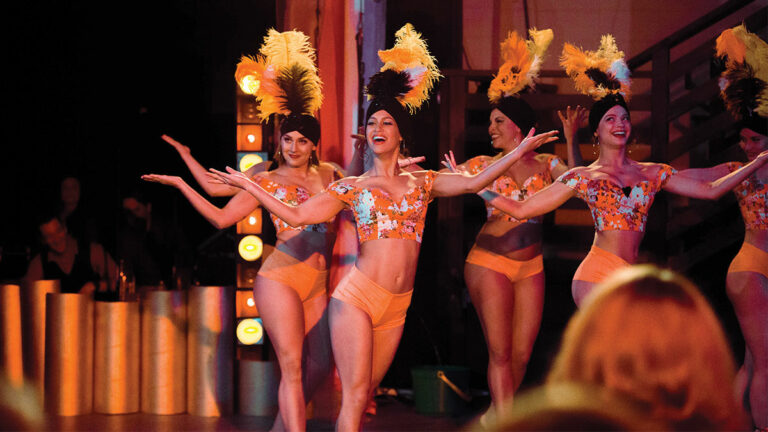
When Bay Areaburlesque performer Viva LaFever was in sixth grade, she beat up the biggest kid in school—because she could. Six years later he was her prom date. “I never had a problem putting men in their place,” says LaFever, 67, erupting with laughter as she describes her younger self: a tough-as-nails kid who learned her fighting chops from her Italian father. As an adult stepping onto the burlesque stage of the New Follies Action Theatre in San Francisco’s Mission District in 1971, (now the Victoria Theatre), that same pluck served her well—especially on the nights she volunteered to spend in a Seattle jail, working her way up to manage the Follies within just a few months of starting out, and that one time she performed solo in a bowling alley in Sparta, Wisconsin near an air force base. Or the night when two men demanded to know if she had once been a stripper: “I said, ‘No, I was the stripper.’” Now a retired newspaper delivery woman for the San Francisco Chronicle and Examiner, with a brain aneurysm and a knee in need of replacing, LaFever does an average of 250 sit-ups every day (more on game days—she’s a Steelers fan) to prepare for this year’s annual Burlesque Hall of Fame (BHOF) performance in Las Vegas, the mecca of burlesque. LaFever is one of their coveted “Living Legends,” and she hasn’t missed a single show since returning to the stage in 2005. “It makes me want to work really hard. I want to impress these kids and show them that getting old doesn’t mean you’re dead,” says LaFever. Back in the ’70s, audiences were mainly comprised of males “looking to get their rocks off” and performers were hyper-focused on maintaining a “perfect” figure, says LaFever. But neither the sleazeballs nor any feminist critique could make LaFever doubt herself, she says. “It was a different kind of feminine power. It wasn’t like I was there for their pleasure, I was there having a good time, making good money, and they had to pay to see me,” says LaFever. “I viewed that as my own little women’s movement.” Local performer Cyanide Cyn says that when she’s under the bright lights and layers of glitter wearing only a G-string and pasties, debates over feminist theory don’t matter. “I am choosing to be a powerful, beautiful, sexual being in the way that I choose, and not in the way that somebody else perceives me when I walk down the street or pump gas in my car or grocery shop. That’s when they seem to think it’s OK to make me feel sexualized, and that’s not when I feel sexy,” says Cyn. “There’s a lot to be said about taking the power to stand there and be on stage in a place that I feel very powerful. That’s who I am and what I have to offer—and it is an art form.”
MISCHIEF & MAGIC Cyn, 38, is co-producer of the local burlesque group, Sin Sisters, that performs every month at the Catalyst. Cyn produces the shows with her blood-sister, Balla Fire, who founded the troupe with another performer in 2011. Cyn says that the Sisters’ success as the longest-running show at the Catalyst has a lot to do with attitudes in Santa Cruz. “We live in a town that’s really open to it. There are other areas where I’d be more concerned with my daughter’s friends’ parents knowing about it, but there have been times where I’ve looked out and seen other PTA moms standing out there,” says Cyn. “The look of shock when they realize ‘Oh, you’re one of them,’ and they are having just as much fun as I am.” Santa Cruz’s burlesque scene is small enough that locals are excited to come out, says Cyn—unlike in the wider Bay Area, where there are so many options, audiences are waiting for a “big moment” instead of enjoying the whole experience. “Not everything is just about taking off a piece of clothing. You can’t just be waiting to see my butt every time—my butt is pretty amazing, but it’s not just about my butt or someone’s boobs,” says Cyn. “Anytime somebody yells ‘show me your boobs’ I’m like ‘That’s it, performance done.’ That’s not why I’m here. If I choose to show you, then lucky you. And if I don’t, that’s still not why I was here.” It’s a sexy experience, says Cyn, but it’s also a lesson in consent. “MC Honeypenny starts the show every month by asking, ‘What does consent look like?’ which I think is really powerful because so many people don’t have that conversation,” says Cyn. “We are not a petting zoo.” “Look, but don’t touch” is the rule, and anyone who violates it will swiftly be shown the door, although they’ve never had any problems, says Cyn. As an art form, she says, burlesque is funny, it’s sexy, it’s shocking, it’s glittery. But ultimately it’s fun—and that means fun for the person on stage, as well.
ALL THAT JAZZ The Wily Minxes perform at San Francisco’s Hubba Hubba Revue. PHOTO: JODY LYON HISTORY OF FRINGE Burlesque was born of society’s pent-up desire for guilty pleasures and the grey area of the law. Unlike stripping, it has always included a comedic element; the Italian word burlesco is derived from burla, meaning “joke, ridicule or mockery.” Some say ancient comedy like Aristophanes’ Lysistrata was the earliest burlesque, but most historians credit Lydia Thompson, a British dancer, with creating the more modern form. Growing up alongside vaudeville, burlesque started as a ribald variety show that included “leg” shows, parody, comedy, minstrel, and minimal costuming—which in 1868, when Thompson brought her British Blondes group to New York, exposed wrists, ankles, and maybe even shoulders. It was political satire and sex, precisely what repressed high society of the late Victorian era needed. The prohibition era created a need for escape, which burlesque fulfilled. Once striptease became a staple of the art form and crossed over to film, a parallel Hollywood emerged with performers like Gypsy Rose Lee, Tempest Storm and Dixie Evans at the fore. The new burlesque pays homage to the performers who pushed the envelope during a stricter era, which is why Burlesque Hall of Fame features two separate events for the “Burlesque Living Legends,” like LaFever and Ellion Ness, who are both revered among Bay Area performers, says Cyn. Modern burlesquers like Cyn say that the only real differences between stripping and burlesque are the amount of glitter and the height of the heels. But Jacki Wilson writes in The Happy Stripper that the real contrast is in burlesque’s showgirl, who adds an element of “witty, parodic, erotic ‘tongue-in-chic’ irony. The burlesque performer looks back, smiles and questions her audience, as well as her own performance, a performance that is comic, outlandish and saucy—a highly camp, mostly vintage spectacle.” Toward the late ’70s and early ’80s, laws surrounding nudity were being challenged all over the West Coast, says LaFever, who remembers that in Seattle the price was higher if they stripped all the way, knowing they’d be arrested. LaFever was always an activist, later becoming president for the Teamsters Union, so trying to change the nudity laws by getting arrested never seemed like a big deal to her, she says. The more lax the laws became, however, the more “risqué” started being replaced by downright dirty: “There was a girl in the show that was inserting fruit and stuff into herself, feeding it to the audience,” remembers LaFever, chuckling. “I said ‘I am not going to follow that, I quit.’ That’s why I dropped out. What it had devolved into, to me, really was not burlesque.”
ART OF THE TEASE When burlesque made its comeback in the early ’90s as “neo-burlesque,” with Dita von Teese leading the way, it evolved to emphasize empowerment. “I’m a curvy woman and a woman of color, so I’m not the standard mold of beauty that society often bombards us with,” says 33-year-old Vyxen Monroe, who performs with the Sin Sisters and also heads her own troupe, the Wily Minxes. “The burlesque community in Santa Cruz and the Bay Area is a really safe space and has always been a very welcoming all-inclusive scene. There’s no body shaming. It’s all about celebrating if you’re petite and tiny or flat-chested or big and beautiful. It’s all gorgeous, it’s all applauded, and it’s all amazing.” For Cyn, that’s the kind of model she wants for her 13-year-old daughter. “She sees each of these women who other people could probably pick apart, and they exude confidence at all times. They’re not airbrushed. We have cellulite. We’re real women with real bodies,” says Cyn. “As much as other people can pick out our flaws, we know how powerful we are, we know how beautiful it is what we do. Even if everything fell apart tomorrow and I wasn’t performing, it’s all been worth it because of the confidence that she’s gained from it.” Neo-burlesque has also opened the doors to the LGBTQ community—which makes sense, says Monroe, since communities considered “fringe” by societies often band together, especially in the arts. “There’s a wide range of gender fluidity that you can play with in a show,” says Monroe. “As a queer woman myself, it’s cool to have a piece of myself reflected back to me and to have like-minded people, people like me, around me heightens my sense of safety. You have ‘boylesque’ performers, gay men, you get straight men, you get transgender men and women—it’s another way for them to get really empowered about their bodies.” It’s all about performance, says Cyn. “It all counts. There really is no line; I won’t allow anything on my stage that is misogynistic. I won’t allow anything that is racially motivated. I don’t do cultural appropriation on my stage,” says Cyn. “But other than that, if you feel like it’s art and you can stand up for what you’ve created, bring it.”
WOW FACTOR LaFever fell into burlesque when she “accidentally” moved from Pennsylvania to San Francisco in 1971. A friend said she knew where LaFever could get a job paying $1.50 an hour. “At the time secretaries were making 90 cents a week, so I said, well, I can do that,” says LaFever. “I drank half a bottle of wine before [going onstage]. I was just not really girly. I was a tomboy but I knew I could do it, having a music and athletic background. My music that week was Jimi Hendrix’s ‘Hey Joe’ and Janis Joplin’s ‘Turtle Blues.’” Unlike in LaFever’s day, when she’d do six shows a day, six days a week, burlesque is a passionate hobby for most and therefore attracts people from all different backgrounds with all different day jobs. It’s why Monroe wanted to bring classically trained dancers together to form the Wily Minxes—a combination of technique and tassel. “I like to think of the way we present choreography as a group asbeing a bit ribald and mischievous and frisky—and a little cheeky with how we’re going to wow ya,” says Monroe. “Like how we choreograph how we take off the clothing: We try to go for the extra oomph in unclasping our bras while we’re chaîné-ing around, or taking our undies off in a somersault. It makes it more fun for the audience.” A classically trained dancer herself, Monroe has seen performers come from gymnastics, theater, even ballet backgrounds, with some performing burlesque en pointe. Monroe was picked to perform at this year’s Burlesque Hall of Fame in the highly selective “Movers, Shakers, and Innovators” showcase with her fellow Sin Sister, Valerie Veils, who brings her contortionist background to their duet. BHOF is, as Cyn puts it, “the biggest glitter-fest ever,” and being asked to perform is a huge honor. After spending hours sewing their own costumes, gluing on their own rhinestones, and driving endless miles to shows across the country in between daytime jobs, they don’t just do it to feel sexy (although it’s a plus), Monroe and Cyn agree. It’s about the sisterhood. “We aren’t just a crew that performs together. We are family,” says Cyn. “I’ve been there for the birth of some of my sisters’ children. We’re the first people we tell when we get engaged or divorced, when shit is falling apart. They’re really my sisters.”
Info: Sin Sisters Burlesque perform at 9 p.m., Saturday, May 14. Catalyst Atrium, 1011 Pacific Ave., Santa Cruz. catalystclub.com. $15-$20.
Five years ago, the members of the Black Birds were just starting college in Santa Cruz and looking for a band to rock out in on the weekends.
Now, they are mostly all out of college, and still rocking hard. Fortified with an hour of original material, and a couple of hours of covers, they play the Crow’s Nest...
As Santa Cruz showgirls prepare to travel to the mecca of burlesque, the local scene—with its combination of saucy sex appeal and badass empowerment—is thriving