Experts Offer Advice on How to Help Wildlife Fleeing Fires

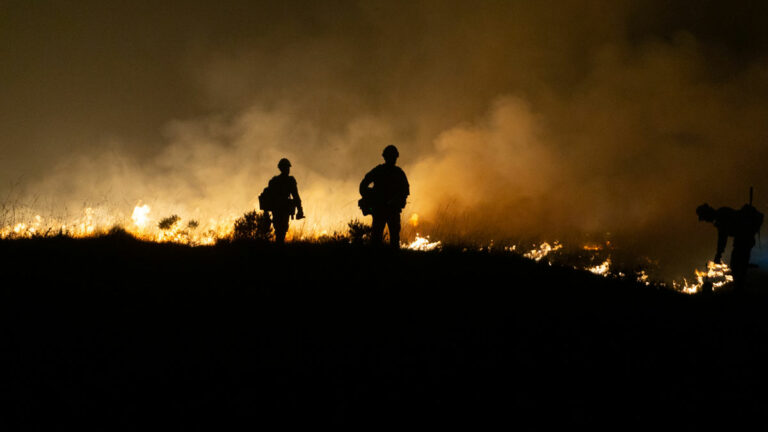
Wildlife experts are calling for people to be on the lookout for animals fleeing from the CZU Lightning Complex fire, which is 21% contained as of Thursday morning. As the forest burns, wildlife are abandoning their homes and seeking safe shelter. 

Santa Cruz-based Native Animal Rescue (NAR) is urging people to bring their domesticated animals inside at night. This will safeguard them in case wild animals are forced to pass through. Residents are also encouraged to put out buckets of water for the wildlife, but not food, and to give them as much space as possible.

โ€œThey are scared, exhausted, and have lost their homesโ€”they need to rest and refuel,โ€ NAR wrote in a Facebook post. โ€œWe love our wildlife โ€ฆ please spread the word.โ€

Amy Redfeather of NAR said that, so far, the organization has not received any injured animals. This may be due to the fact that the fires are not too fast-moving; animals are perhaps finding routes to safe areas of the forest.

However, NAR does expect that some residents will encounter animals in distress once they return to their properties in the coming weeks.

โ€œHopefully, it wonโ€™t be too late by then,โ€ Redfeather said.

Several of the organizationโ€™s rehab volunteers, who care for native animals at their homes in Boulder Creek, have had to return the animals to the main center in Santa Cruz. This will somewhat disrupt the animalsโ€™ rehabilitation, Redfeather explained.

The organization is also dealing with people calling about domesticated animals, which NAR does not deal with. For all issues regarding domestic animalsโ€”from dogs to alpacasโ€”residents are asked to contact the Santa Cruz County Animal Shelter. Hundreds of evacuated animals are being held at the Santa Cruz County Fairgrounds.


Follow continuing in-depth fire coverage here and in our live blog.

Higher Edibles Is Poised to Break Big in the California Market

The hard part is over: licenses, fees, taxes, and finding a kitchen. Now the women of Santa Cruz-based Higher Ediblesโ€”Donna Price, her daughter Kirstie Price, and Kirstieโ€™s aunt Jenni Grilloโ€”are having fun.

What began as a pipe dream two decades ago has blossomed into a legit and thriving canna-confectionary. Customers throughout the state are clamoring for Donna, Kirstie and Jenniโ€™s cookies and their new line of savory crackers.

It takes a lot to stand out in the rather saturated market for cannabis edibles, but the family has consistently proven they have what it takes.

Higher Ediblesโ€™ proprietary blend of brown-rice-based gluten-free flour, zero processed sugars and ingredients, and minimal cannabis taste, make their brand of canna-treats-and-snacks unique. Numerous dispensaries around the Bay Area now stock a full line of Higher Edibles in their shops, giving the upstart company its biggest exposure yet.

Donna Price is an O.G. in the cannabis industryโ€”growing, trimming, and cultivating cannabis for most of her lifeโ€”and can take credit for coming up with the original concept of Higher Edibles. As an army vet who overcame ovarian and endometrial cancer, โ€œMomma Donnaโ€ started making cannabis treats for her family and friends after the passage of California Proposition 215 in 1996. But it wasnโ€™t until a few years ago that she turned Higher Edibles into a business.

Donna saw a gap in the edibles market, based on her own experience. Through numerous surgeries and medical procedures, Price found that her body felt the least amount of pain and inflammation when she adhered to a strict, pure diet, and avoided heavily processed grains and sugars. Her collection of edibles recipes had always been gluten-free and healthier than a lot of products in the cannabis market. She set out to perfect her line of edibles, and to show the industry that you donโ€™t have to compromise flavor for health-consciousness. And she invited her family along for the ride.

Weed has always been a big part of Kirstie Priceโ€™s life, too. She started smoking cannabis at age 12, and quickly graduated to trimming and growing as an early teen. As co-owner of Higher Edibles, Kirstie has joined forces with her momโ€”who โ€œas long as I can remember has always been making edibles.โ€ Her fond memories of her mom baking, mixing, and laboring over cannabis-infused treats in her childhood home inspire her. Today, she, her mom, and her aunt work as a tight-knit crew, rubbing elbows and donning matching aprons in a modern, spacious kitchenโ€”with the occasional gluten-free flour fight.

The three owners of Higher Edibles live together communally above Soquelโ€™s Land of the Medicine Buddha. โ€œMy mom, my aunt, and I live in the mountains. We get to tap into a unique and magical energy,โ€ Kirstie says. โ€œThe best part of my life is working with my familyโ€”kindred souls. Women who believe in higher vibrations, manifesting.โ€ Then she laughs. โ€œAll of that hippie shit.โ€

Cannabis is the glue that holds the trio together as business partners. The plant has allowed them to peacefully coexist, communicate, solve problems, mend occasional differences, and forget the fact that they are with each other nearly 24/7. They wouldnโ€™t have it any other way. โ€œBeing woman-owned-and-operated, itโ€™s a different energy. We have a tight flow together. Itโ€™s unique and something Iโ€™ve never experienced before. Like-minded souls who finish your thoughts and sentences for you,โ€ Kirstie says.

The trio spent a nervous year in 2016 waiting for a license from the state, and looking for a local kitchen large enough to house their fledgling baked-good empire. There were many obstacles along the way, but by the end of 2017, Higher Edibles was starting to take shape as a legitimate business. After months of disappointment, the women finally found their kitchenโ€“a space shared with other small-ish canna corps Cosmo Dโ€™s Outrageous Edibles and Dollar Doseโ€”and โ€œwe got to start having fun,โ€ says Kirstie. โ€œWeโ€™ll always have the regulations and licensing, but we could finally start to focus on the product.โ€

The first product from Higher Ediblesโ€”their flagshipโ€”was inspired by one of Donnaโ€™s earliest recipes: a 20-calorie gluten-free โ€œCinnamon Crispโ€ cookie. With 100% unprocessed maple syrup, and none of that gunky high-fructose corn syrup, the little-cookie-that-could began to attract a buzz and attention from local dispensaries. The Higher Edibles team knew they had the start of something special.

โ€œKind Peoples was the first dispensary to pick us up. They have a heavy focus on local products like ours. Santa Cruz Veterans Alliance, too. They serve veterans that are dealing with pain. Those dispensaries started carrying us because our edibles are different from other companies,โ€ Kirstie says. โ€œIf youโ€™re putting high fructose corn syrup in your body it will increase pain and inflammationโ€”counteracting the very effects youโ€™re using edibles for.โ€

After a few successful pitches and a bunch of โ€œhell yeah, these are so good โ€ฆ can I have another?โ€ comments, Kirstie, Donna, and Jenni were manufacturing Cinnamon Crisp cookies nonstop. Success came quickly, and Higher Edibles soon developed a devoted following and local foothold. But why stop there? To take their biz to the next level they needed a distributorโ€”and a partner who had their own license and ability to take the business statewide.

Enter Mammoth Distributing. Pretty much overnight, the market for small-fry Higher Ediblesโ€™ products expanded 50-fold. Kirstie cultivated a close contact at Mammoth, and the cannabis distribution giant promised to provide a full sales team and distribution across the state of California. โ€œWe have grown so much locally, but now our growth should be explosive in the next six months,โ€ Kirstie says.

The women of Higher Edibles know that one can only take so many cinnamon cookies, so they are often in the kitchen creating new culinary treasures. โ€œGetting to play around and constantly experiment with cannabisโ€”like a scientist in my labโ€”makes every day fun and exciting,โ€ Kirstie says. The Higher team recently unveiled two new creations: the Lemon Crisp Cookie and the Almond Crisp Cookie. Crispy, and made with the same basic ingredients as the Cinnamon Crisp, these two cookies should help propel Higher Edibles into the future.

When most folks think โ€œmarijuana edibles,โ€ they envision ooey-gooey brownies, sumptuous cookies, sweet-lil gummies, and maybe a chocolate bar or two. Most of us donโ€™t imagine more savory items, like crackers. The companyโ€™s new line of gluten-free canna-crackers, with โ€œRosemary Herbโ€ and โ€œJalapeno Garlicโ€ flavors, have thoroughly impressed local pot-consumers and dispensaries, and quickly found space on coveted shelves. Light, crispy, packed with flavor (with little-to-no cannabis taste), thereโ€™s really nothing like them on the market.

Conquering Californiaโ€”and then the nationโ€”is the ultimate goal for the team behind Higher Edibles, but Kirstie, Donna, and Jenni hope to remain in Santa Cruz as long as they can. โ€œMore so than any other place Iโ€™ve been, Santa Cruz County is really into community. Dispensaries and cannabis companies are more open to working together, and partnering to create an industry where we can all succeed,โ€ Kirstie says.

They didnโ€™t really set out to be the female voice in the male-dominated cannabis space, โ€œbut as our business has grown,โ€ says Kirstie, โ€œwe have come to cater to a lot of women customers. We now brand to women as a female-run company.โ€

Yes, these women do get high on their own supply. When theyโ€™re not consuming their own delectable creations, the Priceโ€™s are definitely โ€œIndica girlsโ€โ€”usually smoking flower or using edibles in the evenings to wind down after increasingly busy days.

Whereas smoking a J will give you an almost immediate high, most cannabis edibles take a while to kick in. Youโ€™ll have to wait a bit, but the high that connoisseurs know that edibles just get you โ€ฆ higher.

This Federal Bill Could Change Everything for Cannabis

Cannabis groups come and go, but NORMLโ€”the granddaddy of cannabis organizationsโ€”has been around since 1970, and is still going strong. Indeed, the National Organization for the Reform of Marijuana Laws has never wavered from its goal of making weed legal in every stateโ€”and at the federal level, where the battle against the prohibition of pot has been woefully lacking, too.

And they may be on the brink of a big victory.

Keith Stroup, 76, who founded NORML 50 years ago, still gets pleasantly stoned, and still advocates for the rights of marijuana users. I met him in San Francisco in the 1980s at an event sponsored by High Times magazine, and have followed his career and his lobbying efforts ever since.

Stroup tells me on the phone from his home: โ€œRight now, NORML is behind The Marijuana Opportunity, Reinvestment, and Expungement (MORE) Act, a federal bill thatโ€™s in both the Senate and the House of Representatives and that would remove marijuana from the Controlled Substances Act, which reefer maniac Nixon signed into law in 1970.โ€ Stroup adds, โ€œWe have big support from the recently founded Cannabis Caucus in Congress, though the MORE act wonโ€™t pass until we remove Trump from the White House.โ€ 

Santa Cruzโ€™s representative in Washington, D.C., Jimmy Panetta, is a co-sponsor of the MORE Act and the George Floyd Justice in Policing Act.

Todayโ€™s pot problems are rooted in the past. Soon after Richard Nixon was elected president in 1968, he called the abuse of drugs โ€œpublic enemy number one in the U.S.โ€ He promptly signed into law the Controlled Substances Act, which had been approved by Congress. Nixon also formed the National Commission on Marihuana and Drug Abuse, appointed former Pennsylvania Governor Raymond Shafer as the chairman and told him, โ€œI want a goddamn strong statement that just tears the ass out ofโ€ cannabis supporters.

The report from the Shafer Commission, as it came to be known, recommended that cannabis be โ€œdecriminalized.โ€ The president ignored the report and instead established the Drug Enforcement Administration (DEA) as a federal agency tasked with battling drug trafficking. Today, along with the FBI, Homeland Security and Customs and Border Protection, the DEA still wages the War on Drugs that has been an abject failure, as Stroup and NORML have long pointed out.

A self-defined โ€œfarm boyโ€ from Illinois, Stroup was radicalized by the War in Vietnam and the threat of the draft. He became a public interest lawyer after meeting Ralph Nader, the consummate consumer advocate.

Stroup remembers that the marijuana future looked bright when Jimmy Carter became president in 1976, in part because his sons smoked weed. Stroup also remembers that there was a shift even before the Georgia peanut farmer moved into the White House. In 1973, Oregon decriminalized cannabis. Nebraska followed in 1978.

โ€œThen along came Reagan, and there was no progress until 1996, when California legalized medical marijuana,โ€ Stroup says.

When I asked Stroup why the federal government still classifies cannabis as a Schedule I drug with no medical benefits, he tells me, โ€œonce something gets into the federal bureaucracy, itโ€™s hard to get it out.โ€

Most Americans, he explains, are anti-prohibition: โ€œThey think that the marijuana laws have created far more problems than marijuana itself, which is increasingly used for a variety of medical reasons.โ€

In many ways, the U.S. is still in the Dark Ages when it comes to weed. Whites and Blacks smoke in equal proportions, but across the country Blacks are arrested 3.6 times as often as whites for possession. There are racial imbalances in all 50 states. In some Ohio and Pennsylvania counties, Blacks are 100 times more likely to be arrested than whites, according to an April 2020 study by the American Civil Liberties Union.

The MORE Actโ€”which is sponsored in the Senate by newly minted vice-presidential candidate Kamala Harris and co-sponsored by five other Democrats, including Cory Booker and Elizabeth Warrenโ€”would expunge the criminal records of citizens arrested for marijuana offenses. It would also invest funds in communities of color that have long been targeted by law enforcement and protect immigrants from deportation when violation of the marijuana laws is their only offense.

Justin Strekal, NORMLโ€™s political director, told me that the MORE Act would โ€œend the cannabis prohibition and create incentives for the development of the commercial cannabis marketplace, which would in turn lead to a decline in overall arrests as well as a drop in racial disparities.โ€

Like Stroup, Strekal is a civil libertarian and an advocate for the normalization of marijuana laws.

โ€œItโ€™s none of the governmentโ€™s business who smokes weed,โ€ Strekal says. โ€œThereโ€™s nothing wrong with responsible marijuana use.โ€

Jonah Raskin is the author of โ€˜Marijuanaland: Dispatches from an American War.โ€™

New Hemp Rules Created a Market Glut, But Industry Remains on Hold

To Jesse Hughes, California is the ideal place to grow hemp. Not only is the state the top producer of cannabis generally, but particularly in Sonoma County and surrounding areas, โ€œwe have the land,โ€ Hughes says. โ€œAnd the climate is perfect, as proven by our agriculture industry.โ€

But California lags other states, such as Colorado and Kentucky. Hughes, a hemp and CBD entrepreneur who runs the Hemp General Store in Petaluma, says one historical reason for this is that during the decades when both hemp and marijuana were illegal, it was much more lucrative to grow marijuanaโ€”which is loaded with THC, the stuff that gets you high. Local restrictions on hemp growing, even after pot was legalized, also played a role.

But now there are new problems. After hemp was legalized federally under the 2018 Farm Bill, growers flocked to the market, and now thereโ€™s a glut. Until the market evens out, itโ€™s unlikely that much more land will be given over to hemp growing. โ€œAbout 18 months ago, I was brokering hemp at $7,000 to $10,000 a kilo,โ€ Hughes says. After the price โ€œplummetedโ€ late last year, the wholesale cost stabilized at about 10% of what it was then.ย 

โ€œThereโ€™s no incentive to grow that material, and thereโ€™s no incentive to process it,โ€ Hughes says. โ€œThink about it: If you grow tomatoes or corn and you have a warehouse full of hemp, what do you do with the hemp? You give it away to make room for other crops.โ€ As it is, he says: โ€œIf I had a truckload of CBD in 2018, Iโ€™d be a millionaire now.โ€

The government doesnโ€™t keep statistics on hemp, but experts say the amount of farmland devoted to hemp over the past few years has increased by about tenfold. Estimates vary widely, but Hughes thinks about 250,000 acres of farmland is taken up by hemp plants in the United States.

To the casual observer, it might seem strange that thereโ€™s a glut of hemp, given the CBD craze that was underway even before the Farm Bill was passed. CBD is a component of the cannabis plant that doesnโ€™t get you high, but carries many potential health benefits, from relieving pain to preventing seizures to relieving insomnia, among many others (the proof for medical claims varies widely from ailment to ailment). Though it has only trace amounts of THC (less than 0.3%), hemp is rich in CBD cannabinoids, and CBD extracted from hemp is legal under federal law.

Consumers are still hungry for CBD, but the industry is hamstrung by the federal government. The Food And Drug Administration disallows the use of the substance in food and beverages, and marketers are not allowed to make any kind of health claims for the tinctures and salves that are allowed. Most observers, including Hughes, believe that such restrictions will be eased, but until then, a market that everybody thought would be going gangbusters by now has instead been stymied.

But Hughes, who runs a small operation selling hemp products and also works as a broker and marketer for the Colorado-based Hemp Depot, is optimistic. โ€œTwenty-eight states say itโ€™s OK to use CBD in food,โ€ he notes. (In California, CBD-containing food and beverages may be sold only in licensed cannabis dispensaries, and those products must be made with CBD derived from pot, not from hemp). Big companies like Walgreenโ€™s and CVS have expressed strong interest in selling CBD products, and there is room for expansion into food and beverages if a big brand like Coca-Cola gets on board. 

โ€œI think the situation would have changed already, but Covid has put a damper on all things,โ€ Hughes says. โ€œBut now I expect serious movement by the FDA by September of 2021.โ€

It was with an expected boom in mind that Santa Rosa Junior College launched its Hemp Agriculture program last year, devoting about a third of an acre of its 365-acre Shone Farm to growing the plant. At the time, Benjamin Goldstein, dean of the collegeโ€™s agriculture department, said he thought hemp had potential to move even some wine growers into growing hemp on their land, since the price of hemp at the time commanded prices that were โ€œdramatically higherโ€ per acre than wine.
The fact that the market has collapsed hasnโ€™t diminished student interest, he says. Mainly, thatโ€™s because the skills theyโ€™re learning are essentially the same ones needed to grow pot for the medical and adult-use markets. โ€œThe techniques are very similar,โ€ Goldstein says. โ€œWe donโ€™t control what students do after they graduate, and if they want to go and grow pot plants, more power to them.โ€

Still, the situation has stymied the schoolโ€™s plans to market its hemp and recover some of the costs of the program. โ€œWeโ€™re still looking for local partners to do the extraction and marketing,โ€ he says. โ€œThe economies of scale just donโ€™t exist right now for big extractors.โ€ There are several big cannabis processors in Sonoma and around the North Bay, but they are severely limited when it comes to hemp. โ€œTheyโ€™re not allowed to run hemp through their extraction machines, and the processes must be kept separate,โ€ he says. โ€œThat would be a huge cost.โ€ But it might prove to be worth it if prices rebound in the next few years.

Meanwhile, selling to out-of-state processors to extract the CBD from the plant means โ€œwe lose the local connection to agriculture.โ€

Another big loss is the marketing opportunity afforded by location. โ€œSonoma County is a brand,โ€ Hughes says. โ€œPeople buy wine because itโ€™s from here. Weโ€™re purveyors of really cool shit. Why not add hemp to that?โ€ 

Meet the Cannabinoids Science Is Still Trying to Unlock

However much we may think we know about cannabis, the truth is that the science around the worldโ€™s most misunderstood plant is still in its infancy.

Most everyone is familiar with the psychoactive power of THC (tetrahydrocannabidinol) and the soothing nature of CBD (cannabidiol) by now. The well-known compounds have developed cult-like followings and are the chief reasons why cannathusiasts diligently trek to their local dispensaries to get high and chill out.

But there are close to 150 other cannabinoids in each and every cannabis plant, most of them still mysterious and full of potential.

โ€œNewโ€ cannabinoidsโ€”chemical compounds that mimic compounds found in the human endocannabinoid systemโ€”like CBG (cannabigerol), CBN (cannabinol) and THCP (tetrahydrocannabiphorol) arenโ€™t really new. Heck, theyโ€™ve been important cogs in the marijuana machine from first sprout. Until recently, though, theyโ€™ve remained under the radar of the mainstream.

But a large contingent of scientists, gifted growers and industry innovators have begun to study, tinker with, isolate and develop products based around a fresh crop of cannabinoids. Itโ€™s the Wild West of marijuana researchโ€“and the cutting edge of cannabis science.

There are reasons why very few of cannabisโ€™ almost 150 phytocannabinoids have been isolated and comprehensively studied. Because marijuana is still deemed illegal on a federal level in the U.S., researchโ€“and securing funding for that researchโ€“can be a tricky endeavor. And because most varieties of cannabis are CBD- or THC-dominant, the isolation and study of โ€œminorโ€ cannabinoids can be challenging.

Take CBG, for example. Discovered by researchers in the 1960s, CBG is the compound from which all other cannabinoids are synthesized. As a non-psychoactive cannabinoid typically most bountiful in low-THC and high-CBD cannabis strains, its potential health benefits are vast. CBG has shown great promise as a cancer fighter, potent neuroprotectant, effective antibacterial agent, anti-inflammatory, antidepressant, therapy for psoriasis, and as a mood regulator (thanks to its ability to boost anandamideโ€“the human bodyโ€™s native โ€œblissโ€ molecule). Those who have tried CBG say it has a mind-clearing, energizing effect.

But because the hemp plant produces a much smaller volume of CBG (and most โ€œminorโ€ cannabinoids) than it does CBD and THC, extraction challenges are considerable. It literally takes thousands of pounds of biomass to create tiny amounts of CBG isolate.

In recent years, scientists have begun working to hybridize a plant that doesnโ€™t synthesize all of its CBG so that greater amounts of the molecule can be isolated. The first CBG products burst onto the consumer market in 2015, when AXIM Biotechnologies introduced a line of cosmetic beauty creams and toothpastes. The first CBG tincture was introduced by Steveโ€™s Goods a year later. Both firms struggled with production costs and securing large enough stockpiles of hemp biomass to meet their demands.

While most companies are on the fenceโ€“hesitant to enter what is seen as a relatively risky and expensive segment of the cannabis industryโ€“they understand the promise and potential of CBG and other understudied cannabinoids.

โ€œIโ€™m excited about the emergence of other cannabinoids besides THC and CBD,โ€ says A.T., budtender and assistant manager at Santa Cruz dispensary Central Coast Wellness. โ€œEvery individual plant is a little different. CBN, CBC, CBG, THCB. All can potentially be isolated in topicals, flower, tinctures, and sublingual tablets. There is a ton of science to it that people donโ€™t really understand.โ€

Thousands of CZU Lightning Complex Fire Evacuees Head to San Jose

0

Scott Michael Schuhe was already reeling after evacuating with his family and five pets from their Bonny Doon home. The second blow came when he heard how much the two Santa Cruz motel rooms heโ€™d booked eight hours earlier would cost for another night. 

The price had almost doubled at the Motel Santa Cruz, from $325 for one room with a single bed and a second with a queen bed, to $299 a night for one room. โ€œWeโ€™re all in shock,โ€ Schuhe said. โ€œWe were so tired we couldnโ€™t even think.โ€ 

Schuheโ€”along with his son Michael, daughter Heather and soon-to-be son-in-law Drew Mountโ€”drove 12 miles to the one-star motel after their phones lit up at 2:35am Wednesday ordering them to leave. As the fire encroached on the town of barely 2,700 people, they complied, though some of their neighbors stayed behind

The fire, known as the CZU Lightning Complex, was born of a slew of lightning strikes and dry wind that pushed 77,000 people to evacuate from Santa Cruz and San Mateo counties so far. 

While Schuhe knew he couldnโ€™t go home, he also wouldnโ€™t pay $600 to stay another night. The family spent the afternoon looking for a place to stay with their petsโ€”three dogs and two catsโ€”for less. 

โ€œPretty much all of them had jacked up their prices, and the availability was just about nothing,โ€ Michael Schuhe said.  

On Saturday night, the tired family sat outside of the downtown San Jose Marriott thanks to a tip from Schuheโ€™s boss that the hotel had a $99-per-night deal for evacuees, pets and all. Marriott is one of 14 hotels in San Jose with discounted roomsโ€”most $99 a night or lessโ€”for people escaping the blazes burning on both the east and west sides of the 10th largest city in the country. 

Mayor Sam Liccardo on Friday announced the initiative, called San Jose Cares

โ€œWe know that hotels in other towns or cities may be raising their rates right now, sadly, given the increased demand for a room,โ€ he said. โ€œBut weโ€™re going to take the high road here, weโ€™re going to reduce our rates, and make rooms available for a lot of families that need them.โ€ 

The initiative, the mayor said, was organized by Team San Jose, which promotes tourism in the city, but was the brainchild of Christopher Thompson, head of the San Jose Knight Foundation. Like the Schuhe family, Thompson evacuated Wednesday from his Ben Lomond home with his partner and two cats, but struggled to find a place to go. Hotels were full, many not prepared for the sudden influx of customers.

โ€œWe were going to park at the Scotts Valley Transit Center and sleep there overnight, but the lights were too bright, and we were told you canโ€™t park overnight in the parking lot,โ€ Thompson said. He ended up on the couch in his downtown San Jose condo, which he leases to a gracious tenant who occasionally lets him crash there, per a prearranged agreement. 

The fires come during a coronavirus pandemic which has left much of downtown bereft of visitors since mid-March. Hotels and restaurants are limping along, scarcely staffed and partially shut down as they wait for the county to lift business restrictions and for customers to return. 

Suddenly, the city is seeing an unexpected economic upshot as evacuees arrive. 

Employees at hotels across the downtown said bookings were up significantly Friday. The Marriott, which is connected to the cityโ€™s convention center, re-opened floors that had been quiet for months as demand for rooms grew by five times overnight. 

The hotel brought back about 50 employees that hadnโ€™t worked since the pandemic started to help with the influx of visitors, according to General Manager John Southwell. 

โ€œNo industry, other than maybe airlines and cruise ships, have been hit as hard as hotels, because nobodyโ€™s traveling,โ€ he said. โ€œItโ€™s great to have people band together like this and for folks to come back to work โ€ฆ after theyโ€™ve been off for five months and and say, โ€˜I want to work to take care of these people.โ€™โ€

The Marriott was one of the first hotels to jump on board with the discounted rates, after employees asked hotel management to help the evacuees that were showing up in big numbers, Southwell said. 

โ€œYou looked at the people checking in, all of whom have been displaced, which is tragic, and everybody had their pets,โ€ he said. โ€œIt kind of looked like Noahโ€™s Ark ….  everybody was just in a bad state from so many places.โ€  

Team San Jose rallied the other 13 hoteliers. Normally, the nonprofit economic development group is busy promoting conventions, plays, concerts and other money-making events for the city. In 2018, that work helped generate $61.7 million in revenue, and nearly $17 million in profit for San Jose. 

Those economy-boosting businesses are shuttered for now, but aligning the hotels to work with evacuees was something the group could help with, Frances Wong, Team San Joseโ€™s director of marketing said. 

โ€œWith these evacuees coming to San Jose in a time of need, I think theyโ€™ll remember that San Jose was there for them,โ€ Wong said. 

The group got a heads-up mid-week about the growing hotel need from Visit Santa Cruz County, which similarly advances tourism in the region. Its Santa Cruz counterpart was already grappling with the booming hotel room need as the countyโ€™s own 4,400 hotel rooms filled up. 

โ€œWe issued a travel advisory asking that visitors who are in the market to please leave to free up hotel rooms for evacuees and for first responders,โ€ Christina Glynn, communications director Visit Santa Cruz County said. โ€œThat, to my knowledge, is unprecedented.โ€ 

The hotels in Santa Cruz havenโ€™t uniformly agreed to offer a discounted rate for evacuees. Those details, Glynn said, are up to the individual hotels and motels. Visit Santa Cruz County created a webpage of resources for residents and people fleeing the blaze. 

And as many of those families land in San Jose, the temporary tenantsโ€™ presence has been felt unevenly among restaurateurs, allowed only to serve customers outdoors or for delivery and takeout orders, per county health department orders amid the pandemic. 

As smoke billowed into the city from the surrounding fires Saturday, restaurants felt the push and pull of the downtown filling up more than it has in months versus the air-quality indicators warning people to stay inside for the sake of their lungs.

Diners sat at tables that spilled into the street outside of San Pedro Square Market while a line formed outside of Chachoโ€™s along San Fernando Street. But around the corner, along First Street, many of the cityโ€™s smaller eateries felt no uptick at all, managers and owners estimated. If anything, business might have been slower due to the haze, some said. 

Scottโ€™s Seafood, which opened in its new location at 200 S. First St. in May, was an exception that felt a boost from the cityโ€™s new visitors, according to Sammy Reyes, the restaurantโ€™s general manager. 

โ€œEspecially the last two nights, I know I met with a few people that were staying at the Marriott, some were staying at the Fairmont,โ€ he said. โ€œItโ€™s been dead, literally there is nothing in downtown โ€ฆ but I think it is going to help a lot having more people down here.โ€ 

Some people may stay even longer than a few days or weeks. 

As of Monday, Thompsonโ€™s home was still intact, but security cameras around the house show ash inches deep all around, so he doesnโ€™t expect itโ€™ll be in a livable condition anytime soon. Heโ€™s planning to move into a downtown apartment for now. 

Others, like the Schuhe family, are watching their old neighborhood through status updates from those that stayed behind. Heather Schuhe checked a private facebook group for Bonny Doon residents while sitting along Market Street in San Jose Saturday night. 

Some of their neighbors have put out fires and helped save pets that were left behind. But the Schuhe family isnโ€™t confident their home was spared over the weekend.

โ€œAccording to the fire maps it has [been burned], but according to our neighbors, it might not be,โ€ Heather Schuhe said. The family will stay at the Marriott for the foreseeable future and hope for the best when theyโ€™re allowed to return home. 

โ€œWeโ€™re survivors,โ€ Scott Michael Schuhe said. โ€œBut when they say โ€˜Get lost,โ€™ then get lost. We didnโ€™t even think twice.โ€ย 


Follow continuingย in-depth fire coverage hereย and in ourย live blog.

A Versatile, Vivacious Pinot Gris 2019 from Assiduous Wines

โ€œI guess I should start by describing the picture on the front,โ€ says winemaker Keegan Mayo of the label on his Pinot Gris 2019.

A swirl of seaweed seems like an unusual choice, but the label goals of Assiduous, says Mayo, are always to encompass the vineyard, region or style. โ€œFor a Santa Cruz Pinot Gris,โ€ he adds, โ€œseaweed seems to do just that.โ€

Three of us shared the contents of this vivacious Pinot Gris at a recent lunch at Vinocruz. We also enjoyed plates of chicken sandwiches on ciabatta bread, house-marinated olives, an appetizing toasted nut mix with rosemary and sea salt, and delicious tomato-braised octopus with lemon confit, fennel and herb oil. The cuisine at Vinocruz is always top-notchโ€”with the full menu available for dine-in or takeout. And the exotic flourless chocolate torte with fresh berries and fruit coulis is a perfect match with Mayoโ€™s chilled Pinot Gris!

Pinot Gris (called Pinot Grigio in Italy) is a versatile white wine that pairs well with a broad array of foods. Mayoโ€™s Pinot Gris ($18) is bursting with minerality and crisp pear-apple-peach qualities. Mayo says that extreme Monterey Bay influence and clay loam soils (the grapes are from Regan Vineyards in the Santa Cruz Mountains) have led to a wine with vibrant acidity and tension.

Graduating from UC Davis in 2008 with a degree in viticulture and enology, then gaining experience making wine in New Zealand and at Testarossa Winery in Los Gatos, Mayo is now assistant winemaker at Bargetto Winery in Soquel. After gaining a wealth of experience over the years, it makes sense that he has now branched out with his own label. As well as Pinot Gris, Mayo also makes Cabernet Sauvignon, Malbec, Merlot, and Pinot Noirโ€”each varietal with its own specially designed label.

Vinocruz carries Assiduous Cab and Pinot, along with a wide range of other local wines โ€“ by the glass or by the bottle. There is always a markup at restaurants and wine bars, of course.For more info and to buy wine online, visit assiduouswines.com or call 831-251-6930.

Things To Do in Santa Cruz: Aug. 26-Sept. 1

Because many in-person events across Santa Cruz County have been canceled or postponed during the pandemic, Good Times is compiling a weekly list of virtual events hosted by local nonprofits, artists, fitness instructors and businesses. To submit your virtual event, send an email to ca******@*******es.sc.ย 

CLASSES

65-HOUR TRAINING Community members may participate in a Monarch Services virtual training to become California state-certified peer counselors for survivors of sexual assault, domestic violence and human trafficking. The training will be held Aug. 24-Oct. 14 during these times: Mondays 1pm-3:30pm, Wednesdays 1pm-3:30pm, Thursdays 1pm-3:30pm. Register by emailing al********@********cc.org.ย 

NAMI FAMILY-TO-FAMILY CLASS NAMIโ€™s Family-to-Family class is an eight-week educational program for family and friends of adults with mental health challenges. Learn about how to support your loved one, gain valuable communication and coping skills, and become educated on the latest mental health research. Class is led by two trained volunteers with lived experience caring for someone with mental health conditions. Sign up online and learn more at namiscc.org/family-to-family.html. Mondays and Wednesdays at 6pm.ย 

COMMUNITY RESILIENCE PROJECT: FAMILIES AND DISTANCE LEARNING Please join us for the third program in the Community Resiliency Project for a discussion about school and family resiliency with Dr. Faris Sabbah, superintendent of schools at the Santa Cruz County Office of Education, psychologist Suzanne Nicholas, and Lauren Fein, LMFT with Santa Cruz County Behavioral Health, focusing on Children. Register online at santacruzpl.libcal.com/event/6912518. Friday, Aug. 28, 1pm.ย 

CHILDBIRTH EDUCATION WEEKEND EXPRESS CLASS This Saturday and Sunday virtual class is intended for expectant mothers and their labor support team. Focus will be on the birth process, including the stages of labor and when to go to the hospital. Non-pharmaceutical coping techniques for pain, including breath work, mindfulness practices, supportive touch and positions for labor and birth, along with standard hospital procedures, pain medication options, medical interventions, cesarean birth, postpartum recovery, newborn procedures and breastfeeding basics. In this class, we will actively practice positions and coping techniques for pain, so please be dressed for movement. Please register for the PEP class session. Only after you have completed this process, the Zoom meeting information will be provided to you via email prior to your class. Classes run 1-5:30pm on these days: Sept. 26-27, Oct, 24-25, Nov. 14-15, Dec. 19-20. 

SALSA SUELTA IN PLACE: Free weekly online session in Cuban-style Salsa Suelta for experienced beginners and up. Contact to get a Zoom link. Thursdays at 7pm. salsagente.com.

COMMUNITY

THE BORGEN PROJECT INFO AND RECRUITMENT WEBINAR The Borgen Project is a nonprofit organization that focuses on ending global poverty. We accomplish this goal through lobbying and pressuring Congress to cosponsor and vote for poverty reduction legislation. From 2017 to 2019, The Borgen Project played a key role in getting 10 anti-poverty bills such as the Global Fragility Act and the End Neglected Tropical Diseases Act passed! We are currently recruiting people for fully remote volunteer positions and internship roles (unpaid) in fields such as PR/marketing, writing, political affairs, journalism, HR, and nonprofit leadership! If interested, this event is meant to help you get a sense of what The Borgen Project is, what we do, and what your specific duties would be for each of these positions. Feel free to bring any questions you have as well! Zoom ID 724 736 4377, password: 92748. Saturday, Aug. 29, 1-1:30pm. borgenproject.org.

VIRTUAL WALK-A-MILE Our annual Walk-a-Mile fundraiser is going virtual this year! The walk will take place on Saturday, Oct. 3, to coincide with the first weekend of Domestic Violence Awareness Month. Between now and event day, participants can sign up online individually or as a team, create a personalized web page and outreach to their networks to fund their walk. Through our event site, social media networks and teams, we will raise awareness and build support for the movement to end violence in our community. All funds raised through this yearโ€™s Walk-a-Mile event will go towards meeting the immediate needs of survivors (housing support, food, transportation, etc.), violence prevention programming for youth and teens, as well as outreach to those most at-risk of violence during this time. Learn more at monarchwam.funraise.org.ย 

LUMA BOOK CLUB This is a time of seismic shift, and yet also one of opportunity. Luma Yoga is a community center operating on principles of inclusion, compassion, and, yes, reflection, but make no mistakeโ€”also of action. The first step in effective action is gaining knowledge. To this end, Luma is hosting a book club on the topic of racism and social justice issues. The reading groups will be held remotely (for now) over Zoom Thursday nights 7-8:15pm. The purpose of the groups is to learn the endless shapes oppression can take in the world, to recognize our own biases within ourselves, and to move from discomfort to action in support of Black and non-white POC. The groups will be facilitated by Steven Macramalla, a professor of psychology at SJSU. The Club will work on a 3- to 4-week cycle, reading one book per cycle, with several chapters covered each week. For more info visit lumayoga.com. Thursdays at 7pm.ย 

TALES TO TAILS GOES VIRTUAL Beginning Aug. 10, SCPLโ€™s early childhood literacy program, Virtual Tales to Tails, is moving to a new time slot: Mondays, 3:30-4:30pm. At the end of your school day, hop online and have fun reading at your own pace to an audience of therapy dogs, cats and other guest animals. Have math homework? Good news! Your furry audience would also love to learn how to count, add and subtract. Register online. Registrants receive reminders, links to the live program, and fun (educational) activities to complete and have showcased on future sessions Learn more at santacruzpl.libcal.com/event/6764938.

GROUPS 

VIRTUAL YOUNG ADULT (18-30) TRANSGENDER SUPPORT GROUP A weekly peer support group for young adults aged 18-25 who identify as transgender, non-binary, genderqueer, agender, or any other non-cisgender identity. This is a social group where we meet and chat among ourselves, sharing our experiences and thoughts in a warm, welcoming setting. Our meetings will be held on Discord during the shelter-in-place order. For more info,ย contact Ezra Bowen at tr***@*************er.org.

LGBTQNBI+ SUPPORT GROUP FOR CORONAVIRUS STRESS This weekly LGBTQNBI+ support group is being offered to help us all deal with stress during the shelter-in-place situation that we are experiencing from the coronavirus. Feel free to bring your lunch and chat together to get support. This group is offered at no cost and will be facilitated by licensed therapists Shane Hill, Ph.D., and Melissa Bernstein, LMFT #52524. Learn how to join the Zoom support group at diversitycenter.org/community-calendar.ย 

OUTDOOR

THE ROCK SHOW Castle Rock meets Classic Rock! Learn a little about the parkโ€™s geology the fun wayโ€”with plenty of rock puns and musical tributes to some of the legends of rock and roll! Like our Facebook page to receive a notification when this pre-recorded program premiers Friday, Aug. 28, at 7pm: facebook.com/castlerockstatepark. Viewers will be able to post questions and comments during the premiere for a state park interpreter to answer. The program will also be available for later viewing. Free event. Local California State Parks in Santa Cruz County are offering virtual campfire programs during the Covid-19 pandemic. These free, family-friendly programs are scheduled on Friday or Saturday at 7pm every other week in August.

SKULLS TELL IT ALL Predator or prey? Herbivore or carnivore? Skulls give us clues to how an animal survives. This interactive program will be broadcast as a Zoom webinar. Registration is required. To register, visit tinyurl.com/SantaCruzJuniorRangers. Free event. Friday, Aug. 28, 10am. Local California State Parks in Santa Cruz County are offering virtual junior ranger programs for children ages 7-12 during the Covid-19 pandemic. These fun, free Zoom webinars are scheduled Friday through Monday at 10am each week in August. Children receive a digital stamp for each program they attend; after receiving a certain number of stamps, they can earn prizes!

TO INFINITY AND BEYOND From the tallest trees on Earth to the most distant planets, join us for a walk through the solar system to compare size on a cosmic scale. Like our Facebook page to receive a notification when this pre-recorded program premiers Saturday, Aug. 29, at 7pm: facebook.com/BigBasinRedwoodsSP. Viewers will be able to post questions and comments during the premiere for a state park interpreter to answer. The program will also be available for later viewing. Free event. Local California State Parks in Santa Cruz County are offering virtual campfire programs during the Covid-19 pandemic. These free, family-friendly programs are scheduled on Friday or Saturday at 7pm every other week in August.

BEARY RARE Grizzly bears dominated life in the Santa Cruz Mountains less than 200 years ago. Now the grizzlies are gone and black bear sightings are rarer than Bigfoot. Why are bears so elusive these days, and what can we learn about their disappearance? This interactive program will be broadcast as a Zoom webinar. Registration is required. To register, visit tinyurl.com/SantaCruzJuniorRangers. Free event. Saturday, Aug. 29, 10am. Local California State Parks in Santa Cruz County are offering virtual junior ranger programs for children ages 7-12 during the Covid-19 pandemic. These fun, free Zoom webinars are scheduled Friday through Monday at 10am each week in August. Children receive a digital stamp for each program they attend; after receiving a certain number of stamps, they can earn prizes!

STORIES OF PORTOLA Travel back in time with us as we learn the unique history of Portola and all the communities which have shaped this weird and wonderful place. This interactive program will be broadcast as a Zoom webinar. Registration is required. To register, visit tinyurl.com/SantaCruzJuniorRangers. Free event. Sunday, Aug. 30, 10am.ย 

Opinion: Aug. 26, 2020

EDITOR’S NOTE

โ€œThis is the worst-case scenario,โ€ says an evacuee of the CZU Lightning Complex fire in a story this week by Jacob Pierce. I honestly canโ€™t think of a better way to sum up what weโ€™re all feeling right now. Covid-19 has had Santa Cruz County on the ropes for months, but the last week and a half since that freak lightning storm touched off massive fires in the Santa Cruz Mountains and around the state has made the on-and-off quarantines and bizarre toilet paper hoarding of the spring seem like โ€œthe good old days.โ€ You know, back when our neighborhoods werenโ€™t burning down. When our evacuees didnโ€™t have to add a new coronavirus risk to their list of worries by congregating in the Santa Cruz Civic and other shelter points. When we could go outside.

There will be so much loss to take stock of when these fires are over, both for our community and the individuals who have lost priceless parts of their lives. Just read the story this week by Aaron Carnes about Dan Frechette, who recorded an album in his Bonny Doon studio the night before it burned in the fire. He still doesnโ€™t know if his home was lost, as well. Or the stories of the evacuees who are facing decisions about if and when they can rebuild, or if they even want to try. Itโ€™s a heartbreaking time.

There are also amazing stories about the work that firefighters, law enforcement and other community members are doing, and weโ€™ll continue to tell those, as well. Weโ€™re constantly updating our coverage of the fire at goodtimes.sc; look there for the latest news and for resources. It seems like weโ€™ve been saying โ€œweโ€™ll get through this togetherโ€ all year, but itโ€™s never meant as much as right now.

STEVE PALOPOLI | EDITOR-IN-CHIEF


LETTERS TO THE EDITOR

Read the latest letters to the editor here.

Since the fires began, readers have been posting about them on goodtimes.sc; some addressing our coverage, others simply wanting to send a message to the community. Here are a few of them:

ย 

Thank you for your excellent coverage. I keep combing the web to see if thereโ€™s any news about a place cherished by hundreds of thousands of Bahaโ€™is across the U.S., and even in other countries: the Bosch Bahaโ€™i School on Comstock Lane, near Bonny Doon, but closer to the northern double back curve of Pine Flat Road. I believe it has been used as a staging area for previous fires, but none have been as horrendous as the network of fires started by the lightning that weโ€™re reading about. If you know the fate of โ€œBoschโ€ (as we call it), kindly let us know. Many thanks! And stay safe.

โ€” Gwyn Magaditsch

ย 

My heart aches for all my loved ones, their homes, their farms, and the wildlife in Santa Cruz County. I have lived in Felton, Davenport, and Boulder Creek. I hope with all my heart that the weather aids the first responders in containing these fires. Stay safe everyone.

โ€” Michele Maxwell

ย 

My heart hurts for my hometown of Boulder Creek. Stay safe my loves.

โ€” Cori

ย 

ย 

Our prayers are with you all.

โ€” Mario

ย 

Awesome reporting! Best news Iโ€™ve read so far on fires. Peace to all!

โ€” ย  Karen P.

ย 

My wife and I are in Tahoe after evacuating Scotts Valley Thursday evening. Thanks to all the firefighters, and prayers for all to get through Covid-19 and fire.

โ€” Fred Tomlinson

ย 

My father built our family cabin on Kings Highway in Boulder Creek in 1931. There have been no fires since it was built and none for some time before it was constructed. So it is closer to 100 years since there was a fire and thatโ€™s made for one thick forest bed. The fire could easily hide in the loam for some time after the main conflagration has passed. Add a little wind, and we do it all again.

โ€” ย  Bruce Springer

ย 

Awesome reporting. Great journalism. Thank you for such thorough information.

โ€” ย  Angela White

ย 

ย 

Our prayers are with you.

โ€” ย  Faten Mansour

ย 

ย 

Prayers for all.

โ€” Sandra Jordan


Renaming Cabrillo

Lately there have been concerns about renaming Cabrillo College.ย  Whether I agree or not is not a concern.ย  If you refer to a map of our local area, youโ€™ll see that Cabrillo College is directly east of New Brighton State Beach. I would like to be the first to recommend the new name to be New Brighton Beach College, or simply New Brighton College.ย 

George Zadravec |ย Aptos


PHOTO CONTEST WINNER

(10256272)

Grab the kids and unleash your inner artist at the Original Paint Nite. Youโ€™ll all go from a blank canvas to a masterpiece of your own, with plenty of laughs along the way.

You’ll be guided by a talented and entertaining artist, who will:

  • bring all the supplies and set you and your group up with canvases, paints, and brushes
  • lead you through step-by-step process to paint “Milky way at the Pines”
  • entertain and delight your group and make it a memorable experience!

You and the kids will love what your create, and how much fun you have doing it. No experience needed. Come early and grab some snacks!

Please Note:

  • This event is for children ages 6 and up
  • Each child must be accompanied by an adult
  • Every attendee(child and adult) need a ticket

Looking for something besides Plant? At Yaymaker, we do a lot more than Plant Nite and Family Events. Check out some of our other experiences like Paint Nite and Candle Making. For all of our events check out: www.yaymaker.com

Submit to ph****@*******es.sc. Include information (location, etc.) and your name. Photos may be cropped. Preferably, photos should be 4 inches by 4 inches and minimum 250dpi.


GOOD IDEA

HERE TO HELPย 

Many families and individuals impacted by the California wildfires qualify for CalFresh, which helps families and individuals purchase food. Evacuees may see if they qualify for CalFresh food assistance by applying online on a mobile device or computer at getcalfresh.org or mybenefitscalwin.org. They also may apply by phone at 1-888-421-8080, between 8amโ€“ 5pm, Monday through Friday. Paper applications may also be picked up and submitted at 18 W. Beach St., Watsonville, 1020 Emeline Ave., Santa Cruz, or via fax to 831-786- 7100.ย 


GOOD WORK

GET USED TO IT

University of California campuses will start phasing-out single-use plastics, paving the way for campuses free of non-essential plastics by 2030, the UC Office of the President and CALPIRG Students announced jointly Monday. The new policy will transition UC away from plastic bags in retail and dining locations and eventually eliminate single-use plastic food service items and plastic bottles, helping to reduce plastic pollution in California and prevent microplastics from contaminating waterways. The Plastic-Free Seas Campaign collected more than 12,000 student signatures over the past year.


QUOTE OF THE WEEK

โ€œIt is known that wildfires behave unpredictablyโ€”this is fundamentalโ€”but it is my experience that humans in the presence of wildfire are also likely to behave in aberrant and unpredictable ways.โ€

-Michael Leunig

Debate Brews Over Residents Who Won’t Evacuate During Fire

A fire that has burned more than 78,000 acres in the Santa Cruz Mountains has some locals scrambling to try and protect their homes and those of their neighbors.

Their decision has created tension amid the CZU Lightning Complex fire. Cal Fire officials have repeatedly said that residents whoโ€™ve stayed behind should leave before they get in the way or get hurt, at the same time that theyโ€™ve garnered praise from their neighbors and others on social media.

โ€œItโ€™s really upset me that Cal Fireโ€™s saying theyโ€™re all renegades. And somebody had better start recognizing theyโ€™re heroes, selfless volunteersโ€”theyโ€™re the militia that are willing to go out and save their neighbor and protect our county,โ€ says Howard Liebenberg, 68, who initially evacuated but recently returned to his Brookdale home. 

Liebenberg, who has more than five decades of experience fighting and preventing fires, wonโ€™t say how he got past the fire barricades designed to keep civilians out. Nor will he say whether heโ€™s joined any of the efforts to put out fires over the past week. โ€œWe canโ€™t talk about it,โ€ he says.

Being in an evacuation zone is technically a misdemeanor in the state of California, and deputies have been issuing citations, Santa Cruz County Chief Deputy Chris Clark warned Monday evening.

On the other side of the ridgeline of Ben Lomond Mountain, Mike Zucker stayed behind in Bonny Doon, where residents say theyโ€™ve been using bulldozers to build fire breaks and pumping water onto trucks, which theyโ€™ve used to fight fires and save homes. But heโ€™s quick to add that not everyone has neighbors like his who are up to the challenge and have the proper training. โ€œIf youโ€™re not of this caliber, donโ€™t try this at home,โ€ Zucker says.

Sheriff Jim Hart and various Cal Fire officials have criticized those who stayed in their homes.

They argue that such residents have the potential to get in the way of back-burns, aerial drops of fire retardant or other firefighting operations. They may not be able to stay in close contact with Cal Fire personnel to keep themselves safe, they say. At least five residents who stayed behind have needed to be rescued, diverting resources from other efforts.

Cal Fire has confirmed that one Santa Cruz Mountains resident has died; 73-year-old Last Chance Road resident Tad Jones was likely trying to flee the area when he died, CBS News reported. Other people have been reported missing.

On the other hand, Cal Fire has repeatedly stressed that they havenโ€™t had adequate crew sizes to keep up with battling a blaze of this size and threat; the locals say they are there to help.

Santa Cruz-San Mateo County Cal Fire Chief Ian Larkin says he canโ€™t confirm whether these residents have helped the firefighting effort, even if the circumstantial evidence appears strong. โ€œI know thereโ€™s a few homeowners that stayed behind and their homes are still standing and the fire did burn around that,โ€ he tells GT.

Nonetheless, he says that the mountain residents may not have the proper training to understand what to do and how to get to safety if conditions change suddenly.

โ€œThe property can be replaced. The life canโ€™t,โ€ Larkin says. โ€œAnd thatโ€™s our main concernโ€”the safety of the citizen.โ€

FIRE POWER

The CZU Lightning Complex fire, which was sparked by an atypical lightning storm Aug. 16, is now 17% contained, having destroyed 330 structures, 319 of them in Santa Cruz County, local Cal Fire Chief Jonathan Cox told reporters Tuesday morning. After starting out as several separate burns, the fires merged into one large blaze, which is currently threatening an additional 24,000 structures. Some 77,000 residents have evacuated.

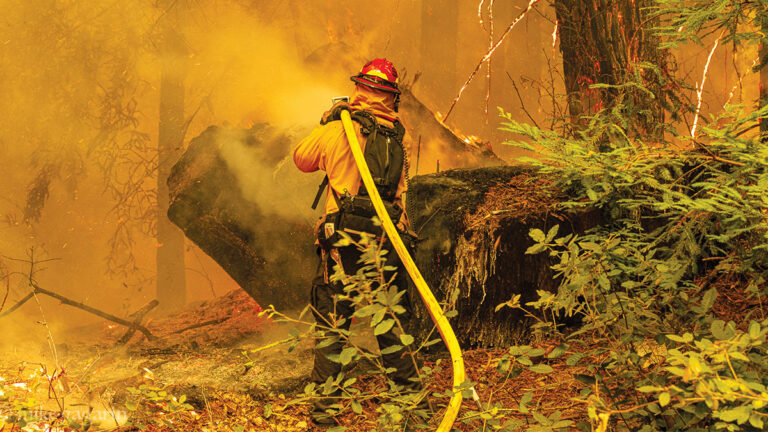
Cal Fire has 1,611 personnel fighting the fire. Six helicopters dropped 200,000 gallons of water on it Monday, Cal Fire Operations Section Chief Mark Brunton told reporters. The most challenging part of the fire response right now is the western slope along the Highway 9 corridor, which has a steep topography and a number of homes and businesses. 

Meanwhile, 33 law enforcement officers, including sheriffโ€™s deputies, were patrolling the San Lorenzo Valley Monday. Officers conducted 11 welfare checks, made two arrests and issued two citations, Chief Deputy Clark said.

Deputies arrested five looters Friday, and more information came out Monday about the suspect who stole a Cal Fire commanderโ€™s wallet over the weekend. The thief drained the victimโ€™s bank account, Clark said. The sheriffโ€™s office released security camera stills of the suspect shopping at a Shell gas station in Santa Cruz. He also visited the Safeway on 41st Avenue, Clark said. 

STATEWIDE PROBLEM

Fires are burning across California at a historic rate, particularly along the Central Coast and in Northern California.

In a one-week period, an area the size of Rhode Island burned in California. Regional Cal Fire chiefs begged state leadership for more resources, but crews were focused on fires in Southern California. As containment of those fires improved, Gov. Gavin Newsom began shifting crews to Northern California and to the Central Coast, where the fires have been much worse.

The second- and third-biggest fire events in California history are currently burning across various counties in the Bay Area.

The SCU Lightning Complex fire in the counties of Santa Clara, Alameda, Contra Costa, San Joaquin and Stanislaus is 15% contained, having burned more than 363,000 acres. The LNU Lightning Complex in the counties of Napa, Sonoma, Lake, Yolo and Solano is 27% contained, having burned more than 352,000 acres.

The River Fire in Monterey County has burned more than 48,000 acres and is 33% contained.

On Thursday, Aug. 20, Newsom was in Watsonville, where he gave his address for the Democratic National Convention in front of a redwood tree. The next day, he was in Napa, where he said he was leaning into the stateโ€™s mutual-aid firefighting system. He thanked states that provided mutual firefighting and equipment, including Arizona, Nevada, Oregon, Washington, Idaho, Utah, Montana, and Texas.

Newsom mentioned that, on a trip through Santa Clara County Thursday evening, he saw San Jose firefighters as they made a pit stop. He said they looked wiped out when they told him, โ€œWe need more support.โ€

โ€œThey were simply overwhelmed by what they saw,โ€ Newsom said. โ€œThey were on a quick stop. They were getting some gas and getting some drinks. And they said, โ€˜Weโ€™re just going to the hotel down the block. Weโ€™re taking a shower, and weโ€™re told we have to get right back on the line.โ€™โ€

By Friday, Aug. 21, there were more than 500 fires burning across the state, Newsom said.

FOREWARNED

A National Weather Service Red Flag warning went into effect Sunday with the potential for more dry lightning and windโ€”the same conditions that created the widespread fires one week prior, but the warning was cancelled Monday morning when conditions weakened.

In Santa Cruz County, action is underway to help those in need during the fire, while heavy smoke has blanketed the region. Santa Cruz County is distributing N-95 respirator masks to Pajaro Valley agriculture workers to protect them from smoke inhalation.

A donation center on 114 Walker St. in Watsonville is accepting non-perishable food items, family-sized tents, sleeping bags, sleeping pads, blankets, pillows, tarps, and ice chests/coolers. People may also donate hand sanitizer, personal hygiene products, toiletries, large plastic storage bins, coloring books and crayons.

The donation center and temporary shelters are looking for volunteers, as well. Visit scvolunteercenter.org for more information. 

Additional reporting by Tony Nuรฑez, Johanna Miller and Todd Guild.


Follow continuingย in-depth fire coverage hereย and in ourย live blog.

Experts Offer Advice on How to Help Wildlife Fleeing Fires

Residents encouraged to put out water for fleeing wildlife

Higher Edibles Is Poised to Break Big in the California Market

Customers throughout California are clamoring for these cookies and savory crackers

This Federal Bill Could Change Everything for Cannabis

Bill would remove marijuana from the Controlled Substances Act

New Hemp Rules Created a Market Glut, But Industry Remains on Hold

Growers flocked to the market, and now thereโ€™s a glut of hemp

Meet the Cannabinoids Science Is Still Trying to Unlock

Science around cannabis is still in its infancy

Thousands of CZU Lightning Complex Fire Evacuees Head to San Jose

San Jose hotels offer discounted rooms for fire evacuees

A Versatile, Vivacious Pinot Gris 2019 from Assiduous Wines

This wine is bursting with minerality and crisp pear-apple-peach qualities

Things To Do in Santa Cruz: Aug. 26-Sept. 1

Community resilience discussions, Salsa Suelta, and more things to do virtually

Opinion: Aug. 26, 2020

Plus letters to the editor

Debate Brews Over Residents Who Won’t Evacuate During Fire

Some residents stay to defend their homes amid the CZU Lightning Complex fire
19,108FansLike
8,845FollowersFollow