A Turkey-Ready Bargetto Merlot

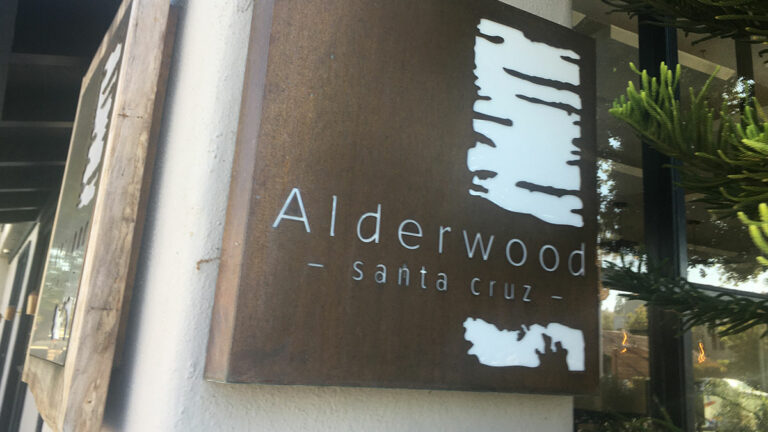
Bargetto Winery’s 2017 Santa Cruz Mountains Reserve Merlot can hang with some of the best reds around. It makes an impressive statement on any dinner table—and also a tasty pairing with steak, lamb chops and other hearty foods. 

This Reserve Merlot ($40) is blended with Cabernet Sauvignon (25%) from Kennedy Hill Vineyard in Los Gatos, but the majority of the grapes come from Regan Estate Vineyard, Bargetto’s own prime-location plot of land overlooking the Monterey Bay.

“The Reserve Merlot has a beautiful deep garnet color and opens with intense and complex aromatics,” Winemaker Bobby Graviano says. “Notes of black currant, plum, black cherry, cranberry reduction, and brown sugar fill your nose and entice the palate.” The flavors of the Merlot and the Cab “marry beautifully,” he adds.

Bargetto is one of the few local wineries open daily—from noon-5 p.m.—except on Thanksgiving Day.

Bargetto Winery, 3535 N. Main St., Soquel. 475-2258, bargetto.com.

Discretion’s Big Win

Kudos go to Discretion Brewing. They won two medals for beers featuring local ingredients: a gold for a Shimmer Pils in the German-style Pilsner category, and a bronze for Ten Million Flowers, a honey-orange Kolsch (in the Alternative Fermentable Beer category). Discretion’s cozy spot behind Café Cruz is a great place to go for well-made ales and tasty grub.

Discretion Brewing, 2703 41st Ave. Ste. A, Soquel. 316-0662, discretionbrewing.com.

Fish Lady’s New Anchor

The Fish Lady, based in Soquel for many years, has relocated to Capitola, adjacent to the Capitola Produce Market and across the street from Gayle’s Bakery. Known for her ultra-fresh fish and other produce, the Fish Lady (Sharon Hadley) now offers one-stop shopping. You can buy your tomatoes and spinach at Capitola Produce, and all your fresh fish and meats at The Fish Lady. 

The Fish Lady, 700A Bay Ave., Capitola. 475-6044, thefishladysoquel.com

Central Coast Creamery’s Cheesy New Abbott Square Outpost

Reggie Jones knows a thing or two about really gouda cheese. After 20 years in the cheesemaking biz, Jones opened his first manufactury, Paso Robles’ Central Coast Creamery, more than a decade ago. 

Last month, he opened a new Santa Cruz outpost. The Abbott Square shop sells grilled cheeses (including a goat-cheese melt), charcuterie and 10 flavors of sheep’s milk ice cream.

Central Coast Creamery sources as close to home as possible, which Jones says can be a challenge since there are only a few dairy farms left in Monterey, and none in Santa Cruz.

Why open a store here? 

REGGIE JONES: It made sense for us to go into Abbott Square. They approached us. My family and I have spent a lot of time in Santa Cruz, too. We have a cheese called Seascape that we actually named after Seascape Resort in Aptos. 

What got you into making cheese? 

I don’t have a cool story about how I’m a fourth-generation cheesemaker or anything like that, but I graduated college in 1991 and there were no jobs. I had a biological sciences degree and I got a job in a lab of a mozzarella factory and it stuck. 

When I opened Central Coast Creamery, we started with a goat gouda. All of the goudas that were being made were coming from overseas, and we figured that there was room in the market for a domestic gouda. 

What’s the deal with sheep’s milk ice cream? 

We had a sub-leaser in our facility, Negranti Creamery, and she was the first one in the U.S. to make sheep milk ice cream. When the Abbott Square opportunity came up, it seemed like a good partnership since there isn’t much dessert in there right now. You don’t have to add cream to sheep milk ice cream. The final product is lower in fat and easier to digest than cow milk ice cream. The flavors change out, they’re seasonal. 

centralcoastcreamery.com.

Opinion: November 27, 2019

EDITOR’S NOTE

Black Mirror is frequently described as a show about the dangers of technology, or even as “anti-technology.” But when I interviewed Black Mirror’s creator and writer Charlie Brooker a couple of years ago, he told me: “I don’t think the show is anti-tech any more than The Sixth Sense is anti-ghost. We use technology in the same way that The Twilight Zone used the supernatural or the uncanny. Often in our stories, what’s happening is the technology is amplifying human flaws or human behavior.”

It’s interesting to think about that quote in the context of Wallace Baine’s cover story this week about the scourge of deepfakes. There are some terrifying possibilities for this latest tech boogeyman—I have to admit, there were some in the story I hadn’t even considered, and it wasn’t pleasant to do so—but ultimately I think Brooker’s point applies to this real-life situation, as well: the abuses of this technology are only expressions of our worst impulses, and our actions will shape how it affects our society. Will we work to help those who’ve been targeted by deepfakes, and combat the spread of misinformation? It may be a new platform, but it’s an old, old story.

Also this week, we are on our way to our goal of raising $300,000 for the local nonprofits in Santa Cruz Gives. With 35 days left in the campaign, we’d love to pass it early with time to spare. With Thanksgiving this week, it’s the perfect time to show our gratitude for what we have and do something simple but powerful to help others in our community. I hope you’ll read Lauren Hepler’s story on some of the groups working toward solutions for homelessness, and go to santacruzgives.org to donate to one of our incredible nonprofits. 


LETTERS TO THE EDITOR

Read the latest letters to the editor here.

On White Fragility

Last spring, I helped create a heartfelt and well-attended Ramadan community dinner acknowledging and celebrating our Muslim friends and neighbors. Partway through dinner, I spontaneously began recognizing the many social justice advocates in attendance. Unexpectedly, my rambling was interrupted by a colleague who later pulled me aside—joined by the only black person present—to confront me with what they pointed out was an unconscious and damaging display of racist behavior: those I had chosen to draw attention to at this rare gathering in honor of our Muslim community were all white (and not to go unnoticed, mostly men). My heart sank at the injustice resulting from my blindness to my own racism. They recommended that I read a book Called White Fragility: Why It is So Hard for White People to Talk About Racism.

I am currently reading this eye-opening book in a large study group of white folks intent on understanding our privileged status. We have come to see that growing up in an essentially segregated, white colonialist America, none of us can avoid absorbing racist attitudes and bias. From day one, we are steeped in a white supremacist (in the real sense) perspective: white history, white media images, white governance, white literature, and the privileges, advantages, and safety afforded to white skin in our judicial and educational system.

At the same time, having seen images of lynchings, mob rule, and police brutality, our concept of racism as monstrous and ignorant causes us to vehemently distance ourselves from the fact that we whites have all been socialized to internalize racism. The need to view ourselves as good moral people results in avoidance and defensiveness, and thus tragically our white privilege and unconsciously racist attitudes remain unexamined and unaddressed. 

At a recent City Council meeting, our community witnessed a classic example of white fragility and the inability to discuss racism. Stating that she had read a comment on Drew Glover’s Facebook page accusing her of being racist, Councilwoman Donna Meyers stood up, banged the table, and shouted passionately that she couldn’t be racist because she has been an out lesbian for over 30 years! Surprisingly to my knowledge, neither her shocking outburst or rationale were addressed in the media or amongst the council. (A fact which itself might be viewed as an example of white privilege.)

Our newly elected city council is the first ever black/white integrated council in our history—a milestone of monumental note and consequence. Given what I am learning, it is not surprising that immediately after the election, uncomfortable interactions took place between the mayor and newly elected black council member Glover: Mayor Watkins publicly declared that it “was perceived” that she was being bullied by Glover, and Glover experienced the impact of perceived discrimination when he learned that Martine, inexplicably had not appointed him to any committees.

Having recognized that we all operate with some level of bias and prejudice, and that as long as we can’t acknowledge that within ourselves, the resulting unconscious discrimination will not be addressed, it is my sincere hope that our City Council and staff read White Fragility as part of the recommended mediation/reconciliation work, and embark on anti-racist training to build equity, understanding, respect, and trust for the greater good.

Sheila Carrillo
Santa Cruz


PHOTO CONTEST WINNER

Submit to ph****@*******es.sc. Include information (location, etc.) and your name. Photos may be cropped. Preferably, photos should be 4 inches by 4 inches and minimum 250dpi.


GOOD IDEA

In recognition of World AIDS Day, Encompass Community Services is holding a screening of 5B, a documentary about the world’s first ever AIDS ward. The film tells the extraordinary story of everyday heroes, nurses and caregivers at the San Francisco General Hospital. The event will be Sunday, Dec. 1 at 6pm at DNA’s Comedy Lab. Tickets are $25 in advance on Eventbrite.com, $30 at the door. Food and drink will be available for purchase. For more information, visit diversitycenter.org/calendar.


GOOD WORK

The county of Santa Cruz has received a $1 million grant to support youth reentry back into the community, and to strengthen support networks that help them avoid future involvement with the justice system. The grant will provide the Santa Cruz County Probation Department $350,000 annually for three years for the Stable Transitions After Reentry program. The program includes youth services, parent/teen mediation and a parenting program for parents and other caregivers. Inmates in juvenile facilities may be up to 26 years old.


QUOTE OF THE WEEK

“The powers that be no longer have to stifle information. They can now overload us with so much of it, there’s no way to know what’s factual or not.”

-J. Andrew Schrecker

5 Things To Do In Santa Cruz: Nov. 27 – Dec. 3

A weekly guide to what’s happening

Green Fix 

Boardwalk Holiday Ice

Ice skating at the beach is one of Santa Cruz’s most iconic holiday events. The ice skating rink is open to all ages and ability levels—whether you can barely stand or you’re the next Tonya Harding, all are welcome. It does get chilly with all of the coastal snow flurries, so be sure to cozy up next to the fire pits with some hot cocoa afterward. Open rain or shine, online reservations recommended.

INFO: Runs through Sunday, Jan. 5. Santa Cruz Beach Boardwalk, 400 Beach St., Santa Cruz. 423-5590, beachboardwalk.com. One-hour session includes $15 ice skate rental.


Art Seen 

Glass Ornament Show 

Most people know Chris Johnson as the glass pumpkin man, but he is actually running a multi-holiday operation. Johnson also hand-crafts unique, one of-a-kind glass holiday ornaments. The perfect functional gift for friends and family, or yourself. Local jeweler Rhona Bloom will also be selling her fused-glass wearable work for those looking for everyday ornaments. 

INFO: Noon-5pm. Dec. 1. Santa Cruz Live Oak Grange, 1900 17th Ave., Live Oak. Free. 


Thursday 11/28 

32nd Annual Veterans Community Thanksgiving 

Veterans Day has come and gone this year, but Thanksgiving can be an especially difficult time for people who have made sacrifices for their country and haven’t received sufficient support since they returned home. To celebrate them, Veterans in Santa Cruz will provide a free, hot Thanksgiving dinner and live entertainment to hundreds of our friends and neighbors in need. India Joze is cooking dinner and meals are first-come, first-served. Every dollar donated ensures that a person in need will have a place at the holiday table. Entertainment by local musicians Gail Swain and Friends, international fiddle champion Theo Paige and more. INFO: Noon-3pm. Veterans Memorial Building, 846 Front St., Santa Cruz. 465-1778. Free/donation. 


Tuesday 12/3 

UCSC Arboretum Community Day 

UCSC’s 135 acre-living museum is full of rare and unique plant species from around the world. On the first Tuesday of every month, there’s free admission to the arboretum, and visitors can enjoy the more than 300 plant species that thrive in our climate. Due to limited parking at the Arboretum and the popularity of community cay, carpooling, walking or biking is suggested. 

INFO: 9am-5pm. UCSC Arboretum, 1156 High St., Santa Cruz. 502-2998, arboretum.ucsc.edu. Free. 


Friday 11/29 

Make a Card for a Local Senior

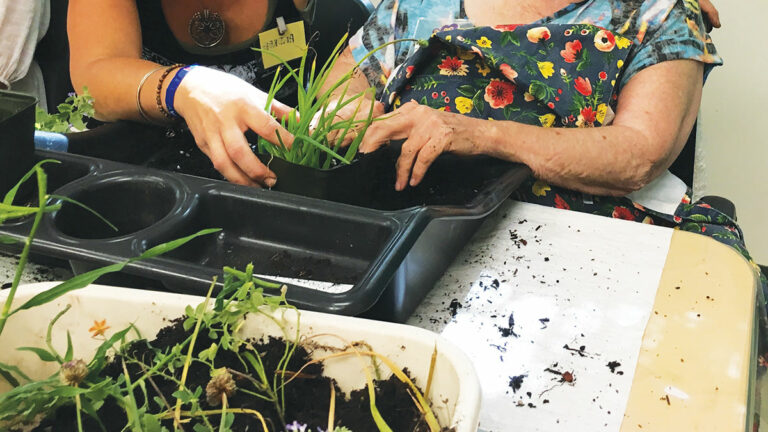
One in five seniors in Santa Cruz County sees another person less than once a week, and 54% live alone or experience loneliness. This Black Friday, give something special to our local seniors. The MAH is inviting the community to make someone’s day. Inspired by the popular exhibition We’re Still Here: Stories of Seniors and Social Isolation, the MAH is supplying all the materials to make a good old-fashioned greeting card that will be sent to a senior or caregiver in Santa Cruz County this holiday season. Feel free to bring any special supplies from home to add a little something extra, too. 

INFO: 5-8pm. Santa Cruz Museum of Art and History, 705 Front St., Santa Cruz. 429-1964,  santacruzmah.org/events/greetingcard. Free. 

Welcome to Deepfake Hell

The 21st century so far has been one long, bruising bumper-car ride of extravagant public lies, debunked and discredited, but—to varying degrees—somehow still doing damage: Swiftboating, WMDs, catfishing, Benghazi, anti-vax, Brian Williams, Lance Armstrong, alternative facts, Pizzagate, inaugural crowd size, Theranos, “Mexico will pay for the Wall,” on and on.

In the amusement-park carnival ride of modern technology, dealing with increasingly sophisticated lies and deceptions is a chronic problem that most expect as the price to pay to live in a free society. But there is a foreboding sense that we may all be in for a steep drop downward into a Twilight Zone of falsehood and fabrication. Thanks to one emerging technology, we seem to have come to a top-of-the-rollercoaster moment when the future suddenly comes into breathtaking view in all its vertiginous and terrifying detail.

Welcome to the age of “deepfakes.”

In recent months, the buzz about deepfake technology has penetrated nearly every realm of the broader culture—media, academia, tech, national security, entertainment—and it’s not difficult to understand why. In the constant push-pull struggle between truth and lies, already a confounding problem of the Internet Age, deepfakes represent that point in the superhero movie when the cackling bad guy reveals his doomsday weapon to the thunderstruck masses.

“Deepfakes” is a term applied to realistically depicted video or audio content that has been technically altered to present a fundamentally false version of real life. It is a deception powerful enough to pass the human mind’s Turing test, a lie on steroids.

In many cases, it’s done for entertainment value and we’re all in on the joke. In Weird Al Yankovic’s face-swap masterpiece video for “Perform This Way,” a parody of Lady Gaga’s “Born This Way,” nobody actually believes that Weird Al has the body of a female supermodel, however convincingly he makes the case. This month, a hilarious deepfake roundtable discussion featuring creepy-real simulations of Tom Cruise, Robert Downey Jr., Jeff Goldblum, and George Lucas garnered more than a million views in a matter of days.

Nor does a historian have to debunk the idea that Forrest Gump once met President John F. Kennedy, because there’s no danger anyone is going to take that idea seriously. But the technology has now advanced to the point where it can potentially be weaponized to inflict lasting damage to individuals, groups—even economic and political systems. A new system called FSGAN has now emerged that makes the creation of deepfakes a lot easier, eliminating the steep technical learning curve. This technology is evolving week to week.

For generations, video and audio has enjoyed almost absolute credibility. Those days are coming to an abrupt and disorienting end. Whether it’s putting scandalous words into the mouth of a politician, or creating a phony emergency or crisis just to sow chaos, the day is fast approaching when deepfakes can be used for exploitation, extortion, malicious attack, even terrorism.

For a small group of otherwise enormously privileged individuals, that day is already here. If you’re part of that tiny elite of female celebrities deemed sexually desirable on the Internet—Emma Watson, Jennifer Lawrence, Gal Gadot, etc.—you wake up every morning knowing you’re a click or two away from seeing yourself in explicit porn in which you never participated. This horrifying Black Mirror experience is not rape exactly, but it’s a psychic cousin. And if the doomsayers are right, Emma Watson’s present may be the future for the rest of us.

Of course, creating fake videos that destroy another person’s reputation, whether it’s to exact revenge or ransom, is only the most individualized nightmare of deepfakes. If you can destroy one person, why not whole groups or categories of people? Think of the effect of a convincing-but-completely-fake video of an American soldier burning a Koran, or a cop choking an unarmed protester, or an undocumented immigrant killing a U.S. citizen at the border. Real violence can follow fake violence. A deepfake video could cripple the financial markets, undermine the credibility of a free election, or impel an impetuous and ill-informed president to reach for the nuclear football.

ESCAPE FROM THE UNCANNY VALLEY

Ultimately, the story of deepfakes is a story of technology reaching a particular threshold. At least since the dawn of television, generations have grown up developing deeply sophisticated skill sets to interpret audio-visual imagery. When you spend a lifetime looking at visual information on a screen, you get good at “reading” it, much like a lion “reads” the African savanna. At one point, video technology was able to create realistic imagery out of whole cloth, but it quickly ran into a problem known as the “uncanny valley effect,” in which the closer technology got to reality, the more dissonant small differences would appear to a sophisticated viewer. Deepfakes, as they now exist, are still dealing with that specific problem, but the fear is that they will soon transcend the uncanny valley and then allow for fake videos that are indistinguishable from reality. Cue the great leap forward into the media apocalypse.

Deepfakes are the product of machine learning and artificial intelligence. The applications that create them work from dueling sets of algorithms known as “generative adversarial networks,” or GANS. Working from a giant database of video and still images, this technology pits two algorithms—one known as the “generator” and the other the “discriminator”—against each other. Imagine two rival football coaches, or chess masters, developing increasingly complicated and sophisticated offensive and defensive schemes to answer each other, with the goal of creating an offense that can’t be stopped. The GANS process accelerates a kind of technological “natural selection,” to the point that an algorithm can fool the human eye and/or ear.

Naturally, the entertainment industry has been on the forefront of this technology, and the current obsession with deepfakes might have begun with the release in December 2016 of Rogue One, the Star Wars spin-off that featured a CGI-created image of the late Carrie Fisher as a young Princess Leia. A year later, an anonymous Reddit user posted some deepfake celebrity porn videos with a tool he created called FakeApp. Shortly after that, tech reporter Samantha Cole wrote a piece for Vice’s Motherboard blog on the phenomenon headlined “AI-assisted Fake Porn is Here and We’re All Fucked.” A couple of months later, comedian and filmmaker Jordan Peele created a video in which he put words in the mouth of former President Obama as a way to illustrate the incipient dangers of deepfakes. Reddit banned subreddits having to do with fake celebrity porn, and other platforms, including PornHub and Twitter, banned deepfakes as well. Since then, everyone from PBS to Samantha Bee has dutifully taken a turn in ringing the alarm bells to warn consumers. The deepfake panic had begun.

WILL THE TRUTH SURVIVE?

Two decades ago, the media universe—a Facebook-less, Twitter-less, YouTube-less media universe, we should add—bought into a tech-inspired doomsday narrative known as “Y2K,” which posited that the world’s computer systems would seize up, or otherwise go haywire in a number of unforeseen ways, the minute the clock turned over to Jan. 1, 2000. Y2K turned out to be a giant nothingburger, and now it’s merely a punchline for comically wrong-headed fears.

In this case, Y2K is worth remembering as an illustration of what can happen when the media pile on to a tech-apocalypse narrative. The echoing effects can overestimate a perceived threat, and even create a monsters-under-the-bed problem. In the case of deepfakes, the media freak-out might also draw attention away from a more nuanced approach to a coming problem.

Riana Pfefferkorn is the associate director of surveillance and cybersecurity at Stanford’s Center for Internet and Society. She’s been at the forefront of what deepfakes will mean to the legal system. “I don’t think this is going to be as big and widespread thing as people fear it’s going to be,” she says. “But, at the same time, there’s totally going to be stuff that none of us see coming.”

The ramifications of deepfakes showing up in the legal ecosystem are profound. Video and audio have been used in legal proceedings for decades, and the veracity of such evidence has rarely been challenged. “It’s a fairly low standard to get (video and audio evidence) admitted so far,” says Pfefferkorn. “One of the things I’m interested in exploring is whether deepfake videos will require changing the rules of evidence, because the threshold now is so low.”

But deepfakes won’t only have the potential to wreak havoc in the evidentiary stages of criminal and civil court. They could have impact probate and securities law—to fake a will, for example, or to get away with fraud. Pfefferkorn is calling on the legal system to make its adjustments now, and she’s confident it will. “When (Adobe’s) Photoshop came out in the ’90s,” she says, “a lot of news stories then talked about the doctoring of photos and predicted the downfall of truth. The courts figured that out and adapted, and I think we’ll probably survive this one as well.”

What may be more troubling is the other side of the deepfakes conundrum—not that fake videos will be seen as real, but that real ones will be seen as fake. It’s a concept known as the “Liar’s Dividend,” a term championed by law professors Danielle Citron and Robert Chesney, who’ve been the leading thinkers in academia on the deepfakes issue. “One of the dangers in a world where you can accuse anything of being fake is the things you can get people to disbelieve,” says Pfefferkorn. “If people are already in this suspicious mindset, they’re going to bring that with them in the jury box.”

Andrew Grotto is a research fellow at Stanford’s Hoover Institute and a research scholar at the Center for International Security and Cooperation, also at Stanford. Before that, he served as the senior director for cybersecurity policy at the White House in the Obama and Trump administrations. Grotto’s interest in deepfakes is how they will affect the electoral process and political messaging.

“If 9/11 is a 10, and, let’s say the Target breach (a 2013 data breach at the retailer that affected 40 million credit-card customers) is a 1,” he says, “I would put this at about a 6 or 7.” Grotto has been to Capitol Hill and to Sacramento to talk to federal and state lawmakers about the threats posed by deepfakes. Most of the legislators he talked to had never heard of deepfakes, and were alarmed at what it meant for their electoral prospects.

“I told them, ‘Do you want to live and operate in a world where your opponents can literally put words in your mouth?’ And I argued that they as candidates and leaders of their parties ought to be thinking about whether there’s some common interest to develop some kind of norm of restraint.”

Grotto couches his hope that deepfakes will not have a large influence on electoral politics in the language of the Cold War. “There’s almost a Mutually Assured Destruction logic to this,” he says, applying a term used to explain why the U.S. and the Soviet Union didn’t start a nuclear war against each other. In other words, neither side will use such a powerful political weapon because they’ll be petrified it will then be used against them. But such a notion seems out of tune in the Trump era. And political parties don’t have to use deepfake videos in campaigns when there are countless partisan sources, many of them sketchy, who will do it for them.

One of the politicians that Grotto impressed in Sacramento was Democrat Marc Berman, who represents California’s 24th District (which includes Palo Alto and the southern half of the peninsula) in the state Assembly. Berman chairs the Assembly’s Elections and Redistricting Committee, and he authored a bill that would criminalize the creation or distribution of any video or audio recording that is “likely to deceive any person who views the recording,” or that is likely to “defame, slander or embarrass the subject of the recording.” The new law would create exceptions for satire, parody or anything that is clearly labeled as fake. The bill (AB 602) was passed by the Legislature and signed by Gov. Newsom in October.

“I tell you, people have brought up First Amendment concerns,” says Berman in a phone interview. “But, I have to say: Does this bill really bring up First Amendment concerns? Now, I don’t have an answer to that. But the First Amendment is freedom of speech—“I can say what I want to say.” It’s been 11 years since I graduated law school, but I don’t recall freedom of speech meaning you are free to put your speech in my mouth.”

The Electronic Frontier Foundation, which for almost three decades has fought government regulation in the name of online civil liberties, is pushing back against any legislative efforts to deal with deepfakes. In a media statement, the EFF conceded that deepfakes could create mischief and chaos, but contended that existing laws pertaining to extortion, harassment and defamation are up to the task of protecting people from the worst effects.

Berman, however, is having none of that argument: “Rather than being reactive, like during the 2016 (presidential) campaign when nefarious actors did a lot of bad things using social media that we didn’t anticipate—and only now are we reacting to it—let’s try to anticipate what they’re going to do and get ahead of it. This way, we have policy and law that is updated concurrently with technology, instead of always behind technology.”

FAKE FUTURE

Are there potentially positive uses for deepfake technology? In the United States of Entertainment, the horizons are boundless, not only for all future Weird Al videos and Stars Wars sequels, but for whole new genres of art yet to be born. Who could doubt that Hollywood’s CGI revolution will continue to evolve in dazzling new directions? Maybe there’s another Marlon Brando movie or Prince video in our collective future.

The Electronic Frontier Foundation touts something called “consensual vanity or novelty pornography.” Deepfakes might allow people to change their physical appearances online as way of identity protection. There could be therapeutic benefits for survivors of sexual abuse or PTSD to have video-conferencing therapy without showing their faces. Some have speculated about educational uses—creating videos of, say, Abraham Lincoln reading his Gettysburg Address and then regaling Ms. Periwinkle’s fifth-grade class with stories from his youth.

Andrew Grotto at Stanford envisions a kind of “benign deception” application that would allow a campaigning politician to essentially be in more than one place at a time, as well as benefits in get-out-the-vote campaigns.

But here at the top of the rollercoaster, the potential downsides look much more vivid and prominent than any speculative positive effect. Deepfakes could add a wrinkle of complication into a variety of legitimate pursuits. For example, in the realm of journalism, imagine how the need to verify some piece of video or audio could slow down or stymie a big investigation. Think of what deepfakes could do on the dating scene, in which online dating is already consumed with all levels of fakeness. Do video games, virtual reality apps and other online participatory worlds need to be any more beguiling?

If the Internet Age has taught us anything, it’s that trolls are inevitable, even indomitable. The last two decades have given us a dispiriting range of scourges, from Alex Jones to revenge porn. Trolling has even proven to be a winning strategy for getting into the White House. Behind all the media attention devoted to deepfakes in recent months is the sneaking suspicion is that trolls are getting an effective and devastating new weapon to torment society in ways maybe even they haven’t conceived of yet.

And the Emma Watson Effect might not even be the worst of it.

“Let’s keep walking down the malign path here,” says Grotto in his Stanford office, speculating about how deep the wormhole could go. He brings up the specter of what he calls “deepfake for text,” which he says is now inevitable. What that means is that one day, deepfakes will be interactive. They could create a totally fake two-way conversation. What is known about the process of radicalization leading to involvement with extremist groups is that interactive conversations are the most effective means of recruitment.

“People watch videos, sure,” says Grotto. “But mostly what really gets people over the edge is chatting with someone who is trying to make the case for them to join the cause. Instead of passively watching YouTube or exchanging messages on Facebook, you now have the ability to create a persona to sit in front of somebody for hours and try to persuade them of this or that. Imagine what an interactive deepfake, targeted at individuals based on data collection, could do in the hands of ISIS, or some white supremacist group, or pick your bad guy.”

KEEPING IT REAL

In addressing the threat of deepfakes, most security experts and technologists agree that there is no vaccine, no silver bullet. Watermarking technology could be inserted into the metadata of audio and video material. Even in the absence of legislation, app stores would probably require such watermarking be included on any deepfake app. But how long would it be before someone figured out a way to fake the watermark? There is some speculation that celebrities and politicians might opt for 24/7 “lifelogging,” digital auto-surveillance of their every move to give them an alibi against any fake video.

Deepfakes are still in the crude stages of development. “It’s still hard to make it work,” says Grotto. “The tools aren’t to the point where someone can just sit down without a ton of experience and make something (that is convincing).”

He says the 2020 presidential election may be plagued by many things, but deepfakes probably won’t be one of them. After that, though? “By 2022, 2024, that’s when the tools get better,” he says. “That’s when the barriers to entry really start to drop. That’s when you’ll see more malicious applications in other domains, where conceivably a 16-year-old kid could do a deepfake of a school shooting.”

Now is not a time to panic, he says. It’s a time to develop policies and norms to contain the worst excesses of the technology, all while we’re still at the top of the roller coaster. Grotto says convincing politicians and their parties to resist the technology, developing legal and voluntary measures for platforms and developers, and labeling and enforcing rules will all have positive effects in slowing down the slide into deepfake hell.

“I think we have a few years to get our heads around it and decide what kind of world we want to live in, and what the right set of policy interventions look like,” he says. “But talk to me in five years, and maybe my hair will be on fire.”

Showers, Shelters and A New Divide Over Santa Cruz Homelessness

It was around August when the showers in a small yellow building on the edge of downtown Santa Cruz finally gave out. For 13 years, the “hygiene bay” at the nonprofit long known as the Homeless Services Center had offered a reprieve for those with nowhere else to go before a big job interview, a tour of a prospective apartment, or even just to get off the street for a few minutes.

“There were structural issues. There were ventilation issues. There were a lot of issues,” says Cassie Blom, communications manager for the nonprofit recently renamed Housing Matters. “Imagine the shower in your house being used 200,000 times.”

The showers at the building on Coral Street are now sealed off with plywood, and Housing Matters is paying more than $20,000 a month for portable bathroom and shower trailers to fill the void. Like many other homeless services in the area, what may happen longer term is much less clear.

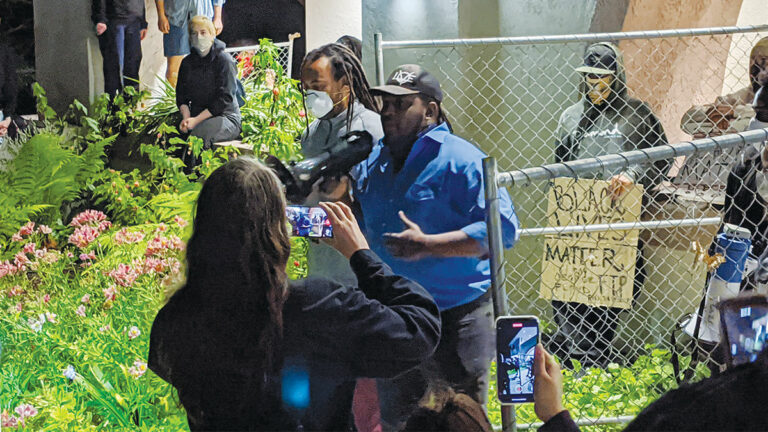
Tensions have flared in recent weeks with the swift reassembly, and then re-eviction, of tents on a swath of public land deemed “Ross Camp 2.0.” The return of the very visible encampment at the mouth of Highway 1 has stoked opposition to proposed changes to a public camping ban, which was, as of press time, set to be taken up by the Santa Cruz City Council on Tuesday night. 

The debate comes after a collective of local agencies this month announced a $7 million overhaul of the area’s publicly funded shelter system. After an infusion of state funding, the Homeless Action Partnership said that it will end a 55-bed winter shelter long offered at the Live Oak VFW. Instead, county and city agencies will support Santa Cruz’s legal 60-tent River Street camp, the Salvation Army, religious shelters, and safe parking for those who live in vehicles.

Amid the change—and with heavy rain and cold weather expected to arrive this week—deep divisions have resurfaced between service providers, homeless advocates and public safety activists. They’re split over whether to focus on an immediate need for street-level support, the underlying problem of unaffordable housing, or giving law enforcement more tools to crack down on people sleeping outdoors.  

“The system pretends it’s going to give people housing, even though there’s no housing being built,” says Brent Adams, founder of Santa Cruz nonprofit pop-up shelter provider The Warming Center Program. “We force people into this cookie-cutter model of homelessness.” 

Adams is seeking more support for scalable day-to-day services, like free laundry or storage for homeless residents, which the Warming Center provides to more than 200 people, without government funding. Some activists support a more radical expansion of encampments.  Housing Matters is among the larger local nonprofits that has doubled down on using housing vouchers, landlord incentives or other avenues to get people into housing. 

In the meantime, there are messy side effects of the turmoil to contend with. Police Chief Andy Mills is among the officials who has acknowledged mounting social and political pressure to address open drug use, human waste on neighborhood streets or concerns about safety.

“It seems the culture of lawfulness is quaking in Santa Cruz,” Mills wrote in a recent online post. “These tremors adversely affect our rule of law and, ultimately, the health of our community.” 

CHANGING NEEDS

At Housing Matters, Blom and her colleagues are tracking an evolution in the local homeless population. About 74% of the more than 2,100 homeless people counted in the nonprofit’s countywide survey earlier this year lived in Santa Cruz County before losing stable housing. Women now make up one-third of those living on the street, and the number of homeless young adults ages 18-24 has also spiked, to nearly 570 people. 

“Literally, the people who live in our neighborhoods are becoming homeless,” Blom says.

It’s not a fleeting trend. Across demographic groups, the number of people in the county who have been homeless for more than one year has surged to 64%. 

Lisa Berkowitz has seen the shift play out first hand at the downtown Santa Cruz site of the Meals on Wheels program that her organization Community Bridges runs for local seniors age 60 and older. A majority of those she sees are now homeless—about 51% of the more than 250 seniors the program served last year at its Louden Nelson Community Center site. 

“As hard as it is to be a person who is unhoused and having to look for shelter and food, it becomes that much more difficult and complicated for folks as they age,” Berkowitz says. “Anecdotally, what we hear from folks is in some instances, it’s a breakup of a relationship. There are a lot of folks who are Vietnam vets.”

While Community Bridges looks to raise funds for weekend meals in response to seniors turning up hungry on Mondays, other local nonprofits are digging into the root causes of homelessness. Pajaro Valley Shelter Services wants to expand its capacity to offer trauma services, since people experiencing homelessness are four times more likely to have suffered childhood trauma like abuse or neglect.

With rents surging in South County, Pajaro Valley Shelter Services Executive Director Mike Johnson says the agency’s waitlist grew as long as 220 people last winter. The nonprofit’s 136-bed shelter and services are designed for families, and more than 90% of clients are Latino. Some are undocumented immigrants or migrant workers who face additional barriers to housing.

“Usually, it’s a young, struggling mom of one to three kids,” Johnson says.

Though their work varies, Pajaro Valley Shelter Services, Community Bridges, the Warming Center, and Housing Matters are all among the more than 30 local nonprofits participating in GT’s annual Santa Cruz Gives holiday fundraising campaign. 

‘BRIDGE TO NOWHERE’

In Santa Cruz County, the most recent survey of homeless residents counted 2,167 people, though demographers often warn that such “point-in-time counts” are prone to undercounting. Still, that number is crucial to proposals currently on the table to change the way local agencies provide shelter or enforce bans on sleeping in public.

The new countywide shelter budget would fund 549 slots across the outdoor River Street encampment, safe parking and indoor shelters like the Salvation Army, according to the Homeless Action Partnership. The number of indoor beds funded would decrease to 135 as part of a goal to move from “a triage system” toward a year-round “system of shelter and services capable of addressing our homelessness crisis,” Santa Cruz County Homeless Services Coordinator Rayne Perez said in a press release announcing the change. 

For street-level service providers like Adams, the choice to move away from a reliable indoor shelter beds highlights a glaring disconnect: how to house more people when there’s not enough housing. 

“It’s a massive, golden bridge to nowhere,” Adams says. “We’re seeing a reduction in services while there’s a one-time increase in funding.”

Though so-called “housing-first” models have shown promise in areas like Salt Lake City or Seattle, where cities are green lighting ample new housing development, proposals to build new market-rate housing—let alone designated affordable units, or variations like tiny houses—often stall in the local approval process amid strong backlash from other property owners.

SLEEP LEARNING CURVE

At the city level, the Santa Cruz City Council’s plan to modify a ban on camping in public spaces has also inspired divergent views. 

The ban, which currently makes it a ticketable offense to “camp” in public has not been enforced since a court ruled it that such policies violate the Constitution’s prohibition on cruel and unusual punishment if no other viable shelter is available.

This week, the council will debate reinstating the ban during the day, from 7am to 10pm, frustrating some homeless advocates. Other changes are opposed by public safety critics, including a proposal to prohibit ticketing if a person is camping on private land with permission, or if a police officer determines that there is no shelter space available.

Santa Cruz Police Chief Mills has voiced support for the revised ordinance, and added in a blog post that the city could ban camping on more public spaces, crack down on syringes, add new parking time limits, or increase some citations to misdemeanors. Still, he cautions that, “Tickets alone cannot solve these problems” absent housing and mental health services, and he also proposes that the city offer more storage or consider limited amnesty for “good behavior.”

Among the 182 pages of public comments submitted to the City Council ahead of the camping ban debate, dozens of messages—some signed by backers of an anti-homeless rights City Council recall campaign—used boilerplate language to urge the council to delay a decision by at least two weeks and “make sure we do not increase the homeless population” with the changes.

“Homeless individuals may seem like they have no where (sic) to go, but they got here & and they can leave,” wrote Jennifer Greene. “Be STRONG against the people who say we need compassion.” 

On the other side of the issue, a petition to “make City Council sleep outside for a week before voting on a new camping ban” has been circulating on pro-homeless rights social media pages. A minority of letters to policymakers asked them to consider the human toll that can accompany life on the street. 

“This new rule proposed is unfair and inhuman,” wrote Satya Orion. “Where would you go if you had no home, office or car to retreat to?”

To learn more about the Warming Center, Community Bridges, Housing Matters, Pajaro Valley Shelter Services, and to contribute to local nonprofits working on homelessness issues, go to santacruzgives.org.

Nuz: The Only Logical Conclusion About Santa Cruz’s Recall

1

Finally, it’s the news that everyone’s been waiting for: We learned this month that the recall is officially on.

That’s right. New Leaf Community Markets recalled in-house ground beef with “packed on” dates between Oct. 19 and Oct. 23 and “sell by” dates between Oct. 23 and Oct. 26, due to possible E. coli contamination.

So what are we to make of this? Well, it frankly takes a lot of guts for someone like Nuz to weigh in and stick one’s neck out, offering a belated but important take on something everyone’s already tired of fighting over.

And what one, singular takeaway—at this point—could we possibly contribute amidst all the noise? Well (clears throat), studies show that contaminated foods can cause digestive problems, as well as a form of kidney failure! So there you have it, folks.

Wait, sorry. You’re thinking about another recall? Oh, that’s right, how silly of us. There was, in fact, a more recent local recall, due to E. coli in romaine lettuce grown in Salinas, so yeah, be careful.

Well, we’ve reached our word count on recalls for this week. If we hear about any other recalls, we’ll let you know!

PETTING ZOOM

With mayhem in Santa Cruz County feeling like it’s spinning out of control and social tensions nearing a possible all-time high, let us turn now to perhaps the most laid-back human in the area.

Earlier this month, Justin Furlone was surprisingly calm after watching a woman drive into his Watsonville shop, the Wishbone Pet Company. On Wednesday, Nov. 13, the car’s hood penetrated the front window of the local pet shop, wrecking their Christmas display and critically injuring several stuffed animals.

Decorations aside, no one was hurt. The pet store did suffer damage to its windows, entrance and some dog crates. The store stayed open while the accident was cleaned up. Police and fire officials who responded to the scene were gentle in handling the situation and attending to the driver, who was in her nineties, Furlone says. “We feel so bad, we do!” he told Nuz in the immediate aftermath. “She was shaken up!”

Jewel Theatre Leads Off Holiday Season With ‘Me And My Girl’

You could call it My Fair Laddie, or maybe The Prince Diaries: an ordinary person is plucked out of obscurity and thrust into high society to learn the manners of an aristocrat. The premise may be as old as the jokes, but it’s all given a buoyant spin and terrific-looking production in Jewel Theatre Company’s staging of the hit musical Me And My Girl.

Originally produced in 1937, the show features broad, music hall-style comedy in the book and lyrics by Arthur L. Rose and Douglas Furber, plus toe-tapping tunes by Noel Gay. A revival in 1984, with a revised script by Stephen Fry, was a smash in the West End, and later on Broadway. Now it enters the JTC tradition of presenting a musical in November to launch the start of our local theatre holiday season.

The show is set in the 1930s, where the nobles are all in a tizzy; the old Earl of Hereford has died, and his only living relation is Bill Snibson (Shaun Carroll), a brash, working-class Cockney from Lambeth, in London, who sells produce in the streets. He’s understandably gobsmacked to learn he’s the nominal heir to a lavish country estate, noble titles and a fleet of servants. Complicating matters is Bill’s attachment to his Cockney sweetheart Sally Smith (Julie James), whom he has no intention of leaving behind.

But according to the late earl’s will, Bill must first be deemed “fit and proper” by its executors, or the deal is off. Popular JTC regulars Diana Torres Koss and Christopher Reber are both excellent as the executors—Maria, the formidable duchess who is Bill’s newfound aunt, and Sir John, an upright but amiable family friend. Sir John thinks they can groom Bill into his new role, but Maria declares that first, Sally must go.

Also involved is voluptuous Lady Jacqueline (a frisky Shelby Stewart), who outlines her self-interest in the song “Thinking Of No One But Me,” and plots to seduce Bill into marriage. This is tough on the lovelorn fiancé she deserts, Gerald, played by Nicholas Yenson as an uptight fussbudget. Not only is Yenson extremely funny, he sings and tap-dances up a storm, leading the ensemble in the rousing “The Sun Has Got His Hat On” that opens the second act.

Another standout is Martin Rojas Dietrich as the family solicitor Parchester, who scuttles across the stage with oozy comic brio. Director and choreographer Lee Ann Payne gets the corps up and moving in fine style in the big production numbers, especially “The Lambeth Walk,” which closes the first act, where the Cockney “Pearly” culture and the snooty nobs first collide, then join forces.

(Payne also turns up in the singing-dancing ensemble, and plays Sally’s grumpy landlady in a very funny exchange with Reber’s Sir John.)

As Bill, Carroll’s singing is a bit tentative at times, but he’s so gifted at physical business, such a deft and tireless comic acrobat, that it doesn’t really matter. There are some moments, however, like his romantic duets with James’ Sally, that the music (canned, not performed live) threatens to overwhelm the voices.

Kent Dorsey’s clever scenic design consists of large, movable rectangles that become doorways or picture frames, while images projected upstage define the space as a grand country house interior, a Lambeth street corner, or a garden. B. Modern’s costumes are a delight, from vintage streetwear to the exuberant Pearly outfits to the ladies’ gowns in majestic shades of wine-red for the finale.

Since this isn’t a show by the Gershwins, say, or Cole Porter, most of the music is unfamiliar to modern audiences. One exception is a song written by Gay for another show of that era, and slipped into this one for the 1984 revival; if “Leaning On A Lamp-post” rings a bell, it’s because it became a popular novelty record by Herman’s Hermits in the 1960s. It’s right in keeping with the goofy charm of this production.

The Jewel Theatre Company production of ‘Me And My Girl’ plays through Dec. 8 at the Colligan Theater in The Tannery. 425-7506, jeweltheatre.net.

Rob Brezsny’s Astrology: Nov. 27-Dec 3

Free will astrology for the week of Nov. 27, 2019

ARIES (March 21-April 19): Humans invented the plow in 4500 B.C., the wheel in 4000 B.C., and writing in 3400 B.C. But long before that, by 6000 B.C., they had learned how to brew beer and make psychoactive drugs from plants. Psychopharmacologist Ronald Siegel points to this evidence to support his hypothesis that the yearning to transform our normal waking consciousness is a basic drive akin to our need to eat and drink. Of course, there are many ways to accomplish this shift besides alcohol and drugs. They include dancing, singing, praying, drumming, meditating, and having sex. What are your favorite modes? According to my astrological analysis, it’ll be extra important for you to alter your habitual perceptions and thinking patterns during the coming weeks.

TAURUS (April 20-May 20): What’s something you’re afraid of, but pretty confident you could become unafraid of? The coming weeks will be a favorable time to dismantle or dissolve that fear. Your levels of courage will be higher than usual, and your imagination will be unusually ingenious in devising methods and actions to free you of the unnecessary burden. Step one: Formulate an image or scene that symbolizes the dread, and visualize yourself blowing it up with a “bomb” made of a hundred roses.

GEMINI (May 21-June 20): The word “enantiodromia” refers to a phenomenon that occurs when a vivid form of expression turns into its opposite, often in dramatic fashion. Yang becomes yin; resistance transforms into welcome; loss morphs into gain. According to my reading of the astrological omens, you Geminis are the sign of the zodiac that’s most likely to experience enantiodromia in the coming weeks. Will it be a good thing or a bad thing? You can have a lot of influence over how that question resolves. For best results, don’t fear or demonize contradictions and paradoxes. Love and embrace them.

CANCER (June 21-July 22): There are Americans who speak only one language, English, and yet imagine they are smarter than bilingual immigrants. That fact amazes me, and inspires me to advise me and all my fellow Cancerians to engage in humble reflection about how we judge our fellow humans. Now is a favorable time for us to take inventory of any inclinations we might have to regard ourselves as superior to others; to question why we might imagine others aren’t as worthy of love and respect as we are; or to be skeptical of any tendency we might have dismiss and devalue those who don’t act and think as we do. I’m not saying we Cancerians are more guilty of these sins than everyone else. I’m merely letting you know that the coming weeks are our special time to make corrections.

LEO (July 23-Aug. 22): “Erotic love is one of the highest forms of contemplation,” wrote the sensually wise poet Kenneth Rexroth. That’s a provocative and profitable inspiration for you to tap into. According to my analysis of the astrological omens, you’re in the Season of Lucky Plucky Delight, when brave love can save you from wrong turns and irrelevant ideas; when the grandeur of amour can be your teacher and catalyst. If you have a partner with whom you can conduct these educational experiments, wonderful. If you don’t, be extra sweet and intimate with yourself.

VIRGO (Aug. 23-Sept. 22): In the follow-up story to Alice’s Adventures in Wonderland, our heroine uses a magic mirror as a portal into a fantastical land. There, she encounters the Red Queen, and soon the two of them are holding hands as they run as fast as they can. Alice notices that despite their great effort, they don’t seem to be moving forward. What’s happening? The Queen clears up the mystery: In her realm, you must run as hard as possible just to remain in the same spot. Sound familiar, Virgo? I’m wondering whether you’ve had a similar experience lately. If so, here’s my advice: Stop running. Sit back, relax, and allow the world to zoom by you. Yes, you might temporarily fall behind. But in the meantime, you’ll get fully recharged. No more than three weeks from now, you’ll be so energized that you’ll make up for all the lost time—and more.

LIBRA (Sept. 23-Oct. 22): Most sane people wish there could be less animosity between groups that have different beliefs and interests. How much better the world would be if everyone felt a generous acceptance toward those who are unlike them. But the problem goes even deeper: Most of us are at odds with ourselves. Here’s how author Rebecca West described it: Even the different parts of the same person do not often converse among themselves, do not succeed in learning from each other. That’s the bad news, Libra. The good news is that the coming weeks will be a favorable time for you to promote unity and harmony among all the various parts of yourself. I urge you to entice them to enter into earnest conversations with each other!

SCORPIO (Oct. 23-Nov. 21): Poet Cecilia Woloch asks, “How to un-want what the body has wanted, explain how the flesh in its wisdom was wrong?” Did the apparent error occur because of “some ghost in the mind?” she adds. Was it due to “some blue chemical rushing the blood,” or “some demon or god?” I’m sure that you, like most of us, have experienced this mystery. But the good news is that in the coming weeks, you will have the power to un-want inappropriate or unhealthy experiences that your body has wanted. Step one: Have a talk with yourself about why the thing your body has wanted isn’t in alignment with your highest good.

SAGITTARIUS (Nov. 22-Dec. 21): Sagittarian composer Ludwig van Beethoven was inclined to get deeply absorbed in his work. Even when he took time to attend to the details of daily necessity, he allowed himself to be spontaneously responsive to compelling musical inspirations that suddenly welled up in him. On more than a few occasions, he lathered his face with the 19th-century equivalent of shaving cream, then got waylaid by a burst of brilliance and forgot to actually shave. His servants found that amusing. I suspect that the coming weeks may be Beethoven-like for you, Sagittarius. I bet you’ll be surprised by worthy fascinations and subject to impromptu illuminations.

CAPRICORN (Dec. 22-Jan. 19): During the next 11 months, you could initiate fundamental improvements in the way you live from day to day. It’s conceivable you’ll discover or generate innovations that permanently raise your life’s possibilities to a higher octave. At the risk of sounding grandiose, I’m tempted to predict that you’ll celebrate at least one improvement that is your personal equivalent of the invention of the wheel or the compass or the calendar.

AQUARIUS (Jan. 20-Feb. 18): The only thing we learn from history is that we never learn anything from history. Philosopher Georg Hegel said that. But I think you will have an excellent chance to disprove this theory in the coming months. I suspect you will be inclined and motivated to study your own past in detail; you’ll be skilled at drawing useful lessons from it; and you will apply those lessons with wise panache as you reroute your destiny.

PISCES (Feb. 19-March 20): In his own time, poet Henry Wadsworth Longfellow (1807–1882) was acclaimed and beloved. At the height of his fame, he earned $3,000 per poem. But modern literary critics think that most of what he created is derivative, sentimental and unworthy of serious appreciation. In dramatic contrast is poet Emily Dickinson (1830-1886). Her writing was virtually unknown in her lifetime, but is now regarded as among the best ever. In accordance with astrological omens, I invite you to sort through your own past so as to determine which of your work, like Longfellow’s, should be archived as unimportant or irrelevant, and which, like Dickinson’s, deserves to be a continuing inspiration as you glide into the future.

Homework: You have the power to re-genius yourself. Guidance: tinyurl.com/ReGeniusYourself.

Think Local First 2020 Directory

Think Local First 2020
Shop like a local in Santa Cruz County

A Turkey-Ready Bargetto Merlot

Bargetto Merlot
Soquel winery’s 2017 Santa Cruz Mountains blend is primed for pairing

Central Coast Creamery’s Cheesy New Abbott Square Outpost

Central Coast Creamery
Sheep’s milk ice cream, goat cheese grilled cheese and more

Opinion: November 27, 2019

Deepfake
Plus letters to the editor

5 Things To Do In Santa Cruz: Nov. 27 – Dec. 3

Make a card for a local senior, Arboretum Community Day, ice skating at the beach, and more

Welcome to Deepfake Hell

Deepfake
The murky future of tech-addled Democracy

Showers, Shelters and A New Divide Over Santa Cruz Homelessness

Santa Cruz homeless Warming Program
Tensions flare over daily struggles, a city camping ban and a $7 million bet on unconventional shelters

Nuz: The Only Logical Conclusion About Santa Cruz’s Recall

Nuz
Plus, the chillest guy in Santa Cruz County

Jewel Theatre Leads Off Holiday Season With ‘Me And My Girl’

me and my girl
Comedy meets 1930s aristocracy in musical revival

Rob Brezsny’s Astrology: Nov. 27-Dec 3

Astrology, Horoscope, Stars, Zodiac Signs
Free will astrology for the week of Nov. 27, 2019
17,623FansLike
8,845FollowersFollow