
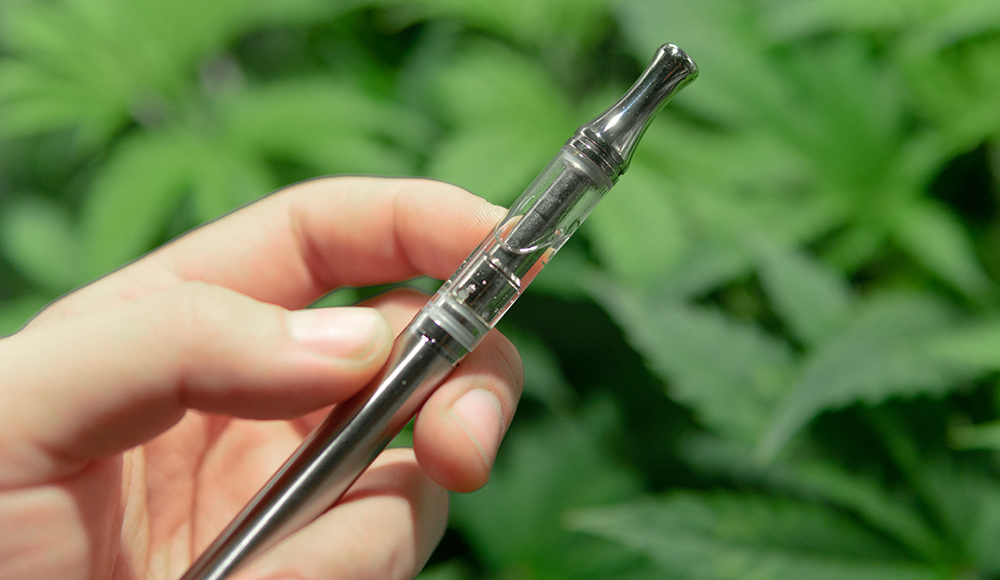
For most of my sixty years with cannabis, there was one delivery system: Fire. Roll a joint, light it, inhale, hold until you cough, and after several of these you suddenly realize Meat Loaf is a genius. Back then our big question was, “Anyone bring a lighter?” Now it’s, “Anybody got a degree in heavy metals?”
I’ve got a buddy who burned ganja for decades and now treasures his cannabis vape pen. Loves the high. One hit and done. He seems like an overachiever, but no. No grinding flower. No rolling papers. No second-hand smoke in the house annoying his squeeze. He clicks, inhales, and feels no pain. The vapor even comes in flavors.
Then, a cannabis expert he trusts implicitly tells him to watch out, there’s scary shit in the vape pen world. Damn.
In California’s licensed cannabis market, vape cartridges have overtaken flower as the state’s top-selling product. Young consumers, Gen Z, love the convenience; with two thumbs, they can order dinner, get a ride, find a date and get high. The pens produce very little odor; they fit in a pocket and deliver an astonishing amount of THC in one hit. Traditional flower may contain 30 percent THC. Vape cartridges can contain 95 percent. It’s an espresso machine for pot.
What exactly is a vape pen?
A typical vape consists of two parts: a rechargeable battery and a cartridge filled with concentrated cannabis oil. Press a button and the battery powers a tiny heating coil that warms the oil into an aerosol you inhale, which contains cannabinoids such as THC, CBD and CBG, along with naturally occurring cannabis terpenes that provide flavor and aroma.
Bummer story here, but it’s gotta be told: In 2019, thousands of Americans became seriously ill during the outbreak known as EVALI—E-cigarette or Vaping Product Use-Associated Lung Injury. Most cases were traced to illicit THC cartridges containing vitamin E acetate, a thickening agent that was never intended to be inhaled– 68 people died.

You’d think buying from a licensed dispensary would solve that problem, but even licensed cartridges raise questions. Researchers at the Johns Hopkins Bloomberg School of Public Health found that components inside some vaping devices may leach metals, such as lead, nickel, chromium and tin, into the oil during heating. It’s hard for me to imagine my buddy suffering harm from one puff a night. On the other hand, is it OK to smoke lead paint?
What really blew cannabis vape safety open was the Los Angeles Times’ “Dirty Weed” investigation. The Times reported that pesticide-contaminated cannabis products, including some vape cartridges, were being sold in state-licensed dispensaries after being certified as safe by state-licensed testing labs. The paper commissioned independent testing that found roughly half of the vape products tested contained pesticides or other chemicals that California’s cannabis testing program did not routinely monitor. The investigation can be found here: The Dirty Secret of California’s Legal Weed (Los Angeles Times, June 14, 2024).
The sticky issue is lack of laboratory oversight. Some labs even advertise they will give your cannabis product a favorable result; this “lab shopping” can inflate potency and overlook contaminants. It’s like showing up for the game with your own referee. Some cartridges may contain residual solvents, flavorings, thinning agents or contaminants that were never part of the original cannabis plant.
What is my vape-loving buddy to do? I called Ian Rice, co-founder of SC Laboratories, long considered one of California’s premier cannabis testing labs. Rice now heads Envirocann, a company that certifies farms and manufacturers for clean, ethically produced cannabis.
“Hey Ian, if a member of your family wanted to buy a vape pen, what would you tell them?”
“Buy OCal-certified.”
Rice explains that OCal is California’s equivalent of USDA Organic certification. OCal-certified products must meet strict standards for cultivation, pesticide use, inspections and traceability. Rice does not claim OCal certification makes a vape pen perfectly safe; there’s a risk to inhaling anything, but he believes OCal certification is a good indicator that the cannabis itself has been produced under clean standards.
You might check out solventless vape cartridges. Instead of using chemical solvents to extract cannabinoids, solventless oils use heat, pressure, ice water, or mechanical separation, leaving fewer opportunities for residual solvents or processing contaminants. Cannabis experts regard high-quality solventless cartridges as one of the cleaner options. When I asked Ian Rice to name a cartridge he would personally recommend, he mentioned Jetty, an OCal-certified company whose manufacturing practices he respects.
I suspect my buddy isn’t giving up his vape pen anytime soon. I hope he pays more attention to what’s inside that cartridge; it’s easy enough to look for something with the OCal safety sticker on it. After 60 years of weed, I never imagined I’d be dreaming of lab reports before getting high.