On a fog-softened evening in our surfside town, the most unlikely sound emanating from the Santa Cruz Wharf is the word “esters.”
At Makai Island Kitchen & Groggery, owner Peter Drobac is seated at a long wooden table lined with tasting glasses and a cleverly designed rum-map placemat, holding court on a subject most people only associate with pirates, mai tais and college regrets: Rum.
He is eager to dispel myths right off the bat. “Rum is not sweet,” he says. “It’s not sweeter than any other spirit when it comes off the still. The sweetness comes from what people add to it afterward.”
He says this with the calm conviction of a trial lawyer—which, until recently, is exactly what he was.
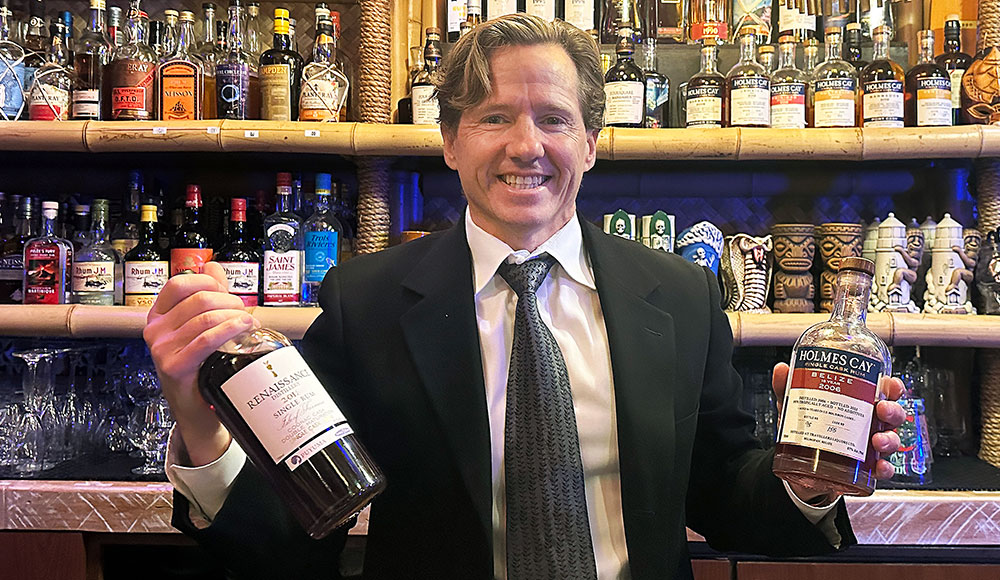
Today, Drobac is better known around the Wharf as the guy who turned a touristy restaurant into a tiki-inspired rum destination for tourists and locals—while quietly, thoughtfully assembling the third-largest rum collection on the West Coast. In fact, Makai now has roughly 560 different bottles, a rum lineup that puts it behind only Smuggler’s Cove in San Francisco and Rumba in Seattle in terms of sheer size and variety.
In other words: one of the most serious rum collections in the country is now tucked into a breezy, waterfront restaurant on a Wharf better known for barking sea lions and clam chowder in bread bowls.
Years earlier, Drobac’s father co-owned Splash, another restaurant on the Wharf. Its struggles taught Drobac a lesson about clarity of concept—one he brought to Makai when creating a distinctly tiki identity.
“I thought the food was good,” he says of Splash. “But the atmosphere was kind of cold and sparse and it just didn’t work for locals. One of the biggest critiques I got was, ‘What are you? What are you trying to be?’”
Splash tried to be “modern California cuisine on the water,” he explains—an idea that sounded fine on paper, but never quite translated into a feeling. “If you have to spend a long time explaining what you are, you’ve already lost,” he says.
So when Drobac left his career as a lawyer to join Makai, he wanted a concept you could understand in a single glance.
“We decided we were going to be a tiki bar and restaurant. You’d know when you walk in exactly what it is and what you’re getting.”
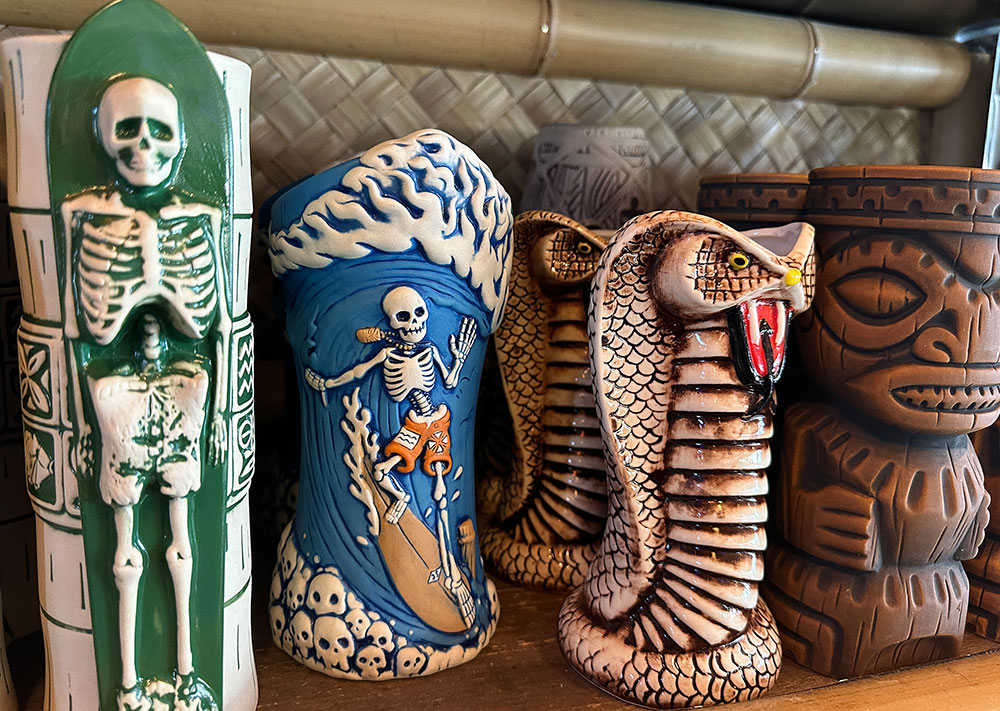
The décor followed suit: carved wooden masks, woven textures, lush plants, colorful island-inspired touches and big windows framing the stunning bay views. The cocktail list leaned tropical, bright and a little cheeky. The vibe became warm and transportive.
There was just one catch: At the time, Drobac didn’t know much about tiki. Or rum.
Drobac and his family also own Riva Fish House on the Wharf and he’d spent plenty of time behind that bar. So shifting into tropical cocktails—daiquiris, mai tais, zombies, painkillers—was a small step.
“The cocktails were easier because they required less knowledge,” he says. “You can learn recipes and balance. Building my rum-specific expertise was a much bigger dive.”
That dive turned into a full-on plunge. He started reading, tasting, calling importers and distillers, and seeking out the temples of rum. He visited Barbados and Jamaica, touring distilleries there. In Jamaica, he says, he’s been to every distillery—including a few that don’t usually open their doors to visitors.
“I sell so much rum now that the producers let me in,” he explains with a shrug. For certain brands, Makai is now one of their biggest accounts in the world.
The research trips sound glamorous, but they’re not exactly beach vacations.
“When I go, I’m not lying on the sand,” he laughs. “These distilleries are not in fun places. Especially in Jamaica—some of them are in pretty rough areas. If you’ve ever spent time in Kingston, you know it’s not exactly a resort town.”
The payoff is on Makai’s back bar. Row after row of bottles from Barbados, Jamaica, Guyana, Martinique, Belize, Puerto Rico and far beyond—India, Nepal, Hawaii, Louisiana. Some are molasses-based, some made from fresh sugarcane juice, some aged in ex-bourbon barrels, some in sherry or Madeira casks, some barely aged at all.
Drobac has tasting notes on most of them. He’s tried about three-quarters of his collection.
“Some of them I just know what they’ll taste like, so I don’t need to open the bottle,” he admits. “And some I don’t want to crack the seal yet.”
For many visitors, rum is simply “the thing in a rum and Coke” or the base of a tropical umbrella drink. Drobac’s mission is to gently blow up that notion. And he’s built the knowledge and expertise to do it.
“Rum is made all over the world—about 60 countries,” he explains during the tasting, slipping naturally into professor mode. “But there are four ‘big daddies’: Barbados, Jamaica, Martinique and Guyana.”
The common denominator is sugarcane. Beyond that, rum splinters into styles that can taste as different from one another as tequila does from oat milk.
There are two main starting points, he says:
- Molasses-based rum. This is the byproduct of making table sugar. Sugarcane is crushed, the juice is boiled and refined into crystals, and what’s left over is thick, dark molasses. Add water and yeast, ferment that molasses, distill it—and you’ve got rum. “The vast majority of rums are made this way,” Drobac says.
- Sugarcane juice rum. Instead of making sugar, some producers ferment the raw juice right after the cane is crushed. The result, he says, is “much more grassy, herbal and bold.”
In French-speaking regions such as Martinique and parts of the Caribbean, juice-based rums are called rhum agricole. When you see that term on a label, you’re looking at rum made directly from fresh cane juice.
Because that juice goes bad quickly, agricole-style producers have to be located close to where the cane is grown. “You basically have to ferment it within a day,” Drobac says. “It doesn’t transport well.”
Molasses, by contrast, is a stable commodity that can be shipped around the world. That’s how you end up with rum from places like Nepal—hardly a sugarcane powerhouse. In those cases, he explains, the producers are fermenting imported molasses.
Another rum myth Drobac likes to tackle quickly is color.
“A lot of people come in saying, ‘I like light rum,’ or, ‘I only drink dark rum,’” he says. “Those terms don’t actually mean anything.”
Yes, spirits pick up color from the barrels they’re aged in. But most rum producers also add caramel coloring, which doesn’t affect flavor but makes the spirit look older and richer than it may be.
“You can have light rums that taste exactly like a dark rum,” he says. “If someone tells me they don’t like light or dark rum, I always challenge that, because those words are really about color, not flavor.”
Sweetness is another place where rum’s reputation gets muddled. Rum is often perceived as sugary because so many mainstream brands add sweeteners after distillation. But that’s a choice, not a rule.
“All spirits are made by converting sugars into ethanol,” Drobac explains. “That’s true for whiskey, vodka, gin. … Coming off the still, rum has no more sugar than any of them. Some rum producers add sugar later, like some whiskey producers add flavorings or caramel. It’s not automatically a bad thing, but you should know about it.”
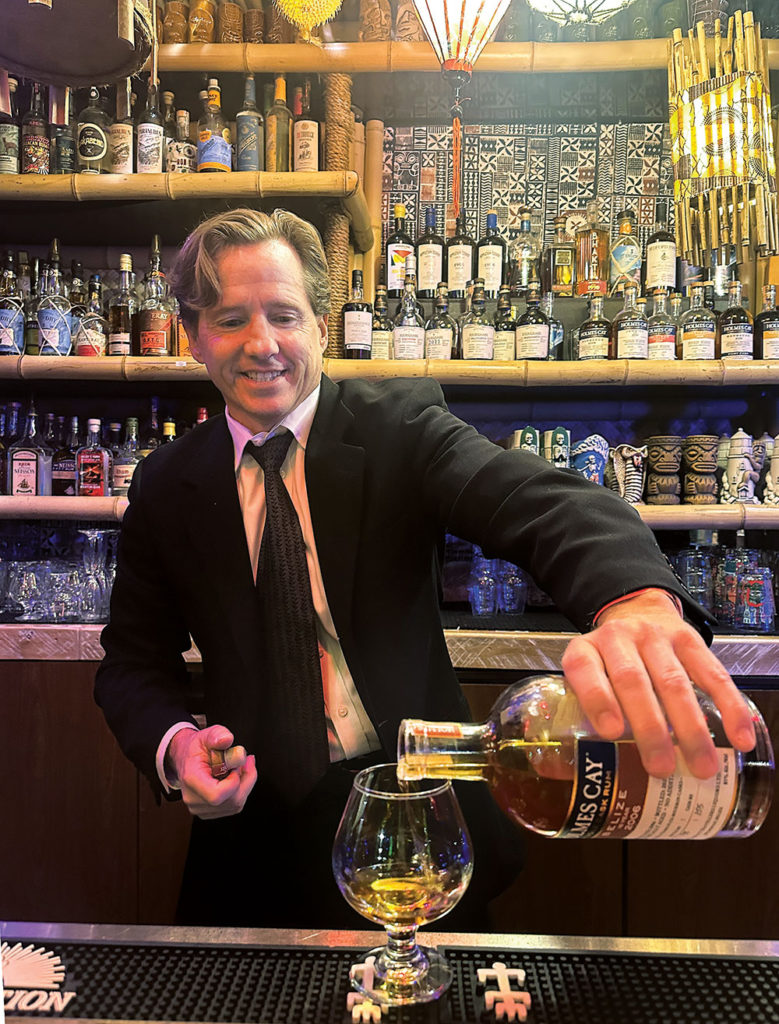
When guests tell him, “I don’t like rum—I had a bad experience in college,” he always asks what they do like.
“If you tell me what spirit you enjoy, I can find you a rum you’ll love,” he says. “If you like whiskey, I can pour you a rum you’d swear was whiskey.”
If wine people talk about terroir and beer brewers talk about hops, rum nerds talk about “funk”—and not the musical variety.
Funk, in rum language, comes from compounds called esters—byproducts of fermentation that can smell like tropical fruit, overripe banana, pineapple fritters and sometimes more savory, barnyard-y notes. Long, wild fermentations and traditional pot stills tend to crank up those flavors.
Drobac pours a small splash of a Jamaican rum fittingly called Rum Fire into a glass and warns that this one is not for gulping.
“It’s unaged, pot stilled and it’s a funk bomb,” he grins. The aroma hits the table before the glass does: tasters suggest pineapple upside-down cake, banana bread, grilled tropical fruit, solvent(!) and something a little wild (or perhaps even medicinal?)
“It’s 63% alcohol,” he notes. “Swallowing it and just letting it evaporate on your tongue is an experience.”
Rum Fire is the kind of rum Makai uses by the half-ounce in tiki recipes where a little intensity goes a long way. At Hampden, the Jamaican distillery that makes it, they even use it as a type of hand sanitizer for visitors touring the production floor.
For Drobac, these high-proof, high-funk rums are where the spirit gets really exciting.
“A lot of the really expensive stuff we sell is cask strength,” he says. “That means the rum is bottled at the same high proof at which it was aged, instead of being diluted down to 40% alcohol like most retail spirits. I love that, because I feel like I’m tasting all the flavors of the spirit, not just water.”
For people who aren’t used to drinking at that strength, he admits, “it can just taste like a lot of alcohol at first. But once your palate adjusts, there’s so much going on.”
If fermentation is where rum’s personality is born, the barrel is where it grows up.
“The biggest thing that affects the price of a rum is how long it’s aged,” Drobac says. A Jamaican rum aged 11 years, for example, might command $65 for an ounce-and-a-half at Makai. He has pours that cost as much as $400 an ounce.
Almost all of Makai’s aged rums spent time in ex-bourbon barrels. That’s because American whiskey law requires new, charred oak barrels for each batch. Once the whiskey is done, those barrels are sold off, and many travel to the Caribbean and Latin America.
“You get concentrated flavors of the wood and whatever was in the barrel before,” he says. “Sometimes that makes the rum better. Sometimes, if it’s over-aged, you lose some of the wild character of the spirit itself and all you taste is barrel.”
Tropical climates kick the process into overdrive. Heat and humidity expand and contract the wood, pushing spirit in and out of the oak and speeding up extraction. They also accelerate evaporation—the so-called “angel’s share.”
“In the Caribbean, you can lose up to 10% of a barrel every year to evaporation,” Drobac says. “Over a decade, that’s almost the entire contents gone, which is one reason long-aged tropical rums are so rare and pricey.”
By comparison, barrels aging in temperate places like Liverpool, England might lose only around 3% a year. Some rum producers choose to ship to Europe for aging to preserve more volume, but many rum enthusiasts prefer the intensity of fully tropical aging.
“Where it’s aged matters as much as how long,” he says.
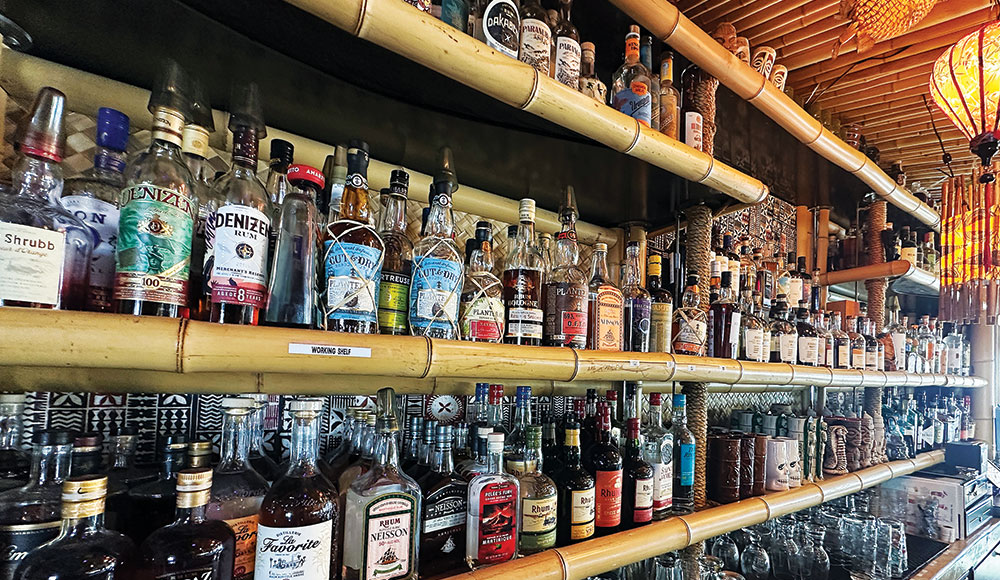
Put all of this together—molasses vs. cane juice, pot still vs. column still, tropical vs. continental aging—and you start to understand why rum can feel overwhelming to the average guest just looking for a drink with a view of the bay.
“When you have nearly 600 rums, it’s a lot,” Drobac admits. “People don’t know where to start.”
Behind the scenes, he trains his staff with the same diagrams and slides he uses for tasting sessions, walking them through fermentation, distillation, aging and regional differences. He also uses some of those geeky tools to keep himself organized: spreadsheets, tasting notes, lists of vintages.
He’s working on something more playful for guests: a “Rum Passport.”
“People will be able to start a journey, and we’ll guide them through it,” he explains. The first level will feature approachable, affordable rums—gateway bottles for people figuring out whether they like grassy agricoles, funky Jamaicans or smooth Latin-American sippers. If they want to keep going, they’ll move up to more complex flights.
“If you complete different passports, you’ll have tried great examples of all the styles I want to introduce you to,” he says. The idea is to give people a structured adventure, even if he’s not on the floor that night.
He’s also well aware that not everyone walking into Makai is there to get a Ph.D. in rum.
“We have people who come in who don’t care about rum at all,” he says. “They just want a really good, sweet drink, to enjoy the view and feel the vibe. Awesome. And then we have people who come in wanting a sophisticated experience with the spirit.”
Makai aims to do both: colorful tiki cocktails with paper parasols and careful, contemplative pours in small ornate glasses.
Ask Drobac how much rum he drinks, given his job, and he gives a practiced answer: “Not as much as I want to, but more than I should.”
It’s said with a grin, but it also hints at how fully he’s thrown himself into this world. Not that long ago, he was practicing law. Now he’s explaining the difference between oxidative and extractive aging to a rapt audience on a Tuesday night.
He insists he’s still early in his rum journey.
“I know a lot at this point,” he allows. “But there are people who’ve been doing this their whole lives.”
He hasn’t written the definitive rum book or launched a podcast or YouTube channel (yet), but he’s turned a once-confused Wharf space into something rare: a restaurant where you can order a coconutty crowd-pleaser, a classic basic-ingredient daiquiri or a $400-per-ounce, cask-strength powerhouse.
And if you’re curious, he’ll happily walk you through a mini Rum 101 while the waves slap against the pilings just outside.
He doesn’t have to finish the thought. Standing in front of shelf after shelf of amber and clear and mahogany bottles, it’s obvious what Makai has become—a delicious restaurant year-round, with one of the most impressive collections of rum you’ll find anywhere in the country…all right here in Santa Cruz on our beautiful Wharf.