

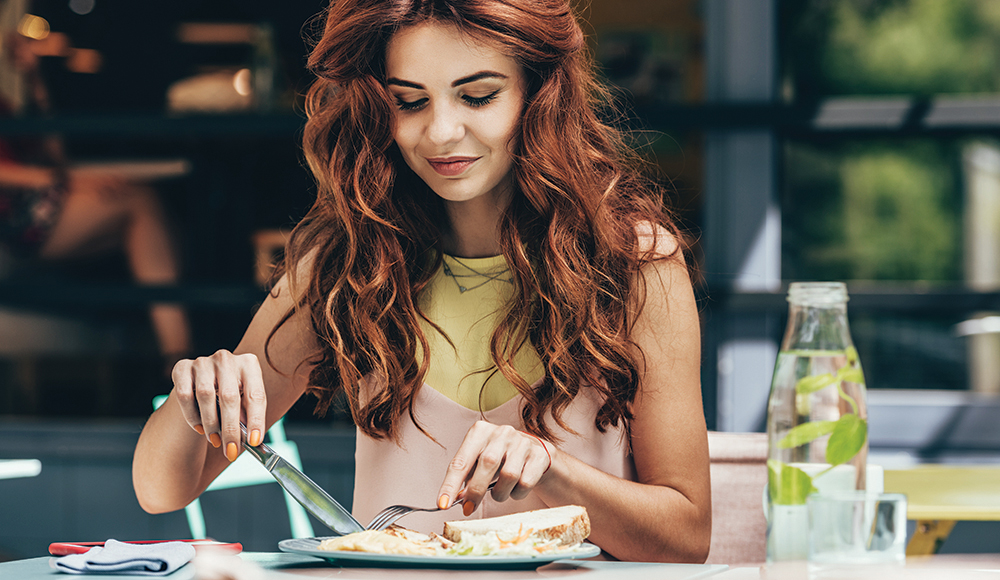
I eat alone most nights. In our culture, that can feel like a confession, one we whisper, if we admit it at all. The social trope of the solo eater isn’t exactly aspirational: a lonely person hunched over a microwave meal or take out carton, feeding scraps to her cats in between forkfuls. That’s one version of the story.
But it’s not the only one.
As a health-focused empty nester, I’ve discovered another way to eat alone, one that feels nourishing, intentional, and surprisingly good. Most evenings, I cook myself a delicious meal using simple ingredients that don’t leave me saddled with a pile of pots and pans. I sit down at the dinner table instead of the couch, with my favorite tunes in place of the TV. I fill a vase with fresh flowers, light a candle, and give the meal the same care and attention I would if I were cooking for someone else.
There’s something quietly radical about treating yourself as worthy of effort. Not extravagant exertion, just thoughtful care. I appreciate that I have access to good food, that I know how to prepare it, and that at 60, I still have the energy to cook and clean up afterward. That’s not something I take for granted anymore.
Over time, I’ve become something of an expert at shopping for, cooking, and cleaning up after healthy meals for one. I know which vegetables roast beautifully in small portions, which proteins keep well for a second night, and which dishes feel satisfying without leftovers languishing in the fridge. I’ve learned that a well-composed plate, simple, colorful, intentional, can be deeply grounding, even when it’s just me at the table.
Eating alone, while once my worst fear, I now realize can actually sharpen awareness. I notice flavors more. I make it a point to eat more slowly. I stop when I’m full instead of when the plate is empty. Without distraction, I can check in with my body and ask: What do I actually need right now?
Some nights, the answer is comfort. Other nights, it’s light and fresh. Sometimes it’s a bowl of soup and a piece of Companion Bakery walnut bread. Sometimes it’s a beautiful salad with greens from the Cabrillo Horticulture growers, roasted root vegetables and a protein seasoned with a dried herb blend. None of it is fancy. All of it is intentional.
This practice has shifted how I think about health. It’s no longer about perfect meals. It’s about rhythm, respect, and presence. About turning nourishment into a small daily ritual rather than a task to rush through or outsource.
So this week, that’s what I want to share with you: how to eat well and even find joy when you’re dining solo. Not by pretending it’s something it’s not, but by reframing it for what it can be: a chance to care for yourself with simplicity, attention, and a little beauty.
Because eating alone doesn’t have to be lonely. Sometimes, it’s an invitation.
One of the ways I make solo eating easier—and more satisfying—is by keeping it simple. One-pan simple. My go-to is a medium-sized stainless steel skillet, which doubles as cutting board, steamer, sauté pan, and serving dish. Fewer dishes. Less hassle. More pleasure.
I chop vegetables directly into the pan: breaking broccoli or cauliflower into florets, slicing carrots, zucchini, and onion, halving cherry tomatoes, chopping cabbage, or using kitchen scissors to sliver chard, kale, or beet greens. Choose your favorites and combine with abandon. When everything’s in, I fill the pan with water, cover it, and gently swirl to wash the produce, draining and repeating a few times.
Then I add about a quarter cup of water, cover the pan, and steam the vegetables for five minutes. Turn off the heat and let it sit for another five. This pause matters. It’s a built-in moment to exhale, set the table, or step outside for a breath of coastal air.
Protein is flexible. I rotate between diced tofu, cannellini beans, or tempeh bacon. If seafood or chicken is your thing, peeled shrimp or chopped farm-raised chicken breast slide right in. Once the veggies are tender, I add olive oil and flavor, because eating alone deserves extra flair.
My pantry staples are my secret allies: olive oil, olive tapenade, pesto, cilantro sauce, diced canned tomatoes, fresh garlic, chopped sun-dried tomatoes, miso, coconut aminos, seasoned salt, dried basil, and black pepper. A tablespoon of olive oil and a few well-chosen condiments turn a humble pan of vegetables into something deeply comforting.
Sauté until the protein is cooked through, about five minutes for tofu, slightly longer for shrimp or chicken. If you want a little extra grounding, add a scoop of 10-minute farro or fast-cooking rice. Leftovers make tomorrow’s lunch feel like a gift from your past self.
Eating alone can be efficient, nourishing, and surprisingly intimate. No performance. No distraction. Just you, a warm dish, and the simple pleasure of feeding yourself well. In that way, a solo meal isn’t an absence, it’s a quiet kind of abundance worth being grateful for.









I’m so with you my healthy line-eating sister !! I thought I was one of a few.
As an empty nester in 1988, most evenings I ate exactly like this. Alone and never lonely. As you say: “Eating alone can be efficient, nourishing, and surprisingly intimate. No performance. No distraction. Just you, a warm dish, and the simple pleasure of feeding yourself well. In that way, a solo meal isn’t an absence, it’s a quiet kind of abundance worth being grateful for.”
Then when I met my soulmate in 2000, he and I both ate like this. Together. We have done for 25 years. Abundance, simple pleasures, sufficiency, health.
This “Dining Solo” essay deserves to be repeated year upon year … its message is that delightfully compelling.