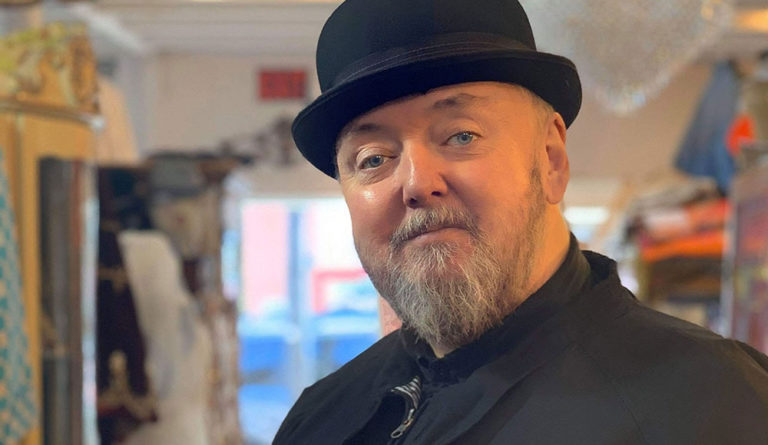
Ireland’s Thomas Walsh makes original music that rivals the best work by two of his heroes: Electric Light Orchestra’s Jeff Lynne and Andy Partridge of XTC. Echoes of the Beatles and the Kinks’ Ray Davies crop up in his distinctive songs as well.
And while the Dublin-based musician is nowhere as well known as those artists, on his own and with his group Pugwash, Walsh has released a string of superb albums featuring an impossibly high tunefulness quotient; ear candy melodies seem to come out of him effortlessly.
Of course that’s not the case; Walsh says that for him, the process of songwriting is real work. “I fight every aspect,” he says, only half-joking. “There’s always a better option than spending the next hour going through pain and anguish over a rhyme or a chord. And the older I get, the less I want to do of that.” He describes himself as lazy, a characterization reinforced by the fact that during our Zoom interview, he’s lying prone on a couch, the camera positioned directly above him.
Walsh rhapsodizes about all the wonderful programming on Netflix, and the distractions of social media. “And then I’m thinking, ‘Oh, I should be writing a song!’ But that’s the last thing my creative body wants to do.” But happily for him and his dedicated fans, the song usually wins.
Even tossing aside those unsatisfactory tunes, Walsh consistently comes up with a bounty of supremely fetching songs. As Pugwash—the name used for solo and band releases for nearly 20 years—Walsh released nearly a dozen albums. 2012’s The Olympus Sound was nominated for the Meteor Choice Awards’ Irish Album of the Year.
Retiring the Pugwash name last year, Walsh began releasing music under his own name with The Rest Is History. The name may have changed but the story’s the same: Walsh’s trademark hook-filled music continues to strike a perfect balance between melancholia, wistfulness, power pop energy and heartfelt, intelligent lyricism.
On The Rest is History, Walsh does nearly everything: writing, singing, guitar, keyboards, production. But he brings in pals to help at key points. Neil Hannon is his band mate in another project, the Duckworth Lewis Method; Walsh and Hannon co-wrote “A Good Day for Me,” the infectious album opener. Indie auteur Michael Penn co-wrote “Take Your Time,” another standout track on the new record. Other guests on The Rest Is History include pals Joe Elliott (Def Leppard) and former XTC guitarist Dave Gregory; the latter contributes a sublime string arrangement on “We Knew.”
Part of Walsh’ motive for retiring Pugwash was the impracticality of keeping a touring band together, especially when attempting to mount tours to North America. What concertgoers on his October run of West Coast dates will encounter, instead, is “a very oddly-shaped man sitting on a chair playing an acoustic guitar for a couple of hours,” Walsh says with a chuckle.
For the tour, Walsh has put together something very special, an item that will be available only to those who attend his current U.S. dates. “I’m doing up 50 copies of a CD,” he says. “A lot of people who’ve never heard of me turn up at shows, so I thought, ‘Why don’t I just put all my singles on a CD, do a funny cover and bring those?’”
The playfully titled Pugwash Singles Club features 14 studio tracks plus a live cut featuring the full-band lineup from a 2015 gig in Austin, Texas. Walsh concedes that while interested parties can always go listen on Spotify, a physical CD is “a nice, cool thing. And I love doing the artwork.”
An Irishman through and through, Walsh nonetheless demonstrates a deep and abiding love for America and its people. He sums up the differences between the two nations in his customarily droll manner, one that applies equally well to the music he makes: “America’s so big, it’s hard to control the madness,” he says. “Ireland is mad, too, but it’s very small…and a controlled madness.”
Thomas Walsh plays at 6pm on Tue., Oct. 22 at Sante Adairius Santa Cruz Portal, 1315 Water St., Santa Cruz. Facebook.com
When is a band not a band? That is the question posed when Destroyer’s frontperson, Dan Bejar, performs the band’s songs solo. It’s an on-brand stunt, considering the group has been a collective of regular band members and collaborators since its formation in 1995. How Bejar will strip away at Destroyer’s layers of synths, guitars and electronic beats to expose the soul of the music is anyone’s guess and part of the mysterious fun. Then again, Canadians always seem to find a way, and Bejar is no different, constantly churning out new creative and unique music that often wildly differs from track to track on a single album.MAT WEIR
INFO: 8pm, Rio Theatre, 1205 Soquel Ave., Santa Cruz. $30/adv, $35/door. 423-8209.
JAZZ
JOY GUIDRY
In a city known for its live music scene with a plethora of venues for live music, it’s important to recognize experimental spaces like the Tannery’s Indexical. The cozy space is a hotbed for new, progressive and unique music like Joy Guidry, who is celebrating the release of her third album, Amen. Guidry is a bassoonist and composer who experiments with the sounds of the soul through gospel tunes, original compositions and the ambiance of nature. Her 2022 debut, Radical Acceptance, explores her journey with bipolar disorder and post-traumatic stress as a Black Christian woman. Following her performance will be a conversation with composer and theorist James Gordon Williams. MW
INFO: 8:30pm, Indexical, 1050 River St., #119, Santa Cruz. $16.
FRIDAY 10/18
ART EXHIBITION
RE:COLLECT
Subtitled “Remember Your Cosmic Roots,” this exhibition is an “immersive Afrospeculative experience that focuses on the exploration and preservation of indigenous cosmic roots.” Re:Collect aims for a multisensory experience using sights, sounds and smells. The exhibit focuses on reestablishing Indigenous peoples’ connections with history and tradition, especially those intentionally swept away. Guest-curated by Santa Cruz-based activist, community organizer and historian Luna High John-Bey, the exhibition features works by Dynasty Ogun, Alim Smith, Zoë Boston, Witch Prophet, Zuzu, Soull Ogun and Shogun Shido. The Re:Collect exhibit is available for viewing until March 2025. BILL KOPP
INFO: Noon, Museum of Art & History, 705 Front St., Santa Cruz. $10. 429-1964.
SATURDAY 10/19
FOLK
KINGSTON TRIO
Established in Palo Alto in the ’50s by three college students vying to entertain their peers at parties, the folksy Kingston Trio’s music was shaped by San Francisco and Hawaiian music and culture. The Trio would go on to launch a folk boom that brought radicals like Woody Guthrie into the spotlight and paved the way for iconic progressive artists like Joan Baez and Bob Dylan. Today, a new Kingston Trio continues to delight audiences like the original folksmen did: by gently strumming their acoustic guitars and banjos, harmonizing on classics like “Where Have All the Flowers Gone” and “Tom Dooley” and throwing in a bit of stage banter the way the ol’ boys did back in the day. MELISA YURIAR
INFO: 7:30pm, Kuumbwa Jazz Center, 320-2 Cedar St., Santa Cruz. $34/adv, $38/door. 427-2227.
FESTIVAL
HALLOWEEN MASK MAKING
Haven’t had time to prepare for Halloween? That’s okay because the London Nelson Community Center has the perfect event to help. ’Tis the season for the annual Halloween Mask-Making Festival! This is a free and spooktacular family event for all ages. Not only will attendees be able to make boo-tiful masks, but they can play Halloween-themed carnival games, watch a Thriller dance and catch a special 30-minute performance of Once Upon a Broomstick. This event will get anyone in the mood for October; it’s time to get scary! ISABELLA MARIE SANGALINE
INFO: Noon, London Nelson Center, 301 Center St., Santa Cruz. Free. 420-6177.
SUNDAY 10/20
FOLK
BANSHEE TREE
Combining modern indie sounds with trance vibes, a psychedelic rock feel and Django Reinhardt-flavored gypsy jazz, Banshee Tree is a four-piece group from Boulder, Colorado. Their old-school-meets-modern approach applies traditional instrumentation like fiddle, acoustic guitar, upright bass and percussion to present-day electronics (pedals and other effects) for a hybrid sound. The band has singles and a self-titled EP available on Bandcamp. With its stuttering beats, electronica flourishes and Hot Club de France-styled fiddling, Banshee Tree’s latest release, Dreaming with the Fishes, is an alluring showcase for the group’s new-greets-old musical character. Fellow Boulder-based act luckydust opens. BK
The furiously political and socially conscious Brooklyn-born KRS-One is a hip hop legend in his own right. “The Teacher” is known for some of the most culturally relevant and political hip hop cuts and rhymes of the last two decades (“Sound of da Police,” “I Can’t Wake Up” and “MC’s Act Like They Don’t Know” to name a few). One of hip hop’s greats, he holds down the genre’s history and preserves its original principles of peace, love and unity through music, teaching the philosophy/mantra that “rap is something we do; hip hop is something we live.” It rings true in all that the artist produces. MY
There are field guides, and then there’s Atlas Obscura: Wild Life. The publishers behind Gastro Obscura, the ultimate foodie guide, are back at it again, focusing on the natural world. Bookshop Santa Cruz welcomes writer Cara Giaimo to read from and discuss her new book, which touts itself as “An Explorer’s Guide to the World’s Living Wonders.” Be prepared to learn about the fascinating world around you, trees communicating with one another under your feet, dung beetles using the stars for navigation, and over 500 extraordinary plants, animals and natural phenomena. The best part? Illustrations and photos on every page. KEITH LOWELL JENSEN
INFO: 4pm, London Nelson Center, 301 Center St., Santa Cruz. $49. 423-0900.
WEDNESDAY 10/23
INDIE
THE RED PEARS
We don’t hear from El Monte, California, too much. Yet the predominantly Hispanic town in eastern Los Angeles County has something going on, judging by its musical exports, including and perhaps especially the Red Pears, a fantastic trio. Guitarist and vocalist Henry Vargas, drummer Jose Corona and bassist Patrick Juarez have garnered comparisons to early Strokes while bringing something all their own into the mix. They’re killing it in the studio, putting out albums deserving of repeat listening, but it’s their live shows where they’re whipping their devoted crowd into a frenzy and making their mark. Come frenzy when they play the Catalyst on Wednesday. KLJ
One of the weirdest outcomes of cannabis legalization is that the cops, who for decades were intent on busting people for weed on behalf of the state and its laws, now bust people largely on behalf of the legal pot industry.
This isn’t wrong, necessarily. It’s just weird. Often, after a raid on an illicit grow operation or an unlicensed dispensary, spokespeople for the P.D. or prosecutor’s office emphasize the impact that illicit weed has on legitimate pot businesses. But otherwise, the busts seem much the same as they did before legalization, with “dope on the table” and all the rest of it. The same phenomenon plays out in legal states across the country.
Of course, before legalization, such busts had little impact on either the supply or demand for weed. The same is true now of illicit weed. The so-called “black market” continues apace, especially in California, fueled by bad state and local policies and high taxes that send people into the arms of their local pot dealer.
That doesn’t mean that cops shouldn’t enforce the laws, of course. If they didn’t, the situation might be even worse (though precisely how much worse is hard to know).
In many cases, police seem as zealous as they ever did, and some of the busts they pull off, or attempt to pull off, are outright amusing.
Last week we learned that, nearly a year ago, the Los Angeles Police Department raided what it thought was an illegal cannabis operation. It turned out to be a medical imaging center. The owners of NoHo Diagnostic Center have filed a lawsuit against the department, claiming that their civil rights were violated. The lawsuit, first reported by Law 360, did not specify damages.
Somehow, the cops got the idea that the MRI center, in the Van Nuys neighborhood, was an illegal grow operation, and that the MRI business was just a front. Part of what led them to believe this was that the site’s electricity use was found to be higher than average, which should give pause to any business or private citizen that uses a lot of electricity. (One wonders: will they ever raid a crypto data center?) The cops also claimed they smelled weed.
The raid occurred on Oct. 18 of last year. One employee on the site was detained while the cops walked around wondering why it looked like a medical-imaging center and not like a pot farm. According to the lawsuit, the raid was “nothing short of a disorganized circus, with no apparent rules, procedures, or even a hint of coordination.” The cops found no weed on the site.
This is all really funny stuff (though not for the victims, of course) but the hilarity doesn’t end there. According to the lawsuit, one of the cops walked past a sign outside an MRI room warning that metal was prohibited in the room. He was carrying a rifle that, the lawsuit alleges, was sucked out of his hand and was attached to the magnetized machine. Yeah, bitch! Magnets!
This particular cop hit the machine’s emergency “off” switch, which the lawsuit alleges damaged the machine. He also allegedly left a magazine of ammunition behind in the room. The LAPD hasn’t commented on any of this.
While much of the enforcement of current pot laws might be silly, unjust or dangerous, much of it is not. Last month, state authorities raided a bunch of storefronts in Los Angeles where the operators were selling cannabis products clearly meant to appeal to children (or people with the minds of children) with packages depicting cartoon characters or designed to look like candy. The labels also fraudulently bore the symbol required on cannabis products to show that they are legal. The Unified Cannabis Enforcement Taskforce hit 11 storefronts and seized $2.2 million of products.
While enforcement of laws is necessary (else why have those laws on the books?) a better approach for the state and cities might be to lower pot taxes and implement other reforms that would provide incentives for consumers to get their cannabis from professionally run, licensed pot dispensaries. It doesn’t look like that’s going to happen any time soon.
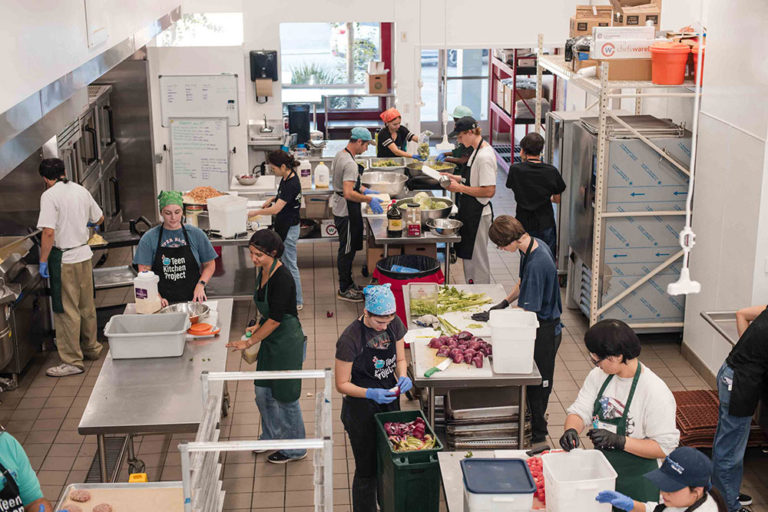
When necessity meets community spirit, innovation follows—and for the Teen Kitchen Project, it’s a recipe for changing lives.
In 2012, Angela Farley was a Santa Cruz mom facing a family crisis. Her young son Charlie’s pediatric cancer treatment required a daily commute from Santa Cruz to UC San Francisco, and as hard as she tried to maintain a sense of normalcy, it was a struggle to get evening meals on the table. When a generous friend gifted her one year’s worth of blue plate specials from Gayle’s Bakery & Rosticceria, it felt like a lifeline.
After Charlie successfully completed treatment in May of 2012, Farley wanted to find a way to replicate the gift that nourished her family. She rallied her community—talking with everyone from farmers to nutritionists and chefs—and just four months later officially launched her first meal distribution to support local cancer patients on Sept. 11.
What started as a small batch of meals turned into something much bigger. The heartfelt responses lit a fire in her to keep the mission alive.
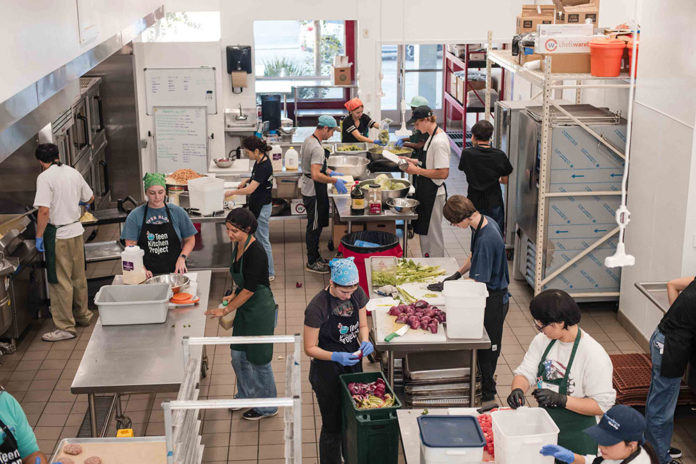
Realizing she needed help to scale, Farley began approaching local businesses for donations. The goal was to provide fresh, healthy fare to bolster patients’ immune systems. She worked with a chef to design balanced meals, and it didn’t take long for Live Earth Farms to step up as the project’s first major donor. Volunteers would go to the farmer’s market at closing to pick up unpurchased food, and then plan the meals around what was available.
That first year, from September through December, Farley and her small crew delivered 750 meals to patients in need. That number grew to 104,000 meals delivered in 2023. But here’s where the meals-on-wheels model varies. As the name implies, local teen volunteers receive culinary training to prepare meals from scratch using DASH—Dietary Approaches to Stop Hypertension. Designed to reduce sugar intake and help lower blood pressure, the diet focuses on fruits, vegetables, whole grains, lean protein and low-fat dairy.
Understanding how diet affects disease doesn’t just empower students—it inspires them to make smarter food choices in their own lives. Farley’s informal survey reveals that teens now cook from scratch 40% more often at home, motivated not only by the health benefits but also by the flavors of the dishes they’ve learned to create.
Teen Kitchen meals provide more than just nourishment—they’re a lifeline for those battling diet-related illnesses, with each meal tailored to meet the recipients’ specific health needs. Most recipients receive a bag of food a week with seven main dishes and a diabetes-friendly dessert, while medical clients receive 14 meals.
Since most clients are seniors, teens also gain intergenerational knowledge. Students often share how empowering it feels to hear the stories of those they’re helping, realizing how much their support means to people facing challenges with cooking or shopping.
While Teen Kitchen Project spreads the word through school counselors and community service fairs, it’s the buzz among friends that truly drives teen volunteers to join the fun. With three cohorts each year, the fall session just kicked off and will wrap up in December, with sign-ups for the next round starting in November.
Recently Farley and her team have seen what she describes as a “huge increase in needs of people living with a critical or chronic situation.” This otherwise challenging reality creates new opportunities to keep growing with added staff and new digs on the horizon.
Before the pandemic, TPK used El Pajaro kitchen in Watsonville; now they rent space at Kitchen 831 in Santa Cruz. The organization is in the quiet phase of a capital campaign, raising funds to build a permanent space that will be a 10-minute walk from both Harbor and Soquel high schools.
Meals are distributed by “delivery angels,” who also provide a bit of company. And each meal comes with a beautiful bouquet—thanks to the generosity of Second Bloom Flowers, which collects post-event donations from Pebble Beach resorts. Farley shares a poignant story of a client who was moved to tears upon receiving flowers—his first ever. Plus, a partnership with Giant Berries means every meal is topped off with DASH-friendly desserts made from fresh fruit.
Farley says she’s far from alone in her endeavors, praising her supportive board and staff. And she gives extra kudos to the teens and clients. “Feeling cared for is the program’s biggest impact, and teens can see firsthand what a difference they make,” she says.
No, not just the election or Halloween. Before that.
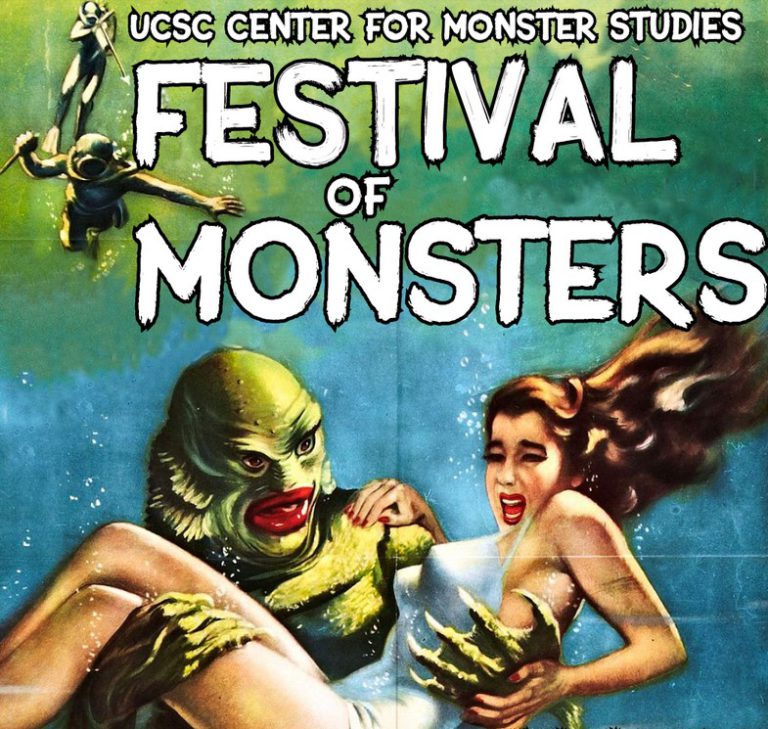
I’m not making this up, but this week, from Oct. 16-18 at the UC Santa Cruz Center for Monster Studies there is a Festival of Monsters, a three-day intellectual celebration of all things monstrous.
This is one of those things, like our Grateful Dead Museum or our Oaxacan celebration, that makes me so appreciate where we live. There is so much culture here of all kinds and all spectrums of imagination and thought. This is the place I once saw a talk by the man who invented LSD. Not at the monster fest, but at the UC.
“What I’ve discovered in my research is if you ask people what monster they’re scared of the most, that is really a reflection of what they might be,” says organizer Dr. Michael “Doc” Chemers in Mat Weir’s cover story.
The only program of its kind in the country, the center is a collection of artists and scholars who have dedicated themselves to the study of monsters and how they have been defined and reinterpreted throughout human history across all cultures. People will be visiting here from all over the world to attend lectures, movies and a ghastly costume ball.
Once again SC is on the international map of the weird.
Another thing that has put the Cruz on the map is PinUp Productions, which for 20 years has been booking shows—punk, hardcore, metal, hip hop and everything in between—in Santa Cruz and throughout the Bay Area and California.
To celebrate, they’re putting on an all-out, 18-band extravaganza in the main room at the downtown Santa Cruz Vets Hall on Oct. 19. But for anyone trying to buy a ticket, secondhand is the only option as the show sold out in less than a week.
While we’re gearing up for the one-time kid’s holiday that has been co-opted by grownups, you’ll want to check out a theatrical ghost story, Lucky Time, a two-act psychological puzzle produced by Actors Theatre.
Christina Waters gives us the lowdown in her arts piece in this issue.
I can promise you will get some laughs and worries from this week’s cannabis column, where writer Dan Mitchell recounts the Keystone Cops–like comedy of police busting supposed growers of cannabis. There’s some real irony to the idea that cops who once busted marijuana users and growers are now supporting legal growers.
When you get the munchies, check out our food columns for some hot ideas.
Thanks for reading.
Brad Kava | Editor
PHOTO CONTEST
SEEING DOUBLE This was taken from the lane. I call it “Symmetry.” Photograph by Pete Bartlett
GOOD IDEA
The National Oceanic and Atmospheric Administration is designating the Chumash
Heritage National Marine Sanctuary, stretching from Monterey Bay past Point Conception. The first Indigenous-nominated national marine sanctuary, led by the Northern Chumash Tribal Council, it is expected to be complete by December 2024.
It will be the third-largest national marine sanctuary in the United States, the first Indigenous-nominated sanctuary, and the first new ocean sanctuary in over 30 years. It will prohibit new oil drilling and support climate solutions by promoting the health of ocean habitats that serve a host of vital ecosystem functions.
GOOD WORK
Arte del Corazón, a nonprofit organization dedicated to supporting local artists, is excited to host its 2nd Annual Calavera Ball on Oct. 19 at Veterans of Foreign
Wars, 1960 Freedom Blvd, Freedom. This fundraising event will bring together art lovers, dancers and supporters of the arts for an evening of music, celebration and cultural pride. It runs 6-10pm and includes cumbia, salsa, and bachata as well as a silent art auction, costume contest, an arcade, a cash bar and hors d’oeuvres.
Big Soda has spent decades convincing us that sugar-filled drinks are harmless. The reality is that sugar-sweetened beverages are driving up rates of childhood obesity, diabetes and heart disease. Measure Z, which enacts a 2-cent tax on large beverage distributors, can help change that.
Cities like Berkeley and Philadelphia have shown that SSB taxes work, reducing consumption and funding vital community programs. Nonetheless, Big Soda pours millions into misleading campaigns to protect their bottom line in the name of “affordability” and public well-being.
If these companies truly cared about public well-being, Coke and Pepsi wouldn’t top the list of plastic polluters worldwide. They’d support policies proven to lower Medi-Cal costs by reducing SSB consumption. They don’t care about tooth decay, rising health problems in low-income communities, or small businesses unaffected by these taxes. They only care about profit. Don’t let big soda buy your vote —vote Yes on Measure Z.
Rose Svonkin and Terrence Moore
VOTE YOUR CLIMATE
As the election draws closer, we cannot ignore the growing impact of climate change on our communities. Hurricane Helene and now Hurricane Milton, along with dozens of wildfires this past summer—they’re all clear warning signs of a very real climate crisis.
This issue deserves more attention than it’s received so far this election cycle. During the presidential debate, only one brief question was asked about climate at the very end.
The fact is, the climate crisis impacts us all, no matter where we live or how much money we make. Americans are being told to flee their homes and risk losing everything. Meanwhile, Big Oil continues to put profits over people by prioritizing fossil fuels that continue to destroy our environment.
We cannot afford to lose any more time in the fight against the climate crisis. We need leaders—at the federal, state and local level—who believe in the science of climate change and are willing or can be convinced to take bold action before it’s too late. So I urge everyone: When you cast your ballot this November, think of our planet and the people that call it home.
Daniel Voskoboynikov’s full-circle story of becoming Harbor Café’s owner started in college, when he bused and served there. After graduating, he worked in San Francisco for several years in business accounting before moving back to Santa Cruz to study for his CPA exam. Then the fork-in-the-road moment: the drummer in his old band told him his girlfriend’s stepfather was looking to sell Harbor Café.
“Opportunity knocked and I said, ‘Let’s party,’” Voskoboynikov says, closing the loop and fulfilling his childhood dream of small business ownership paired with passion for food and hosting.
For good times, Harbor Café is about it, whether it’s starting the party with a festive brunch or keeping the party going from the night before. The full bar pours drinks both classic and creative, and the vibes are laid-back with a distinctly nautical “quaint little shack” ambiance.
The breakfast/lunch menu is traditional American with twists, like the “heavy hitter” customizable breakfast burrito, the open-faced Cali Benedict with avocado on a croissant, and the dream-come-true churro Belgian waffle. Lunch favorites include burgers, salads and beer-battered fresh fish tacos with cabbage slaw and housemade tomatillo salsa.
What makes Harbor Café that local spot?
DANIEL VOSKOBOYNIKOV: It’s a very fun vibe here; we have a lot of longtime employees and we all work very well together. We cater to locals, tourists, families and even dogs, and pride ourselves on being very welcoming to everyone. Running a restaurant is difficult, but I truly love my job. My employees feel the same, and we have a lot of fun doing what we do here. We’re very grateful to our clientele. We have a lot of rad people coming through our doors.
Tell me more about your bar.
The bar manager, Jalen Horne, is a longtime employee who has done wonders with our beer and cocktail menu. One new banging thing we have is a slushy machine which allows us to serve our Cruising Coffee cocktail, a sweet refreshing whiskey coffee slush topped with horchata whipped cream. It’s a big hit with our guests. Jalen does a great job; he’s always sporting the freshest haircut, hair colors, tattoos and wardrobe. His whole vibe is cutting edge, from who he is to the drinks he curates.
535 7th Ave., Santa Cruz, 831-475-4948; harborcafesantacruz.com
I might lose some punk rock points for this, but as a child one of my core memories was watching the “Thriller” music video. The shuffling zombie corpses rising from graves and the sewers as body parts fell off was the most terrifying thing I had seen in all of my eight years.
I’m pretty sure I screamed. I definitely remember the sleepless nights of terror that followed.
I would later grow up to become fascinated by zombies, vampires, cryptids, demons, monsters and other things that go bump in the night. But I’ll never forget how I felt thinking about the horror of becoming a mindless ghoul.
“That doesn’t surprise me,” exclaims Dr. Michael “Doc” Chemers through the Zoom screen after I share this memory.
“Getting a sense of who you are just by looking at you—with your hair and tattoos—you’re very much an individual and express yourself as one. Becoming a zombie would mean giving up that individuality and becoming one of the horde.”
Chemers would know.
Along with having a Ph.D. in theater history and theory and being a professor of dramatic literature in UC Santa Cruz’s Theater Arts Department, Chemers is a (literal) monster scholar. He’s the author of several books, including The Monster in Theater History: This Thing of Darkness, the co-host of the podcast The Show Where They Talk About Monsters and the founding director of the UC Santa Cruz Center for Monster Studies.
MONSTER MASH Center for Monsters co-directors Michael Chemers and Renée Fox at the Monster Ball Photo: Jennifer Mahal
And this week, Oct. 16–18, the center is resurrecting its annual Festival of Monsters, a three-day intellectual celebration of all things monstrous.
“What I’ve discovered in my research is if you ask people what monster they’re scared of the most, that is really a reflection of what they might be,” Chemers explains.
Held at the UC Santa Cruz Digital Arts Research Center, the festival is free to students. For others, a $185 registration fee includes access to all panels, an afterparty and catered breakfast and lunch.
It all culminates Oct. 18 at the UCSC Haybarn with the Monsters’ Ball, a costumed dance party where boils, ghouls and non-binary alike can all do the mash.
“I’m really excited about the Monsters’ Ball,” exclaims Dr. Renée Fox, Ph.D., co-director of the Center for Monsters and the Dickens Project.
“The Monsters’ Ball is just fun,” she continues. “Especially since all these people are traveling from everywhere and they bring their costumes with them so they can come to the ball fully decked out.”
“We have a great time,” Chemers says. “We’ll have a bar with specialty monster-themed drinks, a DJ, and we just cut loose in a room full of monster scholars dressed as their monsters.”
Unnatural History
So, what exactly is the Center for Monster Studies?
The only program of its kind in the country, the center is a collection of artists and scholars who have dedicated themselves to the study of monsters and how they have been defined and reinterpreted throughout human history across all cultures.
It all began in 2019 when the university’s Humanities Institute held the FrankenCon, a three-day festival of artists, scholars and scientists that explored the legacy of Mary Shelley’s Frankenstein for the novel’s 201st anniversary.
“The UCSC theater department did an adaptation of Frankenstein and they asked me if I would do a scholarly panel to accompany the play,” Chemers remembers. “So I started putting one together and it ballooned with so many people wanting to get involved.”
It resulted in Chemers creating a monster of an event spanning two days that included showings of the original 1931 and 1935 films, Frankenstein and Bride of Frankenstein, at the now-defunct DNA’s Comedy Lab. Although it wasn’t advertised under the same name, 2019’s event is considered the first Festival of Monsters.
“It was so popular that everyone wanted to do it again,” he says.
Unfortunately, of course, the Covid-19 global pandemic made sure it didn’t happen in 2020. While the pathogen spread, however, Chemers spawned a new idea. What if there could be a hub for academia to study the monsters that have always lurked behind the human mind?
Chemers—like most, if not all, of the festival panelists and speakers—has had a lifelong interest in horror as a way of reclaiming the power of identity.
GHOULING Remember the tabloids and their creepy headlines, with devils and monsters, at every checkout line? Photo: Jennifer Mahal
“I grew up Jewish in Utah in the ’70s, and that was a hard time and place to be Jewish,” he says. “Other kids would ask me where my horns were, and stuff like that. So I gravitated toward monsters even as a little kid because I thought, ‘If they aren’t going to let me be a part of things, then I’m going to identify with and be that monster instead of being afraid of it.’”
In 2021 he applied to the UCSC Office of Research for funding and a year later the Center for Monsters was established.
“When he looked around on campus to see what classes were being taught, and if there were any interest in monster studies, he discovered I was teaching all of the monster classes,” says co-direcftor Fox. An associate professor of literature at UCSC, Fox’s focus is on 19th-century literature, and last year she published The Necromantics: Reanimation, The Historical Imagination, and Victorian British and Irish Literature.
“I was teaching so many classes that centered on monsters and working on my book [about] reanimated corpses—and there can be nothing more monstrous than that. So he brought me on board,” Fox explains.
“We were friends before and then discovered we were both teaching classes, doing research on and publishing about monsters,” Chemers recalls. “She was so enthusiastic about creating and crafting the center, getting grants for it and coming up with cool ways of approaching different ideas that she became the co-director. We’ve been thick as thieves ever since.”
A full size replica of a terrifying movie creature is one of many scary sights at the Festival of Monsters.
The Abyss
Friedrich Nietzsche wrote, “Whoever fights monsters should see to it that in the process he does not become a monster. And if you gaze long enough into the abyss, the abyss will gaze back into you.”
He expressed that profound thought in 1886, and it’s just as true today as it was 138 years ago. No stranger to his own inner monsters—Nietzsche most certainly suffered from depression and some modern psychiatrists believe he was bipolar as well—it was precisely his own ability to gaze into his own abyss that gave him insight that still intrigues us today.
Monsters have always been with human beings, beginning in prehistoric days with drawing creatures on cave walls. The Greeks envisioned Medusa, with her stony gaze and snakes for hair, and the part-man, part-beast centaur. Aboriginal Australians spoke of Yara-ma-yha-who, a small red creature without teeth that swallowed its prey whole. In ancient Egypt the Serpopard—with its leopard body and snakehead—represented chaos beyond its borders. And don’t stay out after 2am in Japan, because the Gashadokuro–-giant, vengeful human skeletons with an endless hunger—feast upon the unsuspecting.
And then there are the ghosts.
“Ghosts are everywhere,” Chemers explains on Episode 2 of The Show Where They Talk About Monsters. “As far as I know, every human culture on Earth has ghost stories.”
In modern times, fictional monsters have become part of a horror industry that makes billions—if not more—worldwide. For instance take the foul-mouthed anti-hero, Freddy Krueger, from horror master Wes Craven’s A Nightmare on Elm Street series. The entire franchise has made $472 million worldwide across nine films at the box office alone. That’s not including the short-lived Freddy’s Nightmares TV show, trading cards, T-shirts, action figures, bobble-heads, cosplay items, and more that’s come out over the past four decades (in fact, the original film celebrates its 40th anniversary this year).
Of course, Santa Cruz is the perfect setting for the fest, as we are no strangers to monsters, physical and fictional. One can point to atrocities throughout our area’s history such as the enslavement, rape and torture of Native Americans with the influx of colonizers. As the area grew and more people arrived, Asian immigrants were the new focus of racism and hate.
Fast forward to the 1970s, when Santa Cruz had not one but three serial killers: John Linley Frazier, Herbert W. Mullin and—most infamous of all—Edmund Kemper. This earned the city the nickname the “Murder Capital of the World,” a moniker that would be immortalized in pop culture by Joel Schumacher’s 1987 vampiric cult classic, The Lost Boys.
While it might be the most beloved horror movie filmed in Santa Cruz, it’s hardly the only one. One year after Schumacher’s film, Killer Klowns From Outer Space was released with locations filmed in Watsonville and Santa Cruz. More recently David Arquette’s 2006 slasher The Tripper was filmed in the redwoods of the Santa Cruz Mountains, and in 2019 Jordan Peele released Us, which he chose to film in the area based on his love for The Lost Boys.
Masks by Santa Cruz locals Trick or Treat Studios on display at MAH. PHOTO: Mat Weir
On Tap for 2024
Each year Fox and Chemers come up with the themes or topics for the panels and invite a variety of academics and creatives from across the country to participate.
Last year’s event, titled “Werewolf Hunters, Jungle Queens and Space Commandos: The Lost World of Women Comic Artists,” centered around just that: comic books drawn by women dating back to the 1930s. The idea came after Jim Gunderson, a philanthropist, Banana Slug alumnus and avid comic collector, donated a large amount of his comics to the university’s Special Collections and Archives.
“We were so excited about his collection we wanted to create a museum exhibit that showed the role monsters played in comic book art drawn by women,” Chemers says, so they partnered with the Museum of Art and History to showcase the art.
While there is no official theme for this year’s festival, the panels are centered around topics like monstrous ecologies, body horror, queerness in horror, zombies, Black monstrosities and more.
Last weekend the festival gave the public a taste of what’s to come with two days of free events. However, the real frightful fun starts Oct. 16 with a welcome reception followed by a staged reading of Monster, a Frankenstein play by John Clancy, performed by UC Santa Cruz students and directed by Marie Stewart.
On Thursday attendees will enjoy an entire day packed with panels ranging in topics from “The Horror of Sex, Bodies and Monsters in Cinema” to dissecting race in horror with “Black Monstrosities.” There will also be a live recording of The Show Where They Talk About Monsters along with keynote speaker mattie brice, who is a video game designer, UC Santa Cruz faculty member and activist.
Chemers describes brice’s games as “astonishingly important in the history of game design,”
Notably, brice’s 2012 game, Mainichi, transports the player into the main character of a Black transwoman. The challenge is to get through a normal day in a society that sees the character as a monstrous threat.
“It’s really eye-opening,” Chemers admits. “It uses the power of games to get you, the player, to embody an experience you’d otherwise never have and to gain a little empathy.”
Monster Mashup
Friday continues the frights with topics like “Reanimating the 19th-Century British Monsters,” “Queer Monsters” and “Everyday Monsters and Monsters of Resistance.” The day’s keynote speaker is Dr. Jerry Rafiki Jenkins, a writer, professor and assistant director of the Institute of African American Studies at the University of Georgia.
“The study of monsters is so important,” says Jenkins, author of The Paradox of Blackness in African American Vampire Fiction and Anti-Blackness and Human Monstrosity in Black American Horror Fiction.
“My work looks at humans and the human monster. It’s a construct that we’ve created and monsters represent—in many ways—the things that we don’t like about ourselves. That’s why I think some people have a hard time dealing with horror. It’s a reflection that makes us uncomfortable.”
Jenkins explains that traditionally in Western culture, horror was not seen as a Black genre. However, a new wave of Black horror creators—critically acclaimed authors like Tananarive Due (whom Jenkins calls the “Literary Stephen King”), Nnedi Okorafor, Linda D. Addison, Helen Oyeyemi, Jemiah Jefferson and Kenya Moss-Dyme—are changing that perception.
“There’s been a rising trend of Black women in Black horror,” he states. “Traditionally it’s been a male genre, but within Black horror now, I feel like I can name all of the Black male horror writers on two hands. Whereas with women there’s a list.”
In Anti-Blackness, he analyzes the monsters frequently explored in Black American horror fiction–the hypersexualization of Black women in American culture and how Black men are seen as rapists and thugs. Stereotypes dating back to America’s monstrous Original Sin of slavery. An institution—he points out—that isn’t confined just to race or our country’s history.
“Before there was an Atlantic slave trade, there was the Indian Ocean slave trade,” he explains. “The term slav comes from Slavics. So we should be asking, ‘What the hell is going on with human beings that we want to do this shit to each other?’”
Love for the Monster
Then there are people like Kahlo Smith, who have a different take.
“What brings me to monster studies in particular is an interest in self-identification with the monsters” explains Smith, a University of Nevada, Reno graduate student, Felton local and festival panelist.
“I’m Queer and also Jewish and those are two groups that—throughout history—have been aligned with villainy and monstrosity,” she continues.
“What I’ve seen as I’ve grown up in modern culture is a really interesting way that the queer community self-identifies with monstrosity as a way of reclaiming it and valuing difference. Sort of having love for the monster.”
It’s a topic she will explore in detail for her talk titled “I’m Not Straight But I’ll Make an Exception for Mothman: Transgressive Desire in Queer Cryptid Memes.”
So what is it about monsters that not only has held its gnarled grip upon humanity since the beginning of time, but continues to slash away at our deepest fears?
“There’s a kind of delight and joy in eeriness and especially a kind of catharsis,” Smith. Her love for monsters began as a child in the Santa Cruz Mountains, growing up on Highway 9 just down the road from the Bigfoot Discovery Museum. It’s a subject—and place—she would revisit as an adult.
“I interviewed the proprietor—Mike Rugg—back when I was in college,” she says. “The first big research project I did was during Covid, and I interviewed people who were the curators of cryptid museums [across the country]. That really started because of him.”
Creature Discomforts
For Center for Monster Studies co-director Fox, monsters are ubiquitous vehicles that travel through many aspects of humanity.
“Monster studies is a really capacious field in ways other academic fields aren’t. There’s space for people to come at monstrosities from all different angles: literary studies, engineering, science, media studies, Black studies, queer studies, indigenous studies. All of these fields get to come together in monster studies in a way they don’t in other academic spaces.”
How monsters change throughout time and culture is also worth noting. It’s a topic Fox will moderate on at the “Adapting Old Monsters” panel and one she explores extensively in her book The Necromantics, with a particular focus on Shelley’s Frankenstein. In her book Fox argues that Frankenstein itself has become its own monster over the past 206 years.
Today we think of the mad scientist’s monster as a mindless, destructive corpse reanimated through the resulting power when technology meets electricity.
However, that version has been stitched together of pieces from each time period and culture it passes through. In her masterpiece, Shelley never uses the word “reanimate,” instead opting for “animate”—an important distinction that Fox argues changes the meaning of the creature.
“He’s a newly created being who learns how to be human in a world that doesn’t want to allow him to be,” Fox explains.
“He’s culturally and racially illegible, his gender is illegible, and he doesn’t appear to the world in any of the categories they define as human so he has to figure it out for himself. That’s so much of what the novel is about. The problem with the creature is that he’s entirely new, not something that’s old.”
For Chemers the human obsession with monsters might actually be the only thing to save us from ourselves.
“You can take an actual person, mat the monster onto that person and then you can persecute that person without feeling like you’re a psychopath,” he says. “The monsterization of others leads to atrocities. But if you look at the monster and see yourself, then you are on the threshold of some really powerful self-discovery.”
El Pájaro, in English, means “the bird.” So it makes poetic sense that El Pájaro Community Development Corporation serves as an incredible nest for burgeoning local businesses.
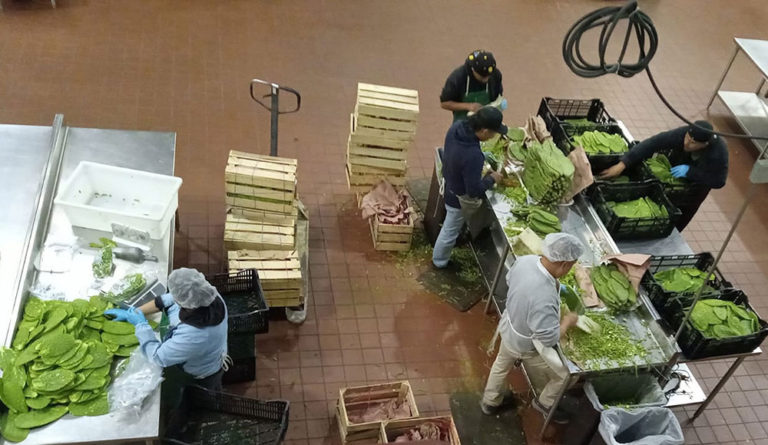
By way of loans, coaching and networking, the nonprofit incubator has hatched so many inspiring small businesses that the main challenge in reporting on it is not to gush. The startups include community-uplifting childcare companies, hair salons, IT firms, a boatload of woman-owned operations and a full-on buffet of great food trucks and farmers market favorites.
A partial list of the foodie phenoms includes El Nopalito, Mary’s Fruit Tarts, Fired Up Fresh, Il Biscotto, Cali Co. Catering, Sour Sweet Treats, Ely’s Pupusas, Hot Birds, Mi Pan y Mi Leche, Scrumptious Fish ’n’ Chips, Yoli’s Adobo, Nopalito Produce, Inc. and Rob Pastelillo Puerto Rican. In a word, wow.
Each of those will also furnish food at El Pájaro CDC’s 45th anniversary celebration, “Tacos & Tapas,” happening 6-9pm Thursday, Oct. 17, at the center’s Kitchen Incubator in Watsonville (23 E Beach St., #209, Watsonville), in the heart of the tri-county Monterey-San Benito-Santa Cruz area it serves.
Santa Cruz Cider Company, Fruition Brewing and El Vaquero Winery will all pour; Flor de Caña will do the dance music.
Signing up for the CDC’s support is as simple as registering on its website or just calling their public line (831-706-1062), which leads to all sorts of cascading benefits, as Kitchen Incubator Program Manager Cesario Ruiz—who has cultivated his own food truck project, My Mom’s Mole—testifies.
“Having people from different cultures and backgrounds come to share their flavors with us has been very enlightening,” he says. “It’s very powerful because food has the ability to connect people, and behind every single concept there’s a bigger story of how they got to where they are, which provides that much more of a compelling reason to buy their product.
Aptos, population 6,614, enjoys an outsized amount of flavor—which is a primary reason it has more on the way. The leadership at young, clever and popular craft brew outlet Other Brother Beer Co. had been quietly seeking a location for a satellite spot in the Santa Cruz area to complement its flagship brewery-restaurant (877 Broadway Ave., Seaside). When creative director Evan Loewy, brewer Kevin Brown and company scouted the former Doon to Earth (10 Parade St., Aptos), they knew they found their second home, in large part because of the strong cluster of tastemakers in the neighborhood, namely Cat & Cloud Coffee, Penny Ice Cream, Mentone, Parish Publick House and Betty’s Burgers. Locals can anticipate great hazys, IPAs, lagers and sours, a brisk calendar of events, and optimistic opening date of late 2025, otherbrotherbeer.com.
SNACK PACKETS
For just $5 (free for kids under 12 and students with ID!), UC Santa Cruz Farm’s 2024 Harvest Festival assembles face painting, flower printing, tractor rides, honey tasting, apple pressing, storytelling, Sammy the Banana Slug mingling, food from the Penny Ice Creamery, S&B Food Truck and Pana Venezuelan, live music, an apple pie bake-off, kids’ activities and more 11:30am-2pm Oct. 19, calendar.ucsc.edu/event/harvest-festival…A major victory for fisheries management is upon us: Pacific bluefin tuna caught in the U.S. with handlines and hand-operated pole-and-lines is now rated yellow by Seafood Watch after years on the red list, meaning good management and consumer choices have helped the population recover significantly, more at seafoodwatch.org…Walt Disney, lead us out: “The way to get started is to quit talking and begin doing.”
Several candidates tossed their hats in the ring in early 2024 when Zach Friend announced his retirement from the District 2 seat on the Santa Cruz County Board of Supervisors.
The top two vote-getters were Kim De Serpa, with 25.2% of the vote, and Kristen Brown with 32.7%.
With a smaller pool of candidates—and a large number of voters expected to head to the polls for the presidential election—the seat is very much in play.
District 2 covers Aptos, La Selva Beach, Seacliff and Rio Del Mar, as well as Corralitos, Freedom and parts of Capitola and Watsonville.
Kristen Brown currently serves as mayor on the Capitola City Council and has over a decade of experience in local government.
Both candidates answered emailed questions and in this article we are featuring Brown’s responses. Some responses have been edited for clarity.
Why are you running?
I’m running for Second District Supervisor because I care deeply about our community, and I want to be part of finding solutions to some of our toughest challenges. I believe my experience and dedication can help make a real difference in maintaining and improving the quality of life for the residents of District 2.
Tell me about the experience that will help you do the job.
I bring over 13 years of experience working in government, nonprofits, and community organizations, including five years working as a Congressional Aide for Congressman Sam Farr and Congressman Jimmy Panetta. I currently serve as Mayor of Capitola and have been on the Capitola City Council for eight years. During that time, I’ve supported millions of dollars in road repairs and investments in public transit, preserved affordable housing options through mobile home rent stabilization, advocated for coastal resilience funding, and increased youth participation in local government.
I’ve had the privilege of serving on multiple boards, commissions and committees throughout the County, and am currently the Chair of the METRO Transit District and the RTC, Regional Transportation Commission, and County Sanitation District Board of Directors. I’ve been on the Board of the Association of Monterey Bay Area Governments for the past 8 years, and served as board president during the regional housing needs assessment process.
Additionally, I hold a Masters Degree in Public Administration, with an emphasis in Public Sector Management and Leadership, which has prepared me to tackle the complexities of governance from both a policy perspective and an administrative perspective.
What are some of the most pressing issues in District 2, and what would you do to address them?
Some of the most pressing issues in District 2, and in the County generally, include housing, transportation, climate change, and budget challenges. Below are my thoughts on how I would work to address each of these issues.
– Housing: Our county is facing a housing crisis in terms of both affordability and availability of housing. To address these issues, we need to zone for additional housing development, remove barriers to development such as excessive fees, ensure a fully staffed planning department to address the permitting backlog, and incentivize smart affordable housing development. Additionally, we need to invest in solutions for the unhoused population – such as supportive housing, transitional housing, and tiny homes – and work to prevent displacement through tenant protections and investment in programs that support renters and homeowners.
– Transportation: County residents are spending far too much of their time stuck in traffic rather than spending it with friends, family, and loved ones. This increasing traffic congestion is also contributing to increases in greenhouse gas emissions and lowered quality of life. We need to continue planning for the implementation of electric passenger rail, invest in our METRO transit district, and work to consider funding mechanisms to address the $1 billion dollars of deferred maintenance on over 600 miles of County-owned roadways.
– Climate Change: The impacts of climate change can be seen throughout the County with increasingly intense storm patterns, sea level rise, coastal erosion, wildfires, and drought. Many District 2 residents are experiencing the loss of their fire insurance due to the impacts of climate change. I participated in the Insurance Commissioner’s public hearing on this issue, and will continue working to understand how to best support our residents in the face of this challenge. Additionally, there must be a focus on ensuring that the district is prepared for the next climate-related disaster, our office of Resiliency, Recovery, and Response is prepared to assist residents as needed, evacuation routes are cleared and communicated to residents, and community service networks are in place for when the next disaster strikes. We must also work with our State and Federal partners to seek funding to address climate change mitigation and impacts here in the County.
– Budget: Santa Cruz County is chronically underfunded, receiving only 13-cents of every tax dollar collected. With more population living in unincorporated County than in any individual City, the County is tasked with providing a number of essential services with limited financial resources. In the coming years, the County will be facing additional unfunded State mandates that the next Supervisor will need to be prepared to negotiate. As a 4-year member of the City of Capitola’s Finance Advisory Committee, Member of the Regional Transportation Commission’s Budget & Administration/Personnel (BAP) Committee, and ten-year Treasurer for the Community Action Board of Santa Cruz County, I am well tackle the challenges that lie ahead in terms of the County’s budget.
What other changes would you like to see in the county or on the board?
I’d like to see improvements in the County’s efficiency and would like to work with fellow supervisors and County staff to determine where we can streamline processes and procedures to become more efficient in the work being done on behalf of County residents.
Anything else you want to say?
I’m deeply committed to our community, and would be grateful for the opportunity to serve as the next Second District Supervisor. I have a reputation for convening, collaborating, and consensus building in order to get things done, and I welcome outreach from residents to learn more about how they feel I can best serve the District. I’m proud to have the support of a number of community leaders and labor organizations, including every Mayor and Vice Mayor in the County, SEIU 521, which represents County employees, SEIU 2015, the long-term caregivers union, and PVFT, the Pajaro Valley Federation of Teachers. I take very seriously the responsibility placed in me and I am ready to step into the role of Supervisor and be responsive to the needs of the residents on day one.
When necessity meets community spirit, innovation follows—and for the Teen Kitchen Project, it's a recipe for changing lives.
In 2012, Angela Farley was a Santa Cruz mom facing a family crisis. Her young son Charlie’s pediatric cancer treatment required a daily commute from Santa Cruz to UC San Francisco, and as hard as she tried to maintain a sense of...
I might lose some punk rock points for this, but as a child one of my core memories was watching the “Thriller” music video. The shuffling zombie corpses rising from graves and the sewers as body parts fell off was the most terrifying thing I had seen in all of my eight years.
I’m pretty sure I screamed. I definitely...