Mountain Community Theater Director Developing CZU Play

0

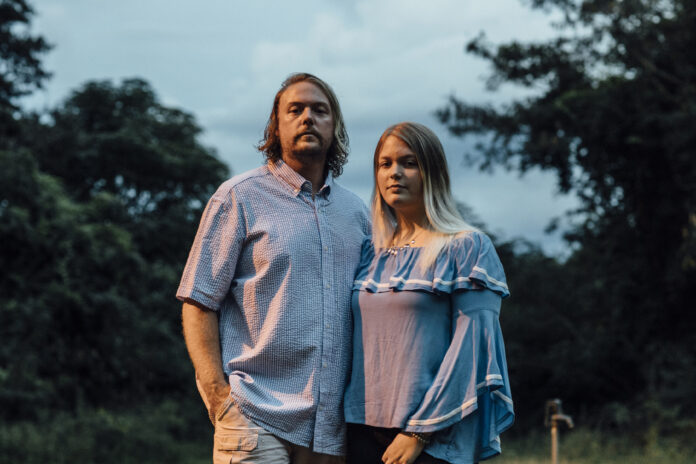
Mountain Community Theater’s (MCT) Peter Gelblum knows a good story when he hears one. Whether it’s one of loss or perseverance, success or struggle, Gelblum is a student of the human condition, and he uses that insight to help shape his actors into storytellers on stage. 

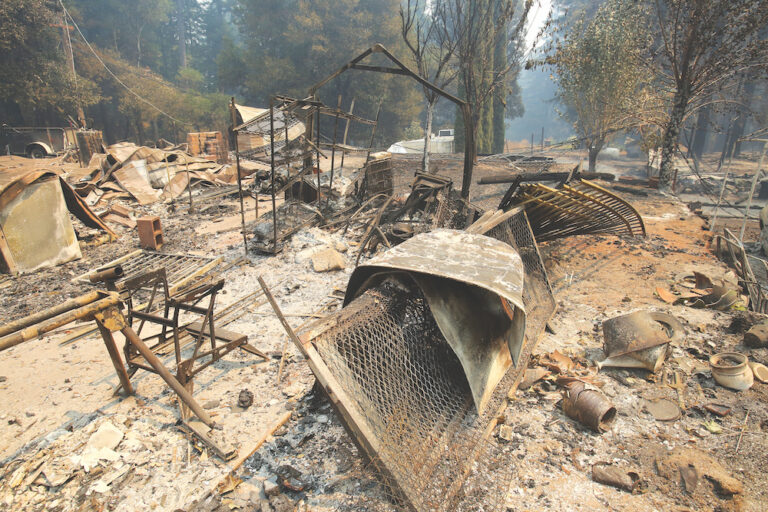
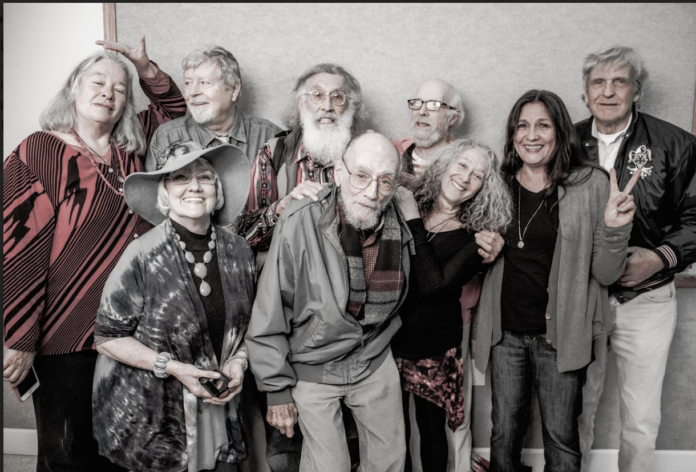
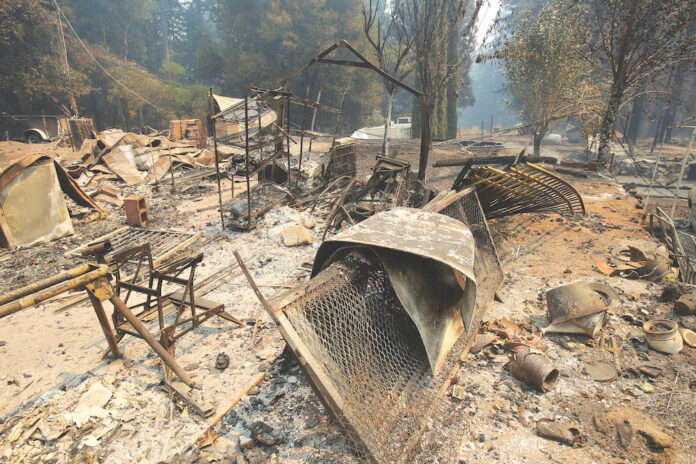
After watching the communities of the San Lorenzo Valley suffer under the white-hot heat of the CZU Lightning Complex fire, Gelblum knew there was a tale to tell. He spent months gathering insight from seven locals who had varied experiences during the event, and has begun composing a vehicle for their stories to be shared.

The work is, as of yet, unnamed and undefined, yet oh-so familiar for thousands of Valley residents impacted by the destructive 2020 fire.

“This is an ambitious project, and different than anything I’ve done before,” said Gelblum, a director and president of the MCT board.

He calls it a “Verbatim Theatre Project,” and sees it as an opportunity to share different points of view from those who endured—and in some cases, lost—so much.

“We have such a small valley here, and nearly everyone knows of someone who lost their home to the fire. There was so much emotion and trauma around it that I felt it needed to be memorialized somehow, and I needed to make something dramatic out of it—not that it wasn’t dramatic enough already,” Gelblum said.

He says the impetus for this production came from watching Anna Deavere Smith’s one-woman production of “Twilight: Los Angeles,” a chronicle of the aftermath of the Rodney King beating verdict and its impact on society. 

Using the stories of bystanders, police officers and others, Smith weaves the harrowing tales following the Los Angeles riots by voicing 30 different characters, and Gelblum is looking to make a similarly meaningful impact. 

“I knew I wanted to do a piece about the fires, and obviously there was no script for this, so I created the script by interviewing members of the community who were affected by the CZU fire,” Gelblum said. “Their stories will be told by actors, and that’s the concept of the verbatim theatre approach.” 

Gelblum also gives a nod to “The Laramie Project,” which told the story of Matthew Shepard, a college student who was murdered in 1998 for being gay. 

“That’s a more well-known verbatim theatre project, and it’s a great vehicle for telling a story from a number of vantage points,” Gelblum said.

Additionally, Gelblum cites a media presentation called THE LINE about the pandemic in New York as another inspiration for this type of performance.

“There was a cast from the Public Theater of New York telling the stories of 4-5 people who had been in the depths of Covid in New York, from an ambulance driver to an emergency room nurse, and it was an incredibly moving piece,” Gelblum said.

He’s hoping to bring that same level of emotion and inspiration to his newest work.

Gelblum says that several members of MCT lost their homes in the fire, leaving their readings raw and authentic.

“I’ve interviewed five people who lost their homes, and two people who were involved in fighting the fires,” Gelblum said. “Unfortunately, it was really easy to find people who lost everything in the fire.”

Formed in 1982, MCT is Santa Cruz County’s longest continuously running community theater company. It puts on live theatrical performances featuring and tailored to people living in the San Lorenzo Valley and Santa Cruz County.

Headquartered in Ben Lomond, MCT is a member-run nonprofit that relies on support from its performances, season subscribers and royalties from its own company-created script, “Miracle on 34th Street, the Play,” which it won the rights to in 2010.

Gelblum said he is envisioning the performances for his latest work being recorded and then uploaded for all to see.

“The narratives of these residents will be told by our cast, and it needs to be simple and straightforward,” he said. “It’s possible we’ll do it as a stage play, but even if it’s a film, it’s just going to be people talking. There won’t be sets and costumes—it will just be the actors, telling the stories of these survivors. They deserve to be told.”

[The project name and release date are yet to be determined. Keep watch for future articles on this event. — Editor]

El Pájaro CDC’s Regional Women’s Business Center Officially Opens

WATSONVILLE—More than 100 people convened on Zoom on June 18 for the grand opening of a new center dedicated to women in business.

The El Pájaro Community Development Corporation (El Pájaro CDC) has launched a Regional Women’s Business Center (RWBC) in Watsonville, with plans to serve the counties of Santa Cruz, Monterey and San Benito. 

Last year, the U.S. Small Business Administration federally designated El Pájaro CDC, a local nonprofit aiming to promote equal access to economic opportunity through entrepreneurship, as an RWBC. There are 135 such centers across the country, with 16 in California that serve more than 12,000 women per year.

These designated centers look to assist women business owners by providing technical help and access to resources.

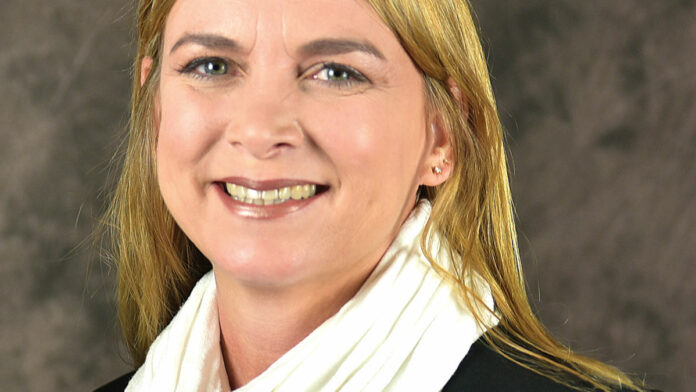
Carmen Herrera, executive director of El Pájaro CDC, thanked attendees and urged the community to support small businesses and the organizations that help them.

“Small businesses … They are the backbone of our economy,” Herrera said, “and they’re the ones who have been more impacted by the Covid emergency.”

There are roughly 3.9 million small businesses in California, which make up 98% of all in the state. Of these, 1.6 million are minority-owned, and 1.9 million are women-owned. State Senator Anna Caballero reported at the event that women of color are the fastest growing business owner demographic in the state, which is helping to close the gap in wages. She thanked El Pájaro CDC and the RWBC for their continued work during the pandemic.

“It’s no surprise why [El Pájaro CDC] was chosen to receive federal recognition,” she said. “[They] understand the importance of having women in positions of leadership.”

Nancy Swift, chair of California’s RWBC network and longtime colleague of Herrera, said that they identified the Central Coast as a region that needed additional resources, especially to serve Latinas. She pointed out that 48 clients that RWBC served last year were Latinx, and 14 of the state’s centers offered Spanish and English services.

“RWBC are unique service providers,” Swift said. “We are rooted in our communities … We understand the unique challenges different people face.”

In the midst of the celebration, El Pájaro CDC Board Chair Jorge Reguerin also announced the funding of a new micro-lending program. The program hopes to provide the nonprofit’s entrepreneurs with the much-needed startup capital to allow them to expand and be more efficient in their various businesses and projects.

“For all entrepreneurs, it is a tremendous challenge to access capital,” Reguerin said. “And there’s various reasons for that: They’re too small, too complicated and traditionally, they’re not as profitable … This is a much-need help and boost to allow them to create good-paying jobs in our community.”

The loan program was created by the board and staff, with consultants and various funders. Reguerin invited anyone interested to get in touch with El Pájaro CDC.

Attendees of the grand opening had the option to pre-order a lunch to pick up from CaliDog, a small business launched from El Pájaro CDC’s kitchen incubator that specializes in vegan hot dogs and sausages. The business has been growing and gaining followers around the Central Coast and Bay Area.

CaliDog owner Maria Gonzalez was featured in a segment at the event, telling her story.

“I never thought I could do so much,” Gonzales said. “Sometimes I have a hard time reminding myself, ‘You did it.’ I pinch myself—yeah, it’s not a dream. You dreamed it and now it’s going to happen.”

Congressman Jimmy Panetta spoke at the event about Gonzales and her business.

“Maria is an example of how El Pájaro’s services and kitchen incubators can foster real businesses that benefit our community,” he said.

Panetta praised Herrera and the organization for being “absolutely essential” to the local small business community, especially in the past year.

“During the pandemic, El Pájaro CDC was absolutely invaluable to small businesses that were navigating the web of the federal support that we provided in the U.S. Congress,” he said.

For information visit elpajarocdc.org.

Desperate for COVID Care, Unauthorized Immigrants Resort to Unproven Drugs

By Amy Maxmen, The New York Times

FRESNO, Calif. — On a Tuesday afternoon in April, among tables of vegetables, clothes and telephone chargers at Fresno’s biggest outdoor flea market were prescription drugs being sold as treatments for COVID.

Vendors sold $25 injections of the steroid dexamethasone, several kinds of antibiotics and the anti-parasitic drug ivermectin. Chloroquine and hydroxychloroquine — the malaria drugs pushed by President Donald Trump last year — make regular appearances at the market as well, as do sham herbal supplements.

Health and consumer protection agencies have repeatedly warned that several of these treatments, as well as vitamin infusions and expensive injections of “peptide therapies” sold at alternative wellness clinics for more than $1,000, are not supported by reliable scientific evidence.

But such unproven remedies, often promoted by doctors and companies on social media, have appealed to many people in low-income immigrant communities in places across the country where COVID-19 rates have been high but access to health care is low. Some turn to unregulated drugs because mainstream medicine is too expensive or is inaccessible because of language or cultural barriers.

“It’s disappointing but not surprising” that people living below the poverty line have spent large sums of money for unproven treatments for COVID-19, said Rais Vohra, the interim head of Fresno County’s health department. “People are desperate and bombarded with misinformation and may not have the skills, time or context to interpret medical evidence.”

The trend is not new. In 2014, Vohra published a case report on a Hmong woman who showed up at an emergency room in Fresno with life-threatening poisoning after overdosing on chloroquine that she had bought at the flea market under the label “red Tylenol.” He and his colleagues subsequently went to the market and to three smaller shops and found 35 different medications that were prescription-only or had been deemed unsafe by the Food and Drug Administration. “It was a real eye opener,” he said.

During the pandemic, many immigrants shut out of mainstream health care have turned to such markets for COVID-19 treatments. About 20% of Hispanic people in the United States lack health insurance, and the proportion is far higher among immigrants in the country illegally.

What’s more, some immigrants mistrust doctors who do not speak their language or who treat them curtly — and those concerns have been amplified by harsh political rhetoric directed at Mexicans and Central Americans.

“My community fears that the government might be trying to get rid of us,” said Oralia Maceda Méndez, an advocate at a Fresno-based community group for Indigenous people from Oaxaca, Mexico. She has heard many stories from immigrants in her community who treat themselves for COVID-19 with penicillin, other antibiotics or a mix of vitamins and herbal therapies bought from shops or travelers selling medications bought in Mexico.

“I am not surprised that people are taken advantage of,” she said. “We don’t have the care we need.”

Some farmworkers have received unproven treatments at specialty clinics. A woman in Fresno recently described how her husband, a farmworker, had fallen so sick from COVID-19 that he could not breathe or walk, but he refused to go to the hospital because he had heard rumors that immigrants in the country illegally had checked in and never left. She took him to a wellness clinic, where a doctor gave him injectable peptide treatments, recalled the woman, who requested anonymity because of her immigration status.

She was not prepared, she said, for the $1,400 bill, which included the cost of syringes and vials labeled thymosin-alpha 1, BPC-157 and LL-37. Pulling them out of a cabinet in the kitchen of her mobile home, she said she did not know exactly what they were, and she still feels the sting of the price.

“I was shocked, but I was trying to act like it was OK because I had to be strong for my husband and my kids,” she said. He grew sicker despite the injections, but the family had no funds left for care. More than a month passed before he was well enough to return to the fields.

Sandra Celedon, the president of a coalition of grassroots organizations called Fresno Building Health Communities, said she and her colleagues have heard from several farmworkers and other low-income Latino immigrants who spent their savings on vitamin infusions and peptide therapies for COVID.

“These folks are the poorest of the poor, and yet the doctors were requesting cash for their unproven treatments,” she said.

Some unregulated drugs can be dangerous. And even if they are not a health risk by themselves, they can lead people to postpone seeking help from doctors, which can be deadly. Delayed treatment is one reason Black and Hispanic people have died from COVID at twice the rate as white people in the United States.

Alternative therapies can also limit a patient’s treatment options because doctors worry about toxic drug interactions, said Dr. Kathleen Page, an infectious-disease specialist at Johns Hopkins University School of Medicine in Baltimore.

Unauthorized immigrants from Mexico and Central America who have gone to the emergency room at her hospital often mention home remedies, vitamins or antibiotics they have injected or ingested before seeking care. “I’m not upset at patients when they tell me what they’ve taken,” Page said. “I’m upset about the system that makes it easier for them to get help from nontraditional places than from regular health care.”

Unable or unwilling to talk with mainstream medical providers, some people turn instead to Facebook, YouTube or WhatsApp for advice. On COVID-19 Recipes and Home Remedies, for example, a Facebook page in Spanish that has about 10,000 members, people from the United States, Mexico and South America exchange tips on herbal concoctions, zinc, vitamin B12, ivermectin and chlorine dioxide — which has been tied to reports of respiratory and liver failure.

Dr. Ignacio Guzman, who specializes in “anti-aging, regenerative and integrative medicine” at a clinic in an affluent area of northern Fresno, uses social media to advertise peptide therapy for a broad range of ailments. On Instagram, he promoted it in a photograph of himself getting a COVID-19 vaccine, writing that “integrating peptides with immunizations can double their efficacy!” (No clinical trials of COVID-19 vaccines support that claim, and the shots are highly effective on their own.)

Another Instagram post, from March 2020, includes a photograph showing an intravenous line in the doctor’s arm above a caption in which he indicates that he is being infused with vitamin C. “This IV along with peptide therapy will limit my chances of acquiring infections such as Influenza A and the Corona Virus!” he wrote.

The FDA points out that the thymosin-alpha 1 peptide therapy is not authorized in the United States to treat COVID-19, nor is it approved for any other condition.

Over the past year, that agency and the Federal Trade Commission have cracked down on hundreds of companies making unsupported claims about supposed COVID-19 treatments, including thymosin-alpha 1, BPC-157 and vitamin C infusions. The FTC warns that anyone who makes “deceptive claims related to the treatment, cure, or prevention of COVID-19” could be subject to penalties of up to $43,792 for each violation.

Neither of those agencies has sent a public warning letter to Guzman. He and his lawyer did not respond to several requests for comment.

Dr. Juan G. Bautista, who works with Guzman at the clinic, declined to comment on his colleague. “I don’t want to speak against another doctor if their intention was to take care of a patient,” he said.

When Bautista came down with COVID-19 himself last year, he tried peptides, along with a host of standard treatments. He said that he had not used peptides to treat COVID-19 in his patients but that he did not fault doctors who had used experimental therapies that they believed could help people recover from a never-before-seen virus.

“Physicians were doing everything possible to keep patients outside of the hospital,” he said, citing the distress of intubation and medical bills that could wipe out the savings of his low-income patients from Fresno and the broader San Joaquin Valley. “There’s not a lot of people here in the valley that take care of the poor.”

This article originally appeared in The New York Times.

Father, Son Leaders in Fire, Police Departments

0

Watsonville Fire Chief Rudy Lopez still remembers the day he and his son, Watsonville Police Sgt. Rudy Lopez Jr., responded to an emergency call together—a vehicle collision at Main Street and Green Valley Road.

“My emotions overcame me,” Lopez Sr. said. “I was very touched.” 

After taking a quick photo together, the men joined their teams in dealing with the incident.

Lopez Sr., 57, joined WFD in 1993, and moved up the ranks until being named Chief in 2019.

Inspired by his father, Lopez Jr., 37, says he considered following in his father’s footsteps, and took fire science classes and EMT training. 

“I saw how hard he worked becoming a firefighter, and I saw how much he loved his job, and that made me want to gravitate toward that,” he said. But he says his heart was not in it.

“It just was one of those things I wasn’t passionate about, and I didn’t want to keep going after something I wasn’t passionate about,” he said.

This changed when a family friend, then a Watsonville Police Department sergeant, told him to consider joining the force and arranged a ride-along with an officer.

As someone who played sports growing up, Lopez Jr. says he liked how the department worked as a team, but at the same time sent officers out on their own.

“It was one of those Watsonville busy nights, where they are responding to emergency calls left and right all through the night,” he said. “It just hooked me right away. It was something I knew would bring fulfillment to me.”

A few months later, he started with the police academy. Now a patrol Sergeant, Lopez Jr. supervises a shift of about five officers.

“I look forward to going to work,” he said. “It’s something different every day.”

Lopez Sr. says he was hoping his son would become a firefighter, but stresses that he has no regret about his career choice.

“I am extremely proud of him, I think mostly because of the nature of our work,” Lopez Sr. said. “Often people lose sight of the fact that this is a very honored profession to serve in. Not everyone is cut out to be a firefighter or a police officer. We’re talking about people’s safety, and people trust us.”

Lopez Sr. says his son’s choice was a relief because it kept him closer to home—as a firefighter he was eyeing a position in San Jose. As an emergency official, Lopez Sr. has worked alongside WPD for years. 

“I am super confident in their ability to prepare him and equip him and support him to be successful,” he said. “I’d rather my son be a police officer here than a firefighter somewhere else.”

Both men say they love working in the town in which they grew up.

“The community we serve is a big part of it,” Lopez Sr. said. “Watsonville is where I struggled as a youngster, it’s the town where I found myself. It’s the town that supported me.”

Lopez Jr. says he learned many of the leadership skills necessary for his job from his father.

“He has been such a huge influence on who I am today,” he said. “Not everyone has someone they can look up to, especially a father who is in a leadership role, and get guidance from them. He’s a great leader, that’s why he’s been put in this position, and I’ve just been trying to soak all that in.”

Now a grandfather, Lopez Sr. tries to provide his grandson—also named Rudy—with the same wisdom. And he tells his son, “I will always be your dad.”

“That doesn’t change,” he said. “It’s a lifetime commitment of influence.”

Talking to Newsom About Tourism

By Tariro Mzezewa and Jill Cowan, The New York Times

With California reopened, the state’s large tourism industry is hoping for a major comeback. Chief among the cheerleaders, of course, has been Gov. Gavin Newsom.

Earlier this week, my colleague Tariro Mzezewa, who covers travel for The New York Times, spoke to the governor about finally welcoming back visitors. Here’s their conversation, lightly edited and condensed:

Q: There have been many starts and stops to travel, and moments when people thought California was going to open, but did not. Can you tell me why right now is the time to fully reopen?

A: We have among the lowest positivity rates, and among the highest vaccination rates, in America. We feel like we’re well positioned and very enthusiastic.

Q: There is a lot of focus on travel in your reopening plan. Why does travel matter so much to California?

A: This was a $145-billion-a-year industry. No other state comes close, including Florida. So there’s no state that has more to gain, in terms of fully reopening. The vast majority, overwhelming majority of the state has been operating, but with some limitations. This just removes the final limitations, in terms of physical distancing and capacity.

The tourism industry is part of the spirit and pride of the state. What makes California such a special place is the incredible diversification of options and opportunities for experiences, for magical moments.

Q: Why is California’s recovery important to the rest of the country?

A: Thirty-eight percent of America’s jobs came out of this state last month. America’s recovery has been bolstered by California’s recovery. You see the disproportionate number in the tourism and hospitality sector represented in those statistics.

There is no American recovery without California’s recovery. The good news is the state’s economic recovery is well underway. That should create optimism not just in California, but throughout the United States.

Q: What kind of investment are you putting into the travel industry right now? And what are you doing for travel workers in California?

A: This state is not turning its back on unemployment insurance, as many of the red states have. The state has provided a sick leave, and has extended workers’ comp benefits to displaced workers. We’ve really prided ourselves on leading the nation on worker protections.

We have just put in close to $100 million on an advertising program. The state put in $95 million to highlight in-state vacations and opportunities. We recognize international tourism is going to recover more slowly, but domestic tourism is roaring back, and so we really want a more aggressive capture on tourism, and not cede it all to Florida.

Q: Homelessness in California is at a tipping point. Are you really ready for tourists to come back while your own people are still struggling?

A: Yes. The answer is unequivocal. We announced our unprecedented $12 billion, tenfold increase in our historic investments to address homelessness this year, tackling street homelessness encampments, a billion and a half dollars to clean this state up.

No one is naïve about those preexisting conditions pre-pandemic. But we’re going to be using the historic budget surplus to invest as aggressively as any state has in its history, and to go after these issues and in a very sustainable way.

Q: What do you say to residents in parts of the state who say to you, “We’re just not ready to have tourists back?”

A: It’s hard, right, after a year of being in a certain mindset with all that anxiety and fear. But we’re turning the page.

Because of our health-care-first focus, our economy has done better, and it’s poised to do even better still. On forecasts that show states that are poised to outperform the rest of the nation in economic recovery, California tops those lists — primarily because of the tourism industry and hospitality industry coming back.

This is very personal for me, because I got into politics by way of this industry. I started right out of college, and I’ve started nine restaurants, four hotels, four wineries. I say it’s a way of expressing a deep respect, also empathy, for how this industry has had a sledgehammer put to it over the last year and a half.

Q: Between all of the vaccine incentives and giveaways, what do you say to people who say that this is a political move, or that you’re trying to take attention away from the recall effort against you?

A: There’s nothing we’re promoting that we wouldn’t promote in the abstract. There’s nothing we’re promoting that other states aren’t similarly promoting, so I’ll just leave it at that.

The incentives are actually working. We announced a 13.3% increase week over a week, so demonstrably it’s working, and it’s also something the Biden administration themselves have been promoting, and moreover, incentivizing states to participate and construct these programs, on the basis of federal reimbursements. We would be fools not to take advantage.

Q: There’s so much conversation about digital proof of vaccination. Can Californians expect something from you on that front any time soon?

A: We’ll be announcing the ability to take the paper verification and digitize it. It’s not a passport. It’s not a requirement. It’s an option for people, in lieu of their paper vaccination cards, to have a digitized copy.

Q: Disney is reopening to out-of-state visitors. What does that mean for California?

A: It’s emblematic. It’s a proxy for the rest of the state. Disneyland is of such iconic status that it’s a confidence boost, perhaps more than anything else. It has a very substantial regional economic impact, which is important.

I was talking to a good friend of mine who runs a resort, and he says they are already exceeding 2019 rates and occupancy and numbers in terms of profitability. You’re already seeing sectors of the economy outperforming 2019’s record-breaking year. That’s not evenly felt, and I’m mindful of that. In the aggregate, it’s going to take a few years for the industry to get back to 2019 numbers. But you’re seeing revenge tourism already take shape in California.

This article originally appeared in The New York Times.

Locals Express Optimism, Confusion on Big Californian ‘Opening Day’

While June 15 marked the day California was to return to “business as usual,” according to California Gov. Gavin Newsom, local residents were all over the map as far as how they said they’d react to “opening up.”

On Tuesday, California ditched its system of color-coded restrictions and switched to federal health guidance for public spaces, meaning most social-distancing requirements and other pandemic measures have been lifted.

While some area fitness center employees went out of their way to inform customers they could work out without masks on, other establishments weren’t as eager to change business practices, yet again.

Some restraints will remain—such as restrictions on especially large gatherings, and county health officials are allowed to keep stricter policies in place if they want.

The Press Banner trekked through the Santa Cruz Mountains Tuesday, to take the pulse of how community members feel about the changeover.

Some business reps declined to speak on the record for the story because they didn’t want to release incorrect information about what their rules will end up becoming. One said he was awaiting further guidance from regulators. Others declined to speak for fear of alienating customers who might read a political stance into their decision. Several seemed confused about when changes went into effect. But overall, there was a sense of cautious optimism snaking its way through the Santa Cruz Mountains.

Felton

Tina Walker, 41, has been working at Felton Paint and Hardware her whole life. Her family has run the store for longer than she’s been alive.

“I guess they’re lifting the mask restrictions for people who’ve been vaccinated,” she said, adding she plans to continue wearing one to protect her aging parents. “It doesn’t really change anything for me.”

Her dad, Don, was hospitalized with pneumonia at the height of the pandemic. At first, she was worried he might pick up Covid-19 at the hospital, but her fears lessened when she found out just how isolated the doctors kept him.

“They slam-dunked him right in the hole,” she said. “He didn’t see anybody but the doctors and nurses.”

Their business did surprisingly well over the last year. But while they were allowed to stay open, due to being an essential business, it was a struggle to get product at times, she said. Some apparel is still back-ordered, she adds.

Her mom, Linda, is happy to see restrictions lifting, but still wants to be careful.

“Good luck to everybody—hopefully everybody doesn’t get too excited until we’re really, really safe,” she said. “Because we don’t want people getting sick and going to the hospital.”

Don says he went into the hospital thinking he had Covid-19, found out he had pneumonia, and ended up being diagnosed with congestive heart failure.

“It’s a good excuse not to have to do anything,” he jokes, now.

Skavenge Art owner Selena Zontos, 37, was considering the new reality as she prepared to open the downtown Felton shop where she sells her artwork.

“I don’t know what to do yet,” she said. “I honestly haven’t decided.”

Over the past year, she kicked her online sales efforts into high gear.

“That worked out great,” she said. “If I didn’t do that I wouldn’t have survived.”

She found the energy she put into her digital presence tended to pay off.

Now that more and more people are getting vaccinated and the state is lifting restrictions, she’s confused about how to react. On the one hand, she knows there are fewer requirements she must enforce. On the other, her store is a relatively small space where viral transmission could still be a possibility for unvaccinated customers.

“I suppose I’ll just leave it up to people to do what they feel comfortable doing,” she said, “and I’ll do the same.”

Paul Wright, 74, a resident of the Highway 17/Glenwood Drive area who was hanging out nearby, couldn’t help but chime in with his two cents.

“I’ll wear a mask if people require me to wear a mask,” he said. “I don’t care to rock the boat.”

Even though the novel coronavirus seems to be under control in the U.S., that doesn’t mean it’s not festering elsewhere, he noted.

“It’s still quite virulent in many places,” he said. “England is bad. France is sorta tough.”

Wright sees the big Californian “opening up” as more of an arbitrary date than a genuine reflection of a high-water mark for viral risk.

“Compared to yesterday, it’s about the same,” he said, adding that doesn’t mean he’s overly concerned—after all, he’s been vaccinated. “I’m quite comfortable, actually, around other people.”

Wright says he hopes to see the U.S. start doing more to help the rest of the world.

“This isn’t just our problem,” he said. “This is a worldwide problem.”

The important thing, he says, is to avoid taking the bait from people who don’t always have our best interests at heart—particularly when it comes to health rules.

“What I don’t like is making it a political issue,” he said. “It serves the politicians, but it doesn’t serve the regular people.”

Ben Lomond

At the Santa Cruz Mountains Art Center in Ben Lomond, volunteer Carl Christensen hoisted a giant stylized vagina in place while hanging art for this weekend’s Earth & Fire show opening. The nonprofit space was shuttered more than a year ago, and the ceramic and glass show will be the first in-person event since that happened.

Susan Archibald, a board member, remembers how they had to scuttle the children’s programming last spring, cancel classes, and ask artists to come to collect their work.

“We were totally closed until May,” she said. “What Covid did is made us look and do more things online.”

The center started putting on virtual events and kept its followers in the loop with email updates. To bridge the divide between the virtual and the real, they allowed artists to display some art in their windows. And because they have a large backyard area, they were eventually able to start hosting art classes outdoors.

But the coronavirus struggle has taught them a few things, too. For example, Archibald says the online registration system seems to work quite well.

“We were able to control the number of people that were here,” Archibald said. “Before it was a lot of paper.”

They’d been hoping to get rolling around this time, and were happy to hear the state edict on reopening, so they could confirm their plans, she noted.

“We’re just sort of trying things out to see how they work,” she said, adding they’ll operate, for now, under reduced hours of Friday to Sunday, noon–5pm. “We are opening slowly.”

Boulder Creek

Up in Boulder Creek, Jeff Brough, the owner of SWAG: The eclectic collective, felt the excitement of a new Californian dawn, as he opened his boutique for the day.

“I just took down all my social-distancing and mask signs, because I think it’s technically OK now, right?” he said, adding he remembers the long slog that was the pandemic. “It was slow for a while.”

He says he was lucky to have a lot of different “fingers” in various revenue streams. So, while customers, who couldn’t go out anymore, stopped buying jewelry and clothing, for example, he began doing a tidy business in antique record player repairs.

“Some fingers were sort of dying and falling off the hand,” he said. “Other fingers were growing long fingernails.”

“I just took down all my social-distancing and mask signs, because I think it’s technically okay now, right?” said Jeff Brough, the owner of Boulder Creek’s SAWG: The eclectic collective. — Drew Penner/Press Banner

Khris Bigelow, 59, a Bear Creek Road resident of Boulder Creek, says she sees the rule relaxations as positive, but hopes Californians don’t throw their masks away, quite yet.

“I think, when you go in stores, you should still be considerate and wear a mask,” she said. “I’ve been vaccinated, but people don’t know that.”

Scotts Valley

Just because the state is opening up, that doesn’t mean everything is back to normal, says Miranda Leung, who operates Scotts Valley Canton Restaurant with her family.

“If I go out and there’s a lot of people, I’ll wear a mask,” she said. “It helps my allergies.”

She knows everyone will have a different approach to pandemic rule-changes.

“If a customer comes in here, I cannot force them to wear a mask,” she said. “It’s a hard business, especially for the ‘mom and pops.’”

After decades of running a Chinese eatery on 41st Avenue in Santa Cruz, the family decided to open the Scotts Valley location in August 2019. Then the novel coronavirus arrived.

“It’s bad timing,” she said. “But who knows? No one knows this is coming. No one could predict the future.”

Despite several lunch diners chowing down while she spoke, Leung says the family saw business drop off about 60%. And she’s not sure what the future holds.

“Even right now I see business, like, slow,” she said. “I’m just curious what it’s going to be like tomorrow.”

Healthy Grapes, Less Regulations Spell Good News for Local Wineries

After a year of ups and downs, things are looking good for wineries in the Pajaro Valley. That is according to two long-standing wineries, both nestled in the Pleasant Valley area between Watsonville and Aptos.

Alfaro Family Vineyard-Winery was first established in 1997 by Richard and Mary Kay Alfaro. Richard Alfaro says that the winery has weathered the pandemic well—whenever they could be open, they were, and production kept moving forward despite the crisis and the devastating wildfires that hit California last year.

In addition, their vineyards are currently in “beautiful shape,” he said, adding that they anticipate a good harvest later this year.

“We’re doing fantastic,” he said. “The local support has been overwhelming… We very much appreciate it. We’re really excited about being able to open up more in the coming weeks.”

On June 15, most Covid-19 restrictions across California were lifted. Previously closed businesses were allowed to reopen, vaccinated people do not have to wear masks in most places, and capacities can increase. Alfaro says that their team is 100% vaccinated, and are feeling comfortable with the rules changing.

Still, they plan to keep their wine tasting operation outdoors and they recommend reservations. 

FRESH TASTE Alfaro Family Vineyard & Winery is offering outdoor tasting through the summer. —photo courtesy of the Alfaro Family

“From customer feedback… they seem to really like how we’ve been doing it,” he said. “It’s a better experience, more intimate. We thought, ‘Let’s just keep it this way!’”

Alfaro said they are also looking forward to having their food partners return. They had watched many of them struggle just to survive during the pandemic.

“That was probably the most traumatic part of the past year,” he said. “It will be wonderful to see them coming back.”

Not far from Alfaro Family Vineyard-Winery is Nicholson Vineyards (2800 Pleasant Valley Road). They too are looking forward to less regulations, said Marguerite Nicholson, who owns the winery with husband Brian.

“We’re very excited about the Covid changes lifting,” she said. “We have a beautiful outdoor space, with lots of shade… We want to invite more people to come by.”

Like Alfaro, Nicholson’s outdoor tasting and reservation system will remain. But in addition, Nicholson will soon start up its Summer Series, featuring more food options and live music. They have a special five-wine tasting flight available, and Marguerite Nicholson says they always have more wine options for people to enjoy based on their tastes.

Nicholson Vineyards just finished bottling their last cases of the season. Now, they are focusing on summer wine tasting as well as preparing for this year’s harvest.

“The cellar will be quiet until we start harvest… we are anticipating a beautiful one this year,” Marguerite Nicholson said. “The plants are very healthy.”

BOTTLES AND BARRELS Nicholson Vineyards is open for weekend outdoor wine tasting. —photo courtesy of Nicholson Vineyards

Ryan Alfaro, son of Richard Alfaro and as of last year the winery’s head winemaker, echoed that observation.

“We are really excited for this year’s wine,” he said. “The vines are extremely healthy. We didn’t get lots of rain, so we had to water quite a bit. But the warm weather is good… as long as temperatures stay moderate. That was the main issue last year—those hot spells, going up into the 100s… and you never know when it’s going to happen.”

He added that last year, the winery went 100 percent estate, which means they now only work with grapes from vineyards they own and manage themselves. 

“We’ve been trying to do that for years,” he said. “2020 sort of kickstarted it… working close to home, having complete control.”

Marguerite says that while the winery is their secondary business, it’s what they most love.

“We have been blessed with the opportunity to be stewards of this land for almost 30 years,” she said. “We raised our children here, now our grandkids are running around… It’s just something that we love to do.”

***

Wine trail

Alfaro Family Vineyard-Winery

420 Hames Road, Watsonville

Estate-grown and bottled Chardonnay, Pinot Noir, Merlot, Syrah and Gruner Veltliner reflect the unique terroir of the Santa Cruz Mountains appellation. Tasting room is located onsite for outdoor tasting bars with picnicking areas overlooking the vines. Enjoy a flight of six-plus wines, complimentary for wine club members.

Anatum Winery

375 Falcon View Terrace, Watsonville

Based in the outskirts of Watsonville, Anatum Winery carefully selects fruit from vineyards that best represent the characteristics of California’s finest grape growing regions. Reservations are recommended, and very appreciated. Walk-ins will be seated as physical distancing requirements and space allow.

Deer Park Ranch | Lester Estate Wines

1950 Pleasant Valley Road, Aptos

Well-known for producing a variety of expressions of Pinot Noir, Syrah and Chardonnay from a single plot of land, Deer Park Ranch vines have produced some of Santa Cruz Mountains’ most desired and award-winning wines. Today, these grapes are the sole source of Lester Estate Wines. Tasting by appointment only. 

El Vaquero Winery

2901 Freedom Blvd., Corralitos

El Vaquero is a family owned and operated winery in Corralitos that specializes in producing small lot single vineyard designate wines from Corralitos, Santa Cruz Mountains and neighboring appellations. An open air tasting patio serves more than 20 wines by the taster bottle, glass and bottle. Live music on select nights.

Integrity Wines

135 Aviation Way #16, Watsonville

Integrity Wines creates small-batch wines, hand-crafted and carefully sourced from vineyards across California. Featuring reds, white and rose, and known for their Chardonnays and Pinto Grigios. Now offering virtual, interactive home tasting experiences and in-person tasting at Integrity’s Watsonville location. Wine ships to all 40 states. 

Nicholson Vineyards 

2800 Pleasant Valley Road, Aptos

Established in 2004, Nicholson Vineyards produces 1,500 to 2,000 cases annually, concentrating its small lot production on the use of fruit from the estate and other special vineyards primarily in the Central Coast Region. Currently holding outdoor wine tasting on weekends. Reservations recommended. 

Windy Oaks Estate

550 Hazel Dell Road, Corralitos

Windy Oaks aims to produce world-class Pinot Noir that faithfully represents its unique vineyard terroir, with no compromises. The winemaking begins in its vineyards, which they farm in a fully sustainable way, using organic and biodynamic practices. Open noon to 5 pm, for tastings every weekend, and Fridays, 1-5 pm. Reservations essential.

SVUSD Kids Worry of Discrimination, Survey Finds

The Scotts Valley Unified School District trustees on June 15 heard the results of a student survey that highlighted the nurturing aspects of its learning environment, but also the challenges administrators face in making sure all pupils feel welcome.

The anonymous questionnaire was completed with 4th, 8th and 12th grade students in a classroom setting. It showed that more than 90% of middle and high school students feel “connected with” at least one peer on campus, and 100% of them said teachers create a safe/welcoming environment most or some of the time.

But around 20% of middle and high school students said they felt discriminated against on campus for various reasons.

Through the survey, part of the work of the Cultural Responsiveness Committee, middle school students shared complaints about harassment and inclusivity.

One student wrote that they had “been bullied many times,” but noted, “I don’t want to talk about it to a Google form which will probably be ignored and put into some chart.”

Another respondent said, “I get called slurs due to the color of my skin no matter the situation.”

The survey analyzed “many similar responses” with this concern.

“I would tell kids at school that I am half black and the first question they would ask me would be about the n word,” another middle schooler wrote.

Meanwhile, another shared, “You are all doing a fantastic job as educators; keep doing what you do.”

The top answer to the question “I have heard another student at school say something to me or another student regarding…” for high school respondents was “sexual preference” followed by “race/ethnicity.” It was unclear from the presentation whether these answers were in multiple choice form or volunteered by students. But one parent later commented that they wished the district would use the phrase “sexual orientation” rather than “sexual preference” in its materials.

Elementary students described a joyous school experience, but also said there were problems with name-calling and bullying.

“Our school is so incredibly awesome, safe, fun and respectful (for the most part),” one wrote.

Another shared why they resorted to name calling: “Because I was in a bad mood/was very hurt and needed to let it out,” the student wrote. “Instead of doing it at home or something like that, I got it all out on them, so that they know what it feels like.”

On the topic of how they see themselves, 60% of middle schoolers said they identified with their mental health, compared with 53% who said they identified with their learning ability and 47% who said they identified with their race or ethnicity. In descending order, the middle schoolers said they felt the school is welcoming to students based on gender identity, sexual preference, race or ethnicity, culture and religion, with “learning difference” rated lowest.

“So, learning difference is a concern at the middle school,” Assistant Superintendent of Education Services Michelle Stewart said.

For high schoolers, 65% said they identified with their mental health, 61% identified with sexual orientation, and 62% identified with race/ethnicity.

Students in both high school and middle school were neutral about whether they would report harassment to a staff member.

Stewart pointed to vastly different school experiences reported by various high school students.

“In all honestly, I have never seen or been a victim of hate speech or discrimination at our school,” one wrote.

But another left this response: “There were points where I desired to come out about my identity, but due to the students of the school I was forced to remain in hiding about it.”

One senior said the district needs to listen more.

“Although I am graduating this June,” the commenter submitted, “I would like to request that you give more of a voice to the current and future students as SVHS in order to improve our campus culture.”

The study revealed “many” responses about mental health issues.

“I think that was a surprise to us,” Stewart said.

Superintendent Tanya Krause said, given the surveys were completed in May, the mental health problems could have been connected to the coronavirus pandemic.

“How we asked the questions was really critical,” Krause said. “We really wanted to focus on student voice.”

Board Vice President Michael Shulman said the sutdents may not understand how much progress has been made on discrimination and bullying in recent years.

“These issues have been in our society forever,” he said. “It feels like we’re the tortoise, but I think we’re moving in a way to avoid slip-ups that would set us back.”

Parent Ashley Perlitch said she was pleased to see the district delving into difficult territory, during the public comment period following the presentation.

“I thought the survey was great,” she said, and asked if inclusiveness training was going to happen for sure again.

Krause said the school was planning to continue anti-bias training for staff, educators and parents next year, but that the specific topic had not yet been selected.

Watsonville Readies for Renewed Negotiations with PV Arts for Porter Building

The city of Watsonville is expected to resume negotiations with the Pajaro Valley Arts (PVA) Council for the sale of the Porter Building after no affordable housing developers showed serious interest in the historic landmark.

Watsonville and PVA earlier this year had begun early discussions around the vacant city-owned building before the municipality became aware of Assembly Bill 1486, also known as the Surplus Land Act. That bill requires jurisdictions to make all “surplus” properties—defined broadly as land that is not currently in use by cities, counties and districts—to be made available to affordable housing developers before they can be sold.

Because of that, negotiations were paused for 60 days—the time required by AB 1486, which went into effect on Jan. 1, 2020—to allow potential developers to step forward. That waiting period expired Tuesday without a serious inquiry from a developer, Assistant City Manager Tamara Vides said.

“I have received a few inquiries but nothing that requires that we engage in negotiations,” she said. “So we will resume the preparations of our exclusive rights negotiations with the party that is interested at this time.”

The next phase of negotiations, Vides said, could take anywhere from three to five months. Over that time, the city, as ordered by the City Council, will work with PVA to develop a plan, and make sure the small nonprofit understands the scope of what is expected to be a multi-million dollar rebuild of the 117-year-old Porter Building, Vides said.

PV Arts in plans presented to the City Council in late 2020 had hoped to turn the Porter Building into a haven for artists by creating gallery exhibits, art retail space and a multipurpose room for performances, meetings, events, workshops and additional special exhibits. Several classrooms for seniors and young people and artists’ studios were also in their plans.

PV Arts Treasurer Judy Stabile told the City Council then that the nonprofit would use the building to expand its longstanding art shows, classes and retail opportunities currently found at its Sudden Street location—a spot it rents from the city at almost no cost.

“I know that PV Arts is very, very committed to this idea and they would like to make every effort to make it happen,” Vides said.

Negotiations between the city and PVA picked up after Dan Pulcrano, the owner and CEO of this publication, put a pause on his proposal for the building. Pulcrano in an editorial in the Pajaronian said he made the decision because he did not want to halt PV Arts’ plans of expanding arts in Watsonville and sow “unnecessary division in the community.”

Pulcrano, also the CEO and owner of San Jose’s Metro Silicon Valley, planned to create a casual dining Italian restaurant with well-known restaurateur Joe Cirone, emphasizing locally sourced ingredients, and a wine bar and food market highlighting Santa Cruz Mountains vineyards, Pajaro Valley farms and artisanal producers. The project also called for a “boutique” micro-hotel and a “creative space” for community institutions, as well as offices for the Pajaronian.

The original request for proposals said the city wanted ideas that would maximize the building’s potential by bringing an entertainment or retail-related business to the first floor.

The building was nearly sold in 2015 after Ceiba College Prep Academy moved out, but a deal with Walnut Creek’s Novin Development fell through.

It has sat empty since. 

The building served as the post office until 1913 and has also served as a dentist office and an army surplus store.

It was one of the few historic buildings in Watsonville’s downtown that survived the 1989 Loma Prieta Earthquake with minimal damage.

Local Water Agency Works Toward Long-term Drought Solutions

In 1983, a group of local farmers looking for ways to manage the Pajaro Valley’s groundwater basin formed the Pajaro Valley Water Management Agency (PVWMA). A year later, the agency was officially recognized by the state legislature, who tasked them to stop groundwater overdraft and seawater intrusion in the valley—all while preserving the vital agricultural industry.

Now, as the state of California struggles with a severe, ongoing drought, PVWMA’s work has seeped into the community’s consciousness. Marcus Mendiola, the agency’s water conservation and outreach specialist, says that more and more people—government officials, the media, individual residents—have been reaching out to them, asking what can be done to save water.

“Everyone is thinking very short term—they’re thinking, ‘It’s dry right now.’ And that’s a common human experience,” Mendiola said. “But this is a long-term problem. We have been focused on this since 1983. Our mission during these extreme drought periods is only further reinforced.”

Groundwater overdraft occurs when more water is pulled out of the ground that returns to it. And when that happens, a region like the Central Coast is in danger of saltwater intrusion—when seawater, which is heavier than freshwater, fills in those areas. 

This means less fresh water to drink—and to grow crops.

As of June 10, the U.S. Drought Monitor reported that all of California is currently in a drought, ranging from “moderate” to “exceptional.” A warm spring season dried up most of the Sierra Nevada snowpack, and dry land underneath the snow prevented runoff into rivers and lakes.

All of this prompted California Gov. Gavin Newsom to declare a drought emergency for 41 of the state’s 58 counties. 

“This drought is definitely severe,” Mendiola said. “But this isn’t just a two-year situation. It’s more of a 20-year one. We’ve had a handful of really wet years surrounded by mostly dry years. One single dry or wet season will not take us out from the longer trend of a lot less precipitation. And that is troubling.”

The main solution, according to Mendiola? Water conservation and recycling, the kind of work PVWMA is currently doing. Since the early 2000s, the agency has focused on local solutions, partnering with the city of Watsonville in delivering recycled water to the coast, taking pressure off the aquifer.

For over a decade they have also delivered the recycled water to local farmers.

“The more water we recycle, the better,” Mendiola said. “There are nutrients in the treated water… farmers are aware of that; it helps them use less fertilizer.”

This month the California Department of Water Resources (DWR) released its first assessments of plans developed by agencies to meet the requirements of the Sustainable Groundwater Management Act, which was passed in 2014, one of the driest years in the state’s history.

The Santa Cruz Mid-County Basin was approved, along with a sub basin in Monterey County. Mendiola attributes this to dedicated residents, and especially farmers who have been doing their part in conserving and recycling water.

“Farmers in the Pajaro Valley are using less water,” Mendiola said. “We’re starting to see positive change because people are adapting. They’re changing the crops they grow. They’re changing how they grow, using more hydroponic systems and other technology to measure temperature, wind, humidity, and barometric pressure.”

PVWMA’s numerous projects have contributed to strengthening the region’s recharge basins. This includes the Harkins Slough Pump Station, which in wet years would pump certain levels of water from the slough into the basins. In addition, the agency’s upcoming College Lake Project aims to bring additional diversified water to the region.

And a conservation program, funded at $300,000 per year through 2023, has allocated $100,000 for rebates to agriculture water uses in the Pajaro Valley.

“Drought or no drought, we are still recycling,” Mendiola said. “We’re more prepared than we’ve ever been as a valley for a drought.”

Mountain Community Theater Director Developing CZU Play

Peter-Gelblum
After watching the communities of the San Lorenzo Valley suffer under the CZU Lightning Complex fire, MCT’s Peter Gelblum knew there was a tale to tell.

El Pájaro CDC’s Regional Women’s Business Center Officially Opens

regional-womens-business-center
The El Pájaro CDC has launched a Regional Women’s Business Center in Watsonville, with plans to serve the counties of Santa Cruz, Monterey and San Benito.

Desperate for COVID Care, Unauthorized Immigrants Resort to Unproven Drugs

Covid-immigrant
Unproven remedies have appealed to people in low-income immigrant communities in places where COVID-19 rates have been high but access to health care is low.

Father, Son Leaders in Fire, Police Departments

rudy lopez sr and jr
Watsonville Fire Chief Rudy Lopez and his son, Watsonville Police Sgt. Rudy Lopez Jr. say they love working in the town in which they grew up.

Talking to Newsom About Tourism

california tourism
The state’s large tourism industry is hoping for a major comeback. Chief among the cheerleaders, of course, has been Gov. Gavin Newsom.

Locals Express Optimism, Confusion on Big Californian ‘Opening Day’

opening-day
As California set to return to “business as usual,” local residents were all over the map as far as how they said they’d react to “opening up.”

Healthy Grapes, Less Regulations Spell Good News for Local Wineries

local-wineries
After a year of ups and downs, things are looking good for wineries in the Pajaro Valley, according to two long-standing wineries

SVUSD Kids Worry of Discrimination, Survey Finds

SVUSD discrimination
Anonymous questionnaire showed that 20% of middle and high school students said they felt discriminated against on campus for various reasons.

Watsonville Readies for Renewed Negotiations with PV Arts for Porter Building

Porter-building-watsonville
The city is expected to resume negotiations with the PVA Council after no affordable housing developers showed serious interest.

Local Water Agency Works Toward Long-term Drought Solutions

irrigation
Residents and farmers have been doing their part to support PVWMA in conserving and recycling water and strengthening the region’s recharge basins
17,623FansLike
8,845FollowersFollow