UC, Cal State Police Much Less Diverse Than Students They Serve

BY OMAR RASHAD AND KATHERINE SWARTZ

California’s public universities are among the most racially diverse in the nation, but campus police departments don’t reflect that diversity. 

At 32 of 33 public university campuses, police officers are whiter than the students they serve, a CalMatters review of officer demographics shows. And in many cases, the disparities are glaring: Cal State Monterey Bay, for example, has a student population that is just over a quarter white. Yet of the university’s 15 police officers, 12 of them are white — about 80%.  

The same story repeats across the state. Overall, the University of California and the California State University systems employ nearly 800 sworn officers. Roughly half of them are white, compared with less than a quarter of students attending the two systems. 

CalMatters obtained records of the race and gender of every active, sworn police officer at UC and CSU as of February 11, 2021 from the state’s Commission on Peace Officer Standards and Training. The statistics alone don’t tell the whole story: Individual law enforcement agencies self-report racial demographics to POST and it may not capture all the ways identity intersects. And some campus activists think officer diversity is beside the point, when they’re fighting to abolish the armed police departments entirely.

But at a time of heated debate about the presence of police on college campuses — a presence that police reform advocates say disproportionately affects students of color — the data shed light on a key aspect of the relationship between officers and the communities they are sworn to protect. 

“Minority people don’t feel safe with cops and now it’s a majority white cop force on campus,” said Diego Rivera, a recent graduate of Cal Poly San Luis Obispo who identifies as Latino. White people make up about half of the university’s student body, but nearly three-quarters of campus police officers.

“Driving around at night I always had my eye over my shoulder just in case UPD wanted to pull me over for whatever reason,” Rivera said. “It’s like you still get a feeling of paranoia, you know, not being a white person on campus.”


While diversity has long been discussed in policing, the 2015 report from President Obama’s Task Force on 21st Century Policing recommended that police departments strive to better reflect their communities in terms of race, gender, language, lived experience, and cultural background. Diversifying would improve both community trust and the internal culture of police departments, the report said.

Cal State police chiefs “are really focused on community policing and trying to get the recommendations in the 21st Century Policing Task Force report implemented at every campus in the system,” said university spokesperson Mike Uhlenkamp.

At UC Davis, police chief Joseph Farrow acknowledged that his department needed to work harder to reflect the campus community. About 53% of the department’s 45 officers are white — far higher than the roughly 27% of Davis students who are. 

“Racial diversity brings in the other stuff: The lived experiences, the different backgrounds, different beliefs,” Farrow said. “Are we there yet? Probably not. Do we have to keep working and be able to do that? Yes, we do.”

Other police chiefs on campuses with majority white departments said racial diversity is just one factor in building a representative department, and pointed to barriers they said made it hard to hire non-white officers.

“I think you can’t just take racial diversity and think that all the problems and the challenges are going to go away,” said Nader Oweiss, the recently-hired chief of police at Sonoma State University, where the department is 83% white.

In hiring officers, Oweiss said, departments also need to consider “whether they speak another language, they were born in the community, whether they worked in the community or went to school in that community.”

At the Chico State University police department in rural northern California, Chief Matthew Dillon said these days, not a lot of people want to be police officers. “We want our department to reflect the community we serve, but right now it’s particularly challenging because getting any qualified applicant is difficult,” he said. His department is about 88% white, compared with 43% of Chico State’s students. 

But would diversifying campus police departments make a difference in how they serve their communities?

Kamille Magante, a 2020 graduate of CSU Dominguez Hills, says yes. The majority of police officers at the ethnically diverse campus are Latinx, Asian or Black —  an anomaly in the CSU system — and Magante said that helped her feel comfortable using police services, like asking for an escort to her car at night.

“I felt that they understood a lot of the culture of the school and the history, and then the surrounding communities where all these students come from,” said Magante, who co-founded Pagsikapan, the school’s Pilipinx-American organization. “I feel like it created a safer environment, because those police officers understand who we are and our culture.”

But Melys Bonifacio-Jerez, a Chico State student who grew up in New York’s heavily policed South Bronx neighborhood, said they never feel safe around police officers, regardless of the officers’ background.

“Seeing police officers on campus and, like, institutions of learning — it distracts me from learning because I have that lived experience,” said Bonifacio-Jerez, who is also a member of the CSU Abolition Network, a group of students, faculty and community members advocating for police to be removed from Cal State campuses. “Honestly, that just re-traumatizes people like me.”

Some studies of city police departments show that non-white officers are just as likely as white officers to shoot civilians of color, and that diversifying police agencies does not necessarily create better relationships with their communities.

That’s because at the core of policing in America is the culture found inside departments and how it influences the way officers interact with their communities, especially marginalized ones, said Augustine Kposowa, a sociology professor at UC Riverside who studies criminology and policing. 

“There is deep-seated racism that is built into American culture, and police come out of that culture,” said Kposowa. “The culture has way too many stereotypes, especially (of) Black men and Black women.”

Diversity in law enforcement should be encouraged, Kposowa said, but “by itself we cannot just depend on it and think it’s our solution to the policing problem.”

A few public university campuses, like Cal State East Bay, have successfully built diverse police departments.

“One of the reasons that I was comfortable coming to East Bay was because when I did a ride-along and when I met with officers at this department, I could tell right away that there was quite a mixture that reflected the population,” said Omar Miakhail, a lieutenant who oversees hiring for Cal State East Bay police.

Miakhail, who came to the United States from Afghanistan as a child refugee, said he understands the importance of police diversity from firsthand experience. The few times his family had to call police from their Hayward home, a white officer came to the door. Miakhail said he always felt that if the department had been able to send a Middle Eastern officer, his family would have felt more comfortable. 

“You want the person who responds to be able to understand you culturally, understand the circumstances you’re going through,” Mikhail said. “So when you don’t get that, I think that it causes barriers, which causes the issues we do have in law enforcement.” 

At East Bay, 25% of campus officers are Black, 30% are Latino and 13% are white, roughly mirroring the student population. Miakhail attributed the department’s diversity to both its hiring practices and the campus’ location in the ethnically mixed city of Hayward. 

Officer candidates are first interviewed by a four-person panel, made up of only one police department representative and three other Cal State East Bay faculty and staff members “who understand the faculty and staff culture” and can make a collective decision on whether a candidate is the right fit for the campus, Miakhail said. 

Efforts like those at Cal State East Bay are more likely to make a difference if campuses prioritize promoting officers of color to leadership positions, said Rashawn Ray, a sociology professor at the University of Maryland who researches police-civilian relations. That way, they are more likely to help shape department policy.

For José Simon Carmona, the diversity in his campus’ police department is a step in the right direction. Carmona is a second-year health science major at Cal State East Bay and the diversity senator for the university’s student government, a position focused on advocating for students who are Black, Indigenous and people of color. “I work in healthcare, and I visually see the importance of when a patient is able to see a physician that represents them, knows the issues and knows what they personally go through,” Carmona said.

Still, he said more structural changes to the police department — like finding ways to stop racial profiling of students — were needed to help students of color feel safe on campus.

“Diversity is important, because officers are representing and serving in our community, but it doesn’t fix all the issues,” he said. “It’s very hard to reform an institution that’s meant to basically oppress.”

Rashad and Swartz are fellows with the CalMatters College Journalism Network, a collaboration between CalMatters and student journalists from across California. Felicia Mello contributed reporting. This story was produced in collaboration with Open Campus and supported by the College Futures Foundation.

CalMatters.org is a nonprofit, nonpartisan media venture explaining California policies and politics.

More Contagious Variant Is Spreading Fast in U.S., Even as Overall Cases Level Off

By Lauren Leatherby and Scott Reinhard

As U.S. coronavirus cases remain at a low not seen since October, a more contagious variant first reported in the United Kingdom has likely grown to account for more than 20% of new U.S. cases as of this week, according to an analysis of data from Helix, a lab testing company.

There is not yet enough genomic sequencing — the process required to screen positive coronavirus samples for variants — to be certain of how widely that variant, known as B.1.1.7, is spreading. But data suggests its share of total cases is growing at a trajectory similar to that seen in countries where it has fueled surges.

Still, experts note that low total case counts in states with a high share of B.1.1.7 are an encouraging sign. It remains to be seen, they say, whether the variant will cause a significant resurgence here or whether widespread vaccinations and virus-control measures can keep case counts at bay.

The B.1.1.7 variant is just one variant of concern found in the United States, in addition to a variant first identified in Brazil and another discovered in South Africa. But those variants make up a tiny fraction of total cases compared with B.1.1.7, which experts say is likely to become dominant across the country this month. The variant is doubling as a share of all new U.S. cases approximately every 10 days, continuing a pattern first identified by researchers in early February.

Screening for variants requires sending a positive sample to a lab to be sequenced, which takes time and resources. The Centers for Disease Control and Prevention says it often takes about 10 days to sequence a sample and analyze it for reporting. Estimates for the cost of sequencing a sample range from $25 to $400, according to a report from the Johns Hopkins Center for Health Security. And the large amount of data each sequence generates requires computational and data science expertise that many health departments struggle to afford.

Only 0.5% of cumulative cases in the country have been sequenced since the beginning of the pandemic, but, with new efforts, about 1% of new cases in February and about 3% in the past two weeks were sequenced, according to CDC data and Jasmine Reed, a spokeswoman for the agency.

Experts’ recommendations on how many cases should be sequenced vary, but many say sequencing around 5% of cases would begin to adequately show the spread of variants circulating at low levels.

The United Kingdom, by contrast, has sequenced about 8% of its total cases and is currently doing so for about a third of its cases, according to its health secretary. It has about as many new cases per day as Florida. Denmark, another world leader in coronavirus genomic surveillance, had sequenced about 12% of its total cases as of January. It now sequences almost all new positive cases, which are now at daily levels comparable to Mississippi or Missouri.

The share of cumulative cases sequenced varies widely by state, from as high as 3.5% in Hawaii to 0.05% in Tennessee. Some states have had an advantage: It’s easier to sequence a higher share of cases if the total number of cases is lower. But those vast differences in genomic surveillance mean it is especially difficult to estimate how widely a given variant is spreading in states where there are not many cases being monitored.

According to estimates based on the Helix data, there were most likely tens of thousands of cases attributed to B.1.1.7 in the United States in the past week alone. But because sequencing is so low, only 2,672 cases have been officially recorded.

Helix has analyzed nearly half a million positive samples for an anomaly indicative of the B.1.1.7 variant. Helix then sent samples to Illumina, a gene-sequencing company, to have their genomes sequenced to confirm the variant. Based on results from those samples and the share of cases with the anomaly, Helix is able to make inferences about how widely B.1.1.7 might be spreading.

The relative share of the variant grew exponentially over the past several weeks in almost every state where Helix had enough data for a trend to be evident. In Florida, the share of cases caused by the B.1.1.7 variant was highest: well over an estimated 30% of cases. Nationwide, the figure is probably more than 20%, athough Helix’s testing is not representative of population distribution.

But there could be some good news: Even Florida, where the variant is spreading most widely as a share of total cases, has not yet seen a resurgence in total new coronavirus cases.

“I am encouraged by the declining case counts in the most heavily affected states,” said Caitlin Rivers, an public health researcher at Johns Hopkins University. “I’ve been watching Florida closely, which has the highest share of B.1.1.7. Case counts have plateaued there in recent days but are not resurging. The longer we can hold the line, the more time we have to roll out vaccines, which will protect individuals, particularly those at highest risk of severe illness, and slow transmission overall.”

B.1.1.7 is not the only variant of concern in the United States, but it has by far the biggest foothold. According to the CDC, which is tracking confirmed cases of the variants, there are more than 30 times as many cases of B.1.1.7 as of the other two variants of concern first reported in South Africa (called B.1.351) and Brazil (called P.1). So far, those other two have been found in a minority of states, but given the low rate of sequencing in many states, they are most likely spreading undetected in others.

“The other variants are circulating at very low levels now compared to B.1.1.7, but over the long run it will be important to watch those because they have the potential to make our vaccines less effective,” Rivers said.

“Although total cases have been going down in recent weeks, B.1.1.7 cases have not, which means that it may not be surprising to see cases start rising again in regions that have high levels of B.1.1.7 transmission,” said William Lee, vice president of science at Helix.

But even if another resurgence in cases begins, Lee says, it is reasonable to hope the situation would be different from when the United Kingdom faced a sharp spike around the holidays. “I think even if cases start going up again, the impact on hospitalizations and mortality may still be mitigated by vaccinations and higher levels of natural immunity than we had in the past.”

——-

Methodology

Helix identifies and reports a testing anomaly indicative of the B.1.1.7 variant called S gene target failure (SGTF). Estimates of cases attributable to B.1.1.7 were calculated following the methodology in a preprint using Helix’s data. The share of cases with SGTF was multiplied by the share of observed B.1.1.7 sequences in the SGTF samples Helix sent to be sequenced. For some later dates, if the share of observed B.1.1.7 was not available, the share of cases with SGTF was multiplied by the most recent moving average for which data was available.

Copyright 2021 The New York Times Company

Biden Signs Stimulus Bill Ahead of Prime-Time Address

By Jim Tankersley, Michael D. Shear, Thomas Kaplan and Katie Rogers

President Joe Biden signed the $1.9 trillion economic relief package on Thursday afternoon, ushering in an aggressive infusion of federal aid in a far-reaching effort to address the toll of the coronavirus pandemic.

“This historic legislation is about rebuilding the backbone of this country,” Biden said, “and giving the people of this nation, working people, the middle class folks, people who built the country a fighting chance.”

Biden had originally been scheduled to sign the bill on Friday, after it had been reviewed again and printed. But the president and his advisers, aware that low- and middle-income Americans are desperate for the round of direct payments that the bill includes, moved up the timeline to Thursday afternoon.

Ron Klain, Biden’s chief of staff, wrote on Twitter earlier on Thursday that the enrolled bill arrived at the White House on Wednesday night and that the president would sign it a day earlier than planned because they wanted “to move as fast as possible.”

But he added, “We will hold our celebration of the signing on Friday, as planned, with Congressional leaders!”

The president signed the measure in the Oval Office hours before he is set to deliver a prime-time televised address on Thursday night, kicking off an aggressive campaign to inform voters of the benefits that are coming to them through the relief package.

The campaign will include travel by the president and Vice President Kamala Harris across multiple states, events that will feature a wide range of Cabinet members emphasizing the legislation’s themes, as well as endorsements from Republican mayors, according to administration officials.

Biden is set to deliver the Thursday address just after 8 p.m. Eastern time from the East Room of the White House, and said on Wednesday that he planned to “talk about what we’ve been through as a nation this past year.”

“But more importantly, I’m going to talk about what comes next,” he continued. “I’m going to launch the next phase of the COVID response and explain what we will do as a government and what we will ask of the American people.”

The address, which is taking place around the midpoint of Biden’s first 100 days in office, is shaping up to be one of the biggest moments for the new president since his inauguration.

It is taking place during a week of forward momentum for the new administration, not just from the passage of the aid plan but also from progress in filling out the president’s Cabinet. On Wednesday alone, the Senate confirmed three of his picks: Merrick Garland as attorney general, Marcia Fudge as secretary of Housing and Urban Development and Michael Regan as the administrator of the Environmental Protection Agency.

And on Thursday, the Senate is holding procedural votes for two more Cabinet selections: Xavier Becerra for secretary of Health and Human Services and Rep. Deb Haaland of New Mexico for Interior secretary.

The White House’s decision to go out and sell the aid package after its passage reflects a lesson from the early months of the Obama administration. In 2009, fighting to help the economy recover from a crippling financial crisis, President Barack Obama never succeeded in building durable popular support for a similar bill and allowed Republicans to define it on their terms, fueling a partisan backlash and the rise of the Tea Party movement.

Biden starts with an advantage: The legislation is widely popular in national polling. And it will deliver a series of tangible benefits to low- and middle-income Americans, including direct payments of $1,400 per individual, just as the economy’s halting recovery from the pandemic recession is poised to accelerate.

After his address on Thursday night, which is expected to run less than 20 minutes, Biden will headline a weekslong public relations effort. He is set to visit the Philadelphia suburbs on Tuesday, and he and Harris are scheduled to travel to Atlanta next Friday.

Copyright 2021 The New York Times Company

One Year In: How Covid’s Toll Compares With Other Causes of Death

By Louis Jacobson, PolitiFact

Now that the coronavirus has been in the United States for roughly a year, new numbers are revealing the scale of Covid-19’s impact on American health: Covid has become the country’s third-leading cause of death, and could be on its way to outpacing cancer.

As of Wednesday afternoon, 528,603 Americans had died of the coronavirus, according to Johns Hopkins University data. And a closely watched model from researchers at the University of Washington projects that this number will rise past 575,000 by June 1.

“The toll of death is simply staggering — worse than I would have predicted,” said Arthur Caplan, founding head of the division of medical ethics at the New York University School of Medicine. “Covid has been nothing short of the worst failure of public policy in modern memory.”

With a year’s worth of data, it’s possible to look more precisely at how the coronavirus compares with the more routine causes of death in the U.S.

The chart below compares the coronavirus death figure (in red) over the past year or so, with the 10 leading causes of death in 2019, the last year for which full data is available from the Centers for Disease Control and Prevention.

The takeaway is that the coronavirus killed more Americans in the past year than any cause of death in 2019, other than heart disease and cancer. And if the University of Washington model proves accurate, then by June, the 15-month toll from the coronavirus will be close to matching the annual number of deaths from cancer.

All other causes of death pale in comparison to the coronavirus death toll. So far, the coronavirus has killed roughly three times as many people as accidents, lung ailments, stroke or Alzheimer’s disease did in 2019. And the coronavirus has outpaced the number of deaths from diabetes, kidney disease, pneumonia and suicide by even larger multiples.

Caution is warranted when comparing these causes of death. Most of the 10 leading causes of death are not primarily driven by infections, whereas the coronavirus is. So it’s hard to imagine a scenario in which any of the other causes could spike the way coronavirus did.

Another way to look at the toll of the coronavirus pandemic is by considering “excess deaths,” a statistic tracked by the CDC. This data takes the number of actual deaths in a given period and subtracts the average number of deaths from all causes during the comparable period in recent years. 

The CDC data shows how excess deaths have risen with spikes in Covid infections. In some weeks over the past year, there were as many as 22,000 excess deaths. 

The weekly excess deaths add up to 559,887 additional deaths since the pandemic began. 

That’s a bit higher than the 502,005 coronavirus deaths officially recorded. However, the additional 58,000 deaths could reflect a combination of coronavirus deaths that didn’t get recorded as such; deaths caused by people unwilling or unable to go to the hospital for other serious illnesses during the pandemic; or from overdoses or suicides stemming from increased social isolation during the pandemic. (Because of reporting lags, the death certificates used to determine excess deaths tend to understate recent weeks’ totals and are expected to increase in future weeks as more data rolls in.)

“There is nothing like these abstract statistics to illustrate the ‘psychic numbing’ we experience when dealing with large-scale loss of life,” said David Ropeik, author of the book “How Risky Is it, Really? Why Our Fears Don’t Always Match the Facts.” 

“It’s unlikely that, as stark as these figures are, that they will evoke nearly as much emotion as the personal story of any one of these victims,” Ropeik said. “A risk depicted as a face, or a name — that is, ‘personified’ — is one we can imagine happening to ourselves. Statistics are inhuman and far less moving.”

KHN (Kaiser Health News) is a nonprofit news service covering health issues. It is an editorially independent program of KFF (Kaiser Family Foundation), which is not affiliated with Kaiser Permanente.

U.S. Releases New COVID-19 Guidance for Nursing Homes, Permitting Indoor Visits

By Noah Weiland

WASHINGTON — The Biden administration published revised guidelines Wednesday for nursing home visits during the coronavirus pandemic, allowing guests to go inside to see residents regardless of whether they or the residents have been vaccinated.

The recommendations, released by the Centers for Medicare and Medicaid Services with comment from the Centers for Disease Control and Prevention, are the first revision to the federal government’s nursing home guidance since September. And they arrived as more than 3 million vaccine doses had been administered in nursing homes, the agency said.

Federal officials said in the new guidance that outdoor visits were still preferable because of a lower risk of transmission, even when residents and guests have been fully vaccinated.

The guidance was also the latest indication that the pandemic in the United States was easing, with coronavirus cases continuing to decrease across the nation, though the seven-day average remains at more than 58,000. The CDC released long-awaited guidance Monday for Americans who have been fully vaccinated, telling them that it was safe to gather in small groups at home without masks or social distancing.

About 62.5 million people have received at least one dose of a COVID-19 vaccine, including about 32.9 million people who have been fully vaccinated by Johnson & Johnson’s single-dose vaccine or the two-dose series made by Pfizer-BioNTech and Moderna.

In a statement laying out the reasons for updating the recommendations, Dr. Lee A. Fleisher, the chief medical officer at the Centers for Medicare and Medicaid Services, cited the millions of vaccines administered to nursing home residents and staff and a decline in coronavirus cases in nursing homes.

“CMS recognizes the psychological, emotional and physical toll that prolonged isolation and separation from family have taken on nursing home residents and their families,” he said.

Earlier in the pandemic, the coronavirus raced through tens of thousands of long-term care facilities in the United States, killing more than 150,000 residents and employees and accounting for more than a third of all virus deaths since late spring. But since the arrival of vaccines, new cases and deaths in nursing homes have fallen steeply, outpacing national declines, according to a New York Times analysis of federal data.

The eight pages of recommendations, which are not legally binding, did come with suggested limits, saying that “responsible indoor visitation” should be allowed at all times unless a guest is visiting an unvaccinated resident in a county where the COVID-19 positivity rate is higher than 10% and less than 70% of residents in the nursing home have been fully vaccinated. The guidance also says to limit visits if residents have COVID-19 or are in quarantine.

So-called compassionate care visits — when a resident’s health has severely deteriorated — should be allowed regardless of vaccination status or the county’s positivity rate, the guidance said.

When a positive case is identified in a nursing home, visits should be halted and residents and staff tested, the guidance said. Visits can resume in other parts of the facility if there are no positive tests there, but if cases are discovered in other areas, nursing homes should suspend all visits.

Copyright 2021 The New York Times Company

Watsonville Cuts Taxes on Cannabis Businesses By Half

0

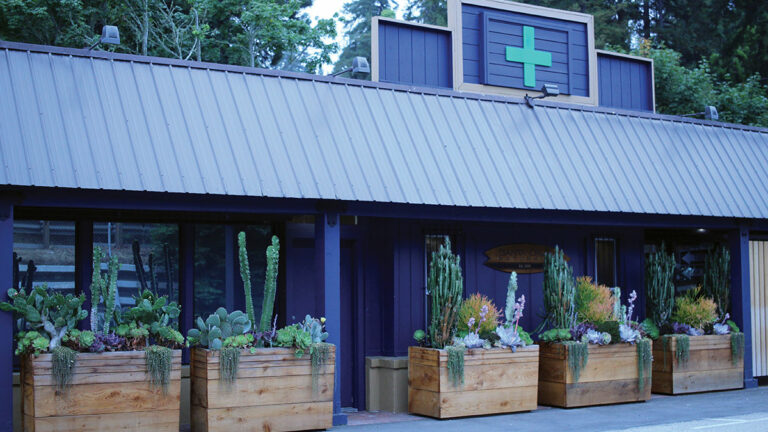
The Watsonville City Council at its Tuesday meeting overhauled its tax rates on cannabis businesses, a move the majority of council members said would make the city’s businesses more competitive with those in neighboring jurisdictions.

The changes will cut taxes on retail cannabis businesses in half, reducing them from 10% tax on gross receipts to 5%. The previous tax rates were approved by voters in 2016 with the passage of Measures L.

That move would align its retail rates with nearby Salinas, Hollister and Marina. It would also bring Watsonville close to its nearest competitors, Santa Cruz County (7%) and Monterey County (4.5%).

The city of Santa Cruz taxes its retail cannabis businesses at 7%.

Cultivators will also see a similar tax cut, as the new rate of $10 per square foot of canopy area is half of the previous rate. Cannabis nurseries, which in the past have been lumped in with all other cultivators, would only be taxed $1 per square foot of canopy area—the same rate neighboring Monterey County currently charges its nurseries.

The changes were approved by a 5-2 vote, with Mayor Jimmy Dutra and Councilwoman Rebecca J. Garcia dissenting.

Dutra said that the new taxes would have little effect on shoppers’ habits, and would only lower the already disappointing revenues the city receives to police cannabis businesses—last fiscal year cannabis brought in about $450,000 in taxes, City Manager Matt Huffaker said. Dutra also said that the lower tax rates would possibly open the “floodgates” for cannabis businesses to engulf the small city, which he did not want.

“I don’t even know if that $450,000 will cover all the costs that go into bringing cannabis into our community,” Dutra said. “So we’re basically paying for them to be here.”

Thanks to recent changes approved by the City Council, the city allows cannabis licenses in cultivation (6), manufacturing (15), distribution (2), retail (3) and delivery (7), plus an unlimited number of testing licenses. Community Development Department Director Suzi Merriam says that the city now has enough applicants to take up nearly all 33 licenses, with the exception of its manufacturing licenses.

It is unclear when Watsonville will welcome its first bonafide retailer. Merriam said the city received 12 applications from prospective dispensaries when it opened its application process last year. That included three businesses that applied for the city’s equity program, which sets aside one of the three retail licenses for small, local and minority-owned businesses owners.

The new rates, according to the prepared staff report, would generate between $1.4-2.6 million per year for the city.

Because of voter approved Measure M, those funds would go to the police (20%), fire (15%), community development (20%), parks and community services (25%) and library departments (8%). In addition, 12% of cannabis taxes go to nonprofit grants determined by the City Council.

Global Art Installation Comes to Santa Cruz County for MAH Anniversary

0

This summer, the Santa Cruz Museum of Art and History (MAH) will celebrate its 25th anniversary. 

While the museum has been shuttered for most of the pandemic, staff has stayed connected to the community through outdoor exhibits, social media engagement and other projects. No one is sure what will be allowed this summer, but MAH hopes to celebrate the milestone any way it can.

One way is by bringing a famous global art installation, known as the RedBall Project, into Santa Cruz County the week of MAH’s anniversary.

Artist Kurt Perschke started the RedBall Project in 2001, considered the world’s longest-running street artwork. A 15-foot red ball, weighing about 250 pounds, is installed in a city or county, adopting those places as its canvas.

RedBall has visited three continents and over 26 cities, from Abu Dhabi to Fargo, North Dakota. It is installed in various locations in each city, squeezed between buildings, perched on a riverfront and hoisted above bridges.

“We always want to get the ball where it’s never gone before,” Perschke said. “We want people to see it installed in places that are familiar, like a corner of their own street. It’s about seeing your city differently.”

Perschke says that RedBall is less about the ball itself as a sculpture, and more about audiences’ experiences. He and his team use their website and social media to connect with audiences before, during and after the piece visits their city.

“It’s more about the social experience,” he said. “People just notice it and come over to see what’s going on. Conversations start up. Strangers start to engage with each other.”

MAH Executive Director Robb Woulfe reached out to Perschke about bringing RedBall to Santa Cruz County. Woulfe had followed the project for decades and thought the MAH’s 25th anniversary was the perfect opportunity.

“I had kept my eyes on this project, following Kurt on social media as he traveled the world,” Woulfe said. “I loved it. I thought it was really fun and a special thing to bring to different communities.”

The fact that MAH’s logo is also a red ball was also not lost on Woulfe. 

“Of course, we couldn’t ignore that fact,” he laughed. “It’s just such a natural connection to our brand identity.”

Woulfe and Pershcke began communicating last summer. Last week, Pershcke began scoping out places across Santa Cruz County—from the Santa Cruz Municipal Wharf to Watsonville Plaza—for possible installation sites.

The ball is always inflated on-site, and needs specific areas where it can easily be installed safely in a community.

“It’s a ball, not a balloon,” Pershcke said. “It’s anchored by air pressure, and made to go against concrete and steel. We’re looking for specific opportunities.”

Added Woulfe: “There’s a lot that goes into this. It looks simple, but there’s a whole production requirement, and you have to factor in things like weather, especially wind.”

The pandemic put a stop to many installations last year, as travel was restricted and community gathering discouraged. But slowly, Pershcke and his team have gotten back into it.

“We were supposed to be in Asia this year,” he said. “We had a lot of cancelations. We’re looking forward to things getting back to somewhat normal. Thankfully our installations are always outdoors, so it’s very safe.”

The MAH’s 25th anniversary celebration with RedBall will be held June 8-13. Santa Cruz County residents are invited to stay connected and in the months leading up to the project. Once locations are finalized, they’ll be announced on social media, so people will know when and where to show up.

Woulfe says he hopes the project will give audiences a sense of joy, wonder and curiosity.

“I hope it will give people pause—they’ll stop for a few minutes and go, ‘Wait, what is that crazy thing?’ And they’ll come have a look,” he said. “We at MAH love the idea of being out in the community, meeting people through art and conversation. This has the opportunity to be really memorable.”


Santa Cruz City Council Amends Homeless Ordinance; Will Return in April

0

The Santa Cruz City Council early Wednesday morning approved an ordinance that will drastically change the way the city deals with its homeless population.

But the sweeping package of rules will not take effect until after the council approves several amendments that were made in the late-night and early-morning hours, which will happen on April 13. At that time, the council and city staff will also discuss ways to deal with the disabled community of homeless people.

The amendments would then need a final vote at a later date. The ordinance would take effect 30 days after that.

In addition, the ordinance will not go into effect until the county enters the yellow tier of Covid-19 restrictions—two levels down from its current position in the red tier—and creates a safe sleeping program for at least 150 people.

The ordinance passed with a 5-2 vote, with council members Justin Cummings and Sandy Brown dissenting. Both said the board should wait until the amendments made Tuesday have been approved.

City officials say that the large encampments that have popped up around the city have created hazards such as environmental degradation, excavation, crime, illegal drug use and unsanitary conditions. 

The council heard the first draft during a marathon discussion on Feb. 23, when members made several amendments that were adopted Tuesday.

Dozens of people spoke at both meetings, most of them opposing the ordinance for various reasons. While many said that the rules were too strict, some said they did not go far enough in protecting the community from the problems associated with entrenched homeless encampments

Mayor Donna Meyers ended public comment after more than two hours in both meetings, a move that drew criticism from many speakers. 

But Meyers explained that the council still had to discuss the complex issue late into the night.

As written, the ordinance prohibits camping on beaches, in parks, in downtown Santa Cruz and in residential neighborhoods. Areas prone to fires and flooding, in addition to sensitive natural habitat, would also be off limits.

Camping would be allowed in commercial industrial zones, primarily along the sidewalks, in managed camps and areas designated as safe sleeping spaces, of which 150 are to be set up by the city. This includes the far Westside, Harvey West and an industrial area in the Seabright neighborhood. 

Camping was originally permitted in the open areas of Pogonip, Arana Gulch, DeLaVeaga Park and Moore Creek under the ordinance, but an amendment added late Tuesday by the council would prohibit that. In open spaces where camping is allowed, it must be at least 75 feet away from trails.

Camping in areas managed by California State Parks—including beaches and Lighthouse Field on West Cliff Drive—is already prohibited. 

Daytime camping between 7am and one hour before sunset would be prohibited, if the council approves the final version of the ordinance in April. This is an attempt to prevent entrenched camps from popping up, such as the unsanctioned Phoenix Camp that was dismantled in November 2019

There are exceptions in this rule for disabled people and their caretakers, and for families with children.

Fires are prohibited, as is storage of bike parts and accumulation of trash. The ordinance also restricts the size of camps.

Santa Cruz Planning and Community Development Director Lee Butler said the rules will give the city a tool to help deal with the crisis, but he stressed that it is not a panacea for the issue. 

“The ordinance as written, or even if council modifies it, is not going to end homelessness,” Butler said. “This is just one of the tools that would be used to address some of the behavioral, environmental and quality of life concerns that can arise, particularly with some of the larger camps that can arise.”

Also added Tuesday was a provision to conduct a quarterly census of the county’s homeless population, if funding is available. 

In crafting any ordinance regarding homeless people, jurisdictions nationwide are stymied somewhat by Martin v. the City of Boise. In that landmark case, the 9th Circuit Court ruled that prosecuting people for sleeping on public property is unconstitutional, unless alternate shelter is available.

Santa Cruz Police Chief Andy Mills says officers would take a “progressive” approach, focusing on first helping homeless campers find shelter and other services they need.

But he says that under current rules—under which the worst penalty is a civil citation—repeat offenders have little incentive to follow the rules. 

As an example, he said one man has been cited 39 times in the past year for illegally camping on Main Beach. 

“In order for us to be effective, I believe we need to have some measure of accountability for the recalcitrant few who are determined not to adhere to the standards of living in this community,” Mills said. 

The ordinance, then, has several tiers, Mills says, starting with informing and educating illegal campers. Officers would then issue warnings, followed by possible misdemeanor citations, which would be used as a last resort.  

“We have issued a lot of citations over the years, and at the infraction level, there is not much motivation to actually appear on those citations,” Mills said. “So for us to be effective there has to be at least one higher level tier, where we can go to if absolutely necessary.”

City staff would make efforts to inform homeless people where sleeping is permitted. Families with minor children are not subject to arrest or citation. 

The ordinance also calls for the establishment of safe sleeping spaces, in addition to daytime storage spaces and transportation to those spaces. 

But that comes with a cost, Butler said.

He estimated that a single safe sleeping site for 50 people will cost $250,000 per year, and a storage program comes with an annual $75,000 price tag.

A managed camp can cost $1 million annually. The Benchlands site, which abuts the San Lorenzo River near the county courthouse, has become the focus of a lawsuit against the city and costs about $100,000 per month, Butler said. 

City Attorney Anthony Condotti told the council that the ordinance will almost certainly end up in litigation.

Councilmember Martine Watkins called such encampments “health hazards,” and pointed out that some families cannot bring their children to parks with encampments nearby.

“I can’t say that’s a healthy, equitable approach for our community,” Watkins said. 

Mayor Donna Meyers called the city’s homeless crisis, “a societal failure 30 years in the making.”

The council also directed City Manager Martín Bernal to set up a managed camp at 1220 River St., and report back to the council on those efforts by June. They additionally asked for a restorative justice system that would give those convicted of violating the ordinance a chance to perform community service. 

Meyers said that the ordinance is both a recognition that the city lacks sufficient space for its homeless population and a message that the beaches, parks and open spaces are not the places for camps.

“It’s really an attempt to clarify for the community how we will in a sense map where these people can be in our city,” she said.

UPDATED MARCH 18, 2021: This article was updated to correct a misspelling of Donna Meyers’ name. We regret the error.

County Homelessness Plan Sets Goal of More Than 700 New Units

0

The Santa Cruz County Board of Supervisors on Tuesday unanimously approved a four-part strategy to deal with the county’s homelessness crisis, an ambitious three-year plan that has the goal of reducing by 50% the number of households experiencing homelessness by 2024.

The plan starts with the creation of Housing for Health, a coalition that will coordinate the efforts throughout the county and expand health and human services. At the heart of that agency’s philosophy is the idea that simply looking at the number of people who are already homeless is missing a large piece of the puzzle, said Housing for Health Director Dr. Robert Ratner.

“Because we will never get to a place where we’ve actually ended homelessness, if that’s the only lens we look at,” he said. “We really have to look upstream and look at how do we prevent people from losing their housing.”

The plan also includes finding ways to reduce homelessness, expanding programs and services that address the homeless population and expanding the county’s bank of permanent housing.

Among other things, Housing for Health will work with jurisdictions countywide to develop at least 734 new housing units by 2023, and expand the county’s capacity of rapid rehousing rental assistance programs.

The plan, called “Housing for a Healthy Santa Cruz,” has taken more than a month to develop. It aims to drastically reduce the time people stay in emergency shelters and transitional housing before being placed in permanent housing.

The supervisors will hear a progress report in August.

The goals include increasing the number of temporary housing beds from 440 to 600, rapid rehousing slots from 140 to 490 and the permanent supportive housing slots from 500 to 600.

Also included in the plan is to expand services at the county’s shelters, reduce eligibility barriers and provide outreach services to homeless people. In addition, the program will seek to reduce unmanaged homeless encampments.

According to a recent census of the county’s homeless population, about 2,167 people are homeless in Santa Cruz County on any given night. About 1,440 households—groups of people living together—are homeless every night. 

County officials say that 10,150 low-income renters do not have access to an affordable home, and 75% of people considered extremely low income are spending more than half of their income on housing.

The new framework was created with the help of the Walnut-based analytics firm Focus Strategies. County officials worked with all jurisdictions in the county in developing it.

The supervisors gave a preliminary thumbs-up to a draft version of the plan on Nov. 10.

“Homelessness truly is a humanitarian crisis,” said Human Services Director Randy Morris. “Sometimes [in] these conversations, when we talk public policy, we lose sight of the fact that we have hundreds and hundreds in this community—thousands—of people in this community who have parents and siblings and friends they have lost touch with who are living unsheltered. And this is a very serious crisis with a lot of suffering.”

In separate action, the supervisors approved a proposal by supervisors Ryan Coonerty and Manu Koenig to identify sites throughout the county to set up temporary housing and parking sites, with the goal of 120 new beds.

Coonerty, who helped draft that ordinance, said the problem has grown since the pandemic started.

“We are housing 600 people more than we were at this time last year,” he said.

In all, the plans are expected to cost $65 million annually.

How UCSC Scientists Are Using Their Expertise to Tackle the Pandemic

0

If you want to understand RNA, the molecule that encodes the genetic code of the coronavirus, Santa Cruz is the place to be. 

RNA is a molecule found in all living things. Among other functions, RNA acts as a messenger between our DNA and the rest of the cell. But some viruses have bucked DNA completely and use RNA to inscribe their genetic code instead—including the virus that causes Covid-19. 

UCSC has the world’s largest grouping of RNA researchers. So when the pandemic hit Santa Cruz and the county struggled to find enough testing, these scientists knew they were in a unique position to help out. 

“Santa Cruz has this amazing strength in RNA molecular biology. And we thought that if anybody could get good at purifying RNA and counting viruses, it should be us,” says Jeremy Sanford, a professor at UCSC. 

In spring 2020, Sanford and other professors decided to create their own Covid-19 diagnostic lab. Today, the Colligan Clinical Diagnostic Lab (CCDL) runs thousands of tests every week with the sole purpose to sniff out Covid-19 cases both at the university and in the larger Santa Cruz community.

“As scientists, we had this unique advantage that we had the tools, we had labs, and we had know-how that we could bring to bear on the immediate problem of the day,” says Michael Stone, another one of the lab’s founders.  

Testing is essential for responding to a pandemic, as it allows public health officials to know who has the disease, who to isolate, and who may have been exposed. 

At the start of the pandemic, however, “we were having a real problem with [testing] turnaround time,” says David Ghilarducci, the deputy health officer for Santa Cruz County. “It would sometimes take a week or 10 days to get a test result back, which is essentially useless.”

Sanford, Stone, and their colleagues realized that they could convert the lab equipment they used to study the fundamental nature of biology to test for the virus.  So they decided to transform a research lab into the school’s very own Covid-19 diagnostic space. It took around two months to get the first test up and running, validating their first test on May 1. 

In the beginning, the lab’s capabilities were modest. But by summer, the lab was ready to take on more tests. The CCDL reached out to county officials to see if they needed help with testing, a move Ghilarducci saw as a “tremendous opportunity.”

“They usually give us results in less than 24 hours, which is fantastic,” says Ghilarducci. “It’s been a huge asset to our county.”

Today, the lab tests samples from the county jail, essential workers, and other vulnerable communities in Santa Cruz. At the height of the January surge, the lab churned out 1,500 tests per day. Since May 1, the CCDL has diagnosed over 3,000 positive cases in Santa Cruz

“More and more responsibility has fallen onto the lab, both from the county and within our university,” says Stone. “It’s like a train that’s left the station. It needs to keep chugging along.”

Once the pandemic is over, the lab’s founders hope to convert the space into a new type of diagnostic lab: this time, for pediatric oncology. Stone hopes that CCDL’s role in tackling the pandemic locally will help alleviate some of the town-gown tension and encourage members of the Santa Cruz community to be curious about the research taking place on campus. 

“I think [the CCDL] was a really important gesture on the part of UCSC,” says Ghilarducci, who is also a UCSC alum. “It says, ‘We’re not just some independent party, we’re a partner in this community.’”

UC, Cal State Police Much Less Diverse Than Students They Serve

At 32 of 33 UC and CSU campuses, police officers are whiter than the students

More Contagious Variant Is Spreading Fast in U.S., Even as Overall Cases Level Off

More contagious variant has likely grown to account for more than 20% of new U.S. cases

Biden Signs Stimulus Bill Ahead of Prime-Time Address

Relief package includes direct payments of $1,400 per individual

One Year In: How Covid’s Toll Compares With Other Causes of Death

Covid-19 has become country’s third-leading cause of death

U.S. Releases New COVID-19 Guidance for Nursing Homes, Permitting Indoor Visits

Guests can go inside regardless of vaccination status

Watsonville Cuts Taxes on Cannabis Businesses By Half

Changes cut 10% tax on gross receipts to 5%

Global Art Installation Comes to Santa Cruz County for MAH Anniversary

A 15-foot red ball will be installed in various spots around the county

Santa Cruz City Council Amends Homeless Ordinance; Will Return in April

Council will revisit amendments on April 13 for sweeping set of rules

County Homelessness Plan Sets Goal of More Than 700 New Units

Plan will also expand county’s capacity of rapid rehousing rental assistance programs

How UCSC Scientists Are Using Their Expertise to Tackle the Pandemic

UCSC scientists with RNA expertise were in unique position to help out
17,623FansLike
8,845FollowersFollow