Rob Brezsny’s Astrology: Jan. 27 – Feb. 2

Free will astrology for the week of Jan. 27  

ARIES (March 21-April 19): In the 1950 film Harvey, James Stewart plays a middle-aged man named Elwood whose best friend is a tall, invisible rabbit named Harvey. The relationship causes problems with the people in Elwood’s life. At one point a psychiatrist tries to convince him to “struggle with reality.” Elwood replies, “I wrestled with reality for 40 years and I am happy to state that I finally won.” I’m happy to tell you this story, Aries, because it’s a good lead-in to my counsel for you: I suspect that one of your long wrestles with reality will yield at least a partial victory in the coming weeks. And it will be completely real, as opposed to Elwood’s Harvey. Congratulations!

TAURUS (April 20-May 20): The light of the North Star takes a long time to reach us, even though it’s traveling 186,000 miles per second. The beams it shows us tonight first embarked when Shakespeare was alive on Earth. And yet that glow seems so fresh and pure. Are there any other phenomena in your life that are metaphorically comparable? Perhaps an experience you had months ago that is only now revealing its complete meaning? Or a seed you planted years ago that is finally ripening into its mature expression? The coming weeks will be an excellent time to take inventory of such things, Taurus. It will also be a favorable phase to initiate innovations that will take some time to become fully useful for you.

GEMINI (May 21-June 20): In 1971, astronaut Alan Shepard had the great privilege of landing on the moon in a spacecraft, then walking on the lunar surface. How did he celebrate this epic holy adventure? By reciting a stirring passage from Shakespeare or the Talmud? By placing a framed photo of Amelia Earhart or a statue of Icarus in the dirt? By saying a prayer to his God or thoughtfully thanking the people who helped put him there? No. Shepard used this sublime one-of-a-kind moment to hit a golf ball with a golf club. I’ll ask you not to regard him as a role model in the coming weeks. When your sacred or lofty moments arrive, offer proper homage and honor. Be righteously appreciative of your blessings.

CANCER (June 21-July 22): William Shakespeare worked with another playwright in creating three plays: Henry VIII, The Two Noble Kinsmen and Cardenio. The lucky collaborator was John Fletcher, who was popular and influential in his era. I propose that we name him one of your role models in 2021. Here’s why: You will have an enhanced potential to engage in fertile partnerships with allies who are quite worthy of you. I encourage you to be on the lookout for opportunities to thrive on symbiosis and synergy.

LEO (July 23-Aug. 22): Canadian journalist Nick Ashdown is amazed that white people in North America are so inhibited about revealing their real feelings. He writes, “How bizarre that in English, the word ‘emotional’ is used pejoratively, as though passion implies some sort of weakness.” He marvels that the culture seems to “worship nonchalance” and regard intense expressiveness as uncool or unprofessional. I’m going to encourage you to embody a different approach in the coming days. I don’t mean to suggest that you should be an out-of-control maniac constantly exploding with intensity. But I do hope you will take extra measures to respect and explore and reveal the spirited truth about yourself.

VIRGO (Aug. 23-Sept. 22): Virgo actor Ingrid Bergman appeared in three movies directed by Alfred Hitchcock. In Notorious, set after the end of World War II, she played the daughter of a Nazi spy. During the filming, Bergman had trouble with a particular scene. She explained her doubts to Hitchcock, saying, “I don’t think I can do that naturally.” Hitchcock seemed receptive to her input, but in the end had an unexpected response: “All right,” he told her. “If you can’t do it naturally, then fake it.” I’m going to suggest that you follow Hitchcock’s advice during the next two weeks, Virgo. “Fake it till you make it” is an acceptable—probably preferable—approach.

LIBRA (Sept. 23-Oct. 22): The 17th-century Libran polymath Thomas Browne had a brilliant, well-educated mind. He authored many books on various subjects, from science to religion, and was second only to Shakespeare in the art of coining new words. He did have a blind spot, however. He referred to sex as the “trivial and vulgar way of union” and “the foolishest act a wise man commits in all his life.” Most of us have pockets of ignorance like that—aspects that qualify as learning disabilities or intellectual black holes. And, now and then there come times when we benefit from checking in with these deficiencies and deciding whether to take any fresh steps to wisen them up. Now is such a time for you.

SCORPIO (Oct. 23-Nov. 21): “There is no sunrise so beautiful that it is worth waking me up to see it,” declares actor and comedian Mindy Kaling. Is that an unromantic sentiment? Maybe. But more importantly, it’s evidence that she treasures her sleep. And that’s admirable! She is devoted to giving her body the nurturing it needs to be healthy. Let’s make Kaling your patron saint for now. It’s a favorable time to upgrade your strategies for taking very good care of yourself.

SAGITTARIUS (Nov. 22-Dec. 21): All of us go through phases when our brains work at a higher level than usual. I’m guessing that you’re about to enjoy one of these times. In fact, I won’t be shocked if you string together a series of ingenious thoughts and actions. I hope you use your enhanced intelligence for important matters—like making practical improvements in your life! Please don’t waste it on trivial matters like arguments on Facebook or Twitter.

CAPRICORN (Dec. 22-Jan. 19): Today the Capricorn artist Paul Cézanne (1839–1906) is regarded as an important and influential painter. Early in his career, though, he was rejected and even ridiculed by critics. One reason was that he loved making still-life paintings, which were considered low art. Of his 584 works, about 200 of them were of inanimate, commonplace objects. Fruit was his specialty. Typically he might spend 100 separate sessions in perfecting a particular bowl of apples. “Don’t you want to take a vacation from painting fruit?” he was asked. In response, he said that simply shifting the location of his easel in relation to his subject matter was almost more excitement than he could bear. That’s the kind of focused, detailed attitude I hope you’ll cultivate toward your own labors of love during the coming weeks, Capricorn.

AQUARIUS (Jan. 20-Feb. 18): “We all want everything to be okay,” writes author David Levithan. “We don’t even wish so much for fantastic or marvelous or outstanding. We will happily settle for okay, because most of the time, okay is enough.” To that mediocre manifesto, I reply, okay. I accept that it’s true for many people. But I don’t think it will apply to you Aquarians in the coming weeks. According to my assessment of your astrological potentials, you can, if you want, have a series of appointments with the fantastic, the marvelous and the outstanding. Please keep those appointments! Don’t skip them out of timidity or excess humility.

PISCES (Feb. 19-March 20): Don’ts: Don’t keep scratching an old wound until it bleeds. Don’t try to snatch away the teddy bear that belongs to the 800-pound gorilla. Don’t try to relieve your tension by pounding your head against a wall. Don’t try to convince a stone idol to show you some tenderness. Dos: Do ask supposedly naive questions that may yield liberating revelations. Do keep in mind that sometimes things need to be a bit broken before you’ll be motivated to give them all the care they need and deserve. Do extinguish the fire on a burning bridge, and then repair the bridge.

Homework: I believe that you can’t get what you want from another person until you’re able to give it to yourself. Do you think that’s true? freewillastrology.com.


Reflecting on the ‘Whole-Soul’ Politics of the Biden-Harris Inauguration

The final days of Donald Trump’s presidency were for us here in Santa Cruz very, very California: an earthquake on Saturday night—just a hello-there-4.2-shaker, no big deal—then the freakish onslaught of violent winds, fraying nerves and causing damage; then, finally, on Trump’s last night in the White House, a wildfire only 10 miles away that I was warned could be coming my way. It was impossible not to be on edge, bracing for bad news: What calamities might come before Joe Biden was finally inaugurated?

Shockingly, none. What came barreling down the pipeline on inauguration morning, above all else, was a sense of calm and joy and replenishment. We could finally tune in and mark the moment, feel the moment, freed of the unending cacophony of crude distraction. This was a culmination of the sigh of relief that began in November for so many of us, interrupted by the shit show of Trump-aided-and-abetted insurrection, a sigh more profound for having been drawn out.

For me, words kept jumping out as I watched, words from the book I’d edited and published about this historical moment, Now What? The Voters Have Spoken—Essays on Life After Trump.

Like those from artist Mark Ulriksen: “We are so looking forward to starting the days ahead without clenched teeth, high blood pressure or churning stomachs. Can you feel our exhale of relief? It feels hurricane strength.”

Or from editor and writer Angela Wright Shannon: “I cried those warm slow tears that start somewhere deep inside, tears that reside in a dream deferred.”

I cried warm slow tears, too, watching Inauguration Day, again and again, when I wasn’t grinning with delight at surprises like Amanda Gorman’s show-stealing eloquence and panache.  I’ve had years of pressbox training in being cynical about the National Anthem, especially when sung by a pop star, but I was gaga for Lady Gaga as she so clearly soaked up the moment, present in a way only the great ones can be. I even cried during J. Lo’s bit. 

I watched with my six-year-old, Coco, in my lap, as she’d been in my lap watching days of post-election analysis in November, as Kamala Harris, my senator, was sworn in as the first woman vice president. Together Coco and I sounded out the letters P-R-E-S-I-D-E-N-T B-I-D-E-N stripped across the screen, and she pronounced them with a grin, then asked: “How old is Joe Biden?”

Not as old as we thought, apparently. The Technicolor obscenity of the mob assault on the Capitol seems to have shocked many people into a new alertness, a new willingness to focus on the now. As they do, they notice Biden commanding the moment in a way few anticipated. He’s at ease with himself, fixated on a tough job at hand, not trying to be what he is not.

As former U.S. men’s national soccer coach Bruce Arena put it in his essay: “If I were his coach, sending him into the middle of the action with a little pep talk, I’d keep it simple. I’d tell him, ‘Joey, the reason you’re in the lineup is because we believe in you. Do what you do. You don’t need me telling you how to play. You know how to play. That’s why you’re where you are. Be Joe Biden.’”

Watching Biden give his inaugural address, it felt like he’d read Arena’s essay. The speech hit notes of passion and urgency and vision that it had to hit, but it operated on another level than that of language, a level I’d call moral or spiritual. I had read online chatter suggesting Biden had better avoid quoting Lincoln, that’s the expected move, and I wrote back: Only if it’s a memorable Lincoln quote. It was: Lincoln, upon signing the Emancipation Proclamation in January 1863, saying, “My whole soul is in it.”

It was a powerful way of combining a Biden asset, his artless authenticity, and a devastating critique of a system failure of the last years, that of pervasive bad faith and falseness.

As former Virginia Governor Terry McAuliffe pointed out in his essay in the collection, Trump was for years a Democrat. A big donor. “This whole Republican evangelical thing of his was a shtick,” McAuliffe writes. It was, in other words, a performance. A lie. The Trump era gave us a plague of debased souls contorting themselves into Tennessee-Williams-on-Broadway theatrics to convince us they believed the lie, when we all knew they didn’t. Way, way too many journalists saw repeating the little lies that went with the big lie as part of their “job.”

Biden was calling for a deeper honesty, a rolling back of the bullshit people use to convince themselves they’re doing the right thing when of course they’re not. That deeper message came through. No less a Washington fixture than Chris Wallace of Fox News said of Biden’s speech: “I have been listening to these inaugural addresses since 1961, John F. Kennedy’s ‘Ask not.’ I thought this was the best inaugural address I ever heard.” Wallace, moderator of a (botched) Biden-Trump debate last year, said “especially us in the media must note … Whether it’s us on the air, on cable or broadcast, whether it’s us on social media, on our Twitter accounts: understanding that we have to deal from facts, from the truth.”

The hard, obvious part of that is cracking down on the virulent spread of dangerous misinformation, whipped up by a volatile mix of Russian hackers, Q nuts and utterly unscrupulous Republican operatives, which after the mob hit the Capitol everyone now understands poses a serious, graphically visible danger.

The hard, less obvious part is slapping people to stop play-acting, going through the motions and pretending their “whole soul” is involved when it’s long since checked out. I tuned back into CNN just before the president and first lady arrived at the White House, a moment I wanted to see, and Biden was ambling down the street, riding the moment with ease. Suddenly Joe was in motion. He was doing that adorable old-guy run of his, dashing over to the side of the street.

I thought the CNN reporter, witness to a memorable scene, would chuckle and offer some version of, “Well he doesn’t look like Sleepy Joe now, that’s for sure.” Instead, out came a bellowed question: “Can you unite the country, Mr. President?” Whoa doggy, give that Sam Donaldson wannabe a raise! What a farce. I was reminded of the time a TV reporter showed up on the very first day of A’s spring training in 1995 and asked (famously volatile) manager Tony La Russa, “How do they look so far, coach?” and he grimaced then replied: “They’re stretching like champions.”

I’m starting to think there was more to Biden’s choice of Kamala Harris than I understood. Biden’s an East Coast dude all the way, but there is something very California about his “whole soul” inaugural address. It’s like a form of meditation: don’t pretend you don’t hear the lies, the cheap shots, the blatant spin, just notice the parade of B.S. briefly, then let it slide right by and keep doing your thing. Be you, Joey.

Steve Kettmann is the editor of ‘Now What? The Voters Have Spoken—Essays on Life After Trump,’ in stock now at Bookshop Santa Cruz and bookstores nationally.

Real Thai Kitchen Delivers Spicy, Cozy Specialties

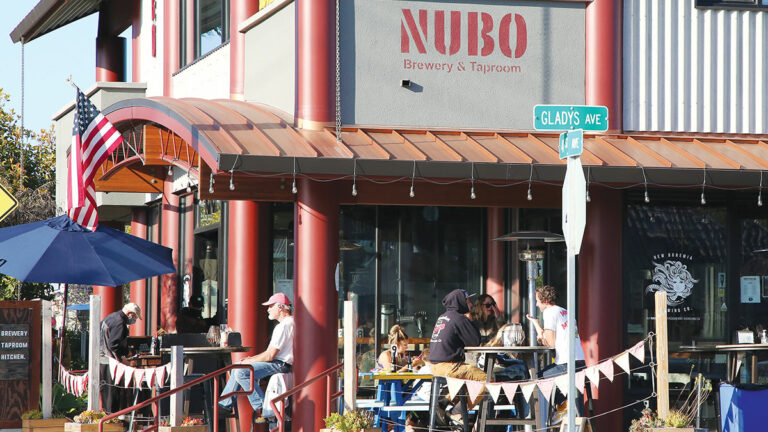
On a chilly evening, we crave something spicy. And the longstanding Thai landmark on Seabright Avenue did not disappoint. I have loved the curries from Real Thai Kitchen on evenings past. The green, the red, the yellow, the super spicy. But we made other choices last week. 

First off—and always—we needed an order of the house-steamed dumplings, Chu Mai ($9.50). It’s more fun to dish these out at the table from the round bamboo basket fresh from steaming. But, for now, we savored the plump wonton spheres stuffed with crab, shrimp, mushroom, chicken and cilantro that are at their very best topped with the mysterious black sauce, sweet, tart, and spicy, that makes each bite so delicious you never want the flavors to stop. 

We also picked up two entrees, a side order of brown rice (outrageously good for $2.75) and steamed silver noodles ($3). The spicy green bean stir-fry ($11.95) was loaded with excellent tofu, as requested, plus green beans, carrots, and green bell peppers. The chili paste with which everything had been wok’d packed the desired kick, and while I wished for more sauce with this dish, it was just fine with brown rice so good we fantasized about a future dinner of just that. Brown rice. Maybe with one of Real Thai Kitchen’s curries. 

Our other main dish from the popular eatery was a classic version of pad thai ($11.95), one of this cuisine’s gifts to the world. Rice noodles stir fried with bean sprouts, slices of green onion, plump shreds of tofu, plus bits of chicken, shrimp and plenty of egg and crushed peanuts in a delicious tamarind sauce. I added both entrees to my bowl, adding loads of texture to each. 

But it was that brown rice that really amazed. With the bran still on the grain, this rice had more flavor and more chewy texture than my home-cooked variety. It is almost a whole new grain and maximizes the flavors and textures of everything you put on it. Fantastic all by itself. On your next visit to Real Thai Kitchen, do not fail to pick up an order of the house brown rice. Flavor galaxies in every bite. Open daily for lunch and dinner.

Learn more at reathaisantacruz.com

Gifts from the Sea

Check out the Dungeness crabs available through Ocean2Table. Fresh from the boat, cooked and cleaned! But there’s more from the marine entrepreneurs: anchovies and trout, not to mention a dizzying array of mushrooms. Shiitakes, black pearl tree oysters, golden chanterelles, black trumpet mushrooms (to sauté in butter and garlic!), hedgehog, dried porcini, candy caps. A serious variety of the fruit of the Earth. Delivered to your place if you want. 

Check getocean2table.com, and keep these guys in business bringing very fresh produce and fish from producers to you.

Looking Forward To …

Bradley Brown’s upcoming Big Basin Vineyards downtown Santa Cruz tasting room.

The next depot of flavor-intensive cooking from Home, where Brad Briske and his creative culinary team flourish, will be HomeFry over at Discretion Brewing, where Santos Majano formerly made menu miracles. So far, Homefry’s menu talks about lots of charcuterie, mushrooms with high wattage sauces, Monterey Bay rock cod and slaw, Fogline Farm chicken creations, and other specials involving huge helpings of finesse and avocado whip. Sounds inventive, as you would expect from Briske.  

And looking forward to the Feb. 1 reopening of that palace of carnitas Steamer Lane Supply at the corner of Lighthouse Field and the Monterey Bay.

California Pajarosa Floral Navigates a Changing Industry

Business at California Pajarosa Floral, one of Watsonville’s last remaining large flower growers, has altered drastically since the outbreak of Covid-19 last year.

Already dealing with an evolving industry before the pandemic due to growth in offshore production, things came to a sudden halt at Pajarosa when the virus hit. For the first six weeks, all transportation of flowers ceased and the business could not get its product to wholesale customers. Then demand began to plummet.

“Once trucking resumed, we were able to ship flowers, however, demand for them was only a small percentage of what is [normal],” said Pajarosa’s Paul Furman. “We lost many accounts due to them closing completely.”

California Pajarosa, which is nestled in the foothills of the Santa Cruz Mountains, is the last remaining major rose grower in the Pajaro Valley and one of very few left in the country. Roses were first planted on the property in 1979. In 1992, the company became the first rose grower in the state to utilize hydroponic growing methods. 

The company normally grows flowers for parties and weddings, and has lost a large amount of business due to such events being canceled and discouraged due to Covid-19. This has led to a shift in focus, concentrating on internet sales and customers who have more of an online retail presence.

Meanwhile, safety measures have increased. While the company already had a very strict sanitizing system put in practice pre-pandemic, they have now also mandated mask-wearing for employees.

Thankfully, Furman said, there is still a demand for flowers.

“Many people still find the benefit of enjoying flowers in their homes,” he said. “It has been scientifically proven that flowers reduce stress, boost your mood and memory, increase productivity and are shown not only as a benefit to the recipient, but also to the person giving the flowers.”

For those reasons, California Pajarosa decided last year to donate 1,000 bouquets to local healthcare workers at Watsonville Community Hospital. Furman said they appreciate the sacrifice and effort such workers have been dealing with and wanted to show their support.

“No gesture is too small, and we felt the flowers could have a positive effect on those that risk their own for sake of others’ health,” Furman said.

Looking ahead, Furman says that California Pajarosa will continue to monitor the ever-evolving flower industry both locally and worldwide. He urges consumers to look to support local growers as much as they can.

“We encourage anyone to be aware of the origin of the flowers they buy as buying locally grown flowers supports the community you live in,” he said. “Buy American-grown flowers. Buy California-grown flowers. Buy Santa Cruz County-grown flowers. The closer the origin of the product, the greater it will affect you in a positive way.”

New Exhibit Shows How to Fight Climate Change with Your Fork

1

It takes 717 gallons of water to raise just one pound of pork, and only 25 gallons to grow the same amount of potatoes.

That is according to the nonprofit Eat for the Earth’s new exhibit, What’s on your fork?, now on display through the end of January on the first floor of the Santa Cruz County government building. This factoid joins dozens of others intended to show how meat consumption in the United States drives climate change and affects the environment as a whole.

“As a person who is plant-based, I know the power of diet to make changes,” says Rev. Beth Love, founder of Eat for the Earth. “I want people that see the exhibit to understand that their dietary choices do make a difference.”

“Alternative” diets are often the source of derision and pity in America. Yet more and more people across the country are deciding to forgo animal products entirely. A report by a retail analysis company found that in the last 15 years, 290,000 more Americans became vegans, bringing the national total to 9.7 million people. Most of these plant-based converts list the environment as one of the biggest drivers for dumping meat.

Through What’s on my fork?, Eat for the Earth intends to show visitors to the county government building exactly how diet impacts the environment. Through pie charts and bar graphs, the exhibit looks at the difference between growing fruits and vegetables versus raising livestock in terms of land use, greenhouse gas emission, and water use. 

Love’s own decision to go plant-based nearly 20 years ago was inspired by her need to respond to the climate crisis. “I was aware that my diet was probably the largest single contribution I could make as an individual to averting climate change,” she says.

For most of the next two decades, Love was content to make plant-based food for herself, her husband, and her friends while working on a vegan cookbook. But she soon found herself growing frustrated by what she saw as climate inaction. In an interview with Good Times, Love cited a 2019 study that found that moving away from red meat, along with other agricultural reforms, will be necessary to meet the goals set by the Paris Agreement on climate change.

So in January 2019, Love launched Eat for the Earth in the hopes of encouraging others to adopt plant-based diets. For the first months of 2019, this meant going to festivals, plying people with vegan food, and talking to them about the cost of meat-based diets.

“The formula is to give out the food and then give them the education,” Love says, adding: “There is nothing more compelling than giving people a free food sample.”

But with the pandemic, Eat for the Earth had to rethink its strategy.

One of the outcomes of that reframing is What’s on my fork?. Love says that before the pandemic, she could see people reacting with surprise and concern when they saw the cost of meat-based diets. Love wants to tap into that energy in the future, and she thinks that visual representations of the data are the best way to do that.

To that end, the county building is only the first stop for What’s on my fork?. As soon as the world opens back up, she plans on taking the exhibit on the road. In the meantime, Eat for the Earth is also offering online classes and resources to people transitioning to plant-based diets. 

“It’s not enough for people to be educated about why something is important,” Love says. “They also need to know how to do it.”

Evacuation Orders Issued for Santa Cruz Mountains Residents

0

Cal Fire CZU announced Monday morning that many evacuation warnings were updated to orders for swaths of the San Lorenzo Valley, including most of Boulder Creek and various areas of Ben Lomond and Felton that just a few months ago were scorched by the CZU Lightning Complex fire.  

About 5,000 residents are impacted by the newest orders, according to the Santa Cruz County Sheriff’s Office.

In a press release, Cal Fire said that the upcoming “atmospheric river” is expected to bring 8-12 inches of rain to the Santa Cruz Mountains. These incoming heavy rains have officials worried of a possible debris flow, in which heavy rainfall unable to soak into the fire-damaged soil will instead flow downhill, taking rocks, trees and other items with it. Flows can reach speeds of 30 mph and destroy homes and other structures in their path.  

The areas under an evacuation order are:

  • Boulder Creek
    • Boulder Creek Fire District Zones: BOU-E021A, BOU-E020, BOU-E017, BOU-E016, BOU-E010, BOU-E006, BOU-E001A, BOU-E002, BOU-E033A, BOU-E038A, BOU-E031B, BOU-E030, BOU-E018A, BOU-E014, BOUE009, BOU-E003, BOU-E001B, BOU-E015A, BOU-E039A, BOU-E040A
  • Ben Lomond
    • Ben Lomond Fire District Zones: BEN-E001D, BEN-E002A, BEN-E002D, BEN-E004B
  • Felton
    • Felton Fire District Zones: FEL-E002A, FEL-E003B, FEL-E003C, FELE004A
  • Santa Cruz Mountains
    • Santa Cruz County Fire Department Zones: CRZ-E001B, CRZ-E001D, CRZE002B, CRZ-E003B, CRZ-E003D, CRZ-E006B, CRZ-E006C, CRZ-E007A, CRZ-E017A, CRZ-E017C

To view the interactive evacuation map, visit community.zonehaven.com

Temporary shelters are opening at San Lorenzo Valley High School, the Scotts Valley Community Center, and Pacific Elementary School in Davenport. Extended car parking, Red Cross assistance, refreshments, charging stations, bathrooms and pet food will be available.

County officials predict the storm will hit Tuesday afternoon and intensify throughout the night. 

“I couldn’t stress more the need to follow the evacuation order,” Santa Cruz County Chief Deputy Chris Clark said in a press conference Monday morning. “We want to give you as much time as possible to make preparations to leave.”  

Clark expects rain to more than meet the trigger threshold for flows, 0.30 inches of precipitation in 15 minutes, 0.50 inches of precipitation in 30 minutes, and/or 0.70 inches in an hour.

The Santa Cruz County Sheriff’s Office will maintain a presence throughout the event, until it becomes dangerous to do so. More than 30 deputies are currently knocking on doors in areas with evacuation orders and teams of 10 will switch every 12 hours to help residents and suppress looting. 

In addition to debris flow concerns, Clark warned of high winds

“We’re going to see a really high degree of wind, potentially gusting to 50-60 mph,” he said. “[The wind] just last week caused a huge disruption. This will be very much the same.”  

The predicted winds will cause challenges for emergency responders and evacuees.  Loss of electricity due to downed power lines will disrupt communications between evacuees and responders. Fallen trees may block roads, impeding access.  

“Winds play a big factor in our ability to communicate with the public. [Residents] need to heed orders now because we will not be able to message later on due to impacts of the storm,” Cal Fire Chief Ian Larkin said.  

Santa Cruz County Public Works Director Matt Machado hopes crews can clean up wind damage by this weekend. 

“We have staged some equipment in the mountains, so we can respond to immediate issues as needed,” he said. 

However, their timeline won’t solidify until the storm passes, as new road blocks may impede progress. Until staff clear roads, the Public Works Department will continuously update the road closure map.

Much like cleanup attempts, county officials are unsure when evacuation orders will lift. 

“It could be this weekend or it could be later,” Clark said. 

Check evacuation orders and zones at community.zonehaven.com. Sign up for Code Red, a reverse 911 system, at scr911.org. Current County road closures are available at sccroadclosure.org.

This story is developing and may be updated.

Mass Covid-19 Vaccination Site Coming to Santa Cruz County Fairgrounds

7

A mass Covid-19 vaccination site with the capacity to administer 1,000 injections per day will open at the Santa Cruz County Fairgrounds in Watsonville next week, but it is unlikely that it will reach its capacity anytime soon because of a continuing shortage of Covid-19 vaccine doses.

That’s according to Santa Cruz County health officials who at Friday’s weekly press conference again said the rollout of the vaccine has continued its slow pace. The county received 200 doses this week, and is expected to receive another 2,000 next week.

It has received about 20,000 doses in total of both the Pfizer and Moderna vaccines. That number does not include the doses sent to health care providers, hospitals or the federal pharmacy program.

County officials do not know the total number of doses that have been administered through those other avenues, but were confident that they would move on from Phase 1A—which prioritized health care workers, skilled nursing facilities and some first responders—of the vaccination plan early next week with the help of the County Fairgrounds vaccination site.

That site on Monday will administer vaccines to people in Phase 1A who have not yet received the shot, and County Health Officer Dr. Gail Newel said it would then open to those in Phase 1B by the end of the week.

It will be open by appointment only, and health officials urged the public to stay away until their turn arises. 

Those who have insurance and a primary health care provider will most likely receive their vaccine there—and Newel said some providers have already begun administering shots to those 75 and older, the top tier of Phase 1B.

The doses the county receives will be used to vaccinate those without insurance and other disadvantaged communities determined by the state’s Healthy Places Index that have been the most impacted by the pandemic. Most of Watsonville falls in that pool, as well as the Beach Flats community in Santa Cruz.

Those vaccines will be distributed through the mass vaccination site, and various clinics through the county, including Salud Para La Gente in Watsonville. Health Services Agency Director Mimi Hall said the county is also working on plans to bring the vaccine directly to those communities with “strike teams.”

Hall said that the state is running a handful of vaccination pilot programs at Covid-19 testing sites operated by OptumServe—similar to the Ramsay Park site in Watsonville—in which staff there administer vaccines. She said she hopes the state will expand that program to Santa Cruz and other counties of similar size.

But officials warned those plans are still weeks away from being realized, as vaccine doses continue to be in short supply and the state struggles to quickly distribute the available doses. California ranks last in the country in percentage of shots used, administering just 37.3% of its doses, according to the Bloomberg vaccine tracker. The national rate is 48.6%.

More doses are not expected to be widely available until the AstraZeneca and Johnson & Johnson vaccines are approved by the FDA, which experts believe could take several more months.

Local intensive care unit (ICU) capacity continues to be heavily impacted, as there have been no beds available at local hospitals since Jan. 13, according to data reported to the state. But the Bay Area region’s ICU capacity has improved over the past week, and Newel said state officials told her that the region could exit the stay-at-home order in the next two weeks.

Newel said Santa Cruz County would not break from the rest of the region when the restrictions lift, meaning restaurants would be able to resume outdoor operations and other businesses, such as barbershops and salons, could allow customers indoors.

California Activates Covid-19 Vaccine Clearinghouse Website

Facing criticism for its chaotic COVID-19 vaccine rollout, California has quietly launched a long-promised statewide website to help residents learn when they are eligible to receive the vaccine and schedule appointments. 

Called MyTurn (myturn.ca.gov), the online registry has not yet been widely promoted and still is a work in progress. Gov. Gavin Newsom was expected to formally unveil the registry this week. 

Californians can immediately register on the website to be notified when it’s their turn for the vaccine in a number of counties. But for now, it only can be used to schedule appointments in Los Angeles County — and then only if they are health care workers or aged 65 and older. 

MyTurn is expected to improve in the coming weeks as more counties are able to link their registration systems to the state’s online platform. At least one local official has alerted their constituents to it, but the state has not yet announced or publicized it.

The website advises people without email addresses or a mobile phone to call the state’s COVID hotline at 833-422-4255.

MyTurn serves as a clearinghouse for residents, a one-stop place to get information that until now has been scattered over 58 counties and three cities. State officials largely have left the on-the-ground logistics of vaccine distribution to local health departments that have partnered with local health providers. 

As a result, Californians have had to navigate numerous online registration or notification systems managed by county and city governments, hospitals and even supermarkets. They have spent hours on screens and on the phone, fruitlessly searching for appointments. Some online platforms have buckled under the strain, going dark for hours at a time.

“It’s been frustrating,” said Diane Mendoza, a school transportation manager from Visalia. Earlier this week, she spent hours online and on the phone to get a vaccine appointment for her 82-year-old mother.

The fragmented and confusing rollout prompted a group of tech workers to launch their own statewide information portal, VaccinateCA.com

“It’s been a blur,” Manish Goregaokar, a Berkeley software engineer and one of the site’s organizers, said of the site’s rapid growth since its launch last week. 

“I really wish this (rollout) was more coordinated and that we’d prepped for this more,” Goregaokar said. “We didn’t know when it would be ready but we knew that at some point there is going to be a vaccine. The logistics of this should have been figured out.” 

More than 100 volunteers are now vetting information on the site, Goregaokar said. 

“This kind of haphazard way of getting the vaccine out just creates enormous frustration and is unnecessary,” said Dr. John Swartzberg, an infectious disease specialist at UC Berkeley.

Dagny Ellenberg, vice president of Fiona Hutton & Associates, a Sacramento public affairs firm that develops campaigns for state agencies, said a state-run registration site could be useful but had a caveat.

“In a perfect world, anyone in the state could use a single resource, but I think we’ve all lived through large-scale health care rollouts, like Healthcare.gov, and seen the confusion that can result,” Ellenberg said. “Technical glitches can overshadow the good that’s trying to be accomplished. It would be incredibly important to make sure it can be rolled out in a way that’s effective and avoids glitches.”

CalMatters.org is a nonprofit, nonpartisan media venture explaining California policies and politics.

Songbirds in Santa Cruz County Face Their Own Epidemic

Tiny brown and yellow migratory songbirds called pine siskins face their own epidemic this year, as an outbreak of salmonellosis threatens populations across the West Coast, including in Santa Cruz County.

Like Covid-19, the infection spreads quickly and easily through groups. Although not new or uncommon, the salmonellosis outbreak appears particularly large this year.

“We first started to receive reports probably mid-to-late December, and those have really increased in the beginning of January,” says Krysta Rogers, a senior environmental specialist at the California Department of Fish and Wildlife. Rogers works as an avian specialist in the Wildlife Investigations Laboratory, where researchers study diseases in animal populations around the state. 

The outbreak primarily affects pine siskins, but a few other types of finches and sparrows might also fall ill if they come into contact with infected birds at feeders or birdbaths. The sick birds act lethargic.

“They often sit for long periods of time—minute to hours—in the same spot with ruffled or puffed-up feathers,” Rogers says.

The strain of bacteria is fairly specific to pine siskins, but outdoor cats might occasionally contract an infection if they grab a sick bird. Rogers recommends wearing gloves when disposing of dead birds or handling feeders. “Just to be on the safe side,” she says.

She requests that people report dead birds to the state Wildlife Investigations Lab. Community reporting helps the investigators track the numbers and locations of the outbreak.

For sick birds, Rogers suggests contacting a local wildlife rehabilitation center, such as Native Animal Rescue of Santa Cruz County. Residents should also take down bird feeders and baths for at least three to four weeks.

The outbreak will likely continue into early spring, when the finches migrate back north.

Amy Red Feather, a wildlife technician at Native Animal Rescue, advises waiting until March to put back feeders and birdbaths. Similar to closing indoor dining to slow the spread of Covid-19, taking down bird feeders limits areas of close contact where salmonellosis spreads. Birds will survive foraging naturally, Red Feather assures.

“People are worried about whether the birds are getting enough food, and it really is OK for them to be eating in the wild,” she says. “Bird feeders are real nice for us as humans, but it’s really not necessary for the birds.”

Native Animal Rescue usually takes in around a dozen sick pine siskins during salmonellosis outbreaks, but this winter they’ve already received more than thirty.

“This year has been phenomenally worse,” Red Feather says.

California Prioritizes Farmworkers for Covid-19 Vaccinations

As California deals with a surge of Covid-19 cases, hope is in sight as the vaccine begins to be administered to health care workers and long-term care residents.

On Jan. 13, Gov. Gavin Newsom declared that farmworkers would be included in the next tier.

The announcement came after numerous leaders and organizations urged the state to prioritize the population, who have been deemed essential to the nation’s food supply yet have received little to no federal assistance during the pandemic. This oversight has led to much higher infection rates amongst the predominantly Latinx workforce.

Assemblyman for California’s 30th district and Vice Chair of the Latino Legislative Caucus Robert Rivas said he was “very thankful” to the state for answering the appeal.

“This effort is something I’ve been advocating for, as have many of my colleagues,” he said. “After the devastation [farmworkers] have encountered …. Making the vaccine available to them is a great first step.”

Guidelines designate that grocery, meat processing, food and agriculture workers are part of Tier One of Phase 1B of California’s vaccine rollout, along with education and childcare workers, emergency service workers, and individuals 65 and older.

Still, the federal government has left it up to states and counties to develop their own plans for distribution, resulting in confusion and slower rollouts than planned.

“It’s been a huge logistical failure on the part of the federal government,” Rivas said. “They did nothing. So states have been doing all these different things. This is why I am so thankful for our local efforts.”

California is home to the largest population of farmworkers in the country. The Center for Farmworker Families has reported that more than 70% of them are undocumented, which Rivas said has been a major barrier in communicating information about the vaccine.

“We’ve had four years of anti-immigrant rhetoric coming from the top of this country’s administration,” he said. “There’s so much fear, mistrust and misinformation. We’ve been trying to build positive relationships … to ensure education and outreach. To make sure they are comfortable. ”

Rivas acknowledged the work of experts, stakeholders and other partners who have been helping the Latino Legislative Caucus in its efforts to bring help, including Spanish-language information, to communities. He singled out Dr. Max Cuevas, CEO of Clinica de Salud del Valle, who has been on the frontline in Salinas since the first days of the pandemic.

In Santa Cruz County, more than half of Covid-19 cases have been identified in Watsonville, despite the city having less than a quarter of the county’s population, and Latinx residents have been disproportionately affected.

Watsonville Mayor Jimmy Dutra echoed Rivas’ observance of mistrust within the farmworker community.

“They’ve been hit so hard,” he said. “They’re afraid of getting sick. They don’t want to be in the same pain they’re seeing their friends and family go through. It’s up to us to show them that [the vaccine] is safe, that it will save lives.”

Dutra said he and other city officials also sent a letter to Newsom last year urging the state to prioritize farmworkers.

“These are essential workers, put in extreme conditions that are unsafe,” he said. “They live in housing that puts them at greater risk. I’m pleased [the state] decided to put them in a higher tier. It brings hope.”

A mass vaccination center, which will be run with help from Salud Para La Gente, is scheduled to open at the Fairgrounds next week, Dutra said. But how fast they will be able to start vaccinating farmworkers depends on when and how many doses are available. Dutra said the county is currently struggling with a shortage—only about 200 doses arrived this week.

“Everything depends on when it gets here, and how much we get,” he said. “We need things to start moving faster.”

County officials have been working with the county farm bureau to make it easily available to farmworkers. This may include taking them in buses to vaccine centers, or bringing pop-up centers directly to their work.

Dutra added that they must remain flexible, as orders are continually changing. Just last week, Newsom opened up Tier 1 vaccines to residents 65 and older, instead of the initial 75 and older decision. This might bump farmworkers a bit lower.

“The governor’s decisions have been very fluid,” Dutra said. “He’s been moving things around …. So for farmworkers, it will probably be another month. We’ll see.”

Rob Brezsny’s Astrology: Jan. 27 – Feb. 2

Astrology, Horoscope, Stars, Zodiac Signs
Free will astrology for the week of Jan. 27

Reflecting on the ‘Whole-Soul’ Politics of the Biden-Harris Inauguration

Inauguration morning brought sense of calm and joy and replenishment

Real Thai Kitchen Delivers Spicy, Cozy Specialties

The brown rice alone packs flavor galaxies in every bite

California Pajarosa Floral Navigates a Changing Industry

Company shifted focus to internet sales as parties, weddings were canceled

New Exhibit Shows How to Fight Climate Change with Your Fork

Eat for the Earth’s new exhibit looks at how diet shapes the environment

Evacuation Orders Issued for Santa Cruz Mountains Residents

County officials warn of debris flows and high winds

Mass Covid-19 Vaccination Site Coming to Santa Cruz County Fairgrounds

Site unlikely to reach its capacity soon because of vaccine shortage

California Activates Covid-19 Vaccine Clearinghouse Website

People can now register for Covid-19 vaccine info

Songbirds in Santa Cruz County Face Their Own Epidemic

Pine siskins have arrived in Santa Cruz for the winter, bringing an outbreak of salmonellosis with them

California Prioritizes Farmworkers for Covid-19 Vaccinations

California is home to largest population of farmworkers in the country
17,623FansLike
8,845FollowersFollow