Last year, when Santa Cruz’s Varro Vivyds was in the studio working on a bunch of new material, she had a technique for getting the kinds of performances she wanted: Pretend she was in front of a huge audience. She even dimmed the lights to create that concert mood.
“I try to get in the Varro mindset,” Vivyds says. “I definitely will close my eyes and get into the song as if I’m performing it in front of a bunch of people.”
So far, she hasn’t performed any of her amphitheater-ready, Lady Gaga-esque pop songs live. Her focus right now is releasing singles and building buzz for her debut EP, which will release on Oct. 22. So if that means picturing those big shows one day to give the songs the vibe they require, she’s all for it. Her new single “Alleyway” came out last week.
Vivyds has been writing and performing music for nearly a decade and a half, but for most of that time, she’s done so under her birthname, Veronica Christie. She’s played many a coffee shop open mic with her acoustic guitar and original material, but always felt incredibly vulnerable as she did so.
“I loved doing guitar, but I felt my skill level in terms of playing the instrument, it wasn’t that high. I could play enough to write a song. But it wouldn’t be very elaborate,” Vivyds says.
In 2019, she wanted to mix up the music she was making and incorporate more pop elements into her style. She started to work with producers who would send her beats she would then write lyrics and melodies for. Her childhood friend, locally revered musician Henry Chadwick, was her engineer in 2019 and 2020 as she worked to create these songs.
“I’m definitely the first challenge in pop music that he’s ever sound engineered before. We’ve been having fun,” Vivyds says. “I’ve known him since the seventh grade. He’s someone I can really trust. He definitely held my hand through a lot of it, which was great, and gave me tips and techniques.”
When she wrote a lot of these songs in 2019, she was planning on releasing them as Veronica Christie. But then last year, an idea struck her: She could be the pop diva she always wanted to be if she created a pop diva persona. Varro Vivyds was born.
“I can actually be, like, really introverted. And I found that when I was performing, especially when I was doing theater, I had a costume, I had a different name. It was way easier to get on stage and to be someone else,” Vivyds says. “Varro is kind of an elaboration on Veronica. It’s kind of, in a way, a security blanket, where I can do things and go on stage and feel as if I’m somebody else to try to help get out of those nerves. Varro has a lot more confidence than me. She likes to be around a bunch of people, which is so opposite of me.”
The resulting songs are quite diverse, with rock, R&B and soul vibes, and a firm footing in catchy pop music. She describes “Alleyway” as sounding like “Billie Eilish, but a little more energy.”
For this tune, like most of the others, she listened to the beats she got from the producer—in this case Pacific. In his beat she heard a fighting song and went with it.
“When I heard that instrumental, it gave me that edgy feeling. And the words kind of flowed. The chorus came first. I was like, ‘I’m talking about meet me in the alleyway. What am I doing in the alleyway?’ I was like, ‘Oh, I’m fighting in the alleyway.’ So I kind of built the song based off of the chorus,” Vivyds says.
She’s hoping that all these singles and EP she’s releasing later in the year will create enough buzz that she’ll be able to fund a full-length album she has in mind for the future.
“Fame is cool. I would love to just make enough to just release this album and make enough that I can just keep doing music, even if that means I have a part-time job. And that’s what it is, I just want to be able to afford to do this stuff,” Vivyds says.
After nearly a year in a pandemic, the end of 2020 saw the long-awaited introduction of the COVID-19 vaccine—a safe way to protect our communities from the virus and work our way back towards a new normal.
But as of January, only half of all American adults said that they wanted to receive the COVID vaccine when it became available to them. Meanwhile, caregivers like me are continuing to go into work with our most vulnerable populations every single day.
We cannot continue to leave our essential workers and their recipients vulnerable. It’s on all of us to make sure that the public knows the facts about the vaccine, so that every person can make the right decision about when they should receive the vaccine. As a caregiver, I’m working with my union, SEIU 2015, to help communities get all the facts about the vaccine and asking them to take the pledge to protect their communities.
Each one of us plays an integral role in protecting the most vulnerable among us from the virus. When we stay inside or wear a mask, we’re doing it for our loved ones. Now, when we receive the vaccine, we’ll do it for the same reasons. It’s time for all of us to take the pledge and get the vaccine!
Mary Bjerke | Scotts Valley
This letter does not necessarily reflect the views of Good Times.
To submit a letter to the editor of Good Times: Letters should be originals—not copies of letters sent to other publications. Please include your name and email address to help us verify your submission (email address will not be published). Please be brief. Letters may be edited for length, clarity and to correct factual inaccuracies known to us. Send letters to le*****@*******es.sc.
A big thanks to the Syufy family under West Wind for taking over the Regal Cinema 9 in downtown Santa Cruz (GT, 3/24).
Regal ruined the place by taking out most of the seats and put in way-too-big cheap recliners, and reduced the seating. Let’s hope under the Syufy West Wind brand they will bring many of the movie treats to the Santa Cruz area that have been missing, like a large curved IMAX screen in their larger space plus 4DX Cinema (movies with in-house effects); also the new Screen X with images shown on the side walls and for the first time in Santa Cruz a kick-ass Dolby Atmos® sound system. West Wind under the Syufy family has saved many of the classic drive-in theatres that they kept before they sold the Century circuit. Let’s hope they can put the outdoor large screen up at the old Skyview Drive Inn that Sutter Health rushed to tear down. Good luck West Wind, and please support our back-open downtown movie multiplex.
Terry Monohan | Felton
This letter does not necessarily reflect the views of Good Times.
To submit a letter to the editor of Good Times: Letters should be originals—not copies of letters sent to other publications. Please include your name and email address to help us verify your submission (email address will not be published). Please be brief. Letters may be edited for length, clarity and to correct factual inaccuracies known to us. Send letters to le*****@*******es.sc.
A year in, you’d think that I would have heard every “what the pandemic ruined for me” story, because as you know we’ve reported on a lot of them, as told by people from all walks of life. But I have to say that “The pandemic ruined the international tour my Ethiopian folk ensemble had booked in the hopes of coming to the U.S. to jam with a Chicago jazz band, with the support of a MacArthur grant” is absolutely a new one, at least from a Santa Cruz native like Kaethe Hostetter.
But indeed, that’s exactly what happened to Hostetter, a violinist who had spent the last decade living in Ethiopia after falling in love with the nation’s traditional music. Her group QWANQWA had earned quite a bit of renown and was ready to perform for the first time in the U.S.
I won’t spoil any more of Aaron Carnes’ cover story, but I will say that while—like pretty much all stories of what the pandemic has ruined for people—Hostetter’s is terrible, I’m glad we could write about her music while she’s here. I hope it will encourage readers to check out what she and QWANQWA are doing when they finally do get their big moment.
This is indeed sad news. I met John as a young child, circa 1970. My mother, Ida Murray, worked with John for the county. As a widow, re-entering the work force, my mom often told me that John was one of the few that treated her with equal respect. I recall many rowdy and “fiercely political” dinner parties as a child with the Tuck clan either at our house or John’s. I also recall the Fourth of July parties that Bruce mentions. As a young boy, the concept of a pig cooking in the ground was really hard to understand. Being the same age as Bruce’s daughter Jennifer and John’s son Kyle we had some great times as kids at those parties. When my mother passed away 10 years ago, my brother and I quickly came to the conclusion that John should be the emcee at her memorial, a task he did with great finesse, style and humor. People sometime use the term “the biggest personality in the room”—that would certainly describe John, and I will certainly miss him.
— Andrew Murray
PHOTO CONTEST WINNER
Submit to ph****@*******es.sc. Include information (location, etc.) and your name. Photos may be cropped. Preferably, photos should be 4 inches by 4 inches and minimum 250dpi.
GOOD IDEA
BACK TO THE BEACH
The Santa Cruz Beach Boardwalk is reopening select rides on Thursday, April 1, including the Giant Dipper. The Boardwalk will be at limited capacity, so reservations are recommended and can be made at beachboardwalk.com. Covid-19 safety protocols will be observed, and all guests will be required to wear face coverings. The Boardwalk is also looking to fill hundreds of positions as they resume operation; go to beachboardwalk.com/jobs to apply.
GOOD WORK
WHEREFORE ART THOU, DROMIO?
On Friday, April 23, from 5:30-7:30pm, UCSC’s Arts Division will present a live virtual fundraiser reading of Shakespeare’s The Comedy of Errors by local theater legend Danny Scheie. For his cast, Scheie is drawing upon actors from the 1988 production of the play he helmed during his tenure at Shakespeare Santa Cruz; he will be featured as the Dromio twins. Proceeds benefit the newly established Danny Scheie Scholarship Fund, which will provide an annual grant to selected UCSC Theater Arts students. Tickets for the Zoom event start at $10 and can be purchased at arts.ucsc.edu/news_events/live-reading-comedy-errors.
QUOTE OF THE WEEK
“Music is a world within itself, with a language we all understand.”
Santa Cruz Police on Tuesday afternoon locked down a neighborhood off Laurel Street between Walti and Chestnut streets as they searched for a suspect who was possibly armed.
The department made the announcement through its social media just after 3:40pm Tuesday.
Police lifted the lockdown at 5:07pm, saying that officers would continue the search for the suspect outside of downtown. Police say the suspect is wanted for a felony.
A witness who lives on Felix Street said SCPD was in the area since around 1pm. Police were using a drone to search for the suspect, the witness said.
Kaethe Hostetter has been on a lot of planes in her life, but on a March 26 flight last year, she had a knot in her stomach.
Everything was stressful, including the simple act of buying plane tickets so she could leave Ethiopia and get back to Santa Cruz. She had to purchase three separate one-way tickets, connecting the flights herself, and hope that there wasn’t a delay at any of the airports.
Before she left Ethiopia, there was a lot to be worried about. It wasn’t just Covid-19, which had by then become a pandemic. Political tensions were on the rise between different ethnic groups in the country; war seemed inevitable, and indeed, it did eventually break out. Add to that the fact that Ethiopia seemed unprepared for the spread of Covid-19—hospitals were in crisis even before the pandemic—and she felt she had to return home.
As she sat on the plane, wondering what it meant to go back to Santa Cruz, where she was born and raised, and leave behind Ethiopia, the country she’d lived in the past decade, the sheer emptiness of the plane got to her.
“It was hectic, but eerily quiet at the same time. Just creepy,” Hostetter says of her flight. “And I’m thinking, ‘Where is home?’ It’s like, ‘Am I going home, or am I leaving home?’ The whole concept is up in the air at that point.”
Ironically, Hostetter had been planning to come back to the U.S. later in the year for an entirely different reason—the band she formed in Ethiopia in 2014, QWANQWA, was to embark on a 60-day U.S. tour, their first time playing here. She plays violin in the group, which puts a modern twist on traditional Ethiopian folk music. This was going to be a big tour, with gigs like the Hyde Park Jazz Festival mixed in with smaller headlining shows.
The QWANQWA tour was possible because of a MacArthur grant that Chicago musician Tomeka Reid helped them get. It covered their visas and other major expenses. Reid is a well-known jazz musician who plays in the group Hear In Now with Mazz Swift and Silvia Bolognesi. The point of this grant was to bring QWANQWA to the U.S. for a “musical exchange” with Hear In Now. There would have been a lot of jamming, some concerts, and quite possibly some recording. Reid and Hostetter were excited about this part of the QWANQWA tour.
“What was exciting about this was to work with these musicians and to have this exchange,” Reid says. “This sharing of musical ideas and styles and exposing, hopefully, more audiences to not only QWANQWA, but this unique sound.”
At the time, Hostetter, like most of us, didn’t realize that Covid-19 wouldn’t magically go away in a month or two—it would still be affecting us all a year later, with the return of live music tours only now being discussed. At the time, she assumed her tour was not in jeopardy. One of her main motivations for getting on U.S. soil was to have reliable internet and cell service so she could sort out details for the tour and secure a touring van. She even was supposed to stop at the New Orleans Jazz Festival, where she’d be tabling for her clothing company WUZZAWAZZEE.
Of course, everything was canceled. The only thing that went according to plan was the release of QWANQWA’s latest album, Volume 3, which came out last September to rave reviews. Pop Matters wrote: “These are wonderful sonics, especially when the artists who incorporate them into their not-strictly-Ethio-jazz repertoires give due credit to their cultural roots.”
Meanwhile, Hostetter spent the rest of 2020 in Santa Cruz, reconnecting with people in her community and playing at farmers markets with her mom. The unexpected twists and turns of this past year have at least allowed Hostetter to finish a project she’s had on the back burner for the past five years—a solo album she will release on May 31.
But as excited as she is for the release of the album, the future remains uncertain.
The Ethiopian ensemble QWANQWA (the name translates to “language”), which Hostetter started in 2014, was scheduled to play a 60-day U.S. tour before it was cancelled due to Covid-19. They were, however, able to put out their third album, ‘Volume 3.’ COURTESY PHOTO
CLASSICAL MEETS ETHIO-JAZZ
Music has been a constant in Hostetter’s life for as long as she can remember. She thinks she started playing violin around 5 years old and was classically trained as a child.
“It was just like it was extensions of my arms, from what I can remember,” she says.
She grew up in a musical family; her late father Paul Hostetter was well known in town as a local luthier and had a shop at their home. People would bring him their broken and old fretted instruments, and he would revive them. Her mom, Irene Herrmann, was a staff accompanist at UCSC and became the executor of composer Paul Bowles’ musical estate. She performed on mandolin, piano and cello. Both of her parents performed folk and classical music.
When she graduated high school, she wanted to dive headfirst into a musician’s life, so she moved to Boston, where she’d heard she could have a real shot at carving out a freelance career as a violin player.
Rather than enroll in Berklee Music like a lot of young musicians did, she got a job at a coffee shop and looked for mentors who could show her the ropes.
“I knew that I didn’t want to go into student debt at all. So I was like, ‘Let me let me try and climb up the ladder the back way,’” Hostetter says.
The gigs started coming, but it was through meeting musician Danny Mekonnen that her life was forever altered. Mekonnen was born to Ethiopian parents who were refugees in Sudan in 1980. They eventually made it to Texas, which is where Mekonnen grew up. When Mekonnen was older, they showed him a bunch of their old tapes of ’70s Ethio-jazz.
Mekonnen loved the music. He played it for anyone who would listen, including Hostetter, who fell in love with it, too. There was a whole group of friends who would get together and listen to Mekonnen’s parents’ tapes while enjoying delicious Ethiopian food and attempting to make their own tej (honey wine).
Hostetter liked how alive and vibrant the music was and wanted to dissect some of the scales they used that she’d never heard before.
The ethio-jazz listening parties eventually turned into jam sessions. These sessions became Debo Band, which formed in 2004. They earned acclaim from NPR, TheNew York Times and Rolling Stone. Their first album was released on Sub Pop in 2012, and the band played festivals like Bonaroo, Bumbershoot, and the Vancouver Folk Festival.
As great as things were going, the group’s problem was that they formed almost too casually to sustain a long career.
“That group grew to be sort of a touring ensemble, ungainly as it was,” Hostetter says. It was way too big. It was never like, ‘We need one of these and one of these.’ It had way too many people in it.”
TAKING THE MUSIC HOME
In 2008, Debo Band got an amazing opportunity to play Addis Ababa, the capital of Ethiopia, at the Ethiopian Music Festival, which showcased traditional and experimental music. The show also made them nervous. For years, they’d functioned as ambassadors of Ethiopian music to audiences largely unfamiliar with it. But since they learned it themselves as adults, they didn’t understand the music on the same level as the Ethiopian Music Festival audience would.
“It was a big show. We had big anticipation. What are they gonna think of us?” Hostetter says. “It was amazing, because they were singing along to all our songs. They knew them and appreciated that we learned their music.”
While they were there, they were introduced to many of the best local musicians. For Hostetter, it was mind-blowing because, for the first time, she got to experience the country’s traditional acoustic instruments like the masinko (one-string fiddle), krar (lyre), and kebero (goat-skin drums played with sticks). The Ethio-jazz of the ’70s had used guitars and saxophones, but she loved how subtle and complex these traditional instruments were and was awed by the virtuosity of the players. Rather than go back to Boston, Hostetter changed her return flight so she could stay in Ethiopia for an additional two months.
“There’s super cool advantages of traveling with a giant group of musicians where they’re like, ‘Hey, huge band from Boston, meet all the musicians,’ and it’s all organized and stuff,” Hostetter says. “But I wanted to look into some of these introductions a little bit more individually and dig into that. It felt like a frontier of new territory, and worthy of changing a life for that.”
At first, Hostetter would visit Ethiopia for extended periods of time. When she ran out of money, she’d return to the states for a bit and save up some cash, then go back to Ethiopia.
In 2010, she became a resident of Ethiopia. She started teaching the violin to school children.
At the same time, she was studying traditional Ethiopian instruments, trying to break down what they were doing and learn how to recreate those sounds on her violin.
Kaethe Hostetter is planning new dates for her group’s international tours and a deeply personal solo album. COURTESY PHOTO
Master of Masinko
She also got to know musician Endris Hassen, a man she’d met when Debo Band played in Ethiopia years earlier. He was a master masinko player. She followed Hassen around like a lost puppy; eventually he became her teacher, then her friend. They played together for a while as a duo.
“He’s such an unassuming guy, but an unusually powerful musician,” Hostetter says.
She had wanted to start a band in Ethiopia since her first visit, but she was in no rush. Finding the right players was key. She wanted players who knew the traditions of the music extremely well, but who were also willing to experiment.
“I wanted to reach deep into the culture and see what was there that was catchy and universal—and pull it out and play with it,” Hostetter says. “Open it up and have some moments of really tight arrangements based on these catchy riffs, but then also have open sections for experimental solos that could go on for a long time. Open it up to a punk kind of energy.”
The band adopted the name QWANQWA—“language,” in Amharic—and released an album in 2014, and another in 2015. In 2016, they played Roskilde, one of the largest music festivals in Europe. Then they worked on Volume 3, which was very challenging to finish, particularly in getting the right mix. Since the album was recorded the band’s lineup has changed; it now features Misale Legesse on kebero, a goatskin drum; Anteneh Teklemariam on bass-krar; and Endris Hassen on masenko-one, a string fiddle. They added a vocalist, Selamnesh Zemene, and have a whole new album’s worth of material ready to record.
GETTING PERSONAL
When Hostetter arrived in Santa Cruz last March, she stayed in contact with promoters to get a sense of where things were heading. Some were unsure, some canceled dates, and others were overly optimistic. Hostetter stayed positive that by fall, life would be normal enough to continue with her plans. But in late May, the Hyde Park Jazz Festival was canceled. That’s when Hostetter knew the tour wasn’t going to happen; it was the anchor date of the whole tour, and part of the basis of the MacArthur grant. There was no tour without that show.
The musical exchange was a particularly sad thing to let go of. Tomeka Reid had met Hostetter a few years back on a trip she took to celebrate her 40th birthday. She wanted to meet Hassan. She did, and also met Hostetter. He gave her lessons on the masinko and the cello. Reid came out to a show to see Hassen and Hostetter’s duo and sat in with them.
“The Hyde Park Jazz Festival would have been really cool. They were going to put us up, and we were going to have these workshops, and just open it up to the community to learn about these different instruments, to learn about these different scales, the different disciplines about Ethiopian music, too,” Reid says.
Once Hostetter let go of the tour, she had to find other ways to occupy her time. She and her mom played several farmers markets, performing some of the Italian and folk music that she’d always been interested in. Also, Hostetter found work by gardening, weeding and doing other odd jobs for neighbors. After the fire, she helped people in Bonny Doon drag brush, burn piles, chop up branches and do fire cleanup.
Sometimes she’d play solo at the farmers markets, incorporating looping pedals to make herself sound like an entire band while doing her own interpretations of Ethiopian songs. At one such gig last September, one man who had stopped to listen told Hostetter how incredible it was. He loved the textures she was creating.
“I try to pull out certain frequencies and tug on them. I think he responded to that,” Hostetter says. “He was like, ‘I’ve seen so many shows. And it reminds me of back in the day.’ He probably went to a bunch of Dead shows. He said that it was beautiful.”
His reaction inspired Hostetter to get working on her long-delayed solo album. There were at least 30 songs she had been working on: Her own deeply personal take on Ethiopian music. There was a song she’d heard on the radio one time years ago that she played from foggy memory. There was another one that an old Ethiopian woman taught her on her deathbed. Hostetter even emulates her voice as she sings.
“The liner notes are going to be kind of crucial—just what my own story is with it,” Hostetter says. “It’s something I’ve been wanting to do for a while. I’ve been absorbing so much Ethiopian music. It’s like a little bit more of a personalized interpretation.”
To record these songs, she started working with Sandor Nagyszalanczy, a former senior editor for Fine Woodworking magazine, and now a contributing writer to Ukulele Magazine. He was also a friend of Hostetter’s late father Paul. He was immediately taken with Hostetter’s music and was excited to help her record her solo album.
“I think Kaethe, both her adeptness at playing the instrument and her tone, is marvelous,” Nagyszalanczy says. “I have been enjoying recording her and listening to her. Her violin playing is wonderful. Kaethe is certainly the master of her instrument.”
Now, this spring, the world seems a little brighter than it was a year earlier. Live music isn’t back exactly, but we are finally at a place where we can see its potential and start discussing and making plans once again.
QWANQWA’s tour initially got pushed back to this fall, but that was canceled as well. Fortunately, there’s so much interest to make this happen that she was able to move it to the fall of 2022. A lot of the contacts she made are inviting her to bring her solo music on the road later this year.
Through all the uncertainty and disappointments of the past year, Hostetter has gotten through it with a willingness to adapt to any circumstance—a trait she picked up in Ethiopia, where it is a way of life.
“I’ve been caught by the community that raised me, and good timing, too,” Hostetter says. “People have said, ‘You are going to be bored back in your hometown,’ and I’m like, ‘The adventure continues. It’s here as much as it is anywhere.’”
[This is part two of a two-part series on homelessness — Editor]
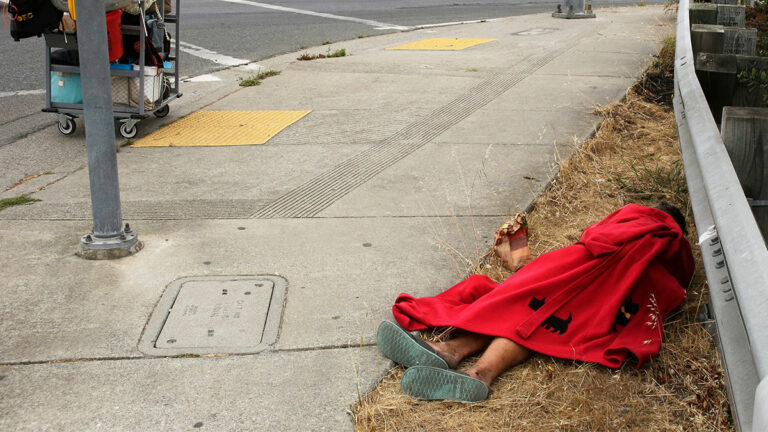
We called up 10 local residents and asked for their pitches for fixing—or at least improving—Santa Cruz County’s problems around homelessness. Here’s what they told us. Their responses have been lightly edited for length and clarity.
Elise Strobel
Trainee and crew leader at the Homeless Garden Project
I’ve watched people transform their lives through programs like the Homeless Garden Project and Housing Matters. One of my coworkers, when I first met her, had lost custody of her kids and didn’t have a car. She walked everywhere. I was able to watch her get her own place and get custody of her own kids. And now, she has her own apartment, her own car. A lot of it is about helping individuals find their place in their community. I don’t think there’s a whole blanket solution. I love the Homeless Garden Project. It’s so magical and has given me a place to relearn job skills.
Andy Mills
Santa Cruz Police chief
The solutions for many of these problems are really at the federal, state and county level. For instance, there needs to be more mental health beds. Drug addiction—there needs to be beds for people who are ready to recover. And you need to offer it in the moment when people want it. That does not exist. We’re trying to do what we can, as a city, to fix a sociological problem. Whatever the City Council asks, we will absolutely do to the best of our ability. I want to make sure we adjust expectations about what this response looks like. We’re going to try to fix this problem through ordinance and issuing citations. But the solution must be much broader than that. Maybe we can lessen the impacts of some of these super camps on the community. But doing enforcement is not going to change homelessness. However, I do believe that people need to be held accountable for their actions and their behaviors.
Robert Ratner
Santa Cruz County Housing for Health director
The ultimate place where we need to see change is where we invest in affordable housing at the federal and state level—more affordable housing with the right kinds of supports for people to stay in their homes. And there are some great examples of that work. It’s trying to figure out how to bring it up to scale and advocate for more resources to be more successful. Local governments—both city and county—have some flexibility in terms of how they use their revenue. So there’s some discretion. The city may be saying, ‘We need more support from the county.’ I come from the framework of ‘We really have to work together and think creatively about how we utilize our resources. I don’t think it’s an either/or. I think the city and county need to work together to address some of the issues.
And we need to close the housing affordability gap—increasing incomes or reducing housing costs. That’s the number-one thing. If we can’t move the needle on that, we’re not going to make much progress. Number two is improving our health care services to help people keep their homes; sometimes health challenges get in the way of us keeping our housing. We also need to take care of those who are exiting homelessness with wraparound services. Lastly, healthy connections are really critical. Homelessness can be extremely isolating, and people can lose a sense of hope and meaning in their lives. The more we can do to reduce the stigma and bring people back into the community, the more we’ll make great progress. We need to do some community education and unpack why people end up on the streets.
Steve Pleich
Shelter coordinator for the Association of Faith Communities, homeless representative on the Santa Cruz Police Chief’s Advisory Committee
I’ve always been an advocate for more shelter. The only way to get people off the street is to provide more opportunity for them to be consistently and supportively sheltered, so they can move into some transitional and supportive housing at some point. But generally speaking as an emergent measure, we need to have more of the transitional managed camps. That’s something that we really could put some focus on and commit to. For Santa Cruz, it’s more been about location than it has about commitment to do those sorts of things. I’ve canvassed a lot of the neighborhoods in the past to see where we might be able to put some safe sleeping spaces or self-managed camps, and the neighborhoods have been consistently resistant. Now with more focus from the City Council and the county seemingly to identify locations, that’s the direction we need to go in the short term. Eventually, you’ll need to have a real commitment from the county—because they’re the real funding source—for permanent supportive housing. Really, that’s the only way that unsheltered, extremely low-income people can ever hope to get any kind of housing. Affordable housing is out of the reach of just about every unsheltered person I know. Some program that really generates transitional and permanent supportive housing is the only option—with navigational help in getting back into employment and services that eventually lead to permanent housing. But I’m much more a shelter person than I am a housing person because I think that’s the more immediate need.
Cecelia Espinola
Housing Matters Board president, retired Santa Cruz County Human Services director
The solution to homelessness is pretty easy. It’s housing! It’s just that the path that the journey or path to get there in this community is pretty complex. It’s not unique to Santa Cruz. This whole state of California has an affordable housing crisis. And I think it’s particularly acute for those who are very, very low-income. We have a desperate need for that kind of housing, particularly here in Santa Cruz. Housing is one of the most significant public health issues facing our community and our state. Prior to my retirement, we had just started implementing some programs to address the issue. We started working with a number of nonprofits in the community, including Homeless Services Center, which is now Housing Matters. The housing-first strategy isn’t just about housing. It’s housing-and—but first, let’s get people off the streets.
We need more than temporary solutions. You can’t just build shelters. We do need more shelters, but ones that also provide a path to housing. A shelter is not permanent housing. I do think right now we do need more safe places to sleep—whatever form that might take. We also need to work collaboratively in the community and not just have these disparate approaches. It’s good that the county is taking a stronger active role in convening and being very intentional and purposeful in their partnerships with the community. We can do this.
Ellen Muraska
Volunteer for Felton Presbyterian’s Ministry to the Poor
We’re a Christian body, and the Christian Bible says to serve. I was really surprised how many people who are homeless are in my age group—I’m in my sixties—and how many of them grew up in the San Lorenzo Valley or have lived here for 10, 15 years. They aren’t young people looking for an adventure. They’re people who’ve been jobbed out, couldn’t work, couldn’t live. It’s really sad. But people do participate in services that are available. People join Downtown Streets Team, which provides a network for people who are homeless to get their paperwork done, to get their tickets cleared, and they work; they do cleanups. Sometimes those same people stop by on Free Lunch Tuesday. Organizations like that help on an individual basis. The more services available the better.
Ashley Bridges
Pajaro Valley Loaves and Fishes executive director
We can look at the problem in different ways—with two being mental illness and substance abuse. Those issues often go hand in hand with homelessness. The majority of people I see coming to Loaves and Fishes are living with mental illness. Addressing those two issues, as well as having a place for people to live—small homes, even encampments—will make a huge difference in the long run. If people have their needs met with mental health and substance abuse, it will be a lot easier for them to reintegrate into society. The cost of living here is another issue. When people are exiting homelessness, they have difficulty finding jobs and housing. We need housing options that are safe and that allow them to get that foundation. Also, people should treat those who are unsheltered with dignity and respect.
Michael Miller
Downtown Streets Team member
I’ve been living at San Lorenzo Park for three months. There are good days, and there are bad days. Sometimes it gets rowdy; there are disputes. But it can be peaceful. The big problem is the camp along Highway 1 at River. Basically, Santa Cruz County leaders need to listen; they need to hear our voices, our concerns. The homeless problem in this area is huge. And they could open up some more shelters, like the Civic Auditorium or the Kaiser Permanente Arena. That would really help. There’s a lot of wasted money that could go to help us.
Erik Lau
Families In Transition fund development manager
We’re all witness to the increased influence of Silicon Valley home purchases and the ever-rising housing costs. And we’re coming precariously close to letting economics destroy the quality of life here. It’s really supply and demand. There’s very little supply of housing that’s affordable to the average family. And as more working families are driven out of the area, more and more residents will lose small businesses and jobs. That leads to unemployment, housing insecurity and, ultimately, homelessness. We thrive when everyone is an interdependent member of the community. The pandemic has put a spotlight on some of the areas where we need to concentrate our efforts. The likeliness of ending homelessness permanently is a stretch. There have been a lot of organizations that have tried to achieve that with different campaigns. What we can strive [for] in the near future is the ‘functional zero,’ which would be figuring out a way to prevent homelessness for future families of Santa Cruz County or breaking the cycle of homelessness. If you experience homelessness as a child, you’re more likely to experience it again later.
We need to continue offering services and supports that lead to housing security for vulnerable residents. We know we need to expand relationships with landlords because of the life-changing chance they can give a family by offering affordable and decent housing. We need to continue to increase resources proportional to the increasing numbers of families experiencing homelessness. We need to do a better job educating the community on the families experiencing instability and expand the supply of housing that’s affordable to low-income renters. Also, we need to explore alternative options, like tiny homes, streamlining permitting to building and building capacity to increase the availability of those affordable units.
Paul Cocking
Owner of Gabriella Cafe
The only option to really solve the problem rests with the state. I just can’t imagine our locally elected officials having the political will to set up a managed campground outside of town at the edge of neighborhoods—and then not allow people to camp in residential and commercial areas. The homeless advocates would say you can’t put these people so far from services, but you could certainly set up shuttles. And it’s inhumane to let the situation continue. The encampment along the highway is a horror story. San Lorenzo Park is right next to a residential area with a lot of seniors, and a lot of them are frightened. It does seem like we’re making a lot of progress on public housing, which is nice to see, but we need a lot more of it.
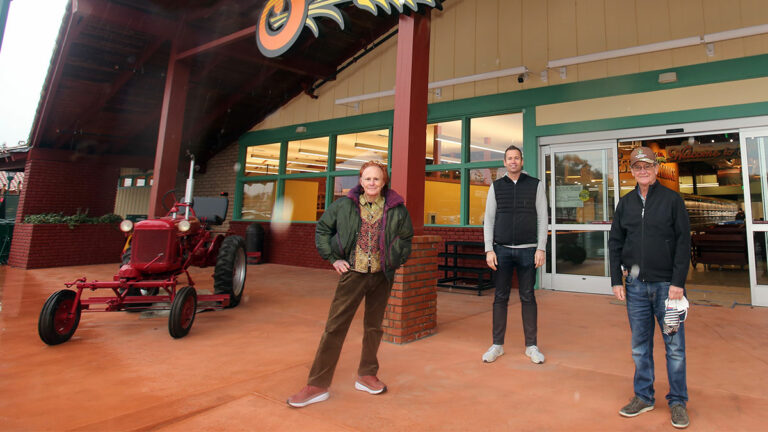
For Clark Codiga and Oaktree Property Management, the opening of Staff of Life Natural Foods in Watsonville’s East Lake Village Shopping Center is a moment 10 years in the making.
Nearly a decade ago, the shopping center on the east side of town was roughly 35% vacant, and more recently it became a “food desert” after its previous grocer, Super Max Discount Foods, closed.
Other businesses came knocking on Codiga’s door, looking to possibly fill the roughly 20,000-square-foot building at 906 East Lake Ave. Maybe most notable, Codiga says, was Planet Fitness, the international gym corporation.
“That’s not what we wanted—it’s not what the community wanted,” says Codiga, a partner at Oaktree and the manager of the East Lake Shopping Center.
Staff of Life officially opened its doors Tuesday, bringing with it a wealth of options previously unavailable to Watsonville shoppers hungry for organic and locally produced food. It also rings in a new era for the shopping center that was once a sleepy spot for the nearby older community. That slow-paced, down-home feel is still present, Codiga says, but the center now also offers a broader appeal, with an eclectic mix of businesses.
On a typical Saturday afternoon, Carmona’s BBQ Deli holds live outdoor music performances at one end of the center. On the other side, Fruition Brewing’s patio brings people together with brews and a rotating list of food trucks. Smack in the middle of those two hubs are longtime community businesses such as Bud’s Barber Shop, Hong Kong Garden, the Villager and Watsonville Taekwondo Academy. Relative newcomers Sushi Qu, Coffeeville and Ferrari Florist have also bolstered the center’s attractions to shoppers near and far, Codiga says.
It’s not uncommon for someone to start their Saturday by grabbing a cup of joe at Coffeeville, before buying their yard supplies at Ace Hardware and grabbing lunch from one of the half-dozen or so restaurants there. The only thing that was missing, Codiga says, was a grocer.
“Now with Staff of Life we have that covered—that’s the home run,” he says. “This is what we wanted to give to the community. This was the vision, and we’re happy it’s coming together.”
Local products, local people
Staff of Life grocery store has for a half-century been a backbone of healthy eating and living in Santa Cruz County, selling organic food and natural products long before those concepts hit the mainstream.
Founders Richard Josephson and Gary Bascou launched the business as a tiny organic bakery in 1969, and today the giant flagship store at 1266 Soquel Ave. is one of the few independently owned natural grocery businesses in the county.
Now, just more than two years after announcing they were opening their second location, the expansion into Watsonville is complete. Bascou says he designed the new store to have an open, welcoming feel, where customers immediately have a view of the produce section when they enter. He also wanted to buck the trend of the industrial-style rows of most grocery stores. He says the vibrant colors were inspired by visits to villages in Mexico.
The building has served as a grocery store for decades, but the gleaming interior has been completely remodeled using almost entirely local businesses, and many of the products in the store will come from local providers. In addition, the store worked with the Agriculture History Project and the Pajaro Valley Historical Association on its agricultural-themed decorations. The owners also employed local artists William de Ess Studios, Mott Jordan, Roy Johnson and Art Thomae to help with the decorative touches.
The concept of using local resources comes part-and-parcel with the business’ core philosophy of green living and supporting one’s community, Bascou says. The store is a charter member of Think Local First Santa Cruz, a confederation of small businesses that promotes local products and services.
“We’re locally owned; local people are our customers,” Bascou says. “We want to give back to the community. It’s important for us to stimulate the support of local small and independent businesses, not giant corporate companies.”
Perhaps most importantly, the store will sell organic food, a concept that can be broadly defined, but at its core means that farmers and ranchers use renewable resources, give animals no antibiotics or growth hormones and don’t use most pesticides and synthetic fertilizers on their plants. This is thought to be beneficial for both the people who consume the products and for the environment.
Eventually, the owners hope to hire a nutritionist to help encourage healthy eating, Bascou says.
“We want to bring good, healthy products to the community,” he adds.
Bascou says the store will be similar in many ways to its Santa Cruz location, with a large selection of beer and wine—much of it local—along with an impressively vast variety of bulk goods and groceries. Customers will find a deli and a seafood and meat counter, a bakery, a smoothie bar and quite possibly the only gelato bar in the county.
Josephson says the store’s vast cheese selection comes in part thanks to scouting trips to Europe.
“It will be a selection you will never have seen before in Watsonville, by far,” he says.
A small plane crashed Sunday afternoon in a field near Pajaro Valley High School, hitting the top of a power pole and coming to rest in a field about 50 yards from the school.
No serious injuries were reported. No buildings or facilities at the school were damaged.
The crash occurred just after 2pm.
According to Cal Fire Capt. Bryan Whitaker, two people aboard—a male pilot in his late 70s and male passenger in his 30s—suffered minor cuts and bruises and declined medical care from paramedics.
Whitaker says the pilot, who left from Watsonville Municipal Airport in a plane rented from the Santa Cruz Flying Club, reported a mechanical issue, after which the plane began puttering, forcing him to bring it down.
The crash sparked a small quarter-acre fire that was quickly doused. About 5,000 people on the northeast side of Watsonville and San Andreas Road lost power briefly from the downed lines.
The National Transportation Safety Board is investigating the crash, and Federal Aviation Administration (FAA) officials were also on site to inspect the destroyed plane, which has since been moved to a hangar at the airport just two and a half miles from the site of the crash.
The airport’s proximity to the school was for years a sticking point that delayed construction of the new athletic field, which was opened earlier this year. The Watsonville Pilots Association warned that planes experiencing trouble could be forced to land in the field, causing a safety issue if students were present.
No students or staff were on campus at the time of the crash. Just 24 hours earlier, however, the PVHS football team had hosted St. Francis High School in front of dozens of friends and family.
Pajaro Valley Unified School District Superintendent Michelle Rodriguez said in an emailed statement that a settlement between the district and WPA that allowed the construction of the field included increased flight pathway safety through the investment of $100,000 to reduce “vertical obstructions.”
“These obstructions are not located within PVUSD property, and the responsibility to remove lie with the city,” the statement read.
Watsonville Municipal Airport Manager Rayvon Williams said the city is in early discussions with the school district to remove some power poles around the flight path of the airport and move those utility lines underground. That reduction of “vertical obstructions” would be in addition to the city’s previous prevention efforts in which it used $60,000 to cut down various trees to meet FAA standards, Williams said.
ARIES (March 21-April 19): Playwright August Strindberg (1849–1912) was a maverick innovator who loved to experiment with plot and language. One of his stories takes place in a dream and the hero is the Christ-like daughter of a Vedic god. He once said that he felt “an immense need to become a savage and create a new world.” Given your current astrological potentials, Aries, I suspect that might be an apt motto for you right now. APRIL FOOL! I half-lied. There’s no need for you to become a savage. In fact, it’s better if you don’t. But the coming weeks will definitely be a good time to start creating a new world.
TAURUS (April 20-May 20): Who says all Tauruses are gentle, risk-avoidant, sensible and reliable? Taurus author Mary MacLane (1861–1929), known as the “Wild Woman of Butte, Montana,” authored shocking, scandalous books. In I Await the Devil’s Coming, she testified, “I am not good. I am not virtuous. I am not generous. I am merely a creature of intense passionate feeling. I feel—everything. It is my genius. It burns me like fire.” Can I convince you, Taurus, to make her your role model for the coming weeks? APRIL FOOL! I don’t think you should be exactly like MacLane. Please leave out the part about “I am not good. I am not virtuous. I am not generous,” as well as the “I await the devil’s coming” part. But yes, do be a creature of intensely passionate feeling. Let your feelings be your genius, burning in you like a fire.
GEMINI (May 21-June 20): Poet Emily Dickinson had a good sense of humor, so she was probably making a wry joke when she wrote, “The lovely flowers embarrass me. They make me regret I am not a bee.” But who knows? Maybe Emily was being a bit sincere, too. In any case, I advise you to make a list of all the things you regret not being—all the qualities and assets you wish you had, but don’t. It’s a favorable time to wallow in remorse. APRIL FOOL! I was totally lying! In fact, I hope you will do the reverse: Engage in an orgy of self-appreciation, celebrating yourself for being exactly who you are.
CANCER (June 21-July 22): Provocation specialist Lydia Lunch is a singer and poet who’s skilled at generating interesting mischief. She testifies, “My daily existence is a battlecade of extreme fluctuations where chaos clobbers apathy, which beats the s— out of depression which follows irritability which slams into anger which eclipses ecstasy which slips through my fingers far too often.” In the coming weeks, Cancerian, I recommend you adopt her melodramatic approach to living the intense life. APRIL FOOL! I lied. Please don’t be like Lydia Lunch in the near future. On the contrary: Cultivate regal elegance, sovereign poise and dynamic equanimity.
LEO (July 23-Aug. 22): In 1692, a Swedish man named Thiess of Kaltenbrun was put on trial for being a werewolf. He claimed to be a noble werewolf, however. He said he regularly went down to Hell to do holy combat against the Devil. I suggest you make him your inspirational role model in the coming weeks. Be as weird as you need to be in order to fight for what’s good and right. APRIL FOOL! I half-lied. What I really meant to say was: Be as weird as you need to be to fight for what’s good and right, but without turning into a werewolf, zombie, vampire or other supernatural monster.
VIRGO (Aug. 23-Sept. 22): “I want to hear raucous music, to brush against bodies, to drink fiery Benedictine,” wrote author Anais Nin. “Beautiful women and handsome men arouse fierce desires in me. I want to dance. I want drugs. I want to know perverse people, to be intimate with them. I want to bite into life.” All that sounds like perfect counsel for you to consider right now, dear Virgo! APRIL FOOL! I lied. Nin’s exuberant testimony might be an interesting perspective to flirt with—if the Covid-19 virus had been completely tamed. But it hasn’t. So I must instead suggest that you find ways to express this lively, unruly energy in safe and sublimated ways.
LIBRA (Sept. 23-Oct. 22): Here are affirmations that will serve you well in the coming days. 1. “I am willing to make mistakes if someone else is willing to learn from them.” 2. “I am grateful that I’m not as judgmental as all the shortsighted, self-righteous people.” 3. “I assume full responsibility for my actions, except those that are someone else’s fault.” 4. “A good scapegoat is as welcome as a solution to the problem.” APRIL FOOL! All the preceding affirmations are total bunk! Don’t you dare use them. Use these instead: 1. “I enjoy taking responsibility for my actions.” 2. “Rather than indulging in the reflex to blame, I turn my attention to fixing the problem.” 3. “No one can make me feel something I don’t want to feel.” 4. “I’m free from believing in the images people have of me.”
SCORPIO (Oct. 23-Nov. 21): According to author Kahlil Gibran, “If we were all to sit in a circle and confess our sins, we would laugh at each other for lack of originality.” But I challenge you Scorpios to refute that theory in the coming days. For the sake of your sanity and health, you need to commit highly original sins—the more, the better. APRIL FOOL! I lied. Save your novel, imaginative sinning for later. The truth is that now is an excellent time to explore the joyous and healthy practice of being extremely virtuous. Imitate author Susan Sontag: “My idolatry: I’ve lusted after goodness. Wanting it here, now, absolutely, increasingly.”
SAGITTARIUS (Nov. 22-Dec. 21): The coming months would be a great time to start your own university and then award yourself a Ph.D. in Drugless Healing or Mathematical Reincarnation or Political Metaphysics—or any other subject you’d like to be considered an expert in. Hey, why not give yourself three Ph.D.s and call yourself a Professor Emeritus? APRIL FOOL! I’m just joking. The coming months will indeed be an extremely favorable time to advance your education, but with real learning, not fake credentials.
CAPRICORN (Dec. 22-Jan. 19): After his Nirvana bandmate Kurt Cobain committed suicide, Capricorn drummer Dave Grohl was depressed for months. To cheer himself up, he wrote and recorded an album’s worth of songs, playing almost all the instruments himself: drums, lead guitar, rhythm guitar, bass and vocals. I think you should try a similar spectacularly heroic solo task in the coming weeks. APRIL FOOL! I lied. Here’s my true and actual advice: Now is a time when you should gather all the support and help and cooperation you can possibly garner for an interesting project.
AQUARIUS (Jan. 20-Feb. 18): Argentine poet Alejandra Pizarnik told her psychoanalyst León Ostrov that if she were going to steal something, it would be “the façade of a certain collapsed house in a little town called Fontenay-aux-Roses [near Paris].” What was so special about this façade? Its windows were made of “magical” lilac-colored glass that was “like a beautiful dream.” In accordance with astrological omens, I invite you, too, to decide what marvel you would steal—and then go steal it! APRIL FOOL! I half-lied. Yes, definitely decide what you would steal—it’s important to give your imagination permission to be outrageous—but don’t actually steal it.
PISCES (Feb. 19-March 20): I’ve never understood the appeal of singer-songwriter Morrissey, especially since he began endorsing bigoted, far-right politicians. However, I want to recommend that you adopt the attitude he once expressed in a letter to a friend. “It was a terrible blow to hear that you actually worked,” he wrote. “It’s so old-fashioned to work. I’d much rather lounge about the house all day looking fascinating.” Be like that in the coming weeks, Pisces! APRIL FOOL! I lied. In fact, you’d be making a silly mistake to lie around the house looking fascinating. It’s a highly favorable time for you to find ways to work harder and smarter.