Catching Up with the ‘7 Up’ Group

It’s one of the most extraordinary uses of the medium since the movies began to talk. In 1963, Michael Apted was a young researcher with the British TV documentary series World In Action, working on an episode called 7 Up, in which some dozen 7-year-old grammar schoolchildren from various backgrounds were interviewed about their lives and dreams. Seven years later, Apted, now a director in his own right, decided to revisit the kids as teenagers to see how their lives were shaping up.

He has filmed them every seven years since, producing a series of ever more galvanizing documentaries about real life as lived by real people. Now, at age 63, the original group of “kids” are back in the ninth installment, 63 Up.

Apted himself is now 78, and while his prolific film directing career includes Coal Miner’s Daughter, Gorillas In the Mist, and Chasing Mavericks (filmed in Santa Cruz), the nine films in what’s now called the “Up Series” are a major part of his legacy. Watching these exuberant kids grow up onscreen, unscripted, as their ideas about life and themselves do or do not pan out over the years has become a unique testament to time, regret, resilience, and the profound courage required to get through everyday life.

And increasingly, as the subjects age, it’s not for the faint-hearted. There’s an elegiac undercurrent in 63 Up. Several of the interviewees are coping with the death of a parent, and trying to reconcile those feeling with how they interact with their own children or grandchildren. Some are facing health issues themselves. One of the original interview subjects has died.

Understandably, at this point in their lives, many of their remarks are more reflective. “I want my life to have meant something,” muses Peter Davies. Lambasted in film reviews as a radical troublemaker for anti-Thatcher remarks at age 21, he pulled out of the series from age 28 until 56, but returned to promote his folk trio and display a newfound mellowness.

Gregarious East-Ender Tony Walker is philosophical about having to give up his childhood dream of becoming a jockey to drive a cab for a living. But he gets a kick out of the modicum of fame the series has brought him—including a tiny movie role. Andrew Brackfield opines that the class system is as rigid as ever in Britain, but now it’s based on “fame and achievement,” not wealth and blood.

Jackie Bassett doubles down on issues she raised with Apted in the last installment, about the way women are represented in the series. The girls, she says, were only ever asked what she calls “domestic questions” about boys and marriage, while the boys were asked their opinions on politics and careers. Apted has since expressed regret that more girls were not included in the film at the outset (he didn’t direct the first movie, but he did select the children to be interviewed), saying that, back then, no one ever thought about women having careers. (Tellingly, however, it’s only the male subjects he quizzes about Brexit this time around.)

Many interviewees find ways to repay their good fortune: teachers, at home and abroad; the barrister who heads up the charity for Bulgaria; the beloved children’s librarian in an underserved and diverse neighborhood who sees her job threatened by budget cuts; the formerly homeless wanderer who’s clawed his way onto a town council as a Liberal Democrat. With so many backstories to fill in, the movie runs to nearly three hours, yet it’s an invaluable portrait of humanity in transition.


63 UP

*** (out of four)

Directed by Michael Apted. A BritBox release. Not rated. 150 minutes.  

Retiree struck in traffic collision, as such fatalities climb nationwide

By Grace Hase

It was nine days ’til Christmas when Timothy Starkey traveled to his last job. 

The 66-year-old Santa Cruz resident had gone to a friend’s house in Los Gatos to hang lights on her Blossom Hill Road home. Friends say it was the kind of deed that he was known for. A retiree from the Silicon Valley bubble, Starkey was living out his second act as a handyman. 

“He was always wanting to help and do something for others,” Carrie Coffee Ziemer says of her best friend’s father. “No ask was too small.” 

But Starkey never got the chance to adorn the Los Gatos home with Christmas lights that day. While he was retrieving something from his car trunk, an SUV traveling down the 900 block of Blossom Hill Road struck him from behind. Authorities pronounced him dead at the scene. The driver was later identified as San Jose City Council candidate Jenny Higgins Bradanini. 

“I am heartbroken and deeply saddened by this tragic death,” Higgins Bradanini wrote in a Dec. 19 email about the fatal collision. “My heart goes out to the man’s family and loved ones as they are suffering this tragic loss. Words cannot adequately express my sorrow, and I ask for your support in sending your thoughts and condolences to the devastated family.” 

In the weeks since the crash, Starkey’s family and friends have grappled with the loss of a man they described as generous, humble and larger than life. Coffee Ziemer launched a GoFundMe campaign four days after his death to help cover expenses as the family learns how to live without its beloved patriarch. 

Though the Los Gatos-Monte Sereno Police Department has released few details about the crash, Starkey’s death comes as another reminder that city streets are becoming increasingly fatal for pedestrians. 

Since 2009, pedestrian fatalities have skyrocketed by 46%, according to the Insurance Institute for Highway Safety. Dozens of posts on the GoFundMe page paint Starkey as a loving father and devoted family man. He had two children—Bridget Starkey, 36, and Joe Starkey, 32—and was married to his wife, Kathleen, for 37 years. 

They describe him as the type of dad who befriended his children’s friends, Coffee Ziemer explains. “Tim’s the kind of dad that wanted Bridget and all her friends to come to Santa Cruz,” she recalls. “His favorite thing in the world was just to have people in his home. … It was kind of the Starkey way.” 

Four days after Starkey’s death, Coffee Ziemer started the GoFundMe campaign with the goal of raising $10,000 to “help ease the stress of the financial burden that lies ahead.” As of press time, the effort has raised $24,280 from 162 donors—friends and strangers alike. The campaign goal was upped to $50,000 Tuesday morning.

“This was such a tragedy, and it really hit the family hard,” Coffee Ziemer says. “There’s no real rule book for what to do next. As the family tries to put things back together, there’s a lot of costs.” 

Those costs include striking Starkey’s name from the legal title to his car and making changes to accounts, like the cell phone bill. Funds will also go toward helping the family cover the cost of a rental car while they work to replace the car that was damaged in the crash, as well as insurance and legal fees, Starkey’s memorial and travel for family members. 

“Our family is beyond devastated by the gravity of this tremendous loss of our beloved Tim,” his survivors wrote in a statement to this news organization. “Our entire community of family and friends has been affected by the gaping hole this leaves in our lives. We appreciate the respect of our privacy during this unimaginably difficult time as we grieve the loss of such a wonderful man.”

Tim Lundell, one of the many friends who donated to the online fundraiser, says his late wife worked with Kathleen Starkey more than three decades ago and that he worked as Starkey’s attorney around the time he first met his future wife. He says he fondly remembers his friend’s laugh and they way he liked to play practical jokes on people. The last time Lundell recalls seeing him was sometime last fall at a celebration of life for Lundell’s late wife.

“We were talking about getting together after New Year’s,” Lundell reflects. “It hit him with a big impact when my wife died. He and Kathleen became aware of the value of every day they had together. [He] said he would be particularly sweet, thoughtful and tender to her.”

Bonny Doon Vineyard’s Savory Vin Gris De Cigare

In the Culinary Institute of America hangs a bronze sculpture of Randall Grahm. The Vintners Hall of Fame in the CIA, located in Napa Valley, recognizes Grahm and several others for their accomplishments in making California one of the most legendary places in the world for fine wine. 

As I strolled through last year, I was thrilled to see Grahm honored in this way. The longtime innovative winemaker and owner of Bonny Doon Vineyard, Grahm deserves every accolade bestowed upon him.

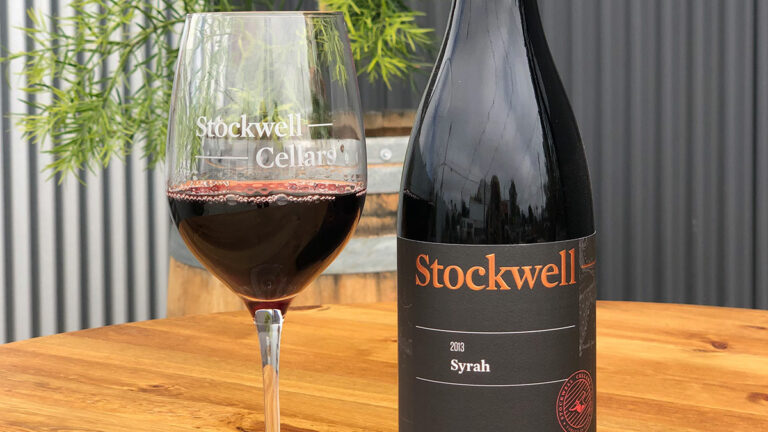
Bonny Doon’s 2018 Vin Gris De Cigare ($18) is an intricate blend of Grenache, Grenache Blanc, Carignane, Cinsaut, Mourvedre, Picpoul, and Vermentino—a touch of something for everybody, one might say!

“Vin Gris De Cigare is the pink analogue of Le Cigare Volant, our flagship wine named in honor of the cigar-shaped alien craft banned from landing in the vineyards of Châteauneuf-du-Pape by decree of the village council in 1954,” says Grahm, tongue in cheek. He calls it “Pink Wine of the Earth.” With its light-bodied structure, soft texture and mélange of flavors, it’s as voluptuous as a French kiss.

I’m sad to say that Bonny Doon closed its tasting room in Davenport on Dec. 23. But Grahm has quite a spread in San Juan Bautista called Popelouchum, and he hopes to open it up for wine tasting in the near future. Meantime, his wines can be found all over in supermarkets and liquor stores. 

bonnydoonvineyard.com.

Carmel Honey Company

Jake Reisdorf opened his second Carmel Honey Company store on the famous Cannery Row in Monterey on Dec. 3. His interest in honey and beekeeping bloomed when he was just 11. Now 17 and a junior at Carmel High School, he is as busy as a bee making honey and taking care of his hives. Jake’s grandmother Judy Reisdorf, who lives in Aptos, told me about Jake several years ago, but it was hard to imagine then that Jake’s flair for beekeeping and honey-making would become such a successful business.

Carmel Honey Company, 700 Cannery Row, Monterey. 687-8511, carmelhoneycompany.com. 

Opinion: Jan. 8, 2020

EDITOR’S NOTE

It used to be that when we’d all shuffle back into the office after the holidays—probably with the remnants of some super-annoying cold that’s been holding on for two weeks, or the faint, sniffle-y rumblings of a new one—there wasn’t a whole lot going on in January. Man, that has changed.

For example, this week is the 25th anniversary of what may very well be Santa Cruz County’s most venerable non-Shakespeare theater tradition: 8 Tens @ 8. In this week’s cover story, Wallace Baine relates how the 10-minute play festival became a tradition here, and inspired others around the country.

Also, my jaw is sore from dropping every time I checked the Santa Cruz Gives leaderboard over the holidays. We’ll have a story on the complete results next week, but let me just say what readers contributed to our local nonprofits through Gives this year absolutely crushed any and all of our expectations. It even surpassed our $400,000 “OMG” goal, which was the “crazy dream” level of what we hoped to raise for this year’s participants. And then, at the last minute, the Applewood Fund at Community Foundation Santa Cruz County gave an unexpected $10,000. We are looking at something like 75% growth over last year, which is just … well, I can’t even think of a way to describe it. I’m so proud of our whole community for this phenomenal showing of heart and values—and of our nonprofits for taking this fundraising effort and absolutely running away with it.

Lastly, it’s Best of Santa Cruz time! Time to vote is getting short, so hurry and go to goodtimes.sc to find the ballot and make your favorite local people, places and things winners this year!

STEVE PALOPOLI | EDITOR-IN-CHIEF


LETTERS TO THE EDITOR

Read the latest letters to the editor here.

Zero Sum Game

Steve Homan’s “No to Fire Tax Increase” (GT, 12/25) was excellent. Many rural property owners question why the county is asking for an additional tax, on top of what is already assessed, for vague uses that may not necessarily improve response times or quality of service. 

County officials already admit there are errors in proposed assessments, and have only recently added information to the County Fire Department website to justify calculation of the assessment amounts. At the close of the January 14, 2020, public hearing before the Board of Supervisors, local election staff will be given a mere three hours to open thousands of ballots, tabulate responses, and report back to the board by 2pm. 

Since votes of large landowners will be given more weight, this portion of the ballot tabulation will be handed to the consultants the county hired to make sure the measure gets approved with a 51% rate rather than the standard 2/3 majority. According to Public Records Act request materials, the County has paid them $158,408 so far to do so, and took the money from the County Fire Department account.  Asking the consultants to handle the weighted ballot tabulation likely violates [California] Government Code 53753(e)(1) and (2).

The Board of Supervisors should instead vote to allocate just 10% annually of the Prop. 172 public safety money from a permanent half-cent statewide sales tax that is supposed to be used for funding fire and law enforcement. Currently, fire protection gets zero dollars. Last year, the County received $18 million in Prop. 172 revenue, but zero dollars funded County Fire Department. This is unacceptable.

Just say no to yet another new tax on rural property and demand the supervisors allocate at least 10% of the Prop. 172 millions that will forever roll in to county coffers for public safety funding. Those who have already voted and want to change your vote may do so by calling 454-3416 and ask for a replacement ballot.

Becky Steinbruner | Aptos

Renaissance Man

The Chip you described in the “Year in Review” (GT, 12/18) is not the Chip I know.  He is a Renaissance man who, as Executive Director of the Downtown Association, can be credited for making Downtown Santa Cruz the most lively, interesting, diverse and exciting place to be in Santa Cruz County.  What were you thinking when you described him as the weird guy who “aimlessly wandered the downtown streets every day?” Boulder is lucky to have him as its Downtown Executive Director.

Alan Savat | Santa Cruz

We heard from several readers about this, Alan. While he was here, one of the things that made my friendship with Chip fun was our constant teasing and attempts to elevate sarcasm to an art form. However, many readers felt that was way too in-jokey and came off a bit mean without any context, and that’s a fair criticism. Rest assured that GT has always loved Chip, and so do I. — Editor


PHOTO CONTEST WINNER

At least one local photographer has been doing research in the field. Photograph by Ross Levoy.

Submit to ph****@*******es.sc. Include information (location, etc.) and your name. Photos may be cropped. Preferably, photos should be 4 inches by 4 inches and minimum 250dpi.


GOOD IDEA

THRIFT GIFTS

Over the past eight years, Caroline’s Non-Profit Thrift Store has donated $1.29 million to Santa Cruz nonprofits. This year, Caroline’s CEO Christy Licker will be giving a minimum of $500,000, her biggest total yet, to 20 groups working with special-needs children and their families. The gifting ceremony will be Sunday, Jan. 19. In an email to GT, Licker’s husband Bill says the success wouldn’t be possible without the support of those who donate used goods, as well as the store’s 80 volunteers.


GOOD WORK

SAFE PLAYS

It’s a moment years in the making. On Saturday, Jan. 18, at 11am, Santa Cruz County Parks will celebrate the grand opening of LEO’s Haven and Chanticleer Park—which includes the county’s first all-inclusive playground—after the largest community park fundraising effort in county history. The celebration’s speakers include Patricia Potts, whose children were the inspiration for LEO’s Haven, and accessibility advocate Haben Girma, the first deafblind person to graduate from Harvard Law School.


QUOTE OF THE WEEK

“Time flies like an arrow; fruit flies like a banana.”

-Anthony G. Oettinger

4 Things To Do This Week: Jan. 8-14

A weekly guide to what’s happening

Green Fix 1/10

46th Annual Fungus Fair 

Santa Cruz might just be the fungi-est place on the Central Coast, and some wait all year for this shroomy event. The annual Santa Cruz Fungus Fair boasts speakers and specialists, cooking workshops and of course, hundreds of prime fungus specimens. Don’t go eating any old side-of-the-road mushrooms—the fair’s taxonomy panel will help you classify different types of fungi and pick the prime specimens. This year’s theme is “mushrooms and medicine,” and the event list includes lectures about psilocybin mushrooms, the medicinal properties of ancient and exotic fungi, and how hallucinogens can make the world a better place.

INFO: 2-9pm on Friday, Jan. 10; 10am-5pm on Sunday, Jan. 12. Louden Nelson Community Center, 301 Center St., Santa Cruz. ffsc.us. $10 general/$5 students or seniors.

Art Seen 1/11

Pine-Needle Basket-Making

Join docent Cheryl VanDeVeer in learning how to make a woven basket from local Ponderosa pine needles. No experience is necessary, though expert pine-needle basket weavers are welcome to join. Children 10 and older may attend if accompanied by an adult. Get there early; the class capacity is 20 and may fill up. Meet at the visitor center. 

INFO: 10am-noon. Saturday, Jan. 11. Henry Cowell Redwoods State Park, 101 N Big Trees Park Rd., Felton. 335-7077. Free/vehicle day-use fee $10. 

Sunday 1/12 

15th Annual Harp Festival 

Known as the world’s most ancient stringed instrument, the harp has inspired audiences all over the globe for thousands of years. Santa Cruz Harp Festival celebrates the many forms of the harp and its musical traditions, with a matinee concert featuring soloists Jennifer Cass and a Harp Quartet of her pedal harp students. There will also be an instrument “petting zoo” at intermission for the harp-curious.

INFO: 2pm. St. Philips Episcopal Church, 5271 Scotts Valley Drive, Scotts Valley.

Saturday 1/11 

Westside-Minster Dog Show 

Calling all pet parents! Think your pup has what it takes to take home the gold? Humble Sea’s annual “Westside Minster Dog Show” brings Westminster across the country and lets all of Santa Cruz’s paw-fect pets strut their stuff on the runway. There will be prizes, and please make sure all dogs are on a leash and are friendly to other dogs and people. 

INFO: Sign-up at 5pm, show at 5:30pm. Humble Sea Brewery, 820 Swift St., Santa Cruz. Free.

How 8 Tens @ 8 Became a Theater Phenomenon

In the winter of 2015, I sat in a darkened theater in Santa Cruz between my wife and daughter and had what was, in retrospect, one of the peak experiences of my life. I had written a short play about the death of Oscar Wilde (it was actually a comedy), and now I was watching actors with appropriate sets and costumes in front of a paying audience bring to life the product of my imagination.

I am not a playwright. This was the first and only time I had done something like that. But it was, I don’t mind saying, a heady and intoxicating moment.

People laughed, sending a jolt of dopamine through my system. In my seat, I was keeping my cool. But inside, I felt like Gene Wilder in Young Frankenstein—hair flying, screaming into the thunderstorm, “Give my creation life!”

This month, local actor and writer Gail Borkowski will be slipping into the same shoes I tried on five years ago, at the same event, 8 Tens @ 8. The acclaimed 10-minute play festival produced by Santa Cruz Actors’ Theatre is now celebrating its 25th year as it opens a five-week run Jan. 10 at Center Stage theater.

A week before opening night, Borkowski, a first-time playwright, is breathless in anticipation.

“I’m trying hard not to think about it too much,” she says. “It’s going to be so exciting.” Her play, titled Waking Up, is about a married couple who go to bed as white people and wake up black. Their maid has the same experience, only in reverse.

She wrote the play in an afternoon a couple of years ago after overhearing someone commenting about a “white man in a black man’s body.” The play asks its actors—and, by extension, audiences—to engage with the idea of skin color beyond the obvious gags.

“There’s some humor in it, certainly,” said Borkowski, who herself is African-American. “But the challenge for the actor is, really, can you put yourself in someone else’s skin, to take what you think you know about that, and what you feel, and really be present in it, be awed by it, even be afraid of it?”

That’s a lot to ask for in just 10 minutes, but that’s exactly the point of 8 Tens, and the other short-play festivals that have sprouted up around the world. In fact, we are living in the golden age of the 10-minute play, with festivals taking place across the country and in far-flung sites like Australia, South Korea and Great Britain.

But at 25, Santa Cruz’s festival may rank as the grandmother of them all. It wasn’t the first of its kind; founder and artistic director Wilma Marcus Chandler got the idea back in the mid-1990s from a similar festival in Louisville, Kentucky, which is now defunct. So, it appears, 8 Tens is the longest-running 10-minute play festival in America.

Personnel-wise, the 25th anniversary season could rival a production of Les Miserables. Counting the actors, playwrights, directors and crew, there are about 85 people involved in staging the festival. At the top of the pyramid is artistic director Chandler and the show’s longtime producer Bonnie Ronzio, who is in charge of making sure that eight separate plays—with eight separate sets and casts—coheres into something other than chaos. (The changing of the sets between each 10-minute play is part of the show. The switchover takes places in full lighting for the audience’s benefit and is crisply choreographed to last no more than one minute.)

Chandler was already a longtime theater faculty member at Cabrillo College when she first flashed on the 10-minute play format as an excellent exercise for the students in her stage-directing class, after which she founded the festival. Ronzio was the stage manager at the very first 8 Tens, before anyone had established a routine for the logistics of presenting such a show. She kept a steady hand on the festival even when Chandler stepped away as artistic director for a few years (Novelist Clifford Henderson and playwright Brian Spencer have also both served as the festival’s artistic director).

After 25 years, says Ronzio, “we have perfected the wheel. Everything falls together. I know exactly what my budget is going to be every year. I know where I can rob Peter to pay Paul. And we are so blessed to pay everyone who works on the show.”

As practiced by 8 Tens and its many imitators, the 10-minute play marks a radical democratization of live theater. Getting a full-length play produced by an established theater company, especially for a first-time or unknown playwright, is a heavy lift. For most, it’s little more than an unattainable dream. Getting a job as a director in such a production, or even to get cast as an actor, is a long shot, too. Festivals like 8 Tens give many aspiring theater professionals opportunities they simply wouldn’t have otherwise.

The festival’s name is a bit misleading. In fact, 8 Tens is actually offering up 16 distinct 10-minute plays in two separate programs, giving audiences a chance to double-dip over the course of its five-weekend run. In all, 8 Tens has presented roughly 250 short plays or staged readings to Santa Cruz audiences, offerings a rare opportunity every year for playwrights, directors and actors.

A GOOD 10 MINUTES

My experience as a playwright was a one-off. I had a great time, and then I moved on. But getting produced at 8 Tens can also serve as a springboard to bigger things. For example, Mike McGeever was an accountant from Chicago with a master’s degree in computer science and exactly zero experience in theater when he submitted his 10-minute play Frameworks to Santa Cruz. His positive experiences at 8 Tens—he flew in from Chicago to see his play and work with director Bill Peters—inspired him to expand the play to full length, and to write a second full-length play that next fall will be produced by Freshwater Theater in Minneapolis.

McGeever’s experience as a playwright in Santa Cruz opened his eyes to a new vocation. “My experience with Bill and Wilma really did help give me the confidence to push forward and keep writing,” he says.

8 Tens @ 8 staff directors

There are now playwrights across the country who regularly submit to 10-minute play festivals, and many consider Santa Cruz one of the plums on the circuit. Mary Caroline Rogers of Tucson, Arizona has had four plays produced at 8 Tens, dating back to 2011. Her play The Memory of Us is part of this year’s festival.

“I have a lot of respect for Wilma,” says Rogers of the festival’s artistic director. “She’s not going to put anything on stage that is silly or meaningless. The material I’ve seen in Santa Cruz is always thought-provoking work, topical, life-affirming. You’re not just sitting there. You get lost in the material. It’s moving.”

Seth Freeman is a veteran writer and producer whose career in Hollywood goes back 40 years. Among his prominent television credits is producer and lead writer for the 1970s newspaper drama Lou Grant. Freeman was a late convert to the 10-minute format.

“It’s a very busy universe,” he says, “which came as a complete shock to me when I first heard about it maybe 10 years ago. Frankly, my first thought was, ‘Really? What a bad idea. Who wants to see that?’”

But Freeman moved quickly from skeptic to evangelist. Over the last decade, he has written scores of 10-minute plays, about 160 of which have been produced by festivals around the world. Freeman has two plays in this year’s 8 Tens.

“Now that I’ve gotten into it and figured it out,” he says, “what I like about [this format] is that my 10-minute plays are plays that should be 10 minutes long—not 35 minutes, not two hours.”

Freeman usually makes the trip up from Los Angeles every time one of his plays is staged in Santa Cruz. “I really respect what they do at Actors’ Theatre,” he says. “They have good people. They put a lot into it. They’re very professional. And that’s not always the case [with other 10-minute festivals].”

Still, Freeman can’t get into 8 Tens on the strength of his name and credits. The 8 Tens season begins with the judging of the more than 200 submissions by a panel of five writers. The plays are all judged blindly; i.e., without the author’s name attached.

Ronzio and Chandler give simple instructions to the judges: Choose the best plays.

“We tell them not to reject something just because you don’t think we can build it,” says Ronzio.

“If it’s on a boat or an airplane,” says Chandler, “don’t worry about it. We can make that happen.”

The judges don’t factor in balance between dramas and comedies, or how shows fit together. “It’s a literary contest,” says Chandler. “If the best plays are 16 Greek tragedies, well, so be it.”

Nor do they worry about plays that might offend audiences. Explicit language, political material, sexuality—it’s all fair game. “We’re not candy cane people,” says Ronzio.

Chandler said that the festival has received scripts that she classifies as “porn.” “We rejected them only because the writing was so poor,” she says. “It’s really all about the writing. I don’t give a darn if the audience is upset. I want them to see that this is well-written and well-directed.”

BACKSTAGE SECRETS

Once the 16 plays are chosen, Chandler begins the delicate dance of matching each play to a director. In many communities, finding 16 willing and qualified people to direct a play is a tough task. Not in Santa Cruz. “They’re banging the doors down,” says Chandler.

The decision to do two separate programs of eight plays each grew out of the tradition of doing a “Best of the Rest” evening of staged readings, featuring the best runner-up scripts. Soon, Ronzio ventured out to the next logical step.

“I decided, why not just do 16?” she says. “Everybody thought I was bonkers. But once I figured out the schedule, I knew we could do it. I sold it to the board and they went for it. Financially, it kicked us into a whole new bracket.”

8 Tens @ 8

The make-up of the programs and how the plays fit together are determined by just a couple of simple rules. “I always want to start each program with the most complicated play, set-wise,” says Chandler. “And I always want to end the evening with something uplifting or funny. Those are really the only rules. In between, I try to balance who’s in which play, figure out what the set shift is going to be, and make sure any actors doing two roles will be in plays before and after intermission.”

Auditions for the roles begin in September, and the machinery for another 8 Tens again grinds into gear. “Rehearsals start at the end of September,” says Chandler, “and these actors are with it until February. I’m just so grateful to the talent base here and the willingness and loyalty they show, working in garages and living rooms, wherever they can find a space.”

MarNae Taylor teaches theater at Kirby School in Santa Cruz, and she has also been an 8 Tens true believer for more than a decade. She served on the Actors’ Theatre board for eight years and has been an actor or director (or more commonly both) at the festival. This year, she is acting in two plays and directing another.

She says that the festival creates a unique kind of backstage vibe, a mix of newbies and veterans, all in different plays but committed to the same show. “People hang out quite a while with each other and it makes for a different kind of camaraderie,” she says. “You get to know a lot more people in different ways in a short period of time.”

“We have one actor who has three lines.” says Chandler. “But he’s there every night. He’s thrilled to be there, and he’s a wonderful actor. His heart and soul are completely in it.”

As a director, Taylor enjoys working with the playwrights in a collaboration. She has, in fact, become close friends with Arizona playwright Mary Caroline Rogers through their work together at 8 Tens. “And there are a lot of other directors around. I learn something from each and every one of them.”

Chad Davies was another long-standing member of the 8 Tens family of actors and directors until 2017, when he moved to Tucson, a city well more than 10 times the size of Santa Cruz. “When we made the decision to move to Tucson, I went to see what kind of theater was here,” says Davies by phone from his Arizona home. “And there was nobody doing 10-minute plays. That’s when the light bulb went off.”

The result is yet another festival, Eight 10s in Tucson, which will present its second annual festival in April. “It’s going much better now,” says Davies. “I’m going on an accelerated curve, and it’s due in no small part to all the advice and the heads-up and the little tricks and tips that I got from Wilma and Bonnie.”

It makes sense that the 10-minute play would find fertile cultural ground now rather than in, say, the golden age of Arthur Miller and Eugene O’Neill. The YouTube-ification  of popular culture has destroyed the time structures of drama and comedy imposed by television, allowing generations to grow accustomed to smaller and smaller fragments of entertainment.

“The idea that short blasts of theater would appeal to younger people is fine by me,” says Davies. “Because it gets their butts in the seats of a live performance. That’s progress. And once they’re there, there’s no screens, no fast-forward, no pause button.”

Screenwriter Seth Freeman says that the digital age makes the 10-minute festival possible. “That’s how a playwright in Southern California or Wales or wherever can see opportunities around the world and send their stuff off instantly, and at no cost.”

But the format still allows for the magic of live performance. “Once you’re in the theater,” says Freeman, “you are engaged in an ancient form of entertainment that goes back to when we were living in tribes around the campfire.”

8 Tens @ 8

Presented by Actors’ Theatre, 8 Tens @ 8 runs Jan. 10-Feb. 8, with two programs of eight 10-minute plays. $32 general; $29 senior/student. Center Stage Theater, 1001 Center St., Santa Cruz. For a schedule of programs, go to sccat.org.

As Church’s Downtown Brewpub Fails, a Fight Over Its Old Home

In the window of the old Logos bookstore downtown are signs promising that Greater Purpose Brewing Company will be “coming 2019.”

But with the year having come and gone, that promise has faded. And the site of the beloved former Pacific Avenue shop sits empty, despite a year and a half’s worth of anticipation for a new brew pub, which would have hosted Sunday service for its partner organization, the Greater Purpose Community Church. Bar proceeds would have gone to nonprofits like Planned Parenthood.

In late 2017, the church sold its previous location in the bullseye center of Westside Santa Cruz’s “circles” neighborhood for $3.3 million, and that property has since been enmeshed in controversy, with neighbors fighting plans to redevelop the space for housing and asking questions about the old church building’s historical significance.

Now, Greater Purpose is looking for a home once again. That’s after unexpectedly high remodeling costs—plumbing issues among them—outpaced the budget by about $800,000, says pastor Christopher VanHall.

VanHall says he is hoping to find someone to sublet the space at 1117 Pacific Avenue. Former Logos owner John Livingston still owns the building. “We’re not back at square one, but definitely at square two or three,” VanHall says. 

VanHall says there are a few possibilities for a new place of worship, none of which he’s at liberty to discuss. The church is still hoping to run a brewery that would help fund charitable endeavors.

VanHall describes Greater Purpose Community Church as open and affirming of the LGBTQ community—with an emphasis on racial and social justice. Even nonbelievers are encouraged to come. 

“Half of our church identifies as atheist,” says VanHall, who took over the congregation in 2014.

Before VanHall joined, the church was known as the Disciples of Christ, which allows its member churches to form their own cultures.

But when VanHall took over, his new approach rankled many of the more traditional congregants, says former member April Knobloch, who feels that the time and place for such politicking is not in church. The move caused a schism in the congregation, with many members moving to other branches of the Gospel Community Church, she explains.

VanHall, who has run Sunday services in the Food Lounge at 1001 Center Street since the 2017 sale, says a church’s heart does not lie within its structure. 

“Love, justice and equality are where the church should focus their attentions,” he says.

CIRCLING BACK

Stark gray and steepled, the Garfield Park Christian Church at 111 Errett Circle is surrounded on three sides by a cracked parking lot and fronted by a courtyard covered almost entirely with dead grass.

Unremarkable as religious edifices go, the building gives off an aura of strained effort, as if trying to keep age and blight at bay. The nearby city blocks stretch out from the property in concentric circles, a dizzying effect for anyone who’s ever gotten lost in the neighborhood.

The old church’s new owners—a group calling itself the Circle of Friends—have plans to build their homes on the 1.7-acre property, with a vision for a co-housing development where everything is shared, from tools to childcare to cooking.  

The group includes two businesspeople, a teacher, a contractor, an outdoor guide and a retired firefighter. “We are a group of Santa Cruz locals with a dream of living within a multigenerational cohousing community,” says member Caitlin Rose. “We want to live in our community, close to our friends and family, as well as share meals, gardens, childcare and elder care.”

The Friends have submitted two plans to the city, one featuring 12 5,000 square-foot lots, and another with 10 lots. All include accessory dwelling units, meaning the lot potentially could hold up to 24 new residences.

Both plans feature solar power, a community kitchen, a playing field and a shared garden. Some of the homes would be affordable. The field and garden would be open to the public.

The group is waiting for the city to approve one of the plans.

Group members like Joseph Combs, a small business owner, say they couldn’t afford to purchase their own homes in the county. “I’d rather start with dirt,” says Combs, who’s rehabbed homes to earn extra money. “It truly is a way to be able to afford a home here. This is a big step for us all. We have a lot on the line.”

Realtor Mark Thomas says that the proposal lets the owners design their own homes, thus helping the neighborhood retain its eclectic feel. 

The alternative, he says, could be ownership by a large development company looking to turn a profit.

STORY ARCHIVE

The origins of the circle neighborhood date back to 1889, when the Rev. David Wells took a 10-acre parcel and created a neighborhood of circles centered around a place of worship. Lot prices ranged from $105 to $135, according to information on file at Santa Cruz Public Libraries.

Those properties were used by people attending an annual two-week religious convention that featured camping, barbecues, pop-up restaurants and biblical bacchanalia.

For about four years, the property served as the winter home for the Norris & Rowe Circus, elephants and all.

The place was unofficially named Garfield Park in honor of the recently assassinated U.S. president, a name that has stuck in various iterations through the years.

The original church featured a 100-foot-tall bell tower and a hall that fit 2,000 people. 

In 1907, some 84 people attended the first sermon when the Church of Christ – Garfield Park was opened.

The church burned down in 1935, only to become a playground five years later. A new church opened in 1959 in the same building that stands today.

The church and its adjacent community center have for decades served as a home for numerous groups, including the Coryell Autism Center, West Performing Arts and the Cabrillo Choir.

People have come to take classes ranging from fencing to jazzercise. In the past, the gymnasium has provided a place for a food pantry and a meeting place for Alcoholics Anonymous. 

Resident Jennifer Smith, who has taught Japanese sword and aikido classes at the church, is part of a group hoping to protect the building, keep the property as it is, and increase its use as a community center.

“We want this to be a neighborhood hub, really part of the fabric of the community of Santa Cruz,” she says. “Deep generations of people have used this, and this is a time when we really need something like this. Our vision is to create a really positive future.”

For much of last year, neighbors pressured the city of Santa Cruz to protect the old church space. The Santa Cruz City Council in December narrowly approved a motion to send the issue to the Historic Preservation Commission, which will vote Jan. 15 on whether the property does in fact hold historic value. If it does, the issue will go for a final vote to the City Council.

There’s one potential obstacle standing in the way of historic preservation: numerous surveys have shown that the property does not meet requirements to be placed on the historical register. This includes a May 2019 review by the California Department of Parks and Recreation, which states repeatedly that the site and building hold no historical significance.

It’s not listed in the National Register of Historic Places or the California Register of Historical Resources.

In any case, a distinction from the history commission would make the property much more difficult and expensive for Circle of Friends—or any other group—to develop. 

Estimates for fixing up the existing building might not come cheap, either.

Richard Walton, ‪who worked as a treasurer under VanHall, says salvaging the existing buildings would be no easy feat, as they have a laundry list of deferred maintenance, including aging heating ducts, a troubled water and sewage system and a poor foundation. 

These repairs have been estimated at $350,000. “We were facing negative income every month,” he says. “And every time we tried to do something to generate income, we ran into obstacles with the city.”

On top of that, Rose notes that no potential buyers, like the city of Santa Cruz or neighborhood groups, have come forward.

“If we are put in a situation where we have to sell the property,” she says, “it is extremely likely that it will be sold to a big developer who has the money, the lawyers, and the time to eventually push through a development.”

Preview: Diet Guru Michael Greger Tells Santa Cruz “How Not to Die”

“Let’s face it, people are afraid of vegans,” Beth Love says with a smile.

Love is a cookbook author and proprietor of two sustainability organizations, Tastes Like Love and Eat for the Earth. On this sunny afternoon in her garden on the Westside, she’s prepared for us some delicious salad, along with homemade sauerkraut and a sampling of her nut-based cheeses.

The way Love sees it, the backlash against plant-based eating has gotten out of hand. “Government and industry,” she half-jokingly opines, “have conspired to make people think vegans are terrorists.”

As a committee member for Santa Cruz VegFest, Love is helping to bring nutritionist Dr. Michael Greger to the Rio Theatre on Tuesday, Jan. 14, for a talk on veganism and healthy living. As it happens, Greger, 47, actually isn’t crazy about the terms “vegan” and “vegetarian.” In med school, he knew vegans who subsisted on French fries and beer.

Founder of NutritionFacts.org and author of the bestselling How Not To Die, Greger has just released his latest book, called How Not To Diet. A plant-based diet, he writes, is “an eating pattern that minimizes the intake of meat, eggs, dairy, and processed junk and maximizes consumption of whole plant foods, such as fruits, vegetables, legumes (beans, split peas, chickpeas, and lentils), whole grains, nuts and seeds, mushrooms, and herbs and spices.”

He classifies foods according to an easy-to-follow “traffic light” system: green (eat to your heart’s content), yellow (very moderate consumption), and red (really think before putting it in your mouth). Some consumers may need red-light foods to eat their greens, he explains—offering the example of bacon bits on a salad—a choice far better than a fast-food burger and fries.

“The last thing we need is more dietary dogma,” he tells GT.

Greger notes that a 2019 Bill and Melinda Gates Foundation-funded study on global dietary habits and longevity reported that one in five deaths is linked to poor diet—meaning not enough fresh vegetables, seeds and nuts and also too much sugar, salt and trans fats. And this past spring, a study reported in the Journal of Nutrition found that vegan diets were found to produce the healthiest levels of disease-fighting biomarkers.

Greger first garnered attention in the 1990s when he served as an expert witness in court, as part of Oprah Winfrey’s defense when cattle farmers sued Oprah for defamation after she said she would stop eating hamburgers.

A common theme runs through Greger’s books, as well as those of his contemporaries like Dan Buettner, author of Blue Zones Kitchen, and Julieanna Hever and Raymond J. Cronise, who wrote Healthspan Solution: a major culprit behind weight gain and poor health can be traced to the standard American diet—SAD, as it’s sometimes known—where meat is major and leafy greens get relegated to side-dish status.

PRODUCE RESULTS

Tuesday night’s event, which is sold out, will include an introduction from Dr. Jackie Busse, Santa Cruz’s Instagram-famous plant-based pediatrician, as well as a performance from the Yala Lati Choir.

VegFest put the talk together as part of the group’s ongoing programs offering year-round support, community, and entertainment to the city’s plant-based and vegan-curious population.

“We’re so excited to bring Dr. Greger to Santa Cruz to help people take charge of their health in 2020,” says Wendy Gabbe Day, founder of Santa Cruz VegFest and 36-year vegan. She jokingly adds that she generally feels pressure “not to get some disease”—for fear that cynics might try and pin the blame on veganism.

Greger says that moving toward whole-food and plant-based nutrition helps keep the most common killers, such as heart disease and high blood pressure, at bay.

“Genes may load the gun, but diet pulls the trigger,” he tells GT. 

TABLE FABLE

Over Pad Thai and curry bowls at Charlie Hong Kong, nutritional consultant and chef instructor Sandi Rechenmacher explains that she’s been working on a local restaurant project, encouraging restaurants to flag their plant-based options and consider having plant-based menu inserts.

The core challenge standing in the way of healthy eating, laments Rechenmacher, 67, is a broader cultural attachment to the SAD diet.

“People are trusting,” says Rechenmacher, who met Greger at a conference over the summer. “We’re the first generation that’s been marketed to. The elephant in the room is so big we can’t even see it.” Rechenmacher says the marketing of food industry giants has put whole-food diets at a disadvantage.

“Broccoli doesn’t have corporate backing,” she says.

Rechenmacher’s advice? “Look at what your great-grandparents were eating.” That probably means no Big Macs—but also no Beyond Burgers. Plant-based whole-food proponents are equally against “processed junk”—red and yellow color category in Greger’s system—even when it’s free of animal products.

Greger agrees that a moneyed information campaign gets in the way of a healthier America. As for Greger’s own funding, the backer for his Nutrition Facts project is the Jesse and Julie Rasch Foundation, which is dedicated to environmental conservation and medical research.

When it comes to the influence of major food manufacturers, Greger says it’s important to follow the money. “Healthy eating is bad for business,” he says. “It’s not some grand conspiracy. It’s not even anyone’s fault. It’s just how the system works.”

Michael Greger will give his “How Not to Die” talk at the Rio Theatre on Tuesday, Jan. 14 at 7:30pm. Sold out. Tickets may be available at the door. There will be a Q&A following the talk. For more information, visit santacruzvegfest.org.

Update Monday, Jan. 13, 3:20pm: A previous version of this article misstated the day of the event.

Nuz: What’s the Historic Part of the Circle Church?

Santa Cruz is often tempted to make housing matters more complicated than they really are. Take, for instance, Mayor Justin Cummings’ recent remark to GT that he hopes to create an Affordable Housing Subcommittee. Sounds a lot like the Housing Blueprint Subcommittee, whose recommendations haven’t exactly been prioritized. Do we seriously have to go back and re-study everything that happened before Cummings got elected?

Over in the Westside’s circles area, meanwhile, neighbors may get rewarded for their efforts to block a small new housing development at the center of their neighborhood.

At the request of the City Council’s super-left majority, the Historic Preservation Commission will now be hearing an item on Wednesday, Jan. 15 to consider listing the former circle church as a historic site (see page 11), before the developer finishes submitting plans for a small-scale development.

But before you decide how you feel about the upcoming vote, Nuz has a quiz for you, dear readers. Close your eyes and picture the defunct former house of worship at the heart of the well-rounded Westside neighborhood. There’s a big lawn and a circular road, sure. Maybe you’re having trouble visualizing the actual structure itself. After all, there’s nothing notable about it. There’s a chance you can’t even remember the name of its former congregation, as the moniker was pretty forgettable.

Don’t get it twisted: The broader circle neighborhood is quite historically special. Nuz certainly has a long history of getting stoned and finding oneself lost in its spirals for long hours, as day turns into dusk. The blocks are so old-timey that, after one lap, you feel like you’ve traveled back 200 years. “Bully!” Nuz hollered whilst looking through a monocle at a bougainvillea patch.

As for the building itself, let’s not confuse the word “historic” with “drab” or “dull.”

Catching Up with the ‘7 Up’ Group

63 Up
Documentary shares the latest from the interviewees of '7 Up'

Retiree struck in traffic collision, as such fatalities climb nationwide

Timothy Starkey
Santa Cruz’s Timothy Starkey killed in Los Gatos traffic collision

Bonny Doon Vineyard’s Savory Vin Gris De Cigare

Bonny Doon Vineyard wine
Bonny Doon Vineyard is closing its Davenport tasting room, but its signature wines live on

Opinion: Jan. 8, 2020

8 Tens @ 8
Plus letters to the editor

4 Things To Do This Week: Jan. 8-14

A weekly guide to what's happening

How 8 Tens @ 8 Became a Theater Phenomenon

8 Tens @ 8
Santa Cruz’s 10-minute-play festival celebrates 25 years

As Church’s Downtown Brewpub Fails, a Fight Over Its Old Home

Garfield Park Christian Church / Circle Church
Westsiders say Errett Circle building is too historic to get torn down for housing development

Preview: Diet Guru Michael Greger Tells Santa Cruz “How Not to Die”

Diet Guru Michael Greger
Diet Guru Michael Greger, who’s coming to the Rio, says Americans should eat more “red-colored” foods

Nuz: What’s the Historic Part of the Circle Church?

Nuz
It’s the neighborhood, not the structure, that’s notable
17,623FansLike
8,845FollowersFollow