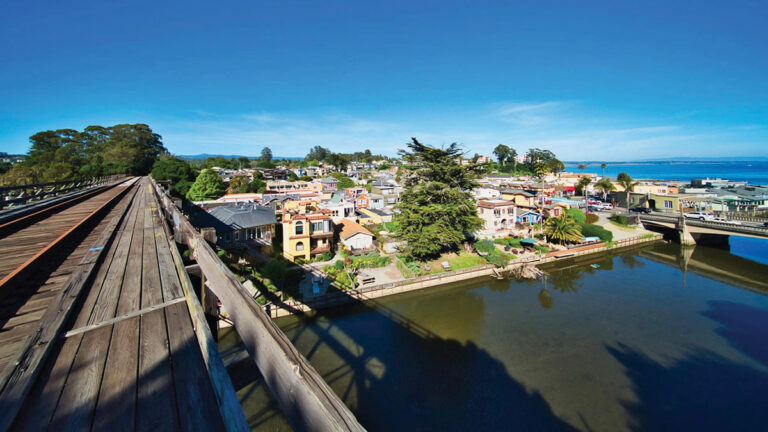
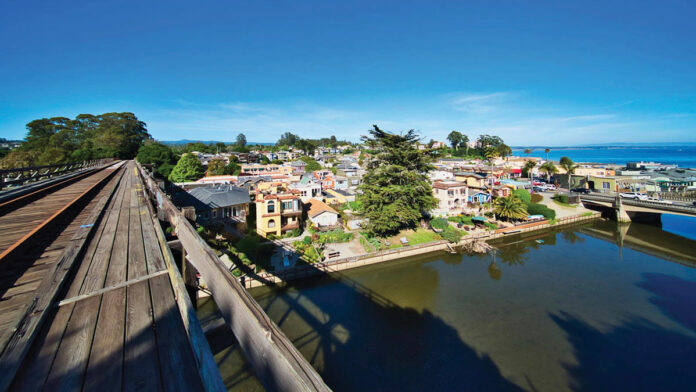
A festive takeover of San Lorenzo park in downtown Santa Cruz, the Tequila & Taco Music Festival features everything a tequila lover could want from a weekend in the park: top-shelf tequila sampling, award-winning margaritas, craft beer, arts and crafts, gourmet street tacos and lots of great music. Featured bands for the fest include Adelaide, Universal Language, SambaDá, Patron Latin Rhythms and Metalachi.
INFO
Starts at 11:30 a.m. Saturday & Sunday, Aug. 25 & 26. San Lorenzo Park, 137 Dakota Ave., Santa Cruz, $10-$60. Information: tequilaandtacomusicfestival.com.
WANT TO GO?
Go to santacruz.com/giveaways before 11 a.m. on Thursday, Aug. 23 to find out how you could win a pair of tickets to the show.
Back in 2015, father and daughter Steve and April Bennett were driving home from a gig they had played with their new band Wild and Blue when April told her dad that her engagement to her fiancé was over. And it had ended badly. She told him that she was going to sell the wedding dress because she “ain’t going to use it.”
“That stuck with me,” Steve says.
The next day, Steve wrote the song “Wedding Dress For Sale” with his daughter in mind to sing it. This was the first time he’d written a song specifically for another person—and he’d been writing songs since he was a teenager.
The pair had been performing together since April, now in her late ’20, was two and a half years old. She would often sit in and sing with Steve’s band, Steve Bennett and One Eyed Jack. As an adult, April moved to New York, but when she moved back in 2015, they started playing again. It suddenly felt like it might warrant being its own project.
“Everything new that we tried had a different energy to it,” April says. “People were stopping and listening in a way that they hadn’t before. We both looked at each other and felt like this was a new chapter. And it needed a new name.”
The duo plays a mix of folk, country and rock; their sets are a combination of covers and Steve originals. Shortly before this project started, Steve hadn’t written originals for a while, being too busy with work obligations. That changed about four years ago.
“The dam broke. I’ve written a ton of new songs,” Steve says.
Now that April is back in the area, the two play together as often as they can. They’ve both played with other musicians, but just see something special about playing with each other.
“There’s literally nothing better than getting to play with my dad,” April says.
INFO: 12 p.m. & 8 p.m. Aug. 25 & 26. Roaring Camp Railroads, 5401 Graham Hill Road, Felton. Free. 335-4484.
Free Will astrology for the week of Aug. 22, 2018.
ARIES (March 21-April 19): The two pieces of advice I have for you may initially seem contradictory, but they are in fact complementary. Together they’ll help guide you through the next three weeks. The first comes from herbalist and wise woman Susun Weed. She suggests that when you face a dilemma, you should ask yourself how you can make it your ally and how you can learn the lesson it has for you. Your second burst of wisdom is from writer Yasmin Mogahed: “Study the hurtful patterns of your life. Then don’t repeat them.”
TAURUS (April 20-May 20): Speak the following declaration aloud and see how it feels: “I want strong soft kisses and tender unruly kisses and secret truth kisses and surprise elixir kisses. I deserve them, too.” If that puts you in a brave mood, Taurus, add a further affirmation: “I want ingenious affectionate amazements and deep dark appreciation and brisk mirthful lessons and crazy sweet cuddle wrestles. I deserve them, too.” What do you think? Do these formulas work for you? Do they put you in the proper frame of mind to co-create transformative intimacy? I hope so. You’re entering a phase when you have maximum power to enchant and to be enchanted.
GEMINI (May 21-June 20): As you map out your master plan for the next 14 months, I invite you to include the following considerations: an intention to purge pretend feelings and artificial motivations; a promise to change your relationship with old secrets so that they no longer impinge on your room to maneuver; a pledge to explore evocative mysteries that will enhance your courage; a vow to be kinder toward aspects of yourself that you haven’t loved well enough; and a search for an additional source of stability that will inspire you to seek more freedom.
CANCER (June 21-July 22): If you have been communing with my horoscopes for a while, you’ve gotten a decent education—for free! Nonetheless, you shouldn’t depend on me for all of your learning needs. Due to my tendency to emphasize the best in you and focus on healing your wounds, I may neglect some aspects of your training. With that as caveat, I’ll offer a few meditations about future possibilities. 1. What new subjects or skills do you want to master in the next three years? 2. What’s the single most important thing you can do to augment your intelligence? 3. Are there dogmas you believe in so fixedly and rely on so heavily that they obstruct the arrival of fresh ideas? If so, are you willing to at least temporarily set them aside?
LEO (July 23-Aug. 22): “All the world’s a stage,” wrote Shakespeare, “And all the men and women merely players.” In other words, we’re all performers. Whenever we emerge from solitude and encounter other people, we choose to express certain aspects of our inner experience even as we hide others. Our personalities are facades that display a colorful mix of authenticity and fantasy. Many wise people over the centuries have deprecated this central aspect of human behavior as superficial and dishonest. But author Neil Gaiman thinks otherwise: “We are all wearing masks,” he says. “That is what makes us interesting.” Invoking his view—and in accordance with current astrological omens—I urge you to celebrate your masks and disguises in the coming weeks. Enjoy the show you present. Dare to entertain your audiences.
VIRGO (Aug. 23-Sept. 22): I think you’ve done enough rehearsals. At this point, the apparent quest for a little extra readiness is beginning to lapse into procrastination. So I’ll suggest that you set a date for opening night. I’ll nudge you to have a cordial talk with yourself about the value of emphasizing soulfulness over perfectionism. What? You say you’re waiting until your heart stops fluttering and your bones stop chattering? I’ve got good news: The greater your stage fright, the more moving your performance will be.
LIBRA (Sept. 23-Oct. 22): In all the time we’ve worked on diminishing your suffering, we may have not focused enough on the fine art of resolving unfinished business. So let’s do that now, just in time for the arrival of your Season of Completion. Are you ready to start drawing the old cycle to a close so you’ll be fresh when the new cycle begins? Are you in the mood to conclude this chapter of your life story and earn the relaxing hiatus you will need before launching the next chapter? Even if you don’t feel ready, even if you’re not in the mood, I suggest you do the work anyway. Any business you leave unfinished now will only return to haunt you later. So don’t leave any business unfinished!
SCORPIO (Oct. 23-Nov. 21): Are you ready to mix more business with pleasure and more pleasure with business than you have ever mixed? I predict that in the coming weeks, your social opportunities will serve your professional ambitions and your professional ambitions will serve your social opportunities. You will have more than your usual amount of power to forge new alliances and expand your web of connections. Here’s my advice: Be extra charming, but not grossly opportunistic. Sell yourself, but with grace and integrity, not with obsequiousness. Express yourself like a gorgeous force of nature, and encourage others to express themselves like gorgeous forces of nature.
SAGITTARIUS (Nov. 22-Dec. 21): “When I picture a perfect reader,” wrote philosopher Friedrich Nietzsche, “I picture a monster of courage and curiosity, also something supple, cunning, cautious, a born adventurer and discoverer.” I suspect he was using the term “monster” with a roguish affection. I am certainly doing that as I direct these same words toward you, dear Sagittarian reader. Of course, I am always appreciative of your courage, curiosity, cunning, suppleness, and adventurousness. But I’m especially excited about those qualities now, because the coming weeks will be a time when they will be both most necessary and most available to you.
CAPRICORN (Dec. 22-Jan. 19): You do not yet have access to maps of the places where you need to go next. That fact may tempt you to turn around and head back to familiar territory. But I hope you’ll press forward even without the maps. Out there in the frontier, adventures await you that will prepare you well for the rest of your long life. And being without maps, at least in the early going, may actually enhance your learning opportunities. Here’s another thing you should know: your intuitive navigational sense will keep improving the farther you get from recognizable landmarks.
AQUARIUS (Jan. 20-Feb. 18): Healing isn’t impossible. You may not be stuck with your pain forever. The crookedness in your soul and the twist in your heart may not always define who you are. There may come a time when you’ll no longer be plagued by obsessive thoughts that keep returning you to the tormenting memories. But if you hope to find the kind of liberation I’m describing here, I advise you to start with these two guidelines: 1. The healing may not happen the way you think it should or imagine it will. 2. The best way to sprout the seeds that will ultimately bloom with the cures is to tell the complete truth.
PISCES (Feb. 19-March 20): Nineteenth-century British painter J. M. W. Turner was one of the greats. Renowned for his luminous landscapes, he specialized in depicting the power of nature and the atmospheric drama of light and color. Modern poet Mary Ruefle tells us that although he “painted his own sea monsters,” he engaged assistants “to do small animals.” She writes that “he could do a great sky, but not rabbits.” I’m hoping that unlike Turner, you Piscean folks will go both ways in the coming weeks. Give as much of your creative potency and loving intelligence to the modest details as to the sweeping vistas.
Homework: What’s the part of yourself that is least evolved and needs most transformation? Testify at Freewillastrology.com.
We are under the blended dual light of Virgo, sign of the Madonna gestating a new reality. Virgo holds a stalk of wheat and a stalk of corn in her arms. Both are from Venus. Virgo tends gardens and works with the devas; she is Ceres, Mother of Persephone and goddess of the harvest. Sometimes Virgo has a feather in her hand, connecting her to the bird kingdom.
Virgo is the writer, bringing solutions and practical ideas into the world. Virgo gestates new ideas, ponders upon them, hides them away, and nurtures them with her purity. Virgo hides the Soul, in the cave of the heart. Virgo with Mercury develops in humanity a focused orderly mind, infusing matter with the ideals of God.
Each zodiac sign signifies a different stage of Soul development and Light. Like the Earth’s kingdoms (mineral, plant, deva/angel, animal, human), though on different stages, all kingdoms assist humanity on our journey toward the light.
Cancer and Virgo are the two “mothers” of the zodiac, each performing a different task of care and nurturing. Both tending the Soul within us. We ponder upon these things during Virgo. We look for feathers. We communicate with creatures that fly—birds, bees, moths, butterflies, fireflies and dragonflies. Devas fly, too, with intention, sending love and recognition from our hearts to theirs. All the kingdoms, except human, live group lives. We will learn group living again, too.
ARIES: Since you are an intrinsic leader, making choices on your own with no one’s approval, it is often difficult to take direction, to have others above you, to follow another’s authority. As the changes continue in our world, you may find yourself under someone else’s direction. If and when this occurs, think of it as a learning adventure. Think of them as learning how to lead.
TAURUS: You’re attempting to awaken the awareness and bring forth the consciousness of many people through communication, discussion, writing, and group work. You find that most people are slow to change; there is an inertia built of habit and not knowing. You are most patient and for this we are grateful. However, you know when you’ve offered enough. Now you step back.
GEMINI: Are the ways you have lived daily life changed in a major way? Is your health in a state of transformation? Are you communicating your real needs and is anyone listening? Is home a comfort, a place to work, a place to leave, a place of safety and a place of comfort and trust? Do you not know the next forward step? Keep walking, moving forward. We pray with you.
CANCER: You are tending to many errands and attempting to accomplish many tasks, here, there and everywhere. Changes are going to occur in your home soon (people coming, going, staying, leaving) and all these undertakings are in preparation. Either you’ll move, or family visits or redecoration and a complete restructuring will be planned. In the meantime, begin to plan for your autumn and winter gardens.
LEO: The Sun has been shining with a new and steady golden light. It is your Sun with its heart of Love/Wisdom. A new year begins for you once again. Endings, subtle and internal occurred, opening up pathways for new endeavors. The time for reflection and quiet review continues as your new year is initiated. Gather your memories and have a little celebration.
VIRGO: Virgo symbolizes three levels of the Madonna. Eve and the mental plane holding an apple in her hand. Isis, weeping and seeking her husband Osiris. And Mary, holding the holy child to her heart. These signify the three personality levels of humanity—mental, emotional and physical. They represent intelligent action, love and wisdom brought into the world. These are your tasks, too. When concentrating on these things, notice a shift into lightness and love. It’s very subtle.
LIBRA: For the next several months, there will be a shift and change of emphasis in your relationships. It is all about love discipline. Libra is much like Capricorn, only softer. You will grow up more, become more disciplined and structured. You will ask the same of others. With Saturn in Capricorn, one often loses weight. The bare bones of reality come for a visit and stay awhile. You realize that “love underlies all the events in your life.”
SCORPIO: Notice your communication with others has deepened. You’re more serious than usual, your thought processes more structured, as you delve into mysteries and things unknown. Scorpios are often surgeons, alchemists, mystery schoolteachers, deep-sea divers, funeral directors, and tenders of other people’s money. Whichever you are, more discipline has entered your life, and more responsibility—for a long time to come.
SAGITTARIUS: Something good is (or will be) occurring professionally. Others are attracted to what you do because you do it very well—with detail, order and organization. Money continues to be an ongoing issue. It’s not that you don’t have any. But what you have seems to elude you in terms of how to use it with practicality. It keeps disappearing somehow—along with how you value yourself. All of this is changing. In good time, new values emerge. You are valuable.
CAPRICORN: Have you been thinking and/or communicating about money? Are you wondering about your position in the world, asking if you’ve climbed enough steps to the top? There will be a thoughtful restructuring as to how you’re seen in the world. More disciplined, more orderly, serious and conservative. These are good ways to be. They define a leader of the people within the culture helping to create the new civilization.
AQUARIUS: You will seek more travel and adventure in the coming months and years. Although your entire life seems to be an adventure, there are many parts of yourself that are very traditional. Tend to money and resources carefully so you are able to finance all you must do. As you travel, you will seek where you truly call home. This will be the task of your heart.
PISCES: Contacts are being made—decisions, too—that affect the coming months. As I have mentioned to Aquarius, tend to money carefully. It may feel as if it’s here today and gone tomorrow. Begin to reorganize your life, from the bottom up and sideways. Much needs to be eliminated, sorted, ordered, filed and then protected. You’ll find you need less and less. Tend to your health with immediate carefulness. People will come to you with questions.
Sparkling wine is so “in” right now. And when you try the Sparkling Rosé made by Denis Hoey of Odonata Wines, you’ll be thrilled to bits. It’s light, refreshing and simply delicious.
“Bubbles are for every occasion in our family,” says Hoey. “From any old Wednesday night to a birthday, it’s always a good time to pop a bottle.” He and his wife Claire have two small boys and a busy winery and tasting room to run, so I’m sure they’re ready to pop some open most days of the week.
Made of 100 percent Sangiovese grapes from the Machado Creek Vineyard in Santa Clara County, this festive pink bubbly—made in the classic méthode champenoise style—will first tickle your nose and then delight your tongue with flavors of cherry pie and a touch of cream. “The palate is filled with crisp mouthwatering acidity, along with strawberry and citrus,” says Hoey.
This 2015 Sparkling Rosé ($38) is also an amazingly flexible wine—pairing well with many kinds of food. And when the weekend rolls around, it’s a perfect time to treat yourselves and uncap a bottle of this rose-hued sparkler. It’s easy to open as there’s no cork involved, and the bottle closure is SIP (sustainable in practice) as Hoey always keeps the environment in mind. “It’s a playful closure, but serious wine inside,” he says.
At the end of July, Hoey closed his Santa Cruz tasting room on Mission Street to focus more on his property in Salinas. This is a lovely spot to hang out and try all of his wonderful wines, including his other sparkling wine, a 2015 Riesling.
Odonata Wines, 645 River Road, Salinas. Open 11 a.m. to 5 p.m. daily. 566-5147, odonatawines.com.
Capitola Art & Wine Festival
The Capitola Art & Wine Festival is all set to take place in Capitola Village on Sept. 8 and 9. Admission is free, but there’s a fee for wine tasting. Purchase a festival glass ($12) and then get tasting tokens ($1 each) at a Glass & Token Booth. Tastings vary between two to four tokens. Visit CapitolaArtandWine.com for more info.
The new Italian sandwich shop on the ocean end of 41st Avenue might look a little incongruous among the trendy coffee houses, boutiques and surf shops, but it’s exactly what Pleasure Point needs.
My initial discovery stopped me in my tracks while strolling to the Hook. I had gone to San Francisco the week before specifically to visit a couple of Italian delis in North Beach and another in the Marina and gorge myself on hard-to-pronounce salumi, and mozzarella so fresh it’s barely holding itself together—ingredients that can be difficult to find in Santa Cruz. So I was excited to walk through the doorway of Bellagio Deli Italiano, ushered in by the aroma of freshly baked bread and the possibility of cannoli.
Giovanni Spanu, who is also the chef and owner of Lago di Como Ristorante and Pizzeria in Live Oak, opened Bellagio Deli Italiano in May, and both of his eateries offer fresh Italian dishes that stay true to the traditional recipes. At Bellagio Deli, he offers homemade ravioli, meatballs, lasagna and pasta sauces ready to be taken home and passed off as your own (just kidding), and yes, there is cannoli and tiramisu, both divine. But the real reason to hop on the freeway and brave the struggle of finding a parking spot that close to the ocean are the sandwiches.
Despite being a seemingly simple food that doesn’t require any cooking, sandwiches are surprisingly easy to mess up. We’ve all experienced the disappointment of biting into a sandwich to discover that the structure was ill-conceived or the maker has misused some key ingredient. At Bellagio Deli, the sandwiches are simple but perfect.
The smell that beckoned me into their doorway like an amorphous cartoon hand was freshly baked ciabatta bread with an unparalleled crumb and crust. They season the bread with olive oil, salt, and pepper—take notes, people—before layering in freshly carved cold cuts. I adore the Panino Parma, with prosciutto di Parma, fresh mozzarella, ripe tomato and basil. The Panino Valtellinese with rich, earthy bresaola, shaved parmesan and peppery arugula is also delicious. All of the sandwiches come with a small side salad of mixed greens, ripe tomatoes and parmesan for less than $10—a great deal and a welcome addition to the thriving neighborhood.
Activists in Santa Cruz County’s smallest city got the green light this week to move forward with a vote that has the potential to play an outsized role in the future of Santa Cruz County transportation planning.
Judge John Gallagherruled on Monday, Aug. 20 in favor of Greenway Capitola petitioners, allowing their ballot measure on the rail trail to proceed to the Nov. 6 election. Environmental attorney Sara Clark, who represented the Greenway side, says she wasn’t surprised by the ruling, even though Capitola officials had expressed concerns about the measure’s wording.
“In elections law, there’s a pretty standard rule that most challenges to an initiative are best ruled on after the voters have a chance to weigh in,” Clark says.
And it isn’t just the Greenway Capitola measure that voters are talking about this election season. With the November election fast approaching, discussions over a few closely watched local ballot initiatives—on topics like rent control and finance—have begun heating up.
THOROUGHFARE
The Regional Transportation Commission (RTC) has plans to build a bike and pedestrian path along the county’s coastal railroad tracks and leave room for future rail transit—an approach the commission is currently evaluating in its Unified Corridor Study. But supporters of Santa Cruz County Greenway have been pining for a different approach, given their concerns about the high costs of the rail-with-trail plan, and questions about ridership estimates they say are too meager to have any impact. Greenway supporters envision a wider trail along the length of the corridor with no train tracks.
Parts of the rail corridor are rather narrow, and the rail trail’s official guiding document, the Monterey Bay Sanctuary Scenic Trail Master Plan, is unclear about where certain bike and pedestrian detours may be needed—particularly in Capitola. In order to build a bike path that spans the valley over Soquel Creek Water District, construction crews would likely need to build a brand new bridge—about 200 feet long and a few dozen feet high.
Measure L, the new Greenway Capitola initiative, essentially asks voters what sounds like a simple question: Do you support keeping the bike and pedestrian path on the protected corridor, instead of detouring it onto city streets?
Most people expect Capitola voters to say “yes,” which is why the measure could have an impact going forward, even if it technically will have no impact on the decisions of the RTC. Most measure supporters don’t want a train on the tracks.
But Capitola City Attorney Tony Condotti sees the wording as “impermissively vague.” He says that the initiative conflicts with existing city plans and complicates efforts to make needed bike infrastructure improvements nearby, including spur trails shooting off the main route.
Clark argues that the measure’s language is actually pretty straightforward, and says that Capitola staffers and council “were manufacturing inconsistencies where there weren’t any.”
Capitola Councilmember Stephanie Harlan says this all could have been a lot simpler if the measure just asked whether or not residents support a train.
However, there’s still reason to believe that everyone—both rail and trail supporters—could get what they want, no matter what the outcome of the measure. The RTC has already signaled an interest in making room for both rail and trail through Capitola.
This past June, at the suggestion of Friends of the Rail and Trail Chair Mark Mesiti-Miller, the commission made minor adjustments to its five-year spending projections, as it finalized its new plan. The RTC allocated $50,000 to study building a new bridge through Capitola that could accommodate both rail and trail.
Things got ugly earlier this summer after opponents of the measure initially missed the deadline to file arguments against Measure M, the rent control measure, while supporters of the measure met the deadline. The situation was cause for concern among landlords and rent control opponents. To the initiative’s supporters, it all seemed to good to be true—given the hundreds of thousands of dollars that opponents had already raked in, between local fundraising and cash from outside organizations.
But city staffers admitted they had erred in setting the deadlines unnecessarily early and that the guidelines were confusing, and the city may have even opened itself up to a lawsuit in the process.
With four members recused from a heated public meeting on the topic, the Santa Cruz City Council voted 4-0 to give both supporters and opponents more time to submit statements.
The irony of giving the landlords extra time was not lost on rent control advocates.
“Tenants live with deadlines that have real consequences,” Cynthia Berger, an organizer with the Santa Cruz Tenants Association, said at the meeting earlier this month. “If I don’t pay my rent, that’s immediate grounds for a three-day pay or quit notice.”
BILLING NOTICE
Capitola City Councilmember Jacques Bertrand has fond memories of his days as the city’s treasurer, a position that’s now facing a referendum.
“The main thing is people want to know where their money goes, and that’s what the treasurer does,” explains Bertrand, who remembers discovering ways to make to improve the Capitola’s finances in his four-year term from 2008 to 2012.
But the city’s current treasurer Peter Wilk, who Bertrand sought out for the position, says he doesn’t see any reason for voters to elect a treasurer at all, as many of its roles overlap with other authorities like the finance director, auditors and the Financial Advisory Committee. Additionally, Wilk says the budget is very transparent to the general public, and the treasurer has no clearly defined power. Most other jurisdictions—including every other local government in the county—have no elected treasurer position.
The Capitola City Council voted unanimously to place Measure K on the ballot to remove the treasurer as an elected position and instead make it an appointed one. Wilk and some city councilmembers have even floated the idea of eliminating the job altogether. Bertrand has serious reservations about it all, as he feels the treasurer position provides a sense of financial transparency.
Councilmember Harlan has warned Bertrand that she won’t support him in his reelection bid this year if he actively campaigns against the initiative. While Bertrand hasn’t hit the streets in opposition, he says he’s been having conversations with residents about the measure. He worries taking a stand could sink his reelection campaign, but it hasn’t dissuaded him from raising concerns.
Also in this year’s City Council race are former Capitola Mayor Sam Storey, ironworker Jack Digby and Yvette Brooks, of the county education office.
Bertrand concedes that the city of Capitola has had at least one activist treasurer in the past, who tested the limits of the position and developed a “caustic” relationship with city officials, but he sees that ordeal as an outlier.
Bertrand admits that it stings a little to see Wilk—who he believes is doing a great job—argue against a position Bertrand took so seriously, but he insists that isn’t his primary motivation in questioning the new measure.
“The reason I’m talking to you is I want the debate,” Bertrand says. “Peter brought up things that need to be talked about. We’re friends—the fact that I don’t like his conclusions doesn’t make him a bad guy.”
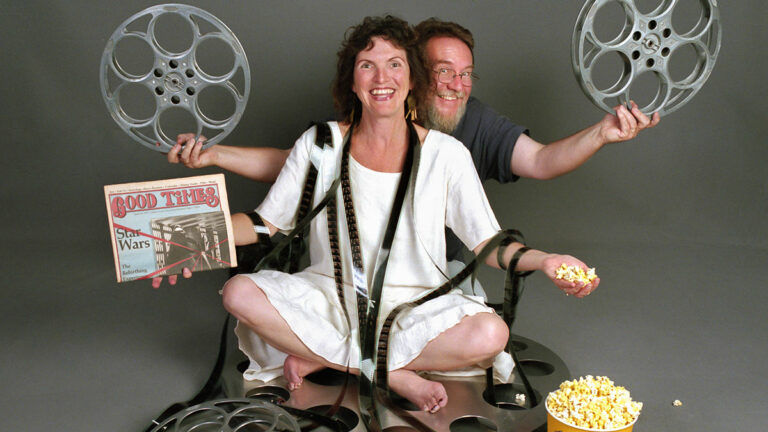
Editor’s Note: Local artist James Aschbacher’s life will be celebrated at the Rio this week. Now, his longtime wife and constant companion—who also happens to be GT’s film critic—shares her memories of what made him great
John Lennon once said, “Life is what happens when you’re making other plans.” As it turns out, so is death.
My life was knocked sideways earlier this year by the sudden loss of my own beloved Art Boy, James Aschbacher—husband, sweetie, soulmate, yoga partner, companion for so many adventures, and my absolute best friend for 40 years. “And not a night apart!” as he used to boast.
That was true until late in April of this year, when I spent my first three nights alone without him since we first moved in together way back in the Dark Ages of 1978. He spent those three nights in the ICU at Stanford after a stroke felled him early on a Monday morning. By Wednesday, we had to let him go.
It’s inconceivable how my life is supposed to work without him. He was (and is) in every part of it. Famously joined at the hip, we went everywhere together—movies, art shows, theater. I co-hosted his Open Studios at our home for 27 years. When he got his first public mural commission (Plaza Lane, downtown), I helped him paint it.
When I was invited to co-host the film review program “Talking Movies” on local TV with former Sentinel film critic Rick Chatenever, James drove me up to the taping in Scotts Valley every other week, and hung around to heckle—er, I mean, cheer us on—from the sidelines. When I did a book reading somewhere, or participated in a book panel or a film discussion group, he was always in the front row.
I can’t tell you how many terrible movies he sat through with me. (Especially since a film critic doesn’t have the option of walking out!) But we saw some great ones, too—more shared experiences to rack up over our time together.
It all began one day a few millennia ago when I walked into Atlantis Fantasyworld on Pacific with a friend who collected comics. Little did I know I was about to meet my future.
A transplant from the Midwest, James had opened the store a year earlier with his partner, Joe Ferrara. By that time, James had already established a mail-order business with book collectors from all over the country in search of vintage sci-fi paperbacks (the more lurid the cover, the better). We would spend many Sundays at the flea market, James groveling around on the asphalt pawing through boxes of forgotten books in search of that one item he knew some collector somewhere desperately wanted. Matching up people with their dreams—that’s what he loved to do all his life.
COMIC RELIEF Artist James Aschbacher (left) with Joe Ferrara, co-owner of former downtown Santa Cruz book and comic shop Atlantis Fantasyworld in 1976.
He was a man of many diverse passions, one following another in orderly sequence (Libra that he was). As a teenager, he’d performed a magic act at kids’ parties. He loved cheesy ’50s monster movies and collected vintage posters from his favorites. Soon after we moved in together, we launched a joint career as single-panel cartoonists (pen name: “Bonet,” after the cheap bubbly we were drinking in those days). Believe it or not, I drew the cartoons and he wrote the jokes. (Even after he became known as an artist, James claimed he never knew how to draw.)
He amassed a vast library of his favorite horror/sci-fi movies and vintage TV shows on videotape. Whenever anyone was coming to dinner, he first asked what their favorite TV show had been as a kid, and then had that tape cued up and ready for a blast to the past.
And then, on the brink of turning 40, after total immersion in pop culture for so long, he decided to become an artist. No one knows why. He’d never taken a single art class in his life, but was suddenly in the grip of a very demanding muse. Because he didn’t know how to draw or even hold a paintbrush, he started out wielding cans of spray paint and cutting out cardboard stencils to shape the image.
Ultimately, this would lead to the distinctive technique that he made up: fanciful images (birds, fish, animals, dancing figures) painted in acrylics on spray-painted art board, then nailed onto a piece of wood with a hand-carved border of magical symbols.
After the quake of ’89, when Atlantis had been relocated into a tent in a parking lot, James decided to pursue art full-time. He and Joe cooked up a five-year plan for Joe to buy his half of the business; if he couldn’t make a decent living after five years, James thought, he could always go get a job. But he didn’t have to—he was selling his artwork from then on.
James became a popular stop on the Open Studios Art Tour, and an inspiration and mentor within the thriving Santa Cruz arts community. For several years, he was also chairman of the Open Studios Committee for the Arts Council of Santa Cruz County. He left his mark—literally—on buildings countywide as a muralist, including 10 years painting murals at local elementary schools with fourth- and fifth-graders, who were always encouraged to create and paint their own creatures.
Open Studios visitors loved his work, but they especially loved to hear about his DIY art career. His path had been so strange, so unexpected, and so self-motivated, he was always encouraging others (artists and normal people) to pursue their dreams, no matter what anyone else told them. Anybody can be taught to copy some style or other, he often told his mural kids or other artists who sought him out for advice, but only you can create your vision.
FRAMED!A self-taught artist who didn’t pick up a brush until his 30s, Aschbacher’s work nonetheless made a huge mark on the Santa Cruz community. PHOTO: LISA JENSEN
Unlike the popular image of the flaky artist, James had a strong business sense and a practical streak. Having worked with his father, a general contractor, he also knew how to do stuff. Among our friends and colleagues, if you needed a shower door set in or bookshelves built, James was your go-to guy.
Working at home all day led James to new passions. One was cooking, which he embraced with the same glee with which he’d devoted himself to art. He became famous for his pasta, but his pizza was legendary. (He baked it for seven minutes on a screen set on the floor of the oven, a process for which he gave many tutorials among our friends.)
When our Sorrento lemon tree had a bumper crop one year, he did some online research and taught himself to make limoncello.
But his drug of choice was always Champagne, either the authentic French kind (Moët was a favorite), or one of the crisp Spanish cavas we’d discovered over the last few years. He’d had some youthful fantasy about someday being successful enough to drink Champagne every night, but in truth, he just loved the sparkle. It matched his effervescent personality.
On a shopping run, the person checking him out with a case or two of bubbly would inevitably ask, “What’s the occasion?” James would smile and say, “Just celebrating life.”
After he left Atlantis Fantasyworld, we started taking daily afternoon walks around the Santa Cruz Yacht Harbor, to clear our heads of any lingering debris from whatever various projects we’d each been working on all morning. More recently, as mobility became an issue for me (due to an unexpected diagnosis of MS), I couldn’t walk as far or for as long at a stretch.
His solution was to start driving us down to park in the upper harbor, where I could go from bench to bench whenever I needed a time out. Meanwhile, he would walk from the car all the way down to Aldo’s and back to get in as much of his regular walk as possible—back and forth, like a duck in a shooting gallery.
Later, he bought a folding patio chair to stash in the car trunk, in case I needed to rest between benches. That man would cheerfully walk beside me, schlepping the chair like a Sherpa guide until I needed it.
As opposed to me, the reclusive writer, he was the most social man in the universe. He planned all of our dinner parties, arranged dates, did all the shopping and all the cooking! All I had to do was make dessert (my favorite part!) and show up. He ran errands and even fielded robocalls while I wrote in the mornings.
James was so tickled when I finally got a book contract after so many years of toil. The contract was for Young Adult (YA) fiction, and he embraced the book biz with the same enthusiasm he devoted to his other passions—doing research and urging me along. He even started reading YA.
In addition to his other talents, he was a hell of a lot of fun to be around, with an upbeat sense of humor, and the twinkle in his eye. When we got our first phone answering machine, it was a February, when the Winter Olympics were on TV. James recorded the message, “Lisa and I are waxing our luge and can’t come to the phone right now.”
INSEPARABLE PAIR Jensen and Aschbacher in 2018. This was the last picture taken of them together.
When we were planning a will and trust a couple of years ago, the subject of organ donations came up. James laughed. “Nobody wants my liver!”
The Master of Malapropism, James was also famous for the odd combinations of words and ideas—often seemingly unrelated to each other—that would pop out of his mouth unexpectedly. Once when we were discussing travel plans (he was a notorious homebody), I pointed out that some people actually liked to travel. “Well, some people eat fur for breakfast!” he sputtered. That stopped the conversation cold. As soon as we both realized what he’d said, we laughed until we cried.
That’s the kind of intimacy I’m going to miss the most. The kind that can only be brewed from 40 years of shared jokes that nobody else gets, and the helpless laughter that comes with them.
There will be a huge hole in the heart of the Santa Cruz arts community without him, and an even more enormous hole in my heart. I am lucky to have had 40 wonderful years with him. Please remember him as he was—cracking jokes, making fabulous art (and pizza), and toasting life with Champagne. Every day should be a celebration. It certainly was for James.
Now that the initial shock has worn off, it seems like people need permission to start feeling more happy that they had him in their lives than sorrow that he’s gone. Permission granted—from both of us.
I know James would not want to make everybody miserable—he’d be the first one out there making jokes and popping corks—so I am adopting his upbeat spirit and positive outlook as I plunge ahead into the next chapter.
Things he will miss:
[bullet] the final season of Game of Thrones;
[bullet] the demise of the Trump administration;
[bullet] the complete first draft of my next novel he was so eager to beta-read;
[bullet] our 40th wedding anniversary (although we did get to celebrate 40 years of living together).
Things I will miss:
[bullet] Everything about him.
I love you, Art Boy!
A Tribute to James
A tribute to James Aschbacher’s life, “Celebrating James,” will be held at the Rio Theatre on Saturday, Aug. 25. Doors open at 6 p.m. There will be speakers, a slide show and general conviviality. Please bring stories and memories to share.
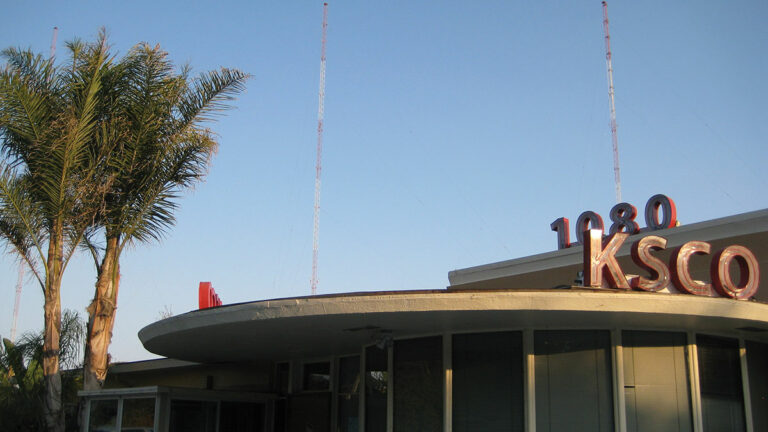
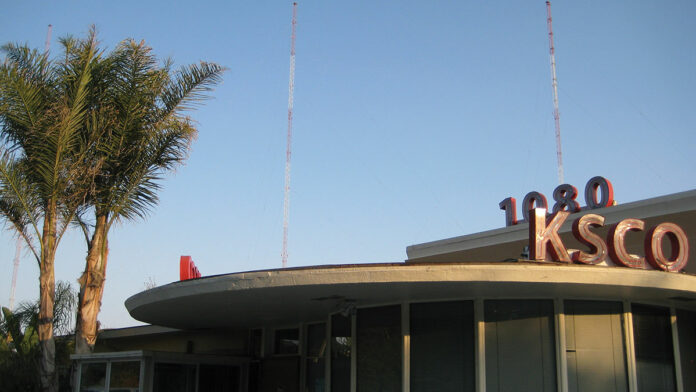
It was 11 months ago that KSCO 1080 AM owner Michael Zwerling announced new rules for his Santa Cruz radio station. In an on-air editorial, he banned “toxic subjects”—namely “race-baiting” and allegations of anti-Jewish conspiracies or white genocide—and inciting violence.
Zwerling made the announcement in response to GT’s coverage of Georgia “Peach” Beardslee’s controversial twice-weekly broadcasts. But given what Beardslee’s been saying lately, it appears that either Zwerling’s ban was just talk, or he’s found his own station too difficult to police.
To open up the second hour of her Friday, Aug. 10 show, Beardslee called the burning of black churches in the 1960s “a hoax” and then referred to Hollywood as “a massive anti-white crucible.” She spewed made-up statistics about crime, claiming—without evidence—that there are 35,000 cases of “black-on-white rape” a year, while also suggesting the whites seldom rape black Americans.
Beardslee, who hosts on Wednesdays and Fridays at 2 p.m., proceeded to call both Oprah Winfrey and former President Barack Obama racists. “You are an ungrateful woman, Oprah,” Beardslee said. “When will these blacks—who became rich and famous in America, and could have never done it in any other country—have gratitude? Well, I’m not gonna hold my breath. Oprah, why aren’t you living in the hood with your soul brothers and sisters?”
And all of that was over the course of about five minutes.
Later in that same show, Beardslee lamented a “genocide” of whites with an angry caller sympathetic to her world view.
“My critics hear what they want to hear,” Beardslee tells GT via email. “They take what I say out of context and spin it to fit their narrative and what they think they hear. I will have plenty to say after I read what you write in the Good Times.”
On top of all that, Beardslee may have violated Zwerling’s rule about not inciting violence. Earlier this month, she called for then-FBI agent Peter Strzok to “be hung with the rest of the treasonous swamp rats” and additionally threatened Michael Folk, one of her critics, over the air, screaming, “You’d better watch yourself, buddy, and that’s a warning!” She’s repeatedly defended white nationalists who marched in Charlottesville, too.
It would appear from this hate speech that anything goes on KSCO, no matter how controversial.
Well, as long as it’s right-wing, anyway; Zwerling has recently fired two long-standing liberal hosts.
Billy “Sunshine” Gorson was fired from his unpaid gig when he called in to Zwerling’s Saturday morning show and referred to Beardslee as a “Nazi.”
Looking back, Gorson says what bothers him most is that Beardslee “gets to keep talking.”
“That’s troubling a bit,” says Gorson, who Zwerling had fired twice before. “I’m not going to let them inject that intolerance into our community. Racial purity talk only leads to death and destruction. If we hadn’t had the Holocaust, maybe this would be okay, but we should know better.”
Brad Kava, who also got fired recently, had told one of his guests that not only does the station owner support President Donald Trump, but “he probably loved Hitler, too.” Kava says it was a joke, but he doesn’t regret it given the context: Trump had just started his border separation policy and had begun putting refugee kids in cages.
Zwerling says that neither Kava nor Gorson is welcome to even call in to the station in the future.
Station manager Michael Olson says that both Gorson and Kava broke a longstanding rule against bad-mouthing colleagues—a rule that he says dates back several years to the days when KSCO had two hosts get into a fight in the parking lot after passive aggressively feuding over the air.
“It’s a very simple rule, and yet it’s a vital rule,” Olson says. “That was the rule Billy broke. What Brad said about the owner of the station—if you were a Jewish person, that would probably flabbergast you as well.”
Zwerling, Gorson and Kava are all Jewish.
When it comes to hate speech, Olson says he welcomes people to report portions of a show that are “out of bounds” on KSCO.com, as listeners sometimes do. But Olson contends that he’s never heard Beardslee cross the line. “What I’ve heard Georgia do is advocate for the white race,” he says.
Zwerling encouraged GT to submit a complaint online to KSCO about Beardslee. That way, Zwerling says, he can put “Georgia on trial with our entire KSCO audience” during his Saturday morning broadcast—almost like a game show. But why doesn’t Zwerling take a personal stand himself?
“I’m not gonna decide what’s hate speech,” Zwerling tells us. “I don’t think I’m that smart.”
Kava says he always liked the idea of trying to reach conservatives. But he and Gorson say they’re now hoping to land a spot on the local public radio station KSQD that’s launching soon.
“I’ve been fired for lots of jobs because I’m an asshole,” Gorson says. “This is my proudest firing yet. I always tell the boss what I think.”
Update — Sept. 11, 2018: The original version of this story misreported the date of a broadcast on KSCO.
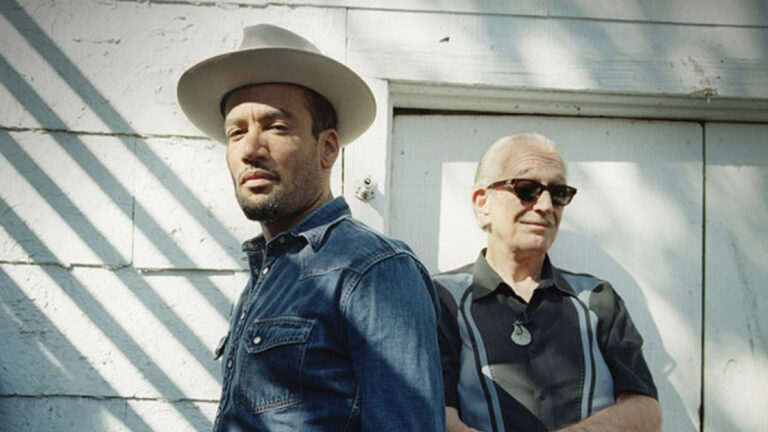
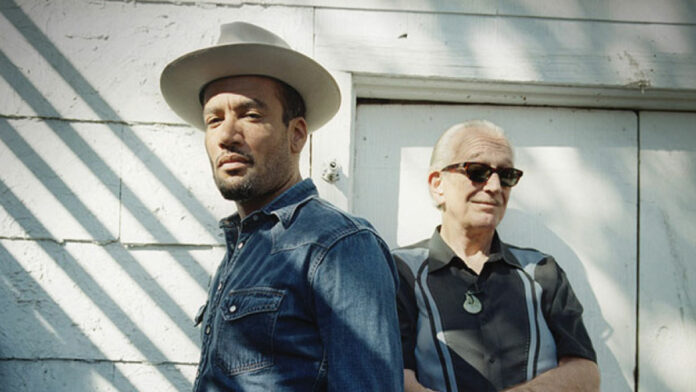
Charlie Musselwhite traces his love of collaboration back to his childhood, when he was a blues harmonica player growing up in Memphis. In those early days, Musselwhite spent plenty of time jamming with country blues musicians.
“They would change chords, it was really erratic. I learned how to really anticipate where the music was gonna go,” explains Musselwhite, who plays the Catalyst with Ben Harper Aug. 27 and 28. “That prepared me for playing with anybody. I would just follow the flow.”
In the years since, the blues legend has collaborated with the likes of Bonnie Raitt, Tom Waits, INXS, Hot Tuna, and Cyndi Lauper, to name a few. Harper, for his part, has played with Taj Mahal, Jack Johnson, and most recently, his mom Ellen for their shared album Childhood Home. Both Harper and Musselwhite have done albums with the Blind Boys of Alabama, as well.
Musselwhite says he loves Harper’s “brilliant” musical ideas, and respects that Harper also learned to play collaboratively as a kid. When Harper was growing up, his grandparents owned the Claremont-based Folk Music Center, which brought in artists from all over.
Both of Musselwhite and Harper’s two albums together are raw with emotion, and when Musselwhite gets whaling on his harp, he makes each chord feel like it’s an entire song.
“I like improvising. I like melody. The way I’m playing, it feels like I’m singing without words. I like to keep it as spontaneous as possible and wait for the magic to come home,” he says with a laugh. “The magic takes over. The music takes you where it wants to go.”
Ben Harper and Charlie Musselwhite play Monday, Aug. 27 and Tuesday, Aug. 28 at the Catalyst, 1011 Pacific Ave., Santa Cruz. $49.50/adv, $53/door. Sold out, waitlist available. 429-4135.