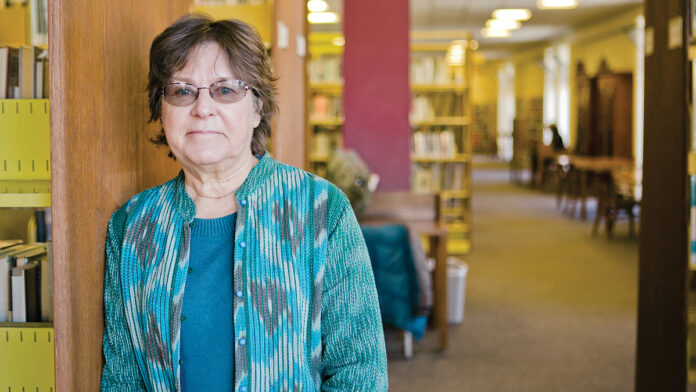
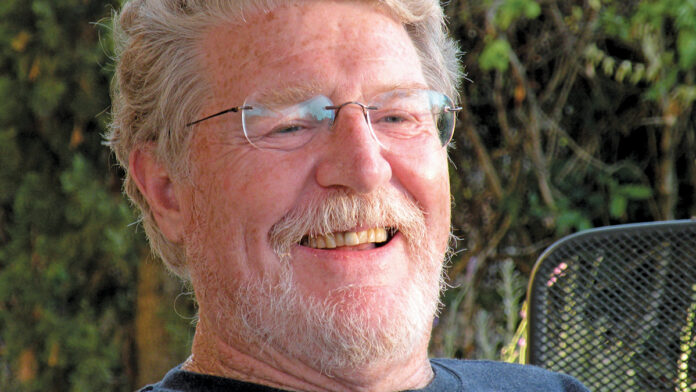
[dropcap]I[/dropcap]f she didn’t write books, Karen Joy Fowler might spend most of her time reading.
“I have to read while I’m writing a book,” says the author of the celebrated Jane Austen Book Club. “I am in this space of needing to do other things. My brain keeps searching. It may have nothing to do with what I’m writing, but the cross pollination of ideas is important. One book can influence the next. And reading keeps my enthusiasm for books front and center.”
Fowler made her home in Davis for many decades until her husband’s retirement. “He wanted to go back to southern California and I had visions of retiring to Whidbey Island in the Pacific Northwest,” she says. “So we settled on Santa Cruz.” Where she’s lived for 10 years.
About the nuts and bolts of her writing practice: “I don’t write every day,” she admits, with something close to a laugh. “Too many distractions. Except at writers retreats. That sort of hothouse environment allows me to not think about dinner or shopping, and just write.” Her favorite retreat is Hedgebrook on Whidbey Island. “Listening to others reading strengthens me as a critical reader. Often it’s a wake-up call for me. I can learn what I think through a piece that is not my own.”
Fowler’s eyes are the color of storm clouds over the ocean, an intense blue-grey. She chooses her words carefully and without unnecessary drama. She is devoted to Pilates.
“I never took a writing class, I have no literary background. My degree was in political science. And perhaps that is why I bring a wide lens to my stories. I’m always aware that there’s a big world out there.”
She admits to a “mystifying confidence,” about her writing, characterizing herself as persistent, “even when things aren’t working. I am very stubborn.” Fowler claims that writing the first draft of a book helps her clarify the project itself. “Quite recently I had some insight into what is now a four-year novel I’m working on. I was at a family dinner, trying to answer someone’s question about what kind of book I was writing. I realized I wasn’t clear about what kind of book it was.” Process provides insight, something many writers agree upon. In the writing, the book’s focus emerges.
“I would prefer to work faster, but I can’t,” she says. An impish smile crosses her face. “But I don’t believe that distractions are necessarily bad. It can appear that I’m wasting time, but the ideas are percolating in the background.” From anyone else, that might sound like a dodge.
Fowler spent her first 11 years in Bloomington, Indiana. “I read a lot,” she says. “Books in the library there weren’t cataloged according to genre. The titles were simply all arranged alphabetically. So I never thought in terms of genres, didn’t care about genre distinctions. That freed me.” And that freedom resulted in Fowler’s eclectic portfolio of short stories, novels, science fiction, and fantasy. “When I went to my first science fiction writers conference I found a community that had a much clearer continual conversation. They were my people.” Now she grins and her eyes morph to pale blue. Her tone becomes hushed, even reverent when she mentions Ursula Le Guin and Donna Haraway, whose literary territory interweaves with her own. Intrigued by entwinings of gender as well as genre, Fowler founded the James Tiptree Award which focuses on expanding explorations of gender. “Sarah Canary,” her first book, “pushed back against the idea that communication could even be possible. The central character is inexplicable,” Fowler explains. “She cannot communicate. So those who meet her impose their view of who she is according to who they are.” Fowler clearly relishes breaking through expectations. “There are no rules when writing a novel. And while genre does have rules, they are rules I can break. Otherwise the books would be formulaic and predictable.”
A passionate reader, Fowler often re-reads books she has loved. Jane Austen, for example. “She’s a puzzle to me, a puzzle I like thinking about. I don’t think there’s a more elastic writer. She is a romance writer and she’s a feminist. She’s a Rorschach. As a young girl I thought her books were romantic comedy.” She pauses. “When I re-read a book I bring with me the ghosts of all my previous selves. They change the book with each reading, or rather it is never the same book that I’m reading.”
Fowler confesses that she burned out on Jane Austen when writing her bestseller on the 18th-century novelist. “There’s no shortage of books about her,” she says, eyes twinkling. Currently working on a book set in 19th Century California, Fowler happily admits that right now she has “no deadline, no rush.”
You get a big bang for your buck with Mount Eden’s 2015 Chardonnay. Full, lush tropical fruit dominates this wine’s aromas and flavors, and it is a premier example of Central Coast Chardonnay. Jeffrey Patterson, a much-respected winemaker round these parts, has been at the helm of Mount Eden since the early ’80s, and he continues to turn out excellent wines.
Grapes are harvested from Wolff Vineyard in the bucolic Edna Valley near San Luis Obispo—an ideal grape-growing region resulting in the best possible fruit. This is the 31st year that Mount Eden has been making premier Chardonnay from Edna Valley, receiving many awards along the way. The 2015 Chard won 90 points from Wine Enthusiast magazine and 88 points from Wine Spectator.
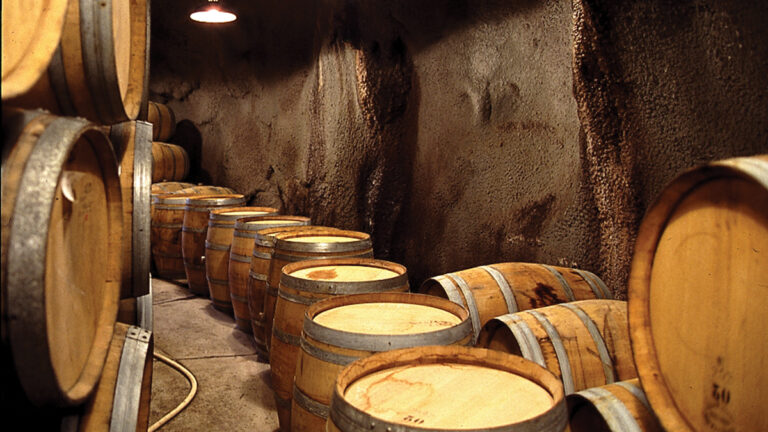
This reasonably priced Mount Eden Edna Valley 2015 Chardonnay can be found in stores all over for about $20. Barrel-fermented and aged on the lees (“lees” refers to deposits of dead yeast) for 10 months, Mount Eden gives the same care to these barrels as they give to their more expensive estate wines.
Mount Eden says that 2015 was another drought-influenced year “with the crop being miniscule and the flavors magnified,” and the result is a nose of earthy complexity with notes of white flowers and guava. Rich and subtle on the palate, it’s enhanced with flavors of lemon and toasty oak.
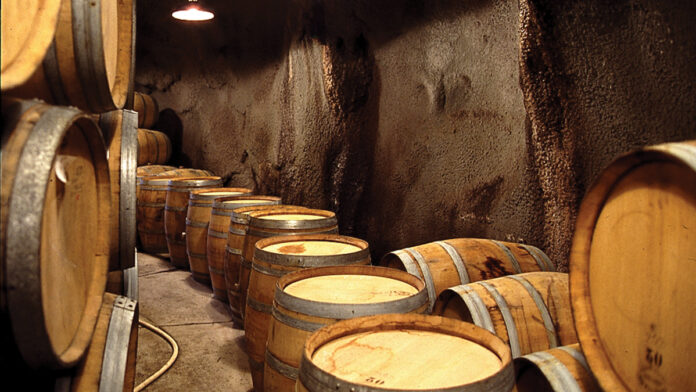
Mount Eden does not have a tasting room, but you can make an appointment for an “intimate tour” of the original upper wine cellar and learn the history of the winery. Note: It’s at 2,000 feet and located up a two-mile private road. No tasting is offered on the tour.
“The fun part for me is controlling as many of the variables in growing fruit and making wine as I can, but, as mortals, we love the minor variations that Mother Nature adds to each year’s vintage. For us, it’s like opening a Christmas present. You kind of know what is in the box but are not quite sure what’s in there till the final wrapper comes off!”
[dropcap]A[/dropcap]fter the OscarSoWhite hashtag movement a couple of years ago, the Motion Picture Academy’s demographics have altered. With membership now opened up to a younger, more diverse crowd of film pros, you might expect this year’s nominees to feature a few plucky mavericks vs. the mainstream favorites. But—surprise! Almost none of the nominees qualify as “mainstream,” including the two top contenders: Guillermo del Toro’s lush, eerie, romantic fantasy The Shape of Water, and Martin McDonagh’s blackly comic morality play Three Billboards Outside Ebbing, Missouri.
While the predictive winners in all four acting categories are pretty much set in stone (results have been uniform throughout the awards season), there’s still plenty of room to stir up trouble! Here’s what I think will happen:
BEST PICTUREThree Billboards Outside of Ebbing, Missouri. Usually, if you subtract the four (out of nine) nominees whose directors didn’t get a nomination in their category, that narrows the field to five serious contenders. But even though McDonagh wasn’t nominated for directing Three Billboards, it’s already won a Golden Globe for Drama, and the Screen Actors Guild Ensemble award. The Shape of Water is my favorite movie of the year, but I think it will rack up its Oscars elsewhere.
The Post was a favorite going into the season, with its timely tale of crusading journalists standing up for the truth, but here, the lack of a nomination for director Steven Spielberg suggests it’s run out of steam since then. Less likely (but not impossible) upsets might by Greta Gerwig’s smart, beloved indie comedy, Lady Bird, or Jordan Peele’s darkly subversive racial-politics horror movie Get Out (Gerwig and Peele both scored directing nominations).
BEST DIRECTOR Guillermo del Toro, The Shape of Water. He’s already won every award there is in this category—in compensation for Three Billboards walking off with most of the Best Picture prizes—but mostly because Del Toro’s irrepressible, iconoclastic personality infuses every frame of this rapturous movie. Gerwig won a Golden Globe in the comedy category, and Peele earned a Best First Feature nod from the Directors Guild of America (although Del Toro won Best Director from the DGA), so anything is possible.
BEST ACTRESS Frances McDormand, Three Billboards. Bet the rent; name an award in this category, and she’s already won it. And deservedly so.
BEST ACTOR Gary Oldman, Darkest Hour. Another shoo-in, like all four favored acting nominees. Besides, there has to be some kind of recognition for a guy who started out playing Sid Vicious tackling the role of Winston Churchill.
BEST SUPPORTING ACTRESS Allison Janney, I, Tonya. She doesn’t just “disappear” into the role of Tonya Harding’s cold, heartless mom; Janney plays her in a trance-like state of viperish perversity.
BEST SUPPORTING ACTOR Sam Rockwell, Three Billboards. He’s got all the buzz, as the hot-headed deputy dragged kicking and screaming to a kind of redemption. I thought his co-star, Woody Harrelson (also nominated) was just as good in this category. But I’d have liked to see a shout-out for Doug Jones in The Shape of Water. A longtime Del Toro co-conspirator (he played Fauno/Pan in Pan’s Labyrinth, and was recently seen as the impossibly elongated alien First Officer Saru in Star Trek: Discovery), Jones’ poignant Amphibian Man romancing Sally Hawkins gives the movie its heart and soul.
OTHER Here’s where those new Academy members may prevail with an Original Screenplay award to Peele for Get Out, beating out Del Toro and McDonagh (Although the latter has scored some pre-Oscar awards for Three Billboards). Veteran director James Ivory looks poised to win the Adapted Screenplay award for Call Me By Your Name. Expect Blade Runner 2049 to score gold for Cinematography, while Phantom Thread wins in the Costume department. (Although, for a movie about the fashion industry, I found the clothes as lackluster as everything else in Phantom Thread.) Meanwhile, The Shape of Water should swim to victory for its atmospheric sea-green Production Design, and its expressive Original Score by Alexandre Desplat.
The 90th Annual Academy Awards will be broadcast at 5 p.m. on Sunday, March 4 on ABC.
Live music highlights for the week of February 28, 2018.
WEDNESDAY 2/28
JAZZ
MILES ELECTRIC BAND
Miles Davis landed at the center of the jazz/rock fusion movement with the release of Bitches Brew, but that seminal 1969 album marked the start of a new journey rather than a culmination. He continued to evolve over the next two decades, adding and subtracting elements from rock and funk, Brazilian and Indian music, West African and psychedelia. The Miles Electric Band explores a broad swath of this territory, and features a rhythm section with players who toured and recorded with Davis, including Rolling Stones bassist Darryl Jones, percussionist Munyungo Jackson, and drummer Vincent Wilburn. They’re joined by a blazing cast of younger players, including saxophonist Antoine Roney, guitarist David Gilmore, tabla player Debasish Chaudhuri, and New Orleans trumpet star Christian Scott. ANDREW GILBERT
INFO: 7:30 p.m. Kuumbwa Jazz, 320-2 Cedar St., Santa Cruz. $35. 427-2227.
THURSDAY 3/1
AMERICANA
MCCOY TYLER & FRIENDS
I don’t know if you know this, but McCoy Tyler has a lot of friends. You might have seen him booked as the McCoy Tyler Trio or the McCoy Tyler Band or the McCoy Tyler Wild Psychedelic Ride Through Santa’s Village. Maybe not the last one. But the iteration that makes the most sense is McCoy Tyler & Friends, because that’s what all of these monikers really are: Local boy Tyler playing his unique, earnest brand of Southern rock ’n’ roll meets classic Americana meets power pop with his very talented Santa Cruz friends. If you’re lucky, you may end up being one of his friends someday. AC
INFO: 7:30 p.m. Michaels on Main, 2591 S. Main St., Soquel. $8. 479-9777.
FRIDAY 3/2
ROCK
JERRY JOSEPH & THE JACKMORMONS
Salt Lake City is a trip—having grown up there, I can say that. The Mormon church has a presence that weaves through most things, but the area is also cradled by one of the most spectacular mountain ranges you’ll ever see, the people tend to be neighborly, and Salt Lake has an outstanding arts and music scene—including a robust music underground. Jerry Joseph & the Jackmormons is one of the local-bands-done-good from the area. Led by prolific singer-songwriter Jerry Joseph, from the groups Little Women and Stockholm Syndrome, the band ventures into psych-leaning rock, a bit of jam, and a lot of lyrical poetry, and has extended its reach far beyond SLC. CJ
Way back in the way, way back, Booker T Jones wrote and performed some legendary soul-R&B classics. His instrumental “Green Onions” for his band the M.G.’s is arguably one of the most famous instrumental tracks ever put to wax. It’s got a real “Hit the Road Jack” vibe, but 1,000 times better. The M.G.’s are considered originators of the grooving Southern soul in its infancy. Jones’ accomplishments in music are too numerous to list here—just set your alarm for March 2, and go enjoy the music of a legend. AC
INFO: 7 & 9 p.m. Kuumbwa, 320 Cedar St., Santa Cruz. $35/adv, $40/door. 427-2227.
FRIDAY 3/2
ROCK/REGGAE
ZACH DEPUTY
Zach Deputy has a feelgood reggae-funk-Latin thing going on. The multi-instrumentalist songwriter and looper has described his sound as “island-infused drum ’n’ bass gospel ninja soul.” Based in Savannah, Georgia, Deputy sometimes sings about mundane topics, such as Chevys and scrambled eggs and mornings, but he does it in a catchy, endearing way. He seems like your brother’s good-natured friend who’s always welcome at family gatherings because he’s fun to be around and makes everybody feel good. And he’s a kickass musician to boot. CJ
Born in 1979, when classic Jamaican roots reggae was all but over, Mark Dyer—later to be known as Warrior King—would grow up to embody this classic ’70s sound, and its uplifting spirit. Back in the ’90s, he went by the name Junior King, and was a popular dancehall artist. His change to Warrior King was more than just a style change, it was about embracing his spiritualism. He dedicated his music to fighting oppression, and loving God. “Virtuous Woman” was the debut single as Warrior King in 2001. Ever since, he’s had a loyal fanbase for creating incredible reggae. AC
Adrian Marcel first hit the scene five years ago—at the ripe age of 22—with his explosive mixtape 7 Days A Week. His smooth voice and wide range of R&B, hip-hop and soul music influences have led the Oakland native down a path of collaborating with everyone from Kelly Rowland and Sage the Gemini to Raphael Saadiq, who also produced the singer’s debut mixtape. Last year, Marcel dropped his long awaited debut full-length, GMFU, and continues to represent Bay Area sounds to a new generation across the country. MAT WEIR
According to the Oxford Dictionary, “earthless” is an adjective from the 17th century defined as “unencumbered by material or earthly things; spiritual,” and it’s the perfect name for this trio of headbangers from San Diego. No strangers to Santa Cruz, Earthless has been delighting heshers and rockers since 2001 with a no-holds-barred brand of controlled chaos. Packing in more jam than a Smucker’s plant, Earthless explores the space in between sounds, taking listeners on a psychedelic spin through structure and improvisation unlike any before them. MW
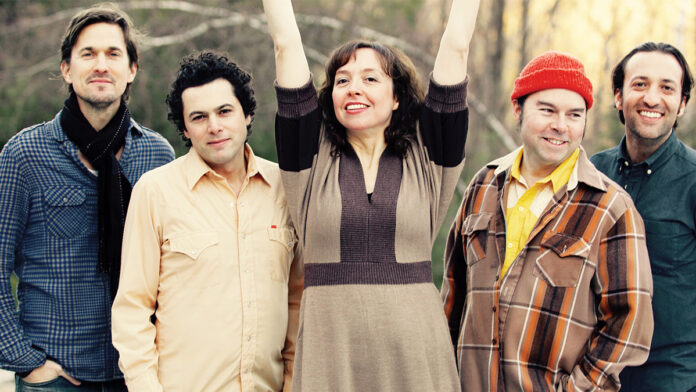
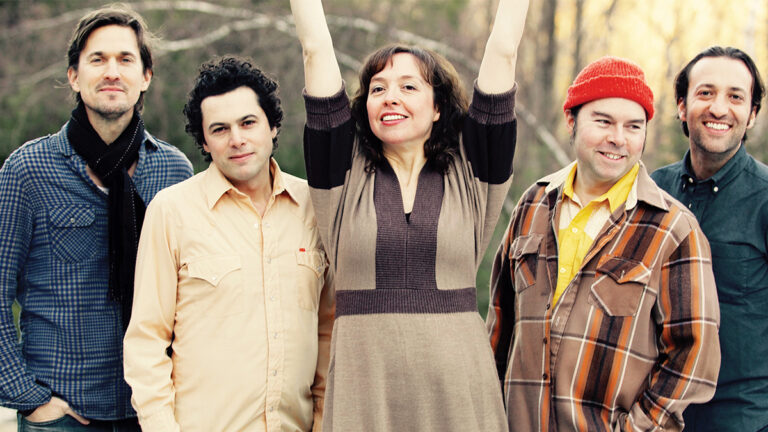
New York’s Hudson Valley has a rich folk music history; the legendary Pete Seeger championed environmental and social causes in the area, among others. Folk-rock group the Mammals is part of a new generation of bands carrying on the Hudson Valley music lineage, sharing its legacy with the global audience of roots music fans. Co-founded by Seeger’s grandson, Tao Rodríguez-Seeger, the band brings a high-energy vibe to folk traditions and a truth-to-power ethos of which Seeger would have been proud. In 2008, the band went on hiatus and now they’re back, with a performance Tuesday at Flynn’s Cabaret (formerly Don Quixote’s). CJ
[dropcap]T[/dropcap]o paraphrase an old saying often attributed to Mark Twain, everyone talks about fake news, but nobody does anything about it. How did our culture get to a point where anything can be decried as fake news, and what can be done to restore faith in legitimate news reporting? These are the questions Conn Hallinan will explore in his talk “Stumbling Around Freedom: A History of the Press” on Tuesday, March 6, at the Kresge Seminar Room at UCSC. Hallinan—who, as a former Kresge Provost and faculty leader of the UCSC journalism minor for 22 years, has been the mentor to many aspiring journalists at the university over the years—spoke to GT about the issues facing the mainstream and alternative media.
One of the things you’re going to examine at Tuesday’s event is our relationship, as consumers, with the news. Our culture seems to be in a kind of fake-news Chinese finger trap where both sides of an issue are trying to pull at the truth of any story they don’t like. How did we get to a point where everything can be labeled fake news?
CONN HALLINAN: I don’t think there’s any one particular thing that you could say ‘this is the reason.’ But the internet has made information available to a wider number of people than any other information system in the history of humanity. It means that there’s an enormous amount of material out there, and most doesn’t really have any checks and balances. There’s good and bad in that. There were checks and balances that existed when you basically just had the mainstream press, but they were ideological checks and balances. And they basically had one view of the United States: the United States was always good, and our enemies were always bad. The United States has the best medical system in the world, has the greatest democracy in the world, etc. A lot of it was pretty old-fashioned propaganda stuff, particularly during the 1950s and the early 1960s. But I think what happened is a number of things. First of all, there was really a breakdown when the Cold War began to break up, and the war in Vietnam came along. Suddenly people began to question what they were reading in newspapers. The New York Times may have exposed the Pentagon Papers, but they strongly supported the war before that happened. People who went and saw The Post may have been impressed by what they did around the Pentagon Papers, but The Washington Post editorialized in favor of the war right from the beginning.
And so there was a collapse, a sort of recognition that people had been jobbed about Vietnam, about civil rights. The fact that when the civil rights movement began, none of the Northern papers sent reporters into the South—the first people to do that were in the alternative press. And I think there was a general kind of political and cultural questioning. But the current polarization, you know, I hate to put it on one thing, but Fox News and Rupert Murdoch have had a tremendous impact here, because Murdoch’s style of making money is to demonize the enemy. And that’s what Fox News does all the time.
What kind of damage does it do to our society when people buy into the Nixon/Trump strategy of positioning ‘the media’ as the enemy?
Well, you know, there was a reason why the First Amendment to the Bill of Rights is on press freedom. That’s not by accident—it’s not the Second Amendment, or the Third Amendment, it’s the first. And the reason why was because even at that time there was a recognition, having come out of a very hierarchical situation where you had a king who ran everything, that government had to be taken to task—that there had to be a transparency that allowed democracy to take place. Because the thing about democracy is it’s not simply the right to vote. It’s the right to make choices, to know when you’re voting for something that there is a choice there. Without the media, there is no choice. People don’t know what the issues are.
What can legitimate news sources, especially in the alternative media, do to better establish and maintain their own credibility in this era? How do we fight fake-news fatigue?
Boy, that is the $64,000 question, you know. It really is. And I wish I had a quick answer to that, but I don’t. I guess the only thing is, there’s this line that Shakespeare gives Hotspur in Henry IV, Part One. It is “Speak the truth, and shame the devil.” And I don’t know what else to do but to do that.
At various times in American history, the media has made a difference in people’s lives. I mean, it certainly played that role in every great moment, every great social revolution in U.S. history. And that’s true throughout the world. The media played a critical role.
There are two problems. One is that the media is very isolated from the majority of American people. Two, how many editions of the media monopoly were there? Ten, twelve, something like that? We know that fewer and fewer corporations control larger and larger amounts of the media, and that’s just the reality. I mean, it is an absolute problem. And it means that what you’re reading in newspapers is increasingly what a very narrow section of the political and economic spectrum wants you to read in newspapers. Now, how are newspapers going to win back people’s trust when you’re not going to get hard-hitting articles on the oil industry from a lot of newspapers because a lot of newspapers are owned by the oil industry? Or agribusiness, or whatever industry. So you got a problem.
My feeling has always been that you can influence the mass media. I believe that; I’m not a cynic on that question. But you do it by holding their feet to the fire. And the only way you can really hold their feet to the fire is to make your reporting better than their reporting, to make your research better than their research, to contact communities that they aren’t interested in, or maybe don’t even know exist. And to give those communities voice.
Then I think you can have an influence on the mass media, and in any case you can call out the devil. And in the end that’s what this is about. This is about shaming the devil. I think that the underground media, the alternative media, has shown it can do it in the past. I’m absolutely convinced that it can do it in the future.
Conn Hallinan will speak on ‘Stumbling Around Freedom: A History of the Press’ at 5:30 p.m. on Tuesday, March 6, at the Kresge Seminar Room at UCSC. Admission is free. Hallinan blogs at dispatchesfromtheedgeblog.wordpress.com.
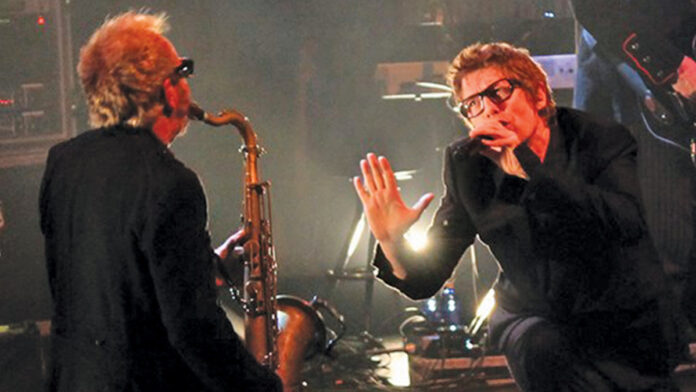
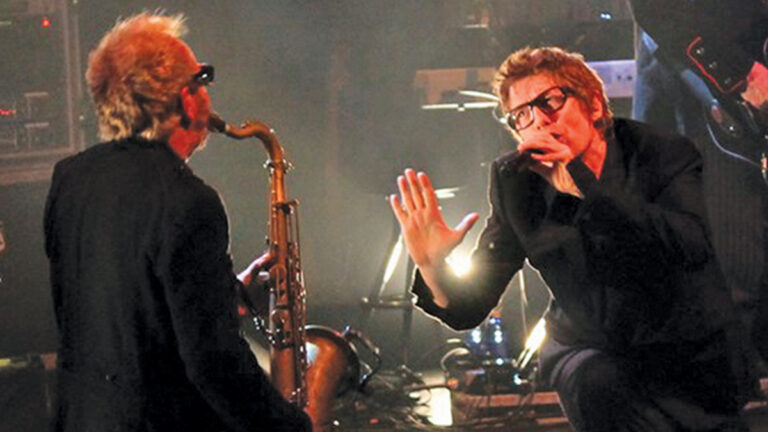
“Love My Way,” “Pretty in Pink,” “Heaven,” “The Ghost in You”—hit after hit after hit, the Psychedelic Furs were an era-defining band in the 1980s. Whether you were new wave, goth or punk, the Furs had something for you; the band had enough edge and mystery to give their mainstream popularity underground credibility. Formed in the late ’70s in London by brothers Richard and Tim Butler, the band went on a 10-year hiatus in the early ’90s but reformed in 2001, and it has been touring and performing ever since. If you want to revisit your youth, or just witness one of the great post-punk bands, get out your hairspray, cuffed jeans and paisley shirt and hit the Catalyst on March 11.
INFO: 8 p.m. Sunday, March 11. Catalyst, 1011 Pacific Ave., Santa Cruz. $35/adv, $38/door. 423-1338. WANT TO GO? Go to santacruz.com/giveaways before 11 a.m. on Tuesday, March 5 to find out how you could win a pair of tickets to the show.
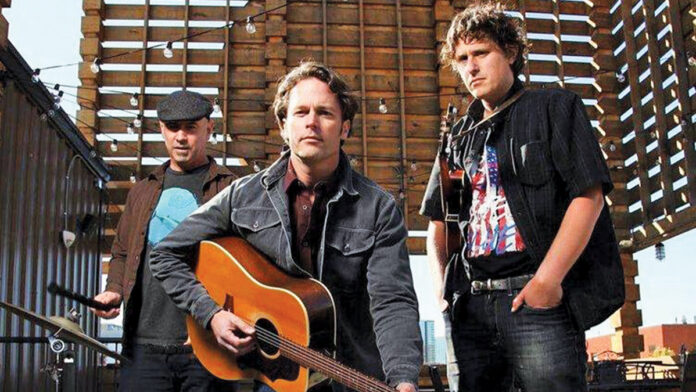
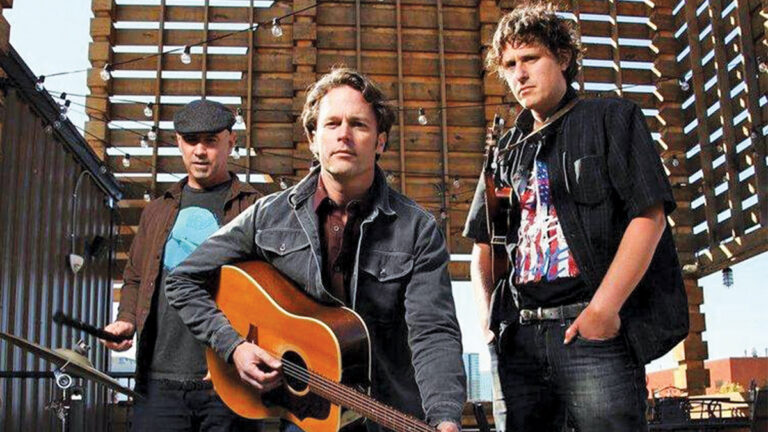
[dropcap]L[/dropcap]ast September, laid-back local folk-rock singer-songwriter Austin Shaw released his debut album to a packed house at the Kuumbwa. That same year, he did some touring with Americana legend David Bromberg, as well as ’90s alt-rockers Dada.
“It was a busy 2017,” he says.
Only a few years earlier, Shaw was living in New York, working at an investment bank firm. Music was barely a part of his life.
“It’s the antithesis of what I’m doing now,” he says of his not-so-long-ago old life. “I was working endless hours and wasn’t inspired or enjoying my job. I was doing it to make money. I was doing it because that’s what you do. You graduate from college, and you go and get a job, and get on that treadmill.”
He visited his sister in San Francisco, and enjoyed the break from the rat race so much that he decided to call his boss and quit right there. After flying back to get his stuff, he first lived in San Francisco, then Santa Cruz, lured by the surfing and easy beach life.
Since then, he’s become quite a prolific songwriter. In the past, he’d mostly played covers. But he also wrote stories, and after his sister made a comment about how much they were like songs, he pursued the craft.
“I’ve always been a big fan of storytellers, the James Taylors and the Paul Simons of the world, [up] to new guys like Mason Jennings. There was always something that I connected with. I was actually an English literature major in college,” Shaw says. “Once the floodgates were open, it started to flow.”
INFO: 8:30 p.m. Thursday, March 1. Moe’s Alley, 1535 Commercial Way, Santa Cruz. $9/adv, $12/door. 479-1854.
Event highlights for the week of February 28, 2018.
Green Fix
Community Art Fundraiser
The U.S. is facing the largest removal of protected lands ever, and the Monumental Action organization, a Felton-based grassroots organization, believes that the key to protecting our land is through art and creativity. The president recently shrunk Bears Ears National Monument and the Grand Staircase-Escalante National Monument, and there are at least 10 more monuments on the chopping block, and many others at risk. Monumental Action will host its first community art fundraiser on First Friday to continue their mission in bringing awareness and visibility around the importance of the environment and public lands.
‘Imagining Safe Space: A Contemporary Fiber Arts Show’
At this show, “make the most with what you have” is an understatement. Professional textile artist Marilou Moschetti and emerging artist Laurie McCann collaborated on an exhibit to encompass what safe spaces mean and why they matter, using mostly recycled and repurposed materials. McCann says she was heartbroken by the lack of spaces for both animals and people, and wanted to create a show around the importance of safe spaces. Both fiber artists showcase 3D objects like cocoons, nests, caves and other forms made from sustainable cloth, twine and paper.
INFO: Show opens Friday, March 2. Reception 6-9 p.m. Resource Center for Nonviolence. 612 Ocean St., Santa Cruz. 423-1626. rcnv.org. Free.
Sunday 3/4
Gregg Levoy Workshop
Lecturer and best-selling author Gregg Levoy is a human potential expert. A former behavioral specialist at USA Today, Levoy has led self-empowerment talks and workshops at Microsoft, American Express, the Environmental Protection Agency, and the Smithsonian Institution, just to name a few. Levoy will be coming to Santa Cruz to lead a psychological, spiritual and practical exploration workshop to help others respond to their life callings. Before quitting your job to become an entrepreneur, go to this workshop to better understand what a calling is, and how you can ensure success before you make the leap.
INFO:10:30 a.m. Free talk and music, 12:30 p.m. workshop begins. The Center for Spiritual Living, 1818 Felt St., Santa Cruz. 462-9383. $30.
Friday 3/2-Sunday 3/11
‘A Raisin in the Sun’
UCSC Theater Arts and Cultural Arts and Diversity presents A Raisin in the Sun by Lorraine Hansberry. The 1959 Broadway hit tells the story of a lower class African-American family’s experiences and struggle to gain middle-class acceptance in the face of racism and poverty. Renowned Hollywood actress and UCSC alum Adilah Barnes will play the lead role; you may know her as Anne Marie on ABC’s Roseanne. The title is a nod to Langston Hughes’s poem, “A Dream Deferred,” and the play centers around institutionalized racism and injustices still present today. A Raisin in the Sun is an opportunity for more discourse around racism and economic inequality, because Black history and experiences don’t end in the month of February.
INFO: UCSC Second Stage Theater Arts Center. 1156 High St., Santa Cruz. ucsctickets.com. General admission $18, student/senior $10. Free to UCSC undergraduates with identification, other UCSC affiliates $8.
Friday 3/2
Paul Richmond ‘The Naked Eye’ Opening Reception
Monterey-based Artist Paul Richmond has felt at odds with traditional notions of masculinity his entire life. To him, the concept of masculinity is flexible, nebulous and complex. With this in mind, Richmond painted a series of all-male portraits to explore masculinity in a variety of ways and expressions. From pigment application to color exploration, he invites others to reach beyond the immediate surface to better understand the complexity of what it means to be masculine. Show runs through Saturday, June 30.
INFO: Opening reception 5-9 p.m. Faust, 110 Cooper St. Ste 100F, Santa Cruz. paulrichmondstudio.com. 420-0701. Free.
Saturday 3/3
Diversity Mural Celebration
If you’ve driven past the Louden Nelson Community Center on Laurel Street recently, you may have seen members of the Diversity Center Youth Program hard at work on Santa Cruz’s newest mural. The LGBTQ+ youth inspired mural is called “Unify, Decolonize, Thrive” and represents the past, present and future of marginalized people through history. After nearly two years of collaboration, the mural is complete. There will be a ceremonial reception and guest speakers to celebrate the completion.
INFO: 1-3 p.m. Louden Nelson Community Center, 301 Center St., Santa Cruz. 425-5422. Free.
[dropcap]H[/dropcap]ighway 17 has a long and winding history of requiring grit and skill from those who traverse it. Of all of the unique characters to routinely travel “Killer 17,” one of the most legendary is Charley Parkhurst, a stagecoach driver who made his way West from New Hampshire during the gold rush in 1849.
Parkhurst, known as One-Eyed Charley for the black eye patch he wore after he lost his eye to the kick of a horse, held a reputation for being one of the toughest drivers to guide a six-horse stagecoach for the Pioneer Line between Los Gatos and Santa Cruz. He carried gold, mail and passengers over the summit, persevering over robbers (killing one named Sugarfoot), wild pig crossings, dangerous winter weather, and an unsteady mountain—the types of conditions that are easier for commuters to imagine after last year’s unrelenting storms. Only after Parkhurst’s death did the truth come out: he was, biologically at least, female.
The lesson, perhaps, is that Highway 17 has always been full of surprises. But as commuters look back on the year that rivaled the conditions over which Parkhurst triumphed, they are hoping for far fewer of them on the main artery between Santa Cruz and Silicon Valley this year.
“It was so treacherous,” remembers Judy Jackson, a marriage and family therapist who lives in Santa Cruz and holds her practice in Los Gatos. “It felt like a video game: dodging debris, trees falling around you, and muddy water covering the road.” Jackson has been making the commute for 15 years, and says she has never seen anything like last year’s storms.
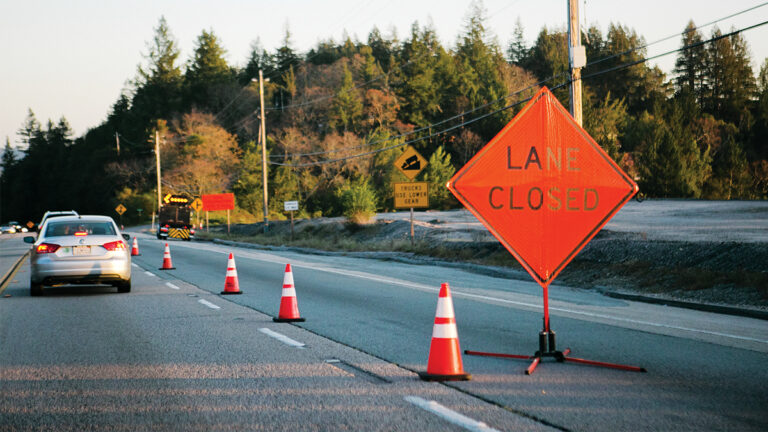
They came in with a bang in early January and didn’t let up. During the early morning hours of Monday, Jan. 9, 2017, the first mudslide slammed a KGO-TV news van. That slide’s effects lasted days, leaving the road with only one lane of traffic, and drivers deciding between waiting five to seven hours in their cars to get back to Santa Cruz or finding accommodations over the hill, where most hotels were fully booked. For riders who chose to wait it out, the Los Gatos Pizza My Heart delivered on bikes to people stranded in their cars.
The rain poured on throughout the month, and on Feb. 7, the mountain came down again in the same spot when an estimated 300-foot section of hillside slid onto the highway, blocking traffic in both directions near Jarvis and Vine Hill roads. Commuters were left to extend their commute by at least two hours by taking Highway 1 to Half Moon Bay or take 101 via 156 in Watsonville, hoping for the best on those roads as well.
Erin Buchla is a twin specialist nanny whose clients for the last 18 years have been in San Jose, where she says there is better money to be made. She remembers one day in 2017 that every route into Santa Cruz was closed, leaving her unable to get home. “I realized we are sort of an island when it comes to these roads. We need to take care of them,” she says.
Crews worked through last weekend just below the summit on the Santa Cruz side. PHOTO: KEANA PARKER
Many commuters found camaraderie through the Facebook group Highway 17 Commuters and its more colorful sister group, Santa Cruz Commuters Rants and Raves, which reminds members to “try not to be an asshole all the time.” A favorite topic on the site, second to “boulders” moving slowly in the fast lane, is the “wet spot,” at Big Moody Curve near Redwood Estates in the southbound lanes. Accidents regularly happen there, and the term EFD, for “Every Fucking Day,” has become a sort of motto for regular commuters. Buchla’s son is even making a clothing line that reps the EFD acronym.
It was on the Rants and Raves page that Buchla first floated the idea of hosting an appreciation event for the workers on 17. “There was just so much complaining, and I felt like instead of complaining we could turn around and appreciate these people for what they’re doing, and not play the blame game because this is Mother Nature we’re working against,” she says. There was a positive reaction to the idea, and soon her inbox was flooded with offers to contribute food, entertainment and services.
Two days after the second Jarvis slide, a contractor for Granite Construction, Robert “Bobby” Gill and his coworker were struck by a truck that had just emptied debris and was backing up. Both were trapped under the vehicle, and Gill was killed. After word of the tragedy got around, the commuter community rallied, and Buchla’s Go Fund Me page raised $4,200.
By the end of February, when a tree came down crossing all four lanes, commuters and mountain residents had taken matters into their own hands, with one person supplying a chainsaw to cut the tree before emergency crews could get there.
Rainfall totals in January were 11.13 inches, up from the previous year’s 8.31 inches, and February didn’t let up either with almost 10 inches of rain, a dramatic increase from .72 inches the previous year. “Nobody expected we’d get out of a drought in one season and our mountains would fall down on our roads,” Buchla says.
Road (and Reputation) Repair
CalTrans bore the brunt of criticism for not moving fast enough on repairs last winter, but a year after the storms, Third District Supervisor for Santa Cruz County Ryan Coonerty says he’s happy with how quickly they responded to the crisis.
Santa Cruz County CalTrans spokesperson Susana Cruz says the improvements have been focused on three areas:
Sugarloaf and Glenwood, where the viaducts have had drainage improvements and paving;
The Wedding Chapel, where construction is ongoing after a slide went under the roadway and did some damage to water tanks. It required improvements through a paving and a barrier slab. They also did a soldier pile wall, drainage and slope reconstruction. The remaining work will take three or four more weeks with the total project costing 3.5 million;
Jarvis Road, where work is continuing after the slides. Cruz says there is an ongoing effort to repair the road from storm damage and maintenance from Scotts Valley to the county line at the summit. There are water percolation issues, so they are putting in a mattress drain system. This cost of this project is 1.5 million.
On the Santa Clara County side of the road, CalTrans is attending to sinkholes. Near mile marker 3.0 (measuring from the County Line at Patchen Pass), crews detected a sinkhole that appeared on the embankment as a result of the heavy winter storms. Further investigation showed that the culvert became separated, causing more erosion, which extended below the northbound number two (slow) lane. They discovered a second drainage system problem at post mile 3.1, where an invert was completely rotted away and washing out material under the pavement.
Also in April, a sinkhole began to manifest itself south of Idylwild Road at mile 1.6, close to the Redwood Estates exit that also leads to Holy City, once a religious community with a famously lurid history. The department’s geotechnical staff determined that higher groundwater levels due to the heavy winter storms were causing the sinkholes. If allowed to continue unabated, they warned, the sinkholes would expand further, with the resulting pavement damage causing closure.
Meg Brown, an artist and educator who is now retired, remembers when it was common for cars to overheat going over the summit. Her favorite improvement on Highway 17 is the raising of the berm by four inches to help block oncoming headlights, but she also appreciates the attention to detail that has gone into the recent repairs, including the faux rock walls on the exterior of the barrier walls.
“It’s a beautiful hill, and they stayed with the beauty of the hill just by that little detail, besides all of the engineering that went into it to make sure the hill doesn’t slide in and block people from being able to get to work,” Cruz says.
How Safe?
The high volume of commuters poses the biggest challenge to road repairs, says Cruz. There are currently 63,000 people commuting over the hill to work each day.
Some, like Jackson, have grown to love their commutes over 17. She’s noticed that the scanning of the road seems to mimic the healing that happens in EMDR therapy used for trauma. She says it helps her to process the traumatic experiences of her clients as well as her own grief she experienced when her mom passed away. “Where I used to dread my commute, I now see it as sort of meditation and therapy and appreciate the calm it brings,” she says. “Well, when the road isn’t being washed away in a storm.”
Even with an increasing number of commuters, Cruz says the Safe on 17 Task Force that was developed 10 years ago has had an impact on reducing collisions by 40 percent in the last decade by focusing on increased enforcement and visibility by the California Highway Patrol, changeable message signs indicating speed or warnings, closed circuit TV cameras and traffic monitoring stations.
That trend has reversed in the last two years, though. In an email, Santa Cruz County Regional Transportation Commission’s transportation planner Ginger Dykaar tells GT that “over the last three years, the number of injuries and fatal collisions on Highway 17 have increased substantially, with the increase in 2016 being the greatest since the Safe on 17 program began.” Complete 2017 collision data will be revealed at the Safe on 17 meeting next month.
“It felt like a video game: dodging debris, trees falling around you, and muddy water covering the road.” – Judy Jackson
Of the 989 collisions in 2016, 266 were injury accidents, and two of those were fatal. That number of fatal injuries may seem shockingly low to commuters who see semingly physics-threatening accidents regularly, but most years, the fatalities are either one or zero—a huge improvement from 36 in 1967, and 8 in 1990. Throughout the years, speeding has consistently been listed as the primary factor for collisions.
While there is not a lot that can be done to widen the road because of the geographical limitations, the Highway 17 Access Management Plan, a multi-agency effort, hopes to reduce “contact points” by studying the congestion patterns. They believe that reducing the entrances and exits through driveway consolidation will help keep traffic moving more smoothly. “You’re not widening the roadway, you’re trying to make that roadway as productive and as least congested as possible,” Cruz says.
“It’s always a balance, because people rely on those entrances or exits to get to their homes,” Coonerty says, “so it’s looking at changes on a micro level to understand what can be done and how it would impact people.”
Stephen Brown, who began commuting on Highway 17 in 1980 and made the trip “only a couple thousand times” before he was able to work as a technical writer from home in Santa Cruz, appreciates these minor adjustments. He recalls the slight widening of curves and the addition of a shoulder to the second curve after the Glenwood Cutoff where there used to be regular accidents. “They did a fairly minor change. All it meant is there was a little shoulder there, it was a little wider, and it made it hugely easier to drive, in ways that most people don’t pay attention to,” he says.
Brown has paid a lot of attention to Highway 17, though, making the highway a fictional character in a book he wrote after he served on a jury involving a road-rage shooting death of a man in 1991. The incident apparently started near Lexington Reservoir, continued over the 26-mile stretch of the mountain, and ended near 41st Avenue, where paramedics found the victim’s body and initially thought it was a hit and run incident. In his glove box, authorities found the licence plate of the alleged shooter, one of many clues that didn’t add up to a conviction for the hung jury.
The Metering Effect
The idea of keeping Santa Cruz small and sacred goes back as long as the road has been in existence, to the Ohlone who lived here for 10,000 years before the Spanish arrived. Father Lasuén, founder of nine of the 21 California missions, made the journey over the hill, according to historians, on Aug. 28, 1791. In his 1791 report written at the San Carlos Mission, he expresses excitement about building a trade route between the Santa Clara and Santa Cruz missions, and although it was a rough road, he would have it repaired “by means of the Indians of the mission”—i.e., slave labor.
More than 200 years later, one-third of Santa Cruz County relies on the economic connection to the South Bay, according to Coonerty.
Just as long-standing is residents’ resistance to the commute. Controversies about making the road more direct began in the 1950s, according to Richard Beal’s 1991 book Highway 17: The Road to Santa Cruz. At the time of the debate over whether to designate 17 as a freeway in the 1960s (which would have eliminated entrances and exits), then-Santa Cruz County Supervisor Henry Mello introduced a resolution to make Highway 17 a one-way road northbound from Santa Cruz. It failed by a 3-2 vote.
This idea appeared again in 1984 when Gary Patton, then a Santa Cruz County Supervisor, said, “A decision to widen Highway 17 will fundamentally alter the future of the [Santa Cruz] community. If we add more lanes to the highway, they will be used to capacity and it will destroy the independence and uniqueness of this community. The only thing that gives us any chance of maintaining our quality of life here is that mountain.”
Coonerty’s idea of quality of life for Santa Cruzans has evolved since Patton spoke those words. He’d like to see our local economy supporting Santa Cruz residents. “Every hour you’re sitting in your car trying to get to and from work is an hour you’re not spending with family or volunteering in the community or coming to a city council meeting,” he says.
He points to the growing tech companies Looker, Productops, Buoy, and Amazon. “Amazon’s growing here is a product of their engineers not wanting to commute over the hill. I think companies are recognizing they can have access to a talent pool and lower real estate costs here and happier employees if they set up satellite offices or they let them work remotely in co-working spaces or at home. I’m hopeful that the future economy, by allowing that flexibility, can be a little more humane for our residents,” he says.
Matthew Swinnerton, programs director of Santa Cruz Works, whose mission supports the development and growth of tech and science companies here in Santa Cruz, says it’s already happening. “They’re already here. If you go to Amazon’s career page, they have 32 open positions. Looker has 25 positions. Plantronics has 26. Those are just the published positions, and I know Amazon and Looker are going to increase that significantly,” he says.
Buchla, who has two side jobs as an Uber driver and caterer, ended up throwing the appreciation party that her Go Fund Me page had funded for Highway 17 workers, police and firefighters on June 17 of last year. It included a host of raffle prizes—including four box seat tickets to the Giants and Sharks games and five-star hotel stays—food from Corralitos Meat Market, beer from New Bohemia Brewing, and ice cream from Marianne’s, as well as music by local musicians.
Like so many, Buchla dreams of ending her daily Highway 17 drive even under the best conditions. She may not be able to find high paying nanny jobs here, but she has her sight set on opening a café in Capitola Village.
We have many festivals again this week, all occurring on Thursday. Chinese New Year, Full Moon, Purim, Holi. Chinese New Year always ends at full moon with the hanging and releasing of lighted lanterns. It is a Festival of Lanterns and Light.
The festival of Purim celebrates the freedom of the Hebrew people from the cruel Haman (a magistrate) seeking to destroy them. Esther, the Queen of Persia, who was secretly Jewish, saved her people from death. It’s a joyful festival and one bakes the sweet cookie, Hamantaschen (Haman’s pockets), to celebrate this festival.
Holi is the Hindu Spring Festival of Colors. Bonfires are lit the night before warding off evil. Holi is the most colorful festival in the world. It is also a Festival of Love – of Radha for Krishna (the blue-colored God). It is a Spring festival with singing, dancing, carnivals, food and drink (Bhang, a drink made of cannabis leaves). Holi signifies good over evil, ridding oneself of past errors, ending conflicts through rapprochement (returning to each other). It is a day of forgiveness, including debts. Holi also marks the beginning of New Year.
Thursday is the Pisces solar festival (11.23 degrees) under a full moon. The Soul’s meditative seed thought for Pisces, recited with the Great Invocation, is “I leave the Father’s house and turning back, I save.” In Pisces under Soul direction, we are here to help “… close the door to evil and restore the Plan on Earth.”
ARIES: In the next days, weeks and months it’s important to see yourself as resourceful and valuable. Perhaps this is difficult. Make lists of all your gifts, abilities, talents, good deeds, thoughts, ideas and plans. And then all your blessings. In these your value appears. Place these lists on doors, walls and mirrors. Read and review daily. These offer you a new self identity as server for humanity—the task for all Aries in the Aquarian Age.
TAURUS: Things hide away, especially you. Or you find someone else in hiding and join them. Someone close is quite mysterious and valuable to you. They’re knowledgeable and have the skills needed for your next creative endeavor for humanity’s future. Resources are hidden away too, though still available. Call these resources forth in prayers and mantras and sacred words, while tending to practical daily tasks. Eliminate (give away) as much as possible.
GEMINI: Past friends, experiences, events, relationships, and resources are contacted, re-discovered and renewed. All of these are valuable for reasons later revealed in your future. A certain group, also from the past, holds great Love/Wisdom (Ray 2, Gemini’s ray). They hold out to you a way to enter the life stream of humanity through study and understanding of the mysteries. You should renew your study of astrology and your transits.
CANCER: Ponder upon how you want to be seen, known and recognized in the world and how you want to help build the new culture and civilization. You are to nurture the new era at its foundational stages. Begin your garden soon, have a worm bin, create biodynamic soil, use organic seeds. Parsley and cilantro are most important for you this year. Teach everyone what you learn. Cancer needs to move from feeding the world to helping the world feed itself.
LEO: The Earth (soil, trees, plants growing) is very important for your well-being. Make sure you’re out and about in the Sun at dawn and dusk, out with the devas and in nature—the most balanced kingdom. The Sun’s radiations strengthen your heart and mind, refocuses your enthusiasm (“filled with God”), rebalances your entire system. When we are balanced and in rhythm, practical health emerges. Where is your garden and who are your companions?
VIRGO: You may struggle mentally to maintain equilibrium between what you desire and what is actually possible. It’s good to study the subject of sacrifice—the First Law of the Soul. At the center of sacrifice is Love. Love and sacrifice are the same. We are on Earth because we sacrificed (chose) to be here. You may feel you’ve become the warrior. Spiritual warriors are practical, poised and always triumphant.
LIBRA: You will assess your relationships in terms of their value. Not value as in money but virtues. Simultaneously, assess the values (virtues) you offer others. Is there more Goodwill you can offer others? Goodwill creates Right Relations. Allow only the goodness of yourself to be radiated outward. Goodness is an inner purity. What goodness do you offer others? Remember true love isn’t a feeling. It’s a choice.
SCORPIO: Tend daily to all things small and necessary, offering your deepest attention. Observe habits, agendas, how you work in all environments. Observe how others work, too. Care and tend to yourself. Evolution occurs step by step. We begin with tending to our physical, emotional and mental bodies. Then we progress to things spiritual. Each day “brood” upon the service needed for the coming day. Ask for Soul direction. The personality then becomes calmed.
SAGITTARIUS: A long held creative dream seems to be all around you. You’re redefining, reassessing and reaffirming the importance of your life’s work. In the meantime, balance yourself with amusement and play, much needed and much missed recently. Acknowledge that your creative work reflects who you are now, and part of who you will become later. All parts of you are aligning in a close spiritual unity. You are building a Temple of the Soul.
CAPRICORN: You see the need for nourishment of the self and of others. One source of nourishment is financial security. Another is the beauty, design and organization of your home and gardens and outdoor rooms. Make sure as you tend to your home that you create a practical and private workspace for yourself. Your imagination, vision and creativeness are most important for your well-being, your home and family at this time. Create over time, the garden of your dreams.
AQUARIUS: Times seems to have sped up. At times, we can feel that life is a bit wild and out of control. We are entering the Aquarian Age, ruled by Uranus, god of Lightning. New things, in coming times, will appear. A new balance is attempting to come forth in the world. Know that you are a returned “angel” come to help humanity steer itself downstream in a new Noah’s Ark. You are to identify, work with and bring in the new culture and civilization. What part do you want to play? Think deeply on this.
PISCES: Life becomes more accelerated, yet more-subtle, at times feeling a bit out of focus and very different. In these difficult financial times, it’s good to tithe (give) to those in need—St. Jude’s Children’s Hospital; Catholic Charities; Doctors Without Borders; UNESCO. These are difficult financial times. The spiritual law is that what we give is returned 10-fold so we can give and give again. When we serve others, our life is spiritually cared for—the third Law of the Soul is Service. Hang lanterns everywhere. Then leave them there.
Live music highlights for the week of February 28, 2018.
WEDNESDAY 2/28
JAZZ
MILES ELECTRIC BAND
Miles Davis landed at the center of the jazz/rock fusion movement with the release of Bitches Brew, but that seminal 1969 album marked the start of a new journey rather than a culmination. He continued to evolve over the next two decades, adding and subtracting elements from...
Last September, laid-back local folk-rock singer-songwriter Austin Shaw released his debut album to a packed house at the Kuumbwa. That same year, he did some touring with Americana legend David Bromberg, as well as ’90s alt-rockers Dada.
“It was a busy 2017,” he says.
Only a few years earlier, Shaw was living in New York, working at an investment bank firm....
Event highlights for the week of February 28, 2018.
Green Fix
Community Art Fundraiser
The U.S. is facing the largest removal of protected lands ever, and the Monumental Action organization, a Felton-based grassroots organization, believes that the key to protecting our land is through art and creativity. The president recently shrunk Bears Ears National Monument and the Grand Staircase-Escalante National Monument,...




 The U.S. is facing the largest removal of protected lands ever, and the Monumental Action organization, a Felton-based grassroots organization, believes that the key to protecting our land is through art and creativity. The president recently shrunk Bears Ears National Monument and the Grand Staircase-Escalante National Monument, and there are at least 10 more monuments on the chopping block, and many others at risk. Monumental Action will host its first community art fundraiser on First Friday to continue their mission in bringing awareness and visibility around the importance of the environment and public lands.
  At this show, “make the most with what you have” is an understatement. Professional textile artist Marilou Moschetti and emerging artist Laurie McCann collaborated on an exhibit to encompass what safe spaces mean and why they matter, using mostly recycled and repurposed materials. McCann says she was heartbroken by the lack of spaces for both animals and people, and wanted to create a show around the importance of safe spaces. Both fiber artists showcase 3D objects like cocoons, nests, caves and other forms made from sustainable cloth, twine and paper.
  Lecturer and best-selling author Gregg Levoy is a human potential expert. A former behavioral specialist at
  UCSC Theater Arts and Cultural Arts and Diversity presents
  Monterey-based Artist Paul Richmond has felt at odds with traditional notions of masculinity his entire life. To him, the concept of masculinity is flexible, nebulous and complex. With this in mind, Richmond painted a series of all-male portraits to explore masculinity in a variety of ways and expressions. From pigment application to color exploration, he invites others to reach beyond the immediate surface to better understand the complexity of what it means to be masculine. Show runs through Saturday, June 30.