While on honeymoons with their new spouses, having violently divorced years before, Amanda and Elyot discover each other sharing adjoining balconies in the same hotel. Well, one thing leads to another, and… sometimes the line between love and hate is so thin. In Noël Coward’s masterpiece Private Lives, we witness two selfish, passionate, egotistical, madly in love people drive each other absolutely crazy. How can they possibly survive together? But more importantly, perhaps, how can they survive apart? With Coward’s searing wit, you’ll laugh until you cry while they scream until they kiss. And vice versa.
Santa Cruz Shakespeare returns to The Audrey Stanley Grove in Delaveaga Park with five top-notch productions for their 2026 Season: ‘TIL DEATH DO US PART. Don’t miss it from July 11 through October 4, 2026!
Drawing Date for this Giveaway is Monday, September 21, 2026. Winners notified by email and have 48 hours to respond or forfeit. Must be 18+ to win.
Jason Robert Brown’s gorgeous musical The Last Five Years looks at the beginning and ending of a relationship through the eyes of Cathy and Jamie. In rotating songs, Cathy’s journey moves backward through the relationship, while Jamie’s moves forward. Through beautiful music and clever, moving lyrics, Brown looks deeply at the sacrifices we make, how we come to define each other, and what it costs to let it go.
Santa Cruz Shakespeare returns to The Audrey Stanley Grove in Delaveaga Park with five top-notch productions for their 2026 Season: ‘TIL DEATH DO US PART. Don’t miss it from July 11 through October 4, 2026!
Drawing Date for this Giveaway is Thursday, September 24, 2026. Winners notified by email and have 48 hours to respond or forfeit. Must be 18+ to win.
Acid Bath is an American sludge metal band from Houma, Louisiana, that was active from 1991 to 1997. High on Fire is an American sludge metal band from Oakland, California, that was formed in 1998. Melvins are an American sludge metal band from Montesano, Washington formed in 1983. Windhand is an American doom metal band from Richmond, Virginia, formed in 2008.
The Quarry Amphitheater located at the heart of the UC Santa Cruz, is the largest outdoor venue with an existing stage and seating in the greater Santa Cruz community.
Drawing Date for this Giveaway is Thursday, October 1, 2026. Winners notified by email and have 48 hours to respond or forfeit. Must be 18+ to win.
Cannabis consumers face a bewildering menu of options. You can smoke it. Vaporize it. Eat it. Drink it. Dab it. Squeeze drops of tincture under your tongue. You can even put it up your tooter. Isn’t human ingenuity astonishing?
Most Californians who use cannabis smoke it. You trust the high, you’re holding the real plant and it’s self-titrating.
Two puffs, “We’ve got so much to say.” Four, “That’s the funniest thing I’ve ever heard.” Six, “I need to step out on the porch and talk to Jesus.” Joints are portable, sharable; they don’t require an owner’s manual, and all you need is fire. The ritual can be as meaningful as the high itself: grinding flower, rolling the joint, and the puff-puff-pass clockwise circle is a bonding ritual that is thousands of years deep. Smoking remains the benchmark cannabis experience, but a noticeable shift is happening.
Sage Journal studies show that unlicensed, non-dispensary, black market weed accounts for 60% of the ganja Californians consume. Put black market and licensed market consumers together, over 55% of Californians report that smoking is their primary method of consumption (Whitney Economics: 2023 Cannabis Consumer Study).
DIFFERENT TOKES FOR DIFFERENT FOLKS
Some insist nothing can replace the ritual and flavor of smoking flower.
I have a friend who considers it sacrilegious to vaporize flower. “That is like a Roman Catholic microwaving the Eucharist.” But more Californians are using dry-herb vaporizers. The vaporizers we discuss here are not the oil concentrate vape pens, examined in our first Altered States column: “Are Vape Pens Safe?” goodtimes.sc/safe-cannabis-vape-pen.
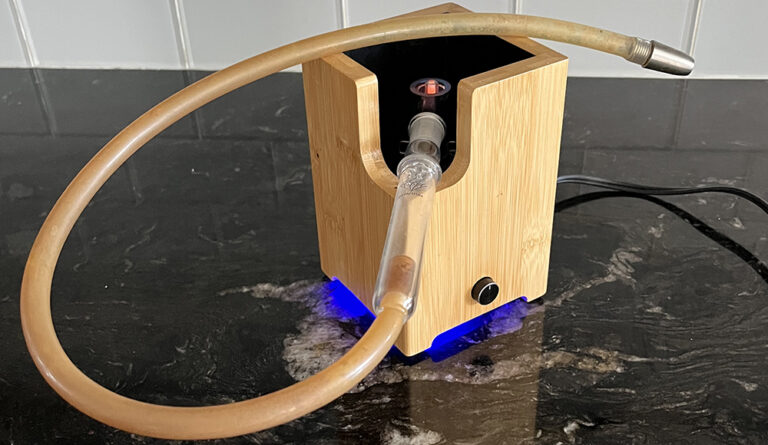
Vaporizers heat dry flower into an aerosol with tiny liquid droplets in the air that contain the plant’s full-spectrum cannabinoids. You do not inhale smoke byproducts like tar and carbon monoxide because vaporizing relies on controlled heat to boil compounds off the flower. Compared to smoke, the vapor is much closer to the raw chemical profile of the plant (PubMed Central).
I do both. My wife Julie, who refers to us as Weedo and Wino, was alarmed by the Center for Disease Control’s (CDC) warning that secondhand cannabis smoke is harmful. Me and my pot smoke got kicked out of the house. Then Julie heard me talking about how much less phlegm I expectorate when I vaporize flower rather than burn it, and for my birthday she sprung for the $300 Ditanium Vaporizer, from Planet of the Vapes. Me and my vapors have been allowed back in the house.
CALL ME THE PHLEGM MASTER
Julie is not being unreasonable about the smoke; my allergist Dr. Alan Goldsobel doesn’t like me burning flower either.
“Richard, you have low-grade emphysema.”
“Hmm. Julie just bought me a state-of-the-art Ditanium Vaporizer. I inhale vapor, no smoke. I phlegm way less, doctor.”
“You are still using your lungs as a filtration system.”
Damn. My doctor has this radical notion that lungs should contain mostly air.
THE GOOD NEWS/BAD
I described my doctor visit to Sam Laforti, Cannabis Licensing Manager for Santa Cruz County. Sam said, “When you’re putting it in the vaporizer, it’s not burning the plant material. Carbon gets very small atomically when it’s burned and settles in your lungs, causing emphysema.”
“Vaporization heats plant material or concentrates to release cannabinoids without creating the tar and toxic combustion byproducts produced by smoking,” finds the National Institutes of Health (NIH). “Chest CT imaging studies indicate that smoking cannabis is associated with airway inflammation, bronchial thickening, and higher rates of paraseptal emphysema,” a pulmonary emphysema that affects the outer, peripheral parts of the lung lobules next to the pleura (American Lung Association).
Vaporization appears to be healthier but remains in the distinct minority; surveys by the NIH find that about 15% of cannabis consumers vaporize flower. It’s clunky, takes time to heat up and is expensive. Outlets like the online seller Planet of the Vapes have portable, handheld vaporizers, but I find them a hassle to use and prone to malfunction. But hey, they might work for you; I’ve heard there are portable flower vaporizers with a return policy. The gold standard for tabletop vaporizers is the classic Volcano; it literally fills a balloon with cannabis vapor, and you suck it out of the balloon. Think of it as a bong designed by NASA. A Johns Hopkins study found that vaporized cannabis flower produced higher blood THC concentrations and stronger effects than smoking.
Across California, longtime cannabis smokers are quietly migrating to dry-herb vaporizers. If smoking works for you, you can pass it to me on the left-hand side anytime. But if coughing and phlegm bother you, you might try vaporizing dry flower. Either way, lung health is a negotiation between your pleasures and your pulmonologist.
Do you have questions for our drug expert? Send them to ed****@*****ys.com
After the stagnant 30-minute concert-closing piece by Sarah Hennies at the 2026 Cabrillo Festival of Contemporary Music, I felt nothing but pity for the orchestra and outrage for my fellow audience members. This was not the programming that had, in the past, propelled the Festival to thrilling heights.
It was a tedious, mind-numbing exercise in acoustical terrorism. We were held hostage by a performance narcissist who misused the skill and expertise of a large orchestra to proclaim her hatred of the current social landscape. The effect was excruciatingly dull.
So insulting to orchestra and audience alike was the irritating, seemingly uncomposed piece, that most of us enduring its performance on Saturday August 1 were physically numb when the sequence of sounds finally stopped. Hennies admitted that the piece was created through free association. A sonic tantrum guided by the perpetrator’s unconscious.
The visual arts have long been weaponized in the name of de-skilling, of eradicating anything that smacks of beauty or training or mastery. In the name of radical inclusion, gone is the encouragement of pride and enjoyment that comes with learning new skills, practicing those skills and polishing them to new expertise.
Post-modernism, with its insistent rejection of narrative arc, its self-congratulatory reverse snobbery, is, in the words of Millennials, so yesterday. Hennies’ anti-classical approach has been done and done. It takes new music nowhere. It reaches for nothing beyond its own self-absorption. A swamp of self-help disguised as originality.
Hennies’ soul-deadening half hour illustrated that the colonization of art by narcissism has a disturbing grip on the world of contemporary music. Or at least the music increasingly programmed by the once-provocative and exciting Cabrillo Festival of Contemporary Music.
Having read Hennies’ background and interviews with her in national publications, I agree that she sounded good on paper. But did anyone actually listen to her work? Did anyone think to vet the piece—I won’t call it music—that was presented during the second night of the Festival?
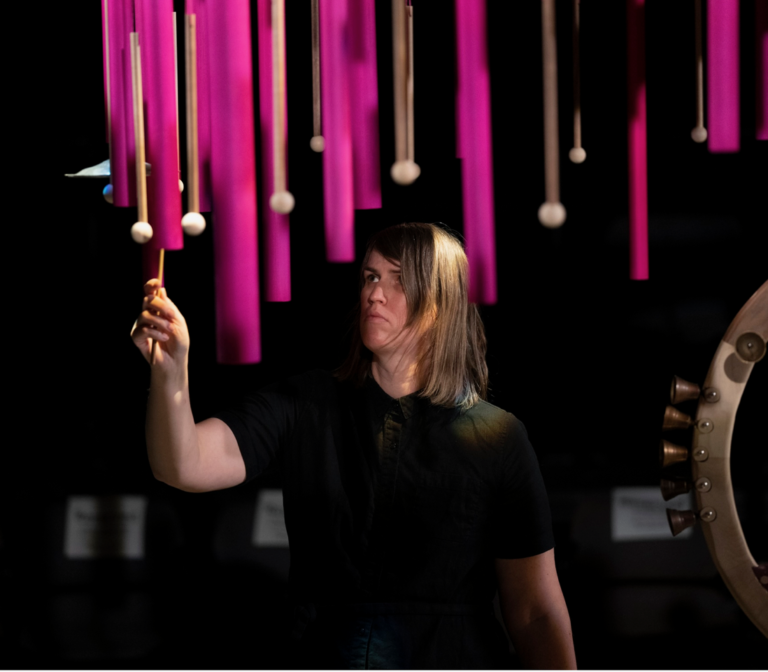
Long passages of barely audible wooden sticks lightly drawn across the strings of violins. Long, long passages. The occasional gong. The odd drum here and there. The repeated phrases of noise that went on for what felt like eternities. Thirty minutes of hostility. Thirty trivial minutes.
Here was work aggressively expanding the frontiers of mediocrity. What we heard was a loosely strategized tantrum flung in our faces by a self-absorbed poseur trying to find herself at public expense.
I applaud any and all efforts by inquiring individuals to find themselves. Surely the pursuit of self-knowledge can be worthwhile, but not at the expense of authentic artistry.
Yes, there is worthy new music being composed. For example, Norwegian composer Nils Asheim has scored folk language practices of the Northern Sami into a haunting piece for choir and string orchestra, performed in Carmel at the Bach Festival a month ago.
That same Festival offered a profound Nuits, Adieux written 30 years ago by Kaija Saariaho, involving choral ensembles, each singer with two microphones amplifying and processing their sounds at non-synchronous intervals. The effect was staggering, beautiful, mysterious, and utterly fresh in its overall impression. Again new music rife with imaginative processions of sounds and words. A piece designed to open minds rather than shut ears.
The Cabrillo Festival has been known to present compositional work that stretches the exceptional abilities of its orchestra. What went wrong here? Why fail to specialize in musical ideas that push the frontiers beyond any single individual’s wants, needs, and issues?
Can we blame COVID? Or the retirement two years ago of savvy Executive Director Ellen Primack who had finessed a programming structure that made us all proud? Hard to tell, but the word “community” was repeated many more times than the word “creativity” in the introductions to the evening’s program by current Executive Director Riley Nicholson.
Is community now the primary goal of a once adventurous new music Festival? What happened to provocative? Or the mission of bringing the most exciting and skilled new composers to the Festival?
In the words of one regional music director, last night’s final hour was “torture.”
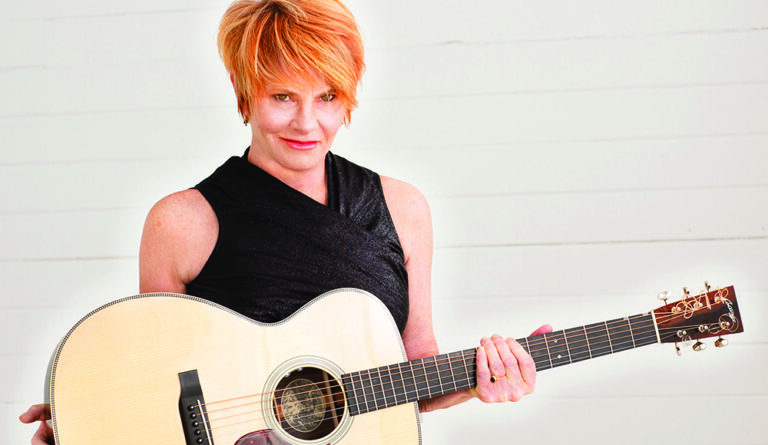
Onstage since the 1970s, singer/songwriter and Grammy Award winner Shawn Colvin has been a wandering troubadour for most of her life and will be performing at The Rio on Saturday, August 8.
Colvin lived a hardscrabble musician life, but when she found fame, it was already well deserved.
“I moved to New York in 1980 and kind of evolved from cover bands to—I would do anything,” says Colvin from her home in Austin, Texas.
Trying to work and play every night, the young folk singer would take any gig she could find in 1980s NYC. “I had to have five gigs a week. I’d do a couple of solo ones. One with my own band and one with a country band. We just took work wherever we could. We were all struggling,” Colvin recalls.
Her timing was immaculate, as she found herself among Fast Folk, a collective that fostered community through a label and magazine and often released the first recordings of singer-songwriters such as Colvin, Lyle Lovett and Tracy Chapman.
It was a heady time to be young and emerging as a talented artist.
“I wasn’t necessarily super adventurous. Like I didn’t go to CBGBs very often, except when I knew the person that was playing or I was a really huge fan, but it wasn’t my hang. I was more in the folk clubs like at Kenny’s Castaways,” Colvin remembers.
Initially, Colvin had found a country scene in Austin. An “amazing talent” named Buddy Miller put together a country band and moved to NYC. The film Urban Cowboy was really popular at the time and country music was back in style.
Colvin joined the band and made the move up North.
“There were a lot of us in that scene and we kind of rotated within each other’s bands, you know? Soozie Tyrell, who you might know from Springsteen’s band, she had a band that played all the time and I was a backup singer for her. Just different configurations. We’d all mess around. We had a trio with Soozie and a woman named Lisa Lowell. We’d do a trio at the Upper East Side in a tiny little club. We paired up and did whatever we could to make a dollar. Wherever I could sing, I would go.”
Through Fast Folk and constant gigging around, Colvin began touring with Suzanne Vega in 1988. This brought her the attention of a label and the recording contract that followed.
That is when everything changed. Colvin’s debut album, Steady On (1989), won a Grammy Award for Best Contemporary Folk Album. That ensured steady paychecks.
But it was in 1996, on Colvin’s fourth album, A Few Small Repairs, and the viral moment of the single “Sunny Came Home” that Colvin became a nationally known artist and the Academy agreed. That year Colvin won the Grammy Award for Song of the Year and Record of the Year.
Nothing prepares an artist for mass acclaim and all the vices that come with it.
The septuagenarian is not lost in nostalgia at all. But Colvin can’t help but laugh at her journey from an anonymous songwriter hustling around the mean streets of NYC, to an everybody-knows-your-name rock star and then, ultimately back to figuring out what life is all about. And sometimes laughing about the earlier years.
“I remember the first time I played the Philly Folk Fest. I was peddling a cassette to whoever would buy it and whatever record company might listen to it. I sold them at the Philly Folk Fest. That was my first foray into selling a product. Yeah, merch. So it still works to an extent, but it’s a different world,” Colvin laughs.
Shawn Colvin appears on Saturday, August 8 at the Rio Theatre, 1205 Soquel Avenue. Showtime is 8pm and tickets are $40. More information at riotheatre.com
In the early days of aviation, navigation instruments were rudimentary, and the skies were often a blur of clouds, darkness, or featureless horizons. Pilots sometimes relied on a technique called “dead reckoning”: good instinct bolstered by simple instruments like compasses and stopwatches. I suspect you will benefit from practicing a metaphorical version of dead reckoning in the coming weeks. You may not have all the data you would like, and the path ahead might be less than clear. But you already possess enough hints and inklings to make thoughtful approximations. If you’re alert and flexible, listening to subtle signals within you and around you, your evolving estimates will guide you uncannily close to the right destination.
TAURUS April 20-May 20
Nineteenth-century poet Emily Dickinson rarely left her comfortable home in Amherst, Massachusetts. Her favorite activity was to sit in her bedroom and compose her odd, unique, brilliant poems. Eventually, she wrote 1,800 of them, though few were published during her lifetime. Today she is renowned as one of America’s great literary geniuses. Her story reminds us that magnificent growth may emerge from simple and humble circumstances. I suspect you will thrive if you borrow her strategy during the coming weeks. You don’t need a hubbub of flashy events to evoke your beauty. A period of creative stillness could amplify your imagination and inspire your dazzle.
GEMINI May 21-June 20
In Renaissance workshops, apprentice painters learned their craft by assisting masters with small tasks. They mixed pigments, prepared canvases, and cleaned up. There was a valuable trade-off for this humble work. Being in proximity to mature brilliance often spurred the fledgling artists to harness their own creative powers. I suspect this dynamic is relevant for you, Gemini. Now is a favorable time to be alert for unexpected teachers and lessons. Be ready to apprentice yourself to captivating experiences where you might learn what you didn’t even realize you needed to know. Your willingness to be a curious, gracious student is your superpower.
CANCER June 21-July 22
If you knew you were going to live to 95 in reasonably good health, what additional careers or adventures might you pursue? Visualize your lifespan stretching out before you like a wide winding road, where you will have plenty of time not just to survive, but to experiment, wander, and reinvent yourself. Would you train for a new craft or profession? Would you move to another country for a while and apprentice yourself to a language, landscape, or tradition that has always piqued your curiosity? I invite you to take a concrete step that moves you in the direction of interesting future fun.
LEO July 23-Aug. 22
Within most galaxies are dense clouds of gas and dust that astronomers call “star factories.” Here and there, the magic of gravity gradually gathers together diffuse material into concentrated clusters until nuclear fusion ignites, creating brilliant new suns. I suspect you will be operating a metaphorical star factory in the coming weeks and months, Leo. Small ideas, fragments of plans, or tentative experiments could coalesce in productive ways. Through your patient attention and care, luminous concentrations of useful beauty will emerge.
VIRGO Aug. 23-Sept. 22
Virgo biologist Stephen Jay Gould argued that evolution isn’t a ladder of progress but a branching bush of experimentation. Most species that ever existed are extinct, but they weren’t failures. For a very long time, they were successful experiments in being alive, well adapted to their environment. When conditions changed, they ended. That’s how evolution works. Let’s apply this lesson to your life, Virgo. If a part of your world is concluding, celebrate and thank it, then bid it a fond farewell. Feel grateful that it succeeded completely at what it was meant to do and gave you all it had to give.
LIBRA Sept. 23-Oct. 22
Your sense of purposeis intensifying. Your people need you more than ever, and your gifts are ripening just as they are most valuable to your community. But I must add that the road ahead will not be frictionless. You will have to outmaneuver diversionary tactics and dispel pockets of confusion. To serve as a shimmering catalyst of beauty and truth for your allies—and a shrewd strategist in the presence of deflections—lean into the paradoxical counsel attributed to Jesus: Be gentle and pure like a dove, yet keenly perceptive and discerning like a serpent.
SCORPIO Oct. 23-Nov. 21
Concrete continues to cure beyond the time when it’s first poured. After seven days, it has 70 percent of its ultimate strength, and after 14 days, 90 percent. It usually keeps getting sturdier for a few months, even years. I propose that we use this as a metaphor for what you’re working on, Scorpio. The foundations you established a while back are still solidifying. Projects that are working pretty well are still developing potency. This is a good thing! Everything is slowly improving through processes you’re not actively managing.
SAGITTARIUS Nov. 22-Dec. 21
Here’s your assignment: Find yourself a pair of enchanted pants that will bring you good luck and stir up fun. How will you know that they’re authentically charmed? Because when you put them on, you will instinctively wander toward adventures that expand your understandings about life. They may also lead you to explore places and situations that aren’t truly forbidden or taboo, but which you have oddly avoided as if they were forbidden or taboo. Finally, your enchanted pants are likely to inspire you to dream up a few crazy good ideas that will turn out not to be mostly good and not at all crazy.
CAPRICORN Dec. 22-Jan. 19
In classical music, a “fermata” is a symbol on the sheet music that instructs the instrumentalist to hold a note longer than its written duration. How long? It’s unpredictable. The musician decides. I think your life would benefit from a metaphorical fermata or two, Capricorn—maybe even more. You won’t come to a protracted pause, but you will engage in strategic prolonging, extending certain notes beyond their expected duration. Examples? Lingering longer in a conversation from which you’re inclined to exit early; staying with an ambiguous emotion rather than rushing to resolution; allowing a project to develop more leisurely than you might if you were simply pushing for sheer efficiency. Opt for what’s soulful instead of what’s crisp and neat.
AQUARIUS Jan. 20-Feb. 18
Fate is subtly but insistently pressuring you to stop squandering energy on half-hearted, hand-me-down desires. Why? So your real, holy obsessions can move to the center of your attention. The tepid wishes and lukewarm yearnings are being exposed for what they are: distractions that nibble away at your time and passion without fully feeding your soul. As these mediocre drives fade in importance, you’ll be exultant to see how much more fire, clarity, and juice you have available for the few burning, churning yearnings that truly belong to you.
PISCES Feb. 19-March 20
The Mariana Trench in the Pacific Ocean is so deep that if Mount Everest were located at the bottom, its peak would be over a mile underwater. The deepest point in the ocean could swallow the highest point on land with room to spare. The world holds more below than above. Please meditate on this fun fact, Pisces. I hope it inspires you to understand that your most interesting power often lies in the depths, not the peaks. While others are summiting, you’re descending into the mysterious, fathomless interiors. Your explorations may not photograph well because they happen in darkness. But they are the source of your strength.
Homework: True or false: “In the same way that you judge others, you will be judged.” tinyurl.com/u9u9u9u
SYLVIA CUENCA’S BRIDGING GENERATIONS In 2026, jazz is often considered an old person’s genre. Let’s face it, it’s not like the jazz clubs are the hot spots all the kids are clamoring to get into. However, Sylvia Cuenca is trying to change that. A powerhouse drummer from the San Francisco and New York scenes, Cuenca is bringing together multiple generations of musicians to play original numbers as well as standards throughout America’s past. Featuring saxophonist Rico Jones, pianist David Kikoski, Wallace Roney Jr. on trumpet, and bassist Essiet Okon Essiet, they are showing every generation why jazz will never go out of style. MAT WEIR
INFO: 7pm, Kuumbwa Jazz Center, 320-2 Cedar St., Santa Cruz. $19-$37. 427-2227.
FRIDAY 8/7
ROCK
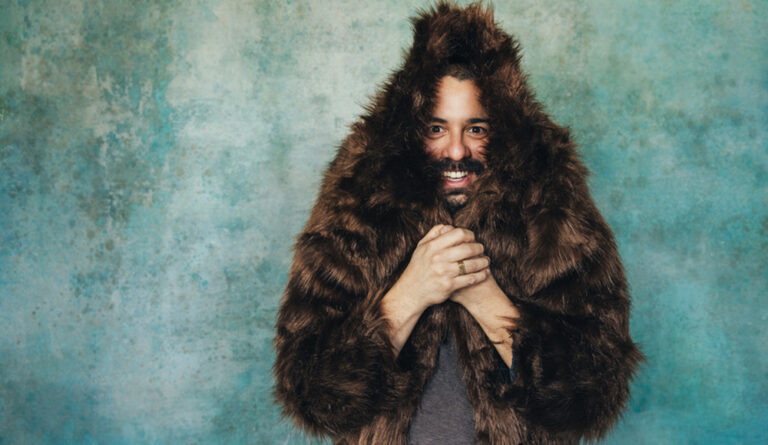
MAN MAN Singer Honus Honus (born with the comparatively conventional name Ryan Kattner) fronts Man Man, a deeply experimental rock project that features multiple musicians playing a wide array of instruments. The band debuted with 2004’s The Man in a Blue Turban with a Face. Songs like “10lb Moustache” defy easy categorization but feature elements of cabaret and music hall. Subsequent releases were no more mainstream, showcasing Honus’ distinctive and idiosyncratic approach to music. The group’s latest release is a skewed take on country-folk, “So it Goes,” a collaboration with Fingers & the Outlaws (who are, fitting enough, actually Man Man). BILL KOPP
INFO: 9pm, Catalyst, 1101 Pacific Ave., Santa Cruz. $34. 713-5492.
HISTORY
A HISTORY OF JUG BAND MUSIC BY THE TROLLEY DROPS Jug band music is often just seen as goofy, but it also has a rich history. It was born in the 1910s in the Southern United States. It blends African, European, and American styles of music. It can be played casually on a corner or a porch or professionally at large events like the Kentucky Derby. The genre even saw a revival in the 1950s. Today jug band music has expanded to include those who play the original jug band songs or people who use homemade instruments to make music. Members of the jug band Trolley Drop, Greg Meyer and Peter Thomas, will be diving deep into this fascinating and colorful history at the MAH. ISABELLA MARIE SANGALINE
INFO: 6pm, The MAH, 705 Front St, Santa Cruz. Free. 429-1964.
SATURDAY 8/8
SINGER-SONGWRITER
SHAWN COLVIN South Dakota-born Shawn Colvin broke out in a big way right from the beginning of her recording career. Colvin’s remarkable debut album, 1989’s Steady On appeared on the Billboard 200 chart, spawning a hit single and earning her a Grammy Award for Best Contemporary Folk Album. Since then, Colvin has continued to cultivate an ardent fan base, one that includes critics and a diverse audience of music lovers. Two more Grammy Awards, an ASCAP Pop Music Award and an Americana Trailblazer Award have all followed. These days Colvin concentrates more on live performance than recording. Her last release of new material was 2018’s The Starlighter. BK
INFO: 8pm, Rio Theatre, 1205 Soquel Ave., Santa Cruz. $40. 423-8209.
AFROBEAT
PHAMILY TIME! Summertime in Santa Cruz means several things: lots of sun, catching waves and tons of tourists. However, there might be a new tradition in town: Phamily Time. Hosted and headlined by Afrobeat artist Phreeborn, Phamily Time is a daylong festival dedicated to afrobeats, afrofood and afrofashion. The “phamily” referenced in the name refers to the collective of artists performing like DJ Monk Earl, Tiedye and Rubiroux along with the makers selling their goods like Aaron Samuel Mulenga and Eldenwa Designs. And since it’s held at Woodhouse Brewery, it’s actually all ages so attendees can bring their whole families as well. MW
MICKEY AVALON Mickey Avalon has no shortage of street cred or endless raw raps about male prostitution or smoking crack. Avalon’s early home life reeked of addiction, and he left his father for the streets of Hollywood, California. Slinging weed and trying to find purpose, Avalon even dabbled in orthodox Judaism (his grandmother is a holocaust survivor). A marriage and a family got pushed aside for their own personal raging heroin addiction. But Avalon’s story and music is all about overcoming the odds and pushing past great struggles. Ever since Avalon showed up on MySpace Records with the single, “Jane Fonda,” he have been on the frontline of music’s edge. Punk, Hip Hop, Rap, Glam and Mickey Avalon. DNA
CLIFFORD HENDERSON Award-winning novelist Clifford Mae Henderson returns with Lost in Sound: A Mystery, a thrilling whodunit set in the fictional coastal town of Tres Ojos. A mystery unravels in this unlikely sleepy beach town where tech millionaires brush past homeless encampments. When a neurodivergent landlocked pirate, Captain Eddie, is accused of murder, an unlikely and delightfully eccentric crew bands together to help the captain. The case spirals into a high-profile circus when the victim turns out to be the estranged sister of a country music legend. Henderson brings warmth, wit, and a deep social conscience to the page. SHELLY NOVO
INFO: 7pm, Bookshop Santa Cruz, 1520 Pacific Ave., Santa Cruz. Free. 423-0900.
ROCK
THE BEAT FARMERS Classic guitar riffs, bright percussion, and twangy vocals, The Beat Farmers’ discography holds a seminal place in the 1980s Roots Rock and Americana scene. Beginning in 1983 in San Diego, the band played bar gigs, refining their craft before catching the attention of a Los Angeles audience. Carrying a sense of play, often leaning into goofy lyricism and a boozey stage-presence, their musicianship shines through uninhibited sets. The original lineup was spearheaded by legendary Country Dick Montana, who passed in 1995. The band carries on his spirit with Joey Harris leading vocals, Jarry Raney on guitar, Rolle Love on bass, and Joel Kmak on drums. SN
JOHN-ROBERT Sometimes, musical prodigies pop up in unlikely places. John-Roberts made his first TV appearance at 13-years-old on The Ellen Show. The last two years have been locked in at warped speed and John-Robert is traveling the stages of the world. Playing traditional folk and Appalachian country and peppering it with the vernacular of the 21st Century, the songs range from stripped down ballads into sonic explorations. This isn’t the Cosmic Cowboy of The Burrito Brothers, but more the cool Lyle Lovett of younger years. John-Roberts makes it all his own with vocals that crackle and sparkle. With Maryland singer/songwriter MyKey. DNA
“You would never look at a symphony orchestra or a jazz band and call it a cover band.” –Nicholas Meriwether
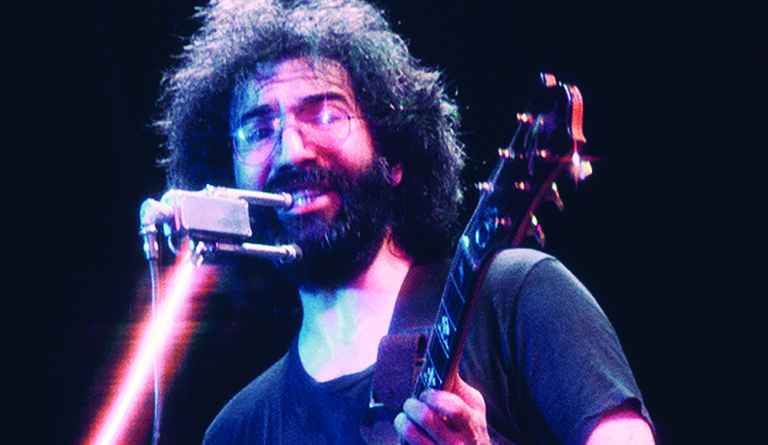
(Born August 1st, 1942, the beloved guitarist Jerry Garcia left this earthly realm with a smile on his face a staggering 31 years ago on August 9, 1995. The interlude between August 1st and 9th is known amongst family, friends and Deadheads as The Days Between. This is an exploration of the lasting impact of the Grateful Dead three decades later.)
Santa Cruz contains a cosmically-created spiral-vortex of psychedelia and that’s a fact, Jack (Kerouac). An authentic nature-studded nexus where literary characters from On the Road walked with Merry Pranksters inside the Acid Triangle. Today, the Cruz remains a healthy beehive of activity with illuminated authors, surfing psychonauts, clandestine smugglers, bouncing burners and intergenerational Deadheads all commingling together.
In a word, Santa Cruz is trippy, man.
Even Jerry Garcia’s actual missing middle finger is buried somewhere in the silt of a tributary in the Santa Cruz Mountains. I want to believe this is true because I spent quality time wading in Lompico Creek seeking it.
Any TARDIS, worth its weight and calibrated for a Grateful Dead Stargate, would land somewhere within our county. There’s a low-pressure tractor beam pulling all things Dead down into our regional collective core. And while its exact location shifts, Santa Cruz has always been a repository of the strange, and it continues through to this very moment. So let’s not count Santa Cruz out of the World’s Biggest Weirdo Race, yet, sport fans.
TEN YEARS THE WAVES
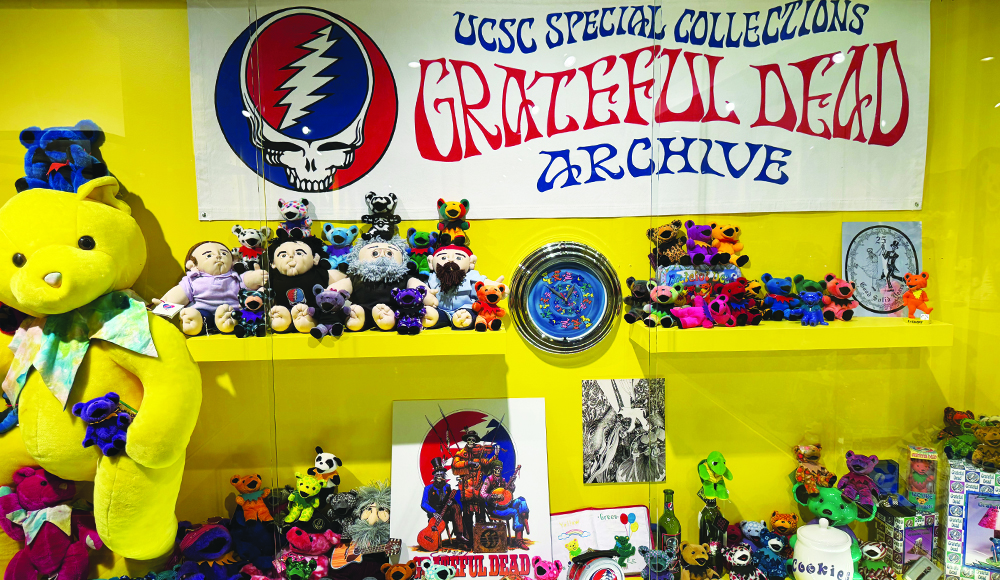
JERRY BABIES Inside the Grateful Dead archive at McHenry Library at UCSC one can find the strangest of Dead ephemera. PHOTO: Brad Kava
On the hill, amongst the ivory towers and inside the McHenry Library sits the archives of a band called the Grateful Dead. And, among all of the archival collections in America, featuring every musician and hundreds of bands of every genre, what is stored inside the temperature-controlled Dead tomb is unique, comprehensive and without comparison.
It’s been 10 years since original archivist, Scotts Valley resident and Deadhead Nicholas Meriwether, was in charge of the Grateful Dead exhibitions at McHenry Library.
When Meriwether was at the helm of the archive, beating out 400 other applicants, the library had gained not only a polymath who excels at navigating the university’s archaic rules, but Meriwether was also a living, breathing Deadhead who would happily greet and guide you through the exhibits. It was like Willy Wonka leading a tour of the chocolate factory, or Peabody showing you how The Way Back Machine worked.
In 2026, the library’s current online portal (gdao.org) to the Grateful Dead archives is a dizzying encounter with a plethora of audience tapes (with links to archive.org), a cool online exhibit of the band’s Europe ‘72 expedition and a trove of fan art.
Meriwether hasn’t simply faded away since stepping back from UCSC. The eternally young button-up Meriwether has dutifully been the chair of the yearly gathering of true academic Deadhead nerds called the Grateful Dead Studies Association. It’s been part of the Southwest Popular American Culture Association for two decades and features papers and presentations on such intriguing topics as “The Symbolic Landscape and Usable Past in the Lyrics of Robert Hunter.” And, “Let the Words Be Ours: Grateful Dead Lyric Poetry and Merleau-Ponty.”
Luckily for us of the smaller brainpans, Meriwether also contributes spicy liner notes on official Grateful Dead box sets and has written some new essays for the recent Summer Magic 1985 release. Plus he’s a regular commentator on the Good Ol’ Grateful Dead Podcast. And double plus, Meriwether has a parallel gift of gab that reminisces of Terence McKenna. Meriwether can educate and inspire with his eloquent soliloquies.
Consider Meriwether’s (heavily edited) answer to perhaps a not-so-simple question, “Why are the Grateful Dead even more popular three decades after Jerry Garcia’s death?”
“For years, I have been fascinated by the phenomenon of so-called Dead cover bands, which I now no longer see as cover bands, ” Meriwether begins.
“What’s always been the case with the Grateful Dead is that they taught musicians. They not only provided a repertoire, a repertory and a model for playing music, meaning everything from glorious syntheses of disparate influences ranging from the most deceptively simple folk music, to the most complex, avant-garde, classical, and the most intricate jazz.
“But more than that, they modeled a kind of small group improvisation that was built around listening to each other and responding to the moment. And what that means for a Dead ‘cover band’ is that – rather than doing something like the highly orchestrated, note-perfect orchestral arrangements of Pink Floyd music that you see with the Aussie Pink Floyd and Brit Floyd – it needs to be new.
“The improvisation is always a mandate. And that’s always made so-called Grateful Dead cover bands a very different kind of entity. Something that had as much to do with a jazz band playing an old jazz standard or even a symphony orchestra. Which may be recreating a score, but deliberately attempting to make it unique, to make it their own.
“Of course, that’s taken to a whole new level with the Grateful Dead because of that improvisational element. The phenomenon, however, that I think is now becoming remarkably clear is that these bands are no longer cover bands. These bands are now simply taking the Grateful Dead’s model and repertory and saying, ‘This is our inheritance. This is what we do.’ You would never look at a symphony orchestra or a jazz band and call it a cover band. In the same way, that’s what they are doing. That is something that represents the most remarkable legacy,” Meriwether explains.
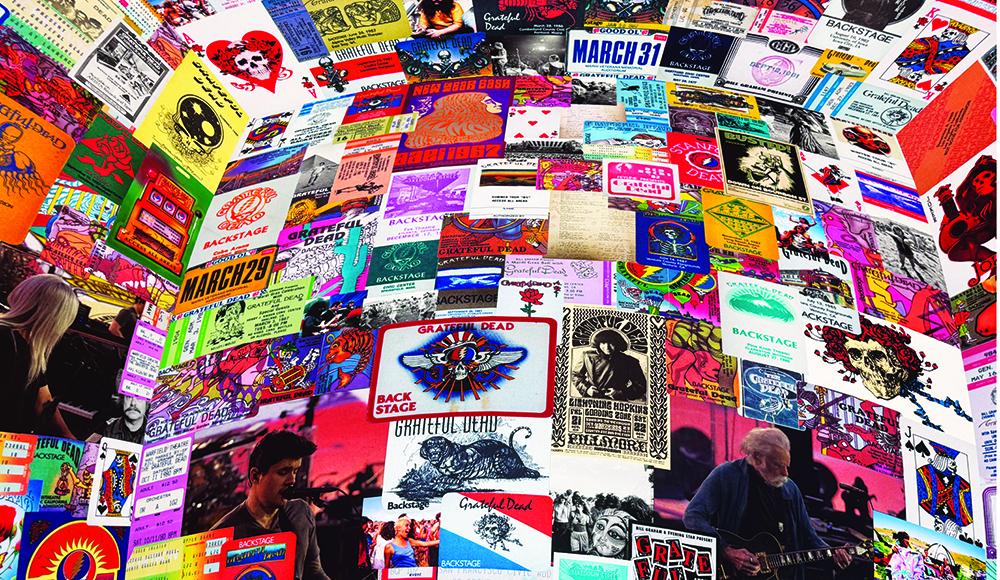
WEIR SPHERE Dead & Co’s residency at the Sphere in Las Vegas highlighted decades of artwork and artists in 360°. PHOTO: Brad Kava
MISSION IN THE RAIN
The swashbuckling Brian Rashap is most notably known as the steady bassist for Bay Area darlings The Mother Hips. But Rashap is also an integral part of (Grateful Dead bassist) Phil Lesh’s legacy, known as The Terrapin Family. It’s a sprawling aggregation of humans, curated by Phil’s son Grahame (who headlined the Winter Warmer Festival at Roaring Camp earlier this year).
Not since the Planet Earth Rock and Roll Orchestra have so many Bay Area musicians aligned forces for a grateful good.
Note that Rashap is more than just another musician onstage, he also provided a foundation of support for Phil Lesh as a bass tech, gear repairman, carrying the iconic rig Big Brown around, and even getting involved in production and tour management for Phil Lesh & Friends.
Rashap is a Deadhead down to his well-groomed roots. He recently played The Veteran’s Hall subbing for Roger Sideman with Santa Cruz’s China Cats.
“There’s a bunch of us that have this constant thought,” Rashap says from his home in the Bay Area.
“Somehow we all existed at a time where we were with Phil (Lesh) during Terrapin Crossroads. Phil had (at that time) decided, ‘I want to play with my kid because they’re getting into music. I want to make a safe space for them to learn music.’
“Phil was clear that this was his version of the Grateful Dead. It’s not anybody else’s. It’s not right. It’s not wrong. It’s just his version. We learned by watching him. And Phil would watch our show and say, ‘What are you guys doing? Why are you playing what ‘they’ played? That’s how he referred to the band, as ‘they.’
“We do feel that we need to pay attention to the torch, and how it’s being carried and passed on. It doesn’t matter how big your Jerry rig is. My favorite Jerry Garcia rig ever heard is someone like Dave Zirbell playing a Tele through an old cranked Fender Deluxe or something. It lends to that forward-thinking mission. Someone like Reed Mathis is a great example of that when he’s playing guitar now. It could be on a Garcia ballad and all of a sudden there’s this flurry and it’s in two or three different octaves because he’s using an octave pedal. So it’s a modernized melody of an old standard melody. I like that kind of stuff,” Rashap says.
It appears that Meriwether is absolutely correct; it’s the music played through the musicians that marches on, even after the original band is gone.
But what about the other legacies? The people and characters that filled in all the missing context of the world that the members of the Grateful Dead soaked in. People that seemed more than human.
COWBOY NEAL
If you ever walked down Pacific Avenue and came across two folks sitting behind a tie-dyed table full of ephemera and books about the 1960s – Ken Kesey, Neal Cassady, and the Grateful Dead – then you probably had a nice chat with Jami Cassady and Randy Ratto.
Jami, if you haven’t caught on by now, was one of Neal and Carolyn Cassady’s children and was the sentinel of the vast estate of letters, drafts and manuscripts. Neal Cassady, if you’re still wandering outside the exterior of the bus, was the human bridge between the poet beatniks of the 1950s and the colorful hippie Pranksters of the 1960s.
I picked up one of Neal Cassady’s infamous six-pound sledgehammers off the table. The same hammer, splattered with paint, that the shirtless hopeless fool would twirl and launch and catch all while carrying on several conversations at once, or rapidly jerking his body in the strobe lights of an Acid Test. I was holding THE hammer – or at least one of the hammers.
Jami and Randy and I talked. We laughed. Jami immediately adopted me, and was fond of calling me by my middle name, Neal, which was grandmotherly nice, and surreal.
This is too short of a remembrance for any real justice and grace to be given to Jami who passed earlier this year in a hospital in Oakland due to respiratory failure. What can be said is Jami was beloved amongst her family and provided a crucial hereditary link to the legends and lore that surround the psychedelic side of Santa Cruz.
OPERATOR
Another iconic Santa Cruz Deadhead, active community member and Grammy Award winner is John Leopold.
Drawn to the center of the Dead universe like Richard Dreyfus in Close Encounters of the Third Kind, Leopold uncovered a path laden with dosed breadcrumbs that led him directly into the band’s inner sanctum.
“I met a guy in 1981 at a Jerry Garcia band show, who gave me my first political job,” says Leopold, whose twin brother is also a Deadhead.
“I was hired as a legislative reporter for what we would now call a startup. It was this new service to track legislation for lobbyists. And my job was to go around the state capitol and track bills. I didn’t have to write stories, but I tracked bills. And my father was on the staff of the Senate Appropriations Committee. I got to see the sausage made up close. At the end of the day, when I was done, I would go to my dad’s office so we could ride home together. And he had a WATS line,” Leopold says.
A WATS line was a prepaid phone where you could call anyone, anywhere in the world. That was a big deal in 1981.
“I talked to all my friends. Then I thought of other people I should call. Blair Jackson’s book had just come out: Grateful Dead: The Music Never Stopped. I thought it was a great book. In the back of the book, it said he was the managing editor at BAM Magazine in Berkeley. I called them up.
“I called BAM, and I said, ‘I want to talk to Blair’. And they said, ‘Well, who’s calling?’ And I said, ‘Well, John Leopold from Harrisburg, Pennsylvania.’ He put me right through and I introduced myself and then I gave him my review of the book. And to Blair’s credit, he didn’t hang up on me. We started talking and he told me that he and his wife were going to start this fanzine called The Golden Road. And they were looking for ways to get the word out.
“I said, my brother Dave and I are going to do the six shows on the fall tour. We’d be happy to hand out flyers. And we did. And that became the foundation of the Golden Road subscription base. And so the following summer, in 1984, I came out to California for the first time and stayed with Blair.
“We came out for New Year’s. We came out for Chinese New Year’s. And we came out for the BCT (Berkeley Community Theatre) run. I took my finals early so I could come out for the Frost (in Stanford). Ostensibly it was to work for the summer, but instead I just never went home. I lived with Blair and (Blair’s partner) Regan for the first couple of months, and I sublet David Gans’s (author, musician and host of the nationally syndicated Grateful Dead Hour and the Sirius XM show, TheGolden Road) place.
“We had the mayor declare it Grateful Dead Day at Harrisburg in 1984. And that attracted Dennis McNally, who was new in his position as the Grateful Dead publicist. He became aware of us and during the New Year’s run in ’84. We sat down with Blair and Regan and a couple other Deadheads to be interviewed by Time Magazine. I immediately applied to school and ended up here in Santa Cruz in ’86. So that’s how I got involved,” Leopold explains.
SPINNING HEADS
Amongst Deadheads there was a sticker that appeared on trusty rusty VWs, coffee-stained bistro counters and bullet hole stop-signs that read, We Are Everywhere. This idea that Deadheads are prevalent throughout American society is more true now than ever.
According to brilliant author and wordsmith Dennis McNally, in 2024 there were 800 Grateful Dead cover bands. Every major city in America had at least two Dead cover bands. Dark Star has been a ubiquitous sonic psychedelically-tinged charge ringing out from bars, backyards and venues from coast to coast, for decades, with no slowing down.
In Jesse Jarnow’s intricate puzzle book of alternative American history, Heads: A Biography of Psychedelic America (2016), he references Dr. Rebecca Adams who went on tour to study Deadheads. She estimated, conservatively, that there was a population of some half a million Deadheads with a mean age between 23 and 32 in the 1980s.
That means there are currently half a million Deadheads who are between their late 50s and 68. Plus the legions of new fans who joined along the way.
I think it’s fair to guesstimate, and Dr. Adams would agree, that there are over one million Grateful Dead fans in the USA. The legacy is growing.
THE REIGN
Jesse Jarnow, co-host and writer of the granular The Good Ol’ Grateful Dead Podcast, is the author of Heads. The book isn’t just about the Grateful Dead. Although that becomes a major thread. Jarnow also traces LSD through its labyrinthine networks of manufacturers, many of whom were Deadheads. And not least, the stories of the molecules’ lasting, not always wholesome, continued impact on society. It’s a mind-blowing page turner.
Jarnow was celebrated at The MAH when Heads was released in 2016 and introduced at the gala affair by John Leopold.
“Back then I was at a point where the future that we now live in seemed improbable,” Jarnow reports from his home in Brooklyn.
“I should have been taking it way more seriously. But when I wrote Heads, I was not thinking about an incoming fascist takeover of the United States. Things were way rosier during the four years that I was working on that book.
“One of the wild things about a postscript to Heads is that in 2016 it (the fascism) was already happening a bit. Contrary to that, in the years leading up to 2016 was when MAPS (The Multidisciplinary Association of Psychedelic Studies) was starting to get momentum. MAPS was (they are now located in San Jose) another huge Santa Cruz psychedelic connection,” Jarnow recalls.
The young podcaster, author, philosophizer and Deadhead doesn’t just live chewing on the past, he also has his dancing skeleton finger on the pulse of current trends.
“Psychedelics are moving into a more corporate world. Into a more business-like structure,” Jarnow states.
Consider that Definium Therapeutics (NASDAQ: DFTX) is whisking its way through the third stage of clinical trials with LSD.
“That’s not countercultural psychedelics. That places it as part of the larger culture. And that interests me personally less as a writer. Not even legality or decriminalization or therapeutic methods or any of that.
“But I’m also not blind to the fact that it is also part of MAGA culture. It’s a freakier subset. The psychedelic right-wing world. It’s all spectrum,” Jarnow exposes.
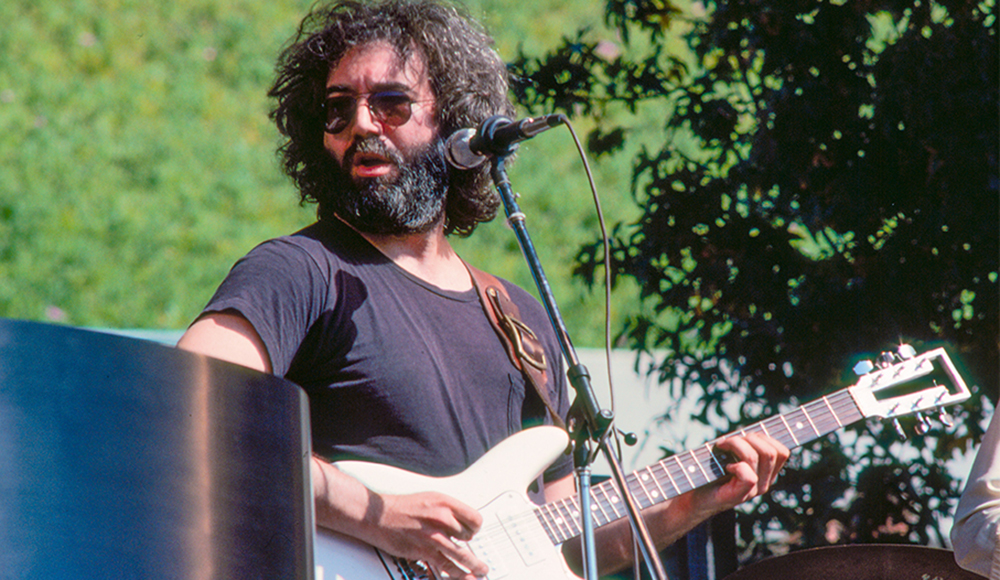
PLAYING IN THE BAND Jerry Garcia performs outdoors with a white electric guitar in 1976, helping shape a musical legacy that continues to inspire new generations. PHOTO: John Gavrilis
FARE THEE WELL
“Jarnow (born in 1978) is the next generation of Grateful Dead historians. If you think about people like Blair Jackson, David Gans, McNally, they sort of defined the field, right? I mean, Blair had the first serious book about the Dead. And then David Gans worked on a number of books. And of course, McNally has the official biography. But Jesse has taken it to a whole other level, if you’ve ever listened to what he’s done with the podcast,” says Leopold.
The future is uncertain, but what can be counted on is this. 1. The music of Jerry Garcia and the Grateful Dead will remain egalitarian and open-source. 2. New savant Deadheads will bring original insights into the band and culture. 3. We can still dance while it’s legal.
And that is an outstanding legacy.
Author DNA was lucky enough to see Jerry Garcia 500 times. He’s not bragging, he’s grateful. votedna.com Jesse Jarnow can be heard each week at dead.net/deadcast David Gans can be heard on Sirius XM’s Grateful Dead channel Sundays 1-3pm.
Good Times Editor Brad Kava leads several surprising lives.
He’s a rock harmonica performer. He’s a Cabrillo College professor. He’s a super dad who not only leapt into fatherhood later in life but birthed a parenting magazine along the way.
Most shockingly, though, he’s a Burger Puritan. No cheese, no tomato, no lettuce, maybe even no sauce, just protein and bun.
“I want to taste the meat!” he told his Cabrillo class when he had me in for a class on food reporting.
While that did have me expressing concerns, it led me to one of his students’ favorite places to get a burger: Grady’s Market (509 Bay Ave., Capitola).
The burger there presents a solid value and straightforward satisfaction.
It’s also fifth or sixth down the list of outstanding elements to recommend the singular bodega, whose local identity I love so much I wanted to get them in the compilation of max Santa Cruz spots for this issue’s special food and drink insert—along with the magical powers of Chaminade Resort & Spa, Surf City’s sublime ice cream culture and Birichino’s world-class tasting room.
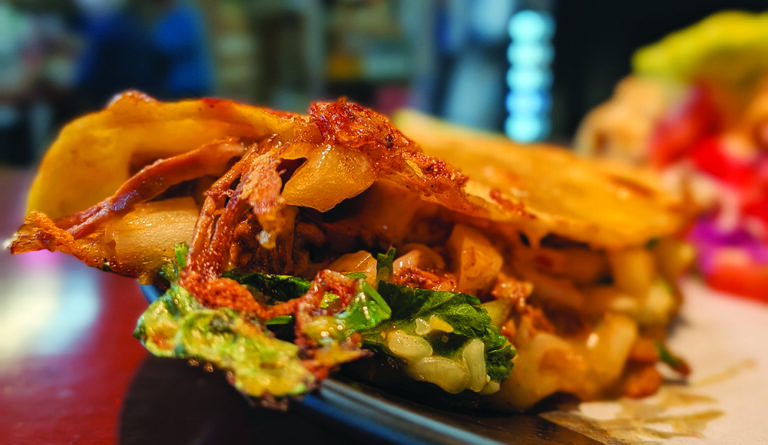
The other standout qualities at Grady’s include a deep roster of craft beer and local wine, a bin of Marianne’s Ice Cream flavors, an eyebrow-raising inventory of bespoke and basic snacks, classic sinful ciggy and lottery options, and the kicker: Casa Birria, which does burgers and asada fries to order but also inventive forms of birria (including ramen, tortas and “pizza”), solid fish tacos and much more.
This Casa, which turns 2 this fall, is also noticeably shiny and clean, with movies playing on a big flat screen.
All in all it’s a neighborhood blessing, with the steady tide of regulars to affirm it. casabirriaca.com
NUTRITIOUS NIBBLES
Big ups to one of my favorite journalists, outdoor adventurers, civic leaders, moonshiners and all-around great hangs, Erik Cushman of Monterey County Weekly, for earning a wildly deserved Publisher of the Year from the nonprofit Association of Alternative Newsmedia (AAN) to which Good Times also belongs, aan.org …Beer Thirty Beer Fest cracks open its latest annual beer fest noon-5pm Saturday, Aug. 8, with 30 different breweries, beerthirtysantacruz.com…Permaculture Santa Cruz—once a backyard dream, now a massive soil-rooted community—celebrates its 10-year anniversary 2-8pm on Saturday, Aug. 8, at the farm, santacruzpermaculture.com…Happy 90th birthday to Oscar Mayer‘s Wienermobile—and if you’re turning 90, you can enter to have the 27-foot-long rolling tube meat crash your birthday party, oscarmayer.com/wienermobile…Land Trust of Santa Cruz County’s First Friday event 5-8pm Aug. 7 welcomes in Sophie Wood Brinker, author of Birds of Santa Cruz, for a meet, greet and book signing with live raptors at Mini Nature Museum, landtrustsantacruz.org/events.
FRUIT FORWARD
The NY Times has a recent trends analysis “Everything’s Bananas: America’s most-eaten fresh fruit has hit cafe menus, snack-aisle shelves and drink fridges with unexpected force,” which reminds me of my proudest post-Latin American travels invention (unintentionally vibing off the story’s thought that “familiarity makes bananas ripe for experimentation”): banana-avocado-tomato salsa, best layered over cream cheese on a fried tortilla with honey and hot sauce on top…Popular sown-in-Carmel Valley cookbook series and kitchen-lifestyle newsletter What To Cook When You Don’t Feel Like Cooking is now a series that takes you inside the home of chef-author-influencer Caroline Chambers to, as she says, “prove that my recipes truly take the amount of time I say they do, even when your kids are acting absolutely bananas,” carolinechambers.com…Irish broadcaster Terry Wogan: “Time flies like an arrow—but fruit flies like a banana.”
Enter for a chance to win tickets to Acid Bath with High On Fire, Melvins & Windhand at the Quarry Amphitheater in Santa Cruz on Saturday, October 10. Drawing Date is October 1, 2026.
Smoking remains the classic cannabis ritual, but dry-herb vaporizers may reduce exposure to tar, carbon monoxide and other combustion byproducts. Richard Stockton weighs the pleasures, health concerns and practical tradeoffs.
Christina Waters takes aim at Sarah Hennies’ The Grain House, a world premiere that closed the Cabrillo Festival’s Defiant Dreams concert, arguing that sonic hostility overwhelmed musical imagination.
Shawn Colvin looks back on her years in New York’s folk and country scenes, her Grammy-winning breakthrough and the realities of life as a touring musician. She plays The Rio August 8.
Trust your instincts, seek unexpected teachers and follow the desires that set you on fire. This week’s horoscope invites every sign to explore, reinvent and descend into life’s hidden depths.
Three decades after Jerry Garcia’s death, the Grateful Dead’s legacy keeps expanding through musicians, scholars, archivists and generations of Deadheads—with Santa Cruz still caught in the center of its psychedelic orbit.
Hidden inside Grady’s Market, Casa Birria serves quesabirria, fish tacos, burgers, asada fries and playful birria creations at neighborhood-friendly prices.