
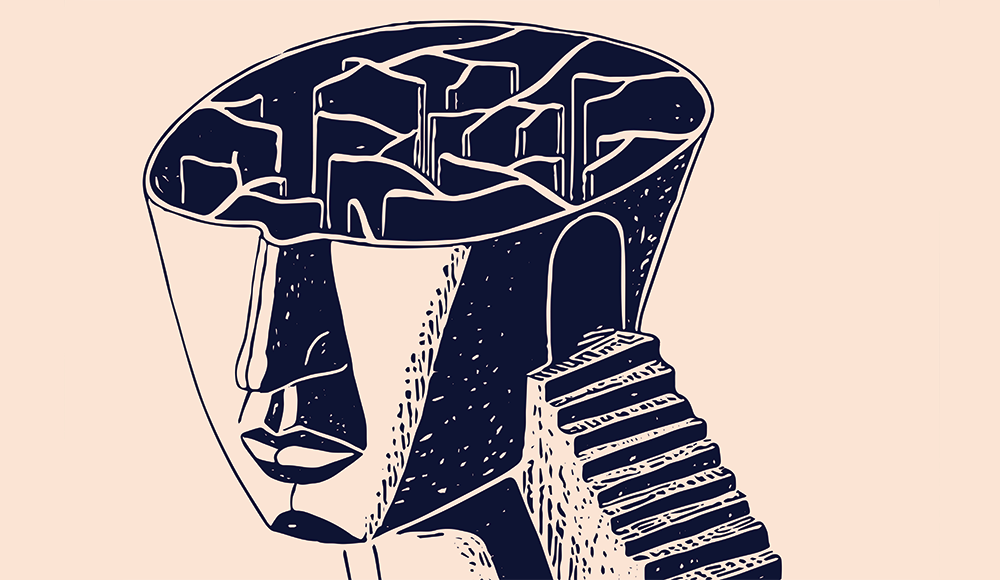
May is mental health awareness month. There’s a reason so many people are talking about mental health right now. Between burnout, loneliness, political division, and doom scrolling, life can feel overwhelming.
Luckily, psychology researcher Shawn Achor says the answers may not be found in pushing harder, but in changing the beliefs that shape how we experience the world.
Achor, best known for The Happiness Advantage, has spent years studying the science of happiness and resilience, from Harvard classrooms to Fortune 500 boardrooms. His new book, The Power of Beliefs, explores what he calls the “Great Drift”, a cultural slide into anxiety, disconnection, and emotional exhaustion. Rather than offering quick-fix positivity, Achor argues that the beliefs we hold about stress, possibility, connection and purpose directly shape our mental health and our future.
It’s an idea that feels especially relevant in Santa Cruz, where wellness culture often collides with real-world pressures: rising housing costs, climate anxiety, caregiving fatigue and the quiet isolation that can exist even in beautiful places. We’re surrounded by yoga studios, organic food and ocean air, yet many people still struggle to feel grounded.
One of Achor’s core messages is that happiness is not something that shows up after everything else falls into place. In fact, research in positive psychology suggests the opposite, that cultivating small moments of mindful attention improves resilience and well-being.
That doesn’t mean ignoring pain or pretending life is perfect. It does mean recognizing that the brain responds to what we repeatedly focus on. And thanks to a biological bias, much of the time it’s negative.
The good news is, we have the power to change our beliefs through small daily habits, simple tools like breathwork and mindfulness can subtly shift the nervous system toward greater stability.

Rethinking habits
Thought patterns are habits, just like brushing teeth or checking iPhones. And negative thinking habits keep us “stuck in a rut”, not realizing we have the power to rethink our way out. I’m not saying it’s simple; habit change never is. But it is possible to shift your focus when your brain is stuck on doomscroll.
While there are endless ways to do this, they all begin with mindful self-awareness.
Name it to tame it
You can’t change what you don’t see. So the first step to easing a worried mind is to notice what’s going through it. Are you replaying a worst-case scenario, one that you’ve so far only imagined?
If so, take a moment to stop, freeze the frame and notice the feeling behind the thoughts. Maybe you name the feeling of pending doom as worry. You can even say it out loud, preferably not in a crowded elevator. Worry is normal, but over worrying, or rumination, doesn’t solve problems and does lead to anxiety. I know, it can be hard to let go of, but is all that worrying really going to fix things?
Shape shift
Once you’ve named your emotion, turn your attention to your body. Take a moment to lengthen your spine, relax your shoulders and breathe more deeply into your belly. Are you clenching your fists or your jaw? Are you hunched over, shoulders slumped?
Now shift back to your thoughts. If you’re still stuck in rumination, you need a simple intervention to shift your mind out of the thought loop.
Breath to the rescue
That restless mind isn’t going to slow down on its own. So give your brain something to latch on to. Start silently counting your breath cycles, using the words “breathe in” to match your slow 3-4 count inhale. Now silently use the words “breath out slower” to extend your exhale to counts of 4-5. In fact, any words will work here; the goal is to keep the mind occupied while slowing your breathing pattern.
This isn’t about solving your problems. It’s about managing mindset and building resilience, so worried thoughts don’t consume you.
And perhaps that’s the real takeaway this Mental Health Awareness Month. Mental health isn’t just about diagnosis or crisis intervention. It’s also about the small daily practices, habits and beliefs that have the power to make us feel hopeful or doomed.
Sometimes healing begins with therapy (more on that next week). Sometimes with community. Sometimes with a reminder that your nervous system was never designed to take on the weight of the world. Nor to ignore it. But to stay present enough to recognize the difference.