Spencer Critchley, Never-Trumpers Look to “Save Democracy”

1

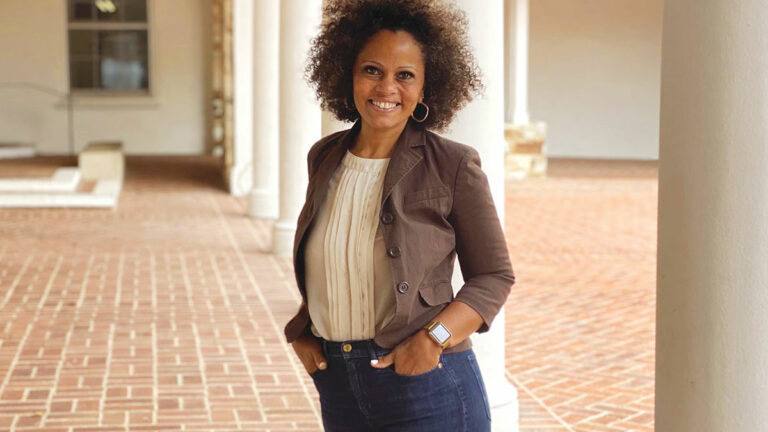
Spencer Critchley, managing partner for Boots Road Group, is hosting a discussion—the fourth in an ongoing series—that seeks to improve communication across political divides, but the true goal of the discussion is more profound, as evidenced by its title, “Saving Democracy.”

“It’s finding the people wherever they sit on the ideological spectrum who believe in civil debate,” says Critchley. “The members of this party—the party of democracy—have to find each other.”

The next “Saving Democracy” installment is Tuesday, May 26 from 6:30-8pm, streaming on Facebook Live.

Past “Saving Democracy” events have spanned ideologies, with voices from both the right and the left. Critchley says Tuesday’s event will focus on the conservative perspectives and on political moderates. It will be titled “What Would Lincoln Do.” Guests will include former California Republican leader Kristin Olsen and Dan Schnur, who once served as media chief for Senator John McCain’s 2000 presidential campaign and who now teaches at both USC and UC Berkeley. Another guest will be Mike Madrid, co-founder of the Lincoln Project, a conservative group aiming to “defeat President Trump and Trumpism at the ballot box,” according to the organization’s website. None of the guests are fans of President Donald J. Trump.

Critchley will moderate the talk.

He says the thing that makes Trump so dangerous is his corruption. That includes the president’s self-dealing, his firing of anyone who gets in his way, his efforts to solicit help from foreign governments, and his persistent lies, which are intoxicating in and of themselves, Critchley elaborates.

“The point is not to get away with the lie. The point is to do away with the concept of truth,” Critchley says.

He says Americans should not give in to their differences, or else those who are driving divisions will get their way by making groups of people hate each other more. Critchley says many of those who pursue a divisive brand of civil discourse are Trump supporters, but not all of them.

“There’s a brand of liberal intolerance. It’s a different brand. It takes a different shape—‘if you disagree with me, then you’re corrupt,’” he explains.

Critchley, author of the new book Patriots of Two Nations: Why Trump Was Inevitable and What Happens Next, traces the central schism in American political discourse back to the founding days of United States. There was a group that supported the ideals of the enlightenment and another, which he calls the “counter-enlightenment,” that did not.

In order to win elections in the 21st century, Critchley says, Democrats will need to learn to better communicate with those they disagree with.

“The problem is not Trump,” he says. “The problem is that someone like Trump could become president.”

“Saving Democracy: What Would Lincoln Do” will air on Facebook Live on Tuesday, May 26, from 6:30-8pm. Attendants may register in advance, to get a reminder when the event goes live. Visit bootsroad.com/democracy for more information.

UPDATE May 22 7:50pm: A previous version of this headline misspelled Spencer Critchley’s last name.

Watsonville Faces Grueling Economic Recovery from Covid-19 Shutdown

1

It took roughly a decade for Watsonville to fully recover from the Great Recession, and officials fear the Covid-19 pandemic’s mass closures could send the city into a similar financial quagmire.

As restaurants and shops have closed, and auto sales—Watsonville’s top sales tax generator—have slumped, the city has seen its recent stable budgetary projections collapse. Finance Department Director Cindy Czerwin predicts the city will face a deficit of roughly $5.7 million in the coming fiscal year as the community tries to recover.

While that deficit pales in comparison with neighboring cities such as Santa Cruz and Monterey, both of which are facing deficits of roughly $10 million in this fiscal year alone, Watsonville’s economic recovery is expected to take several years, while those tourism-heavy communities are expected to rebound in a fraction of that time.

The city predicts it will be in a $7.8 million hole two years from now, which will increase to roughly $8 million the year after. Czerwin’s projections have Watsonville beginning its slow recovery in 2023-24, reducing the deficit to $6.9 million.

Santa Cruz, according to a staff report from its April 28 city council meeting, will face a $6 million deficit next fiscal year and expects to slice it in half by the following year. 

“We’re expecting that as the economy starts to reopen, [recovery] will likely be slower for Watsonville than for some of the other areas,” Watsonville City Manager Matt Huffaker says.

‘SERVICE-DRIVEN’ APPROACH

The city has asked every department to slice its budget by 10% for the first of what Huffaker says could be multiple looming cuts. He says the city is implementing a hiring freeze, keeping several positions vacant, laying off most of its part-time and seasonal staff and eliminating “discretionary” spending such as travel, training and other large purchases.

He also got the OK from the city council to use $2.2 million of its emergency reserves, extend a set of early retirement incentives and reinstate a voluntary time-off program, which allows employees to reduce their hours but maintain benefits. The retirement program is aimed at employees on the pricey CalPERS “classic” program, which even before the pandemic was throwing the city’s finances into a predicament, Huffaker says.

When asked if all departments would be treated equally during the cuts, Huffaker says the city would be taking a “service-driven” approach to reductions, trimming where they anticipate there will be a drop in demand. That includes departments that cannot provide services because of the shelter-in-place restrictions, and where there will be a slowdown in the economy.

“It’s safe to say that some of those reduction measures may look different from one department to another based on the way this crisis is affecting our city operations,” Huffaker says.

The draft budget was finalized this week and will be distributed to the public before the end of the month. It will then come to the council for approval in June.

UNKNOWN TERRITORY

Huffaker says he did not know what the next round of cuts could look like, or when they might come. Czerwin will provide quarterly updates to the council and ask for adjustments when and where they are needed. There is little hope those updates will carry good news unless the city receives help from the state or federal government, Huffaker says.

The Coronavirus Aid, Relief, and Economic Security Act did little to address the shattered budgets of local governments in communities of 500,000 residents or fewer. But a new economic stimulus package from Speaker of the House Nancy Pelosi dubbed the HEROES Act could hand those municipalities some aid.

That roughly $3 trillion package includes, among other things, hazard pay for healthcare workers and first responders, an extension of unemployment benefits, another round of stimulus checks for most Americans and nearly $1 trillion in aid for state and local governments. President Donald Trump said the bill would be “dead on arrival” on the Senate floor, but Republican lawmakers have publicly said they are willing to negotiate with Democrats for certain aspects of the package.

At the state level, the city and its Monterey Bay neighbors earlier this month penned a letter to Gov. Gavin Newsom, asking that he allocate at least $15 billion to shore up the leaking budgets of California’s small- and medium-sized cities. The 18 Monterey Bay cities say they are anticipating they will lose, collectively, $40 million of general fund revenues through this fiscal year, and fall into a $122 million hole the following year.

Huffaker says he was “hopeful” help will eventually come, but the city will not bank on the “unknown” when developing its roadmap out of the economic predicament.

“In many respects it does feel like we’re building the airplane as we fly, and trying to make careful, prudent financial decisions without overreacting to this really dire situation we find ourselves in,” he says.

FUTURE OUTLOOK

Though the final economic impact of the Covid-19 pandemic will not be known until years from now, Huffaker says the numbers emerging from the first three months of the shutdown are worrisome. The county’s unemployment rate has skyrocketed from 3.5% to over 20%, hotels are sitting emptier than ever and Watsonville’s major sales tax generators say their sales are down by roughly 70% through the first quarter of 2020.

Santa Cruz County has met state requirements to further reopen its economy, but officials believe the speed of the subsequent recovery will largely depend on consumers’ confidence in how safe it is to re-enter public places and their purchasing power. The city will have limited influence on those factors, but it plans to use every tool available to spark its economic rebound.

Two of those tools are updating rules and drafting large-scale plans that open the city to developers and businesses. Watsonville is still pushing through its Downtown Specific Plan, which will serve as a comprehensive guide for development in the corridor, and will look to update its aging general plan if development slows. It will also try to update its cannabis rules to allow dispensaries, increased cultivation and delivery service, among other things. 

“As we pull out of this and the economy recovers,” Huffaker says, “we want to be ready.”

One of the few bright spots in the otherwise muddled outlook has been a slight resurgence in developers’ willingness to continue projects. Community Development Department Director Suzi Merriam says large developments such as MidPen Housing’s 72-unit affordable housing project on Miles Lane are still moving forward. Bill and Neva Hansen have also pushed ahead two Main Street projects: The Residence, a sleek 50-unit apartment complex, and the planned restructuring of the vacant Gottschalks building that will house Watsonville Prep School.

“We’re not yet seeing projects completely die or go away,” she says.

But Merriam, who was an associate planner for the city during the 2008 recession, says there are still too many unanswered questions to say that the recent uptick is a sign things are stabilizing. Mass layoffs—both those already enacted and upcoming—will undoubtedly have a ripple effect on the economy, she says.

“All we’re trying to do is keep processing applications, keep being available for the community and hoping for the best,” she says. 

Saturday Car Cruise Down Main Street to Raise Money for Farmworkers

0

Members of a local car club hope their passion projects will help the community’s farmworkers weather the unknown during the coronavirus pandemic.

Watsonville Riders on Saturday will host the Farmworker Relief Cruise in downtown Watsonville from 5-7pm. The automobile showcase will serve as a fundraiser for the Center for Farmworker Families, a local nonprofit that helps connect agricultural workers to various resources.

It will be the second time Watsonville Riders, a longstanding lowrider car club, has organized a cruise down Watsonville’s Main Street during the pandemic. The first was a month ago, according to club President Moe Haro. Roughly 100 cars rolled through the historic corridor.

Since then, Haro says, other cruises have been organized in Hollister and Salinas by using their blueprint.

“It was great,” Haro says of the first cruise. “Everybody got out of their house and cruised …. It was a good, safe way to blow off some steam during this pandemic.”

All social distancing rules apply for the redux, Haro says. There will be no social gathering or group parking, and face coverings are required when making monetary donations at the drop-off point on Southern Circle near Yesy’s Restaurant.

“It’s a cruise,” he says. “Not a hangout.”

Haro says he expects anywhere from 150-200 cars from various clubs in the 831 area code to visit Watsonville and support the farmworker community. Every type of car is welcome, he says.

“It’s not just lowriders,” he says. “Anyone with a cool car that shares our passion and wants to help is welcome to come cruise.”

Before Covid-19 started its spread, Watsonville Riders held small monthly cruises to celebrate their classic cars and the hours of work they put into them. Seeing an opportunity to turn their passion into a tool to help their community, Haro says they jumped at the opportunity no questions asked.

“Sometimes we get a bad rep,” Haro says. “We want to show everyone we’re helping our community just like everyone else is. We want people to know cruising is not a crime. We care about our community and we want to make a difference.”

For information on how to participate, visit the Watsonville Riders Facebook page.

School Districts Brace for Looming Budget Cuts

Gov. Gavin Newsom on May 14 released an updated state budget that calls for a 10% cut to school districts across the state.

Pajaro Valley Unified School District Superintendent Michelle Rodriguez says that the district is looking at a $19.18 million slash.

Watsonville/Aptos/Santa Cruz Adult Education Director Nancy Bilicich estimated that her department will have to cut $300,000.

District officials have not yet outlined where the cuts will fall. The Board of Trustees will likely discuss the issue at its May 27 meeting.

The news was not all bad, Rodriguez says. Newsom has reduced by $2.7 million the amount the district is required to put into employee retirement plans. That money will instead come from the state.

The governor also increased funding to PVUSD’s special education department by $1.3 million.

In addition, the district is set to receive $3.97 million from the Coronavirus Aid, Relief, and Economic Security Act, which was passed by Congress on March 27.

Now, Rodriguez and educators across the U.S. are hoping for additional help from the  Health and Economic Recovery Omnibus Emergency Solutions (HEROES) Act, which would provide nearly $1 trillion for local and state government.

The bill could stave off some if not all of the education cuts, but President Donald Trump and Senate leaders have both called that bill “dead on arrival.”

“I would encourage people to work with the senators—not only California senators but also senators throughout the nation to encourage the passage of the HEROES act,” Rodriguez says. “That’s going to be extremely important for us and would provide a solution to the large deficit that California is seeing.”

Santa Cruz County Superintendent of Schools Faris Sabbah says that the budget is particularly troubling for school employees as districts prepare to scour their budgets for places to cut.

“It’s important to note that 85-90% of a district’s budget is in salaries and benefits,” Sabbah says. “To make an 8% reduction, (it) has to come from there.”

Sabbah says that the biggest concern as school districts look to reopen is the increased costs of doing so. This includes screening students for Covid-19 symptoms, the employees needed to do so and the equipment needed.

“The kind of protocols and environment we have to work in is going to cost more money, not less,” he says. “So to envision and to plan for the reopening of schools with these additional safety precautions that have to be in place is daunting. Those dollars are coming from the same pot of money that just got reduced by 8%.”

Santa Cruz County’s 10 school districts must submit a budget plan to the county office by June 30.

Newsom said his budget aims to close a $54 billion budget gap caused by the Covid-19 pandemic, and channels scarce financial resources into the state’s “most essential priorities,” which he lists as public health, public safety and public education.

The PVUSD Board of Trustees on April 29 approved a proposal to lay off more than two-dozen employees, which is likely to be the first step in a series of cuts aimed at weathering the impending recession.

“Covid-19 has caused California and economies across the country to confront a steep and unprecedented economic crisis—facing massive job losses and revenue shortfalls,” Newsom said. “Our budget today reflects that emergency.”

The May revision prioritizes $4.4 billion in federal funding to address learning loss and other issues exacerbated by the Covid-19 school closures this spring. 

These funds will be used by districts to run summer programs and other programs that address equity gaps that were widened during the school closures, Newsom said.

The funds will also be used to make necessary modifications so that schools are prepared to reopen in the fall and help support parents’ ability to work. The May revision also preserves the number of state-funded child care slots and expands access to childcare for first responders.

Santa Cruz in Photos: Fighter Jets Salute Health Care Workers

Four F-15C Eagle fighter jets soared above Dominican Hospital recently during a flyover tribute to health care workers, first responders and others on the front lines of the coronavirus pandemic.

The California Air National Guard’s 144th Fighter Wing out of Fresno flew over medical facilities in the San Joaquin Valley, Sacramento, the Bay Area, Santa Cruz and Watsonville, before heading to Southern California and the Central Valley and then looping back to Fresno.

At Dominican, numerous employees lined the entranceway wearing masks and hospital attire to watch the aerial display, which lasted about 30 seconds.


See more from the Santa Cruz in Photos series.

Four Suspects From Two States Arrested in Pleasure Point Murder Case

Dozens of law enforcement officials in two states arrested four men on Tuesday in connection with the Oct. 1 kidnapping and murder of tech executive and Pleasure Point resident Tushar Atre. 

Santa Cruz County Sheriff Jim Hart said during a Thursday press conference that Kurtis Charters, 22, Joshua Camps, 23, and Stephen Lindsay, 22, were booked into Santa Cruz County Jail on charges of murder, kidnapping and robbery—all felonies.

A fourth suspect, Kaleb Charters, 19–Kurtis’s brother–was arrested at a residence in St. Clair Shores, Mich., which lies just north of Detroit. He was expected to be booked into Santa Cruz County Jail on Thursday or Friday on the same charges. 

The men are being held without bail.

On Oct. 1, Atre—founder and CEO of his web marketing firm AtreNet—was kidnapped around 2:30am from his multi-million dollar oceanfront home in Pleasure Point. He was later found shot dead in a BMW SUV on the 24000 block of Soquel San Jose Road, where he owned the property in the Santa Cruz Mountains.

In November, the Sheriff’s Office released a surveillance video showing three possible suspects walking near Atre’s home. A group of community members aided the Sheriff’s Office in rounding up $200,000 in reward money for information leading to an arrest in the case. The reward was the largest of its kind in Santa Cruz County history, Santa Cruz County Sheriff’s Sgt. Brian Cleveland said.

A report from the coroner’s office said the cause of death was a gunshot wound. The 50-year-old Atre, a well-known surfer in the Pleasure Point community and longtime Santa Cruz resident, also operated a cannabis manufacturing business—Interstitial Systems—on Fern Street in the Harvey West area of Santa Cruz.

In a statement read by Sheriff’s spokeswoman Ashley Keehn, the family said: “Today is the 233rd day we mourn the loss of our beloved Tushar. Tushar was a loving son, brother, uncle and friend. He moved to Santa Cruz from the East Coast in 1996 and loved the community for 23 years. He was an entrepreneur who gave so many people their first job, and created opportunities for so many others. He was a surfer, mountain biker, craftsman, guitarist, inventor and lover of nature. We miss him every day and believe Tushar’s spirit lives on in us and countless others.” 

The family went on to pay deep thanks to the Sheriff’s Office.

Detectives believe that three men entered Atre’s residence and then forced him into his girlfriend’s white BMW SUV before driving away with him in an attempted robbery. According to Cleveland, they then traveled out of the area on 41st Avenue and east on Soquel San Jose Road. Atre was found shot dead about 9am at his mountain property.

Hart, who offered praise to his investigators, said that detectives served 62 search and arrest warrants and interviewed dozens of witnesses in the seven-and-a half-month investigation.

Cleveland said the motive of the crime was “monetary gain,” but declined to release further details. 

“Through forensic evidence located at the scene, digital evidence found throughout this case, hundreds of interviews that were conducted, the Sheriff’s Office gathered enough evidence to arrest (the suspects),” Cleveland said.

On May 19, 23 detectives executed simultaneous warrants and arrested the four suspects in various locations. The L.A. County Sheriff’s Office in Palmdale, the Burbank Police Department and the St. Clair Shores, Michigan police aided in the operation.

“This case took vigilance, it took resilience. We butted up against a lot of closed doors over the last seven or eight months,” Hart said. “And every time that happened, our investigators found somewhere else to go in this case. This case was solved by outstanding police work being supported by a lot of different groups.”

Cleveland said investigators interviewed dozens of Atre’s employees at Interstitial Systems and eventually linked former employees Kaleb Charters and Stephen Lindsay to the crime.

None of the $200,000 reward money was issued in the case, Cleveland said. He said he could not comment as to why the kidnappers drove Atre to the mountains.

Joshua Camps and Kurtis Charters are from Lancaster, Stephen Lindsay is from Burbank and Kaleb Carters is from St Clair Shores, Michigan.

Hart called the evidence gathered in the case “compelling.”

“We have the right people, and now it’s the District Attorney’s job to take this case to the judicial system and prosecute this case the best they can,” he said.

Hart said the case is still being investigated and that his office planned to present the case to the District Attorney Thursday.

UCSC Autism Researchers to Journalists: Do Better

0

While attending college in Santa Cruz, UCSC alum Noa Lewin took a special interest in portrayals of autism in the media. 

The issue is a personal one for Lewin, who graduated in 2018 and goes by the gender-neutral pronoun “they.” Lewin is on the autism spectrum.

While at UCSC, Lewin approached developmental psychology professor Nameera Akhtar during office hours for a discussion about language. As Lewin was getting ready to leave, they mentioned to Akhtar the experience of being on the autism spectrum, which opened up another discussion, and the two chatted for a while longer.

A few months later, Lewin approached Akhtar about the possibility of collaborating on a research project, and Akhtar agreed to be Lewin’s senior thesis advisor. For the project, Lewin looked at 10 years’ worth of Washington Post articles, specifically stories that mentioned the word “autism,” “autistic,” or “Asperger’s”—the latter being the term for the syndrome on the milder end of the autism spectrum. From that stack, Lewin weeded out a few articles that barely discussed autism or Asperger’s at all. After that, Lewin ended up with 315 articles on the topic from 2007 to 2017.

Akhtar says she and Lewin chose to focus on the Washington Post partly because the paper is read by policymakers in Washington D.C. “It’s influential in multiple ways,” she says.

While combing through the articles, Lewin looked for a number of markers, including instances of “deficit perspectives,” the notion that autistic people are inherently disadvantaged or abnormal, as well as examples of “neurodiversity.” The concept of neurodiversity focuses on being open to different ways of thinking. “There are different strengths and different challenges associated with different brains,” Akhtar says.

Lewin and Akhtar say that, rather than focusing on pathologizing people who think differently, society should work to be accommodating to those who bring different perspectives. Lewin and Akhtar found slight improvements in how autistic people were portrayed in Washington Post stories, with more examples of acceptance and neurodiversity as the years went on.

“Things are moving in a much more positive direction, and it can especially have a positive impact on the lives of autistic people,” Akhtar says.

Lewin feels “cautiously optimistic” about the findings, which appear in the new online edition of Disability and Society. Like Akhtar, Lewin says there’s room for improvement in news coverage. Lewin and Akhtar both stress that stories about autism often include quotes from clinical or research-minded experts, while leaving out the perspectives of those who actually have autism themselves.

Lewin says, for example, that they seldom see non-speaking autistic individuals quoted in stories about non-verbal autism, even though many of them are able to speak via email or by using other communication devices.

Lewin adds that perhaps more non-speaking autistic individuals would develop advanced ways of communicating if they were given tools to help them communicate their needs at a young age—right after being diagnosed, for instance—instead of having adults spend the early portion of a child’s youth lamenting that the kid isn’t like everyone else.

“It’s all done in good intention, but a lot of those things really do a lot more harm than good,” Lewin says. “The psychological impact that can have on a kid is not talked about enough in education or in medicine. The person wants the help, but there are problems with the way it’s being done.”

UPDATE May 21, 12:15pm: A previous version of this story contained one pronoun error.

Santa Cruz in Photos: La Bahia Demolition Put on Hold

Demolition has been put on hold at the historic La Bahia Hotel on Beach Street near the Santa Cruz Beach Boardwalk.

The teardown got under way weeks before the Covid-19 breakout, which has iced the massive project. Plans call for a new 165-room, four-star hotel, based on an application submitted by SC Hotel Partners LLC.

The Spanish Colonial La Bahia Apartments, with 44 units, were built in 1926. Restaurants, a pool, spa and meeting space and more are also in the works. The tile-covered bell tower will be restored.


See more from the Santa Cruz in Photos series.

Santa Cruz in Photos: Memorial for Surfer Killed in Shark Attack

A makeshift altar has been created at Sand Dollar Beach by friends and family of Ben Kelly, a local popular surfer who died in a shark attack May 9 at the same stretch of beach.

Marine officials say it was a great white shark. Those gathered for the memorial also erected a makeshift altar on the sand near the attack site. Colorful ribbons, personal writings, flowers, memorabilia and Kelly’s hat, emblazoned with the Ben Kelly Surfboards logo, were left in his honor. Kelly was 26.


See more from the Santa Cruz in Photos series.

Bottle Jack Winery’s Bold-Tasting Zayante Vineyards 2016 Zinfandel

Calling all lovers of Zinfandel—and one of those would be my husband. His top two red wines are Zinfandel and Barbera.

Bottle Jack’s bold-tasting Zayante Vineyards 2016 Zinfandel ($36) is what winemaker John Ritchey calls “a prime example of cold-climate Zin.” It’s a big jammy wine that’s loaded with red fruit—cherry, red currant, raspberry, pomegranate, blood orange—and baking chocolate and juniper. All these lush aromas and flavors compressed into a bottle make for a very tasty Zin. Swirl the wine around your glass, inhale the aromas and take a sip. It’s time for a treat, especially during the shelter-in-place order.

The winemaking team of Ritchey and his wife Katharine produce fine wines under their Bottle Jack label. As well as Zinfandel, they make a plethora of other wines—including a new vintage of their Super Tuscan Blend called Firenze, one of my favorites.

As with most local wineries right now, Bottle Jack is doing good discounts on wine. Any orders can be picked up at their tasting room on the Westside. Call them when you arrive there and they’ll bring your wines out to your car. Visit the website for info on all discounts, wine orders and pick-up dates and times. Complimentary delivery is also offered.  

Bottle Jack Winery, 328D Ingalls St., Santa Cruz (in a shared space with Silver Mountain Vineyards), 831-421-2474. Bottlejackwines.com.

Virtual Wine-Tasting Events

Many local wineries are now doing virtual tastings. I did one recently on Zoom by Integrity Wines—with people participating from all over the country. A box of seven little bottles of different wines arrived by UPS on my doorstep, and from 1-3pm on a Sunday in May I was guided through an informative and fun tasting by Integrity’s winemaker Mark Hoover. Other wineries are also offering a virtual tasting. The duo of Thomas Fogarty and Lexington Vineyards are doing what they call a Sip and Swirl with one owner and two winemakers; Big Basin Vineyards is putting on an In Your Home Tasting Series. Visit the wineries’ websites for info at lexingtonwines.com and bigbasinvineyards.com


Check out our continually updating list of local takeout and delivery options.

Spencer Critchley, Never-Trumpers Look to “Save Democracy”

Fourth “Saving Democracy” event planned for Facebook Live May 26

Watsonville Faces Grueling Economic Recovery from Covid-19 Shutdown

‘Service-driven’ approach in first round of budget cuts

Saturday Car Cruise Down Main Street to Raise Money for Farmworkers

Watsonville Riders will host the Farmworker Relief Cruise in downtown Watsonville

School Districts Brace for Looming Budget Cuts

The state budget calls for a 10% cut to school districts

Santa Cruz in Photos: Fighter Jets Salute Health Care Workers

Four F-15C Eagle fighter jets offer a flyover tribute

Four Suspects From Two States Arrested in Pleasure Point Murder Case

Officials say evidence gathered in the case is compelling

UCSC Autism Researchers to Journalists: Do Better

Study shows slight improvement in representations of autism over 10-year period

Santa Cruz in Photos: La Bahia Demolition Put on Hold

Plans call for a new 165-room, four-star hotel

Santa Cruz in Photos: Memorial for Surfer Killed in Shark Attack

A makeshift altar has been created at Sand Dollar Beach for Ben Kelly

Bottle Jack Winery’s Bold-Tasting Zayante Vineyards 2016 Zinfandel

Plus, find out what virtual tastings local wineries are offering
17,623FansLike
8,845FollowersFollow