
The beginning of a new year means we will all once again start caring about improving our health for at least a monthโand hopefully even longer. But most recommendations we hear either require doing less of something we like, or more of something we donโt. When this is the case, a bad habit can be hard to break, and a healthy habit hard to make. So, are there tips for better health that might survive beyond January and donโt require monk-like levels of self-denial or binge-eating broccoli while running on a treadmill?
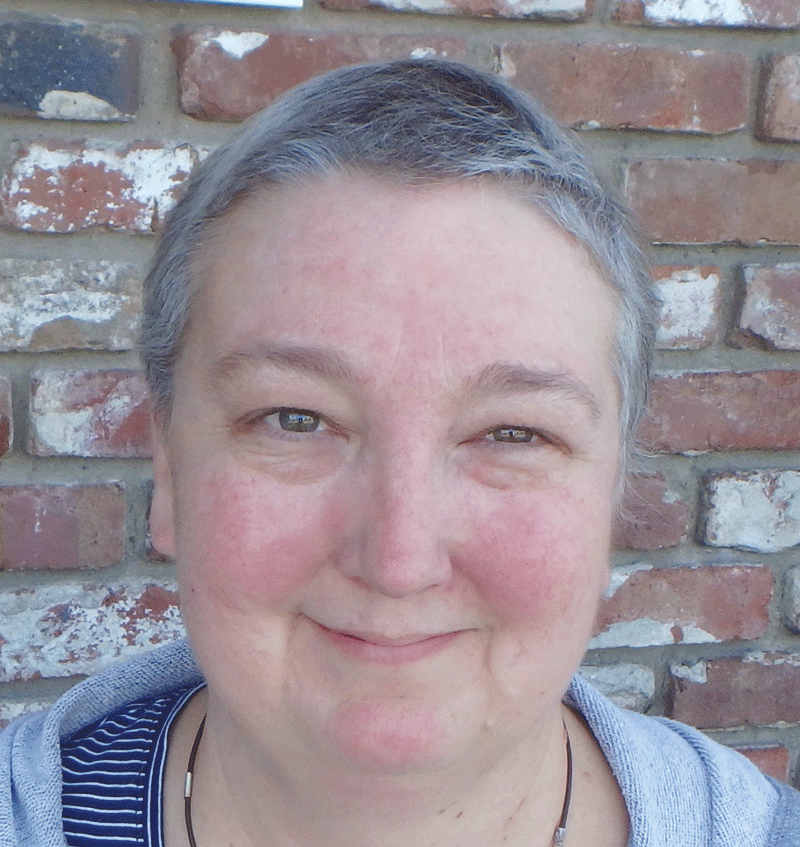
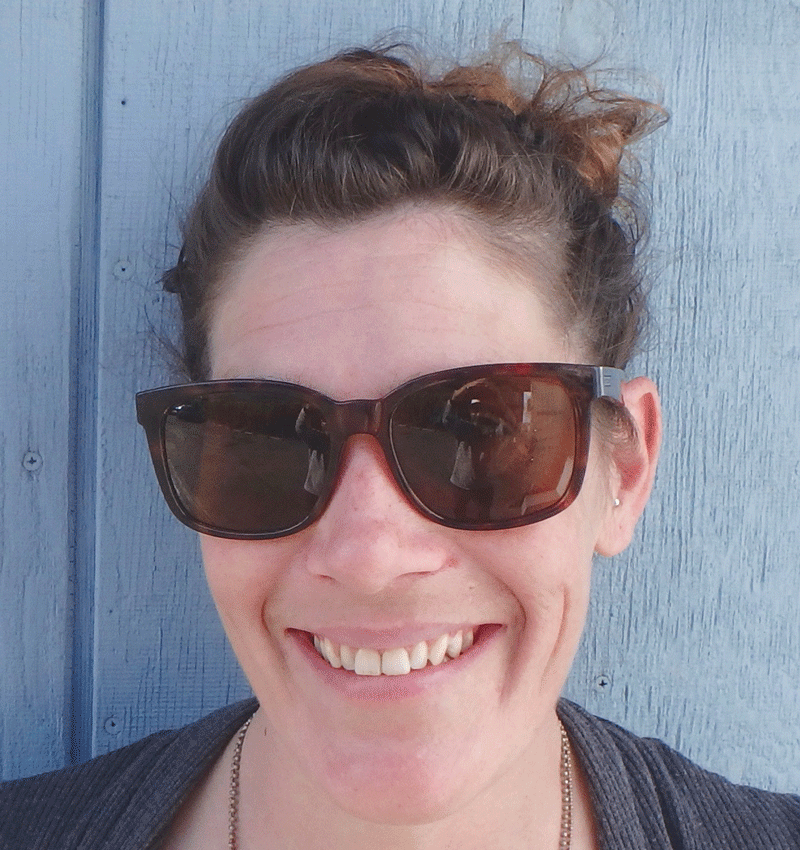
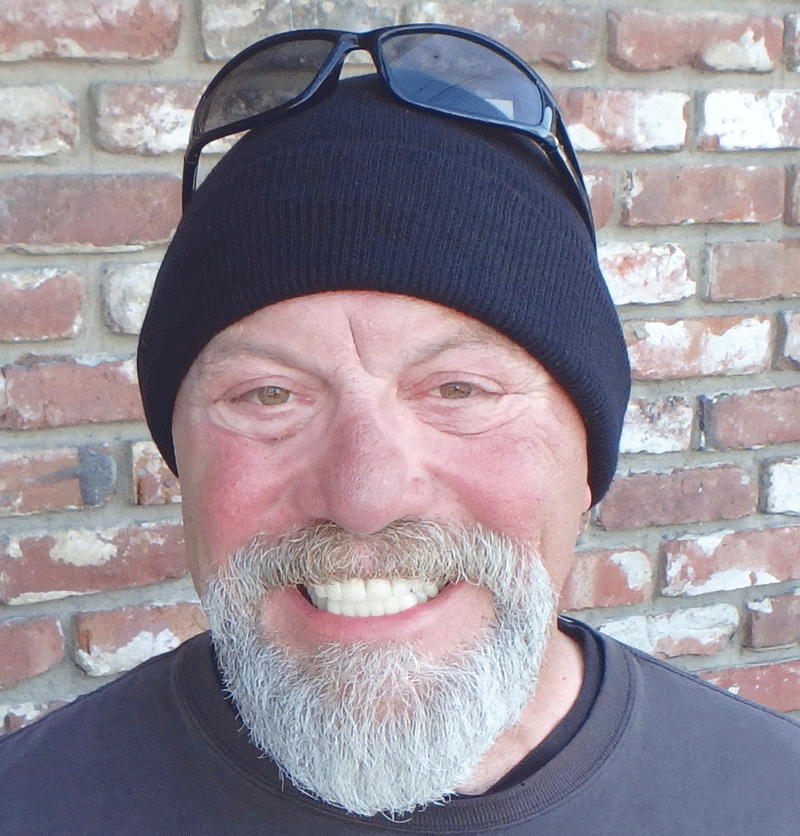
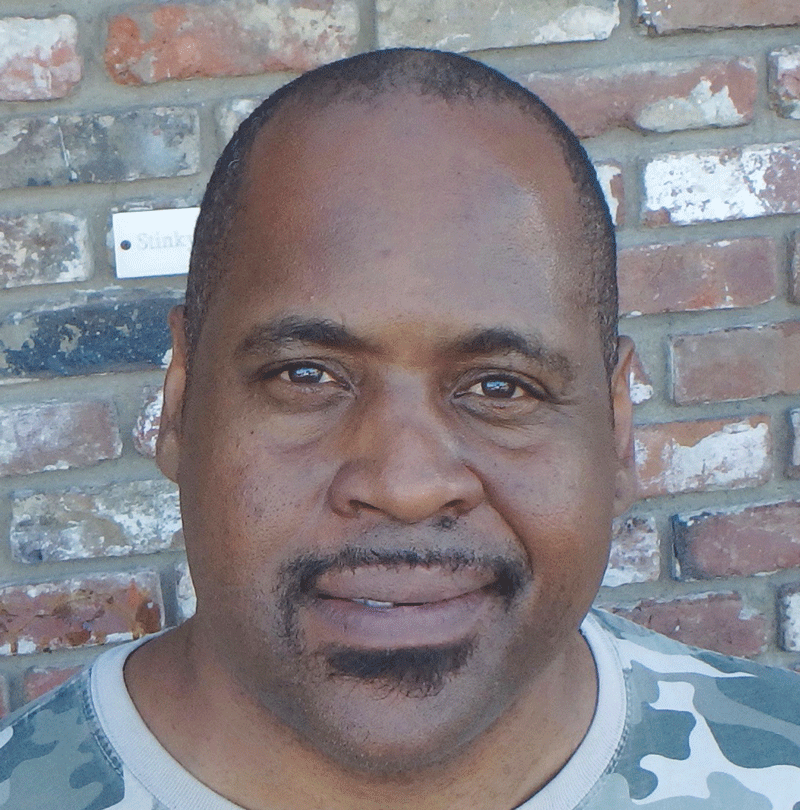
In a word, yes. With any luck, 2017 will be the year Americans focus on a more complete vision of healthโespecially given the impending potential repeal of Obamacare, which could take health care away from millions of Americans. In order to get a more holistic view of what we can do to be well, I asked some local doctors from varying disciplines for their best health advice, and what follows are their five top tips.
Use Cannabidiol
โIt is one of the most promising ingredients Iโve found in all my years doing medicine,โ says Aimรฉe Gould Shunney, a practicing naturopathic doctor at Santa Cruz Integrative Medicine, of cannabidiol (CBD). โBecause it is hemp-derived, it is not psychoactive, does not get you high, and you donโt need a prescription to get it.โ CBD is usually administered through oral capsules or sprays, but there are also tongue drops and balms. It can be purchased at health food stores, apothecaries and throughย local companies like Randy’s Remedy.ย
Shunney says that cannabidiol (CBD) modulates the stress response by acting on the limbic system, which is the part of the brain that manages emotional life, and that it is particularly effective at helping with sleep and anxiety issues. โHelping to manage stress is particularly important, because doctors often donโt have enough time to create stress resilience with their patients,โ she says. โStress will always be there, so the question is how to treat more than the symptoms and create better stress resilience.โ She continues, โIt has really been a game-changer. Itโs been very well-received, and is safe, fast, and reliable.โ
Although nothing is for everyone, Shunney reports that the vast majority of people experience positive outcomes.
โIt balances them on a foundational level,โ she says.
Also encouraging is that unlike many other medications, she says, patients often report needing less and less CBD over time. With it, many are able to partially or completely wean off of their other, more serious and addictive medications like opiates for pain and benzodiazepines for anxiety. She also says that CBD has minimal side effects and that the worst one is simply feeling too sleepy.
โIt is one of the most amazing additions to my practice in the last 16 years,โ says Shunney, who adds that it holds tremendous promise for the future.
Roll With the Seasons

From the Ayurvedic perspective, health is not just about the absence of disease; it is a holistic state of equilibrium between multiple facets of the body and mind. Manish Chandra, a local Ayurvedic practitioner, asserts that one way to find your own equilibrium heading into the new year is to know yourself and your own particular dosha, or constitution, and to follow a diet and lifestyle based on that. โIt is unique to each person,โ Chandra says. โOne size does not fit all.โ (One can find his or her own dosha by taking a quiz at santacruzayurveda.com.)
Although different lifestyles and diets work for different people, Chandra says that one thing that too many of us engage in is an Ayurvedic concept known as prajnaparadha. โIt translates to โcrimes against wisdom,โโ explains Chandra, using the example that immunity is compromised in winter because we donโt follow seasonal routines. โAnimals know to follow the patterns of the natural world, but many humans donโt, and thatโs often why we get sick.โ
For this reason, Chandra says it is important to not only know oneโs self, but also to know the season. โNot all foods and lifestyles are appropriate for all seasons,โ he says. โWinter is not the time to be doing cold and raw foods. Instead, it is a time to be eating more warm and grounding foods.โ He says that sipping warm water is a good way to provide heat to the body during cold weather, and that it also helps to cleanse the intestinal lining. โTurmeric and ginger are also particularly helpful in the winter because they are antibacterial and antiviral,โ adds Chandra. He also recommends taking advantage of nature giving us long, dark nights during the winter to sleep and rest more, and become more spiritually introverted. โIt is a time to go inward, to contemplate and reflect, and is a great opportunity to get to know oneself better,โ he says.
Eat Fermented Foods

The number one health recommendation that nutrition consultant and MS/RD Jocelyn Dubin makes heading into the new year is all about bacteria. And she means more of it, not less. After all, a major factor that determines our overall health is the relative amount of good and bad bacteria that call our bodies home.
โWe are more bacteria than human,โ says Dubin. โThe bacteria cells actually outnumber our human cells.โ
And whatโs a good way to culture the kind of healthy bacteria that leads to a healthy human? โEat fermented foods,โ Dubin says. โWe lose healthy bacteria every day, so they must be replenished. It is important to create a diverse army in our gut; our gut health determines overall health.โ
She says that kimchi and sauerkraut are some of the best examples of fermented foods loaded with healthy bacteria. Some yogurts are also beneficial, she says, as long as they have live and active cultures.
The best bacteria for us, she says, are naturally cultured at normal human body temperatures. This is why she also recommends her clients eat foods like cold misoโsuch as in salad dressings and dipping saucesโand refrigerated pickles. But because the healthy bacteria start to die above 98.6 degrees Fahrenheit, foods like miso soup and non-refrigerated pickles may lose some or all of their healthy bacteria due to high temperature.
Find Emotional Balance

โTake stock of the factors in your life that recharge you (coping strategies), as well as the factors that deplete you (stressors),โ writes licensed clinical psychologist Dr. Kirsten Carraway in an email. She recommends conceptualizing mental and emotional health as if they were on the opposite side of a balance scale. โRegularly assess whether these two sides of the scale are in balance, as the balance changes often with life circumstances,โ she states.
As easy as it is to get emotionally lost in the whirlwind of everyday life, it is important to, as Carraway says, regularly assess oneโs internal mental state, and be mindful if mental or physical red flag warning signs start to pop up.
โIf you are experiencing symptoms (e.g., anxiety, depression, pain, illness, physical symptoms, sleep disturbance, fatigue, etc.), your stressors are likely outweighing your coping strategies,โ claims Carraway. What to do if this is the case? โMake choices in your life about how to achieve a better balance by enhancing coping strategies and by reducing what stressors you can, thereby adjusting factors on both sides of the balance.โ
Not only does the balance scale visualization make intuitive sense, it is also empowering in that it allows one to attack his or her emotional health from two different sides. While important to be cognizant of the stressors in life, changing or removing them often ranges from difficult to impossible. But we can all do more to โrechargeโ ourselves, and to try to add better and more fulfilling behaviors, activities, and coping strategies into the mix.
Keep Moving

โExercise is key, and is a gain for both mental and physical fitness,โ says Internal Medicine Specialist Dr. Mary Patz of Palo Alto Medical Foundation, who has been practicing in Santa Cruz for 20 years. โEveryone has a capacity for some form of exercise no matter their age and functional status.โ
Whereas the word โexerciseโ often conjures up images of gyms, stationary bikes, and elliptical machines, the real key is simply movement, which can take on various forms, and doesnโt have to feel much like exercise at all.
Not only do exercise and movement help with physical conditions like high blood pressure, diabetes, and high cholesterol, they have far-reaching impacts on the mind-body connection and mental health as well, says Patz. โMore and more behavioral health specialists discuss exercise as part of treatment for both anxiety and depression,โ she says, claiming that one of the best recommendations for older people to stave off dementia is aerobic exercise. โFrequent exercise can be an outlet for more social interaction as well.โ Activities like going to the gym and attending exercise classes can often lead to increased socialization, which is in and of itself a healthy behavior.
โAlso important is moderation, with regard to diet and alcohol,โ says Patz, reporting that she sees many people not achieving, or not even trying to achieve moderation in their lives. โOne in 10 Americans is a functional alcoholicโbut in moderation, this can be a safe and perhaps beneficial enjoyment for most people.โ
She also stresses the point of moderation when it comes to diet, saying she sees a lot of food addictions and disordered eating. โI am concerned about progressive food restriction and fads, especially among younger women where โhealthyโ eating seems, at extreme, more a cover for eating disorder behavior. Most people are able to eat most thingsโwhat we lack is the ability to achieve moderation.โ


Looking for a way to give back in 2017? The Monterey Bay houses many unique volunteer programs that empower community members of all backgrounds to become leaders, educators and advocates for issues affecting the Monterey Bay National Marine Sanctuary. The Save Our Shores Sanctuary Steward program was developed in 1995 and trains participants on the history of the sanctuary, pollution prevention, and how to lead ocean advocacy events. Learn ย how to partake in the backbone of Save Our Shoresโ marine conservation programs at their workshop on Thursday, Jan. 12.
Nationally renowned folk musician, storyteller and multi-instrumentalist John McCutcheon will play a live show at the Resource Center for Nonviolence on Jan. 17. Over the course of McCutcheonโs 40-year career he helped found the first traveling musicianโs union, the Local 1000, and has been heralded โthe most impressive instrumentalist Iโve ever heard,โ by Johnny Cash. McCutcheon will release his 38th album in early February. McCutcheon is one of the worldโs master players of the hammered dulcimer, on top of playing the piano, guitar, autoharp and banjo.
This year join with people all over the globe celebrating the legacy of Martin Luther King Jr. through activist and political works. Benefitting the Diversity Center of Santa Cruz County and the national 350.org, the event will feature Pen/Faulkner Award-winning novelist Karen Joy Fowler and nationally acclaimed poet Ellen Bass. Youth readers from across the county will share their works in addition to speakers from the Diversity Center and 350.org. This event is in partnership with Writers Resist events in New York, Los Angeles, London, Zurich, and other cities across the globe.
Join friends, neighbors, and fellow community members in celebrating Martin Luther King Jr.โs work in a day of community action and volunteering. Motivational speakers and a light breakfast with the Volunteer Center of Santa Cruz County will kick off the day. Pick whatever service projects best suite your schedule and motivationsโfrom making cards for Jacobโs Heart to engaging in environmental stewardshipโeither on site or across the county.
Thereโs a whole host of things that can make life just that much harder: chronic pain, headaches, backaches, fatigue, anxiety, allergies. In