
Harvesting the Clouds

0

With the rains of December and January, my yardโ€”and most of Santa Cruzโ€”is looking greener than it has in years. But now that weโ€™ve got rain, what are we going to do with it?
Rainwater harvesting is a way to collect and store it instead of allowing it to run off. In a healthy ecosystem, rain percolates through soil to recharge streams, reservoirs and aquifers. Excessive runoff can create a whole suite of environmental issues, like stream-bank erosion, habitat degradation and flooding.
โ€œThe problems started when we paved so much land,โ€ says Lydia Nielsen, owner of Rehydrate the Earth, a landscaping company that focuses on eliminating runoff.
One popular technique for rainwater harvesting is rain catchmentโ€”catching rainwater off of roofs in cisterns, and then using it to irrigate oneโ€™s yard. These cisterns can be smallโ€”about 50 gallonsโ€”or as big as wine barrel, and up to 10,000 gallons.
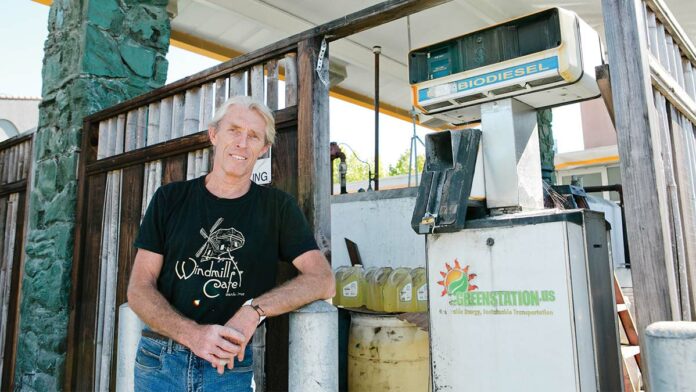
Golden Love, owner of Loveโ€™s Gardens, which builds water-neutral gardens, has worked extensively installing rain barrels, sometimes burying several of the larger tanks to store tens of thousands of gallons. On top of providing irrigation, these tanks have been successful in mitigating some large water issues, like depleted wells or saltwater intrusion. But, in his own yard, he has a smaller system that he uses to water annual vegetables. Even through the past years of drought, Love was able to maintain a vibrant garden with annual vegetables, flowers and fruit trees, thanks in part to his water catchment systems. Between 50-70 percent of home water use is generally for irrigation, meaning harvesting rainwater can improve water conservation dramatically.
Of course, these tanks can be pricey and not everyone wants to fill their yard with giant plastic barrels. In that case, another option for gardeners interested in capturing rainwater is passive rainwater harvesting, which involves sculpting the land to absorb more waterโ€”or, as enthusiasts like to say, โ€œSlow it, spread it, sink it.โ€

Even through the past years of drought, Love was able to maintain a vibrant garden with annual vegetables, flowers and fruit trees, thanks in part to his water catchment systems.

A common technique for passive harvesting is to use infiltration basins. These are basins dug into the soil about 2-3 feet deep, then filled with wood chips or gravel. Water flows into the basins, where it has the opportunity to sink into the soil. Soil can hold up to three times its weight in water and supply steady irrigation to deeply rooted plants.
I met Nielsen at a site where she had installed three basins, placed where water typically pools during rain. Nielsen has interconnected the three basins so that if one fills up, it spills into the next. She designed a garden around the basins so that, eventually, the plants will be able to survive through the dry season without irrigation.

rainwater
WELL SPRING Rain barrels, especially if combined with passive harvesting and drought-resistant plants, can keep a water-neutral garden lush.

These basins produce quite a bit of soil, which Nielsen turned into another passive harvesting technique: a bermโ€”essentially a long mound which stops and absorbs potential run off. Berms are often employed in conjunction with swales, which are trenches dug on a contour with the landโ€™s slope as a place for water to sink in.
Even with the abundance of rain from El Niรฑo, Californians should still lean toward water-wise gardening techniques such as rainwater harvesting, as the state has had one of the longest dry seasons on record. And with the uncertain future of climate change, we may have more drought ahead of us.
โ€œI want this place to be lush,โ€ says Love, who also uses passive water harvesting in his quest for water-neutral gardens. โ€œWe need to have habitat for the bees and the birdsโ€”and for humans, too.โ€
While sculpting land or installing rain barrels may be intimidating, Nielsen explains that it is not as hard as it sounds. โ€œIf it is just you and your friend and some shovels, how much trouble can you get into?โ€ she asks. โ€œBut if you come in with a bulldozer and start digging out land, then, yes, you could get yourself into trouble.โ€ She also mentions that anyone who lives on a sloped site should consult a professional. But for anyone else, as long as they start small, rainwater harvesting can be very simple.
There are plenty of resources out there. Nielsen and Love both teach classes, which you can find on their websites (RehydrateTheEarth.us and LovesGardens.com, respectively). Also the Resource Conservation District of Santa Cruz County has a free booklet, Slow it, Spread it, Sink it! A Homeownerโ€™s Greening Stormwater Runoff. Nielsen also recommends the book Rainwater Harvesting for Dryland and Beyond by Brad Lancaster.
Rainwater harvesting is just one technique in a suite of water-wise options. Another common one is installing a graywater system, which redirects water draining from showers or laundry for irrigation. And, of course, choosing the right plants is of the utmost importance. Love focuses on low-water, food-producing perennials such as fruit trees. He was able to water his dozens of fruit trees through the drought with just the water from his laundry.
There is also much to be said for clever design. Loveโ€™s backyard has an outdoor shower next to his fruit trees. โ€œI take my shower out here, and it waters the plum tree,โ€ he says.

Opinion

EDITOR’S NOTE

I remember running a story about the mysterious โ€œdisappearanceโ€ of bees way back in 2005, when beekeepers first started reporting it. It was called a disappearance then, though it quickly became clear that what they were dealing with was a mass die-off. What wasnโ€™t clear was pretty much everything elseโ€”what was causing it, how many hives it was affecting or what could be done about it.
Itโ€™s remarkable that 10 years later, there still arenโ€™t many concrete answers to these questions. No one even knows for sure how many honeybees are dying every year, but the best estimates are shocking. Henry Houskeeper talks about those numbers this week, and what scientists believe the solution to this decade-old mystery might be.
But just because we donโ€™t know for sure whatโ€™s causing the problem doesnโ€™t mean that no one is doing anything about itโ€”and thatโ€™s where Houskeeper reveals a whole new wrinkle in the story. The hobbyist beekeepers who are rallying to sustain the bee populationโ€”a new breed of local heroesโ€”are at the heart of his cover story, and for that reason itโ€™s the most hopeful story Iโ€™ve read on the topic yet.
STEVE PALOPOLI | EDITOR-IN-CHIEF


LETTERS TO THE EDITOR

Read the latest letters to the editor here.

Spare the Routes
Re: โ€œCuts Loom for METROโ€: Santa Cruzans love to complain about how there is no parking downtown, or how it’s too expensive, or the carbon footprint blah blah blah, but many would never consider taking a bus. What if the reason METRO ticket sales are flat is that the system doesnโ€™t serve the needs of those who would really use it? Rather than cutting service, perhaps it ought to be expanded.
There are many routes that donโ€™t run frequently or late enough to be of good use to those who need them most; for instance from Portola to and from downtown, and to and from the Capitola Mall. Not everyone has a car or can ride a bicycle, and low-wage workers (such as those who work on either end of these routes) canโ€™t afford Uber.
I have been in Santa Cruz for 10 years, and relied on public transportation for eight of those years when I lived downtown and had no car. I have watched the deepening service cuts with great concern. Currently Iโ€™m right on a bus line that I would love to be able to use more frequently, except I would have no way to get back home in the evenings without huge expense. For me, it is an inconvenience, but there are low-income folks, the disabled and seniors, who are much more adversely impacted. In addition, the economy of our county is at risk when people canโ€™t get to and from work, shop, or grab a bite after 6 p.m.
Hereโ€™s public input, Mr. Emerson: spare all the routes, and improve service in underserved areas. Work on educating the public about how important it is for growing cities to have good public transportation and why they can benefit by using it.
The city, county, business community and citizenry should be concerned about further cutbacks and work with METRO to find solutions that are for the common good.
Carol L. Skolnick
Santa Cruz

Radical Memories
Re: โ€œAcid Testโ€: Thanks to Geoffrey Dunn for the memories of the mid-โ€™60s in Santa Cruz. My husband and I and young children moved to Santa Cruz in 1962. We were thinking of moving to Australia or New Zealand because of the increasing militarization in our country. We met some folks from Santa Cruz at a Humanist Conference in San Francisco. Al Johnsen, Manny and Alice Santana, and some others urged us to move to Santa Cruz to help organize what they called an active liberals group to counter the active conservatives who had formed a John Birch group. So we did, and joined the establishment of the Santa Cruz ACLU chapter.
Soon the Peace Center and a draft information center to help young men were organized. (The Resource Center for Nonviolence came later.) Also, a branch of the Womenโ€™s International League for Peace and Freedom was organized.
Bill Stewart from Monterey stirred up the old established Democratic Party system when he ran for the House of Representatives as a peace candidate in a primary.
Later in the 1960s, another peace candidate stirred up the old established Democratic Central Committee by running for representative, and urged our group of anti-war, anti-draft, pro-farm-worker-union-and-civil-rights advocates to run for membership in the Democratic Central Committee. A few of us, including me, said, โ€œSure. ย Uh … what is the Democratic Central Committee?โ€
Our chosen candidate, Richard Miller from Pacific Grove, was a history professor at the San Francisco Art Institute, so he explained the importance of becoming a member of that establishment political power.
During the course of Richard Millerโ€™s campaign, a fund-raiser was held. The location was the Santa Cruz Civic Auditorium, and the most popular of the music groups to play was Jefferson Airplane. A light show was done by Dick Smith, a dentist from Felton who was good friends with some of the Merry Pranksters. The light show stirred up the fears of the influential, who considered such things to be conducive to all sorts of misbehavior. An effort was made to not allow the affair because there were too many people. ย But some of the organizers who were upstanding citizens of the community and were on good terms with the chief of police talked with the chief, and the event went on.
Of course, Richard Miller did not win in the primary. But his campaign was a valuable part of the changes that happened in the โ€™60s: the civil rights movement. The farm workers strike. The anti-war, anti-draft actions.
I remember the unveiling of Ron Boiseโ€™s statue, and the supportive speech made by the mayor. The Mothers for Morality formed to fight such sinful art. Their leader said that sins made dents on the brain. Even naughty little babies who threw their food on the floor would get dents on their brains. The dents would be there until Jesus washed them away.
I can still see Lee Quarnstrom roller skating in the aisles of the Hip Pocket book store when he was working there.
Ken Kesey and the Merry Pranksters were a valuable part of all this.
Pat Miller
Santa Cruz


PHOTO CONTEST WINNER

Submit to ph****@*******es.sc. Include information (location, etc.) and your name. Photos may be cropped. Preferably, photos should be 4 inches by 4 inches and minimum 250dpi.


GOOD IDEA

SURE FOOTING
The Pajaro Valley Shelter is gearing up for the 32nd Annual Motherรขโ‚ฌโ„ขs Day Run/Walk at Ramsay Park. Both the 5K and 10K events benefit homeless women and children. The gathering includes T-shirts, a continental breakfast, a DJ, roses for mothers, and medals for winners. Last yearรขโ‚ฌโ„ขs event saw 700 runners and 84 sponsors. For more information on fees and how to register, visit pvshelter.org.


GOOD WORK

ENTER STAGE LEFT
After seeing how Santa Cruz Shakespeare was burned by UCSC, itรขโ‚ฌโ„ขs exciting to see the city of Santa Cruz throwing its weight behind the iconic local group, as it welcomes SCS to its new home at the equally beautiful DeLaveaga Park. The festival has announced that this yearรขโ‚ฌโ„ขs plays will be Hamlet and A Midsummer Nightรขโ‚ฌโ„ขs Dream.


QUOTE OF THE WEEK

รขโ‚ฌล“If the bee disappeared off the face of the earth, man would only have four years left to live.รขโ‚ฌย

-Maurice Maeterlinck

Posner Undisclosed

0

Many Santa Cruz residents have said that Posner collecting rent from his extra unit strikes them as hypocritical.

After all, the local politician has championed relaxing building laws in order to allow more accessory dwelling units (ADUs), and he ultimately voted in favor of the revised ADU laws passed in 2015. The loosened laws still do not accommodate Posnerโ€™s backyard shed, which does not have a kitchen or a bathroom and is in a multi-residential area that is not zoned for ADUs.

Additionally, Posner did not disclose income from his $700-month back unit, which has since been red-tagged, on election forms with the Fair Political Practices Committee, an omission he now regrets.

โ€œThose forms represent the fact that public officials need to be public about everything, and I wasnโ€™t being public, because I had an unpermitted unit,โ€ says Posner, who adds that he has since updated the forms.

As of press time, Santa Cruz City Council was scheduled to look at a number of issues surrounding Posnerโ€™s unit, including unreported income, at its Tuesday, March 8 meeting. It would also look at the councilโ€™s options, which include censuring Posner, a move that would still allow him to serve.

โ€œI hope that this whole thing will allow us to focus more on housing and wonโ€™t just be a big distraction,โ€ Posner says. โ€œBut even though itโ€™s a distraction, itโ€™s my responsibility, and I take responsibility for it.โ€

Guild Save the Queen

Ian Coulson runs his bare fingers along the open gaps of the hiveโ€™s frames. โ€œGood beekeepers donโ€™t need gloves,โ€ he says. He pries one frame out of the hive and lifts it up to the light.
Coulson, the co-founder of the Santa Cruz Bee Guild, is showing me his beehives. There arenโ€™t as many as Iโ€™d expect. A third of his bees died last year, he tells me. Empty hive boxes lay in the tall grass around his hillside home high in the Santa Cruz Mountains.
Not long ago, this would have alarmed local beekeepersโ€”many rely on Coulson for advice when they suspect trouble at their own hives. But today, the news causes less of a stir. Beekeepers have been reporting alarming mass die-offs of their hives for more than a decade. In that time, according to some estimates, the U.S. has lost a third of its honeybees, and no one knows why.
Local beekeepers, however, are now stepping in to help. At the Santa Cruz Bee Guild, swarms of beginning beekeepers fill the meetings, eager to care for their first hives. This grassroots rally to save the bees is giving hives a new hope. But even with the guildโ€™s help, keeping a beehive healthy nowadays may require a little luck.

Mystery Solved?

No one can say for certain why bees are struggling. Bees face many stressesโ€”disease, mites, poor nutrition, and insecticidesโ€”and the die-offs probably have no single culprit. But a general theme has emerged among the theories: bees and modern agriculture simply donโ€™t get along.
Itโ€™s not easy to be an insect on todayโ€™s farms. For instance, most conventional farmers protect their fields from pests with insecticidesโ€”chemicals that kill insects but not plants. Spray-on insecticides have a long history, but today many farmers prefer systemic insecticides, which plants absorb through their roots or seeds.
In many ways, systemic pesticides trump the spray-on ones, at least from an agricultural perspective. Most notably, farmers are able to apply less of them to their fields, since the chemical compounds stay within the plantsโ€™ tissues. And they canโ€™t blow away, a major benefit for neighborhoods that border farms. Systemic pesticides should also spare pest-fighting bugs, for example, since these helpful critters donโ€™t eat farmersโ€™ fruits.

โ€œBees already face stresses from commercial farming,โ€ Aldrich says. โ€œAdding neonicotinoids could be the straw that breaks the camelโ€™s back.โ€

But with their benefits, systemic pesticides also bring new challenges. With conventional insecticides, beekeepers kept their hives away when farmers sprayed. Now, compounds stick around in plantsโ€™ tissuesโ€”including in their pollen. And when scientists look in some beehives, they find traces of pesticides.
No one is certain how systemic pesticides affect bees. But many beekeepers connect them to the sudden and widespread bee die-offs they began finding a decade ago.
Complicating the problem is the fact that not all regulators agree on how to handle the compounds. In December of last year, for example, Canada banned the use of neonicotinoids, the systemic insecticide class most often blamed for the bee die-offs. In the U.S., though, the neonicotinoid review is ongoing. The Environmental Protection Agency (EPA) reported in January that one subset of neonicotinoids may harm bees, and they plan to assess others in the near future. Many beekeepers wonder why progress is so slow.
But the case against neonicotinoids may be gaining momentum. Last fall, U.S. Department of Agriculture (USDA) researcher Jonathan Lundgren filed a whistleblower suit in which he alleged that the agency had blocked his research on the harmful effects of neonicotinoidsโ€”a worrisome claim, if true.
Jeffrey Aldrich, a research entomologist for more than 30 years at the USDA, and now a consultant based in Santa Cruz, thinks the argument against neonicotinoids has merit. โ€œBees already face stresses from commercial farming,โ€ Aldrich says. โ€œAdding neonicotinoids could be the straw that breaks the camelโ€™s back.โ€
Still, Coulson doesnโ€™t blame modern agriculture for the beesโ€™ plight.
โ€œNone of this is the farmerโ€™s or the beekeeperโ€™s fault,โ€ he says. โ€œItโ€™s just that itโ€™s hard to make a living farming today.โ€

Why Bees Matter

Plants flower for bees, not humans. Bees see colors invisible to humans, such as ultravioletโ€”possible, in part, because they have five eyes. So flowers use bright pigments, particularly yellow and blue, to catch beesโ€™ attention. To reward visiting bees, flowers ooze nectar, a sugary bee food and the key ingredient of honey.
But flowers, like many organisms, have good reason to be sweet. Plants mate by sharing pollen, which sticks to the legs and bellies of bees that gather nectar. When bees depart for their next flower, the pollen tags along.
And seeds too, like pollen, must be spread. So plants embed their seeds in fruitโ€”and humans, for example, carry the fruit away.

2006-01-09 14.32.02
Local bees have struggled through the last few years of Califronia’s dought, which stifled many of the flowers bees depend on. PHOTO: HENRY HOUSEKEEPER

Flowers are savvy at attracting pollinator insects or animals to help them reproduce. But what happens when insects, like bees, arenโ€™t there? If flowers fail to mate, they produce no seeds. And without seeds, plants have little reason to fruit.
Farmers, then, must make sure their crops have plenty of opportunity to mingle. When bees spread pollen, they help orchards and fields yield fruit. At first glance, convincing bees to pollinate farms might seem easyโ€”bees thrive near flowering fields. But a farm is only a bounty when in bloom. When a farm grows one crop, as many do today, the farmโ€™s flowers all bloom at the same time. Bees may feast, briefly. But soon, the blooming crop turns to fruit, and for bees, the party ends. Before the next yearโ€™s flowers open, the beesโ€™ honeycomb stores will run dry.
Farmers solved this problem many years ago. Rather than entice bees to stay, they now hire commercial beekeepers to truck in bees. Moving hives may be costly for farmers and stressful for bees, but mobile colonies make flowers fruit. And today, these bees-on-wheels visits help produce a third of the food we eat.

Bringing Reinforcements

Farms canโ€™t survive without bees, but bees donโ€™t need farms. And the new wave of beekeepers at the guild cares little about farmingโ€”they just want to give the bees a fighting chance.
But beware, Coulson warns: keeping a colony alive in the backyard isnโ€™t easy. Bees that live miles from conventional farms, for example, still have plenty to worry about. Over the last few years, Californiaโ€™s long drought stifled many of the flowers that Santa Cruz bees visit. Some hives struggled to find food and water.
Bees also suffer from their own pests. Within many hives, the tiny varroa mite burrows into apiaries, or birthing chambers. โ€œThey literally suck the life out of bees,โ€ says Aldrich. Many beekeepers intend to raise colonies without chemicals, but end up forced to treatโ€”or else loseโ€”their bees.
And new pests like the varroa or tracheal mites pop up suddenly. โ€œPests have always occurred from time to time,โ€ Coulson says, โ€œBut nowadays they spread more quickly.โ€
Commercial beekeepers cart their hives from coast to coast to follow the blooms of major crops such as almonds, cranberries, or pears. Meanwhile, pests tag along.
โ€œIt didnโ€™t take long before varroa was attacking hives on both coasts, and everywhere in between,โ€ Coulson says. โ€œSo many hives were dying, the mites almost ran out of places to go.โ€

โ€œBeekeepers know what is blooming in their neighborhood, but their friends and neighbors start paying attention, too.โ€

Aldrich thinks bees face a continued struggle ahead. โ€œBees will have a tough time weathering the pests until scientists find better solutions,โ€ he says.
Coulson doesnโ€™t think that the mite problem will go away. โ€œBut bees will become tougher, and more hygienic,โ€ Coulson says. โ€œAnd the mites will learn to be gentler.โ€
And more generally, Coulson feels optimistic. โ€œBees have had to overcome so many problems before,โ€ he says. In other words, honeybees are resilient in the long runโ€”they just need time to adapt.
While bees learn to live with the latest pest or disease, hobbyist beekeepers need some coaching in order to keep their colonies humming. Many seek advice from more experienced beekeepers through the Santa Cruz Bee Guild.
โ€œAnyone can join,โ€ Coulson says. โ€œIf you show up at a meeting, youโ€™re part of the bee guild.โ€ But that being said, the guild also strives to deter new beekeepers who may not be ready for so much responsibility.
โ€œIf you think you want to keep bees, first research carefully,โ€ says guild member Marja van den Hende.
Bee guild meetings arenโ€™t just for beekeepers. Last month, members discussed which garden plants bees visit mostโ€”coyote brush and madrone were local favorites, with lavender and rosemary close behindโ€”useful info for bee-friendly folk who will never keep their own bees.

Colony Mentality

The beekeeping art survives mainly through mentorship, so the guild strives to pairs newbies with experienced beekeepers. And learning with family is common. Coulson, for example, learned about bees from his parents in England.
โ€œWhenever I visit my family,โ€ he says, โ€œthey still ask me about my queens.โ€
Sometimes, parents and children learn together. The bee guildโ€™s late core founder, Peter Cook, began beekeeping alongside his son James. The two helped each other along, learning to care for their hives. His wife, too, began making salves and soaps from beeswax.
Van den Hende believes that beekeeping brings communities together. Beekeepers learn from anecdotes, and must enlist the trust and encouragement of friends. โ€œBeekeepers know what is blooming in their neighborhood,โ€ says van den Hende. โ€œBut their friends and neighbors start paying attention, too.โ€
As Coulson pulls the lid off another hive, van den Hende takes my arm. โ€œPut your hand over the bees,โ€ she says. โ€œCan you feel the hiveโ€™s warmth? Keep bees, and you must become their steward.โ€
Coulson nods. โ€œWhen you reach inside a hive, you touch a mysterious world,โ€ he says.
Best then, perhaps, to leave the gloves behind, and feel the world against bare skin.
Learn more about the Santa Cruz Bee Guild. Visit santacruzbees.com, or come by a guild meeting (First Wednesday of every month, community room of El Rio Mobile Home Park).


Sidebar: Honeybees vs. Native Bees

bees
Pollen-rich flowers benefit not just honeybees (bottom), but native bees as well. The digger bees (top) is one of several bees native to the area.

Honeybees havenโ€™t always been in Santa Cruz. Europeans first brought them to America centuries ago to make honey. But before Europeans and honeybees sailed to the New World, native bees were already here, pollinating Californiaโ€™s diverse wildflowers.
Unlike honeybees, most native bees donโ€™t form large colonies. In fact, most donโ€™t form colonies at all. And besides the bumblebee, which, compared to honeybees, make a small amount of honey that is much harder to harvest, native bees make no honeyโ€”no surprise then that honeybees get all the love.
But luckily for native bees, local projects to help out honeybees likely aid native bees as well. For example, gardeners often plant pollen-rich flowers with honeybees in mind, but native bees visit, too.
โ€œThey definitely make use of urban gardens,โ€ says Angie Ashbacher, a UCSC graduate student who studies interactions between plants and pollinators, such as bees.
Ashbacher says a few small changes can make urban gardens more welcoming to native bees. Most importantly, she recommends that gardeners preserve spaces for native bees to build their homes.
โ€œHoneybees may fly 5 miles to find food,โ€ she says. โ€œBut native bees stay close to their nests.โ€ So for native bees to visit urban gardens, they need shelter nearby.
Keeping a space for native bees isnโ€™t tough. โ€œLeave a few dead stems on your trees,โ€ Ashbacher says. Many native bees adopt old stems to build their homes. โ€œOr if youโ€™d rather,โ€ she says, โ€œbuy a native bee nest box.โ€
And when gardeners shelter native bees, they help their gardens produce more fruit. Although honeybees seem to steal the spotlight, they canโ€™t compete with native bees when it comes to pollinating flowers.ย 
 

Bigger Buttercup

The espresso machine had just arrived when I visited the new, spacious Pacific Avenue home of Buttercup Cakes & Farmhouse Frosting, in the former Noahโ€™s Bagels space. The space features a long counter adorned with those out-of-this-world cupcakes, and a spacious banquette with little cafe tables and chairs. I felt instantly at home. And anyone who has tasted one of these sinful, addictive creationsโ€”my favorites include the hibiscus flower, the exceptional carrot ginger, and the little blood orange number with Earl Grey tea frostingโ€”knows what Iโ€™m talking about. Now, picture all of that comforting feel-good flavor right there in the heart of downtown, on Pacific Avenue.
Thereโ€™s so much to love about the establishmentโ€™s move from the tiny space across from Sockshopโ€™s side door into a new higher-profile store: More cupcakes. More fresh muffinsโ€”an especially tasty gluten-free number made with oat flour and luscious spices captured my fancy, and lots of savory pies, spanikopita-style. โ€œThe Greekโ€ packs feta, spinach and kalamata olives into a light, flaky filo triangle. The Melanzane is loaded with eggplant, sun-dried tomatoes, mozzarella, and basil. So Buttercup has branched out into a menu that looks a lot like lunch, or brunch, or midday snack.
Sweets, savories, espresso and long opening hours (for after or before the movie?)โ€” weekdays 10 a.m.-7 p.m. and until 9 p.m. on weekends. Stop by and be prepared to have your taste buds permanently altered by the irresistible house cupcakes. If a wedding is in someoneโ€™s future, youโ€™d do well to check out the gorgeous mega-cake options. Last week I watched in awe when an excited young man ordered three of the new โ€œseasonalโ€ coconut snowball cupcakes and ate two of them on the spot. When Marie Antoinette murmured, โ€œlet them eat cake,โ€ this is what she obviously meant. All of your favorite flavors, plus a few you havenโ€™t yet discovered, plus exceptional vegan and gluten-free varieties, are waiting for you at Buttercupโ€™s new locationโ€”1411 Pacific Ave., Santa Cruz.


Class Action

Yes itโ€™s that time againโ€”time to get your hands on some gushy, moist, pliant dough and start shaping your very own to-die-for croissants, sourdough loaves, pies, and pastries. And thanks to the culinary team at Companion Bakeshop on Mission Street, you can do just that. Go here: https://squareup.com/market/companion-bakers to find all of the mouthwatering details, and book your space in the workshops, which begin at 6 p.m. on March 14 with Sourdough Basics. You can sign up for a single class โ€œa la carteโ€ or the three-class Sourdough series which includes โ€œWhole Grainsโ€ and โ€œEnriched Breads.โ€ All workshops run 2-3 hours ($70 each/$180 for all three). Arrive dressed to get messy, in comfortable shoes, and perhaps bring a notebook.


Business Buzz

Dig this! According to a recent Infogroup study reported by Bloomberg Business last week, Santa Cruz (yes, our Santa Cruz) is ranked second among the top 10 foodie cities in the U.S. Only our fair sister up the road, San Francisco, came in higher. The rating was due to our many high-end and organic grocers, and โ€œthe consumersโ€™ propensity to eat at fine dining restaurants as opposed to fast food or family dining chains.โ€ Cool, huh?


Late Breaking New Leaf

Making a wide range of outstanding organic foods, produce, meats, and artisan products available throughout the Bay Area, New Leaf Community Markets has just signed a lease for a new store to open in August 2017 in Aptos Village. The plan is to expand the current offerings into more freshly prepared foods, including a wok and ramen bar. Canโ€™t wait! Details as they emerge.

Burrell School

Getting together with my Wild Wine Women group is always fun and rewarding. We choose interesting places to meet for lunch and try different wines. Most recently, 16 of us gathered at the quaint and intimate setting of Nasch Austrian Bistro in Los Gatosโ€”a new eatery focusing on classic fare such as Schnitzel and Spรคtzle, Bratwurst and Weisswurst, not to mention delicious desserts of Sachertorte, Palatschinke, and, everybodyโ€™s favorite, Apfel Strudel.
We all took different wines to sample (thereโ€™s a corkage fee, of course), and in the mix was an absolutely splendid Burrell School Chardonnay Estate 2013 Santa Cruz Mountains, which the winery has given the name โ€œTeacherโ€™s Pet.โ€ All of Burrell Schoolโ€™s wines have a school-themed moniker.
I happened to be sitting next to Anne Moulton, who owns Burrell School Vineyard with her winemaker husband, Dave Moulton. When I enthused about this Chardonnay, Anne proudly said that it got a 90-point rating in the March 2016 Wine Enthusiastโ€™s buying guide. She had every right to be honored, this is a gorgeous Chardonnay packed with flavorโ€”barrel-fermented and aged 12 months in French oak.
โ€œThis wine from the top of Santa Cruz Mountains has a distinctly intriguing nose โ€ฆ chive โ€ฆ lemon โ€ฆ grapefruit blossom aromas,โ€ writes Wine Enthusiast.
Of the 55 Chardonnays rated by Wine Enthusiast, Burrell School Vineyardsโ€™ Chard was the only Santa Cruz Mountains appellation wine recognized. โ€œThat speaks well for our estate-grown fruit, our winemaking methods and the finished wine,โ€ says Dave Moulton.
A lovely lemony-straw color with a fruity nose of pear, pineapple and lemon custard, its zesty flavors include grapefruit, almonds, honey tangelo and Golden Delicious apple. Although Dave Moulton suggests pairing it with โ€œlively fare,โ€ such as freshly shucked oysters, I would vote for taking a bottle of this Chard to your favorite German restaurant. Youโ€™ll be amazed how well it pairs with Wiener Schnitzel!
Initially selling for $32, this Chardonnay is now on sale for $24. Also on sale right now is a four-pack sampler, which includes Chardonnay, Pinot Noir, Merlot, and Cabernet Franc. Regularly $144, itโ€™s a bargain at $99.


Burrell School Vineyards, 24060 Summit Road, Los Gatos, 408-353-6290. burrellschool.com. Tasting room is open 11 a.m. to 5 p.m. Thursday through Sunday.

Be Our Guest: Clozee

0

 
March 17-20, a bass music and well-being festival known as the Serenity Gathering takes place in Joshua Tree. This yearโ€™s event features Shpongle, Nahko & Medicine for the People, Emancipator, Del the Funky Homosapien, and dozens more all gathered together for the spring equinox. On March 15, Euphoric is throwing a Serenity Gathering pre-party featuring French music producer CloZee; West Coast bass music veteran Secret Recipe; Wormhole music group founder Krakinov; and local producer and DJ DownsquareZ. The event promises to be a lively warm-up for the beloved electronic music festival.


INFO: 8:30 p.m. Tuesday, March 15. Moeโ€™s Alley, 1535 Commercial Way, Santa Cruz. $10/adv, $15/door. 479-1854. WANT TO GO? Go to santacruz.com/giveaways before 11 a.m. on Friday, March 4 to find out how you could win a pair of tickets to the show.

Love Your Local Band: Defenders

0

Local trio the Defenders have a deep love for old-school punkโ€”so deep, in fact, that they built the band around it.
โ€œIt was the idea of โ€˜the defenders of past musical styles,โ€™ and how we want to be the torch bearers and such. So weโ€™re defending that,โ€ says guitarist and lead singer Ken Helwig.
โ€œI grew up listening to old U.K. โ€™70s punk, Oi!, U.K. hardcore, some early โ€™80s, as well as your classic southern California stuff like Social Distortion, Agent Orange, as well as Santa Cruzโ€™s own Swinging Utters. Itโ€™s stuff that has more of a melody, loud guitars and solos,โ€ says Helwig. โ€œA little more rock-oriented.โ€
While their sound reflects these older punk-rock influences, they also mix a bunch of subgenres together to create something totally unique. The group plays loud and passionately, and their songs are written from a very personal perspective. If politics come into it, they tend to focus on how bigger issues affect them as individuals.
โ€œIโ€™d rather write a song about personal politics and how everyday life affects me. or how things around the world affect me, like โ€˜Answer Me Today.โ€™ Itโ€™s basically about the high cost of living, how no matter how hard you work, itโ€™s really impossible to get ahead. Itโ€™s pretty much a sign of the times in the Bay Area, and in Santa Cruz,โ€ says Helwig. โ€œWe also have a song called โ€˜Despicable Me.โ€™ Itโ€™s about me being a pain in the butt to my wife.โ€


INFO: 9 p.m. Saturday, March 5. Catalyst, 1011 Pacific Ave., Santa Cruz. $22/adv, $26/door. 429-4135.

What do you think about the electoral college?

lt-celesteWell, itโ€™s been around a long time, and we still need it. But Iโ€™m 83 years old, and difficult to change.

Celeste Phillips, Santa Cruz, Retired Registered Nurse

Flying Blind

0

The more goopy and awe-inspiring a sports story is in real life, the more likely Hollywood will lard on even more sap in the screen adaptation. This is essentially the case with Eddie the Eagle, the determinedly crowd-pleasing biographical tale of Michael, โ€œEddieโ€ Edwards, a member of the British ski jump team (in fact, he was the entire team) who won the hearts of fans worldwide at the 1988 Calgary Winter Olympics, not by coming in first, but by being there at all. Yet the real story is so nutty and inspiring that the crowd canโ€™t help being pleased, in spite of everything.
Nicknamed โ€œthe Eagleโ€ by the besotted press, Edwards was an almost pathologically klutzy competitor with more heart than skill, who refused to give up his childhood dream of becoming an Olympianโ€”even though he never excelled at any sport. Taking up ski-jumping at the advanced age of 25, and only just squeaking in after an improbable series of qualifying events, Eddie defied pundits, advisors of the British Olympic Committee, and common sense to realize his utterly crazy dream.
This is the kind of story that Hollywood eats up, and director Dexter Fletcher masticates cheerfully away on it. Taron Egerton plays Eddie as a lovable goofball, a good-hearted naif who refuses to give in to the naysayers. The filmmakers also throw in Hugh Jackman as Eddieโ€™s reluctant ad-hoc coach. Jackmanโ€™s character is only โ€œbased onโ€ several people who coached Eddie along the wayโ€”meaning that screenwriters Sean Macaulay and Simon Kelton are at liberty to invent his character from scratch, so the coach has the requisite demons of his own to face, and is just as desperately in need of redemption.
Unlikely athlete material, Eddie spent much of his childhood in a leg brace. In the movie, as soon as the brace comes off, we see the boy Eddie attempting to train himself in a variety of eventsโ€”racing, running, hurdlesโ€”in the alleyway behind his house, only to crash and burn at all of them. Blind to his inadequacies, and undaunted, he sets his sights on winter sports, but is unceremoniously cut from the menโ€™s downhill ski team by an unctuous official (Tim McInnerny) who tells him heโ€™ll โ€œnever be Olympic material.โ€
As a last resort, he chooses ski jumping. Britain doesnโ€™t field a ski jump team, so Eddie takes himself off to the international training camp in Germany. Bussing tables at an alpine cafe in return for a place to sleep, heโ€™s belittled by the elite Scandinavian ski jumpers who wonโ€™t let him join their reindeer games. But he also meets Bronson Peary (Jackman), an alcoholic American driving a snow plow.
Turns out (of course) that Peary is a disgraced former ski jump champion who lost his focus, and turned to the bottle for consolation. (He actually says so in a line of dialogue, in case we didnโ€™t get it.) Peary wants nothing to do with obsessed, genial nutcase Eddie, but (of course) he softens up toward the kid and decides to give him a few pointersโ€”never mind that Jackman is the most fit and best-coifed drunk ever to appear onscreen. The filmmakers rely on Pearyโ€™s brooding soul-searching and his need to redeem the downward slide of his own life and career through Eddie to carry the drama.
The thing is, Eddieโ€™s underdog career is dramatic enough. Shunned by the British Olympic Committee because he canโ€™t get sponsors, Eddie drives his dadโ€™s van across Europe to the trials. Heโ€™d never skied down a jump in his life until the year before he competed, and (in the film, at least) his odious teammates get teetotaler Eddie too drunk to march in the opening ceremonies.
Still, Egerton and Jackman strike up an appealing rapport. And Fletcher achieves one truly masterful shot when Peary goes down the 70-meter slope one night and soars out over the valley to show the youngsters how itโ€™s done. The cuts are so subtle, it looks like one long, beautiful shot, one breathtaking image that captures the lure of flying that drives these competitors on.


EDDIE THE EAGLE
**1/2
With Taron Egerton and Hugh Jackman. Written by Sean Macaulay and Simon Kelton. Directed by Dexter Fletcher. A 20th Century Fox release. Rated PG-13. 105 minutes.
 

Harvesting the Clouds

storing rainwater
How to catch and store rainwater now to beat the dry season later

Opinion

March 2, 2016

Posner Undisclosed

nextspace santa cruz coworking
Councilmember Micah Posner admitted last month to renting out a shed in his backyard without the proper permits to make the unit habitable under city building codes.

Guild Save the Queen

Hobbyist beekeeping surges as scientists debate the mystery of disappearing bees

Bigger Buttercup

Buttercup Cakes moves to Pacific Ave, plus baking classes at Companion and a new New Leaf

Burrell School

'Wine Enthusiastโ€™ rates locally grown Chardonnay 90 points

Be Our Guest: Clozee

Win tickets to see CLOZE at Moe's Alley on SantaCruz.com

Love Your Local Band: Defenders

The Defenders play Saturday, March 5 at the Catalyst.

What do you think about the electoral college?

Well, itโ€™s been around a long time, and we still need it. But Iโ€™m 83 years old, and difficult to change. Celeste Phillips, Santa Cruz, Retired Registered Nurse         Not being born here, I think it needs to be revamped. People outside of here are asking if itโ€™s a joke. Kali Kagamubla, Santa...

Flying Blind

Underdog appeal vs. schmaltz in โ€˜Eddie the Eagleโ€™
17,623FansLike
8,845FollowersFollow