

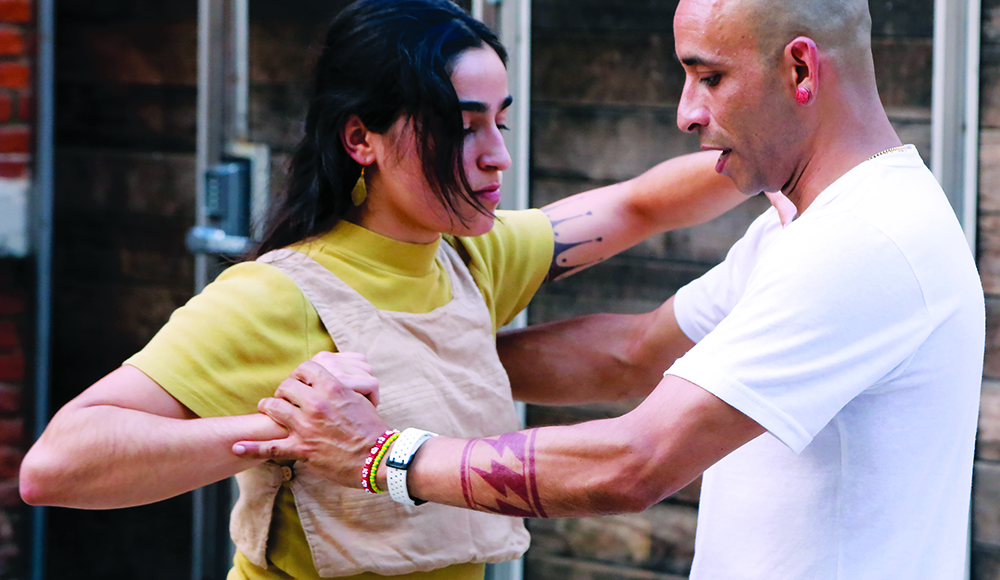
For three years, Salsa by the Sea has hosted free, open-air salsa dancing at the end of the Santa Cruz Municipal Wharf. With rotating DJs playing salsa, merengue and bachata music, the energetic beats are high and draw a lot of people — anywhere from 50 to 200 per event. The views are iconic, the sunsets breathtaking.
But recent woes are causing trouble on the dance floor. Limited access to the Wharf, along with rising permit costs and scheduling restrictions, have organizers questioning whether they can continue holding the popular community event there.
City officials say the item at issue is balancing the needs of a private group with the demands of a busy public space.
“With all of our park spaces, there’s a balance that we strike,” said Tony Elliot, director of the Santa Cruz Department of Parks & Recreation. The department provides year-round recreation opportunities while ensuring responsible stewardship of public resources and long-term planning.
“Salsa by the Sea has become a large event and because of the size of the group, amplified music and a number of factors that are built into their use, it requires a permit,” Elliot said. “With Salsa by the Sea, the City has really subsidized them, really supported them.”
The Parks & Recreation Department manages the Wharf and surrounding public spaces. Elliot said a 13-member Wharf team handles maintenance, restrooms, buildings and other operations.
“It’s an iconic place, so we host nearly 3 million people a year between our Wharf and beaches,” Elliot adds.
As with many popular events, Parks & Rec officials receive feedback related to noise, alcohol and business activity, Elliot said. “These concerns are not unique to SBTS and are really just part of management of events,” he said. “We balance the scale of the event and any impacts of the events.”
Most of the dancers who attend the salsa events are between 25 to 40 years old, he said.
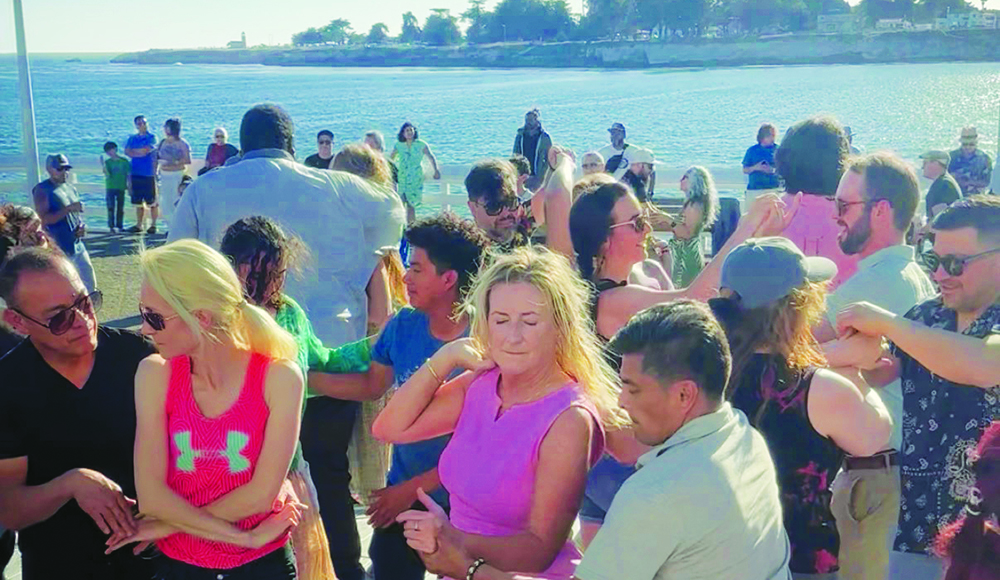
salsa group wants to be by the ocean and able to see sunsets. PHOTO: Kristen McLaughlin
A grassroots tradition
Salsa by the Sea originated 24 years ago as a grassroots group of dancers sharing their love of Latin dancing outdoors. The event began with a boom box, said Javier Rivera, a professional DJ and the event’s permit holder.
“More people started showing up and it just grew,” he said.
Rivera said dancing with SBTS inspired him to become a DJ.
“It’s nice to come back and see your friends there dancing,” he said. “I love sharing the gift of dancing. It makes me happy to teach people. It’s like medicine.”
Katrina Tattenham, a local organizer for Salsa By The Sea, said the group has grown into a community institution.
“We are a 24-year-old grassroots organization that has now become kind of a social institution,” Tattenham said. “But we are not a social institution because we are grassroots. We are essentially a group of people that come together to dance in public spaces. We are commoners. Ultimately, the Wharf is for the commoners. It’s not for businesses.”
Tattenham said the appeal extends beyond dancing itself. “The divinity is in the connection for us, and you cannot do that without community,” Tattenham said. “We want to be where tourists will join us. Partner dancing is about connecting with your partner. When it’s in a spot that’s visible, people join in. Ultimately, art is about being visible too.”
Permit costs, scheduling changes
According to Tattenham, permit costs have increased eightfold over the group’s history.
Tattenham said the City has gradually turned what began as an informal gathering into a permitted event while increasing the cost of participating. “And then edged us out of access for the benefit of business owners, specifically the (Santa Cruz Municipal) Wharf,” she said. “They’re already receiving subsidized access to Wharf space.”
The City also recommended the group form a nonprofit to pursue grants, a process the group is not prepared to take on.
For its first few years, local salsa dancers gathered at the Ideal Bar & Grill deck, which is owned by the City. Eventually, the City required the group to obtain a permit and moved the dancing to the end of the wharf.
“So they moved us to the end of the Wharf, and then they complained,” Tattenham said. “We want to go back, next to Ideal Bar, but they haven’t given us any answer to that. It feels like they don’t want to help us.”
While the City has offered alternative locations and encouraged the group to form a nonprofit, organizers say those options do not provide the same experience as dancing beside the ocean.
“So the City offered us a couple of different places,” Rivera said, “but now they want to send us to a park where people don’t really want to come. The recommended alternatives that Parks & Rec have proposed are San Lorenzo Park, where there’s no dance floor, and Depot Park, where there is no ocean.”
The group’s permit expired in April 2026. By then, the city had hired a Wharf recreation coordinator, Julie Graff, to oversee Wharf events and implement what Tattenham described as “new rules,” including one dance-specific event per weekend.
“We were there 52 weeks a year,” she said. “We would dance even in the winter. We were going to re-apply … and then they said no access during high season.” The city’s calendar lists Salsa by the Sea events on select Sundays in October, November and December. With El Niño weather predictions, the likelihood of cancelling for rain is very high, Tattenham notes.
“They’re asking us not to go on the weekend,” she said, which is not feasible because DJ Rivera works construction during the week. He, along with all of SBTS’s other DJs, are unpaid volunteers.
Furthermore, the permit cost has increased from about $50 to $290 per event, according to Rivera, the permit holder. The permit is paid entirely through donations from dancers and attendees, an estimated cost of about $14,000 for the full year.
And lastly, the City proposed moving the group’s coveted Sunday time slot from 5-8 p.m. to 2-5:30 p.m., which means they could no longer enjoy the sunset.
“They are slowly trying to kill Salsa by the Sea,” Rivera says. “The timing also is important. We still have to pay, but we don’t get the hours that we need for the event.”
“We only survive on what people donate in tips and donations. We would like to have the full year as we had it before,” he said.
Elliot said Sunday evenings are already heavily used on the Wharf accommodating diners, fishing and other activities. SBTS was booked through the city’s Wharf Commons Permit Program for every eligible Sunday date, he says.
“We know that they want to be at the Wharf, and we appreciate that,” Elliot said. “We’ve really worked with them to provide the maximum number of Sundays. We’ve spoken with SBTS a lot in the past year.
“The group has booked every Sunday that they can possibly book during this calendar year,” Elliot added. “But in addition to those, we also have Thursday dates. We offered those; they chose not to select those dates.”
City says it supports the event
Elliot said the City wants Salsa by the Sea to continue. “We booked them for every eligible date that was available Sunday,” Elliot said. “They have a number of days under their existing permit, 22 total Sundays this year.”
The city wants to see SBTS respected and valued, Elliot said. “We want to see this event thrive. We have kept rates very low in support of them.”
Elliot said permits are required when organizations reserve public spaces or use amplified sound. Salsa by the Sea’s size, amplified music and other factors require it to obtain a permit.
However, Tattenham speculates that there’s an underlying hierarchy at work. Theoretically, she said the city is preserving the Wharf for the public parking spots. “How does a loosely held cultural group like ourselves organize to preserve access to public spaces?” she asks. “The act of organizing transforms us into a more white-presenting organization.”
For Tattenham, the situation with Salsa by the Sea evokes the idea that our civil liberties can erode at such a pace that it is almost imperceptible. “They created such a bureaucratic process. They made it so hard because we’re only allowed there in the winter that it makes more sense for us to go (to a private place),” she said. “They took all of the natural process out of it.”

A community beyond the wharf
Tattenham said the local Latin dance community provides connectivity to hundreds and thousands of people, including 418 active members, with another 500 people connected through WhatsApp dance events. The group’s Facebook page has about 10,000 members, most of them local, she said.
The events have also inspired salsa gatherings in other cities, including San Francisco and Oakland. “New York, Spain, Italy, Germany, and (recently) in China … anywhere you go you are going to have a good time now,” Rivera said.
“Why are we not prioritized in the City of Santa Cruz?” Tattenham asks. “It inspires so many people around the world to do salsa by the beach. That’s the beauty of us. We are truly community organized … We frequent the restaurants, have lunch before or dinner after.”
While the group continues to seek access to the Wharf, SBTS has been meeting at private venues and supporting local businesses including Bay Bar & Grill, Woodhouse, Mission West and the Colonnade Stage at the Boardwalk.
“We don’t charge anything to the venues,” Rivera adds. “We are bringing a party to the business for free.”
Tattenham said the group wants to resolve the dispute without damaging its relationship with the City.
“We are trying to work with the City peacefully, respectfully,” Tattenham said. “Hopefully they work with us on a solution without making anyone angry.”
Rivera said the group’s goal remains simple.
“What we really want is what the name says: it’s Salsa by the Sea,” he said. “We just want to go back to the spot where we were doing it for so many years.”
Loosely translated as a party or informal gathering, Bachata originated in Europe as a community dance. It was built around guitars and indigenous instruments such as bongos, maracas, scraper percussion, and bass. In comparison, salsa dancing is rooted in Dominican-style music tradition and is today one of the staples of Hispanic-American culture. “Salsa comes from Cuba,” Tattenham said. “It came out of NY from Cuban immigrants.” The popular guitar-based music originally centered around everyday life and working-class communities.
After it spread to Spain, Bachata “changed and melded,” Tattenham said. By the 1960s, and especially through Radio Guarachita, the guitar-led music found a wider audience, even as elite cultural circles condescended due to its association with poor and marginalized sectors of Dominican society. With roots in rhythmic bolero and other Caribbean influences, today it is one of the world’s most popular Latin partner dances.
With Bachata music, “You can go anywhere in the world and dance,” Tattenham said.
Salsa by the Sea is looking forward to working with the city to secure its permits for 2027. Dances are scheduled for the remainder of the year on the following Sundays: Nov. 1, 8, 22, 29 and Dec. 6 and 20, weather permitting. All dance events are free and open to the public.