


Whatever one’s political point of view, there has been a growing consensus in recent years that people are losing faith in U.S. democracy, as reflected in dozens of polls, but going into the November midterm elections, it seems as if democracy might actually be in store for something of a comeback, not only nationally, but right here in Santa Cruz.
The voters just might have something to say. Their statement could lead to change, possibly major change.
If people feel like politics is overrun by dark money and power-mad billionaires trying to buy elections, they tend to get angry, but they also tend to turn off and tune out and sometimes not even vote. The antidote is democratic contests between two strong candidates, each articulating their vision for the future, which I’d argue is exactly what we’re seeing in the race for Santa Cruz mayor between early apparent frontrunner Ryan Coonerty and his more progressive challenger, Ami Chen Mills. The two candidates have been all over town, meeting with voters in small groups, showing the energy that comes with a close race.
“It’s going to be very, very close,” Coonerty told me over coffee at Abbott Square.
Do you think you could lose? I followed up.
“Oh yeah, absolutely,” he said.
In an era of social-media-generated attacks tending to take over politics, the race for mayor has turned as nasty and acrimonious as any local race in memory, but for all the heated rhetoric, the reality is that there is probably less difference between Coonerty and Chen Mills in terms of what they’ll actually do as mayor, if elected, than the contentious campaign would seem to indicate.
This is a job whose major power has to do with setting the agenda for city council meetings, after all. I attended one event for each of the candidates and the first comment each made was nearly identical: Complaining about claustrophobic sidewalk-to-sidewalk developments that make Santa Cruz feel more like a concrete jungle, less like a beachside paradise where our love of nature connects us with our environment.
In a less unpredictable political year, an established candidate like Coonerty, a former Santa Cruz County Supervisor and former Santa Cruz mayor whose family is beloved as longtime owners of Bookshop Santa Cruz, might have expected to coast to victory, even against an intriguing up-and-comer like Chen Mills, an author and journalist, also a proudly focused progressive activist.
Not this year. Anything can happen. No one is coasting. They’re out listening to voters and paying attention.
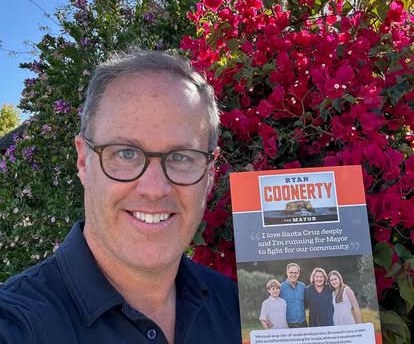
He seeks to return as mayor.
Photo: Daisy Coonerty
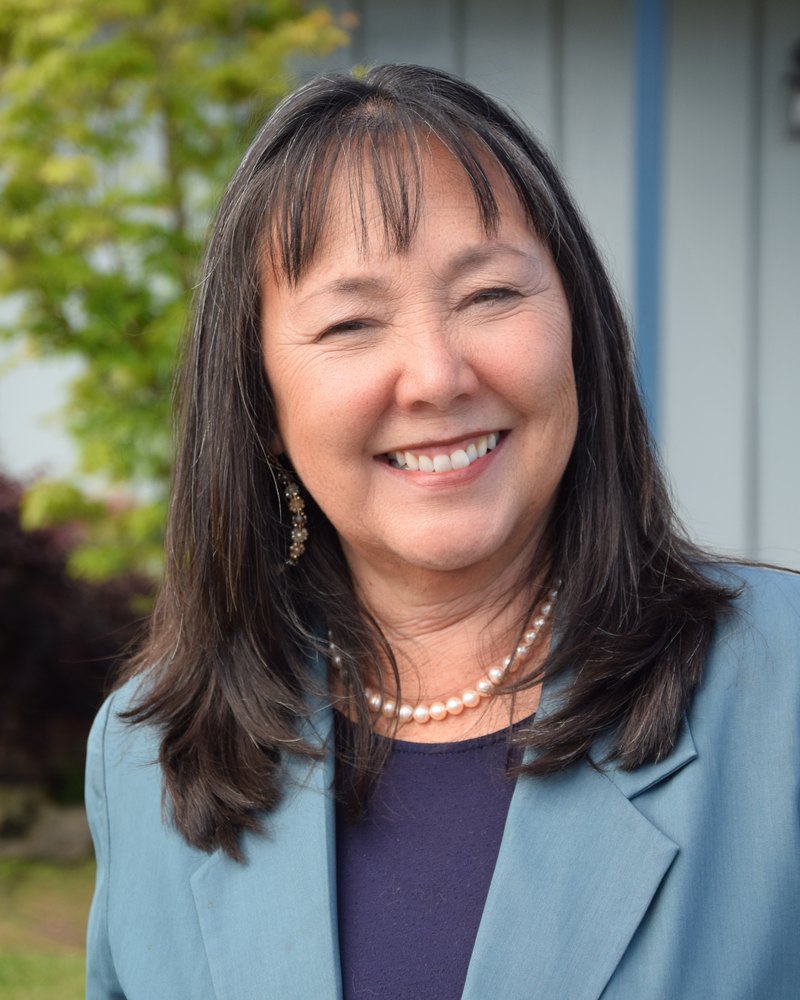
Photo: Ami Chen Mills campaign
I talked to both Chen Mills and Coonerty about my impression that, whoever wins, the campaign itself will have shaped their vision of how to move Santa Cruz forward. If Chen Mills wins, I think she’s going to find herself channeling more of Coonerty’s practical knowledge of how one really gets things done in local government and how one picks one’s spots. Sooner or later, outsiders elected on platforms of shaking things up have a way of adapting to realities.
Coonerty, for his part, has come to understand that for many voters, especially in Santa Cruz, revulsion toward Silicon Valley tech bros and how recklessly and wantonly they often wield power has turned into a pressing existential issue.
I understand that Coonerty has known San Jose Mayor Matt Mahan since they were both young, and has also done some consulting for him, but when Coonerty endorsed Mahan for California Governor—at a time when Trump-aligned Silicon Valley types were backing his campaign, and Mahan was taking odd shots at Gavin Newsom for standing up to Trump—it was not, as they say, a good look.
Contrast that with Chen Mills’ full-throated condemnation of runaway corporate power. Yes, she said, the country is going through a dark time, politics is broken in many ways, but that can’t translate into quiescence. “I think ultimately we’re dealing with issues that maybe we cannot dialogue our way out of and that has to do with income disparity and the concentration of wealth–unless we fix that, we’re going to have billionaires running the country,” she said last Friday over coffee at the Abbey, as news was breaking of billionaire Elon Musk apparently being behind the most recent betrayal of Ukraine.
“That’s what we have now,” she continued. “We have billionaires running the country. They have too much power. They have too much money. And they think they’re right because they’ve made all this money. They think they’re somehow superior and they have no sense that other people don’t even think about making money as they do. I don’t even think they can absorb that into their reality. That’s what we’re up against. So we need structural changes and in some ways we need to fight. That’s why I sometimes push back on, ‘We all need to be polite.”
She added: “I’m very concerned about gentrification here because of the influence of Silicon Valley and what’s happened in San Francisco. I’m very concerned about surveillance, very concerned about data privacy, and I didn’t see anyone on the City Council being concerned until we brought it to their attention.”
OK, full disclosure, my wife and I have raised our two daughters here in the Santa Cruz area—they’re now 12 and 10—and care deeply about this community, which we’ve helped nurture by running a small writers retreat center and supporting local writers. I grew up over the hill in San Jose; my grandmother lived on Bulb Avenue in Capitola, near where Pono is now, and I can remember seeing the “Valley Go Home!” warnings spray-painted here and there in the ‘70s. Now I’ve lived here more than a dozen years and I’m firmly in the camp that would like to see less rather than more pandering to Silicon Valley money.
A young man at the house party for Chen Mills spoke up, late in the gathering, about the RiverRow development. He talked about doing screen captures of online pitches for units in RiverRow aimed specifically at Silicon Valley companies with a map showing the distance from RiverRow to, for example, Google headquarters in Mountain View. This trend has been in motion a while. As I wrote for Wired.com in April 2000, datelined “‘SANTA CRUZ: ‘Silicon Beach’may sound like a bad summer replacement show on Fox, but it pretty much sums up the way Silicon Valley spillover has transformed this oceanside community a half-hour south of San Jose.” That was 26 years ago.
Coonerty, talking over coffee, sounded like someone well aware that public loathing of the billionaire class keeps mounting all the time. I think, if elected, he will keep this lesson in mind, especially as it relates to big Silicon Valley money and its influence on Santa Cruz. But for all the focus on “issues” during a campaign, day-to-day governance is more about vision, and about leading a community by loving a community.
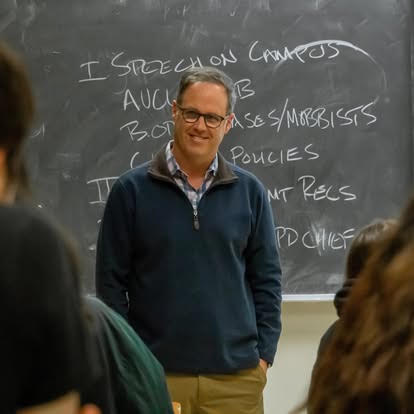
I asked both Coonerty and Chen Mills what they love about Santa Cruz.
“You always want to start with the natural beauty from the ocean to the redwoods, but ultimately it’s the people,” Coonerty said. “You have to make an affirmative choice to come or stay in Santa Cruz. … I think people who come and build a life here are really opting into a community, and that’s increasingly rare. I don’t think there’s a city our size that has the global name recognition that Santa Cruz does, and it’s built around really cool activity and creativity and entrepreneurship. It’s amazing what we’re seen as globally.”
And what does Santa Cruz mean to him? “It’s home,” he said. “I was obviously born and raised here, my wife was born and raised here, we’re raising our kids here, going to the same schools that we went to; it’s the multi-generational commitment to a place and values that I think are extraordinary.
“It’s a passion for our natural environment, and for protecting and preserving it; it’s ultimately a small town where we are all reliant on one another, especially with endless natural disasters and manmade disasters that come, and it’s also a place that values creativity and tolerance and engagement, and that is also increasingly rare. It’s a real place and I think it’s great.”
Chen Mills, asked the same question, said: “I love the quirky architecture. I love the little spots that don’t feel like they’ve been co-opted by some corporation, you know. The bench at the end of Seabright, for example, was a place I used to go to a lot. I love the Pogonip. I love the redwoods. I love the river and going swimming in the river. I love a lot of things about it that I think other people also love, but when I came here I found a kind of charm. …. It felt like there was still freedom of expression and creativity going on here, outside of the commercial sector.”
Looking forward, she said, “I would like to see innovation. I would like to see something that we can get behind that would be exciting.”
For example, some kind of regional food hub like the Pike Place Market in Seattle, to bring people together, including tourists who have come to town to visit the Boardwalk or even the Mystery Spot, and also might have programs to provide low-income families with affordable produce.
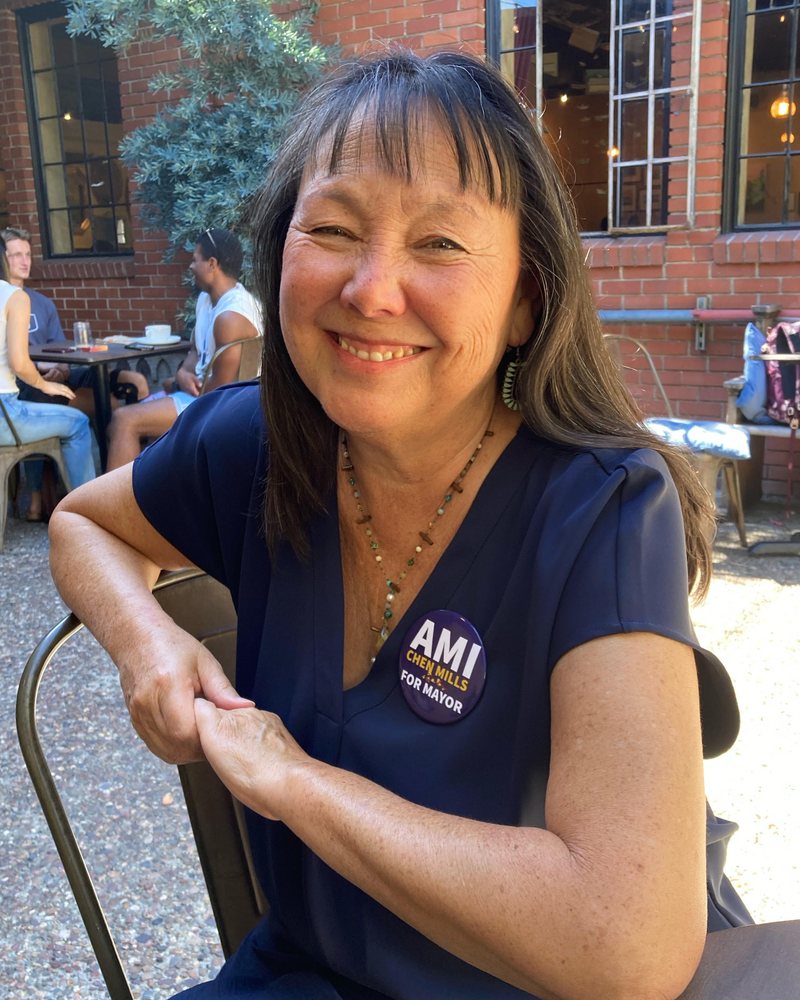
Talking to Coonerty and Chen Mills, I was also struck that their basic conception of political leadership shares a similar DNA to that of journalism. Both candidates are thinkers who like asking a lot of questions. Both write books. Chen Mills has a radio show and Coonerty a podcast. Both are bright and alert, with minds that like to keep moving forward, each possessing that quality of a good journalist of never losing sight of the next question, the next level of self-awareness.
I get that voters have been riled up by various charges floated on social media, but the warping effects of social-media negativity should not be given more importance than they deserve.
Check out both candidates, hear what they have to say, and if you’re a Santa Cruz voter, get out and show your support for one or the other. Then once the votes are counted, and a winner is named, it will be up to that candidate to keep working to connect people and to make people feel engaged.
I think this energetic campaign will lead to much more public engagement even when it’s not election season—and Chen Mills, for one, tells me that if elected, she will make time specifically for people who did NOT vote for her to come in and talk to her and ask questions, and maybe she’ll win them over to support her, or maybe they’ll just learn from each other a little. I hope Coonerty will pledge to do the same.
Either way, I think Santa Cruz will be in good hands. To start reporting on this article, I showed up at one of Chen Mills’ house parties on a Friday night. I arrived a few minutes early, and as it goes with this kind of event, had Chen Mills mostly alone, just three or four of us there at first, but soon the backyard filled in, 20 or so in all, and Chen Mills started talking. She made a positive impression right away. This is a real political talent here, someone who has a quality at the nexus of basic decency and comfort in one’s own skin, along with a self-aware ability to be both serious and light of heart, very herself, able to energize others without that this-is-all-about-me kind of vibe that too often takes over in our self-promoting times.
Coonerty, the former mayor, is the more familiar figure, but he’d wrapped up his run in public life as a Santa Cruz County Supervisor and figured he’d had enough. But when current Mayor Fred Keeley decided not to seek reelection, and various people reached out, Coonerty decided that at a time when so much is in flux in Santa Cruz and in California, his experience and ties to the community gave him tools to help move Santa Cruz forward. He’s already been mayor. This is not about vanity. This is not about resume building. This is about getting to work for Santa Cruz—and I’m sure that if he wins, the education he’s received on the stump, prodded and nudged by Chen Mills’ eloquent advocacy, will help him navigate a difficult and challenging road ahead. ■