

Santa Cruz County’s years-long effort to allow cannabis consumption lounges advanced this week, as the Board of Supervisors revised liability rules—like whether a lounge is responsible for a driving accident after a customer leaves—which could ultimately determine whether lounges ever open at all.
On Dec. 16, county supervisors passed an ordinance tightening regulations for cannabis consumption lounges, including provisions allowing the county to suspend or revoke a lounge’s license if a patron later causes a fatal DUI crash. But the board softened its original approach, giving local officials flexibility to impose suspensions rather than mandatory license revocations—a key shift sought by cannabis representatives.
The ordinance will return to the Board of Supervisors early next year for a second reading and final approval.
As jurisdictions across California continue to wrestle with how to regulate cannabis consumption in ways that protect public safety without unfairly penalizing licensed businesses, the issue of liability has emerged as a central point of debate.
Industry representatives who spoke at the meeting argued that the original language placed responsibility on lounge operators for actions beyond their control.
“This doesn’t seem logical,” said Darren Story, chief financial officer of Coastal Sun, a Watsonville-based organic farm that grows cannabis and other crops. “It doesn’t make sense.”
Story said the ordinance failed to account for customers who arrive already intoxicated or consume alcohol or other drugs after leaving a lounge. He compared the proposed liability to holding pharmacies responsible if a patient prescribed opiates later caused a DUI crash.
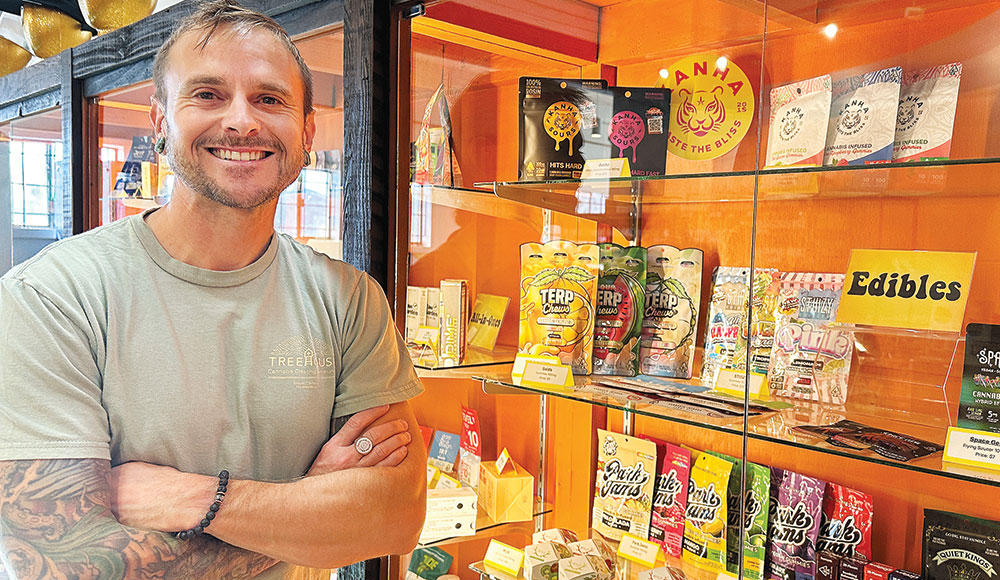
Bryce Berryessa, owner of Treehouse Dispensary and The Hook Outlet, described the original proposal as a “blanket revocation trigger” that exposed business owners to severe penalties regardless of whether cannabis was consumed on site.
“What’s missing is the model used by the California Department of Alcoholic Beverage Control,” Berryessa said. “That’s a behavior standard tied to what the licensee did on site. Your clause doesn’t require any finding that the person consumed at the lounge, doesn’t require over service, doesn’t require a violation by the operator and doesn’t require proof the lounge caused the impairment.”
Berryessa also noted that the ordinance, as initially written, did not provide a clear path for businesses to appeal a license revocation.
Supervisor Justin Cummings echoed concerns about fairness, particularly when comparing cannabis lounges to establishments that serve alcohol.
“This doesn’t even mean they have to consume it on site,” Cummings said. “They could have driven in intoxicated, purchased products, left, and later been involved in an accident—and that retailer loses their license. That’s not fair.”
Cummings said consumption lounges can offer safer, more controlled environments for cannabis use, along with educational components focused on responsible consumption.
“There are instances where there are bad actors, and there may need to be a period of time where people need time out,” he said. “But revocation as the only option doesn’t allow any flexibility.”
In response to concerns raised by supervisors and industry representatives, county staff will revise the ordinance language to more directly tie penalties to evidence that a licensee over-served an intoxicated patron, rather than automatically revoking a license if a patron is later involved in a DUI incident.
The revised ordinance will also adopt a clearer definition of “intoxicated,” modeled after San Francisco’s municipal code, which defines public intoxication not simply as being under the influence, but specifically when that condition makes someone unable to care for their safety or the safety of others or interferes with or obstructs public ways.
Additional amendments include allowing county staff to enter combustion (cannabis smoking) rooms for oversight and enforcement, while prohibiting businesses from requiring employees to enter those rooms as a condition of employment.
Penalties will also be separated between lounge and retail operations, meaning a violation occurring in a consumption lounge would not automatically affect a dispensary’s retail cannabis license. The code will also be amended to allow license suspensions as an enforcement option, rather than revocation being the sole penalty.
The supervisors in November lowered taxes on the industry, which owners said are threatening to put Before that, dispensaries were charged a 7% gross-receipts cannabis business tax on all revenue, including non-cannabis items such as T-shirts, pipes and event tickets, in addition to a 15% state excise tax and a 9.25% sales tax.
Under the revised tax code, dispensaries will no longer pay the cannabis business tax on non-cannabis goods, which will now be subject only to standard sales tax. Sales generated specifically by consumption lounges will be taxed at a new 1% cannabis business tax rate.
“For the new tax provision, we can deduct non-cannabis goods from that total,” Berryessa said. “And they set the cannabis business tax for lounge sales at 1%.”
Berryessa emphasized that consumption lounges are unlikely to be major profit centers.
“I don’t think anyone operating a lounge believes it will be a big money-maker,” he said. “It’s about creating more third spaces—places for people to gather that don’t revolve around alcohol.”
He also argued that legal consumption lounges could reduce public safety concerns by discouraging people from consuming cannabis in cars or other inappropriate settings.
“There’s no public areas where cannabis can be consumed openly, socially,” he said. “What you have is a lot of people who are doing it in public places where they shouldn’t, whether that’s the beach or parks. A significant amount of people who are here are either tourists or renters—they can’t consume in hotels and they can’t consume in their apartments, because it’s a violation of their lease. So, a lot of them drive around in their cars and smoke weed.
“I think that having more third spaces, where people have a safe space to come and consume and get educated, will actually reduce the amount of impaired driving on the roads, because people won’t be getting high in their cars,” he said. “They will come here. They’ll have the opportunity to consume. Hopefully, they’ll hang out until they’re no longer impaired or they have a social situation where they’re going to bring someone who’s not going to be consuming at all.”
Not all supervisors agree. District 2 Supervisor Kim De Serpa has consistently opposed cannabis consumption lounges, citing concerns about impaired driving, enforcement costs and readiness.
“This is not an abstract concept,” De Serpa said. “You let people get super high and then they hop in their cars and pull out onto Soquel Drive, one of the busiest thoroughfares in our community.”
De Serpa opposed modifying the cannabis business tax, arguing that the revenue would be needed to regulate and enforce lounges if they open. She questioned whether adequate training programs exist for budtenders, noting that when the concept was first presented, no formal curriculum had been developed.
County public health officials are now developing a cannabis-specific training program modeled on alcohol safe-serve programs, and Berryessa said Treehouse plans to add additional layers of staff training and certification.
Treehouse has nearly 5,000 square feet above its current retail space that Berryessa hopes to convert into a consumption lounge, a project that would require significant investment in bathrooms, remodeling and ventilation.
“I would say six to 12 months is a reasonable estimate,” Berryessa said, depending on the length of the building-permit process.
In the meantime, Treehouse has already received approval from county and state regulators to host non-smoking cannabis consumption events and hopes to partner with local musicians and producers to host 21-and-over events after regular store hours—potentially as early as January 2026.
With the revised liability framework taking shape, Berryessa said he is cautiously optimistic.
“As long as there are no surprises, we’re excited to start moving forward,” he said. “We hope to have cannabis consumption events and activities scheduled starting next year.”










Quality training for cannabis lounges and Budtender training have existed at Oaksterdam University since 2007! Please look at what already exists instead of claiming there is nothing there. Look it up first, please.