


Singer-songwriter Lacy J. Dalton once told me, “In Santa Cruz there are more musicians than people.”
The town is known far and wide as a creative vortex, where world-class musicians dazzle and inspire crowds seven nights a week. Some tour internationally, some share stages with legends, some are local celebrities, but the whole town plays with a stunning level of musical ability.
And yet, here in musical heaven, the biggest music store in town is called The Starving Musician. That ironic name twists to satire as musicians face the Santa Cruz question, “How the hell do I pay the rent?”
Kenny Feinstein, the musician behind the bluegrass-punk band Water Tower and author of More Than Talent, a guidebook for aspiring musicians, says musical ability isn’t enough.
A working musician must also become a promoter, entrepreneur, content creator and marketer. Record a video. Post it. Build a following. Collect email addresses. Sell tickets. Do it again tomorrow. Kenny says that being a musician in 2026 is also an internet job.
Feinstein’s thesis is convincing. His band recently sold out the Kuumbwa Jazz Center, and he earns his living entirely from music. James Durbin has managed to support himself through music and a remarkable assortment of related freelance work. Ginny Mitchell teaches budding musicians.
Alex Lucero has made his living performing for more than 11 years, with 320-plus shows last year alone. Jeffrey Meyer, singer and songwriter for JAM and the Buttered Biscuits, works a full-time nursery job while his band’s reputation grows. Steven Walters, after years of touring, found a more stable livelihood teaching guitar and voice.
All six have different approaches to finding their luck, but they all know that being good is just the beginning.
FIVE DOLLARS AND A FREEWAY ON-RAMP
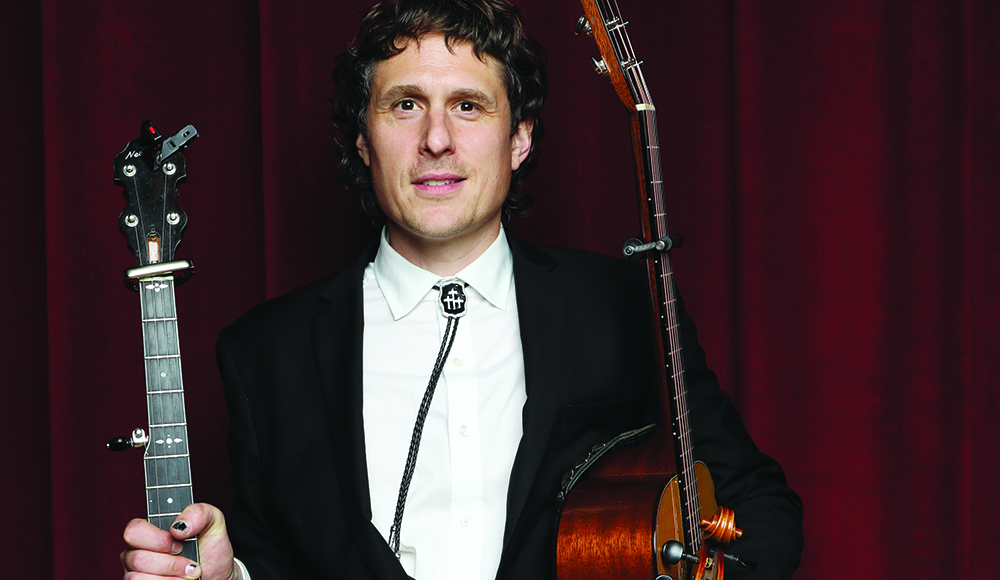
Feinstein’s first paying audience consisted of one person on a Santa Cruz beach. He was 12, playing Nirvana songs on guitar near the dunes at Sunset Beach, and someone handed him five dollars. Wow. Could he do it again?
Born in San Jose, Feinstein spent much of his childhood elsewhere as his father’s engineering work took the family to Singapore and Mexico City. But Santa Cruz, where he had family, remained his place to return to. He absorbed its skateboarding and musical culture, with the Beatles, Nirvana, punk and hip-hop among his early influences.
Then, at 16, a friend took him to a square dance featuring Foghorn Stringband.
“My blood started dancing. They were like the Beatles to me.” He learned their songs, began jamming with them and eventually went on tour with Foghorn as their guitar player. He became driven to bring his earlier passions of hip hop and punk together with bluegrass. Water Tower developed a sound he describes as bluegrass tradition, punk attitude and hip-hop culture.
This isn’t somebody who discovered marketing because he couldn’t play. When I called Kenny, he was studying a lick on a Tony Rice record. Feinstein studies Doc Watson, Earl Scruggs, Tony Rice and Clarence White relentlessly, but his point is that musicianship still doesn’t guarantee an income.
His path to earning one wasn’t a straight line. He recounts years of substance abuse, jail, recovery, and an oft-told Santa Cruz tale: getting in trouble for trying to make money playing music in public.
In 2014 he began busking near the 41st Avenue on-ramp and repeatedly drew cops and citations. He challenged the enforcement in court, and the proceedings eventually reached a point where a judge dismissed the fines but basically told him, “‘You gotta go somewhere else than Santa Cruz County.’ That was when I was like, ‘I’m going to LA!’” That’s where he still lives and works.
Today Feinstein leads Water Tower and earns money through private events, merchandise, production, coaching, consulting and teaching. He also stages house concerts, where a direct relationship with an audience can be more valuable than a conventional booking. The boy who earned five dollars playing Nirvana has become an evangelist for musicians taking charge of their own careers.
MORE THAN TALENT—AND MORE THAN MUSIC
Feinstein’s More Than Talent is part instruction manual, part motivational sermon and part declaration of war against the starving-musician stereotype. The basic premise is hard to dispute: you cannot pay your bills with musical ability alone if nobody knows you exist, hires you or buys a ticket.
Feinstein recommends busking, developing relationships, choosing gigs strategically, learning how to sell, building an email list and, emphatically, mastering social media. He doesn’t recommend waiting for an agent, a record company or the perfect opportunity. He recommends taking out your phone.
Record 10 seconds of something you’re practicing, he says, and post it to Facebook, Instagram, TikTok and YouTube Shorts. Do it again tomorrow. And the next day. “You’re gonna get your voice, you’re gonna find your people, you’re gonna build a fan base.”
His written social-media advice gets down to seven-second hooks, video titles, captions, platform differences and posting frequency. TikTok is the laboratory for trying things out. Instagram is the polished showcase. Facebook helps maintain relationships. YouTube Shorts is another way for new listeners to discover you. The book reads like a career-building textbook written by someone who brought a fiddle to marketing class.
Feinstein goes further: if forced to choose between an extraordinary band that ignores promotion and a merely good band with excellent social media, he would back the second band. “Every time the band with social media,” he says. As someone involved in buying talent, he says follower numbers can influence booking decisions.
Feinstein’s aim is to convert casual viewers into committed followers, and then move those followers onto an email list that the musician—not a technology platform—controls. Email can announce a performance, sell merchandise or offer recordings directly to people who have already shown an interest. He tells of a house concert attended by five people he had first met while busking near a freeway off-ramp years earlier.
JAMES DURBIN: THE MUSICIAN WITH A DOZEN JOB TITLES

James Durbin doesn’t argue with Feinstein’s premise. “I think Kenny’s completely spot on there,” he says. “I think in this day and age, how else would people know about you?” And he understands why musicians resent it.
“None of us who pick up a guitar or start singing want to spend time filming videos, studying algorithms and worrying about demographic reach.” Musicians want to write from the heart, perform, record and, with luck, sell tickets. But hoping a venue will promote a show is dangerous. “You get there and find three people in the audience. Man, that’s hard.”
Durbin says he has managed to support himself and his family through music and a remarkable assortment of related freelance work. The income doesn’t arrive from one source. He sings originals, covers and tributes; tours; performs studio work; takes work-for-hire assignments; ghostwrites and ghost-performs, sometimes credited and sometimes not; and does voiceover work. Recently, he has also begun freelance writing for Good Times. As Durbin puts it, he is effectively an independent contractor with many titles.
But when asked what he would tell a talented 25-year-old who wanted music to be a career without a day job, Durbin began by challenging the language.
“Music is a day job,” he said. You’re the boss, booking agent, administrator and employee, often at the same time. His most concrete advice has nothing to do with hashtags: ask for more money.
“If you’ve been playing a venue for $100 and have developed a following,” Durbin says, “tell the people hiring you that the rate needs to become $200. Explain that you’ve shown loyalty, improved your work and brought value. Otherwise, you must consider playing somewhere else.”
Asked how many hours he works each week, Durbin couldn’t nail a number. A 30-second social-media clip can require 20 minutes of recording and considerably more time editing. Add songwriting, booking correspondence, travel, loading, unloading and the other ten thousand moving parts in a show. The performance is what he loves.
“The time that I actually spend on stage,” he says, “that stuff, I do all that for free.” He says what he gets paid for is the driving, laundry, packing, clerical work, lifting, setup and teardown. We see the show, but the musician has to finance everything it takes to make it happen.
Durbin will play all-original music with his band, the James Durbin Revival, Nov. 19 at the Crêpe Place and Nov. 20 at El Vaquero Winery.
GINNY MITCHELL: IT’S ALL ABOUT THE DRAW

Ginny Mitchell has carried her country and folk roots from stages across Canada and the United States to her longtime home in Santa Cruz. A singer, guitarist, and songwriter, she brings decades of performing experience to original songs and the music that shaped her. No stranger to working with the greats, her recordings include A Wild Rose, featuring Béla Fleck, Alison Krauss, and John Jorgenson.
Her creative work extends to film. She collaborated with Lacy J. Dalton and Mary McCaslin on The Girls from Santa Cruz, a documentary about the wild horses of Nevada’s Comstock. She has a regular rotation of gigs, students and film production work. From a former Good Times review, “Mitchell’s music has true staying power, making her one of the area’s best-loved performers.”
Mitchell describes her music as a “rootsy” mix of Americana, folk and country. She records and performs in Santa Cruz. Mitchell says the key to making it here is to learn how to promote and how to fill the rooms. “You’ve got to fill the rooms if you’re going to make decent money, it’s all about the draw. You’ve got to be able to bring people in.”
Mitchell says she is always promoting and developing relationships with radio stations and newspapers. She is always negotiating her pay and thinking of ways to give her audience a reason to come back. “You’ve got to do things that excite your audience. I’ll think of a song and then I’ll look at the audience. You’re a constant Geiger counter. You’re reading the room. Always.”
Mitchell believes that you need to subsidize your live gigs. “I couldn’t live in Santa Cruz if I were not teaching. Teaching music is very important for me to live here. You cannot make a living in this town from your live gigs. Unless you’re out touring, that’s almost impossible.”
Mitchell had to take a long break to be a caregiver, so long that when she got back into it, she realized things had changed. “There are all these people out there, they can record in their living rooms or, they go out to restaurants or bars, and they play because it’s fun for them, even though they have a day job. The money that we’re making is what we were making in the 1980s and the 1990s.”
She says it does come down to butts in seats and for that, Mitchell credits her focus on building relationships.
“I try to build a relationship with the club owner or with the bartenders. And also with the people, we get repeat people that come back. They come back because of the relationship; they come back because of the music. It’s all about reputation. It’s all about consistency. Practice, get really good, learn how to read the room, and become a pro.”
ALEX LUCERO: 320 SHOWS AND A 60-HOUR WEEK
Alex Lucero has been a full-time musician for more than 11 years. Roughly 70 to 80 percent of his shows are in Santa Cruz County. On average, he plays five nights a week. In 2025, he performed more than 320 shows.
That number sounds like the definition of success, but Lucero says, “I don’t pride myself on that.” He would prefer to play fewer shows under better circumstances.
His strategy is more sophisticated than simply booking every available night. Longstanding residencies give him dependable work, including Monday performances at the Sand Bar in Capitola and recurring winery gigs. He also plays venues such as Moe’s Alley and the Catalyst and larger community events. He separates the shows that pay his bills from those that develop his band’s identity. Solo performances and duo shows with his wife are his bread and butter. Full-band performances cost more because he has to pay the other musicians. He treats those shows more as a passion project and tries to keep them special.
There’s a marketing reason for that, too. Why should someone pay $10 to $25 for a ticket to see the full band if the same show is available free?
By distinguishing the solo and duo circuit from the ticketed band experience, Lucero protects the value of the latter. We don’t hear a lot of songs about managing overhead, but somebody has to pay the drummer.
Lucero didn’t arrive in Santa Cruz with a full calendar. In 2015 he started working in the local scene and remembers sitting in at Zelda’s in Capitola, singing a couple of songs with another performer and attracting a manager’s attention.
That led to recurring work. He also approached businesses that weren’t presenting live music and proposed starting something. His advice for beginners is to accept opportunities, play with other artists and get in front of people, even farmers markets and events where exposure mattered more than the fee. Over time, consistent performances created recognition.
Lucero says he eventually had enough of an audience to work with venues on ticketed or cover-charge shows, rather than relying solely on a business’s food and drink sales to cover his fee.
Asked how many hours his career requires each week, Lucero says 60 would be on the low end. And the internet is part of that operation, but he is reluctant to say it is impossible to succeed without it. Lucero says his wife, who is a social-media manager, and his tour manager help with photographs, videos and reels. What Feinstein tells an individual musician to do every day, Lucero partly delegates to a team. Lucero’s experience suggests that another kind of promotion matters: playing so consistently, and so well, that people come back and tell their friends.
JEFFREY MEYER: A PACKED ROOM, THEN BACK TO WORK

the music scene. He’s recorded with G.Love and plays mostly original music. PHOTO: James Garcia
Jeffrey Meyer, or JAM, the singer and songwriter for JAM and the Buttered Biscuits, has been reading Feinstein’s book. He likes it. Much of the argument confirms what he suspects about the changing business. But unlike Feinstein, Durbin and Lucero, Meyer hasn’t yet made music his sole occupation.
“I got a full-time job to help support me, so I can play the music,” he says. He works at a nursery in Carmel Valley while writing songs, rehearsing and performing. His band is developing a following, but that doesn’t mean he can abandon the nursery paycheck.
Ask Meyer what it means to have “made it,” and he gives an answer that would sound familiar to anyone who has felt the performing magic. “You got a packed house and the crowd is getting into it. That’s the moment when you made it. And then after the show, you’re back to the grind.”
Meyer agrees that a merely good band with excellent promotion can outrun a more accomplished group that neglects its audience.
He has tried posting regularly on social media, sometimes sustaining the effort for weeks or months, only to burn out. He hasn’t seen enough evidence to credit the band’s recent progress primarily to those posts. Instead, he’s getting something every working musician wants: incoming inquiries. “I’m not the one reaching out. People are reaching out to me, word of mouth.” He credits live shows, relationships with other musicians and promoters, and audiences talking about the band.
Feinstein begins with the video and tries to turn the viewer into someone who buys a ticket. Meyer’s momentum starts with the show and moves outward through people who were there. Those are not mutually exclusive approaches. Indeed, Meyer knows a bigger career may require more of the promotion Feinstein teaches. “That’s exactly why I’m reading his book right now,” he says.
STEVEN WALTERS: THE GIG THAT PAYS BETTER WITHOUT A GIG
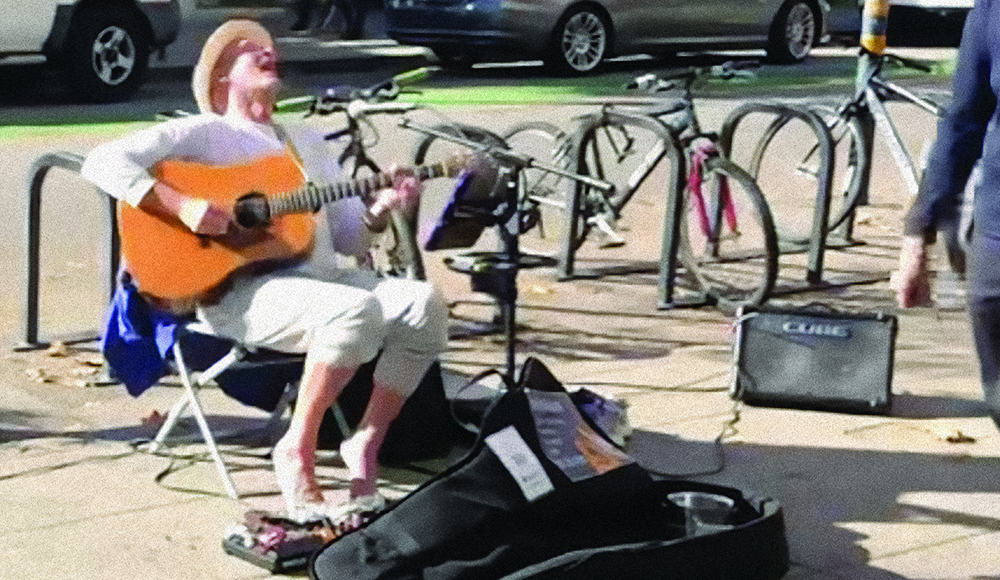
Steven Walters is a singer-songwriter and veteran performer who spent years touring, including European appearances in Norway, Sweden, Finland and Germany, while maintaining a teaching practice at home. (For old folkies, Steven wrote Tom Rush’s ‘The Remember Song.’) The performances could be wonderful, but the travel was exhausting. And when he returned after six or eight weeks, many of his students had moved on. Rebuilding the roster took months.
Eventually Walters stopped touring. Today he earns his living primarily by giving guitar and voice lessons in Capitola. He charges $100 an hour, with some students booking 90-minute sessions for $150. He says a student once pointed out that his old rate of $75 undervalued his years of experience. Raising it made an enormous difference to his finances and his peace of mind.
He is candid about an important advantage: he rents a three-bedroom house and sublets two bedrooms. That arrangement makes his housing costs workable. A musician’s livelihood in Santa Cruz can depend partly on a favorable lease.
Walters also knows how little a seemingly decent gig can pay once all the labor is counted. A performance might bring $150, plus $60 in tips, but require hours of booking, promotion, loading equipment, setting up, playing, packing and recovering afterward. Teaching eliminates much of that overhead. Students come to him; he doesn’t have to haul an amplifier across town.
His online promotion is minimal. He describes his website as outdated. Yet he developed students and private-event customers partly by singing on Pacific Avenue, especially near Santa Cruz Coffee Roasting, where listeners could sit and stay awhile. For all Feinstein’s emphasis on algorithms, Walters built an audience through an older technology: being in front of people. Some tipped, some brought coffee. Some are now his students. And his amp-lifting days are over.
THE PRICE OF BEING SEEN
The six musicians illuminate a contradiction in the business. Early in a career, playing for little money—or none—can help create an audience. Lucero urges beginners to seize every chance to perform. Feinstein’s first five-dollar audience and his busking years are central to his story. Walters turned street listeners into students. Meyer is building relationships one show at a time. But at some point, exposure must become income. Otherwise, you have a hobby with extraordinarily expensive equipment.
Durbin’s advice to demand a raise belongs beside Lucero’s account of developing the audience necessary to justify one. Lucero can negotiate ticketed performances because he spent years building a dependable draw. Durbin argues that venues must recognize a musician’s growth and loyalty. Walters raised his teaching rate when he understood the value of his expertise. Feinstein encourages musicians to cultivate fans they can contact directly rather than endlessly chasing strangers’ attention.
All six are talking about bargaining power, whether they use that phrase. The more reliably a musician can attract customers, the less completely the musician depends on a venue, a promoter or the next unpredictable booking.
The numbers are sobering. Lucero’s 320-plus shows represent an extraordinary volume of work, not a promise that another musician can duplicate his income. Durbin’s varied work depends on his phenomenal skills beyond live performance. Walters’s teaching income is helped by his connections to musicians and also helped by his favorable housing arrangement. He has built a teaching business with almost no digital machinery. Meyer has started getting encores as his following grows, but he still needs his nursery job. Feinstein’s diversified career includes work outside simply playing concerts, and he no longer lives in Santa Cruz.
MORE THAN A STARVING MUSICIAN
So how can a musician make a living in Santa Cruz?
The interviews don’t reveal one neat formula, but maybe a sequence. Learn the craft. Play where people can hear you. Build relationships that outlast the evening. Develop a reason for audiences or customers to return. Understand the costs. And, when you have earned the leverage, ask to be paid accordingly.
Working hard, being talented and putting yourself out there don’t guarantee a living. Sometimes they get you sent to court. Or asked to leave town. But Feinstein would add another instruction: start today. Don’t wait for permission. Don’t wait for a perfect recording. Don’t wait for a booking agent or a record company. Make something and put it in front of people.
There will always be people in Santa Cruz who play amazing music because they love it. And there will always be people determined to make it their occupation. The question is how to keep doing it without starving.
PULL QUOTE:
“The time that I actually spend on stage … that stuff, I do all that for free.” —James Durbin