

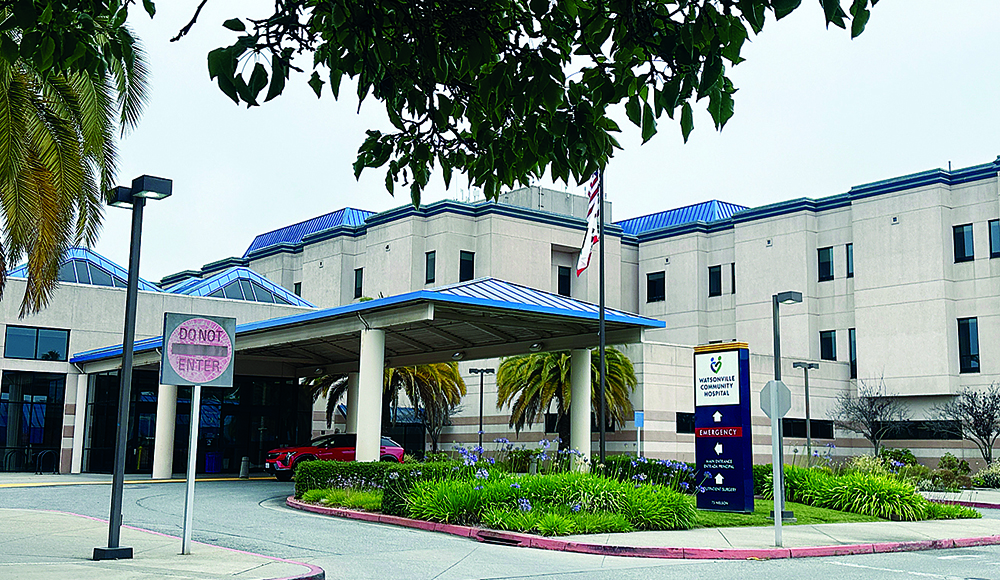
South County parents may have to look elsewhere for maternity care as Watsonville Community Hospital takes steps toward closing its labor and delivery unit, which delivers around 800 babies a year.
The hospital’s board sent a 120-day notice of potential closure to the California Department of Public Health after a four-hour board meeting on Oct. 28, where nurses, patients and community members defended the mother-baby services. The labor and delivery unit remains open in the meantime.
The labor and delivery closure would permanently shutter the neonatal intensive care unit, which was temporarily closed in July due to staffing issues.
“Childbirth does not happen on a schedule, and emergencies do not wait,” said Jessica, a labor and delivery nurse at WCH. “Every additional mile a mother must travel, every delay in receiving urgent care carries real risks and consequences.”
The Pajaro Valley Health Care District board, which oversees the community-owned hospital, passed the recommendation to begin the formal closure process, meaning it will have to take another board vote to move forward with the closures. With formal notice given on Oct. 29, the potential closure would be no earlier than Feb. 26, 2027—five months from the notice date.
Watsonville Hospital is falling victim to a statewide trend.
California hospitals shuttered over 50 maternity care units in the past decade, creating care deserts around the state. The number of California hospitals with maternity units dropped 21% in that time, according to the California Hospital Association.
A similar trend is happening nationwide. One in 25 obstetric units in America have closed their doors in the past two years, according to a March for Dimes report.
Typically, a combination of low volume, financial pressures and challenges in retaining workers leads hospitals to shutter mother-baby services in order to save the whole hospital.
Labor and delivery units are expensive to run, requiring staff on the clock 24/7 at a time when California is at a 100-year low in births.
CFO Julie Peterson said the situation at Watsonville is no different.
“This isn’t a profit and loss question,” said CFO Julie Peterson at the Oct. 28 meeting. “The cost of our services exceeds the reimbursement … There isn’t a break-even point here with our current construct of expenses, with our current payer mix, with what’s happening with H.R. 1.”
Watsonville Hospital’s potential closure is a result of the district’s financial challenges, greatly impacted by the passage of H.R. 1, more commonly known as President Trump’s One Big Beautiful Bill Act.
H.R. 1 is a federal law that changes federal spending for healthcare and welfare, which takes effect in waves until December 2028. Based on predictions from the Central California Alliance for Health, WCH is estimated to lose a minimum of $5.3 million over the next two years.
Yet the hospital is already facing a cash shortfall of $85,000 per day, $27,000 of which comes from the combined costs of labor and delivery and NICU, Peterson said. Staff estimates that the combined mother-baby units lose approximately $10 million a year.
About 40% of California’s births are financed by Medicaid, according to data from KFF. That number is around 80% at Watsonville Hospital—double the state average—according to hospital officials. As H.R. 1 cuts reduce hospital reimbursements for Medi-Cal care, finances are expected to take an even greater hit.
According to the agency’s 2024 birth report, Watsonville delivered 764 babies, closely followed by Dominican with 726 deliveries, then Sutter with 589.
PVHCD board chair Tony Nuñez said their consultants suggested discussing closing labor and delivery when the district first formed in 2022.
“We’ve been fighting really hard to preserve these services for the last four years,” Nuñez said.
In September, the hospital announced it was facing closure in six to 12 months if it didn’t take action to improve its financial performance.
“We don’t have the luxury to wait, or else we put the whole hospital, the whole system at risk,” said board member Marcus Pimentel.
At the meeting last Wednesday, many nurses expressed that same concern—toward[1] their pregnant patients.
Nurses spoke about the importance of specialized training and experience for handling obstetric emergencies, which emergency department nurses wouldn’t have.
“Experienced nurses can really pick up when a baby doesn’t look right and they’re sick, and they can go down very quickly,” said Mary Ann Martel, a retired WCH labor and delivery nurse of 34 years.
Two nurses read aloud an account from a mother, Adriana, who experienced severe bleeding after giving birth, and found the specialized critical care she needed from Watsonville Hospital’s labor and delivery nurses.
“It was the labor and delivery nurses who jumped into action,” Adriana wrote. “They recognized the seriousness of my situation and stepped in when I needed them most. I truly believe they saved my life.”
Potential closure
Should the board follow through with the closure, the nearest maternity wards would be in Santa Cruz or Salinas. Driving to Santa Cruz during traffic hours can take around 45 minutes, whereas the route to Salinas can be closer to an hour.
“Have you tried to get to Santa Cruz at 8 o’clock in the morning?” asked Nahara Villalobos of Monterey Bay Central Labor Council to applause from the audience.
Salinas hospitals, like Natividad Medical Center and Salinas Valley Health Medical Center, went through this before, when Mee Memorial Hospital in King City closed its labor and delivery services in 2020.
Kristine Olalia was working at Natividad when Mee shuttered its maternity unit. She described an influx of patients from neighboring communities, bringing the total number of communities depending on Salinas hospitals for care from 8 to 12.
Olalia worries the same will happen to the hospitals expected to absorb these patients—such as Dominican Hospital, Sutter Maternity & Surgery Center and Natividad—and questioned the true ability of these hospitals to handle increased care levels.
Local hospitals report being prepared for the additional patients in need of maternity care.
A Sutter Health spokesperson said its Maternity & Surgery Center of Santa Cruz has the capacity to welcome additional patients and families. A Natividad official said the center is prepared to support the community if the unit closes, and that it remains committed to ensuring high-quality care. Dominican Hospital said it is working with Watsonville’s leadership to ensure uninterrupted access to labor, delivery and neonatal care.
Even if the board manages to keep the unit running, nurses may leave to find more secure work at other hospitals or private practices.
Nicole Anderson, the medical director for Watsonville’s Level II NICU said the hospital has already lost skilled perinatal nursing staff.
At the same meeting, the board authorized an application for up to $26 million through California’s Distressed Hospital Grant Program, which includes $7 million to help stabilize labor and delivery and NICU services.
Moran also showed his letters to Kaiser and the California Nurses Association requesting financial support specific to keeping the units running.
Though it voted to notify DPH of the situation, the board said it will continue fighting for funding to keep the mother-baby service lines open.
Syd Fluker is a California Local News Fellow. Visit fellowships.journalism.berkeley.edu/cafellows.
[1]about?