I saw An Inconvenient Truth years ago. At the time, I also felt that “It can’t happen here. We’ll figure a way out of it.” Unfortunately, we are surrounded with unscrupulous opportunists, endlessly deceiving others of their plan to “benefit” our planet, yet they have been the cause of years of delays from implementing commonsense.
Why is year after year being spent trying to rationalize squeezing in a single track to resuscitate a known very expensive implementation that over 100 years ago was intended for only slow-moving freight and tourist trains? Why “donate” endless millions into the pockets of those connected to this specialized rail dependency?
In the meantime, why are we continuing to tolerate a saturation of traffic on Highway 1? Let’s be open to ALL forms of transportation. For starters, by genuinely encouraging the saturation of electric bicycles upon the corridor, even those who never ride a bicycle would benefit.
Consider that for every bicycle, one car could be removed from the nearby highways. Make it easy on everyone by opening up the entire transportation corridor for bicycles capable of up to 30 MPH to easily enter or leave at any intersection at any time of any day. Such a totally asynchronous approach allows the ideal convenience because everyone can travel on their own schedule–all at the same time!
By strategically locating electric bicycle kiosk throughout the county, not only would revenue directly improve but ease of foot traffic to businesses (especially expeditious access to Capitola Village) would further improve revenue throughout our county. (Kiosk could include insurance coverage and maps of places of interest to further benefit tourists and businesses.)
(Not everyone is being fooled by promoters. Once the real world revealed truths, billionaire Theranos founders, found themselves in prison. Let’s trust that in most cases, no amount of deception can forever deny truths.)
How much does it take for everyone on this planet to realize the impact that our choices have? Some choices are priceless. When choices that benefit the most (including our environment), cost the least, are the safest and most expeditious as well as most flexible, are endlessly delayed, what is the holdup?
Implementing the Interim Trail would benefit so many more beyond just ourselves!
Bob Fifield l Aptos
Online Comments
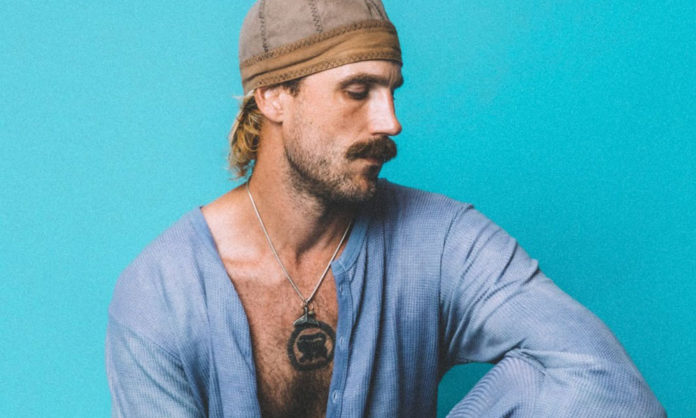
In Response to “The Colorful Prisms of Jewel”
“I was at the show tonight – she showed up exactly as you described, vulnerable, and on a mission. Thank you for writing such a beautiful article.”
Luke
“Wonderful article/interview! Jewel has always been an inspiration to me now at 60 years of age, as well as to my 30-year-old daughter. She’s a beautiful role model, seems to stay very true blue to herself. She’s never sold-out. Keep being a great mentor, Jewel! I have family in Homer, AK & everyone loves the Kilchers!”
They’re back….(remember that line from Poltergeist?). And by that I mean the little nightmare germs of Covid. They never really went away, but as people relaxed their precautions and went back to unmasked large gatherings, the disease is spreading again like wildfire.
And with it, comes a host of weird and fake news and prescriptions. You know, bleach, lasers, horse dewormers. So what should we do?
First off, read Aiyana Moya’s Q&A with new county health officer Dr. Lisa Hernandez with all you need to know about the new wave of the disease and a new directive.
Next up, you want to read Josué Monroy’s article about what the county’s schools are doing about the deadly fentanyl epidemic. Everything starts with education and our schools are taking a proactive approach. Is it enough?
On the fun side, we have big news about local jazz. A salute to Tim Jackson, the Santa Cruzan who has headed the Monterey Jazz Festival for 33 years, and breaking news about a great female jazz artist who teaches at UCSC and will give a presentation at the Festival about abolition with activist and philosopher Angela Davis and feminist studies professor Gina Dent.
Finally, one of my favorite ways to light up the night: The Museum of Art & History’s Glow Festival has been rebranded as Frequency: A Festival of Light, Sound and Digital Culture. It’s educational and fun for all ages and for this weekend it’s Santa Cruz’s answer to Burning Man, without the sand, mud and traffic.
Brad Kava | Editor
Photo Contest
PUPS GALORE 3-hour old otter pup with mamma in kelp bed, Monterey Bay, July 6. Photograph by Jo Koumoutitzes.
Good Idea
Mateo Donato and Dustin Lopez have been selected as Cabrillo College Local Government Fellows. They are the first in their families to attend college. The Fellows program was created in 2021 by current and former local government leaders throughout Santa Cruz County and the Cabrillo College Foundation.The goal of the program is to encourage and support Cabrillo College students, with preference to those who are the first in their family to attend college, to pursue careers in local government. As Local Government Fellows the students receive a $2,000 scholarship, an internship in a local jurisdiction, and a mentor. For information: https://foundation.cabrillo.edu/donate
Good Work
Last week the Santa Cruz County fair held its 46th Annual Apple Pie Baking contest and named Rowena Bacher of Scotts Valley “Best of Show.” There were almost 40 apple pie entries, and winners were selected for each of the three divisions, Youth, Adult and Masters. The Apple Pie Contest judges, who are different each year, included the general manager from Shadowbrook, a musician from the Wildcat Mountain Ramblers and more.
Quote of the Week
“Boxing is like jazz. The better it is, the less people appreciate it.” —George Foreman
ARIES (March 21-April 19): So it begins: the Building and Nurturing Togetherness phase of your astrological cycle. The next eight weeks will bring excellent opportunities to shed bad relationship habits and grow good new ones. Let’s get you in the mood with some suggestions from intimacy counselors Mary D. Esselman and Elizabeth Ash Vélez: “No matter how long you’ve been together or how well you think you know each other, you still need to romance your partner, especially in stability. Don’t run off and get an extreme makeover or buy into the red-roses-and-champagne bit. Instead, try being kind, receptive, and respectful. Show your partner, often and in whatever tender, goofy way you both understand, that their heart is your home.”
TAURUS (April 20-May 20): From May 2023 to May 2024, the planets Jupiter and Uranus have been and will be in Taurus. I suspect that many Taurus revolutionaries will be born during this time. And yes, Tauruses can be revolutionaries. Here’s a list of some prominent rebel Bulls: Karl Marx, Malcolm X, activist Kathleen Cleaver, lesbian feminist author Adrienne Rich, Vietnamese leader Ho Chi Minh, artist Salvador Dali, playwright Lorraine Hansberry, and dancer Martha Graham. All were wildly original innovators who left a bold mark on their cultures. May their examples inspire you to clarify and deepen the uniquely stirring impact you would like to make, Taurus.
GEMINI (May 21-June 20): Gemini writer Joe Hill believes the only fight that matters is “the struggle to take the world’s chaos and make it mean something.” I can think of many other fights that matter, too, but Hill’s choice is a good one that can be both interesting and rewarding. I especially recommend it to you in the coming weeks, Gemini. You are poised at a threshold that promises substantial breakthroughs in your ongoing wrangles with confusion, ambiguity, and enigma. My blessings go with you as you wade into the evocative challenges.
CANCER (June 21-July 22): Author Crescent Dragonwagon has written over 50 books, so we might conclude she has no problem expressing herself fully. But a character in one of her novels says the following: “I don’t know exactly what I mean by ‘hold something back,’ except that I do it. I don’t know what the ‘something’ is. It’s some part that’s a mystery, maybe even to me. I feel it may be my essence or what I am deep down under all the layers. But if I don’t know what it is, how can I give it or share it with someone even if I wanted to?” I bring these thoughts to your attention, Cancerian, because I believe the coming weeks will be a favorable time for you to overcome your own inclination to “hold something back.”
LEO (July 23-Aug. 22): In her book Undercurrents: A Life Beneath the Surface, psychologist and author Martha Manning says she is more likely to experience epiphanies in “grocery stores and laundromats, rather than in the more traditional places of reverence and prayer.” She marvels that “it’s in the most ordinary aspects of life” that she is “offered glimpses of the extraordinary.” During these breakthrough moments, “the baseline about what is good and important in my life changes.” I suspect you will be in a similar groove during the coming weeks, Leo. Are you ready to find the sacred in the mundane? Are you willing to shed your expectations of how magic occurs so you will be receptive to it when it arrives unexpectedly?
VIRGO (Aug. 23-Sept. 22): “These are the bad facts,” says author Fran Lebowitz. “Men have much easier lives than women. Men have the advantage. So do white people. So do rich people. So do beautiful people.” Do you agree, Virgo? I do. I’m not rich or beautiful, but I’m a white man, and I have received enormous advantages because of it. What about you? Now is a good time to tally any unearned blessings you have benefited from, give thanks for them, and atone by offering help to people who have obtained fewer favors. And if you have not received many advantages, the coming months will be an excellent time to ask for and even demand more.
LIBRA (Sept. 23-Oct. 22): My favorite creativity teacher is author Roger von Oech. He produced the Creative Whack Pack, a card deck with prompts to stimulate imaginative thinking. I decided to draw one such card for your use in the coming weeks. It’s titled EXAGGERATE. Here’s its advice: “Imagine a joke so funny you can’t stop laughing for a month. Paper stronger than steel. An apple the size of a hotel. A jet engine quieter than a moth beating its wings. A home-cooked dinner for 25,000 people. Try exaggerating your idea. What if it were a thousand times bigger, louder, stronger, faster, and brighter?” (PS: It’s a favorable time for you to entertain brainstorms and heartstorms and soulstorms. For best results, EXAGGERATE!)
SCORPIO (Oct. 23-Nov. 21): If you buy a bag of popcorn and cook it in your microwave oven, there are usually kernels at the bottom that fail to pop. As tasty as your snack is, you may still may feel cheated by the duds. I will be bold and predict that you won’t have to deal with such duds in the near future—not in your popcorn bags and not in any other area of your life, either literally or metaphorically. You’re due for a series of experiences that are complete and thorough and fully bloomed.
SAGITTARIUS (Nov. 22-Dec. 21): Writer George Bernard Shaw observed that new ideas and novel perspectives “often appear first as jokes and fancies, then as blasphemies and treason, then as questions open to discussion, and finally as established truths.” As you strive to get people to consider fresh approaches, Sagittarius, I advise you to skip the “blasphemies and treason” stage. If you proceed with compassion and good humor, you can go directly from “jokes and fancies” to “questions open to discussion.” But one way or another, please be a leader who initiates shifts in your favorite groups and organizations. Shake things up with panache and good humor.
CAPRICORN (Dec. 22-Jan. 19): Novelist and astrologer Forrest E. Fickling researched which signs are the worst and best in various activities. He discovered that Capricorns are the hardest workers, as well as the most efficient. They get a lot done, and they are expeditious about it. I suspect you will be at the peak of your ability to express these Capricornian strengths in the coming weeks. Here’s a bonus: You will also be at the height of your power to enjoy your work and be extra likely to produce good work. Take maximum advantage of this grace period!
AQUARIUS (Jan. 20-Feb. 18): The British band Oasis has sold over 95 million records. The first song they ever released was “Supersonic.” Guitarist Noel Gallagher wrote most of its music and lyrics in half an hour while the rest of the band was eating Chinese take-out food. I suspect you will have that kind of agile, succinct, matter-of-fact creativity in the coming days. If you are wise, you will channel it into dreaming up solutions for two of your current dilemmas. This is one time when life should be easer and more efficient than usual.
PISCES (Feb. 19-March 20): “When sex is really, really good,” writes Piscean novelist Geoff Nicholson, “I feel as though I’m disappearing, being pulverized, so that I’m nothing, just particles of debris, smog, soot, and skin floating through the air.” Hmmmm. I guess that’s one version of wonderful sex. And if you want it, you can have it in abundance during the coming weeks. But I encourage you to explore other kinds of wonderful sex, as well—like the kind that makes you feel like a genius animal or a gorgeous storm or a super-powered deity.
Homework: Spend 10 minutes showering yourself with praise. Speak your accolades out loud. Newsletter.FreeWillAstrology.com
Opened three months ago in the Seacliff neighborhood of Aptos, Castelli’s Caffé and Deli has been embraced by the locals.
Chris Castelli owns the new spot with her son, Vittorio, with a motif she defines as Italian-style New York deli with California flare. She previously owned a bait and tackle shop on the Santa Cruz Wharf, where she served food. Once her lease was up, she took her deli game to Felton, and later opened Castelli’s in Aptos.
Open 8am-6pm Tuesday-Sunday they have a few outdoor tables and do a lot of take-out. Highlights include Nona Caprese with turkey, pesto, Roma tomato and fresh mozzarella;fresh salads and clam chowder in a bread bowl; lasagna, raviolis and meatballs, breakfast sandwiches and burritos. The coffee and pastries come from Italy.
Good Times: How did your first week of business go?
Chris Castelli: It was incredible, our local neighborhood showed up en masse, which unfortunately led to long wait times because we weren’t prepared for that quantity of customers. We were in shock, we all looked at each other and said, “Mama Mia!” The response was overwhelming, it inspired our business sense and helped us streamline operations without compromising quality.
GT: Tell me about the ethos at Castelli’s?
CC: My son and I believe in serving high quality food at a reasonable price and to share the Italian heritage with our community that my husband, whom I met at the Pantheon in Rome, has brought to our family. In the three months since we opened, we have had many Italians comment to us how our deli connects them with their cultural roots and all the good memories and feelings that come along with that.
236 Santa Cruz Avenue Suite A, Aptos, 831-661-5699; castellisaptos.com
The best that can be said for the state’s efforts to encourage local governments to allow cannabis businesses to open shop is: “At least it’s not nothing.”
The pot industry in California has faltered almost from the time the first adult-use dispensary opened in January 2018. There are many reasons for this, most of them having to do with government policy: high taxes at the state, and often the local, level; the continued federal illegality of cannabis; costly, sometimes-stifling regulations; and lack of access to banking and insurance.
All of those issues can be addressed. But one big problem is basically unsolvable, at least in the short term: Thanks to “home rule” powers granted by the state constitution, local governments are free to keep cannabis businesses from setting up shop in their towns or counties. And many of them have. More than 60% of towns and counties disallow cannabis dispensaries, and more than half of them—56%—bar any kind of cannabis business at all.
That situation is slowly improving, but with that much of the state essentially “dry,” the beleaguered industry is unable to serve millions of potential customers. Any adult in the state can grow their own weed. Or they can have pot delivered to them, thanks to a law passed a couple of years ago. But that law offered precious little relief to the industry, and none at all to the many Californians who live in areas with no delivery services.
Some of that marginal improvement is thanks to the state’s encouragement of local governments to accept cannabis. The main way it has done so is through Local Jurisdiction Retail Access Grants. Last week, the Department of Cannabis Control announced Phase II of the program, which is being expanded and liberalized. The grants have doubled, to $150,000 per retail license and to $300,000 per social-equity retail license.
To qualify, localities must have been without a retail licensing program before July 1, 2022, and must have a plan to develop and implement one. Funding is contingent on the actual issuance of licenses.
Phase II will award $15 million in grants. Phase I, which has been widely deemed successful in its narrow way, doled out just over $4 million to 18 cities and counties, particularly in Southern California. Huntington Beach received $325,000, while Los Angeles County received $475,000 to encourage dispensaries to open in underserved, unincorporated areas.
For Phase II, about 300 local governments are eligible for grants, thanks to the criteria being liberalized.
“There are still many locations throughout the state where cannabis usage is notable, but existing consumers do not have convenient access to legal retail cannabis,” said DCC Director Nicole Elliot in announcing Phase II. “We know that cannabis consumers often make purchasing choices based on convenience, so sufficient access to legal retail reinforces extremely important consumer safeguards.”
Californians on average have far, far less access to dispensaries than do consumers in other legal states. There are 1,216 dispensaries operating in California, or 3.1 for every 100,000 people. In Oregon, there are 819 dispensaries, or 19.3 for every 100,000 residents. Colorado has 1,056 shops, or 18.2 per 100,000. Massachusetts is widely considered to be overly restrictive, but even that state does better than California, with 276 dispensaries, or four for every 100,000 people.
The illicit market for weed continues to thrive in California, dwarfing the legal market. That’s not only because of high prices for legal pot, but also because of the lack of access in huge swaths of the state, including in some heavily populated areas. Attorney General Rob Bonta, who has championed the legal pot business since he represented Alameda as a member of the California State Assembly, recently announced a program to help local governments combat illicit pot operations by offering legal support. In announcing the program, he also called on the state to lower taxes and ease up on regulations.


Although some local police agencies semi-routinely bust illicit pot operations in order to have a “dope on the table” photo op, much of the illegal industry operates with total impunity. “Some folks believe they can avoid the tax burden or regulatory burden and just operate and make a profit without being legal,” Bonta said. “And they’ve been doing it. They haven’t been shut down.”
Pop(sicle) quiz, hot shot: How do you know you have a full-blown Santa Cruz discovery on your paws?
(a) It stars life-affirming mt stars life-affirming mushrooms like chaga, lion’s mane, cordyceps and tremella.
(b) It involves organic produce from sources like Monte Verde Farm and Sea to Sky Farm.
(c) It involves recovery from wildfire.
(d) It involves a lot of character, including charismatic rescue dogs with a taste for the SCF’s pooch pops.
(e) It involves smiley-face overalls, a tricycle cooler and a psychedelic-looking mushroom umbrella.
(f) It involves all of the above.
Good on you if you guessed “(f),” “Santa Cruz Fungi,” or a third answer to be revealed in a moment.
Santa Cruz Fungi started when Boulder Creek’s Paul Lazazzera reached enough frustration with his career in education and his own health challenges and decided to pursue a passion for life-affirming fungi full time.
First he started farming. Later, as he sought out new ways to ingest more of the mushrooms that pleased his palate and gut—while sorting out life amid COVID and the CZU Lightning Complex Fire—he started experimenting with gluten- and dairy-free mousses based in cashew and coconut.
Then his wife, collaborator and fearless owner of their 2023-born business Katie Sarna , suggested they freeze them.
A specific type of treat emerged: popsicles—now eight deep in flavors ranging from Cordy[ceps] Creamsicle to Verve Chagaccino to Porcini Pumpkin Pie to Key Lion’s Mane Pie—appear at events like the next two Midtown Block Party Santa Cruz (5-9pm Sept. 22 and 29) and Aptos New Leaf (2-6pm Sept. 30).
Look for the cooler tricycle, toadstool umbrella and overalls—which, like the popsicles, have smiley faces.
Then comes an oyster mushroom home-grow class at Mountain Feed in Ben Lomond come Oct. 7.
For the record, another valid response to the above question is “Extra Kitchen,” the same incubator space where SCF preps and which helped launch the likes of Adorable Bakery, Holy Roller Bagels and Salsa Buena.
“Santa Cruz Fungi fits into Santa Cruz so well,” says Extra’s owner-manager Matisse Selman. “In so many ways.”
Correct answer.
scfungi.com
GOOD TIMES (x2) A double dose of events with heart await on the horizon. Farm Discovery’s Fall Feast takes place on Saturday, Sept. 23, at Live Earth Farm, with chef Jessica Yarr preparing the multi-course meal and Soif’s Dede Eckhardt handling the keynote (farmdiscovery.org). The same day Teen Kitchen Project hosts its own farm dinner fundraiser at Everett Family Farm in Soquel with chef Tim Eelman, who Good Times has spotlighted in this column as he readies new promising project The Village Big Sur (teenkitchenproject.org).
MORE NOURISHING NOSH Another robust edible activity with compassion cometh Saturday, Oct. 7, via Gourmet Grazing on the Green, a food, wine and beer festival at Aptos Village Park. The Santa Cruz Cancer Benefit Group fundraiser comes loaded with 60 tastemakers and community tablers—think Venus Spirits, East Side Eatery, Hula’s, Pescavore Jerky, Ferrari Ranch Wines, Martinelli’s Cider and many more. $45-$99/ticket, sccbg.org.
After 33 years as Artistic Director of The Monterey Jazz Festival, Santa Cruz’s Timothy Jackson is stepping back, but not before one more world class explosion of sounds on September 22-24.
The Monterey Jazz Festival is known as one of the finest of all the jazz festivals, and it has been Jackson’s vision and perseverance that raised its quality to the top tier. What’s the origin story of a man that legendary guitarist, John Scofield calls, an “expert at creating interesting programming?” Let’s dive in.
Growing up in San Jose, Jackson was an early aficionado of music.
“I came into jazz in my very early high school years, but got there from the blues genre,” Jackson says from his cubicle at The Kuumbwa Jazz Center (a beloved music venue that Jackson co-founded).
“When I was in middle school in 1967 there was a big Chicago Blues scene revival brought forth by people like Paul Butterfield, Michael Bloomfield and Charlie Musslewhite. Ya know. The white blues guys,” Jackson says with a laugh. “Being a white kid from the suburbs myself, I heard those guys and groups first. But they always talked about the people that inspired them like BB King, Muddy Waters, and Howling Wolf, so I sought those artists out.”
Inspired by the music he was hearing, the young Jackson started listening to funkier jazz like Jack McDuff, Fathead Newman, Les McCann and Eddie Harris. But it was finally stumbling across John Coltrane that Jackson was set upon his career path.
“By high school I was pretty deep into Les Sneed and Herbie Hancock. I was also listening to the Mahavishnu Orchestra. In the 1970s, the music was all over the map,” says Jackson. And, it was listening to a steady diet of eclectic music that sparked him to want to try to learn an instrument.
Jackson started playing guitar in grade school, bass in middle school and in high school learned the flute and saxophone. He was not only picking up some early insight into the life of a musician, but it gave him a passion to perform live, that continues to this day.
But back then, it was surfing, flute playing and seeking life’s mysteries that found Jackson ending up in the front yard of Pete Douglas’ home in Half Moon Bay, 50 years ago. “Tim showed up at my father’s house, which is also a music venue called The Bach Dancing & Dynamite Society,” says Pete’s daughter, Barbara Riching, who took over running the venue when Pete passed in 2014.
“Tim was a surfer who also played the flute and my dad, as he did with so many people that ended up in our front yard, welcomed Tim in,” says Riching from her home in Santa Cruz.
“Dad put a boat in the backyard where people could stay and Tim lived there for a while. My dad had no problem sharing information and I’m pretty sure, Tim got the idea of starting a non-profit to run the business from dad.”
Pete Douglas was a bona fide man ahead-of-his-time, as nobody even considered running music clubs as non-profits at that time. Douglas was also very generous with his knowledge and gave freely to Jackson.
“Tim learned how a jazz venue worked and then he went to Santa Cruz and co-founded The Kuumbwa Jazz Center. My dad was very well known in the jazz world, and as a result when my dad died, everyone claimed to be his friend. But truly, there were only a handful of people that were my dad’s friends and my dad really loved Tim and his wife.
“My dad was Tim’s mentor but then when my dad died, Tim became my mentor. Without Tim I would have been dead in the water. I called him or emailed him once a week to ask him a question. He’s such a great even-keeled person. He reminds me of a CEO of a company. I love Tim, he’s my very good friend,” says Riching.
Let’s Get On With The Show
When you see an amazing performance at a venue or a festival, you rarely think about all the mechanics and million details that had to come together to make it seem so seamless and smooth. It’s like magic. And, when it comes to The Kuumbwa Jazz Center and The Monterey Jazz Festival, the magician, behind the scenes, curating life-changing experiences for tens of thousands of people, has been Tim Jackson.
Is stepping back from The Monterey Jazz Festival a bittersweet experience?
“Bittersweet is a good way to put it,” says Jackson. “I certainly feel ready and it was my choice to want to do it at this time. But you don’t do something for 33 years and not look back on it with a lot of great memories. I also look ahead and think, ‘Wow this has been such a big part of my life, what’s going to happen when it’s not there anymore?’ It’s an interesting feeling that I feel like I’m ready to embrace. I feel really good about it. I haven’t really had second thoughts or cold feet or anything like that. It continues to feel, even right up to now, where I’m ticking down the clock, it continues to feel like the right move,” says Jackson.
Before he began working at the Monterey Jazz Festival, in 1991, a few years earlier, in 1988, Jackson performed there as a musician with a Latin group. He witnessed first hand what the festival was like from a musician’s point of view. He soaked it all up, and was not impressed.
When Jackson stepped in as General Manager in 1991 at the Monterey Jazz Festival, it was far past its creative peak as a festival.
“I thought the production values were really low, the staging was unimaginative. I had already been at the Kuumbwa for 15 years and thought the production values at the Monterey Jazz Festival didn’t even compare to what we were doing at the Kuumbwa. So when I ended up going there in a professional capacity, I made changes. We had good people working there; they just weren’t being paid attention to on the production side. We gave them the tools and the budget to do the good work that we knew they could do and it paid off over the years,”he says.
STARSTRUCK Tim Jackson, Jon Batiste, Monterey Jazz Festival 2018. PHOTO: Jim Stone
And Now, The 66th Annual Monterey Jazz Festival 2023
This year’s Monterey Jazz Festival features some of the legends that Jackson has worked with over the decades.
“This year was completely my creation and vision for the line-up,” says Jackson. Influencers like Herbie Hancock, Terence Blanchard and Dianne Reeves. Even artists like Christian McBride, who is still mid-career, have been working with Jackson for 30 years. But one name that stands out this year’s festival, and is a lifelong friend and admirer of Jackson, is John Scofield. From playing with Miles Davis to Phil Lesh, Scofield knows what he’s talking about.
“First and foremost, Tim is a real jazz person,” says Scofield. “He plays and understands the music and is a huge fan of jazz. It’s a jazz family all over the world and Tim is a big part of that family and a friend to the musicians.
“It’s also one of the most beautiful sites for a fest. I’ll be playing solo for one concert, which is something I’ve been doing lately. I’ll also be playing with a group I put together called Yankee Go Home, with Jon Cowherd on keyboards, Josh Dion on drums and Vicente Archer on bass.
“We’ve rearranged some old rock and roll hits and turned them into jazz, with some original songs as well. The most rocking show I’m doing at the festival this year is called Scary Goldings which is my friend Larry Goldings who hooked up with a group called Scary Pockets (with Ryan Lerman on guitar and Jack Conte on keyboards). This is a rare Monterey Jazz Festival only performance,” says Scofield.
Besides the legends, Jackson always has an eye on the next big thing. This year’s performances of Samara Joy, Thundercat, Snarky Puppy, Lakecia Benjamin, The Connie Han Trio, to name a few, will certainly turn heads and enlist lifelong fans. But, there have been times when Jackson booked acts that caused long-time attendees to wonder what the heck was going on.
“The one thing about the Monterey Jazz Festival, and sometimes it does bite me in the butt, is that the audience is a very passionate group of people,” says Jackson.
“And they feel ownership of that festival. So if there is something they don’t like, they let me know about it. Sometimes they felt the music we presented was too avant-garde. I presented Ornette Coleman several times or Charlie Haden’s Liberation Orchestra and I’d hear from a few folks, ‘Hey, that music, I didn’t understand it and I didn’t like it.’
“My response is always, ‘The beauty of a festival is we have seven different stages going at all times, so if there’s something you don’t like, move to another stage and maybe you’ll find something you do like.’ But there is always a larger percentage of people that love it.’”
Prepare The Third Act
“Basically, I’m just winding down. I’m not retiring at this point. Kuumbwa is going to keep me busy. We’re leading into our 50th Anniversary in 2025. So we’ll be doing a lot of planning and lead up activities in 2024 that I’ll want to be a part of.
“It’s an exciting time. Both Monterey Jazz Festival and Kuumbwa Jazz are non-profit organizations, so it’s not like I own the company, or anything like that. We’re governed by a board of trustees just like any non-profit.
“I feel like when you’re working for an organization and doing activities for the public good, I think at a certain point, you have a responsibility, as an artistic person involved, to take a look at the surroundings and say, ‘I think it’s time for somebody else to sing a new song and try their hand at it,’”he says.
Time hasn’t slowed down Jackson’s keen eye on producing an internationally recognized festival. “I still feel like I’m at the top of my game. That being said, I also feel like it’s been a really good run. I don’t want to continue to hang around until people start whispering behind my back, ‘Maybe this guy oughta take a hike.’
“So, I chose to pass the baton while I still feel like I’m creating vital line-ups for the festival and this year is no exception,” says Jackson.
The 66th MJF runs September 22-24th and tickets and line-ups can be found here. https://montereyjazzfestival.org/tickets/
Plans to build 624 units of affordable student housing on Cabrillo College’s Aptos campus got the green light last Thursday when Gov. Gavin Newsom signed a bill to fund the project.
The bill will provide $111 million for the project, which will be located in the lower portion of the campus near the Santa Cruz County Sheriff’s substation on Cabrillo Drive.
Groundbreaking is expected as early as November 2024, with completion estimated in Fall of 2026. Once ready, it will house Cabrillo students and those from UC Santa Cruz.
The multi-story building will dedicate 60% of beds to Cabrillo students and 40% of beds being for UCSC students. It will also include a daycare facility for residents.
To pay for the project, UCSC will issue bonds and the state of California will pay them. Neither Cabrillo College nor taxpayers will be responsible for the costs.
UCSC will contribute an additional $70 Million to the construction costs, bringing the total project cost to $181 Million.
“We’re very grateful that the Legislature found a way to fix this with the governor,” Cabrillo College President Matt Wetstein said. “It’s a great political victory, I think, for our students and for the state to address housing in this way.”
Once complete, the units will go to students who earn 30% of 50% of the median household income, Wetstein said.
In today’s dollars, that would translate to roughly $900 per month, Wetstein said, calling the new law a “game-changer.”
“With this infusion of revenue bond funds from the University of California, we’ll be able to house our most needy students, accelerate their completion, and secure transfer opportunities for them at a world class university,” he said.
To qualify, students must be taking 12 units, be making progress toward a degree and be earning a C average or better.
Wetstein pointed to a recent statewide needs survey of 65,000 community college students, which shows that roughly 20% are facing homelessness at any time.
“The need is already there,” he said. “Our students in this community right now are needing housing, and this is a way we can put a small dent in it.”
The project was selected in the 2023-24 round of the Higher Education Student Housing Grant Program, a 2021 state law that provides money for community college housing.
It is one of three joint student housing projects between the UC and the state Community College systems, and the first such partnership between these segments in the state’s history.
This includes Riverside City College and UC Riverside, and Merced College and UC Merced.
UC Santa Cruz Chancellor Cynthia Larive praised Sen. John Laird, who advocated for the bill as chair of the higher education budget subcommittee.
“We deeply appreciate the support of Senator Laird and other California lawmakers in helping us increase educational access by building more student housing.
For Isabel Contreras, Hispanic Heritage month is all about honoring the multi-faceted origins of Latinx culture.
“The AfroLatine festival was to bring black and brown communities together, but then to also highlight the conversation of black people in Latin America, and how that often goes under the radar,” Contreras says. “So just trying to educate people on that, invite the conversation.”
Contreras is a local organizer and founder of Mi Gente, which curates cultural events for the community in an effort to spotlight BIPOC & AAPI. In honor of Hispanic Heritage month, which begins this Friday, Mi Gente in collaboration with Santa Cruz Art League is throwing an event that celebrates the African roots and influences on Latin American culture.
The event will feature some 20 arts & craft vendors, Latin American food options from various countries such as Colombia, Mexico, El Salvador and more, with live performances from La Cumbiamba Colombiana, Freeborn, Samba Soul Dance, and more.
Even though Contreras wants this to be a cultural arts festival, she also hopes it will be educational. She plans on including a brief history of Hispanic Heritage month to explain what the festival is honoring. There will also be a scavenger hunt of facts throughout the event that elaborates on Afro-Latinos and how Latin American culture has Black roots.
“I want people to know what it is that we’re celebrating, so you’re aware of what it is that you’re walking into, and you’re not excluded, just because it’s not your culture,” Contreras says. “That’s the thing that I’m trying to bring to light too with these cross-cultural collaborations within the festivals. I want to show that maybe culturally and with our food and things like that, it’s different, but boil it down to what it is that we actually value as a culture and a people and it’s very, very similar.”
Ultimately, Contreras hopes that people who attend the festival will walk away with a deeper understanding of different cultures.
“I just want people to be more open-minded about one another, have compassion and grace for each other,” Contreras says. “Life is not easy, especially being a person of color, especially being a mixed person of color. It can also be confusing. And so like, with these festivals, it’s like, I don’t want to exclude anybody.”
When: Saturday, Sept. 16, from 12-6pm
Where: Woodhouse Blending & Brewing, 119 Madrone St.
The incessant but soft pitter-patter of rain on our camp shade structure had become white noise as the hours passed on Friday afternoon of Burn Week.
I stood sheltered under the tarps of our structure, bundled up in a wool blanket lent to me by a campmate after a mishap had left me drenched. I calmly watched as people passed by, many struggling to walk through the sticky, deep mud. One person “swam” by, wearing only goggles, a swim cap and swimming briefs. Another adventurous soul traversed the mud wearing only skis. Many wore various types of plastic bags secured over their feet to get through the mud.
A few panicked participants ignored warnings and attempted to drive their vehicles through the perilous mud. With every turn of their wheels, I saw layer upon layer of mud coat each tire until the wheel wells were filled. I imagine they didn’t make it far. As the rain took a short respite in the late afternoon, revealing a spectacular double rainbow over the Playa, I reflected, as I imagine many Burners did while we sheltered in place.
What does Burning Man mean to me? Why have I felt the need to continue coming to Black Rock City for no less than seven Burns? Why would anyone choose to put themselves in these physically taxing and sometimes unpleasant conditions?
What Is Burning Man?
It is difficult to really explain what Burning Man is like to those who’ve never been.
Every year, Black Rock City (BRC) is built and deconstructed in the span of a couple weeks. Many refer to Burning Man as a festival, though Burners generally don’t use this term. BRC is a city with its own set of “laws” (the “10 principles”) and culture.
Just like in every city, there are different sub-communities within BRC and people come to Burning Man for different reasons. While the media tends to focus on aspects of Burning Man that provide salacious stories to entice readers (usually relating to sex or illegal drug use), there is much more to BRC. While I can’t speak for all Burners, I imagine that most of us who have gone many times do so because we get something much more meaningful from our participation. A common saying is that “you don’t get the Burn you want, you get the Burn you need.”
I can say, without a doubt, that I got the Burn that I needed this year.
Ryker performing on an aerial hoop at Burning Man. Photo Jody Ryker
As a professional circus artist, my “gift” (“gifting” is one of the 10 principles) is usually in the form of my art. I teach aerial or pole classes and I perform. This year, I directed and performed in a circus show to provide entertainment for other Burners.
Many people have seen photos of the art from the Playa, however, nothing compares to seeing it in person. The art is mind-blowing. I am always amazed and inspired by the creativity and dedication required to bring these works of art to life on the Playa. Many of the art structures can be climbed, much to my enjoyment. Most of the wood-based art is intended to burn at the end of the week.
While I didn’t understand how someone could destroy something so beautiful instead of preserving it during my first Burn, I now find it to be a lovely metaphor for the impermanence of all things in life. We don’t need to physically hold on to things forever to enjoy them and appreciate our experiences with them. The actual burning of the art is quite visually stimulating as well, and the art is transformed in a way. While the burns were delayed this year, the “man” burned Monday night and the temple burned Tuesday, both delayed by two days. The “Tower of Babel,” one of the larger and somewhat mysterious artworks also burned Monday night. In past years, art burned Thursday through Sunday of Burn Week.
One of the most amazing things about BRC is the generosity, often between strangers. I’ve never experienced anything like this anywhere else. From receiving heartfelt gifts with no expectation of any returned favor to receiving help from a stranger in a time of need, Burning Man brings out a side of humanity rarely seen outside of BRC in individualistic societies. Physical challenges such as the rain of this year or the more common dust storms serve as catalysts for these connections. If Burning Man occurred somewhere more mild, it’s possible that these connections wouldn’t happen or wouldn’t be as meaningful.
The generosity, art and circus communities, are all things I usually explain to people when asked what draws me to Burning Man each year.
Burn to Rain
As I reflected this year, I looked at those Burners who, like me, have continued coming many times and will likely be unphased by the muddy challenges of 2023’s Burn. I also watched those who appeared to be beginning to panic and those who had decided they wanted to leave as quickly as possible, even at the expense of their own safety, the safety of others and the land. Many people completely ignored the principles of Burning Man (which include “leave no trace”) and left belongings, trash and even entire camp set-ups.
By traversing the mud, they made it deeper and harder for others to pass through it after them. The areas that were least traveled dried much quicker than the areas with the most traffic (such as the area in front of the porta-potties). I was sad to watch the complete disregard for the land.
Another principle came to mind during this rainy day: radical self-reliance. This is a principle that resonates quite a bit with me. I enjoy taking care of my own needs and traveling by myself (I have gone to Burning Man alone the last three times). I appreciate it when others around me do the same. Black Rock Desert is no joke, and participants really need to prepare adequately to survive the desert for one week.
I have prepared for rain every single year (garbage or ziplock bags are recommended for putting over one’s feet). I also always pack extra supplies in the case that something causes a delay. It is recommended that all attendees do the same, as there are many things that could cause an extended stay.
When cell service returned, participants’ inboxes were flooded with messages from concerned friends and family. Some news outlets had made statements ranging from hyperbolic to just ludicrous, such as one claim that Burners were being quarantined due to an ebola outbreak.
My experience of the mud wasn’t bad at all. Sure, my plans for the Burn changed. I didn’t get to do as many of the scheduled activities or see as much art on the Playa. However, I bonded with campmates as we navigated the mud and found other ways to entertain ourselves. Like most people, I did have to miss an extra day of work. I also ended up having to go almost straight to work after the exceptionally long Exodus. It took me 8.5 hours to drive from my camp to Route 34, the nearest highway, after departing around noon once the roads were declared safe to drive.
As usual, I made some amazing connections this year, connections that I likely never would have had outside of BRC. The conditions of Burning Man tend to expedite the forming of friendships. People who engage with the principles of Burning Man are generally more open and share themselves in an authentic way. Experiencing incredible moments and challenges together leads to some unforgettable memories. The friendships that I’ve made are deep and generally continue outside of BRC. I imagine that many repeat Burners return specifically for this reason: to find a community that accepts and appreciates them. For this reason, I will certainly return to Burning Man if it happens next year, rain or shine. Though it might be prudent to pack a portable toilet!
DON’T FENCE US IN
Oh R-T-C, you'll break our hearts
Don’t fence us in
No need for miles of cement-wall parts
Don’t fence us in
Who in the world has lost their senses
A passenger train if it ever commences
would see our byways riven by fences
Don’t fence us in
We'd lose most all our lovely trees
Trash the habitat, bring us to our knees
R-T-C Oh pretty please
Don’t...
They’re back….(remember that line from Poltergeist?). And by that I mean the little nightmare germs of Covid. They never really went away, but as people relaxed their precautions and went back to unmasked large gatherings, the disease is spreading again like wildfire. And with it, comes a host of weird and fake news and prescriptions. You know, bleach, lasers, horse dewormers. So what should we do?
Opened three months ago in the Seacliff neighborhood of Aptos, Castelli’s Caffé and Deli has been embraced by the locals. Chris Castelli owns the new spot with her son, Vittorio, with a motif she defines as Italian-style New York deli with California flare.
The best that can be said for the state’s efforts to encourage local governments to allow cannabis businesses to open shop is: “At least it’s not nothing.”
Santa Cruz Fungi started when Boulder Creek’s Paul Lazazzera reached enough frustration with his career in education and his own health challenges and decided to pursue a passion for life-affirming fungi full time.
After 33 years as Artistic Director of The Monterey Jazz Festival, Santa Cruz’s Timothy Jackson is stepping back, but not before one more world class explosion of sounds on September 22-24. The Monterey Jazz Festival is known as one of the finest of all the jazz festivals, and it has been Jackson’s vision and perseverance that raised its quality to the top tier.