
Warming Centers Provide Refuge From The Cold

Steve Stewart sits on a cot inside the old train depot building at Depot Park. On this frigid January night, he is trading the car he calls home for a bed inside one of the city of Santa Cruzโ€™s warming centers.

โ€œI have a car, but I have an infection in my leg […] and the doctor said I need to be indoors for it to heal,โ€ Stewart says.

Stewart has been living out of his car for over two months after being evicted from his home,  and recently was hospitalized for nearly a month due to a leg injury. This was his third night staying at the Depot Park warming center, one of three centers located in the county.

Late last year, storms battered the coast, causing widespread damage and flooding. Now, as cold weather grips the area, warming centers provide emergency shelter for individuals experiencing homelessness.

Nonprofits Come Together To Operate Warming Centers

The Depot Park warming center is run by the Santa Cruz Free Guide, a local nonprofit providing resources for homeless residents of the county, in conjunction with the city of Santa Cruz and Watsonville. The center operates when the temperature reaches 40 degrees or lower on any given night.

Last year, warming centers were open for a total of 19 nights, from January stretching into early April. During that time, the area was getting battered by atmospheric river storms that caused extensive damage throughout the county. In addition to providing a safe and warm place to sleep, the program also provides meals and a mobile shower service.

Aside from the Depot Park location, which holds 26 beds, the program offers beds at the Santa Cruz Vets Hall and the Watsonville Vets Hall. Both of those locations hold up to 40 beds.

Evan Morrison, executive director of the Free Guide, says that the warming centers in Santa Cruz have been at capacity since they opened on January 7. However, the Watsonville center has not been at capacity during the same time frame.

According to the Santa Cruz County point-in-time count, which determines how many people in the county are experiencing homelessness, in early 2023 there were 1,804 individuals unhoused. That is a drop from the 2022 number of 2,300.

Emergency shelters throughout the county offer just under 400 beds. For those that donโ€™t have a spot at one of the shelters, the warming centers are a respite from the icy weather.

This is the second year that the Free Guide is running the warming centers, and this year the support from local government entities has helped expand the programโ€™s reach. 

Morrison says that compared to last year when they were given just two daysโ€™ notice by Santa Cruz city officials to open the centers, this year went smoother. After the program ended last year, local officials reached out to Morrison and they began planning for 2024.

Those plans included a more aggressive outreach campaign that helped spread the word and helped keep the Santa Cruz locations at full capacity, Morrison says.

Santa Cruzโ€™s warming center program first came together a decade ago, when local group Residents for Coldest Nights Warming Centers set out to provide shelter during extreme cold or rain. 

Programs like these are a lifeline for people experiencing homelessness, when extreme cold can cause hypothermia. According to the Santa Cruz County Homeless Persons Health Project, there were 122 known homeless deaths in 2023. This was a 33% increase over 2022 numbers, with drug overdoses accounting for nearly half of the deaths.

Here To Help 

John Forte, a volunteer at the Depot Park center, knows personally the importance of services like the warming centers.

He experienced homelessness when he first moved to Santa Cruz from the Bay Area 13 years ago. After getting back on his feet, he began working with Housing Matters and other homelessness advocacy groups.

When he talks about how he got involved with the warming center program, he chokes up with emotion and says heโ€™s there to help people. His mood quickly turns lighter as he recalls hearing the sounds of people sleeping comfortably during one of his shifts.

โ€œI heard snoring last night. It’s a wonderful thing,โ€ Forte says.

He thinks that operating the warming centers can save lives.

โ€œA person can die from hypothermia […]  it’s critical that there be something consistent, a consistent location so that people will know what to expect and know what they can get when they get there,โ€ Forte says.

On this night, the volunteers ordered pizzas to feed everyone at the shelter.

Adam Henderson operates a mobile shower trailer parked outside the doors of the Depot Park warming center. The trailer is provided by the Association of Faith Communities.

โ€œWe come for a few hours and give people a chance to clean themselves up, feel better about themselves,โ€ Henderson says.

He has also experienced homelessness and says that while programs like these arenโ€™t a permanent solution, they definitely help.

โ€œI think permanent housing is the thing that we’re looking for the most, but as far as living on the streets, it’s tough not to have a warm bed,โ€ Henderson says.

The Depot Park warming center is open every night from 8:00 p.m. to 8:00 a.m. The Santa Cruz Vets Hall warming center is open every night from 10:00 p.m. to 8:00 a.m., and the Watsonville Vets Hall warming center is open every night from 8:00 p.m. to 8:0 a.m.

Honoring Martin Luther King Jr.

0

Before hundreds of people began a march Monday morning to commemorate Martin Luther King Day, a solemn hush fell over the crowd as political chanting briefly ceased and the good-natured whooping died down. 

โ€œFinally,โ€ 6-year-old Brianna Hodgkins said, sitting astride her fatherโ€™s shoulders. โ€œNow we can move!โ€

The little Santa Cruz resident was part of a march including religious groups, nonprofit organizations, individuals and political candidates.

The event was intended to highlight the life of the iconic leader, whose โ€œI have a dreamโ€ speech at the Lincoln Memorial in Washington almost six decades ago still resonates as the struggle for equal rights continues to come under assault.

โ€œWhat he stood for and what he taught is so relevant and needed today,โ€ said organizer Amanda Harris Altice, who serves as treasurer for the Santa Cruz branch of the NAACP. โ€œItโ€™s important to continue that and to highlight folks that are part of our Black community here in Santa Cruz. To be visible, be seen and be supported.โ€

Brenda Whitley, who serves on the NAACPโ€™s Executive Committee, said that the current political climateโ€“which includes book bans and the erosion of voting rights nationwideโ€“makes it more important than ever to show solidarity.

โ€œWith everything thatโ€™s going on right now, itโ€™s important for all of us to get together and talk about how we can do this in a peaceful way,โ€ she said.

Eugenia Rice, who attended the event as part of the Bahรกสผรญ community, said she had a simple reason for being there.

โ€œWe want to show that weโ€™re more alike than we are different,โ€ she said.

NAACP President Elaine Johnson said that the day is a time to set politics aside.

โ€œWith everything thatโ€™s going on right now, itโ€™s time for us to just pause and love each other and stay in solidarity with each other,โ€ she said. โ€œLetโ€™s just be the peace that (King) wanted for us so many years ago.โ€

NAACP Vice President Don Williams said that, just before he was assassinated, King was working on ending the Vietnam War. It is that legacy, he said, that should be honored.

โ€œFor too long, we as a people have been fighting each other,โ€ he said. โ€œGod made us to love, so we want to capitalize on the message and the messenger today. Itโ€™s not about us. Itโ€™s about us making a change of truly uplifting someone higher than yourself.โ€

Mission Street Housing Project

0

The Santa Cruz Planning Commission will review permits on Jan. 18 for a mixed-use housing project on the site of the Food Bin and Herb Room, located on the northwest corner of Mission and Laurel Street. 

The proposed five-story housing project would have 59 units and will include ground level parking, with the Food Bin and Herb Room occupying the ground floor. The plan also includes eight affordable units for tenants who meet state-set requirements for very low incomes. In compliance with state law, the project seeks a density bonus, permitting a building taller and denser than conventional city regulations due to the inclusion of affordable housing units.

The Planning Commission meeting can be attended at 809 Center St. in Santa Cruz, at 7 p.m.

Good to the Last Drop

0

Local Santa Cruz organization, Our Community Reads, in collaboration with The Friends of the Aptos Library, combined with the tireless work of the volunteers from Friends of the SC Public Libraries, has prepared a truly impressive month-long festival.

This unique experience features 14 engaging events, throughout Santa Cruz County, that focus on the book, The Monk of Mokha by Dave Eggers. The book is a true story about a San Francisco resident, Mokhtar Alkhanshali, who travels to Yemen during a civil war to find the perfect coffee bean. So, throughout this one-month celebration, the caffeinated crux that ties it all together is Americaโ€™s favorite legal stimulant, coffee.

Our Community Reads, Program Chair, Denise Ward is bristling with energy about 2024โ€™s itinerary. โ€œWe have 14 events this year because we were so thrilled with the book,โ€ she says.

From the behind-the-scenes roasting process of Verve coffee, to an art workshop at the Felton Library, to an aria of Johann Sebastian Bachโ€™s Coffee Cantata (Bach drank 30 cups of coffee a day!) sung at the downtown Santa Cruz Library, one cup of Joe you donโ€™t want to miss is an evening of conversation with The Monk of Mohkaโ€™s author, Dave Eggers. 

Dave Eggers is a prolific, internationally acclaimed author, who also has a passion for activism that includes being a co-founder of the literacy project, 826 Valencia, the human rights nonprofit Voice of Witness and is now lending his prowess and voice to fighting the rampant book bans, that plague our country.

The Circle, (Eggers 2013 dystopian novel), along with about 600 other books, was banned a few weeks ago in Orlando, says Eggers.

โ€œSo weโ€™re doing what we did in Rapid City, South Dakota, which was to offer any of these banned books free to high schoolers in that district. In Rapid City, 5 books were banned last year, including The Circle, and for the last year and a half, through the local indie bookstore, weโ€™ve offered high school seniors all five books for free.

โ€œTo date about 500 sets of these books have been given away. So in the end, far more young people in Rapid City are in possession of these banned books because they were banned.

โ€œItโ€™s the usual counter-productive nonsense that book-banners specialize in. Art Spiegelmanโ€™s Maus, too, has been read by infinitely more people now than before it was banned a few years ago.โ€

With illiteracy rates topping 21% in America the dumbing down of our populace is nothing more than a way to control the masses, Eggers says.

Heโ€™s clear on what the consequences of book banning will achieve.

 โ€œIt goes without saying that a healthy democracy relies on an informed, well-educated citizenry. I should say that I think the stat youโ€™re citing is for English proficiency, not necessarily across-the-board literacy, given there are millions of Americans who read and write in another language but havenโ€™t mastered English yet.

โ€œStill, we have to make basic English literacy classes more readily available. In California, there are a lot of classes, but a good portion of them cost money. I love it when public and private K-12 schools offer literacy classes at night and on weekends โ€” often for the parents and grandparents who have kids at that school. These classes can be taught effectively by volunteers, and everyone wins. Thatโ€™s just one thought,โ€ says Eggers.

With all that in mind, the public library is still a place where one can immerse themselves in new thoughts, different worlds and experiences and grow as a constantly evolving human.

Eggers values what founding father Benjamin Franklin contributed to America with the first library.

โ€œOne of my oldest friendโ€™s mom was a librarian at our local library, so I had the experience of walking in and seeing Mrs. Wolfgram there most days. It seemed just an extension of home, really. The first grown-up book I really read on my own, for fun, was Dune, and it required a unique library-like environment,โ€ says Eggers.

โ€œI tell this story to anyone who has kids who donโ€™t love sitting still (I was like that) and who donโ€™t read a lot on their own (I was like that, too). Until high school I always read whatever my teachers told me to read, but it wasnโ€™t until I was a freshman that I had that Formative Experience with Fiction that I think youโ€™re talking about.

โ€œWe had an advisory period, where you would either meet with your counselor, or read. If you didnโ€™t have an appointment with the counselor, he sent us into a separate room, where there was nothing but books and pillows.

โ€œWe had nothing else to do for an hour, couldnโ€™t bring in homework, and of course this was long before phones or computers. It was only then, in this extreme sort of setting free of distractions or other options that I found a book that looked cool, and began reading.

โ€œI read the first two books in the Dune series over the next month or so, and that was the first time I felt that experience of having lived another life. I walked around in a daze. Iโ€™d chosen a book, and Iโ€™d walked through an entirely different existence that felt as real as my own,โ€ says Eggers.

Eggers is adamant that reading is instrumental in young people developing their brains.

 โ€œAnd the only way I โ€” or kids now โ€” can do that is if theyโ€™re given time to read. Away from TVs and phones, away from all other options and distractions. Even if itโ€™s 30 minutes a day, we have to give kids this time.

โ€œAnd better yet, model the behavior for and with them. As corny and impractical as it sounds, the happiest people I meet are the ones who have a family reading period every day or so. Some even read aloud, together. Thatโ€™s how you make a reader,โ€ says Eggers. 

Eggers was recently in Highwood, Illinois, right near where he grew up. He was interviewing people who had witnessed the Fourth of July massacre in Highland Park, which is next door to Highwood.

 โ€œHighwood has a high percentage of recent immigrants, and (their library) has become the most trusted place for those newcomers to get information about legal issues, about Covid, about interactions with police, and when the massacre happened, they brought on grief counselors and therapists to work with their patrons.

โ€œIn most cities, and in so many smaller towns, too, libraries have become front-line providers of so many services. Itโ€™s astonishing, and sometimes you wish the librarians werenโ€™t stretched so thin and asked to do so much.

โ€œBut when Iโ€™ve interviewed librarians, thereโ€™s an activist strain there, too, which has been extra-activated since 2016 in particular. Theyโ€™re the ones combating hate, misinformation, xenophobia, ignorance, book-banning, the list never ends.

โ€œBut in a way it makes sense that itโ€™s libraries that have become this hub. Librarians are activists at heart, and as vital to our democracy as any elected leader,โ€ says Eggers.

Itโ€™s become obvious, to anyone paying attention, that reading has become politicized.

โ€œTrump has admitted that he hasnโ€™t read a book since college (and even then, canโ€™t remember any books he read in college). So we had a president of the most powerful nation on Earth who doesnโ€™t read. Thatโ€™s tragic, and itโ€™s embarrassing, and it trickles down. But these waves of censorship and ignorance have come and gone dozens of times in American history, and as long as we keep fighting, the forces of enlightenment and free thinking will win out. They always have and always will,โ€ says Eggers.

How does a widely acclaimed, superhero, literary novelist relax?   Eggers goes to his favorite library where he sits by the window in a cozy chair and reads and writes. But, heโ€™s not about to name the branch and ruin his Fortress of Solitude. So you, dear reader, will need to go, in person, and engage, with one of the most brilliant minds of the 21st Century. Tickets are moving quickly, donโ€™t hesitate.

This event takes place Jan. 24โ€“Feb. 27. The Our Community Reads Passport allows you to attend all the events. Single day options are also available. For more information please go to www.SantaCruzPL.org For the full schedule of events, please visit Good Times online.

SCHEDULE OF EVENTS

1/24 WED 11am

Book Discussion

Join your fellow readers to talk about our 2024 selection and discuss major themes in depth. Casey Coonerty Protti, owner of

Bookshop Santa Cruz, will facilitate the conversation. Sandwiches provided by Aegis Living Aptos.

The Loft coffee shop โ€” 2701 Cabrillo College Drive, Aptos


1/30 TUE 7pm

An Evening with Dave Eggers

Monk of Mokha author Dave Eggers talks about the multiyear collaboration that became the story of Mokhtarโ€™s quest, traveling

from San Francisco to the remote coffee farms of Yemen in search of the worldโ€™s most dangerous cup of coffee. Questions from the

audience are encouraged.

Radius Gallery at the Tannery Arts Center โ€” 1050 River St #127, Santa Cruz


2/2 FRI 6pm

Sacred Brew? The Religious, Political, and Cultural Role of Coffee in Yemen

Dr. Flagg Miller, UC Davis Professor of Religious Studies, talks about the role coffee plays in Yemeni culture and about his current

coffee-growing research project in Yemen. Dr. Miller’s academic focus is on cultures of modern Muslim reform in the Middle East,

especially Yemen. Dessert and coffee will be provided.

Fireside Room, Scotts Valley Library


2/6 TUE 7pm

Yemeni Stories: The Yemeni Immigrant Experience

Jehan Hakim, a 2nd-generation Yemeni-American Muslim, founder of the Yemeni Alliance Committee and board member of Just

Foreign Policy, will join us for a virtual talk from Texas. Her experience spans interfaith coalition building, Diversity, Equity and

Inclusion training, and consulting. Geneffa Jahan, Professor of English at Cabrillo College, will moderate further discussion, and there

will be a bag of Harazi Blend Yemeni Style coffee for a lucky audience member!

Ow Family Community Room, Capitola Library


2/7 WED 1pm

Coffee Warms the Heart (art workshop)

Hearts and flowers are familiar symbols of love. With Valentineโ€™s Day just a week away, you’ll create a bouquet or a greeting card

using coffee paint as your medium. Artist Lise Bixler leads this fun art workshop. No experience needed. All materials supplied.

Felton Library Community Room


2/10 SAT 11am

Writing Under the Influence of Coffee! (workshop)

Starting with a few coffee-flavored writing prompts to get you motivated, facilitators June Langhoff and members of the Santa Cruz

chapter of Shut Up & Write follow up with silent writing, and end with optional sharing. Loads of encouragement and coffee will be

provided.

Fireside Room, Scotts Valley Library


2/13 TUE 6:30pm

โ€œBaristasโ€ (film)

Follow four passionate National Barista Champions โ€” from Japan, Ireland, the USA, and Germany โ€” as they represent their

countries at the 2017 World Barista Championship in Seoul, South Korea. Youโ€™ll get a terrific behind-the-scenes peek into the

preparations required for this tense competition. (And yes, popcorn will be available!) [This film contains some profanity.]

High School Art Competition Winners

Weโ€™ll also view designs from our High School Art Competition, where students redesign The Monk of Mokha book jacket. Judged by

staff members from Bookshop Santa Cruz.

Ow Family Community Room, Capitola Library


2/15 THU 6:30 pm

Brewing Revolution: Coffee and Class Struggle in 20th-Century Central America

Back by popular demand, Nick Rowell, Professor of Political Science at Cabrillo College, discusses how coffee is a factor in

contributing to peace and prosperity in some instances, and civil war and revolution in others.

Rio Sands Hotel Community Room โ€” 116 Aptos Beach Drive, Aptos


2/17 SAT 1pm

Coffee Botanical Illustration (art workshop)

Facilitated by art educators Sharon Ferguson and Jo-Neal Graves, participants will learn to look closely at each part of the coffee

plant and create a botanical illustration. Youโ€™ll be guided every step of the way. No experience needed. Materials, Instruction,

support, and encouragement will be provided.

Ow Family Community Room, Capitola Library


2/18 SUN 3pm

Johann Sebastian Bachโ€™s Coffee Cantata (live music)

Bachโ€™s aria will be sung by lyric coloratura-soprano Lori Schumann, co-founder of the Santa Cruz Opera Project. She will be

accompanied by piano and flute. Come enjoy the music and learn about Bachโ€™s relationship to coffee. (Hint: He drank 30 cups a day!)

Learn a bit more from Dinah Phillips about the intertwined history of coffee and music over the years.

Downtown Library Meeting Room, 2nd floor โ€” 224 Church Street, Santa Cruz


2/21 WED 1pm

โ€œA Small Section of the Worldโ€ (film) and Coffee Tasting

A moving documentary about a group of women in a small, remote farming community in Costa Rica as they spark a revolution in

the coffee growing world. Stay to taste some Costa Rican coffee after the film. (Program ends at 2:30pm)

Felton Library Community Room

2/24 SAT 1pm

Verve Coffee Tour and Tasting (field trip)

Get a behind-the-scenes look at the coffee roasting process and learn about the secret sauce behind third-wave coffee. Our tour

leaders, Hannah Meade and Laney Drury, represent this world-famous coffee company headquartered in our own backyard.104

Bronson Street – Suite 19, Santa Cruz


2/25 SUN 1pm

Dror Sinai Musical Adventures

โ€œRhythm is all around us, in everything we see, we touch, we breathe.โ€

Experience this true force of nature as Dror Sinai shares his musical gifts and tells stories about his Yemeni roots.

La Selva Beach Community Church โ€” 26 Florido Avenue, La Selva Beach


2/27 TUE 6pm

Trivia Night

ZACH IS BACK! The ever-popular 2nd District Supervisor Zach Friend poses challenging questions from The Monk of Mokha. Join us

for a fun-filled evening. Bring your book club members, friends, or come solo to show off your knowledge of The Monk of Mokha and

all things coffee-related. Dinner and drinks available for purchase at this new venue, 41st Ocean Breakfast & Grill, 2623 41st Ave, Soquel (behind Cafรฉ Cruz).


Things to do in Santa Cruz

THURSDAY

JAZZ

JOEY ALEXANDER TRIO

Musical child prodigies typically make their mark in the classical arena. But Indonesian pianist Joey Alexander became a certified jazz prodigy in 2015 when he released his first album as an 11-year-old protege of Wynton Marsalis. In doing so, he became the first Indonesian musician to chart on the Billboard 200. Today, at 20, heโ€™s a recording veteran, releasing his seventh album as a bandleader, โ€œContinuance,โ€ in 2023. It includes five original compositions, evidence of his early classical training and spellbinding technique. At Kuumbwa, Alexander will collaborate with bassist Kris Funn and drummer Jonathan Barber. DAN EMERSON

INFO: 7pm, Kuumbwa Jazz Center, 320-2 Cedar St., Santa Cruz. $57.75/adv, $63/door 427-2227.

FRIDAY

ROCK

HOT FLASH HEAT WAVE 

It doesnโ€™t get more fun than Hot Flash Heat Wave, a group of childhood best friends from Davis who have found their way to San Francisco rock โ€˜nโ€™ roll heaven. With unquestionably catchy songs like โ€œGutter Girlโ€ on their 2015 breakout Neopolitan, the band hit the scene with a shimmery surf-pop sound. Their 2022 album Sportswear finds them trading in some of their vintage rock romance for a more synthy cinematic vibe, punctuated by some psychedelia and goth. This band doesnโ€™t sit still, and no matter what direction they go, they always seem to carry dreamy Day-Glo energy with them. ADDIE MAHMASSANI

INFO: 9pm, The Catalyst, 1101 Pacific Ave., Santa Cruz. $22 adv/$25 door. 713-5492.

FOLK

MICAH SCHNABEL

Micah Schnabel of Columbus, Ohio, is one of those artists who seems to have tapped into a secret, endless source of motivation. Indie to the core, the singer-songwriter is a prolific lyricist with an unflinching eye for the absurdities of modern life. Those who found Lana Del Reyโ€™s Norman Fucking Rockwell a bit too glamorous to relate to will delight in the fact that Schnabel did it first with his 2017 album Your New Norman Rockwell. Whatโ€™s more, Schnabel has just published his second novel, a pandemic-born story about a struggling entertainer who canโ€™t give up on his calling, titled The Clown Watches the Clock. AM 

INFO: 8pm, The Crepe Place, 1134 Soquel Ave, Santa Cruz. $10. 429-6994.

SATURDAY

ELECTRONIC

PHUTUREPRIMITIVE

Phutureprimitive is the musical moniker of Rain, a combination cinematographer-photographer-DJ who lives his life searching for the Truth with a capital T. Rainโ€™s music is trancelike, building slowly, infusing meaning into everything he does. Phutureprimitive focuses on the interplay of light and sound, influencing the bodyโ€™s rhythms to create a potentially spiritual experience. Fans of Coachellaโ€™s Yuma tent and folks counting the hours until the next Burning Man will find everything they love at the Phutureprimitive show, where the beat will surely drop at just the right moment. JESSICA IRISH

INFO: 8pm, Felton Music Hall, 6275 Highway 9, Felton. $23/adv, $26/door. 704-7113.

METAL

KAVALKADE

In the Before Times of the early to mid-โ€™00s, an explosion of bands hit the scene, all playing different types of fusion rock. The music quickly grew commercial via summer festivals and Hot Topic sales, and genres like metalcore and deathcore got a bum wrap. They wereโ€”often unfairlyโ€”lumped in with other genres like screamo and (shudders) emo. Thankfully, some groups are keeping the music alive and moshing. This Saturday, be prepared for a night of shredding riffs, blasting breakdowns and a wall of death (or several) with Kavalkade, Hellsgate, Severed One and Skin Stripper. And what better place than the cavernous Blue Lagoon with cheap PBR and whiskey? MAT WEIR

INFO: 9pm, Blue Lagoon, 923 Pacific Ave., Santa Cruz. $10. 423-7117.

SUNDAY

ALTERNATIVE

CALVIN ARSENIA

He strums the harp, sings from the gut and covers the unexpected (like, say, the Britney Spears classic โ€œToxic,โ€ which Calvin Arsenia turns into a moody, almost creepy ballad). His music is sometimes quiet, occasionally plaintive, often emotional and always beautiful, with striking sonic layers and a voice resonating with a familiarity recalling the great soul singers of the past. There is playfulness in the lyrics, as well. The titular song from his 2018 record, Cantaloupe, refers to that classic pun about the fruit that simply canโ€™t elope. It all combines for a performance that is modern, moving and memorable. JI

INFO: 8pm, Lille Aeske Arthouse, 13160 Highway 9, Boulder Creek. $30/adv, $35/door. 703-4183.

JAZZ

VICTOR WOOTEN AND THE WOOTEN BROTHERS

Wooten Brothers from left, Victor, Joseph, Roy “Futureman” and Regi Wooten. PHOTO: Steven-Parke

Over the last 30+ years, innovative funkmaster Victor Wooten has played a major role in elevating the electric bass from a mere rhythm section tool to a lead instrument, winning five Grammy awards in the process. The four Wooten brothersโ€”who toured nationally as teenagers and recorded for Clive Davisโ€™ Arista Recordsโ€”are making their first tour together since 2010, when they were derailed by the unexpected death of their saxophonist brother, Rudy. The other remaining brothers are keyboardist/vocalist Joseph, guitarist Regi and percussionist Roy. They recently released a single and video from their upcoming album of impeccably tight funk originals, Sweat, and plan to unveil more slices as 2024 unfolds. DE

 INFO: 7:30pm, Rio Theatre, 1205 Soquel Ave., Santa Cruz. $42-63. 423-8209.

MONDAY

JAZZ VOCALS

Cร‰CILE MCLORIN SALVANT

Cecile McLorin Salvant

Singer, composer, storyteller, visual artist . . . Floridian vocalist Cecile McLorin Salvant is all these and more. At only 34 years old, she has taken the jazz world by storm with her unique vision and satin voice. In 2010, she won the prestigious Thelonious Monk International Jazz Competition and released her debut album. Between 2016 and 2019, not one, not two, but an astonishing three of her consecutive albums won the Grammy for Best Vocal Jazz Album. Last year, she dropped her seventh album, Mรฉsuline, a concept album (sung mainly in French) about the medieval European folklore mermaid-like spirit of fresh water known by the same name. MW

INFO: 9pm, Kuumbwa Jazz Center, 320-2 Cedar St., Santa Cruz. $47.25/adv, $52.50/door. 427-2227.

WEDNESDAY

INDIE ROCK

Y LA BAMBA

Okay, Y La Bamba might have started in Portland, Oregon, but lead singer and co founding member Luz Elena Mendoza originally hails from good olโ€™ San Francisco. Her childhood was filled with influence and appreciation for traditional music from Mexico, passed down from her Michoacan-born parents. Today, Y La Bambaโ€™s music is a thoughtfully crafted blend of the traditional music of rancheros, boleros and more, including Tex-Mex and indie rock. Their seventh album, Lucha, was written during the isolation of the COVID-19 lockdowns and then recorded with layers of fine-tuned production to create a sound bigger than Y La Bamba has ever had before. MW

INFO: 8pm, Moeโ€™s Alley, 1535 Commercial Way, Santa Cruz. $25/adv, $28/door. 479-1854.

Fungus Fair turns 50

Deadly and delicious. Magic and mouthwatering. Ubiquitous and mysterious.

Welcome to the world of the Fungus Federation of Santa Cruz, whose love language for mushrooms includes all of the above and the taglines like โ€œKeeping the fun in fungusโ€ and  โ€œWhen it rains, it spores.โ€

Now that the mainstream holiday activities have passed, the FFSC is settling into the real celebration, and this year marks a biggie. After springing forth back in 1974, the Santa Cruz Fungus Fair is now in its 50thโ€”yes, five zeroโ€”installment.

The re-created woodland forest that displays hundreds of wild mushrooms remains a main draw, but thereโ€™s a lot more going on than that.

A peek at the lineup proved tantalizing. Some talks that tingle my shroom senses in particular: โ€œThe Magic Mushroom Class,โ€ โ€œExploring the Unknown: Cryptic Mushroom Diversity In Your Backyard,โ€ and โ€œMedicinal Mushrooms – Traditional Usage and Modern Science.โ€

Meanwhile Chef Chad Hyatt oversees the 10th After Hours Mushroom Dinner with wine pairings by Frank Virgil of De Vincenzi Cellars.

More at ffsc.us.

EAT UP THE INFO

Bonus mushroom news, arriving right on time: The recent passage of Assembly Bill 261 means the California golden chanterelle is officially CAโ€™s state mushroom, joining the likes of the California redwood (official state tree) and the golden poppy (state flower). The bill itself is actually a pretty fun read, announcing in part, โ€œLong loved by Californians, scientists recently recognized it as a unique endemic species. Thus, Cantharellus californicus is a symbol of the rich and special biodiversity of California.โ€

BIG NEWS BREWING

Female-powered Santa Cruz Mountain Brewing Company started making Westside proud with its organic ethics and progressive instincts way back in 2005, before the cityโ€™s now thriving craft beer scene was a thing.

Now itโ€™s been sold. Which scared me at first blush, until I learned the new leadership will involve Adair Paterno of internationally celebrated Sante Adairius Rustic Ales and Brad Clark of Private Press Brewing. SCMBC co-founder Emily Thomas, who describes the brewery as her third child, has been friends and colleagues with Paterno for a solid decade.

โ€œWe believe that Adair and Brad will innovate, expand our reach and continue providing our loyal customers with exceptional craft beers,โ€ Thomas says.

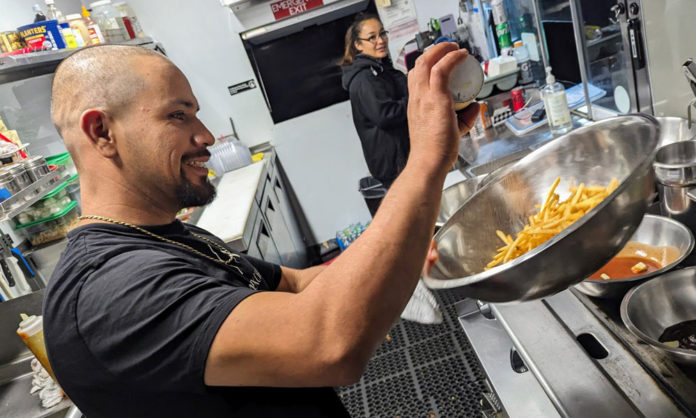
NOTES AND NUGS Early returns from late December debut The Midway from chef Katherine Stern are good, thanks to farm-to-fabulous dishes like crispy Fogline Farm pork belly with pickled vegetables, jalepeรฑo, herbs and brown rice.โ€ฆEat for the Earth screens Forks Over Knives, which explores the disease-preventing powers of a plant-free diet, for free (please RSVP), Jan. 22 at Sundean Hall, eatfortheearth.orgโ€ฆThe Dry(ish) January grind is real here. My recent taste test rankings amid the so-called โ€œsober-curiousโ€ drink market, in ascending order: 3) Lagunitas NIPA; 2) Sierra Nevada Hop Splash; 1) Athletic Run Wild IPAโ€ฆAn awesome connective hub awaits at Environteers.org, where locals can plug into helpful updates and great opportunities to volunteer/hang/participate in Santa Cruz-centric and eco-savvy happenings, which often involve foodie-friendly side effectsโ€ฆA final mushroom update: Yours truly will be down at the Big Sur Foragers Festival Jan. 20-21 serving as a judge at the Fungus Face Off. Happy mushrooming.

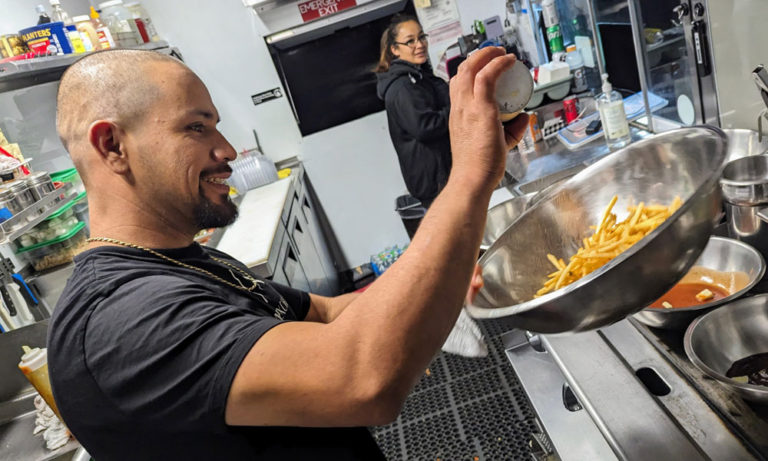
Namaste Grill

0

A.J. Ghimire combined his passion for entrepreneurship and interacting with people to the food service industry in Nepal, where he was born and raised. He came to America in 2019 to work in his familyโ€™s restaurants. He says he began to mature and take the business more seriously, further learning the ropes of the industry from his uncle Dilip, the owner of Namaste.

When Dilip opened Namaste Bar & Grill in July 2023, he tasked A.J. with running the newest beachside location in the familyโ€™s chain. A.J. says the placeโ€™s concept is all about giving beachgoers what they want: a family-centered diverse and approachable menu with everything from pizzas to curries.

Pizza options range from outside-the-box choices like Indian Butter Chicken and Tandoori Chicken to pepperoni. Myriad curries with multiple vegetarian and meat options also highlight the menu, along with chicken wings in exotic flavors like Mango Masala and Aachari (a pickle-based flavor). The full bar features Indian-inspired options like the Spicy Mango-rita, Ginny Tamarind and Mumbai Mule. Dark on Mondays, hours are 12-10pm (until 10:30pm Fri/Sat) every other day.

Compare the industry in Nepal vs. America?

A.J. GHIMIRE: In Nepal, owning a restaurant is all about the customers coming in, having the food and then leaving. Thereโ€™s not much personal connection or intimacy, or getting to know them on a personal level. But here in America, I enjoy the industry more because it is more like family and knowing whatโ€™s going on in each otherโ€™s lives.

What sets Namaste apart?

AJG: When we started, it was one family-based location and every time we added one, we had a different family member run it. Itโ€™s all about baby steps and having the right team in place. The employees really know the food and recipes at all five locations, and this keeps the food extremely consistent and we never compromise quality. And the recipes are not overnight recipes, theyโ€™ve been developed over 15 years. The food is a collaborative effort amongst the family, and we constantly try and perfect our recipes to stay in line with the needs of the people.

303 Beach Street, Santa Cruz, 831-713-5430; namasteindiabistro.com

The Editor’s Desk

Editor’s Note

Santa Cruz California editor of good times news media print and web
Brad Kava | Good Times Editor

During the first month of the year most of the country is hibernating. Itโ€™s winter, itโ€™s cold and everyone needs a break after the tumult of the holidays. But not in our little town.

I thought in January we would get a breather, but musically, this month looks like July. Weโ€™ve got great national and local talents coming through. We have a surprisingly full schedule.

Every week managing editor Jeanette Bent and I wrestle with what articles will fit in the printed page and what we should run online. As one of the last bastions of print, we take the publication seriously and with reverence. Not everyone wants to read everything on their phone. We are one of the last free weeklies you can pick up and hold onto, combing through articles at your leisure, clipping them out and pasting them to your refrigerator or circling them and passing them on to friends.

So, this week we had six music articles to choose from and Jeanette came up with a brilliant idea: letโ€™s scrap a cover story and let the music take over.

I wish I could tell you which of these shows you must see, because itโ€™s like asking a parent which kid they liked best. The answer is all of them.

With Tommy Castro, youโ€™ve got a blues man trying a first blues opera; The Third Mind is a conglomeration of world famous artists coming together for the first time, each of whom plays sold out shows; Wynton Marsalis says a singer like Cecile McLorin Salvant only comes through โ€œonce in a generation or twoโ€.

 The Santa Cruz Symphony has steadily brought in new music and new ways to play it. This weekโ€™s performance features the U.S. premiere of Jean Ahn’s Jajang, Jajang for Gayageum and Orchestra, a world music mashup with roots in Korea. Then thereโ€™s Victor Wooten, who  is hailed by Rolling Stone as one of the โ€œTop 10 Bassists of All Time.โ€

Finally, John Wesley Harding, who is famous as an indy artist, also tours under his real name, Wesley Stace, and is playing an intimate gig in Watsonville.

Which of these would you choose, if you only had to pick one? Let our readers know in the online comments below.

Thanks for reading.

Brad Kava | Editor


PHOTO CONTEST

SUN RISE Spotted this pair enjoying the sunrise the beautiful morning by the Bay. PHOTO Kathy Isonio

GOOD IDEA

People seeking jobs with the State of California or wanting to switch careers are encouraged to join a Virtual CA Career Forum (CACF) hosted by the California Department of Tax and Fee Administration, California Department of Technology, and Office of Data and Innovation on January 24, 2024, from 11:30 a.m. to 1 p.m. Check https://www.cdtfa.ca.gov/ for details.

 โ€œAt CDTFA, we give team members access to quality training, mentoring opportunities, and upward mobility programs to propel their careers,โ€ said California Department of Tax and Fee Director Nick Maduros.

GOOD WORKS

The City of Santa Cruz is now accepting applications for its 2024 Master Recycler Volunteer Training Program. Over five Tuesday evening and two Saturday morning sessions from Feb. 6 to March 5 participants will train to become โ€œMaster Recycler Volunteersโ€ in areas related to waste reduction and recycling.

 Applications will be accepted until 4pm on Thursday, Jan. 25 at  www.cityofsantacruz.com/recycleright

Saturday field trips will provide a behind-the-scenes tour of the Recycling Center where 30-50 tons of material is recycled every day, and a trip to the Grey Bears campus for a presentation on “Rethinking Your Purchases.” 

QUOTE OF THE WEEK

“Not voting is not a protest. It is a surrender.”โ€”Keith Ellison


Lula Cellars 2021 Red

0

After driving around for three weeks in my homeland of England in the fall, I was ready for a mini-break when I got back โ€“ part of that due to covering close to 900 miles and driving a car with a stick shift!

So off we went to Mendocino for a few days โ€“ one of our favorite coastal getaways famous for its superior Anderson Valley wines. There are so many wineries on the stretch of Hwy 128 that itโ€™s hard to choose, but one we found to be charming and un-glitzy is Lula Cellars. One of the wines that caught my attention is their 2021 Guntly Red ($32), a red blend primarily made up of Pinot Noir from the Anderson Valley and Cabernet Sauvignon from the Pine Mountain-Cloverdale Peak AVA. Rounding out the blend is a touch of Zinfandel from the Fashauer Vineyard on Mendocino Ridge.

One of our favorite places to stay is Brewery Gulch Inn. Not only is the place warm and welcoming, but the food prepared is outstanding โ€“ with the opportunity to try many complimentary local wines offered with dinner. Breakfast is cooked to order and service is excellent.  Another place we love to stay is the Little River Inn, which lies smack on the coast and is an icon in the area โ€“ famous for its hospitality and stunning ocean views. We enjoyed a glass of wine on our balcony to the sound of waves crashing on the shore.

Lula Cellars, 2800 Guntly Road, Philo, 707-895-3737. LulaCellars.com

Upcoming Wine Events in Anderson Valley

White Wine Weekend will be held Feb.17/18 with VIP White Wine & Sparkling Wine Experiences. A Pinot Noir Festival will be held May 17-19 with winery open houses, raffle, auction, and much more. And now you know of two fabulous places to stay when youโ€™re there! AVWINES.com

Winter Music Collection

Spontaneity is Key

By DAN EMERSON

Calling Cecile McLorin Salvant a jazz singer is kind of like calling Donald Trump a realtor. It’s a woefully incomplete description. Salvant is a jazz singer, but much more than that.  As a vocalist, composer, bandleader, visual artist and filmmaker, the term โ€œmultidimensional artistโ€ has been used more than once to describe her and really fits.

Salvant, who returns to Kuumbwa Jazz Center Monday night, has been drawing superlatives and awards from musicians, singers and critics since 2010, when she released her first album, Cรฉcile & the Jean-Franรงois Bonnel Paris Quintet. Then, at the age of 21, she went on to win the Thelonious Monk International Jazz Competition for vocalists.

She received three consecutive Grammy Awards for Best Jazz Vocal Album for โ€œThe Window,โ€ โ€œDreams and Daggersโ€ and โ€œFor One To Love,โ€ and was nominated for the award in 2014 for her album โ€œWomanChild.โ€

In 2019, opera icon Jessye Norman chose Salvant for the Twelfth Glenn Gould Prize, an award not normally awarded to jazz singers. Norman described McLorin Salvant as a โ€œunique voice supported by an intelligence and full-fledged musicality which lights up every note she sings.โ€

Brian Oโ€™Neill of the  Glenn Gould Foundation Podcast extolled her โ€œmusical adventurousness, willingness to voyage across centuries and make music of different times, cultures and mindscapes uniquely her own.โ€

Salvant has toured with the Jazz at Lincoln Center Orchestra, whose  music director Wynton Marsalis, said, โ€œYou get a singer like this once in a generation or two.โ€

Salvant grew up in Miami, Fla., the daughter of a French mother and Haitian father, Salvant heard all kinds of music growing up. โ€œMusic was always on in the house, great singers and music from all over the world.โ€

She started classical piano studies at five, began studying voice at the age of eight and didnโ€™t crossover into jazz until 2007, while studying at the Darius Milhaud Conservatory in 2007, Salvant says that her main jazz influence is Sarah Vaughan.

Salvant received a bachelorโ€™s in French law from the Universitรฉ Pierre-Mendes France in Grenoble while also studying baroque music and jazz at the Darius Milhaud Music Conservatory in Aix-en-Provence, France.

Her wide-ranging curiosity and quest for artistic fodder makes her a more worldly version of a โ€œcrate-digger,โ€ mining  jazz, blues, vaudeville, blues, musical theater, jazz, baroque and folkloric music to create new art.

One project in the works is a feature-length, animated film based on her album โ€œOgresse,โ€ a musical fairy tale in the form of a genre-blending cantataโ€“using her own drawingsโ€“which Salvant will direct. Her idea for โ€œOgresseโ€ was sparked by a painting by Haitian artist Gerard Fortune depicting an Erzulie, or Vodou deity. Salvant brought it to life with a 13-piece chamber orchestra. 

Salvant talked about her penchant for challenging herself, fellow musicians and audiences.

โ€œAs an audience member, I love to be stimulated and challenged. I donโ€™t want something regurgitated and spoon fed to me. But I also donโ€™t think music or art needs to be the spinach you feel you have to eat because itโ€™s โ€˜good for you.โ€™ I am for pleasure and laughter. Truthfully, though I am much more process-driven than impact-driven. I can only say for certain that I would like to move people and connect with their emotions.โ€
Has her multicultural, multilingual background been an asset?

โ€œI think different languages give you different sounds to work with. Writing is the product of thinking, but sometimes thinking is the product of writing. I feel like sometimes I think slightly differently in different languages.โ€

Being placed in a stylistic category can be anathema for a free-range creator like Salvant.

โ€œI think there is a certain creativity required in the act of categorization. Itโ€™s a natural process, something we do all the time for everything in our lives. It can be fun. But I think itโ€™s only fun when youโ€™re doing the categorizing, not when youโ€™re being categorized. As a musician, it can be paralyzing to be placed in a genre. You start to believe in the genre everyone has said youโ€™re in. It exists as an entity separate from other genres, there is no bleed-through. Then it even becomes a responsibility to keep it โ€œaliveโ€, or โ€œauthentic.โ€ You start making music in harmony with that category, or sometimes in conflict with it. Either way, you must contend with it, thereโ€™s no escaping being labeled by others.

Salvant has performed enough times at Kuumbwa to become an audience favorite, according to creative director Bennett Jackson. This upcoming visit will be her first visit to Santa Cruz since 2019, B.C. (Before Covid)

Her band at Kuumbwa will include her most frequent creative partner, pianist Sullivan Fortner.  โ€œMy favorite thing is how open he is, spontaneous, and willing to try anything,โ€ she says. Salvant will be singing with the bandโ€™s bassist, Yasushi Nakamura. โ€œI love his sound, his feel, and his freedom as a musician. He has a freakish memory as well.โ€

Up and coming drummer Savannah Harris is the other member. She has worked with a wide range of today’s top indie and experimental artists, and jazz people.  โ€œHer playing is infectious, really creative, and she has incredible time and versatility,โ€ Salvant says.

Referring to her band, Salvant says, โ€œWhat I love about these three musicians is how dedicated they are to the music they make, and how much they want to grow even though they are masters at their craft.โ€

Spontaneity and in the moment creation could be considered the essence of jazz, and itโ€™s ultra-important to McLorin Salvant.

โ€œI follow my intuition,โ€ she says. โ€œI donโ€™t like for any song or arrangement to be written in stone. Everything we do needs to be flexible, needs to allow for change. Sometimes we play the structure of the song upside down, sometimes we skip sections, sometimes we play it at half speed, in a different key, sometimes I add a poem at the end of a song, that I improvise a melody to on the spot.
Last March, Nonesuch Records released her latest recording, โ€œMรฉlusine,โ€ an album mostly sung in French, along with Occitan, English and Haitian Kreyรฒl. What music will she be doing at Kuumbwa?

โ€œI donโ€™t know this yet, but I want to add some new songs to the mix. I often pick songs in the moment but Iโ€™d like to start sticking to set lists! The set lists change every night, especially since Iโ€™m often coming up with what weโ€™re doing in the moment! But that might change this year, I think.โ€

7 and 9 pm, Jan. 22, Kuumbwa Jazz Center, 320-2 Cedar St, Santa Cruz $31.50โ€“$57.75 kuumbwajazz.org


HOLDING COMPOSURE This season, Daphnis & Chloรฉ offer an exciting sound that weaves between cultures. Photo: Santa Cruz Symphony

Winter Romance

By CHRISTINA WATERS

Live music to enthrall new and experienced concert-goers alike will be performed by the Santa Cruz Symphony Jan. 20 and 21 under the direction of Daniel Stewart joined by guest soloist Hwayoung Shon.

Daphnis & Chloรฉ, a musical landscape by Maurice Ravel gives its name to this winter concert, that begins with the sumptuous Adagio from Symphony 10 by Gustav Mahler. Following the Mahler will be the US premiere of Jean Ahn‘s Jajang, Jajang for Gayageum and Orchestra.

The work has been created to highlight the haunting zither-like sound of the traditional Korean gayageum. Sensitively working at the edge of contemporary orchestral music, yet maintaining the distinctive authenticity of the gayageum, award-winning composer Ahn brings a rare entwining of cultures to audiences in this new work.

Soloist Hwayoung Shon, a master of the Korean stringed instrument, performs worldwide, enchanting audiences with her virtuoso performances of an exciting sound that many in the West are just getting to know. Shon, 48, made her performance debut at the age of 10 and has been working extensively ever since with jazz practitioners, world musicians, K-pop stars and classical orchestras. The blend of traditional Korean music with contemporary styles gives her performance at this concert added excitement.

Gustav Mahler was one of the giants of early 20th century Expressionist music. Big, bold, sweeping and experimental, his work sits at the very center of the repertoire for worldwide orchestral performances.

 In addition to creating enthralling songs for solo voice, he is renowned for his ten symphonies, each of which explores the depth of huge emotions, including the anguish of heartbreak, utilizing the full sonic reaches of the orchestra. Famed for the sheer intensity of color and rhythm, Mahlerโ€™s 10th Symphony was his final statement on love, betrayal and the oceanic sweep of human desires. Thereโ€™s not a boring moment in this Adagio, large-scale orchestral music intended to move and inspire each listener. Mahlerโ€™s long, slow build-up of sound leads to a spectacular climax.

And about the Ravel, Daphnis & Chloรฉ is an early 20th century Impressionist suite originally created for the Russian superstar dancer Vaslav Nijinsky. Highly romantic, the music tells the story of two children, found and raised by shepherds, who fall in love.

Taken from a Greek myth written in the 3rd century, Ravelโ€™s music paints an orchestral picture of the two young loversโ€”Daphnis the goatherd and Chloรฉ the shepherdessโ€”their adventures and the music that the god Pan taught Daphnis to play.

Created for ballet, a musical story intended to be danced, Daphnis & Chloรฉ is a highly popular part of the orchestral repertoire. The music seems to guide us through the love story, the adventures, utilizing four recognizable leitmotifsโ€”musical themesโ€”that helped underscore the dance choreography when the piece was played for ballet dancers.

With lush harmonies, and passionate instrumentation this piece is considered Ravelโ€™s masterpiece for orchestra. Many listeners will already be familiar with Ravel through his entrancing Bolรฉro, a 1928 piece for large orchestra that is not only his most famous work, but his final completed musical composition. As with the Bolรฉro, Ravelโ€™s Daphnis & Chloรฉ Suite no. 2 places us in the midst of the story as it unfolds. Ravelโ€™s highly accessible music is emotionally compelling, and completely engaging.

The upcoming Santa Cruz Symphony concertโ€”Daphnis & Chloรฉโ€”offers innovative programming with broad appeal: Mahler’s Adagio, a US premiere concerto for Gayageum and orchestra, and finally Ravel’s Daphnis & Chloรฉ, Suite no.2.

7:30pm Jan 20, Santa Cruz Civic, 307 Church St., $40-$110

2pm Jan. 21, Mello Center for the Performing Arts, 250 Beach St., Watsonville, $40-$110.santacruzsymphony.org


The Third Mind | Photo: Leslie Campbell Photography

Uncertainty Principle

By BILL KOPP

From one perspective, the sounds made by The Third Mind, a 21st century collective of artists each acclaimed in his and her own rightโ€“has little to do with the music each of its members has made before. The group features Dave Alvin, co-founder of powerhouse proto-roots rockers The Blasters, along with bassist Victor Krummenacher, bassist with indie rock heroes Camper Van Beethoven.

Other members of the group include folk-rocking singer-songwriter Jesse Sykes, Michael Jerome (in-demand drummer for Richard Thompson, John Cale and many others) and multi-instrumentalist David Immerglรผck of Counting Crows and Camper Van Beethoven. (For the tour, Ratdog guitarist Mark Karan will take the place of Immerglรผck.)

And while itโ€™s true that The Third Mindโ€™s improvisational approach places it well outside the scope of nearly all of those groups, Alvin and Krummenacher donโ€™t view their latest collaborative project as an outlier. โ€œIn my other bands,โ€ Alvin explains, โ€œthere are certain songs of mine where we donโ€™t know how theyโ€™ll end. That keeps everybody on their toes, and they donโ€™t get like, โ€˜โ€Oh, Iโ€™m so tired of this.โ€™โ€

โ€œAnd thatโ€™s why I come and see you play a lot,โ€ Krummenacher tells him. Because although Krummenacherโ€™s journeys have taken him to wildly different musical places, he says that The Third Mind represents the realization of a long-held desire. โ€œI think there’s something special,โ€ he suggests, โ€œabout having a song as a general guidebook, and then working with people who are crazy enoughโ€“and competent enoughโ€“to use that script and then go off.โ€

That kind of unpredictability and reliance upon spontaneity and communicationโ€“writ largeโ€“is at the core of The Third Mind aesthetic. Using classic folk-rock songs of the โ€˜60s as raw material, The Third Mind embarks upon musical excursions that soar well beyond the parameters of the songs in their original form.

The group tackles songs both beloved and obscure. The Third Mindโ€™s 2020 self-titled debut featured Fred Neilโ€™s โ€œThe Dolphins,โ€ and the bandโ€™s latest (The Third Mind/2, released last October) included reinterpretations The Electric Flagโ€™s โ€˜โ€˜Groovinโ€™ is Easyโ€™ and The Jaynettsโ€™ haunting โ€œSally Go Round the Roses.โ€

โ€œOne of the reasons why Iโ€™m leaning toward the โ€˜60s sort of underground songs,โ€ explains Alvin, โ€œis that all of those [artists] came out of the folk/blues/garage band kind of thing.โ€ He says that within tradition is where he has always worked. โ€œItโ€™s a different way of playing it,โ€ he admits, โ€œBut itโ€™s the same stuff; itโ€™s the same starting point.โ€

Only on an improvisational classic like The Butterfield Blues Bandโ€™s โ€œEast Westโ€ (featured on The Third Mind) does the group present an arrangement with more than a passing resemblance to the original. And even in the case of โ€œEast West,โ€ Alvin and his band mates are never reined in by preconceived ideas as to where the song โ€œshouldโ€ go.

Yet neither Krumenacher nor Alvin is comfortable with the label โ€œjam bandโ€ being applied to what The Third Mind does. Alvin admits that โ€œall of us have been involved in enough jamsโ€ to concede that thereโ€™s a fine line between the two. But with a chuckle, he observes that in group improvisation, โ€œyouโ€™re listening to each other more than thinking, โ€˜Boy, I got off a good lick!โ€™ And youโ€™re going toward something. Where in jamming, itโ€™s like, โ€˜Fuck it; I donโ€™t care!โ€™โ€

Krummenacher agrees. โ€œRock and roll jamming does leave a bad taste in my mouth,โ€ he says. But the give-and-take of improvisation at its best is something that he has grown to love. โ€œWhen I came up, the Grateful Dead were poison,โ€ he admits. โ€œNow I listen to them and love it.โ€

Alvin says that with most of his other musical endeavors, โ€œthere are those one or two places where we donโ€™t know whatโ€™s going to happen.โ€ That keeps things interesting for the players and the audience alike. โ€œBut with The Third Mind,โ€ he emphasizes, โ€œthatโ€™s the whole show!โ€

Asked to what degree that spontaneity extends with The Third Mindโ€“do they even use a set list?โ€“Krummenacher and Alvin cast glances at each other before breaking into laughter.

โ€œWe did, the one time we played live!โ€ Alvin cackles. For these dates on the bandโ€™s first-ever tour, audiences will simply have to show up and find out.

Playing together during the completely improvised sessions that yielded their debutโ€“and more recently its followupโ€“has helped the five musicians develop a kind of mind meld, unspoken communication between them. So while theyโ€™re conforming to structure ever so briefly as each tune lifts off, from there itโ€™s anybodyโ€™s guess. โ€œItโ€™s in the interior of the songs where things are going to happen,โ€ says Alvin.

At this point in their respective careers, the members of The Third Mind are willingly facingโ€“inviting, evenโ€“the unknown. โ€œWeโ€™re trying to embrace the good, forward-thinking elements in the music,โ€ Krummenacher explains. โ€œThe idea is really rooted in what great music [represents]: freedom, exploration, fun.โ€

โ€œSo much of contemporary pop music is choreographed completely,โ€ Alvin says. โ€œRoots music, too.โ€ He says that he gets bored with โ€œdance moves and AutoTune.โ€ And taking that into consideration, he chuckles and suggests, โ€œSo maybe the most punk rock thing to do is have a group like The Third Mind.โ€

9pm, Jan. 19, Moeโ€™s Alley, 1535 Commercial Way, Santa Cruz, $32/adv, $35/door, moeโ€™salley.com


Wooten Brothers from left, Victor, Joseph, Roy “Futureman” and Regi Wooten. PHOTO: Steven-Parke

Welcome to Wooton

By BILL FORMAN

If youโ€™re a bass player who suffers from frequent bouts of career envy, you may want to skip this introduction and head straight to the interview. 

That way, you wonโ€™t have to dwell on the fact that Victor Wooten has won five Grammy Awards and been hailed by Rolling Stone magazine as one of the โ€œTop 10 Bassists of All Time.โ€ 

Youโ€™ll also be able to overlook his work as a founding member of Bรฉla Fleck and the Flecktones, his solo albums for the legendary Vanguard jazz label, his power trio with bass legends Stanley Clarke and Marcus Miller, and his session work with artists ranging from Bill Evans and Jaco Pastorius to Govโ€™t Mule and Kebโ€™ Moโ€™.

Wootenโ€™s professional career began earlier than most. He was 6 years old when he and his older brothersโ€”Roy, Regi, Rudy and Josephโ€”graduated from performing in their front yard to touring as the opening act for Curtis Mayfield. 

Moving from base to base with their military parents, The Wooten Brothers were naturally drawn to playing USO shows overseas, and went so far as to record a not-so-successful self-titled album for Arista Records. Not long after, the brothers disbanded to pursue other musical projects, with Victor and Roy going on to form the Flecktones with the multidisciplinary banjo player Bรฉla Fleck.

Wooten has also written a pair of critically acclaimed allegorical novels, The Music Lesson and The Spirit of Music: The Lesson ContinuesThe Washington Post praised the latter as โ€œa book that stands happily against traditional music pedagogy and canned notions of achievement.โ€

Now, Wooten is back out on the road with brothers Joseph, Regi and Roy for a winter tour as the Wooten Brothers. We caught up with him between rehearsals to talk about legendary bassists, being compared to Carlos Castaรฑeda, and what happens when you canโ€™t get your fingers to play the right notes.

Q: Youโ€™ve been pretty busy over the past few decades: 15 albums with Bรฉla Fleck, 10 albums of your own, the bass collaborationsโ€ฆ

Victor Wooten: Iโ€™ve been fortunate, Iโ€™ve been very fortunate.

Q: Youโ€™ve also played on tons of other artistsโ€™ albums. Was there a point where you realized you were becoming a kind of โ€œhot-callโ€ session player?

Wooten: That didnโ€™t happen until I started playing with Bรฉla Fleck. Iโ€™d grown up playing as the bassist with my four older brothers, the five of us, The Wooten Brothers. I always thought my whole career was gonna be with them. And it was a bad record deal in the early โ€™80s that caused the five of us to not be playing exclusively together. 

And then, a few years later, I met Bรฉla, and I wasnโ€™t doing much, so I did some stuff with him. And here we are, 35 or so years later, and weโ€™re still doing it. But I didnโ€™t know that was going to be my kind of call to fame, where people started to recognize me. Once the Flecktones became very popular, then I started getting more calls.

Q: And how old were you when you figured out that the bass would be your primary instrument?

Wooten: Oh, I knew that from birthโ€ฆ

Q: How does that work? Were you listening to a lot of Stanley Clarke in the womb?

Wooten: Not in the womb, unfortunately. I was born in 1964, and by the time they [Return to Forever] hit the scene, I was already out playing gigs. Iโ€™d started playing gigs before I started kindergarten. 

Q: Seriously?

Wooten: Iโ€™m not joking. My brothers got me doing it, because they needed a bass player.

Q: How did you even hold a bass at that age, let alone play it? I mean, maybe if it was a short-scale Hofnerโ€ฆ.

Wooten: Thatโ€™s exactly what my first bass was. Well, it was a Univox copy of a Hofner, and it looked just like Paul McCartneyโ€™s Hofner.

But actually, my very first instrumentโ€”I was looking at photos of me playing my first gigsโ€”was a four-string guitar. Reggie took two of the strings off his electric guitar, and I used that as a bass in those first early days. But then my parents found that Univox.

Q: Were your parents musicians?

Wooten: No, but they were very musical. They grew up in a Baptist church where instruments werenโ€™t allowed. They were allowed to sing, but there were no instruments.

Q: In โ€œThe Music Lesson,โ€ you write about a teacher who appears out of nowhere to guide a young musician on his journey. Were there teachers you encountered in your life who played that kind of role?

Wooten: Absolutely, absolutely. And weโ€™ve all had them. Thatโ€™s how we learned to talk, walk, or do anything, is through teachers. Whether they were labeled a teacher or not, thatโ€™s how we did it.

One of my biggest influences was Stanley Clarke. And I remember exactly when those records came out, even though I was very young. My brothers were into it, and so I was into it, too. Stanley played with fire, in a way that bass players werenโ€™t doing at the time. So when Stanley came with that heavy attack and those rapid-fire notes, it woke all of us bass players up to something new.  

But heโ€™s not the only one Iโ€™ve learned from. Larry Graham, Bootsy Collins, Jaco Pastorius, thereโ€™s a bunch of them. James Jamerson, of course, Chuck Rainey, Carol Kaye, Bob Babbitt, Duck Dunn, all the people that played on the music that a lot of us players grew up with in the โ€™60s and โ€™70s. But Stanley was reallyโ€”and still isโ€”my No. 1 hero when it comes to electric bass. 

Q: So going on to record with Stanley Clarke and Marcus Miller, two very different and very legendary bass players, I canโ€™t imagine not being freaked out by just the idea of that. I know you were well into your career at that point, but what was that like for you?

Wooten: Yeah, there were some freak-out moments. Because I met Stanley Clarke when I was 9, and I was much older by the time I met Marcus. So every time Iโ€™m near Stanley Clarke, I feel 9 again. It was hard to get over that, because I was being treated as an equal. And, in my mind, Iโ€™m not. Iโ€™m the little brother. 

Q: When your second novel came out โ€œThe Washington Postโ€ critic Ben Ratliff compared it to Carlos Castaรฑedaโ€™s books about Don Juan, the Yaqui Indian guide that he insisted was real, and others say was fictitious. But you donโ€™t make any claims that the teacher in your novels is real.

Wooten: Well, you know, the main thing with these storiesโ€”whether itโ€™s the teacher in my story, or Don Juan, or whateverโ€”is that you werenโ€™t there. So to you, itโ€™s just a story, right? And whether I say itโ€™s real or not, itโ€™s just whether you believe. So whatโ€™s real or false? Itโ€™s up to you.

Q: Iโ€™m sure a philosopher could debate that with you endlessly.

Wooten: Yeah, and heโ€™d be wrong. Because you decide what truth is. 

Q: So the authorโ€™s intent doesnโ€™t matter?

Wooten: No, itโ€™s up to you. Iโ€™d like to know the authorโ€™s intent. But I donโ€™t want the author to decide for me.

Q: A lot of lyricists wonโ€™t reveal to fans or critics what a song is about, because that can spoil it for the listener.

Wooten: Yeah, I mean, it can. But thatโ€™s also up to you, too. I approach my book as fiction, just to try to alleviate the argument of what was real and what was false, because it doesnโ€™t matter. Whatโ€™s real are the lessons. The story may not be. And I read every story that way. Whether you tell me itโ€™s real or not, whether itโ€™s the Bible, I donโ€™t care whether itโ€™s real, I wasnโ€™t there. By the time it reaches my ear, itโ€™s a story. So I put my attention on what I can learn from it.

Q: Thereโ€™s a book devoted to James Jamerson, who you mentioned earlier, called โ€œStanding in the Shadows of Motown,โ€ which has nearly 200 pages of transcripts of his basslines. The problem is that thereโ€™s really no way to get the feel of that music onto the page. Was that something you contended with doing your own book of transcripts, and were there tricks you used to get around that?

Wooten: Well, what I did in my transcriptions is, I would not only write the notes, but I would put a number under the note. In other words, if I wrote a C, I may put a 3 underneath it. That lets you know, I play that C on the A string, third fret. And then, if I was hitting the note with my thumb, I put the letter T under the 3. So I put as much technique in this as possible. And the hope is for you to listen to it and get what itโ€™s supposed to feel like, at least when I played it. But itโ€™s allowed to be different when you play it.

Q: The James Jamerson book did include two CDs. But itโ€™s still impossible for meโ€”I mean, Iโ€™m a white guyโ€”to get that vibe. I hope that doesnโ€™t sound racist, butโ€ฆ.

Wooten: No, not at all. I get it. The same way you have a certain voice, I have a certain voice. Our accents are going to be different, and itโ€™s supposed to be that way. The thing is, if Jamerson played it, he would not be able to play it like you.

Q You mean like a metronome thatโ€™s not working quite right?

Wooten: I mean, if thatโ€™s what it is. But either way, James Jamerson only has his voice. Everybody has their own voiceโ€”they play the way they playโ€”and itโ€™s hard to be able to speak someone elseโ€™s voice.

Q: One last question. I read an interview a while back in which you mentioned having an affliction where your brain tells your fingers to play the wrong notes. Is that a real thing? Because if it is, that means Iโ€™ve had it ever since I first picked up an instrument.

Wooten:  [Laughs.] Itโ€™s totally legit. Itโ€™s called focal dystonia, and people from all walks of life get it. And what ends up happening is you lose the ability to do what youโ€™ve done all the time, whether itโ€™s writing, whether itโ€™s golf, whether itโ€™s gymnastics, whether itโ€™s walking. And itโ€™s something that takes over your brain and tells your limb or your digit to do it the wrong way. 

Q: How have you managed to deal with that? 

Wooten: Iโ€™ve had to learn to play around it as I work on it. The thing is, my fingers work perfectly without the bass. I can still imitate playing it. But as soon as I pick up a bass, three of my fingers on my left hand curl into a ball and donโ€™t want to operate. So Iโ€™m working with a woman whoโ€™s helping me retrain my brain. But itโ€™s a struggle to get them to hit individually on the string. Itโ€™s just the brain has learned to tell the fingers the wrong thing. 

Q: There are times, maybe not frequently, where the wrong note can be a good thing.

Wooten: Of course. Mistakes are usually just things I didnโ€™t mean to do. It doesnโ€™t mean itโ€™s wrong. Itโ€™s sort of like when youโ€™re driving, you take a wrong turn, that road will still get you to where youโ€™re going. Any road will get you there. And when you take that wrong turn, it might mean that you see something you didnโ€™t expect. 

So wrong doesnโ€™t mean wrong, it doesnโ€™t mean bad. And wrong notes can definitely take you into a better place than you were headed in the first place. If life happened exactly as you wanted it to every time, you would be bored.  

7:30pm,Jan 19, Rio Theatre, 1205 Soquel Ave., Santa Cruz, $42-$63, riotheatre.com


MASTER JUGGLER Harding offers a spicy mixing bowl of artistic cookery to stimulate the imagination. Photo: Ilya Mirman

Wonders Never Cease

By ADDIE MAHMASSANI

Wesley Staceโ€”also known by his former stage name, John Wesley Hardingโ€”answers questions in the most delightful way. In his English accentโ€”heโ€™s originally from Hastingsโ€”he flits and swoops and dives like a thoughtful bird, the kind that folds itself into a bullet every so often. Iโ€™m sure I have this image in mind based on something he once said to a class I was in: for him, making music is like juggling a feather, while writing is like juggling a much heavier thing.

Whatever the case, heโ€™s juggling. 

Stace is doing a tour up the West Coast this month, playing in Watsonville at Studio Judy Gโ€™s on Wednesday, January 24th before heading north to Novato. During the pandemic, he recorded an album that has proven pivotal in his careerโ€”2021โ€™s Late Styleโ€”but to catch up with Stace involves much more than harvesting a few new tales from the studio. In the last year alone, he has edited and written the introduction for the Music Stories anthology for the Everyman Pocket Classics collection (a stunning hardcover, out on February 13), published several high-profile book reviews, begun teaching a public class on 18th century writer Laurence Sterne, seen his libretto for Errollyn Wallenโ€™s opera Didoโ€™s Ghost produced in San Francisco, andโ€”alas, for the sake of this articleโ€™s word count, I have to stop there.

Astounded by the breadth of what heโ€™s been up to, I ask him the loftiest question right off the bat: Wes, you span genres, mediums, and centuriesโ€ฆwhatโ€™s at the core for you? 

โ€œI like stirring the artistic pot,โ€ he says, โ€œand seeing how you can make things that are quite different from each other all cohere.โ€

This ethosโ€”somewhere between mad scientist and unbridled collector of curiositiesโ€”finds perfect embodiment in Staceโ€™s Cabinet of Wonders, a variety show that he curates at City Winery in New York City, just a hop from his homebase in Philadelphia. Billed as โ€œa little bit vaudeville, a little bit literary and a lot rock โ€˜nโ€™ roll,โ€ the ongoing series brings together eclectic mixtures of musicians, literati and comedians for a madcap night. Around this time last year, CAB104 included bassist Toby Leaman of the rock band Dr. Dog, singer-songwriter Langhorne Slim, actor/writer Amber Tamblyn, comedian David Cross, and more.

โ€œWhatโ€™s basically happening with the Cabinet is Iโ€™m taking a lot of disparate things that are all quite distinct from each other and trying to mold them into a coherent beautiful showโ€ Stace says. Time Out New York described the show, wonderfully, as โ€œan awesome mythological beast.โ€ The same description could go for Staceโ€™s whole career.

Comfort with risk is a key ingredient in Staceโ€™s creativity, and lately it has led him toward an unexpected genre evolution. After decades of albums in the folk-rock lineage of Bob Dylanโ€”whose 1967 album John Wesley Harding inspired the name Stace used to record underโ€”the songwriter has moved toward jazz in Late Style on Omnivore Recordings.

โ€œI just got to a bit of an impasse with my own kind of folk-rock albums,โ€ he says, โ€œand I just was like, why canโ€™t my music swing a bit more like the jazz that I listen to in the kitchen?โ€

With artists that have successfully merged jazz, folk and pop in mindโ€”Joni Mitchell, Mose Allison, Randy Newman, etc.โ€”Stace turned to long-time friend David Nagler for help breaking out of familiar folk chords, rhythms and melodies.

โ€œI suddenly thought, why donโ€™t I just give him some lyrics? Why donโ€™t I just give up the tunes?โ€ he says. โ€œBecause weโ€™ve been traveling in vans and cars and doing shows together for ten years, we speak the same music language. He knows what I want without me having to explain it for him.โ€

The resulting album is smoother (and more relaxing to sing, according to Stace) than the rest of his oeuvre. The songs retain his signature playful storytelling, tinged this time with undertones of a pandemic. On โ€œDo Nothing If You Can,โ€ for example, Stace snaps his fingers and croons a strangely menacing refrain: โ€œHereโ€™s the plan / Do nothing if you can.โ€

A second album in this hybrid, jazzy domain is already deep in the works. Stace is enjoying the challenge of arranging the songs for his upcoming solo acoustic performances.

Oh, and heโ€™s writing another novel, which will soon join Misfortune and the three others he has published. โ€œIโ€™m trying to make it the most beautiful thing I can possibly imagine writing, because I think lockdown affected us in those kind of ways. I just wanted everything to be nice and beautifulโ€”that everything would seduce you and be lovely.โ€

I canโ€™t help but wonder how this push toward polish and elegance in all his work of late squares with Staceโ€™s longtime association with the rough world of rock โ€˜nโ€™ roll. (This is the same musician who opened for and performed with Bruce Springsteen in the 90s.)

โ€œThere are certain rock bands I love, but itโ€™s generally not for that strutting-around-the-stage kind of thing. I donโ€™t like that,โ€ he says. โ€œWhat I like is brilliantly beautifully thought-out lyrics and songs. And they can be in any genre because I love words.โ€

7pm, Jan. 24, Studio Judy G, 430 Main St. $20 donation, studiojudyg.com


HOMELAND San Jose native and self-taught guitarist, Castro rose to play with huge names in the music scene before becoming one himself. Photo: Victoria Smith

Tommy in Town

By Bill Forman

From the Whoโ€™s โ€œTommyโ€ and โ€œQuadropheniaโ€ to Green Dayโ€™s โ€œAmerican Idiotโ€ and Beyonceโ€™s โ€œLemonade,โ€ the pop music world has produced more than its fair share of rock operas and concept albums. But unless you count Muddy Watersโ€™ โ€œElectric Mudโ€โ€”a psychedelic blues project that producer Marshall Chess described as โ€œa concept album like David Bowie being Ziggy Stardustโ€โ€”blues artists have steered clear of all of that.

So when Tommy Castro first hit upon the idea of writing and recording a blues operaโ€”or, as he puts it, โ€œsort of a blues operaโ€โ€”he was surprised that no one had thought to do it before. Soon, the six-time Blues Music Award winner was in the studio with Nashville producer Tom Hambridge, co-writing and recording tracks like โ€œChild Donโ€™t Go,โ€ โ€œWomen, Drugs and Alcoholโ€ and โ€œI Want to Go Back Homeโ€ for a concept album about an aspiring guitarist who leaves the family farm in search of success, gives in to the temptations of life on the road, and realizes that there is, in fact, no place like home.

โ€œTommy Castro Presents A Bluesman Came to Townโ€โ€”which came out in September 2021 on Alligator Records and debuted at No. 2 on the โ€œBillboardโ€ magazine Blues Chartโ€”may not have the most original plotline, but that wasnโ€™t really the point.

โ€œI knew it wasnโ€™t going to be as epic as, you know, the Whoโ€™s โ€˜Tommyโ€™ or โ€˜The Wallโ€™ (by Pink Floyd) or โ€˜American Idiot,โ€™ where people had giant recording budgets and all kinds of amazing creativity,โ€ said the soulful singer and guitarist in a recent phone interview. โ€œBut the idea of telling a story from the beginning to the end, that appealed to me. I kicked the idea around with the record label, and then I talked to my producer, who got really excited about the concept. So thatโ€™s how it came about, and then it was just a matter of doing it and hoping it was good.โ€

โ€œA Bluesman Came to Townโ€ is also a departure for Castro because his band The Painkillers doesnโ€™t play on it. โ€œI usually prefer to use my own bandโ€”Iโ€™ve done that on 18 out of 19 recordsโ€”because theyโ€™re out on the road with me doing all the hard work,โ€ said Castro.

โ€œBut Tom Hambridge wanted to use his studio guys, and heโ€™s kind of a big deal. Heโ€™s got a few Grammys under his belt, and heโ€™s worked on the last few Buddy Guy albums, as well as with ZZ Top, George Thorogood, Johnny Winter and Joe Bonamassa, you know, a lot of people. So I kind of followed his lead on this album.โ€

Since the albumโ€™s release, Castro and the Painkillers have returned to the more than 150 shows per year schedule that the San Jose native has maintained for most of the past four decades. Along the way, heโ€™s earned a loyal fan base as well as the respect of artists like John Lee Hooker, who did his final session on Castroโ€™s โ€œGuilty of Loveโ€ album. All of which still amazes him.

โ€œWhere I grew up was a notch or two below a working-class neighborhood, and nobody there was going to college or getting music lessons or any of that stuff,โ€ said the self-taught guitarist, who spent his early years playing along to records by his favorite blues artists.

โ€œI tend to like the slower guysโ€”like Michael Bloomfield, B.B. King, Albert King, Muddy Waters and Elmore Jamesโ€”because I could figure out what they were doing,โ€ he said.

As time went on, Castro realized he was going to be making his living playing music. He tried taking guitar lessons and studied music theory. โ€œBut it was too late,โ€ he said. โ€œIโ€™d already learned to play the way I did, and I couldnโ€™t really switch over to the proper way of doing it.

โ€œI still work on my guitar technique every day, trying to learn something new, even if itโ€™s just some new licks,โ€ Castro said. โ€œBut Iโ€™m no virtuoso, Iโ€™m no Bonamassa, Iโ€™m not that kind of guitarist. Iโ€™m more of a cross between John Lee Hooker and, I donโ€™t know, Michael Bloomfield, maybe. Somewhere in there. I kind of just play the way I play, and it works for me, you know?โ€ 

3:30pm, Moeโ€™s Alley, 1535 Commercial Way, Santa Cruz, $30/adv, $35 door, moesalley.com


Warming Centers Provide Refuge From The Cold

warming centers
Warming centers provide lifeline during winter

Honoring Martin Luther King Jr.

Before hundreds of people began a march Monday morning to commemorate Martin Luther King Day, a solemn hush fell over the crowd as political chanting briefly ceased and the good-natured whooping died down.  โ€œFinally,โ€ 6-year-old Brianna Hodgkins said, sitting astride her fatherโ€™s shoulders. โ€œNow we can move!โ€ The little Santa Cruz resident was part of a march including religious groups, nonprofit...

Mission Street Housing Project

The Santa Cruz Planning Commission will review permits on Jan. 18 for a mixed-use housing project on the site of the Food Bin and Herb Room, located on the northwest corner of Mission and Laurel Street.  The proposed five-story housing project would have 59 units and will include ground level parking, with the Food Bin and Herb Room occupying the...

Good to the Last Drop

Best-selling author Dave Eggers and subject Mokhtar Alkhanshali inspire a month of reading.
Our Community Reads, in collaboration with The Friends of the Aptos Library...has prepared a truly impressive month-long festival. This unique experience features 14 engaging events...

Things to do in Santa Cruz

Phutureprimitive is the musical moniker of Rain, a combination cinematographer-photographer-DJ who lives his life searching for the Truth with a capital T.

Fungus Fair turns 50

Deadly and delicious. Magic and mouthwatering. Ubiquitous and mysterious.

Namaste Grill

Namaste Grill offers a a family-centered, diverse and approachable menu with everything from pizzas to curries.

The Editor’s Desk

Musically, this month looks like July. Weโ€™ve got great national and local talents coming through. Wynton Marsalis says a singer like Cecile McLorin Salvant only comes through โ€œonce in a generation or twoโ€.

Lula Cellars 2021 Red

There are so many wineries on the stretch of Hwy 128 that itโ€™s hard to choose, but one we found to be charming and un-glitzy is Lula Cellars.

Winter Music Collection

Spontaneity is Key By DAN EMERSON Calling Cecile McLorin Salvant a jazz singer is kind of like calling Donald Trump a realtor. It's a woefully incomplete description. Salvant is a jazz singer, but much more than that.  As a vocalist, composer, bandleader, visual artist and filmmaker, the term โ€œmultidimensional artistโ€ has been used more than once to describe her and really...
17,623FansLike
8,845FollowersFollow