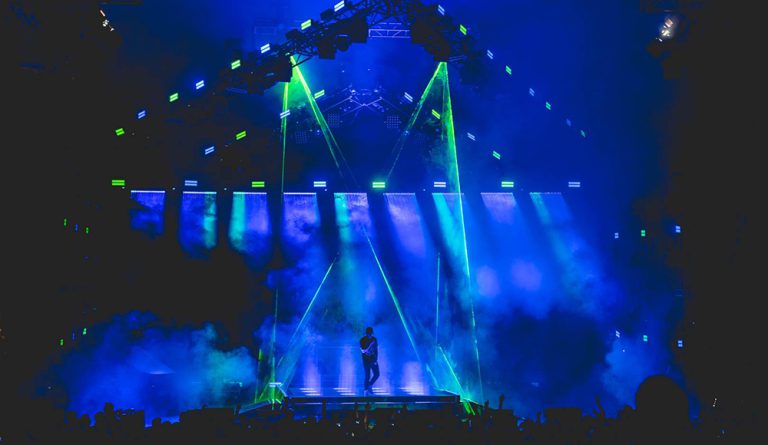
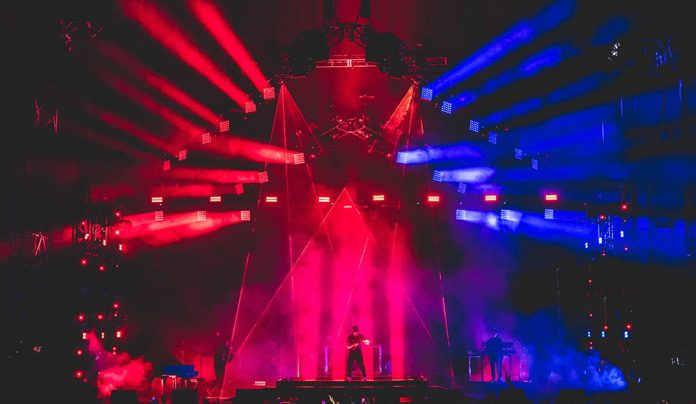
I almost feel guilty admitting this, but the past two years, my only vacations were at the Sphere in Las Vegas, seeing U2 and Dead and Company.
While the music was great, the thing that really got to me most was seeing a new art form, a 3D surround projection unlike anything I’ve ever seen. The visuals were great art, a demonstration of so many artful ambitions, a way to create a new world right there during what are otherwise often concerts with sub-par graphics.
But the Sphere…they now call it Sphere, dropping the the, but that sounds so lame to me. Clearly they are marketing the fact that they want to build more of the $2.3 billion-dollar domes, and well, they should.
The concerts I saw there were unforgettable, as good as the trips around the world I might have gone on. For years impressarios tried to bring visual elements to concerts, from 1960s light shows to giant screens. But everything paled compared to what I saw in Las Vegas. It was never boring because it took all of many senses to take it all in (the seats even move haptically with drum beats) and things fall out of the sky.
My highlight was bringing five kids to a show, which they chose over going to Hawaii and they loved it too.
So, when I heard that a Santa Cruzan was instrumental in the designs I saw, I had to learn more, and I sent our magical techno genius, to get behind the scenes. Some of it was so technical that he had to translate it for me, but he made it work for everyone.
And as it turns out, Santa Cruz is at the cutting edge of another technology. I don’t think there’s another town of our size that has been on the forefront of so many movements.
Now, when can I afford to see the Wizard of Oz at the Sphere and is it worth it? I’m tempted.
Other hot stories here:
Singer/songwriter Richard Thompson, like Bob Dylan, never wants to get off the road. He keeps producing albums and tours and is never disappointing. What else can you say about someone who put out a 2003 album (one of more than 40) called 1000 Years of Popular Music with songs from 1068 to 2001?
Trivia: do we have more churches, schools, dispensaries or breweries? There’s another brew and grub place in Aptos, The Other Brother Beer Co. Let us know what you think. I’ve been to the one in Seaside and look forward to checking this one out.
There’s more: A celebrity photographer, Jay Blakesberg, is going to be hanging out downtown Santa Cruz and you can meet him. And we’ve got tips for how to stop procrastinating getting in shape.
Great issue here. Thanks for reading.
Brad Kava | Editor
PHOTO CONTEST
RELAXING VIEW This photo put me in a good mood. Shall we say it had an overall net positive effect on me. This is up at the UCSC Farm & Garden, one of my favorite places to get away from it all, without leaving the farm. Photograph by Ross Levoy
GOOD IDEA
In response to California’s ongoing housing affordability crisis, Assemblymember Tina McKinnor (D- Inglewood) has introduced a comprehensive package of legislation aimed at reducing costs, increasing transparency and protecting renters from exploitative practices. The three-bill package targets systemic barriers that make it harder for Californians to secure and maintain safe, affordable housing.
AB 1963 tackles the high and repetitive costs of rental application fees by requiring landlords to accept reusable Portable Tenant Screening Reports (PTSRs). Specifically, the bill also caps the cost of rental screening reports, requires upfront disclosure of all application requirements and allows rental screening reports to be reused for up to 45 days. It also protects renters from high-interest, short-term lending schemes marketed as “Rent Now, Pay Later.” These financial products often trap tenants in cycles of debt through hidden fees and escalating interest rates.
GOOD WORK
U.S. Senators Alex Padilla (D-Calif.) and Jim Banks (R-Ind.) announced that the Senate unanimously passed their bipartisan legislation to help combat the fentanyl crisis. Tyler’s Law would direct the U.S. Department of Health and Human Services (HHS) to provide hospitals with guidance on incorporating fentanyl testing into routine emergency room drug screenings.
The legislation is named after Tyler Shamash, a Los Angeles teenager who died from fentanyl poisoning after he was admitted to the emergency room, where fentanyl was not included in the standard toxicology screen. Following Tyler’s tragic passing, California became the first state to pass Tyler’s Law in 2022.
QUOTE OF THE WEEK
The healthiest version of you isn’t waiting. It’s built in the choices you make today.” —Elizabeth Borelli
I wanted to let you know that Richard ‘Dick’ Bennet died Jan 6. He was an artist and sculptor and spent many years teaching at the Art League. There will be a remembrance of him at the Art League April 12 at 1:30 p.m. and an art show and sale from 3-6 p.m. All proceeds go to the Art League.
Dick was an interesting fellow and well-known in art circles. I bet he taught a few artists around here the basics. He was married to Ann Bennett, who reviewed plays for many years in the area, including at the Good Times. His son David lives in London now I believe, but is in the area to settle things.I just wanted to let you know, but there is no expectation. He was quite the artist. (Painted in the South of France, the Southwest, surveyed across the US, an intellectual and known for his kindness).
Stacey Vreeken | Santa Cruz
SUPPORTING JIMMY PANETTA
Anyone who has been reading local news outlets over the last few weeks has seen several letters attacking Congressman Panetta for his Middle East policy. “Good Times” recently published a lengthy letter that used criticism of Panetta to spread more lies about the Jewish people’s connection to the land of Israel.
Panetta has been a strong advocate for peace, but does not believe in peace at any price We should not ignore the threat that Iran poses to the world. President Trump has done a poor job in explaining this and should have consulted with Congress before attacking the Islamic Republic of Iran.
Iran has been at war with the United States for forty-seven years. It is a daily ritual in their schools to shout “Death to America and Death to Israel”. Iran supports Hamas, Hezbollah and the Houthis. These far-left opponents of Panetta are upset with him because he opposes these terrorists. They seem to support a candidate who does not have a problem with regimes that kill thousands of their own people, execute gays and women who dare to show their hair. Do you want a representative who fights for the rights of women, gays and political dissidents wherever they are, or one who ignores these atrocities unless Jews and Israel can be blamed?
Panetta wants us safe. The other candidate’s policy would endanger us all.
Gil Stein | Aptos
SUPPORT IMMIGRATION PROJECT
There’s about 60 tickets left for the benefit for the Immigration Project of Santa Cruz County with Painted Mandolin and JB Barton opening.
Expect to hear some songs this evening supporting the immigration situation happening in this country right now.
The Immigration Project helping immigrants acquire legal status, reuniting immigrant families, and making U.S. citizenship more accessible to eligible immigrants. They provide competent and professional legal services, advocacy, and community education and information.
The show is 7:30pm Saturday at Kuumbwa Jazz Center. Tickets are $33 in advance; $38 at the door. TheWheelCompany.com
Josie Lewis began cooking with her parents during childhood before attending culinary programs in high school that she says truly ignited her passion for food. Quickly evolving into a professional chef in her early 20’s, she started in bakeries, including one that shared a space with Other Brother Beer Co., which is how she met the owners (Evan Lowey, Justin DiMauro and Kevin Brown).
After developing a strong and dynamic professional bond with them, she became the executive chef three years ago. In addition to their original Seaside location, they have a second one in Aptos Village described by Lewis as a warm, open and inviting modern industrial space with both indoor and outdoor seating that gives neighborhood hangout spot vibes.
She defines the menu as casual, slightly upscale American fare with eclectic cultural influence. Small bites include a housemade hummus plate, a cheesy and herby artichoke dip and a tin fish plate. Entrée favorites are a nostalgia-inspired classic grilled cheese/tomato soup combo, a saucy chicken parm sandwich and a roast beef sandwich accompanied by horseradish aioli, pickled red onion and sharp white cheddar cheese. They also have inventive salads, desserts are coming soon and the beer selection is mostly their own, with 10-15 rotating options in a wide variety of styles.
What catalyzed you becoming a chef?
JOSIE LEWIS: I was extremely fortunate to attend Pacific Grove High School because it offered a culinary program that gave me a non-traditional creative outlet that I was seeking. My instructor, Imogen Erickson, was incredibly inspiring to me at the time and is still a role model of mine. I definitely would not be where I am today without her or the program. More schools are now offering similar programs, and I think that’s really welcome and impactful. Cooking is fundamental to life; it’s so important to teach kids these skills, whether or not they apply them professionally.
What inspires the menu at Other Brother?
We intentionally curate fresh high-quality, locally-sourced ingredients and provide food that can be eaten any time as either a snack or meal. We want our menu to be approachable and complementary to our craft beer selection, and have something for everyone with vegan, vegetarian and gluten-free options. And we also have a cute little kids menu that really makes the whole family happy.
FREE 99 SHOW AND TELL The MAH is having another solid cultural experience, where the audience is invited to bring something found in a free pile, and give a 3rd grade Show and Tell story. Curated by Louise Leong, who has a penchant for drawing attention to the things in our lives that reek of nostalgia and exist alongside humor. Leong co-founded Little Giant Collective downtown, creating a community around printmaking. Leong is also the Head of Exhibitions at UC Santa Cruz Institute of Arts and Sciences and brings a scholarly focus to a beloved childhood game. DNA
INFO: 6pm, Solari Art Gallery, 705 Front St, Santa Cruz. Free. 429-1964.
FRIDAY 4/3
EXPERIMENTAL
THE GARDEN. photo: Taylor Bonin
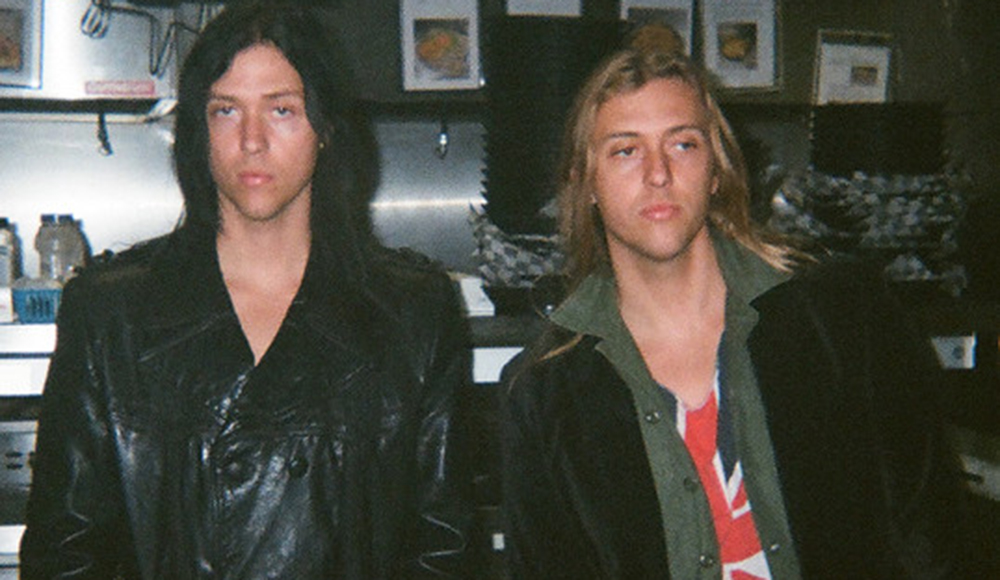
THE GARDEN What started as a side project of twin high schoolers has become a quest to go beyond the confines of punk rock. Wyatt and Fletcher Shears went into this musical experience with the intention to grow and evolve, hence the name, The Garden. At first, their sound was largely punk-influenced with two-piece bass and drums at the core, but they eventually incorporated guitar, synth, and began to lean into their own, DIY, color-outside-the-lines style. With influences that span from E-40 to video game composer Manabu Namiki, they’ve dubbed their genre, “Vada Vada,” an idea that expands beyond all traditional genres and into pure creative expression. SHELLY NOVO
INFO: 7pm, Quarry Amphitheatre, 1156 High Street, Santa Cruz. $39-$59. 459-4184.
INDIE ROCK
ELISE TROUW Elise Trouw is on her “Diary of Elon Lust Tour,” crushing venues with her sardonically funny, catchy tunes. Trouw broke through the cluttered field of attention economics with her ability to play all the instruments on her songs and loop them into genre-breaking hits. Online, her mashups achieved viral success and caught international attention. A San Diego sensation, Trouw, released four singles back in 2016 that paved the way for her ascent to headlining. “X Marks the Spot” is a blueprint song, showcasing Trouw’s ability to mimic ’90s pop with ’60s cocktail music and meld it all seamlessly. DNA
INFO: 8pm, Catalyst, 1101 Pacific Ave, Santa Cruz. $29-$99. 713-5492.
SATURDAY 4/4
LITERARY
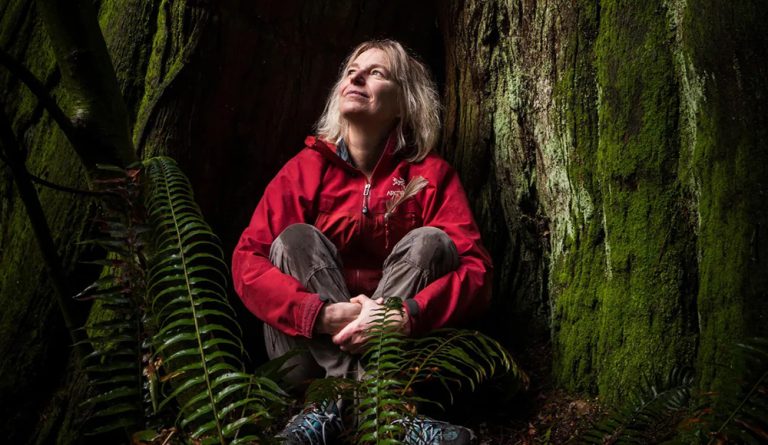
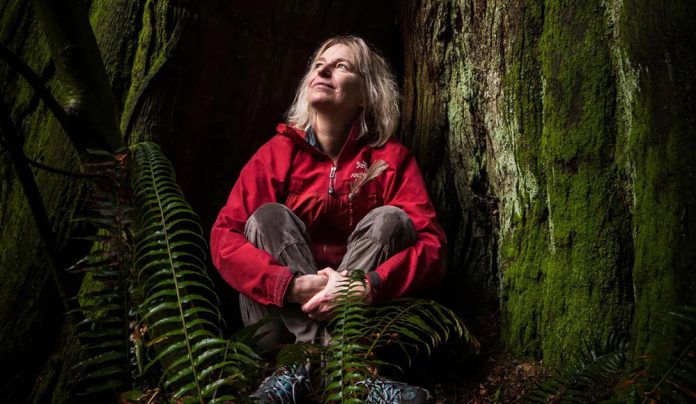
WHEN THE FOREST BREATHES Slow down and breathe. Listen to the trees. Dr. Suzanne Simard, author of Finding Mother Nature, reminds us to listen to nature in her latest book, When the Forest Breathes. Plants have a lot to say when we listen. They can educate on adaptability, resilience, and community. Through collaboration with indigenous groups and reflection on her own life, Dr. Simard reveals the unseen cycles of regeneration and how human intervention can help protect and facilitate these practices. Join her at the Cowell Ranch Hay Barn to receive a copy of When the Forest Breathes and learn about these sacred cycles of regeneration. ISABELLA MARIE SANGALINE
INFO: 2pm, Cowell Ranch Hay Barn, Ranch View Road, Santa Cruz. $36. 423-0900.
ROCK
CÉSAR ROSAS For over five decades, Los Lobos has been a leader in Chicano Rock, keeping their roots firmly planted in East Los Angeles while delivering their music to the masses. Now co-founder, singer and guitarist Cesar Rosas is hitting the Central Coast sans Los Lobos for a few dates celebrating his illustrious career. Joining him as his backing band is local favorites Los Survivors, the six-piece Chicano rock and soul act formed during the 2020 pandemic. This is a unique experience to give fans a more intimate show while still keeping the music’s integrity fully intact. It’s a meeting of the minds coming straight from the heart and heading directly to everyone’s dancing shoes. MAT WEIR
MIDNIGHT NORTH Blending rock, blues, country, western and folk, Midnight North is about as Americana as they get. Since they formed in 2012, Midnight North has delivered sun-soaked harmonies, wandering riffs and uplifting melodies in songs about life on the road, on the stage and in the backyard of the American Dream. In 2023 they released their fifth studio album, Diamonds in the Zodiac, produced by their close friend Amy Helm (daughter of legendary Levon Helm from The Band) and featuring Midnight North’s singer, Grahame Lesh’s dad, Phil Lesh, the late bassist and co-founding member of THE San Francisco legacy rock band, The Grateful Dead. MW
RIZE THE PEOPLE The epic reggae powerhouse, Nattali Rize, presents Rize the People, a celebration of music, community, and freedom. Nattali Rize will get the crowd dancing and grooving to heavy beats and conscious lyrics that ignite a passion for collective liberation. With her magical vocals and kinetic rhythms, Nattali Rize inspires audiences of all ages and calls for solidarity and light. This joyful outdoor staging will offer market booths featuring local crafts, delicious food and drinks, and selectas. In collaboration with the community-focused Woodhouse Brewery, Rize the People will feature multiple indoor and outdoor stages where people can dance, groove, and connect physically and consciously. SHELLY NOVO
INFO: 3pm, Woodhouse Blending and Brewing, 119 Madrone St., Santa Cruz, $45, 313-9461.
FOLK-ROCK
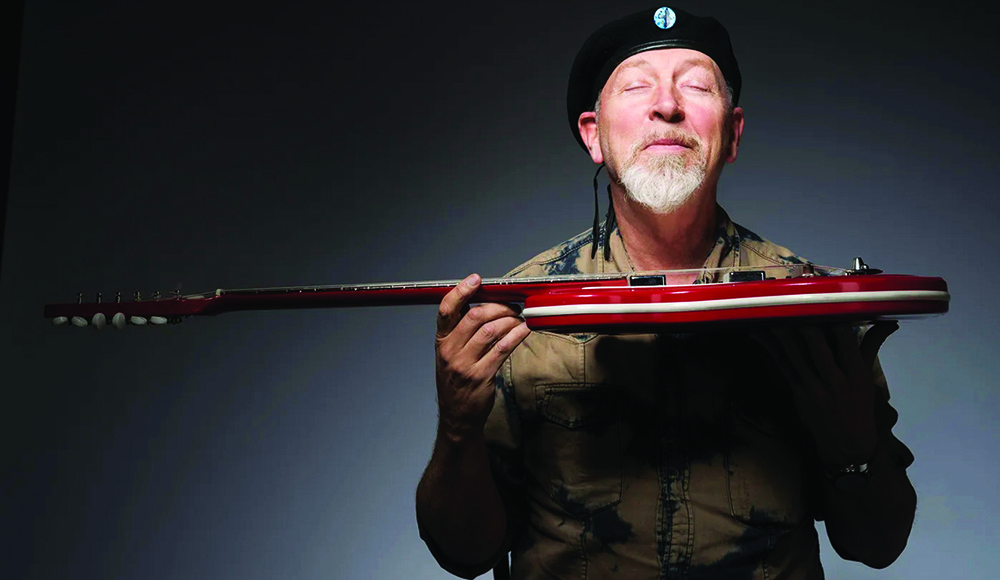
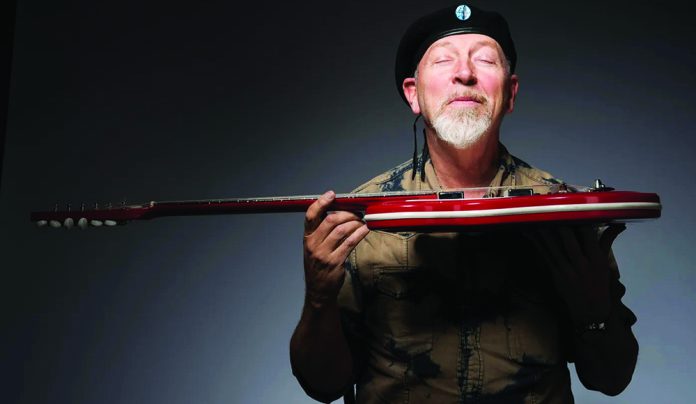
Legendary folk-rock guitarist Richard Thompson brings decades of masterful songwriting and virtuosic playing to the stage, delivering an unforgettable live performance rooted in British folk and rock tradition. PHOTO: Vincent Dixon
RICHARD THOMPSON Richard Thompson is a musician’s musician. Coming to public attention as co-founder of Fairport Convention in 1967, he helped bring British folk and rock together. When he launched a solo career in 1971, Thompson showcased his style, skill and versatility on a grander scale. A run of six albums made in collaboration with his then-wife Linda brought Thompson to a wider audience. And his work since then has found him working solo and in fertile collaboration with even more artists. Thompson is at his very best onstage, where his encyclopedic knowledge of music and his expressive fretwork continue to amaze and inspire. BILL KOPP
INFO: 8pm, Rio Theatre, 1205 Soquel Ave., Santa Cruz. $35. 423-8209.
MONDAY 4/6
FUSION
MARK LETTIERI GROUP With five Grammy awards to his credit, guitarist, producer, composer and educator Mark Lettieri combines multifarious instrumental skill with a passion for transcending genre. His latest release, 2024’s Can I Tell You Something? is an exemplar of that wide-encompassing approach: a purely instrumental recording, it touches on everything from funk to jazz and beyond. Lettieri is also a member of two acclaimed groups, Snarky Puppy (with whom he has made 12 albums) and the Fearless Flyers (on eight albums to date). The Texas-based musician has recorded with a dazzling and eclectic array of artists, including David Crosby, Ledisi, and Ghost-Note. BK
INFO: 7pm, Kuumbwa Jazz Center, 320-2 Cedar St., Santa Cruz. $21-$42. 427-2227.
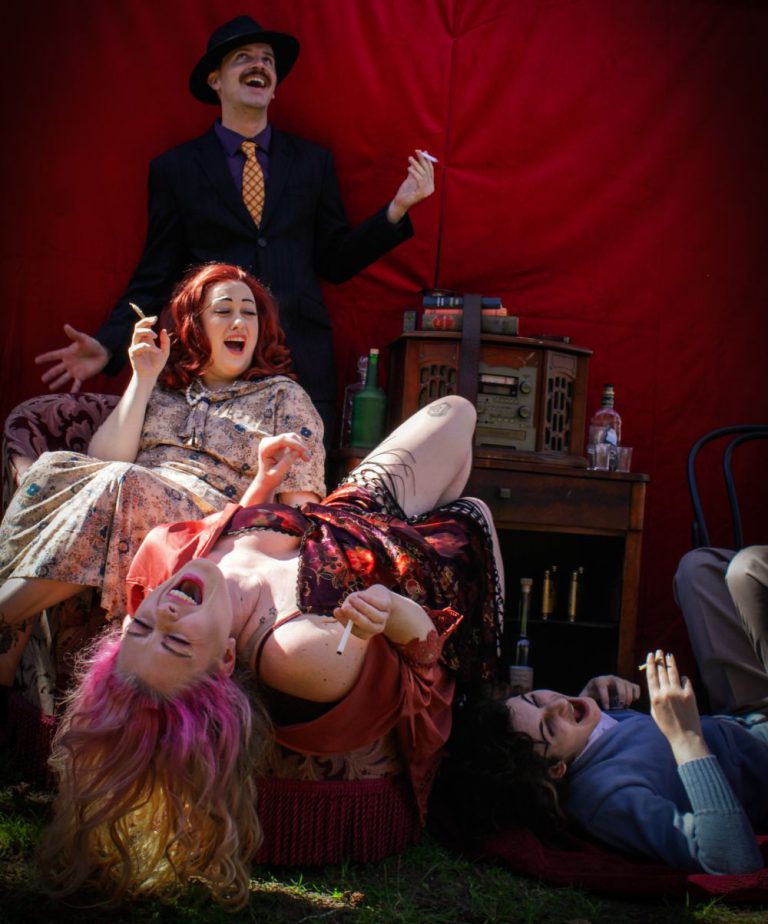
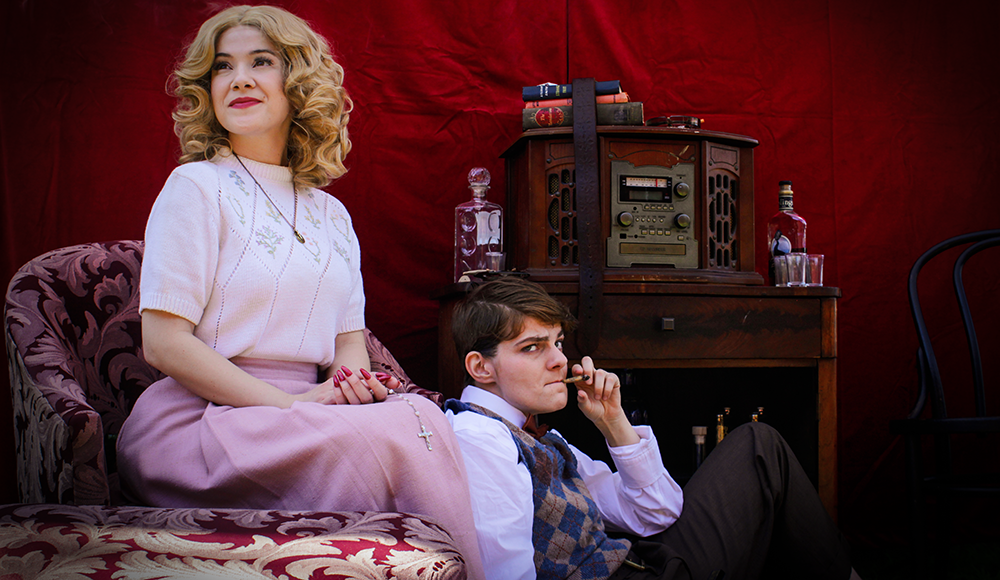
On Mar. 15th, I peered through the bannister on the attic stairs of Renegade Theater’s studio space, feeling like a child past my bedtime watching something I wasn’t supposed to see as the cast rehearsed “Reefer Madness: The Musical,” opening at the Vets Hall April 3 and closing April 20 (4/20, natch).
First opening in Los Angeles in 1998 before moving off-Broadway, it’s the story of Jimmy Harper, “a fine upstanding American boy,” falling in love with Mary Lane, “a healthy young miss of good American breeding stock,” but he gets duped into drug den dance lessons to impress her and ends up in a love triangle with Mary Jane. Murder and mayhem ensue.
It’s based on the eponymous anti-marijuana propaganda film from 1936 that aged like fine milk into a cheesy so-bad-it ’s-good watch for subsequent stoned generations. The long PSA is bent through a square prism by narcs with either a lack of imagination or too much of it. The musical, however, brims with the latter.
YOU & ME & THE CHRONIC MAKES THREE M.C. Mendonca (Mary) and Raven Voorhees (Jimmy) in a weedy romantic triangle. PHOTO: Zed Warner
Sacred cows are not just slaughtered, but cremated and packed into a bowl. Jesus Himself enters a scene after he “heard a lamb had strayed” to personally implore our wayward hero to stop smoking weed because his brain “has turned to marmalade.” Mary sings the horny/mournful “(Fill My) Lonely Pew.” If there was an opportunity to construct an absurd rhyme, skewer an outdated social more, or ramp up 1930’s teen slang or hard-boiled dialogue, writers Kevin Murphy and Dan Studney took it. It’s all very toke-toke, wink-wink.
At the “stumble-through” – theater biz lingo for an unpolished first full cast rehearsal – Director Miguel Reyna and Stage Manager Diana Torres-Garcia pitched line tweaks and blocking nudges as producer Gennevie “Q” Herbranson (yes, that’s really her surname) circled. Musical Director Laney Correa manned multiple screens running notation software she’d manually entered the piano conductor score into, allowing her to leapfrog through scratch tracks to slip actors right into a measure – no more need to “take it from the top.”
Actors dressed for the heat in black halters and bicycle shorts knew the songs cold, but dropped dialogue periodically, and there were invisible “Insert Here” brackets everywhere: a dance not yet choreographed; a 1936 Packard prop not built yet; a character exit challenged by the eventual Vets Hall layout.
Lead dancer Donya Derakshandeh plays the “evil sidekick” to narrator The Lecturer, Placard Girl, a cross between a boxing ring girl and a walking thought balloon who helps transition scenes. In the song “Lullaby,” sung by a black market baby, she is supposed to walk through the scene, picketing “REEFER MAKES YOU SELL YOUR BABIES FOR MONEY.” Today, her placard was empty.
Much has been snipped from the 2005 movie version of the musical starring Alan Cumming and a pre-“Frozen” Kristen Bell, likely most audiences’ exposure to the piece. Dialogue segments were condensed and interstitial segments ditched. This bullet train goes song-song-song.
The talent in the room is astounding. Everyone nails their harmonies.
There’s a delightful melodramatic refrain “Reefer madness, reefer madness,” from the Ensemble every time a joint appears, which tenor Tyler Savin, who plays The Lecturer, assured me was from the libretto. M.C. Mendonca, as Mary, does dizzying octave jumps on “Jimmy On The Lam.”
Many of the cast had done siloed rehearsals until then with only their scene partners and directing team, so this was their first time seeing the whole shebang. The energy was loose and infectious. They tried things, like Derakshandeh freezing her leg in a high kick at a song’s grand finale. They erupted in riots of laughter and encouraging applause, like when baritone Ian Grant, who plays dealer-cum-pimp Jack, handily threw an actor over his shoulder to carry them offstage. Or when minor character FDR crashed his wheelchair into a main character squatting on an electric chair.
Call it strange budfellows, but all this madcap behavior is buttressed by heavy themes. Addiction (even if potheads here -as in the 1936 film- are depicted more like methheads). Rape. Teen death. Romantic violence between partners.
That’s where Intimacy Coordinator Babe Payne comes in, also the show’s Dance Choreographer. A self-professed “mom” of theater productions she’s performed in, she wants to protect actors in the way she wasn’t protected, how Hollywood is reckoning with now.
“Apparently, I work on a lot of shows with orgies in them,” she said, laughing.
Payne sees the orgy here as no different than the fight scenes. Both involve engaging actors, aged 18-to-mid-30’s, to know their scene partner’s sensitivities.
“‘Where do you generally not want to be touched?’” she likes to start with. These could be physical pain centers or places that carry emotional resonance. Nuance is carefully carved out, “creating hard or flexible lines where it’s like, this is an ‘absolute no,’ and this is a ‘probably yes.’
Sometimes, the actor knows their limits. Others, are shocked by their own reaction. When this happens, they decide on a “hard stop word.”
“If we haven’t been able to block out a kiss or a hit, just do a nice, spicy high-five.”
Payne empowers actors to self-advocate, like when alto Ana Bogren announced to the room before a vulnerable stunt she wanted no filming or recording. As ‘hooker-with-a-heart-of-fool ’s-gold” Sally, she has to roll off a couch onto the floor, where an amorous character takes advantage and humps her leg. It’s gross and played for laughs, but this is a person, not just an instrument to serve the text.
Soprano Lauren Chouinard, who plays Reefer Den madam, Mae, moonlights as an intimacy coordinator for other shows and works as a hotline advocate for a women’s shelter in town. She felt cared for by the directing team, wary of Mae’s role as Jack’s punching bag.
“When I took the part,” she said, “they called me and were like, ‘Because you work in this world all the time, how comfortable are you doing this kind of fight choreo?’”
Mae’s “redemption arc” sold her, and considering the thunderous applause after her revenge solo involving a sharp garden rake, the cast would agree.
“I did ‘American Psycho’ with Tyler [Sabine] two years ago, so we’re no strangers to fake blood,” she giggled. For the above scene, “I’ll get, like, sprayed every night.”
The Renegade troupe doesn’t just take care of its own, but the community at large, partnering on this show with Last Prisoner Project, a national nonprofit pursuing cannabis social justice reform.
That collaboration attracted tenor Raven Voorhees, who plays Jimmy.
“Art and resistance always get tied together,” he said. “So to actually have tangible donations to a cause, it’s like the best case scenario for me.”
At the end of the stumble-through, Reyna closed with a pep talk to make sure everyone left heartened. Yes, there were warts. Yes, there were a lot of “patchwork rehearsals” to come. But a month and a half in, “We’re where we’re supposed to be right now,” he said.
The original title for Reefer Madness when it came out was “Tell Your Children,” but don’t tell them to come see this musical. It’s adult fun only.
Instead, tell your friends. Tell your neighbors. Tell your budtender.
Some musical artists are studio rats. Decades apart, the Beatles and XTC quit touring mid-career, cloistering themselves away in the studio and arguably creating their best work. Other artists abandoned studio work altogether, focusing solely on live performance: the Moody Blues, Eagles, Guns N’ Roses and Fleetwood Mac are some of the most well-known examples.
Richard Thompson stands apart from both extremes, focusing on records and live concerts. The British guitarist extraordinaire came to prominence as a founding member of Fairport Convention in 1967; after leaving that group, he embarked on a creatively fruitful and prolific career as a solo and collaborative artist. Ship to Shore, his latest release, is solo album No. 47, and that’s a rough estimate. Richard Thompson comes to the Rio Theatre on April 5.
Not only does Thompson release new music with alacrity, but he tours frequently as well. And he believes there’s a strong relationship between studio and live work. Everything he records in the studio is designed to be performed live, he says. Thompson chuckles and explains that he doesn’t have “the Sgt. Pepper mindset” in which the songs can be decorated with all manner of instrumentation, free from the worry of how a complex arrangement can be put across onstage.
Yet Thompson doesn’t limit himself while recording; if he has a good arrangement idea that simply can’t be reproduced live, he’ll do what works. He provides an example from upcoming album No. 48, set for release in September.
“We have a four-piece, Salvation Army [sort of] horn section,” he says. “Now, I’ll never be able to afford to have those guys along on the road, as much fun as it would be.” His solution? “We’ll paper over the cracks,” he says with a smile. “I don’t think you’ll miss it.” And he doesn’t skimp on getting things right in a concert setting. “Live performance is my main focus,” he says.
When it comes to studio work, Richard Thompson is decidedly old-school. While asking about his recording methods, I make the mistake of referring to past methods when studios used magnetic tape rather than computers; Thompson stops me cold. “Isn’t there tape?” he retorts. “I’ve never done a record not using multi-track tape.”
Of course, digital technology figures into the final stages of record-making. “It all ends up digital anyway,” Thompson concedes. “You end up with a CD.” But he values the warmth of analog recording methods using vintage equipment. “People will drop by the studio and ask, ‘What’s that smell? I recognize it.’” It’s the distinctive scent of warm magnetic tape running through the machine. “My god,” one of Thompson’s studio visitors once replied. “I haven’t smelt that for 20, 30, 40 years!”
Thompson admits that his approach isn’t the prevailing one in 2026. But he knows what he likes, and the results of his creative choices speak for themselves. “I have a hard time listening to electronic music, or to music that uses a lot of samples,” he says. “I just find the texture really irritating.” Even though technology has advanced to introduce a bit of variance, for Thompson, sample-based sounds are too stiff and lifeless.
“You get someone playing a bass drum live as you’re recording,” he explains. “It’s different every time they hit the drum: different intensity, different overtones, different undertones.” Those variations are what makes the music breathe. Samples, in contrast, become very narrow in the digital recording process, he says. “Call me an old fuddy-duddy, thank you very much indeed. But I just like the sound of musicians playing music.”
What some artists might consider a sonic bug is a feature for Thompson. “Sometimes, you really want two people singing on the same mic, because you get that intermodular distortion, that Everly Brothers kind of thing happening,” he says. “Recording in the same room at the same time [results in] instruments spilling down over other microphones. I love all that, and we aim for that when we’re recording.”
Thompson’s prolific nature has yielded work of a consistently high standard; it’s rare for one of his albums to earn less than a four-star rating from outlets like allmusic.com. And his backlog of material is so deep that when a well-received collection of previously-unreleased material, RT: The Life and Music of Richard Thompson was released in 2006, the music filled five compact discs.
“At some points,” he says, “I think, ‘Well, I’m not really motivated to write right now.’” But many other times, when he sits down to write, “the stuff just comes. It just… appears.” Thompson recalls that when he came out of COVID-forced isolation, he had amassed three albums’ worth of new music. “A lot of it, I haven’t even recorded yet,” he says.
And while Thompson is a gifted composer, improvisation is a major part of his creative process as well. “I try to write songs that may have room for me to improvise within them,” he says. “Songs that will show off whatever I can do: the voice, the guitar.” So while constructing a good song is paramount, Thompson says that “as a songwriter, I do try to favor my strengths.”
Over the years, many of Thompson’s concert tours have been built on a theme. One of the most celebrated was his early 2000s run of dates celebrating “1000 Years of Popular Music.” Asked if this current tour has a theme beyond supporting Ship to Shore – or perhaps the upcoming new album – he grins broadly and says, “If there isn’t one, I’ll pretend there is.”
Richard Thompson with Zara Phillips, Rio Theatre, 1205 Soquel Ave, Santa Cruz Sunday, April 5, 8pm Tickets: $35, general admission/$48 gold circle
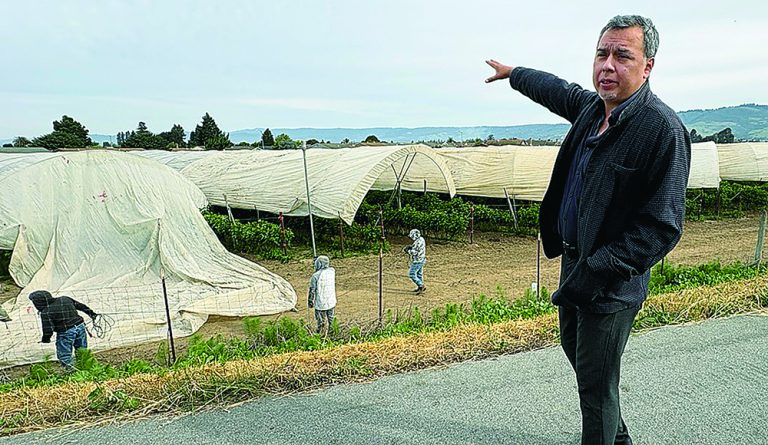
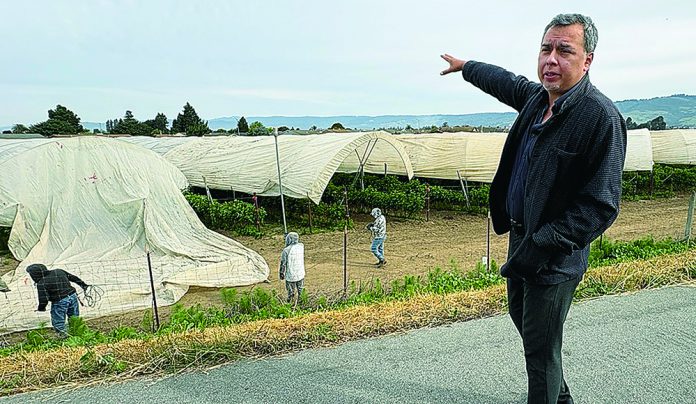
Adam Scow stood on the edge of a strawberry farm behind Pajaro Middle School Monday morning as he held a map showing similar fields adjacent to nine schools throughout the Pajaro Valley.
Scow heads up the nonprofit group Campaign for Organic and Regenerative Agriculture (CORA). The organization works to convince growers to create a 2,500-foot organic buffer zone around schools, where toxic pesticides are not used.
“It’s been well documented that conventional berries use some of the worst pesticides, and the most toxic pesticides in the growing process,” he told a group of elected and nonprofit leaders who took part in a “pesticide reality tour” of farms adjacent to schools.
The field behind the middle school—owned by Giant Berry company in Watsonville—stands bare now, but its long, manicured rows suggest it is ready to be planted for the upcoming strawberry season.
And in Santa Cruz County, that crop is king, with 2,640 acres growing 87,570 tons in 2024, for a total of more than $218.9 million.
But that yield comes with a price. To pump out that much fruit, many farmers resort to conventional growing methods, which typically means using tons of toxic chemicals.
According to the National Cancer Institute, Santa Cruz County ranks second in California for pediatric cancer rates among children ages up to 14. Between 2017 and 2021, the county saw 22.5 cases per 100,000 children, about 38% higher than the statewide rate of 16.3.
Scow called recent efforts to require better labeling and notification by farmers when they plan to use harmful chemicals “good steps.”
But CORA is demanding more, Scow said.
“Ultimately, what solves this problem is to not use toxic pesticides,” he said. “That’s what we’re calling for.”
Among the dangerous chemicals CORA is battling is 1,3-Dichloropropene (1,3-D), commonly known by the trade name Telone. That pesticide is injected into the soil and held in place by plastic sheets commonly seen on the rows of strawberry farms.
But it often escapes and drifts into nearby communities and schools, Scow said.
And while a recent restriction prohibits it from being applied during the school day, it can linger for up to 72 hours and drift for miles, Scow said.
Chloropicrin, another toxic pesticide, is also widely used.
“These are established carcinogens,” Scow said.
In a prepared statement, a Driscoll’s spokesperson said that Driscoll’s “remains deeply committed to transparency, accountability, and the health of our neighbors.”
The spokesperson said that company representatives have met with CORA and the Center for Farmworker Families.
“These meetings provided an opportunity to listen, share information, and clarify how Driscoll’s and our independent grower partners operate in full compliance with all state and federal pesticide regulations, including oversight by the EPA and the California Department of Pesticide Regulation,” the statement says.
The spokesperson also pointed to a public statement the company previously issued, which says that “All of Driscoll’s independent growers are required to follow regulations and the law, working with government agencies to ensure full compliance.”
Ann Lopez, a physician who runs Watsonville-based Center for Farmworker Families, said she has met many local children with cancer and leukemia, at much higher rates than in areas not near agricultural fields.
“It’s disgraceful,” she said. “It’s really murdering children.”
Joji Muramoto, a UC Santa Cruz associate professor who specializes in organic agriculture, said that it now accounts for 14% of the county’s strawberry crop, a sizable increase from the 1980s, at the dawn of the commercial organic agriculture movement.
“Nobody believed organic strawberries possible in the 1980s,” he said.
A side-by-side comparison later showed that organic farming gave about 70% of the conventional yield, making it commercially viable.
“It took almost 40 years to get here,” Muramoto said. “Slowly but surely, things are changing.”
In a field behind Ann Soldo Elementary School, Scow pointed to a field where workers were busy adjusting the plastic covers over long rows of blackberry plants.
Those crops, he said, receive doses of Telone, Chloropicrin and other toxic insecticides.
“None of these fields is organic,” Scow said.
If the first two stops were unsettling, that changed somewhat on the third, on a farm behind MacQuiddy Elementary School, where Scow noted a recent success of the effort for berry farmers to make the switch to organic farming.
One-third of the adjacent property has gone organic, and the property owners have signaled that they will transition more, Scow said.
“There’s no question about it, it’s a success story,” he said.
That shift can be a daunting one. It takes three years to fully change over to organic methods, an intensive, technical process that takes approval by state regulators, said Jessica Gonzalez, a senior policy advisor with California Certified Organic Farmers
But that transition for berry companies should happen faster, Scow said, particularly for an industry that rakes in $4.5 billion annually.
“We’re identifying about 15 fields,” he said. “We feel this is a very modest request. When we say that toxic cancer-causing pesticides are being used around our schools, there is zero exaggeration there; that’s just a fact. and we want to see that change.”
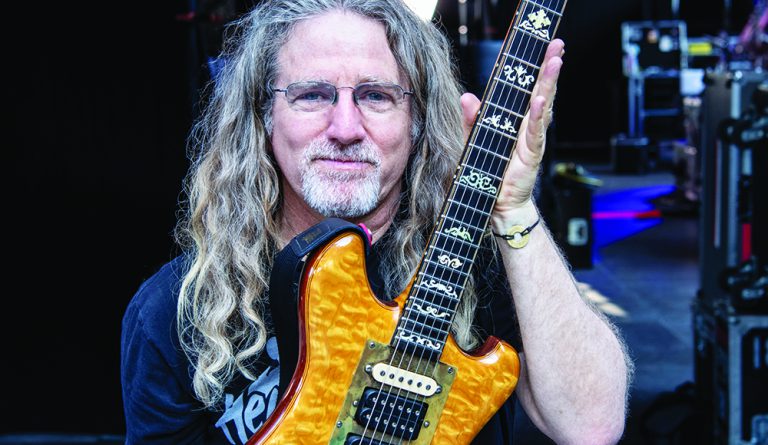
Lensman Jay Blakesberg has captured some of the most important cultural moments of bands, musicians and insulated communities of the 20th and 21st centuries. It began in 1978, when the teenager sold his first photographs of The Grateful Dead to a small newspaper in New Jersey.
Since then, Blakesberg’s photographs have been shown worldwide in galleries, and he will be in person for a special showing at the Nicely Gallery on April 3 for a meet and greet.
We wouldn’t even have a lot of our rock and roll memories if it weren’t for the photographers. Would we even remember the iconic shot of Jimi Hendrix praying (or something) over his burning guitar at the 1967 Monterey Pop Festival if it weren’t for photographer Ed Caraeff?
And while Caraeff might not be the name you associate with rock and roll photographers (his work is legion), even the names you do recognize only shoot for a brief period of their career. Blakesberg hasn’t stopped for forty years. “Even big-name people like Jim Marshall had careers that were at the most 18 years long, before they phased it out and went into the legacy phase and not shooting as much,” says Blakesberg from the road.
Blakesberg was more often sweating alongside you at concerts. Holding his own in the swaying front row as he tried to capture magic. It’s a noble, gritty profession, and moving to the Bay Area allowed the Jersey-bred Blakesberg to see a wide array of incredible bands.
“People didn’t have big ears the way they have them today. I remember being at a Butthole Surfers concert in the late 80s. I’m at the I-Beam in San Francisco and the guy next to me was like, what else do you shoot? Told him I’m going to shoot three Grateful Dead concerts at the Greek Theater next month and he couldn’t grasp it,” says Blakesberg.
These days, Spotify allows listeners to float between Snoop Dogg, alternative rock, punk rock, the Grateful Dead, classic rock and the Beatles. “Their breadth of fandom is much wider,” notes Blakesberg.
At his core, Blakesberg was drawn to the heady Grateful Dead scene of the 1980s, all the way to the bittersweet end of the Jerry Garcia era in 1995 and beyond. Blakesberg was a noted fixture. The long-haired tie-dyed Blakesberg was always there in the parking lot of Oakland Coliseum, and the hallways of Madison Square Garden, and in the fields of Lewiston, Maine. Like a scribe with a camera.
Sometimes, if a photographer is lucky enough to graduate from the field to stage, it’s born out of quality and perseverance.
For longtime deadhead Blakesberg, the opportunity came in 1990. “Bob Weir had a musical partner named Rob Wasserman,” says Blakesberg.
“Rob was making a record called Trios. And I was doing most of the photography for Trios. When Rob and Bob decided to start doing a duo thing called Weir Wasserman, and Wasserman’s manager, referred me to do the publicity photos. That was the first time a member of the Grateful Dead paid me money to photograph them”
For a working photographer, you need to be out in the wild, searching for the sound, style and next big thing.
In the late 1980’s, Blakesberg starting shooting Soundgarden, The Red Hot Chili Peppers, the Flaming Lips and later, Pearl Jam and Jane’s Addiction.
Blakesberg found himself at the pivotal moment when grunge was blowing up, like a flanneled Forrest Gump. But he was still shooting the Grateful Dead and those worlds didn’t really mix at the time.
It was in the mid-1980s that Blakesberg starting getting some assignments from Rolling Stone magazine.
“My first assignment was U2. My next assignment, a few weeks later, was in LA with Roseanne Cash playing at the Roxy. And then the benefit in Oakland called Blues for Salvador. That was Carlos Santana, Bonnie Raitt, Jerry Garcia, Bob Weir, Boz Scaggs, and Tower of Power. I took an incredible photograph backstage of Jerry Garcia, Bob Weir, and Bill Graham.
And even though it’s a snapshot flash on camera, it’s become somewhat of an iconic photograph. I was really trying to make a living as a photographer, and I was shooting everything that I could,” Blakesberg concludes.
Jay Blakesberg will be appearing beside his work, starting at 4pm on Friday, April 3 at the Nicely Gallery, 1349 Pacific Ave, Santa Cruz. The exhibit runs March 15-June 30. Find more information at firstfridaysantacruz.com
You can now drop your offspring at a new infant-only restaurant and take the morning, or afternoon off. You deserve it.
The debut of Yeah Baby Buffet is happening today—April 1—at 9am, with free admission for the first 13 toddlers deposited at 1313 Municipal Wharf, Santa Cruz.
The $100 cover charge for each ankle biter (after the first 13) is all-inclusive for tax, tip and unlimited stuffed baked potatoes, gluten-free sourdough, vegetarian pizza, protein salads, French fries, spaghetti, orange juice and of course, cake.
Some brief caveats: Each child must be under 5 and wearing a life preserver; all parents must sign a lengthy waiver; all children entrusted with Yeah Baby’s proprietary nanny robots must be potty-trained.
No joke: Fawn Pizza & Vinyl Bar has introduced a dynamic new combination in Aptos (783 Rio Del Mar Blvd., #45, second floor). The headline: handmade pizzas like the Meatallica, Disco Deluxe, Green Day and Def Peppered, plus salads like the Green Diva, craft draft beer and a few local wines by the bottle and glass. Guests can also anticipate vintage art to match the record collection honored in the restaurant name, plus DJs spinning hard-to-find records on Fridays and Saturdays. “From acid jazz to trip-hop, dub to soul,” the Fawn announces on its website, “we’ve got the beats to complement your meal.” Hours are 4-8pm Wednesday-Sunday, fawnpizza.com.
ON THE RUNWAY
I taxied by Woody’s at the Watsonville Airport (100 Aviation Way, Watsonville) and the build-out of the kitchen is coming along nicely, with the dining room and exterior looking pretty complete. The proven formula that’s earned legion loyal regulars at Woody’s at the Airport at Monterey Regional also remains firmly in place. But Chef-owner Tim Wood adds, while they’ll feature the same menu, sincere service and farm-driven fare, he and his team are going to soak up any input from their new community. “We are going to take a couple of months listening to feedback and understanding who’s worth listening to and who’s not,” he says, with trademark candor. “We’re a chef company that basically likes to feed people and make people happy. Sometimes we fall short and then try harder. A lot of times we hit it out of the park. We want to learn what folks from south Santa Cruz and Watsonville are looking for, and make it a destination to travel to as well.” Optimistic opening: mid April; the more conservative timeline: end of the month, woodysmontereyairport.com.
BITE-SIZED BYTES
Alvarado Street Brewery is launching a “Raft” 5.2% West Coast pilsner in collaboration with Monterey Bay Aquarium, and that comes as MBA is reinvigorating ways to eat the best—and most sustainable—fish: Seafood Watch is now giving diners an easy way to spot ultra-sustainable seafood dishes on menus from taco trucks to Michelin-starred restaurants, with a menu symbol signaling that every ingredient in the dish meets the standard.
Some 80 partners across 40 cities and 10-plus countries have signed on—including a strong showing in Monterey—now we need more Santa Cruz participants, seafoodwatch.org…Santa Cruz can make a case for the best MTB culture on the continent, which invites mention that the Sea Otter Classic, aka the Woodstock of Biking, is barreling this way April 16-19, seaotterclassic.com…
There are now onions crossbred to provoke zero tears when cut, with happy names to match, including Smile Balls, Sunions, Sweetie Tearless, Happy Chop and Smileys…California Wine Institute is celebrating the 15th annual Down to Earth Month with eco-focused events, hands-on workshops and one-of-a-kind winery experiences, wineinstitute.org…Georg Christoph Lichtenberg: “A person reveals his character by nothing so clearly as the joke he resents.”
I’ve been going since I was a teenager — performing there, consulting there, watching it reinvent itself again and again. For decades, the question was simple: which magician, which residency, which restaurant?
Then a building bent the city’s gravity.
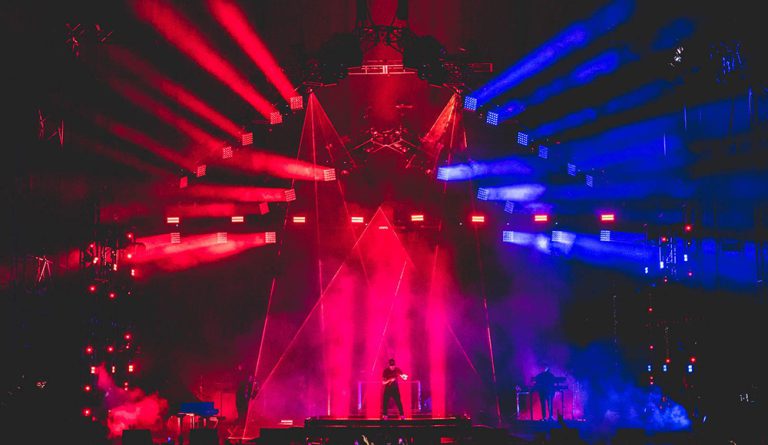
The Sphere is the largest LED performance space ever built, a digital sky that swallows more than 18,000 people at a time. It has reset expectations for what live entertainment can feel like.
When artists bring their shows into that impossible canvas, some of the real-time systems helping make it work are designed and assembled inside the Wrigley Building, a former gum factory, on Santa Cruz’s Westside.
Aron Altmark is the founder and executive director of Visual Endeavors, which is now part of Hovercraft Ventures, a Boca Raton, Florida-based experience and innovation company. What Altmark has built is quietly world-class.
His company created PixelCannon, a line of ruggedized “media servers.” If you aren’t in the live-event business, think of a media server as the ultra-powerful brain behind the spectacle. It’s a specialized, heavy-duty computer whose sole job is to juggle massive video files, process millions of pixels in real time, and pump them out to giant screens in perfect sync with the music. PixelCannon takes that immense computing power and armors it for high-stakes live production. These custom-built machines, designed in Santa Cruz and assembled in the Bay Area, are deployed into some of the most demanding shows on the planet.
To understand why that matters, you have to step inside the biggest screen on Earth.
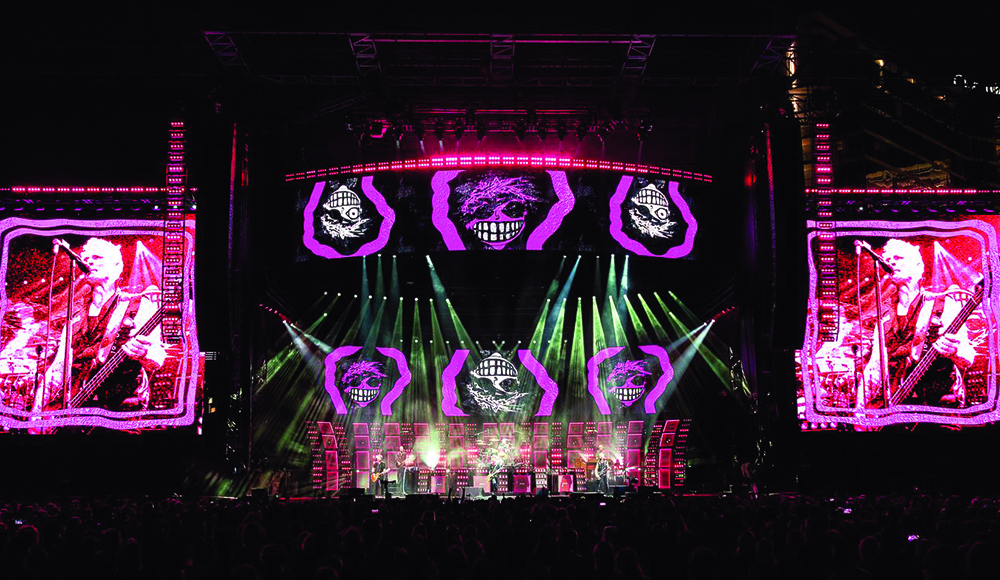
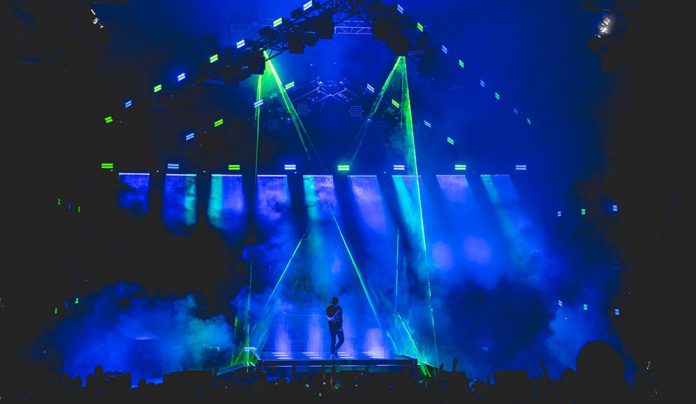
MIND ALTERING Visual Endeavors’ production work for Green Day, integrating video, lighting, and real-time graphics across a massive stage rig. Photo: Courtesy of Visual Endeavors
The Sphere is not a plug-and-play venue. The interior LED surface alone spans roughly 160,000 square feet, wrapping around and above the audience in a continuous, immersive canvas with between 170 million to 256 million pixels of screen. Every pixel has to be fed, every frame rendered, every signal routed without a single hiccup.
That is where Visual Endeavors fits in.
“We are grateful to have been brought in by the production teams creating the content for a few artist residencies,” Altmark says.
Most recently, Visual Endeavors collaborated with BLINK, a Burbank-based creative production studio, to support the Backstreet Boys at the Sphere, delivering an IMAG (image magnification) effects package powered by Notch, a real-time graphics engine used for dynamic visuals that respond instantly during live performance. The team blended live camera feeds with immersive visual treatments across multiple songs. BLINK brought Visual Endeavors in as the Notch integrator and real-time content partner.
Altmark called it “one of the best shows I’ve had the privilege of being a part of in the last few years. Nothing like 20,000 millennials singing along to some of the CDs in my early rotation.”
It was not their first time inside the building. Visual Endeavors’ debut at the Sphere was UFC, staging a fight card inside its immersive environment. Then came the Eagles, alongside production partners and Silent House. More recently, Zac Brown Band. Each residency deepened their familiarity with the room and the systems that power it.
“We just kind of became someone who knows how to do stuff there,” Altmark says.
That reputation is hard-earned. In a venue built entirely around immersion, a rendering freeze is not subtle. It is thousands of people staring at a glitch in the sky.
His broader résumé extends well beyond Las Vegas. Visual Endeavors has contributed to Logic’s Everybody’s Tour, Tiësto’s world productions, and tours for Green Day, Deftones, and Morgan Wallen.
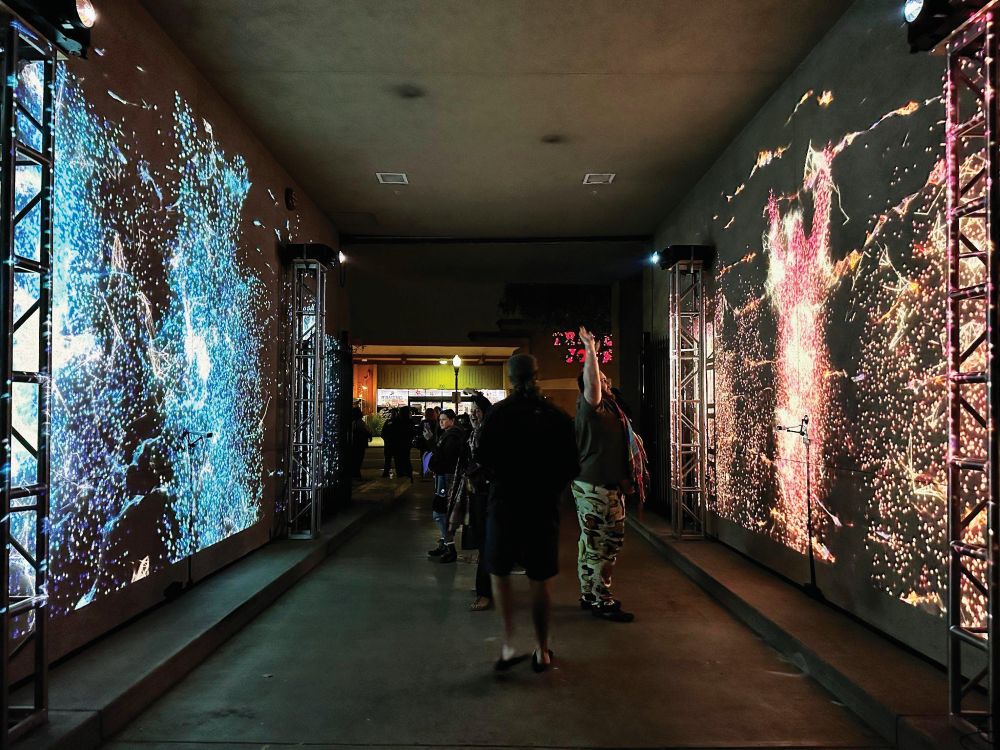
GNARLY VISUALS A real-time immersive LED installation powered by depth sensors — the kind of thing Visual Endeavors prototypes in their Wrigley Building lab. Photo: Courtesy of Visual Endeavors
The company also builds corporate activations, product launches, and permanent installations for brands seeking immersive environments rather than static displays. On the corporate side, Visual Endeavors has deployed BlackTrax for major Bay Area tech conferences, where the precision demands are different but equally unforgiving — C-suite presenters who need repeatable, automated follow-spot lighting without anyone fumbling a remote spotlight during a keynote.
His team includes studio and project manager Anna-Marie Freitag, PR and marketing lead Ian Chandler, and creative technologist Mia Zhang — the local team amongst a larger web of project-based collaborators.
Small team, Big rooms
But the team’s footprint extends far beyond giant screens. Visual Endeavors is also the North American Creative Solutions Provider for BlackTrax, a motion-tracking platform capable of tracking performers, objects, and even race cars across a stage in real time. Altmark simplifies the philosophy: “If you can track a person, you can track anything.”
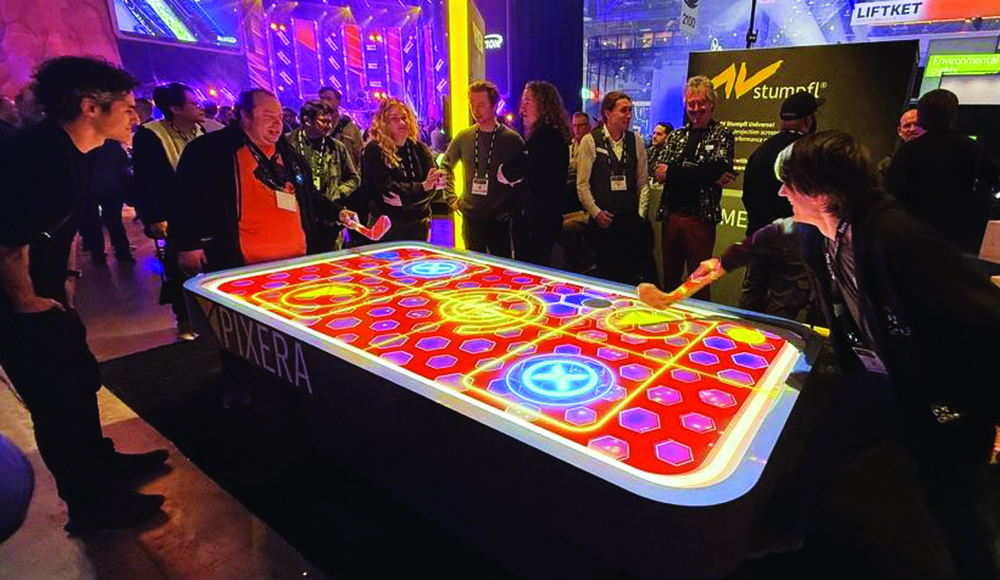
In the lab, he proved it. His team built an air-hockey table with CNC-milled hockey stick player controls housing BlackTrax beacons and a projected puck driven by Notch and real-time physics simulations.
It debuted at LDI, the main U.S. trade show for live entertainment tech, and at ISE in Barcelona, as a partnership with Pixera and BlackTrax — and became one of the most talked-about demos at both.
The same tracking logic that follows a puck on a tabletop can follow a performer on a stadium stage or a player on a full-size arena court. The difference is only scale.
PUCK YEAH The BlackTrax air-hockey demo that became the talk of technical trade shows — specially made paddles from Idea Fab Labs, a projected puck running on real-time physics, and tracking tech that scales from tabletop to stadium. Photo: Courtesy of Visual Endeavors
The tracking work extends beyond spectacle. Visual Endeavors has deployed full BlackTrax systems for a worship campus with hundreds of moving lights operated largely by volunteers — turning any light in the rig into an automated follow spot instead of staffing manual operators every service. Altmark also integrated tracking for LED floor surfaces reacting to performers in real time — particle effects and visual storytelling tied to movement.
He also helped develop BlackTrax’s static lighting tracking feature, allowing conventional stage wash fixtures to activate zone by zone as a performer crosses the stage. It began as a workaround — “a hilarious set of DMX inputs and outputs,” as he described it in a CAST Software webinar — and eventually became a built-in product feature.
What stands out when you speak with Altmark is not ego but fluency. He speaks in render pipelines, GPU cycles, LED density, and signal redundancy. He also speaks in emotion — in audience reaction, in the way a chorus lands when the lighting hits just right. That duality, holding both the technical and the human in the same breath, is the job.
Birmingham to Backstage
Altmark grew up in Birmingham, Alabama, attending the Alabama School of Fine Arts, where dance and theater lighting became early obsessions. He originally wanted to work in film, but live production had its own pull — the immediacy, the unpredictability, the one-shot nature of every show.
“I grew up doing dance and theater lighting,” he says. “That was kind of my thing.”
Music ran through everything. “I grew up playing piano and saxophone and a bunch of other instruments. I just love music. I had a touch of synesthesia as well.”
Synesthesia is the neurological blending of senses — sound triggering color, rhythm manifesting as shape. For Altmark, it meant seeing sound and hearing rhythm as light.
“When I was on the road operating lights for artists, I would kind of feel the music and turn that into something visual.”
After high school, he moved west and interned at a lighting software company in Southern California. “It’s kind of a cliché story,” he says. “I met people and worked my way up the ladder and just chased different opportunities when I thought it was the right one.”
He worked for Steve Lieberman, designer of the Yuma tent at Coachella, then became a training support specialist at A.C.T Lighting, working with GrandMA consoles — the command centers behind arena-scale shows. He attended CalArts while touring. Each chapter layered on theory, software fluency, and industry relationships.
That depth led to touring with DJ Tiësto. “I knew all about the software, and I have a pretty musical background,” he says. “That’s how that happened.” On DJ Logic’s Everybody’s Tour, Altmark was programming on MA lighting consoles and time-coding lasers, video, and lighting into a single cohesive package — an early demonstration of the integrated approach that would define Visual Endeavors.
Then the world stopped. During COVID, Altmark was embedded with XR Studios in Hollywood, working in virtual production — camera tracking, AR object placement (which put virtual 3D models onto real world objects) and virtual shadow creation in programs called Unreal Engine and Notch. The pandemic detour deepened the skills that would later power PixelCannon and gave him fluency in real-time tools that proved essential when live events returned.
Building Machines That Survive the Road
Touring and designing for A-list and middle-market clients revealed a gap in the market. The server hardware Altmark relied on lagged behind the latest releases, and the cost put advanced creative out of reach for many artists.
So he began building and modifying his own hardware — reinforcing chassis, improving airflow, reworking internal layouts, testing under stress. Tinkering became engineering.
The catalyst was Tame Impala’s 2019 Coachella headline set. Altmark and his team built bespoke hardware to handle ambitious Notch visuals outside the traditional media server ecosystem — something more efficient and scalable for life on the road. That prototype became known as the PixelCannon — a touring-grade computer built less like a desktop and more like stage equipment, all of it sealed into something that has to withstand the brutal wear-and-tear of a global tour.
Through a startup partnership with NVIDIA, Visual Endeavors gained early access to next-generation GPUs capable of massive real-time rendering — the kind of hardware that turns abstract data into light on a screen, frame by frame, fast enough to keep up with music.
“We’re putting really robust next-generation hardware into a pretty rugged custom chassis,” Altmark explains. “That way we can ship these computers anywhere in the world and they won’t fall apart.”
Inside each unit: dense stacks of components pushing heat, fans pulling air, processors calculating thousands of visual decisions every second — all housed inside a chassis built for the abuse of touring.
PixelCannon systems sit offstage like silent engines, feeding visuals to walls of LEDs — entire environments rendered in real time, reacting to music, movement, and timing down to the millisecond. They are built for environments where failure is visible and immediate, and where there is no second take.
It’s less like running a computer and more like keeping a plane in the air — everything working at once, nothing allowed to fail.
Visual Endeavors does not operate like a traditional creative agency, pitching campaign decks. They step in when something isn’t working, when a director asks for something the system can’t yet do, when a visual freezes mid-render, when a wall of screens slips out of sync.
They are the people backstage with laptops open and cables exposed, tracing signals in real time as a countdown clock ticks toward doors. The job is to make the impossible idea behave, to take something fragile, unstable, half-working, and make it hold together in front of thousands of people.
“We generally integrate into someone else’s process where they have a problem they can’t figure out,” Altmark says.
That might mean fixing a render bottleneck moments before doors, translating a director’s idea into something the hardware can actually run, or getting content and engineering teams aligned when they are speaking entirely different languages.
Creative vision almost always outruns infrastructure. Visual Endeavors lives in that space between what someone wants to see and what the machines can currently deliver.
If they succeed, no one notices. If they fail, everyone does.
Why Santa Cruz
Altmark moved to Santa Cruz in 2016, seeking quieter ground than Los Angeles.
“I wanted to get away from L.A. and find a spot to land that was a bit quieter.”
He is an avid mountain biker and gravel rider. “You can’t beat the outdoors access. We’re 10 minutes from the trails.”
For five years, he toured while based here, treating Santa Cruz as home between road stints. Eventually, the model shifted. Visual Endeavors began building shows, launching them, and handing them off to touring crews — turning the company from a road operation into a design and engineering lab.
The Wrigley Building became both workshop and laboratory. PixelCannon units are assembled, tested, and shipped from a space surrounded by surfboard shapers, bike builders, and startups. The building itself houses dozens of businesses, and Visual Endeavors is one tenant among many in that thriving Westside hub. But their studio is also a creative lab — projections on every wall, a truss rig of moving lights overhead, and for a stretch, a Meyer Sound spatial audio system from Berkeley for experimenting with immersive sound composition tied to real-time visuals and BlackTrax tracking.
Altmark hosts First Friday events in the studio, inviting guest artists to use the gear for interactive and real-time performances. During a recent CAST Software webinar, he showed his 7-year-old daughter in the space, utterly unbothered by the particle systems and projection-mapped walls swirling around her. “That’s kids these days,” he said with a laugh. The invitation extends to anyone curious about the work — artists, technologists, locals. “If you’re in town, reach out,” he says. “Come hang out and see what we have going on.”
The range of projects radiating from the studio reflects that open-door ethos. Visual Endeavors recently handled projection mapping for Zaccho Dance, an aerial dance company that performed inside San Francisco City Hall — a guerrilla theater production that turned one of the Bay Area’s most recognizable civic buildings into an immersive canvas using Pixera software.
Across the street, even the coffee shop knows Altmark and speaks highly of his family.
There is something distinctly Santa Cruz about building machines that power some of the most advanced shows in the world inside a repurposed gum factory off Mission Street. The Westside has always blended industry and creativity. Surfboards, bikes, tech startups, art studios. PixelCannon fits right in.
Reuse. Reinvent. Iterate.
Inside the Hovercraft Ventures Deal
The Hovercraft Ventures acquisition began with a phone call.
Last year, the global experience and innovation venture platform Hovercraft Ventures acquired Raw Cereal, a production studio Visual Endeavors had collaborated with on major tours, including two tours with Morgan Wallen. When the Raw Cereal team told Altmark what had happened, he was intrigued. The timing made sense — Visual Endeavors had been growing steadily, and the partnership network Hovercraft was assembling matched the way Altmark already liked to work.
“They said, ‘Hey, this just happened and we’re part of this now,’” Altmark recalls. “And I was like, that sounds really cool.”
The fit made sense. Hovercraft Ventures is a platform bringing together top experiential production companies across entertainment, retail, and sports. The model is shared capital, operational support, and creative cross-pollination — specialized companies collaborating on larger projects without losing their individual identities or expertise.
For Visual Endeavors, the deal offers scale without relocation. The lab stays in Santa Cruz. The team stays intact. The work stays the same, just with more resources and a wider network behind it.
“My vibe is I just want to make cool shit with my smart friends,” Altmark says.
Santa Cruz remains strategic, with its proximity to the Bay Area tech ecosystem and talent pipelines from UC Santa Cruz and the broader region. There’s a creative culture that values experimentation over convention.
During our conversation, Altmark was heading to San Francisco for dinner with new partners. Not corporate formality. Collaboration.
“A rising tide lifts all ships.”
AI, Compression, and Craft
As Visual Endeavors scales up, the technology they use is evolving just as fast. AI now threads through nearly every creative conversation. But Altmark is measured about it. He knows that an algorithm can generate a visual, but it takes an artist’s lived experience to know if it actually serves the song.
“AI is a tool,” he says. “It’s a creative tool that you can use or you don’t have to use.”
Visual Endeavors uses it heavily for workflow automation — scheduling, documentation, and project management.
But he draws a line when it becomes a gimmick rather than an instrument. Clients sometimes request AI-driven visuals because it feels futuristic. Altmark pushes back when the application does not serve the work.
“Is it truly going to help the creative process? Is it going to influence how people experience this? Or is it a gimmick?”
“You still need artists who know how to use it.”
The tool can accelerate rendering. It cannot replace taste, troubleshooting, or intuition. The wildest system in the world still needs someone who understands rhythm. An algorithm doesn’t know what a kick drum feels like in your chest, and it can’t anticipate the exact moment the air shifts in a stadium when 20,000 fans hold their breath before a chorus. Altmark does. When he programs a show, he is pulling from that human reservoir—translating the adrenaline of a live room into a digital sky.
A Factory for Wonder
On Saturdays, the Wrigley Building parking lot fills with the Westside Farmers Market — coffee, roasted peppers, citrus stacked in crates. Families drift between produce stands without thinking much about what is happening across the street.
Inside, Visual Endeavors assembles hardware, writes software, and experiments with real-time systems designed to bend light, sound, and space. PixelCannon racks hum beside projection tests and motion-tracking demos aimed at creating environments that feel otherworldly without ever breaking. Even on a quiet weekend, the team is often prepping servers to ship out for the next massive tour.
Santa Cruz has always had a streak of the improbable. Joby Aviation is developing flying air taxis just down the road. And now Hovercraft Ventures is acquiring one of the Westside’s most technically inventive studios, betting that the future of global live entertainment will be engineered right here.
From Wrigley gum to real-time rendering, the Westside is still in the business of manufacturing wonder.
Visual Endeavors is located in the Wrigley Building, 2801 Mission St., Santa Cruz. First Friday open studio events are held monthly. To learn more or schedule a visit: visualendeavors.com
Joshua Logan is a writer, magician, and creative technologist based in Santa Cruz. He writes about technology and culture for Good Times.
A trip to the Sphere in Las Vegas isn’t just a concert—it’s a glimpse into a new art form. With immersive visuals, haptic seats, and local talent behind the scenes, this experience is changing what live entertainment can be.
This week’s letters highlight the passing of a beloved local artist, debate over national policy, and a community effort supporting immigrants in Santa Cruz County.
A new Aptos Village spot blends craft beer with elevated comfort food. Other Brother Beer Co. offers everything from nostalgic classics to inventive small plates in a welcoming neighborhood setting.
Renowned scientist and author Suzanne Simard presents When the Forest Breathes, sharing powerful insights into the hidden communication and resilience of forest ecosystems. Saturday, April 4, 2pm, Cowell Ranch Hay Barn
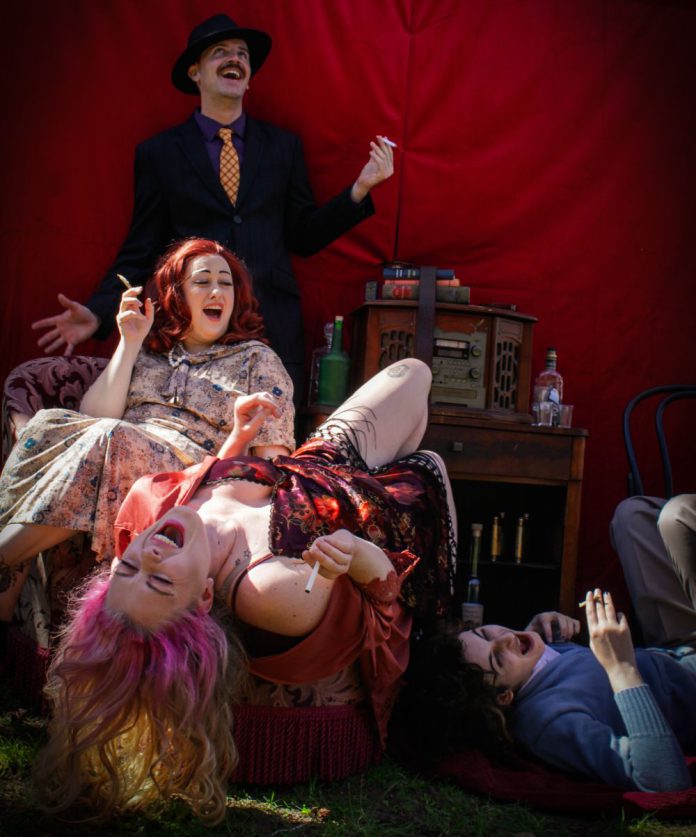
Renegade Theater’s Reefer Madness: The Musical hits Santa Cruz with wild satire, big performances and sharp humor, running April 3 through April 20 at the Vets Hall.
Legendary folk-rock guitarist Richard Thompson brings decades of masterful songwriting and virtuosic playing to the stage, delivering an unforgettable live performance rooted in British folk and rock tradition. At The Rio, Sunday April 5.
A pesticide reality tour in Pajaro Valley raises concerns about toxic agricultural chemicals near schools as Santa Cruz County reports higher-than-average pediatric cancer rates.
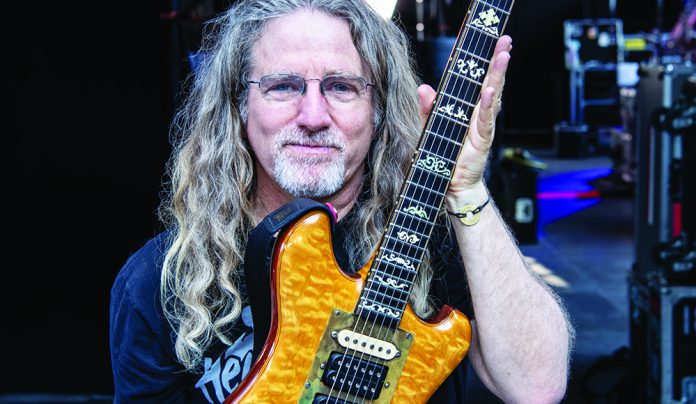
Famed rock photographer Jay Blakesberg brings decades of iconic music imagery to Santa Cruz, with a special appearance at Nicely Gallery on April 3 from 4pm.
From a tongue-in-cheek Wharf debut to new pizza and vinyl in Aptos, plus updates from Watsonville and beyond, here’s a fresh roundup of Santa Cruz County dining news.
From a Santa Cruz lab to the world’s biggest stage, Visual Endeavors is building the technology behind immersive shows at the Sphere and beyond—where music, light and real-time graphics converge.