Councilmember Shebreh Kalantari‐Johnson’s recent letter (GT, 4/13) praised the city’s group of new policies affecting unhoused people, referring to them as being a “deeply collaborative citywide effort.” The policies, though, remarkably did not include collaboration with the community that they directly affect, making her premise disingenuous, at best.
In a March meeting with Santa Cruz Cares, Kalantari‐Johnson said that she had not, in fact, talked with unhoused people about the OVO, nor at any point sought out overall unhoused community input on it. The other council members present, Renee Golder and Martine Watkins, also acknowledged that they had never consulted with people living in oversize vehicles about the proposed ordinance.
It would be hard to imagine any effort that so deeply impacts a group of people to be considered
collaborative—especially about issues so dear as housing, sleeping and fines that include having one’s home be taken away—without actually talking with them about it and soliciting their input at every point.
If a process affected housed members of the Upper Westside, for instance, to the point of them being fined and having their place to live and sleep be taken away, I can only imagine the amount of conversation, including marathon council and committee meetings, it would take to develop realistic and fair regulations. People who are unhoused subsidize those who own homes via the property tax deduction, but we wouldn’t only ask unhoused people to determine rules around housed people’s property.
Though on a smaller scale, this is not dissimilar to some of Ronald Reagan’s destructive policies, and we are living the results of those from so many years back. Like his policies, this has embedded racism, classism and queerphobia, and it continues the shift to overburden already marginalized and fragile populations to avoid having even a visual burden of seeing poverty that some housed people seem to find more offensive than actual poverty.
It’s painful to think of the effects of the OVO in particular on people’s lives, and its impact on what seems to be exceedingly low on the scale of priorities: The death count among unhoused Santa Cruz residents and the quality of life for those who are unhoused.
The city council and we who live here would be far better off if we were to orient more around the whole Santa Cruz community, not just the ones who have more power, by inviting and involving all major population groups to the discussions that affect us. That includes doing outreach to populations who have less voice and less access. We can see how much stronger our communities are when we include all of us.
When you are working on issues that involve a population, include them from the start, and include them wholeheartedly. Please look beyond those with loud voices who feel that the cultural rules as they stand are just.
Anna Paganelli
Santa Cruz
These letters do not necessarily reflect the views of Good Times.To submit a letter to the editor of Good Times: Letters should be originals—not copies of letters sent to other publications. Please include your name and email address to help us verify your submission (email address will not be published). Please be brief. Letters may be edited for length, clarity and to correct factual inaccuracies known to us. Send letters to le*****@*******es.sc
There’s not many holidays we do themes around, but I’ve always felt like it was important to do an Earth Day issue. We all make jokes about overhyped holidays (yes, stores will be putting out their Christmas stuff any time now), but Earth Day—which falls on April 22 this year—is chronically underappreciated. It was founded in 1970 by San Francisco peace activist John McConnell, and it’s worth going back and reading the original Earth Day Proclamation he wrote; it’s a beautiful piece of writing that asks world leaders to not only “redirect the energies of industry and society” toward sustainability and “provide an opportunity for the children of the disinherited poor to obtain their rightful inheritance in the Earth,” but also to “peacefully end the scourge of war.” All of those goals resonate deeply this year.
Luckily for me, it’s very easy to put together an issue focused on sustainability issues when we have a science writer like Erin Malsbury. She has a great cover story on foraging which takes a much more comprehensive look at the phenomenon than I’ve seen before—we all know about mushroom foraging, but what about seaweed? It may inspire you to go out and do some gathering yourself. Erin also writes this week about the struggles at—and potential of—our much-heralded PG&E alternative Central Coast Community Energy. It’s a balanced look at critics’ charges (no pun intended, for once) and agency counterpoints that cuts through the incredible layer of bureaucrat-speak around this issue. Happy Earth Day, and here’s to a better world.
STEVE PALOPOLI | EDITOR-IN-CHIEF
LETTERS TO THE EDITOR
ONLINE COMMENTS
RE: CASEY SONNABEND
One correction, if I may … Anne Rice was not a benefactor of Casey’s. It was her husband that loved Casey and his work and who kept him in paint and canvas with a roof over his head for several years.
— Dag Weiser
Ryan Masters responds: Yes, Stan Rice was the initial contributor, but Anne signed off on the trust. Also, Stan died in 2002 and Anne continued payments until her death. However, Anne didn’t love Casey at first, and was jealous of his relationship with Stan for the first decade or two.
RE: STREET VENDING
Hallelujah on restricted street vending! It’s crowded enough by the beach without having to sidestep dozens of carts brought by vendors from the East Bay selling trinkets. The beach is for locals and visitors, not vendors.
— Reality Check
Let people sell what they want. The tourists obviously want it or else these sellers wouldn’t be there selling. This is capitalism, that is the reality.
SPOTTED ON GEMSTONE This submission comes from a Dutch photographer on vacation in Ben Lomond. He shot the ladybug taking off from amethyst with a 100mm macro lens. Photograph by Pim van den Heuvel.
Submit to ph****@*******es.sc. Include information (location, etc.) and your name. Photos may be cropped. Preferably, photos should be 4 inches by 4 inches and minimum 250dpi.
GOOD IDEA
CAN’T STOP THE ROCK YARDSummer concerts are coming to the Quarry Amphitheater, which got an $8 million dollar makeover in 2017, closed down for Covid in 2020, and is finally reopening for concerts. This summer’s shows include Mexican-born singer-songwriter Carla Morrison (June 24) and electronica pioneers Sound Tribe Sector 9 (Aug. 12-13). The shows are produced in collaboration with Noise Pop; tickets just went on sale at quarryamphitheater.com.
GOOD WORK
Just in time for Earth Day, the City of Santa Cruz is being recognized for its work to protect the ocean. Last week, the nonprofit organization Project O certified Santa Cruz as a “Blue City” through the Blue City Network (BCN), based on an assessment of the city’s environmental initiatives and commitment to protecting its waterways and ocean. Find out more at project-o.org.
QUOTE OF THE WEEK
“Look deep into nature and you will understand everything better.”
Much is revealed in this year’s Best of Santa Cruz County. To start, take a look at the lists of winners from many different sectors of local life. These are the people, places and things that thousands of our readers chose as the very best this area has to offer. Notice that many of the businesses have been around a long time—and when the pandemic began in 2020, not all of them were sure they’d make it. Just as our readers cast their ballots to show their love of these local favorites, we all committed to supporting them with our patronage over these difficult two years. We lost plenty, but we also rallied to make sure we wouldn’t lose more. When this whole thing started, people were fond of saying, “We’ll get through this together,” and this magazine is filled with hundreds of examples of community members who—just as we helped them—helped all of us to get through.
What’s also revealed is that we’re at a whole new level of rebirth, one that we’ve wanted and needed for a long time now. There are exciting new places to go, and old friends we’ve missed (like pretty much the entirety of the Arts and Culture section, for instance?) are open to us again. May this trend never stop.
There are so many other revelations in these pages it would be impossible to list them all. (Here’s one to puzzle over in the Editor’s Picks section: is our staff completely obsessed with desserts and beaches? Spoiler alert: Yes!) So just relax, turn the page, and get ready to find out everything you need to know about the Best of Santa Cruz County.
Sometimes you have to stop and smell the roses. Other times, the rosemary, sagebrush and ocean breeze. Seriously, at the right time of year, this trail smells phenomenal. I recently stopped in my tracks mid-run when I caught a whiff of the sagebrush. Just outside of town in Wilder Ranch, the Old Cove Landing Trail to Ohlone Bluff Trail is an easy, flat and friendly 2.5-mile loop. Besides the aroma, attractions include a snowy plover preserve overlook, a fern-lined beach cave—appropriately named Fern Grotto—and a harbor seal hangout. Back near the parking lot, Jacobs Farm rosemary fields line the road. Who nose what else you’ll find! ERIN MALSBURY
Best Way to Satisfy a Late-night Taco Craving
Tacos Los Jacona
It’s not really clear to me what time Tacos Los Jacona opens or closes up shop. I’ve ordered food from this well-known Watsonville food truck on 1375 Freedom Blvd. at 6pm and I’ve also done so at midnight. And while having a taco at any time of the day is satisfying, there’s nothing quite like the latter. Dressing up a plate of hot al pastor tacos in the middle of the night with cilantro, onions and salsa, and scarfing them down while chopping it up with friends connects me to Watsonville like few other things. It’s like you can feel the heart of the little Santa Cruz County city—or maybe that’s just the vibrations from the lowrider trucks that speed by this place? TONY NUÑEZ
Best Place For Natural Wines
Apèro Club
Walking into the Apèro Club on the Westside, you just feel cool. Maybe it’s the dim, red lighting that seems to pulse with the music, maybe it’s the song playing that sounds like it’s out of a Wes Anderson movie, or maybe it’s the people nodding their heads along with the song as they pour your wine. Whatever it is, they’ve got it—and they make you feel like you do, too. If I were a Hollywood agent, and Apèro Club was an aspiring actor, you would catch me using the phrase, “you’ve got that special something, kid.” Granted, I am a millennial, so I put significant weight on the experience of a place when I give recommendations. But growing up in Wine Country, I have a snobby wine side, and Apèro’s hand-picked selection of natural wines pass my, dare I say, “elevated” palette. From funky reds to crisp whites, you will be sure to impress both your wine friends and your cool friends, and intimidate everyone in between. AIYANA MOYA
Best Chocolate Square of Irresistible Goodness
Companion Bakeshop Brownies
It all begins with a mouse-sized nibble—just enough to taste the lay of the land. Then comes a barrage of finger pinches; it’s as if you’re hypnotized, snatching piece by piece on autopilot, until the entire gooey cube of deliciousness disappears into the underbelly of your belly, leaving only a shadow of what had sat undisturbed just a few minutes earlier. I’m not even a big fan of chocolate, but I just can’t help myself around these tasty pastries. Furthermore, I usually can’t stand walnuts in baked goods. Still, somehow, Companion delivers the whole package, walnuts included, in a way that makes me forget that they’re even part of the equation. Companion’s brownies are everywhere—Santa Cruz, Aptos and even the Cabrillo Farmers Market—so you might as well give in. ADAM JOSEPH
Best New Thrift Store
Forever Thrift
I am something of a bargain hunter, especially when it comes to clothes. I love to upcycle and buy secondhand, and finding inexpensive clothes at thrift stores has been something of a specialty of mine ever since my mother and I used to hit the yard sales every Sunday. So when I unexpectedly found Forever Thrift on Seabright Avenue, I was thrilled. The cheap prices (some clothing items priced as inexpensive as $3), the graphic tees and vintage dresses, the name brands — I was in heaven. There’s so much to choose from, and sifting through the racks of clothes, you will inevitably find a gem, and one that’s unique at that. AIYANA MOYA
Best Place to Nap Your Day Away
South County Beaches
Whenever I write about Watsonville’s beaches, I have to do so with caution. Unlike the beaches in Santa Cruz, South Santa Cruz County’s beaches are not overpopulated with rows of hotels and tourists. Watsonville’s beaches are pristine and isolated. They’re the perfect place to go to get away from everything and anything. That’s why I have to proceed cautiously: Watsonville folks don’t want outsiders to know this. Sure, there are no beachside restaurants, coffee shops or bars. But you don’t go to Sunset State Beach or the Dunes for that. No, you go there with your blanket, a book, some sunscreen and a few beverages and snacks to enjoy a beach bum day. I’ve already said too much. I can feel the eyes of 53,000 Watsonville residents bearing down on me. TONY NUÑEZ
Best Winery for Alfred Hitchcock Fans
Armitage Winery
Not to be confused with the Armitage Tasting Room in Aptos Village, the Scotts Valley estate where Armitage grows its grapes and produces its wine was once the renowned filmmaker’s home away from home. From the 200-acre property, you feel like a beaked extra from one of the director’s most well-known films perched high up, overlooking the Monterey Bay. In 1940, the famous director shelled out $40,000 after coming across the spot during a scouting location trip for Rebecca. As part of Good Times’ 2021 Halloween issue,Editor Steve Palopoli wrote a piece asking, “Why Scotts Valley?” Adam Roche, the podcaster behind The Adventures of Alfred Hitchcock, offered a theory: “I think he was just attracted to that kind of rugged piece of the world.” Avoid the shower if you’re ever there. The estate is only open for special events and its Tiny Winery Concert series. armitagewines.com. ADAM JOSEPH
Best Place to Destroy a Longboard
38th Avenue
Move over, Cowells. Move over everyone, actually—and quickly. There are four people on a two-foot wave, and they’re somehow all about to collide. On a crowded day at 38th, every wave is a party wave, intentionally or not. Sometimes the party gets a little too lively. Between the, shall we say, relaxed etiquette and the rocks along the shore, it’s not unusual for boards to come away from the spot with a few new dings. On the bright side, there’s no better excuse to dive down the resin-filled rabbit hole of board repairs or get to know some local professionals. ERIN MALSBURY
Best Place to Travel Back in Time
Villager
“Roads? Where we’re going, we don’t need roads.” I’ll do Doc Brown one better: we don’t even need a stinking DeLorean to travel back in time in Watsonville. Just go to the Villager at 1032 East Lake Ave., and I’m sure you’ll bellow out a “Great Scott!” This local landmark is a dive bar’s dive bar. There are no fancy beers, the drinks will put some hair on your chest and make the hair on your head fall off, and the jukebox will tear your eardrums in two. But, hey, there’s no other place like it in Watsonville, or Santa Cruz County for that matter. Make sure to bring cash, and don’t worry, the locals who call this place home don’t bite. TONY NUÑEZ
Best Ocean Spray
West Cliff Blowhole
It’s no secret that West Cliff is home to some splash zones. When the waves are pumping, eruptions of sea spray dot the shore. But there’s one special spot not far from Natural Bridges that really puts on a show. When the tide and swell align, backwash and incoming waves collide with the cliff and spout a geyser-like stream high into the air. To find it, luck out with conditions and listen for something that sounds like a whale’s blowhole. At best, you’ll get a mesmerizing natural spectacle, and, at worst, a thoroughly scenic stroll. Pair it with a kimchidilla from Steamer Lane Supply. They’re so good that I almost wrote about that instead. ERIN MALSBURY
Best Place for a Chocolate Chip Cookie
New Leaf Bakery
This one is going to be controversial. I know Pacific Cookie Company is right there, and they are the heavyweight champion of Santa Cruz cookies. The thing is, I don’t even really like chocolate chip cookies. I know this is a cardinal sin, and if I were a serial killer—which, for the record, I am not, but if I were, this would be the character trait that my friends would point to as an indication that something was truly off with me. So with the concession that I don’t like these cookies in general, and I don’t eat them often, I would like to make the case for New Leaf bakery’s chocolate chip cookies. Maybe my expectations are already lowered—after all, how good could a grocery store cookie be, I think as I toss it one onto the conveyor belt. Maybe it’s because it’s an unexpected treat, an afterthought. Regardless, these soft, huge cookies are worth $4, and will continue to be the only ones I buy, and I will die on this hill. AIYANA MOYA
Best Place to Watch the World Burn
Highway 129 Roundabout
Back in 2016, Michael Caine’s monologue from The Dark Knight that ends with the phrase “Some men just want to watch the world burn” was hijacked by political pundits trying to understand why we decided to put the orange man in office. Well, I’m taking this phrase back. The men (and women) who want to watch the world burn are Caltrans. The state transportation agency thought it was a good idea to open a roundabout on Highway 129 just outside of Watsonville without all of the needed signage in place late last year. The idea was that the addition would slow down traffic in a dangerous intersection where collisions were all too common. I hear that early indications show that has been the case overall. But I’ve also heard and seen people drive over the center divide, and fall into a perilous circular limbo in the roundabout’s center lane. I’m sure things will improve, but, for now, Caltrans is squeezing unsuspecting drivers’ faces in their palms and asking them, “Why so serious?” Battinson, where art thou? TONY NUÑEZ
Best Slice of California History You Never Knew Existed
Rancho San Andrés Castro Adobe
You’ve probably driven by the Watsonville exit hundreds of times without giving it any thought. Why would you think that an important piece of California history exists just beyond the off-ramp for Freedom Boulevard? But the Rancho San Andrés Castro Adobe has been sitting there, just a couple miles from Highway 1, for over 170 years. Initially built as the Castro family headquarters, the structure was home to 14 different families following the Castro era. The adobe survived two of California’s largest earthquakes, but still stands proudly overlooking the Pajaro Valley, representing one of the last surviving adobes of its kind on the Central Coast. State Parks now own it, and through a unique collaboration with Friends of Santa Cruz State Parks, the monument has been undergoing restoration efforts for nearly two decades. That’s dedication! Find out more at thatsmypark.org. ADAM JOSEPH
Best Way to Show Your Environmental Friendliness While Surfing
Ashley Lloyd Eco-Boards
Let your environmental freak flag fly! Keep your ’92 Celica running on used fryer oil! Make your toothpaste out of kelp and bond with your egg supplier! (After all, chickens lay tastier eggs for friends.) Most importantly, if you’re a surfer—even one who doesn’t let their environmental freak flag fly—Santa Cruz’s Ashley Lloyd is one of the most talented eco-aware shapers around. She had already made a name for herself as a shaper and scored an endorsement from Oprah, but decided to flip her approach and use eco-materials only. Lloyd traded standard polyester resins for bio-based epoxy. She also abandoned fiberglass layers in favor of flax cloth. The risk has paid off; Lloyd says hereco boards are “strong and maintain a smooth glide.” The boards are also Ecoboard-verified through Sustainable Surf and approaching 0% waste. ADAM JOSEPH
Best Place to Work Remotely in Peace
Capitola Branch Library
Working remotely is fantastic in a lot of ways, but there’s a limit to the number of days I can sit in my house for eight hours straight. For me, coffee shops are more of an inconvenience than they’re worth: buying a $6 coffee to sit in uncomfortable chairs surrounded by loud espresso machines always leaves me questioning my decision to leave my house. Enter one of the best things to come from our tax dollars: libraries. The Capitola Branch Library sits across from a trail that leads to Peery Park, and from inside, you can see oak and eucalyptus trees through the tall windows that line the building. There are dozens of wooden desks scattered around the bright library, each one with its own outlet for chargers and comfortable leather chairs. There are a few meeting rooms, where you can discreetly take calls. It’s quiet, and sunlight brightens the room with natural light thanks to the tall windows. And, of course, we love to support public libraries. AIYANA MOYA
Best Scone Bliss
Cafe Ivéta’s Lavender White Chocolate
“How do they do it,” is one question Cafe Ivéta’s lavender, white chocolate scones might prompt you to ask. Another is, “would having one a day for the rest of my life really be that bad?” I’ll admit to a sweet tooth, but white chocolate has never been my go-to. Cafe Ivéta’s scones are just that good. A little crunch on the outside, light and fluffy on the inside, and subtly sweet, it’s no wonder these baked bundles of goodness are the cafe’s claim to fame. Cafe Ivéta opened on Delaware Ave in 2010, but started selling packaged baking mixes more than a decade earlier. They use flour from a miller in San Francisco, apricots from Hollister and other ingredients from local sources. I-veta you’ll fall in love. ERIN MALSBURY
Before our walk through the woods, Caitlin Wild places one hand on her heart and one on the Earth.
“It’s just sending this place some real heartfelt gratitude, in recognition of all the wild ones, seen and unseen,” she says. “Extending our gratitude to the native people who call this place home and stewarded this land for thousands of years before us. May we walk humbly, remembering our place in the family of things, and listen to the wisdom of the wild ones.”
Wild, the founder of Mountain Sea Adventures, started guiding edible and medicinal plant and fungi walks about five years ago. She began foraging and getting to know the species around her—“making friends,” as she calls it—10 years before that.
“It all started with mushrooms,” she says with a smile. “I went mushroom hunting with some friends, and we found a bunch of edible mushrooms. And I just could not believe you could go outside and find food everywhere. Delicious, diverse, healthy food that evolved here.”
Mushrooms are the first to draw many foragers into the wild world of gathering. But with its kelp-covered shorelines, oak-dotted chaparral, redwood forests and coastal wetlands, the areas around Santa Cruz provide much more.
GOING WILD
Gathering wild foods in Santa Cruz is nothing new—Northern California and the Central Coast have nurtured communities for more than 10,000 years. In this area, Awaswas and Mutsun-speaking peoples cared for hundreds of types of wild plants for many generations.
But the forced removal of native people from their lands and genocide at the hands of Spanish and American settlers made passing down ecological and cultural knowledge difficult.
“The thousands and thousands of people that were missionized and then emancipated after secularization, they really did not have access to many of the resources that their parents or grandparents were familiar with,” says Alan Leventhal, an ethnohistorian and archaeologist who has worked with the Muwekma Ohlone Tribe in the San Francisco Bay Area since 1980 and the Amah Mutsun Tribal Band since 1989.
Today, some Indigenous nations reunite with their ancestral lands through land trusts. The Amah Mutsun Land Trust conserves and restores traditional knowledge and stewardship practices, and the Muwekma Ohlone Preservation Foundation similarly seeks to reconnect the tribe’s people with the land and restore culture.
“It takes a very long time to establish a relationship with those plants. Our people did not domesticate plants intentionally,” says Valentin Lopez, Chairman of the Amah Mutsun Tribal Band. “Whenever you domesticate a plant, you dominate it, and you subordinate that plant to be lesser than you. We should never do that with plants. Plants are our relatives.”
Viewing plants as equals, Lopez’s ancestors would leave a gift or an offering whenever they took something.
“It’s a reciprocal relationship,” he explains. “We have a responsibility to take care of this plant—to be responsible for them. So it’s not about going out and just randomly taking. That’s really disrespectful, and it should never be done that way.”
Tobacco, songs and prayers are a few examples of traditional offerings, but Lopez declines to give too many details.
“I don’t want people thinking that I’m giving them the right to gather, or that I’m teaching them the native way of gathering,” he says.
When asked about ethical ways for non-native people to forage, he emphasizes the importance of learning what plants mean.
“That plant is a gift from Creator, and that plant is a relative of ours,” he says. “And we have an obligation.”
He recommends the book Tending the Wild by Kat Anderson as a way to learn more about indigenous relationships with plants.
As far as what to focus on, “maybe people should learn how to gather the non-native plants only, and I can’t help much there,” he says with a chuckle.
KNOW YOUR SPORES
There are plenty of non-native organisms to choose from, but starting out with identifications can feel daunting. Most foragers recommend getting to know one species inside and out first. The rest follows naturally.
For many people, especially in Santa Cruz, that first species is some kind of mushroom.
“We have this very active and wonderful, dedicated Fungus Federation here,” says Maya Elson, who leads mushroom hunts, applied mycology workshops and plant foraging walks with Mycopsychology.
Most major cities in California have mycology clubs, but the Fungus Federation of Santa Cruz stands out. The club hosts the annual Fungus Fair, forays, talks and workshops. Longtime members also contribute to the science of mycology at large, publishing identification books and discovering new species.
But even though mushrooms are “something that has a little more of a presence in the everyday person’s mind around here,” Elson says the average person still suffers from mycophobia.
“I have a lot of people who are afraid to even touch mushrooms, afraid to let their kids get excited about them,” she says. “And I just find that really sad. It’s a real barrier to us finding our place within our ecosystem and building relationships with our ecosystem.”
While not wanting to be alarmist, Elson and other experts emphasize the importance of cross-checking identifications, and being 100% certain that foraged finds are safe before eating them. Most people know that putting the wrong mushroom in your mouth could make for a very bad day.
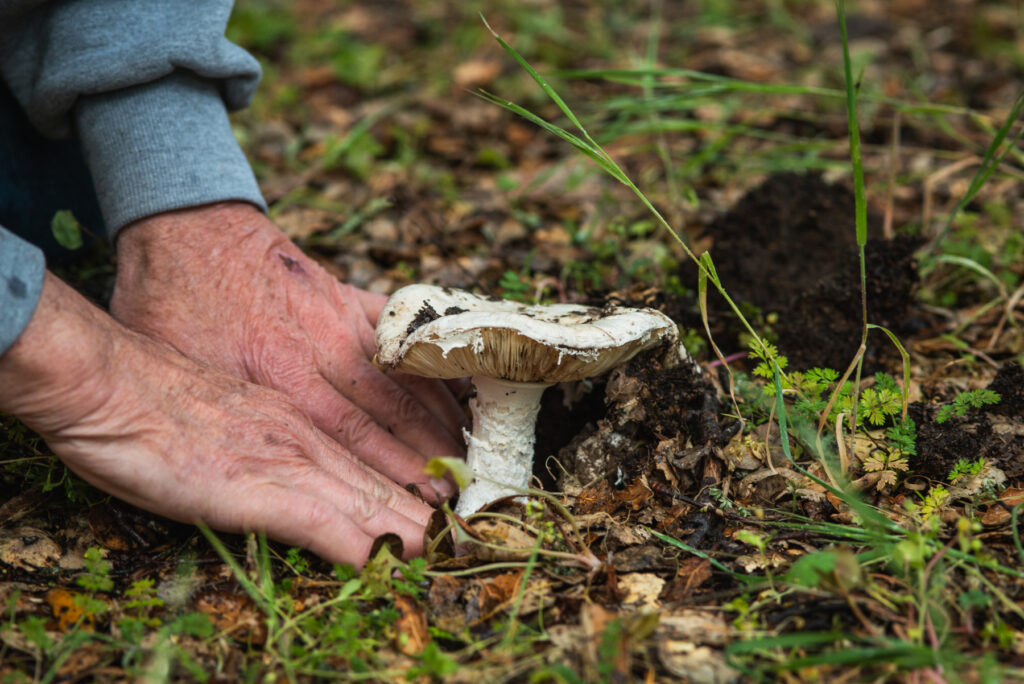
Phil Carpenter digs up a death cap (Amanita phalloides). One of this size contains enough toxins to kill a large adult. PHOTO: Erin Malsbury
Phil Carpenter, a retired chemist who has led mushroom walks at UCSC for over 30 years, consults with the local hospitals on mushroom poisonings. He recalls one deadly season in particular.
“There was a rumor going around Santa Cruz that all amanitas—a genus of mushroom—are hallucinogenic,” he says with a sigh. People were accidentally poisoning themselves with death caps, one of the deadliest mushrooms in the world.
“It’s a horrible way to go,” he says. “Basically, your liver dissolves, and you die in your own toxins.”
The solution, he says, is more education. “It’s being cursed with a little bit of knowledge, and not enough to make a proper decision.”
Many of the calls he gets come from panicked parents whose toddler has just eaten something.
“They rush them to the hospital, and they terrorize these poor kids. And half the time, they’ve got a good edible,” he says with a chuckle.
Carpenter started foraging as a young child with his family. He encourages people who want to get into it as adults to join a club like the Fungus Federation.
“Get to know people who know what they’re doing, and learn from them,” he says.
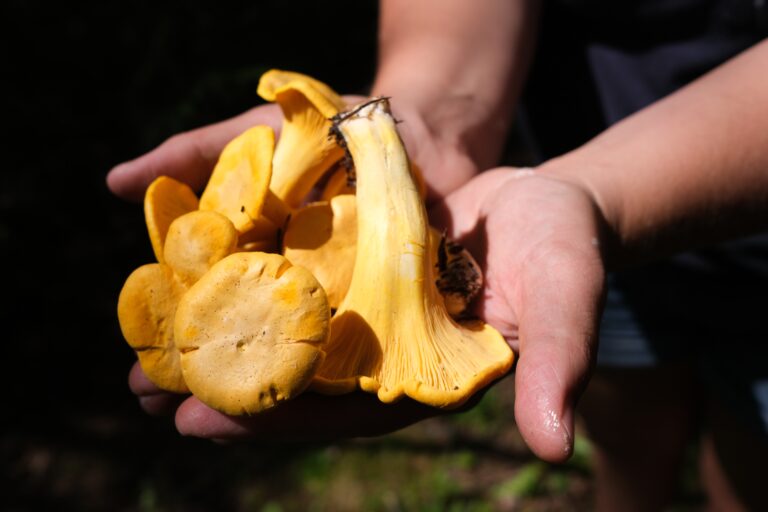
Some of his favorite species to find in California are porcini, morels, chanterelles and candy caps. The latter tastes almost like maple syrup when dried, and are often added to desserts such as cookies and ice creams.
ECO GATEWAY
One of the challenges to mushroom foraging in the area is finding legal locations. Most public lands do not allow harvesting.
“There’s just a real limitation to places that we can legally forage,” says Elson. “And then those places are often way over-harvested.”
Some of this strict regulation comes from a lack of understanding of fungi, foragers say.
“When you’re doing it right—the way I teach people—it’s actually regenerative,” says Elson, who studied fungal biology at Evergreen State College in Washington.
“A mushroom is a fruiting body of this stuff called mycelium,” she explains. The mushrooms pop up to spread spores, which are “little microscopic packets of genetic information that float around in the wind,” similar to tiny seeds.
By collecting mushrooms in baskets or bags with holes and walking around the forest, “you’re like a little spore fairy,” says Elson.
Since most of the organism lives in the soil as the root-like mycelium, people should take care not to disturb the ground around mushrooms. That can do more damage than over-harvesting, Elson cautions.
Most of these mycelia live in symbiosis with specific plants. They exchange sugars, nutrients and minerals through their root systems.
This partnership is why foragers look for specific trees when searching for certain mushrooms. And it’s how mushrooms become a gateway into getting to know the rest of an ecosystem.
“Mushrooming has given me a completely different way of looking at things,” says Phil Carpenter. “The interrelationship between the fungi and the trees, and knowing your trees—it has made me a better naturalist.”
LESSONS FROM THE LAND
As I walk through the forest with Caitlin Wild, she stops frequently to point out “friends.” One thing that begins to stand out among the mushrooms and trees is the variety of fresh greens.
Wood sorrel, also known as sour grass, has a tart, almost lemony taste. Curly dock, a wavy-leaved weed native to Europe, also tastes a bit sour, and can become mouth-puckeringly bitter as they mature.
Claytonia, also known as miner’s lettuce, provides a sweeter flavor.
“The younger claytonia looks pretty distinct from the older claytonia,” says Wild. “So you want a guidebook that really shows the life cycle of the plants or mushrooms that you’re harvesting.”
Wild advises using two or more books to cross-reference identifications. She stays away from phone apps because of spotty cell service and high margins of error.
“Be 100% sure before ingesting anything,” she says. “And if you’re ever in doubt, don’t eat them.”
Non-native edible flower blossoms like wild radish, common mustard and nasturtium provide a pop of color and delicate floral taste.
Just like with any foraging, when harvesting greens, it’s important to stay aware of your impact.
“Only harvest abundant species. Only harvest, maximum, one-quarter of what you see. Only take what you need—duh,” says Wild. “And make sure you have permission.”
She points to a small beetle on a claytonia leaf.
“What I mean by that is sometimes you get a very clear ‘no.’”
An animal on the plant, a spider web or a poisonous species nearby all signal a forager to move along.
We come across a patch of poison oak.
“I consider poison oak—or what I call “protector oak,” because they protect the ecosystem from human invasion—to be a master teacher,” says Wild.
She calls plants and fungi “they” rather than “it.”
“If we really believe that the whole ecosystem is alive, which of course I do, I don’t want to objectify them by calling them ‘it,’” she explains.
Wild traces the roots of that practice to Indigenous languages.
“What that does is it actually brings you into a relationship with them, and when we objectify and call things ‘it,’ it’s much easier to destroy and not take care of them,” she says.
Every few feet, we pass new plants with new uses. I ask Wild whether she has a favorite thing to look for.
“The thing that I’m looking for,” she says with a laugh. Wild’s searches change with the seasons. And despite her deep familiarity with her surroundings, she still learns constantly.
“You can dive deep into it and over the course of your lifetime never be done,” she says.
In addition to medicinal and edible plant and mushroom walks, Wild leads longer immersive trips into nature. But you don’t need to go on a backpacking trip to connect with the non-human world, she says. “You can just go outside and take your shoes off or put your hands on the Earth.”
SEE FOOD
Some professional foragers, like Wild and Elson, make their living guiding people through nature. Others collect commercially.
As the founder of Seaquoia, Ian O’Hollaren spends his days harvesting wild kelp. He became interested in organic fertilizers while studying horticulture in Hawai’i and learned about the use of seaweed. When he returned to California, he bought an identification book and started learning different species.
Along the West Coast, cold, nutrient-rich water wells up from the deep sea and supports a huge diversity of seaweeds.
“Dwarf rockweed, sea palm, kombu, nori, wakame, cat tongue, grapestone, splendid iridescent, bladderwrack…” he says, reciting species found in the intertidal zone—the space between low and high tides.
Seaweeds, which are actually algae rather than true plants, fall into three categories: red, brown and green. Although we might have trouble digesting some of them, no known seaweeds are considered poisonous.
O’Hollaren, who branched out from fertilizers to culinary applications, has a commercial license and harvests away from towns, river mouths and other potential sources of pollutants. He’s also careful not to collect from no-take marine protected areas and avoids rare species.
Young cats tongue seaweed (left) and bladderwrack seaweed (center) can both be harvested in amounts under 10 pounds without a permit. California mussels (right) require a fishing license and should only be harvested in season to avoid paralytic shellfish poisoning. PHOTO: Erin Malsbury
“Everyone should always look into their local regulations and be mindful,” O’Hollaren says.
When he collects, he prunes just a bit from each plant.
“Cleaning them off is how I look at it—kind of taking some weight off the plant,” he explains.
O’Hollaren works with farmers, restaurants and cosmetic companies on everything from fertilizer to kelp beer.
“It’s been really fun exploring and creating these relationships with different companies and watching them grow and create their ideas,” he says.
For home kitchens, O’Hollaren suggests using kelps like any other vegetable. Starting with crunchier varieties can make the process a bit less intimidating.
Dwarf rockweed, for example, gives a mild briny flavor without any of the sliminess you might expect from seaweed. It turns bright green when cooked and stays just as crisp as when raw.
The Seaquoia website lists other ideas and recipes for the kelp-curious.
GATHERING COMMUNITY
During one of my first forays to collect seaweed in the intertidal, a stranger cracked an urchin shell open and offered me a taste of uni. A few moments later, another stranger was describing the best way to steam mussels. As we meandered across the exposed reef, we exchanged tips and stories.
“It’s a great opportunity to bring generations of people together,” says Peter Mu, an investment advisor who spends his spare time free diving, foraging and organizing programs for the Fungus Federation.
The communities built through foraging help keep people and ecosystems safe.
“When people are interested in participating, every step along the way there should be communication about doing it legally, doing it appropriately, getting connected to readily available regulations,” says Mu.
“This is why groups like the Fungus Federation of Santa Cruz exist. Our purpose is to educate the public about how to enjoy the resources of fungi safely,” he continues.
Staying on top of state and county regulations—especially within the marine environment—can prove tricky. Mu has watched fisheries shrink and close over time, and things change seasonally.
For plants and mushrooms, policies often stay more consistent. But seasons and abundances are shifting as the climate changes.
“Climate change is definitely reflected in the mushrooms,” says Carpenter. With warmer temperatures and changing rainfall patterns, “we’re seeing more Southern California mushrooms sliding up here, and we’re seeing other things move north,” he says. “And the fungal health relates to forest health.”
Wild and Elson both agree.
“In the small amount of time I’ve been foraging—the past 15 years—the seasons have been changing,” says Wild. “The mushroom season is way shorter. The rains come later, and they are far fewer than when I started.”
She and Elson both suggest supporting Indigenous communities and land trusts as one way to help protect the environment.
“When you’re fed by the ecosystem, you naturally want to feed it back,” says Elson. “There are a lot of ways that we can support our ecosystem, and it’s really urgent that we do so right now.”
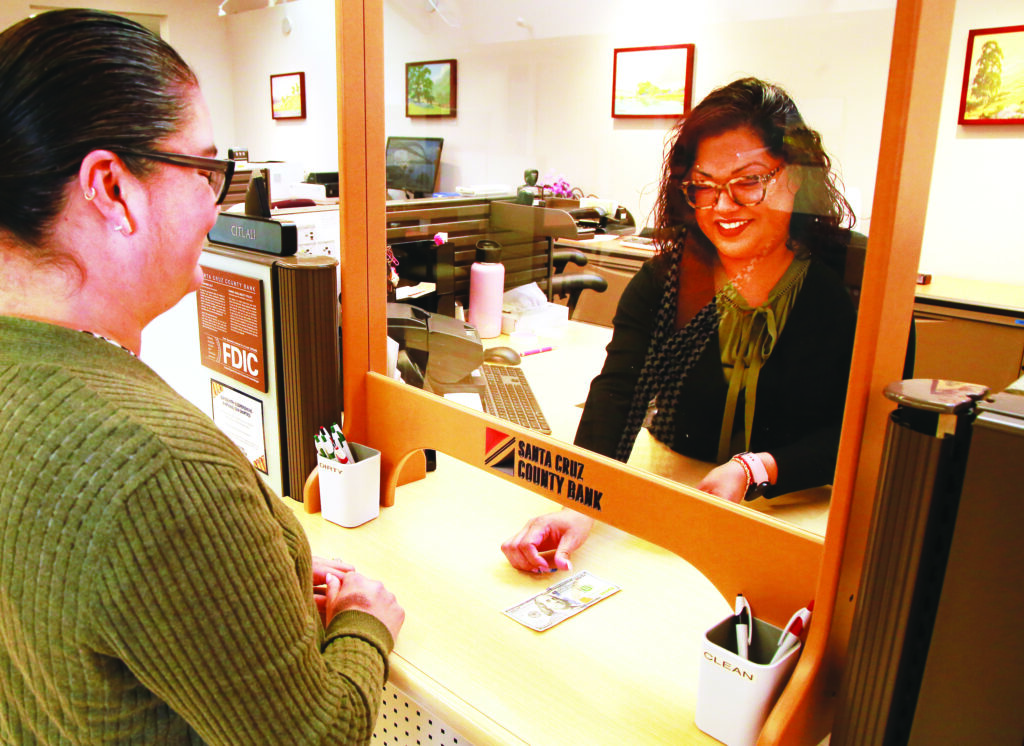
Santa Cruz County Bank focuses on helping local businesses and individuals.
1. SCCB has been a local community bank for 18 years. 2. Community banks are regional in size and only operate in California. 3. It recently expanded into Monterey County and plans to open a branch in Salinas by the end of the year. 4. Through its work with the Payroll Protection Program, SCCB distributed over $573.7 million during the pandemic and saved 50,000 jobs. 5. Customers are greeted by security guard Jose Rodriguez, one of the most upbeat people in Santa Cruz.
1. A family-owned business since 1973, Bookshop has survived earthquakes, flooding, fires and a pandemic. Independent bookstores are on the upswing but only survive through community support. 2. During quarantine, Bookshop delivered books on the sidewalk to customers who ordered ahead of time. 3. Its most recent bestsellers are Burning Questions by Margaret Atwood and All About Love, bell hooks’ final novel. 4. Event Director Chorel Centers’ current favorite books are Groundskeeping by Lee Cole and My Body by Emily Ratajkowski. 5. At the info desk, there is an emotional-support stuffed animal named Norbert Krunchbucket.
1. SC41 opened on 41st Avenue in 2008. 2. It takes pride in exceptional customer service and well-trained staff. 3. Owner Michael Baetge says he saw a “pickup in sales” during the pandemic, especially when it came to furniture built for comfort. 4. SC41 avoided many of the supply-chain problems that other furniture retailers faced during the pandemic—it doesn’t rely on China (where many factories shut down) or the U.S. southeast (where freak storms leveled the only two factories producing foam) for materials. 5. The space has been a furniture store since the 1960s and used to be home to the legendary Daffy Don’s.
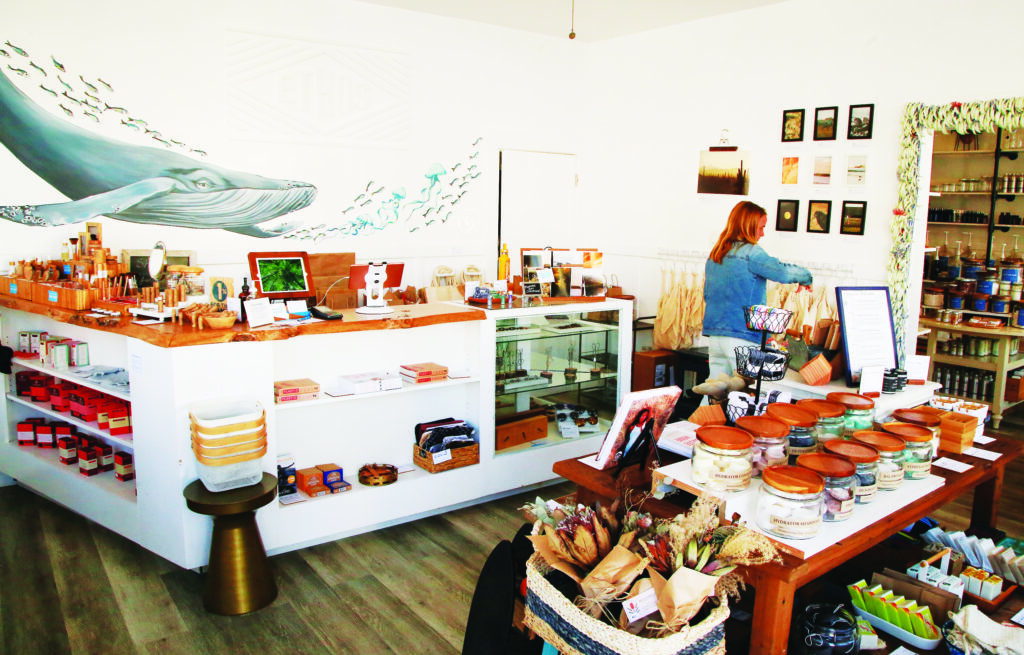
1. Meredith Keet owns the low-waste living shop and “refillery.” 2. After Keet’s family traveled around the world for a year, seeing first-hand the harmful effects of plastic pollution worldwide, they were inspired to make a positive change back home. 3. Customers, aka “first responders for earth,” look for eco-friendly items that help reduce climate change. 4. Shampoo and conditioner are Ethos‘ best-selling items. 5. Keet sources everything, and almost all items are made in North America. 6. Ethos’ goal: a shopping experience that sparks interest and inspiration to make positive changes.
7775 Soquel Drive, Aptos, 662-6000; 819 Bay Ave., Capitola, 464-5300; 75 River St., Santa Cruz, 457-5000; 2020 North Pacific Ave., Santa Cruz, 600-4000, 4604 Scotts Valley Drive # 10, Scotts Valley, 461-5000; 595 Auto Center Drive, Watsonville, 761-7600; sccountybank.com
Bank (Credit Union)
Bay Federal Credit Union
3333 Clares St., Capitola; 48 Rancho Del Mar, Aptos; 2028 Freedom Blvd., Freedom; 420 River St., Santa Cruz; 255 Mount Hermon Road, Scotts Valley; 1481 Main St., Watsonville; 479-6000, bayfed.com
RUNNER-UP Santa Cruz Community Credit Union
Barbershop
Get Faded Barbershop
907 Cedar St., #3801, Santa Cruz, 600-8958, getfadedsc.com
RUNNERS-UP Waves & Fades, Guidos Barbershop
Boat Tour
Chardonnay Sailing Charters
790 Mariner Park Way, Dock FF, Santa Cruz, 423-1213, chardonnay.com
RUNNERS-UP O’Neill Yacht Charters, Stagnaro Charter Boats
2550 41st Ave., Capitola, 462-1300; 204 Union St., Santa Cruz, 423-1078; 224 Mount Hermon Road, 430-9029; 470 Main St., Watsonville, 722-2376; ccgoodwill.org
RUNNERS-UP The Abbot’s Thrift, Caroline’s Thrift Store
Tires
Lloyd’s Tires
303 River St., Santa Cruz, 219-4122; 311 Capitola Road, Santa Cruz, 346-1897; 5310 Scotts Valley Drive, Unit C, Scotts Valley, 777-5711; lloydstire.com
Over the last few years, communities along the Central Coast have been hoping a new public agency would transform their bills and lead a sustainable energy revolution.
Central Coast Community Energy (3CE) began as a local alternative to Pacific Gas and Electric Company (PG&E) in 2018. The nonprofit Community Choice Aggregation (CCA) promised to procure electricity from sustainable sources and put earnings into local clean energy programs. But five years in, reviews for the fledgling organization are mixed. Some customers are disappointed that 3CE has failed to make more progress on community-led initiatives. Others see its current path as an overwhelming success. And there are others who have never even heard of 3CE, despite the fact that they receive energy services from them on a monthly basis.
From any angle, challenging PG&E’s monopoly-like grip on energy procurement is complicated.
What is a CCA?
A CCA, also called community choice energy, is a public, nonprofit government agency that provides alternative energy supply. Instead of investor-owned utility companies (IOUs) like PG&E making decisions about energy contracts, CCAs allow local communities to buy power. They sell the energy to customers and partner with IOUs to deliver it over the grid. In many cases, CCAs aim to buy power from renewable sources and put profits into local clean energy programs.
In 2002, California Legislature passed Assembly Bill 117, which mandated that CCAs become the default providers for customers in their areas. People can opt out if they would rather buy from an IOU, but in many cases, the price doesn’t change.
Currently, 23 CCAs operate in California, and 3CE has grown to be one of the largest of the bunch.
“It’s an environmentally sound program, it’s economically viable and it really creates local control over our energy resources,” says 5th District County Supervisor Bruce McPherson. “So it’s a trifecta of sorts.”
He adds that his office spent several years and over 100 meetings studying how a CCA would work on the Central Coast before the establishment of 3CE.
3CE began as Monterey Bay Community Power in 2017. In 2018, local elected officials gathered at the County Building to celebrate its launch of residential service in Santa Cruz, San Benito and Monterey counties. They pitched the organization as a less expensive alternative to PG&E that would gather energy from sustainable sources.
It soon expanded to cover much more territory than the Monterey Bay Area. It adopted the name Central Coast Community Energy in 2020, and now also procures power for customers in San Luis Obispo and Santa Barbara counties, as well.
PG&E still maintains power lines and delivers electricity. Most users see 3CE as a line on their PG&E bill.
“It’s really a distributor of electricity,” says UCSC Emeritus Professor of Politics and sustainable energy expert Ronnie Lipschutz. “It doesn’t own anything. It has no capital assets to speak of.”
TENSIONS RISE
Much like a school district or municipality, 3CE operates as a public entity. Elected officials and city managers from cities and counties around the Central Coast make up a policy board and operations board that govern its direction. A separate, volunteer community advisory council (CAC) gives feedback and suggestions to the agency.
In a tense board of directors’ meeting earlier this year, CEO Tom Habashi and 3CE staff proposed to cut the CAC’s ability to set agenda items.
“They’re not to operate as an institutionalization of special interests or to steer or drive or tell the policy board where the policy board should be engaging,” said Chief Operating Officer Robert Shaw at the meeting. The proposed actions, he continued, were meant to stop an “emerging rift” between CAC members and staff.
“The amendments are not specific to any particular policy discussion,” said Shaw. “But in the last six months or more, we have seen, increasingly, issues that have come up that this sort of unchecked agenda-setting is beginning to conflict with board direction and staff’s prioritization of how to accomplish those goals set out by the policy board.”
Habashi says the CAC was complicating things like budgeting for energy programs.
“We had our own recommendations,” says Habashi. But some members of the CAC disagreed and created their own report to take to the policy board.
The proposed change would have limited the council’s role to commenting on topics brought up by the board and staff. Dozens of people shared thoughts on the proposal.
Some supported the direction. Others, including speakers from the Romero Institute, Ecology Action and the Sierra Club, opposed the change.
Several people worried it would limit public access to the agency and transparency.
“The perception was that the amendments would somehow stifle public input through the CAC regarding agency policies and programs,” says McPherson, who argues that this would not be the case. “At no time has there been an attempt to stifle public input either through the CAC or directly to the governing boards during public testimony.”
Dennis Osmer, the former Mayor of Watsonville who has sat on the CAC since it formed in 2018, sees the change as a transparency issue and says frustrations have been growing for a while.
“The focus has been less on the community part of things than profit-making,” says Osmer, who since 2004 has been the executive director of nonprofit Central Coast Energy Services. “It really blurs the line between private industry—a corporation—and a government entity.”
The bylaws change did not end up passing. Instead, 3CE created an ad hoc committee to discuss possibilities. “There was general agreement on a path forward to improve the CAC processes, which we’re planning to formalize and recommend to the board,” says 3CE spokesperson Catherine Stedman.
A QUESTION OF PROFITS
Although 3CE strikes some as corporate, the entity still differs from PG&E in a key way: profits, instead of going to private stockholders, are allocated to local sustainability programs.
3CE lists a wide range of programs on its website, including sustainable transportation, new construction, agriculture and energy resiliency.
“The overall picture is that we are investing more than $12 million in programs this year and have set a policy goal of spending 5% of our annual revenue to support programs moving forward,” says McPherson.
The agency funded 12 electric school buses in the last few years, including one that went to Bonny Doon Union Elementary School District. Last year, 457 customers received rebates for electric vehicles or EV chargers through the Electrify Your Ride program, and 270 EV chargers were installed.
The Ag Electrification program “provides incentives for replacing fossil fuel-powered agricultural equipment with new electric versions, including irrigation pumps, farm tools, utility vehicles and other equipment,” Stedman said. “Since this program has been running, 3CE has distributed or reserved a total of $684,000 in incentive payments for the purchase of all-electric ag equipment.”
“I think that 3CE is a resounding success story from the perspective of customers served, greenhouse gas emissions saved, cost to the customers and investment in complementary energy programs,” says McPherson.
But Osmer and other CAC members want to see more, citing that the agency makes “an outrageous amount of money.”
The 3CE 2021/22 annual budget lists $352,045,000 in total revenues. It allocated $12.2 million to energy program incentives and grants. As of Dec. 31, 2021, only $640,632 of that has been spent—$2 million less than the estimated YTD budget.
“A huge disappointment has been the absence of energy programs for the community that help with energy efficiency or electrification,” says Osmer. “And while they have a budget for that, it remains unspent.”
Supply and Storage
In 2020, 3CE bought about a third of its power from renewable sources—roughly the same percentage as PG&E—and more than half of its power from large hydroelectric sources. The agency promises to ramp up those numbers in the near future.
It took a big step in that direction this month as a large renewable energy project came online. The Slate solar and energy storage project is located in Kings County, and 3CE estimates that it will produce enough electricity to power 126,000 households a year. Alongside 3CE, Bay Area Rapid Transit, Silicon Valley Clean Energy, Stanford University and the Power and Water Resources Pooling Authority made power purchase agreements to support the project.
“We are on track to meet our goal of 60% renewable by 2025 and 100% renewable by 2030—15 years ahead of state goals,” Stedman said. “We have invested $1.1 billion in renewable energy projects, but those take years to develop—as we knew going in. We will have, by the end of this year, two of the large solar projects we invested in back in 2018-2019 starting to deliver power.”
Some of these projects, like Slate solar and storage, are somewhat local to the service areas. Others, like Yellow Pine solar and storage in Nevada, bring electricity in from out of state.
Smaller-scale, local energy generation could lower transmission costs and prevent large grid blackouts. But 3CE is in a bit of a catch-22 when it comes to pursuing that goal.
“3CE’s goal is to bill just a little bit cheaper than PG&E, which means it really has to procure the lowest-cost power that it can,” says Lipschutz. “And anything that’s built locally and is relatively small is going to be more expensive.”
Space for things like solar panels poses another issue.
“The conundrum is that local would probably be more sustainable and resilient,” says Lipschutz. “But you would need a lot of local generation.”
Habashi says the agency tries to support local suppliers, but keeps running into roadblocks—like when 3CE first put out a request for offers for energy contracts, and no local suppliers responded.
Then “one of them came in for 20 megawatts, which is very, very small,” says Habashi. “We need usually about 100 megawatts or more to be serious about negotiating.” But the agency told the supplier they would take it.
Two weeks later, the supplier withdrew its offer because of operating costs.
“For the third RFO, we basically said, ‘we’re only entertaining local offers for supply plus storage,’” says Habashi. “We got quite a bit of storage. A little bit more expensive than we can get elsewhere, but we took it. We got one—only one—supply contract that was solar plus storage, and we jumped on it.”
But after six months of negotiations, that supplier also withdrew its offer. Its land lease had fallen through, and it would not be able to build a solar field.
Now, 3CE plans to invest in local storage “large enough to be able to handle if you have a disconnection upstream,” says Habashi, explaining that local storage will greatly improve resiliency and system reliability for customers.
“It is a key strategy for us that we will go for large suppliers—whatever we can get, as long as it’s renewable as well as reasonably priced. Then all of our storage is going to be done locally,” he says.
The agency will soon select a single vendor to work with, and has its sights set on purchasing. “We want to own the assets,” says Habashi.
3CE and other CCAs are still startups compared to PG&E’s 117-year history, and they have several directions they could evolve.
“It’s hard to say how it’s going to go at this point,” says Osmer. “But it’s a new world.”
1. This year, the Blue Lagoon celebrates its 41st anniversary as downtown’s go-to nightclub. It’s operated under the same owners since it opened. 2. While shaking your booty on the dance floor, you can check out the not-so-hidden sculptured faces and butts watching your moves from the pillars. 3. Like several other establishments along Pacific Avenue, the Blue Lagoon has a basement accessible only by staff. 4. Several bartenders claim that the basement is haunted. 5. Not just a dance club, on any given night, patrons can see live performances by local and touring rock, metal, country and hip-hop acts. It’s also been the home of Santa Cruz’s longest-running comedy troupe, the Blue Lagoonies, for 17 years. MAT WEIR
The 2022 Best Dance Club: Blue Lagoon. Sculptured faces and butts watch your moves from the pillars.
1. 2022 marks Moe’s Alley’s seventh consecutive win for Best Live Music Venue. 2. Moe’s opened in 1992; in 2021, in 2021, Lisa Norelli and Brian Ziel bought it from longtime owner Bill Welch. 3. Best friends, Norelli and Ziel, had dreamed of owning a venue together for years. 4. Before it was Moe’s Alley, the building was other clubs–including Mona’s Gorilla Lounge and Cha Cha’s, where local legends like Camper Van Beethoven and BL’AST! played. 5. Moe’s hosts around 240 shows a year, featuring musicians like blues rocker Sue Foley (pictured below), reggae legends Israel Vibration and the Don Was-fronted pop outfit Was (Not Was). MAT WEIR
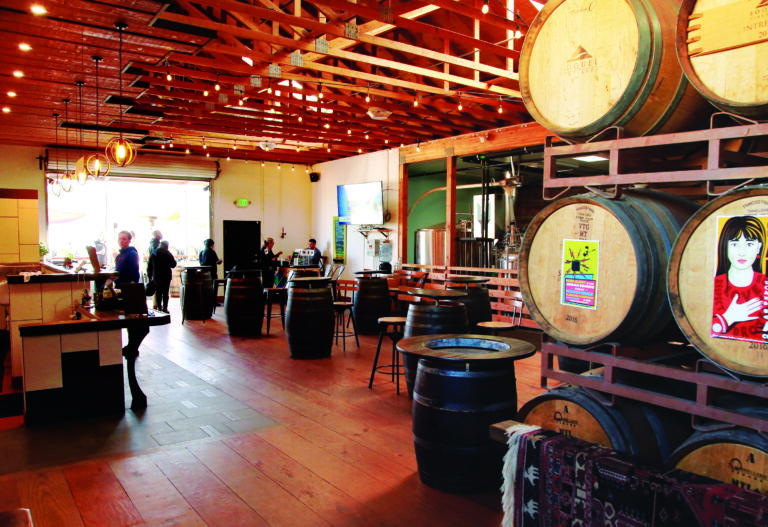
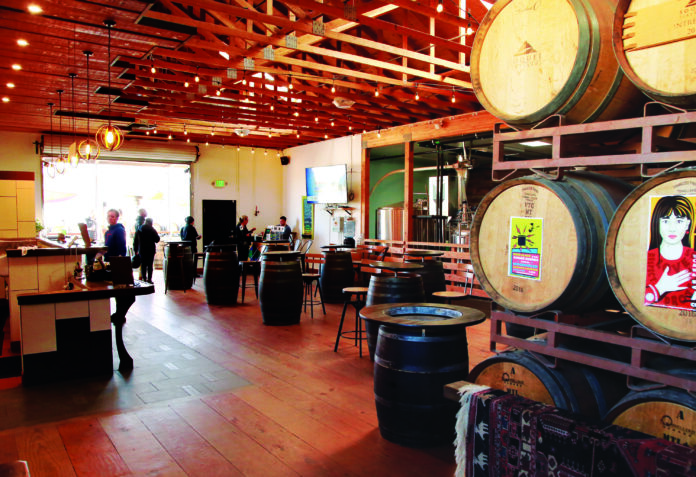
1. Co-founders William Moxham, Mike Rodriguez and Ken Kieffer are lifelong friends. They grew up together in Kansas City, Missouri. 2. Before Woodhouse, head brewer Mike Rodriguez won multiple awards at the World Beer Cup and Great American Beer Fest, the largest commercial brewing competition in the United States. 3. They have at least 12 different beers on tap in their tasting room at any given time. 4. The brewery hosts an array of live entertainment featuring bands spanning every musical genre. 5. Their upcoming Barrel Program will give members access to a wide variety of limited, artisan-crafted barrel-aged brews. MAT WEIR
Rejuvenate Medi-Spa’s Dr. Jay Pennock—with his dog, Scout.
1. Dr. Jay Pennock opened Rejuvenate Medi-Spa in 2017. His work attracted loyal customers who have helped his business thrive. 2. “Dr. Jay,” as he’s known, founded his practice to help clients look as good on the outside as they feel on the inside. 3. With a team of experienced practitioners, Dr. Jay’s model emphasizes risk assessment, disease process reversal and healing of the whole being. 4. He and his staff believe that many of the degenerative diseases of aging (diabetes, strokes and cancer) can and should be prevented. By assessing the current state of a patient’s health and determining potential dangers, Dr. Jay believes he and his clients can chart a clear course to a long and fulfilling life. 5. “Your body is your vessel, and you are its captain,” Dr. Jay says.
1. Before becoming a king of the Santa Cruz County skating scene, Bill Ackerman wanted to follow in his father’s footsteps and become a police officer. Landing a job at a local sports shop—and running the skate department—inspired Ackerman to change his mind. 2. Ackerman started Bill’s Wheels in 1977. His first location was in Watsonville, where he rented a tiny building for $125 a month, with around $500 in inventory. 3. Business started to take off, and Bill needed to find a larger space. So, he moved to Crestview Shopping Center on Freedom Boulevard in Watsonville. 4. “Skate Jams” and demos held in his parking lot grew exponentially, and eventually, around 400-500 kids were shredding on ramps, rails and pipes as live bands jammed. 5. Bill’s Wheels’s now-iconic Soquel Avenue location opened in November 1995. Rows and rows of priceless old-school rigs and skate history cover the large interior. Outside, there’s an ever-rotating wall of amazing art and graffiti. Bill’s is a skating mecca.
The city of Santa Cruz’s rules for public gatherings are getting an update, and some local activists and organizers are worried about what these changes will mean for protests.
Last Tuesday, the Santa Cruz City Council approved a new set of rules intended to clarify the guidelines for when public gatherings will need a permit. The council approved a simplified definition for a “public gathering,” which the city interprets as any political, civic, religious or other public activity. According to the new changes, public gatherings only need to meet one of the following criteria to trigger a permit requirement: lasting for more than an hour, being conducted on a regular basis for more than two weeks, or having more than 75 attendees.
The updates come after a year of multiple protests and public demonstrations, some of which prompted criticism from Santa Cruz residents and city officials. Last fall, for instance, thousands of cyclists swarmed city streets and wreaked havoc on local traffic. Following George Floyd’s murder in 2020, Santa Cruz saw local demonstrations in support of the Black Lives Matter Movement that were largely peaceful.
City officials say the changes to the ordinance have been a long time coming. The language of the city’s previous public gathering rules has been murky; the definition of a public gathering and expression under the First Amendment, versus a gathering for something like a special event, was confusing for the Parks and Recreation department, which issues these permits.
“It’s really about clarity,” Cassie Bronson, the Deputy City Attorney, said at the council meeting. “I believe that this ordinance is a loosening of restrictions to be quite honest, as compared to the previous ordinance.”
Bronson pointed to the new exceptions for spontaneous events, such as protests that take place in response to breaking news, and under the new ordinance will not require permits. The city also decreased the time that organizers need to apply for a permit ahead of an event, from five to three days.
But there were also changes in criteria that some say make the new rules more restrictive. There is no fee to apply for the permit, but organizers will need to pay for any associated costs for provisions that the city deems necessary for the event. That includes whether or not a public gathering will need to provide sanitation facilities, like restrooms, or require police officers to manage traffic or crowds. If a public gathering takes place without a permit, organizers could now be hit with a public nuisance violation that could be taken to court—before, infractions were limited to fines.
There were also a few city council members who raised concerns about what these new regulations will mean for Food Not Bombs, and many who called into the city council meeting said these updates were a direct attack on the nonprofit that distributes food for people experiencing homelessness at the Clock Tower every afternoon. Because the organization hands out food every day and is on city property, it meets the criteria of being an ongoing event, and according to city standards, the nonprofit would now need to obtain a permit to continue operating.
Keith McHenry, who co-founded Food Not Bombs, is not worried about the new permitting guidelines, and is not planning on applying for a permit. He plans on handing out food as usual and he says he is done trying to coordinate with city officials.
“I’ve tried talking with city officials,” McHenry says. “At this point, I’m going to continue doing what’s important, and that’s helping the homeless. I’m not worried about fines. If anyone should be worried it’s the city.”
Other activists, like local organizer Thairie Ritchie, are worried about the implications of the new requirements for permits. Ritchie notes that these updates come as the pandemic restrictions continue to loosen, and demonstrations are more likely to pick up again. Specifically, Ritchie is worried these increased regulations might deter protests from happening in the first place, and broaden the city’s authority over which demonstrations get to happen.
“It really puts a cap on a lot of efforts that’s been kind of raised within the last year and a half when it comes to genuine organizing and grassroots organization,” says Ritchie. “City officials more often than not have no clue about what’s going on, and to kind of have that final say-so about whether a protest should happen or not … it’s a huge deterrent and limits public expression and our First Amendment right.”
Parks and Recreation Director Tony Elliot says he’s not sure what would cause the city to deny a permit for a public gathering. He has also never seen that happen before, and says that’s not the intention of the update to the ordinance.
“The rationale for permits, whether it’s a special event permit or a public gathering and expression permit, is to ensure that the activity is safe and will be well-managed,” says Elliot. “But it also relates to fairness to the community and access to parks and public spaces. And so where an event or public gathering and expression activity is not permitted or is ongoing, it is taking away public access.”
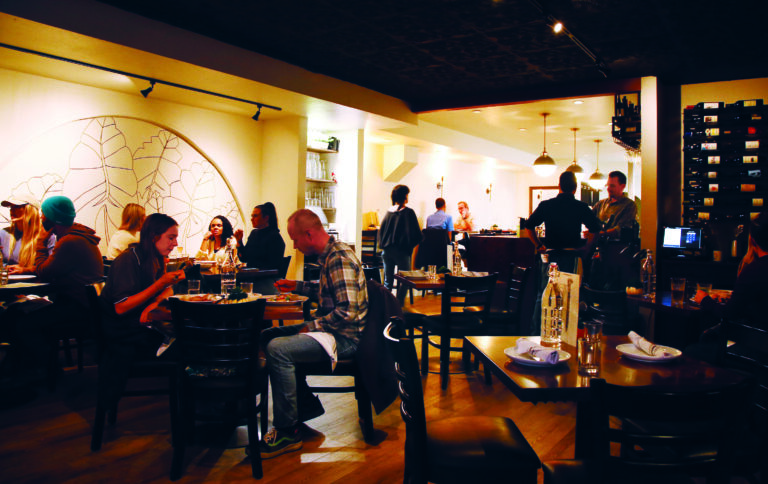
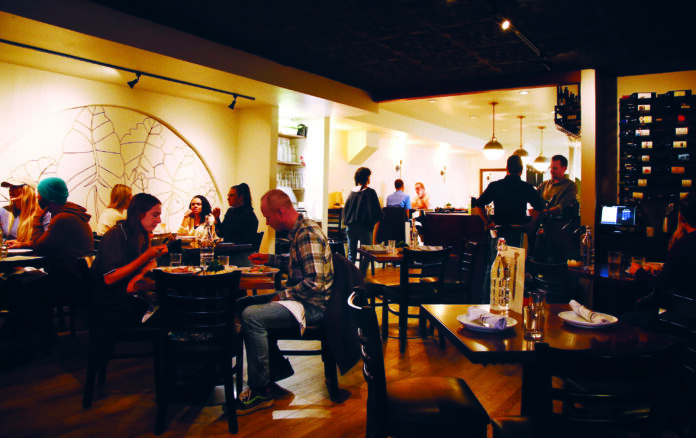
1. Trestles was opened last year by chef/owner Nick Sherman. After attending culinary school, the Santa Cruz native cut his teeth in the Napa restaurant scene. 2. It’s named after the Capitola Trestle built in 1907 and iconic to the area. 3. Sherman and his two brothers each thought of the name independently and brought the same idea to one another—it was fate. 4. Located in the quaint Capitola Village, which is appropriate since Sherman says “it took a village” to open it. He credits his family and friends for help. 5. Trestles’ philosophy: Fresh, local and seasonal ingredients used to prepare dishes that pop with originality will keep guests coming back.
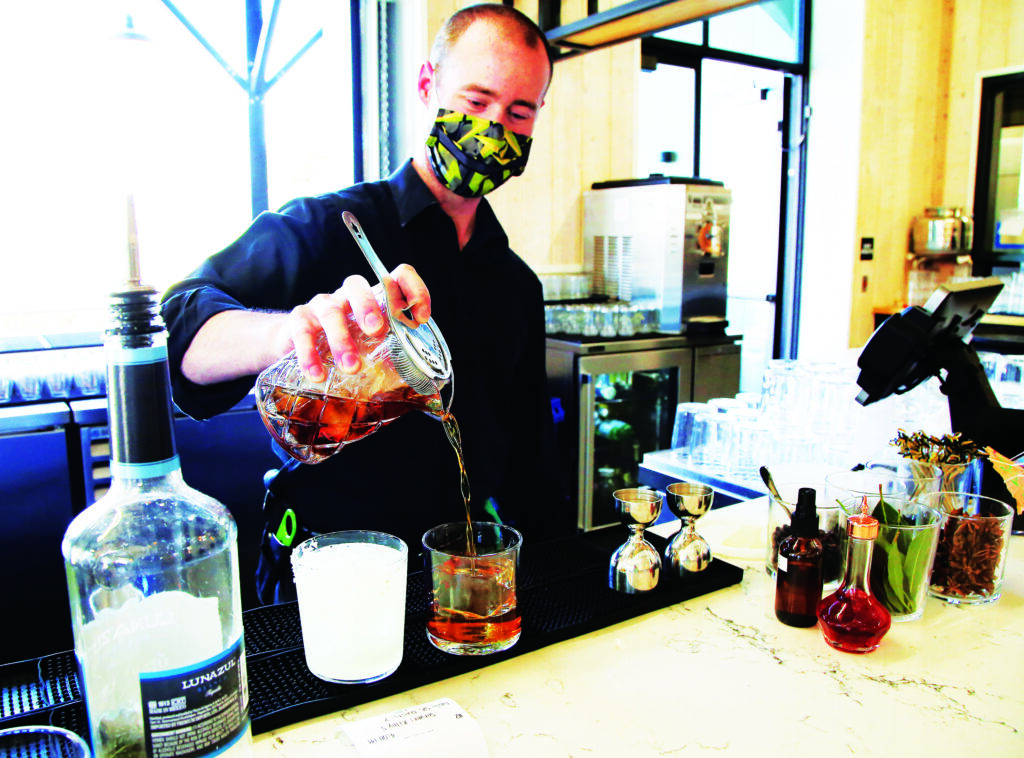
1. Sean Venus founded Venus Spirits out of a desire to bring his love of handcrafted spirits to Santa Cruz. 2. Venus distills its own whiskey, vodka, gin, rum, agave spirits and even a traditional Scandinavian spirit, aquavit, derived from the Latin phrase, “water of life.” 3. The menu at Venus features a gourmet,drool-worthy burger loaded with bleu cheese, mustard garlic aioli, smoked mushrooms, frisée and bourbon bacon jam. 4. The craft cocktail menu features house-distilled spirits, including multiple gin and tonic options like lavender/grapefruit/juniper and orange/star anise/bay. 5. Venus is located in the upper Westside, a hip neighborhood with multiple restaurants and breweries close to West Cliff Drive.
2022 Best Restaurant (Santa Cruz): Venus Spirits Cocktails & Kitchen. Venus distills its own whiskey, vodka, gin, rum, agave spirits and aquavit, a traditional Scandinavian spirit.
1. Established in 1938, Shopper’s Corner has been a destination grocery store since it opened. 2. The staff prides itself on exceptional customer service; some employees have worked there for several decades. 3. The store has an incredible selection of local wine and over 3,000 varieties from around the world, including some of the most difficult to find. 4. Co-owner Andre Beauregard, who made his name in the family business as the wine buyer, is also a winemaker for the West Cliff label. 5. “Wine makes daily living easier, less hurried, with fewer tensions and more tolerance.” —Benjamin Franklin
2022 Best Wine Selection (Retail): Shopper’s Corner. Find more than 3,000 varieties of wine spanning the globe—all the local favorites are on hand as well.
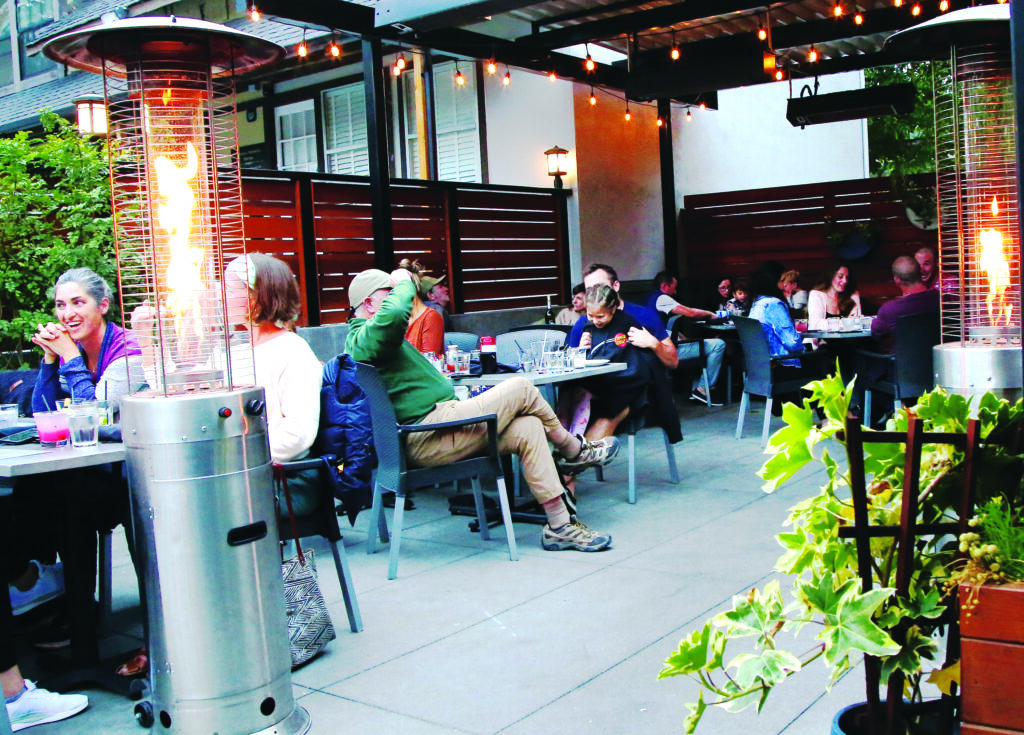
1. The Hideout’s patio features the holy trinity of outdoor space items: umbrellas, heaters and strings of lights. 2. The restaurant rose from the ashes, re-opening after closing for almost two years to rebuild following a devastating fire. 3. The remodel included adding special panels to reduce noise, increasing the size of the bar (always a good thing) and lofting the ceilings. 4. The Hideout is located in Aptos, near another successful redemption project in Nisene Marks State Park, once ravaged by clear-cut logging and is now full of second-growth redwoods. 5. Its diverse menu is inspired by Italian, French, American, Asian and Mexican cuisines.
3600 Portola Drive, Santa Cruz; 10 Parade St., Suite A, Aptos; 719 Swift St. Suite 56, Santa Cruz; Abbott Square, 725 Front St., Santa Cruz, catandcloud.com