Love Your Local Band: Morgen

Last year, local singer-songwriter Morgen released the single “Try Again,” a melancholy piano ballad that she put a lot of work into. When she released it, it didn’t really do much, aside from getting some enthusiastic comments from family members.

A year later, the 15-year old musician has re-released the song, with plans for a lot more people to hear it. She’s got management, and a self-titled EP in the works, which should be released in early December. It’s a well-produced pop record, driven by piano, with elements of jazz, blues and Americana, and Morgen’s velvety, emotive voice. 

“Basically, it’s me announcing myself to the world,” she says of “Try Again.” “‘Hey, I know you already know this song, but this is just me telling you guys officially that this is who I am, and this is what I’m doing with my life.’”

Morgen studied jazz at Kuumbwa band camp and took piano lessons to up her skills. She also devoted three days over the summer to making this record with manager Aidan Schechter and co-producer Walker Landgraf.

“Those three days were probably the best three days of my 15 years on Earth,” Morgen says. “It was so fun, sitting in a room making music with people.” 

Even though Morgen has been writing music for a decade, this marks a beginning for her in what she hopes will be a professional career in music.

“I’m just doing it,” she says. “I’m planning on seeing what happens and making connections with people. Just seeing what people’s reactions are.”

facebook.com/morgensmusic

Barceloneta Debuts Downtown Tapas

Bursting with the flavor intensity of Spain’s Costa Brava, Barceloneta is—at long last—with us.

Thanks to restaurateurs Brett and Elan Emerson, Santa Cruz can now enjoy authentic tapas straight from the restaurant’s wood-fired grill.

The minimalist decor is nothing if not bold. Open and unadorned, save for banquette cushions covered in splashy beach colors and straw shades on the ceiling fixtures, the space is devoted to diners, a long bar along one side and kitchen-counter seating in the back. Given the glass walls and pale blue tiled floors, Barceloneta gets loud very quickly. But you might not care once you sample the dishes turned out by this hyper-active kitchen. Add to that a skilled staff and good value for the price tag, and you’ve got what we all waited for: a sexy new restaurant anchor atop Pacific Avenue.

On a second visit, the concept became clearer. The casual 95-seat space is perfect for large groups and families. Paella and tapas are epic finger foods made to be shared. Hence lots of intermingling and cozy cross-talk about what’s good. We found ourselves checking out our neighbor’s dishes, comparing notes back and forth. You make friends easily in this place, and the line outside the door when we left spoke volumes. On the other hand, this might not be the right place for an intimate, romantic dinner.

The list of house wines by the glass is worth exploring. We fell in love with a red Listán Negro Bermejos 2018 ($13) from Tenerife that spoke of volcanic soils. The blush Txakoli Ameztoi 2018 ($14) is a glass full of sunshine and salt, just like the beach for which the restaurant is named. The Tempranillo from Toloño 2016 ($16) was a tannic balance of cherries, cassis and smoke. The sophisticated cocktail list looks inventive. Next time. 

Deeply devoted to small plates, each with brilliant and distinctive seasonings, this kitchen rearranged our taste buds, starting with seductive sardine and avocado toasts dusted with smoked salt and topped with bright pink pickled onions ($10). A dish of tender grilled Spanish octopus ($17) perfumed by smoked paprika arrived with a side of cool, vinegary potatoes. Outstanding.

On another plate of Pinchos Morunos ($18), two skewers of grilled lamb sat on a glaze of olive oil festooned with bits of Moorish spice lore—cilantro, cumin, orange—and topped with sprigs of dill. Slices of marinated romanesco added flavor sparkle. So irresistible were the spices, a cumin-tinged yogurt and the sharp magic of chermoula, that we needed an order of bread to dredge up every last morsel. (Serrated knives would be handy.)

On another evening, a tiny paella pan of grilled Calamares ($15) was the big hit. Succulent, plump squid bodies tossed with tiny, heat-bearing green peppers were arranged on a substantial cushion of fideos pasta drenched in squid ink. The balanced flavors of the sea went supernova thanks to a fine dice of chorizo, garlic and lemony aioli. A destination dish that had everything going on, especially paired with the remarkable, angular Listán Negro from Tenerife.

The house offers three paellas in two sizes: seafood, Valenciana with chicken and beans, and vegetable. We went for the seafood ($40 for two), a beautiful presentation filled with orange colors of saffron, cumin and tomato sauce with mussels, clams, calamari, and shrimps. It arrived with an addictive tapas of roasted cauliflower florets tossed with dates and green olives ($10). The absence of chorizo in the seafood paella made the dish accessible to non-meat eaters but pulled the expected flavor punch. A festival for the eyes, this paella would have prospered by a freer hand with all the seasonings, and the delicious rice lacked socarrat toastiness on the bottom. 

The light, crisp sugar-dusted churros ($5), arriving with a cup of thick warm chocolate for dipping, were decadent perfection. Another night, we fell in love with vanilla soft-serve drizzled with olive oil and sea salt ($6). I still can’t believe how brilliant it looked and tasted. The ice cream was the exact finish a dinner of complex spices deserved. An impressive initial public offering—compliments to the kitchen. 

Barceloneta, 1541 Pacific Ave., Santa Cruz. Open 5-9:30pm; closed Tuesdays. 900-5222, eatbarceloneta.com.

Film Review: ‘The Irishman’

Despite its budget, The Irishman is not a spectacle. Although, from the art direction to a terrific soundtrack, it’s almost as evocative in summing up mid-century America as Once Upon a Time in Hollywood. 

Much of the budget went to the technical component of making Robert De Niro, Joe Pesci and Al Pacino into synthespians of themselves. Of course, one could grumble that Francis Coppola doubled old and young actors without the benefit of CGI in Godfather II, using old-media methods like sharp casting, juxtaposition and Nino Rota music strong enough to link present and past. But the effect works in The Irishman, as the actors get to be the people they used to be. 

As for facial mobility, DeNiro doesn’t go in for it much here. His Frank “The Irishman” Sheeran is someone who’s been pretty much dead inside ever since his service in WWII. 

Given what a rock fan Scorsese is, it’s appropriate to quote the lyrics of Pink Floyd’s “Free Four:” “The memory of a man in his old age/is the deeds of a young man in his prime/he shuffles ’round the gloom of his sick room/and talks to himself as he dies … ” 

In Goodfellas, Scorsese’s camera glided around the backrooms of the Copacabana to capture the glitz on stage. Now it courses through the halls of an old folks’ home to zero in on Frank—one more old, gray man in a wheelchair trying to tell some unseen listener the story of a wedding he once attended in Detroit.

The anecdote expands into a three-sided tale of the old days, when Frank was a soldier, then a hapless Philly truck driver who moved sideways into delivering pilfered beef carcasses to a mob restaurant. There, he became first the employee and then the crony of a made man, Russell Bufalino (Joe Pesci); he got work as a button man who could never be an insider with the Sicilian gents because of his Irish blood. He’s a contractor. “I hear you paint houses,” is the greeting he gets—a sick joke explained with a gunshot and a splash of blood.

Frank is a Forest Gumpino, a witness to Secret History, a sturdy if wooden trellis that a half-century’s worth of florid, high-level crime trails around. The Irishman is the story of how the country was warped through the destruction of the most powerful labor leader in American history, Jimmy Hoffa (Al Pacino). It tells of the assassination of JFK, and how a familiar face or two from all this Mafia-CIA conniving came back for the Watergate burglary.

The Irishman’s understory is about the irony of slow decay. A man who had put so many bullets into so many heads still has the problem of any geezer: He falls and he can’t get up, and his daughter (Anna Paquin) won’t call him. Curious that a film with this much bitterness should be so savory, proof of Willie Sutton’s Law: “Crime pays, but it don’t pay much.” 

It’s about pre-Reagan America, before the rich got super rich; a well-off crook like Bufalino may be collecting wads of cash all over the Midwest during the trip to Detroit, but all that money just buys a stay at a Howard Johnson’s or a trip to the bowling alley, the cold comforts of an ice cream sundae or a bowl of cereal.

Factually, the The Irishman is wobbly—fascinating and atmospheric as it is. But I hardly noticed the 3-and-a-half hours passing. 

If anything, it could have used a little more length to explain the ins and outs of Jimmy Hoffa’s Nashville trial. Pacino, given a wig to make him look squareheaded like the man himself, becomes a driven, multi-faceted figure. He’s a warm man—doomed by his own integrity, and like so many old men, drives over the cliff because of his pride. Hoffa’s Trumpian style (calling RFK “Booby Kennedy” from the podium) gives us a mirror of our own age. 

How much allure The Irishman will have for a younger audience is a puzzle. But this movie about the ashes of crime is Scorsese at his sharpest and most feeling. 

The Irishman

R; 210 Mins.

Opinion: November 13, 2019

EDITOR’S NOTE

Looking around the orientation for nonprofits participating in Santa Cruz Gives recently, I got a really good feeling. I always love the buzz of energy at these introductory meetings. The staffers who attend have put time and energy into getting accepted to our holiday giving campaign, and they know they’re embarking on something that could be a huge boost for their groups. These are dedicated people who are out there every day working to improve the lives of local families, kids, seniors, animals—basically all the lives in our community, if you consider the whole range of causes represented. They’re generally understaffed and underfunded, and fighting an uphill battle for progress. Santa Cruz Gives, with your help, levels the playing field.

Perhaps the energy this year was even more palpable because we’ve accepted more groups than ever before into the program for this holiday season. Read about all of them in this week’s cover story, and support what inspires you. I guarantee something in there will—very likely many things. As we kick off Santa Cruz Gives, I have a feeling this will be our biggest year yet, and I’ll hope you’ll be a part of it.

In other news, I’ll be in conversation with Flea of the Red Hot Chili Peppers on Tuesday, Nov. 19, at the Rio about his new memoir, Acid for the Children. Hope to see you there!


LETTERS TO THE EDITOR

Read the latest letters to the editor here.

Re: “Commission Granted” (GT, 10/2): A city commission should not take sides in workplace disputes, especially ones inside the city government they serve. Recent public declarations by CPVAW (Commission for the Prevention of Violence Against Women) overtly supported those in favor of the recall, even though members claimed it was not their intention to influence this controversial action. As a member of the CPVAW and a life-long activist working to end sexual violence, I want to apologize for our commission’s involvement in this divisive, partisan battle.

Santa Cruz United, the group behind the recall effort, used quotes by CPVAW Chair Kevin Grossman to lead their full-page Sentinel ad, Sunday Oct. 6. The ad implies that CPVAW fully supports the recall effort, as well as the ad’s unwarranted accusations of sexual abuse, silencing victims, and sexism by the two council members. According to Chair Grossman, SC United used his comments without his permission or knowledge. Grossman continues to assert that his participation in multiple media events had nothing to do with the recall. However, his comments were delivered to the media just weeks before a crucial deadline when SC United needed more petition signatures, and resorted to using our acting chair Kevin Grossman’s quotes and the CPVAW’s title to fan their flames of lies and misinformation. 

The Rose Report, an independent investigation into allegations by city employees and other council members, found no substantiated instances of sexual harassment or gender-based discrimination. Even so, sexually inflammatory language was repeated by CPVAW, city staff, and those promoting the recall. “Start by Believing” is a slogan created solely for individuals who have been sexually assaulted. Its use by CPVAW suggests the public should question the results of an extensive independent report in defense of city employees. It’s not surprising that some recall petitioners at UCSC claimed these councilmen had been convicted of sexual assault as a means to bring in more signatures, and to collect more cash for each name gathered. 

CPVAW’s mission is to prevent sexual assault, rape, and domestic violence. I very much regret that Santa Cruz voters have been led to believe that the two council members in question engaged in any form of sexual abuse. False accusations of sexual abuse and silencing victims set a very dangerous precedent. This misinformation works to create an environment where actual cases of sexual assault are much more likely to be disbelieved. Everyone loses when this happens. Let’s all start by believing and reading the results of the city’s investigation into workplace difficulties, help CPVAW get back to its mission to prevent sexual violence, and vote NO on all recall efforts.   

Ann Simonton | CPVAW Commissioner

Re: “Flak to School” (GT, 10/9): I have a dream in which the leaders of our city and county actually solve the problem of homeless and addicted people living on the streets. The street is not a place to call home, and no more studying of the problem is needed, btw. They, along with other city and county service providers, partner with the health care corporation who owns the drive-in property, to create a safe, medically-centered place for the homeless to live and get sober. With access to trained medical staff and cooperation from city and county partners, access is granted only with agreement to enter the recovery program, where human care is the mission. This model could be the leader in the solution to end (or reduce) the drug addicted homeless problem nationwide. The controversial needle-exchange program, which should be monitored by medical professionals only, could be managed through this facility thereby keeping the public safe. The only way to end homelessness is to provide the homeless help and a place to go. Shuffling them around the street, parks, forests is not a solution. 

Heidi Harris
Ben Lomond

CORRECTION

Due to an editing error, we used an incorrect pronoun to refer to Jesse James in last week’s news section (“Buy the Numbers,” 11/16/19). We apologize to them and regret the error.


PHOTO CONTEST WINNER

Submit to ph****@*******es.sc. Include information (location, etc.) and your name. Photos may be cropped. Preferably, photos should be 4 inches by 4 inches and minimum 250dpi.


GOOD IDEA

On Saturday, Nov. 16, the Santa Cruz Elks Lodge will host its annual Hoop Shoot. The contest will begin at 9:30am and will be held at the downtown Boys and Girls Club of Santa Cruz, located at 543 Center St.. The event, which involves a free throw competition, is free for kids ages 8-13. Participants are invited to arrive at 8am to warm up and register. There will be prizes. For more information, contact 423-8240 or am********@***il.com.


GOOD WORK

Shortly before Veterans Day, the Rotary Club of Santa Cruz announced a plan to overhaul the courtyard at the Santa Cruz County Veterans Memorial Building. The new space will provide a community recreation and cultural center for public use. To help fund the project, the Rotary Club invites supporters to honor a veteran by purchasing commemorative bricks, which start at $125. General donations to support the project are also accepted. For more information, visit santacruzrotary.com.


QUOTE OF THE WEEK

“The smallest act of kindness is worth more than the grandest intention.”

-Oscar Wilde

Muccigrosso Vineyards Makes Anti-Wimpy Wine

Muccigrosso Vineyards has been going strong since 2000. Family-owned and operated by Michael Muccigrosso and Travis Muccigrosso-White, they produce small quantities of handmade wine. The 2014 Pinot Noir ($35) is made with all Santa Cruz Mountains fruit and barrel-aged for two years.

“It’s got some of the fruit-forward aspects that the 2010 (Pinot Noir) has,” says Michael Muccigrosso of one of his most popular Pinots, and also one of his best sellers. “It’s smooth and silky—we certainly don’t make any wimpy wines.” Redolent with aromas of leather and spice, it’s bursting with red fruit aromas and characteristic earthiness.

Muccigrosso Vineyards is not open to the public, but this esteemed winery will be at Byington Vineyard & Winery from noon-5pm for the Passport event on Nov. 16. If you have a Passport —available from the Santa Cruz Mountains Winegrowers Association at scmwa.com or various tasting rooms—then you can try different wines at participating wineries without paying a fee.

Muccigrosso wines have done well this year in various competitions, including bringing home gold and silver for different vintages of Zinfandels in the prestigious San Francisco Chronicle Wine Competition.

VinoCruz in Soquel often carries Muccigrosso wines, and it’s always fun to get a bite of food there and try a new wine. Johnny’s Harborside Café in Santa Cruz also carries Muccigrosso wine, and it’s coming to the Crow’s Nest soon, too.

Muccigrosso Vineyards, 21450 Bear Creek Rd., Los Gatos. 408-354-0821, muccigrosso.com. Byington Vineyard & Winery, 21850 Bear Creek Rd., Los Gatos. 408-354-1111, byington.com.

Rombauer Tasting

Mark your calendars for Friday, Nov. 15. Seascape Sports Club is hosting Rombauer from 6-7:30pm for a not-to-be-missed pouring of their much-loved wines. Tasting fee is $20, plus you get heavy hors d’oeuvres. There’s music, too, and bottles will be sold at a reduced price. Event open to non-members.

Seascape Sports Club, 1505 Seascape Blvd., Aptos. 688-1993, seascapesportsclub.com.

Wine on Sale

Silver Mountain Vineyards has case specials of wine on sale through the first week of December. Don’t be caught short over the festive season!

Silver Mountain Vineyards, 328D Ingalls St. #29, Santa Cruz. 408-353-2278, silvermtn.com.

Eddie Spaghetti’s Solo Resurgence

The Supersuckers just got back from a month of touring Europe with the Australian hard rock band Airbourne, and the band’s longtime frontman Eddie Spaghetti was reminded of a valuable lesson about rock music.

“What I’ve suspected for a long time, and what was reinforced on this tour, is that the words don’t matter,” he says. “It doesn’t matter what a band is singing about, it’s more about the spirit and the tone of it.”

With a band like the Supersuckers, that can get very complicated. Case in point: the refrains of two of the most kick-ass, hard-rockin’, seemingly feel-good tunes on their most recent album Suck It are, “I’m already dead inside” and, “I’m gonna choke myself and masturbate ’til I die.” Surprise!

Or maybe no surprise, to fans already familiar with Spaghetti’s twisted sense of humor, and his love of outrageous songwriting paired with deceptively classic hard-rock riffage.

“For me, unfortunately, the words really, really matter. It’s like my favorite part of the whole process,” he says. “And when a band has both, that’s when they’re really good. When the lyrics and the rock are both solid, it’s so much more complete for me.”

That’s part of what has made Spaghetti’s solo career so interesting. When he plays live without the band, as he will at Moe’s Alley on Wednesday, Nov. 20, he brings a different slant to his Supersuckers songs. And on his solo albums, amid the new tunes and covers, there’s almost always an acoustic reworking of one of the band’s classics. Besides giving the song a different vibe, it also puts the lyrics front and center in a way they never really are on the band’s high-octane rock records.

For instance, the way he redid “When I Go, I’m Gone” (originally on the Supersuckers’ 2008 album Get It Together) for his last solo album, turning lines like, “Nothing more than a memory lives on/No one’s life is so charmed/And when I buy the farm/I just want everyone to move on” from a sort of defiant mission statement to a tender ballad of acceptance.

“It’s a song that I wouldn’t mind being played at my funeral, to be morbid about it,” says Spaghetti.

Luckily, that funeral is coming later than it might have, after Spaghetti was diagnosed with throat cancer in 2015. He feels back in top form again, having gone through treatment in his typical smartass-but-brutally-honest way.

“Next year it’ll be five years. That’s when they’ll officially proclaim me cancer-free,” he says. He’s still shocked at the support he received from fans and fellow musicians like Eddie Vedder, who performed at a fundraiser for his medical costs.

“It really helped a lot to get all that support, not only financially but also emotionally,” he says. “It was one of the best things that came out of cancer. It was like getting to hear what everybody thinks about you after you die, only you’re not dead. It was kind of great.”

This solo tour is coming later than it might have, too, because he’s been loving the dynamic in the band so much. “The guys in the band are so great to work with, the urge to go and record a solo record isn’t nearly as strong as it was a few years back, when the lineup was kind of confused and weird and a few attitudes in the band had changed,” he says. “It’s a way more healthy environment than I’ve ever had.”

He’s co-headlining on this tour with Jeff “J.D.” Pinkus, the longtime bassist of the Butthole Surfers. The pair go way back to when the Supersuckers toured with Butthole Surfers in 1994. Spaghetti laughs recalling the tour, which he describes as “fuckin’ weird, man. Gibby Haynes is off the hook. The dude’s insane. It was like at the height—they’d had that big hit [“Pepper”], and they were touring on that. It was us and them and the Toadies and Rev. Horton Heat. It was kind of a big bill, and it was fun.”

He says the audience is welcome to call out for their favorite Supersuckers songs at the show. And he’s happy they’ll get to hear the words a little better—though that doesn’t mean he gets all pretentious about it.

“I’m not afraid of writing dumb songs. I like dumb songs, too,” he says. “But I still want the words to be cool, even in a dumb one.” 

EDDIE SPAGHETTI plays with J.D. PINKUS at 8:30pm on Wednesday, Nov. 20 at Moe’s Alley. $15/$20. moesalley.com.

5 Things To Do In Santa Cruz: Nov.13-19

A weekly guide to what’s happening

Green Fix 

‘Responsible Recreation’

Being in nature is proven to de-stress and refresh our lives, but humans don’t have the best impact on nature. For future generations to enjoy the vibrant wild landscapes of the Santa Cruz Mountains, we need to start looking after nature as much as it looks after us. Castle Rock is hosting activities with a variety of outdoor adventure organizations to teach the community about how we can do our part. Meet at new Kirkwood entrance.

INFO: 9am-1pm. Saturday, Nov. 16. Castle Rock State Park, 15451 Skyline Blvd. 291-8273. sempervirens.org. Free/parking $10. 


Art Seen 

Youth Symphony Fall Concert 

The Santa Cruz County Youth Symphony is kicking off its fall season with performances by Malcolm Arnold, Aaron Copland and Arturo Márquez, plus “Poem for Flute and Orchestra,” by Charles T. Griffes. Also featuring this year’s Concerto Competition winner, 16-year-old Hunter Bauman, and the world premiere of “Reflections of a 16-Year-Old Girl,” by Bay Area teen composer Miranda Yu. An event ideal for the whole family, kids will be inspired to see performers their own age and parents will be amazed at the depth and beauty of the performance. Homemade cookies and cakes for sale at intermission. 

INFO: 3pm. Sunday, Nov. 17. UCSC Music Center Recital Hall, 402 McHenry Rd., Santa Cruz. sccys.org. $5-15. 


Friday 11/15

Reel Rock 14 Film Tour

This may be the year of the pig, but for athletes around the world, it’s been the year of the climber. The Oscar-winning film Free Solo, coupled with new climbing records set seemingly every day, has brought climbers everywhere out of the cracks and into the spotlight. This year’s ever-popular Reel Rock Film Tour features climbing legends Tommy Caldwell and Alex Honnold, plus what happens when conservative Mormon coal miners collide with an influx of out-of-town climbers. 

INFO: 7pm. Rio Theatre, 1205 Soquel Ave., Santa Cruz. 423-8209. riotheatre.com. $22. 


Friday 11/15-Sunday 11/24 

Frankenstein and FrankenCon at UCSC

A Frankenstein conference: yes, it is everything every Halloweener ever dreamt of. During FrankenCon, participants will celebrate and explore the enduring legacy of the world’s first ever science-fiction horror story with a lively three-day conference of scientists, theorists, authors, and artists. Coupled with performances of The Frankenstein Project—a modern retelling of Mary Shelley’s classic tale set against the backdrop of late-breaking developments in science and medicine—join other franken-freaks like us in various roundtable discussions about all things Frankenstien. The conference centers around themes like, “What is ‘mad science’ and how do we guard ourselves against it?” and a discussion of the impact of Frankenstein on the last two centuries of literature, theater, film, and games. Come for the Franken-cupcakes, stay for everything else. 

INFO: Check online for full listings and locations. UCSC, 1156 High St., Santa Cruz. frankencon.com, ti*****@**sc.edu. Free conference/film screenings and play priced separately. 


Saturday 11/16 

Santa Cruz Zine Fest 

A zine is an independently or self-published booklet created by people with an idea, topic or story that they believe is important to share with the world. Zines have a political history, as they have often contained strong political ideas. It’s also the perfect avenue for all Santa Cruzans who didn’t get their letter to the editor published. This year’s zine fest will be a gathering of local zinesters (yes that’s a word) sharing their work and reflecting on the role of zines in the world today. In particular, this year’s event will highlight work from from marginalized voices, including but not limited to BIPOC, Queer/Trans/Genderqueer/LGBT+, and disabled artists. 

INFO: 11am-5 pm. Resource Center for Nonviolence, 612 Ocean St., Santa Cruz. Free. 

Santa Cruz Gives 2019: A Guide to Holiday Giving

Last year, giving to nonprofits was up by an average of 4.5% nationwide. But here in Santa Cruz, donations to the nonprofits participating in our holiday giving campaign Santa Cruz Gives grew by 19% in 2018 over the previous year.

The message has come through loud and clear: people in Santa Cruz County care about improving and uplifting their community, and they have chosen Santa Cruz Gives as a vehicle for being a part of that positive change.

So we are thrilled to announce that for 2019, we have expanded the number of local nonprofits accepted into the campaign. In previous years, we were wary of growing too fast, and overreaching beyond what this fledgling charitable project was capable of sustaining.

But you have sustained this effort, and driven it far more quickly than we imagined when we first conceived it. If we reach our goal of raising $300,000 between now and the end of the campaign at midnight on Dec. 31, then Santa Cruz Gives will have raised more than $1 million for local nonprofits in its first five years. That is an incredible testament to the spirit of giving in Santa Cruz County.

The bold growth of this program would not have been possible without our partners at the Volunteer Center of Santa Cruz County and Community Foundation Santa Cruz County, and our business sponsors Santa Cruz County Bank, Wynn Capital Management and Oswald.

Most of all, it would not be possible without you. So please give generously to our participating nonprofits. Read about all of them here—both their mission statements and the projects they will fund with the money raised through Santa Cruz Gives—then go to santacruzgives.org, our easy-to-use website that lets you give conveniently and securely to all of your favorite causes.


Big Brothers Big Sisters

Organization Mission: We create and support one-on-one mentoring relationships that ignite the power and promise of youth. We have served more than 7,000 local at-risk children, providing a crucial foundation at a critical time in their lives. Mentors make Santa Cruz County a safer and healthier place by helping children make better decisions, which increases their chances of staying in school and decreases their challenges with substance abuse, teen pregnancy and the criminal justice system.

Big Idea for 2020

Transgender Matching Program and LGBTQ+ Service Expansion

Our local agency, Big Brothers Big Sisters of Santa Cruz County, is the first and only agency in the entire nation to have a Trans Matching Program. We began matching transgender youth with volunteer transgender adult mentors in 2015. The program now serves as a national model.

Using our proven mentoring model, volunteers receive in-depth training on how to support these youth, who routinely face pervasive injustice, bias and mental illness in their daily lives. Research shows a quality mentoring relationship reduces the risk of suicide in the trans population by 50%.

We want to expand our efforts in the LGBTQ+ arena through training, roundtables and enhanced match support for all of our mentors, our matches and for other youth-serving organizations in the community. Discrimination and bias often begin in childhood, as LGBTQ+ youth explore their gender identites. They are at high risk of harassment, physical and sexual violence, and suicide. We work with this underserved population in close partnership with other agencies.

We grasp that gender identity can be fluid, and providing deeper support for all LGBTQ+ program participants will improve outcomes for youth we serve. Our volunteers are trained when first matched, and many matches last for well over five years. We must update our training so that long-term volunteers are prepared.


Bird School Project

Organization Mission: The Bird School Project aims to inspire and equip both students and teachers to love, study and steward their local environment.

Big Idea for 2020

Creating Leaders for the Environment

In 2020, Bird School Project aims to unify youth leadership around a vision for lives that are relaxed, mentally resilient and less distracted.

The Bird School Project provides educational experiences to students directly on their schoolyards, making nature and a bit of wilderness easily revisited, leading to appreciation, inquiry and stewardship. Students grow an appreciation for the unexpected and a love for nature.

The main goal is to deliver a four-week, eight-lesson life science unit on birding—including guided, on-campus bird walks; use of binoculars; close examination of museum specimens; and the use of a field journal in which students learn to record their observations creatively. 

Students build skills in focus, direct observation, meaning-making, arguing from evidence, and collaborating with peers—and benefit further from the research-based, proven healing effects of time spent outdoors. Observations of real-time happenings in nature generate a sense of connection with other living organisms and lower stress about school, peer groups or family life among diverse youth. 

We provide programming countywide, but focus in the Pajaro Valley on middle school students. Their school schedules allow for few opportunities for field trips, and programs like ours are needed to connect students with their environment. 


CASA of Santa Cruz County

Organization Mission: CASA of Santa Cruz County advocates for children, providing court-appointed volunteers so each child in the Dependency Court system feels cared for and connected with the people, families and resources they need to heal and flourish into adulthood. CASA empowers volunteers to directly influence life-changing decisions affecting children in dependency (foster) care.

Big Idea for 2020

Be the Voice for a Child in Foster Care

CASA of Santa Cruz is seeing more children under the age of 3 entering the foster-care system. This is where CASA comes in: We recruit, screen, train, and supervise volunteer advocates to work one-on-one with children and their families to support reunification or permanent placement into a safe and healthy home. Advocates get to know their child’s situation and needs, help caregivers access resources to meet those needs, and advocate for the child’s best interests in court, community and school settings. 

They build strong relationships with the family and work with a CASA advocate supervisor to create an advocacy plan for their child. They provide regular reports to the court, which the judge relies upon to inform life-changing decisions for children in foster care.

Our advocates understand that children experience great trauma as a result of entering the foster care system, provide them with a warm layer of support, and connect them to resources to benefit their development and well-being. CASA is  the only organization with volunteers officially sworn in by the court, acting as advocates for our area’s youth.  

When a case opens in Dependency Court, the focus is on the parents/caregivers gaining resources to help meet their case plan, but a CASA volunteer focuses on the child. While they may support the entire family, their priority is the child. Advocates are assigned to the child’s case until the child is placed in a safe, permanent home and the case is dismissed.  

“CASA children” have a higher rate of adoption than those without an advocate, are less likely to return to the system, are substantially less likely to spend time in long-term foster care, and are more likely to become healthy adults who break the cycle of abuse. 


Coastal Watershed Council

Organization Mission: The Coastal Watershed Council was formed to address the declining health of watersheds connected to the Monterey Bay National Marine Sanctuary, with a mission to preserve and protect coastal watersheds through community stewardship, education and monitoring. Since 1995, CWC has educated thousands of volunteers and thousands of students to monitor water quality, enhance habitat and protect the natural resources along our Central Coast. 

Big Idea for 2020

San Lorenzo River Health Days

Santa Cruz formed because of the San Lorenzo River. The river remains our primary drinking water source, and is designated as a critical habitat for threatened and endangered species of fish. 

Most locals agree that our community deserves a healthy river ecosystem surrounded by safe and inviting parks. With your help, we can make further progress toward a vibrant riverfront.

CWC is asking for support for River Health Days. We will engage volunteers, including youth groups and corporate teams, to remove invasive species and replace them with native plants. 

In addition to improving ecosystem health, these community work days reintroduce families and youth to the river through meaningful, positive experiences in nature. Last year, 674 CWC volunteers contributed 1,782 hours of work and planted 2,120 native plants, replacing 6,450 square feet of ice plant.


Community Bridges

Organization Mission: Community Bridges envisions a thriving community where every person has the opportunity to unleash their full potential. We believe that when we work together, anything is possible. Our family of 10 vital programs across 20 sites meets the needs of nearly 20,000 local children, families and seniors each year with essential services, equitable access to resources and as advocates for health and dignity across every stage of life.

Big Idea for 2020

Food Stability for Homeless Seniors

In 2017, 39% of homeless people in Santa Cruz County were over the age of 50, and 70% of homeless deaths were people over the age of 50. For the past five years, Meals on Wheels (MOW) for Santa Cruz County, a program of Community Bridges, has seen an increase in homeless senior participants at Louden Nelson Community Center. 

While MOW has been providing meals five days per week to eligible older adults (more than 650 warm, nutritious meals per week), to address food insecurity among the vulnerable homeless population, we have begun to assemble weekend meal packs that provide at least two nutritious meals. 

We are asking Santa Cruz Gives donors to join MOW efforts to ensure that no senior goes hungry, and support our goal to ensure that homeless seniors attending Louden Nelson will have nutritious meals on the weekends in 2020. 

Funding will provide participants two shelf-stable meals—meals they will not be able to receive otherwise because most dining facilities are closed on weekends.


Dientes

Organization Mission: To create lasting oral health for underserved children and adults. 

Big Idea for 2020

Give Kids a Smile Day

There is nothing quite like a toothache—it is all-consuming. Toothaches are the most common reason low-income children miss school, and they’re largely preventable. You can help make prevention more common than treatment, so that children are able to focus on school instead of a toothache. 

Give Kids a Smile Day provides free dental care for uninsured kids who would otherwise fall through the cracks—families who don’t qualify for public insurance and can’t afford expensive or even discounted dental care. The need in Santa Cruz County is huge. Two out of three people with public insurance (and many more low-income, uninsured residents) are not receiving dental care.

Dientes aims to create healthy habits and positive experiences with the dentist. With your generosity, we can prevent expensive treatment in the future and help kids continue good oral health throughout life.

Your support is needed to get rid of toothaches, so local kids can get back to being kids.


Farm Discovery at Live Earth

Organization Mission: Farm Discovery empowers youth and families to regenerate healthy food, farming, nature, and community in the Pajaro Valley. We improve personal and community health and our impact on the Earth by building collaborative agricultural, ecological and social systems. 

Big Idea for 2020

Farming and Environmental Education Internship for Local Young Adults

Many local farms cannot find skilled labor locally and must hire workers from outside the area, even while the Pajaro Valley is home to the largest family-owned organic farm in the U.S. In addition, our most food-insecure members often work in agriculture or are the children of agricultural workers. 

We address both issues by offering Santa Cruz County youth an opportunity to learn to grow healthy food through a 10-month paid internship that inspires them to pursue careers in agriculture or environmental education. The students gain a unique set of skills aligned with Next Generation Science Standards.

Interns will spread their knowledge in the community by teaching thousands of local youth through our field trips and summer camp programs, passing on the skills to grow their own produce, along with cooking and preserving, tackling two major skill sets to benefit younger students and their families. 

The interns finish the program with various levels of mastery of skills, such as propagation, cultivation, soil fertility, pest management, and post-production that Farm Discovery is uniquely suited to provide with access to Live Earth Farm’s 150 acres of organic production—an inspiring learning space.


Food, What?!

Organization Mission: “Food, What?!” is a youth empowerment and food justice organization. At FoodWhat, youth cultivate their well-being, liberation and power by engaging in relationships with land, food and each other. Youth from Watsonville to Santa Cruz join the FoodWhat Crew through our spring internship, summer job training and fall project management programs. Within the supportive space of FoodWhat, youth grow, cook, eat, and distribute farm-fresh, organic food while addressing local food justice issues. 

Big Idea for 2020

Youth-Powered Farm Stand For Community Health

In our project, FoodWhat youth gain real-life work experience by running a “prescriptive” farm stand in partnership with Salud para la Gente and Lakeside Organic Gardens. Salud health care providers prescribe patients with diabetes a voucher to the youth-run farm stand stationed right outside the clinic.

Some of the produce at the stand is grown and harvested by FoodWhat youth, and some is donated by our partner farm. At the farm stand, clients choose from an abundant selection that includes rainbow carrots, broccoli, chard, cucumbers, cauliflower, peppers, and tomatoes.

We cannot overstate the importance of this aspect: Local youth combine training with their lived experience to address needs in their own neighborhoods.

The new project increases FoodWhat’s distribution by over 2,000 pounds to those with the highest need, and is an opportunity for youth to support patients as they build strong habits around accessing healthy food, integrate this food into their family’s diets, and create a community space at the intersection of youth power and community health. 


Girls Inc. of the Central Coast

Organization Mission: To inspire all girls to be strong, smart and bold, and to respect themselves and the world around them. Girls Inc. serves 1,700 girls in 41 schools with trained professionals (often older teens), who mentor them in a safe environment. Girls are inspired to pursue secondary education, develop leadership and decision-making skills, serve their communities, and acquire the ability and wisdom to lead healthy lifestyles. 

Big Idea for 2020

Growing Together

The relationship between a girl and her mother is so powerful, it affects everything from her health and self-esteem to setting the stage for all relationships throughout her life. Communication can be a common challenge for young girls and their mothers. As girls go through puberty and related physical, mental and emotional changes, the challenges can escalate. 

We hope to assist by supporting girls and their mothers or another significant adult with our new program: Growing Together. It’s designed to increase positive communication between girls ages 9-12 and their mothers, or possibly a sister, aunt, grandmother, or father. 

Your gift will support girls in Santa Cruz County for a weekly get-together for four weeks to share activities aimed at learning about values, body changes, health and hygiene, nutrition and exercise, goals, problem-solving strategies, conflict resolution and positive communication.

Girls Inc. teaches girls to set and achieve goals, boldly confront challenges, resist peer pressure, see college as attainable, and explore nontraditional fields. 


Grey Bears

Organization Mission: Local and vital, Grey Bears promotes nutrition, activity and social connection as a recipe for healthy aging. Our vision is that all seniors live healthy, meaningful lives. Grey Bears has evolved into one of the most efficient and resourceful food distribution, reuse and recycling nonprofits in the U.S. 

Big Idea for 2020

Engage at Every Age

Grey Bears is a nutritional lifeline for 3,800 low-income seniors, families and veterans, delivering weekly brown bags full of fresh produce and healthy staples to Santa Cruz County aging adults. Additional daily food distributions and 40,000 hot meals served annually nourish thousands more. It all adds up to more than 2 million pounds of food distributed each year.

Hundreds of volunteers enjoy more than 20 volunteer opportunities. Their service makes our programs possible while cultivating social support systems and health benefits for both volunteers and participants. Weekly classes include tech help, Spanish, cooking, chair yoga, fix-it clinics, and luncheon events designed to keep seniors active and socially engaged, and help them age with joy, grace and dignity.


Groundswell Coastal Ecology

Organization Mission: Groundswell restores coastal ecosystems using nature-based solutions. We are a constructive group of ecologists, naturalists, educators, and community dedicated to designing and building habitat that makes our coast better for nature and people. We prioritize restoration that increases biodiversity, coastal resiliency, and expands community outreach. We harvest local seeds, grow native plants, then plant at degraded habitats in need of stewardship. We are small but mighty, making this work happen by pulling together an amazing group of committed volunteers, teachers and K-12 students from all over Santa Cruz County to participate in the full cycle restoration process. Groundswell has rebuilt habitat resources and restored over 11% of the Santa Cruz coastline, including well-loved beaches like Seabright, Natural Bridges and Davenport Landing.  

Big Idea for 2020

Saving Santa Cruz Monarchs

Monarchs are on the verge of collapse, and have declined 99% on the West Coast since the 1980s. Santa Cruz is a monarch hotspot where Lighthouse Field State Beach Park is home to the second-largest overwintering population of monarch butterflies in California. 

To save Santa Cruz monarchs, we want to continue to lead the community in enhancing this critical habitat. We can do this together by building nectar resources, optimizing overwintering grove conditions and curbing predation. We steward the grove ecosystem and have led students and community volunteers in this effort. 

We need your help to continue this critical work, as well as to expand to other overwintering sites in Santa Cruz. Monarchs are at the heart of our community and an important part of our tourist industry.


Homeless Garden Project

Organization Mission: Our Mission: In the soil of our urban farm and garden, people find the tools they need to build a home in the world. Our Vision: We envision a thriving and inclusive community, workforce, and local food system. We Value: The capacity of every individual for growth and renewal, the joy that comes from growing and sharing healthy food, the well-being created by vibrant social and natural ecosystems.

Big Idea for 2020

Two Steps Closer to Home

The Homeless Garden Project (HGP) is building a new, permanent home, Pogonip Farm. Located within the City of Santa Cruz’s Pogonip greenbelt, our new 9-acre farm will triple our capacity to transform lives and build community connections.
Serving as a national model, Pogonip Farm will be the heart of HGP’s dynamic agriculture program for people who are experiencing homelessness. We help to transform lives by finding homes, providing job training, teaching skills, providing volunteer opportunities, and stewarding land through organic farming.
Last year, 100% of our trainee graduates obtained stable employment and stable housing, and more than 7,000 pounds of fresh, organic produce were distributed to nonprofits throughout Santa Cruz County, feeding 2,500-plus people. Strong bonds are formed by our community of volunteers, interns, customers, and trainees that break down the profound sense of isolation felt by many people experiencing homelessness. 

Please consider making a gift toward one-time costs to build the Farm Center at Pogonip: an administrative and kitchen building, a barn, and greenhouses. 


Housing Matters

Organization Mission: Homeless Services Center partners with individuals and families to create pathways out of their homelessness into permanent housing.

Big Idea for 2020

Youth Rapid Re-Housing 

The number of young adults experiencing homelessness in Santa Cruz County has grown more than 30% in the past two years. Many homeless young adults were emancipated from our foster care system, and have little or no familial support. 

Imagine prepping for your first day of school or a job interview without a place to call home. With your support, we can help 100 homeless young people ages 18-24 get off the streets and into permanent housing.

All of our programs operate with a housing-first methodology:  to quickly move people experiencing homelessness into permanent housing, while providing support and services to help them stay housed as they work on achieving goals. Our programs save the county millions of dollars in emergency services every year, while also saving lives.

We believe our community is innovative enough, committed enough and compassionate enough to build a future in which every young person has a home. Your gift can help us guide more youth to develop good lifetime habits.


Live Like Coco

Organization Mission: The all-volunteer Live Like Coco Foundation helps local kids grow up healthy and with opportunities to pursue their dreams. Our foundation is named for and inspired by Coco Lazenby, a self-described “book lover, cat petter and environmentalist,” who was killed in a car accident in 2015 at age 12. To honor Coco’s bright spirit and big heart, our foundation works in four areas that made a difference in her life: literacy, nature, health and wellness, and funding for extracurricular activities.

Big Idea for 2020

Out-of-School Enrichment

All kids in our county should have the opportunity to explore their interests beyond their classrooms. We work with local businesses and nonprofits to provide scholarship funds for kids to try theater, therapeutic horseback riding, art and more. We also fund scholarships for kids in foster care so they can attend summer camp.

Coco embraced life and was fortunate to have support to develop her talents and passions. Now, it’s our pleasure to provide great experiences to children who might not otherwise be able to afford them.  


Mesa Verde Gardens

Organization Mission: Our mission at Mesa Verde Gardens is to build and sustain a network of organic community gardens that promote the sharing of inter-generational cultural practices and improves overall health for families in the Pajaro Valley. We co-create gardens with members, who grow culturally-matched organic fruits and vegetables. In 2011, Mesa Verde Gardens launched its first garden for 30 low-income families to address the lack of access to fresh produce for people who harvest our nation’s food supply. Now, with seven gardens and two orchards, our work reaches 200 low-income families.

Big Idea for 2020

Food Security for Farmworkers

Help launch an heirloom seedlings social enterprise! We look forward to partnering with you to provide culturally-matched seedlings at no cost for families. We will use a seed bank established by farmworkers and provide them the opportunity to propagate seedlings from communal heirloom seeds, enabling families to provide their own food and eliminating an expense.

To do this, we need funds to help cover labor and materials to remodel our greenhouse and establish the seedling operations. Our cooperative social enterprise involves selling our organic heirloom seedlings to the public at the Watsonville farmers market, generating funds to continue our work, and increasing our visibility in the community. 

Your contribution will go toward ensuring member families’ immediate need for food security, increasing sustainable farming practices, fostering seed biodiversity, and stewardship of our local habitat.

With this project, food security intersects with environmental and social justice. 


Mountains 2 Sea

Organization Mission: Nature provides a remarkable catalyst for personal growth, and a healthy lifestyle. We use outdoor adventure learning to help underserved youth achieve their potential. In the mountains and on the sea, participants develop a strong foundation for health, increase their well-being, expand their environmental awareness, and gain practical life skills. Mountains 2 Sea partners with schools to provide youth with weekly outings that focus on leadership skills, goal setting, personal reflection, social-emotional development, and the human impact on our environment. There are 30 adventure outings per school year for every youth we serve. 

Big Idea for 2020

Climb to New Heights and Sail into the Future

Mountains 2 Sea works closely with the alternative education departments of the city of Santa Cruz School District and the Santa Cruz County Office of Education. We will select 40 students to receive a full, transformative experience, with your support. 

The districts are able to fund a small portion of the cost of our services, and we are asking donors to help fill the gap by providing scholarship funds for students to underwrite two of the essential outdoor experiences: six annual sailing outings on the Nomad sailboat out of Santa Cruz Harbor, and three rock climbing opportunities at nearby state parks and at Pacific Edge Climbing Gym.

Sailing provides an opportunity to learn to prepare and secure the sailing vessel, as well as whale watching and shark sighting, gathering water samples for scientific testing, and ocean safety. Leadership and communication are especially important when sailing as a group and students learn these skills in a fun and exciting environment on the sea. 

Climbing outings include safety and belay certification, climbing skills classes and an outdoor climb in Castle Rock State Park, where students practice what they learned in the gym. Rock climbing teaches the youth how to support each other and safely stretch their boundaries.


Nourishing Generations

Organization Mission: Nourishing Generations Educational Project is dedicated to educating children, families, and community members of all ages about cooking and eating a healthy, whole-foods diet, and enjoying regular exercise in order to maximize optimal health and minimize disease. 

Big Idea for 2020

Getting Kids Excited About Healthy Cooking, Eating and Moving!

Our big idea is an exciting nutrition education, hands-on cooking and a fun fitness program for all third, fourth and fifth graders after school at all three Live Oak District elementary schools (Live Oak, Del Mar, Green Acres). 

This engaging program will get 150 kids excited about eating and cooking healthy food, empower them with knowledge about nutrition, and teach them about healthy lifestyle choices in order to lower the incidence of childhood obesity and diabetes.

A diet-related disease epidemic has taken root in Santa Cruz County, disproportionately affecting low-income and minority populations. More than 35% of low-income children and teens in Santa Cruz County are overweight or obese, and only 56% of local fifth graders meet grade-level fitness goals.
This six-week series of two-hour, hands-on classes at each school is led by passionate chefs, nutrition educators and fitness instructors.


Pajaro Valley Loaves and Fishes Food Pantry and Kitchen

Organization Mission: Our vision is a Pajaro Valley community in which all people have access to healthy food and basic necessities. Our mission is to provide healthy, hearty meals, groceries and fresh produce, and connections with other agencies, to help our neighbors enhance their health and well-being. 

Big Idea for 2020

A Safer, Greener, Healthier Dining Room For the past 30 years, we’ve been a frontline, boot-strapping food pantry and lunch program touching thousands of lives each year with a limited budget and efficient operations carried out by hundreds of dedicated volunteers and a small-but-nimble staff of three.
Receiving, storing and distributing more than 500,000 pounds of food each year has taken a toll on the asphalt surface of our outdoor dining room and driveway. It’s time for repair and resurfacing so we can continue to serve hundreds of lunch guests 260 days each year.

We have avoided costly repairs due to deferred maintenance by upgrading as needed.

In 2007, we paid off our mortgage, in 2008 erected the outdoor dining shelter, in 2016 installed a handicap accessible ramp, and in 2018 installed solar panels. All of this made possible by the amazing generosity of our donors. This year, please help us make our facility safer, greener and healthier for the well-being of those we serve. 


Pajaro Valley Shelter Services

Organization Mission: More than a roof, families need a strong foundation to rebuild a happy home. Pajaro Valley Shelter Services (PVSS) provides the roof and the foundation! PVSS provides families with a path to stable, self-sufficient futures through short-term and longer-term housing and supportive services. 

Big Idea for 2020

Trauma Recovery for Families Affected by Homelessness 

PVSS is the only organization in the Pajaro Valley to offer emergency shelter and transitional housing for both unsheltered families with children and families in substandard housing, which is why 220 families were on our waiting list last year. PVSS is successful at helping 70% of client families move into stable housing.

Join us in moving families with children from homelessness to residential stability! Self-sufficiency begins with emotional stability. The experience of homelessness makes families vulnerable to additional traumatic experiences. Our case managers ensure that families are not traumatized again after entry into our programs and provide access to support, including counseling and support groups.

Funds raised through Santa Cruz Gives will cover the cost of outpatient counseling for clients, as well as staff training in trauma-informed case management. Outpatient counseling will complement in-house case management, helping families build a better future for themselves.

Your support provides the basis of a happy home! Please donate.


Regeneración-Pájaro Valley Climate Action

Organization Mission: We work with community partners to empower everyone in the Pájaro Valley to respond locally to the global challenge of a changing climate. What we do: educate residents to make choices and take actions that reduce carbon emissions; elevate the stories of how climate change impacts the community; grow new young environmental justice champions by providing them a platform and amplifying their voices, actions, and leadership; expand leadership in underrepresented communities to inform local strategies that address climate change.

Big Idea for 2020

Young Climate Justice Activists Rising Up!

In the Pájaro Valley and around the world, young people are rising up to demand that communities and governments respond to the climate emergency with action and policy change. They see that they will be left with the results of humanity’s collective action or inaction. 

We are all about solutions! In 2020 Regeneración will meet with young activists, listen to their ideas, and offer tools for preventing burnout, leading effective meetings, and eliminating the obstacles to building a unified movement to protect life.

We will help connect young leaders with mentors, resources and other youth, and support their work. We will produce short videos to distribute via social media channels to present local solutions and climate justice messages from young people (in partnership with Inspira Studios). Other projects include Earth Week April 2020 at Pájaro Valley High, and participation during global youth climate strikes and rallies. 

As the only South County-based and social justice-focused climate action group in Santa Cruz County, Regeneración is building leadership capacity, especially among young people to help realize a just, thriving Pájaro Valley. 


Resource Center for Nonviolence

Organization Mission: The staff and volunteers of the Resource Center for Nonviolence promote the practice of nonviolence as a dynamic means of effecting personal and social changes to create a more just, peaceful and sustainable world. We provide resources for critical reflection, constructive action, leadership development, and individual and group empowerment to address social problems.

Big Idea for 2020

Cultural Exchange Selma

Scholarships for Cultural Exchange Selma will support Santa Cruz County young people aged 16-25 to gain certification in Kingian Nonviolence in a 5-day training led by Dr. Bernard LaFayette in Selma, Alabama. Students will also join in the Selma Bridge Crossing Jubilee, reenacting the historic Pettus Bridge crossing with thousands of people and civil rights leaders Rev. Jesse Jackson and Rev. William Barber.

The journey takes place Feb. 25-March 5 and will develop knowledge, skills and relationships needed for participation in our multicultural society.

Your donations will fund young people, but the program provides opportunities for adults of all ages to integrate multicultural understanding and develop culturally inclusive perspectives. The trip will include meeting civil rights “foot soldiers,” touring the Ancient Africa, Enslavement and Civil War Museum, the national Voting Rights Museum, and the EJI National Peace and Justice Museum (with lynching exhibit). Participants will meet members of the Selma Center for Nonviolence, Truth and Reconciliation. 

The power of this immersive education is life-changing. With your support, we can change the lives of those who make the trip, and their communities, as the beneficial effects ripple into others around them.


Safe Families for Children, Santa Cruz 

Organization Mission: Safe Families for Children is a volunteer-fueled movement with the mission of creating a world where children are safe and families transformed through radically compassionate communities. We aim to reduce the number of families entering foster care by offering prevention-based intervention. Safe Families hosts vulnerable children with family-like support through devoted volunteers motivated by compassion to keep children safe and families intact.

Big Idea for 2020

Launch of Safe Families for Children in Santa Cruz

Not only is it beautiful to see families get onto a healthy track, but the financial impact on the community is grand. Our average cost per child is $1,500; the average annual cost in foster care is $32,000 per child. Over a lifetime of potential foster care, the fiscal impact on Santa Cruz is predictably immense. Our child-return-to-family rate is 94%; the national foster care average return rate is approximately 50%.

Our soft launch of the Santa Cruz chapter was in 2019, and we have more requests for support than we can provide. Funding is requested for volunteer recruitment, screenings, training and supervision to increase service to struggling families, and lower the risk for child abuse and neglect. 

Many families in Santa Cruz County do not have family or friends with the means to help during a crisis such as unemployment, homelessness, mental health issues, substance abuse, or domestic violence. Safe Families addresses this social isolation and hosts children in screened, trained volunteer homes for an average of six weeks, while providing a network of support to parents who voluntarily choose to place their children with host families, do not lose custody of their children, and are reunited as soon as possible. Safe Families welcomes families and volunteers of any faith or beliefs who share our values of kindness and compassion.

Our goal is to serve 30 children in Santa Cruz County and expand to at least 50 volunteers in 2020. 


Santa Cruz Chamber Players

Organization Mission: Our mission is to promote live chamber music and to provide performance opportunities for local professional musicians. Santa Cruz Chamber Players is the only local performing arts group devoted to chamber music, and fills an important niche in our arts-loving community with inspirational quality, intimate music by small musical groups.

Big Idea for 2020

Music From Around the World—Musicians From Around the Corner

Traditional chamber music is composed for a small group of instruments, representing a variety of sounds. Our concert seasons incorporate music from a wide span of time periods, genres, and cultural influences. Chamber music concerts have  existed for hundreds of years and are growing in popularity—including here in your own backyard!
Santa Cruz Chamber Players provides six concert pairs per season. To develop a wider audience, we’d like to bring an informative presentation to schools and other groups to showcase the concerts. By inviting the musicians to meet with potential audience members, we hope to excite and enrich the audience experience. This will be done by a performance with a historical talk, musical examples, a sampling of the upcoming program, and a Q&A.
We emphasize selecting quality local musicians, but what makes our programs exceptional is that the performers select their favorite music, which leads to a diverse program year after year. The nature of the small group of performers is very accessible to first-time audience members and long-time fans alike, and many of our concerts include a conversation, which makes each event engaging.
Chamber music also develops more versatile musicians. Because the music includes many genres and styles, players learn beyond the standard literature. They develop strong listening skills because they can hear the totality beyond their own part in great detail and must hear every detail, as the music is usually performed without a conductor.


Santa Cruz County Animal Shelter Foundation

Organization Mission: Our Foundation supports the Santa Cruz County Animal Shelter (SCCAS), the primary organization safeguarding the lives of domestic animals. With an intake exceeding 5,000 animals a year, SCCAS has municipal funding for core services, but the key preventive initiatives require independent funding: spay/neuter clinics, training classes, humane education, and community outreach. The goal of the Santa Cruz County Animal Shelter Foundation is to help SCCAS fund special projects, and to ensure program stability and expansion of proven preventive outreach.

Big Idea for 2020

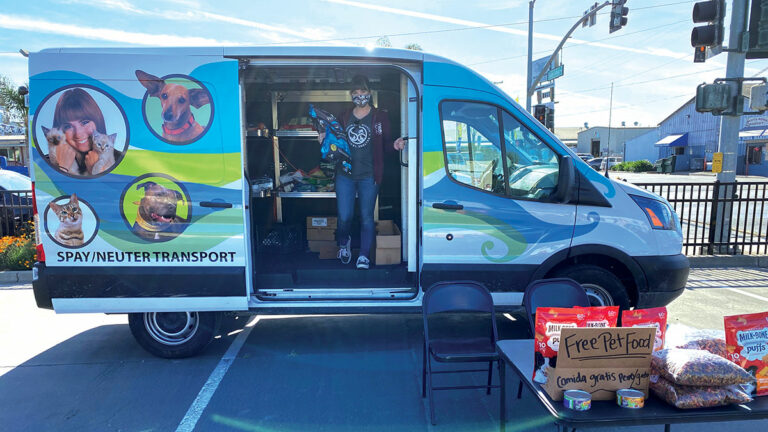
Animobile—Community Outreach Vehicle

The solution to animal neglect, abandonment and overpopulation lies in education and prevention. The foundation has strengthened its programs that help animals and their guardians beyond the shelter’s doors by funding a large multi-purpose van. 

The Animobile allows Shelter staff to reach pets where they live. Our big idea involves raising funds to support ancillary programs and maximize their impact now that we have the means to deliver services countywide.

We are reaching out to Santa Cruz Gives to fund important special projects, including our “Animobile.” Programs the Animobile can support include: Planned Pethood, a sliding-scale-to-free spay/neuter and microchip service for low income residents; door-to-door service from the bilingual shelter staff providing dog vaccinations, dog houses, trolley systems, collars, leashes, dog and cat flea medication, and spay/neuter vouchers (concentrating in Watsonville); Healthy Pets for All, a cooperative effort with volunteer veterinarians and vet techs providing pop-up clinics for low-income populations. The Animobile will bring free pet food, flea medication, food bowls, ID tags, leashes, collars, and support staff.

Santa Cruz County has nearly 300,000 humans and the 2017-18 National Pet Owners Survey found that 68% have at least one pet: more than 200,000 companion animals! We are committed to every pet, and every human. 


Santa Cruz SPCA and Humane Society

Organization Mission: The Santa Cruz SPCA provides safe harbor for animals in need and promotes an active humane community through adoption, advocacy and education.

Big Idea for 2020

Support for Seniors

Many Santa Cruz County seniors struggle to keep their pets healthy while making ends meet. We provide financial support for seniors’ dogs or cats of any age that need care their owners cannot afford.

We are asking Santa Cruz Gives donors to support a two-part program where recipients can benefit from one part or both! 

Part one provides veterinary care to low-income seniors through two annual preventative care Wellness Days (vaccinations, parasite management, nail trimming, ear cleaning, and yearly exams) or through private diagnostic and treatment appointments available all year. 

Part two connects senior pets with senior people and waives the adoption fee when a great match is found. It includes the first set of vaccinations, spay/neuter, microchip, a vet exam, and educational literature. Bringing home a senior cat or dog often means saving a life, since they are often the last to be adopted. This program was established with a generous gift from Dr. Jean Langenheim and named for her cherished cat, Blackie.

Animals keep us active with walking, grooming and even petting. Their companionship can lower blood pressure and cholesterol levels, reduce social isolation, ease grieving, promote healing, and increase happiness.


Save Our Shores

Organization Mission: Save Our Shores is dedicated to fostering a thriving Monterey Bay and Monterey Bay Marine Sanctuary by stewarding clean shores, healthy habitats and living waters.

Big Idea For 2020

S.O.S. WaveMakers

Residents of Santa Cruz County know the joy of our ocean environment, along with its broad economic benefits.
As a bold and trusted steward of this resource for 40 years, Save Our Shores will launch a campaign to empower youth to address our climate emergency and ensure a livable planet for their future. We will organize, coordinate and sustain a marine conservation and climate action youth leadership group supported by an adult advisory committee and a Save Our Shores staff liaison.
Our major goal is to give our youth a voice and teach them civic engagement, advocacy and activism, including how to access public leaders and educate them about issues of concern to younger generations, no matter what career choices they may make.


Second Harvest Food Bank of Santa Cruz County

Organization Mission: Our mission is for our community to work together to end hunger in Santa Cruz County through healthy food, education and leadership. Second Harvest counters the prevalence of cheap, processed foods by inspiring participants with knowledge and ingredients to make healthy lifestyle changes to combat obesity and diabetes. We challenge the traditional community food bank role by partnering with local nonprofits and community safety net services to support health maintenance through foods that nourish.

Big Idea For 2020

Breakfast For Kids

Only with adequate nutrition can children learn, adults work and the community thrive. Second Harvest Food Bank Santa Cruz County’s big idea for 2020 is supporting Breakfast For Kids, a program that provides breakfast foods to families with children through our food distribution networks.

Last year, we added 92,300 pounds of healthy breakfast foods to the community, including eggs, ground turkey, milk, and tortillas, specifically for families with children attending our more than 100 pantry and Food For Children sites, such as churches, Head Start, WIC (Women Infants Children), community centers and more.

Second Harvest’s strength is the capacity to receive and distribute food on a large scale, as we work closely with local farmers, distributors and retailers to source dietary staples, fresh fruit and vegetables. We also advocate for policies that tackle the root causes of hunger. 

Some 3,000 volunteers help power Second Harvest Food Bank, allowing us to distribute a staggering 8 million pounds of food each year. 


Senderos

Organization Mission: Senderos is a volunteer-based organization that forges pathways to success for Latino youth through free traditional music and dance programs, and fosters educational opportunities that would not otherwise be available. Senderos has established cultural pride in the face of racism and gang involvement, growing from serving seven youth in 2001 to more than 100 youth and young adults performing at more than 40 events each year.

Big Idea for 2020

Cultural Arts Pathways for Latino Youth

Sharing the rich culture of Mexico. Connecting young people to their heritage. Creating a sense of belonging for immigrant families. These add up to academic success, and break down borders in our community by promoting acceptance and understanding. 

Senderos’ 2020 project is to meet the increased demand for free after-school traditional (and bilingual) music instruction and Mexican folkloric dance. The needs are for instruments to expand the music lending library and traditional dance outfits for live performances. 

Our programs enhance self-esteem and support our goal that all participants attend college. In 2019, we presented nine college scholarships to seniors attending UC Riverside, UC Davis, UCSC, CSUMB, and Cabrillo.

The results reverberate in the community by developing young adults who are confident, creative, resilient, culturally aware, solving problems, and dreaming big! In these challenging times, it is especially important to support Latino youth and their families. 


Shared Adventures

Organization Mission: Founded on the belief that recreation, fun, challenge, and access to the outdoors are an essential part of a healthy and fulfilling life, Shared Adventures is dedicated to improving the quality of life for people with disabilities. We create opportunities to enjoy arts, social interaction and the natural environment through activities that achieve optimal physical, mental, social-emotional, behavioral, and spiritual health, which benefit the individual and community.

Big Idea for 2020

Recreation and Challenges for Healthy Lives

Shared Adventures successfully serves the disabled community of Santa Cruz County with more than 50 activities and 2,000 participants per year, and will now broaden its programming to include other special needs communities, such as those in recovery, the homeless, foster youth, and veterans. 

When special needs individuals share experiences with others who also need help, the benefits are multiplied many times as giving and receiving occurs among the various participants. Moving the self-image from needy to helper, from sick to enjoyment, brings huge dividends to those engaged, as studies and experience show.

Participation in recreation, and the challenges it brings along with joy, leads to health and personal growth for individuals of special needs populations. 

Those who participate in Shared Adventures activities (art classes, gardening, bowling, kayaking, bike-riding, field trips, etc.) gain the confidence to take on new, challenging activities, which leads to more integration into the community. This can mean classes at Cabrillo College, employment, increased social activities, and healthier life choices. On the community level, strengthening special needs individuals combats expensive institutionalization, drug use, crime, and social dependency. For families, it offers hopefulness, broader social opportunities, and family cohesion.

Separation, dependency and isolation contribute to depression and alienation for special populations. The Shared Adventures model for the disabled community—the lessons of fun, health, challenge, growth and support—will be expanded by the diverse population mix in 2020.


Teen Kitchen Project

Organization Mission: The Teen Kitchen Project builds healthier communities by cooking food. Chefs and nutritionists help volunteer teens cook nourishing meals that are delivered to individuals and families in crisis due to severe illness throughout Santa Cruz County.

Big Idea for 2020

More Teens, More Meals

The Teen Kitchen Project (TKP) provides teens with an opportunity to learn cooking skills while giving back to our community. Teen chefs volunteer thousands of hours every year to provide meals to clients, most of whom are economically disadvantaged, live alone without support, and are not served by other meal programs. TKP provides a vital service for families struggling with illness while empowering teens and building community.

Our van picks up at high schools to transport youth to our kitchens in Soquel and Watsonville. After renting kitchens for eight years, TKP has the opportunity to expand by building our own kitchen with building expenses covered by a private foundation. But we need to raise funds for all the equipment in the kitchen, including a tilt skillet so we can start cooking once the location is complete in early 2020! It is not as small as it sounds! A tilt skillet is a piece of equipment with a large area of heated steel at the bottom, allowing us to make large quantities of soups and stews at once.

The new kitchen will save $25,000 per year on rent and allow us to serve youth Monday-Friday, increasing our direct impact from 40 to 60 youth, with the capacity to add more in the future, and enable us to grow our catering program, which employs local youth for added income. Use us for your next event!

Our work helps people every day—and aims to teach a lifelong habit of giving to local youth.


The Diversity Center

Organization Mission: Celebrating three decades of work in Santa Cruz County, the Diversity Center advocates for, supports and celebrates our area’s LGBTQ+ community. As the only LGBTQ+ community center on the Central Coast, we remain committed to advancing the causes and priorities of the thousands of lesbian, gay, bisexual, transgender, queer, and questioning men and women we serve. 

Big Idea For 2020

Camp OUT: Summer Camp for LGBTQ+ Kids

Did you or someone you love go to an LGBTQ+ Summer Camp as a kid? Nope, neither did we. If we were lucky and our parents could afford it, we went to a camp that reinforced gender stereotypes. Boys learned survival skills, girls did craft projects.

The Diversity Center is changing all that. We are offering a camp where LGBTQ+ kids help each other put up their tents, learn how to cook, share their struggles around the campfire about coming out as LGBTQ+, and find other campers just like them, usually for the very first time.

LGBTQ+ youth face a far greater risk than their non-LGBTQ+ peers of suicide, mental illness, depression, bullying, assault, and substance use. It’s our goal to help our community’s youth feel connected to one another, build self-confidence, experience emotional and physical safety, be inspired as future leaders, and have fun! Our programs are run with the guidance and compassion of savvy adult mentors. 

We reach approximately 10,000 individuals a year through on-site programs, outreach and education events, and work with schools, thanks to individual donations and hundreds of volunteers. Please join us as the need grows for LGBTQ+ support.


UnChained

Organization Mission: UnChained fosters empathy, respect and responsibility in youth through the human-animal bond.

Big Idea for 2020

Dogs-in-Residence Program

UnChained works with two vulnerable populations in Santa Cruz County: homeless dogs and at-risk youth. 

Our principal program, Canines Teaching Compassion, teaches youth to train shelter dogs in basic skills and manners. The youth help the dogs find homes while developing patience, respect and responsibility. The youth identify with their program dog because they, too, may have been neglected by caregivers or lived behind bars. Evidence shows that when youth learn kindness and empathy toward animals, they transfer those skills to their human relationships. 

Your donation will help to develop a Dogs-in-Residence program in 2020 with select partners, so that teams of youth can provide foster care and training for rescue dogs to be adopted. Living with a dog provides young people with a greater bond and responsibility for the dog’s well-being while learning to work with peers for the dog’s benefit. 

With waiting lists at several partner locations, this program will enable us to serve more youth and support animal rescue organizations. Over 90% of our dogs are adopted within 30 days of graduation, and with training, are more likely to stay in their new homes. 

Since 2011, UnChained has served over 350 youth who have helped, train, socialize and find homes for over 170 dogs— unleashing young people’s potential one dog at a time! 


Volunteer Center 

Organization Mission: Education is the key to better jobs, successful children, strong communities, and thriving democracy. The Volunteer Center’s Literacy Program transforms the lives of local families by empowering adults to gain the basic literacy, math and education needed to succeed as workers, parents and community members. We train and support local volunteer tutors and match them with neighbors who are motivated to improve their lives through education.

Big Idea for 2020

Stand for the American Dream

Most American families started with a dreamer who moved here and worked hard to make a better life for their family. Our volunteer tutors work with 200+ dreamers every year. They meet in homes, churches, workplaces, and our office to give neighbors skills to succeed. 

As one tutor put it, “I was raised to believe in what the Statue of Liberty represents.” 

We want to support immigrants and refugees by expanding services to support 60 families on our waiting list and double the number of students we help to become citizens. Citizenship is essential to empower our neighbors to have a voice in the community they love, and the education we provide lasts far into the future: It lasts a lifetime.

By improving English, math and practical language skills, we empower local families to reach their goals of a better life. We show them that the American values of diversity, community and welcoming newcomers are strong here in Santa Cruz County. Our students, on average, learn faster than the California Adult Education Benchmarks, because our all-volunteer tutors provide individual attention and content that is immediately useful in everyday life.

Education helps families out of poverty, improves their health and builds individuals who contribute to our community, as well as a thriving democracy. Strengthening our neighbors strengthens all of us. 


Warming Center Program

Organization Mission: There will be no traditional winter shelter this year supported by the city and county of Santa Cruz. Warming Center will be the only option for many who sleep outside this season. Warming Center addresses unmet basic needs of homelessness not provided by other funding sources (government and other organizations). Programs include our coldest and wettest nights shelter to eliminate the occurrence of hypothermia and death. Our Day & Night Storage keeps personal belongings safe and reduces the items people must carry around. Laundry Wednesday allows people to maintain their clothing and hygiene.

Big Idea for 2020

Not One Person has to Sleep Outside on the Worst Nights of Winter

There are far too few traditional homeless shelter beds in Santa Cruz County, and those that exist shut out many in need with strict arrival times, locked doors and rules that may prevent access. Warming Center ensures that everyone may seek safe, warm, clean, and dignified shelter on the coldest or wettest nights of winter. 

Warming Center operates shelters in Santa Cruz and Watsonville. We feature an outreach program, an easy-to-remember hotline (246-1234), and a shuttle pick-up location serving soup and hot drinks to entice those who rarely access shelter. We prioritize those with physical mobility and mental health challenges, as they often have difficulty accessing and maintaining shelter.

The program activates when temperatures reach 36-38 degrees and in extreme rain events (1” in one day, .75” in each of two days, or .5” in each of three days), serving 150 people on a single night. 

Our volunteer, community-funded program is only able to provide a level of service equal to the amount of community support received. A compassionate community demands that no one has to sleep outside during extreme cold and rain. 


Watsonville Wetlands Watch

Organization Mission: To preserve, restore and foster the appreciation of the wetlands of the Pajaro Valley.

Big Idea for 2020

Watsonville Urban Forest Revitalization 

Watsonville’s urban forest canopy is much smaller than what a city of its size needs to support residents, wildlife and water quality in the freshwater wetlands that underlie the city.

The solution: plant trees. Watsonville Wetlands Watch was inspired by Watsonville’s 2012 Urban Greening Plan, which called for planting 30,000 new trees, and we partnered with the city to restore the area’s wetlands, urban forests and watersheds.

This work can improve the water quality of the Monterey Bay, save an important ecosystem and enhance the public health of the Watsonville community.

Our project is part of our major new education and action initiative that involves planting new trees at schools, parks and on bicycle and walking trails throughout the slough system during community watershed restoration events. We’ll incorporate art, music and education to inspire locals about Watsonville’s urban forests. The trees will help shade and cool schools, improve access to nature and provide opportunities for youth to take leadership roles in restoring the forest.

Our wetlands support tremendous biological diversity, including 275 resident and migratory bird species and 23 native plants and animals that are threatened, endangered or species of special concern. Coastal wetlands have recently been shown to play a vital role in countering the effects of climate change.


Wings Homeless Advocacy

Organization Mission: Wings Homeless Advocacy is committed to living out our values of compassion, dignity and respect for all people by uniting our community to be volunteer advocates for those moving out of homelessness and onto a path of healing—working together to end chronic homelessness in Santa Cruz County.

Big Idea for 2020

Make a House a Home
Wings works at the intersection of homelessness and housing. Our volunteers and two part-time staff find that the best way for us to advocate for a newly housed, recently homeless participant is to simply care and support basic needs. 

Wings has been offering Welcome Home baskets full of essential personal care and household items for several years. We added new, refurbished mattress sets with community donations, and this year, with your help, we are excited to expand to donate pillows and bedding for those moving into permanent housing.

One volunteer’s encouragement can make all the difference in helping a chronically homeless person make a 180-degree turn. We also offer transportation to important appointments, help clients obtain vital documents, offer free haircuts, and much more. 

Our continual goal is to increase our capacity to serve youth, single adults, families, and seniors by offering volunteers to assist professionals in moving people out of homelessness. Wings has a well-organized structure to provide maximum support to advocates, partners, and participants. 


Youth N.O.W.

Organization Mission: Youth N.O.W. is committed to engaging youth in a nurturing community where each individual can grow personally and academically through individualized programs that cultivate success.

Big Idea for 2020

Cultivating Success 2020

For 10 years, Youth N.O.W. has served the youth of Watsonville and greater Pajaro Valley through its free academic, social and emotional support programs. We give our youth tools and the support of caring mentors so they may gain confidence in school and in life, connect with peers in a safe social setting, receive enrichment to broaden their creative interests, and most importantly, feel connected to a place of nurturance.

Cultivating Success is an annual event that recognizes six inspiring middle and high school youth in the areas of academic dedication, growth and leadership. We bring together youth, families, community partners, members, donors, and youth advocates to hear each student speak about how Youth N.O.W. has positively impacted their lives. 

Each student receives a small scholarship honoring their achievements that helps our youth to purchase school supplies, pay for upcoming college expenses or explore creative interests. 

Your donation will allow us to increase the dollar amount of our spring scholarships from $100 to $500 to ensure our youth are capable of thriving in fall 2020. We would also like to establish a scholarship fund for future graduates.

We feel it’s important to celebrate our youths’ achievements with this event, and support their continued growth with a scholarship so they can be successful contributors to this community.

Former Mayor Cynthia Chase Is Moving to Oakland

Former Santa Cruz Mayor Cynthia Chase is moving away from the county she’s called home for the past 20 years.

Chase, who recently left her post as the inmate programs coordinator at the Santa Cruz County Sheriff’s Office, is moving to Oakland, now that her husband Howard Heevner has taken a job at UC Berkeley.

But Chase says the job isn’t the only reason they’re leaving. If she and Heevner weren’t moving to Oakland, they would likely be leaving for New Orleans, a city they both love that also offers lots of nonprofit work, Chase says.

A social worker by trade, Chase served on the Santa Cruz City Council from 2015-2018. She made affordable housing a hallmark of time on the council, turning her one-year term as mayor in 2017 into the “year of housing.” She subsequently served on a subcommittee that turned community suggestions into policy suggestions. 

The idea of moving away now is bittersweet, she says. But in terms of housing affordability, Chase sees the City Council moving in the wrong direction.

“This is a council that is not interested in listening to and doing what the community wants,” she says. “Why would we fight to stay here? It just seems like it’s time to go.”

Sheriff Jim Hart, who was Chase’s boss at the county, says that he’ll be sad to see his friend leave, and adds that he’s working on filling her position.


HOUSE OF SHARDS

In terms of local policy, one housing vote that shook Chase’s confidence in local leadership was a 4-3 decision from the City Council regarding a possible plan to increase density on Santa Cruz’s busiest streets.

Chase says that last year, she and her then-colleague councilmembers Sandy Brown and Martine Watkins put a lot of thought into their Housing Blueprint Subcommittee recommendations. One decision they made was not to prioritize building along the corridors, because Chase had heard community concern from residents of the Eastside, Midtown, Seabright, and the Ocean Street area. That unfinished policy, sometimes called the Corridor Zoning Update, had been several years in the making to bring the city into compliance with its own General Plan.

Now, the City Council is killing the corridor plan, and Planning Director Lee Butler has said that he’ll have to devote staff time to winding that down, instead of focusing on housing affordability.

Starting in 2017, more than two years’ worth of work went into the housing subcommittee’s recommendations—along with long hours, late nights and hundreds of comments. By contrast, only one member of the public commented about the corridors, at the quiet afternoon meeting when the City Council’s four liberal-most members took a surprise vote to kill the plan.

The toughest part for Chase was that Brown made the motion to ax the plan.

“It was terribly, terribly disheartening—and, I think, a message to the community that she and the others that voted for this don’t actually care about affordable housing,” Chase says.

Brown, who identifies as a proud defender of affordable housing, says she doesn’t believe that killing the plan will actually take much staff time. And she says she heard repeatedly from residents who live near the transit corridors who worried they would be impacted by new development.

Brown says there’s often an assumption that building more housing will mean more affordable housing, and she isn’t sure that’s necessarily true.

Calls to build more housing stretch beyond Santa Cruz.

Due to California’s anemic rates of new construction, Gov. Gavin Newsom has called for 3.5 million units of new housing, a campaign announcement spurred in part by findings from the state’s Legislative Analyst’s Office on the state’s housing shortage. 

While Santa Cruz has done a better job as of late building market-rate units than building affordable ones, the city doesn’t have many options right now to pay for affordable housing. The state still hasn’t created an alternative to redevelopment, which it axed eight years ago. And a local housing bond failed to get the required a two-thirds vote at the ballot last November.

Partly in an effort to address housing affordability, Brown notes that the council has re-upped the amount of affordable housing that developers are required to build in new housing complexes back to its previous level. In general, finding the right balance has proved contentious.

In 2017, a consultant told the city that its affordable housing requirements—often known as “inclusionary housing” rules—were too high, arguing that the threshold was getting in the way of needed development. The council had lowered the requirement from 15% to 10% in most parts of town last year. The council, which shifted left in the 2018 election, opted to raise the requirement back to 15% after facing a lawsuit from two activists.

Brown has now proposed the idea of raising the requirement to 20%. She isn’t sure that raising inclusionary affordable housing requirements will help the market for renters, but she wants to try.

“The short answer is that we don’t know that raising the affordable rate is going to lead to more affordable housing,”  she says. “What we do know is that the private market isn’t going to make it happen on its own.”

On homeless issues, Brown says the city hasn’t made as much headway this past year as she would have liked. She plans to sit down with City Manager Martín Bernal to discuss finding ways to make sure the city has adequate room at local shelters. “We have a serious problem in that we have not made a lot of progress in making sure that we have sufficient shelter space,” she says.

Chase, who served on the Homelessness Coordinating Committee in 2016, believes the council has repeatedly gone in circles on homeless issues this past year. That approach, she argues, is hurting those most at risk. “We are a kind and just community, generally speaking,” Chase says, “and yet we continue to do things that just screw over our least-resourced members of the community over and over and over.”

This past Sunday, homeless activists reopened the controversial Ross camp behind Gateway Plaza and the Ross department store six months after the city disbanded it.

TALKING ABOUT IT

Chase and Heevner still plan to foster children, something they’ve been discussing for more than a year. Chase says they’ll be starting the process over in Alameda County.

During her final days in Santa Cruz, Chase is candid in her critiques of city leadership under a majority that includes Brown and Vice Mayor Justin Cummings, as well as councilmembers Chris Krohn and Drew Glover—both of whom are facing a recall effort.

But Chase has her doubts about the notion that a recall is a good way to address the city’s problems. She says she’s watched the political discourse in Santa Cruz grow increasingly toxic, and that community members with kids in particular have told her they don’t feel comfortable at City Hall these days, where vitriolic remarks from angry audience members in the council chambers aren’t uncommon. 

Until something changes, she says,the theatrics will also dissuade qualified potential council candidates from running. She herself opted not to run for re-election last year.

Chase thought that a new Charter Amendment Committee, which began meeting in 2018, had a chance to change the culture. But the new council killed the body at the start of the New Year

“There has got to be a change,” Chase says. “This can’t feel good to any member of the council. It can’t. I can’t imagine anyone is loving chaos. That’s certainly not what governments are meant to do.”

Supervisors Approve Live Oak Housing Project

By Todd Guild and Tony Nuñez

The Santa Cruz County Board of Supervisors last Tuesday unanimously approved a proposal to sell a property in Live Oak, and a plan to develop it into an affordable housing project that will include a dental and medical clinic.

MidPen Housing, which is purchasing the 3.6-acre parcel at 1500 Capitola Rd., will build 57 units of one-, two- and three-bedroom apartments. The project will include an 11,000-square-foot dental clinic to be run by Dientes Community Dental Care, plus a 19,000-square-foot medical clinic, which will be run by Santa Cruz County Community Health Centers.

The development will also include an after-school program, a community room, a garden, and 190 parking spaces. Construction will include a second eastbound lane in front of the development along Capitola Road.

In April, nonprofit developer MidPen completed a similar project known as the Pippin Orchard Apartments at 56 Atkinson Lane. Nearly 2,500 families applied hoping to snag one of the 46 units, said Director Betsy Wilson, adding that affordable housing projects are essential in a time when increasing numbers of people are facing poverty.

“The need certainly isn’t abating,” she said. “It’s increasing in terms of the need for low-cost housing.”

The three agenda items addressing the property—all of which received unanimous support—allowed the sale of the property, approved the overall project and allowed the county to spend $5 million from its Low-and Moderate-Income Housing Asset Fund to help with the project.

MidPen will pay nearly $2.2 million for the property, while the clinics will each pay $337,500, said Santa Cruz County Housing Manager Julie Conway. The proceeds will go to schools, fire services and to the county’s general fund. 

When complete, the development will allow families to live affordably in the mid-county location, thus reducing traffic, Conway said.

“By placing dense affordable housing in the center of our community, we are actively addressing our traffic issues along with our housing issues,” Conway said.

The county’s redevelopment agency originally purchased the property near 17th Avenue and Capitola Road in 1994 with plans to build a library. But that plan—and many projects like it—was thrown into limbo when then-Gov. Jerry Brown disbanded the state’s 400 redevelopment agencies.

Since then, the Office for Economic Development and the Planning Department have been looking to offload the property, which has sat largely unused for about three decades.

The organizations will now seek financing and building permits, Conway said. Construction could start in mid-to-late 2020, though she called that an optimistic prediction.

Nearly all of the two-dozen people who addressed the supervisors supported the project. 

“There is a high need in our community and our county for projects like this,” said Aracely Contreras.

Robert Singleton, executive director of the Santa Cruz County Business Council, said quality of life for workers across the county could improve. “We desperately need affordable housing,” he said. 

But a handful of neighbors said they were concerned about increased traffic and noise. 

Carole Childers spoke of the already “hellacious” traffic congestion. “I know we all need housing,” she said. “I’m aware of that. But I don’t see how this is going to benefit those of us in our neighborhood who are near retirement age. It’s going to drive us out.” 

Childers said she is now considering relocating to Oregon.

“If this project goes in, my quality of life in my little neighborhood where I’ve lived for 18 years is going to change dramatically,” she said.

Leila Court resident Joseph Chairez said he agreed about the importance of affordable housing, but expressed concern about increased parking woes from residents, employees and the 10,000 patients estimated to use the clinics annually.

“I don’t want you to forget about the neighborhood and the people who live there,” he said. “We’re just as important as they are.”

Supervisor John Leopold said the project has evolved since 2012 after numerous community meetings, and was altered slightly to address concerns from Leila Court residences. 

“It’s hard to say no to a simple request to have an affordable place to live,” he said. 

County officials estimate the rent will be $1,099 for a one-bedroom, $1,167 for a two-bedroom and $1,307 for a three-bedroom apartment.

In other action, the supervisors unanimously approved a moratorium on no-fault evictions until a state law limiting rent increases goes into effect on Jan. 1, 2020.

The emergency ordinance went into effect immediately.

Signed into law by Gov. Gavin Newsom on Oct. 8, Assembly Bill 1482 is a statewide measure designed to address the housing crisis by limiting annual rent increases to 5% plus inflation, or 10% of the lowest gross rental rate charged for that unit during the prior 12 months, whichever is lower, said Santa Cruz County spokesman Jason Hoppin.

“This is happening in our community right now,” Supervisor Zach Friend said. “This will protect people. This will keep people in their homes that deserve to be in their homes.”

The Capitola City Council also took similar action last week to protect tenants in the remaining months of the year. 

A.B. 1482 also requires landlords to have and state a “just cause” to evict tenants who have occupied residences for more than one year, such as owner occupation, failure to pay rent, breach of lease, creating a nuisance or other reasons. 

Both the rent cap and the just-cause provisions are subject to exemptions, including housing built in the past 15 years and single-family residences unless owned by a real estate trust or corporation. A.B. 1482 sunsets after 10 years. 

Anthony Banovac, a Realtor for Century 21 and property owner in the county, said that the new law will hurt landlords “somewhat,” but predicted it will hurt renters more.

“I can’t imagine one landlord that is not going raise their prices every year going forward,” he said. “It’s going to hurt both sides, and that’s what people at the state level don’t understand.”

Banovac said he that landlords are going to be extremely protective against their tenants going forward because of the “just evictions” portion of the law. He said most times, he has been able to solve conflicts on his own, and that he does not like giving a reason for eviction, because when he files something to Department of Housing and Urban Development program it sticks with the renter and kills their opportunity to find a new house.

“Anytime something comes down from the state, it kills our power to solve things person to person,” he said. “It’s not good policy.”

Love Your Local Band: Morgen

Morgen
15-year-old singer-songwriter Morgen re-releases her first single, entitled "Try Again"

Barceloneta Debuts Downtown Tapas

barceloneta
San Francisco restaurateurs bring a taste of Spain to the Central Coast

Film Review: ‘The Irishman’

irishman
Martin Scorsese and mob-flick royalty breathe life into look at crime’s lasting legacy with 'The Irishman.'

Opinion: November 13, 2019

Plus letters to the editor

Muccigrosso Vineyards Makes Anti-Wimpy Wine

muccigrosso
Muccigrosso makes a powerful 2014 Pinot Noir

Eddie Spaghetti’s Solo Resurgence

eddie spaghetti
The longtime Supersuckers frontman plays Moe’s Alley on Wednesday, Nov. 20.

5 Things To Do In Santa Cruz: Nov.13-19

zine fest
Responsible recreation, Zine Fest, FrankenCon and more

Santa Cruz Gives 2019: A Guide to Holiday Giving

Santa Cruz Gives 2019
From housing to animal rights to youth education, more local nonprofits than ever are joining the giving revolution

Former Mayor Cynthia Chase Is Moving to Oakland

Cynthia Chase
Chase, who’s left the sheriff’s office, sounds off on the city’s approach to housing

Supervisors Approve Live Oak Housing Project

housing
Board also bans no-fault evictions
17,623FansLike
8,845FollowersFollow