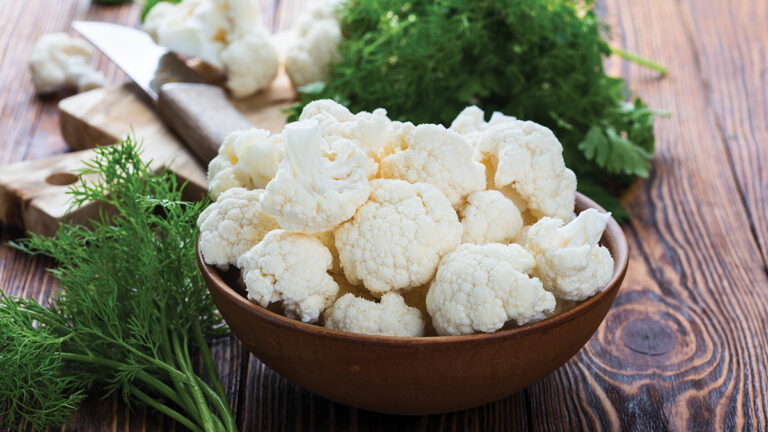
It has been quite the wild ride for the cauliflower plant.
Once the underappreciated albino cousin of broccoli, literally paling in comparison, it has burst onto the scene over the last few years and enjoyed a meteoric Justin Bieber-like rise to fame and stardom. Not only is cauliflower popping up on many restaurant menus after being roasted, sautéed, fried, or pickled, it is also being used to mimic proteins like chicken wings, and thick cut to resemble a steak or other piece of meat. It is even making its way into foods like chips, crackers, and crisps. It is also gluten-free, paleo- and keto-friendly, and has become a trendy low-calorie flour and starch replacement in foods like pizza dough, pasta, rice, and mashed potatoes. Sales of cauliflower-containing products increased by 71% in 2018, according to Nielsen market research. And according to the USDA, per capita availability of cauliflower increased by almost 100% in 2018 compared to 2012.
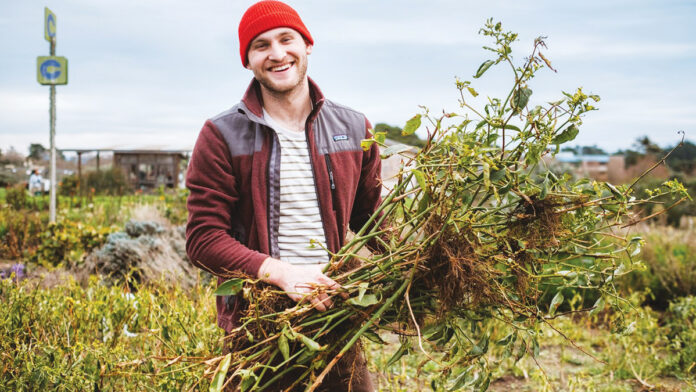
“Cauliflower is a very versatile ingredient,” says Joe Schirmer, owner of Dirty Girl Produce, a 40-acre organic farm in Watsonville that grows and sells cauliflower. “You can do a lot of different things with it and cook it in many different ways.”
He says it takes on other flavors well and that its greens (the leaves) are closely related to kale and collard greens and are delicious in their own right. “Cauliflower capitalizes perfectly on the vegetarian, vegan, and gluten-free trends,” Schirmer says. “We are always supportive of people making efforts to eat healthier.”
“In the last year or two, we have seen a large increase in demand for cauliflower, more than double or triple,” adds Stella Araiza, sales manager of Dirty Girl Produce. “We are bringing more to farmer’s markets and definitely selling more. It has really taken off.”
She says that vegetables can be very trendy, and likens cauliflower’s marketplace blow-up to that of kale’s in years past. “Cauliflower production has increased at our farm. We used to have to try and find ways to sell it, and now we just grow more.”
Although restaurant demand has increased, she says the direct-to-consumer route has increased even more. “It seems very popular; people seem to have more than one use for it.”
Jocelyn Dubin, registered dietitian and co-owner of Nourish, a wellness center in downtown Santa Cruz, says she too has observed a significant uptick in cauliflower consciousness and an increase in the number of people eating it and using it as a starch. She echoes the sentiment that it is a very versatile vegetable but cautions that its trendiness is probably short-lived.
“We tend to glom onto superfoods,” she says, adding that it isn’t so easy to use cauliflower as a substitute in traditional recipes. “It is incredibly tricky to have it perform like starch,” she says. “It doesn’t rise or have the mouth-feel or texture of starch.”
“From a nutritional perspective, for those with diabetes, pre-diabetes, or those trying to lose weight, it is a great replacement for starch,” Dubin says.
And beyond those benefits, cauliflower also brings other healthful nutritive qualities to the table. “It is low-carb and low-calorie,” she says, “and does contain vitamin C and sulfur–which is a phenomenal cancer fighter.” She adds though, that it is not nearly as healthy as broccoli, which has 60% more vitamin C and 60 times more beta-carotene–but says that people sometimes have an aversion to green foods. Part of cauliflower’s allure is that it is much less distinct in flavor and more visually resembles traditional foods like pasta and pizza dough, rice, and potatoes, whereas broccoli-derived green versions of these same foods would not only look different, but taste different, too.
Although it may turn out to be just a fad, its versatile applications and blank canvas-like quality may help it stick around and perhaps make the paradigm jump from food trend to food staple.