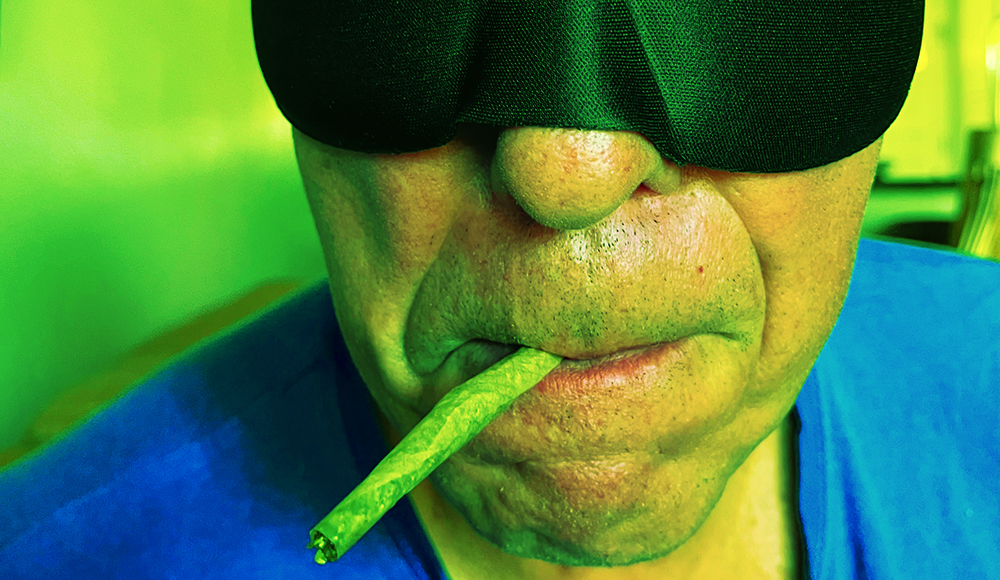
Did you hear about the stoner who decided to end it all and sat in his garage while running his electric car? That may have been me, I’ve been a chronic user (daily) for so long I can’t remember. But using it as a sleep aid always felt like the one obvious, natural, slam-dunk benefit of cannabis.
To write this column asking if cannabis helps or hurts sleep, I abstained for a week and achieved the altered state of sobriety. What a trip. Stephen King could have used my dreams in Cujo.
Santa Cruz journalist and bartender Mat Weir experienced the same thing after stopping cannabis following 17 years of using flower or gummies every night.
“I really didn’t remember my dreams, like, at all.”
Then he went cold turkey sober.
“I was on a terror, not smoking weed,” Weir says. “Those first nights, it was really hard to get to sleep. Then came the nightmares: Being chased by a psychopath… monster stuff.”
But now he feels sobriety has restored his REM cycles and has given him an unexpected gift.
“I joke around with my friends that it’s my superpower; when I’m tired, I can just go to sleep,” Weir says. “I feel a lot better. I wake up feeling more vibrant, more rested. And I remember my dreams.”
Damn. So, is weed just flat out bad for sleep?
I spoke with one sleep doctor and two cannabis/sleep research scientists trying to pin down what cannabis does in our quest for restorative slumber.
TRYING TO STAPLE THE SMOKE
What does a doctor tell patients now?
Dr. Tony Masri, a California neurologist and sleep medicine specialist, says insomnia isn’t just how many minutes you lie awake. Masri describes it as a state of hypervigilance and preoccupation with sleep.
He says cannabis can alter our thinking and perception of time, making us less hung up on the “crisis du jour.” If someone believes cannabis helped them fall asleep in 10 minutes when objectively it took longer, Masri says that perception itself can have value.
He tells his patients, “Insomnia lives in your head.”
But Masri doesn’t give cannabis a free pass. When a patient uses it for sleep, he asks them if they are increasing the dosage. Do they have morning grogginess, memory or concentration problems, loss of motivation?
If someone sleeps well, functions well the next day and isn’t increasing the dose, Masri doesn’t necessarily tell them to stop.
“I don’t take someone off cannabis and put them on Ambien.”
Masri says cannabis may be a reasonable sleep medication for some people, particularly patients whose chronic pain is keeping them awake.
“One size does not fit all here.”
Cannabis researcher Dr. Carrie Cuttler of Washington State University says subjective studies appear to show people perceive cannabis as improving sleep quality, reducing insomnia, helping them fall asleep faster and increasing sleep time.
But then she says, “Where you’re actually measuring real sleep parameters, using things like EEG (measures brain activity), they really don’t find these things to be real.”
Brant Hasler, a sleep and circadian-rhythm researcher at the University of Pittsburgh, says, “I’m pretty agnostic about whether cannabis improves sleep or not.”
TO SLEEP, PERCHANCE TO DREAM
One finding does keep drifting out of the smoke: REM suppression.
REM, rapid eye movement sleep, is the stage most associated with vivid dreaming. Hasler says reduced REM with cannabis is one of the more consistent findings in sleep studies, and he wants to be clear, he is talking about less REM and dreaming, not their disappearance.
Cuttler says the evidence for REM suppression isn’t ironclad, but something much more obvious happens when regular cannabis users stop: REM rebound.
She says, “During withdrawal, users may take longer to fall asleep, sleep less, wake more often, and experience remarkably vivid dreams.”
Vivid dreams? When I’m using cannabis daily, I rarely remember my dreams. When I stop, they come screaming back with phantasmagoric scenes from the Inferno.
HOW MUCH WEED MIGHT HELP SLEEP?
Dosage is where all three experts begin to converge. Hasler sees preliminary evidence suggesting lower doses may help sleep while higher doses become disruptive. Cuttler calls that a reasonable hypothesis. Masri agrees.
So, is cannabis a miracle plant or a sleep saboteur? Yes.
And which yes depends on the person, the type of weed, the dose and what “I slept great” means to you. Like everything, it really depends on everything.
Hey, we’re trying to staple smoke here.