

H.R. 1 is reshaping the program that one in four county residents rely on—and cutting funds for some healthcare providers.
H.R. 1, also known as President Trump’s One Big Beautiful Bill Act, changes how several federal health, nutrition and safety-net programs are funded and administered.
Since December 2024, Medi-Cal enrollment through the Central California Alliance for Health in Santa Cruz County has declined by approximately 13%. An estimated 25,000 additional members could lose coverage by the end of 2028.
But a loss of coverage doesn’t equate to a loss of need, and community health clinics are preparing to take on increased community need with less state and federal funding.
These clinics, officially referred to as federally qualified health centers (FQHCs), are community-based safety net clinics that provide primary care and support services regardless of a patient’s insurance status, immigration status or ability to pay.
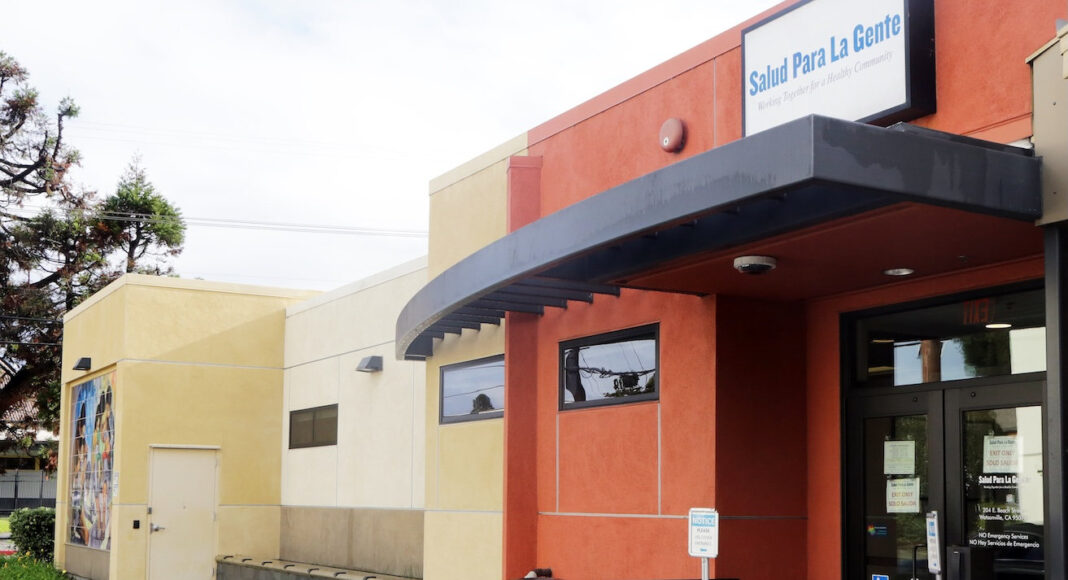
Santa Cruz County has a few of these, including Santa Cruz Community Health, Salud Para La Gente, Dientes Community Dental and the County Health Services Agency-operated clinics.
As H.R. 1 takes effect in waves—stripping funding in some areas and placing additional restrictions in others—clinics are working to address budget deficits and prepare for an influx of newly uninsured patients.
Santa Cruz Community Health’s board approved a budget with a $200,000 operating loss for the 2026-2027 fiscal year, according to CEO Anita Aguirre. The nonprofit has raised $140,000 from donors and is working to make up the rest, she said.
The County Health Services Agency (HSA) estimates around $9 million in potential annual revenue losses for county-operated health centers, such as the Watsonville Health Center.
Under California law, counties are responsible for providing medically necessary care to eligible uninsured or underinsured residents who don’t qualify for other public insurance programs like Medi-Cal and can’t afford medical care, through the MediCruz program.
Indigent care, as it’s known federally, is expected to see increased use as more residents lose insurance.
Even so, to qualify for indigent care, household income must fall within 139% and 160% of the federal poverty level. That’s an annual income of $22,184 to $25,536 for a single person and $45,870 to $52,800 for a family of four—in a county where single residents making an annual income of up to $111,100 are considered low income, according to the California Department of Housing & Community Development.
HSA estimates that the available state funding for indigent care will offset a fraction of the federal cuts.
To support its services, HSA is advocating for additional government support and searching for sustainable financing options.
“H.R. 1 will affect more than health insurance coverage,” the agency said. “Changes to federal funding and eligibility rules can affect the entire local health care safety net, including hospitals, MediCruz … community health centers, behavioral health providers, and people who rely on these services.”
Much of the work of estimating H.R. 1 costs comes from knowing patients’ immigration status, as federal and state changes target those with unsatisfactory immigration status (UIS).
As of Jan. 1, Medi-Cal members with UIS will be moved to Medi-Cal Fee-For-Service (FFS), meaning the state administers their Medi-Cal instead of the Alliance, the county’s managed care provider. Under the new arrangement, providers will bill the state’s Medi-Cal FFS system directly, whose reimbursement rates are “substantially lower for certain services,” according to HSA.
The state doesn’t have as many contracts with specialists, either, making it difficult for members with UIS to access specialty care, Aguirre said.
“Ultimately what happens is people have to go further away—they can’t access care locally,” Aguirre said. “It becomes just a much more logistical challenge just to coordinate the care.”
The Alliance estimates about 8,500 Medi-Cal members with UIS will be transferred to FFS. At SCCH, 2,000 of their 14,000 patients—about 14%— will move to FFS.
In response to H.R. 1, California reorganized its own Medi-Cal system, which decreased the enhanced rate FQHCs received through the prospective payment system (PPS).
Beginning July 1, 2027, clinics will receive FFS rates when serving UIS Medi-Cal members, which is about a third of the typical reimbursement, Aguirre said.
For the 2,000 patients with UIS, SCCH is expected to lose $2 million in revenue annually.
At Salud Para La Gente, roughly 82% of the clinic’s patients rely on Medi-Cal. But Salud doesn’t ask about immigration status, which makes estimating the impacts of H.R. 1 “impossible,” according to CEO Donna Young.
Instead, Salud focuses on raising funds through grants, raising its client capacity and hiring more doctors and providers in anticipation of more residents losing their insurance.
“We are doing everything we can to make sure that when and where there’s the demand, we also have the supply,” Young said.
One of the main clinic concerns? Keeping their patients insured.
“The biggest concern is that families in the Pajaro Valley … could lose coverage or experience disruptions in care because if they don’t have insurance, they tend to delay care,” Young said.
A disruption in care for health issues like diabetes and high blood pressure can turn manageable problems into a trip to the emergency room.
According to the California Health Care Foundation, California spends an estimated $3.5 billion per year on preventable hospitalizations—mostly for chronic conditions like diabetes, heart failure and COPD.
“Prevention is cheap in terms of the overall healthcare system’s cost,” Aguirre said.
Hanging onto current patients ensures the clinics get paid from its state and federal counterparts.
Even so, there is no single funding source that will fully replace the anticipated federal and state reductions, an HSA spokesperson said. HSA’s ability to sustain services over the long term will depend on the impacts it experiences and whether additional funding becomes available.
The County tracks changes in enrollment and policy implementation, which can be found at datasharescc.org and the County’s Federal Impacts website.
“Keep coming to your doctor’s appointments,” Aguirre said. “Don’t stop going to the doctors just because you don’t have health insurance—that’s the role of community health centers.”
•••
Syd Fluker is a California Local News Fellow. Visit fellowships.journalism.berkeley.edu/cafellows.