
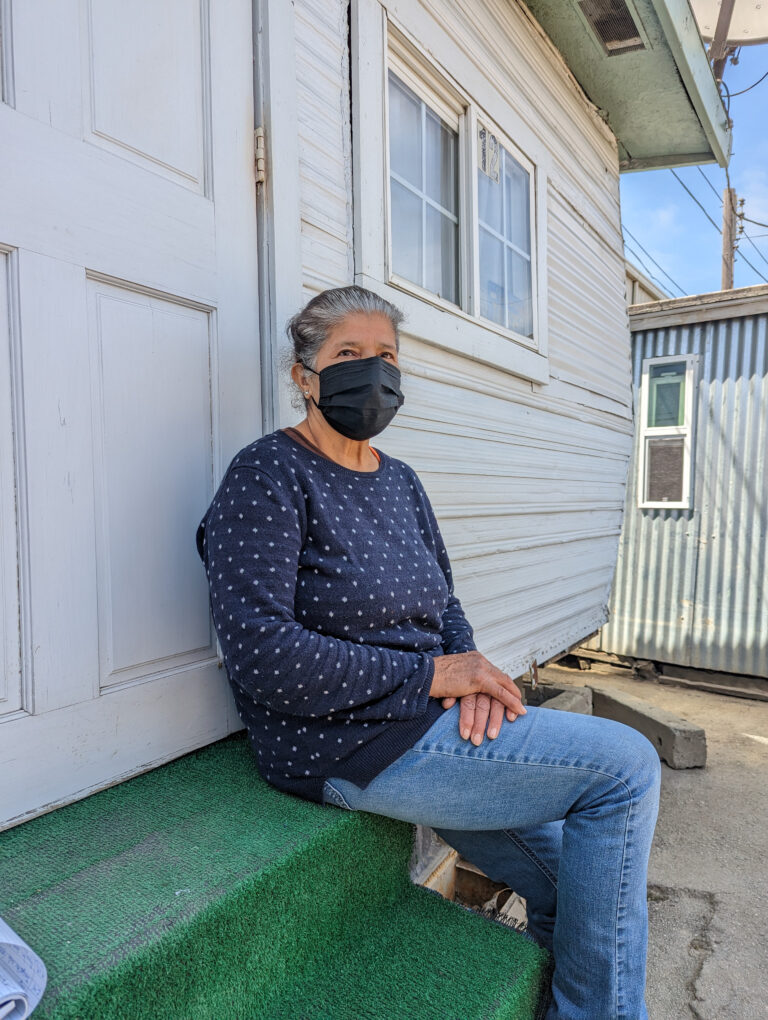
Village Trailer Park sits at the edge of Pajaro. There are piles of debris outside some mobile homes, remnants of the flood that overtook the community.
The older pull-alongs and newer manufactured homes were invaded with up to four feet of water after the levee breaches on the Monterey County side of the Pajaro River. Although most of the primary residences sit atop elevated platforms, some residents have converted storage sheds into living quarters, which were inundated by the flood waters. Despite having incurred similar damage to their properties, neighbors here—some mere steps away from each other—have had markedly different results in their dealings with FEMA.
“They only granted us $250,” resident Alejandro Zamora says. “We almost rejected the check; it was insulting.”
Zamora lives with his 74-year-old father, the owner of their mobile home. His daughter lives in the storage shed they converted into a room at the back of their lot. It was flooded, and many of their possessions were destroyed.
It has been almost two months since the devastating Pajaro flood in mid-March of this year, and residents are facing new challenges in the wake of the initial disaster. As the waters have receded and the mud and debris have mostly been cleared out, frustrations over the pace and scope of assistance for flood victims are mounting for those trying to regain their lives.
For many affected by the flood, the deployment of federal funds has been slow, and, in some cases, it is not enough to replace their possessions and repair damage. Some have had to rely on these funds for mere survival and cannot address those material needs. Eventually, the process required to get some of these allocations is complicated: many residents affected by the floods are low-income, non-native English speakers, facing institutional barriers that slow down aid or make it inaccessible.
A few yards away, another resident, who requested to remain anonymous, had set up his storage unit similarly to Zamora’s daughter. The unit also flooded, but he received $4,500 in FEMA assistance.
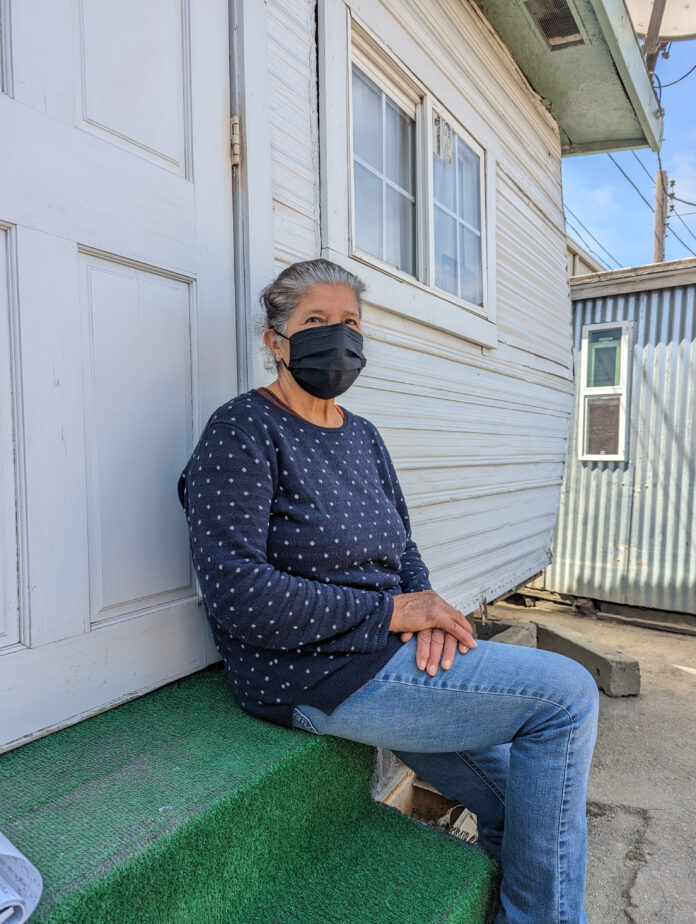
Meanwhile, Maria Navarrete, who lives next door, had a FEMA inspector come to her small one-bedroom trailer. According to Navarrete, the inspector told her that she would not qualify for damage assistance since the waters did not reach inside the home. However, there is visible damage to the property stored outside and the trailer’s undercarriage.
“What about all the damage out here?” she asks. “It’s going to cost me maybe $15,000 to have a contractor fix this.”
According to Tiana Suber, the FEMA media relations specialist for the area, the discrepancy in the amounts of these residents in aid isn’t arbitrary.
“It’s a case-by-case basis; it depends on what receipts and documentation they have for the things they have lost,” says Suber.
But for residents like Zamora, who scoffs at the amount of aid he received for the flood damage, the little assistance from FEMA leaves them to find the solution themselves.
Assistance Challenges
Tony Nuñez-Palomino, the communications manager for Community Bridges, has seen flood victims struggle with the FEMA application process.
Community Bridges has provided flood victims more than $720,000 in economic assistance since March 11. The nonprofit has also helped residents who have difficulty understanding and filling out official documentation, filling a need that has skyrocketed since the Pajaro flood.
Many residents who suffered damages from the Pajaro levee breach are farmworkers who do not speak English. It’s estimated that 170,000 Indigenous Mexican farmworkers live in California, and their primary language is Mixteco, Zapoteco or other regional dialects.
This demographic is mainly undocumented, putting them in a vulnerable position when disaster strikes and they need help from local and federal institutions. Therefore, the FEMA process is daunting even if an undocumented flood victim may qualify for aid through a household member.
“It’s going to take a major shift on the national level in the way we treat undocumented individuals,” Nuñez-Palomino says. He sees documentation status as the largest systemic barrier for disaster victims when seeking federal aid.
Residents from the mobile home park also encountered the language barrier.
These families primarily speak Spanish, and English-speaking FEMA inspectors interviewed some as part of their claim process. The inspector that came to Maria Navarrete’s residence spoke only English: Navarrete was afraid to ask for clarification on the application process since she speaks little English.
“The flood didn’t ask us our immigration status or if we spoke English,” Navarrete says in Spanish.
According to Suber, FEMA has deployed 339 personnel to the area, 50 percent multilingual, including Spanish-speaking staff. FEMA workers can also access over-the-phone interpretation for Alto Mixteco, Bajo Mixteco and Zapoteco.
The estimated cost of flood damages to the Pajaro region is unknown. To date, $1,552,036.90 has been disbursed to individuals and households in the area, according to FEMA. Since early April, 1,140 residents have applied for FEMA assistance, making the average disbursement per person about $1,300.
Waiting Game
Esperanza Esquivel fled her home in the center of Pajaro after the levee was breached. The house she rented for four years is now uninhabitable, severely damaged by the flood waters. Furniture, appliances and her family’s personal effects were all lost to the destruction. Esquivel applied for FEMA assistance and received a little over $4,000, less than a third of what she estimates her belongings were worth.
Before last winter, Esquivel worked as a picker in the local strawberry fields for years. The job barely supported herself and her three children while paying the $1,400 rent on her then one-bedroom apartment.
During the floods, Esquivel was turned away from the Santa Cruz County Fairgrounds temporary shelter due to capacity issues. Unable to find anything more affordable in the Watsonville area, Esquivel was forced to leave her daughters in the care of her sister in Watsonville. She is now paying $1,200 monthly for a room in Salinas for her and her 4-year-old son.
The one $4,000 check she received from FEMA has gone to rent, food and gas—all of which are more expensive due to nationwide inflation. She has stopped traveling to Watsonville to see her daughters because she can no longer afford it.
“All of us need to be helped, to be heard. We need a lot of help. We need the right type of help,” says Esquivel.
On March 11, the town of Pajaro was overtaken by the rushing waters of the Pajaro River. On April 3, almost a month after the catastrophe, President Biden signed a disaster declaration after the rising voices of the community urging local and state officials to request federal aid were finally heard.
The delayed response from state and federal officials has left residents wondering what it will take to get a more urgent pace in the recovery process and if more assistance is coming down the pipeline.
Last week, Pajaro residents voiced their frustrations in a town hall that included representatives from Monterey County about the lack of communication about services and long-term recovery efforts. Additional help is needed for many that have lost homes, vehicles and wages to the floods and are hanging on by desperate threads.
Community-based organizations have tried to fill the void between residents in need and governmental institutions. As soon as Pajaro residents were allowed back into their homes after the flood, Community Bridges staff went door to door to help victims understand what resources and financial assistance were available.
Some, like Esquivel, did not receive this help as she was not allowed back into her dwelling due to unsafe conditions. Nuñez-Palomino says that his organization will be facilitating a second and third round of payments to residents soon, hoping to reach those that fell through the cracks.
As the needs of California’s undocumented disaster victims come to the fore after events like the Pajaro flood, lawmakers have recently moved to propose Assembly Bill 513 (California Individual Assistance Act) and Senate Bill 227 (Excluded Workers Program) to address them.
SB 227 would allow individuals ineligible for existing state or federal benefits to receive $300 per week for each week of unemployment for up to 20 weeks. AB 513 would help residents with repairs not covered by insurance and recover lost income. According to a Community Bridges press release, the state would work with local agencies and community-based organizations after a disaster.
While the proposed bills going through the California legislature will help disaster victims and provide aid retroactively, these will not take effect immediately. Residents in Pajaro will still have to rely mostly on community-based organizations to address urgent needs.
Nuñez-Palomino is looking forward to what his organization calls a “third wave” of assistance to help with long-term recovery, including assisting residents in navigating through permitting processes for repairing and rebuilding and insurance claims assistance. He is focused on getting people help now and admires how residents have stood up to inform the community of their needs.
“At least, at this moment, the people of Pajaro who have been forgotten about for so long now have a voice and are now saying how they feel and what they want,” Nuñez-Palomino adds.