Massive Mosaic Project โ€˜Watsonville Brillanteโ€™ Showcases South County

Kathleen Crocetti had just returned from traveling in Europe when inspiration struck.

Crocetti had already been looking to bring more public art to South Santa Cruz County. But after 10 days of touring Barcelona with her husband Bill Lucas, soaking up the work of Antoni Gaudรญ, she was more invested than ever.

โ€œI was thinking, I really would like to do a monumental piece,โ€ Crocetti says. โ€œI had lots of small projects scattered downtown. But not one big one.โ€

Crocetti, a recipient of the Rydell Visual Arts Fellowship Program, formed a plan for what would become Watsonville Brillante: a massive, five-year mosaic project at the Civic Plaza Building in downtown Watsonville.

The project, headed by Crocettiโ€™s nonprofit Community Arts Empowerment (CAE), would span 12,500 square feet on the parking garage, with four large mosaics by one established artist and 185 smaller, horizontal panels of the garage by various local artists. The art would aim to reflect the diverse community of the Pajaro Valleyโ€”from its indigenous history through to present day immigrants.

Estimating the project would cost about $1.5 million, Crocetti began looking for donors. The first was Rinaldi Tile & Marble of Pajaro, who agreed to donate their time for installation. Crocetti worked with Susanne Brubeck, a lead project engineer at Rinaldi who runs the estimation department.

โ€œShe helped me stop losing money,โ€ Crocetti says. โ€œPrior, we were always making these [mosaics] and losing money. Now weโ€™re breaking even. If it werenโ€™t for [Rinaldi], this project wouldnโ€™t have even gotten off the ground.โ€

Fireclay Tile of Aromas also came on board, with founder and Chief Ceramicist Paul Burns offering to be the sole tile providerโ€”free of cost. Crocettiโ€™s parents helped as well, becoming her first of six โ€œangel donorsโ€ donating $20,000.

Finally, in February 2019, Watsonville Brillante was approved by the City Council. They also approved an agreement allowing Crocetti to lease the Muzzio Park Community Center, now the Muzzio Mosaic Art Center, for $1 a year. In return, she would develop a program to bring students and other volunteers to the center to create mosaics.

Selection Process

Artist Juan Fuentes was selected as the primary artist for Watsonville Brillante. A series of his pieces were released for voting by the community, with the top four being chosen for the vertical slots. 

Fuentes, who owns Pajaro Editions studio in San Francisco, usually works in woodblock or linoleum, and admits he was unsure how his work would be transformed into an entirely new medium.

โ€œI did not understand how this could be possible when I was first approached by Kathleen,โ€ he says. โ€œIt has been a great opportunity for me to see my prints metamorphosize into something new.โ€ 

Fuentes was born in New Mexico before his family moved to Monterey County in the early 1950s. He was raised in Las Lomas, attending public elementary schools and Watsonville High School. 

Brillante is Fuentesโ€™ largest public work project. He said he was proud to have it happen in the town he grew up in.

โ€œThe many years that my family spent working in those agricultural fields and canneries have given rise to these mosaics,โ€ he says. โ€œI hope that the murals inspire everyone, especially the youth, that they see themselves reflected in the past and present and continue to struggle for a more just society.โ€

Fuentes called working with Kathleen and the other Muzzio volunteers โ€œinspiring.โ€

โ€œThe few times that I have had the opportunity to visit and work on the mosaic along with other community volunteers and students has been wonderful and humbling,โ€ he says.

Community involvement 

Volunteers of all ages have been involved in the fabrication of Watsonville Brillante. High school youth looking to earn community service hours helped with โ€œThe Strawberry Picker,โ€ which depicts a Mexican farmworker harvesting berries. The piece was installed in June 2020 after six months of work, plus a couple months of pandemic-related delays. 

During the shutdown, volunteers would take shifts at the Muzzio to work on โ€œThe Apple Picker,โ€ including eight students who participated in a summer camp at the center.

โ€œIn reality โ€ฆ about 16 people in total finished โ€˜The Apple Picker,โ€™ in the same amount of time that 186 had finished โ€˜The Strawberry Picker,โ€™โ€ Crocetti says. โ€œIt was amazing.โ€

Such strong student involvement prompted Crocetti and CAE board president George Ow to kickoff a campaign for donors to give $25,000 each to pay youth interns. 

โ€œIf theyโ€™re dedicated, weโ€™ll hire them,โ€ she says. โ€œWe now have two paid youth interns. We have funding to do three more. Five per year. Weโ€™re really excited to offer that opportunity.โ€

โ€œHermanitaโ€ was installed in October 2021. It depicts an indigenous woman, and is twice as big as the other pieces. Crocetti said that it took about a year to complete. In addition to center volunteers, Crocetti has created a mobile mosaic station that she takes with her to farmers markets, events and homeless centers.

โ€œA bunch of โ€˜Hermanitaโ€™ was created out in the community,โ€ Crocetti says.

Work has begun on the final mural, โ€œThe Flower Grower,โ€ which depicts an Asian-American floral worker, as well as the horizontal sections. 

Anyone interested in helping fabricate should visit communityartsempowerment.org/hours.

Musician Kaethe Hostetterโ€™s New Solo Show is Informed by Ethiopian Culture

0

For over a decade, local violinist Kaethe Hostetter lived in Addis Ababa, Ethiopia. While there, she absorbed as much of the music as she could. She did this by meetingโ€”and playing withโ€”several local musicians. On one occasion, she met Asnakech Worku, a national treasure both as a master of the krar (Ethiopian harp) and for her passionate vocals. But she hadnโ€™t sung in 20 years. Workuโ€™s niece, a filmmaker, took Hostetter to meet the famous musician, who was bedridden and chain-smoking. Hostetter played the violin for her.

As Worku lay there, she suddenly sang along to Hostetterโ€™s playing. This is a particularly special memory for Hostetter, which she commemorated with her song โ€œAlemiye.โ€ With just a violin, pedals and looping technology, she created a dark minor key tuneโ€”a celebratory musical scale in Ethiopiaโ€” and combined a plucking loop to resemble the krar sound, with a hoarse melody on a low string, to resemble Workuโ€™s smoky voice that day.

The song is a mixture of all these different Ethiopian elements, filtered through Hostetterโ€™s lens as a longtime Santa Cruz violinistโ€”a truly unique composition.

โ€œAlemiyeโ€ will be featured on her upcoming solo album. Though there is no release date yet, she will be performing songs from the record at her upcoming performance at Indexicalโ€™s space at the Tannery Arts Center on Nov. 6. The show, which sheโ€™s calling โ€œGUZO,โ€ will also have a multimedia element with fabric patterns, field recordings, textiles and video she recorded in Addis Ababa.

Her solo violin project began at the onset of the pandemic last year. She returned to Santa Cruz amidst the chaos of Covid for a variety of personal reasons. Before this went down, she had anticipated a big U.S. 2020 tour with her group QWANQWA, which is made up of herself and several virtuosic Ethiopian string players. Since that tour was canceled, and she was suddenly without a band, she threw herself into playing solo tunes at local farmers markets.

โ€œI would have been on tour with my band, so I funneled that energy into a solo project,โ€ Hostetter says.

In Ethiopia, she rarely performed solo gigs. The few times she did, she would play her own renditions of popular Ethiopian tunes as background music. She devoted a lot more time to jamming with other musicians and learning the nuances of the music around here.

But playing a lot of those same songs here in Santa Cruz got a totally different response. A lot of passers-by were mesmerized by the scales and musical styles sheโ€™d picked up in Addis Ababa. Theyโ€™d never heard anything like what she played.

โ€œI tried to keep it as free as possible,โ€ Hostetter says. โ€œIt was just improvising in certain styles and adding loops. I didnโ€™t have to create such a sharp form. Just take the elements that I developed and float around using them.โ€

 Before the pandemic, QWANQWA was her life. And while her big tour is rescheduled for 2023, writing and recording a solo album has at least temporarily overtaken her creative focus. As sheโ€™s recorded these songs, theyโ€™ve also functioned to unpack and process her time in Ethiopia. Some are loosely based on songs she heard once on the radio in Addis Ababa, others take chants, riffs, popular songs, specific techniques and get filtered through her lens as a violinist with a looping pedal. Itโ€™s both musically adventurous and emotional as the songs trigger lots of memories for her. The title of her show, โ€œGUZO,โ€ translates to โ€œheavy journey.โ€

โ€œEvery tune has tons of meaning. Itโ€™s very layered. Thereโ€™s techniques of me emulating either the voice or the masenqo โ€”the one string fiddleโ€”but thereโ€™s also the way that they layer and group tones, harmonies and stuff,โ€ Hostetter says. โ€œItโ€™s drenched in meaning.โ€  

Kaethe Hostetter performs at 8pm on Saturday, Nov. 6 at Indexical in the Tannery Arts Center, 1050 River St., #119, $18. 831-621-6226.

Letter to the Editor: Master of Sunshine

Re: โ€œHitch of the Mountainsโ€ (GT, 10/27): The story which tells how Alfred Hitchcock chose Scotts Valley to live, but questions why he did reminds us that in Rich Merrillโ€™s legendary Horticulture class at Cabrillo in the โ€™80s, he told us that Hitchcock moved to Scotts Valley because โ€œit has more sunny days than any other place in California.โ€

Sam Earnshaw

Watsonville


This letter does not necessarily reflect the views of Good Times.To submit a letter to the editor of Good Times: Letters should be originalsโ€”not copies of letters sent to other publications. Please include your name and email address to help us verify your submission (email address will not be published). Please be brief. Letters may be edited for length, clarity and to correct factual inaccuracies known to us. Send letters to le*****@*******es.sc.

Letter to the Editor: โ€˜Special Ballot Measureโ€™ Not So Special

Re: โ€œPuff, Puff, Passโ€ (GT, Oct 27): Thanks to the Good Times for shining journalistic light onto the darkness of the Santa Cruz City Council majorityโ€™s decision-making. Thank you for exposing the โ€œ$141,804-$177,255โ€ cost of an election that does not have to be. The taxpayers are getting bamboozled once again and who is to blame? 

This past month we all received a long and mostly blank ballot, except for that one question: should 20% of the Cannabis tax that is collected be set aside permanently for childrenโ€™s programs? Who could be opposed to that? Frankly, very few in this community. As a member of the city council, I supported the original 12.5% set-aside and would support 20% now, but why a โ€œspecial ballot measureโ€ to make the tax permanent? Because thereโ€™s political king- and queen-making afoot.

Wasting up to $177k of taxpayer funds for a measure that could just as easily have been added to next yearโ€™s June primary or to the Nov. 2022 regular election is a costly rookie mistake. City Councilmember Shebreh Kalantari-Johnson is running for 3rd District supervisor and needs something for her political resume. She couldโ€™ve stopped this “special election ballot” because it was not an emergency. Arguably, the 1/2 cent sales tax measure referenced in the article was needed, but a cold-hearted council majority refused Councilmember Sandy Brownโ€™s entreaty that city leaders first demonstrate a commitment to spending the new revenues responsibly, to address the low pay of frontline city workers, as well as homelessness response and affordable housing. That was mistake number two by Kalantari-Johnson, who expects the supervisor nod from city voters while padding her political resume with manufactured issues like passing this tax now. The council this year could have, and would have, voted for the 20% to go to childrenโ€™s programming and placed the measure before voters next November. It’s just that the supervisor election comes in March. Thank you Good Times, for exposing this $170k politically manufactured tax-payer campaign contribution. Given this smoke and mirrors ballot placement, let the voters decide now, and in June.

Chris Krohn

Santa Cruz


This letter does not necessarily reflect the views of Good Times.To submit a letter to the editor of Good Times: Letters should be originalsโ€”not copies of letters sent to other publications. Please include your name and email address to help us verify your submission (email address will not be published). Please be brief. Letters may be edited for length, clarity and to correct factual inaccuracies known to us. Send letters to le*****@*******es.sc.


Opinion: Revisiting Past GT Cover Subjects

0

EDITOR’S NOTE

This week is all about revisiting issues that have graced the covers of Good Times past. First, thereโ€™s Jacob Pierceโ€™s cover story about the 10th anniversary of the Gibbs Report. If youโ€™re like, โ€œThe what now?,โ€ well, maybe you donโ€™t exactly remember the 2011 report by retail consultant Bob Gibbsโ€”but if youโ€™ve lived in Santa Cruz for a while, you are certainly familiar with the debate it sparked over this cityโ€™s future. His suggestion that Pacific Avenue should be redesigned for two-way traffic through all of downtown was probably the best-known (and for a lot of locals, the most hated) recommendation. But more significantly, his general thesis that attracting shoppersโ€™ car traffic was more important than holding on to Santa Cruzโ€™s legacy of a pedestrian mallโ€”and definitely more important than moving toward more bike-friendly streetsโ€”became the impetus for a big pushback against a car-focused downtown. The cover story explores that history, and where we might go from here. (Personally, I wonder what would have happened when the pandemic hit, if the city had followed Gibbsโ€™ recommendations. Would restaurants even have had the space for the parklets that basically saved our dining scene?)

Also in this issue is a follow-up on our former cover-story subject Kaethe Hostetter, who last time we wrote about her had returned to Santa Cruz from Ethiopia, after the pandemic wrecked her plans for a world tour with her ensemble QWANQWA. Now, Aaron Carnes catches up with her as she performs a multimedia solo show at the Tannery.

Finally, I want to mention a Veteranโ€™s Day show this week featuring Keith Greeninger, who I wrote about for a cover story last year. We all know Keith does amazing work in this community, but in my 2020 article I mentioned his song โ€œ22 Angels,โ€ which was just about to be released on his new album at the time. That song, about the epidemic of suicide among veterans and active-duty men and women in the U.S. armed services, has struck a chord in a huge way with families across the country, and it may be the most important song heโ€™s ever written. Heโ€™ll be playing it when he performs on Sunday, Nov. 7, at the โ€œFelton Still Remembersโ€ event at Hallcrest Vineyards from 11am-4:30pm. The Joint Chiefs, One Country and Michael Gaither also perform. Tickets are $37.50, go to hallcrestvineyards.com.

ย 

STEVE PALOPOLI | EDITOR-IN-CHIEF


PHOTO CONTEST WINNER

Submit to ph****@*******es.sc. Include information (location, etc.) and your name. Photos may be cropped. Preferably, photos should be 4 inches by 4 inches and minimum 250dpi.


GOOD IDEA

PLAN UPGRADE

Four local agencies have teamed up to buy Watsonville Community Hospital, in an attempt to make healthcare services more affordable. The agencies formed the Pajaro Valley Healthcare District Project (PVHDP), which would also establish a healthcare district. These districts are public entities with the goal of providing more and theoretically better healthcare services, and are run by a locally elected Board of Trustees. PVHDP is considering taking this idea to voters as a ballot initiativeโ€”time will tell what voters think.


GOOD WORK

STATION AGENTS

Last week, the city of Santa Cruz announced that it received $22.6 million from the state, money that will go towards finishing its new affordable housing project at the Pacific Station South. The project will include 70 new units, available to households making 30 to 60 percent of the median income. It will also have an onsite low-income medical and dental clinic. The project has been in the making for nearly two decades, and is expected to be ready for leasing in 2024.


QUOTE OF THE WEEK

โ€œAn expert is an ordinary fellow from another town.โ€

-Mark Twain

Election Day 2021: Santa Cruz’s Measure A Headed Toward Approval

0

Nov. 2, 10:51pm

2,027 more votes have been counted, with the votes in favor of passing Measure A continuing to hold a significant margin over the votes opposing it.

The measure would increase the portion of money collected from the cityโ€™s cannabis tax that goes to childrenโ€™s programs from 12.5% to 20%. The remaining percentage of funds currently goes to the cityโ€™s General Fund, which funds public services and departments.

Originally, Measure A was going to run alongside a half-cent sales tax increase that would have generated an estimated $6 million each year for the city. But Santa Cruz City Council member Sandy Brown blocked the ballot measure at a council meeting earlier this year, citing the city’s reluctance to give its underpaid low-level employees needed raises.

Bringing this measure to the voters is estimated to cost the city between $141,804 to $177,255, based on figures from the County Elections Department.

The latest results have 8,659 votes approving the measure, and 1,824 votes opposing it. According to Santa Cruz Countyโ€™s election department website, all mail-in ballots have been processed, leaving 26,904 votes still to be counted. The next update will be Friday, Nov. 5.  

In elections around the country, Republicans are leading in races. Republican candidate Glenn Youngkin declared his victory in Virginiaโ€™s governorโ€™s race, while incumbent Gov. Phil Murphy (D) is facing tight competition against GOP candidate Jack Ciattarelli in New Jersey. But, projections have Democrats winning mayoral races in Detroit and Seattle. Incumbent Mike Duggan of Detroit is projected to be reelected, and Bruce Harrell in Seattle is expected to be the next mayor. 

Nov. 2, 10pm

Votes are still being counted, but early results had Measure A, which would increase cannabis tax monies going to youth programs in the city of Santa Cruz and create a permanent Childrenโ€™s Fund, headed toward approval.

Cheers erupted at the measureโ€™s watch party at West End Tap Room, as the initial results were called out by Santa Cruz Mayor Donna Meyers just after polls closed at 8pm Tuesday. Santa Cruz City Council Members Martine Watkins, Shebreh Kalantari-Johnson and Renee Golder, all of whom co-sponsored the measure, embraced upon hearing the results. 

So far, 6,994 votes have been counted in favor of the measure, and 1,462 votes have been counted against the measure. Thatโ€™s 22% of the total votes cast: 28,937 votes remain to be counted. However, given the strong trend favoring the measure, itโ€™s expected that it will pass. 

Watkins said she was thrilled Santa Cruz voters saw the value in supporting future generations. 

โ€œThanks to the Santa Cruz voters for showing up. Weโ€™re the first in California [to form a Childrenโ€™s Fund], and we hope other communities will follow suit,โ€ said Watkins. 

While other cities in California have similar childrenโ€™s funds, Santa Cruz would be the first to have a voter-approved fund that collects a portion of the cannabis tax revenue. 

โ€œItโ€™s our responsibility to our youth, and as a city, thatโ€™s what we have to doโ€”invest in our kids,โ€ said Mayor Donna Meyers. 

In total, 37,402 votes were cast in this special election. Measure A was the only measure on the ballot. Thatโ€™s compared to the 146,857 Santa Cruz County voters, or 86% of the total registered voters, who turned out for the primary election. Itโ€™s typical for special local elections to have lower voter turnout, as they generally get less attention and involve less campaigning.

Across California, there are 19 local ballot measures that voters will weigh in on during this election. Nationally, the country watches as Virginia votes for its new governor, with Terry McAuliffe (D) facing off against Glenn Youngkin (R). Glenn Youngkin has the lead, with 51% of the votes.

How the Gibbs Report Sparked a Battle Over the Future of Pacific Avenue

Phil Boutelle wasnโ€™t always a transportation nerd. 

In his twenties, he was a guy with a saxophone, traveling around the country with his friends. They had a band called Slow Gherkin, a group that soon developed a cult following as icons at the center of Santa Cruzโ€™s ska scene. 

Traveling has a way of teaching unexpected lessonsโ€”sometimes in urban planning.

โ€œIn the โ€™90s, when we used to tour, youโ€™d go to these cities around the country,โ€ Boutelle remembers when I meet him at Abbott Square. โ€œSometimes youโ€™d go to a city with a pedestrian mall downtown. And if weโ€™d arrive in the day, weโ€™d say, โ€˜Oh, what a great place; how different!โ€™ Back before I thought about any of those things, right? We were just kids in a van. And then, most of those downtowns would just empty out and become dead zones and really strange places.โ€

What Boutelle was beginning to glimpse was that a lot of factors go into creating a healthy downtown ecosystem. For instance, while Fresnoโ€™s downtown car-free mall had the right idea when it came to creating a pedestrian atmosphere, it had no housing surrounding it. That meant that no one had much reason to hang around at night. It was that kind of downtown that would fall eerily quiet around dusk, leaving the band to wonder if any music fans were going to make it back downtown for their show that night.

Boulder, Coloradoโ€”by contrastโ€”has long had a beloved and thriving pedestrian mall. Unlike other pedestrian malls, it has neighborhoods nearby. Itโ€™s always bustling with people, into the evening. Needless to say, it would be difficult for a commercial area to thrive without people.

Boutelle, who now works as a mechanical engineer, still isnโ€™t exactly an expert in transportation or urban planning, and he stresses that whenever I bug him with questions about local policy. He is, however, an avid cyclist and the chair of the Santa Cruz Transportation and Public Works Commission. He is also a dad, one who loves biking downtown with his kids, and who lives in fear of distracted, angry or aggressive drivers who might do harm to a young person on a bike.

Boutelle recalls that, 10 years ago, amid a sluggish economy, the Santa Cruz City Council nearly pivoted and made its downtown much more car-oriented, on the advice of a Michigan-based retail expert. Boutelle was grateful to see it instead head in a different direction. Battles over the future of downtown continued, however, and are still going on today.

When Boutelle was growing up in Santa Cruz, he and his two best friends had all been hit by cars before reaching the seventh grade. Seeing his own kids share his passion for cycling now makes Boutelle excited, but it also puts a pit in his stomach.

โ€œI was even more scared for them than I ever was for myself,โ€ he says.

GIBBSโ€™ OUTLOOK

When the city of Santa Cruz hired Bob Gibbs to conduct a market analysis of the townโ€™s retail economy in 2011, Santa Cruz was in a bit of a funk.

That Santa Cruz from 10 years ago feels, in some ways, like a far-off placeโ€”one thatโ€™s difficult to remember. Although the town was getting expensive, the words โ€œhousing crisisโ€ had not yet slipped into the everyday vernacular. 

In other ways, it feels incredibly familiar. Unemployment was in double digits as Santa Cruz County clawed its way back from the Great Recession that began years earlier. The old Borders storefront sat empty, as did the E.C. Rittenhouse building. Local businesses were fighting to survive. Around the country, a general sense of economic strife, combined with frustration at a first-term Democratic presidentโ€”and an economic system viewed as unfairโ€”led to Occupy movements around the country, including a sprawling camp at San Lorenzo Parkโ€”part political movement, part homeless camp.

The mood was one of economic anxiety when Gibbs started making the rounds, talking to Santa Cruz businesses, crunching numbers and compiling them into a report that would spark skepticism, intense disagreement and years of discussion. 

For his part, Gibbs, a Harvard instructor, loved Santa Cruzโ€”downtown in particular. He loved that it had ample parking. He loved the architecture. He loved the vibe.

โ€œI was really surprised that most of it had been destroyed by an earthquake, and I was pleasantly surprised at how beautiful the new buildings were and how much they fit into the fabric of the urbanism,โ€ recalls Gibbsโ€”who is currently working on a separate contract for the city of Scotts Valley. 

There are probably a number of reasons for the immediate pushback to the Gibbs report, which recently turned 10 years old. 

For one, it would be understandable to bristle with a mix of self-reflection and confusion when hearing an outsiderโ€™s observations about oneโ€™s own community. At a time when the ethos of the town was โ€œKeep Santa Cruz Weird,โ€ Gibbs reported that Santa Cruzโ€™s shoppers could be summed up in the phrase โ€œurban chic.โ€ This demographic, he outlined, features โ€œprofessionals that stay physically fit, own Apple computers, drink premium wines and Starbucks coffee,โ€ all while shopping at Nordstrom, Ann Taylor and Macyโ€™s.

In his 100-page report, Gibbs said that Santa Cruz was leaving a lot of money on the table. He reported that 85% of the money Santa Cruzans spent annually on retailโ€”$1.8 billionโ€”was leaking out to other communities. By getting locals to shop more within town, it would be able to capture more of that money, he said.

The most controversial part of Gibbsโ€™ findings was his biggest recommendation. Gibbs said that all of Pacific Avenue should be changed to allow for traffic in both directions. 

For two decades, the street had been somewhat of a Byzantine mazeโ€”with a mix of traffic going two-way on some blocks, one-way northbound on others and another going one-way southbound. This made pedestrians somewhat of a focal point, but it wasnโ€™t always easy to navigate by car.

Gibbsโ€™ solution? Make traffic go both ways all the way.

The idea initiated a tense argument about how to transform the heart of town. Many activists missed the pre-1989 Pacific Garden Mall, which had been a weaving maze itself. They felt that the street had been over-commercialized. Some actually wanted to see car traffic banned on the street altogether and see it get turned into a pedestrian mall, like the one in Boulder.

However, after Gibbs presented his report at the end of September of 2011, the council looked at the lagging local economy and, the following month, it considered greenlighting a pilot to make Pacific Avenue traffic almost completely two-way in time for the holiday season. Downtown merchants and landowners loved the idea.

For about a week, it looked like a sure thing, but as a precaution, the council decided to get feedback from some departments and two city commissions before deciding whether to finalize the plan. The Fire Department staged a trial run on Pacific with a fire engine and some orange cones, many of which the engine ended up knocking over. Fire officials quickly reported to downtown and city leaders that Pacific Avenueโ€™s traffic could not be rearranged without a dramatic redesign. The initial plan was swiftly scrapped.

The conversation Gibbs kicked off, however, was just getting started.

AVENUE DIRECTION 

Discussion of rerouting Pacific Avenue for two-way traffic went away somewhat quietlyโ€”but not all that quickly.

The following year, over concerns from the Fire Department, the Downtown Commission voted 5-1 to recommend making Pacific Avenue completely two-way. In the process, the street would have lost 42 car parking spaces, plus six more for bicyclesโ€”something that gave downtown merchants pause. And so, with only tepid support from the Downtown Association of Santa Cruz, the plan eventually lost momentum and never went anywhere.

As an alternative, the city explored the idea of instead making Pacific Avenue one-way all in the same direction, which would have resulted in fewer lost parking spaces. But the change would have resulted in the reversal of traffic on local sidestreets, a prospect with uncertain implications that frightened business owners on Walnut Avenue. That concept, too, petered out.

It was at this moment that Boutelleโ€”by now serving on the Transportation and Public Works Commissionโ€”began pushing for a different idea. Boutelle and others, like then-Bike Santa Cruz County Executive Director Amelia Conlen, argued that the city should keep car traffic the same, but add a new bike lane that would run in the opposite direction of cars. With the City Councilโ€™s blessing, the city did just that, with $47,000 in state grant funding.

Boutelle says the contraflow lanes work and are safe, partly because the speed of car traffic on Pacific is pretty slow. The city did still have to take out a few parking spots in the process, but Boutelle says people must disabuse themselves of the disproven myth that customers in cars are somehow more valuable than those on bikes. One study after another has shown that removing parking to put in a bike lane has no negative impactsโ€”but often a positive one. Boutelle says that, for years, Gibbsโ€™ belief in the benefits of ample parking haunted the city, adding resistance to any idea that might result in losing a few spaces.

Looking back, Gibbs still believes it was a mistake for Santa Cruz not to reroute Pacific for two-way traffic. When I remind him that downtown would have lost a few dozen street parking spots in the process, he says that maybe it would not have been worth it after all.

In 2011, Michigan-based retail expert Bob Gibbs recommended that Santa Cruz’s downtown be made more car-friendly. The debate over his report still reverberates today. PHOTO: Tarmo Hannula

REPORTERS NOTEBOOK

While Gibbs still believes in car traffic and parking as main drivers for the success of retail, the city of Santa Cruz has mostly zigged where Gibbs zagged.

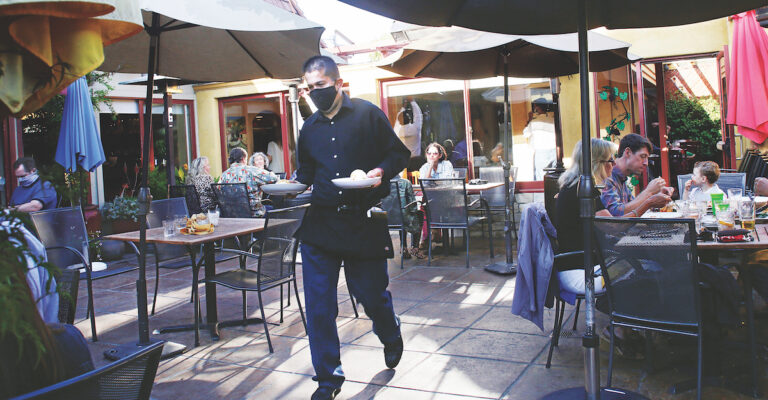
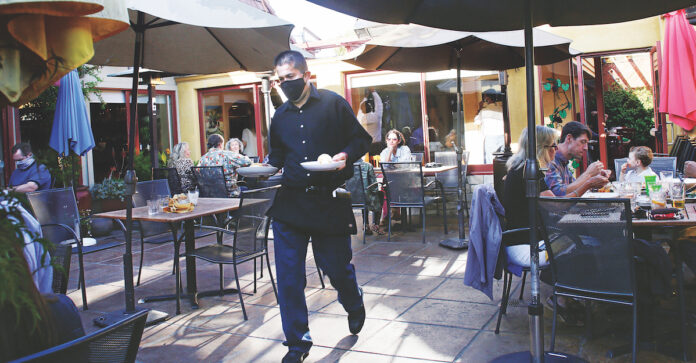
And during the Covid-19 pandemic, the city has changed lanes altogether. In recent years, Santa Cruz began letting restaurants convert parking spots into parklets for outdoor dining. And during the pandemic, Economic Development has waived parklet fees, making it easier and cheaper than ever to put them inโ€”something more than 40 restaurants have done. (Before the pandemic, only two businesses had parklets, as part of a pilot program.)

Going one step further, the city also shut down a full blockโ€”between Cathcart and Soquelโ€”to car traffic to create a new outdoor experience downtown. The crisis of the pandemic created a space to try out new things in local economic development. But the city is mostly getting good feedback and seeing results on the pilot, which has been extended through the end of next year.

โ€œRight now, itโ€™s a very different situation downtown, and weโ€™re acknowledging that,โ€ says Santa Cruz Economic Development Director Bonnie Lipscomb, who adds that Santa Cruz has learned a lot from Gibbs over the past decade. (The city ended up bringing Gibbs back for a 2018 update, which included one-on-one consultations with businesses.)

Lipscomb says that, back in 2011, she and her colleagues knew that Santa Cruz was already experiencing significant retail leakage. The Gibbs report confirmed that, provided some helpful tools and gave a way to talk about the issues with the community, she says. 

In recent years, the city has been moving forward with various housing projects. This includes a 205-unit apartment building on Laurel and Pacific, 175 condos on the San Lorenzo River front, a new mixed-use transit Center with affordable housing and potentially a mixed-use library project with housing in it at Lot 4โ€”the current site of the farmers market.

Lipscomb says that more residents living downtown will be a boon for business, as it means more customers. Thatโ€™s a good thing, especially in a time when local businesses are feeling intense competitive pressure from online companies like Amazon.

โ€œMore residents living downtown is a great thing for retail. Itโ€™s a great thing for the restaurants,โ€ she explains, โ€œWe need more people living downtown who want those basic servicesโ€”grocery stores, foods, clothingโ€”and can get their basic needs met in a walkable distance. Thatโ€™s really a good thing, and itโ€™s a good thing for the future of these businesses for decades to come. Itโ€™s really important that we invest in downtown and some of our commercial areas with residential that supports that walkability and that ability to get your needs met in the community, so you donโ€™t have to get in your car and drive.โ€

Despite the new consensus around building more downtown housing, new debates have emergedโ€”for instance, over how much new housing Santa Cruz should really build, how much of it can be income-restricted and subsidized for affordability, and just how quickly Santa Cruz can look to a future with far fewer cars.

The City Councilโ€™s current plan is to include 300 parking spacesโ€”less than half the original allotmentโ€”in the mixed-use project, which would have affordable housing and a new library. It has the backing of the Santa Cruz County Business Council, Friends of the Santa Cruz Public Libraries and the Downtown Forward group thatโ€™s mobilizing around the idea. This route would also allow Santa Cruz to develop other downtown surface lots for additional housing and free up options for a new permanent pavilion for the farmers market, supporters say.

But others have concerns. Last week, the group Our Downtown, Our Future unveiled a ballot measure petition to stop the mixed-use library-apartment-garage project. They say that Santa Cruz should instead build new housing in a different downtown lot.

The latest version of the ballot language does offer a new, if symbolic, olive branch to its opponents, stating that Santa Cruz would be allowed to build a new affordable housing building at the current farmers market site. According to the measure, they must do so as a last resort without virtually any parking, and the petition expresses a strong preference against the idea.

VALLEY GO HOME-BUILDING?

Since he began consulting in Scotts Valley this year, Gibbs has made a new recommendation for the Santa Cruz Mountains that has generated a lot of discussion. And itโ€™s a topic that he avoided when he did his retail analysis for Santa Cruz: construction of new multifamily housing.

For 30 years, Scotts Valley residents have dreamed of having their own town centerโ€”part community shopping mall, part civic space. But plans repeatedly fell apart year after year. The Scotts Valley City Council is taking one more swing at it, and everyone involved wants this to be their last time around this public policy carousel. The planned center would connect Nob Hill Foods to Target, with a Post Office, transit center and library all nearby. Itโ€™s currently just a patch of land with some potential. โ€œWe get one shot at this, and we want to do it right,โ€ Scotts Valley Mayor Derek Timm says. 

Thatโ€™s why earlier this year, then-City Manager Tina Friend hired Gibbs to come in, do a study and share his thoughts. Friend first met Gibbs when she was working for the city managerโ€™s office in Santa Cruz on his first report.

Gibbs says that Scotts Valley will need to plan more housing in its town center if it wants to see it thriveโ€”for the same reason that civic leaders in Santa Cruz are now excited about their own building boom downtown: local businesses need customers.

When I ask Gibbs why heโ€™s recommending new housing in Scotts Valley, but did not do so for downtown Santa Cruz a decade ago, the details are difficult for him to pin down 10 years later. He initially says that he sensed there was resistance to new housing constructionโ€”a factor that Lipscomb tells me was definitely in play in 2011. Then he says that such an analysis would have been outside the scope of work. 

In any case, the pushback to new apartments and condos in Scotts Valley has Gibbs scratching his head. Many Scotts Valley residents would love to downsize into a smaller home, he explains, and they tell him as much. But they also donโ€™t want new construction.

โ€œFor themselves, they want a new house and a new kitchen and a new bathroom, but they donโ€™t want any new housing built. Figure that one out. We hear that people donโ€™t like it the way it is, but they donโ€™t want it to change,โ€ Gibbs says. โ€œWe hear that all the time.โ€

Longtime Councilmember Donna Lind says that, on a policy level, part of the resistance to new housing stems from the fact that Scotts Valley is locked in at a particularly low property tax rate, even by Californian standards. So the city sees less revenue from development of land than others do. While housing isnโ€™t her priority, she is open to seeing a bigger housing development if it supports a thriving retail center.

As it is, Scotts Valley is already drawing a lot of visitors from the city of Santa Cruz, and Santa Cruz is a destination for people driving down from Scotts Valley.

โ€œItโ€™s kind of interesting,โ€ Gibbs says. โ€œIn Scotts Valley, theyโ€™re looking for an urban experience that Santa Cruz offers. So if they want to go out to dinner, itโ€™s a lot more interesting to go there than it is to go to a strip center. Coming from Santa Cruz, I think people like the convenience of the parking in Scotts Valley and just the perception that the stores are newer or fresher. Theyโ€™re kind of driving past each other.โ€

Due to the pandemic, Gibbs has been doing all his work for Scotts Valley remotely. 

On his trips to the city of Santa Cruz in years past, Gibbs certainly heard complaints from downtown businesses about transportation and homelessness and the overall economy. But none of them ever said they would prefer to be in the Capitola Mall.

They all viewed downtown as the place to be.

โ€œI asked every one, given the choice would you reopen in this location? And every business owner said yes,โ€ Gibbs says. โ€œTheyโ€™d much rather be there than out in the mall. You really donโ€™t hear that. Usually, business owners say that theyโ€™d rather be somewhere else.โ€

Watsonville City Manager Matt Huffaker Selected as Santa Cruzโ€™s New City Manager

Five years ago, Matt Huffaker arrived in Watsonville as an unknown understudy to the city manager. Two years later he took over Santa Cruz Countyโ€™s second-largest city, even as some of South Countyโ€™s movers and shakers were asking for the municipality to open the search up to other candidates.

Now, after blazing a trail in Watsonville, Huffaker, 37, is moving on to the next challenge. On Oct. 28, it was announced that heโ€™s been selected as the new city manager for Santa Cruz.

Santa Cruz City Councilmembers, in a press release, said they made a unanimous recommendation for Huffaker to take over as the cityโ€™s top official. They will vote on the appointment at the councilโ€™s Nov. 9 meeting. If approved, he would assume the position on Jan. 3, 2022.

The final details of his employment agreement will be released in advance of that meeting, according to city spokeswoman Elizabeth Smith.

Huffaker, in a press release, said that he was โ€œhumbledโ€ and ready for the opportunity.

โ€œI think my local experience and established regional partnerships will allow me to hit the ground running,โ€ Huffaker said in the release. โ€œIโ€™m ready to get to work.โ€

Watsonville Mayor Jimmy Dutra says that while heโ€™s saddened to hear that Huffaker is leaving, he is ultimately happy for the outgoing leader, despite the fact that he had received a five-year contract extension from the Watsonville City Council earlier this year.

โ€œMatt is young, ambitious and he is in control of his own future,โ€ Dutra says. โ€œIf this is his choice for his future, Iโ€™m happy for him.โ€

QUICK RISE

First hired as assistant city manager in 2016, Huffaker has been Watsonvilleโ€™s lead official since being appointed to the position in 2018.

In that short amount of time, Huffaker has done a number of good things for the small agricultural hub, says Dutra. That includes increasing revenues and stabilizing the cityโ€™s finances, advocating for the funding of a $22 million renovation of Ramsay Park, starting and completing several long-term planning documentsโ€”the city is developing a downtown specific plan and an update to its general planโ€”and working to bring in funding to help Watsonville recover from the Covid-19 pandemic. He also helped the city pass a renewal of a half-cent sales tax in 2020 that annually brings in some $4 million to the police, fire and parks departments.

โ€œA lot has happened since Matt has been hereโ€”his stamp is going to be on several aspects of the city,โ€ Dutra says. โ€œThis makes me really sad, but Iโ€™m grateful for what he has done for our city.โ€

Santa Cruz Mayor Donna Meyers says Huffakerโ€™s success in Watsonville was a big reason why they selected him over two other candidates. She says his ability to balance Watsonvilleโ€™s financesโ€”he helped double its general fund reservesโ€”and his recent work with the Ad-Hoc Committee on Policing and Social Equity made him the clear choice to lead Santa Cruz through a slew of challenges in the near future.

โ€œ[The police committee] was something that really stuck out for us,โ€ Meyers says. โ€œOne of the things our community tells us is that they really want a city manager that they can engage with and who is responsive. Matt seems really supportive of that idea of a city manager being involved in the community. We scored.โ€

Along with its issues in dealing with homelessness and affordable housing, Santa Cruz is also in the midst of hiring a new police chief and fire chief, as well as a new finance director that will try to help the city weave its way through the projected pandemic-related recession and the budget crisis.

The city is also planning to move to district elections, a change that could further alter leadership for the complex city with an annual general fund more than double the size of its southern counterpart.

โ€œ[Huffaker] was ready for a bigger challenge, and Santa Cruz is definitely a bigger challenge,โ€ Meyers says.

If appointed, Huffaker would step into a position vacated by Martรญn Bernal, who announced his retirement in February. He officially left the position at the end of July after 24 years of service with the city of Santa Cruz and more than 30 years in public service.

Huffaker earned his bachelorโ€™s degree in political science from Point Loma Nazarene University in San Diego and graduated with a masterโ€™s degree in public administration from California State University East Bay.

Before being hired in Watsonville, Huffaker, a native of Oakley in Northern California, said he had been involved in local government for 15 years and city administration for seven years.

CITY IN FLUX

Huffakerโ€™s departure puts Watsonvilleโ€™s leadership in flux heading into a year that could see mass turnover in its elected leaders. Four city council members will either be up for reelection or will have to vacate their seats because they will term out, and another seat will be determined in a special election on Dec. 7.

In addition, the 4th District Supervisorial seat currently held by Greg Caput will head to the polls next year.

Watsonville is also actively looking for a police chief after the retirement of David Honda earlier this year.

The Watsonville City Council will meet Wednesday, Nov. 3 at 5:30pm to discuss transition plans in a closed session meeting.

Dutra and other council members say that they received several phone calls and emails throughout the day on Oct. 29 sharing concerns about the process the city would use to find a replacement city manager.

โ€œWe are taking this replacement seriously, and a decision will be made soon with the direction the council will take with this appointment,โ€ Dutra says. โ€œI will make sure this process is transparent with the staff and our community.โ€

Looking back at Huffakerโ€™s time with the city, Watsonville City Councilman Francisco โ€œPacoโ€ Estrada says that he appreciated Huffakerโ€™s ability to work with the community to address tough issues. He highlighted Huffakerโ€™s decision to create the policing committee, his work investing in the arts and parks and the cityโ€™s response to the pandemic that helped vaccination rates there lead the county.

When asked what qualities he would like to see in Huffakerโ€™s replacement, Estrada says he wants someone who, like Huffaker, will try to ingrain themselves in the community. It wasnโ€™t out of the ordinary, Estrada says, to see Huffaker show up to community events with his three children and wife Jocelyn.

โ€œHe really tried to be a part of the community. I know we want someone who is going to do that, someone who wants to connect with our community, someone who is willing to put in the work,โ€ says Estrada, who also wants the next city manager to continue Huffakerโ€™s legacy of reinvesting back into the community.

โ€œI donโ€™t want that to end,โ€ he says.

Local Medical Professionals, Nonprofit Leaders Aim to Establish Healthcare District

If a group of local medical professionals and nonprofit leaders has its way, a newly established healthcare district will one day own and operate Watsonville Community Hospital (WCH).

If those efforts are successful, it will likely come as a relief for South County residents who have seen their hospital managed by out-of-state corporate entities for years.

But first, organizers from the County of Santa Cruz, the city of Watsonville, Community Health Trust of Pajaro Valley and Salud Para La Gente will form the Pajaro Valley Healthcare District Project (PVHDP).

PVHDPโ€™s mission is โ€œto ensure the communities we serve have the high quality and sustainable healthcare services they need by placing local healthcare resources in the hands of the people,โ€ the nonprofit stated in a press release. 

Healthcare districts are local government entities that are legally separate from counties and cities and are governed by locally elected five-member boards. 

Organizers say that a Healthcare District would have access to financial opportunities not available to most hospitals. A total of 43 of the stateโ€™s 73 healthcare districts operate hospitals, mostly in rural areas.

Mimi Hall, chair of the PVHDP Board of Directorsโ€”who will remain on the board after her departure as the County Health Services Agency directorโ€”says that organizers recently met with WCH management to discuss the possibility of local governance and ownership.

Both entities, she says, share the same overarching mission.

โ€œAt the end of the day, itโ€™s that, for the foreseeable future, the residents of our community have access to high-quality care thatโ€™s responsive to their needs,โ€ she says. โ€œIt was easy for all of us to agree on that shared north star.โ€

Itโ€™s not clear whether the new management, Los Angeles-based Prospect Medical Holdingsโ€”which took over operations last year after Halsen Healthcare was oustedโ€”would be willing to cede control.

In an emailed statement, that company said it plans on continuing discussions with PVHDP.

โ€œIt is important to stress that these discussions are very preliminary, and we do not have any details at this point,โ€ the statement says.

Making the situation somewhat more complicated is the fact that Halsen in 2019 sold the grounds and building to Alabama-based Medical Properties Trust (MPT), and then leased it from them in a so-called sale/leaseback. 

The agreement netted roughly $39 million, which Halsen officials said they planned to use to run the hospital. 

โ€œWe still have a lot more work to do, but we have been preparing to go work with our community stakeholders and the folks who helped found this nonprofit organization to find a way to give this hospital back to the community,โ€ Hall says.

Hall says that she hopes to begin the process to officially form PVHDP soon, which would happen one of two ways.

Organizers could turn to the Monterey Bay Local Agency Formation Commissionโ€”a process that, among other things, would require getting signatures from 12% of the registered voters in Santa Cruz County.

They could also go through the stateโ€™s legislative process, where the request would face the same road that hundreds of proposed bills face every year.

โ€œWeโ€™re at the beginning stages, but what we know is that there is enough in place for us to want to be able to pursue this,โ€ Hall says.

The news comes roughly a week after dozens of WCH nurses for the third time during the pandemic picketed outside of the hospital. This time, says Rosanne Farris, a registered nurse (RN) in the critical care unit, they were picketing because of staffing levels and mandatory overtime shifts that they say put patients and them in danger. 

Under Prospectโ€™s management, chronic understaffing has worsened, Farris says, forcing critically ill patients to be held in the emergency and telemetry units for sometimes hours at a time because there arenโ€™t enough intensive care unit RNs to care for them.

Farris says that health agencies across the nation are dealing with a shortage in nurses, as many have retired or gone on medical leaves of absence after battling Covid-19 over the past 19 months. But, she adds, Prospect has exacerbated this dearth of nurses by not keeping the traveling nurses that it brought in thanks to state funding or contracting new ones.

โ€œI just donโ€™t see how this for-profit health system will ever give this community the hospital and care it deserves,โ€ Farris says.

Cal Fire CZU Chief and Watsonville Native Ian Larkin Announces Retirement

Ian Larkin, who has headed up Cal Fireโ€™s San Mateo Santa Cruz Unit since May 2016, has announced his retirement, capping off a career that spanned three decades.

Born and raised in Watsonville, Larkin now lives in Scotts Valley with his wife and two daughters.

Larkin says he did not initially set out to become a firefighter. Instead, he was studying to become a mechanical engineer when a friend convinced him to be a volunteer firefighter, a decision that changed the course of his life.

โ€œI went on my first call and I was hooked,โ€ he said in a video statement on Facebook.

Larkin began his career with Cal Fire in 1990, and joined the Aromas Tri-County Fire Protection District the next year. He went to work for the San Benito Monterey Unit in 1993. He has also worked with the Peninsula Battalion at the Pebble Beach and Carmel Hill Fire Stations. He has also served in several other administrative roles.

That experience came into play in August 2020, when thousands of lightning strikes in the Santa Cruz Mountains caused 585 fires, 24 of which became major fire events that collectively became known as the CZU Lightning Complex. That blaze burned more than 86,000 acres in Santa Cruz and San Mateo counties and destroyed nearly 1,500 structures. Firefighters from throughout the state came to assist with the fire.

During the following month, Larkin faced, among other things, a lack of resources he needed to battle the blazes.

โ€œIt was almost mind-boggling,โ€ he said. โ€œIt doesnโ€™t matter how many resources we order, we were still only getting these limited amounts coming in each day to support our catastrophic event.โ€

Larkin says both Santa Cruz and San Mateo counties are 100 years behind in fuels management effortsโ€”that is, reducing the brush and other burnable material that can fuel devastating fires.

โ€œIf we donโ€™t start reducing the fuels around our communities and protecting them, itโ€™s only a matter of time before we have another catastrophic event,โ€ he said. 

Larkin, along with Santa Cruz County Deputy Chief Chris Clarkโ€”who worked together to manage the fire efforts hereโ€”were named the 2020 persons of the year by the Santa Cruz County Chamber of Commerce.

In his retirement, Larkin says he is looking forward to spending time with his family.

โ€œWhen you do something this long and take as much pride in it, itโ€™s with mixed emotions,โ€ he said. โ€œBut Iโ€™m excited to start the next chapter in my life.โ€

Massive Mosaic Project โ€˜Watsonville Brillanteโ€™ Showcases South County

watsonville-brillante
Project showcases the art and history of the community

Musician Kaethe Hostetterโ€™s New Solo Show is Informed by Ethiopian Culture

kaethe-hostetter
The Santa Cruz violinist will debut โ€˜GUZOโ€™ at the Indexical in the Tannery

Letter to the Editor: Master of Sunshine

A letter to the editor of Good Times

Letter to the Editor: โ€˜Special Ballot Measureโ€™ Not So Special

A letter to the editor of Good Times

Opinion: Revisiting Past GT Cover Subjects

The Gibbs Report, Kaethe Hostetter and Keith Greeninger are back in the news

Election Day 2021: Santa Cruz’s Measure A Headed Toward Approval

Measure A Santa Cruz
Nov. 2, 10:51pm 2,027 more votes have been counted, with the votes in favor of passing Measure A continuing to hold a significant margin over the votes opposing it. The measure would increase the portion of money collected from the cityโ€™s cannabis tax that goes to childrenโ€™s programs from 12.5% to 20%. The remaining percentage of funds currently goes to...

How the Gibbs Report Sparked a Battle Over the Future of Pacific Avenue

After crafting an influential report for Santa Cruz, retail expert Bob Gibbs is consulting for Scotts Valley

Watsonville City Manager Matt Huffaker Selected as Santa Cruzโ€™s New City Manager

Huffaker helped Watsonville balance its finances, reinvest millions into its parks

Local Medical Professionals, Nonprofit Leaders Aim to Establish Healthcare District

Watsonville-public-hospital
Move seeks to give Watsonville Community Hospital back to the community

Cal Fire CZU Chief and Watsonville Native Ian Larkin Announces Retirement

Ian Larkin, who has headed up Cal Fireโ€™s San Mateo Santa Cruz Unit since May 2016, has announced his retirement, capping off a career that spanned three decades.
17,623FansLike
8,845FollowersFollow