

What is the best invention ever?

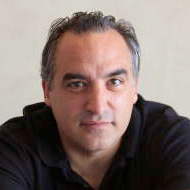
“Velcro, because it’s convenient and I wear it on my shoes.”

Owen Tate

Santa Cruz
Retired

“The bicycle, because it’s cheap fun transportation.”

Rusty Willingham

Santa Cruz
Retired House Painter

“Probably the cotton gin. ”

Ben Rodriguez

Santa Cruz
Retired

“The Makey Makey. You can make anything in this world into a keyboard key and play with it.”

Mars Nelson

Santa Cruz
Education Sales Rep

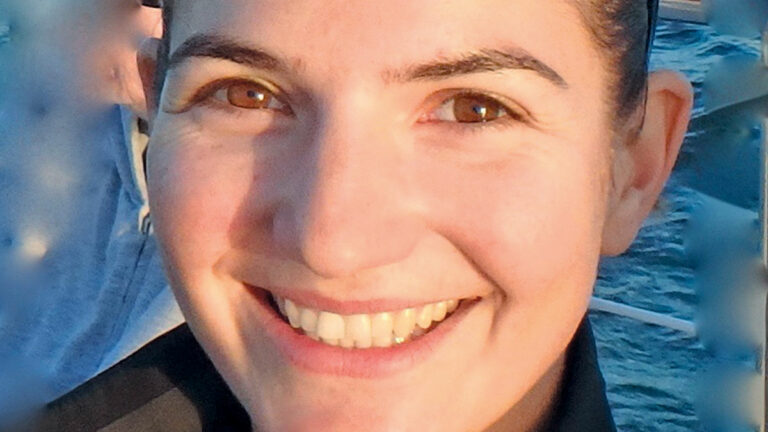
“Crackers and cheese. Cheese is very healthy, if you don’t have too much, and tastes phenomenal, and it comes in all colors.”

Heather Ritzman

Santa Cruz
Advertising Executive

UCSC Forensic Anthropologist Reveals What Crime Shows Leave Out

When faced with the thought of their own deaths, people sometimes wonder: What will become of my remains? Who will discover the body?

It may seem impossible to know such answers, but Alison Galloway has the grotesque visitation schedule down to a science.

“Typically, the flies are the first to arrive,” Galloway says.

Galloway is a professor of anthropology at UCSC, where she specializes in the study of human skeletons. She often works with law enforcement agencies as a forensic anthropologist, identifying and analyzing human remains.

Galloway visits the Rio Theatre on June 6 to share stories from her many years as a world-renowned expert and to talk about what happens when we leave our bodies behind. “I want to remind people that we are part of the cycle,” says Galloway, who served as UCSC executive vice chancellor from 2010 to 2016, “and that our bodies behave the same way as any other carcass.”

Galloway’s talk—“Life of the Dead: The Natural History of Human Decomposition,” organized by the Santa Cruz Museum of Natural History—will explore the processes that unfold within a freshly dead human carcass, and it won’t be for the faint of heart. The old “Hearse Song”—about creepy crawlers going to town on the body—isn’t far off.

Blow flies, Galloway says, are among the first to find the carcass, and they thrive on human flesh. Females must lay their eggs in the nutrient-rich tissues of dead creatures. They use their antennae to pick up on the volatile compounds released from desiccating bodies.

Next, rigor mortis sets in as calcium accumulates in the muscles and blood pools in the lower body parts. Oxygen deprivation kills the cells that compose our tissues, and they eventually spill their contents, marking the onset of putrefaction.

The body then bloats, Galloway says, swelling up and eventually beginning to dry—either quickly or slowly, depending on the environment. Other organisms—from flies and fungus to bacteria and beetles—visit the body at reliably specific stages. These phases signal clues as to the time of death.

Beetles, Galloway says, are among the last creatures to show up, as they prefer consuming the “drier, leathery flesh.”

“She’s not only an expert. She’s also a very good storyteller,” says Heather Moffat McCoy, executive director of the Museum of Natural History, which hosts a speaker series to welcome scientists like Galloway. “I think this topic in itself is fascinating, but I also think she’ll share it in a wonderful way.”

McCoy says the museum’s mission is to connect people to the natural world. That’s something they strive for in various programs, from teaching kids how animals move in nature to more “adult programming” like Galloway’s upcoming talk.

Galloway began her career in archaeology. As she excavated artifacts and tools from dig sites in the American Southwest and Ethiopia, she felt most fascinated by bones. Soon she met a forensic anthropologist, and her path was forged. Once she completes her sabbatical this year, Galloway plans to return to teaching courses in forensic anthropology and skeletal biology at UCSC.

Galloway realizes the career she’s chosen often gets dramatized on crime-centric television shows, creating misconceptions about what it is forensic anthropologists actually do.

“In a lot of crime shows, the anthropologist is heavily involved in the investigation, running around interviewing people,” says Galloway. “We don’t do that. We don’t carry a gun or go looking for serial killers in the middle of the night. It’s just not what we do.”

Instead, Galloway interviews the skeleton—the body its own miniature ecosystem. But to get there, she has to get past the flesh. “To put it politely, we have to extract the skeleton,” says Galloway.

“It’s not a pleasant process,” she adds.

First, she must “deflesh” the skeleton, cutting away gobs of soft tissue. Then, she sets the bones in an incubator, which loosens up any remaining flesh that can be washed away. This process, she adds, is often left out of crime drama shows.

One case, she recalls, ended with a full confession from the killer.

“I had drawn my conclusions,” says Galloway, “when just before we went to trial, they asked, ‘Would you like to hear his confession?’ I said, ‘Yeah, I would!’”

In it, the killer had detailed every bit of damage, explaining how he’d cut through the victim’s chest and twisted her neck. The details of the confession matched Galloway’s conclusions exactly—“I could literally go down and link an injury to everything he said he’d done,” she says.


Alison Galloway’s June 6 presentation at the Rio Theatre is part of the Santa Cruz Museum of Natural History’s twice-annual speaker series, where researchers from different scientific disciplines share their work in engaging and accessible ways. Tickets are $15-$30.

Studying the San Lorenzo River and Keeping Pollutants Out

As fans of both the San Lorenzo River and the Santa Cruz art scene prepare for Ebb and Flow’s June kickoff (see cover story), the Coastal Watershed Council is wasting no time looking into whether or not efforts to get more people to enjoy the river are actually working.

The council released the data in May with its annual Riverwalk Usage Study report. Since 2014, council volunteers have observed and tracked the activities of thousands of riverwalk visitors as they bike, stroll, skateboard, and run along the city’s longest park.

“There are fewer people using the riverwalk,” says Alev Bilginsoy, Coastal Watershed Council river scientist, adding that they’ve noticed a 20 percent decrease in visitors between summers in 2015 and 2016. Bilginsoy adds that the decrease may be loosely linked to more sunny days in 2015.

“The study began in a drought year,” says Bilginsoy. “That means consistently better weather, which invites more people outdoors.” And although there was a decrease in biking and walking from 2015 to 2016, that doesn’t show the whole picture.

Leisurely activities like dog walking, running, and skateboarding all increased along the river levee paths over that year. The watershed council reported a 26 percent increase in the number of visitors who choose to relax in the park since the study began in 2014. So while fewer folks appear to be visiting the riverwalk, those who do seem to spend more time hanging out.

June was the busiest time for the riverwalk last year—perhaps an indicator that it’s a great time for a public art event like Ebb and Flow. Or maybe it’s a sign that the celebration is working. Volunteers counted 98 percent of people engaged in “positive activities”—a slight increase from previous years—and only 2 percent engaged in negative ones like camping, drinking and drug use.

And on the note of positivity, the Coastal Watershed Council launched a campaign on Wednesday, May 24 to try and reduce the amount of contaminants that run into the river. Greg Pepping, the nonprofit’s executive director, is asking people to pick up after their pet waste immediately, even in their own backyards, and keep their gutters dry of harmful contaminants.

He also suggests people get their sewer connectors checked, because any outflow failure on the line runs off into the river, and the city has announced an ordinance to require homeowners to do it when they buy or sell a house.

“There’s not a treatment plant for runoff,” Pepping says. 

Cracker to Headline the Redwood Mountain Faire

0

Sometimes when you’re making an album that’s destined to be a rock classic, you have to take the time to stop and ask, “Hey guys, is this too dumb?”

“I mean, literally, that was a question that was asked,” says David Lowery, frontman for Cracker, about the writing of “Happy Birthday to Me,” a song off the band’s self-titled debut album. This year is the 25th anniversary of that record, which began the second act of Lowery’s career after the break-up of Camper Van Beethoven two years earlier, at the height of their run as one of the most successful bands ever to come out of the Santa Cruz music scene.

Lowery recalls that one of the songs he was working on at the time didn’t have a chorus. “And then it was like, ‘if we do a ‘Happy Birthday to Me’ song, maybe it’ll get played when people need to play a happy birthday song. If you think about the rest of the song, it doesn’t have anything to do with a birthday. So I’m trying to figure out a chorus, and I go ‘Is this too dumb?’”

The gist of the response from the band, says Lowery, was “Well, kind of, but kind of not.” He took it as a green light.

Strangely enough, his hunch that it could turn into a semi-official birthday song—despite lines like “I remember you/You drive like a PTA mother” and “Sometimes I wish I were Catholic/I don’t know why”—seems to have been on the money.

“We get royalties for public performance, and ‘Happy Birthday to Me’ is hands down the winner on that album,” says Lowery.

There’s been an interesting bigger shift since the album was released; at that time, the unofficial single “Teen Angst,” with its Alternative-Nation-anthem chorus “What the world needs now/Is another folk singer/Like I need a hole in my head” was the song that got all of the attention. (It’s probably also the song that got Lowery branded a diehard cynic, a tag that continued to dog him after Cracker found platinum-selling success with their next record, 1993’s Kerosene Hat, and its singles like “Low,” “Get off This” and “Eurotrash Girl.” Fans of Camper Van Beethoven, however, were more likely to recognize Lowery’s love of writing flawed and sometimes downright unlikeable characters as first-person narrators, à la “All Her Favorite Fruit,” “Tania” and a number of other Camper classics.)

Over time, however, it’s the weirder songs off of Cracker that have eclipsed “Teen Angst” as fan favorites and proven to have the most staying power, like the dating-nightmare-a-thon “Mr. Wrong,” the Southern Gothic “Dr. Bernice” (Baby, don’t you drive around with Dr. Bernice/She’s not a lady doctor at all”) and, of course, “Happy Birthday to Me”—which in fact was promoted to a final encore number for some shows on the band’s recent tour of Spain, though Lowery admits it’s an unconventional closer.

“Yeah, that’s not really a traditional rockin’ sort of song,” he says. “But people like that song. You know what that is? That’s the last song of the encore when you’re like, ‘OK, so we’re going to turn on the lights after this.’ You sing ‘Happy Birthday to Me,’ turn the lights on in the house—OK, we’re done.”

It’s fitting that the oddest songs on Cracker would eventually be the record’s legacy, since the band was an odd project to begin with. Since it sold 200,000 copies and Cracker went on to be far more popular than Camper ever was, it’s easy to forget that making what was basically a country-rock record was not considered by anyone to be a surefire way to blaze up the charts.

“It was really, really not obvious that that was going to be successful, or even be a non-harmful career move,” says Lowery. “I think that’s the best way to put it. It wasn’t even clear that it was going to be an innocuous failure. It could have been a bad failure.”

The results, however, affirmed the path that he and lead guitarist Johnny Hickman—the childhood friend with whom he formed Cracker shortly after Camper broke up—had chosen: something completely different than Lowery’s previous band.

“The thing that people probably would have preferred us to do or expected us to do is what in retrospect would have been the worst thing for us, which was to do sort of a Camper Van Beethoven ‘Mark II’—to quote Spinal Tap. That would have been an insult to a band Johnny and I both loved.”


Cracker plays on Saturday, June 3 at the Redwood Mountain Faire at Roaring Camp, 5401 Graham Hill Road in Felton. The festival runs 10 a.m. to 7 p.m. on June 3-4. Also performing on Saturday are Carolyn Wonderland, the Coffis Brothers, Victor Krummenacher (of Camper Van Beethoven), and more; Sunday’s performers include Dave and Phil Alvin with the Guilty Men, Poor Man’s Whiskey, the Stone Foxes and more. Tickets are $25 per day; redwoodmountainfaire.com.

Film Preview: ‘Buena Vista Social Club: Adios’

0

The original Buena Vista Social Club, directed by Wim Wenders and released in 1998, was a nonstop ode to joy. It charted the amazing story of a handful of veteran Afro-Cuban musicians—many of them already in their 70s and 80s—assembled in Havana to record an album with American slide guitar virtuoso Ry Cooder. Which, improbably, led them all to international stardom when the album and Wenders’ Oscar-nominated film about its production became huge hits.

If you never saw the first film, the sequel, The Buena Vista Social Club: Adios, is a lively introduction to these once-forgotten musicians and their incredible journey. For fans of the original, there’s not a lot of new material here; in fact, a lot of the footage seems to have been repurposed from film shot for the first movie. What is new this time around is the continuing stories of these intrepid singers and players in the intervening two decades of international acclaim. But this also means the film has an elegiac tone, as suggested by its subtitle.

Directed by Lucy Walker, the new film introduces Juan de Marcos Gonzalez, who was Cooder’s producer and point man in Havana, helping him assemble the Cuban talent. In the opening sequence, Gonzalez leads the camera to the site of the original Buena Vista Social Club, much of it now patio between buildings; he has to duck under laundry on clotheslines to get to it.

But it was once a thriving nightclub and dance hall for black Cubans, back in the segregated 1940s and ’50s, referred to as “the Golden Era of Cuban music.” One of the few benefits of the dictatorship of Batista, notes one interviewee, is that he built a lot of casinos in Havana (with an influx of American gangster money) so musicians had a lot of places to perform. All of which changed after Castro’s revolution, when relations with the Western world ceased and Cuba became the island that time forgot.

The passage of time is one of Walker’s major themes. Early on, we get a brief history of Cuba, from the destruction of the indigenous people by Spanish expeditions and the importation of Africans as slaves, to the birth of percussive, passionate Afro-Cuban music (called “son” by its practitioners). Born in the eastern highlands, son music spread across the entire island over the radio in the 1920s.

But when diplomatic relations ended in 1960, so did the tourist trade; the casinos closed, opportunities for musicians dried up, and many of the most respected players had to quit the scene and take non-musical jobs to survive. Ibrahim Ferrer, with his impish demeanor and angel’s voice, was reduced to shining shoes. Pianist extraordinaire Rubén González describes how termites literally ate his piano, so long unused. Still, as guitar maestro Compay Segundo says, “For Cubans, music is our food. When we go through tough times, we create new styles.”

There’s a lot more information here on each individual musician’s biography and performing history—and lots of terrific vintage black-and-white footage of these performers in their heyday. We see kinescopes of the young Ferrer in the early ’60s as a backup singer to a popular Cuban TV performer who never gave him a chance to sing a solo. Regal diva Omara Portuondo is seen singing and dancing with a popular ’50s female quartet, Cuarteto d’Aida—on television programs including the one which featured Ferrer. One of the most touching aspects of Walker’s film is the enduring 50-year friendship of Ferrer and Portuondo as time marches on.

Inevitably, much of this film is devoted to bidding “Adios” to many of these legends in the years following their greatest success. “Now?” jokes Ferrer about his late-blooming celebrity. “Now that my voice is messed up and I can hardly walk. Now?” (Don’t believe him about his voice; it remains beautiful!) But as Juan de Marcos Gonzalez sums up, “The flowers of life came late” to these indomitable performers. “But they came.”


THE BUENA VISTA SOCIAL CLUB: ADIOS (PG) (May 26)

*** (out of four)

With Ibrahim Ferrer, Omara Portuondo, and Compay Segundo. A documentary by Lucy Walker. A Broad Green release. Rated PG. 110 minutes.

Corralitos Brewing Explores the Beer and Agriculture Connection

The sky seems to stretch forever from the porch of Corralitos Brewing Co. Tucked away off of Freedom Boulevard, halfway between Corralitos and Watsonville, the brewery lies nestled in one of the most agriculturally fruitful regions in the world and overlooks vast fields and an open horizon. Back in 2015, when they opened their doors to the public, it didn’t shock owner Luke Taylor that the land the brewery is on was zoned for agriculture, but it was surprising that beer wasn’t considered an agricultural product.

“They wanted to change our zoning to commercial, because apparently beer had nothing to do with agriculture. We thought that was pretty funny,” says owner Luke Taylor. “They said we could have put a winery here, but not a brewery.” But they fought to keep their zoning, and became one of the few breweries in the nation zoned for agriculture.

Corralitos Brewing’s Zoned Ag bottle series honors that designation and the tradition of agriculture in the area with a succession of barrel-aged beers conditioned on heaping helpings of fruit from local farms. In the last year and half, I’ve been impressed by Corralitos’ well-crafted brews, which run the gamut of American, Belgian and sour styles. The beers in the Zoned Ag series stand out for their intense yet complex flavors. Each begins as a different base beer, and spends several months in oak barrels before fruit is added. After several more months, each barrel is tasted for quality before blending. The results are truly unique beers with mouth-watering fruit aromas and flavor, buoyed by tartness and funk.

“We really want to support our community, especially our agricultural community, with this series,” says Taylor.

Blackberry and peach are currently available, and pluot, blueberry and golden raspberry are due to be released throughout the summer. All bottles are sold exclusively through the taproom, which is definitely worth a visit.

Villa del Monte’s 2012 Cabernet Sauvignon

Villa del Monte’s 2012 Cabernet Sauvignon is a beautiful mouthful of wine. A single-varietal, single-vineyard 100 percent Cab from the Four Sisters Ranch in northern Paso Robles AVA—it’s aged for 18 months in both French and American oak barrels. Bursting with dark fruit flavors of deep red cherries, black currants, blueberries, and black plums, it’s a muscular Cab from winemakers John Overstreet and Neil Perrelli. Swirl this Cab ($34) around in your glass and you’ll get enticing aromas of cedar, toast, tobacco, and a touch of coffee, followed by those stalwart Cab flavors of licorice, bell pepper, tobacco, and spice. All you need now is some hearty fare to go with it.

Villa del Monte will be open for tasting on June 24 and 25, and for the Passport event on July 15. It’s a small boutique winery and well worth a visit. Wine-tasting flights are $5 per person, refundable with purchase.

Villa del Monte Winery, 23076 Summit Road, Los Gatos, 408-353-0995 or 888-788-4583. villadelmontewinery.com.


SunRidge Farms New Snacks

SunRidge Farms has some terrific new organic snacks out on the market. Try the Super Greens Energy Chews; Chocolate Maca Energy Chews; and Coffee Almond Energy Chews. I always keep what I call “emergency supplies” in my car—healthy food which I need after tennis, Zumba, Pilates, yoga, or just something good to munch on while I’m driving around—and these SunRidge chews fit the bill. SunRidge is a local company and you can find their produce in most health food stores. Visit sunridgefarms.com for more info.


Deer Park Wine & Spirits

Looking for a wine-tasting experience that’s very affordable? Then head to Deer Park Wine & Spirits for one of their 4-7 p.m. Wednesday and Friday events. Wine tasting starts at about $3, depending on the wines being poured. Check the website for information or get on their email list. Deer Park Wine & Spirits (next to Deluxe Foods), 783 Rio del Mar Blvd., #27, Aptos, 688-1228. deerparkwines.com.

Third Annual Ebb and Flow Event Celebrates the San Lorenzo River

One night three years ago, a group of roughly 10 people spilled onto Front Street from the Museum of Art and History, leaving the sound of music and cheering behind them. More followed, and soon a stream of bodies poured onto Soquel Avenue, bottlenecking as the crowd squeezed close to cross the bridge. Once on the other side, they pooled at the edge of the San Lorenzo River, one stream of life and purpose joining another.

That was the first Ebb and Flow, a series of events put on by local nonprofits to encourage Santa Cruz citizens to get better acquainted with the San Lorenzo River. It began with live music and dancing at the Museum of Art and History, and ended with the unveiling of new art installations and a movie projected onto the underside of the Soquel Avenue bridge.

This weekend, Ebb and Flow returns for its third year, with events ranging from scientist-led tours to a kinetic art parade, where participants unveil moving, river-inspired sculptures. These events mark an ongoing effort from groups like the Coastal Watershed Council, the San Lorenzo River Alliance, the Tannery Arts Center and others to enhance the Santa Cruz community’s relationship with its primary water supply, and to gather support for its stewardship. But are these events enough to inspire a healthy relationship between a community and its river, and how much work remains to restore a watershed that its stewards describe as “abused for over hundreds of years?”


One Stormy Afternoon

When a series of winter storms peaked on Feb. 7, office workers in Downtown Santa Cruz witnessed something no one had seen in decades: the San Lorenzo River rose to nearly 24 feet, reaching its largest volume since 1982. Laurie Egan, outreach and development manager for the Coastal Watershed Council, first heard about the impending storms from her boss, Greg Pepping.

“He had just moved near the river,” says Egan, “and that morning he told me, ‘My house might flood today. I have to run home to make sure I have sandbags.’” Egan rushed downtown later that day to join hundreds who had left their offices to see the river.

“We saw folks from downtown businesses, and kids with their parents coming home from school,” says Egan, who joked that the council should have set up a table in the rain to field questions on the river. “It was a really cool draw for the whole community to come out in the middle of their work day and see the river like no one had seen it before.”

Pepping’s house, along with the rest of downtown, did not flood. Egan says this past winter’s storms were the first time the river’s levees were truly tested, and, thanks to their design and the city’s earlier efforts to clear debris from beneath the Water Street bridge, everything went as planned. “The river kept rising, rising, rising, and it spilled into San Lorenzo Park, just as it was designed to do,” she says.

The storms induced mudslides, toppled trees onto Highway 17, and caused mountain roads to crumble into the earth. But they also marked the end of California’s drought, which Gov. Jerry Brown declared over the following month. And it signaled some recovery for the San Lorenzo River watershed, though city officials say years of water deprivation can’t be undone so quickly.

“As far as I can tell, the storms have really helped,” says Chris Berry, the city of Santa Cruz’s watershed compliance manager. According to Berry, rushing winter waters flushed fine sand downstream, making way for coarser gravel, which means better habitat for fish. Species like coho and steelhead that swim upstream from the river’s mouth prefer to lay their eggs in coarse sand, as fine silt tends to smother their offspring.

This past summer, Berry says his group logged the highest count of steelhead in the San Lorenzo River lagoon since they began counting in 2008. “We know it’s a good year when we have so many fish that we can’t count them all.”

But the rains weren’t solely good, he adds, as coho that traveled into the San Lorenzo River earlier in the season likely had their eggs flushed out prematurely. And fish who attempted to wait out the storm before depositing their eggs may have waited too long, ultimately having to ditch their eggs before reaching the quiet pools they normally rely on. The coho salmon population in the San Lorenzo is still far below healthy levels, he says.

John Ricker, water resources program coordinator for Santa Cruz County, shares similarly mixed results on the county’s water supply.

“The recent rainfall is great,” says Ricker, “but it hasn’t recovered what we’ve lost over the last 30 years.”


Beneath the Surface

Though the river’s rising height may imply surplus, it’s a different story beneath the soil that lines its course. There, deep beneath the ground, are aquifers: sections of porous rock that store groundwater. The whole Scotts Valley area depends entirely upon groundwater, says Ricker, and the San Lorenzo River receives 40 percent of its water from those same aquifers.

Usually, rainwater trickles through permeable soils and drains into the earth, eventually finding its way to the aquifers, where it can later be extracted. But when that soil is paved over with asphalt or other impermeable materials, the water never makes its way through, instead flowing off roads and parking lots, where it erodes hillsides. Much of those surfaces throughout Scotts Valley have been paved over, says Ricker.

Despite the challenges, Ricker is hopeful that the county is moving toward sustainable management of its water resources. In 2014, Gov. Brown signed the Sustainable Groundwater Management Act into legislation, which put the onus on local agencies to work toward better management of their groundwater resources. Before the legislation, Ricker says groundwater regulation was something out of the Wild West.

“You have to get a permit from the state to extract surface water, and it’s been that way for 100 years,” says Ricker. “But with groundwater, it took them 100 years to reach the same level of regulatory oversight.”

Though they haven’t yet settled on a recovery plan, Ricker’s group is looking down several avenues, the first of which entails “conjunctive use.” Ricker says that under this strategy, the city would draw water from varying sources, depending on where it’s most available.

In the winter, the city would draw from surface water when those levels are higher. During summer, relying on groundwater storage would leave more surface water for fish. Ricker’s team has even retrofitted some Scotts Valley parking lots to make them permeable, allowing more water to pass through and into aquifers below. He encourages private landowners to similarly avoid laying pavement on their property, instead opting for gravel roads and driveways.

Though the basin is over-drafted, Ricker says he’s hopeful they’ll reach a state of sustainable management by 2040.

“I think it’s very likely,” he says. “We’ve already reduced the amount of pumping from the basin to the point where its levels are no longer dropping.”


Too Many Straws

Berry, however, is concerned that Santa Cruz citizens are adding demand to what he describes as an over-appropriated “working watershed.”

“The river has a long history of insults and abuse. And let’s face it, it’s been developed since the 1800s,” says Berry, referencing the river’s history of overfishing, clear-cutting trees to rebuild San Francisco, and general industrialization over the past 150 years.

Today, says Berry, the river is more appropriated than ever. Cabins meant for summer-use only are now occupied year-round, new sections along the river are being developed, and an agricultural newcomer to the Santa Cruz Mountains could further exacerbate the issue.

“We have a huge, new industry that just moved into the watershed in the recent past, meaning commercial cannabis cultivation,” says Berry. Compared to wine, Berry says marijuana is a “thirstier crop” than grapevines. But he’s quick to acknowledge that the problem isn’t cannabis specifically—it’s a matter of adding one straw too many.

“There’s too many straws in too small a bucket. Unfortunately, with the commercial cannabis industry’s growth, we’re adding even more straws to that, and that’s a challenge.”

Like Ricker, Berry’s team is working toward sustainable management of our water supply. His team is only just beginning to develop a suite of conservation strategies, from purchasing and invalidating unused water rights to working with private landowners to better manage their riverside property. Berry advises individuals to clean up their pet waste—as bacteria can wash into the river—to allow native vegetation to grow wild in their yards, and to call the city before removing logjams from the river, as they provide prime habitat for fish.

“I’m feeling pretty good about the local energy,” says Berry. “People in Santa Cruz have a pretty strong environmental ethic, and they want to manage their resources locally. That’s why I enjoy working here.”


Citizen Scientists

“I found fungi,” shouts a bodiless voice from behind the bushes lining the banks of the San Lorenzo River. “Where’s the fungus expert?”

It’s Earth Day, three years since Ebb and Flow began, and all but a crowd of roughly 20 people have disappeared into the riverside vegetation. They’ve gathered to participate in a BioBlitz: a creature-counting event put on by the Coastal Watershed Council and the Santa Cruz Museum of Natural History, where participants photograph and log living organisms, from saplings to spiders.

“The BioBlitz is one of the many ways the Coastal Watershed Council uses citizen science to engage the community with the environment around them,” says Laurie Egan, who helped find animal experts to join the hunt. “It’s a chance to put on your naturalist hat and see what it’s like to identify the birds and bugs and bees along the river, and to get a sense of how diverse this ecosystem is right in our own backyard.”

Plot by plot, they part grass blades and bend tree branches to catch a glimpse of creatures both big and small. Margo Ross, a kindergarten teacher at Tierra Pacifica Charter School, pulls a piece of wood aside to reveal a white mushroom sprouting from light, sandy soil. An iPhone emerges, its camera shuttering audibly, and the mushroom is uploaded.

The days of the San Lorenzo River being rich with fish may be gone. But, with the aid of a smartphone, it’s clear that the river is still teeming with life. Attendees of the BioBlitz are using iNaturalist: an app designed to map sightings of living things. iNaturalist began as a collaborative project between students at UC Berkeley and Stanford, and was adopted by the California Academy of Sciences in 2014 in an effort to harness the power of citizen scientists. If the image users uploads are sufficiently detailed, researchers use them to track changes in plant and animal populations.

Open the app near San Lorenzo Park and you’ll find dozens of colored markers, each depicting a sighting. Images on the app show hawks perched on parking meters, gophers peeking out from underground tunnels, and spiders dancing across people’s palms. Once the day was over, the group had logged more than 260 sightings, comprising more than 80 species.

The BioBlitz marks just one event put on by the Watershed Council and other nonprofits in an effort to get the Santa Cruz community to be better engaged with the river. Similarly, the Santa Cruz County Arts Council is trying a different route: art installations.

Each year, the council offers grants to local artists to erect river-themed art along the San Lorenzo Riverwalk. From oversized fishing poles to a large sculpture wrapped in fishing rope, the Arts Council hopes these pieces will inspire conversation about the river.

“The idea is to bring people to a place where, typically, they don’t feel safe,” says Michelle Williams, executive director of the Arts Council. “But with hundreds of us, it’s going to be awesome. Once you’ve been on the riverwalk at night with 200 other people, you’re going to feel differently about it.”

The art continues beyond the riverwalk, with a river-focused installation in the Museum of Art and History’s Atrium. There, an interactive screen depicts waters of the San Lorenzo River. Trace your finger across its screen, and large, historical images of the river project onto the museum wall.

Williams hopes these pieces not only inspire conversation, but also bring bodies onto the riverwalk. Ultimately, she hopes that river-facing businesses on Front Street—a recent topic of discussion to emerge from the March 17 Riverwalk Engagement Summit, where environmental groups and local government gathered to discuss the progress of the riverwalk—will bring even greater attention.

“I feel like our backs, as buildings and as people,” says Williams, “have been turned to the river. Both literally and metaphorically, we need to turn back toward it.”


Muddy Path Forward

Back near the Soquel Avenue bridge, Jane Mio hones the focus of her monocular. Her gaze is fixed on bushes just beneath the bridge. There, perched on a swaying branch, is a large hawk.

“So many of us think we have to get in the car or on our bikes to travel to some place to be with nature, to get that peaceful moment.” says Mio, who regularly leads birding tours as the conservation officer of the Santa Cruz Bird Club. “But if we really took care of the river, we could have that right here,” she says, shifting her gaze further upstream.

Mio often works with the Valley Women’s Group to clear invasive vegetation from the lower river, making way for native plants that bring more cover and cooler waters for fish. That vegetation, combined with a recent uptick in the amount of water flowing through the lower portion of San Lorenzo River, say city officials, could mean better rearing conditions for fish in the summertime.

When Mio first moved to Santa Cruz in 1972, she recalls seeing fishermen standing shoulder to shoulder along the river’s edge, adding to the already tall piles of fish at their feet. She remembers that the river was different then, when even snakes and lizards seemed more plentiful.

“I’m not sure we’ll ever get back to that,” says Alev Bilginsoy, river scientist at the Coastal Watershed Council, acknowledging that those days may long be gone. She adds, however, that the Santa Cruz community is better served by focusing on the present moment.

“I think it’s important for people to look past that, and to allow themselves to have a new, authentic experience of this ecosystem. It’s still here, it’s still thriving, it’s just evolved in a way that may seem unfamiliar, but that’s even more reason for people to go out and explore it.”

With much work left to do, the task of restoring the San Lorenzo watershed may seem overwhelming to some. Mio is discouraged by the prospect of more development along the river, though she draws inspiration from the very creatures that dwell there.

She turns her gaze to the cliff swallows, which migrate thousands of miles from South America to build their mud houses under the bellies of our bridges. Mouthful by mouthful, Mio says, the birds scoop up gobs of mud, mix it with their saliva, and use the material to build their muddy, dome-shaped nests beneath the bridges. Just one nest can take 500 trips, she says.

Mio recently visited her grandson’s class to teach the natural history of native birds, and told them of the cliff swallow’s ironclad will.

“So many times the kids say, ‘I can’t do this, I can’t do that.’ I tell them, ‘Look how small these birds are, and how big you are. Those little birds never say they can’t do it. They just do it.’”

Is YIMBY Movement Headed to Santa Cruz?

[Editor’s Note: This is part two of a two-part series on future housing plans for the city of Santa Cruz. Part one ran last week.]

A crowd—mostly homeowners over 50—chuckled and guffawed when Adam Novak told the Santa Cruz Planning Commission, “I feel like I have a right to live and build a life here, too, just as much as the people who’ve been here for 30 or 40 years and already own homes. In pursuing that right, I’ve had to live in preposterous and frankly illegal housing situations because the availability of housing is so restrictive.”

It was the latest corridor rezoning meeting at the Santa Cruz Planning Commission to look at higher-density, mixed-use and generally bigger apartment buildings on the city’s busier streets—ideas that have proved controversial locally. The aim is to provide a boost to the Santa Cruz housing market.

“It’s not even the price,” Novak continued, backpack slung over one shoulder, glancing down at the notes on his phone. “You can afford the rentals, but when you show up, 30 other people are there, and one of them gets it before you. I think we need to build more housing. We need accessible housing, and tall buildings are one way to do that. I think tall buildings are not just automatically bad because they’re tall. You can build an ugly tall building, but you can build a beautiful tall building, too.”

After he finished, Novak walked quickly away from the podium, down a crowded aisle. Evan Siroky, a tall, slender software developer, stopped him, leaning over to whisper, “Hey, I’m trying to start Santa Cruz YIMBY. You should check it out on Facebook.”

Siroky, a 32-year-old who lives near Scotts Valley and works from home, first got the idea for the group from a friend in Seattle who’s involved with a “YIMBY” group there. YIMBY stands for “Yes, In My Backyard.”

YIMBY organizations have sprung up in San Francisco, New York City and Boulder, Colorado, each purporting to oppose the so-called “Not In My Backyard,” or “NIMBY,” camps. The local groups generally support new development and denser housing growth. The man behind Santa Cruz YIMBY is ready to go a step beyond the corridor rezoning for major thoroughfares, suggesting that even single-family residential neighborhoods could be “up-zoned” to allow denser housing in other areas.

Most of the public comment at Thursday’s meeting struck a different tone. Three speakers earlier, Brian Mayer—a longtime resident of Avalon Street, five blocks off Water Street—worried aloud that there isn’t any way to keep Santa Cruz affordable, no matter what. And if someone wants to live in Santa Cruz, they should find a way to make it work, even if it means going back for an extra degree.

“People shouldn’t live here if they don’t want it bad enough,” Mayer said. “They just shouldn’t be here. And the thing is we want to talk about compassion, compassion for the people who can afford it. What about the 65,000 people who live here?” Mayer’s words resonated with the crowd. Friends filed out of the chambers afterward, one by one, to shake his hand, hug him and thank him for speaking his mind.

In general, support in favor of the corridor update has, so far, been relatively quiet in public meetings. Gail Jack, one of the cofounders of Affordable Housing Now, likes the rezoning idea, although she concedes her task force hasn’t always put together a big showing on the issue. It’s easier to mobilize group members to speak out in favor of tighter Airbnb regulations, she says. (That’s an item that’s coming to the planning commission in late June.)

Jack is unfamiliar with YIMBYs, in Santa Cruz or anywhere else. But she’s intrigued by the idea and hopes to learn more, although she says Affordable Housing Now has never really made an effort to cater to young professionals. “Our focus is to have enough housing for people who live here and whose kids live here and who want to stay here,” Jack says. “And for workers who drive long hours—we can get them off the highway.”

Some Santa Cruzans still worry that by allowing for taller buildings—up to 65 feet high in some places—the rezone will send their home values plummeting, clog up heavily trafficked streets and block out the sun. But a few studies, including one from Harvard, have shown that new multi-family complexes don’t decrease nearby home values at all.

At their May 25 meeting, planning commissioners gave some notes to staffers on specific details. Each of the members, for instance, supported increasing the noticing radius for new projects on the corridors from 300 feet to 1,000 feet—an elevenfold increase in the number of postcards the city would send out. They also encouraged creating a design review board to look at the style and quality of projects. In large part, commissioners tiptoed around the hot-button issue, though, declining to take any hard stances for now.

The commission will keep looking at the corridor improvements line by line, through the summer at least, and the plan probably won’t reach the Santa Cruz City Council for about a year. One item that planning staffers do hope to send to the council before then is the rezoning of Pacific Avenue, south of Cathcart Street.

Those changes could pave the way for two symbiotic projects: METRO’s plan for a new bus station with housing on top of it and plans for a similar mixed-use project next door. The city’s already gearing up for that effort.

Mayor Cynthia Chase, who’s made housing a stated priority in her one-year term, spoke at the State of the City breakfast on Tuesday, May 23. The housing crisis became that morning’s recurring theme.

“I’ve talked to folks across this community who say that they own their homes, and then the next thing out of their mouth is, ‘But I could never buy my home now.’ That really demonstrates our challenge,” she said.

Chase called on residents and business owners to get involved on the issue. City Manager Martín Bernal took to the podium next, elaborating on the city’s housing approach, followed by Economic Development Director Bonnie Lipscomb, who discussed the city’s economic strategies, as well as the METRO housing proposal, displaying a 2015 rendering of the idea.

The City Council has made housing one of its top priorities for the year, and included new units downtown as part of its calculus.

Although Jack supports corridor improvements, she says Affordable Housing Now will have to look at how much affordable housing the downtown projects promise before taking a stance.

Lipscomb tells GT that the plan is to make the entire METRO project affordable with a mix of income levels, including some workforce housing. It’s too early, though, for staffers to send out requests for proposals. Owen Lawlor, one of the developers on the adjacent property, says the team is still configuring the setup and housing breakdown. They’ll wait for the rezone before they submit any plans.

“We can’t support more development downtown if it doesn’t include affordable housing,” Jack says, “and not just apartments or condos, or whatever for the wealthy. That’s not going to do it for us.”

Preview: ‘Howard Ikemoto: The Last Show’ at Cabrillo College Gallery

2

Roughly 20 years ago, I spent an afternoon with the celebrated artist and beloved Cabrillo College instructor Howard Ikemoto at his Eastside Santa Cruz studio, discussing the work that he was assembling for a show entitled “Chi: A Family Divided,” a collection that both chronicled and explored the devastating impact that World War II had imposed on his family and his young childhood.

“I’m still coming to terms with it all,” he said at the time. “And it’s still very painful.” He was 57 then, in the waning years of the 20th century, and though the time period he was processing seemed like long ago, he acknowledged that it still felt very much present. I could feel his discomfort at reliving the painful memories of his youth.

I first met Ikemoto when I was still in high school, in the early 1970s, and from that initial encounter, I found him to be something of an older-brother figure—quiet and respectful, yes, but also very powerful with a deep inner reserve that had been forged by a life both literally and figuratively lived close to the flames, though not always by his own choice.

That power and strength were reflected not only in the works that comprised “Chi: A Family Divided,” but in his entire oeuvre. And it is those qualities that are center stage in what is being dubbed as Ikemoto’s “Last Show,” to be held at the Cabrillo College Gallery (in the Library Building), this coming Friday through Sunday (June 2-4), from noon to 5 p.m.

The exhibition (and sale) of Ikemoto’s life work—coordinated by Jeanne Ikemoto, the artist’s wife of 24 years and mother of his two daughters, Ami Ikemoto and Reiko Joseph—includes dozens of pieces ranging from small drawings, to prints, watercolor landscapes and large-scale impressionistic oils. The exhibit also includes some remaining works from “Chi: A Family Divided.” It’s a remarkable collection.

The one element missing—and hence the title of the exhibit—is Ikemoto himself. Four years ago, he was diagnosed with acute dementia, and he is now confined to a residential treatment center in Southern California. His spirit, however, is present in every piece on display, along with his intense artistic vision.

Ikemoto was born into a Japanese-American family in Sacramento that earned its way in the waning days of the Great Depression by farming the rich soils of the Central Valley and running a small grocery store and hotel.

It was in the fall of 1940—still more than a year before the U.S. joined World War II—that an employee from the McClellan Air Force Base walked into the Ikemoto store and boldly announced to Ikemoto’s father that the so-called “dummy” bombs used by the Air Force planes at McClellan were being replaced by the real thing. “If Japan and America get into a war,” he added menacingly, “I’m coming back to kill you and your family.”

That threat would have a profound impact on Ikemoto’s parents and his six siblings for the rest of their lives. Worried about the impending war and the growing hostility directed at Japanese Americans in the Sacramento Valley, Ikemoto’s father decided to send his three eldest children to live with his parents in the small village of Shozuko, on the main island of Honshu, only 30 miles from Hiroshima, where the first atomic bomb was dropped in August of 1945. They weren’t allowed to reunite with their family in the U.S. until the early 1950s.

Back in Sacramento, the remaining members of the Ikemoto clan were facing a terrifying, surreal ordeal of their own. In May of 1942, the Ikemotos—including their three-year-old son Howard—were declared “enemy aliens” and sent off to the Tule Lake concentration camp, near the California-Oregon border, where they were to remain imprisoned by their own government until the spring of 1946.

One of the ways that Ikemoto confronted this dark personal history, he told me, was by drawing. And since he spoke only Japanese prior to reentering elementary school after the war, art provided him with a means of communication. He later studied art at Sacramento City and San Jose State colleges, and shortly thereafter began his teaching career at Cabrillo, first in 1966, and after a few years of soul-searching in Japan, again in 1970. He emphasized to me that he considered teaching an art form, too.

The legion of students who respected, admired and were inspired by Ikemoto remain part of his legacy, along with his art. “We call the exhibit a benefit toward Howard’s care,” says Jeanne Ikemoto, “but I’ve realized that the overwhelming show of support for the exhibit has made it a benefit for the community, too. It’s a way of bringing people together whom Howard impacted through his teaching. And the sale allows people to keep a little piece of Howard with them. The hope is that we find a home for every piece of Howard’s work.”


INFO: ‘Howard Ikemoto: The Last Show’ runs Friday thru Sunday, June 2-4, noon to 5 p.m. at Cabrillo College Gallery, Cabrillo College, Library Building, 6500 Soquel Drive, Aptos.  For further information call 831-479-6308 or go to howardikemoto.com.

What is the best invention ever?

Local Talk for the week of May 31, 2017

UCSC Forensic Anthropologist Reveals What Crime Shows Leave Out

Alison Galloway, UCSC expert forensic anthropologist
Alison Galloway comes to the Rio June 6 for museum speaker series

Studying the San Lorenzo River and Keeping Pollutants Out

San Lorenzo River Santa Cruz
Visitors to San Lorenzo are down, but recreational use of the river path is on the upswing

Cracker to Headline the Redwood Mountain Faire

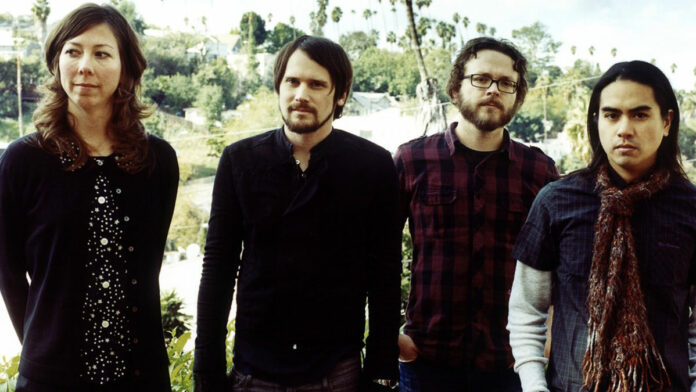
Members of the band Cracker in front of abandoned store front
David Lowery of Cracker on the 25th anniversary of the group’s debut album

Film Preview: ‘Buena Vista Social Club: Adios’

Buena Vista Social Club Adios film
Catch up with Buena Vista Social Club veterans in ‘Adios’

Corralitos Brewing Explores the Beer and Agriculture Connection

Corralitos Brewing owner Luke Taylor with bottle of Zone Ag Peach
Corralitos Brewing Co.’s Zoned Ag series pays tribute to local heritage

Villa del Monte’s 2012 Cabernet Sauvignon

Villa del Monte Winery owners in front of wine barrels
A single-varietal, single-vineyard from the Four Sisters Ranch

Third Annual Ebb and Flow Event Celebrates the San Lorenzo River

Ebb and Flow festival celebrates San Lorenzo River in Santa Cruz
River arts celebration of the slow-but-steady revival of the San Lorenzo comes amid continued challenges to its sustainability

Is YIMBY Movement Headed to Santa Cruz?

Santa Cruz YIMBY - A 2015 rendering of the vision for a new Pacific Avenue bus station with housing above.
Planning commission avoids decisive action in heated meeting

Preview: ‘Howard Ikemoto: The Last Show’ at Cabrillo College Gallery

Howard Ikemoto
Benefit art show captures the quiet, powerful legacy of Howard Ikemoto
17,623FansLike
8,845FollowersFollow