

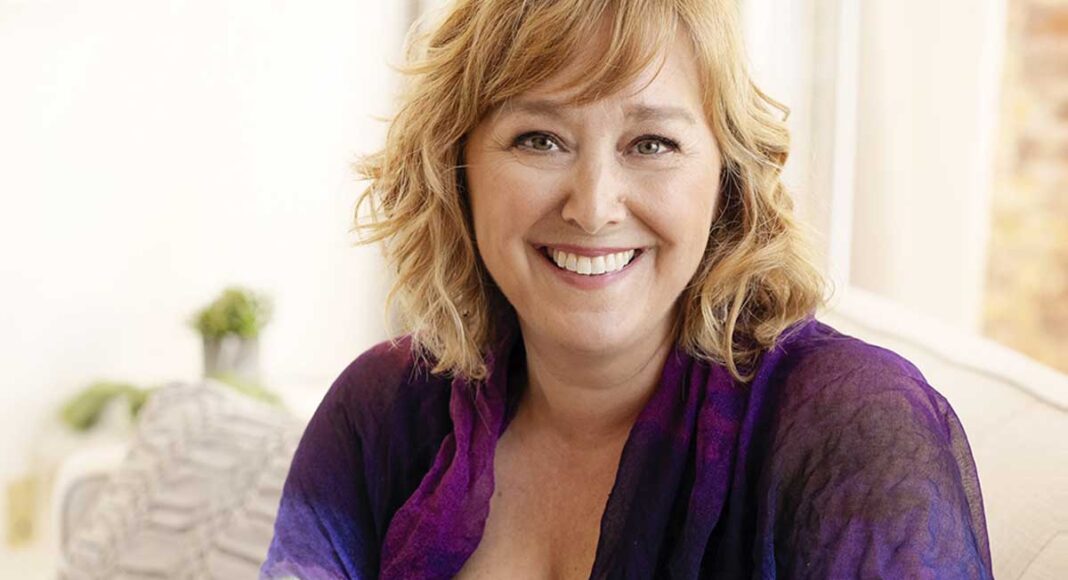
In a town where yoga mats unroll as easily as beach towels, Santa Cruz has long embraced the mind-body connection. But there’s one area of wellbeing that still lives mostly in the shadows: sexual health.
For Melissa Fritchle, that silence isn’t surprising; it’s exactly what called her into the work.
“When I started, nobody was really talking about this,” she says. “Sexual health training was minimal, especially for something so complex and nuanced.”
Today, Fritchle’s practice blends psychotherapy, mindfulness, and sexuality, an approach that feels both deeply needed and distinctly Santa Cruz. But her path didn’t begin in a therapist’s chair.
From Massage Table to Therapy Room
Before graduate school, Fritchle spent nearly a decade as a massage therapist. That early work shaped her understanding of the body as more than a vessel; it was central to how people process emotion, make decisions, and experience the world.
“I wanted a program that addressed the whole person, body, emotions, choices, all of it,” she says.
That perspective sharpened during her internship at a local women’s crisis support center, where she worked with survivors of sexual trauma. What she noticed wasn’t just the need for healing but what came after.
“People would say, ‘I’ve worked through the trauma. Now I want to enjoy sex again and no one will even talk about that,’” she recalls. That gap, between surviving and fully living, became the foundation of her work.
More Than “Fixing” Sex
Sex therapy, Fritchle says, is often misunderstood. Some assume it’s purely clinical. Others think it’s about performance or quick fixes.
“It’s not just tips and tricks,” she says. “It’s about your relationship to yourself, your confidence, your identity, your ability to feel pleasure.” In practice, clients rarely stay focused on a single issue.
“They might come in with one concern,” she says, “but it quickly expands into how they see themselves in every part of their life.” That expansion makes sense in a culture where sexuality is both everywhere and nowhere—highly visible, but rarely discussed in a meaningful, embodied way.
The Missing Ingredient: Presence
At the center of Fritchle’s work is something deceptively simple: mindfulness.
“Mindfulness makes everything more satisfying,” she says. “If you’re not paying attention, you’re not really experiencing what’s happening.”
She compares it to eating while distracted, something many of us do daily. The same principle applies to intimacy. But mindfulness isn’t just about enjoyment. It’s also about clarity.
“Sometimes your thoughts, your emotions, and your body don’t match,” she explains. “If you’re not aware of that, it’s hard to make choices.” That awareness of what feels good, what doesn’t, what’s true in the moment creates a sense of agency that many people have lost.
Shame, Screens, and Disconnection
Fritchle is quick to point out that disconnection from the body isn’t just personal, it’s cultural.
“We’ve all inherited shame about being in a body,” she says. “And then you layer in modern life, screens, stress, constant input, and it pulls us even further away from ourselves.”
For many, that disconnection becomes the baseline.
The solution isn’t complicated, but it does require intention.
“Carving out time to slow down and actually feel your body is key,” she says.
A Santa Cruz Solution: Go Outside
In recent years, Fritchle has been leaning into ecotherapy, using nature as a pathway back into the body.
For those who struggle with traditional meditation, the practice is simple:
Go outside.
Sit.
Listen.
“Let your body match the pace of the natural world,” she says.
In Santa Cruz, that might mean a visit to the redwoods, a walk on the beach, or even your own backyard. The setting matters less than the shift: from doing to sensing.
Rethinking Intimacy
If there’s one idea Fritchle returns to, it’s this: intimacy doesn’t start with another person. It starts with you. Her recommendation is simple enough to fit into even the busiest day:
Pause for three minutes. Unplug.
Ask: What’s real right now?
It’s not a dramatic overhaul. It’s a small, repeatable practice, one that builds awareness over time. And that awareness changes how we show up everywhere.
The Bigger Picture
In a wellness-forward community like Santa Cruz, conversations about food, fitness, and mindfulness are common. But sexual wellbeing often lags behind, treated as separate, or secondary.
Fritchle’s work suggests otherwise. Pleasure, connection, embodiment, these aren’t extras. They’re foundational. “It’s our birthright to enjoy our bodies and feel connected,” she stresses.
In a world that constantly pulls us out of ourselves, her message is both simple and radical:
Slow down. Pay attention. Come back to your body. Because, as she puts it, “You can only be as intimate with someone else as you are with yourself.”
Learn more about Melissa Fritchle at www.mf-therapy.comand explore her Mindfulness-Based Coaching Style practice https://embody-connect.com/
Elizabeth Borelli shares free tips, tools and recipes for a healthy Mediterranean Diet and Lifestyle at www.ElizabethBorelli.com










Great piece!
Thank you Jeanne!