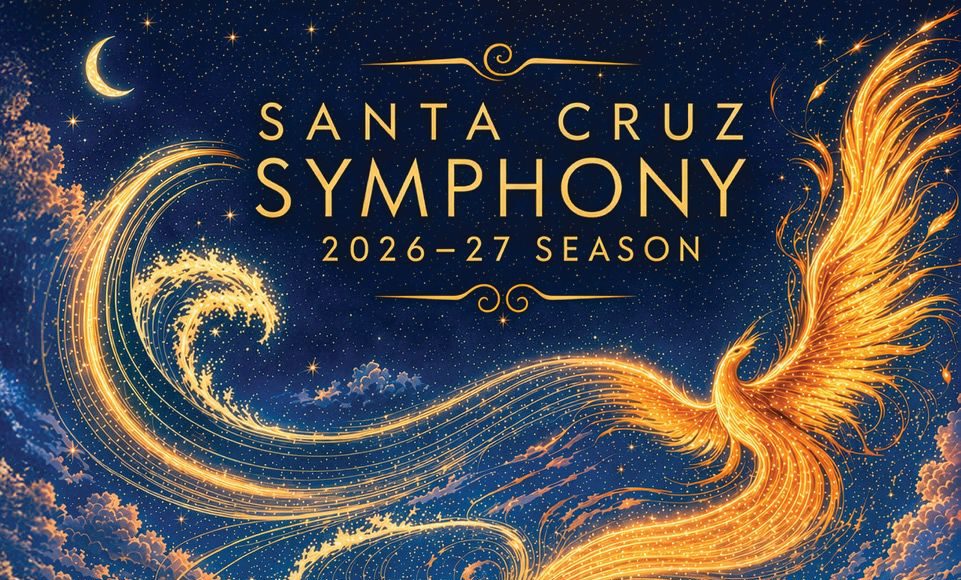
Anyone who thinks classical music has been petrified and frozen in time forever should check out the new season of the Santa Cruz Symphony. “Big, bold, full of unexpected collaborations,” is the way critic Christina Waters described it and those words speak volumes. Sure, there are those who want to hear music performed the same way every time—but they can put on the recording and hear performances over and over. There are more than 160 recorded versions of Beethoven’s Ninth Symphony since the first was recorded in 1923, so clearly people want to hear the same composition differently.
There’s nothing better for me than hearing new things in a piece I thought I knew well.
The beauty of a concert for me is being surprised and overwhelmed by new directions and ideas. But the classics have survived for centuries and performances that take a new view and a new twist keep the compositions alive.
Kudos to conductor Danny Stewart, who chooses and orchestrates the pieces.
“I think of this season in terms of the potential for dialogues and discoveries within each program,” Stewart explained to Waters. ‘“Each program is designed to offer great structural, stylistic, and cultural balance. And many unique opportunities for wonder.”
Uniqueness and wonder. That’s why we go hear live music.
Stewart also bucked the current by using AI to create artwork for his performances, something that is about as popular in Santa Cruz as swimming with sharks. It’s a fine line we walk here, but there’s a big difference between AI slop and AI art, just as there is with unintelligent or uninspired art and brilliance.
In keeping with controversy, we have an article about composer Jaron Lanier, engineer and programmer who was a creator of Virtual Reality and is a technologist with Microsoft who lives in Santa Cruz.
Later in the season, he’ll present two works with the symphony. He shocked some in the audience last year when he played two compositions in between Dvořák and Beethoven with the Symphony. He strolled onto the stage looking like a dreadlocked downtown street musician (which he once was) and his pieces were inspired and beautiful.
At a time when AI can generate a song from a few typed instructions, Lanier wants to use it to give musicians more control over the music they make, writes reporter, technologist and magician Josh Logan.
Again, it shows just how out of the box Stewart is willing to go. I’ll add this: Downtown Santa Cruz was so alive Saturday with the Symphony opening and the 50 performers for the first Porch Fest and a birthday party for the owner of the Catalyst. It felt so great to be there and miraculously, I found a place to park.
Brad Kava | Editor
PHOTO CONTEST
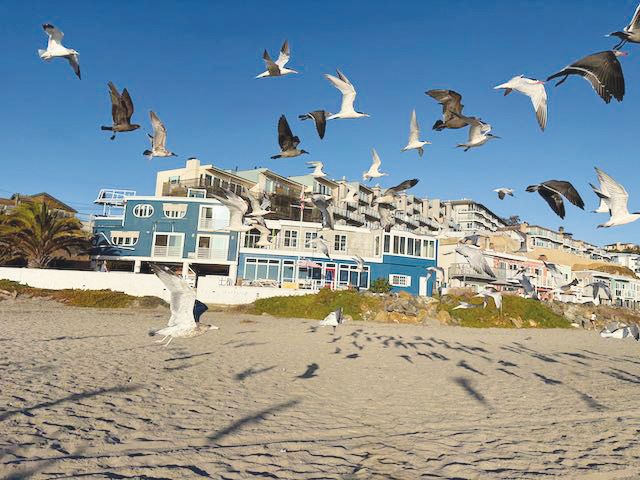
THE BIRDS? Seagulls Rising at Seacliff Beach. Photograph by Donna Seelbach
GOOD IDEA
Arts Council for Monterey County, Arts Council Santa Cruz County, San Benito County Arts Council, and SVCREATES are coming together to present The Ground Beneath Us / La Tierra Bajo Nosotros, a four-county exhibition exploring how land shapes our communities, cultures, histories, and futures.
The exhibition brings together artists from Monterey, Santa Cruz, San Benito, and Santa Clara Counties, with a particular focus on the creative communities around Salinas, Watsonville, Hollister and Gilroy. Artists are invited to explore themes including agriculture and farm work, water and climate, migration and borders, Indigenous sovereignty, neighborhoods and home, and other relationships to land and place. The call for artists opens Oct. 10 until Nov. 10 and the exhibition runs Jan. 22–March 1, 2027. Info: artscouncilsc.org
GOOD WORK
California has just received $31,388,121 in federal funding through the Maternal, Infant, and Early Childhood Home Visiting (MIECHV) Program to continue providing voluntary home visiting programs that support parents and improve outcomes for families and young children.
Nationwide, this represents the largest-ever amount of dedicated federal funding for home visiting services to children and families. In California, this year’s federal grant represents a $2,400,838 increase over last year. The additional federal funds were unlocked by the state’s investment of non-federal matching funds at a rate of $1 in state funding for every $3 in federal funding received. The California Department of Public Health oversees MIECHV-funded home visiting in California.