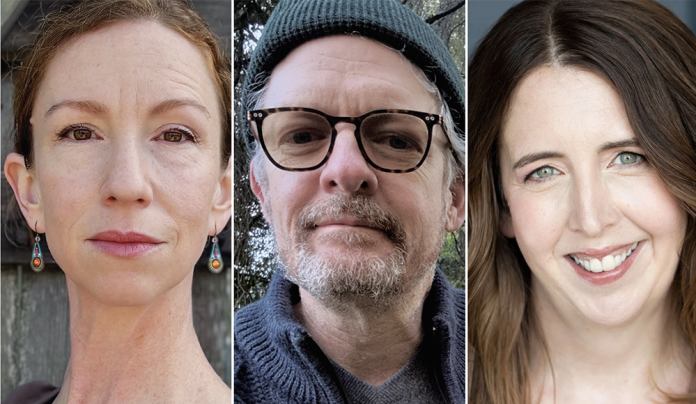


The stage is set for a full day of pickin’ and grinnin’ as the Northern California Bluegrass Society hosts an all-day jam and potluck supper Saturday at the Live Oak Grange.
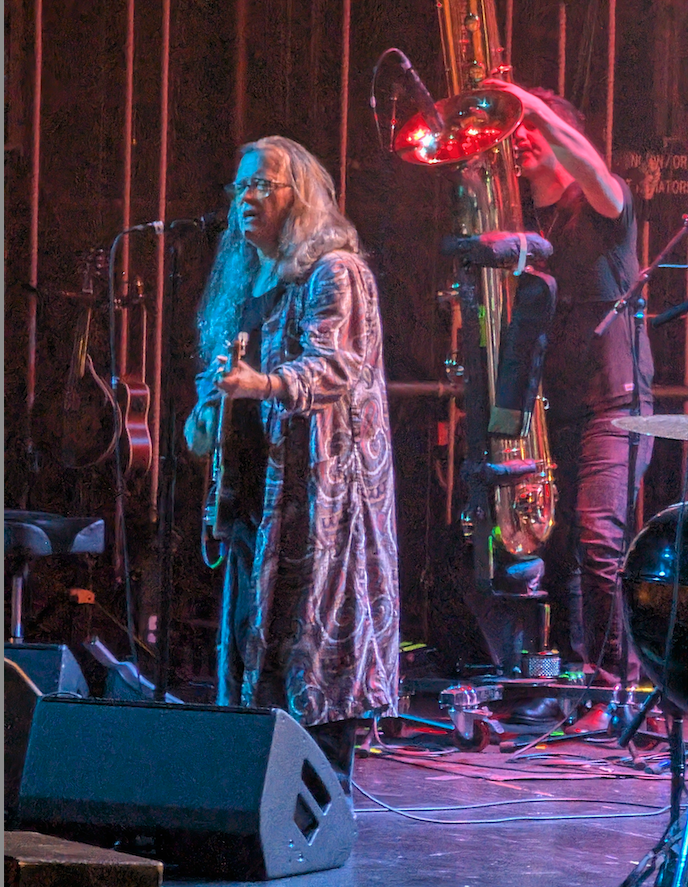
Headlining the Santa Cruz gathering is Brianna Colliard and the Desert Marigolds, “the hottest new band in the South Bay/Monterey Bay Area,” says Michael Hall, president of the Northern California Bluegrass Society. “They are from the Carmel Valley mountains, the non-ocean side of Big Sur.”
Colliard and her band recently played on the main stage of the Strawberry Music Festival, a multi-day camping and folk music gathering at the Nevada County Fairgrounds in Grass Valley.
Warming up the crowd will be the Keith Holland Bluegrass Band, “a group of jammers who get together once a week in Los Gatos,” Hall says, followed by the Post Folk Revivalists, and Eric Burman and the Brookdale Bluegrass Band, host band of the evening, playing a mix of original and bluegrass music.
For the closing jam at 7pm, Hall says, “There will be people with instruments both inside and outside so anybody who comes with an instrument can participate.”
A Tennessee native, Redwood City local and retired lawyer, Hall has served with the society for more than 35 years. “Many, many years on and off,” he says.
“This is the fourth time that we have done this event,” Hall explains. “The first time was in Hollister, and the past two times were in Loch Lomond. This year we’ve decided to move it into town and hold it in Santa Cruz.”
Musicians, listeners or those interested in becoming a volunteer or member of the nonprofit Northern California Bluegrass Society are welcome to attend this free event.
On Aug. 7–10, the society also hoststhe Good Ol’ Fashioned Bluegrass Festival, a four-day fiesta with music, workshops and camping at San Benito County Historical Park.
The Northern California Bluegrass Festival jam takes place 3–8pm on July 12 at the Live Oak Grange, 1900 17th Ave., Santa Cruz. Free. scbs.org
Some things feel so serendipitous it’s hard not to believe there’s some purpose in everything coming together at the right place, in the right time, with the right people.
That’s certainly the case with Lighthouse, the debut album by local rock band Career Woman. Released on June 6, Lighthouse has been a long time coming, but it took those three ingredients above for it to be fully cooked.
To celebrate, Career Woman—a once solo act, now full band led by frontwoman and recent UC Santa Cruz graduate Melody Caudill—is throwing an album release party on July 17 at the Crepe Place with Dolly Creamer and Hearsing.
“My first year in college was pretty rough,” Caudill explains. “So it was hard to get to the place where I am now. It’s rare to have band members you connect with—on a personal and musical level—let alone to have a community of bands, photographers and artists. It’s so special.”
The community she’s talking about is the new wave of Santa Cruz bands bubbling to the surface of attention. Dubbed by Santa Cruz Recording Studio wizard and platinum record producer Jim Wirt as “Santa Cruz Surf Punk,” the scene includes bands like Trestles, Plumskin, Hearsing (which Caudill is also in) and others.
But it’s those three bands in particular—along with Oakland indie pop act Small Crush—that Caudill has formed a bond with since moving to Santa Cruz.
“It was a ‘meant to be’ situation because I had been introduced to my bandmembers, who are also in Small Crush, before I even chose to go to UC Santa Cruz,” she says, adding she met her band—Jackson Felton, Allen Moreno and Joey Chavez—through her record label, Lauren Records.
Label owner Aaron Kovacs introduced her to Small Crush, who is on legendary Bay Area label Asian Man Records.
“They were only a few years older—and there aren’t many people my age on either label—so [Kovacs] connected us to make some songs,” she remembers. “That went so well that when I moved to Santa Cruz they joined my band.”
Caudill is no stranger to the music world. She grew up in a musical family and has been writing songs since she was a child. Throughout her teenage years she wrote and recorded singles with her father, who is also in indie rock bands. In 2023—at the age of 19—Caudill released Career Woman’s debut EP, Grapevine.
But Lighthouse marks Caudill’s first, proper, full-length album. It’s also the first time she’s released anything on physical media, previously only going through streaming services. However, this time fans—new, old and soon-to-be—can purchase the album on CD or light blue vinyl.
The album “came at a great, pivotal time in my life,” she says. “I’m 21, just graduated college and now have my first album. A lot of things I’ve worked on my whole life have culminated right now.”
For fans of dreamy indie pop with pop-punk undertones, it’s easy to see what she’s talking about. Career Woman’s songs are fully fleshed-out songs with a clear path and written with obvious intention from start to finish. Pulling the themes from her life, Caudill is still able to tell stories that everyone can relate to without making them too personal or murky, while still conveying the ups and downs of being young in America.
Take the opening track, “Piano Song,” in which Caudill writes about being a twentysomething in college, “flirting with boys” and “forgetting my keys.” Then there’s these lines—“I am living in the present /and I am in good company”—followed by a list of affirmations that conclude, “But If you ask me if I’m ready/ I’d say ‘I don’t know’/I wouldn’t trust my own instincts/if they were stuffed down my throat.”
That juxtaposition of confidence while acknowledging her distrust in herself is such a universal feeling, even if most won’t admit it. After all, being a child is thinking adults know what they’re doing. Being an adult is realizing nobody knows what the hell is going on.
Then there are the singles, “Boyfriends” and “Mel’s Drive In,” both of which have videos conceptualized and directed by Caudill.
In “Boyfriends” she sings, “Me and my friends/we don’t like men/but we got boyfriends,” a perfect representation of how many young women feel in a country where men try to legislate what they can—and can’t—do with their bodies and women-hating incels have emerged from their parents’ basements and entered the mainstream as somehow acceptable ideologues.
The other single, “Mel’s Drive In,” was almost a throwaway: unfinished and about a painful subject in Caudill’s life. But that’s when the right person—drummer Jackson Felton—stepped in at the right time.
“He was like, ‘No, this is the best one, just trust me,’” she says. “And then it became my favorite song that we’ve ever written.”
Career Woman plays at 8pm on July 17 at the Crepe Place, 1134 Soquel Ave., Santa Cruz. $10. 429-6994.
For the past two decades, local artists have participated in Santa Cruz’s First Friday every month. Now, creative types in the Pajaro Valley are gearing up to start their own tradition: a Second Saturday Art Tour.
The free, monthly event is built on this theme: “Bring your family, bring your neighbors—let’s make downtown Watsonville the heart of community connection, creativity and culture.”
A soft launch is set for 1–4pm July 12, on Main Street and surrounding blocks.
“We’re aiming to help make downtown Watsonville an arts district,” said Kathleen Crocetti, who has been working with Miriam Anton, executive director of Pajaro Valley Arts, and Jessica Beebe, recreation supervisor of Watsonville Parks and Community Services, in creating the event that is modeled after Santa Cruz’s popular event.
The lead artist on scores of outdoor mosaic projects around the county, Crocetti says, “It is time for all of us to choose a date and bring our arts together so we can co-market and grow and share our audience. This is not only to celebrate Watsonville but all of Santa Cruz County where we can create a bigger buzz around our growing culture.”
What to expect:
Live performances by local musicians, dancers and theater groups.
Kid-friendly activities, including arts and crafts, face painting and story time.
Local shopping with pop-ups from downtown retailers and artisan vendors.
Interactive art installations and tours of community murals.
Connection to local nonprofits and community resources.
Crocetti said organizers want to choose a day that people of all ages and families can take part in a free monthly arts and culture celebration.
Organizers also want to incorporate local brick-and-mortar restaurants that will offer Second Saturday-specific discounts.
“The City of Watsonville is one of our biggest partners,” Crocetti said. “Jessica Beebe has been a tremendous boost. We’re super excited about how many activities we are able to offer for this first event, which we hope will continue every second Saturday for years to come,” Crocetti said.
Among the many participants are the following: a performance by Watsonville Taiko, 1-2:30pm at Watsonville Plaza, 358 Main St.; a tour of the Annieglass factory, 1:30pm, 310 Harvest Dr.; Estrellas de Esperanza folklórico performance, 3-3:30pm, at Watsonville Center for the Arts, 375 Main St.; and the Pajaro Valley Arts Paint Jam, 1-4pm, at the Porter Building, 280 Main St.
Sometimes I wonder if a town can have too much culture. For a city of 60,000 people and a county of less than 300,000, we have more things to do on any given week than the city over the hill of a million or so people.
We’ve got more plays, live music, poetry, comedy and lectures than almost any place I’ve been.
Sometimes I wonder how our local artists survive with so much competition. On any day or night you can find stellar entertainment around the county, either national or local artists. If there’s one shortcoming, it’s that we don’t have as many top-tier national artists as we used to.
The Civic used to have a full lineup with the likes of Tom Petty, Bob Dylan, Shakti and more, but its offerings are much smaller now.
Except, that is, for the Santa Cruz Symphony and the upcoming Cabrillo Festival of New Music, which has two weeks of internationally known avant-garde classical music at the end of July into August. (Look for our cover story on it coming soon.)
And we keep adding events. Downtown Santa Cruz has a new Thursday night music offering at the site of the new farmers market; it also has a Tuesday night series on the Wharf and last Saturday it added a concert series at the Lighthouse that was blissfully packed. There’s also the Friday Midtown Festival, which draws a full house for local artists.
I think the city is moving in the right direction by bringing more entertainment and I think they are planning for the future. People in all those new housing developments downtown are going to need something to do.
In our cover story, Santa Cruz Shakespeare artistic director Charles Pasternak is buoyant with optimism for our arts scene.
“I really do believe in a town like this a rising tide lifts all boats,” he tells Christina Waters. “If our musical does well, it will only excite more of our audience to go check out Cabrillo Stage, and perhaps for their audience that loves what they do and hasn’t been much interested in Shakespeare, offering them something musical will perhaps bring them into our theater. So I do not see any competition or negativity.”
All that entertainment has helped keep this publication running for 50 years and we want to share it with you. Friday from 4-7pm we have some great up-and-coming local bands performing outside our building at 107 Dakota Ave. It’s free. Here’s a link to an invite, which will help us know how many goodie bags to make and will show you our lineup. caltix.com/e/goodtimes-50year-anniversary-party
Thanks for reading.
Brad Kava | Editor
PHOTO CONTEST
THE LIFEGUARD Taken at the Santa Cruz Municipal Wharf. Photograph by Tatiana Lyulkin
GOOD IDEA
In connection to the MAH exhibition HOWL: The Art & History of Pets, the Santa Cruz SPCA is sponsoring a canine fashion show 3–5pm Sunday at the Museum of Art & History that will showcase adorable adoptable pups prancing down the runway in head-turning canine couture. Admission is included with the $8 museum entry fee or you can purchase a VIP pass for $45 that includes adult beverages and front-row seats. There’s a great silent auction with too many local businesses to mention to benefit the shelter. Advanced tickets are available at Eventbrite.
GOOD WORK
Vista Center for the Blind and Visually Impaired announces the grand opening of its new office in Santa Cruz, marking a major milestone in its ongoing commitment to serve individuals with vision loss across the Central Coast. To commemorate this expansion, Vista Center will host a Ribbon Cutting & Networking July 31, 5:30–7:30pm, with the official ceremony beginning at 6:15pm.
The event welcomes funders, donors, elected officials and community members to tour the new facility, enjoy light refreshments, and connect with local professionals and community leaders.
QUOTE OF THE WEEK
‘Success is stumbling from failure to failure with no loss of enthusiasm.’ –Winston Churchill
We’re talking to Charles Pasternak, entering his third season as Santa Cruz Shakespeare artistic director. Pasternak talks about the festival’s first musical offering, his choice of Pericles, which he is directing. He opens up about adding a fourth play in September, and his plans for expanding the season as far as it will go.
You’re adding a musical this season. Isn’t that Cabrillo Stage territory?
Charles Pasternak: I really do believe in a town like this a rising tide lifts all boats. If our musical does well, it will only excite more of our audience to go check out Cabrillo Stage, and perhaps for their audience that loves what they do and hasn’t been much interested in Shakespeare, offering them something musical will perhaps bring them into our theater. So I do not see any competition or negativity.
Talk about Into the Woods.
CP: It’s probably the musical I’ve known well the longest. My sister did it, I think, in eighth grade, and she played Little Red and I loved it. I love the original Broadway production.
I really do believe a season itself should be a piece of art, that all the plays I choose should be in conversation with each other, so that our audience that sees all the plays can be a part of that conversation. The conversation between Into the Woods and Midsummer seems so clear to me. I’ve had one or two people say to me, you know, for your first musical, you picked up, you picked a tough one, and it is tough, but we have a brilliant music director, Luke Shepherd, who is truly incredible.
And there’s more expansion with Master Harold as the fourth offering.
I think it’s a masterpiece. Fugard died this year. I was getting excited to produce a living playwright, but now I’m excited to honor his legacy so quickly. I have my eyes on continued expansion. Further down the line, I have my eyes on the possibility of adding another show maybe summer, maybe fall, I don’t know. We’re doing well, but we’re not sitting on our laurels. Two Shakespeares are always going to be our backbone. I’m not touching that—but as we add, I can offer more and more.
Maybe more Tennessee Williams?
The response to Menagerie was overwhelming. If there’s any Williams I have my eye on next, it might be Cat on a Hot Tin Roof. But I love Chekhov. We’ve done it once in our history. I love Shaw. We haven’t done it in ages. I love Noel Coward. And Thornton Wilder.
How might expansion work, especially given the outdoor setting of the Grove?
Yes! Ideally a year-round program and we’re working toward that. We already have a winter holiday show, A Christmas Carol. Expanding into the fall is one thing since we still have the space available, right? Finding out how we expand into the spring is more troublesome. For some months the weather won’t allow it. And we’re caretakers of the land. We winterize that whole space. It’s a huge amount of work.
What about the Colligan?
Because of the history of the Jewel, our audience loves it. I thought Julie did wonderful things. I have so much admiration for how she managed it. But it’s just not workable for us. The Colligan seats under 200, and for Christmas Carol we had an audience of 280 plus. So that’s a lot of seats lost. We’d have to up the price. We have to keep the doors open. We have to keep access available. We’re so lucky in the scope of this country to live in a community that loves and values its theater and its art. And that’s not true a lot of places. We’re going into our third straight year of record ticket sales. Our percentages right now are above last year’s.
You’re committed to repertory theater.
I think more theaters in this country would be doing better if they were to return to a real repertory model. I need to bring artists from outside Santa Cruz, because I want to present a world-class company, and I need to find them outside of it. But I want to find great artists in Santa Cruz as much as I can. I want to invest locally. And so finding Jordan [Best] and Lori [Schulman], realizing I had these two incredible artists in my backyard, and for our first musical, they were both excited and available.
I should make a distinction when I say every year we have a company of 20 plus actors, and what I’m talking about is formalizing a company in the range of, let’s say, 10 artists that I want back every year. So I don’t want the community to think they’re going to see the exact same 20 plus people every year. They’re not. But a core group that will return, those who like to work with each other, that bring positivity to this theater, that get to invest in this community, that love this community. And know how to work on this stage.
This year we do four shows on one company. Artistically that company gets to stretch themselves. You get to see Mike Ryan in one kind of role, and then in another role.
I think one reason this theater has done so well is because it’s had actor/artistic directors leading it. The community has gotten invested in Paul Whitworth, and has gotten invested in Mike Ryan, partly because they lead the company, and I hope to be in that same vein. And I think that that model can extend to the other artists in the company.
You’re taking a chance on Pericles, aren’t you?
Well, I hope the production will convince you, but I will say that I like Pericles, Winter’s Tale and Cymbeline, this trio of late plays that go beyond comedy and tragedy, that go beyond black and white, that go into the gray. Part of Shakespeare’s greatness is always his ambiguity to me, and these three plays magnify that ambiguity. And they’re about forgiveness, and they’re about rebirth and they’re about miracles. Pericles punishes all extremities. There are extremities in play, from its opening ugliness. And in the end, it takes sacrifice. It takes two people seeing each other across the divided years, recognizing each other, a family coming back together, a literal rebirth. I think there is a true miracle in the play, and it’s a fabulous sort of fantasy adventure. Six countries, two shipwrecks, two storms at sea. I think it’s magnificent.
I’m often interested in the lesser-knowns. But I have a financial responsibility to this company to cover my risk, right? So Pericles, I accept, probably won’t sell as well, but it’s playing behind Midsummer and Into the Woods. Now I hope it’s a surprise hit, but if it’s not, even if it just does okay, we’ve gotten Into the Woods.
Santa Cruz Shakespeare’s 2025 season runs July 18–Sept. 20 in repertory with Into the Woods, A Midsummer Night’s Dream, Pericles and Athol Fugard’s Master Harold…and the Boys. santacruzshakespeare.org
Two of the biggest Broadway hits of all time are playing right here in Santa Cruz this summer. And they’ve got something in common: both were penned by Stephen Sondheim, the American composer and lyricist who changed the way Broadway musicals were done, before he exited the stage four years ago.
A giant among giants, Sondheim rewrote the way song and story were presented on stage. He won a Pulitzer Prize, eight Tony Awards, an Oscar, eight Grammys, the Presidential Medal of Freedom, and had two theaters named for him. One in London, the other on Broadway.
But don’t take the critics’ word for it. Starting next week, go see Cabrillo Stage’s production of Sweeney Todd (Cabrillo Stage) and Santa Cruz Shakespeare’s Into the Woods. And fasten your seat belts.
Neither of these provocative works are musicals in the My Fair Lady mold. They are not sugar-coated pieces of entertainment. They ask disturbing questions, and offer disturbing answers plucked from the depths of the unconscious. They are more than a little dark, and very funny.
CUTTHROAT ACTION Michael Navarro (from left), Adam J. Saucedo and Brittney Mignano prepare for the Cabrillo College production of ‘Sweeney Todd.’ PHOTO: Tarmo Hannula
Once Upon a Time
“And ah, the woods,” Sondheim wrote. “The all-purpose symbol of the unconscious, the womb, the past, the dark place where we face our trials and emerge wiser or destroyed.”
Sondheim and Into the Woods (1987) collaborator James Lapine took familiar fairytales, found in almost every culture on the planet, and brought them together in one theatrical space. Along with a modern-day baker and his wife desperate to have a child, we will meet Cinderella, Little Red Riding Hood, Jack and the Bean Stalk and Rapunzel.
These familiar Grimm Brothers characters will literally bump into the baker and his wife, who have been warned by a witch that they have only three nights to find a cow as white as milk, a cape as red as blood, hair as yellow as corn, and a slipper as pure as gold. And only then will they be able to have a child. In the first act, their dreams come true. In the second act, they pay the consequences.
Barber Chops
Ten years earlier, in 1979, Sondheim created Sweeney Todd, The Demon Barber of Fleet Street, a macabre masterpiece set in Victorian London. From Christopher Bond’s play about a murderous barber, Sondheim crafted the melodrama with writer Hugh Wheeler.
Upon his return from unjust exile in Australia, Sweeney seeks violent vengeance on the corrupt judge who convicted him. Just how Sweeney gets his revenge involves some gruesome barbershop escapades, and the help of his equally wicked neighbor Mrs. Lovett. Mrs. Lovett bakes pies filled with, well, you really don’t want to think about it.
On stage the deliciously gruesome tale is transformed into theatrical magic by the genius of Sondheim’s music, plotting, and irresistible rhyming and wordplay.
Jerry Lee comes from Sierra Repertory Theatre to direct Santa Cruz Shakespeare’s first musical offering. And Andrea L. Hart enters her third season as the artistic director of Cabrillo Stage. I asked the two directors about their concept and preparation.
VISITING TALENT Sierra Repertory Theatre’s Jerry Lee came on board to direct Santa Cruz Shakespeare’s first musical offering.
Jerry Lee on ‘Woods’
Good Times: Quite an assignment. This is the first musical for Santa Cruz Shakespeare, and you’re at the helm. How did Charles Pasternak find you?
Jerry Lee: I’m the artistic director at Sierra Repertory Theatre in Sonora, and right after the pandemic Charlie joined us for Murder on the Orient Express, which I directed, and we stayed in contact all this time. I was trained as an actor, but directing is where I’m finding myself more comfortable. I love creating the worlds of these plays and musicals. Instead of calling myself either an actor or a director, I prefer to think of myself as a storyteller.
You’ve directed this show before and acted in it as well. Talk about its challenges.
JL:Into the Woods is emotionally and technically huge. And it’s kind of a giant, just so full of everything, comedy and drama. I think that’s what will surprise people. It’s very much like Shakespeare. It’s funny until it isn’t, and then it’s devastating. Woods and Midsummer Night’s Dream complement each other very well. Every time the characters journey into the woods, it’s about transformation.
STUDYING SONDHEIM Ciarra Stroud (left) and other ‘Into the Woods’ cast members refine their movements during rehearsal. PHOTO: Tarmo Hannula
Yes, it’s very much about how we really don’t know who we are.
JL: Absolutely—that’s really the whole point. I’ve been thinking about this idea, about finality, our preoccupation with it. We imagine that if I do this, and if I do that, I’ll get what I want and then I’ll live happily ever after. It’s just so arrogant and so human. This musical explores the whole concept of happily ever after. Act One is about getting your wish. And Act Two is where you realize that happily ever after does not truly exist. There’s always going to be something unknown.
What are the unique pleasures? What is it that you always take away from Into the Woods?
JL: Well, the music is so beautiful! I make a joke that people don’t necessarily understand. I always say if I could rent an apartment just in the string section of this orchestration, I’d be happy. I just love living in this music.
But what about the complex wordplay?
JL: Sondheim was very open about how he loved puzzles. He would create puzzles in his work, and use wordplay, and there are hidden jokes and hidden meanings in there for actors and the creative teams to work on. They’re fun clues for us, and they speak to our storytelling and our connection between the material and the writer as well.
What’s been most difficult about directing a play like this, about mounting it successfully? Where are the big challenges?
JL: Working inside of the parameters that are set by a repertory season. They’re exciting parameters to have in place, because you’re forced to be creative. This is a show that’s built for about 17 actors, and we have 11 actors, so we had to figure out some creative doubling, which we’ve done. Our production is literally about transformation.
Give us an example.
JL: For instance, our two actors who are playing the princes, Rapunzel’s prince and Cinderella’s prince, play the two step-sisters—and also play two other characters. It was a fun exercise in finding parallels inside of stories, and so these two actors are tracked through the play as siblings, just as we’re looking at all different kinds of relationships, parents, grandparents. Yeah, it’s very exciting.
What do you think about the fit of these three shows—Into the Woods, A Midsummer Night’s Dream and Pericles—in this SCS season?
JL: We really did take the time to find the right ensemble to make this kind of alchemy work with a reduced cast and all the doubles and the necessity of finding people who really understand musical theater and acting. It certainly seems like the three stories are adventure stories or journey stories. They complement each other very, very nicely. My very first primary focus was getting in there and seeing what these woods are like. It was so beautiful and welcoming and just the sheer beauty of that space. The fabulous design of this production, especially these amazing costumes by Austin Blake Conlee. It’s going to feel sumptuous and dramatic and very, very funny.
SEASONED PLAYER Andrea L. Hart, now in her third season as Cabrillo Stage’s artistic director, will helm ‘Sweeney Todd.’
Andrea Hart on Sweeney Todd
Give us an idea of how you came to work with Cabrillo Stage.
Andrea Hart: I came from Kansas and worked in theater in the Bay Area for 18 years. Started a couple of theater companies, writing plays, and self producing. I worked in a ton of schools and then I met my partner. We moved to San Diego for a year for his job, then I got a masters at UT, Austin, and he got a job at Elkhorn Slough Foundation. And then the job opened up at Cabrillo Stage. That master degree came in handy when I applied for the job!
Have you found ways to make this program your own?
AH: It’s year three for me and it’s been gradual. I’ve done a ton of musical theater because I was an educator and that’s what schools do. But my heart is in new theater and plays so I approach musicals in that way. What is the core of it? What is the deep story here? I analyze the lyrics like I would Chekhov. I question every line of a song—what are you saying there? Who are you saying it to? Why are you saying it?
Why did you choose Sweeney Todd?
AH: Now that I’ve gotten to know the community better, I’ve been exploring more ideas, such as expanding into a two-show season. But I wanted it to be sustainable, and given Cabrillo»s schedule two shows was going to be a tight turnaround. So I began to rethink, and thought OK, let’s do one big show. And Sweeney, to me, is perfect for a one-show season, because it’s so huge. It can hold the season all by itself.
Sweeney Todd was a courageous choice.
AH: I worried that it’s not right for very young kids, and it might be too dark. People might not want to see a dark show during the summer. But Cabrillo Stage doesn’t have to be everything for everyone. On the other hand we can do things with Cabrillo Stage that we can’t do in other places, which is, have a 21-person orchestra, which this show requires, and we can do it in a really big, fully fleshed-out way scenically and cast-wise.
I just started getting into the female characters—they are amazing. Mrs. Lovett. Sondheim has called her the true villain of the show. She makes everything happen. And even Joanna. What a beautiful representation of someone in dire straits who does not give up looking for the way out. And the hope and the optimism. She says, teach me how to sing. Even if I can’t fly, how can I sing? So I found these exceptional characters, even the beggar woman who sees everything that’s going on but people assume is crazy. Once I was hooked, I really wanted to do this show. We chose it last October, and since then I’ve seen how this show is so appropriate for this moment in time.
How does Cabrillo Stage’s funding and casting work? Do you have a core you must work with? Do you have enough budget to hire equity actors?
AH: That’s funny because it’s not well understood. So Cabrillo Stage is a part of Cabrillo College only in certain ways. We don’t pay for facilities, so we have rent-free rehearsal space and performances. My artistic director salary is paid. Certain things like that that are funded. Everything else we fundraise for. Cabrillo Stage is not part of the college’s curriculum. I work with the foundation. We’re constantly trying to build our core of donors back up. We’ve gotten an Arts Council Santa Cruz grant the last two years and we’ll get it next year too, which is great, and we have a new person helping me with grants. When I looked at our budget I knew we needed to diversify this funding. We cannot keep relying on ticket sales being the only way that we fund what we’re trying to do.
Our audition are broadly advertised. We had over 150 people audition for this show. We have different tiers. Hourly people who work in the shop and build sets. Then we have designers on a stipend. And students on scholarships. To me the ideal is an apprenticeship arrangement where people begin with minimal responsibilities and then move up. Like our stage manager this year, who went from Cabrillo to UCSC to New York, and now she’s back stage managing for us and training two assistant stage managers, while working on a show back east.
Any equity actors?
AH: This year, we were able to hire an equity actor, Adam Saucedo, to play Sweeney. He’s also a great story, because he has acted for Cabrillo Stage two or three times in the past. He was Gomez in the Addams Family before he was equity, and now he plays Sweeney. There are people who repeat, who have been in shows past, and then there are brand-new people. And it’s like an educational program, you know. When it’s working well there are students working alongside professionals at every phase or in every part of the production. And that is the true apprenticeship.
BEHIND THE SCENES Getting into the mood for Sondheim’s macabre ‘Sweeney Todd.’ PHOTO: Tarmo Hannula
What’s special about this Sondheim play, and about the character of Sweeney Todd?
AH: It’s such a social commentary, you could paste it onto our current time period. The show is set during the Industrial Revolution. People are afraid. Machines are replacing them. And here we have our own revolution, AI replacing humans. So in Sweeney people have to scramble to hang on to what they have. People against each other. Sweeney sings, “there’s two types of men in the world, the one staying put in his proper place, and the other one with his foot on the other man’s face.” It’s all about class warfare, and it’s about a society where people feel like they have so few choices that violence becomes inevitable. And it becomes almost celebrated, like the United Healthcare CEO who was shot, and his killer becomes almost a full hero. It’s not like sadness over the shooting. It’s like celebration, because people felt like they didn’t have any other voice. Theater should be asking these types of questions; what happens to a society when they’re at that point?
Is live theater important in an iPhone era?
AH: Stepping into a theater is like you’re making a choice. You are throwing your hat in the ring of interpersonal connection, and breathing the same air as somebody else looking at a live creation. Theater is so powerful and so necessary for that reason. You’re sitting next to people you don’t know, and you maybe have completely differing views from, and yet you’re laughing and sighing and crying at the same things.
Two Sondheims in one summer. Is this workable scheduling?
AH: Charles and I meet once a year and chat, and at one breakfast he told me they wanted to do Into the Woods. I had already picked Sweeney because it was right for us. This community is going to get two of Sondheim’s masterpieces but done in two completely different ways, in two completely different settings. What you will see and experience at the Grove is going to be so different from what we have in mind at Cabrillo Stage.
Which Santa Cruz artifact, past or present should go in a time capsule?
YOLTZIN
One of the best artifacts for Santa Cruz is The Lost Boys movie, so I’d choose the leather jackets that the Lost Boys were wearing.
Yoltzin Delgado, 18, Music Director / Student
JEFF
I’m a big Jim Phillips appreciater, so I would put a Screaming Hand T-shirt. It’s very Santa Cruz and it’s an iconic image. I guarantee it’ll still be around in 50 years.
Jeff Hefti, 57, Retired
ALEX
I would put a Margarita from Copal, the Oaxacan restaurant on Mission Street.
Alex Jones, 25, Nursing Student
DANIEL
I have a negative take on everything, so I’d say a sharps container would be a good one.
Daniel H, 55, “Pessimist”
Tré
I have a positive take on things, so I would say a program from the Cabrillo Festival of Contemporary Music would be a good one, or a Playbill from the symphony, and a Santa Cruz Resource Guide.
Tré H.J., 43, “Optimist”
BREANNA
The first thing that comes to mind is the surfer statue on West Cliff. When I think of Santa Cruz monuments that’s what I think of
Breanna Donnelly, 21, Sock Associate at Sockshop & Shoe Company on Pacific Ave.
The County of Santa Cruz Department of Community Development and Infrastructure will increase penalties for illegal dumping violations in unincorporated areas. The new fines take effect July 11.
The move follows a vote by the Board of Supervisors to significantly raise fines to help protect the environment, said Tiffany Martinez, departmental communications officer.
Fines will start at $2,500 for a first offense, $5,000 for a second, and $10,000 for a third. Previously, penalties were set at $100, $200 and $500—which failed to deter illegal dumping by unpermitted haulers and residents, according to Martinez.
Department members say that illegal dumping harms the environment and neighborhood quality of life. Increased fines are the latest measure the county has taken to make Santa Cruz County the cleanest in California. Other efforts include reducing single-use materials, offering free bulky-item pickup through the GreenWaste franchise agreement, improving reporting tools and installing surveillance cameras in illegal dumping hotspots, according to county staff.
Cameras were purchased through funding from Pitch-In Santa Cruz, a program that supports community-based environmental initiatives. The cameras have already resulted in a misdemeanor referral for illegal dumping to the Santa Cruz County Sheriff’s Office.
“This isn’t just about handing out fines, it’s about valuing our shared spaces, protecting the environment and standing up for the communities impacted by illegal dumping,” said Carolyn Burke, assistant director of special services at the Community Development and Infrastructure Department. “By increasing penalties, we’re sending a strong message that Santa Cruz County is serious about stopping this.”
GreenWaste Recovery offers bulky item pickup services. GreenWaste customers in unincorporated Santa Cruz County are eligible for three bulky item pickups and four extra bin setouts per year at no additional cost, making it easier to properly dispose of large or excess waste.
County staff will continue to coordinate efforts with law enforcement and public works staff to track illegal dumping, increase reporting and support cleanup efforts. Community members are encouraged to report illegal dumping incidents through bit.ly/stop-illegal-dumping-sc.
I want to thank, and commend, your 50th anniversary issue. There are a number of ways you could have gone about that, but the way you chose to do it showed how you put community first, which is why you endure in the hearts of Santa Cruz. Fifty years is a big deal, and to see these many places that we know and love honored, and our history showcased, was a special gift to us all.
Barney Doherty | Aptos
BATTERY DANGER
I wonder if you are aware that there are plans to install three industrial-sized lithium battery energy storage facilities (BESS) in Santa Cruz County. One by Dominican Hospital, one by Aptos High School and one in Watsonville at 90 Minto Road next to College Lake.
Many may be hearing about these plans for the first time because the county is implementing them quietly, just like how Vistra’s Moss Landing lithium battery energy storage facility went in, which most of us didn’t even know existed until it caught fire in January of this year and reignited in February.
What we do know for sure is that once lithium batteries catch on fire, you can’t put them out! You have to let them burn! The fires create poison gases and highly toxic microparticles that contaminate homes, schools, parks, lakes and farmland.
So my question to you is—do you want these toxic lithium battery facilities in your neighborhoods where your kids play and go to school and where your food grows?
If you answered no—for more information please attend a public meeting on July 17 at the Simpkins Family Swim Center, Live Oak Annex Room A, from 6:30 to 8:30pm. You can also find information on the website stoplithiumbessinsantacruz.org.
Polly Hormel | Santa Cruz
NO SPILLS
I have lived in the San Lorenzo Valley for 70 years and I thought it was important to let you know that before Monty bought the Log Cabin it was previously named George’s Log Cabin after its owner George Grazioni. George had cerebral palsy but in spite of his palsy, he could pour a shot to the very top of the glass so that it crowned, without spilling a drop! If you could get it to your mouth without spilling a drop it was on the house; if not, you paid! Most of us had to pay but we couldn’t resist the challenge, plus he got such a kick out of our attempts! He was quite the character!
Juanita Harren Nama
MORE TRAIN THOUGHTS
How can you be so willfully ignorant? You know nothing about methodology for projecting ridership 20 years in the future. FORT has never said or implied that the rail and trail project will reduce taxes, or that the O&M costs will be insignificant.
According to the HDR projection, they will certainly be less than Metro’s O&M costs, though. It’s abysmally stupid to speak of “ROI” in a public works project. The concept or “return on investment “ simply doesn’t apply in the public sector.
Picking at details like the number of stations and “feeder lanes,” whatever that means, is laughable.
There is no rail service planned to Davenport. It’s Watsonville to Santa Cruz. There was no RTC estimate made in 2022. That’s a bogus claim. The “unknown costs” part of the HDR’s extreme worst-case scenario estimate is an artificial contingency factor, standard practice in estimating costs of major transportation projects at the early conceptual stage—it’s not a realistic cost factor.
All engineering details are as yet unknown, and major design decisions are yet to be made. There is no schedule for completion, and no budget proposed yet. The project is still in a very preliminary concept design stage. The RTC principal planner for RTC told me he thinks the project could be completed 15 years from now.
The 2045 date for the O&M cost estimates assumes that the project will have been in operation for at least five years by that time, and ridership patterns will have been stabilized. Your comments are non-serious, and are merely spurious objections meant to bolster your preconceived opposition to public transportation.
Weller James
JONES & BONES
Terrific edition! We bought our beach house in Capitola in 2016 and spend many weekends in Santa Cruz but this opened our eyes to many unknown places to enjoy. The only 40-plus store you may have missed is Jones & Bones, the amazing gift store in Capitola.
The Santa Cruz County Board of Supervisors has approved an express building permitting process with a potential walk-up desk after years of complaints from local residents and builders.
The supervisors agreed with the findings of a Grand Jury report released June 23, detailing the active process as “costly, time-consuming, and exasperating.” They will work to create a system that offers more in-person help, a smoother online platform, and an efficient process, especially for those with smaller projects in unincorporated areas of the county.
The report outlined the repercussions the active permitting process had on local disasters, such as those affected by the 2020 CZU fires. The disaster’s fallout birthed a flood of building permits, leaving homeowners stranded in a maze of inefficiency, the report said
The city has worked alongside the business consulting firm Baker Tilly, which is conducting an organized assessment of the active permitting process. This includes interviews with employees and customers, reviewing operational data, and further research on the previous procedures.
Supervisor Manu Koenig described the end goal as another way to consider housing growth.
“We heard from the consultant that the planning department has a culture of no,” said Koenig. “And often is looking for ways to extend permitting, preventing people from building.”
He mentioned two fundamental shifts for the department that combat the long, grueling reviewing process. The first is, as he describes it, “multiple bites out of the apple.”
“Rather than reviewing an application, they will provide new feedback on the first round, second, or third that pushes applications through endless rounds of review adding time and cost to homeowners, which often reflects on the cost of housing,” Koenig said.
The board also addressed the requirement that all plan review comments be cited by county code rather than an arbitrary system, ensuring the law is behind decisions.
Koenig described the transition from large-scale to small-scale projects as “leveling the playing field” to ensure that it would be easier to understand, cheaper, and less time-consuming, so that more people could add housing incrementally.
“One thing we are trying to do in the planning department is to make it easier to add middle housing,” said Koenig, “ it’s essential to ensure that Santa Cruz is a multi-generational community for me.”
Furthermore, Koenig envisioned a planning department offering customer feedback, ensuring local homeowners that the county is on their side, and an efficient permitting process for cost and time.
County staff will execute a work plan for the latest procedure, using Baker Tilly’s findings. The board has until August 22 to give the Grand Jury a formal response.
Some of the Grand Jury’s recommendations included:
*Supervisors should have staff review best practices from other jurisdictions and then select strategies that will reduce costs and delays in our county’s Permitting Services by January 1, 2026.
*Supervisors should direct staff to adopt software that removes barriers to applicants and is comprehensive to all departments. The software should flag any permits that have been unaddressed for longer than two weeks to avoid application delays.
*Santa Cruz County should develop a plan to educate the population about different permit types to reduce illegal builds through staff participation in community events, newspaper articles and/or other Unified Permit Center media involvements.
*Santa Cruz County should establish a walk-up front desk service four hours per workday to assist homeowners, non-building professionals and small contractors navigate the permit process.
*Santa Cruz County should reconvene the Building and Fire Code Appeals Board, populated by seasoned building professionals, to adjudicate permit disputes quickly, publicly, and professionally, and with less cost.
*Santa Cruz County should direct the Building Department and any other relevant departments to review the State code parameters that allow county adjustments for building permit fees and find the least-cost, least-delay alternative. Anything that can be free should be free.
*The County of Santa Cruz should separate the Ombudsman duties from Manager of Unified Permit Center resulting in two separate positions: a full-time, dedicated Ombudsman and a full-time Manager.
The stage is set for a full day of pickin’ and grinnin’ as the Northern California Bluegrass Society hosts an all-day jam and potluck supper Saturday at the Live Oak Grange.
Sometimes I wonder if a town can have too much culture... we have more things to do on any given week than the city over the hill of a million or so people.
Two of the biggest Broadway hits of all time are playing right here in Santa Cruz this summer. And they’ve got something in common: both were penned by Stephen Sondheim
I want to thank, and commend, your 50th anniversary issue. The way you chose to do it showed how you put community first, which is why you endure in the hearts of Santa Cruz.