Santa Cruz Comedy Venue Gets Shoutout from Patton Oswalt

When DNA first closed down his comedy venue DNA’s Comedy Lab due to the Covid-19 pandemic in early March, the Santa Cruz comedian decided to have a little fun with the marquee in the front of his business.

DNA hung up letters that read “Comedy is funny. Coronavirus is not. We will pause all shows until Tom Hanks is safe.”

All this, of course, was back when Hanks was in Australia, having come down with Covid-19, the disease caused by the novel coronavirus. And although the two-time Oscar winner isn’t a comedian, DNA says it was a spur-of the-moment decision to honor Hanks with the online shoutout, and he figured that pretty much everyone was a fan of the actor.

Less than a week after DNA’s sign went up, the county’s shelter-in-place health order went into effect, followed by a similar statewide order, prompting more widespread closures. More than two months later, Hanks is safe, but many businesses, including event spaces, are still shut down.

“I felt like it needed a change,” DNA says of his club’s marquee. “I was thinking, ‘Who in the comedy world do I respect their opinion and I would want people to listen to their voice?’”

The first name that came to mind was Patton Oswalt, who DNA has never met, but he says the two have a couple mutual friends.

And so, DNA updated his marquee. The Comedy Lab’s latest message reads, “Comedy is funny. Coronavirus doesn’t rule. We will pause all shows until Patton Oswalt says it’s cool.”

DNA took a picture and posted it to Instagram, where he tagged Oswalt, whose credits include Ratatouille, Parks and Recreation, King of Queens, The Goldbergs, and Mystery Science Theatre 3000, along with nine stand-up specials. DNA says Oswalt promptly wrote back in a message, saying, “You’re making me blush.”

A couple days later, Oswalt tweeted out DNA’s picture of the marquee, saying “I did not know I wielded this authority.”

The public response from Oswalt—who’s latest special I Love Everything came out May 19—resulted in an explosion of social media attention for DNA’s Comedy Lab, which has been hosting comedy shows on the online platform Zoom for more than two months. “That was fantastic,” DNA says.

The Comedy Lab’s headliner this Friday is Caitlin Peluffo, who has opened for comics like Maria Bamford, Gilbert Gottfried, Gary Gulman, and Colin Quinn. DNA’s Saturday headliner is Ahmed Bharoocha, who has been on Conan and Comedy Central, including for his own half-hour comedy special. Proceeds from the Comedy Lab’s shows go to the artists, with any extra going to paying bills at the venue, which was about to celebrate its one-year anniversary when it closed indefinitely. For more information on shows, visit dnascomedylab.com.

“Things haven’t changed,” DNA says. “When we were open, I was broke. And now that we’re closed, I’m broke. If that’s cred, I have it.”

DNA says that when he first started doing online shows, the Lab was one of the only comedy clubs in the country doing four Zoom shows per week. Now the trend has caught on, making it difficult to draw good-sized crowds online. DNA plans to step back when it comes to content and start doing fewer specialty weekend shows.

He’ll continue hosting the Lab’s Wednesday evening Blind Tiger open mics and Thursday evening Sloth Storytelling hour events. He also hopes to launch his online TV-type channels, via Facebook and Twitch, with around-the-clock original content, including footage from his previous online shows.

DNA also hopes to one day bring in Patton Oswalt to perform, maybe even at an in-person show, assuming the Comedy Lab’s River Street location is eventually able to open again.

Many people have been supportive of the Lab in this time, although DNA says there have been some exceptions, with critics taking issue with each of his recent marquees messages—both the Patton Oswalt one and the Tom Hanks one before that.

One man, for example, was troubled by how the new Comedy Lab message about Oswalt uses the number “4,” in place of the word “for,” and the man started sending angry DNA emails about the grammar issue. The disgruntled man and DNA got into it, with the two of them messaging back and forth. DNA says he explained that it is not unusual for marquee tinkerers to replace the word “for” with the number four, especially when they are running low on letters, and he added the practice was common across the United States of America, before half-jokingly turning up the heat in the conversation. “I said, ‘You’re un-American,’” DNA says.

DNA says the man started lashing out and blasting him and the Comedy Lab with more emails, irate Facebook messages, and angry voicemails.

“Ultimately, I feel bad,” DNA says. “I’m an old hippie. My heart goes out to everyone who is trying to make sense of this time and has too much time on their hands and diving into chemical dependencies and who is striving for human contact right now. The way that some people do it is with anger.”

DNA has also been tweeting his way through self-isolation. Here are some highlights:

Santa Cruz Theater Scene Pays Tribute to Bonnie Ronzio

Savvy audiences know that when it comes to theater productions, what they see the actors doing on stage is only made possible by the work of many others off-stage—the proverbial tip of the iceberg.

When it comes to the Santa Cruz theater scene, in hundreds of productions over several decades, Bonnie Ronzio was the rest of the iceberg.

Ronzio died of cancer on May 22, just three days short of her 70th birthday. She was indispensable at Actors’ Theatre and the 8 Tens @ 8 play festival—a well-regarded director, a tireless producer, a smart technician, and a stage-managing genius.

“You just knew when you were directing a show and Bonnie was backstage, your actors were going to be happy,” says longtime friend and theater director Clifford Henderson. “I can’t say enough about how organized she was. And she just had a language with actors that made them feel good about themselves.”

She was the ultimate behind-the-scenes player. From lighting and sound to logistics to finances, to scripts to managing actors and writers, Ronzio did everything short of sweeping the floors … and she probably did a lot of that as well.

For the past two decades-plus, Ronzio was part of a dynamic duo in producing and presenting the 8 Tens @ 8 10-minute play festival, along with the festival’s artistic director Wilma Marcus Chandler. Ronzio and Chandler were both ambitious, strong-willed personalities who found just the right basis on which to create a successful collaboration.

“When two strong people come together and compromise, it just gets better, and they were two amazing collaborators,” says longtime friend and theater director Clifford Henderson.

“I personally feel like I’ve lost a part of myself,” says Chandler, founder of 8 Tens. “I’m very grateful for her knowledge and the strength she gave me to continue working. Sometimes when it was very difficult, when we went through hard times with the theater, she always had the backbone and the strength and the wisdom and the vision to keep going and say, ‘No, we’re going to do this, and this is how we’re going to do it.’”

Ronzio was a native New Englander, having grown up in Rhode Island. Her father, Frank Ronzio, was a long-time stage and movie actor whose credits include 1979’s Escape from Alcatraz.

Bonnie Ronzio came to Santa Cruz in the early 1970s. Though she had grown up listening to actors rehearsing lines in her childhood home, she didn’t become part of the Santa Cruz theater scene until the mid 1980s. Clifford Henderson had written a stage musical called Big Fish Eat Little Fish, and was looking for someone to serve as stage manager.

“She was working in a warehouse,” remembers Henderson, “and we thought that she was so organized doing that, we told her, ‘We think you’d be a great stage manager.’”

Shortly thereafter, she reluctantly joined Henderson and Dixie Cox (another longtime friend and collaborator) in the all-lesbian improv troupe Sappho’s Lapphos, in which she showcased her brittle and cynical sense of humor.

“She was hysterically funny,” says Henderson. “But we almost had to drag her on stage. I think she really enjoyed it, but she didn’t continue (performing) … I tried to get her to get back to it later, but that was it. She was done.”

She moved on to directing and directed, among others, the prominent Santa Cruz-based playwright Philip Slater. She also served on the board of Actors’ Theatre and became more involved in the unglamorous side of producing theater.

When Chandler decided to go ahead with a 10-minute play festival in the 1990s, one of the biggest challenges was the logistics of staging eight short plays—with eight casts and eight separate stage designs—all in one evening. There was no one other than Ronzio to call.

Over the years, with a small crew, Ronzio honed the delicate dance of presenting eight plays back-to-back until she had developed it into an art form in itself, as anyone who has watched the quick set changes between the plays in the festival can confirm.

“We have perfected the wheel,” Ronzio told me last December when 8 Tens presented its 25th anniversary season. “To be honest, things have gotten easier. I’m using the same tech people, the same designers.”

Still, Ronzio’s greatest achievement may have been as a director. In 2017, she directed a solo show written and performed by Santa Cruz actor Steve Capasso. He and Ronzio shared an East Coast upbringing and, he says, a certain no-nonsense East Coast style of relating.

“One of the first things she told me when she was directing my play,” says Capasso, “she would stop and say, ‘Why are you saying that line? Because if you can’t give me a good enough reason why that line belongs in the play, guess what, it’s outta here.’”

Capasso says his relationship with Ronzio deepened with their work together as actor and director. He remembered Ronzio on a couple of occasions kissing his cheek, then telling him some uncomfortable truths.

“I really felt she loved me as a person,” he says, “and respected my work as an actor. She didn’t always say that I did a good job. Sometimes it was, ‘I don’t know what you’re talking about here.’ But that’s the honesty with her. She’s not going to blow smoke up your ass. Sometimes I thought, ‘I must be doing a good job because Bonnie is not ripping me a new one right now.’”

Actor and writer Spike Wong had a similar relationship with Ronzio. When Wong’s autobiographical play Dragon Skin was chosen to be performed in San Francisco in 2018, Ronzio became his director. Wong says that Ronzio had high standards for excellence and wasn’t afraid to push her collaborators to meet those standards.

“Her communication was always right on,” he says, “all designed to polish the piece and bring things out of me that still needed to be said, without any sort of fear or threatening behavior on her part.”

On one level, say those who knew her best, Ronzio was an intensely private person. Many of those who knew her did not know she was sick until close to her death.

“I don’t think I ever got to really know her,” says Capasso, despite a close working relationship with her. “But what I did get to know I loved and respected.”

Chandler says that Actors’ Theatre and 8 Tens will continue without her. “We are totally carrying on with her vision to present great theater into the future.”

Still, she says, the idea of continuing without Ronzio is daunting. “I miss, and I will continue to miss, her skills in juggling so many things at one time, the inner workings of the building, the structure of the plays, the creating of a whole season, the finances, always having the big picture in mind, dealing with actors backstage. I feel as if I’m going to have to work very hard to live up to what she created.”

Listen to the author’s discussion with Wilma Marcus Chandler about Bonnie Ronzio:

Great White Shark Leaps Out of Water Near Pleasure Point

0

A shark was recently seen leaping out of the water near Pleasure Point. The footage appeared to come from a webcam livestreamed via Surfline, a website that specializes in showing forecasts and conditions at various breaks.

“That’s definitely a white shark, with a big, white belly,” confirms Pelagic Shark Research Foundation Executive Director Sean Van Sommeran, who watched the footage make the rounds on social media.

Van Sommeran suspects the great white was likely a sub-adult, probably about 14 feet long. The shark appeared to be on the other side of a large kelp bed from a couple of surfers. Van Sommeran says white sharks will travel the corridors within kelp beds, but sharks do not barrel straight through the forests themselves, he says.

The video, which was posted to Instagram, surfaced two-and-a-half weeks after surfer Ben Kelly was bitten by a shark at Manresa State Beach, a few miles farther south. Kelly died from damage to his popliteal artery, which runs through the back of the knee, according to a coroner’s report released May 13. 

Although sharks seldom wound humans, Van Sommeran says that every summer brings with it several close calls locally—shark bites to Monterey Bay kayaks, surfboards and paddleboards—and that this trend has held steady for a while.

Videos of other local marine life have recently been garnering attention. Van Sommeran released footage this past Friday of a dead gray whale floating near Steamer Lane. In one of the shots, a shark can be seen biting into the whale, wiggling its whole body as it digs in.

In general, Van Sommeran says the increasingly polarizing arguments that he hears about sharks bother him.

On the one hand, Van Sommeran has heard claims that white shark populations are growing at dangerous rates—a theory floated in the caption of the jumping shark Instagram video—sometimes even prompting theories that sharks don’t deserve any protection, all of which Van Sommeran says isn’t true. (Three dead sharks have washed ashore locally in recent years—one from a gunshot, one that was hit by a boat and another that was likely killed by poisonous runoff, Van Sommeran says.)

At the same time, Van Sommeran often hears claims that all sharks are nothing more than harmless, cute sea creatures, ones that adventure seekers should chase after and try to see up close. 

Not advisable, Van Sommeran says. “It’s just so basic: Don’t swim out to the sharks,” he says.

Freak events do happen, though. 

For example, Van Sommeran says he sees no reason to think that Kelly—the first person ever to die from a shark attack in Santa Cruz County—was doing anything irresponsible in the water. But in general, he says surfers should not venture offshore farther into known sub-adult shark habitat, like Soquel Cove, which is sometimes known as Shark Park—especially not with the goal of interacting with the animals.

Van Sommeran says young juveniles that often hang out close to shore and by the cement ship won’t hurt anyone, but the slightly older sub-adults should not be tested.

“It’s a large, several-hundred pounds sea creature that eats animals about your size,” Van Sommeran says. “It’s not some cute baby shark that’s waiting for you to come say ‘Hi.’ Nor is it a prehistoric creature from Amityville that’s looking to kill everyone.”

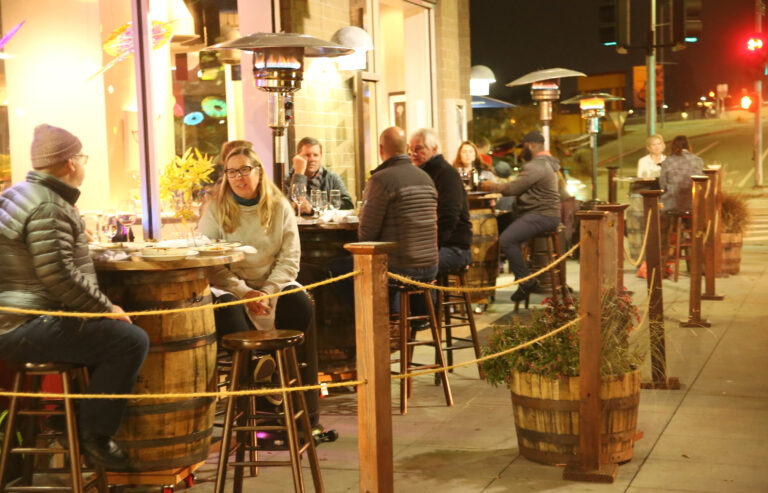
How to Stay Safe and Social Distance as Santa Cruz Retail Reopens

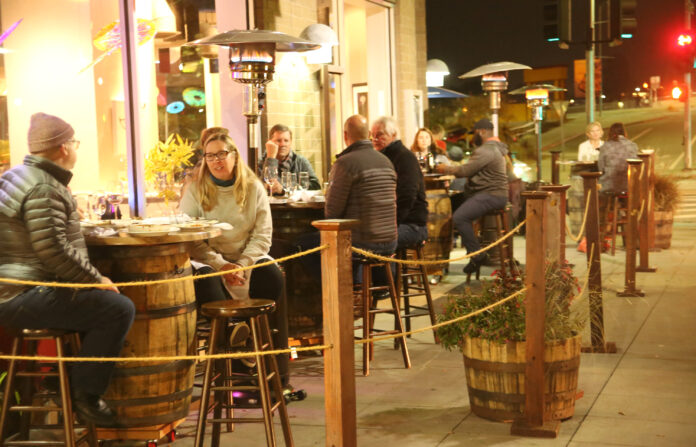
As California moves forward to Stage 2 of the state’s Covid-19 recovery program, Santa Cruz County’s Health Services Agency extended the shelter-in-place order to July 1 and announced social-distancing protocols for businesses to reopen.

The latest order went into effect at midnight on Tuesday, continuing the daily beach closures from 11am to 5pm, except for water-related activities, along with around-the-clock prohibition of “sedentary” activities such as sunbathing and picnicking.

The county also mandated that retail and other businesses open to the public must post social distancing protocols that conform to county guidelines. These are aimed at preventing the gathering of crowds and unnecessary person-to-person contact, as well as offering protections for employees and customers.

The order comes on the heels of Gov. Gavin Newsom’s announcement that counties that have met variance requirements and have received approval from the state may allow barbershops and hairdressers to open.

“Please note that this excludes massage services, nail salons, and other personal services,” says county communication manager Jason Hoppin. “It only affects barbershops and hair salons. The rest of personal services remains in Stage 3, for which there is, as of yet, no timeline.”

Santa Cruz County has met the state requirements for Stage 2 and will apply for the variance on Friday, May 29, pending approval by the Board of Supervisors. State review may take up to a week, county officials said.

In the meantime, customers venturing out to newly reopened businesses should be prepared for their own assessments for safety, says Susan True, the executive director of the Communication Foundation, which has been working closely with the county on the long reopening process.

“What we’re trying to do,” says True, “is to get people to really think about how they can go into the environment while minimizing their own risk and the risk they may present to others, and how they can spot businesses that are working hard to keep their spaces safe.”

The guidelines are built around what is becoming a common incantation of epidemiologists: “Time, space, people, place.”

Time: Transactions with other people in public should not last more than a few seconds, to minimize risk. “This is not the time to chat with your bank teller,” True says. “Tell her ‘Thank you’ and move on.”

Space: The six-feet rule still applies. Shoppers, who have already become somewhat savvy to space between people, need to assess how businesses are allowing people to keep their distance.

People: Are employees respectful of risk management? Are they wearing masks? Health officials have consistently asserted that masks are most effective in protecting others, which means it is unwise to confront someone not wearing a mask. Interactions that involve a lot of speaking are likely to raise the risk of spreading the virus.

Place: Enclosed spaces without a lot of air flow are the most risky environment. This is an element that retail spaces have limited control over. Health watchers suggest that if a customer has to do business in a small, enclosed space, even more attention should be paid to the other elements of safety. “What we don’t want,” says True, “is sustained minutes of unprotected—people not wearing masks—and close, less-than-six-feet apart contact in enclosed spaces.”

The public can also look for signs that a business is complying with the county health order and safe practices: Are hand sanitizer or disinfecting wipes readily available? Are employees behaving in a way consistent with safe practices?

The county’s new social distancing protocol for reopened Phase 2 businesses are codifying many of these elements, mandating that businesses work to minimize the number of customers in their store at one time, for instance, as well as placing limits on amount of goods that can be sold to one person in order to avoid lines, encouraging contact-less payment, doing away with self-service food, among other requirements.

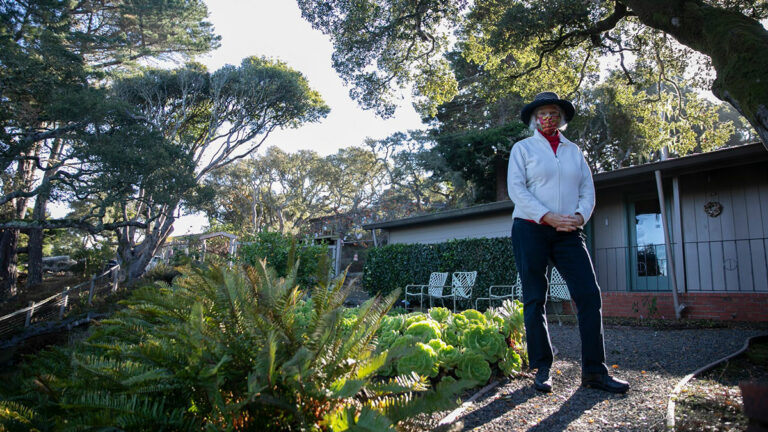
Front Porch Project Documents Life in Santa Cruz During Covid-19

One day, the Covid-19 pandemic and the weird spring of 2020 will seem like ancient history. 

And when that time comes—when a return to “normal” precipitates a look back at life during lockdown—photographer Amy Isacson’s latest project could become something to show the grandchildren.

It’s called the Front Porch Project, and it serves as a profile of a community in one place at one time.

Isacson, a Santa Cruz-based portrait/wedding/anything photographer, decided to go out early one May Saturday morning and document how her friends and neighbors in Santa Cruz County are weathering the shelter-in-place era. She had with her a master list of two dozen households who had agreed to her idea—to take photos of families on whatever constituted their front porch.

Of course, she kept her distance. “I tried to stay on the sidewalk,” she says. “And I used a telephoto lens.”

Other than social distancing, the only restriction she imposed on herself is to have her subjects in or near the front door of their home. That created a cohesion in the collection of portraits.

“Some people were dressed up. Others were in their pajamas like they’d just woken up. It really shocked me how people were. Usually when you get around people (with a camera) everybody is up and on 100%. But in this case, people were really grounded and calm. Nobody was performing.”

Isacson had put out a call on social media for people who wanted to participate, and she collected addresses that spanned the county, from deep in the Santa Cruz Mountains to Watsonville. Some of the people she shot were friends or acquaintances, but many were strangers as well. She shot families, couples, and singles at their homes, which in one case meant a houseboat. Some people posed with their dogs. At least one family brought in their goats. And not all of the households were complete.

“A handful of people were still working, in the medical profession (and other essential businesses), so in some cases, it wasn’t the complete unit,” Isacson says. 

It was all in the service of capturing a moment when everyday life has fundamentally changed.

“One friend of mine told me, ‘My husband’s hair is huge. My son’s hair is long. Mine is gray. And my daughter’s is shaved,’” says Isacson. “That about captures it.”

The project also scratched an itch for the photographer who, like most people these days, was missing casual social interactions.

“Because I had 24 places to go, I was pretty tight time-wise,” Isacson says. “That’s probably a good thing, because otherwise I would have wanted to stay and talk with everybody. I haven’t had that, and it’s been strange. It was really easy to communicate. It was like that Norman Rockwell era when you walked down the street and just talked to people in their yards. It all feels in a way that time has been rewound. I think people are just moving at a different pace now, a lot slower and quieter. Obviously, people are antsy, but generally they were just happy to be connecting with someone.”

As part of the Front Porch Project (which is also raising donations for the local chapter of Meals on Wheels), Isacson asked her subjects to submit their thoughts in writing on domestic living during the pandemic. “I asked everyone to write something not so much about how they’re feeling now, but looking back to that week (in mid-March) when everything shifted. Everybody has a different way of remembering when it all changed so drastically.”

The photos of the Front Porch Project can be seen on Amy Isacson’s website at amyisacson.com.

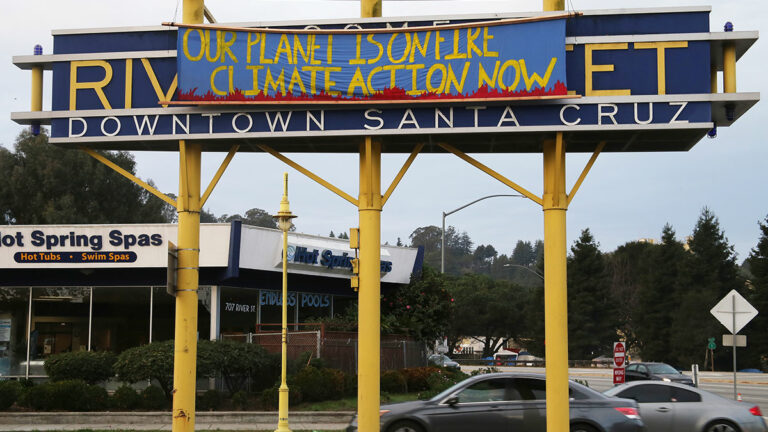
Santa Cruz Moves Forward With District Elections for 2022

0

In closed session on Tuesday, the Santa Cruz City Council agreed to enter into a settlement agreement with Gabriella Joseph, a local Latino voter who alleged that the city of Santa Cruz’s system of at-large elections results in racially polarized voting, and that the city is in violation of the California Voting Rights Act.

Later in the same meeting, the council unanimously agreed to begin transitioning to a district-based election system, one that is now scheduled to be codified in time for the 2022 race.

The council will pay $30,000 to Joseph’s legal representation, a Santa Barbara-based attorney named Robert Goodman. City Attorney Tony Condotti said that the settlement agreement will be a matter of public record, and that, once finalized, it will be available to members of the public upon request. 

The coming electoral shift has the potential to dramatically reshape politics in the city of Santa Cruz. That does not necessarily mean that it will result in better Latino representation. 

The Voting Rights Act does not require the law firm issuing a legal threat to prove that splitting the city up into election districts would better represent voters of color than any other electoral setup might. Additionally, Pedro Hernandez, senior policy coordinator for nonpartisan voting rights group Fair Vote, told GT last year that it would be difficult for Santa Cruz to draw election boundaries in a way that gives Latino voters sufficient representation.

“It’s unfortunate that we’re in this position,” Mayor Justin Cummings said shortly before Tuesday’s vote, “because I think that, for many residents of the city, there’s not so much of a preference to move towards district-based elections. However, I hope, as we transition into this process, that the community weighs in heavily on how we should do this, and … we understand the impact that this could have on our community.”

In approving the settlement agreement, the city of Santa Cruz will avoid a potentially costly voting rights-related legal battle. Many communities have been hit with similar legal threats, and no city has prevailed in such a fight. (Most cities settle before the item goes to court, just as Santa Cruz did.) Even if Santa Cruz had fought the case in court and won, the city still would have been on the hook to pay steep legal fees for the defense team.

In the current fiscal year alone, the city of Santa Cruz is already facing an unexpected $10 million deficit, due almost entirely to the Covid-19 pandemic.

The city of Santa Cruz was hit with similar voting rights notice of violation last year from a different Santa Barbara attorney, but the complainant was not a registered Santa Cruz voter, making the complaint legally meritless.

The city had a possible opportunity to more thoughtfully avoid the forced implementation of district elections. In the fall of 2018, the City Council created a new Charter Amendment Committee charged with coming up with new ideas for how best to run Santa Cruz city elections and city government more broadly. At the time, then-Vice Mayor Martine Watkins expressed that perhaps the council might like to wait until after the 2018 election to seat the committee, so that newly seated councilmembers would be able to participate in the appointment process. The council ultimately chose to seat the committee quickly.

But then in early 2019, after the committee started meeting, councilmembers Chris Krohn and Drew Glover—both of whom have since been removed in a divisive recall campaign—pushed to add more seats to the Charter Amendment Committee, a move that drew scrutiny, including from Councilmember Cynthia Mathews. The council ultimately chose to put the whole discussion on hold, and councilmembers decided that the new committee should not meet until the seats had been filled.

The item never came back to the council, the seats never got filled, and the committee never met again, thus dying a quiet death in bureaucratic limbo.

Ser Winery’s Palate-Pleasing Rosé of Cinsaut 2019

Getting ready for a chat with four friends on Zoom, my husband and I poured ourselves hefty glasses of Ser Winery’s Rosé of Cinsaut to enhance the experience. And it worked!

I had gone to winemaker Nicole Walsh’s new tasting room in Aptos Village to get this Rosé—calling ahead of time to order it. Walsh had the wine ready for me, and a speedy and safe curbside pickup ensued.

The 2019 Rosé of Cinsaut ($22) is a beautiful wine. It’s made with 100% Cinsaut grapes from Bechtold Vineyard in Lodi, one of the oldest-standing vineyards in California. “The vines are over 125 years old and deliver some of the most sought-after fruit in the state,” Walsh says. Packed with up-front aromas of strawberry and guava, delicious palate-pleasing flavors of strawberry and melon follow.

Cinsaut (or Cinsault) is a red-wine grape that can take a lot of heat. It is often blended with other grape varietals, but Walsh’s stand-alone Cinsaut Rosé speaks for itself. And with Walsh’s minimalist approach, a well-made wine such as this needs no added embellishment.

Walsh, formerly head winemaker at Bonny Doon Vineyard, is selling her wine for curbside pickup from 1-4pm every Saturday at the tasting room. Complimentary shipping is available on orders of three or more bottles, with a 20% case discount on all wines. And the luscious 2015 Coastview Vineyard Syrah is a deal at 20% off.

Walsh recently teamed up with Persephone Restaurant in Aptos to create a memorable food and wine experience—working with Chef Cori and sommelier Alex. Check Walsh’s website for upcoming events and more info.

I first met Walsh when we connected over a tasting of her Cabernet Pfeffer when she had just started out with her own label. She has done wonders with the Cab Pfeffer—a rare grape variety with fewer than 12 acres grown in California. Might I suggest that when you order the Cinsaut, you get some Cab Pfeffer as well.

Ser Winery, 10 Parade St., Suite B, Aptos. 831-612-6062. Serwinery.com.

Opinion: May 27, 2020

EDITOR’S NOTE

There’s certainly a lot of nostalgia going around right now, and I don’t even mean for the “groovy ’60s” or the “roaring ’20s” and all the things nostalgia used to imply. I’m talking about nostalgia for the “relatively normal year of 2019”—which ironically didn’t even seem all that normal when we were in it, considering it’s felt like we are all living in Bizarro Land since the election of 2016.

Reading this week’s cover story by Wallace Baine about the new Queer Santa Cruz exhibit at the MAH, however, I was reminded that nostalgia is a double-edged sword. While it’s fun and even emotional to read about beloved local fixtures like Herland and the Bulkhead Gallery, for instance, it’s sobering to think about the discrimination and other challenges the LGBTQ+ community faced in Santa Cruz over the years—and still does today. That’s why it’s so meaningful that the exhibit and our story are not just nostalgia pieces. They are both artistic and political statements that advocate for not only continued progress in the future, but also a re-examination of history. I think you’ll find this piece both entertaining and important.

I also want to remind you to check our website, goodtimes.sc, regularly, as we have been doing multiple daily updates to our news coverage and features. We know that more readers than ever are looking to GT for news and information, and we’re bringing you those stories not only in the paper every week but also online every day, so be sure to follow what we’re doing and let us know what you think.

STEVE PALOPOLI | EDITOR-IN-CHIEF


LETTERS TO THE EDITOR

Read the latest letters to the editor here.

Taking His Shots

Re: “I’ll See You in My Streams” (GT, 5/20): As the photographer who shot the image of Chris Rene with Matthew Swinnerton of Event Santa Cruz, I have some thoughts. I have shot and attended thousands of events in my career, and this one was an interesting one. It felt more like shooting a demo or recorded music video event, and the artist in this case, Chris Rene, did quite well. It is so hard to keep the energy of a performer up when playing live, as there was so little feedback for them to keep energy high. In the future, if the artist can see the comments and “likes and hearts” it can help them, but also could be distracting. As a media creator who is often on live Zooms now, we focus on the recording. Documenting any event now is even more important than live audiences, as it creates a media record to work from.

Keep streaming live, keep playing music live and keep documenting our experiences in these times.

Jared Brick | Berkeley

How Healthy?

I read your article regarding the restrictions that are going to be put in place as of May 26 by Dr. Newel (goodtimes.sc, 5/22), and I have some questions. First of all, what scientific evidence is she using to keep businesses shut down, the face masks requirements, and preventing beach access? The fact that there have only been two deaths in Santa Cruz County from the virus hardly justifies the continuation of her restrictions, especially since the two deaths happened weeks after the initial restrictions were put into place on March 17. 

Also, how many people are getting sick from all of the stress being created by the media’s constant fear mongering? Remember, we’ve been told for years that stress will kill you, yet Dr. Newel’s restrictions don’t reflect the lives lost due to the constant reporting of death and devastation, mostly fabricated by a corrupt media, and the loss of income for many who cannot even feed their families. Does Dr. Newel know how many people have committed suicide from complete hopelessness and fear created by corrupt politicians, the media, and completely insane restrictions such as that drugs and alcohol are essential, but walking on the beach in the fresh air and sunshine—proven to protect against illness—isn’t allowed?

What scientific evidence does she have to continue to destroy people’s lives? Over two deaths, really? Also, how many people are infecting themselves from wearing the masks? If you watch people wearing masks, they are constantly touching their faces to adjust them or to put them on or remove them, how healthy is that? Also, how many people wear the same mask over and over each day? Is that healthy? Isn’t it true that the masks are setting more people up for getting infected? Lastly, as a cardiac patient, wearing a mask is causing me to have breathing problems as well as heart rhythm problems. I’ve also heard that people have gotten in car accidents while wearing them due to passing out. I especially imagine, like myself, that other seniors are having their health compromised by having to wear a mask. 

So I strongly oppose Dr. Newel’s totalitarian, baseless actions, and I hope my questions will be investigated and answered. Thank you.

Bambi Forester | Santa Cruz


PHOTO CONTEST WINNER

The Pizza Gypsy and friend at Arana Gulch. Photograph by Nanda Currant.

Submit to ph****@*******es.sc. Include information (location, etc.) and your name. Photos may be cropped. Preferably, photos should be 4 inches by 4 inches and minimum 250dpi.


GOOD IDEA

BIGFOOT BOOST

A new Felton real estate listing for a house on Hillside Drive features 94 photos of the beautiful five-bedroom home. The humorous twist is that 15 of those photos feature a man in a full-sized Bigfoot costume. The marketing ploy has paid off. The Zillow page’s daily views quickly grew from 400—which is really good, says realtor Daniel Oster, who came up with the idea—to 146,000. “I was hoping it would make people smile,” Oster tells GT. “The home buying process is stressful.” 

Find the full story and photos here.


GOOD WORK

COMPANY WIDE

The Santa Cruz County Chamber of Commerce sent out a survey to see how its members were coping with the Covid-19 pandemic and the associated shelter-in-place order. Of the respondents, 42%—a plurality of them—were open with reduced hours, and 80% had suffered losses greater than $10,000. Three-quarters applied for financial assistance, and of those, 60% have been awarded funds, while 25% are still waiting, and 15% were denied. Visit santacruzchamber.org for the full results.


QUOTE OF THE WEEK

“We should indeed keep calm in the face of difference, and live our lives in a state of inclusion and wonder at the diversity of humanity.”

-George Takei

Things To Do (Virtually) in Santa Cruz: May 27 – June 2

Because in-person events across Santa Cruz County have been canceled or postponed following the shelter-in-place order, Good Times is compiling a weekly list of virtual events hosted by local artisans, artists, fitness instructors and businesses. To submit your virtual event, send an email to ca******@*******es.sc

ARTS 

VIEWABLE VIA SOCIAL MEDIA: CABRILLO GALLERY EXHIBIT ‘SIX YEARS SMITTEN: OBJECTS OF ADORNMENT.’ We miss seeing you take your time so generously with the artwork in our gallery. But this too shall pass, and we will be able to gallivant around to different venues again someday and bump elbows. In the meantime, we hope you are making the most of hunkering down at home; tidying up, being creative, or continuing work remotely. Since there are more than 150 pieces in the show, we are posting regularly on Facebook and Instagram so you can get a daily inspirational dose of the artwork. You don’t even have to join Facebook to just tune in and see the images. They are available to everyone; you can sidestep the prompt that comes up to join or log in. 

DNA’S COMEDY LAB VIRTUAL COMEDY Who says comedy has to be in-person to be funny? We can still laugh over the internet. DNA’s Comedy Lab is hosting live standup (sit down?) in online Zoom meetings, plus their open mic and Sloth Storytelling Show, all online. Visit dnascomedylab.com for more information.

CLASSES 

PARADIGM SPORT LIVESTREAM CLASSES LIVE While we are sheltering in place, one of the best things we can do for the health of our minds is to move our bodies. When we move together as a community, connected by the desire to inspire and promote wellness, we encourage, motivate and lift each other beyond what we might think is possible. Every day at noon. 426-9500. paradigmsport.com.

TOADAL FITNESS ONLINE CLASSES Toadal Fitness is streaming live classes and workouts that don’t require much if any, workout equipment. You must be a member, so visit toadalfitness.com to sign up. Members can get access to classes at toadalfitness.com/online-classes to take a class. 

KIDS EXERCISE CLASS Stuck at home? Don’t let that stop your kids from getting quality exercise. Tune in for a fun, creative way to exercise at home! This class meets state curriculum guidelines for children’s physical education. Classes taught by bilingual trainers (English and Spanish). Our collective health is critical now more than ever! We all need to be healthy to boost our immune systems and fight this virus. We may all have to socially distance in the physical sense of the word, but we do not have to be entirely separated and isolated. All you need is a streaming device, water, Wi-Fi, and a positive attitude. Tune in to our online fitness and education sessions. Pay what you can, and together we will make a stronger, healthier, more resilient community of wellness. We hope to partner with you on your journey to optimal health to keep this going as long as possible. Please RSVP, then use this link to join our sessions: zoom.us/j/344330220. Contributions are via: Paypal: ja***@***********re.com. Venmo: @santacruzcore. Every day at 11am. 425-9500. 

COMMUNITY

GRAND OPENING DINNER PARTY Footbridge Services Center is hosting a Grand Opening (live stream) Dinner Party to celebrate the numerous novel basic homeless services now under one roof. It’s time to come together—if only virtually—to celebrate a transformation in homelessness. Buy a ticket and share dinner with us. “What is a Live Stream Dinner Party,” you might ask. Despite our inability to gather, this Grand Opening celebration will feature some hallmarks that have made the Warming Center tradition of dinner fundraisers so enjoyable: good food, great entertainment, an affirming community orientation, a captivating and inspiring video highlighting testimonials and successes and more. Every ticket purchased comes with: A scrumptious “to go” meal, a dinner candle, a special thank you gift, viewing participation in our Live Stream Dinner Party. This event is co-hosted by our dedicated team, Dakota and Morgan, and features live music by Wireless Lovebird. This will be an event worthy of your support. Receiving your meal: “To Go” meals will be picked up between 5pm-6:30pm at 150 Felker St. Suite H. Delivery arrangements can be made for those who can’t drive. Call 588-9892. Saturday, May 30, 7:30pm. Tickets can be purchased at: eventbrite.com/e/footbridge-services-centers-grand-opening-live-stream-dinner-party-tickets-103612804688

GROUPS 

HEALING CRYSTAL BOWL SOUND BATH Relax, empty out and soothe our nervous systems in these uncertain times of great change. While humanity is laying low, nourish your spiritual immune system with high resonance alchemical crystal vibrations! Support all aspects of your being. Ride the wave for one hour with Sonic Vibration Specialist Michele for a deep journey with harmonic, alchemical crystal bowls and chimes. Feel free to sit up or lay down in a restorative pose to receive this uniquely relaxing expression of compassion. Immerse yourself in healing crystal bowl sound resonance and Michele’s angelic voice. Singyoursoulsong.com. Every Monday at 7pm. Online by Donation: eventbrite.com/e/harmonize-w-alchemical-crystalline-sound-immersion-tickets-102214323794

VIRTUAL GUIDED MEDITATION Reduce stress with meditation and maintain a healthy lifestyle during social distancing. Join us for a free virtual session. It’s been a tough week. In our lifetimes we have never faced a public health crisis like this one. As a locally owned small business, this situation is particularly overwhelming and stressful. Yet, we are also grateful. Grateful for our amazing cohort of practitioners that want to help as many people as they can. Grateful for our dependable back office and administrative support team. And, most of all, grateful to you, our community who has helped my dream of co-creating a community of wellness become a reality. Without you, there is no Santa Cruz CORE! Please RSVP, then use this link to join our sessions: zoom.us/j/344330220. Contributions are via: Paypal: ja***@***********re.com. Venmo: @santacruzcore. Every day at noon. 425-9500.

VIRTUAL YOUNG ADULT (18-30) TRANSGENDER SUPPORT GROUP A weekly peer support group for young adults aged 18-25 who identify as transgender, non-binary, genderqueer, agender, or any other non-cisgender identity. This is a social group where we meet and chat among ourselves, sharing our experiences and thoughts in a warm, welcoming setting. Our meetings will be held on Discord during the Shelter in Place Order. For more info, contact Ezra Bowen at tr***@*************er.org.

LGBTQNBI+ SUPPORT GROUP FOR CORONAVIRUS STRESS This weekly LGBTQNBI+ support group is being offered to help us all deal with stress during the shelter-in-place situation that we are experiencing from the coronavirus. Feel free to bring your lunch and chat together to get support. This group is offered at no cost and will be facilitated by licensed therapists Shane Hill, Ph.D., and Melissa Bernstein, LMFT #52524. Learn how to join the Zoom support group at diversitycenter.org/community-calendar

OUTDOOR

LIVE FEED FROM THE AQUARIUM It’s not recommended to go outside a lot at this time, but that doesn’t mean the outside can’t come to you. The Monterey Bay Aquarium has its live feeds up and running, from the jellies to the aviary. Log on to montereybayaquarium.org for more information.

NOON IN THE PARK Tune in to our livestream at noon! facebook.com/countyparkfriends. Walk a walk with us; we host virtual storytimes, special guests with yoga, music and more. Every day at noon.

New Exhibit Highlights Local Role in the Push for LGBTQ+ Rights

As a politician with close to four decades of experience in public office, John Laird has delivered hundreds of speeches to thousands of people.

The podium and the microphone are tools of his trade, and he prides himself on his comfort level speaking to audiences. As one of California’s most prominent openly gay public figures dating back to the 1980s, Laird has had to address a range of difficult subjects, often provoking explosive emotions from rage to frustration to grief. And he’s mastered the art of speaking with conviction without losing composure.

One day about 10 years ago, however, toward the end of his term in the State Assembly, Laird was asked to speak before an audience in Sacramento, and this time the words were not his own. He read from a short speech written by ACT-UP activist Vito Russo called “Why We Fight,” originally delivered at the height of the AIDS crisis in 1988. The speech, well-known in its time, is a stirring plea to recognize the humanity and heroism of LGBTQ+ people in a time when they were often reviled and discriminated against.

“So, I’m just a couple of paragraphs in,” remembers Laird, “and, for some reason, it completely gets to me. My voice cracks, and I can barely continue. I mean, I am just struggling—and that never happens, not even at my father’s memorial. And I finally get done, and the crowd goes wild. And, all I’m thinking is, ‘Jeez, I just stuck a needle in and bled all over the place. Just please leave me alone.’”

The modern gay rights movement now dates back more than 50 years, and for many younger gay and queer activists, the 1970s and ’80s can seem like a dusty and remote chapter in history—yep, people did really wear their hair like that. But for many who lived through those times, the potent emotions of that period—especially the pain of loss—are all still there, just below the surface, ready to erupt unexpectedly. The scars may have healed, but they are still tender to the touch.

Now the Museum of Art and History in Santa Cruz is providing an opportunity to look back on those crucial years, for those who were there as well as for those who were not even born. Queer Santa Cruz: Stories of the LGBTQ+ Community in Santa Cruz County was originally meant to be a traditional exhibit at the MAH. But the pandemic has closed the museum for the foreseeable future, and now the exhibition—photos, videos, documents, artifacts and more—is going online, freely accessible at virtual.santacruzmah.org.

The exhibition is not only designed to illuminate the struggles against discrimination and homophobic hostility. It’s also meant to evoke the good times as well, the sense of solidarity and shared experience in the LGBTQ+ community in the early days. And it’s also there to remind long-time Santa Cruzans of the various cultural touchstones of the gay/lesbian subculture, the restaurants and cafes, the social groups and publications, and, of course, the people—some still around town, but many who have passed from the scene.

Queer Santa Cruz is also an assertion that Santa Cruz deserves recognition as a crucial element in the larger gay-rights narrative. In fact, Santa Cruz may have been the first small city in the country to embrace Pride, its initial Pride celebration dating back to 1975, trailing behind only major metropolitan areas like New York City, San Francisco and Los Angeles. Santa Cruz was among the first cities in the United States to elect openly gay mayors (along with Laguna Beach and Key West, Florida) when Laird was elected in 1983. In a time when gays and lesbians were all but invisible in mainstream culture, and when anyone who ventured “out of the closet” was subject to everything from social ostracism to violence, Santa Cruz developed an environment of inclusion and acceptance—up to a point.

“In the history of gay rights and the challenges to (discrimination), Santa Cruz was often at the forefront,” says Pat Dellin, who was instrumental in putting together the QSC exhibition. It was Dellin’s work in cataloguing and sorting the materials she found in the archives of the Diversity Center in Santa Cruz that directly led to the MAH’s embrace of the idea of an exhibition. The Diversity Center’s “Trailblazers” series of video oral histories form the backbone of the exhibition.

This 1989 photo from the Santa Cruz Beach Boardwalk is part of the MAH’s ‘Queer Santa Cruz’ exhibit, which for now can only be viewed virtually.

‘WE DESERVE TO BE HERE’

But thinking of 1970s Santa Cruz as a gay haven overlooks the confrontations and threats that the pioneering generation had to face even locally. Larry Friedman first came to Santa Cruz in 1971. He was there during the first Pride march in Santa Cruz the year after the first Pride celebration (which did not include a march). He remembers seeing many counter-protesters on Pacific Avenue, some holding Bibles and carrying signs with anti-gay slurs on them.

Friedman, 73, helped form one of the first gay organizations in the county, at Cabrillo College. He was also instrumental in establishing that first Pride celebration, a four-day weekend in ’75 that featured a dance, an evening concert featuring legendary composer Lou Harrison, and other events at Cabrillo. The celebration culminated with an afternoon picnic at San Lorenzo Park in Santa Cruz.

“It was one thing to have a dance and a potluck dinner at Cabrillo,” Friedman says. “It was kind of protected there. But when we went to San Lorenzo Park, there were hundreds of us, and that was a big statement. It was a big risk for a lot of people coming out in public for the first time.”

“So much was against us being out and visible,” Dellin says. “We were just trying to get people to tolerate us. It was a revolutionary act to come out to San Lorenzo Park with two hundred other people just to say, ‘We deserve to be here, we’re fine people and we’re going to have a party now.’”

One of the themes of gay life in the 1970s, say those who were there, was a similar kind of exuberance in the face of repression. John Laird tells the story of a local dance club that, in its newspaper ads, included illustrations that expressly communicated that same-sex couples were not welcome. In response, a number of gay men and lesbians met up before hand, and paired off as opposite-sex couples to get into the club.

“At an agreed-upon time, someone shouted and we all switched partners on the dance floor,” Laird says. “Men were dancing with men. Women were dancing with women. It took the DJ a while to figure out what was going on. It was just our way of protesting something that no one else was giving a second thought to.”

The gay-rights revolution was experienced very differently on either side of the gender divide, says psychologist Jerry Solomon, who later went on to co-found the Santa Cruz AIDS Project.

“As a gay man, I would look at envy at these women (activists),” Solomon says. “They had a very strong bond between themselves. They had a clear purpose. They set very clear goals, and were working very hard to accomplish those goals. Men, on the other hand, were celebrating that the draft was over, Vietnam was over, and that Gay Pride was beginning to appear. So they were in the discos. We were celebrating, and women were at work.”

A flash point arrived in 1978, a year in which singer Anita Bryant spearheaded the anti-gay “Save Our Children” campaign, which inspired the Briggs Initiative, a California ballot measure that would allow the dismissal of any educator who was gay, or who voiced any support for gay rights. The same year ended with the assassination of movement icon Harvey Milk in San Francisco.

“All of us were feeling under siege,” says Freidman of the aftermath of ’78, though the Briggs Initiative was defeated at the polls.

The political threats resulted in more cooperation between gay men and lesbians, says Jo Kenny, who worked in childhood education at the time and who also came out as gay that year. “When Briggs came up, both men and women pooled our energies and our different skills from different places, and we were able to bring in a coalition that nobody thought we could.”

This photo from the Watsonville Pride march in 2015 is an example of how the ‘Queer Santa Cruz’ exhibit follows the political activism of the local LGBTQ+ community into recent years.

A MATTER OF LIFE AND DEATH

The movement took a dramatic turn in the 1980s with the rise of the AIDS crisis—the struggle for equal rights and acceptance became a life-and-death issue. Gay men were initially at the center of the epidemic, but women—straight and gay—began to show up in significant numbers to care for those who were sick, and to fight for more humane treatment.

“I don’t know about outside the United States,” says Jo Kenny, “but within this country, it was lesbians who stepped up in huge numbers and took care of gay men and IV drug users.” Kenny was the second executive director of the Santa Cruz AIDS Project in the late 1980s, and she says that women’s role in the AIDS crisis has been consistently under-acknowledged. “It’s part of the gender politics. We just go back to being invisible, and that’s about sexism.”

“While there was, politically, a divide between gay men and women,” says Jerry Solomon, “there were many gay men and women who had deep and significant friendships. And many of those men began to die. As a result, more and more women stepped forward, realizing that the political divide was much less important than providing human care and comfort. So they consistently showed up very well, throughout the epidemic, at a critical time when most men couldn’t show up for themselves because either they were dealing with the illness, or they were so afraid of the illness that they were sort of frozen. It was just empathy and humanity, and all this other stuff we were dealing with before really moved to the side pretty quickly.”

The Santa Cruz AIDS Project assumes a large role in the story that Queer Santa Cruz sets out to tell. But it’s not the dominant theme. The exhibition really documents the emergence of a strong and vibrant LGBTQ+ culture, and much of it works as a kind of tribute, colored with nostalgia, of the symbols of that community—the bookstore/café Herland, the quarterly literary journal The Lavender Reader, and the provocative artist collective the Bulkhead Gallery, for instance. Also singled out are more mainstream institutions such as Bookshop Santa Cruz. “Bookshop always had a place for gays and lesbians to find housing and things like that. They were very supportive of us in the 1970s,” says Pat Dellin.

Marla Novo of the MAH, who curated the exhibition, says that once the museum is open to the public again, Queer Santa Cruz will be presented as a traditional showcase exhibition. “We have every intention of having it in real time in our physical building,” she says.

Laird—who has served on Santa Cruz’s city council and as its mayor, as well as a stint in the state Assembly and another in Gov. Jerry Brown’s cabinet—is in the awkward position of sheltering in place at home while at the same time running another campaign, this time for the California Senate.

While at home, Laird has been systematically going through his memorabilia from the old days. “I still have about 60 boxes of stuff to go through, and I’m going through everything because I’m never home to do it.”

In 1983, when Laird was first elected mayor, he experienced a brief but intense burst of celebrity. He was not only one of the first out-gay politicians to emerge post-Harvey Milk, he was one of the most prominent openly gay public figures in an era when almost all gay celebrities were firmly in the closet. (A telling illustration of Laird’s status as a gay pioneer is a play about Milk’s life titled Dear Harvey, in which Laird is one of the supporting characters.)

In one way, the sudden fame as a symbol of the gay-rights movement was disorienting and off-putting, he says. “I was elected to get streets fixed, keep traffic flowing, and make sure UCSC paid its dues.”

But, eventually, he came to recognize the power that his election had in thawing the ongoing cold war between LGBTQ+ people and cultural conservatives.

“I can’t even begin to describe the pride in the community at that time,” he says. “Some (local) people told me, ‘I’m not even out to my parents and I find myself on the phone having a conversation with them about having a gay mayor, and talking about gay stuff.’”

Laird’s own family felt the brunt of his 15 minutes of fame. “It never occurred to me that my parents had not told their friends that they had a gay son. Suddenly, I’m beaming into every city on every media imaginable, all about being gay. My brother made a comment that’s become legendary in the family. I called him and asked him how things were going, and he says, ‘It’s like a funeral around here. People are bringing casseroles.’”

About the same time, Laird’s mother got a letter that stands as a testament of what Laird—as well as every out gay, lesbian, or queer person—has won from a dominant culture that has moved slowly, painfully, but inexorably from hatred to tolerance to not-quite-complete acceptance.

“My mother was an elementary school teacher,” he says, “and she got a letter from one of her fellow teachers and it said to her, ‘Oh, I’ve always snickered at Harvey Milk and the gays in San Francisco. But I know you and your husband. You’re wonderful people and your son clearly came from a loving household. Looks like I’m going to have to rethink this.’ That’s something.”

Santa Cruz Comedy Venue Gets Shoutout from Patton Oswalt

Oswalt “did not know” he controlled fate of DNA’s Comedy Lab

Santa Cruz Theater Scene Pays Tribute to Bonnie Ronzio

Ronzio died of cancer three days short of her 70th birthday

Great White Shark Leaps Out of Water Near Pleasure Point

Pleasure Point footage emerges weeks after fatal shark attack

How to Stay Safe and Social Distance as Santa Cruz Retail Reopens

Time, space, people, and place are the key elements to assessing safety

Front Porch Project Documents Life in Santa Cruz During Covid-19

Santa Cruz-based photographer Amy Isacson captures life on people's front porches

Santa Cruz Moves Forward With District Elections for 2022

Santa Cruz city hall
City agrees to pay $30,000 settlement, avoid costly legal battle

Ser Winery’s Palate-Pleasing Rosé of Cinsaut 2019

Ser makes its Rosé of Cinsaut with a minimalist approach

Opinion: May 27, 2020

Plus letters to the editor

Things To Do (Virtually) in Santa Cruz: May 27 – June 2

virtual events
Join a livestreamed Grand Opening celebration, catch fitness classes, and find more to do virtually

New Exhibit Highlights Local Role in the Push for LGBTQ+ Rights

The lessons in the Museum of Art and History's ‘Queer Santa Cruz’ exhibition
17,623FansLike
8,845FollowersFollow