

Tortured Genius in Jewel Theatre’s ‘Breaking The Code’

Alan Turing has a vision of an “electronic brain”—or more precisely, a “digital computer”—that no one around him can comprehend. By the 1930s, Turing is already convinced that machines will one day be able to not only compute, but also to think and feel.

As told in the play Breaking the Code, which opened Friday at the Colligan Theatre, Turing is in the midst of mathematical research when he finds himself getting pulled into codebreaking work for the British government, a task that helps defeat Nazi Germany.

From the outset, Turing views the war as primarily “a most unfortunate interruption” of his work. In taking the job, he bristles at the notion that nationalism might have had something to do with his decision to face down the evils of Adolf Hitler. “Whenever I hear people appealing to my sense of patriotism,” he tells an administrator, “I feel that I’m being made to do something that I don’t want to do.”

Turing’s story, forgotten for decades, has seen a resurgence of interest, especially with the film The Imitation Game about how the mathematical genius’ code-breaking contributions helped win World War II.

To use an analogy from Turing’s time, the stage production of Breaking the Code plays like a vinyl record B-side to the popular film—less mainstream, but every bit as important and just as moving, if not more so. Cinematically, the 2014 biopic-like interpretation of Turing recounts a noble protagonist, detailing obstacles that he overcame to succeed—most notably outright homophobia and an antagonistic rival mathematician who stood in his path. Then at the end, that movie, which won an Oscar for Best Adapted Screenplay (and got nominated for seven others), quickly skims over Turing’s later legal struggles, his unfair treatment at the hands of a government that he’d saved from warring fascism, and also his tragic death.

Breaking the Code, which was first staged in 1986, tells a similar story more compellingly—in a sort of flashback-oriented, jumbled-up reverse. Opening with a slightly older Turing, the performance introduces audiences to a gentle man misunderstood in his time. It slowly weaves in glimpses of his earlier accomplishments, the grandest of which he’s forbidden from discussing with almost anyone.

In the Jewel Theatre production, nine large mathematical graphs lie splayed out around an appropriately sparse set, suspended from the walls and hanging from the ceiling, as if to bring the audience inside Turing’s brain. To create a sense of place, the light operator projects various images onto the screens, rooting each interaction in its own setting—a park set for a picnic, a cozy living room by the fire, a dreary office. From one scene to the next, the actors move across different quadrants of the stage, like thoughts ricocheting around the mind. The experience of the play captures the feeling of fragmented memories jetting back and forth through one’s consciousness, some of them pleasantly soothing and others less so.

Away from work, Turing struggles in many of his relationships. He finds himself shaken by the death of a friend from his youth and weighed down by the pressure to transform his own life into something that much more impactful in order to fill the void left by his former companion.

The Hollywood Alan Turing played onscreen by Benedict Cumberbatch four years ago served audiences a stoic and dashing version of the mathematician—slightly quirky, but for the most part unflappable. The Breaking the Code interpretation, played here by David Arrow, is a more cantankerous, impatient intellectual frequently biting his fingernails or stumbling over his own nervous tics.

Lacking in social graces, this Turing doesn’t relate easily to others, and yet he comes across as real and relatable to all of us. In telling his story, both acts of Jewel Theatre’s latest production open a window into one man’s brilliance—as well as the intensity and heartbreak that sometimes accompany it.

‘Breaking the Code’ by Hugh Whitemore runs at the Colligan Theatre through April 14. jeweltheatre.net.

Bistro One Twelve: The Little Café That Could

In the heart of The Tannery art studio complex, two visits to the rustic, eclectically decorated Bistro One Twelve rewarded us with astonishing, fresh lunch ideas. Our first mid-day visit was when friends from Italy arrived. After a pit-stop at the catamaran offices, we all went to lunch at the café across the little courtyard.

Bistro One Twelve is a great place to soak up the genuinely boho-industrial ambience of the former tannery. Plenty of outdoor seating rings the café, but we liked sharing a communal table in the high-ceilinged-yet-somehow-cozy interior. For a little café, there’s a lot on the menu, distinguished by locally harvested produce, inventively seasoned eggs, plus charcuterie items from El Salchichero.

Our first meal roamed the menu from festive, brilliantly seasoned salads—the quinoa and kale was especially addictive ($5/small)—to plump, crusty flatbread creations hot from the oven. That quinoa and kale dish is truly a destination experience. Maybe it’s the roasted garlic, artichoke hearts and sun-dried tomatoes. Maybe it’s the lemon and olive oil dressing, but tender kale and earthy quinoa rarely make such a sensuous impact.

I loved the Flatbread alla Fiamma, with its puffy browned edges barely containing a melting lake of mozzarella studded with olives, mushrooms and roasted artichoke hearts—all topped with more pecorino-romano cheese ($12). Another piping hot Salsiccia flatbread was covered with red sauce and shredded mozzarella, along with outstanding dry-cured sausage and pepperoncinis ($12). These were delicious and generous faux pizzas shared amongst the four of us.

On another visit, we sampled a deluxe bistro coleslaw ($4/small) that went nicely with a Caprese (tomato, mozzarella, pesto) and baguette ($6/small). The baguette sandwiches are playfully named after artists, the Caprese a “Picasso.” The beauty of this menu is manifold: daily specials show off the kitchen’s way with earthy stews, soups and artisanal egg dishes. All soup, salad and sandwich items are available in two sizes.

On our second visit, we discovered one of the culinary secrets of the bistro: the mixed pickles trio—better known as $5 well spent. A pretty pickle tray offered green cherry tomatoes, yellow carrot pickles (fab) and outrageous brussel sprout pickles. The latter were nothing short of bright, tangy and terrific. Very regional, too.

Pastries from Kelly’s and exceptional drinks from 11th Hour Coffee make Bistro One Twelve a logical destination for those who welcome a respite from downtown coffee shops, or a quiet place for a meeting or conversation. The tempting wine and beer lists also make Bistro One Twelve a good happy hour option.

Bistro One Twelve at the Tannery, 1060 River St., Santa Cruz. Open 8 a.m.-6:30 p.m. Mon-Wed; until 9 p.m. Thurs-Sat; 10 a.m.-2 p.m. Sun. bistro112sc.com.

New Cocktails at Soif

Bar Manager Matt Barron has worked his magic once again, and the resulting house cocktail menu at Soif Wine Bar & Restaurant is spring-loaded with intricate specialties. For those with time to kill and money to burn, there’s the Vesper, a $25 creation of Monkey 47 gin, Jewel of Russia vodka, and Cocchi Americano. Take your time with this one. And there’s much more, like the Sessions ($12) made of beet-blood orange shrub, St. George terroir, Vermouth Blanc, and soda. I want a Bishop ($12) made of jalapeño-infused tequila, lime-orange shrub and agave nectar. Find your new favorite.

Cookie of the Week

The ridiculously satisfying chai shortbread from Companion. I tried one at Cat & Cloud last week. A large, star-shaped, buttery, spice-driven cookie that was big enough for two, and strong enough to partner a double macchiato. $2.50ish. Mmmm.

First-ever VegFest Plants for Success

Home to funnel cakes, corn dogs and cheese fries galore, the Santa Cruz Beach Boardwalk doesn’t exactly bring to mind healthy fare. But on Saturday, April 6, it’s being taken over by vegans.

The first-annual Santa Cruz VegFest, a free celebration, will introduce participants to the pleasures and benefits of plant-based, cruelty-free, sustainable lifestyles at the Cocoanut Grove. Organizers hope it’ll be a springboard for a larger audience to get a taste of veganism.

“It’s more important than ever to think about our choices, health, the environment, animals, and our responsibility to our children to make changes,” says Wendy Gabbe Day, a lifelong vegan and the event’s founder. She hopes that both the curious and those already familiar with the lifestyle will come out to try a variety of foods while they listen to presentations about nutrition, raising kids vegan and the environmental positives of a plant-based diet. For the kids, there will be face painting, succulent planting, and fruit-and-veggie printmaking.

Among the 100-plus vendors will be the local favorites Saturn Café, Areperia 831,Vixen Kitchen, and My Cupcake Corner, along with Healthy Milkshakes, Cinnaholic and the chocolate company Endorfin Foods from around the Bay Area. A lineup of eight speakers includes Jackie Busse, a local Palo Alto Medical Foundation pediatrician with expertise in plant-based nutrition for families, and Sailesh Rao, a Stanford-educated former internet developer who shifted careers to focus on reversing climate change. Rao founded the nonprofit Climate Healers and was a producer on the documentary Cowspiracy: The Sustainability Secret.

DEEP ROOTS

I personally commenced my own nascent journey into veganism based only on a hunch that I should try it for March (without knowing that a “spring cleanse” is a somewhat archetypal tradition). One week into this foray, I heard about VegFest via a volunteer’s announcement at a Zumba class, which led me to Day, the woman behind a festival that seems so spot on for Santa Cruz that it’s hard to believe it’s in its first year.

Day moved to Seabright in 2016 with her husband (producer of the documentary Vegan: Everyday Stories) and two vegan kids. Speaking with Day over tempeh sushi-style bowls at Café Gratitude, she cites her father, who worked as a vegan cooking instructor, as an inspiration for her choices. “Growing up in Eugene, Oregon, it wasn’t that unusual,” she says.

Day mentions how much her 4- and 6-year-old both enjoy the diet. “When we’re out and there’s food, they’ll ask, ‘Is this vegan? Is that vegan?’ They don’t want to eat it if it’s not.’” Children are inherently compassionate, she says, and if taught about meat in the context of animals, they may express a natural distaste for consuming it.  

In Portland, Day worked for the nonprofit Northwest VEG and coordinated a VegFest there since its founding 15 years ago. After moving to Santa Cruz, she was eager to recreate a community rooted in food and compassion. Day decided to restart her passion project locally, posting on Facebook to organize a planning committee, which 20 people joined eight months ago. When she toured venues, the Cocoanut Grove “had the right vibe,” she says. “There aren’t healthy vegan options on the Boardwalk, but there is foot traffic.”

SKY’S THE LIMIT

Sailesh Rao, who will be speaking on climate change, says that adopting a vegan lifestyle “is the single most important action that we can do now to bring the earth back into balance.”

“When the world goes vegan, it’ll free up one-third of the planet’s land area to be returned to forests and draw down the excess carbon from the atmosphere,” Rao says.

Global warming, Rao explains, is going to create “dramatic change” in the next few years. Still, he adds, “while change is inevitable, transformation is intentional. The vegan movement is such a global transformation of our species, which cuts across race, class, creed, gender, and national identity. Adopting a whole-foods, plant-based diet is great for our physical, mental and spiritual health, bringing us back into balance with who we really are—a caretaker species of the planet—and helping us evolve out of our savage predator role.”

At the event, pediatrician Jackie Busse will use her time to focus on the health impacts of a plant-based diet for kids.

“Children’s nutritional needs can easily be met with a diet based on whole grains, beans, veggies, and fruit, along with healthy fats like avocado, tofu, nuts, and seeds,” Busse tells GT via email.

But can VegFest fulfill its mission of transcending one-day-event status, serving as an inspirational springboard for fundamental eating and lifestyle changes? Day hopes so.

As I learned from my own vegan experiment, plant-based eating is not as life-altering as one might think. Many everyday options end up being vegan, and many Santa Cruz restaurants have vegan options. Plant-based offerings have come a long way from when I first gave it a go back in the early 2000s, when Tofurkey was but a rubbery novelty. For the veg-curious, Day plans to extend the VegFest experience to include cooking classes, an ongoing speaker series, and documentary screenings—most of them at the Westside New Leaf. She’ll post upcoming schedules on VegFest’s website.

“I’m most excited about introducing people to mainstream vegan foods,” Day says. “Maybe they’ll enjoy a sample and be inspired to make small changes in their lifestyle.”

Santa Cruz VegFest will be at the Cocoanut Grove on Saturday April 6 from 11 a.m.-6 p.m. visit santacruzvegfest.org for more information.

Film Review: Santa Cruz Horror in ‘Us’

There’s a lot going on in writer-director Jordan Peele’s new movie Us, but Santa Cruz locals will probably miss some of it on first viewing. They’re more likely to be sitting transfixed through the first third of the movie, thinking “Whoa, I was just there on Sunday,” or, “I used to live on that corner.” (I think you know the one I’m talking about, on East Cliff Drive right above the Boardwalk—it seems like 90 percent of people here either lived there or know someone who did.)

For instance, most people will probably miss the Lost Boys joke that comes up in the first scene set on the Santa Cruz Beach Boardwalk; it’s 1986, and one of the characters says something like “Look, they’re filming a movie over there!” Get it? Yup, Peele is definitely a huge Lost Boys fan.

But in his vision for scares set in Santa Cruz, he’s definitely topped it (also, thanks for not giving us a fake “Santa Carla”-type name, man). Though most of the movie was actually filmed in SoCal, its Santa Cruz geography is convincing—although you’ll probably be asking yourself, “Wait, where is that house on a lake?” at one point or another.

Peele’s shots of the Boardwalk and its surrounding terrain are just so different than anything we’ve seen. Some of them are so clear and sharp, especially in the daytime scenes, that it’s almost like you can see the particles in the air. No filmmaker has ever looked at the landscape of Santa Cruz like this before.

But then, doing things differently is becoming Peele’s stock in trade. His debut film Get Out re-imagined ’70s paranoia thrillers like The Stepford Wives for the black American experience—which probably shouldn’t have been such a revolutionary idea in 2017, but certainly was.

For Us, Peele is in a Twilight Zone state of mind. The fact that he’s hosting a reboot of the show that starts April 1 is proof that he’s all in with the TZ approach, and the premise of an American family attacked by its creepy doppelganger is straight out of the Rod Serling playbook. But then a home invasion setup makes it seem like things could go in the direction of The Strangers and Funny Games. Chase sequences add a bit of Halloween and Friday the 13th. And a very deliberate reference to The Hills Have Eyes—one of the doppelgangers is named “Pluto,” just like one of the lead mutants in Wes Craven’s 1977 film that questioned whether the “normals” were actually the real monsters—comes to have a lot of resonance by the end of the movie.

Ultimately, Us is a mad mixture of all of those influences. (Even a brief shot of the videocassette box for the obscure cult flick C.H.U.D. turns out to be important! How is that even possible?) Us is both scarier and funnier than Get Out, which is quite a feat, but it doesn’t have the same laser focus as Peele’s previous film. At first, that might seem to be a problem, especially plot-wise, when the explanation for everything that’s happening finally comes around. (Which, ironically, was also the weakest part of Get Out, but it’s even more of a narrative stretch here.) The longer you think about it, though, the more sense even the most outlandish parts of Us seem to make—and a second viewing wouldn’t hurt, either.

Meanwhile, the cast members—who also play their doppel-selves—are amazing. If Lupita Nyong’o doesn’t win an Oscar for what is one of the most chilling performances I’ve ever seen, then what good are Oscars anyway? (I know, I know, but still.) Peele’s social commentary is as potent as ever, and it works on a lot more levels here than in Get Out.

So yeah, there’s a lot to absorb in Us, but that’s why we’ll be talking about it for a long time.

US

Written and directed by Jordan Peele. Starring Lupita Nyong’o, Winston Duke, Shahadi Wright and Elisabeth Moss. R. 116 minutes.

Chaucer’s: A Sweeter Side of Bargetto

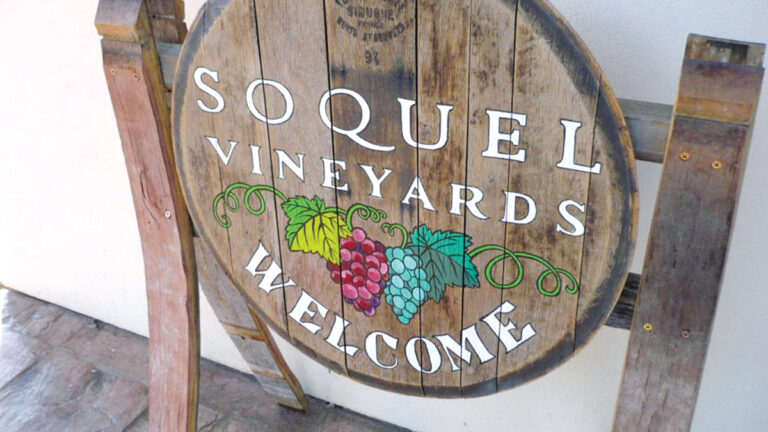
Good things come in small packages—and that’s the case with Chaucer’s Raspberry Wine. The contents of the 375-ml bottle pack a big, fruity punch.

This elegant wine is produced from 100 percent pure fruit, no cutting corners here! There are no artificial flavors added.

Made by Soquel’s Bargetto Winery, a local purveyor of fine wines, the delicious Chaucer’s Raspberry Wine ($15) tastes as fresh as spring. The fruity versatility lends many different ways to use the wine: drink it on its own; add it to a mojito with a splash of simple syrup; maybe just pour it over some vanilla ice cream.

At a recent tasting of bubbly at Bargetto, the server suggested adding some raspberry wine for a spritzy kick. What a difference it made, both in flavor and in the attractive pretty-pink color. Bargetto also suggests a recipe to pair with seafood, petrale sole with raspberry wine and black pepper sauce.

In addition to raspberry, try the other Chaucer’s flavors: blackberry, apricot and pomegranate. And there’s a Raspberry Mead, too, taking us back to days of yesteryear.

“In the spirit of Geoffrey Chaucer’s Canterbury Tales, experience these unique wines as a pilgrimage in sensory delight,” say the folks at Bargetto.

The Soquel winery is always an upbeat place to visit (they now also have a Monterey tasting room), and there are many wines to taste, including a 2017 Port made from traditional Portuguese varietals—one of my favorites.

Bargetto Winery, 3535 N. Main St., Soquel. 475-2258, bargetto.com.

Salmon Release

Friends came to my house for a potluck recently bearing Mt. Cook Alpine Salmon. It was so good I had to find out more about it. Imported from New Zealand by the local Santa Cruz Fish Company, it’s the first farmed salmon to get the best choice in sustainability by Monterey Bay Aquarium’s Seafood Watch program.

Mt. Cook’s salmon comes from free-flowing, pure glacial water in New Zealand’s Southern Alps—ideal growing conditions to raise freshwater king salmon. You can find it at the Summit Store and local restaurants such as Café Cruz, Surf City Sandwich, Steamer Lane Supply, Shadowbrook, Palapas, Pono Hawaiian Grill, Crow’s Nest, and Johnny’s Harborside.

The Story Behind Top A Lot Yogurt Shop

Jimi Cardarelli and his wife Lindsay Blaz bought Top A Lot in 2012 with the help of Cardarelli’s brother Steve. For them, it was a welcome relief from restaurant life.

Cardarelli has decades of experience in the restaurant industry, having formerly worked at Tiny’s (now IHOP) in Capitola, and the Red Apple Cafe in Watsonville. He says opening Top A Lot was a step toward retirement, where he can now employ students and young people and work when he likes.

That is, when he’s not playing guitar, singing or yelling in the local heavy metal band Rumble Steelskin.

Are people surprised when they find out you own a yogurt store?

JIM CARDARELLI: Yeah, I also have a Harley that’s usually parked out front. Most people think I own a motorcycle shop or something—but I’m not qualified for that. Back in the ’90s I was actually homeless for two-and-a-half years. I went to jail and got out and stayed sober. I lived in a Sober Living Environment (SLE) and worked. I saved up and now own a business here. A lot of the guys that work at the jail come here and they’re like “Hey Jimi!” because I used to work in the kitchen there.

Why a yogurt shop? Did you ever think about a restaurant?

We were looking for a place to buy that was affordable, and we used to come here a lot when Jerry Zanzinger owned it. Everything that we could afford then in restaurants was screwed up—there was either no business or the place needed a complete facelift and extra work. I left a note for [Zanzinger] at the time, and he called me and we bought it. We have kept everything the same since.

Do you get any weird flavor suggestions?

We’ve gotten bacon-maple donut, mango chili, and hibiscus lime. I’ll also try something weird once in a while and end up throwing half of it away. Like cucumber. Lots of times we will think of flavors from our childhood and we will make a flavor, like Mexican chocolate.

topalot.com, 426-1375.

A Guide To ‘Dying Well’

The inevitability of death has always been a source of dread and anxiety, across ages and human societies. But the modern age has produced a new and very particular dimension to that primal fear.

Many of us these days fear not so much the fact of death, but more the chaotic, disorienting and often extremely expensive process of dying that modern medicine has made common.

But if dying is still inevitable, a messy and inhumane death it does not have to be. That’s the message behind journalist Katy Butler’s new book The Art of Dying Well: A Practical Guide to a Good End of Life (Scribner).

Butler, who visits Bookshop Santa Cruz on March 27, has crossed this terrain before. Her 2013 book Knocking on Heaven’s Door: The Path to a Better Way of Death was part memoir, part investigation, offering the story of her father’s death as an illustration of what she calls “the Gray Zone,” the suspended state between an active life and clinical death that has been largely created by medical technology.

“I felt that I had laid out a problem in the first book,” says Butler, a long-time Bay Area reporter and writer. “I felt there was a need for a book that was about solutions. And that’s really the difference. This book says, OK, granted that we have a broken medical system that is very fragmented toward the end of life, and that we are afraid of death anyway. So given these problems, here are the workarounds, stories of people who have actually risen to the occasion and trusted their own best instincts to create a death that was less bad, or maybe even really good.”

The Art of Dying Well works best as a kind of handbook. Its seven chapters are determined by the particular stages of life, from “Resilience,” when you’re still active and healthy, all the way to “Active Dying,” the moment when it’s time to say goodbye. Along the way, each chapter outlines the attitudes and methods of preparation that could lead to a dignified and emotionally fulfilling end of life. The book’s format, says Butler, allows readers to return to it at different times in their lives.

“If you’re in the ‘Resilience’ part of life,” she says, “where you can still reverse a lot of health conditions, then you might want to read that chapter and call it a day, and put it away until you’re in some very different stage of life. And, if you’re in crisis, if there’s someone in your house who is dying, then skip the early parts and turn to the last two chapters and you’ll get a lot out of that.”

Butler was inspired by an antique text called Ars Moriendi, translated from the Latin as The Art of Dying. The text dates back to the 1400s and is a kind of medieval guidebook on the best way to meet death. She calls it one of the first bestselling self-help books. “It framed dying as a spiritual ordeal, and it named five different sorts of temptations and emotional struggles at the end of life, and how your attendants or friends could reassure you and help you through that.”

Though the fact of dying hasn’t changed, the circumstances of death have been upended since the Middle Ages. Butler, 70, started the writing process mindful of what links ancient ideas of death with contemporary ones.

“I do think there’s some commonality to what people think of as a good death. Clean and comfortable and relatively free from pain, having people that you love around you, being spiritually at peace,” she says. “Those things are still the same.”

The new book also offers up practical policy ideas to address what she calls a “technology-rich but relationship-poor” health care system. One such idea is a Medicare program known as PACE, which keeps ailing seniors out of hospitals and nursing-care facilities when it’s practical to do so, while still meeting their needs for home care, therapy and medication. The problem is, PACE is limited in its capacities and its funding. Still, there are many more down-to-earth approaches people can adopt to make a fulfilling end of life better for everyone—approaches that previous generations knew something about.

“You look at the ‘Greatest Generation,’” Butler says of those who lived through the Great Depression and World War II. “They had stronger social networks and more of an understanding to bring a cover dish when someone has a major health crisis. We need to relearn some of those more rural or red-state values of neighborliness and being part of community groups. That stuff matters.”

Katy Butler, author of ‘The Art of Dying Well: A Practical Guide to a Good End of Life.’ Wednesday, March 27. 7 p.m. Bookshop Santa Cruz, 1520 Pacific Ave., Santa Cruz. Free. bookshopsantacruz.com.

5 Things To Do in Santa Cruz: March 20-26

A weekly guide to what’s happening.

Green fix

Pest Management

Warmer weather means more time in the sunshine, but it also brings some unwelcome furry friends. Join master gardeners Delise Weir and Sue Procter to learn integrated pest management methods for controlling vertebrate pests including gophers, squirrels, voles, rats, deer, and birds. This class will discuss pest behavior, identify the damage they cause and management strategies using traps, barriers, deterrents, and pest-resistant plants. Arrive 15 minutes early to check in.

INFO: 10 a.m.-noon. Sunday, March 24. Quail Hollow Ranch County Park, 800 Quail Hollow Road, Felton. Free/$3 facility fee.

Art Seen

Making Paper Poppys

With all of the rain California has gotten this winter, there are some stunning desert wildflower blooms, including thousands of golden poppies—the famous state flower. But for those who can’t make the drive out to Antelope Valley or other famous viewing spots, the Mission Historic Park is offering free paper poppy making classes to celebrate spring in California.

INFO: 1-3:30 p.m. Sunday, March 24. Santa Cruz Mission Historic State Park, 144 School St., Santa Cruz. 425-5849. Free.

Sunday 3/24

‘She Speaks Out…Again’

The Wheel Company presents a group of female poets, singers, drummers, musicians, dancers, and storytellers to gather and share their stories in a collective setting. The “She Speaks Out Again” event focuses on listening and learning from those who have experienced domestic violence and sexual assault, especially in the current political climate.

INFO: 6 p.m. Kuumbwa Jazz, 320 Cedar St., Santa Cruz. thewheelcompany.com. $25.

Thursday 3/21

‘Saving Democracy: The Way Forward’

The third edition to the Saving Democracy annual event, this bipartisan panel is aimed at bridging the gap between Democrats and Republicans through conversation. The panel of seven national and statewide politicians will discuss divisive partisanship and potential ways to find common ground. Alongside a few returning familiar faces like Santa Cruz County Supervisor Zach Friend and Debbie Mesloh, senior adviser to presidential candidate Kamala Harris, there are a few newcomers, such as former Press Secretary for the California Republican Leader Mike Madrid.

INFO: 7 p.m. Cabrillo College Samper Recital Hall, 6500 Soquel Drive, Aptos. bootsroad.com/democracy. Free, online registration recommended.

Saturday 3/23

10th-Annual Scrabble Tournament

Join the Santa Cruz County Law Library in three 30-minute games of Scrabble. All levels are welcome, though there will be two categories of competitive and recreational players. There will be awards for the top three players in each category, including gift cards to local restaurants and businesses. Light snacks and drinks will be provided, but bring your own snacks if you are the ultra-competitive, stress-eating type. Funds support the Law Library and the Teen Peer Court Program.

INFO: 8:30 a.m.-12:30 p.m. Santa Cruz Law Library, 701 Ocean St. Room 70, Santa Cruz. 420-2205, sc*******@***oo.com. Free, advance registration recommended.

Opinion: March 20, 2019

EDITOR’S NOTE

For this week’s cover story, Hugh McCormick leapt into the Santa Cruz Flea Market experience headfirst. I mean, it would have been easy enough for him to write a policy-type story on the weird fate of the local institution that didn’t involve getting up at ungodly hours to actually go and experience what selling at the flea market is like, not to mention spending countless hours hanging out with the regulars who make up the market’s community.

But because he did, a different kind of portrait of the flea market emerges in his piece, one that I think gets at the heart of a story that is easy to overlook in those rows of antiques, crafts and crazy junk: the people who make it a fascinating local subculture. Most of us have had fun crashing the flea market on at least a few afternoons over the years, but for some people in our community—both buyers and sellers—it’s a way of life.

Also, in this issue, we profile one of the winners of this year’s NEXTie Awards, Mira Goto. The Santa Cruz musician is not only receiving an award, she’s also performing at the NEXTies ceremony on Friday. And she’s one of the musicians who will play the John Prine tribute show on Saturday that is a benefit for William Strickland, who was hit hard by the NorCal wildfires. You may not think you know who Strickland is, but most locals would recognize him as the voice of the KPIG “Hog Call” and a number of other themes and jingles at the station over the years. He’s kind of a Santa Cruz legend, and if you’ve ever wondered what a guy with a voice that awesome looks like—well, he’ll be performing at the show as well. Check out the story on Goto for details on both events.

And just a reminder that DNA’s Comedy Lab and Experimental Theatre, which I wrote about last week, opens this Friday with Joe Sib!


LETTERS TO THE EDITOR

Read the latest letters to the editor here.

Re: “Requiem for Passivism” (GT, 3/12):

The stunning Blue Wave that took back the House last November represented an unprecedented level of progressive resolve and political organizing.  

Carson Kelly and Indivisible certainly deserve credit for the new political energy they’ve activated here in Santa Cruz County, but Kelly’s dismissive comments about the Democratic Party were unfortunate and off the mark.

The Santa Cruz County Democratic Party, representing 87,000 registered Democrats countywide, joined with thousands of new and longtime activists from groups like Swing Left, Sister District, Women’s March, Labor, and Indivisible (among others), working tirelessly to turn previously red districts blue, in California and beyond.

The result speaks for itself.  Democratic candidates won 46 of the state’s 53 congressional districts, and seven of California’s congressional seats flipped from red to blue. A Blue Wave nationwide took back the House, and with everyone’s help will continue to roll on through to 2020 and beyond.

Coco Raner-Walter | Chair, Santa Cruz County Democratic Party

Transportation’s Future

Every day, the Earth reminds us that the natural environment is changing. The recent count of Monarch butterflies at Natural Bridges shows their numbers to be greatly diminished, our Monterey Bay is at risk from ocean acidification, and there is talk of managed retreat from the Santa Cruz coastline.

How does one cope with this news today, and how do we think about our the future? What is the role of our government? What is our personal role?

Both the Santa Cruz City Council and the Santa Cruz County Board of Supervisors have passed climate emergency resolutions. The hard work now will be to implement policies to drawdown carbon emissions. We must change the way we live on the earth in order to survive.

As fossil fuels are burned, CO2 and other greenhouse gases are emitted. CO2 lasts in our atmosphere for hundreds of years, meaning all CO2 produced today will contribute to the warming blanket surrounding the Earth for a lifetime. Business-as-usual emissions will raise the earth’s temperature 3-4 degrees centigrade above pre-industrial levels by the end of the century. The high temperatures will lead to severe food insecurity, migration, sea level rise, loss of potable water, and government breakdown. Our youth will be severely impacted by all our current decisions and actions regarding the extraction and burning of fossil fuels.

Transportation is the major contributor to greenhouse gas emissions in Santa Cruz County. Unfortunately, the Regional Transportation Commission (RTC) voted to widen Highway 1 by constructing auxiliary lanes from Santa Cruz to Aptos. However, vehicle travel, which has been a cornerstone of American life, needs to be scrutinized in light of its increasingly catastrophic threat to our collective future and contribution to the business-as-usual scenario.

Citizens of Santa Cruz County need to take a hard look at alternatives to highway widening. There are solutions for mitigating congestion and decreasing greenhouse gas emissions. Bus-on-shoulder, used in other cities, allows buses to travel unimpeded in a separate lane. Providing bus-on-shoulder on Highway 1 doesn’t require auxiliary lanes. In addition, as zero-emissions electric buses become part of the METRO fleet, no greenhouse gases will be discharged with bus on shoulder transit.

Seven electric buses have been ordered by Santa Cruz METRO, and delivery is expected in 2020. Other innovative solar-powered transportation systems, such as Personal Rapid Transit (PRT), are being developed and could also be used along Highway 1 and the Coastal Rail Trail.

The Campaign for Sustainable Transportation currently has filed a lawsuit to stop construction of the proposed auxiliary lanes. Information about transportation issues and the lawsuit is available at the Campaign for Sustainable Transportation website. With only about 10 years remaining to drastically limit the extraction and use of fossil fuels, there is no other choice but to change our outdated transportation system. It is an exciting time to listen to new ideas and discuss how we should boldly change the way we live on the earth.

Susan Cavalieri | Santa Cruz Climate Action Network


PHOTO CONTEST WINNER

Submit to ph****@*******es.sc. Include information (location, etc.) and your name. Photos may be cropped. Preferably, photos should be 4 inches by 4 inches and minimum 250dpi.


GOOD IDEA

The Santa Cruz County Women’s Commission has announced recipients of the 2019 Trailblazers Awards, who will be honored at the Santa Cruz County Board of Supervisors’ meeting on Tuesday, March 26. The awards recognize those who are making extraordinary differences in the lives of women or girls. This year’s recipients include Salud y Cariño co-founder Margaret Cariño-Condon, Alliance of Women Entrepreneurs co-founder Casey Coonerty-Protti, Justice and Gender Advisory Task Force member Nicole Keadle, and self-defense teacher Clara Minor.


GOOD WORK

The Downtown Streets Team, known for beautifying Santa Cruz, has now expanded to include the San Lorenzo Valley. The team, made up of homeless individuals who are paid in gift cards, has already been cleaning up other areas—downtown Santa Cruz, the San Lorenzo Riverwalk, Main Beach, Harvey West, and North County beaches. Expanding an existing pilot contract with Santa Cruz County, a five-member crew will provide services to dumping areas near downtown Felton, including Covered Bridge Park.


QUOTE OF THE WEEK

“At a flea market I always head for the junk jewelry table first.”

-Ethel Merman

Music Picks: March 20-26

Live music highlights for the week of March 20, 2019

WEDNESDAY 3/20

INDIE

AND THE KIDS

No matter how And The Kids might flirt with the dim and blurred illusions of melancholic ennui, the band always finds its way back to sugary sweet pop bliss. And then rocks out, indie-style. At the forefront of the dramatic anthems and the feverish crisis of And the Kids’ music is Hannah Mohan’s stark, springy vocals. Straightforward drumming and meaty guitar riffs create songs that start out headstrong, only to ramble off into some hazy soundscape and pop back out from the nebulous shadows with twice the bite and grit. AMY BEE

INFO: 9 p.m. Crepe Place, 1134 Soquel Ave., Santa Cruz. $10 adv/$12 door. 429-6994.  


THURSDAY 3/21

LATIN-CARIBBEAN

BROKEN ENGLISH

Latin and Caribbean music are much closer than you think. I mean, these countries are all literally close to one another, which is probably why there’s so much overlap of genres between countries like Jamaica, Cuba, Trinidad, and the Dominican Republic. Did you know that Santa Cruz is home to a longtime group of Latin-Caribbean aficionados? That group, Broken English, is celebrating 25 years of taking Cruzan audiences on a “Caribbean Cruise.” Expect lots of cumbia, reggae, salsa, soca, mamo, son, Guajira, and more. AARON CARNES

INFO: 8:30 p.m. Moe’s Alley, 1535 Commercial Way, Santa Cruz. $9 adv/$12 door. 479-1854.


FRIDAY 3/22

ELECTRONIC

FLEETMAC WOOD

Have you ever wanted to get really high and nod out to Fleetwood Mac rave-style, with the songs indefinitely elongated so you could just sway and sway to the psychedelic visions in your head? Well, here’s your chance! Fleetmac Wood have taken what’s best about this iconic band and put it on repeat, creating a groovy, introspective yet danceable (if your style of dance is akin to Ally Sheedy shaking dandruff from her hair, but even more emo), epic, and endless tribute to the band that made chaotic relationships sexy AF. AB

INFO: 9 p.m. Catalyst, 1011 Pacific Ave., Santa Cruz. $15 adv/$20 door. 423-1338.

JAZZ

TRANSPARENT WATER TRIO

More than a meeting of minds or a vehicle for unbridled improvisation, the Transparent Water Trio is a spiritually charged communion between Cuban pianist Omar Sosa, Senegalese kora master Seckou Keita and Venezuelan percussionist Gustavo Ovalles. Glistening with lithe and seductive melodies and bright cadences, the trio’s celebratory sound is unlike any other ensemble in jazz, Latin or world music. It’s powerfully elemental and supremely sophisticated, rootsy, cosmopolitan, and sumptuously inventive. ANDREW GILBERT

INFO: 7 and 9 p.m. Kuumbwa Jazz, 320-2 Cedar St., Santa Cruz. $26.25-$42. 427-2227


SATURDAY 3/23

WORLD BEAT

SPECIAL FUN

From 1982 until 1987, local band Special Fun was the quintessential Santa Cruz band. The group blended styles from all over the world—African, Caribbean, Latin, Funk—and made it into the best party band going. The band later re-formed as Solcircle from 2004-2012, giving the already diverse influences some jazz and psychedelic elements. But guess what, everyone’s favorite party band Special Fun is back for one night. And the members promise it will be one of those old school dance-jams, where you lose your mind and forget who you are for a brief moment in time. AC

INFO: 8 p.m. Michael’s On Main, 2591 Main St., Soquel. $15. 479-9777.

ELECTRONIC

STARFARER

With a name like Starfarer, it’s no surprise that this San Jose musician dwells in the outer reaches of the electronic realm. What isn’t expected is the thumping, retro-futuristic, darkwave synth sounds he creates, shying away from burn-out, fad trends in the scene and keeping with the bleeps and bloops that stick to your guts. Fresh off the release of his (her? their?) January full-length Into the Unknown, Starfarer’s March 23 performance at the Blue Lagoon will be rounded out by Santa Cruz’s Voltaic Spore and Emeryville’s Xenocircuit. For fans of NIN, Depeche Mode and ’80s cult film soundtracks. MAT WEIR

INFO: 8:30 p.m. Blue Lagoon, 923 Pacific Ave., Santa Cruz. $5. 423-7117.


SUNDAY 3/24

FOLK

STEVE POLTZ

Canadian folk artist Steve Poltz’s songs have the kind of well-worn intimacy of a wood-paneled room or a broken-in baseball glove. Famed for his collaborations with fellow far-north folk artist Jewel (with whom he wrote the hit “You Were Meant For Me”), Poltz has seen every side of the music industry, from the major labels to the self-released. He even inspired a Weird Al original: “Albuquerque,” vis a vis Poltz’s old indie-rock band the Rugburns. Some stories are too unbelievable to be scripted, and Poltz’s is one of them. MH

INFO: 7:30 p.m. Flynn’s Cabaret, 6275 Hwy. 9, Felton. $20 adv/$25 door. 335-2800.


TUESDAY 3/26

PSYCHOBILLY

KOFFIN KATS

Break out the hair grease and get ready to rumble as the Koffin Kats return to Santa Cruz with killer psychobilly tunes. Since 2003, the band has continuously delivered hard-hitting, head-boppin’, pit-inducing tracks about love, life, loss, and, of course, killer monsters and B-movies. Over the years it’s remained a fierce trio, despite several lineup changes. But in 2016, the current roster of Tommy Koffin on guitars, drummer Eric “E-Ball” Walls, and bassist/singer Vic Victor—also known as the “true” or “established” lineup dating from wayback in 2007—returned to the road and has been serving audiences since. That year also marked the group’s eighth and latest album, Party Time in the End Times. MW

INFO: 8:30 p.m. Catalyst, 1011 Pacific Ave., Santa Cruz. $10 adv/$13 door. 423-1338.

Tortured Genius in Jewel Theatre’s ‘Breaking The Code’

Breaking the Code
An emotional look at World War II codebreaker and math pioneer Alan Turing

Bistro One Twelve: The Little Café That Could

Bistro One Twelve
Art-inspired eatery offers a fresh take on bistro fare

First-ever VegFest Plants for Success

VegFest
Santa Cruz summit will teach plant-based dieting and sustainability

Film Review: Santa Cruz Horror in ‘Us’

Us Jordan Peele Santa Cruz
Don’t let the local scenery distract you in Jordan Peele’s follow-up to ‘Get Out’

Chaucer’s: A Sweeter Side of Bargetto

Chaucer
Good things come in small packages—and that’s the case with Chaucer’s Raspberry Wine. The contents of the 375-ml bottle pack a big, fruity punch. This elegant wine is produced from 100 percent pure fruit, no cutting corners here! There are no artificial flavors added. Made by Soquel’s Bargetto Winery, a local purveyor of fine wines, the delicious Chaucer’s Raspberry Wine ($15)...

The Story Behind Top A Lot Yogurt Shop

Top A Lot
There’s more than toppings to the longtime local frozen yogurt favorite

A Guide To ‘Dying Well’

Katy Butler
Journalist Katy Butler outlines a less-bleak approach to the end of life

5 Things To Do in Santa Cruz: March 20-26

Wheel Company
From 'Saving Democracy' to a forum for female survivors

Opinion: March 20, 2019

Plus letters to the editor

Music Picks: March 20-26

And The Kids
Live music highlights for the week of March 20, 2019
17,623FansLike
8,845FollowersFollow