Now is the best chance to make friends with the sharks and see how marine scientists work, free of charge. The Seymour Marine Discovery Center exhibit hall dives deep into the adventure of ocean research in Santa Cruz and around the world.
INFO: 10am-5pm. Thursday, Oct. 17. Seymour Marine Discovery Center, 100 McAllister Way, Santa Cruz. 459-3800, seymourcenter.ucsc.edu. Free.
Art Seen
Wild and Scenic Film Festival
Join the Ventana Wilderness Alliance in Santa Cruz on for fantastic films about wild things and wild places, guaranteed to inspire anyone to get outside. Some of the films feature familiar landscapes, like the Bay Area’s very own Mount Umunhum, while others are set in the Everglades Headwaters in Florida and Puerto Rico. This seventh-annual VWA presentation is the first Monterey Bay stop on the Wild and Scenic world tour. All proceeds benefit wilderness conservation in the Big Sur Backcountry.
INFO: 6pm. Thursday, Oct. 17. Del Mar Theatre, 1124 Pacific Ave., Santa Cruz. 423-3191, brownpapertickets.com.
Friday 10/18
UCSC Alumnus Grant Lyon Performance
Aside from being an L.A.-based professional comedian, Grant Lyon is also a UCSC graduate (class of 2006 for those that care). Lyon got his start in comedy by performing on campus and at coffee shops in Santa Cruz. Since graduating, he’s gone on to appear on Comedy Central, Comics Unleashed, star in the Amazon Prime movie Killer Kate, win the Laughing Skull Comedy Festival, and more. Lyon is returning to Santa Cruz as the first UCSC graduate to headline DNA’s Comedy Lab
INFO: 7 and 9:30pm. DNA’s Comedy Lab, 155 S River St., Santa Cruz. 900-5123. $20/$25.
Saturday 10/19
Apple Tasting
Put down that mushy, tasteless Red Delicious this second. It’s apple season, and that brings all of the apple nerds—ahem, growing enthusiasts—out of the woodwork to present this year’s best and brightest varietals. The farmers market is already stocked on all kinds of eating, cooking and baking apples, but Wilder Ranch Harvest Festival apple tasting includes more than 70 varieties, including several not found at the weekly market. Pie/jam/tarts may be in order.
INFO: 11am-4pm. Wilder Ranch State Park, 1401 Coast Rd., Santa Cruz. 662-2216, mbcrfg.org. $5.
Saturday 10/19-Thursday 10/31
13 Days of Halloween on the Wharf
It’s an advent calendar of sorts—but for halloween. Head to the Santa Cruz Wharf for 13 days of frightful fun. The countdown starts with the Great Pumpkin Bingo Hunt, plus there will be free hot apple cider, games and face painting. There will also be a special Zombie Apocalypse Night.
INFO: 4-6pm. Santa Cruz Wharf, 21 Municipal Wharf, Santa Cruz. cityofsantacruz.com. Free.
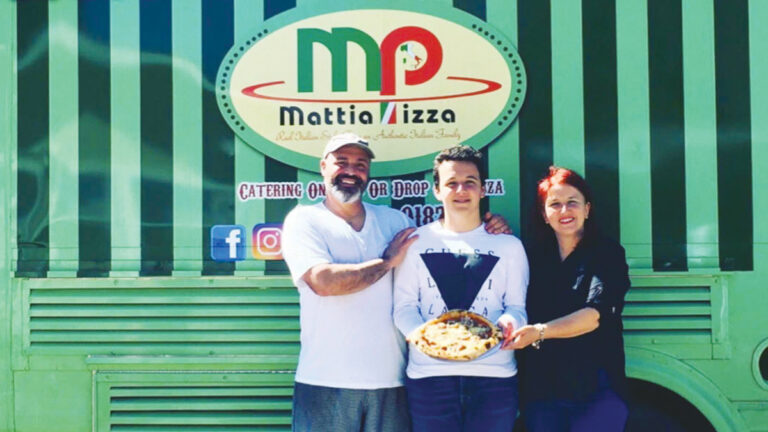
For Florence-to-Santa Cruz transplants Samuele Polversoi and his wife Letizia, making pizza is a way to transport customers to their home country while also showcasing fresh, local ingredients. Mattia Pizza Truck, named after Polversoi’s oldest child, can be found at local breweries, wineries and private events.
How did you get into pizza making?
SAMUELE POLVERSOI: My love for making pizza was born when I met Domenico Felice, the person who was then to become my teacher. He gave me the possibility of being recognized by the APP, Association Professional Pizzaioli.
Later on, I was able to become a professional at handling certain types of dough—examples would be gluten free, alternative mixes of flour, and of course, regular flour. Now it’s been six years that I am a certified professional pizza maker.
What makes your dough special?
The pizza dough are simple ingredients: water, flour, yeast, olive oil, salt. With my passion, I created my dough with a mix of different flours, less yeast and 72 hours rise. I make different crust, too. Basil crust, cocoa crust, curcuma crust, paprika crust, and for sure my gluten-free crust.
Which of your pizza combinations would you recommend?
Our masterpiece is the Pizza Sestola. San marzano tomato sauce, Italian sausage—made by myself—mushroom crimini, parmesan cheese and mozzarella.
This pizza, for us it’s the most important. We dedicated it to our second town in Italy. We lived in Florence, but we have our second house in this little town on the Appennino Tosco-Emiliano, and here you can find all the toppings that we use on this pizza.
What would you like people to know about you?
That we make not only real Italian pizza, but we make some Italian dessert on request.
mattiapizzatruck.com; Facebook: Mattia Pizza Truck Santa Cruz; Instagram: Mattiapizza04.
Each year, as summer turns to fall, Santa Cruzans fight the urge to cozy up inside and instead flood the local dining scene.
They aren’t just fighting back against shorter days, or hesitant to let the good times roll—Santa Cruz Restaurant Week offers a unique incentive. The annual event, which runs Oct. 16-23, gives guests an opportunity to dine out on any budget and explore their local culinary options. Participating restaurants—more than 30 this year—offer guests a three-course meal with fixed-price menu options for $25, $35 or $45 dollars.
It’s a time to dine at the best local spots without breaking the bank, but Restaurant Week is enticing for local chefs, too. It’s an opportunity for kitchens to flex their culinary skills and experiment with the bounty of the season.
We spoke to each participating restaurant to find out what they’re offering this year, which menu items they’re especially excited about, and why they love participating in Santa Cruz Restaurant Week. Find all their menus at santacruzrestaurantweek.com.
Why should diners choose to visit your restaurant during this year’s Restaurant Week?
“It’s an authentic, Italian experience. You hear us speaking Italian, the recipes are straight from the homeland, and it gives you that feeling of really being there.”
“We source all of our fish as locally as we possibly can. I work with a fishmonger who is literally getting fish off of the dock right below the restaurant, so our products are incredibly fresh.”
“We have a lot of people who’ve been working here for seven or eight years. It’s like a family. There’s a lot of Italian restaurants around, but each one is different, and this is an opportunity for everybody to get to know each other and see what the different areas in Italy have to offer.”
— Giovanni Spanu, Executive Chef/Owner at Lago Di Como
“It’s a Hawiian-style restaurant, but there’s a bunch of different flavors that are mixed in. We have Asian, Latin and American flavors that are combined with the Hawiian preparation, and they go really well together. There’s a lot of sweet and spicy or savory and creamy combinations.”
An interior shot at Hawaiian fusion hotspot Hula’s. PHOTO: TARMO HANNULA
“I think the value we’re offering for $25 is really outstanding. It’s great appetizers, great desserts and really special entrées, which typically are more than the $25 by themselves.”
“Looking at our menu, there is a dish for everyone. We have seafood, pasta, meat and a vegetarian dish. We always want to make sure everyone who comes by for Restaurant Week has an entrée for them. Who can pass up a three-course meal for $25?! We just want everyone to leave with a smile on their face and taste the authenticity that we put into every dish.”
“Rosie McCann’s is a very unique, individual spot in Santa Cruz. It’s great for everyone—for kids, for adults. We welcome everybody in. We pride ourselves on giving really good customer service to make sure people have a great experience.”
— Jose Cadenas, Floor Manager/Bartender at Rosie McCann’s
“This is a great time to come in and see how we produce our menu seasonally. This is a time where you’ll see fall items on the menu—your bitter greens, like radicchios, and fall fruits—and we’re starting to serve more cold-weather dishes. We’ve got a really beautiful kabocha squash soup done with coconut milk and lemongrass. It’s very warm and comforting. Same thing with our braised short rib dish. It’s kind of getting to that cold time of year, so we’re going to have dishes that reflect that.”
“I think fun and playfulness are an essential part of cooking. At Your Place, people aren’t just coming in for food, they’re coming in and making friends. That’s really the goal—to connect with people and build a sense of community.”
“Restaurant Week is a great opportunity to visit Zelda’s without the craziness of tourists. It’s a beautiful time of year, and our outdoor patio is an amazing location to watch the sunset while enjoying delicious California coastal cuisine. We’re one of the few places on the entire coast where you can literally dine on the sand.”
What are you most looking forward to with the menu this year?
“The Restaurant Week menu is made up of items we serve on our normal menu. Our hope is that we get people who haven’t eaten at the Back Nine before come in and try it out. If they really love and enjoy what they’ve had, then they’re able to come back and get that on a regular basis.”
“It’s really about letting myself and my staff be more creative with the menu, allowing everyone to express themselves while showcasing what Santa Cruz County has to offer, both produce-wise and from the ocean, using local fisheries and all that stuff. It’s a very beneficial outlet.”
“I’m excited about some of the special cocktails we’re offering for Restaurant Week. The vanilla-infused rum soda is very approachable. It almost tastes like an old-fashioned cream soda, but it’s made with rum. The chocolate-strawberry cosmo is a cacao infusion that’s completely unsweetened, but still has a chocolate flavor from the cacao, and the strawberry is literally just Windmill Farms strawberries baked in the oven to make a sauce. That’s exciting, because when you look around at a lot of the bars, they’re offering complexities that sound almost like modern art––in other words, very interesting but sometimes above our heads. What we’re offering to people is a simplicity of origin in their cocktail mixers.”
— David Jackman, Executive Chef/Owner at Chocolate
“For each course this year, we’re offering at least one vegetarian option and trying to do things that are totally different from what we usually do. So for me, that’s what I’m most excited about—I get to play with different foods.”
— Jeff Westbrook, Executive Chef at the Crow’s Nest
“I’m really excited about our wild mushroom salad. It’s going to be one of the first courses, all foraged within 150 miles of here, served with a nice, warm sherry vinaigrette. It’s going to be a great dish.”
“Getting people in the restaurant that maybe haven’t been before, to come and try it out. We’re offering our seasonal salad with special organic and local produce and our artichoke soup, which is another favorite—the local Italian people go crazy if we don’t have it.”
“It’s a great value and variety, from shrimp appetizers, spanakopita and hummus to salmon as a choice of entrées. And we have the chicken souvlaki, a marinated chicken that’s probably one of our signature items.”
“One focal point we’re really excited about is our balsamic salmon. It’s a charbroiled salmon that has almost a bruschetta concept on top, so you’re going to have tomatoes, basil and garlic with a balsamic glaze over it. It’s super fresh, and you get some really amazing salmon with it as well.”
Fresh fish stars at Stagnaro Bros. PHOTO: TARMO HANNULA
“Offering people creative menu items. We’re on the ocean, so showing some of what’s happening in our area here with the fish. Also, mixing it up a little to have creativity for the steak lovers, or people who enjoy duck or pork.”
“We’re looking forward to serving the cioppino. Our head chef Antonio Gomez has put a lot of time into creating it and making it super delicious. It’s got crab legs, mussels, scallops, prawns, and calamari, so it’s a really nice array of all kinds of different fresh seafood. We’re also going to serve our apple-berry cobbler, but as a pie, so it’s a new twist on an old classic.”
“A couple of our most famous are for sure our pappardelle Bolognese, our lasagna and our meatballs. Those are really classic, but we also try to put something new and fresh on the menu and take a bit of a risk with something that might be unusual for our customers, but that is really natural for us. We’ll try to discover an old family recipe and put it on the menu, to help people understand our roots.”
“It’s a really great thing for our community, because you don’t normally try new things. You normally just go to the one restaurant that you love, but this gives you an opportunity to branch out.”
“I think the best thing for us is bringing in new customers. After Restaurant Week, we see a lot of new faces in our restaurant. They like what we did, so they come back.”
“People getting familiar with the quality, amazing ingredients we have in our town. There’s so many mom and pop restaurants that I think we take for granted, and this really shines light on these fabulous places. I went back last year and multiple times throughout this year to places I went for Restaurant Week, and that’s what I hope for my restaurant.”
“You get to show off a little bit. I feel like we’re taking more risks on the menu, instead of just playing it safe. I think the chefs want to show the best of what they got, their best cuisine, their best dishes, and just go for it.”
“The best thing about Restaurant Week are the multi-course offerings for an affordable price. It entices guests to try out new places and menus that might not have been on their radar before. The reasonable price point also allows guests the opportunity to add one of our handcrafted margaritas to their experience.”
“The best thing about Restaurant Week is the exposure. Everyone’s shining. We’re all trying to put our best foot forward and show the community what their delicious restaurant choices are.”
“Food brings happiness and helps people create beautiful memories together. It’s a time to go out and let people have something special, or feel like a star. It’s amazing. I feel like Restaurant Week is the most beautiful, festive and joyous event in Santa Cruz.”
“It’s great that locals can come in and get a deal and hopefully try something they’ve never had before. For us, it’s a chance to get new people into the restaurant now that we’re open again.”
“It’s really nice to get new guests out on the wharf, especially locals—who maybe don’t come over here as often—to experience how beautiful a place it is and see what great food they can get out here.”
“It’s great because people don’t always get three courses. It’s a way to make sure you have a full dining experience that’s coursed-out. Plus, you definitely get dessert, which is obviously one of my favorite things.”
On Thursday afternoon, the weather in Aptos was clear and sunny with a slight breeze. From the outside, the Safeway at Rancho Del Mar shopping center looked calm, too.
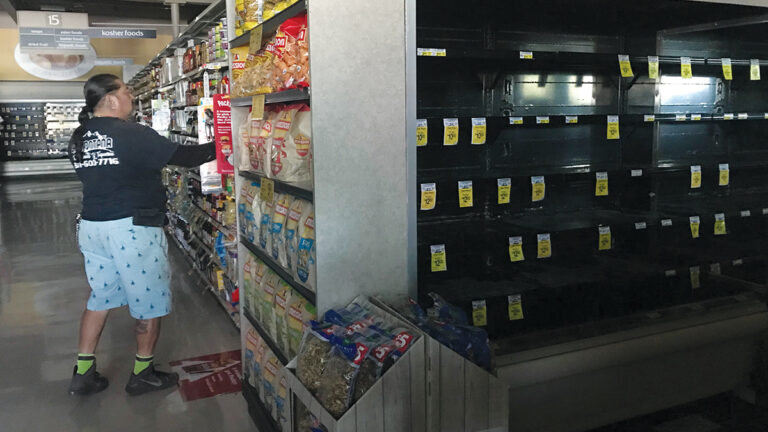
Inside, the store looked like something out of a cut-rate zombie apocalypse thriller. With all overhead lights out and just a few crucial registers open, customers scrambled to navigate the cavernous supermarket with flashlights, headlamps and the glow of cell phones. Shelves of meat, dairy, juice and other perishables had been cleared after power was lost overnight Wednesday, following a day of hurry-up-and-wait warnings with little definitive information.
“People are saying it could be five days,” said Aptos resident Mary Jo Morris, whose nearby home also lost power Wednesday night. She left Safeway empty-handed once she realized there was little fresh produce to pick from, and was considering going to stay with her daughter who had power in San Jose. “It makes you so confused.”
The blackout stemmed from a decision by utility Pacific Gas & Electric to preemptively cut power to some 600,000 customers—which energy analysts said likely totaled over 2 million people at shared home and business addresses—in hopes of staving off potential wildfires. Around this time the last two years, deadly blazes including the Santa Rosa Tubbs Fire and Paradise Camp Fire were sparked by the company’s equipment in dry conditions and high winds, state reports have found.
By Thursday evening, PG&E released a statement that a “partial all clear” had been given for Santa Cruz County, allowing utility workers to inspect power lines for damage and restore electricity to the nearly 37,000 households impacted. Exactly where power was out at any given time was difficult to track, since the utility’s online map of outages stretching from Bakersfield to the Oregon border crashed repeatedly.
While PG&E spokespeople warned that blackouts could be part of a “new normal” as climate change fuels hotter, drier fire conditions, many questioned how the utility decided to cut the power when high winds failed to materialize in areas including Santa Cruz County.
“We were not adequately prepared,” PG&E CEO Bill Johnson said in a press conference after the blackout, which ultimately lasted about three days in some rural areas and hit poor residents and those who rely on electrical medical devices particularly hard.
On Monday, following reprimands from Gov. Gavin Newsom, the California Public Utilities Commission demanded that PG&E make immediate changes to its power shut-off strategy after its “failures in execution … created an unacceptable situation that should never be repeated.”
SAFE OR SORRY?
PG&E began warning of the unprecedented “Public Safety Power Shutoff” early last week, at one point projecting that 38 counties could be impacted. Outside of impromptu gathering places like the Aptos Safeway on Thursday, many residents said they had been told a blackout was possible, but not definitively when it would happen, leaving them to scramble to buy food, gas, generators and supplies like flashlights.
“I ran around with my headlight on last night,” said 47-year Aptos resident Joan Ercole.
The timing of the event was somewhat eerie, she added, given that the 30th anniversary of the Loma Prieta earthquake, which leveled much of the county and surrounding region, is coming up Oct. 17. Except for one key difference: “This is pretty bad, because it’s man-made,” Ercole said.
Michael Wara, director of the Climate and Energy Policy Program at Stanford University estimated on Twitter that the economic costs of the outage could total over $2 billion.
In Santa Cruz, many of Westside Hardware’s supply shelves sat empty on Thursday afternoon following a mad rush of nervous customers the day before.
“We had people coming in for flashlights, kerosene, batteries, lamps, coolers,” store associate Matt Bates said.
Bates’ Wednesday afternoon shift was the busiest he’s seen since he began working for the Ace Hardware franchise three months ago. Some of the aisles were so jammed and crowded that he was unable to squeeze by.
The power did go out at Bates’ house in Ben Lomond on Thursday morning. Rather than turn his family’s generator on, he got dressed by candlelight at 6:30 a.m. and drove to see if power was on at the store. Thankfully, it was, since most of the city of Santa Cruz was unaffected.
Across the street, Bonny Doon resident Brian Legg was feeling ticked off while filling up four 5-gallon plastic gas tanks at the Westside Valero station on Thursday. The fuel, he hoped, should be enough to power his generator a couple of days, if needed.
Legg got a phone call from PG&E on Sunday warning him that the power may go off in three days, as well as similar calls on Monday and Tuesday. But when he didn’t hear anything on Wednesday, he figured that he was in the clear. Then, the power went off without warning.
“It’s frustrating,” Legg said, since the much-discussed weather remained relatively mild.
Valero assistant manager Cypress Castorena said customers had been coming in “nonstop, like crazy,” many in need of ice and gas. Her daughter was in school at Brook Knoll Elementary, where the power was out but a back-up generator was running phones and other essential services.
On Thursday, 11 schools closed—Bonny Doon Elementary, Valencia Elementary, Aptos High, Aptos Junior, Rio Del Mar Elementary, Calabasas Elementary, Bradley Elementary and all four San Lorenzo Valley Unified schools. They all reopened Friday, though some schedules weren’t announced until late Thursday night.
Cabrillo College narrowly avoided the blackout, but UCSC cancelled classes and closed several buildings on Thursday. For much of the day, the university with just shy of 20,000 students found itself in limbo after campus power went out around 11pm Wednesday night. A cogeneration plant provided power to key infrastructure and services like the fire station, health center, several labs and science buildings, and three dining halls. But much of the campus was dark.
“We’re in the same boat as the rest of Santa Cruz,” Hernandez-Jason said Thursday, when it was unclear how long the blackout would last. Classes resumed on Friday.
Power was also out in much of Corralitos, including the corner of Freedom Boulevard and Corralitos Road.
A sign posted on the front door of Corralitos Tattoo read, “No power, no tattoos! Closed today.”
Aladdin Nursery owner Gustavo Beyer said that since he was already in the store, he planned to take advantage of the quiet afternoon to clean his shop.
Across the street, Corralitos Feed and Pet Supplies opted to stay open for customers. Owner Ely Padilla said he was going to have to manually input everything that sold that day into the store’s inventory-tracking system. “Animals have to eat like we need to eat,” he said, “so we try to do our best to make our customers happy.”
Just up the road, Corralitos Meat Market was fully prepared to withstand the outage with its military-grade generator keeping sausages, steaks and other food cold.
Market President Dave Peterson said his predecessor had installed the generator, which runs off a 55-gallon drum of diesel, after the ’89 quake.
“A lot of people came in saying the were going to a barbecue tonight since they were out of power,” Peterson said. “The only thing I can say is thank god for a generator.”
[This is part two of a two-part series on Santa Cruz County’s cannabis industry. — Editor]
Bird Valley Organics owners Terry Sardinas and Manny Alvarez moved from Florida to the Aptos hills in 2011 to tap into the burgeoning medical cannabis market.
There, they lived in a tiny trailer and cultivated cannabis on a 10-acre farm, in addition to producing and marketing CBD oil. Their products could be found at about 80 dispensaries throughout California. Most of their neighbors, they say, were also in the cannabis business.
Things changed for them in 2015, when it became evident that a new legal marijuana market was on the way.
Sardinas and Alvarez moved to a 20-acre parcel in Watsonville after realizing that new local rules under Proposition 64, approved by voters in 2016, would mean the end of their business.
They are now back in business, but only with a cultivation permit after they gave up on CBD oil and the manufacturing side of the operation.
Still, they were some of the lucky ones.
Out of the 750 or so growers who paid hundreds of dollars to put their names in a county registry of hopeful cannabis entrepreneurs during the legalization process, only a handful could meet the requirements. Many have been driven out of business.
As GT reported last week, Santa Cruz County Supervisor Ryan Coonerty says the county hopes to register 102 growers by 2021. That’s just 13% of those who threw their names in.
“We really were very fortunate to get in, because out of 750 registrants, we’re one of the very few that are left,” Sardinas says. “I pinch myself every day.”
In the wake of Prop. 64’s passage, the Santa Cruz County Board of Supervisors hashed out a series of rules they say were designed to bring growers out of small mountain plots and into areas zoned for commercial agriculture.
Sardinas and Alvarez quickly realized that their farm was no longer going to pass muster.
Among other things, growers would be required to have roads big enough for fire engines, in addition to setbacks from neighbors and inhabited dwellings. The rules have eviscerated many cannabis grows in mountainous regions.
“It’s squeezed out a lot of people,” Alvarez says. “Not everybody can make it through the shift, through the storm. If the storm lasts longer than you have resources for, you’re out in the cold.”
And moving was no small task, especially now that the newly legalized cannabis industry has increased the price of farmland.
“There is only so much commercial agricultural property, and it’s all located in Watsonville,” Alvarez says.
Luckily, they found a property owner willing to lease their property.
Alvarez says he declined to get a manufacturing license for the new location to avoid the onerous application process for additional permits.
Back in 2016, the cost for a manufacturer or cultivator to put their name on the cannabis registry was $500, but many of those who got farther along in the application process have since found themselves in a far deeper hole.
Santa Cruz cannabis attorney Ben Rice says that only a fraction of those who paid thousands of dollars to submit the extensive application to cultivate cannabis will get approved.
“They were led to believe the county was going to embrace them and bring them into the legitimate market,” he says. “Instead, we have all these folks who are either forced to stop altogether or stay under the radar.”
The new framework, Rice warns, bolsters the black market, while leaving legitimate growers unable to navigate the county’s onerous requirements and prompting them to move elsewhere.
“Those jobs and that tax money is going elsewhere, and it’s really a failure of the leadership of our Board of Supervisors in my opinion,” Rice says.
All of this is harming an industry that has existed in one way or another for decades, he says.
“Many people are trying to continue an activity their parents and grandparents were doing,” Rice says.
He predicts that the legal picture will improve as the county gets used to a legal market and the county changes its calculus of how to regulate the industry.
Jim Coffis co-founded Green Trade Santa Cruz, a coalition of local cannabis businesses and organizations. He questions why many growers started receiving visits from the cannabis licensing office after they turned in their application.
“Is the sheriff going down the list, or are they really going on complaints from neighbors?” he asks.
Santa Cruz County Chief Deputy Sheriff Steve Carney, who runs the law enforcement wing of the county’s cannabis licensing office, says that authorities use the information from the applications to confirm whether grows are legit.
“We only check the records when we see criminal activity,” Carney says.
Robert Zaremba provides services for the cannabis industry, such as distribution, packaging and labeling. He says the county’s seen an exodus of growers, particularly from the mountain communities, dealing an economic blow that stretches far beyond the cannabis industry.
“Every grow that was in this community is now considered illegal,” he says of the Santa Cruz Mountains. “They created a path for licensing, but they made the path impossible.”
Zaremba says hydroponics stores that provided supplies to the growers have closed around the county, and that hardware stores have seen a drop in business as well. “The industry has absolutely been devastated by these new rules,” he says.
The upheaval also scuttled potential cannabis tourism before it was able to launch, Zaremba says, negating an economic opportunity for Santa Cruz County to draw cannabis tourists the same way that Napa County attracts wine aficionados.
But fears of heavy-handed enforcement removed the underpinnings for such ventures before they got going, Zaremba says.
“Many bigger operators and innovators and good players bailed from the county,” he says. “They said they couldn’t risk it, and packed up and left.”
A couple weeks ago, 25-year-old Chloe Newton was nannying at someone else’s house when there was a knock at the door.
The man on the doorstep was collecting signatures for a recall effort against City Councilmembers Drew Glover and Chris Krohn. He mentioned that Glover had sexually assaulted two women, Newton says. Shocked, she signed her name without giving the issue much thought. “I just really regretted signing it,” says Newton, who quickly learned that what the man with the clipboard said was a lie.
Days later, her mom Susan Zackovich walked up to a recaller tabling at the surfer statue on West Cliff. Zackovich says the man started talking to her about how Glover wasn’t fairly elected and that he actually came in seventh place last year. More lies.
Recall leader Dan Couglin expresses skepticism that the exchanges really happened the way Zackovich and Newton describe them. If anything, he says, they could have been mere miscommunications. He stresses that organizers make a point of training petition gatherers to understand that there have been no allegations of Glover or doing anything sexually inappropriate. “And we don’t even hint that he wasn’t fairly elected,” he adds.
Newton was relieved to hear that it is, in fact, possible for her to withdraw her name from the petition by contacting the Santa Cruz city clerk. Anyone interested in withdrawing their name from the petition can visitstopsantacruzrecalls.org/rescind-signature.
Anyone interested in living in a functioning, circus-free democracy, however, has little recourse at this point.
By last year, it seemed like local rapper and UCSC alum Ivan Kovacevich—better known by his stage name Evo2raw—had turned a corner in his music career. He was fresh off a mixtape that landed him a chance to open for hip-hop stars like Devin the Dude and Andre Nickatina. But then, after Kovacevich moved to Oregon, he was arrested for money laundering.
The Sacramento native, who graduated from UCSC in 2016 with a degree in anthropology, had to start over again.
“I was left with nothing to my name but a big, fat lawyer bill,” Kovacevich says. “My mom was pissed. I just graduated college, and I’m basically at the same level as a felon. That’s just not me—I’m not a felon, I’m not supposed to go to jail. I’m supposed to make music.”
Focused, driven and back in Santa Cruz, Kovacevich has been working three jobs, seven days a week, to pay off his debts and get back in the studio, all while living in a house with roommates who party until 4am.
“I stay humble,” Kovacevich says. “That was my punishment for doing what I did to my family.”
This weekend, the rapper will take the biggest step yet in his comeback when he guest performs at the Santa Cruz Music Festival alongside electronic DJ Russel Jordan at his Catalyst set on Sunday, Oct. 20.
Kovacevich has struggled before. Instead of spending his free time as a local college student bar hopping on Pacific Avenue or raging at campus parties, he could usually be found in the basement he rented in town—the same place where he wrote and produced his first mixtape Flooded Basement.
The title was true to life: a rain storm wrecked the basement apartment, ruining his stuff but further motivating him to push his music forward.
“I lost everything I had,” Kovacevich says. “I had to start all over.”
Soon, he found back-up singers and a bass player, and he opened for Devin the Dude at the Catalyst in 2017.
“After that, things low-key took off,” Kovacevich says.
Following the mixtape inspired by the basement wreckage, Evo2raw opened other shows for artists including Nef the Pharaoh, Maxo Kreme and Nickatina. His sound is a blend of rappers that have dominated the genre.
“I aim to be as lyrical as Eminem, I aim to have the storytelling of J Cole, I aim to have the dominance of Kendrick Lamar,” Kovacevich says.
While he prefers not to go into details, the arrest last year was a serious blow to the momentum he had gained. Since then, Kovacevich has hustled to make money, trying to escape a cycle of working and going broke. In February, he released a new album, Stressed and Ambitious, on Spotify.
“I worked seven days and saved up $3,000 dollars in a month working three jobs, and took that money to the studio,” he says.
The album is memoir of Kovacevich’s long last year—his experience struggling, working long hours and trying to get out of legal debt, all while making music.
On tracks like “HeadSpace,” “Alot” and “How 2 Feel,” exhaustion is a constant, bringing the toll of the grind on his mental health into focus.
Now, with the latest turbulent chapter behind him, Kovacevich is looking to the future. Down to one job, he is producing music debt-free.
“Now I’m just trying to figure out what my next move in life is,” Kovacevich says. “I got shoes lined up, music videos lined up. Now that I’m out of debt and don’t have this financial burden, I’m trying to figure out how to become the musician I want to be.”
The Santa Cruz Music Festival will be presented Oct. 19 and 20 at locations throughout downtown Santa Cruz. Details, schedule and tickets at santacruzmusicfestival.com. Evo2raw will guest perform with DJ Russel Jordan at Santa Cruz Music Festival on Oct. 20 at Catalyst, 1011 Pacific Ave, Santa Cruz. evo2raw.com.
Free will astrology for the week of October 16, 2019
ARIES (March 21-April 19): “We can’t change anything until we get some fresh ideas, until we begin to see things differently,” wrote Aries psychologist James Hillman. I agree. And that’s very good news for you Aries people. In my view, you are more attracted to and excited by fresh ideas than any other sign of the zodiac. That’s why you have the potential to become master initiators of transformation. One of my favorite types of plot twists in your life story occurs when you seek out fresh ideas and initiate transformations not only in your own behalf, but also for those you care about. I bet the coming weeks will bring at least one of those plot twists.
TAURUS (April 20-May 20): Metaphorically speaking, Taurus, you are now crossing a bridge. Behind you is the intriguing past; in front of you, the even more intriguing future. You can still decide to return to where you came from. Or else you could pick up your pace, and race ahead at twice the speed. You might even make the choice to linger on the bridge for a while; to survey the vast vistas that are visible and contemplate more leisurely the transition you’re making. Only you know what’s best for you, of course. But if you asked me, I’d be in favor of lingering on the bridge for a while.
GEMINI (May 21-June 20): As I write this, I’m sitting in a café near two women at another table. One sports a gold cashmere headscarf and pentagram necklace. The other wears a dark blue pantsuit and a silver broach that’s the glyph for Gemini the Twins. Headscarf shuffles a deck of Tarot cards and asks pantsuit what she’d like to find out during the divination she is about to receive. “I would very much like you to tell me what I really, really want,” pantsuit says with a chuckle. “I’m sure that once I find out that big secret, I’ll be able to accomplish wonders.” I hope the rest of you Geminis will be on a similar mission in the coming weeks. Do whatever it takes to get very clear about what you want most.
CANCER (June 21-July 22): Ancient Greek philosopher Socrates was meandering through an Athenian marketplace, gazing at the appealing and expensive items for sale. “How many things there are in this world that I do not want,” he exclaimed with satisfaction. I recommend you cultivate that liberated attitude. Now is a perfect time to celebrate the fact that there are countless treasures and pleasures you don’t need in order to be charmed and cheerful about your life. For extra credit, add this nuance from Henry David Thoreau: People are rich in proportion to the number of things they can afford to let alone.
LEO (July 23-Aug. 22): I invite you to try this exercise: Imagine that one springtime you grow a garden filled with flowers that rabbits like to nibble—petunias, marigolds, gazanias, and pansies. This is a place whose only purpose is to give gifts to a wild, sweet part of nature. It’s blithely impractical. You do it for your own senseless, secret joy. It appeals to the dreamy lover of life in you. Got all that, Leo? Now, in accordance with current astrological omens, I suggest you actually try to fulfill a fantasy comparable to that one in the coming weeks.
VIRGO (Aug. 23-Sept. 22): My Virgo friend Lola got a text-message from her Scorpio buddy Tanya. “Why don’t you come over and chill with me and my demons? It’ll be entertaining, I promise! My inner jerks are howlingly funny tonight.” Here’s what Lola texted back: “Thanks but no thanks, sweetie. I’ve been making big breakthroughs with my own demons—giving them the attention they crave without caving in to their outrageous demands—and for now I need to work on stabilizing our new relationship. I can’t risk bringing extra demons into the mix.” I suspect this is an accurate description of what could be happening for you, Virgo.
LIBRA (Sept. 23-Oct. 22): In ancient holy texts from India, soma was said to be a drink that enhanced awareness and alertness. According to modern scholars, it may have been a blend of poppy, ephedra, and cannabis. In Norse mythology, the beverage called the Mead of Suttungr conferred poetic inspiration and the ability to solve any riddle. One of its ingredients was honey. In Slavic folklore, raskovnik is an herb with the magic power to unlock what’s locked and uncover hidden treasures. It’s not a four-leaf clover, but resembles one. I invite you Libras to fantasize about using these three marvels. To do so will potentize your imagination, thereby boosting the cosmic forces that will be working in your favor to enhance your awareness, confer inspiration, solve riddles, unlock what’s locked, and find hidden treasures.
SCORPIO (Oct. 23-Nov. 21): Inventor Buckminster Fuller (1895–1983) was a visionary genius in numerous fields, including architecture, design, engineering, and futurism. In the course of earning 40 honorary doctorates, he traveled widely. It was his custom to wear three watches, each set to a different time: one to the zone where he currently was, another to where he had recently departed, and a third to where he would journey next. “I know that I am not a category,” he wrote. “I am not a thing—a noun. I seem to be a verb.” I recommend his approach to you in the coming weeks, Scorpio. Be a verb! Allow your identity to be fluid, your plans adjustable, your ideas subject to constant revision.
SAGITTARIUS (Nov. 22-Dec. 21): “Art is good for my soul precisely because it reminds me that we have souls in the first place,” said actress Tilda Swinton. How about you, Sagittarius? What reminds you that you have a soul in the first place? Beloved animals? Favorite music? A stroll amidst natural wonders? Unpredictable, fascinating sexual experiences? The vivid and mysterious dreams you have at night? Whatever stimuli bring you into visceral communion with your soul, I urge you to seek them out in abundance. It’s soul-cherishing and soul-enhancing time for you.
CAPRICORN (Dec. 22-Jan. 19): The coming weeks will be a favorable time to arrange a series of high-level meetings between your body, mind and soul. You might even consider staging an extravagant conference-like festival and festival-like conference. The astrological omens suggest that your body, mind and soul are now primed to reveal choice secrets and tips to each other. They are all more willing and eager than usual to come up with productive new synergies that will enable each to function with more panache and effectiveness.
AQUARIUS (Jan. 20-Feb. 18): “I believe in inhabiting contradictions,” writes Aquarian author and activist Angela Davis. “I believe in making contradictions productive, not in having to choose one side or the other side. As opposed to choosing either or choosing both.” I think Davis’s approach will work well for you in the coming weeks. It’s not just that the contradictions will be tolerable; they will be downright fertile, generous and beneficent. So welcome them; honor them; allow them to bless you with their tricky opportunities and unexpected solutions.
PISCES (Feb. 19-March 20): Piscean pianist Frédéric Chopin (1801–1849) was a poetic genius whose music was full of sweetness and grace. “Without equal in his generation,” said more than one critic. Today, more than 170 years after his death, his work remains popular. Recently, an Italian sound designer named Remo de Vico created an original new Chopin piece that featured all 21 of the master’s piano nocturnes being played simultaneously. (You can hear it here: tinyurl.com/NewChopin.) As you might imagine, it’s a gorgeous mess, too crammed with notes to truly be enjoyable, but interesting nevertheless. I’ll counsel you to avoid a similar fate in the coming weeks, Pisces. It’s fine to be extravagant and expansive and multi-faceted; just don’t overdo it.
Homework: “I have thousands of opinions still—but that is down from millions—and, as always, I know nothing.” So said Harold Brodkey. And you? freewillastrology.com.
It seems the Kali Yuga was out in full force last week as blackouts progressed in towns throughout Northern California. Kali Yuga is a time in which the darkness, usually unseen, is allowed to be seen. The Kali Yuga is a cycle of time. It is the last of four stages (ages, or yugas in Sanskrit) the world goes through. The last, final stage is the Kali Yuga stage; a time when humanity has forgotten the spiritual world and the Forces of Darkness (ignorance, evil, suppression, untruths, etc.) seem to prevail.
The other cycles of time (yugas) are Satya, Treta and Dvapara Yugas. “Kali” means strife, discord, quarreling, darkness, contention, and is associated with the demon (not goddess) Kali. The Kali Yuga cycle began when Krishna died (end of the Dvarpa cycle—midnight Feb. 18, 3102 B.C.). During the Kali Yuga years, human civilization is said to lose its sense of spirituality.
In the Hindu scriptures, the Four Yugas are stages of humanity’s separation from its spiritual origins. The Yugas represent a precipitation downward from spirit into matter (Earth). These Four Yugas are symbolized as the bull of morality, ethics and dharma (spiritual purpose). In Satya Yuga (Golden Age—humanity still close to its spiritual origins), the bull has four legs. But in succeeding yugas, morality is reduced by one quarter. By the Age of Kali (present times), the bull has only one leg. In between the Yugas, there is great disorder. This is called the Kurukshetra War—transition from one yuga to the next.
ARIES: An interlude is occurring in your relationships with others. It may feel different and disconcerting. A balancing of priorities and values is taking place, so that you can ponder upon many things and then make a choice as to where you stand in these epic times. You might feel separate from others along with the inability to move forward. These are assessment tools. Two paths appear. You’re asked to choose. Be very attentive.
TAURUS: The work of consciousness-building continues. For relief, ease, comfort, and healing, you dedicate yourself to the natural work—the garden. There is great strife in our world and country today, which Taurus does not like. However, its purpose is to accelerate awareness. You are entering deeper into a path of healing, an art you already bring forth. There’s much work to accomplish to “restore the Plan on Earth.” You’re doing (and preparing) your part. Remain cheerful.
GEMINI: You would do well to take up a study of the purpose of our solar system, reading Blavatsky’s Secret Doctrine. This is a large and in-depth study only entered into and comprehended through the lens of the Ageless Wisdom. Your mind seeks truth as your heart seeks expanded consciousness. Here is your prayer each day: “I offer my little will to the Great Will.” Then the group of study to which you belong appears.
CANCER: More and more, you’re called to “nurture form.” Perhaps this takes place in the garden, where you intuitively work so well already. Perhaps it’s preparing and providing food, which nurtures others. Perhaps it’s simply to rest a while in nature and observe (and communicate with) birds in the air (like St. Francis of Assisi). As you combine love with intelligence, you create a fertile field for everyone’s gifts to come forth. You are generous and kind.
LEO: Notice the opposing forces in your life these days. First your thinking process, from lower-mind to higher-mind thinking. During these days of choice comes a place of no return; we must choose the future path. Something I want to tell you: No one is an island. Sometimes you wish you were. However, Libra says you must make compromises and learn to negotiate—difficult for Leo. However, the most successful kings and queens have mastered these. You can, too.
VIRGO: I can tell you’re weighing and choosing options. You’re wondering should you simply drop the ways you’ve been thinking and feeling and start over on another project, one more expansive and inclusive? Look back from where you’ve come. What are your strengths, what have you accomplished? Venus asks, “Are you practicing acts of kindness with all the kingdoms?” Make sure your kindness, charity and gentleness are authentic.
LIBRA: The Libra light shines on you with full potency. And happy Libra birthday. We have just passed the halfway point of the astrological year (Aries/Libra). Libra signifies the scales, the balance, the harvest of all good things. You realize harmony and diplomacy are wise ways of being. Your instinctual nature also knows community and sharing helps us survive the upcoming winter of our discontent. A door of/to forgiveness has opened. Will you pass through?
SCORPIO: You always seek the mysterious. You are the “mystery” of the zodiac. Hardly anyone understands Scorpio. You like it that way. One of the mysteries of Libra is that there are two doors, and one must be chosen. Both doors offer gifts. One leads to a solitary life, filled with tests and trials to see if you’re discipleship material. The other leads to more experiences in form and matter. Saturn and Libra tell us, “When we align with the Will to Good, Right Choice comes.” You know which to choose.
SAGITTARIUS: The life of Sag is filled with multiple influences. The higher (soul) and lower selves (personality) are always oscillating, seeking rest and relaxation. A certain tension of choice exists. Presently the movement is accelerated, the need to choose becomes a tension, and duality is apparent everywhere. What helps (in balancing) is having a “mission” in life, having a horse to ride, and doing lots of walking in wildernesses. Contemplation results.
CAPRICORN: Somewhere, everywhere, there seems to be some sort of conflict. Let’s give it purpose. Through conflict, we are able to observe (and express!) inner battles. During this month, an interlude (balance and quietude) occurs, so you can consider new choices. Desires turn into aspirations (a Soul quality). Something’s released. Also, when someone acts out, it means they don’t understand how to act differently. Be their transformation and their grace. For health, take NAC and chlorella daily.
AQUARIUS: Here are a few things to do this autumn: Define decisions to be made, complete projects, bless everything daily, learn to negotiate with finesse. Strengthen all interactions and partnerships through recognition of others’ gifts. Realize what you give returns tenfold. Give more. Share what you know to be just. Defend others’ rights. Those with culture, intelligence and education will be attracted to you. You are a leader.
PISCES: At times, working with money can be difficult. Let’s start over here. It’s good and right to be fair with money. Ask for what is yours. Be truthful about the money owed. Truth holds us. Choices will be apparent this month. Decisions can be difficult in Libra. However, this is a most important time, and the choices you make determine the rest of your life: where you will live, whom you will work with, the quality of your health, your mantras, prayers and tithes. Choice becomes an initiation.
For his new combo Good Vibes, Joel Ross assembled a band featuring some of jazz’s most prodigious young improvisers. The Chicago-reared vibraphonist spent months crafting a book of tunes designed to utilize these players’ strengths. There was just one problem.
“We literally could not perform the music,” says the Brooklyn-based Ross, who makes his California debut under his own name Thursday at Kuumbwa Jazz Center. “I had this idea I should write music we can’t play yet, with a lot of odd time signatures. We had to get past the challenge, like learning how to use a new tool. Now we understand that language and how to make music with it.”
Best known for his work with trumpeter Marquis Hill’s Blacktet, Ross had a breakout year in 2018, contributing to several critically hailed albums by blazing young innovators, including drummer Makaya McCraven’s Universal Beings and pianist James Francies’ Flight. But with the May release of his debut album KingMaker on the vaunted label Blue Note, he’s been gaining much deserved accolades as a composer and bandleader in his own right.
By the time Good Vibes entered the studio, they were confident they could maneuver through Ross’s tricky musical terrain. He uses some daunting rhythmic cycles, but his tunes never feel academic. It’s the sound of young artists steeped in the music’s deepest waters, yet confidently charting their own course through fast-flowing currents.
Bassist Kanoa Mendenhall joined Good Vibes after the recording session. As challenging as it was to keep up with the intricate compositions, she connected with Ross’ intuitive thought process.
“It’s very unpredictable playing with Joel. He’ll loop different measures to make almost a new section on the spot, so it’s the same content but arranged in a different way,” Mendenhall says. “Even when he changes things up, his musical ideas are really easy to follow—clear and profound and intense.”
Ross, only 24, has absorbed wisdom and techniques from era-defining vibraphone masters such as Stefon Harris, who recruited him for the University of the Pacific’s Brubeck Institute. Harris worked intently with Ross on remaking his mallet mechanics. He gleaned another important lesson from the late, legendary Bobby Hutcherson, who counseled Ross to “write music about your life, and write every day.”
Ross took Hutcherson’s advice to heart. Many of the KingMaker tunes were inspired by Ross’s family, from the tough-but-tender title track written for his mother to the playfully discursive “Prince Lynn’s Twin,” dedicated to his twin brother, accomplished jazz drummer Josh Ross.
Aside from 22-year-old Monterey-reared Mendenhall, who sounded strikingly poised taking over the bass chair from Christian McBride, Ross is touring with the KingMaker cast. It’s a stellar young band that also features alto saxophonist Immanuel Wilkins, pianist Jeremy Corren, and the extraordinary young drummer Jeremy Dutton, a product of Houston’s vaunted High School for the Performing and Visual Arts.
“I met all of these musicians through various jazz camps, programs and events throughout high school,” Ross says. “I met Kanoa in California at Monterey’s Next Generation Festival. She was already such an amazing bass player.”
After two years of intensive jazz studies at Brubeck Institute, Ross transferred to the New School in Manhattan, where he quickly established himself as the rightful heir to modern jazz’s vibraphone lineage. More than just about any other instrument in the jazz arsenal, the vibraphone requires a musician to develop band-leading skills early on. Depending on gigs as an accompanist is a sure path to underemployment.
Ross carefully observes the bandleaders who hire him for pointers, while also “studying how the great bandleaders formed and led their bands,” Ross says, pointing out Miles Davis’ second quartet and Monk’s quartet as key examples.
“I have my preferences, but I don’t tell the musicians how to play anything, even if I do want a specific thing,” Ross says. “We went through this journey together figuring out how to play this music, and after we made the album we stopped playing it for a while. Now we’ve come back to it, and we feel stronger as an ensemble.”
Good Vibes performs at 7pm on Thursday, Oct. 17, at Kuumbwa Jazz, 320-2 Cedar St., Santa Cruz. $28.35 adv/$33.60 door. 427-2227.