School is out, and we want to recognize these local honorees for our totally made-up yearbook awards.


School is out, and we want to recognize these local honorees for our totally made-up yearbook awards.
When the news broke last fall (via GT) that Nina Simon was going to be leaving the Museum of Art and History, it was one of the biggest stories of the year. That fact in itself says something about Simon’s tenure at MAH—there are not a lot of cities where the changing of the guard at the local museum would even be a newsworthy item, let alone the talk of the town.
But since she took over that position eight years ago, Simon has attracted lots of attention, and not just here. She brought big ideas about the future and purpose of museums that were debated on a national level. The idea that Santa Cruz would ever be a focus of that discussion would have been dismissed as crazy before Simon got here.
Since Geoffrey Dunn did a story at the beginning of Simon’s MAH tenure about her goals for the museum, it seems a fitting bookend that he would write her GT “exit interview,” if you will. As his story explains, she’s moving on to try to bring the same ideas she implemented at MAH to the museum world at large, so I’m sure we haven’t heard the last of her in these pages.
Read the latest letters to the editor here.
Focus of Study
The Good Times’ Nuz (GT, 5/29) suggests that because parking consultant Patrick Siegman was laid off from his job at NelsonNygaard, we might discount his credibility: “Let’s maybe lay off trying to oversell his policy-wonk cred.” Siegman has worked on parking studies for cities including Berkeley, Chico, Glendale, Hayward, Hercules, Napa, Oakland, Oceanside, Oxnard, Palo Alto, Pasadena, Petaluma, San Francisco, Union City, Ventura and Watsonville.
Siegman studied Downtown Santa Cruz parking while at NelsonNygaard. His study concludes that future parking demand will remain flat, in spite of new development Downtown. Hence no new garage is necessary. Discounting Siegman’s conclusions could lead to a costly mistake. A presentation to the City Council by UCSC Professor and parking expert Adam Millard Ball also explains how pricing parking to create desired levels of availability for visitors Downtown can resolve spot-shortages.
Rick Longinotti
Santa Cruz
Slow Their Roll
As many us have seen over the last few years the accidents and delayed traffic have only gotten worse on curvy Highway 17. Over the hill, speeders still don’t care in the rain or a sunny day as they go over 70 mph on this very dangerous winding road that needed to be replaced many years ago. One crazy driver can cause a big pile up with all the cars behind him. This winter has seen the worse of delayed and stopped traffic on the devil’s highway. The tow trucks and ambulance drivers are called daily to pick up the mess. It’s time for the CHP and the state of California to lower the speed limit to 35 mph rain or shine on 17, with speed radar cameras put in. You never see many police out these days—only when they are called when a tragic event happens. The summer beach crowd won’t like it, but I think this slow down and ticket fines will keep the disasters that happen every day, especially in wet weather, to a low level.
Terry Monohan
Felton
Re: Scotts Valley Development
The issue is that SV wants a town center, a downtown if you will. Current plan was basically an apartment complex with very very little retail … about half the size of a typical Safeway. I think many in SV are fine with building … the issue is the design
— Mark
Re: Scotts Valley Development
The NIMBY imbeciles strike again. At least Santa Cruz and the University are finally addressing the issue and approving more housing to be built. Nimby clowns here are finally giving up and are getting drowned by the Yimby crowd because their arguments against housing are asinine and only serve to stifle housing from being built. Expect a lot more younger individuals to be coming out in droves in support of these housing initiatives.
— Jago Gonzalez
Re: KSCO Hosts
Glad Georgia is finally gone. She not only regularly engaged in race-baiting and hate speech, she spread misinformation and conspiracy theories about vaccines (which is dangerous to public health) and lied about documented crimes of gun violence (claiming they were “false flags”). The last time I heard her and her buddy Sam mention a shooting that had just happened that day, while details were still coming out about the crime, Sam was opining it was a false flag because of the timing—he was saying obviously the Democrats were talking about this story to distract the public from whatever serious business Trump was working on, that’s why he was suspicious. Shame on them both, and good riddance.
— Alexia Worsham
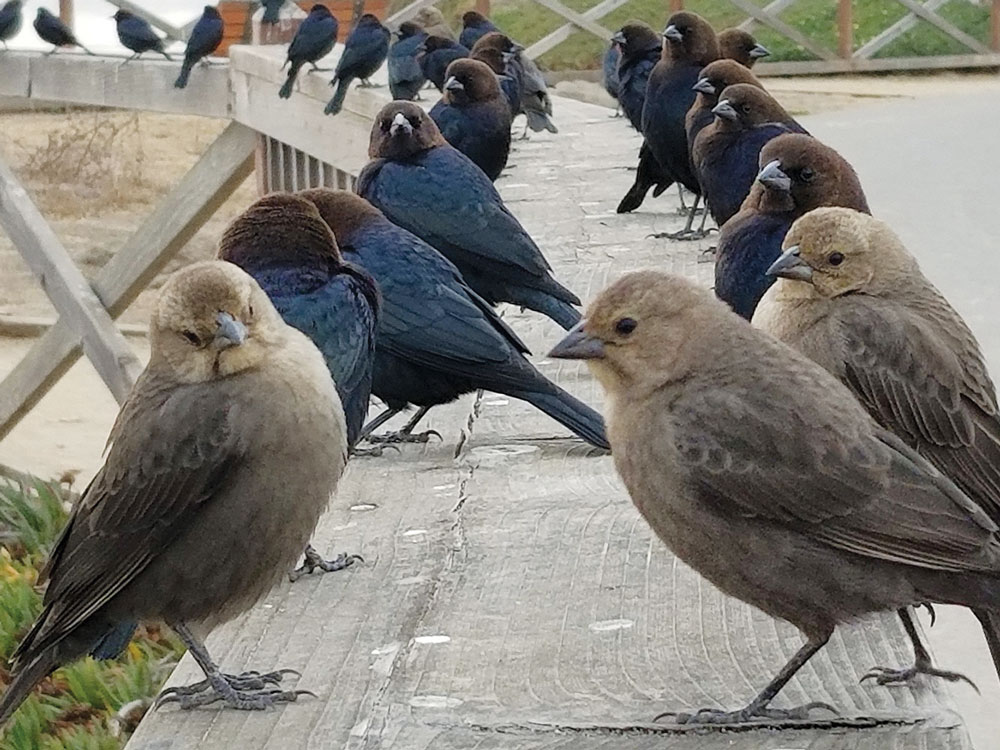
Submit to ph****@*******es.sc. Include information (location, etc.) and your name. Photos may be cropped. Preferably, photos should be 4 inches by 4 inches and minimum 250dpi.
The Calvary Episcopal Church is continuing its community forum series with an upcoming discussion about immigration. On Saturday, June 8, from 2-4 p.m., the downtown church’s Calvary Parish Hall forum will aim to increase understanding about complex international issues. At “Immigration Policies and Community Action for Safety and Healing: Santa Cruz and Beyond,” presenters will include Oakes College Provost Regina Langhout and UCSC instructor Leslie Lopez. The event is free and open to the public.
Over the past year, Community Bridges became the first local public transport agency to use electric vehicles. It also successfully advocated for increased Medi-Cal reimbursement for Elderday services and developed a Childcare Safety Plan for families of mixed immigration status. June 5 is California Nonprofits Day, and Assemblymember Robert Rivas (D-Hollister) will celebrate by welcoming Community Bridges CEO Ray Cancino to Sacramento to honor the work of the Watsonville-based group.
“I went to the museum where they had all the heads and arms from the statues that are in all the other museums.”
-Steven Wright
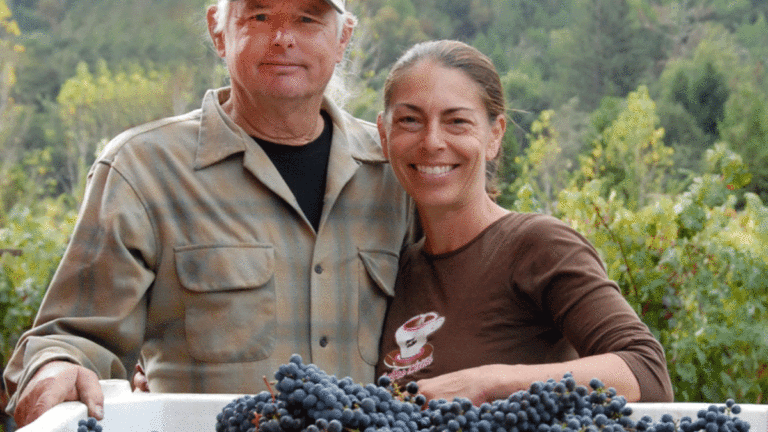
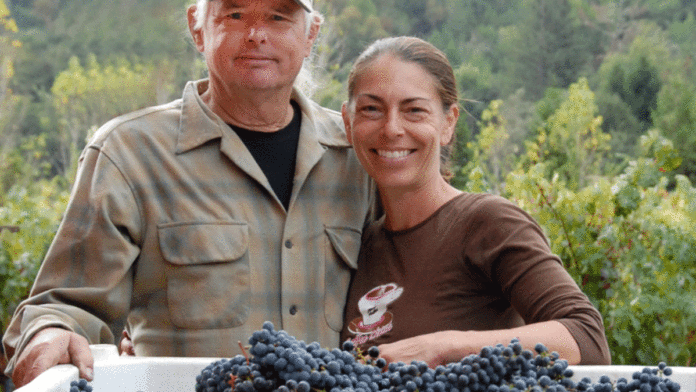
I’ve been a fan of Martin Ranch Winery for a long time.
The winery and tasting room are set in a truly picturesque spot, and owners Dan and Thérèse Martin are the most welcoming hosts. When they hold events—for both wine club members and non-wine club guests—they go all-out to make sure everybody has a fun experience. I remember one time seeing Thérèse dancing up a storm to some terrific music played by a local band.
Made under their J.D. Hurley label, the 2016 Pinot Noir (about $24) from R.E.D. Vineyard on the Central Coast is one delicious mouthful of strawberry and black currant, plus a hint of cinnamon. Notes of vanilla are complemented by an explosion of ripe raspberries. “This is a distinctive wine that keeps its promise with a kiss of French oak, cherry and caramel,” say the Martins.
The Martins’ wines sell out quickly, so if they happen to be out of the J.D. Hurley Pinot, then try the Pinot made under their Thérèse Vineyards label. You’ll be just as happy.
Martin Ranch Winery, 6675 Redwood Retreat Rd., Gilroy. 408-842-9197, martinranchwinery.com.
Don’t miss the chance to meander around Aptos Village for the Aptos Wine Wander from 1-4 p.m. on Saturday, June 8. Not only will you stroll from store to store and get to experience the newly revamped village, but you’ll also get to taste some terrific local wines from about 10 different wineries. Visit scmwa.com for more info.
I’m giving a shout-out to Grocery Outlet and two store managers, Yeseni Perez (Hollister) and Cristian Susunaga (Watsonville). Ample food and wine was donated by Grocery Outlet for golfers at a recent tournament fundraiser for Hospice of Santa Cruz County—all served by Perez and Susunaga. One of Grocery Outlet’s featured wines, Tangley Oaks Chardonnay, sells for only $2.99, and it’s pretty good. The Salinas Grocery Outlet also participated in making a valuable contribution to hospice with food and wine. Grocery Outlet does catering as well.
Visit groceryoutlet.com for details.
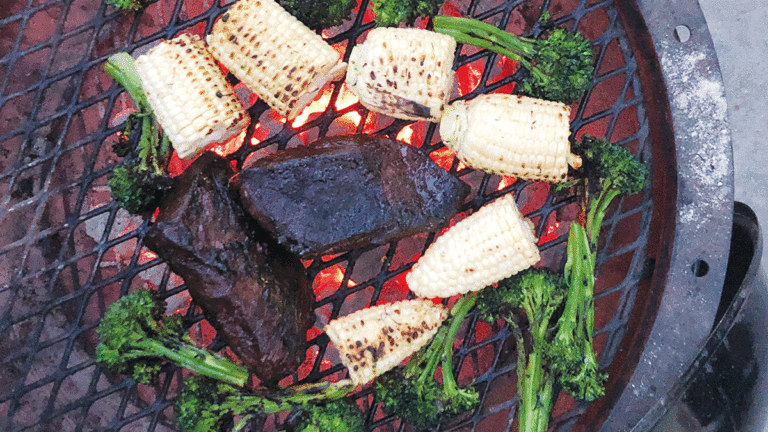
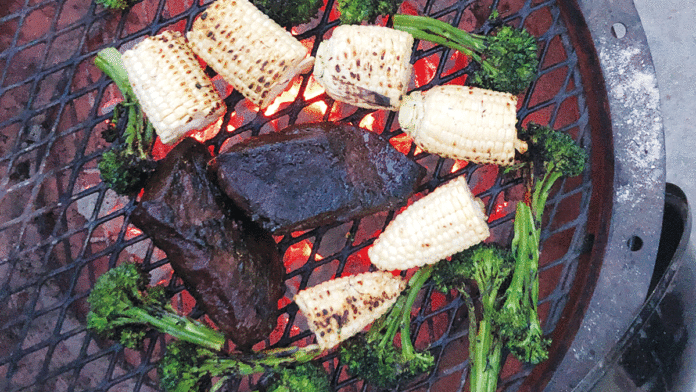
Summer may be slow to creep into Santa Cruz County, but Memorial Day weekend officially marked the start of my favorite time of year: grilling season.
Everywhere across the country, people are pulling the covers off of their Webers, buying fresh bags of Kingsford charcoal and trying to remember where they stashed their grill brushes. Not only is there something primally satisfying about cooking outside over an open flame, but I have yet to meet a food that couldn’t be improved with a nice char.
My grilling menu is usually intentionally unambitious: a pile of vegetables tossed in olive oil and kosher salt, plus a tangy, herby salad, and one or two different kinds of proteins. I occasionally have the forethought to pull a marinade together in time to be effective, but more often than not I grill spontaneously, because the clouds suddenly let a few streaks of sunshine in and my evening is clear.
Luckily, a friend and fellow grilling queen turned me on to Staff of Life’s Bloody Mary-marinated skirt steak and tri-tip, both $15.99 per pound. Available at the butcher counter, it is everything I want in a marinade, plus it’s been soaking for several hours by the time I take it home—plenty of time for the steak to absorb all of that delicious flavor. Worchestire sauce and plenty of black pepper season the steak inside and out, while molasses balances with sweetness and helps the outside of the meat caramelize into a dark bark. Lemon juice tenderizes.
I checked with the butcher, who said that the marinade contains, “Everything you’d put in a bloody mary, minus the vodka.” It is shockingly good, and I’ve seen it elicit satisfied groans from dozens of dinner guests.
Skirt steak cooks up in an instant on the grill and is my first choice if I’m making tacos or short on time. I also find it’s the best thing to grab if I’m invited over to someone’s house for dinner—it’s impossible to mess up, regardless of the skill level of whomever is manning the grill. But a tri-tip done right is a beautiful thing, as long as you take into account its weird criss-crossing grain. Whatever you choose, the results are always delicious.

A weekly guide to what’s happening
Green Fix
June 8 is World Oceans Day—a time to recognize the dire impact of climate change on our seas. Created in 1992 at the Earth Summit in Rio de Janeiro, World Oceans Day is the perfect time to learn how to protect the 71% of our planet that’s blue. In celebration, the Seymour Center is co-hosting a craft event and “Better Bag Challenge” to decorate a reusable tote bag, make an ocean promise, and create a special ocean-themed keepsake.
INFO: 10 a.m.-5 p.m. Saturday, June 8. Seymour Marine Discovery Center, 100 McAllister Way, Santa Cruz. seymourcenter.ucsc.edu. $9.
Art Seen
Bay Area artist Leslie Morgan has spent the majority of her life as a competitive swimmer and psychologist, and in her free time she travelled the ocean on a boat she called home. It’s not surprising, then, that Morgan is particularly influenced by water, and integrates elements of the ocean, environment and conservation in her work.
INFO: Opening reception 5-8 p.m. Friday, June 7. Felix Kulpa Gallery, 107 Elm St., Santa Cruz. felixkulpa.com. Free.
Saturday 6/8
Since its founding in 1986, the Japanese Cultural Fair has provided an opportunity for members of the Santa Cruz County community to increase their awareness and understanding of Japanese culture, both traditional and contemporary. Through the arts, crafts and culture of Japan, this annual event has brought together thousands of people with martial arts demonstrations, drumming, authentic cuisine and more.
INFO: 11 a.m.-6 p.m. Mission Plaza Park, 103 Emmet St., Santa Cruz. jcfsantacruz.org. Free.
Saturday 6/7 and Sunday 6/8
At the UCSC Student Print Sale, print media students get to sell their original artwork, and the community gets to support budding artists while collecting beautiful one-of-a-kind art. Hundreds of original etchings, lithographs, woodcuts, digital prints, handmade books, and more will be on display and available for purchase. This is a unique opportunity to see and purchase high-quality handmade artwork, meet the artists and tour the UCSC arts facilities. The event is free and open to the public. All profits directly benefit the student artists and UCSC printmaking program.
INFO: 10 a.m.-6 p.m. UCSC Elena Baskin Visual Arts Printmaking Studio room G-101, 1156 High St., Santa Cruz. 459-3686. artsites.ucsc.edu/printsale. Free.
Thursday 6/6
About 80% of all matter is a mysterious, invisible substance we call dark matter. Dark matter is hard to study directly, but new tools in astronomy and astrophysics have created fresh opportunities to work out its properties. Join UCSC Graduate Researcher Ben Lehmann in a discussion about how gravitational waves give us a new way of looking at the universe. Lehmann will explain what we know about dark matter and black holes, what we don’t know about them, and how these two mysterious components of our universe can shed some light on one another.
INFO: 6:30-8 p.m. Downtown Library, 224 Church St., Santa Cruz. Free.
Friday 6/7
UCSC History of Consciousness faculty member D.S. Marriott is a renowned poet and internationally recognized writer. In his critical and creative work, Marriott—who is of Jamaican heritage—draws on post-colonial thinkers such as Frantz Fanon, and is the leading theorist of Afro-pessimism. Marriott will be leaving Santa Cruz in the fall, so this may be the only time to see him read before then. Oakland-based Juliana Spahr is a poet, editor and literary scholar. Her most recent book That Winter The Wolf Came concerns global struggles at the intersection of ecological and economic catastrophe. In addition to her volumes of criticism, Spahr has published eight books of poetry, and is currently an associate professor of English at Mills College.
INFO: 8 p.m. Felix Kulpa Gallery, 107 Elm St., Santa Cruz. 334-2257. felixkulpa.com. Free.

Santa Cruz County live music for the week of June, 5, 2019.
Chon is nothing if not forward thinking, expanding prog-rock fandom with effects-heavy riff structures and eccentric noodling so dreamy and flashy that hordes of EDM lovers will no doubt embrace the band’s mathy stylings as their own. Chon even wrote its new self-titled album with festival-goers in mind, giddy over how crowds react to songs that are psychedelic on the outside but pure music-nerd at their nougaty center. Go ahead and grab those neon LED lights and that tattered Rush t-shirt in your closet. Chon says it’s safe to once again love the prog rock you used to love to hate. AMY BEE
8:30 p.m. Catalyst, 1011 Pacific Ave., Santa Cruz. $20 adv/$25 door. 423-1338.
After leaving the Navy as a young man, Roy Book Binder set out through the American South, jumping from remote town to remote town, all while learning how to play the blues—and tell a hell of a story—straight from masters like Pink Anderson, John Jackson and the Reverend Gary Davis. Book Binder has continued his vagabond-lite life, traveling and playing out of his RV most of the year, and returning to Florida for some down time when he’s not teaching guitar at Jorma Kaukonen’s Fur Peace Ranch camp. MAT WEIR
7:30 p.m. Michael’s on Main, 2591 Main St., Soquel. $15. 479-9777
Sly and Robbie are Jamaica’s most famous rhythm section. They come to Santa Cruz with legendary singer Michael Rose, who in the ’70s roots reggae period sang as a solo artist and then as part of Black Uhuru. Since his departure from the group, he’s remained one of reggae’s most prolific artists. To catch Rose with Sly and Robbie is certainly a night of Jamaican legends all on one stage. AARON CARNES
9 p.m. Moe’s Alley, 1535 Commercial Way, Santa Cruz. $30 adv/$35 adv. 479-1854.
Hippies, rejoice, our time has come. At least it has in Australia, where the music scene has begun to resemble a full-on Summer of Love reboot. Bell bottoms, sitars, drugs—check, check and check. Byron Bay’s The Babe Rainbow has proven to be one of the mellowest, most far out bands of this Aussie hippie revival, and last year’s Double Rainbow was its strongest effort yet, An acid-washed blast of down-under sun that sounds more than a little like Mac DeMarco writing for the Dead. MIKE HUGUENOR
8:30 p.m. Catalyst, 1011 Pacific Ave., Santa Cruz. $16 adv/$18 door. 429-4135.
Though alto saxophonist Remy Le Boeuf was raised in Santa Cruz and has played regular hometown gigs ever since moving to New York City, even die-hard fans have never heard him like this. After recording a series of acclaimed albums and performing thousands of gigs with his identical twin brother, pianist Pascal Le Boeuf, Remy just released his debut solo album Light As a Word. Featuring his striking lyrical originals, the album includes a cadre of mid-career jazz greats like pianist Aaron Parks. For his West Coast tour, Le Boeuf is performing with Japanese pianist Martha Kato, bassist Giulio Cetto and drummer Mark Ferber. ANDREW GILBERT
7 p.m., Kuumbwa Jazz Center, 320-2 Cedar St., Santa Cruz. $26.25 adv/$31.50 door. 427-2227.
Dream-pop group Real Estate is beloved for a tasteful mix of reverb, warm guitar tones and a surreal songwriting style. A new line-up has shored up their already reliable suburban meanderings, and added a dash of retrospection only earned through traversing the riddled potholes of adulthood: separation, wedlock, mortality. Sometimes claustrophobic and dense with stifling droning synths and guitar riffs, Real Estate’s harmonies dispel the clouds with rays of soft sunshine highlighting what would otherwise be cliché indie rock malaise. AB
9 p.m. Moe’s Alley, 1535 Commercial Way, Santa Cruz. $28 adv/$32 door. 479-1854.
Oh my god! Coldplay’s Chris Martin is coming to Santa Cruz, and he’s playing … a comedy club? Wait! *record scratch* Wrong Chris Martin. This Chris Martin, while also English, is a comedian. He hones in on everyday observations, flipping them on their head in a way that’s whimsical and snarky. AC
7 and 9:30 p.m., DNA’s Comedy Lab, 155 S. River St., Santa Cruz. $20 adv/$25 door. (530) 592-5250.
Do you need harmonic help? Require aural assistance? If so, Hod and the Helpers has what you’re looking for. Fronted by mercurial Santa Cruz songwriter Hod Hulphers, the many talented hands that make up the Helpers include Dan Potthast (MU330) and AJ Marquez (Slow Gherkin, the Huxtables). Across 11 tracks on their 2017 debut, the Helpers cast strange, bewitching psychedelic images of Roy Orbison, Antony and the Johnsons, and Magnolia Electric Company, all mixed with knowing winks and some unknowing ones. We all need a little help sometimes. MH
9 p.m. Crepe Place, 1134 Soquel Ave., Santa Cruz. $5. 429-6994
Hvile I Kaos describes its sound as “black chamber music.” Rest assured, this dark, ritualistic string music goes hand-in-hand with the black and doom metal scene, which is why L.A. string quartet Hvile I Kaos is joining the stage with black metal thrashers Miasmic, Thangorodrim and The Incursion. Hvile I Kaos’ alluring melodies, vivacious playing and dark tones are the perfect base to cut the acidity of what promises to be a beautiful night of darkened chaos. MW
8 p.m. Blue Lagoon, 923 Pacific Ave., Santa Cruz. $5. 423-7117.

Seven years ago, Sabine Silver took up the harp. She was pregnant at the time, and a poet friend recommended she try the instrument out.
“We both agreed that only to play the ancient bardic music of the angels would be sounds fitting for the gift of life growing within me,” Silver says.
She immediately fell in love with the instrument. For the last three years, she’s been performing with her harp on stage, but not in the typical way—she amplifies it and runs it through lots of atmospheric effect pedals. She brings a dreamy, psychedelic, gothy element to her music, and a lot of theatrics, including colorful outfits, makeup and stirring performances. Sometimes she’ll recite a capella monologues or play songs that are as long as 45 minutes.
“The music really does tell many stories,” Silver says. “My intention is to essentially construct a dream-world full of things and sounds [people] have never seen or felt before, to uncover rooms in their caves perhaps forgotten about, to put them into a trance, to trigger such a quality state of higher beauty and refinement.”
She lived in Santa Cruz more than a decade ago, and moved back last summer. Silver brings her fourth album Lucky Penny to the Blue Lagoon on June 12.
If her music sounds intense, that’s because it’s written from an intimate space.
“I’m an expert eavesdropper. And the music that I write these days is inspired completely by eavesdropping, whether it’s said or not said,” Silver says. “Whether it’s a thought or an emotion, the synchronicities and patterns moment-to-moment in life.”
9 p.m. Wednesday, June 12, Blue Lagoon, 923 Pacific Ave., Santa Cruz. $5. 423-7117.

The inordinately gifted Jazzmeia Horn has been piling up prestigious awards for most of the last decade, including top honors at the 2013 Sarah Vaughan International Jazz Vocal Competition and first place at the Thelonious Monk Institute International Jazz Competition in 2015.
The Monk contest triumph resulted in her Grammy Award-nominated 2017 debut album A Social Call, which was voted the best jazz vocal debut in the 2017 NPR Music Jazz Critics Poll. On A Social Call, she gracefully interpreted spiritual and gospel songs, 1970s R&B and blues, as well as standards inextricably linked to her formative influences, Betty Carter and Sarah Vaughan.
Horn, 28, arrives in town with a sneak preview of her second album Love and Liberation, a project slated for release in August. It focuses on her original songs, a side of her artistry she’s excited to introduce.
“A Social Call had some really fun arrangements and the sound is truly mine, but with Love and Liberation, my audience can now hear my soul expressed fully!” Horn wrote to GT in an email from China, where she was on tour with her band. While she sees her first album as “a call to bring social awareness to a particular dysfunction in our society,” her second “is a call to action. In order for one to love one has to be liberated, and liberation is an act of love.”
Part of Horn’s liberation entails calling her own shots on the bandstand. She’s been honing her skills as a bandleader, working with some of the top young players on the New York scene. The combo she brings to the West Coast for this run includes bassist Corcoran Holt (who performed in the Bay Area last year with legendary tenor saxophonist/composer Benny Golson), drummer Jeremy “Bean” Clemons, and pianist Keith Brown, the son of Memphis piano great Donald Brown and a regular accompanist for veteran heavyweights like trumpeter Charles Tolliver and saxophonist Steve Slagle.
For Brown, Horn’s expansive toolkit as an improviser makes the gig the best kind of proving ground. “Playing with Jazzmeia is great because you’re playing with someone who is an amazing vocalist who can also scat, create melodies and hear harmony as well as any instrumentalist,” he says. “You really have to be on your toes ‘cause she can go so many different places in an instant.”
In many ways, music is Horn’s birthright. She grew up in a very musical family, and her mother encouraged her to express herself at a young age. By 3 years old, she was performing in her church’s choir. She soaked up the sounds around her, but jazz didn’t enter her consciousness until she enrolled in the Booker T. Washington High School for the Performing and Visual Arts, a Dallas institution known for alumni like Erykah Badu, Norah Jones and Roy Hargrove.
It was at Booker T. that a music teacher told her that considering her given moniker, it behooved Horn to get acquainted with her namesake art form. A mix tape of definitive jazz vocalists got her started, and before long she was absorbing influences from far and wide. She zeroed in on Nancy Wilson’s narratives and Nina Simone’s power, Betty Carter’s playfulness, Sarah Vaughan’s tone, and Shirley Horn’s phrasing.
She’s hardly done with her studies. Always on the lookout for the deepest sources of soul, Horn keeps her ears filled with creative nourishment. She cites several albums in regular rotation, including underground L.A. phenom Georgia Anne Muldrow’s Overload, Donny Hathaway’s Everything Is Everything, 1950s standard Sarah Vaughan with Clifford Brown, and Malian diva Oumou Sangare’s Ko Sira. For Horn, jazz isn’t a destination as much as a vehicle for sonic exploration.
Jazzmeia Horn performs at 7 p.m. on Monday, June 10, at Kuumbwa Jazz, 320-2 Cedar St., Santa Cruz. $36.75 adv/$42 door. 427-2227.
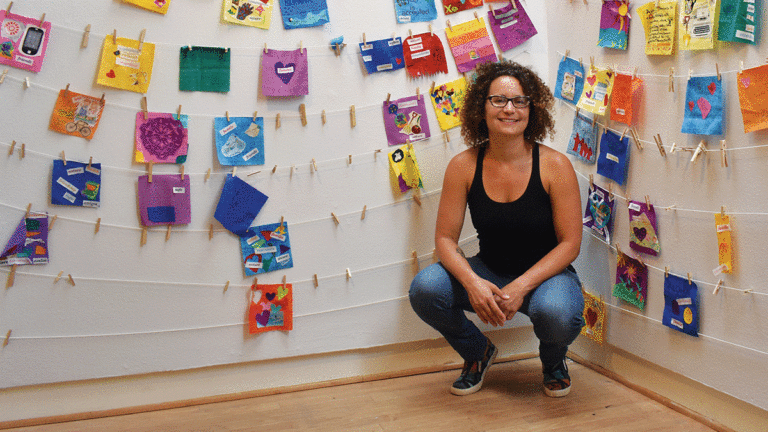
Nina Simon, the internationally renowned creative force behind the Santa Cruz Museum of Art and History, is preparing for a new journey.
In November of last year, a startling bit of news emerged from behind the walls of the Museum of Art and History (MAH) when Simon, the organization’s dynamic executive director, announced that she was leaving after eight years and a major turnaround at the local art institution. The news sent cultural shock waves throughout the community.
Simon’s tenure was not without some controversy—it is Santa Cruz, after all—as the 37-year-old Simon pushed more than a few envelopes in traditional museum management and curating styles during her tenure.
Trained as an engineer at Worcester Polytechnic Institute in Massachusetts, Simon employed many of the cutting-edge ideas she had explored in her innovative blog Museum 2.0, first book The Participatory Museum and follow-up title The Art of Relevance. In so doing, she ruffled the feathers of some art and history traditionalists, most a generation or two older than herself.
But even for her critics, it’s hard to deny that Simon—along with the talented staff she assembled around her, and the community that rallied behind her vision—had turned a floundering, seemingly visionless institution into a thriving, dynamic organization remarkably in tune with the pulse of the greater Santa Cruz community.
The numbers tell the tale in a rather startling way: When Simon assumed her leadership role at MAH, the museum’s annual budget was in disastrous shape. Income in 2011 was $630,000, with expenses at $835,000. MAH was headed for bankruptcy. During the last calendar year under Simon’s tenure, MAH’s annual budget was $2.5 million—nearly a 400% increase in little more than eight years—and the MAH was running in the black by roughly $400,000.
Even more significantly, annual attendance at MAH in 2011—and let us be candid, the place often felt like a morgue—stood at 17,000 people. By last year, attendance had increased nearly nine-fold, to 148,000 visitors. And perhaps most critical of all, the attendance had radically changed in terms of age, race and income levels.
Simon’s impact on MAH was almost instantaneous. She eliminated a staff position and imposed salary reductions (including for herself), quickly raised $1 million, and assembled a Renewed Ambition Task Force charged with redefining funding goals and identifying growth opportunities. In short, she moved mountains.
Eight years later, she has decided on a change in the course of her professional career, forming a separate nonprofit—OF/BY/FOR ALL—that will attempt to bring MAH’s concept of community engagement to museums and other cultural organizations around the world. With only a short time left at MAH, Simon talked with Good Times Senior Contributing Editor Geoffrey Dunn about her accomplishments, where she hopes MAH is headed and the new challenges before her.
It’s hard to believe it’s been eight years since you took over the helm of MAH. Has it gone by quickly for you, or was it more difficult than it seemed?
NINA SIMON: The time has gone quickly, but it’s also fundamentally changed my life. When I started at the MAH, I loved Santa Cruz in the abstract. Leading the MAH meant embracing Santa Cruz County in all its depth and complications. We opened the doors for new people to get involved, and they flooded in. They brought brilliant and kooky ideas. They donated their time and creativity. We hugged and we argued. We started conversations and relationships that will never end.
I did an extensive interview with you for Good Times shortly after you took over MAH. I re-read it this week, and one of the things I couldn’t help but notice was that several, if not most, of the goals you envisioned then have today become a reality. And concepts like ‘Museum 2.0’ and ‘interactive encounters’ and ‘the participatory museum’—which were all rather new and even a little vague back then—are now part of the community vernacular. Did you accomplish all, or most, of what you set out to do? And did you expect these ideas to be so thoroughly embraced by the community at large?
I accomplished most of what I hoped to do—and, well, more. But it wasn’t really me that did it. It was our community, which not only welcomed a new way of interacting with a museum, but did so with gusto. Over eight years, we invited hundreds of thousands of new people—people of every age, income level, race, and ethnicity—to come in.

And they weren’t just visitors, they were volunteers and collaborators co-creating new exhibitions and events. They were donors and members supporting a new public mission. Some of our most successful programs—and our extraordinary financial growth—are thanks to our partners.
I think the concept of being a team player is part of your mantra.
There are a lot of museums around the world trying to involve people more actively in how they work. In most cities, a few people get involved, and a lot of people complain. In Santa Cruz, we had the opposite. A ton of people got involved, and only a few complained. We got further, faster, because the whole spirit of creative community participation is so close to the heart of what Santa Cruz County is all about.
Agreed. Given that, what do you consider to be your most definitive accomplishments at MAH?
There are many internal accomplishments: the financial turnaround, building a strong and diverse staff and board, and rebuilding the mission and culture of the institution. But externally, I’m most proud of three community projects: the Princes of Surf exhibition [2015], the Lost Childhoods foster youth project [2017], and the reinvention of Abbott Square.
Since I was involved in the ‘Princes of Surf’ exhibit [with partners Kim Stoner, Bob Pearson and Barney Langner] let’s start there. I know you said that this exhibit had a profound impact on you and that, in part, inspired you to write your second book, ‘The Art of Relevance.’ What was it about that exhibit that proved so pivotal?
It was an exhibition that was truly community-sourced. Kim walked into the MAH office one day, and later with you, telling this fantastical story about how the first surfboards ever used on the mainland U.S.A. were hidden in storage in Hawaii, and that they were made right here in Santa Cruz. From the very start, that exhibition was driven not just by your group’s enthusiasm, but by dozens of partners who truly took ownership of the project.
A lot of times, organizations will talk about partnerships in a very transactional or superficial way. But in the case of Princes of Surf, the partnerships were deep. They took the MAH further than I could ever have imagined. And for me personally, it was a really powerful testament to what can happen when an institution gives up control and shares power with passionate community members.
Passions definitely run deep in those communities. I was in the middle of it and was blown away not only by the passion, but also by the breadth of its traction.
What those community members taught us was that Princes of Surf was not just an exhibition about surfing. It was an exhibition about crossing cultures. I’ll never forget the Polynesian biker club that came down to help with the big paddle out, and the Hawaiian elder who blessed the boards. These partners brought in new voices and perspectives that enriched the exhibition. They taught me that no one owns the story. No one owns the objects. They are a shared heritage that bind us to each other across our differences.
You told me the other day that ‘Lost Childhoods’ also had a profound impact on you.
That exhibition was our most ambitious attempt to put together all the ways we involve community at the MAH. We worked with partners—foster youth and advocates—who had no reason to trust us, or even know we existed. But we built that trust, and we built the exhibition together.

The co-creation involved was deep and hard and important. The resulting exhibition told stories that had never been told, coming from voices that had often been silenced. And it encouraged visitors not just to participate, but to take action to help foster youth, and by doing so, make our community stronger.
In many ways, that was a revolutionary exhibit.
The model we created for Lost Childhoods—the “community issue exhibition”—is now a signature model for the MAH. We wrote a toolkit on how to do it and shared it around the world. We refined the model again this year for the current exhibition on seniors and social isolation, We’re Still Here. The community issue exhibition model was spearheaded by Stacey Marie Garcia, our director of community engagement. I think it’s a game changer for the MAH and for the world of museums. It shows that art and history can spark social action to build stronger, more connected communities. And I know Stacey and the team will keep doing just that.
What led you to take on Abbott Square? In some ways that seemed like a stretch.
Six years ago, we started out thinking about Abbott Square as a MAH expansion project—a way to connect the museum to the vibrant creative life of downtown. We’d also learned from a Latinx-focused ethnographic study that outdoor programming was particularly appealing to local Latinx families. We wanted to reach more people, and more diverse people, and we saw Abbott Square as a great place to do it.
And that idea kept evolving.
Once we started community conversations about the potential for Abbott Square, the “why” shifted to community desire for a town square. While locals were interested in the MAH, they were much more interested in having a downtown gathering place. What started as being about the MAH became more about the community. Community members’ expressed needs and desires drove the planning of Abbott Square and led to major decisions we would not have made if this project was “just” a MAH extension—the addition of the food court being the most significant. While this was exciting, it was also a bit disconcerting. At times, it felt like we were taking on a new sister project to the MAH in Abbott Square, as opposed to an expansion of our existing work. Some MAH donors questioned whether we were really in the business of building a public plaza and whether we should raise money to do so.
That seems like a legitimate question.
To my grateful surprise, that sense of separation resolved itself as the MAH’s strategy evolved in alignment with the project. While we were designing Abbott Square with community members, we were also strengthening the MAH’s overall commitment to build a stronger, more connected community. We knew this impact could only happen if we expanded our work further beyond our walls.
I know a lot of people thought it would never happen, that it was a disaster in the making.
Building Abbott Square was intense. We raised $5 million from our community, but we also dealt with hundreds of community members—including people in power —who simply did not believe the project was possible. Henri Matisse once said that creativity takes courage. We needed a lot of both to get this project done.

Every time I see moms with strollers meeting up in Abbott Square, or a pack of teens coming down after school, I’m reminded how many people didn’t believe this was possible. I’m reminded how easy it would have been to give up on this project. But I’m also reminded how satisfying and meaningful it is to do the impossible. One of my absolute favorite things to do is to sit in Abbott Square and watch people discover it for the first time. People have adopted it so quickly into the life of downtown, and I’m proud of that.
Some of the changes you imposed on the museum, including Abbott Square, generated criticism, mostly from some of the old guard types who wanted more traditional explorations of art and history.
Not everyone liked how we, and I, led the MAH. But as a leader, I have to weigh those small number of critical voices against the hundreds of thousands of enthusiastic people who got newly involved—including many who had never felt welcome in a museum before. For every critic, there were literally a thousand new people telling us how grateful they were for the changes. When I think of the loudest critics of our work, I think of people who wanted the MAH to be a more exclusive, elitist, academic place.
I think that’s the wrong vision for a public institution. I think it’s the wrong vision for Santa Cruz. For a museum to survive and thrive today, it must be relevant and meaningful for many people from many backgrounds. It must sway to the pulse of the cultural community in which it resides. It must be radically inclusive, constantly working to invite new people to connect for new reasons. That’s what we tried to do at the MAH.
I remember our first encounter nearly a decade ago. One of the things we discussed was the financial situation at the MAH—it was dismal then—and I had seen the annual audits that had been conducted over the last several years. You really turned things around in short order. And as a former executive director of a local nonprofit, I was duly impressed. What was your approach to the money dance?
We turned around quickly, and then grew aggressively year over year. Over time, we quadrupled the budget and built healthy reserves for the first time in the organization’s history. We did it in three steps. First, we made hard cuts, scaling back to a core operation we could sustain. Then, we started doing new things with spit and duct tape to give people a glimpse of what we hoped to create. Finally, we asked those who were intrigued to invest and help us build a new kind of museum.
It was a radically new way of seeking resources.
We brought in millions in new funding from two major sources: national foundations, which saw the MAH as an innovative leader in the cultural sector, and local donors who care about making Santa Cruz County better. Most of these local donors were younger and more social justice-oriented than traditional museum supporters. I didn’t solicit people who wanted to see their favorite artist on the wall. I worked with donors who saw art and history as vehicles to strengthen and connect our community. It turns out there are a lot of people who care about our community and who believe that creative, new approaches can help us grow. The MAH’s unique community-driven model, and our incredibly diverse participants, makes it a place where they want to contribute.
So why leave the MAH now?
While I wouldn’t say I’ve done everything I could do at the MAH, I do feel like I’ve taken it from a place of instability to a place of richness and maturity. I knew I could do a lot of good at the MAH when it needed change and new energy. Now it has such wonderful energy, such amazing people. I know they—and a new director—will keep growing. The MAH is strong, and frankly, I think there’s another leader out there who can do more with its strength than I can.
In what ways is your farewell to MAH a new beginning for you?
I’ve spent the past eight years in a passionate love affair with Santa Cruz, doing work that is deep, local, and unbounded. There are no divisions for me between work and life. It’s all a celebration of what it means to build community here in Santa Cruz County. Every morning when I unlock the museum, I feel like I’m diving into the center of a web of beauty and diversity and unexpected connections. It will be a profound loss to no longer be tied into that web of love. But I’m ready to launch free so I can spread that love to other places. Over the past several years, I’ve learned how hungry people are for institutions that are truly public, where they can connect and grow together. We’ve done that at the MAH, and I’m eager to share what we’ve learned with colleagues leading public institutions around the world.
The Museum of Art & History will celebrate Nina Simon’s eight years as executive director this coming First Friday (June 7), from 5-9 p.m., with an hour of special acknowledgements beginning at 7 p.m.. 705 Front St., Santa Cruz. santacruzmah.org. For more on Simon’s next chapter, visit ofbyforall.org.

For years, scientists have been finding plastic in the bodies of whales, birds and other marine wildlife. Sometimes it’s straws or entire plastic bags, though small particles can also wreak havoc. Since plastic litters huge swaths of the natural world, it didn’t come as a huge surprise last year when a study found plastic particles in people, too.
The study, led by a gastroenterologist at the Medical University of Vienna, found plastics in human stool samples. Around the same time, another research effort co-authored by South Korea’s Incheon National University and Greenpeace East Asia found the same contaminants, known as “microplastics,” in 90% of the 39 table salt brands sampled worldwide. These microplastics are only a centimeter or less in length, no larger than the size of a sesame seed.
As World Oceans Day approaches on Saturday, June 8, the evidence about microplastic is piling up, and so is the pollution. One type of tiny plastic contaminant is the fiber that comes from clothing made of synthetic materials like nylon, polyester, fleece, and Spandex. Microfiber yoga pants, outdoor apparel and sports jerseys are major culprits.
Sarah-Jeanne Royer, a researcher studying plastic degradation at the Scripps Institution of Oceanography at UC San Diego, says these fibers come off when we shake, wear and wash our clothes. From washing machines, microplastics flow to nearby waterways and get washed into the ocean, since particles are too small to be caught by wastewater treatment plants. Marine animals consume the fibers, which then start working their way up the food chain.
“The fibers are so tiny, about a fifth the diameter of a human hair, that every time we eat, we are actually eating these invisible fibers because they get deposited on our food,” Royer says. “You can think of a sunny day at home when you look at the sun coming through your window, where you can observe all of these particles floating in the air. A lot of those particles contain microfibers. Hence we drink them, we breathe them, and we eat them even without knowing it. They are in our bodies.”
It’s unclear what happens to plastic microfibers once they enter the body—whether they break down or just pass through. The chief concern with plastic consumption is not so much from the plastic itself, but from the toxins and chemicals that may leach into our bodies.
Royer says that there are between and 140,000-700,000 microfibers released in each load of laundry that we wash, depending on the type of clothing and size of the load. Royer and her team are testing how quickly different types of microfibers break down.
To combat microfiber pollution, the Santa Cruz-based nonprofit Save Our Shores is advocating for new laws to mandate installation of microfiber-trapping filters on home washing machines. The group also hopes to partner with the county and researchers at UCSC to launch a county-wide research project about these filters.
“We are trying to get people to voluntarily install them, and then get researchers to check and see how many microfibers come out of the machine before and then after the filters have been installed,” says Katherine O’Dea, executive director of Save Our Shores, which has included microfibers on its “Sinister Six” list of top plastic ocean pollutants. “That will help us with two things: the volume that is being put out into the waste stream, and then how well the filters are working.”
The project has garnered a tentative $30,000 commitment from the California Ocean Protection Council, and Save Our Shores hopes for an additional $70,000 via grants and fundraisers to conduct a 300-person, multi-year study.
“To our knowledge, no one has really looked at local waters or wastewater to find out how much is in our water,” says Tim Goncharoff, zero waste programs manager for Santa Cruz County. “That would be really useful information to have, so that going forward we can document improvement, but we’ll need some baseline data.”
In the absence of robust local research, Goncharoff says the county has not yet taken a position on microfibers. At around $100 each, the filters are designed for residential and smaller-scale uses. Filters for industrial machines are not yet available.
In addition to microfibers, Save Our Shores’ list of “sinister” pollutants takes aim at single-use toiletry bottles, water bottles and coffee pods. The group is also working to curb balloon sales, and has been warning contact lens users not to flush their used lenses down the toilet. The nonprofit has made political headway.
“The county is going to ban the sale or use of bottled water in county offices and at county events,” O’Dea says. “The progress isn’t as fast as I’d like to see, but we are making some.”
The Santa Cruz County Board of Supervisors also approved a ban on small, single-use plastic bottles of soaps and other personal care products in hotels, inns and vacation rentals in the county’s unincorporated area. The ordinance, believed to be the first of its kind in the nation, will go into effect late next year. State Assemblymembers Ash Kalra (D-San Jose) and Mark Stone (D-Scotts Valley) co-authored a bill proposing a statewide ban this year. The bill, which must still be approved by the California Senate, would take effect in 2023.
Still, there have been missteps along the way. When companies began using recycled plastic to make textiles—Patagonia’s recycled polyester jackets made from plastic soda bottles, for instance—it seemed like a big environmental victory. Plastic that might otherwise litter the beach could now be put to good use. But that was before researchers learned about the danger of microfibers.
For now, Save Our Shores isn’t necessarily advocating for fewer purchases of synthetic garments, since all apparel contains some kind of fiber byproduct. The group says washing machine filters are a more efficient option for those who can afford them.
UCSC Adjunct Associate Professor Myra Finkelstein says that the interesting thing about microfibers is that they seem to have a “fairly straightforward fix.” But even those who install the filters aren’t off the hook.
“People still have to dispose of the filters and fibers properly,” says Finkelstein, a wildlife toxicologist. “You can’t just wash them down the drain. Also, the plastic fibers will go into the landfill when you throw them away. We need to start thinking about how we cut back on plastics across the board.”
Santa Cruz nonprofits will celebrate World Oceans Day this weekend. On Friday, June 7, the Sanctuary Exploration Center at 35 Pacific Ave. will host an opening of ‘From Ocean Trash to Ocean Inspiration,’ featuring five locals who transform trash into art. Save Our Shores will host a March for the Ocean on Saturday, June 8, from 3-6 p.m. from Lighthouse Field to Cowell Beach, where activists will create a human chain to highlight sea-level rise. saveourshores.org.



FOLLOW US
Copyright © Weeklys All rights reserved.
OUR PUBLICATIONS