
Drastic reductions are coming to Santa Cruz Countyโs public bus system this fall, and transit authorities are seeking public input on which routes should be spared. Since the 2008 recession, Santa Cruz METROโs expenses have exceeded revenues, forcing the bus system to dip into its reserves. Rising operating costs, stagnant funding, flat ticket sales, and a growing backlog of repairs and capital needs have pushed the transit system against the wall. In March, METRO officials will present an initial plan to cut its bus system costs by $6.5 millionโthe systemโs largest cutback to date, says Barrow Emerson, the transit systemโs new planning and development manager. The way he explains it, METRO has three choices, in order of least to most painful: cut the bus routesโ frequency, cut the hours and days that buses operate, or cut routes entirely. โIn the third and most painful tier, the route is completely eliminated and someone in that vicinity can no longer walk to a bus,โ Emerson says. โWe are trying to accomplish the impact in the first two (tiers), but the scale of our problem will include the elimination of routes.โ
Which Routes Will Go?
After the initial plan of cuts is presented to the METRO board in March, a 30-day public comment period follows in April and May. The board votes on the amended plan in June and cuts take effect in September. Emerson said his team has not yet decided which routes will be targeted. Some routes draw more income, such as the Highway 17 Express, which shuttles riders to San Jose. But thatโs not the only factorโplanners must take the entire system into account, he says. โIn a bus network of 35 routes, if we just cut X number of the poor-performing routes, we would no longer have a network where people could get from point A to point B,โ he says. Plus, federal regulations require that low-income and minority neighborhoods are not disproportionately affected by cuts, Emerson says. โWe canโt cut Watsonville 50 percent and cut Santa Cruz 10 percent. The law doesnโt let us do that,โ Emerson says. During the school year, around half of riders are UC Santa Cruz students, who pay for bus passes with their tuition and fees. ย By far, the most popular bus routes (with the highest annual number of riders) are No. 16, UCSC via Laurel East, serving the campus and the Westside, and No. 71, serving Cabrillo College and Watsonville. Both routes serve around 900,000 riders each year. By the same measure, the five least popular bus routes are: No. 34 (South Felton), No. 8 (Emeline in Santa Cruz), No. 33 (Lompico in Felton), No. 54 (Capitola, Aptos and La Selva) and No. 42 (Davenport and Bonny Doon), according to 2013 data. But those least-popular routes are not necessarily at risk, since they only have a few trips each day compared to dozens each day for the popular routes, says Emerson. โThis is a very complicated, nuanced thing,โ he says. ParaCruz, METROโs door-to-door service for people with disabilities, is not a direct target of cuts, but will likely see reductions. Federal regulations only obligate METRO to provide paratransit service within three-quarter miles of its system, and only during the systemโs hours of operation. So if the bus systemโs boundaries or hours shrink, then so will ParaCruzโs, says Emerson.
What Causes a Deficit?
Since the 2008 recession, METROโs county sales tax income stopped growing like it had previously, resulting in $26 million less income than forecasted from 2008 to 2014. The sales tax is the systemโs largest source of income, accounting for 39 percent. Passenger fares account for 20 percent of income, and state and federal funding account for 22 percent. Those income sources have also stayed flat since 2008. โNo public bus company makes a profit,โ says Emerson, who notes that even popular routes with full busloads still need a subsidy to operate. Meanwhile, the operating budget has continued to grow, from $40 million in 2012 to $50.7 million in 2016. METRO has been able to balance its operating budget only by dipping into its reserves (taking around $22 million since 2008) and state and federal funds intended for capital improvements (around $14 million since 2011). ย Around $200 million in capital needs are expected over the next 20 years, says Emerson. For example, METRO has delayed replacing its aging bus fleet, which is about 12 years old and at the end of its life span. In September, METRO increased fares for the Highway 17 Express route and ParaCruz, but the effects of those rate increases remain to be seen, says Alex Clifford, METROโs CEO. The Highway 17 route has since had a minor drop in the number of riders, but that may be due to low gas prices and increased traffic, he says. Further rate increases are not part of the immediate plan, Clifford says. โWe really would like to have the public stay engaged and aware of this process that weโre going through,โ says Clifford. โWe would like for them to understand the challenge that weโre faced with, and that is [that] weโre delivering more service today than we can afford to pay for. We have to balance our budget.โ To provide input and get updates on the transit cuts, visitscmetroforward.com.
Everyoneโs heard stories of people getting priced out of Santa Cruz. County Supervisor Zach Friend recently warned that if the current trajectory of increasing housing costs continues, the community could turn into an exclusive โCarmel-izedโ version of its former self. The board of supervisors adopted a state-required Housing Element to its General Plan this month by a unanimous vote, following more than a year of community workshops, public hearings, several revisions, and overall support from many local groups, like Affordable Housing Now! The Housing Element calls for 1,314 new housing units, almost 40 percent of which are planned to be affordable for low-income households, in the unincorporated areas of Santa Cruz County by 2023. Thatโs almost 200 housing units a year, for seven years. Friend says where and in what form this housing gets built will be an โongoing exercise in accommodating changeโ and garnering community support, as well. Friend knows something about the need for community support. The supervisor has endured several months of public criticismโculminating in the threat of a recall from a handful of activistsโfor his support of the large, mixed-use Aptos Village project in his district, in which 10 of the 69 new homes will be affordable. At a board of supervisors meeting last month, Friend spoke passionately about the need for โshared sacrificeโ if any progress is to be made making new housing more affordable. โIf you come before the board and say you are for more affordable housing, you actually have to be willing to let things get built, even in your neighborhood. Thatโs the challengeโaffordable housing is a collective shared sacrifice,โ he said. โYou canโt say you are in favor of it as long as it is somewhere else.โ That โsomewhere elseโ is getting increasingly scarce. The Housing Element focuses on the need to re-zone for increased density along transportation corridors such as Soquel Drive, as well as relatively dense, multifamily infill projects to meet the demand. Both the county and city of Santa Cruz are moving toward plans to re-zone along corridors to encourage sustainable growth, and transit-dependent and walkable neighborhoods with higher densities of smaller housing units. The countyโs program is called Sustainable Santa Cruz County. The Housing Element is a policy document required by the state every five to seven years demonstrating how the county will accommodate its โfair shareโ of projected growth. State law does not require that the housing actually get builtโonly that planning policies are in place to house the expected population growth for all income levels. State funding to help finance affordable housing has not been backfilled since Sacramento dissolved local redevelopment agencies as part of budget reforms in 2011. That puts increased pressure on local governments to secure grants to fund these projects.
Wouldnโt it be great if more housing meant more โaffordableโ housing? Unfortunately, it doesnโt work that way.
All five supervisors pledged to support affordable housing across the county, although that support was not without nuance or caveats. District 4 Supervisor Greg Caput said South County has in past years shouldered an unfair burden of new affordable housing, and that the burden needs to shared more evenly. District 5 Supervisor Bruce McPherson said the San Lorenzo Valley does not have much room or infrastructure to grow. Many of the locations identified in the Housing Element for possible development are in the Live Oak area, Supervisor John Leopoldโs district. Still, they stressed they want to fight this on a united front. The constant pressure on the housing market from high-income generator Silicon Valley renders affordability a perennial problem. Add to that a growing UCSC population, and a tradition of neighborhood activism that ensures slowโif anyโgrowth, and Santa Cruz County seems caught in the perfect storm of full-blown affordability crises. According to the UCSC Office of Community Rentals, the average rent for a two-bedroom apartment now exceeds $2,000 per month, compared to $1,650 in 2010โa 21 percent increase. The percentage of homes a median income household in Santa Cruz County can afford to buy dropped from a high of 54 percent of homes in 2012, when median sales prices were about $365,000, to only 22 percent in January 2015, when median sales prices were topping $625,000. By June 2015, the median sales price jumped to $725,000. When median incomes are compared to the price of housing, Santa Cruz-Watsonville often gets rated the least affordable small metro area in the entire nation by the National Association of Home Builders. People agree thereโs a problem, but not everyone agrees on how to fix it. One of the guiding arguments from โslow-growthers,โ as theyโre sometimes called, has been that Santa Cruz cannot build its way out of its affordability problem because increasing housing supply enough to make a dent in housing prices would require a level of sprawl and density that is simply unacceptable to the community. Gary Patton, former Santa Cruz County Supervisor from the 1970s, was one of the key architects of โMeasure J,โ which established the urban limit lines protecting the coast, open space and agricultural areas around the county, as well as several key slow-growth policies. To this day, heโs skeptical that increased densities could ever offer a solution to housing affordability. โWouldnโt it be great if more housing meant more โaffordableโ housing? Unfortunately, it doesnโt work that way,โ Patton writes in an email to GT. โMore โdensityโ certainly means more impacts on traffic, parks, parking, water, and other city services, but more growth emphatically does not mean more โaffordableโ housing.โ Patton says that the only way to make housing more affordable would be for the county to require each new unit be sold or rented with permanent price restrictions. But those projects proposed with rent restrictions for low-income households usually require relatively high densities to be financially feasible, and are routinely opposed by neighborhood quality-of-life activists, like ones who have opposed Aptos Village and a host of other projects, despite the great demand. โBetween the high cost of land and community members who oppose any kind of increased density, it is nearly impossible to find a site to develop the housing that is desperately needed in our region,โ says Betsy Wilson, director of Housing Development for the nonprofit MidPen Housing Corp, which developed the affordable Aptos Blue project two years ago. Caught between limited affordable housing and competing with the high incomes from Silicon Valley, local workers are getting stretched to the breaking point, and poverty rates are rising. The conclusion of the Housing Element attempts to go to the heart of the matter: โIncreasingly, the discussion is: What kind of community are we, do we want to be, and who can or should be able to live here?โ
Less is definitely more in the haunting marital drama 45 Years. Small in size, subtle in effects, and short on action, Andrew Haighโs quietly realized tale nevertheless broadens in scope, frame by frame, as its story of a married couple on the eve of their 45th wedding anniversary plays out. The film covers less than one week in its charactersโ lives, yet itโs so infused with feeling that it manages to convey a lifetime of unspoken longing, mystery, compromise, and regret.
Writer-director Haigh adapted the material from a short story by David Constantine, and the film retains the sense of spareness and close observation of that fiction format. At its center are Kate and Geoff, a somewhat tweedy English couple living in quiet retirement in the Norfolk countryside. Kate (Charlotte Rampling) is a retired schoolteacher. Geoff (Tom Courtenay) was a foreman at a factory in a nearby town.
Theirs is a comfortable life, puttering around their home and grounds out in the country, walking the dog, and shopping or meeting their friends down in the village. They are tidying up the last few details for their 45th anniversary party, to be held in town on the upcoming Saturday, when Geoff receives a mysterious letter. It pertains to an accident that befell a woman Geoff was traveling with in Europe 50 years earlier, as a very young man, long before his marriage to Kate.
This is not a murder mystery, nor a hothouse melodrama in which a lifetime of deception eats away at the charactersโ lives. No physical ghosts from the past pop up on their doorstep. Kate knows about the accident in a general way, and the circumstances under which it occurred, although sheโs never pursued the details. But as she tunes in to subtle shifts in her husbandโs demeanor over the next couple of days, it becomes clear that while Geoff has never told outright lies about this seminal relationship in his early life, heโs been guilty of a sin of emotional omission in never facing his deeper feelings, or sharing them with his wife.
Ever composed and capable, Kate does not push; she simply observes. And so do we. The couple seems in all ways compatible; Geoff has survived bypass surgery, but heโs still capable of dancing Kate around the parlor to (surprisingly) โStagger Lee,โ which is not exactly a waltz. It gradually becomes evident that they have no childrenโand that this is probably not by choice. Whatever adjustments they may have made over time are revealed in small, sure strokes.
As things play out, this becomes very much a story about the effects of age and time. Geoff mourns his distant youth, when he was โbrave.โ At a reunion with his former colleagues, heโs appalled that they, like him, have become fusty eldersโeven a onetime firebrand he calls โRed Lenny,โ whoโs now an old man โwith a banker for a grandson!โ The spot-on music used throughout locates their youth in the 1960s, ands itโs a shock to realize that properly middle-class Kate and Geoff are products of that radical era.
Rampling is masterful as Kate, always wry and good-humored, yet conveying moments of utter devastation with barely a flicker in her expression. A moment alone at the piano, playing Bach, that evolves over a couple of minutes into a powerful expression of her pain and anger is all the more potent when one learns that the actress improvised the moment and music on the spot. Courtenay is also excellent as Geoff, whose cantankerous persona masks the sadness inside.
Itโs not fair or correct to say their marriage unravels as the anniversary day approaches, but Kate begins to view their near half-century together in a different light. The effect on Geoff is more opaque, although his anniversary speech to Kate suggests he perceives that something needs to be put right between them. The vintage music in the party sceneโโHappy Together,โ โSmoke Gets In Your Eyes,โ โGo Nowโโleaves it up to the viewer to decide what happens next in this engrossing, shrewdly constructed film.
45 YEARS
*** (out of four)
With Charlotte Rampling and Tom Courtenay. Written and directed by Andrew Haigh. From a short story by David Constantine. A Sundance Selects release. Rated R. 95 minutes.
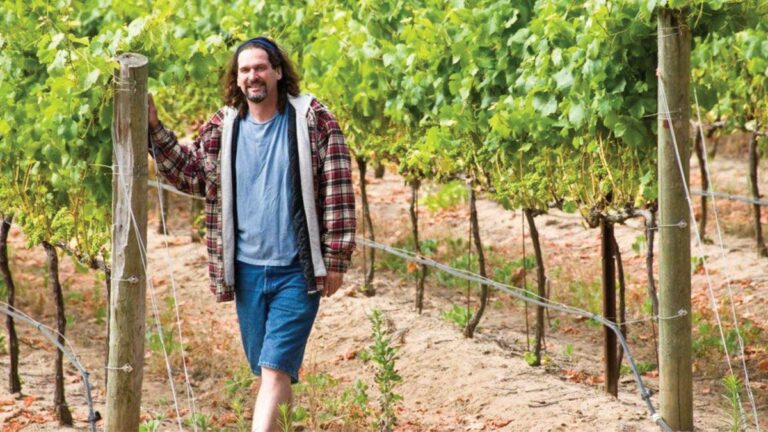
Situated in the Santa Cruz Mountains in what is known as the Vine Hill district, Alberti Vineyard is in a โsweet spotโ for growing premium Pinot Noir grapes. โThe slope of the vineyard is quite critical,โ says owner and winemaker Jim Alberti, adding that their vineyardโs gentle incline allows air to move through it, minimizing frost early in the spring when buds and tender shoot tissues are vulnerable. โThe slope also allows the heat of the midsummer day to rise, causing a cooling air flow within the vineyard,โ says Alberti. The Alberti Vineyard continues in the tradition of producing an estate-grown and limited estate-bottled Pinot from a spot in the Santa Cruz Mountains only 500 meters from the first-established vineyard in California, says Alberti.
Jim, along with his wife Peggy, is making some outstanding Pinot Noir (around $32)โthe only varietal they produce right nowโand itโs all handmade and aged in French oak barrels. We had houseguests for 10 days last monthโfriends who live in the south of Spain and swear by Spanish wines. But I opened up the Alberti Santa Cruz Mountains Pinot 2013 to enjoy with a pot of black beans and ham, served with crusty bread and a green salad, and they loved it. Tending toward the lighter side with an aroma of berries and cherries, itโs an easy-drinking Pinot with a medium mouthfeel that paired well with this simple food. Itโs also very flexible and gentle on the palate, so would pair well with everything from a ham sandwich to a hearty steak.
The Albertis donโt have a tasting room, although they do have a wine club, but the good news is that their wine is available at Cantine Winepub, Deluxe Foods of Aptos, Shopperโs Corner, Deer Park Wine & Spirits, and most recently in New Leaf on the Westside and in Capitola. Visit albertivineyard.com for more info.
Motiv Move
LionFish SupperClub will soon have its very own space in which to continue its popular dinner events. Owners Zachary Mazi and Tighe Melville will be cooking at Motivโs upstairs bar/kitchen on Center Street and operate a Wednesday-Saturday dinner service from 4-10 p.m. There will be a grand opening on Friday, March 4, but in the meantime you can check them out in their new space on Feb. 19 and Feb. 26. Mazi and Melville want to focus on โbreathing new lifeโ into the epic Pacific Avenue locale. Visit lionfishsc.com for more info.
An Epicurious Lifestyle. Itโs a pretty big mouthful. But before you whip out your smartphones and start googling, we already asked owners Marci Prolo and Adrienne Megoran what it means.
More importantly, we asked them about the actual company, which hosts private and public food events. Some folks might already know Prolo for her brand of homemade toffee, Gooseโs Goodies, and Megoran for her catering company Food, Family & Vino. Together, they host public dinners at their kitchen twice a month. GT: What is โAn Epicurious Lifestyle?โ
MARCI PROLO: Epicurious means โenjoy today for tomorrow we might not be here.โ We chose that because we have the one table that invites you to have family-style dinners, so really itโs just enjoy the food, enjoy the time you have together because tomorrow we wonโt know what will be brought forth. What do you guys do?
MARCI PROLO: We do private events here. Some organizations have their meetings in our kitchen during lunch or dinner. Weโve had book clubs in here. We also have a themed dinner. One of them is always the last weekend of the month. We have a beautiful table that was built by Adrienneโs husband. It can fit 20-22 people. We have a four-course meal. You come in and you can mix and mingle. What really is behind it is to meet new people and enjoy breaking bread together. What we like to say is you come in as friends and you leave as family. What kind of food do you prepare?
ADRIENNE MEGORAN: We basically work off of the seasons, and what is sustainable. I would use more root vegetables or heartier meats in the winter time. And in the summertime get back to fresh vegetables, fruit and seafood. We do four courses. People sign up through our website. Itโs kind of like a pop-up. On Feb. 27, we are doing a cozy dinnerโIโm doing braised beef short ribs with citrus gremolata, and salmon with Meyer lemon vinaigrette. Itโs a little bit of a heartier meal because it is winter time. Itโs going to keep within the seasonal theme for the appetizers and desserts. Why only 20 people?
MEGORAN: If it was more than that, I would need to hire a sous chef or somebody to help me prep. Twenty people is perfect for me to handle myself. The table has benches, and we have two bistro chairs on each end. Itโs a nice number where people can still interact and talk to one another. Then we have a chalkboard where we write the menu on there and whatever events are coming up. 104 Bronson St., Ste.13, Santa Cruz. 471-8524, anepicuriouslifestyle.com.
Black Tiger Sex Machine is a trio of Montreal-based electronic music producers that creates a hybrid of produced tracks, loops, synthesizer, samples, live drums, and more. And, they do it all while wearing lighted black tiger masks that add significantly to the already trip-enhancing visuals and extraordinary stage show. With a heavy and aggressive sound, and whatโs been described as โpost-apocalyptic visuals,โ the trio is a favorite on the underground electronic dance music scene.
INFO: 9 p.m. Friday, March 4. Catalyst, 1011 Pacific Ave., Santa Cruz. $14/adv, $17/door. 423-1338. WANT TO GO? Go to santacruz.com/giveaways before 11 a.m. on Friday, Feb. 19 to find out how you could win a pair of tickets to the show.
There are a lot of jazz ensembles in the Santa Cruz area, but there arenโt many like Hot Club Pacific, which has been together for more than a decade, and has had three steady gigs for the past six years, including the Crowโs Nest where they play every fourth Wednesday of the month.
For one thing, the group brings to mind what a classic swing jazz band sounded like to a 1950s audience. This isnโt bebop, and itโs not Dixieland. It captures a time when jazz was pop music, and usually had a lead clarinet player, not a sax or trumpet.
โWhen jazz was pop music, when jazz was as big as the Beatles and Michael Jackson and Lady Gaga, it was clarinetists that were in front of all the bands. When jazz shifted to the saxophone, it lost its popularity. I think it also lost its danceability,โ says band leader Marc Schwartz. โYou can dance to what we do. Most modern jazz bands, one could not say that about. Weโre probably one of the last danceable jazz bands out.โ
The band usually plays as a four-piece. The lineup rotates, but includes Schwartz on lead guitar, Jack Fields on rhythm guitar, Dale Mills on Clarinet, Nat Johnson on bass, Olaf Schiappacasse on drums and Bill Bosch on bass.
When the group started, they were a Django Reinhardt tribute band, but they gradually shifted into playing more classic American jazz standards, though they still do play some Reinhardt tunes and some sprinkling of the gypsy jazz sound.
โOur specialty is really the great American songbook. A lot of itโs the standard repertoire of the old-school jazz band. You wonโt hear a lot of Miles Davis or Thelonious Monk. Youโll hear a lot of Jerome Kern, Cole Porter, Gershwin Brothers, a lot of Harry Warren, that sort of thing,โ Schwartz says.
In addition to their regular spot at the Crowโs Nest, they play every Monday night at Soif Restaurant in Santa Cruz, and every third Thursday at Gayleโs Bakery in Capitola.
INFO: 7:30 p.m. Wednesday, Feb. 24. Crowโs Nest, 2218 E Cliff Drive, Santa Cruz. $5. 476-4560
Itโs time to come clean: behind the doors of the Good Times office, beyond its tastefully decorated lobby, thereโs been a cult flourishing openly for more than a year. This being Santa Cruz, the worldโs leading exporter of conspiracy theory, Iโm sure someone already suspected this. And, for once, itโs true. Itโs a cult whose membership has infiltrated all departments: advertising, production, editorialโprobably distribution, too, although I think theyโre more of a sleeper cell.
It all started when somebody in the officeโI honestly canโt remember who was the firstโdiscovered the Serial podcast. Whoever it was had to go and talk about it, and within a few weeks, several key members of the staff were hooked. It got to the point where there would be impromptu meetings in my office on Monday mornings some weeksโafter everyone had time to absorb the previous weekโs episodeโto discuss the latest developments. What was Jayโs deal? Was the creepy park guy as innocent as he claimed to be? How is it possible that no one knows whether there was a pay phone at Best Buyโthere either was or there wasnโt, people! Seriously, though, what was Jayโs deal?
The cult didnโt break up when the first season of Serial ended. It moved on to obsessing over Undisclosed, the podcast that examined the Adnan Syed case in even more minute detail. (Those taps, though. WTF.) And also The Jinx, and then of course Making a Murderer, and now season 2 of the podcast that started it allโfor us, at leastโSerial. And for a lot of other people too, obviously, since Serial is probably the biggest culture phenomenon of the last two years (non-Star Wars division).
I was intrigued to discover that one of the minds behind Serial, co-creator and producer Julie Snyder, is a UCSC alum who got her start in radio here in Santa Cruz before moving on to one of NPRโs flagship shows, This American Life. Snyder is coming back to the Monterey Bay with Serial host Sarah Koenig to discuss the making of the podcast at an event at Carmelโs Sunset Center on March 9.
At the end of my interview with her, I told her about the GT cult of Serial and she sounded not just thrilled but also genuinely shocked to hear about it. This is a woman whose podcast has been downloaded over a 100 million timesโhow can that possibly surprise you at this point, I asked her. She laughed, but later I realized itโs because the people behind Serial are only beginning to understand the influence they have. Theyโre not jaded by their success, and they just want to tell more stories. So do we here at GT. Enjoy!
STEVE PALOPOLI | EDITOR-IN-CHIEF
1 DIRECTION
I appreciate the Good Timesโ story last week (2/10) about the underreported greenhouse gas emissions which would result from proposed Highway 1 expansion. The Campaign for Sensible Transportation (CFST) has more concerns than that about the related Environmental Impact Report, and in a collaboration with the local Sierra Club, weโre posting an eight-page, detailed and referenced, greenwash-free analysis on our website, sensibletransportation.org.
You can also see our Highway 1 slide show and sign our petition at the website. We agree thereโs a traffic congestion problem on Highway 1; the necessary question is: whatโs smart to do about it, while not helping to hand the children of the future a destabilized climate?
Weโd like to correct any mistaken impression that could result from the GT story. CFST supports having a local transportation sales tax measure considered by the voters, to include sustainable transportation measures that would help reduce automobile dependence in Santa Cruz County along with providing funds to maintain the existing transportation system. Weโre asking the RTC to move in that direction, instead of including funds for adding lanes on Highway 1 in projects that have been shown will not perform, either to provide long-term congestion relief or to promote livable communities. We know better than to repeat old mistakesโand besides, itโs wrong to wreck the world.
Jack Nelson
Co-Chair, Campaign for Sensible Transportation
Spooked
I wanted to write and thank you for the insightful article โWalking with a Ghostโ in the recent Good Times (2/10).
Iโve read a thousand of these, and have never been compelled to try to contact the writer of an article before but this one really got to me.
As a 30-year-old who grew up in Santa Cruz and has lived in big cities, (Bay Area, L.A.) Iโve gotten to see this ghosting phenomenon on different scales.
Your article has described things that Iโve both done and been on the receiving end of. It made me go back and question my own involvement with this behavior and why I did it or allowed it to be done.
Texting is truly a terrible way to express feelings, but I hear people argue itโs โeasyโ or โconvenient.โ But really … itโs shallow. (I use it for work mostly, but hate it for my personal life.)
I have no social media for this reason, except LinkedIn. And that’s all for work.
Iโm grateful you took the time to write about this, and wish it got more coverage in mass media.
Trevor Adrian | VIA EMAIL
Online Comments Re: โOn the Runโ
Wow, nice to see someone out there is paying attention. I have to agree with virtually everything in this article. I have been telling my customers and others for decades that the vast majority of our fish are hatchery produced. Restore our waterways use innovative hatchery techniques and we can have salmon for all. Ignore the problems and we all lose. Itโs time that salmon and Steelhead get the attention and respect they deserve. Three cheers for the author.
โ ย Capt. Ivan Hotz
Wow! What an interesting and intriguing article on salmon! I hope it’s not too late to save our salmon.
โ ย John McHatton
PHOTO CONTEST WINNER
Submit to ph****@*******es.sc. Include information (location, etc.) and your name. Photos may be cropped. Preferably, photos should be 4 inches by 4 inches and minimum 250dpi.
GOOD IDEA
CREEK PEAK
A group of volunteers has started serving in Boulder Creek, teaming up with the Valley Womenรขโฌโขs Club of San Lorenzo Valley to restore local landscapes. The AmeriCorps National Civilian Community Corps will work around the San Lorenzo Valley through March 15. They will remove invasive plant species in Highlands County Park, build a new bridge to reduce erosion and restore bird habitat at Scott Creek Beach, among other projects.
GOOD WORK
SCHOLAR CHIP
Leah Resendez, a 27-year-old mother, Cabrillo College student and cancer survivor, will receive a $2,000 cash prize next month from the Soroptimist International of Capitola. Resendez, whose daughter has special needs, will use the money to help her write, as her illness restricts use of her right arm. The award is given to a woman in a vocational training program or an undergraduate degree program and is the primary financial support of her family.
When Julie Snyder got her first radio gig as News Director at KZSC, she had no idea that two decades later sheโd end up co-creating the worldโs most famous podcast.
In fact, her entry into the medium was far from earth-shattering, motivated by a vague notion of wanting to do journalism, and not having any clue how to go about doing it.
โI heard they had the broadcast class at the radio station, and I thought, โWell, I guess I could try that,โโ she remembers.
But in the summer of 1994, after her third year at UCSC, she landed her first paying job, working as the morning anchor at KSCO. The next summer, after graduating with a degree in politics, she was KSCOโs afternoon anchor. Two years later, she was hired by WBEZโs then-fledgling show This American Life, where she still works as senior producer.
But since 2014, Snyder is better known for creating and producing (and occasionally appearing on-air in) the podcast Serial with her This American Life co-producer Sarah Koenig. Serial put a different spin on TALโs storytelling format by stretching a single story out across a whole season of hour-long episodes that dug into the narrative from a number of different angles.
Maybe it was just the right moment in American culture, with distrust of the criminal justice system hitting seemingly new highs. Maybe it was the compelling story and personality of Adnan Syed, who still claimed to be innocent for the 1999 murder of Hae Min Lee, his ex-girlfriend and fellow student at Baltimoreโs Woodlawn High School, for which he was serving a life sentence after two trials. Maybe it was host Koenig’s incredibly personal delivery, in which she was so forthcoming with her doubts and frustrations about the case that she was accused of everything from flip-flopping to oversharingโbut left no doubts about her transparency. Whatever the reason, Serial is the most popular podcast in history, reaching five million downloads faster than any before it, and eventually passing 100 million downloads.
In becoming the first โmust-listenโ podcast, Serial seemed to give the format its first cultural legitimacy, with fans binge-listening in the same way they were used to consuming TV shows and movies.
At the end of last year, Serial returned with season two, featuring an entirely new story about the case of Bowe Bergdahl, the U.S. soldier who was captured by the Taliban in Afghanistan, freed in a controversial prisoner swap five years later, in 2014, and now faces a court-martial on charges of desertion and โmisbehavior before the enemyโ that could result in a life sentence.
Snyder and Koenig will come to the Sunset Center in Carmel on Wednesday, March 9, for an event titled โBinge-Worthy Journalism: Backstage With the Creators of Serialโ in which theyโll discuss the workings of the podcast. Snyder spoke to GT from her office in New York the week after the show posted a series of updates about a new hearing granted to Syedโa hearing which many credit Serial for setting into motion. ย GT: Last week must have been intense, between putting out an episode of season 2 and also doing three mini-episodes with updates from Syedโs hearing.
JULIE SNYDER: Last week really took a lot out of us. It was crazy. We should not have done that, it was too nutty. I guess if you just decide to give up sleepโthat was what we kind of felt like we did. But I guess you probably felt like you had to do the updates, since so many people are following the case through you.
Sarah really wanted to. Itโs hard, you know, you feel like, โWait, for a year I was in this world.โ And then youโre going to have, for three daysโwhich turned out to be five daysโpeople testifying and talking about the case. We kind of lived inside there for a long time. She definitely felt like she had to. I wasnโt clear on whether or not we had to do anything with it, but at least we had to go. And then we knew we would be having conversations at the end of every day anyway about what happened, so then it felt like โWell, I guess we could put that stuff out.โ We kind of did the best we could while weโre in the middle of the second season. Many people credit โSerialโ with the fact that Adnan Syed is getting a new hearing in the first place. Whatโs it like seeing the real-world effect the podcast has had?
It was heartening for me that the appeals court said, โOK, we should take another look,โ because for me I did think that particularly Asia McClainโs testimony felt like it was at least something that should be considered. I canโt get inside the court of appealsโ heads to understand what theyโre thinking or where theyโre coming from, but a lot of people who were more familiar with the court said to us that with the extra scrutiny on the case, it means a lot to the court that this process be transparent and receptive and working. Good! In that way, it was good to see, and I was fascinated by the process of it and seeing what happened. Thereโs a moment in one of the hearing updates where Sarah says to co-producer Dana Chivvis something like, โOh, remember when we thought this would be as easy as just finding Asia McClain, and the whole thing will be solved?โ Was it really like that at the beginning, where you thought this would be fairly simple?
Yes. It sounds so silly, I know. I know! But yeah, it kind of felt a little like, โwell, every question has an answer, so youโve just got to push a little harder and ask the right people, and youโll get an answer.โ And we did! Thatโs the thing, we got a lot of answers. The problem is that then a lot of times the answers raised more questions, as well. So we kept on going deeper and deeper and deeper into it, you know? But you canโt just stop and say, โThese things are unknowable,โ because theyโre not unknowable. Thatโs where it gets frustratingโyou never know where to stop. For us, by the end, I couldnโt think of any more avenues to go down. I think we felt like weโd probably exhausted what we could do. Thatโs interesting, because โUndisclosedโ started up right after that, and looked at the same case from a very analytical legal perspective. What was it like for the team at โSerialโ hearing the first few episodes of that, which broke some new information that built on what you had done? CENTRAL CASTING Snyder and Koenig at work. The pair will discuss ‘Serial’ at the Sunset Center on March 9. PHOTO: ELISE BERGERSON.
Sarah has never heard Undisclosed, and I canโt say Iโve listened to every episode. I have heard some episodes of Undisclosed. [What they did] for what was introduced last week at the hearing about the cell tower testimony, that was pretty incredible. I was aware of the cover sheetโand that was one itch that was not scratched last week, the question of does it make a differenceโbut the fact that they had talked with the AT&T cell phone expert who had testified at Adnanโs trial, who said essentially, โI wasnโt aware of this disclaimer, and I now feel like I canโt stand behind my testimony because of it,โ I felt like whoa. That was really big. But with Undisclosed, I think they have a different agenda than we do. There were a lot of other things that I thought were pretty much more in the speculative camp. It definitely seemed like the โUndisclosedโ team were lawyers who had to learn to be journalists, which is funny since you guys are journalists who kind of had to learn to be lawyers a little bit.
Right. But the biggest difference I think is that โSerialโ had such an emphasis on storytelling. Do you think its breakthrough into the mainstream came from that attention to crafting the story?
Yes, and we focus a lot on how to tell a story, and how to tell something that feels emotional, and has meaning, where people are more than just props. Where youโve got three-dimensional characters. Empathy, trying to see things from everybodyโs point of view, is something that weโre always going for. News stories, personal stories, everyday storiesโa lot of times theyโre complicated, and I think we can be a little knee-jerk sometimes in assuming things are more simple than they are. So yeah, we put a lot of thought into trying to get across in these stories the level of emotion and understanding that weโre seeing when we meet people, and when we talk to them. Were you shocked at how many people seemed disappointed that you didnโt โsolveโ the case in season one? Although, I admit Iโm not sure what that would mean.
Right, it seems like itโs really complicated. Yeah, definitely. For me, I felt like when we went on the air and began broadcasting I knew that at the very least where our reporting had led us was that this crime did not happen the way the state is saying that it happened. So in that regard, at least, I knew I had a story that I wanted to tell, and Sarah had a story that she wanted to tell, saying, at the very least, hereโs what did not happen. As the podcast went on and a lot of listeners became convinced of Adnanโs innocence, it seemed like many started to take a rooting interest, to the point where people would express frustration whenever she raised the possibility that he did do it.
It seemed like it was important for her to say both what she knew and what she didnโt know. Thatโs ballsy, especially to talk about what you donโt know. Thereโs a role often that reporters and writers will take, as if they know everything. I really admired her for being honest about what she couldnโt figure out, and what she struggled with while trying to figure it out. Did you have a lot of discussions about that transparency?
Yeah, a lot of times where it would come up is that so much of that storyโas is apparent even in those updatesโlives in the details. Itโs pretty deep in the weeds. And so we would start trying to say, โWell thereโs this, but then on the other hand, thereโs that. And then thereโs this, and then thereโs that.โ It was hard, we would be in edits and say, โI feel like youโre just giving me a bunch of facts. I donโt know how Iโm supposed to be piecing it together. I donโt understand what it means.โ I think thatโs where we came to learn that we needed Sarah to tell us what she thinks. Even if we didnโt agree. It was like, โThe only way for me to understand what I think about this is to understand what you think about this. Then I can disagree with you, but I need you to kind of put it in context. That was a little uncomfortable for her at first, even though she comes from This American Life, and weโre pretty used to narrative nonfiction in a traditional way. But that much was not completely comfortable for her. But I think she saw that that was the only way she could get people to interact with the story on the level that she needed them to. All of us, we want to be having this conversation with the listener, but we need them to be as inside of it as we are. Were there a lot of things you didnโt agree on? Did you argue about theories? ย
We would, because we would sometimes have these far-fetched ideas, like โWhat if โฆ?โ And it would just be like, โYouโre crazy.โ There werenโt knock-down, drag-out fights. But there were definitely certain people who had theories that were a little bit more their pet theory. There were times when we all could be kind of skeptical of each other, but you could a few weeks later kind of come around and be like โI get what youโre saying.โ How did you come to co-create โSerialโ in the first place, and why a podcast?
I was at This American Life for 18 years, and Sarah came on a little bit after me, so I think weโve worked together for about 12 years. And weโd been talking, and it seemed like at that point podcasts were a possibility. To start a new radio show is a lot of work. Itโs a lot of logistical work; you have to make a real commitment to doing it, because youโre asking the entire public radio system to sign on. So I think neither of us felt like we were in a positionโand I donโt think Ira [Glass] did eitherโto do that. We were being pretty experimental, kind of like โWe have this idea and we just kind of want to try it out.โ At that point, it seemed like podcasting was becoming more of an optionโwe could be experimental, we could do it for a little while, it could just be a season, they could be however long we wanted. It just seemed a lot more conducive to taking a chance. Was choosing Bowe Bergdahlโs story for the second season a deliberate attempt to do something radically different from Syedโs story and avoid being pigeonholed?
Not deliberate, because we always knew from the beginning we were going to do something really different. For the first half of season one, people would say โSo, you guys are a true crime podcast?โ And that was a thing we definitely did have to constantly be pushing back against, because we knew from the very beginning we did not want to be a true crime podcast. There was no way that was our genre. But then a lot of times people would say, โWell, so is the next story going to be a story about a crime, or a murder case or something?โ And at first I would always be like, โNo, no, no, no, no,โ and then after a while I realized โHonestly, I probably shouldnโt say no, because I really have no idea what weโre going to do next, because we have not gotten a chance at all to think about this.โ But we were pretty positive no. There are whole TV networks that are devoted to stories like that, you know? We knew we were not interested in going down that path. In a larger cultural context, Iโm curious what you think of the fact that โSerialโ has been credited with kicking off this wave of documentaries and podcasts devoted to examining the failures of the justice system. โUndisclosedโ and other podcasts continued to follow Syedโs story. โThe Jinxโ was sort of the flip side of โSerialโโs individual-possibly-wrongly-accused storyline. โMaking a Murdererโ was very much like the documentary version of โSerial,โ another multi-part story examining the weaknesses in the stateโs conviction of a man serving time for murder. Do you agree that โSerialโ started something?
In that regard, I think we definitely did not start anything. I think just on the facts alone we didnโt start anything, because those projectsโwell, Undisclosed is different, but The Jinx and Making a Murderer were all well into production for much longer than we were around. I know we all kind of get put together, but thereโs nothing new about crime stories. And thereโs nothing new even about serialized storytelling. But where I do understand it, what I think has changed, is the idea of slowing down a story, and telling it using all the tools of journalismโrigorous reporting, fact-checking, and all the kind of boring, sloggy stuff that goes into regular journalismโbut then telling the stories in an emotional way, where people are three-dimensional characters and have contradictions and ambiguities. The Jinx and Making a Murderer, a lot of times youโre not exactly sure if somebodyโs a good guy or a bad guy, youโre not sure what youโre supposed to think of somebody. I think there is a way that people are becoming a lot more comfortable in storytelling, and being honest about that. And I think that might be the thing that weโre all sharing in the way weโre reporting stories. That might be the thing we have in common.
โBinge-Worthy Journalism: Backstage With the Creators of Serialโ will feature Julie Snyder and Sarah Koenig discussing their process and personal stories about creating the podcast at the Sunset Center in Carmel at 8 p.m. on Wednesday, March 9. Tickets are $59-$129, available at sunsetcenter.org. Serialโs website is serialpodcast.org.
Neither one looks cool to me. Pam Myers, Santa Cruz, Real Estate Broker I think vaping looks pretty douchey. Theyโre both kind of awful. Korinne Varner, Gilroy, Nursing Student Vaping just comes with an attitude of like, โI think Iโm so cool.โ Like a superior attitude....