When supporters of local ballot measures go door-to-door to distribute campaign materials, they’re trying to raise awareness and establish what the pundits call “likability” for their issue. But there’s likability, and then there’s likability. Just ask anyone visited by supporters of Measure S, the $67 million bond and parcel tax aimed at improving Santa Cruz libraries, in the run-up to the June 7 election. “People are always suspicious when they see someone walking up to their house,” says Casey Coonerty Protti, owner of Bookshop Santa Cruz, who took her two young children with her to walk local precincts in support of Measure S. “Then they see these little kids saying ‘Will you support the libraries?’ You can see their hearts melt immediately.” As the very last votes are counted, the passage of Measure S—officially, the Santa Cruz Libraries Community Facilities District Bond Issue and Parcel Tax—is all but in the books, with nearly 70 percent approval from local voters. What’s impressive about its victory is not just that it cleared the necessary two-thirds majority, but how it did it. Its remarkably well-organized and executed campaign stands out in contrast to that of Measure Q, the $310 million bond for Cabrillo College that needed a smaller 55 percent majority to pass, but seemed mired in voter confusion over how and by whom funds would be spent—not to mention hobbled by an opposition whose most visible member was himself a Cabrillo faculty member. Receiving only 52 percent of the vote, Measure Q failed at the ballot box. Meanwhile, support for Measure S seemed to snowball, with a broad base of volunteers that ranged in age from kids like Protti’s to seniors, across income levels and also across the geographical landscape, since all 10 branches in the county stood to benefit and got the vote out in their own communities. “We had a whole bunch of hard workers and volunteers who did the phone banking and walked the precincts and a lot of other stuff,” says Santa Cruz Mayor Cynthia Mathews, who many credit with shepherding Measure S to victory. “And we got a really early start on endorsements, I think that was one of our strengths. In January, we started calling groups and getting on their agendas. We got every school board in the service area to endorse. We got children’s groups, we got seniors’ groups, we got business groups, we got labor groups. We had over 50 organizations.” So effective was the Yes on S education and outreach effort that the measure ended up with no organized opposition. But its network of support didn’t just materialize because of voter loyalty to libraries. It was won through months of hard work to bring out that loyalty, by explaining to basically anyone who would listen exactly what the libraries do for their constituents, what was in (sometimes dire) need of improvements in the system, and how exactly Measure S money would be spent to make those improvements. “We’re in small communities—you can go out and talk to all those groups. Go speak to the Aptos Rotary, or the Scotts Valley Chamber. It’s all time—you’ve got to call, you’ve got to get on their agenda, you’ve got to send someone,” says Mathews. “But I think that really deep grassroots work was a big part of it. By the end of the talk, they’ve had their questions answered. That’s what you get from personal contact.” But what most distinguishes this tightly run and extremely economical campaign (it cost $65,000, of which $40,000 was donated by Friends of the Santa Cruz Public Libraries) is the amount of preparation that went into it before Measure S was even drafted. Beginning in 2013 with the Facilities Master Plan that was drawn up with the future goal of a ballot measure like S in mind, Mathews and a core group of library staff and supporters began an extremely complicated process of getting the library system’s own house in order, as the existing Joint Powers Authority—the agreement through which the county and cities run the local library system—was set to expire in 2017. “We thought, ‘well there has to be a new Joint Powers Agreement and a new financing agreement,’” says Mathews. “If we’re going to go to the voters for money, the first thing they’re going to ask is ‘Who’s in charge of this thing?’ All that had to be worked out simultaneously.” These were complications most ballot measure organizers never have to face, especially if they’re dealing with a tax measure in a single jurisdiction, and it took a couple of years just to hammer out. “It was dicey. It was very tricky,” says Mathews. “Let me just say it was a lot of negotiation. That was not really visible to the public. It was a lot of preparation. But it had to happen in order for there to be a strong campaign without a lot of extraneous issues or question marks.” In the end, the process also brought a unity to a campaign that supporters would rely on to win. “I think the challenge for us in bringing our campaign together at the beginning was seeing it as a system-wide campaign, and not just Felton getting their library, and Capitola getting their library, and Aptos getting theirs,” says Mathews. “We definitely had to solidify as a system-wide campaign, and we did it early on.” As news of the measure’s success spreads, other cities are beginning to take notice of what the Measure S campaign accomplished here. “I’ve been called by other libraries asking how we did it,” says Janis O’Driscoll, who took over as interim director for the library system last year. She thinks the key is that the education effort reached back long before there was a tax measure to pitch. Because of that, the outreach became a genuine dialogue, she says. “Don’t talk to the community only when you want to ask them for something,” advises O’Driscoll. “We worked hard at making people understand what the library does for [them]. By the time I started going out when we had a specific ballot measure to talk about, they already knew what the library was about.” For Mathews, the key to passing a ballot measure like S is pulling together the most comprehensive effort possible. “Get together a team that combines experience and energy, because it’s a long slog, and you need different talents,” she says. Protti’s advice is way simpler. “If you want any measure to pass in Santa Cruz,” she says, “get Cynthia Mathews involved.”
The murmur of roughly 70 people filled the Museum of Art & History’s lobby on the evening of June 1, during the second of four Santa Cruz City Hall to You meetings, put on by city staffers. Colorful trifold cardboard displays and laminated posters lined the edges of the room, giving the new event a science fair feel. The newly launched program is an attempt by Santa Cruz City Hall to directly inform locals about what’s happening in their world and demonstrate how their community works. The who’s-who of Santa Cruz government included a Q&A with Mayor Cynthia Mathews, councilmembers and directors from every major city department. Local institutions—from the police to the public libraries to the parking and water departments—were present at tables, with pamphlets to hand out, as well as some pretty useful advice. The Parking Enforcement Department, for instance, displayed a sign showing how to read downtown meters from “cheap” to “cheaper” to “cheapest.” (The ones with the red labels are “cheap,” and the green labels designate the “cheapest.”) After an hour of chatting, attendees sat down for an hour presentation led by Vice Mayor Cynthia Chase on upcoming plans for the downtown area. “City Hall to You is just that,” explained Chase, who came up with the idea for the summit. “Our intention is to bring the city services to the community to answer your questions, talk about projects we have going on and let you know about initiatives that are happening.“ All this comes on the heels of a changing platform of how city and county governments are interacting with their communities. Leaders are going right to residents and reaching them in a way they never have before—posting on nextdoor.com, managing social media accounts and planning informational meetings. Long gone are the days when people wrote letters to their local governments. For years, they’ve used emails and, more recently, social media platforms like Facebook and Twitter, to air concerns and ask questions. Many departments at City Hall run their own website, blog and Facebook page. With the information available, one can find pictures of polling places on election day, updates about the current issues and information about upcoming meetings with a few clicks of the mouse. Some posts are more humorous, like a Twitter poll from the Santa Cruz County Government’s page in March asking followers what to name Watsonville’s floating “island” that had broken off and was drifting around Pinto Lake. The top vote getter? “Interlakistan.” “The first step is to get people’s attention,” county communications manager Jason Hoppin says of getting information out in the digital age. “Once you have their attention, you can work with it to get them to follow through with action.” Hoppin, a former award-winning journalist for the Santa Cruz Sentinel, was hired by County Administrator Susan Mauriello in August of last year. He says that as people lose trust in government institutions, it becomes increasingly important to get good information out to people who care. “There’s a lot of distrust of government, up and down, from federal to local levels, and it’s something that’s been growing,” says Hoppin, one of five former Sentinel journalists now working in public relations. “It’s incumbent of government to tell residents what they’re doing to serve the community.” It should come as no surprise that news coverage in Santa Cruz is thinner than it was three years ago, when readers had more options for information, including Santa Cruz Patch or KUSP—and of course a more robust daily coverage in the Sentinel. This has forced government officials to be more creative about how they keep people informed. But as the digital age changes how people learn, longtime journalist Conn Hallinan says that news reporters should not sit back and be satisfied with city leaders covering issues for themselves. While government leaders are fully capable of sharing information, he notes that that isn’t their primary focus. Their goal is to govern. “For one thing, government is not a neutral organization. Therefore, it very rarely makes itself look bad,” says Hallinan, a former UCSC lecturer who’s based in Berkeley. “That’s why you have an independent press. You have an independent press because you want independent analysis. I’m not saying this is propaganda, but, in a way, it is propaganda. These people are going to show you how government works. They’re not going to show you how government doesn’t work.”
Social Distortion
Chase says one of the things city officials are trying to do is combat the inaccuracies that can spread on social media. “With social media, information spreads quickly, whether it’s accurate or not,” she says. “Misinformation is spread, and it’s hard—and time-consuming—to chase that down and inform the people accurately.” In a way, that’s how City Hall to You represents a shift in approach, Chase says. It lets community members connect with officials on a personal level in their own neighborhood. “With the advent of social media, there has been talk [in the government] of more communication,” states Scott Collins, assistant to the city manager. “But it’s no substitute for a face-to-face interaction.” At the meeting, speakers included City Manager Martín Bernal, Parks and Recreation Director Mauro Garcia, and Economic Development Director Bonnie Lipscomb—each discussing future plans, along with dates of public meetings when the community can participate. They updated listeners on the Beach Flats mural project, affordable housing, the Santa Cruz Fiber Project, and downtown’s Hospitality Guide Program, which is soon to be replaced by park rangers, who will have the authority to issue tickets for minor infractions. “I think people struggle with government on accessibility, and on a certain level, trust,” Chase says. “So this was really an attempt to get out into the neighborhoods.” So far, the response, Collins says, has been positive. Each meeting is designed to target a specific area of the city, and this month’s event aimed to reach downtown, the beach-area and Harvey West residents. The third City Hall to You will be on Wednesday, Aug. 31 at the Peace United Church on High Street and will focus on the Westside. The fourth and final meeting of the year will take place on Dec. 7 at the Elks Lodge on Jewell Street and will focus on the Ocean Street/Upper Eastside area. The city also welcomes people from outside the designated area at each event. The first meeting, held in February, focused on the Eastside with roughly 200 people attending, which blew away our expectations,” Collins says.
The next City Hall to You is at the Peace United Church at 8:30 p.m. on Wednesday, Aug. 31. For more information, visit cityofsantacruz.com.
Matt Adams, the man behind the Blank Tapes, has written more than a hundred songs in the past couple of years alone. That’s not really anything spectacular for him. Since he started making music under the Blank Tapes moniker a decade ago with just a lo-fi 8-track tape recorder, he’s had more music pouring out of him than he knows what to do with. The only difference is that in the beginning, he would just release everything, ending up with gigantic scatterbrain double albums with songs spanning folk, rock, surf, psychedelic and other genres. Nowadays, he says he tries to pull back a little bit. “Songs keep coming. It’s kind of like a faucet. Sometimes I have to turn it off so I can record the songs I already have written, ’cause I get too stockpiled,” Adams says. He is currently touring in support of a new album, Ojos Rojos, which was released in May. The songs are ultra-catchy surf-pop and psych-rock. The album was actually recorded back in 2013 and 2014, but he does so much writing that a backlog of a couple of years is not unusual. He’s already got three more projects in the queue to be released. One was recorded a couple of years ago up in Portland with friend Eric D Johnson of the Fruit Bats and the Shins. Johnson pushed Adams’ tunes into a spaced-out direction. Adams has also been recording some material in Texas with a different friend. And another he recorded down in Joshua Tree with a full band, a kind of cosmic country album. “I like to think about every album like a project and a set of songs that are chosen because of whoever is involved. Most of my early stuff was very isolated. Nowadays I like to collaborate more,” Adams says. Before he started the Blank Tapes, he recorded music on his computer like everyone else, but got infatuated with lo-fi analog recording, and wanted to build the project around that—hence the name. The first two albums were self-released. As all-over-the-map as they were, there was always a focus on styles and sounds stemming from the ’60s. “I grew up in the ’90s, but I didn’t really connect with it as much. The ’60s, as soon as I was turned on to music of that era, there was no turning back. It’s still my favorite era of music. It definitely shaped the way I write songs,” Adams says. When labels started working with him, he thought he owed it to them to edit these little chaotic lo-fi White Album-esque records into shorter and more cohesive packages. A critical moment for Adams was 2013’s Vacation. At a producer’s urging, he utilized some digital overdubs, something he hadn’t done since the inception of the band almost a decade earlier. And he found that it didn’t really comprise his sound. “Honestly, at this point, analog and digital is irrelevant to me. The most important thing nowadays is to record the songs and make sure the recordings sound good. I’ve recorded so many lo-fi cassette tape albums I never want to do that again. I just want a good recording,” he says. As he releases new albums, Adams continues to write more music, or in some cases piece together little fragments of songs he wrote years ago. He claims that some of his tunes he started when he was 10, but only recently put together. “I have a good memory. I can remember almost all of the melodies I’ve ever written. But if you were to introduce me to your friends, the next day I might forget all their names,” Adams says. “They float around in my head, and then eventually I’ll be sitting on the beach and I’ll be like, ‘oh I think I have an idea for this.’ Voilà! There’s a song.”
INFO: 8:30 p.m. June 23, Catalyst Atrium, 1011 Pacific Ave., Santa Cruz. $10/Adv, $12/Door. 429-4135.
Mary Roach is well known for her funny, unflinching forays into the scientific landscape. In bestselling books like Stiff, Spook, Bonk, and Packing for Mars, she explores the unexpected quirks of everything from death to sex to space travel. In her new book, Grunt: The Curious Science of Humans at War, she dives once again into the surprising details of a subject that most people understand only superficially. We talked recently about how she approaches her subjects and her work.
How do you come up with new ideas? MARY ROACH: It’s different for every book. Packing for Mars came from a story I’d been reporting about osteoporosis. The researcher I was talking to was an astronaut as well as an M.D., and he happened to mention this space toilet with a video camera that pointed straight up, which helped astronauts dock it, because docking toilets is very tricky. And I said to myself, “one day I will tell this story.” You must have countless stories and scientific gems floating around in your head. I do. The challenge is figuring out how to wrap a book around them. The finished product usually bears little resemblance to the book proposal.
“I was also surprised by all the thought that’s gone into submarine escape. There used to be no way out. If your sub went down, you were done—until one guy said, let’s do something about it.” – Mary Roach
How did you become interested in the science of war? I was reporting about the world’s hottest chili pepper and I found out that the Indian Defense Ministry had made a sort of homegrown pepper bomb for dispersing crowds, so I went to the lab, and there I started to realize that military science was pretty esoteric in ways I hadn’t realized. Also, around that time I was corresponding with a retired army pathologist who opened doors for me that led to other doors. It sounds like serendipity fueled your research. Exactly. At the morgue, they told me about the WIAMan project—which had to do with creating crash-test dummies to better understand underbody blasts. Then I heard about penis transplants through the surgeon who does reconstruction work, and he told me about cadaver transplant work. I don’t do a lot of advance planning for my books. It’s a little unnerving, but it’s taken me to interesting places. What surprised you in researching this book? Things like the extent of hearing loss. Anyone in artillery or special ops knows they’re going to lose a significant portion of their hearing. And I didn’t see the value of maggot therapy coming. I was also surprised by all the thought that’s gone into submarine escape. There used to be no way out. If your sub went down, you were done—until one guy said, let’s do something about it, so they designed an escape trunk, figured out how to equalize the pressure so the hatch could be opened, and created this little suit that has a small air supply so you can get to the surface. There it turns into a raft. What are the most impactful advances you came across? There’s a lot in emergency trauma care. The survival rates are pretty amazing now. They’ve got hospitals closer to the front, care in the air, flying operating rooms. There’s buddy care and tourniquets you can put on yourself with one hand, because that’s the number one killer, loss of blood. What touched you the most in your conversations with military personnel? Talking to an army captain who told me the story of stepping on the pressure plate that triggered an IED. It sure put things in perspective. I don’t have friends or family in the military, so I’ve never really spent time thinking about the horror of watching not just your leg, but your life be shattered in a split second. That was new to me, and intense. You don’t know what to say. I think that’s why it’s so hard for vets to readjust when they come home. They’re coming back to people who are sympathetic, but you can’t be empathetic in the same way unless you’ve been through it.
Mary Roach will read from and discuss her new book at 7:30 p.m. on Friday, June 24, at Bookshop Santa Cruz, 1520 Pacific Ave., Santa Cruz. Free.
Yes, sushi and reggae are a marriage made in sensory heaven, as the fusion sushi chefs of Sushi Totoro know full well. Listening to Bob Marley last week, we found ourselves infused with sinus-clearing horseradish-intensive dishes. Our favorite dinner at Totoro invariably runs like this: always the Tekka Maki with shiso leaf (the latter is graced with a peppery clean flavor that contrasts nicely with the rich, sweet tuna). Then we might add a member of the nigiri family. I have recently moved past the maguro into the celestial domain of hamachi nigiri—sticky rice delivering satiny yellowtail. A reason to live. Then my companion likes to add one of Totoro’s important rolls. Perhaps the “Youngster,” filled with spicy tuna and crunchy macadamia. Or, my favorite, the Futomaki loaded with pickled daikon and carrot, mushroom, egg and cucumber. “One World” rocks us through the entire meal. Sushi Totoro is on our permanent summertime menu. 1701 Mission St., Santa Cruz.
Garden’s Ready
The UCSC Farm and Garden’s organic produce market cart is a welcome sight at the foot of the campus, open every Tuesday and Friday afternoons all summer long. From noon until 6 p.m., the shaded cart offers an array of freshly picked fruits and vegetables grown just up the hill at the UCSC Farm and Garden. This week the cart seduced me into buying a pint of outstanding blueberries, a bag of mixed baby lettuces and two exceptionally pretty Meyer lemons. Right now is a great time to try onions, strawberries, kale and chard, plus those gorgeous mixed flower bouquets. Young growers from the famed agroecology program staff the cart twice a week, and the harvests change as the season deepens. I stop by every week just to see what’s fresh from the garden. Do thou likewise.
Notes from the Gluten-free Trail
I admit that it can be a challenge to do without bread, at least for a while. But once we got the hang of going gluten-free we found that we had lost “that stubborn belly fat,” as the commercials say, and experienced absolutely no indigestion—no matter what else we ate. So we’ve made the quest for tasty gluten-free bread substitutes something of a game. Our latest favorites are two crackers that make perfect companions for cheeses. One is the just-plain-delicious hexagonal Multi-Seed Crackers from Crunchmaster. For around $4 a bag, we plow through bagfuls of these crunchy creations of sesame, quinoa, flax and amaranth seeds. A great snack, it’s also a respectable companion for dips, spreads and any other topping on the planet. The newest member in our gluten-free arsenal is the organic, gluten-free, non-GMO, vegan (whew), very crunchy cracker from the charmingly named Mary’s Gone Crackers. For around $5 a box these babies look sophisticated and taste delicious. The recipe of brown rice, quinoa, flax seeds, sesame seeds, and tamari is as delicious as it is hyper-crisp. An interactive oral encounter is delivered by this feisty bread substitute which, if you’re counting, weighs in at roughly 10 calories per cracker. Available at New Leaf, Shopper’s Corner, Whole Foods, etc.
Appetizer of the Week
At an Assembly birthday dinner for painter Noah Buchanan last week, we wrapped our mouths around one of the sensory wonders of the local culinary world: the Scotch olive ($7). The word “flavor” just isn’t good enough for the explosion of tart, salty crunch, and toothsome texture delivered by these breaded, deep-fried Castelvetrano olives. Garlic sausage and cheese is also embedded somewhere in this magical finger food. I chased mine with a glass of gossamer, intricate Spanish Godello by A Coroa 2014, from Assembly’s inventive libation list.
If one speaks or acts with a corrupt Mind, misery will follow, as the wheel Of a cart follows the foot of the ox … If one speaks or acts With a pure mind, happiness will follow. Like a shadow that never leaves. — The Buddha Dhammapada
As the hot Los Angeles sun beats down from above, Noah Levine takes a sip from an iced tea. He wipes his freshly shaved head and looks around the cafe at the other patrons staring in his direction. The tall, muscular Santa Cruz native definitely commands attention, from his black shades to his colorfully elaborate tattoos that stretch from neck to toe. He looks like trouble. Probably no one in the cafe would guess that Levine is the founder of a Buddhist meditation society, Against The Stream. With locations in San Francisco and Los Angeles, Against The Stream holds daily meditation and dharma education classes from which no one is turned away (donations are accepted to help pay for the space and the teachers, but are not required). It also works in conjunction with his Refuge Recovery rehab program. “We’re going against greed, hatred and delusion,” says Levine. “And everyone is welcome.” Levine is best known as the author of 2004’s Dharma Punx, named after the group of friends who would change Levine’s life and bring a radically atypical world view to the punk subculture. This year marks the 20th anniversary of the founding of the Dharma Punx, which they memorialized with a trip to India earlier this year. More recently, however, Levine has partnered with another Santa Cruz native, Joe Clements—a local punk icon himself, thanks to his ’90s hardcore band Fury 66, which, while it may be remembered everywhere else merely because it shared bandmembers with breakout success story Good Riddance, had a huge impact on the scene at home. Together, the pair have formed the Deathless—the world’s first Buddhist punk band.
Wasted Youth
Born and raised in Santa Cruz, Levine spent most of his early years with his mother. His father, Buddhist teacher and author Stephen Levine (who is credited with helping bring Eastern religion and philosophy to the West in the 1960s, along with other notable teachers like Ram Dass) lived in New Mexico, where Noah would visit and spend a short time living. However, even at the tender age of 5 years old, it was apparent Levine was troubled. “That was also the year I began stealing, at home, at school, and I even used to break into the neighbor’s house when they were away and eat their cookies,” he wrote in Dharma Punx. A few years later, he was smoking weed, and by age 10, taking magic mushrooms. That was also the year he would discover a lifelong love: punk rock. The raging message of anger and change appealed to his nihilistic side. “Punk is a critique,” says Levine. “It mostly points out what’s wrong, but there are people in the scene that are active with social and environmental issues.” NEVER MIND THE WORLDLY ATTACHMENTS Friends for three decades, Joe Clements (left) and Noah Levin started the Deathless to combine Buddhist philosophy with the punk sound they both love. During his troubled teenage years, Levine met many like-minded punks who would later become staples in the Santa Cruz scene. People like Clements, with whom he became instant friends. “Shit, I’ve known Noah for 30 years,” says Clements, who, besides singing in Fury 66 and now the Deathless, is also the founder of Compound Recording Studio. “I know that guy inside and out.” By the time Levine was 17, he had been in and out of Juvenile Hall enough times to want to make a change. In fact, it was in Santa Cruz County Juvenile Hall that he finally decided to listen to the advice of his father and take up meditation. “Desperation led me to meditating and going to 12-step programs,” he remembers. “It made me realize I am responsible for my own actions and karma, which led me to change the relationship with my mind and body. It was an internal revolution.” Throughout his 20s, Levine admits that he still struggled with the law, and with quieting the negative thoughts in his head. During that time, he continued the path of the dharma, quickly influencing many of his peers in the community. The Straight Edge punk movement was in full swing and helped him communicate the principles of sober living to friends with whom he formerly got high. In 1996, Levine began holding informal meditation classes in his living room with Clements, Vinny Ferraro and Micah Anderson. Thus the Dharma Punx were born, even if not everyone was ready. “I’d be so bored I’d start pillow fights, or punch my friends,” says Clements of the early Dharma Punx meetings. “I was still searching for things outside of myself to fix me.”
Chakra Rock
All of this begs a reasonable question: How can a youth culture and music movement known for cynicism and anarchy fit with a 2,500-year-old religious philosophy that preaches love, compassion and understanding? For that answer, it’s best to return to the original Buddha, Siddhartha Gautama. “He was an anarchist of his time, if you think about it,” explains Clements. “He went against everything [his culture] was saying. Like punk, he wasn’t believing the lies.” Legend says that when Gautama was born, sages predicted he would either be a great spiritual teacher or warrior king. His royal parents wanted him to ascend to the throne, and lavished him with every luxury available. It wasn’t until his 30s that Gautama learned that the world is filled with suffering—nobody escapes sickness or death—and searched for an alternative path.
“He was an anarchist of his time, if you think about it,” explains Clements. “He went against everything [his culture] was saying. Like punk, he wasn’t believing the lies.”
He renounced his material possessions, and attempted several failed spiritual awakenings with his culture’s leading religions. Legend has it, when he finally meditated for days beneath a Bodhi tree, Gautama realized the only escape from suffering is through detachment, and thus became the Buddha (or “Awakened One”). He would dedicate the rest of his life to teaching students the dharma (“truth”) of life, and that only through their own actions (“karma”) could they find happiness. “Through mindfulness, you see everything is impermanent,” Levine explains. “Everything changes, and if you cling to things that change, you’ll experience stress and suffering.” Dave Smith, a student of Levine who now teaches at Against The Stream (ATS) and works as a counselor at the L.A. Refuge Recovery, says Buddhism subverts the dominant view of spirituality. “Buddhism rejects salvation,” he says. “Not only is external salvation not there, but the idea is a trap. [Buddhism] is about self-awareness. It’s an internal process that doesn’t fit comfortably in the world’s stage of religions.”
Beyond 12-Step
While its roots stretch to Levine’s Santa Cruz days, along with his Mind Body Awareness project that brings meditation and Buddhist practice to juvenile halls, his Against The Stream Buddhist Meditation Society officially began in 2007 after the publishing of Levine’s book of the same name. With daily classes in Los Angeles and San Francisco, ATS boasts 16 different teachers and facilitators in its roster, including original Dharma Punk Vinny Ferraro, who teaches at the San Francisco location. “Through meditation I’ve learned not to take the mind so personally,” Clements enthusiastically claims. “‘Thoughts are just thoughts.’ I stole that from Vinny, and it’s so true. I can bring them to life, or just let them go.” June marks the second anniversary of Levine’s latest book, Refuge Recovery, a non-theistic, Buddhist-based sobriety manuscript. After it was published, Levine received so much feedback and so many questions about it that he quickly started the Refuge Recovery program, where patrons seeking sobriety and peace can meet with licensed therapists to work through their addictions. Certain facilities, like the one in L.A., even include nearby housing for patrons who worry they’ll use again without 24-hour support. The non-12-step program’s message resonated with so many people that there are now more than 200 meetings throughout the United States. Even punk rock celebrities have gone through the program to control their substance abuse, like Fat Mike from NoFX, who recently documented his stay via Instagram. While it provides an alternative to traditional substance abuse programs like Alcoholics Anonymous, Refuge Recovery counselors emphasize they are not in competition with them. “I try to be an ally for AA,” explains Smith, who also founded the Nashville chapter of Refuge Recovery. “We want people to do both [if they want]. You don’t have to make a choice, whatever works for you.” “But we step out and say, ‘This will totally work, too,’” emphasizes Levine.
Bodhichitta Bop
In Levine and Clements’ view, combining Buddhist philosophy with a counterculture movement that rejects its dominant paradigm makes perfect sense. So perhaps it was inevitable that they would come up with the idea to combine their love for punk with their spiritual path, as they did at an Esalen Buddhist retreat in 2014. RISE AGAINST Levine’s Against the Stream Buddhist Meditation Society began in 2007, and now holds daily classes in both San Francisco and L.A. “We had been talking about our favorite Krishnacore bands like 108 and Shelter,” Levine recalls. “And Joe said ‘Let’s do a Buddhist band.’” “Noah said, ‘Fuck yeah, but I can’t sing and I don’t play anything,’” says Clements. “So I told him I’d do it, and he just needed to write the lyrics.” After throwing around a few other Buddhist concepts for a name, they christened the new project the Deathless. “It points to that part of you that becomes enlightened and stops the process of rebirth and reincarnation,” Levine says of the name. “Plus, it’s punk rock.” Clements soon recruited Felix Lozano on guitar, Cory Atkinson on bass and Robert Scobie on drums. Each musician was a prominent member of the local punk community, with Lozano and Atkinson both from the infamous Watsonville band Los Dryheavers, and Scobie from Abhorrence. All had known Clements or Levine for years, recording at the Compound or releasing music through Clements’ label Lorelei Records. “I was a big fan of Fury 66. Joe and Mickey [Dunegan] were great with the kids and made us feel a part [of the show],” remembers Lozano. “And I say ‘kids’ because that’s what we were!” Atkinson immediately had a good feeling about the new project. “It sounded like what I was looking for,” he says. “Get together with friends to play music and maybe a couple of shows.” In September of 2015, the band released their debut EP, The Gates to the Deathless are Open, on local label Chapter 11 Records. The six-song CD (or seven-inch vinyl record) is an onslaught of brutal ’80s hardcore—complete with gang vocals, heavy beats and buzzsaw guitar riffs—set to insightful lyrics like “Be right, right now” and “We’re all perfect in our imperfections.” On a more personal track, “1985,” Levine and Clements recall their meeting and personal struggles with drugs and alcohol growing up. The EP ends with a spoken word teaching by Levine set to background music by the band. “Punk has always been against the norm,” explains Clements. “We can be the change, but it starts from within. It begins with a change in our heart and mind, then has a ripple effect. That’s what punk has always talked about.” Though the band is guided by Buddhist principles, actually being a Buddhist isn’t a requirement for playing in the Deathless. “I’m not really into dharma,” Atkinson admits. “But things like ‘be a good person’ and ‘don’t over consume’ are good ideas I wish everyone shared.” “And learning to just let go,” adds Lozano. “Let go of whatever routine you’re used to and whatever comes of it, comes of it. Enjoy life.” With a second guitarist, Matt Spady, recently added to the lineup, the band plans to hit the studio in July to record their new EP, this time a split with Oxnard punks Stop Breathing. While they have no current plans to tour, the Deathless will be playing the Second Annual Refuge Recovery Conference Party at the Against The Stream meditation center in Los Angeles on June 25. “We’re talking about doing more shows in Dharma centers, but nothing is planned,” Levine says.
I Wanna Be Elated
This year has been bittersweet for Levine. Recently divorced, his spiritual teacher and father Stephen Levine passed away in January. Stephen authored dozens of books in his life—many on the acceptance of death and dying—including bestsellers A Gradual Awakening and A Year To Live: How To Live This Year As If It Were Your Last. In his last conversation with his father, Levine told him,“Dad, I love you so much. I appreciate you and thank you for everything,” concluding with, “Safe travels.” “He was a teacher, father and mentor … but I grew up normalizing death and dying and impermanence,” Levine says. “So in a way, he prepared me my whole life for his death.” But this year has also brought elation, closer friendships and new memories. In March, the original Dharma Punx decided to travel to India to mark their double decade anniversary. For Levine, Ferraro and Anderson, it also marked a symbolic return to their past as all three previously traveled to India for the first time in the 1990s, as documented in Dharma Punx. For Clements, this was his first trip, and one not easily forgotten. “I went with an open mind and an open heart,” he exclaims. “ It was awesome and way too short.” The four traveled together for two weeks, visiting places like New Delhi and Varanasi, along the Ganges River. The latter is home to some of Hinduism’s holiest sites, such as the Manikarnika Ghat and Harishchandra Ghat, where modern-day practitioners still cremate their dead. Down the river, many of Varanasi’s impoverished search the water for jewelry or gold teeth. “We watched the gas fire and a funeral where they burned the bodies,” Clements says solemnly. “It was pretty intense.” “There’s a dichotomy between Eastern and Western cultures,” says Levine. “Here I am in my $50-shoes, and that’s more than some of the people I’m talking to make in a month.” It’s introspective moments like these that reminded the old friends why they were there, through a 20-year lens of awakening. “It was an awesome chance to hang out with my friends and talk about our journeys,” Clements concludes. “[This trip] was much more about spending time with my friends,” agrees Levine. “It was definitely a reflective time.” It’s obvious that friendship and community are important factors in Levine and Clements’ lives. The Buddhists term it “sangha.” The punks called it a scene. And it is the core of the Buddha’s teaching that continues to drive Levine to help addicts become sober and inspire in others a more compassionate approach to their world and their own mind. “It’s only in the here and now that you can choose how you’ll respond to what happens,” Levine teaches. “If you’re mindful, you can choose to meet pain with compassion. It’s the only time you have free will, because it’s the only time you have a choice. The here and now.”
Beginning at summer solstice, and for 72 hours after,theSunremainsstillinitsnorthernpositionattheTropicofCancer. AfterthreedaysthepoleoftheEarthslowlybegins to tiltintheoppositedirection, sunlightbeginstodecrease, thedaysgrowshorter, thenightslonger. An almost imperceptiblechange (oflight) overtakesthearchitectureandatmosphereofourEarth at the solstices. Summer’shere. Thelifeforce, rushingintospringandcreatingtall, leggygreengrowthintheplantkingdom, settlesdowninsummerintoanunhurried, lazy, dreamysubduedheat. Thehumankingdom, expressingheavenlyenergies, seeks, insteadoflongoverheatedlaboriouswork, moremellowactivities—leisure, rest, relaxation, vacations. Summer, wehope, willbeeasy, sunnyandfun. Ifwewatchcarefully, wenoticetheplantsbegintogrowdifferentlyastheyprepareforharvest. Newbornsintheanimalkingdombecometeenagers. ThesignsofsummerareCancer (GatewhereSpiritentersmatter), Leo(theHeartofLoveisallthatMatters) andVirgo (pregnantMadonnapreparingforbirthatwintersolstice). IntheCatholicChurch’sliturgy, afterPentecost&HolyTrinity, webeginpreparing forAdvent (firstSundayinDecember, preparingwintersolstice). Underheaven’s influences,Earth’skingdomsarealwaysin flux. Thelightofthestars, planets, moon, and sunschartdailyrhythms. Thewiseonesknewthis. Wearetobethe “wiseones” now. Thursday, theU.K.choosestostayintheEuropeanUnion (ornot). Monday, Chiron (thewoundthatisalsothehealing, restoringustowholeness) retrogradesat 25 degreesPisces. Chironwasinthissignanddegreeduringthe 1960s. PresidentObamahasChironinPisces.
ARIES – Something new concerning family, property, real estate, home, materializes in the coming year. You may buy or sell, create family property, move, form community, create a collective. It is good to look forward to various and different ways of living. Something about family develops, increases, expands. You find yourself at times staying closer to home after traveling here and there. Family becomes everything (again). TAURUS: In the coming year, you must begin to travel, enter school, study, publish, or begin a long adventure. Everything faraway is interesting, even destinations others would never contemplate. At times, you’ll consider lands different, far away and foreign. Bear in mind this needs deep reflection. The exotic is not always comfortable. However, a new journey of the mind is what you need. Call forth daily, for liberation’s sake, new archetypes of thoughts and thinking. GEMINI: Do you feel in conflict? There are so many avenues calling your attention. First is the idea of remaining behind the scenes in a state of retreat. Then, there’s the demand facing you concerning work. Then there are all the people seeking your advice, inviting you here and there to be part of their vision. I need to ask, what is your vision of success? Because success calls to you in many guises. CANCER: It’s time to reflect upon the past year in preparation for your new birthday year. Review all actions, choices made, things produced, brought to flower, people spoken with, promises made, dreams that did (or did not) come true. Consider what was happy then and what would be joyful in the coming year. Notice the different words—happy and joyful. A new year brings new endeavors. What would you like to happen? LE0: New people, new confidence, new groups eventually beckon to you, extending invitations. Friendships blossom and you find yourself mingling and networking, interacting and sharing. Are you avoiding anyone? Step into their world, learn who they are, what they like and need. Hopes, wishes and dreams fill your mind and heart. Create a Hope, Wishes and Dreams journal. Don’t lose it! VIRGO: The area of life called relationships becomes full of opportunities, personal and worldly. Something deep and profound occurs with someone close. It’s important to consider creating or expanding your professional work. Ask loved ones for help. They can be of great benefit if you are kind and grateful. Be focused, determined and analytical with finances. LIBRA: The most realistic time in our lives is each moment. Most moments quietly slip by as we seek what we don’t have, wonder when vicissitudes will end or when the rainbow will appear. However, should we be aware of each moment, they begin to feel like blessings. This conscious perception of time allows us to be more authentic, spontaneous and free. For the next year, careful with diet, eating only what vitalizes, touched by the Sun. SCORPIO: The surprise is a new creative talent comes forth from within, a creativity greater than previously experienced. It will make you explore all areas of the arts. This builds a new sense of identity. Careful of illusion if entering a new love affair. You might find yourself with many tasks to perform this summer. Protect your hands and arms with gloves. Check the car, too. SAGITTARIUS: New ideas, thoughts and thinking accelerate, life moves into the fast lane, new people enter your life, and you seek the world of art, music and culture. People notice you’ve become more optimistic. That dark night of the soul approach is exhausting. Certain situations at home seek detailed attention, tending and organizing. Give away everything not used in the past months. Someone else needs them. CAPRICORN: Perhaps in the past you felt the need for more self-confidence. In the coming year, self-confidence, self-reliance, and the ability to know more of yourself and your abilities will emerge, expand, and fill you with self-assurance, poise, dignity and grace. Wherever you find yourself, that’s where you’re to be. Whatever you’re called to do, act with the highest intentions. Then the world around you becomes a blessing. AQUARIUS: New archetypes (patterns) concerning money and values appear for the rest of the year. Afterward, looking back on how you made, used and worked with money and what your values were, you see the changes made. It’s most important to create strategic plans for budgeting, accounts, savings, tracking all finances in detail. Should you consider investing, land is a lasting and true resource. PISCES: For a long time you’ve adhered to one particular path, following those you love without discrimination. Love came first, always. A good ethic and value. Now, however, something’s changing. Too much is uncomfortable. You seek to realize what makes you happy and joyful. You’ll need courage to face the truth, courage to set yourself on the path (a journey) toward happiness. A mantram for you: “May reality govern my every thought and truth be the master of my life.”
Risa D’Angeles, writer, teacher, and founder of the Esoteric & Astrological Studies Institute, can be reached ri**********@***il.com, nightlightnews.org or on Facebook at Risa’s Esoteric Astrology.
ARIES (March 21-April 19): “The past lives on in art and memory,” writes author Margaret Drabble, “but it is not static: it shifts and changes as the present throws its shadow backwards.” That’s a fertile thought for you to meditate on during the coming weeks, Aries. Why? Because your history will be in a state of dramatic fermentation. The old days and the old ways will be mutating every which way. I hope you will be motivated, as a result, to rework the story of your life with flair and verve. TAURUS (April 20-May 20): “Critics of text-messaging are wrong to think it’s a regressive form of communication,” writes poet Lily Akerman. “It demands so much concision, subtlety, psychological art—in fact, it’s more like pulling puppet strings than writing.” I bring this thought to your attention, Taurus, because in my opinion the coming weeks will be an excellent time for you to apply the metaphor of text-messaging to pretty much everything you do. You will create interesting ripples of success as you practice the crafts of concision, subtlety, and psychological art. GEMINI (May 21-June 20): During my careers as a writer and musician, many “experts” have advised me not to be so damn faithful to my muse. Having artistic integrity is a foolish indulgence that would ensure my eternal poverty, they have warned. If I want to be successful, I’ve got to sell out; I must water down my unique message and pay homage to the generic formulas favored by celebrity artists. Luckily for me, I have ignored the experts. As a result, my soul has thrived and I eventually earned enough money from my art to avoid starvation. But does my path apply to you? Maybe; maybe not. What if, in your case, it would be better to sell out a little and be, say, just 75 percent faithful to your muse? The next 12 months will be an excellent time for you to figure this out once and for all. CANCER (June 21-July 22): My meditations have generated six metaphorical scenarios that will symbolize the contours of your life story during the next 15 months: 1. A claustrophobic tunnel that leads to a sparkling spa. 2. A 19th-century Victorian vase filled with 13 fresh wild orchids. 3. An immigrant who, after tenacious effort, receives a green card from her new home country. 4. An 11-year-old child capably playing a 315-year-old Stradivarius violin. 5. A menopausal empty-nester who falls in love with the work of an ecstatic poet. 6. A humble seeker who works hard to get the help necessary to defeat an old curse. LEO (July 23-Aug. 22): Joan Wasser is a Leo singer-songwriter who is known by her stage name Joan As Police Woman. In her song “The Magic,” she repeats one of the lyric lines 14 times: “I’m looking for the magic.” For two reasons, I propose that we make that your mantra in the coming weeks. First, practical business-as-usual will not provide the uncanny transformative power you need. Nor will rational analysis or habitual formulas. You will have to conjure, dig up, or track down some real magic. My second reason for suggesting “I’m looking for the magic” as your mantra is this: You’re not yet ripe enough to secure the magic, but you can become ripe enough by being dogged in your pursuit of it. VIRGO (Aug. 23-Sept. 22): Renowned martial artist Bruce Lee described the opponent he was most wary of: “I fear not the man who has practiced 10,000 kicks once, but I fear the man who has practiced one kick 10,000 times.” In my astrological opinion, you should regard that as one of your keystone principles during the next 12 months. Your power and glory will come from honing one specific skill, not experimenting restlessly with many different skills. And the coming weeks will be an excellent time to set your intention. LIBRA (Sept. 23-Oct. 22): To celebrate my birthday, I’m taking time off from dreaming up original thoughts and creative spurs. For this horoscope, I’m borrowing some of the bold Laws of author Dianna Kokoszka. They are in sweet alignment with your astrological omens for the next 13 months. Take it away, Dianna. 1. Focus on the solution, not the problem. 2. Complaining is a garbage magnet. 3. What you focus on expands. 4. Do what you have always done, and you will get what you have always gotten. 5. Don’t compare your insides to other people’s outsides. 6. Success is simple, but not easy. 7. Don’t listen to your drunk monkey. 8. Clarity is power. 9. Don’t mistake movement for achievement. 10. Spontaneity is a conditioned reflex. 11. People will grow into the conversations you create around them. 12. How you participate here is how you participate everywhere. 13. Live your life by design, not by default. SCORPIO (Oct. 23-Nov. 21): No pressure, no diamond. No grit, no pearl. No cocoon, no butterfly. All these clichés will be featured themes for you during the next 12 months. But I hope you will also come up with fresher ways to think about the power and value that can be generated by tough assignments. If you face your exotic dilemmas and unprecedented riddles armed with nothing more than your culture’s platitudes, you won’t be able to tap into the untamed creativity necessary to turn problems into opportunities. Here’s an example of the kind of original thinking you’ll thrive on: The more the growing chamomile plant is trodden upon, the faster it grows. SAGITTARIUS (Nov. 22-Dec. 21): The royal courts of Renaissance England often employed professional fools whose job it was to speak raw or controversial truths with comedic effect. According to the Royal Shakespeare Company, Queen Elizabeth I once castigated her fool for being “insufficiently severe with her.” The modern-day ombudsman has some similarities to the fool’s function. He or she is hired by an organization to investigate complaints lodged by the public against the organization. Now would be an excellent time for you to have a fool or ombudsman in your own sphere, Sagittarius. You’ve got a lot of good inklings, but some of them need to be edited, critiqued, or perhaps even satirized. CAPRICORN (Dec. 22-Jan. 19): Capricorn journalist Katie Couric is a best-selling author who has interviewed five American presidents and had prominent jobs at three major TV networks. What’s her secret to success? She has testified that her goal is to be as ingratiating and charming as she can be without causing herself to throw up. I don’t often recommend this strategy for you, but I do now. The coming weeks will be a prime time for you to expand your web of connections and energize your relationships with existing allies by being almost too nice. To get what you want, use politeness as your secret weapon. AQUARIUS (Jan. 20-Feb. 18): “The water cannot talk without the rocks,” says aphorist James Richardson. Does that sound like a metaphor you’d like to celebrate in the coming weeks? I hope so. From what I can tell, you will be like a clean, clear stream rippling over a rocky patch of river bed. The not-really-all-that-bad news is that your flow may feel erratic and jerky. The really good news is that you will be inspired to speak freely, articulately, and with creative zing. PISCES (Feb. 19-March 20): Every now and then you may benefit from being a bit juvenile, even childlike. You can release your dormant creativity by losing your adult composure and indulging in free-form play. In my astrological opinion, this is one of those phases for you. It’s high time to lose your cool in the best possible ways. You have a duty to explore the frontiers of spontaneity and indulge in I-don’t-give-a-cluck exuberance. For the sake of your peace-of-soul and your physical health, you need to wriggle free of at least some of your grown-up responsibilities so you can romp and cavort and frolic.
Homework: What experience do you deny yourself even though it would be good for you and wouldn’t hurt anyone? Write a note giving yourself permission. Share at tr**********@***il.com.
Wiser folks than I have said that in life, the journey is more important than the destination, and that’s sometimes the key to understanding news stories, as well. There’s been a lot of reporting in the last several months (including in this paper) about the fight over the Beach Flats Community Garden. But Jacob Pierce’s cover story this week asks a deeper, more analytical question about this often emotional issue: how exactly did we get to this point? Both the Seaside Company and the Beach Flats gardeners believe they have done the best they can for this cherished piece of land, but somehow in the course of negotiating over it, some serious bad blood has developed. The article explains why, and takes a close look at the role the city of Santa Cruz has played. I think it’s a great read that sheds light not only on this specific story, but also on a larger view of how the political process can go wrong on most any issue, even when those involved want it to go right.
Also, our Visitor Guide is out this week, and we’re particularly proud of it. It’s a handy guide to this area’s food and drink scene, nightlife, attractions, shops and more. Look for it wherever you pick up GT around the county, or read it online here. STEVE PALOPOLI | EDITOR-IN-CHIEF
Santa Cruz’s Segregation
Congratulations to Geoffrey Dunn for his great history lesson regarding Juneteenth and London Nelson (GT, 6/8). It is particularly ironic that someone like Robert Burton, described as a Santa Cruz high teacher, Sentinel “historian,” former Santa Cruz city school board member (like myself) and member of the Santa Cruz county board of supervisors would be the one to identify his first name correctly.
During my own tenure on the SC school district board of trustees, we were made aware of the excessively high number of African-American students who were diagnosed as needing “special education.” At the time, it seemed particularly ironic and grossly racist that African-American students were being segregated to such a high degree in a school district that owes it economic survival in 1860 to a freed former slave from North Carolina.
That sad practice started to come to an end in my final year on the SC board of trustees, and I am hopeful we won’t return to a time where attitudes like Robert Burton’s are the norm. It is a fact, however, that from time to time I encountered racial attitudes like those of Mr. Burton among the supposedly highly enlightened educational elite of Santa Cruz. And the small, small number of teachers of color in the Santa Cruz public schools are just another indicator of the smug, self-congratulatory attitudes of some of the educational leadership in Santa Cruz. I say to those people of color in Santa Cruz: it is time to comfort the afflicted and afflict the comfortable. Attend the school board meetings and raise your voices!
STEVE TRUJILLO | WATSONVILLE
Sensible, Not Single-Issue
Re: “Driving the Issue” (GT, 6/1): I am a founding member of the Campaign for Sensible Transportation. I am the former co-chair of this group (with Paul Elerick) and continue to be active as its treasurer and webmaster.
We have definitely not been “hijacked by single-issue environmentalists who ignore the county’s serious transportation problems and only care about global warming.” In fact, we are greatly concerned about our transportation problems, and would strongly support a ballot measure that addresses them with cost-effective proposals.
A primary defect of the currently proposed ballot measure is that it continues to stress that in order to relieve traffic congestion on Highway 1 we must provide additional road capacity for vehicles, nearly all of which are single-occupant automobiles.
It would spend approximately $100 million (about 25 percent) of the funds raised on adding three auxiliary lane segments to Highway 1—from the Soquel Drive interchange to 41st Avenue, from the Bay/Porter interchange to Park Avenue, and from Park Avenue to State Park Drive. Each of these would increase the capacity of Highway 1. They will not succeed in reducing traffic congestion on the road, especially over the long term, since the additional capacity will just attract additional vehicles. Such a business-as-usual approach has failed in every case elsewhere in the U.S.
It would be much more cost-effective to spend the $100 million to support our underfunded bus system. METRO is proposing service cuts of approximately 25 percent. The sales tax allocation for METRO is insufficient to prevent deep cuts in service.
A primary goal of the Campaign for Sensible Transportation is to reduce the need for, and thus reduce dependence on, the private automobile. The best way to achieve that goal is to provide for other transportation modes and to make them attractive.
Please visit our website at SensibleTransportation.org to learn more, and where you can sign our petition.
Peter Scott
Santa Cruz
PHOTO CONTEST WINNER
Submit to ph****@*******es.sc. Include information (location, etc.) and your name. Photos may be cropped. Preferably, photos should be 4 inches by 4 inches and minimum 250dpi.
GOOD IDEA
SMOOTH START
An Aptos man raising funds for a new moisturizer is $300 short of his $2,500 goal, with one week to go. Morgan Hertz has launched a fundraising drive for Go Feed Your Skin, and hopes to move forward quickly with his Santa Cruz Salve and Santa Cruz Body Butter, each available in a few different scents. He first developed his creams to treat his own eczema. For more information, visit www.gofeedyourskin.com.
GOOD WORK
PLAY TOGETHER
The Santa Cruz Playground Project celebrated a milestone this past weekend in its efforts to build the county’s first universally accessible playground at Chanticleer Park. County and community leaders unveiled plans and a fundraising goal of $1.9 million on Sunday. The playground, LEO’s Haven, was partly inspired by a young boy in a wheelchair named Oliver. The name comes from him and his two sisters, Lauren and Evelyn.
QUOTE OF THE WEEK
“I’d much rather have 15 people arguing about something than 15 people splitting into two camps, each side convinced it’s right and not talking to the other.â€
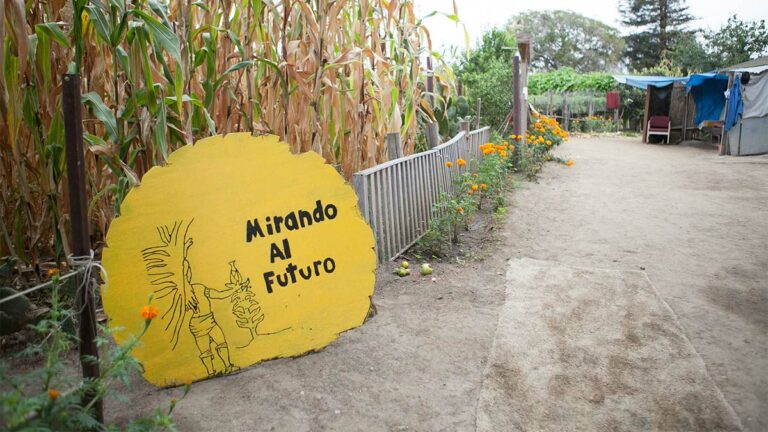
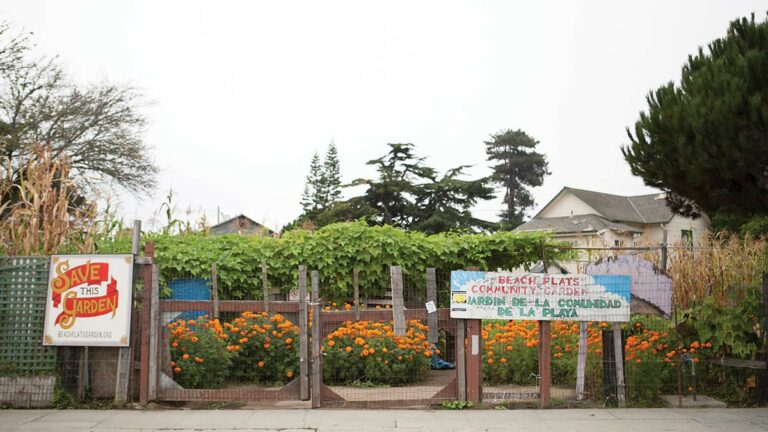
It was October of last year when Councilmember Cynthia Chase brought about 20 gardeners to Santa Cruz City Hall on Center Street to sit down with Kris Reyes, the Santa Cruz Seaside Company’s spokesperson, and discuss the future of the Beach Flats Community Garden. In the weeks leading up to the talk, activists in neon shirts reading “Guarde el Jardín” had been crowding small meeting rooms. Green-space supporters had written impassioned letters to local newspapers imploring everyone to do whatever they could to save the cacti, corn and other vegetables on the nearly half-acre patch of land owned by the Seaside Company, but farmed for 20 years by local gardeners, many of whom worried they had harvested for their last season there. On the wall in that October meeting hung a historic oil painting of the San Lorenzo River in 1876, and out the window, the city’s courtyard fountain lay dry and empty due to water rationing in the drought. Sitting in swivel chairs at the long wooden table, gardeners talked about what they loved about the garden, which the Seaside Company had indefinitely loaned to the community for two decades. In the nearly four-hour meeting, Reyes shared why the company—which also owns the Beach Boardwalk, a few motels, parking lots and other Beach Flats real estate—needed the land back to start a nursery for their landscaping needs. “I’m always looking for ‘What’s the middle way?’” explains Chase, now the city’s vice mayor, sitting in the same room where she started the discussion. “Where can we find some compromise? Does this have to be all or nothing? Is there some negotiation that can preserve the ability of these gardeners to keep gardening? I think that’s how it all started.” The following month, Reyes would go on to announce at a Santa Cruz City Council meeting that the Seaside Company would be preserving 60 percent of the garden with a three-year lease, hopefully long enough for the city to find a permanent home for it. Many supporters left that council meeting still fuming, desperate to find a way to save the space in its entirety, but the new proposal offered a garden more than twice the size of either of the last two compromises the Seaside Company had suggested. The October discussion had laid the groundwork. “We talked at length about what was important to them,” Reyes remembers. “I tried to share, as best I could, what was important to us. And I felt like each time we did that, we had a better understanding of what was important to each side, and I think those meetings were critical in allowing the gardeners to feel comfortable enough with us to sign their agreement and begin the transition. But we put a lot of time into working with them and understanding.” If there was one thing that could be said to have set off and gradually worsened the arguments over the garden, which first turned contentious nearly a year ago, it would be the mutual feeling of disrespect each side felt from the other. Garden advocates felt it was a sanctuary in a place practically overrun with Boardwalk visitors for several months out of the year. “The noise and the traffic and the trash,” says Vicki Winters, a longtime garden supporter. “It is this little oasis there.” Meanwhile, Reyes and his coworkers wondered how they ended up getting yelled at after donating a parcel of land for 20 years. “Everybody’s right. Nobody’s wrong in that,” Chase says. “That was their experience. That was their perception.”
Why the Garden Matters
AROUND THE CORN Emilio Martinez Castaneda has farmed in the Beach Flats Community Garden for two decades. PHOTO: KEANA PARKER Beach Flats, which is tucked between the San Lorenzo River and the Boardwalk, is the most economically depressed neighborhood in the city, with large families often crowded into small and sometimes rundown units. Many in the community work at the neighboring Boardwalk. With so little park space, the garden has long provided a respite from the noise that fills the air during summer nights, and traffic that plugs Beach Street on the afternoons. In that context, the garden’s disappearance quickly became an emotional one, says Councilmember Don Lane. “We have this community within Santa Cruz that generally is disadvantaged. No one would question that,” Lane says. “And [when] something that’s really important to the community is threatened, a whole bunch of people are gonna go, ‘That’s wrong.’ That fueled the public discourse around this—‘This disadvantaged community is being wronged, and we must not allow that.’” Reyes and the Seaside Company told city parks staff in late 2014 that the company would not be renewing the yearly $1 lease because it needed the garden for landscaping, and the city sent letters to the gardeners. More than six months later, at what Reyes calls “the eleventh hour,” activists began their full-scale campaign to protect the garden, and many suggested seizing it in its entirety. Rumors began to spread. “That’s where the frustration comes from,” says Reyes. It isn’t uncommon, Lane explains, for people to feel slighted in the political process. Part of the job of a policymaker, he says, is demonstrating to constituents that they understand where someone else is coming from. “That’s normal in a sense. That’s human nature,” says Lane, who was involved in the Beach Flats Community Garden discussions. “But it always gets tricky when multiple players are each coming into it with that feeling. Because then you choose a side, and somebody who already was feeling disrespected and doesn’t get anything out of it is really angry—like ‘Wow, I feel disrespected. I let you know how I feel about that, and you still disrespected me.’ It’s a double injury. To me, one of the most important things is to not allow that to happen. When the different parties are feeling disrespected and not heard, [it’s important] that we deliver something to them so that they don’t feel disrespected.”
Hence the Fence
On a recent Thursday, the late afternoon sun is casting long shadows at the Beach Flats Community Garden as young neighbors play, running in circles in and out of a small shed. Around them, young bean, kale, parsley, onion and squash plants sprout out of the ground. The spicy smell of a bonfire wafts through the air from a small pit that parents have gathered around, speaking Spanish. “The way things are grown in that garden is different than other gardens, like the ones I see in the Westside,” artist Irene O’Connell tells GT on the phone, as she sketches. O’Connell is brainstorming a few drafts for the Beach Flats mural on Raymond Street that will be repainted more than two years after city workers coated the previous mural in white paint—the beginning of an ill-fated project for which the city later apologized. (O’Connell, who is incorporating the garden into her community mural, will unveil her sketches at 7 p.m. on Wednesday, June 15 at Beach Flats Park and ask for input.) The gardeners’ farming style, O’Connell notes, features traditional Latin American methods that have been taught by hand. “It’s a knowledge and it’s an important resource that’s been passed down through generations,” O’Connell says. DEEP ROOTS Don Domingo Mendoza has been gardening at the Beach Flats Community Garden since it opened 20 years ago. PHOTO: CHIP SCHEUER Toward the back of the garden, a wooden good-neighbor fence divides the green space from a large barren plot of dirt, where the Seaside Company will start a small nursery. On the company’s side of the barrier, weeds have sprouted from the ground. And where the vacated patch of garden faces the San Lorenzo River levees, streamers still hang from a wire fence—pieces of cloth that once spelled out pro-garden messages, but have since been rendered indecipherable and tattered from six months of sun and rain. The Seaside Company, which currently has an application into the Santa Cruz Planning Department to re-zone its portion, wants to use this land to grow and nurture plants that will go around the Boardwalk and in some of its nearby parking lots. It’s part of giving guests a “softer experience,” Reyes says, “where it’s as much about the space that you’re playing in as the things that you’re doing when you’re there. The landscaping is a huge part of that strategy.” For instance, the Boardwalk, Reyes says, is filling large colorful pots, nearly as tall as a person, with large red flowers around the park. “It’s about how you create the environment where people feel comfortable and at home,” he explains. “And one way you do that is with great plants and greenery and flowers and color. It’s just being integrated throughout the park.” Back on its side of the fence, the Coalition to Save the Beach Flats Garden still holds meetings, and the group wants to make sure the garden is a big issue in the 2016 City Council race. Advocates still cling to the goal of preserving the original garden in its entirety. “I hope the garden is going to be front and center of an issue of how politics play out in this city,” Winters says. “It’s something I want to ask candidates.”
Fault Lines
“There’s been any number of miscommunications, and I think there has been both literally and figuratively so much lost in translation,” Chase says, remembering some of the mistakes in the city’s handling of the community garden issue. “It’s really sad to me. What was really clear in the meeting with the Seaside Company and the gardeners was they want to garden. If you just boiled it down, they were like, ‘We want to garden. When can we go? Let’s garden. Let’s get back on the land.’” Everyone admits that the most tragic mishap happened on the day city workers came to divvy up the garden, and ended up cutting down fruit trees that were simply supposed to be moved after a harvest. There was also confusion about whether or not the city would be installing a bathroom, where the boundary lines of the garden would fall, and other matters—many of which reinforced garden supporters’ distrust of the city and the Seaside Company. Many have asked for the City Council to use eminent domain and seize the property. It’s something Councilmember Micah Posner suggested at an April meeting, although no other councilmembers supported the move. Lane and Chase worry the action would sour the city’s relationship with the Seaside Company, which it often partners with on local projects. The city attorney says the city would likely prevail in court. But the costs could be high, especially if the Seaside Company chose to fight it. And the lot’s estimated value, which the city would need to pay, could run close to $2 million. In addition, that course of action could temporarily kick gardeners off their land, which is just about the last thing Lane and Chase say they want. The plan, instead, is to work together with the Seaside Company to find a new permanent home for the garden. GOD SAVE THE GREEN City leaders have pledged to find the garden a permanent home. PHOTO: KEANA PARKER This year, City Manager Martín Bernal has also prioritized affordable housing in the neighborhood, as part of a bigger strategy to improve Beach Flats—a discussion in which the Seaside Company will also participate. Of course, housing was a priority 18 years ago too, when the city drafted its Beach Area Plan, as was the garden itself. The Beach Area Plan of 1998 detailed the poor housing, insufficient park space, heavy tourist impact, unsafe streets, and overall low quality of life in the area. It also recommended, nearly two decades before this issue came to a head last year, that the city look for a permanent home for the garden. “The concern,” according to the plan, “stems from the fact that the site is currently on private property, which is proposed for eventual development.” The city has realized some of its goals set in the plan, like a levee path system and the addition of the Nueva Vista Community Resources building and housing complex. But the garden stayed put for years, while Seaside and the city re-approved the lease agreement each year without giving it much thought. “The city has had 20 years of altruism on the part of the Seaside Company and in hindsight, we should have done something before now,” says City Councilmember Micah Posner, the council’s most vocal supporter of the garden. “I don’t blame the Seaside Company for wanting the land back. It’s just about preserving the culture, the open space and the agriculture in that neighborhood. For me, that’s what government is for, when a corporation has more influence than an entire community. The Seaside Company owns a huge part of that whole community.” Posner, an activist at heart, is skeptical that the Seaside Company and the city will do the work to save what’s left of the garden—even suggesting it would take protests or maybe even a boycott to make any headway. But, he’s quick to add, he hopes he’s wrong. No one knows exactly how anyone will make the garden “permanent,” especially because the Seaside Company doesn’t normally sell land. But Reyes and Lane point to the temporary Santa Cruz Warriors arena on an old Boardwalk parking lot as the kind of deal multiple parties can agree on. Possibly the best option, Lane says, would be to keep the garden where it is now. He notes that the city has a lot of land as well and maybe the Seaside Company will show interest in some sort of exchange. Also, as Lane noted in the April council meeting, no one has taken eminent domain off the table for good. Garden advocates aren’t taking anything for granted even though the city has made a commitment to protect the garden. Winters isn’t even surprised the city never created a permanent home for the garden after putting it in its plan 18 years ago. “Things get put in plans,” Winters says. “And once the plan’s done, everyone pats themselves on the back. ‘Wasn’t that a good plan?’ Unless people protest to make things happen, they just don’t.”