

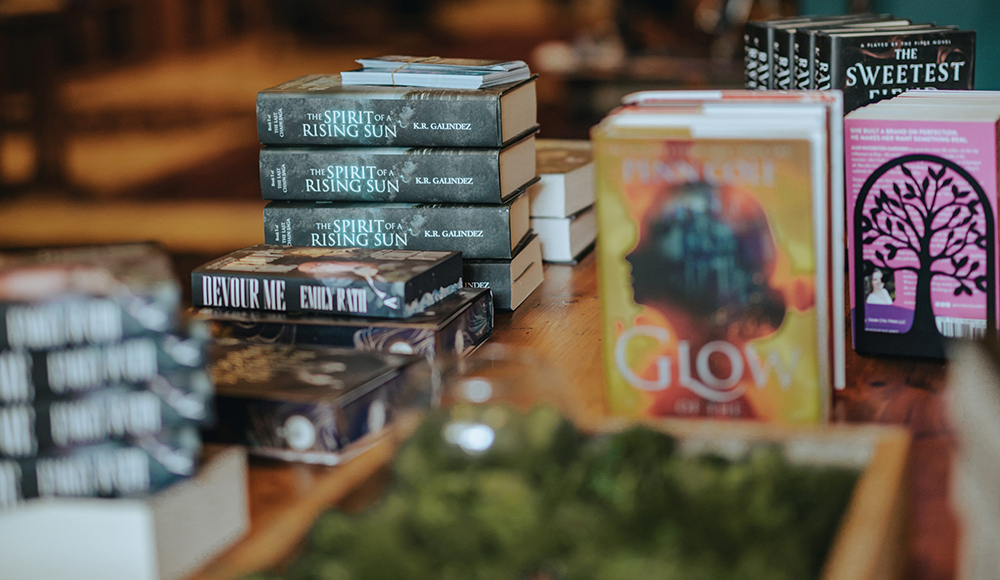
For those who thought Ebooks and the internet were making bookstores extinct, there’s good news in Santa Cruz County.
Within weeks of each other, two women who had long dreamed of owning bookshops have opened their doors, one on Pacific Avenue and the other in Aptos Village.
Burning Ember Books is devoted to romance and romantasy, while Trailside Books takes a generous view of what might appeal to an adventurous reader. Both are places where you’re welcome to bring a cup of coffee and stay awhile, which begins to answer the question of why anyone would open a bookstore in the age of overnight delivery.
LOVE, LUST AND BELONGING AT BURNING EMBER
You know buzz is building when the friends you can’t wait to tell have already heard.
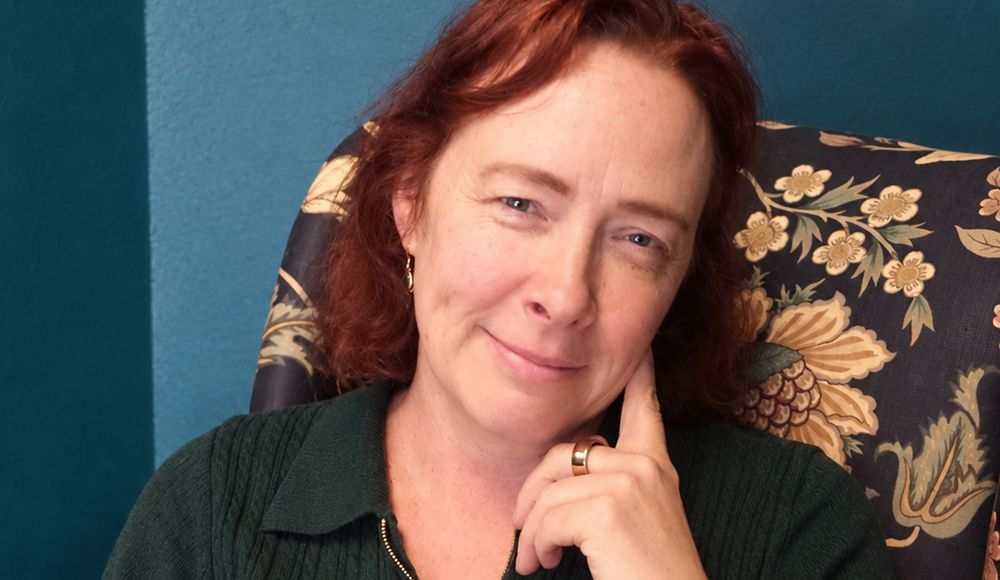
Before Burning Ember’s grand opening, Charese Allen’s romance bookstore was already finding its people. On Pacific Avenue near Cafe Delmarette and the Del Mar Theatre, it’s designed and decorated for relaxing and falling in love with a new book.
Inside, dark walls, upholstered chairs and a faux stained-glass ceiling set the mood. Ravens, gold-framed art and a fireplace mantel suggest a refuge somewhere between a Gothic novel and a Victorian drawing room. Charese wants visitors to feel they’ve stepped into a historical or fantasy novel.
The witchy atmosphere is genuine. Growing up, she gravitated toward the punk crowd, the goths, and the art kids. And her Halloween Eve opening was no accident: She’d had that date in mind for months, welcoming the season’s possibilities for transformation.
“I feel like the universe just kind of opened the door. I walked in and I knew.”
There’s another kind of transformation behind Burning Ember. Charese is a therapist, established in her profession and now, in her 50s, taking a conspicuous leap outside her comfort zone. When she began planning the shop two years ago, she imagined keeping those two occupations separate. Increasingly, she sees their shared purpose.
“At the heart, this is a place where I want to build community and connection.”
Moving frequently as an Army kid until she was 10 taught Charese how elusive belonging can be. Her professional life reinforced its importance. Even clients ready to leave therapy sometimes need a community before they feel ready to fly.
She often recommends fiction as a therapeutic tool.
Stories invite readers into other lives, she says, encouraging curiosity about what drives someone’s behavior rather than rushing to judgment. Romance, especially, offers people confronting adversity, finding courage and helping one another grow.
As for her own taste in romance plots, Charese has lived a pretty good one. She and her husband had known each other since they were 16. It took them until their mid-30s to go on a date.
“Talk about slow burn, friends to lovers,” she says.
THE MANY WAYS TO FALL IN LOVE
She was 8 when she discovered the historical romances among her grandmother’s books. Her first great love was Daphne du Maurier’s Jamaica Inn. A young woman crosses the Cornish moors to live with her aunt and soon has reason to wonder what sort of business her uncle conducts after dark. There’s a young man in the picture, too, though a reader might reasonably advise her to get out of Cornwall while she can. Such are the pleasures of a Gothic romance.
Move a few shelves over into romantasy and the heroine might have a kingdom to save, a magic she’s scarcely learned to use and the considerable inconvenience of falling in love along the way. That’s part of the appeal for Charese. She likes a story in which a woman gets to find out what she’s capable of, and sometimes the most consequential relationship in her life is with the women who see her through.
Then there’s the question a reader browsing either shelf might like answered. How much spice? In bookseller’s terms, that’s a question of how much of the lovers’ private life the author lets you in on. She prefers “spicy” to “smut.”
The shelves span a spectrum of heat, from gentler romances to explicit adventures in desire. At the shadowy end, dark romance explores obsession and morally gray characters—people she describes as fun to read about, though not necessarily anyone you’d want to date.
As a therapist, she sees sexually explicit fiction opening conversations about desire, boundaries and consent that people otherwise struggle to have.
She also credits younger readers with abandoning the embarrassment she once felt about her own reading pleasures—“I would have my romance books on the bottom shelf.” Now she’s giving them an entire store: “an anti-shame, non-judgmental zone.”
Charese sees another kind of empowerment in fan fiction, where readers reinvent beloved fictional worlds to make room for themselves. Some of those writers have gone on to publishing careers, bringing new perspectives with them. “They create stories where they feel like they’re part of it,” she says.
Community helped to build the dream. Volunteers have painted; friends and family have pitched in. Local authors have signings planned, and local artists have work for sale. She hopes eventually to host three or four events weekly, including book clubs and craft nights. Bring a coffee, buy a book, settle in.
Real-life romance has a place, too. The shop’s website invites people to share their personal experiences on its Love Stories page, beginning with Charese’s own.
For all her enthusiasm for escape into other worlds, she wants readers to recognize the love available in this one. Her clients, among her biggest cheerleaders, have recognized something else: Their therapist is taking her own advice about building a life worth living.
Opening a bookstore makes that advice beautifully tangible.
“I want people to come in and be greeted and find a book that touches their heart, that makes them feel connected — more to themselves or to other people.”
Burning Ember Books, 1128 Pacific Ave., Suite B, Santa Cruz. Open 11 a.m.–8 p.m. Wednesday through Monday. burningemberbooks.com.
TRAILSIDE BOOKS IN APTOS VILLAGE
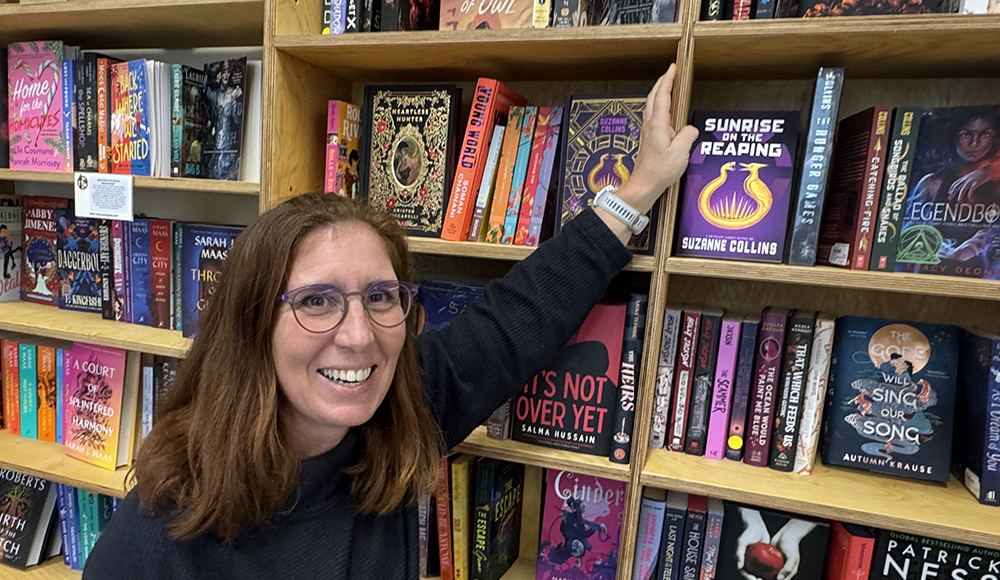
Marissa Swett’s brother had a headline in mind when he read about his sister and Charese opening bookshops within weeks of each other.
“Two Redheads Open Bookstores in Santa Cruz.”
He might also have mentioned that the therapist has a fondness for the past while, perhaps ironically, his sister, a history teacher, prefers the near future, most often when things have gone a little wrong there.
By family reckoning, the first book Marissa read was Dr. Seuss’s Hop on Pop, a real adventure for a tot.
The first book she fell in love with was The Changeling by Zilpha Keatley Snyder. Two girls, one shy and the other a gregarious, mysterious child named Ivy, become unlikely friends. They slip away to the forest, where they build shrines and make up a world between them. Marissa remembers the excitement of being in Ivy’s company, but she remembers something else just as clearly. In the course of their adventures, the shy girl grows brave.
She grew up with a brother who loved science fiction, and she acquired a taste for it herself, particularly if it was funny. History gave her an appetite for true stories about the things people do, and whenever she could get outdoors, she was on a trail, running, hiking or backpacking. California’s mountains and deserts still exert enough of a pull that she’ll take almost any excuse to put a book about them on her shelves.
For 22 years, her working days belonged to Soquel High, where she taught history, government and economics, helped develop the ethnic studies program and eventually taught children whose parents were old enough to have been her students. The word burnout has come up in accounts of her decision to open a bookstore, and she’d like to retire it. She was good at teaching, she enjoyed it and she had the good fortune to recognize when she’d done what she came to do. Her own children went to Soquel High. Her younger one is a senior there now, and their progress through school gave her a rather nice way of thinking about her own.
“I think I get to graduate from high school now.”
Some of her students wanted to know how you go about starting a business, a question their teacher was looking forward to answering for herself. On the matter of inventory, however, they were prepared to advise her.
A group of girls made the case for Lauren Roberts’ Powerless books. Other students, including some who claimed they didn’t read, proved to have quite a bit to say about books once Marissa asked a different question. When did you stop reading?
One answer she heard was that they’d worked their way through the Diary of a Wimpy Kid books and never found anything they liked as much. She began to wonder what she could put into a kid’s hands at just that age. A true adventure might reach somebody who had come to think that reading meant fiction and that fiction had little to offer them.
In Aptos Village, within easy reach of the trails at Nisene Marks, Marissa found a place to try out that proposition. The developer wanted to sell the space, so she and her husband bought it.
Inside Trailside Books, a tree reaches to the ceiling, the shelves are blond wood and little signs recall the ones you’d find on a Forest Service trail. The tree, the signs and the shelves are all her husband’s work. She describes herself as a word person and credits him with being able to picture how the whole thing would look. A classic sliding ladder is in the plans, as anyone trying to reach the top shelf will appreciate.
Behind the counter, sun and forest fill a mural painted by a former student who now works at King’s Paint & Paper. Marissa gave her the shop colors and showed her the logo a friend had designed, and the artist took it from there. She’d come by after work to paint, and on those evenings when both women had reason to stay late, teacher and student had time to catch up.
Another former student, now at Cabrillo, became the shop’s first employee. Quite a few more turned up for opening weekend, some of them now in their 40s and requiring a second look from the woman who last saw them across a desk.
WHAT COUNTS AS AN ADVENTURE?
To get a sense of what Marissa means by an adventurous bookstore, spend a few minutes at her adventure, science and nature table. One book she’ll happily put in your hands is The High Sierra: A Love Story by Kim Stanley Robinson. Readers who know him for his Mars trilogy may be surprised to learn how thoroughly this science fiction writer knows his way around the Sierra on foot. She’s read some of his science fiction. It’s the Sierra book she loves.
A hiking guide might get you onto a trail you’ve always wanted to try, and a true account of a climb might get you as near the summit as you care to go. Marissa also makes room for the sort of adventure that asks something inward of a reader. In an African American Studies class at Soquel, a conversation about Afrofuturism got her students talking about what makes a book science fiction in the first place.
When it came time to arrange her own shop, she was tempted to shelve all the fiction together under “Stories” and let everybody make a few discoveries on the way to finding what they came for. Friends warned her she’d have some cross customers on her hands. For now, the genres have their places, though she reserves the right to reconsider. “It’s my shop. I can rearrange any time I want to.”
Like Charese, Marissa likes the idea that a person can walk over with a coffee and feel welcome to stay. For the holidays, she’s planning a card-writing evening where people can bring their cards and stamps, let her put the tea on and get the addressing done in company. She’d also like to bring book fairs and children’s authors into local schools. Bookstores give her another way to do something she loved about teaching, which was getting to know people well enough to recognize what might interest them.
Opening weekend gave her some idea of how readily her customers would return the favor. One reader made such a case for Angeline Boulley’s Firekeeper’s Daughter, and said so much about what the book had meant to her, that Marissa went looking for everything by Boulley she could get.
By the time she closed on Sunday, she had at least 20 Post-it notes to work through, reminders of books people had loved and felt she really ought to have.
She’d opened Trailside wondering what she might put into somebody else’s hands. Already they were putting books into hers.
Trailside Books, 136 Aptos Village Way, Suite 100, Aptos. Open 11 a.m.–7 p.m. Wednesday through Sunday. trailsidebooks.net.